by in News

All medium, large businesses in Albania are now in free electricity market

Consumers connected to the 6 kV electricity network in Albania are legally obligated to find a private supplier on the free market by January 1, 2026. The move represents the completion of a multi-year transition for industrial and commercial users.

On January 1, 2026, all medium and large businesses in Albania will be part of the liberalized electricity market.

Scheduled to join are 2,300 firms and institutions.

The newcomers in the market must find a supplier from the list of licensed entities, Albania’s Energy Regulatory Authority (ERE) said.

The liberalization process began in 2018

Those who fail to secure a contract by the deadline will be covered by the supplier of last resort for a maximum of 60 days under regulated conditions to prevent power cuts, according to the update.

The 6 kV level is the final stage of the liberalization process, which began in 2018. It started with 35 kV, followed by 20 kV in 2024 and 10 kV in 2025.

Only small businesses and households remain under regulated supply. Regulated prices are set by ERE.

There are about 40 licensed suppliers in Albania

Small businesses, connected to the 0.4 kV grid, are still the responsibility of the universal supplier. This service is provided by Furnizuesi i Shërbimit Universal, a subsidiary of OSHEE, the state-owned power distribution operator.

ERE recently confirmed that electricity prices for universal service customers would remain unchanged until December 31, 2026.

Of note, there are about 40 licensed suppliers in Albania. Businesses can compare offers using ERE’s online platform. Of note, the Albanian Power Exchange (ALPEX) started its operations in April 2023.

Energy Community Secretariat: Complete liberalization is behind schedule

In its latest Annual Implementation Report, from November, the Energy Community Secretariat said that the complete liberalization of the retail electricity market remains behind schedule.

Households and small businesses connected to the 0.4 kV network continue to be supplied under regulated tariffs by the universal supplier, the report reads.

Consumers connected to the 6 kV network are covered by the supplier of last resort (SLR), and this regime was extended until December 31, 2025, the secretariat pointed out.
by in News

Serbia is first Energy Community contracting party to enter verification phase of market coupling

Serbia is the first Energy Community contracting party to enter the verification phase of the market coupling procedure, the Energy Community Secretariat said after the annual meeting of the Ministerial Council in Vienna.

At the Energy Community Ministerial Council, ministers addressed energy security, market integration, climate policy, and environmental protection, confirming a shared EU–contracting parties direction for Europe’s energy future, according to the secretariat.

Ministers and representatives of the secretariat also discussed the amendments to the Carbon Border Adjustment Mechanism’s regulation revealed by the European Commission yesterday. The meeting was attended by European Commissioner for Energy Dan Jørgensen.

The secretariat underlined that several contracting parties are now approaching a decisive stage in electricity market integration ahead of accession, having fully or nearly transposed the Electricity Integration Package (EIP).

The two-step verification phase for Serbia kicked off on October 22

Subject to verification of compliance by the European Commission, this progress opens the door to electricity market coupling with the EU internal market ahead of accession, it added.

“Serbia has already entered the verification phase, while Moldova has fully transposed the package. In this context, ministers underlined that the CBAM, entering into force in January,  should not pose an issue for cross-border electricity trade,” the update reads.

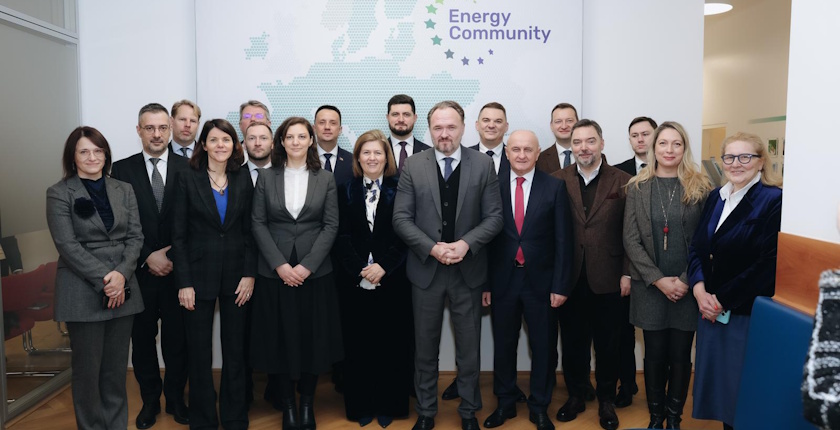
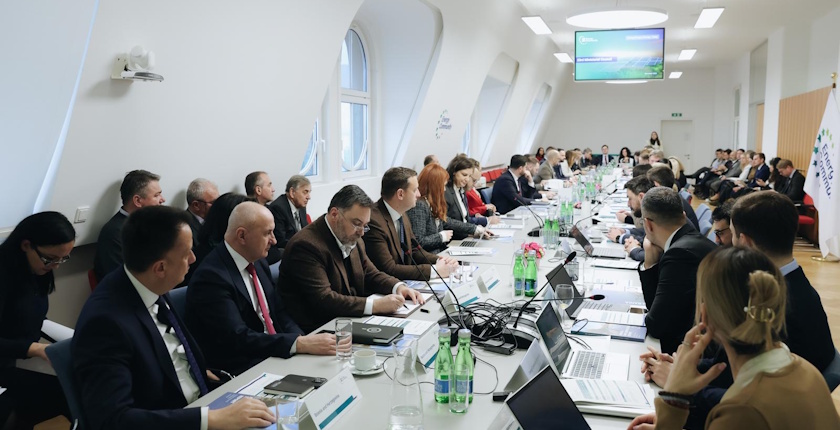
eu region ministerial council 2025 meeting
Photo: Energy Community Secretariat

Full electricity market integration ahead of accession offers a clear pathway to safeguarding decarbonization gains, supporting fair and efficient cross-border electricity exchanges, and attracting clean energy investment, according to the secretariat.

The two-step verification phase for Serbia kicked off on October 22. The first step is the verification by the secretariat, and the second by the commission.

The secretariat must complete the verification within three months, by January 22. The process is in the final stage, Balkan Green Energy News has learned.

The European Commission has five months to do its part

Once this is finished, the commission has five months to do its part. If the commission’s verification is positive, Serbia could meet the end-July deadline to apply for market coupling. The next phase involves technical activities, and it lasts 18 months.

“We are very deep in the process of verifying what Serbia has adopted. Now we are about to start this process for Moldova. And soon, I hope, after the remaining elements of the legislative package are adopted by Montenegro and North Macedonia, the verification can start in these two cases,” stressed Artur Lorkowski, Director of the Energy Community Secretariat.

He added that it has taken two decades of cooperation to build the momentum toward market coupling that ministers today have consolidated.

Lorkowski: The voice of the Energy Community ministers on CBAM has been heard by the commission

eu region ministerial council 2025 artur lorkowski
Artur Lorkowski (photo: Energy Community Secretariat)

Regarding the European Commission’s amendments to the CBAM regulation, he recalled that, on behalf of the ministers, the secretariat has sent a list of 11 different issues that needed to be addressed.

“The voice of the Energy Community ministers has been heard by the commission, and the progress which has been made in the contracting parties has been recognized. We see that in different amendments which are proposed. The proposal is going in a good direction. If you ask me whether this is satisfactory and whether it solves all of the problems, no, for two reasons,” he underscored.

The first reason is that it requires time, and the damage will be done from January 1, 2026, when the CBAM implementation starts.

Jørgensen: A lot of progress has happened

“We already see that, for example, the allocations of the cross-border power lines between the contracting parties and the EU member states for next year are dropping significantly,” Lorkowski explained.

The second reason is the issue of completeness. “We are still not certain whether, for example, renewables in the contracting parties can be treated equally as those in the EU,” he said, and added that the secretariat is in communication with the commission on these issues.

According to European Commissioner for Energy Dan Jørgensen, it is clear that a lot of progress has been made in what will hopefully be future EU member states or neighbors, especially in the transposition of EU energy law.

Focus on four issues

According to the secretariat, the ministers further committed to advancing a coherent and predictable framework to sustain electricity market integration while creating the enabling conditions for the clean energy transition.

The secretariat highlighted four issues.

First, contracting parties will individually pursue national carbon pricing models according to their domestic circumstances, while work continues to explore coordination possibilities and ensure coherence between national carbon pricing systems in view of their gradual alignment with the EU ETS.

Second, the Energy Community framework will further incorporate core EU legislation on nature conservation, biodiversity, and water protection into the Energy Community Treaty.

Third, to keep momentum behind the rapid growth of renewables, the contracting parties will step up efforts to secure mutual recognition of guarantees of origin with the EU.

Finally, effective coordination and implementation of national energy and climate plans (NECPs) is critical, participants agreed.

The EU’s recent agreement on the 2040 climate targets sets a clear direction, and contracting parties must follow this pathway as they develop their long-term energy and climate policies, the update reads.

by in News

EU simplifying CBAM exemption for electricity, improving emissions calculation

The European Union is further simplifying the Carbon Border Adjustment Mechanism (CBAM), but with stricter oversight and an extension to 180 steel- and aluminium-intensive downstream products. From January 1, importers of designated goods and commodities will be paying the emissions tax.

Among the novelties, countries in the Energy Community that transposed the relevant EU regulations are getting an opportunity for exemptions for CBAM for electricity earlier than initially planned. The new legislation is tackling the hurdles for electricity transit as well. The calculation of emissions on national levels in the same sector is becoming more favorable for the payers of the cross-border CO2 tax. There is even a possibility, in theory for now, to declare the actual emissions level, which would suit renewable energy producers.

In response to feedback from industrial producers and other stakeholders, the European Commission proposed measures to prevent circumvention of CBAM and strengthen its efficacy. The next step is to expand it to 180 manufactured products with high steel or aluminum content, 79% on average. The list mostly consists of machinery and hardware, and 6% of the items are household appliances.

From January 1, importers will be paying a carbon price within the Carbon Border Adjustment Mechanism, which is tied to the Emissions Trading System (EU ETS). It concerns aluminum, cement, electricity, iron and steel, hydrogen and fertilizers, and the expenses will spill over to their suppliers in third countries such as the Western Balkans and Turkey.

The charge for downstream products is planned to be rolled out in January 2028.

Striving for level playing field

The system gradually levels the field, by the beginning 2034, with producers of the same goods and commodities in the EU. The measures are introduced in the form of delegated and implementing acts. They enter into force if other institutions responsible for them, like the European Parliament, don’t block them.

Hoekstra: Our system was too broad, too clunky and had too many loopholes.

“CBAM makes sure there is a level playing field – that we’re not asking anything more, or asking anything less for those goods that come into the EU. And in doing so, we’re rewarding investments in low carbon… We’re not going to ask anything more from others, than we’re asking from ourselves. During the CBAM transition period, we learned important lessons. Our system was too broad, too clunky and had too many loopholes,” said European Commissioner for Climate, Net Zero and Clean Growth Wopke Hoekstra.

Thoroughly against evasion

The tax level is envisaged to be proportional to an established quantity of greenhouse gases released in production. However, if the authorities notice attempts to evade the levy, they can make the process of providing evidence stricter and, in the meantime, switch to a charge under the emissions factor of the particular country of origin.

“If I had to summarize these points in a few words, I would say: a simpler CBAM, more robust in its application, and fairer in its scope,” said the European Commission’s Executive Vice-President for Prosperity and Industrial Strategy Stéphane Séjourné.

Shortcut to exemption from CBAM for electricity

One of the measures is intended for easing the administrative burden for countries in the process of electricity market coupling with the EU, namely the Energy Community contracting parties.

There is going to be a possibility to sign an MoU with the European Commission with a detailed schedule

The commission may sign a memorandum of understanding with a third country, once the commission has assessed that the country has fully transposed the electricity market acquis, the proposal reads. The document would lay down details on the timeline for the CBAM exemption, including in relation to technical work still to be carried out between transmission system operators (TSOs), and for implementing a carbon pricing instrument equivalent to the EU ETS as far as electricity generation is concerned.

Hoekstra said technical adjustments to CBAM would be made to facilitate market coupling when the relevant countries are ready.

Import tax for electricity from Energy Community to be 30% lower on average

Stakeholder feedback and the experience with the implementation of CBAM during the transitional period – before the actual charge – demonstrated that the rules for electricity imports are overly rigid, the European commissioners added. In particular, they ascertained that progress in decarbonizing electricity production isn’t sufficiently acknowledged or encouraged.

Unlike with the goods, for electricity there is a default country-specific emissions value. It is based on production from fossil fuels and a five-year average. Coal is mostly dominant in the Western Balkans, except for Albania, which has a completely green mix. In addition, the conditions which must be met to declare actual emissions of electricity have proven to be almost impossible.

The proposed package is introducing solutions for electricity transit and cross-border PPAs

In the new setting, the national value will reflect the carbon intensity of all sources of electricity. The estimated taxes in the Energy Community would be over 30% lower on average.

The procedure is being streamlined for declaring actual emissions. On the other hand, at least in the Western Balkans, there has been almost no progress in that area. The proposed package is also introducing solutions for the hurdles in electricity transit through Energy Community Contracting Parties and cross-border power purchase agreements (PPAs).

Power imports from the Western Balkans account for 1% of the EU’s demand, but their share in Croatia, Bulgaria and Greece is significant, the European Commission explained. Importantly, exports of electricity to the EU represent some 58% of Montenegro’s exports to the EU, compared to 5% for Serbia and Albania.

Funds for maintaining competitiveness of domestic industrial producers in third countries

A fund has been launched to temporarily support EU producers of CBAM goods and mitigate carbon leakage risks. It addresses the competitiveness loss in third-country markets with a weaker climate policy and lower costs. Potential beneficiaries will have to demonstrate decarbonization efforts.

Th European commission is also preparing proposals for limiting scrap aluminum exports and using more scrap metal. Furthermore, it said pre-consumer metals scrap, from manufacturing, would come under CBAM.

by in News

Energy Community: Serbia best in Western Balkans in alignment with EU regulations

Integration with the European Union is advancing in practice, and the decade ahead must sustain the momentum with focus and determination, Energy Community Secretariat Director Artur Lorkowski pointed out in this year’s Annual Implementation Report.

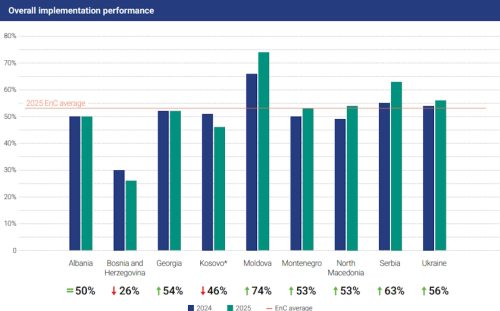
Serbia fares best in the Western Balkans, as it advanced to 63% from 55%. Bosnia and Herzegovina is at the bottom of the entire Energy Community chart, with alignment at just 26%.

Following the 2025 CBAM Readiness Tracker, the Energy Community Secretariat also published its Annual Implementation Report 2025. The international organization marked its 20th anniversary this year.

“The message from Athens was clear: integration with the European Union is advancing in practice, and the decade ahead must sustain this momentum with focus and determination. The 2025 Implementation Report reflects this direction. It shows a region taking decisive steps toward alignment with the EU acquis and strengthening the foundations required for accelerated integration. It also highlights where further effort is needed for gradual integration with the EU energy markets – completing the electricity market coupling, boosting the cross-border trade in renewables, eliminating bottlenecks for gas flows, synchronising energy infrastructure development and gradual alignment of carbon pricing mechanisms,” Energy Community Secretariat Director Artur Lorkowski stressed.

He added that electricity integration remains central. Several contracting parties completed the required transposition of the European Union’s Electricity Integration Package (EIP), while others advanced significantly.

Deadline for requests for 2028 market coupling to expire in seven months

Intensive market coupling efforts throughout 2025 by contracting parties and EU stakeholders have laid the groundwork for a compliant and sustainable integration process, according to the Annual Implementation Report. Of note, market coupling is the requirement for an exemption from the EU’s Carbon Border Adjustment Mechanism (CBAM) for electricity.

Contracting parties aiming to go live in 2028 must submit a formal request by July, the secretariat warned.

Energy Community Serbia best score Western Balkans
Photo: Energy Community Secretariat

Montenegro, North Macedonia advance slightly to match average

Five main indicators measure the integration with the EU energy markets and they are combined into an overall score. The Energy Community as a whole is at 53%.

Moldova has advanced the most in the process by far, climbing eight points from last year to reach 74%. Serbia fares best in the Western Balkans, as it advanced to 63% from 55%. It ranked the highest last year as well. Bosnia and Herzegovina is at the lowest level again. It retreated four points, to just 26%.

Montenegro and North Macedonia advanced slightly, both to 53%, to match the Energy Community average. Kosovo* has weakened to 46% while Albania remained at 50%.

At 61%, North Macedonia is in the lead in the Western Balkans in the markets and integration segment. Serbia reached the highest level in the Energy Community in energy sector decarbonization, 83%.

* This designation is without prejudice to positions onstatus and is in line with UNSCR 1244/99 and the ICJ Opinion on the Kosovo declaration of independence.
by in News

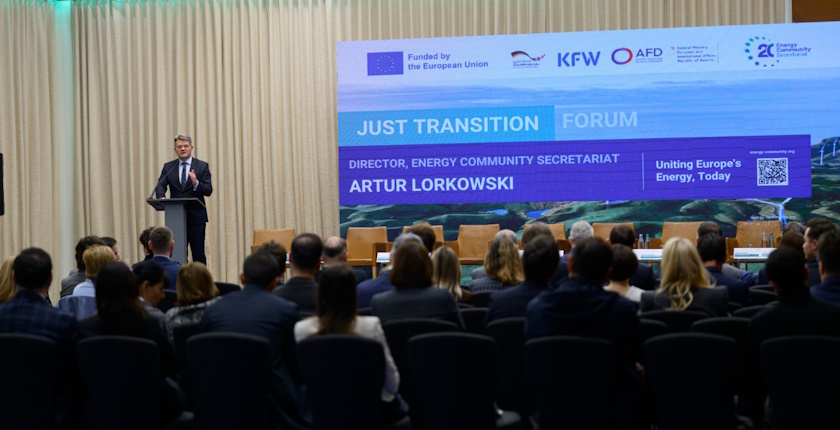
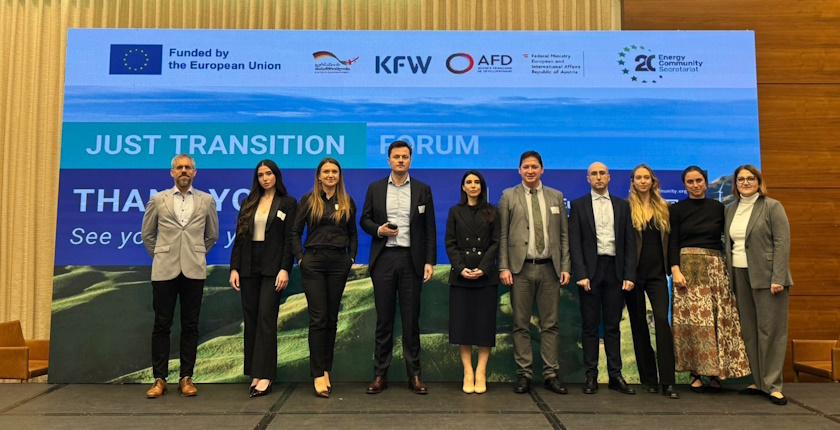
Just Transition Forum unites regional leaders to tackle energy poverty, shape fair energy future

Governments, partners, civil society and community leaders from across Europe gathered in Tbilisi for the Energy Community’s Just Transition Forum to explore how energy efficiency can help end energy poverty and strengthen public trust in the clean-energy transition.

The forum delivered a clear message: a just transition cannot succeed without meaningful dialogue with diverse civil society and non-governmental partners, whose expertise and perspectives must be integrated into planning. As contracting parties begin preparing their new national energy and climate plans (NECPs), embedding just transition in transparent frameworks and long-term strategies is key to turning decarbonization commitments into real benefits for people and communities.

This principle is further reflected in the Energy Community’s newly published Just Transition Policy Guidelines, which guide governments in integrating just transition elements into energy and climate planning – ensuring that decarbonization goes hand in hand with social protection, local opportunity, and public trust, while supporting alignment with the European Union’s clean energy and climate objectives.

Lorkowski: New NECPs should tell story of just, sustained transition

Opening the forum, Energy Community Secretariat Director Artur Lorkowski underscored the importance of the current moment for regional energy and climate planning. The new NECPs, he stressed, should tell the story of a just and sustained transition.

“We are entering a pivotal moment for the region’s energy and climate future. With just transition principles at the core, they can pave the way toward EU energy market integration and turn the green transition into an engine of investment, inclusion, and shared prosperity,” Lorkowski stated.

Critically, the Energy Community’s Governance Regulation requires contracting parties to assess and address energy poverty in their NECPs. It is an opportunity to ensure that energy-poor households receive targeted support and remain central to energy efficiency and decarbonization efforts.

Just Transition Forum unites regional leaders energy poverty fair energy future

Energy Efficiency First for Energy Poverty

To drive the agenda forward, forum participants drew on insights from the secretariat’s study Energy Efficiency First for Energy Poverty. It reveals that 30% to 40% of households in Kosovo*, Albania, North Macedonia, and Georgia face energy poverty, and shows how targeted energy efficiency investments can transform lives across the region – making homes warmer, healthier, and more affordable to run.

By prioritizing vulnerable households, establishing renovation funds, and applying the Energy Efficiency First (EE1st) principle, contracting parties could cut household energy demand by more than 60%, create up to 19 local jobs for every EUR 1 million invested, and triple the wider benefits through improved well-being, comfort, and productivity.

Energy Community contracting parties could cut household energy demand by more than 60%

Emphasizing the importance of a people-centred transition, Head of EU Delegation to Georgia Paweł Herczyński stated: “For the European Union, a just transition is not only an environmental goal. It is a commitment to people, fairness and long-term resilience. This transformation must be built through dialogue, transparency and the active participation of communities. Ensuring that this transition succeeds, it will depend on transparent governance, democratic credibility and alignment with the EU standards.”

The forum also celebrated the winners of this year’s Just Transition Young Voices Awards. Their work highlighted how listening to those most affected by the transition — and youth, who will carry it forward — is essential to understanding the diverse realities of communities navigating the shift to a greener economy.

Cooperating partners for the forum included the Delegation of the European Union to Georgia, KfW on behalf of the German government, AFD – Agence Française de Développement, and the Federal Ministry for European and International Affairs of Austria.

* This designation is without prejudice to positions onstatus and is in line with UNSCR 1244/99 and the ICJ Opinion on the Kosovo declaration of independence.
by in News

Energy Community calls for nominations of PECI energy infrastructure projects

Developers of cross-border energy infrastructure investments within the Energy Community or internal ones with significant cross-border dimensions can nominate them by January 19 within the selection process for projects of Energy Community Interest (PECI). In line with the Trans-European Networks for Energy (TEN-E) regulation, the mechanism is for electricity transmission and energy storage including protection, monitoring and control systems, together with smart power and gas grids, hydrogen and carbon dioxide.

The Energy Community Secretariat opened a call for promotors to submit their projects for evaluation within the 2026 PECI selection. EU regulation 2022/869 – revised TEN-E, which the Energy Community Ministerial Council adopted as 2023/02/MC-EnC, stipulates the approval of the second list of projects of Energy Community Interest (PECI) by December 31, 2026.

Nominations are received until January 19. The proposals concern the electricity and gas sectors.

In the first group are high- and extra-high-voltage overhead transmission lines and underground and submarine transmission cables. It includes equipment and installations for offshore renewable electricity.

Eligible electricity segment investments are also for energy storage, as well as protection, monitoring and control systems for all of the above and at all voltage levels.

Projects for smart power and gas grids are both in the scope of the PECI selection process. Hydrogen-based technologies, electrolyzers and CO2 projects are within the gas infrastructure list as well, the call reads.

PECIs are for cross-border energy infrastructure within the Energy Community or internal endeavors with significant cross-border dimensions.

Proposal forms are available at the call’s webpage.

Ministries, regulatory authorities and transmission system operators will be among the institutions evaluating nominated projects. The group also consists of the European Commission, Energy Community Secretariat, Energy Community Regulatory Board, the ECDSO-E entity of Energy Community distribution system operators, the European Network of Transmission System Operators for Electricity (ENTSO-E) and European Network of Transmission System Operators for Gas (ENTSOG).

The Energy Community comprises the Western Balkans, Moldova, Georgia and Ukraine.

by in News

Guarantees of origin: turning renewable ambition into action

Author: Naida Hausmann, Lead of the Renewable Energy Taskforce, Energy Community Secretariat

Far from being mere certificates, guarantees of origin (GOs) underpin the entire renewable energy value chain – building trust and accountability among producers, businesses and consumers. By ensuring transparent tracking of green electricity and enabling cross-border recognition, GOs can accelerate decarbonisation across the EU and the Energy Community, helping Europe achieve its climate targets. Mutual recognition between the EU and the Energy Community would open regional markets, attract investment, and give consumers and businesses a tangible role in the energy transition.

A guarantee of origin (GO) certifies that one megawatt-hour (MWh) of electricity was generated from renewable sources. It provides a transparent chain of information about where and how electricity was produced, allowing consumers and companies to claim the renewable origin of the electricity they use, even if they draw it from a mixed grid.

In the European Union, the national systems for guarantees of origin are well established. Cross-border transfer of certificates is enabled through the Association of Issuing Bodies (AIB), helping to build confidence among suppliers and buyers alike.

As part of the Energy Community regional project, nearly all issuing bodies have now established national electronic registries for issuing GOs

In the Energy Community, similar systems are advancing rapidly, laying the groundwork for a fully integrated regional market for renewable electricity. As part of the Energy Community regional project, nearly all issuing bodies have now established national electronic registries for issuing GOs.

Work is ongoing to finalise disclosure rules, with the goal of fully aligning these systems with EU legislation and requirements. Once fully aligned, these systems can enable seamless cross-border trade in renewable electricity – bringing the Energy Community a step closer to the EU’s internal energy market.

Empowering consumers and corporates

GOs transform energy consumers from passive users into active participants in the energy transition. When a household subscribes to a “100% renewable” tariff, or when a company purchases GOs to match its electricity use, it signals clear market demand for renewable generation. This demand translates into investment: it strengthens developers’ business cases, supports project financing, and helps accelerate the construction of new renewables capacity.

Moreover, when GOs are sold separately from electricity, they provide an additional revenue stream for developers, making projects more financially viable.

For corporates, GOs have become an essential tool to meet sustainability and reporting obligations and demonstrate that their electricity consumption is renewable. GOs therefore form the backbone of corporate energy procurement strategies and sustainability claims, particularly when coupled with long-term power purchase agreements (PPAs).

Naida Hausmann Guarantees of origin GOs turning renewable ambition into action features

Why mutual recognition matters

Under the EU’s Renewable Energy Directive, GOs can only be mutually recognised with third countries once a formal agreement is concluded – a requirement that carries significant implications. For the Energy Community contracting parties, such recognition would effectively link their systems with the EU market for renewable attributes, allowing renewable energy producers to access European buyers and investors.

Importantly, such recognition would also catalyse other mechanisms that drive the uptake of renewables, enabling regional PPAs, enhancing liquidity and sending stronger investment signals. For investors and utilities alike, a unified GO market reduces risk, increases price transparency and ensures that renewable attributes are valued consistently across borders.

For investors and utilities alike, a unified GO market reduces risk, increases price transparency and ensures that renewable attributes are valued consistently across borders

In the Energy Community region, where access to capital remains a barrier to the deployment of renewables, this is not a minor issue – it is a gateway to unlocking the private investment needed to meet regional and European decarbonisation goals.

The Energy Community Secretariat, together with the European Commission, has been advancing a decision for mutual recognition. Once in place, it will allow certificates issued in the Energy Community to be traded and recognised within the EU, provided they meet equivalent standards of reliability and verification.

Criteria for recognition

Beyond the technical criteria for establishing and maintaining a system of guarantees of origin by national competent authorities, including membership in the AIB, the draft decision on the mutual recognition of guarantees of origin, as presented by the European Commission, sets out additional requirements. These include criteria for the transposition and implementation of the acquis communautaire on electricity and renewable energy.

The Energy Community Secretariat is expected to support the assessment of compliance and monitor implementation. Together, these criteria aim to establish a credible and transparent framework for mutual recognition, ensuring that GOs issued across the region are reliable and can be confidently traded.

Way forward

With almost all issuing bodies in Energy Community contracting parties having operationalised electronic registries for GOs, the focus should now shift to implementing robust disclosure rules and meeting the remaining criteria for mutual recognition. Ensuring alignment with EU legislation and participating in the AIB will be essential to create a transparent and trusted system, unlocking cross-border trade, investment and market confidence in renewable electricity.

Issuing bodies in Albania, the Republic of Srpska (Bosnia and Herzegovina), Georgia, Kosovo*, North Macedonia, Montenegro, Serbia, and Ukraine have operationalised their registries. The issuing body in Moldova has signed an agreement with a service provider and is expected to operationalise its registry by the end of 2025, while the only issuing body without an electronic registry remains that of the Federation of BiH.

Conclusion

GOs translate environmental ambition into measurable progress toward decarbonisation. They give visibility to renewable electricity, credibility to corporate climate action and empower consumers with choice and the ability to participate in the clean energy transition. For the Energy Community and the European Union alike, mutual recognition of GOs would mark a practical and symbolic step toward a truly integrated European renewables market – one where clean electricity, investment and trust flow freely across borders.

By turning certificates into confidence and ambition into action, GOs can help bridge the remaining gap between policy objectives and market reality, ensuring that the path to decarbonisation is both transparent and inclusive.

* This designation is without prejudice to positions onstatus and is in line with UNSCR 1244/99 and the ICJ Opinion on the Kosovo declaration of independence.
by in News

3rd Conference on Advancing Renewable Investments – guarantees of origin could drive Europe’s green energy integration

As CBAM nears implementation, the Ljubljana conference highlighted market tools and partnerships to accelerate clean energy integration with the European Union, the Energy Community Secretariat said. It pointed out that as more renewables capacity is connected to the grid, storage and flexibility solutions would become increasingly vital to enable the sector’s continued growth and integration.

The rollout of national electronic registries for guarantees of origin was recognized as essential to verifying the low-carbon value of regional electricity exports and advancing market-based integration with the EU.

Ministers, regulators, investors, and private sector representatives from across South East and Eastern Europe gathered in Ljubljana for the 3rd Conference on Advancing Renewable Investments, hosted by the Energy Community Secretariat and the Government of Slovenia, to boost renewable investment and advance the region’s shift toward clean, interconnected energy systems.

“Energy Community contracting parties are advancing accelerated integration with the EU’s electricity market – a process that, thanks to the Energy Community framework, with market coupling nearing completion, can be achieved even ahead of full EU membership. Expanding renewables is central to this effort, enabling countries to align with EU policy targets and speed up decarbonisation,” the update reads.

Integration with the EU’s electricity market can be achieved ahead of full membership

The results are tangible, according to the Energy Community Secretariat’s 2025 CBAM Readiness Tracker. Renewable energy excluding large hydropower has increased by more than 50% since 2020 – reaching 5.1 GW, fuelled largely by governmental support schemes.

While it is a notable success, continued progress will depend on the contracting parties’ ability to build on this momentum and mobilize efforts beyond government support to fully meet the ambitious 2030 targets set out in their national energy and climate plans (NECPs) and achieve carbon neutrality by 2050. As more renewables capacity is connected to the grid, storage and flexibility solutions will become increasingly vital to enable the sector’s continued growth and integration, the organizers said.

Uncertanties emerging ahead of CBAM charge introduction

At the same time, as the definitive phase of the EU’s Carbon Border Adjustment Mechanism (CBAM) begins on January 1, uncertainties are emerging for renewable energy investors, the secretariat stressed.

Discussions at the conference highlighted stakeholders’ expectations for the European Commission to clarify CBAM implementation rules, while continuing to rely on the secretariat to raise concerns about potential risks to renewable energy investments arising from unintended CBAM impacts.

As a no-regret pathway, participants discussed measures to accelerate the shift toward market-driven renewable investments, strengthening the sector’s credibility and long-term financial stability. A matchmaking dialogue brought together renewables producers and corporate buyers, reflecting growing private-sector interest in long-term power purchase agreements (PPAs) to boost investment and market confidence.

Lorkowski: GOs turn transparency into trust, trust into investment

Finally, the rollout of national electronic registries for guarantees of origin (GOs) was recognized as essential to verifying the low-carbon value of regional electricity exports and advancing market-based integration with the EU.

“Guarantees of origin are the compass guiding Energy Community markets toward the EU’s clean energy future. They turn transparency into trust, and trust into investment, enabling regional producers to access new markets, attract financing, and build confidence in the energy transition,” said Energy Community Secretariat Director Artur Lorkowski.

Ongoing efforts to establish a mutual recognition framework with the EU are underway, in close coordination with the European Commission and the Association of Issuing Bodies (AIB), to enable cross-border trade in renewable electricity.

by in News

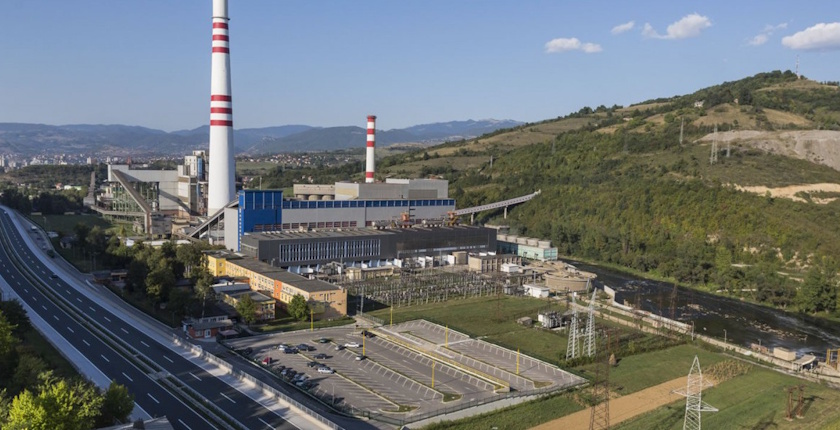
Desulfurization project at Kakanj thermal power plant to cut emissions by almost 100%

Bosnia and Herzegovina’s state power utility, Elektroprivreda BiH, is implementing a desulfurization project at units 6 and 7 of the Kakanj thermal power plant. The project is expected to reduce sulfur dioxide (SO₂) emissions by about 98.5%.

Currently, SO₂ emissions from the Kakanj plant amount to around 9,000 milligrams per cubic meter (mg/Nm3). With the construction of a joint desulfurization facility for units 6 and 7, the emissions will be cut by nearly 60 times, to below 150 mg/Nm3.

According to Bosnia and Herzegovina’s state power utility, Elektroprivreda BiH (EPBiH), the project is being implemented in line with Energy Community directives, which prohibit the operation of thermal units without desulfurization and denitrification systems after 2027, as well as with the obligations under Bosnia and Herzegovina’s National Emission Reduction Plan (NERP BiH) and EPBiH’s Energy Transition and Decarbonization Strategy until 2050.

Thanks to previously installed hybrid filters, dust emissions have already been reduced to below 10 mg/Nm3, significantly below the limits set by NERP BiH and EU directives, EPBiH said in a statement. The company also plans to build a denitrification facility to ensure nitrogen oxide (NOₓ) emissions are fully compliant with these regulations.

The denitrification project is valued at EUR 28.1 million

“Although these projects will allow the operation of our units beyond January 1, 2028 – ensuring the production of electricity from our own sources and heat for the town of Kakanj – the most important benefit for us as a socially responsible company will be the one we feel directly, in terms of improved quality of life. Cleaner air is a key factor in protecting public health and the environment, and it also strengthens our relationship with the local community. At the same time, we are ensuring continued operation of the coal mines that supply the power plant,” said EPBiH General Director Sanel Buljubašić.

The desulfurization project is worth BAM 126.4 million (EUR 62.8 million) and is financed with EPBiH’s own funds. The denitrification project will require an additional BAM 55 million (EUR 28.1 million). Upon completion, the Kakanj power plant will be fully compliant with EU directives and ready to operate for the next two decades.

Revitalization of Unit 7 underway

The desulfurization work on the 300-meter-tall chimney is expected to be completed by the end of this year. In parallel, EPBiH is carrying out the revitalization of Unit 7 – an investment worth BAM 80 million (EUR 40.9 million). These works should be completed by the end of May 2026, extending the unit’s lifespan by another 15 years.

Due to these activities, the plant’s current production is around 40% of its full capacity, according to the statement.

Preparations for desulfurization at thermal power plant Tuzla

In an effort to secure continued electricity generation from its coal-fired plants beyond the deadline set by the Energy Community, EPBiH is also preparing a desulfurization project for the Tuzla thermal power plant. The investment is estimated at BAM 170 million (EUR 86.9 million). The evaluation of bids for Unit 6 is underway, while tender documentation for units 4 and 5 is being prepared.

EPBiH’s goal is to cut overall emissions by up to 80% by 2050 by modernizing existing units and increasing generation from renewable energy sources, which will help reduce pollution significantly, improve public health, and protect ecosystems.

Sulfur dioxide emissions remain a major challenge for coal power plants across the Western Balkans. According to Comply or Close, a report by environmental organization Bankwatch, these plants emitted six times more SO₂ in 2024 than allowed, while combined PM and NOx emissions once again exceeded legal limits.

In 2024, Bosnia and Herzegovina’s thermal power plants became the region’s top sulfur dioxide polluters for the first time, releasing a total of 212,840 tonnes, or 17.1% more than in 2023 and 11.3 times above the permitted level.

by in News

Maćić: Exempting Serbia from CBAM for electricity would mean disastrously fast decarbonization; carbon tax will also block market coupling with EU

Obtaining an exemption from the European Union’s Carbon Border Adjustment Mechanism (CBAM) for electricity would mean a rapid and unfeasible decarbonization of Serbia’s energy sector, which would be unacceptable for households and businesses alike, according to Ljubo Maćić, special advisor at Serbia’s Economics Institute. This is why Serbia never sought an exemption. He added that the implementation of the carbon border tax will prevent the coupling of electricity markets between Serbia, other Energy Community contracting parties, and the European Union, and discourage investment in renewable energy in the region.

CBAM will apply from January 1, 2026. Although the tax was announced at least five years ago and is set to take effect in less than two months, there are still many unknowns about its implementation and impact, particularly in the electricity sector.

In preparation for its implementation, Serbia has drafted bills to tax greenhouse gas emissions and imports of carbon-intensive products, Ljubo Maćić noted at the Power Plants 2025 conference, organized by the Serbian Society of Thermal Engineers.

The law would allow electricity producers – primarily state-owned power utility Elektroprivreda Srbije (EPS), which will account for about 90% total GHG tax revenues and has the largest decarbonization needs – to receive a tax credit equal to 20% of investment in renewables.

The tax is set at EUR 4 per ton of CO2, which translates to about EUR 100 million annually in EPS’ case, not including the tax credit. The proposed rate is low compared to those in the EU, but many countries outside the bloc began with similar rates to protect the competitiveness of their industries, he said. Serbia’s tax would certainly increase in the coming years, Maćić warned.

The implementation of CBAM should not significantly affect EPS

The bill on the GHG emissions tax has two key shortcomings. First, the tax rate is set only for 2026, rather than for several years ahead. The second is that the tax revenues would not be allocated to a decarbonization fund but to the state budget. Maćić noted that tax revenues would go into the budget, but that the bill envisages the funds to be used for decarbonization. The solution is consistent with the revenue allocation model under the EU Emissions Trading System (EU ETS).

The bill is prudently designed, tailored to the circumstances and context, he said, adding that it would encourage changes in the right direction without jeopardizing energy security and energy prices.

“The implementation of CBAM should not significantly affect EPS, as the company doesn’t have the capacity for larger electricity exports and will likely seek to trade within this region, where the CBAM cost doesn’t apply. However, Serbia’s steel production will be particularly affected by CBAM, and this will be the hardest to address in terms of technology,” said Maćić.

Exemption for electricity

CBAM would reach its full effect over a transitional period from 2026 to 2034, aligned with the gradual rise in the CO2 price under the EU ETS. However, this will apply to all CBAM-covered goods except electricity, which will be subject to a full CBAM rate immediately.

This is why the Energy Community contracting parties were given the option to obtain an exemption for electricity until 2030, but only if they meet six conditions. A critical condition is that a country agrees to charge an emissions price equivalent to that under the EU ETS from 2030, according to Maćić. There is no indication that this doesn’t mean ‘the same price,’ he added.

Maćić explained how that would affect Serbia: The current CO2 price in the EU is EUR 80, but is expected to rise to above EUR 100, or even reach EUR 150, by 2030.

“Assuming that carbon emissions from power plants in Serbia decrease to about 22 million tons in 2030, the annual additional cost for EPS would be EUR 2.2 billion at a carbon price of EUR 100 per ton of CO2 and EUR 3.3 billion at EUR 150 per ton. If these costs were passed on to EPS’ consumers, the price would increase by about EUR 75 per MWh and EUR 110, respectively,” the expert stressed.

Of note, the market power price is currently around EUR 105.

However, not all of these costs can be passed on to end consumers, Maćić added. Households will likely be affected first if, by 2030, their electricity prices do not reach market levels. EPS cannot raise its electricity prices due to emissions costs above the market prices, because customers would switch to other, more competitive suppliers with lower emissions.

The European Commission is not willing to provide financial support for the region’s decarbonization

That is good for consumers, but it has its limits, because the production capacities of these suppliers are still far from sufficient, Maćić explained.

If other power companies in the region with a high coal share were to begin reducing their power generation, energy prices on the power exchanges would rise compared to the rest of the EU. This would result in faster price growth and volatility, in Maćić’s view.

These higher prices would affect power prices for businesses, further eroding their competitiveness, similar to what is already happening in the EU, he added.

Since the country must ensure enough electricity for all consumers, EPS would quickly incur huge financial losses, threatening the company’s operations and, more importantly, the security of the supply in Serbia.

“Such a rapid and costly decarbonization, even if it had begun earlier, would not be possible in Serbia without the ability to replace coal with other stable sources of supply. This is far from realistic, and the very idea of anyone undertaking such a fast and uncertain process is highly questionable,” Maćić stressed.

He underlined that the communication between the Ministry of Mining and Energy and European Commission institutions, the conclusions of the Energy Community Ministerial Council, and the documents within the Berlin Process for the Western Balkans six do not inidcate that the commission is ready to provide financial support for the region’s decarbonization above the level it has promised under the IPA and the Growth Plan, which is insufficient.

Three problems created by CBAM: market coupling will be blocked

According to Maćić, the European Commission has acknowledged that problems with applying CBAM to electricity exist, but has not yet offered solutions. There are three main problems, he added.

First, the existing solutions do not allow for the parallel functioning of CBAM and the coupled electricity markets of the Energy Community’s contracting parties and the EU, the expert claims.

“We have been talking about, preparing, and working on this integration for almost two decades. This, among other things, is one of the most important reasons why the Energy Community was established. CBAM will practically suspend the coupling,” Maćić insisted.

A second issue is that the costs of CBAM on electricity imports into the EU are based on the emissions factor of fossil fuel power plants, regardless of their share in the country’s power generation mix.

Maćić recalled that Serbia and other contracting parties have proposed that the emissions factor be equal to the national emissions factor, which corresponds to the electricity production mix. For Serbia, this factor is currently 1.04, but if the national power mix were taken into account, it would go down to 0.7, making the cost of CBAM about 40% lower, he explained.

All this will certainly affect trade and renewable energy investments in the region

Also, electricity producers in countries that export electricity to the EU cannot use either guarantees of origin or power purchase agreements (PPAs) to reduce the CBAM cost.

The third problem is that it is still unclear how electricity transit costs would be calculated, for example, from Bulgaria to Hungary via Serbia, and who would be required to cover them.

All this will certainly affect trade and renewable energy investments in the region, according to Maćić. This is already happening, and regardless of any potential solutions, the damage will remain, he warned.

Maćić also recalled that in June, similar issues were highlighted by the European Network of Transmission System Operators for Electricity (ENTSO-E), the European Federation of European Traders (EFET), and EUROPEX – Association of European Energy Exchanges.

They also proposed that the application of CBAM to electricity be postponed for at least a year, until solutions are found, he added.

Are there solutions?

A solution exists, according to Maćić, and it could be described as trivial: abolish CBAM for electricity.

He believes it is a legitimate question whether it was justified to introduce CBAM for electricity. The main reason for introducing CBAM is carbon leakage, which is not at all relevant in the case of electricity.

Second, total electricity imports from all Energy Community contracting parties are less than 1% of the EU’s production, and are declining. Ukraine was the only significant exporter, while imports from other countries are negligible.

“Applying CBAM to electricity would bring the EU modest climate and financial effects, while generating unsolvable problems, thwarting good intentions in market integration, and producing financial damage to the contracting parties and even larger damage to EU member states,” the expert asserted.

A less radical solution would be to postpone the implementation of CBAM, not by one but by ten years, to provide the power sector with additional long-term regulatory certainty and a stable business environment, in Maćić’s view.

Not everyone from the region can claim they have done everything they could

However, these issues do not concern the implementation acts, whose final versions are still pending, but for the CBAM regulation itself, whose amendments, as he understands, have already been implemented.

Maćić acknowledges that not everyone in the region can claim to have done everything in their power, but emphasizes that decarbonization ambitions and timelines must be realistic and supported by all necessary resources.

Maćić said he hopes the EU will show more understanding, a sense of reality, and a willingness to support the changes through solidarity. Such support could change the conditions and capacity for implementation, as well as the pace of decarbonization and changes to the energy mix, the expert underlined.

“The Energy Community Secretariat should also, when it comes to climate change, be more enthusiastic than it has been. It should be an advocate for the interests of the contracting parties in Brussels and more independent in its approach to the European Commission’s initiatives toward the contracting parties,” Maćić concluded.