AEA-Albania Energy Association
  • Main
  • About Us
  • Services
  • Sectors
  • News
  • EventsEvents
  • PublicationPublication
  • Contact Us
AEA-Albania Energy Association
  • Main
  • About Us
  • Services
  • Sectors
  • News
  • EventsEvents
  • PublicationPublication
  • Contact Us
AEA-Albania Energy Association
  • Home Page
  • About Us
  • Sectors
  • Our Services
  • News
  • Contact Us
February 10, 2026
by AEA in News

IEA: Power Demand Up 3.6%/yr to 2030 as Renewables Rise

Global electricity demand is projected to grow by an average of 3.6% per year through 2030, propelled largely by industrial electrification, the rapid uptake of electric vehicles, and the expanding power needs of data centres and artificial intelligence, the International Energy Agency (IEA) said.

In its Electricity 2026 report, the IEA expects renewables, natural gas and nuclear to cover all additional demand over the period. Electricity generation from coal is forecast to edge down, leaving CO₂ emissions from power generation broadly flat to the end of the decade. By 2030, renewables and nuclear are set to provide half of global electricity output, up from 42% today, the agency said.

Power Use Accelerates Faster Than Overall Energy Demand

The IEA estimates that electricity demand will expand at least 2.5 times faster than total energy demand. Key drivers include rising electricity use in industry, stronger EV adoption, higher air-conditioning demand, and continued growth in data centres and AI.

Global electricity consumption rose 3% year-on-year in 2025, after a 4.4% increase in 2024, the report notes.

Grid Investment and Flexibility Become the Next Bottlenecks

IEA Director of Energy Markets and Security Keisuke Sadamori said meeting the demand surge will require a significant upgrade of power networks. The IEA expects annual investment in electricity grids to rise by 50% by 2030.

Flexibility measures—such as storage, demand response and other balancing tools—will also be essential as power systems evolve, alongside stronger attention to security and resilience, Sadamori said.

Renewables Overtake Coal on the Back of Record Solar Growth

The IEA said global renewable power generation reached parity with coal in 2025 and is now moving ahead, supported by record solar installations. Renewable electricity output is expected to increase by around 1,000 TWh each year, with solar alone contributing more than 600 TWh annually.

Even so, the agency cautions that coal would still remain the single largest fuel source for electricity generation globally, despite a gradual decline.

EU: Renewables Share Seen at 63% by 2030

In the European Union, electricity demand is increasingly being met by renewables as coal use falls sharply. According to the report, renewables’ share of total EU power generation is expected to surpass all non-renewables combined as early as this year.

The IEA forecasts that renewables will exceed 50% of EU electricity generation in 2026, and rise to 63% by 2030, up from 48% in 2025. Wind and solar are projected to account for 46% of EU power output by 2030, compared with 30% in 2025.

By the end of the decade, the EU is expected to add more than 400 GW of net renewable capacity, around 70% from solar, split roughly evenly between utility-scale and distributed installations.

Nuclear Output Hits Record, Battery Storage Expands

The IEA said nuclear power is regaining strategic importance in many advanced economies. Global nuclear generation set a new record in 2025 and is expected to keep rising steadily through 2030.

The report also highlights rapid growth in utility-scale battery storage, particularly in California, Germany, Texas, South Australia and the United Kingdom, strengthening short-term system flexibility.

Connection Queues and Curtailment Rise as Grids Struggle

Despite strong momentum in renewables and storage, grid congestion is creating delays. The IEA estimates that as of 2025, at least 1,700 GW of advanced-stage renewable projects and more than 600 GW of battery storage projects were waiting in connection queues.

Grid bottlenecks are also driving higher curtailment. In Germany, wind curtailment rates between 2022 and 2024 were above 5%, while solar curtailment climbed to 2% in 2024. In China, 4.1% of wind and 3.2% of solar generation were curtailed in 2024, up from 2.7% and 2% in 2023, with preliminary 2025 data indicating curtailment rose above 5% for both wind and solar.

Coal Declines, Keeping Power-Sector CO₂ Emissions Flat

On the fossil side, the IEA expects natural gas-fired generation to increase, driven by rising demand in the United States and a shift from oil to gas in the Middle East.

Coal-fired generation is projected to fall as renewables expand, returning to 2021 levels by the end of the decade. As a result, global CO₂ emissions from electricity generation are expected to remain broadly flat through 2030.

The IEA forecasts emissions declines in major markets: between 2026 and 2030, China’s power-sector CO₂ emissions are expected to decrease by 0.2% per year on average, the United States by 1.4% annually, and the EU by around 11% per year. India, however, is projected to see emissions rise by an annual average of 2.4% over the same period.

February 9, 2026
by AEA in News

Himara Opens EU-Funded Plant to Protect Ionian Sea

A year ago, the view from Argjileo hill told an uncomfortable story. Across the bay from Himara’s port, the Ionian Sea was visibly darkened by a plume of untreated wastewater flowing into the water. Today, that stain is gone—and so are the lingering signs of coastal pollution.

Himara has inaugurated a new Wastewater Treatment Plant, a major infrastructure upgrade designed to stop untreated sewage from reaching the Ionian Sea. Local officials and project partners say the facility is a decisive step for environmental protection, public health, and sustainable coastal development in one of Albania’s most visited seaside destinations.

EU and German Funding Drives a “Flagship” Coastal Investment

The plant was built under the Rural Water Supply Programme IV, financed by the European Union and the German Government, and implemented by KfW in close coordination with the Albanian Development Fund.

Ms Mara Drochner, Director of the KfW Office in Albania, said the project shows how targeted investments in water and sanitation can improve quality of life while protecting the environment. She added that the facility supports alignment with EU environmental standards, contributing to Albania’s broader EU accession path.

Capacity for 16,000 Residents—Expandable to 24,000Located outside the city on the site of a former septic tank, the plant currently serves a population equivalent of 16,000 residents. A second phase is planned to expand capacity to 24,000 inhabitants, reflecting Himara’s growth and seasonal influx.

Project Manager Endrit Mullalli from “PWT Wasser und Abwassertechnik” said the plant uses a fully biological treatment process that meets EU standards, removing carbon and nitrogen without relying on chemicals.

How the Treatment Process Works

The system follows several stages, starting with pre-treatment before biological purification begins:

  • Coarse screening: Mechanical screens remove large debris carried through the sewer system, such as bottles, wood pieces, and textiles.

  • Removal of fats and oils: Grease is extracted to prevent disruption to the biological process.

After pre-treatment, wastewater enters two large aeration tanks, where biological purification takes place through aeration and denitrification. In these tanks, bacteria and microorganisms (biomass) feed on organic matter, breaking down carbon compounds and enabling nitrogen removal.

Sludge Handling and Safe Discharge Into the Sea

Following biological treatment, the water moves into sedimentation tanks where sludge settles. The sludge is then thickened and mechanically pressed to reduce water content, creating a soil-like dry mass. It is transported to Pilur, Himara’s waste management site, where solar drying further reduces moisture.

According to Mullalli, the final sludge product can be used safely for fruit trees and flowers, but not for vegetables.

Before discharge, the remaining treated water undergoes a final step: chemical-free ultraviolet (UV) disinfection. The goal is to protect swimmers, marine life, and sensitive coastal ecosystems, including Himara’s Posidonia seagrass. The outflow is released at a depth of 25 metres through roughly 200 metres of underwater piping installed under the project.

Real-Time Monitoring With SCADA

The plant is monitored online via a SCADA system, supported by regular laboratory analyses. Sensors continuously track dissolved oxygen levels, while blowers are automatically adjusted through SCADA to maintain target values.

Sewer Network Upgrades and Pumping Stations Added

The project also rehabilitated and expanded Himara’s sewerage network, including:

  • New pressure and corrugated piping

  • Household connections and manholes

  • Septic tank improvements

  • Six pumping stations to channel wastewater to the plant

  • Electrical works and grid connections

  • Two vacuum trucks—one for septic tank emptying, another for cleaning and flushing

Built for Seasonal Tourism Peaks

Himara’s population surges in summer, and the plant is designed to match that demand. It treats a minimum of 1,800 cubic metres per day in winter and up to 5,000 cubic metres per day in summer.

It operates with two parallel treatment lines—one sufficient for winter operations, with both lines used during the summer peak.

Municipality: Cleaner Sea, Fewer Odours, Stronger Tourism

For the Municipality of Himara, the change is already visible. Thimjo Gjinuci, an administrator in the municipality, said the plant has eliminated sea pollution and unpleasant odours, helping improve the experience for residents and tourists alike. He noted that two nearby campsites now benefit from a cleaner environment.

The municipality plans to connect Livadh’s sewage system to the facility and is also considering smaller plants for Qeparo and possibly Dhërmi.

February 9, 2026
by AEA in News

CWP Romania’s Largest Solar Plant Studina Goes Live, Battery Storage Next

The Studina solar power plant has entered regular commercial operation, developer CWP Europe announced. With 174 MW of peak capacity, the project is currently Romania’s largest operating photovoltaic plant, although several bigger utility-scale developments are already underway. The next milestone for Studina is the addition of battery energy storage.

Studina to Produce 245 GWh a Year in Olt County

CWP Europe estimates the Studina photovoltaic plant will generate around 245 GWh annually—enough electricity to supply more than 122,500 Romanian households. The site is located in Olt county, southwest of Bucharest.

At 174 MW nameplate capacity, Studina has taken the top spot among Romania’s operational solar facilities, surpassing Econergy’s Rătești plant (155 MW).

Bigger Solar Parks Already in the Pipeline

Studina’s lead is expected to be temporary as Romania’s solar pipeline accelerates. Nofar Energy is constructing the 282 MW Corbii Mari solar park, while the investment arm of Sweden-based Ingka Holding—the world’s largest IKEA franchisee—is developing the 300 MW Butimanu PV project, with completion targeted for April 2027.

Meanwhile, Enery is preparing to start construction on a major project of 750 MW peak capacity near Bucharest, alongside several other large-scale developments in progress.

Battery Storage Next: Permit Secured for Co-Located System

CWP Europe said Studina has also obtained a building permit for a co-located battery energy storage system, with construction planned as the next phase. The company added that the project was built in partnership with Renalfa.

EPC Partners, Contractors and Equipment

CWP Europe credited its construction team and engineering partners for delivering the project safely and on schedule. Chief Financial Officer and Chief Operating Officer Alex Sekulovic said close coordination and disciplined execution—together with EPC partners Solarpro and Eximprod—helped ensure quality standards and compliance with EHS (environmental, health and safety) requirements, with zero accidents reported during construction.

Solarpro is part of the Austria-based Renalfa Solarpro Group. Siemens Energy was among the contractors, while LONGi supplied Hi-MO 7 bifacial solar modules.

CWP Europe Executive Vice President Viktor Garbev said the project highlights the company’s ability to secure sites, build partnerships, navigate permitting, and deliver assets at scale in demanding technical and regulatory environments.

Grid Connection and Ownership: China Huadian Has Minority Stake

According to recent Romanian media updates, Studina has a 134 MW grid connection, and Chinese state-owned China Huadian Corp. holds a minority stake in the project company.

Related Deal: CCE Sells Horia 2 Project to Renalfa Solarpro

In a separate transaction, CCE sold its Horia 2 solar project to Renalfa Solarpro Group in January. The planned facility is sized at 293.3 MW peak capacity with a 269.2 MW grid connection. Located in Arad county, the site covers 349 hectares.

February 9, 2026
by AEA in News

Bulgaria’s Biggest Solar Plan Stalled in Court

Suhindol Solar Park Faces Legal Setback After Local and Environmental Complaints

Environmental organizations and residents in Suhindol, north-central Bulgaria, are pushing back against a planned EUR 450 million hybrid renewable energy project that would combine a 500 MW solar park with 1 GWh of battery storage. Opponents argue the development would significantly reduce available agricultural land in the municipality, while the investor says it is ready to implement environmental safeguards and a community support program.

Court Cancels Approval for Preliminary Works

Following complaints filed by environmental groups, the Administrative Court in Veliko Tarnovo overturned the approval for preliminary works on a hybrid power plant planned across 945 hectares (almost 9.5 square kilometers) near Suhindol.

The project is being led by Wabi-Sabi Alpha, a company linked to Austria-based Green Source Group. The firm had received the go-ahead two weeks earlier from the Regional Inspectorate of Environment and Water (RIEW) in Veliko Tarnovo.

500 MW Solar Park With 1 GWh Batteries

Through its project company, Wabi-Sabi Alpha plans to build a solar facility with 500 MW peak capacity, supported by battery storage designed for 250 MW operating power and 1 GWh capacity, as reported by Kapital.

If completed, it would become Bulgaria’s largest photovoltaic project, though the development is structured into five separate units. These would connect to the national transmission grid through a 400 kV substation.

The company secured municipal land under a 36-year lease, with total investment estimated at EUR 450 million.

Land Use Concerns: Arable Land and Pastures in Focus

Environmentalists, including the Bulgarian Society for the Protection of Birds (BSPB/BDZP), along with local residents, claim the investor began cutting trees and bushes before all procedures were completed.

Critics warn the project could affect:

  • Nearly 11% of the municipality’s arable land

  • Around 40% of its pastures

  • About 6% of Suhindol’s overall territory

While the hybrid power plant would physically cover about 30% of the designated project area—spread across multiple separate plots—opponents stress that the entire zone would be reclassified as industrial land.

Some local voices have also raised concerns about potential impacts on wildlife habitats, protected areas and species, and the proximity of archaeological sites. Opponents argue that the environmental assessment process was treated as a formality rather than a rigorous review.

Investor Offers Community Program and Compensation

Wabi-Sabi Alpha says it is prepared to go beyond the measures required by the environmental authorities. The firm has outlined a community program that includes:

  • Compensation for affected farmers

  • Covering electricity costs for several municipal buildings

  • Paying for street lighting, which it would also replace

  • Sponsorship support for the local football club, among other initiatives

Green Source’s Regional Footprint

Green Source Group is active across multiple markets in Central and Southeastern Europe, including Romania, Croatia, Serbia, Hungary, Slovakia, and the Czech Republic. The company established Wabi-Sabi Alpha together with LSG Group and Core Value Capital.

Wider Resistance to Large Renewable Projects

The dispute in Suhindol comes amid a broader trend in Bulgaria, where citizens and activist groups have campaigned in recent years against several large-scale renewable energy developments, often citing land use, biodiversity, and transparency concerns.

February 9, 2026
by AEA in News

EU Greenlights Key Step for Greece’s Prinos CO₂ Storage Project

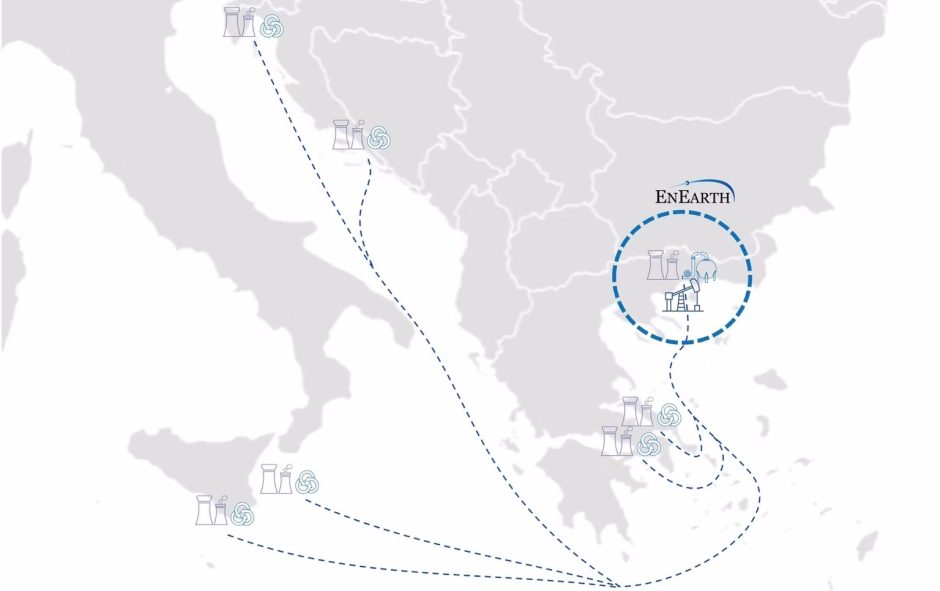
EnEarth is advancing plans to develop a carbon dioxide storage hub in depleted offshore oil reservoirs beneath the Aegean Sea, near the northern Greek city of Kavala, after receiving a favorable opinion from the European Commission on its storage permit application submitted around a year and a half ago. Including related infrastructure, the project’s total value could reach up to EUR 1.2 billion.

The European Commission’s Directorate-General for Climate Action (DG CLIMA) issued the positive opinion following its review of EnEarth’s proposal to store CO₂ in the Prinos reservoir. According to the company, the technical documentation submitted meets EU requirements and demonstrates that the site is suitable for safe, long-term storage. EnEarth added that the assessment highlights the strength of its geological and technical studies, supporting the company’s approach to understanding reservoir dynamics and establishing systematic monitoring procedures.

Prinos lies beneath the Aegean Sea in the Kavala Gulf area. EnEarth is a subsidiary of Energean, headquartered in the United Kingdom.

“It confirms what we already know – that Prinos is a safe storage site and a vital player in decarbonising hard-to-abate industry in Europe and Greece, and helping our country meet its goal of reducing emissions by 80 per cent by 2040,” EnEarth Managing Director Nikolas Rigas said.

Permitting decision rests with Greece’s licensing authority HEREMA

EnEarth stressed that the Commission’s opinion is not legally binding, but described it as a significant milestone that strengthens the ongoing evaluation by Greece’s licensing authority, the Hellenic Hydrocarbon and Energy Resources Management Co. (HEREMA), which will make the final decision on issuing the storage permit. EnEarth filed its application with HEREMA in July 2024.

EU funding totals EUR 270 million; EBRD backs equity investment

EnEarth said it has secured EUR 270 million in European Union support for the Prinos project, including EUR 150 million via the Recovery and Resilience Facility and National Recovery and Resilience Plan 2.0, and EUR 120 million through the Connecting Europe Facility.

The European Bank for Reconstruction and Development (EBRD) approved an equity investment in EnEarth last year of up to EUR 75 million. The lender said at the time that the project value was estimated at EUR 918 million, and noted it would be EBRD’s first carbon storage project.

Injection rates: up to 1 Mt over 20 years in phase 1, rising later

Under phase 1—covered by the current permit application—EnEarth plans an injection rate of up to one million tons over a 20-year period. The company said capacity could later be increased to as much as three million tons per year.

Photo: EnEarth

Photo: EnEarth

The European Union has also included the Kavala Gulf initiative among its projects of common interest (PCIs), an EU designation intended to facilitate strategic cross-border energy infrastructure.

Timeline: market test framework pending; pilot drilling planned; start targeted for 2030

EnEarth said it is awaiting completion of the legal framework needed to conduct a market test, starting with non-binding bids and moving to binding offers. The company then aims to begin pilot drilling in the summer and may take a final investment decision later this year. Based on current planning, the targeted start date is the first quarter of 2030.

In Greece, the most advanced carbon capture initiatives are being pursued by oil refiners Motor Oil and Hellenic Energy, and cement producers Titan and Heracles. EnEarth said it intends to provide CO₂ storage services not only domestically but also to emitters in neighboring and regional markets such as Bulgaria, Cyprus, Croatia, Italy and Slovenia. Still, it acknowledged that Prinos’s capacity is constrained relative to projected emissions and expected demand.

Separately, Greece signed a memorandum of understanding about a year ago with Egypt on carbon capture, utilization and storage (CCUS). Some estimates place Greece’s total CO₂ storage potential as high as 580 million tons.

February 9, 2026
by AEA in News

Romania Nears 3.35 GW in capacity prosumers as residential solar catches up with business installations

Romania had nearly 290,000 prosumers by the end of November, with a combined installed capacity of 3.35 GW, according to the national energy regulator. While prosumer projects have been the main driver of the country’s solar expansion for years, utility-scale developments moved to the forefront in 2025. At the same time, the prosumer segment is showing a notable shift: residential capacity has effectively converged with installations owned by legal entities, including small companies and institutions.

In its latest update, the Romanian Energy Regulatory Authority (ANRE) reported 287,985 prosumers at the end of November, together accounting for 3.35 GW of electricity production capacity. That represents a sharp year-on-year increase of 47.8% in the number of prosumers and 43.4% in installed capacity. The comparison with previous years highlights the scale of the boom: Romania counted just 303 prosumers at the end of 2019, and the country crossed the 3 GW prosumer threshold in August last year.

Households nearly match legal entities in installed capacity

ANRE’s data also point to a narrowing gap between households and non-household prosumers. The number of residential prosumers reached 257,748, compared with 30,237 legal entities. Installed capacity was almost evenly split between the two categories: households held 1.67 GW, while legal entities accounted for 1.68 GW.

Energy storage deployment also continued to accelerate. ANRE said 58,012 prosumers had integrated batteries alongside their rooftop solar systems. Households represented 55,962 of those installations, meaning more than one in five residential prosumers had storage.

Industry estimate: solar capacity exceeded 7 GW in 2025

Separately, the Romanian Photovoltaic Industry Association (RPIA) estimated that Romania’s total installed solar capacity surpassed 7 GW in 2025. The association assessed net additions at 2.2 GW over the year, up from 1.7 GW in the preceding 12-month period.

RPIA attributed the strongest momentum to utility-scale projects, estimating they contributed 1.2 GW of new capacity—almost double the level recorded in 2024—largely supported by renewable energy auctions conducted under contracts for difference (CfDs). Prosumers added an estimated 1 GW. RPIA further said residential systems reached 1.8 GW by the end of last year, broadly in line with commercial and industrial (C&I) installations.

Looking ahead, RPIA projects new solar capacity in 2026 at 2.5 GW. If delivered, that pace would bring Romania to its 10 GW target for 2030 well ahead of schedule.

In wider regional developments, Turkey is preparing to allocate 3.5 GW of capacity for self-consumption in 2026. Energy and Natural Resources Minister Alparslan Bayraktar said recently that priority would be given to local authorities, public institutions, and strategic, export-oriented sectors.

February 9, 2026
by AEA in News

GCL Moves Knjaževac Solar Project Forward as Serbia’s Large-Scale PV Pipeline Expands

Chinese energy group GCL has advanced its plans for the Knjaževac solar power plant, a major photovoltaic project proposed for eastern Serbia and among the country’s largest developments currently in the pipeline.

The Municipal Council of Knjaževac has launched the process to draft a detailed regulation plan for the facility. A public consultation on the draft decision was held from February 3 to 5. Once the decision to prepare the plan is formally adopted, authorities will open a second public discussion lasting 15 days.

According to the draft decision, the initiative was filed by the prospective investor, Central Europe Energy Company, a Belgrade-registered entity. The company is 90% owned by China’s GCL Intelligent Energy (Suzhou), with the remaining 10% held by Central Europe Consulting Company, also based in Belgrade.

The project has already cleared an important grid-related milestone. In May 2025, Central Europe Energy Company signed a grid connection agreement with Serbia’s transmission system operator, Elektromreža Srbije (EMS). The signing was part of a broader package of 11 renewable energy projects contracted by EMS at the time. EMS said that, among nine solar projects included in that round, the Knjaževac photovoltaic plant carried the highest proposed capacity at 136 MW.

Municipality head Milan Đokić described the development as the largest investment in Knjaževac’s history, estimating its value at EUR 200 million, as reported by local outlet Knjaževačke Novine.

Planning documentation will cover roughly 267 hectares, spanning parts of the cadastral municipalities of Krenta, Ponor, Mučibaba, and Miljkovac within the municipality of Knjaževac. The preparation deadline for the detailed regulation plan is set at 12 months, and the decision also предусматривает a strategic environmental assessment.

Serbia’s solar market is growing from a relatively low base. The country’s largest operating solar park is currently the 27 MW facility installed by Nofar Energy, while the biggest project by planned capacity is CWP Europe’s 150 MW Solarina development.

GCL is active across most continents, with a core business centered on solar module and energy storage battery manufacturing, alongside the development of low-carbon energy solutions.

February 5, 2026
by AEA in News

Saudi Arabia to build 2 GW of solar power in Turkey within 5 GW deal

After extended negotiations, Saudi Arabia has signed an agreement enabling its companies to develop solar power plants totaling 2 GW across two provinces in Turkey. The move forms part of a broader bilateral framework covering 5 GW of photovoltaic and wind capacity.

Turkey’s Minister of Energy and Natural Resources, Alparslan Bayraktar, and Saudi Arabia’s Minister of Energy, Abdulaziz bin Salman Al Saud, signed an intergovernmental agreement focused on renewable electricity generation. Bayraktar said the objective is to deliver a combined 5 GW of solar and wind power plants in Turkey with Saudi Arabian companies.

In the first phase, two 1 GW solar projects are planned: one in Taşeli in Karaman province and another in Sivas province, Bayraktar said.

Bilateral agreements positioned as a new model for large-scale projects

Bayraktar noted that tenders under Turkey’s state-backed Renewable Energy Zones mechanism (REZ/YEKA) are continuing, alongside investments in self-consumption power plants and energy storage projects. He described intergovernmental and bilateral agreements as a new model for delivering large-scale electricity generation projects, adding that such structures can secure electricity at significantly lower prices over long periods. He made the remarks in Riyadh, where the negotiations were concluded.

Bayraktar reiterated Turkey’s target to triple its combined wind and solar PV capacity to 120 GW by 2035.

He also said the investments—described as a major example of foreign direct investment in Turkey’s energy sector—would be financed externally, with loans expected from international financial institutions.

25-year offtake terms and pricing

Bayraktar stated that electricity from the Karaman solar plant would be purchased for 25 years at 1.995 euro cents per kilowatt-hour (EUR 19.95 per MWh), while power from the Sivas project would be priced at 2.3415 euro cents per kilowatt-hour. He said both levels are the lowest among Turkey’s renewable electricity plants.

He added that the projects are expected to support Turkey’s electrical equipment and services sectors through a 50% locality rate. Bayraktar estimated the first two solar power plants will require around USD 2 billion in investment and will cover the electricity needs of 2.1 million households.

According to Bayraktar, foundations are scheduled to be laid in 2027, with overall completion targeted across 2028 and 2029.

Bayraktar previously said Turkey had been in talks with Saudi partly state-owned utility ACWA.

Turkey had 25.1 GW of solar capacity and 14.8 GW of wind capacity at the end of last year, within a total installed power capacity of 122.5 GW. Bayraktar also said last week that 3.5 GW of self-consumption capacity would be allocated this year, prioritising local authorities, public institutions, and strategic and export-oriented sectors.

February 5, 2026
by AEA in News

GEN-I to optimize operation of R.Power’s battery system in Romania

GEN-I and R.Power have signed a long-term optimisation agreement for the Scornicesti battery energy storage system (BESS), one of Romania’s largest utility-scale storage projects currently under development. The project is planned with an installed capacity of 127 MW and an energy storage capacity of 254 MWh.

Under the deal, GEN-I will serve as the exclusive commercial optimiser and trading partner for the Scornicesti BESS, covering the period from the start of commercial operations through to the fifth anniversary of full revenue activation. GEN-I will oversee the asset’s commercial optimisation across wholesale electricity markets and ancillary service mechanisms, including market optimisation, revenue management and real-time dispatching, supported by 24/7 algorithmic trading operations.

Igor Koprivnikar, Ph.D., MBA, Member of the Management Board of GEN-I, and
Rafał Hajduk, Chief Commercial Officer at R.Power.

The partnership is structured around a long-term revenue-sharing model, aligning the interests of R.Power as the asset owner and GEN-I as the optimisation partner. Alongside performance-based revenue sharing, GEN-I will also provide a minimum revenue guarantee, intended to deliver more predictable cash flows for the project while supporting the long-term market value of the battery asset.

“This agreement represents another important step in the expansion of GEN-I’s battery storage optimisation portfolio in Central and South-Eastern Europe,” said Igor Koprivnikar, Ph.D., MBA, a member of GEN-I’s Management Board. He added that Romania is undergoing a power-market transformation, with growing renewable capacity and an increasing role for flexibility and storage solutions in maintaining system balance. According to Koprivnikar, GEN-I aims to translate market complexity into value for asset owners by combining regional market knowledge, real-time trading capabilities and long-term optimisation expertise.

The Scornicesti project is co-owned by R.Power and its joint venture partner Eiffel Investment Group, following Eiffel’s acquisition of a 49.9% equity stake in October 2025. The optimisation agreement marks a key milestone in establishing the project’s long-term commercial strategy ahead of market entry.

GEN-I said the agreement strengthens its position as an independent optimiser for utility-scale battery energy storage systems in Central and South-Eastern Europe. The company added that by supporting efficient market participation, system services provision and dynamic revenue optimisation, it helps investors and developers unlock the value of flexibility assets while contributing to power system stability and the integration of renewable energy.

About GEN-I

Founded in 2004, GEN-I is an energy market participant active across 27 markets in Europe. The company was recognised as Best Energy and Power Dealer in Europe in the Energy Risk Commodity Rankings 2025. GEN-I operates in wholesale energy trading and provides services linked to the green transition, including renewable portfolio management, ancillary services and battery energy storage optimisation. It said its optimisation models, 24/7 trading operations and integrated risk and operational processes support its goal of becoming a leading asset optimiser in Central and South-Eastern Europe.

About R.Power

R.Power is an independent power producer active in renewable energy across multiple European markets, with operations spanning origination and development through to commercialisation and long-term operation. Founded in 2010 and headquartered in Warsaw, the company has 1.4 GW of projects operational or under construction. Its growth strategy includes a pipeline of grid-secured battery energy storage projects, both standalone and hybrid with solar PV. R.Power said it has more than 10 GW of grid-secured, utility-scale BESS, hybrid and renewable generation projects across markets including Poland, Romania, Germany, Italy, Portugal and Spain.

R.Power’s long-term equity investment partners include the European Bank for Reconstruction and Development and the Three Seas Initiative Investment Fund (3SIIF), advised by Amber Infrastructure, while its debt finance partners have included BNP Paribas and ING.

February 5, 2026
by AEA in News

Chinese wind turbine supplier Goldwind probed in EU over alleged foreign subsidies

The European Commission has opened an in-depth investigation into possible foreign subsidies that may have given Chinese wind turbine manufacturer Goldwind an unfair advantage in the European Union’s internal market. The probe follows a preliminary investigation into several Chinese wind turbine suppliers.

The European Commission said it had started a preliminary investigation in April 2024 into several companies active in the EU wind sector, including Goldwind, by sending them requests for information. The probe was launched under the EU’s Foreign Subsidies Regulation (FSR).

Its findings indicate that Goldwind may have been granted foreign subsidies that distort the EU internal market. Goldwind is active in the EU through subsidiaries, including one called Vensys, according to a press release from the commission.

Foreign subsidies may harm competition in the EU wind turbine market

The possible foreign subsidies include grants, preferential tax measures, and preferential financing in the form of loans, which may improve Goldwind’s competitive position and negatively affect competition for the supply of wind turbines and related services in the EU.

Goldwind turbines have been installed across the region tracked by Balkan Green Energy News, including in North Macedonia, Greece, Romania, and Turkey.

In a statement, Goldwind said it would cooperate with the relevant EU authorities throughout the investigation, adding that it hoped that fact-based and constructive communication with the European Commission would help clarify the facts.

Goldwind says it will cooperate with the authorities and that its EU business is currently unaffected

The company also stressed that currently, its business activities in the EU market continue to operate normally, and that it remains dedicated to providing its customers and partners with consistent, high-quality service and support.

  • 1
  • …
  • 8
  • 9
  • 10
  • 11
  • 12
  • …
  • 140

AEA – Albania Energy Association is a industry association dedicated to representing the interests of Albanian and West Balkan for energy producers and consumers. AEA works to advance the development and adoption of sustainable energy solutions in Albania and the Western Balkans, supporting the region’s transition toward a cleaner, more secure, and more competitive energy future. AEA is registered by decision of the Court of Tirana, DECISION NO. 3032, (VAT:L11827451K).

[email protected]

Address
Blv Zogu 1
Tirana
1057
ALBANIA

LinkedIn  |  Facebook
Events
May 25, 2022 Connecting Green Hydrogen Europe 2022
May 25, 2022 Energy Week Western Balkans 2022
Copyright © Albania Energy Association