AEA-Albania Energy Association
  • Main
  • About Us
  • Services
  • Sectors
  • News
  • EventsEvents
  • PublicationPublication
  • Contact Us
AEA-Albania Energy Association
  • Main
  • About Us
  • Services
  • Sectors
  • News
  • EventsEvents
  • PublicationPublication
  • Contact Us
AEA-Albania Energy Association
  • Home Page
  • About Us
  • Sectors
  • Our Services
  • News
  • Contact Us
February 5, 2026
by AEA in News

Slovenia endorses key green energy, grid investments

Slovenia selected a range of projects eligible for support via the European Union’s Modernisation Fund. The focus is on battery storage and distribution grid. Two proposals for photovoltaics are for sites envisaged for investments in batteries as well.

The Government of Slovenia added three solar power projects to the development program through 2029. Eligible for grants from the Modernisation Fund, they are developed by hydropower plant operators Dravske elektrarne Maribor (DEM) and Soške elektrarne Nova Gorica (SENG).

Both firms are subsidiaries of state-owned Holding Slovenske elektrarne – HSE. On a separate list for grants via the same EU fund, DEM and SENG have battery storage projects at the locations of two out of their three investments in photovoltaics.

The Zlatoličje-Formin solar power plant, of 2.5 MW, is envisaged for expansion. It is on the bank of a canal downstream from DEM’s Zlatoličje hydropower plant.

The current project is for 21.9 MW and an annual output of 24.1 GWh. It won the grant of EUR 8.4 million in December from the Modernisation Fund.

DEM, which is planning a battery energy storage system (BESS) in Zlatoličje as well, is providing the remainder of the required EUR 21.7 million. It scheduled the commissioning of the solar power plant for March 2028.

The firm’s other PV project is for the ZOOP Maribor solar power unit. It would have up to 10 MW in capacity. The location is on a former municipal waste landfill called Pobrežje, in Maribor, Slovenia’s second-largest city.

ZOOP Maribor is valued at EUR 9.6 million, of which EUR 4 million euros is from the EU fund.

Solar power plant expansion, BESS at Avče pumped storage hydropower plant

SENG is also expanding a small PV unit and adding a BESS facility. The Kanalski Vrh facility is at the upper reservoir of its Avče pumped storage hydropower plant, the only one in the country.

The plan is to increase the capacity of the solar power plant to 7.3 MW and achieve 8 GWh in annual production. SENG is getting a EUR 5.9 million grant for the EUR 14.1 million project.

Battery storage, distribution grid upgrades have priority in applying for Modernisation Fund grants

The two BESS projects are from a list that the Ministry of the Environment, Climate and Energy published last week. It contains priority investments for grants from the Modernisation Fund, under a call that Slovenia issued last year.

In the so-called A list are 46 proposals worth an estimated EUR 164.5 million altogether.

There are 31 BESS projects. DEM has qualified three: Zlatoličje, Mariborski otok and Dravograd, and SENG’s battery storage investments are called Solkan and Avče.

Among the remaining developers are HSE, with two projects, and Petrol, with eight. A firm called Zelena perspektiva BHEE, baterijski hranilniki has six. Three are under development by Power Up Energy, energetske rešitve.

Gorenjske elektrarne, part of GEN Group, is planning two BESS facilities, of which one would be at its Moste hydropower plant.

The remaining five battery storage projects belong to GEK Solar, projektiranje in inženiring; PowerVault, shranjevanje energije; Core Grid; Baterija 1, upravljanje energije; and Termoelektrarna Brestanica.

All other priority projects are for upgrades of the power distribution network. The B list consists of five reserve proposals. Four are for district heating and one is for a thermal energy storage system.

February 5, 2026
by AEA in News

Serbia’s power utility EPS boosts profit to over EUR 360 million in 2025

Serbian state-owned power utility Elektroprivreda Srbije (EPS) posted a RSD 42.3 billion (EUR 360.3 million) profit for 2025, a significant increase from RSD 26.1 billion the previous year, though still well below the record RSD 114 billion, achieved in 2023. At the EPS shareholder meeting, Serbia’s minister of energy and mining recalled that construction of 1 GW of solar with battery storage is expected to begin this year.

Minister of Energy and Mining Dubravka Đedović Handanović said EPS’s three consecutive years of profitable operations were the result of “prudent and rational management.”

She stressed that 2025 was a year of challenges and reforms and pointed to increased coal production and higher electricity output from thermal power plants. The minister recalled that 76 MW of renewable energy capacity was brought online last year, and that, for the first time, EPS’s power generation portfolio now includes wind and solar.

EPS commissioned 76 MW of renewable energy capacity in 2025

Đedović Handanović also recalled that EPS completed the trial operation of a flue-gas desulfurization system at coal-fired power plant TENT A, as well as the construction of a similar facility at TENT B.

She added that EPS’s investments in 2025 amounted to RSD 52.7 billion, or 97% of the plan, of which RSD 44.97 billion came from its own funds.

The minister said that most of the overhaul work on the second unit of pumped storage hydropower plant Bajina Bašta was completed last year, and that the facility will contribute to Serbia’s energy security at full capacity starting in March.

Đedović Handanović: Pumped storage hydropower plant Bajina Bašta will operate at full capacity from March

She also called for stepping up efforts on the project to build the Bistrica pumped storage hydropower plant, as well as solar power plants.

Construction of 1 GW of solar with batteries should begin this year

Speaking about the 1 GW solar power project with battery storage, Đedović Handanović said that its implementation is expected to begin in 2026 “due to the scope and complexity of the preparatory activities.”

In October 2024, Serbia signed an agreement with the Hyundai Engineering – UGT Renewables consortium on building solar power plants with a total connection capacity of 1,000 MW (1,200 MW in nameplate capacity), along with battery energy storage systems of up to 200 MW in overall capability and a capacity of 400 MWh.


February 5, 2026
by AEA in News

North Macedonia unveils EUR 5.7 billion plan for new power plants, energy storage

North Macedonia’s 2026 plan includes 67 power plant projects of at least 1 MW each, for investments totaling an estimated EUR 3.74 billion, and 96 acceptable proposals for standalone and co-located energy storage facilities, worth EUR 1.98 billion. The deadlines are to be ascertained at a later stage.

Minister of Energy, Mining and Mineral Resources of North Macedonia Sanja Božinovska today presented another annual plan for the construction of power plants and energy storage systems. The Law on Energy of 2025 stipulates adopting one every year.

The ministry approved 67 power plant projects, for facilities of at least 1 MW each, on a first-come, first-served basis. Another section is for co-located energy storage systems and standalone ones of 1 MW and more – where a combined 96 got the green light. The investments amount to EUR 5.72 billion in total, the estimate shows.

The ministry received 284 initiatives overall from developers by the October 1 deadline.

Photovoltaics surpass 3 GW

There are 59 photovoltaic projects in the roster, for 3.01 GW altogether and EUR 2.11 billion. The plan contains seven wind power plants of 907.7 MW and for EUR 1.18 billion, respectively. One project is for gas-fired cogeneration, of 495 MW, estimated at EUR 445.5 million.

Standalone energy storage projects amount to 638 MW in operating power in the current annual round

As for storage, 77 systems would be integrated with either the existing or new power plants. The sum of their envisaged operating power is 1.39 GW, for 3.47 GWh in capacity. It translates to two and a half hours in average duration.

Nineteen initiatives are for standalone storage systems of at least 1 MW. They total 638 MW in capability and 1.49 GWh, averaging two hours and twenty minutes. The ministry estimated investments in energy storage in the two categories at EUR 1.98 billion.

Ministry highlights project proposals from municipal plans

In addition, local authorities in Makedonski Brod, Lozovo, Debrca, Kavadarci, Kumanovo, Brvenica and Kočani submitted municipal energy plans. They contain proposed units of up to 1 MW.

The ministry deemed 56 photovoltaic projects acceptable, for 51.9 MW overall. The 61 energy storage units in the list would have 27.7 MW in operating power and 117.6 MWh in nominal capacity, which means more than four hours on average.

According to the national plan, there are 82 proposed units (including for storage) of more than 10 MW, which means they would be connected to the transmission network. The remaining 148 would be integrated into the electricity distribution network. The number includes the items from the municipal plans.

Within the document is the preliminary grid and market analysis by transmission system operator MEPSO and distribution system operator Elektrodistribucija, produced in cooperation with the ministry.

“Our goal is a clear balance – economic development, environmental protection and a strong public interest. These documents bring order, security and a long-term vision for the energy sector,” Božinovska stressed. She added that the plan would facilitate higher standards, stricter control and clear rules.

Asked about the deadlines for installation, she pointed out it depends on several factors, such as the time required to complete the documentation, obtain equipment from China and secure financing. The government will obligate investors to provide bank guarantees of EUR 25,000 per MW, so it will become clear within three months exactly who is building what and where and how, the minister underscored.

February 5, 2026
by AEA in News

NGEN Group enters Latvia with EUR 50 million investment

NGEN Group took over 100% of Latvian firm Liepāja ESS to implement a standalone grid-connected battery energy storage project for 100 MW in operating power and a capacity of 200 MWh. The Slovenia-based investor opted for Tesla’s solutions, marking their joint entry into the region.

At a media event that the Investment and Development Agency of Latvia (LIAA) organized today, NGEN Group announced its entry into the Latvian market with a EUR 50 million investment. The Slovenia‑based energy company has become the 100% owner of local enterprise Liepāja ESS, to implement a standalone grid-connected battery energy storage project.

The envisaged capability is 100 MW and the capacity is 200 MWh. The site is near the Grobiņa substation in Dienvidkurzeme – south Kurzeme. As for the schedule, the facility, worth an estimated EUR 30 million, should come online in the second half of the year.

NGEN’s battery storage facility is set to become the first one integrated with the transmission grid

“The development of such projects is a significant step in the development of Latvia’s energy infrastructure. It will be the first energy storage station in the Baltics to use Tesla technologies. This is proof to international investors that Latvia is a safe country for investments and can implement significant energy projects based on open and predictable procedures,” said Minister of Economics Viktors Valainis.

It would be the first standalone battery energy storage system (BESS) directly connected to the network of the country’s transmission system operator Augstsprieguma tīkls (AST). Importantly, the project is being built using the supply chains of countries within the North Atlantic Treaty Organization (NATO) and their allies, including the main equipment, from the United States, the statement adds.

“Latvia is an attractive market for the development of such solutions, thanks to orderly regulation and strong ambitions in the energy sector. The acquisition of Liepāja ESS is a logical next step in expanding our operations in Europe, demonstrating that storage strengthens system security and market efficiency,” said Chief Executive Officer of NGEN Group Roman Bernard.

The company specializes in energy storage and flexibility solutions.

Tesla, NGEN Group entering Baltics market together

The project will strengthen balancing capabilities, reliability and flexibility of the Latvian energy system, LIAA said. It is especially important after disconnection from the BRELL (Belarus-Russia-Estonia-Latvia-Lithuania) network a year ago, according to the agency.

“Tesla is excited to further strengthen our long-term partnership with NGEN Group by entering the Baltics market together. This strong collaboration will help deliver Megapack technology to support the Latvian electrical system in its advanced progress towards a renewable grid and increasing energy independence,” Tesla’s Vice President of Energy and Charging Mike Snyder stated.

Tesla’s VP Mike Snyder said Megapack technology would help the country’s progress toward energy independence

According to co-founders of Liepāja ESS Jānis Sproģis and Kārlis Maulics, the organizations and institutions involved in the project have enabled it to proceed in a transparent and predictable manner.

“Our goal is to implement the project on time and in accordance with the highest safety and quality standards. This is practical proof that Latvian regulation and institutional cooperation can ensure the implementation of such projects, attracting strategic investments both on a Latvian and Baltic scale,” they stressed.

Strength for Latvia’s energy security

The planned electricity storage station will expand the possibilities for balancing electricity capacity in Latvia and the Baltics, while simultaneously strengthening the country’s energy security and technological resilience, LIAA stressed.

The agency’s Director Ieva Jagere said energy infrastructure investment projects make up a large part of its EUR 17 billion investment portfolio.

“Such technologically well-prepared and high-quality projects build Latvia’s international reputation in negotiations with other investors. Work on this project proceeded at a very fast pace, proving that we are open and interested in new investments coming to Latvia,” she underscored.

February 5, 2026
by AEA in News

Croatia, Serbia jointly install solar power plants at 30 public buildings

As part of a cross-border cooperation initiative, 30 public buildings in the Serbian city of Subotica and the Croatian municipalities of Vladislavci, Gorjani, and Strizivojna have installed solar power plants. The project also included the construction of smart bus stops and the upgrade of public lighting.

The investments were implemented through the Energy Efficient Communities – ENGAGE project, worth more than EUR 2 million. It was financed with the support of the European Union and implemented with expert support from the National Alliance for Local Economic Development (NALED).

Local authorities from Serbia and Croatia have demonstrated how cross-border cooperation can bring concrete and measurable benefits to citizens – from lower energy costs to cleaner air, NALED said.

serbia croatia solar engage project public buildings NALED eu

Panić: The most important result is a change in awareness about the role of institutions and citizens in energy efficiency

The total installed capacity of the photovoltaic plants within the project is 0.8 MW, of which 0.5 MW is in Subotica and 0.3 MW in the Croatian municipalities.

The City of Subotica has announced it would set up a renewable energy community, paving the way for citizens, institutions, and local businesses to jointly produce and consume energy from renewable sources.

Lulić: The project included training on energy communities

Zagorka Panić, City Manager and Deputy Mayor of Subotica, stressed that the most important result is a change in awareness about the role of institutions and citizens in energy efficiency. The completion of the project does not mean the end of cooperation, but rather a foundation for new joint steps toward a sustainable future, she added.

“The project included training on energy communities, sustainable energy sources, and the strengthening of local communities’ resilience. The key results include the development of a model and pilot activities for establishing energy-efficient communities in rural cross-border areas,” said Natali Lulić, Minister Plenipotentiary at the Embassy of the Republic of Croatia in Serbia.

Trifunović: A model that meets the real needs of local communities

According to Nataša Trifunović, Head of the Renewable Energy Sources Group at the Serbian Ministry of Mining and Energy, the project was implemented at a time of significant changes in the energy sector, both globally and nationally.

The world is undergoing a rapid energy transition, with a strong growth of renewables, especially solar and wind energy, she added.

Vasiljević: CO2 emissions reduced by about 520 tons annually

The project, in her view, is a good example of how cross-border cooperation and joint effort can be used to develop models that meet the real needs of local communities.

Trifunović said that one of the important strategic commitments is the further development of decentralized energy solutions, by encouraging the role of local authorities, citizens, and the business community in energy production and consumption.

Dušan Vasiljević, Director for Competitiveness and Investments at NALED, stressed that these investments contribute to reducing CO2 emissions by 520 tons annually. It is the amount of pollution produced by about 120 cars in a year, or the amount of CO2 that approximately 18,000 trees can absorb over the same period, he added.

February 5, 2026
by AEA in News

Wind and solar investors set up renewable energy association RES Montenegro

Wind and solar developers in Montenegro have launched a renewable energy association, called RES Montenegro, to facilitate and attract investments in the country’s renewables sector. The group was set up with the support of the European Union and the European Bank for Reconstruction and Development (EBRD).

RES Montenegro, founded by Alcazar Energy, Qair Group, and Simes Inženjering, will serve as a unified voice for renewable energy investors in the country, according to a statement from the EBRD.

Its work is aligned with the commitments from Montenegro’s Reform Agenda, under the European Union’s Growth Plan for the Western Balkans, including the publication of the three-year auction plan for at least 400 MW of new renewable capacity by 2027, the lender said.

The association aims to facilitate public-private dialogue, help shape a stable and transparent regulatory environment, and support the unlocking of Montenegro’s full renewable energy potential. It will also seek to raise awareness of the importance of renewable energy and strengthen the country’s visibility abroad to attract further private investment.

RES Montenegro will help renewables investors tackle key challenges, such as grid connection and balancing

RES Montenegro was created in October 2025 and officially started work last week. It will help renewable energy investors navigate key challenges, such as grid connection, balancing, taxation, and environmental procedures, and administrative requirements.

Remon Zakaria, EBRD Head of Montenegro, noted that the launch of the RES Montenegro follows recent improvements to the country’s renewable energy framework, including the passage of the new Law on Renewable Energy Sources and the introduction of renewables auctions.

Montenegrin Minister of Energy and Mining Admir Šahmanović stressed that the stable regulatory framework and partnership with investors and international financial institutions, along with the launch of RES Montenegro, sends a signal that the country is a serious investment destination for renewables.

Radulović: Montenegro is at a turning point in its energy transition

The president of RES Montenegro is Marko Radulović, Alcazar Energy’s General Manager for Montenegro. In his words, the association brings together credible investors committed to working with government and communities to unlock the country’s exceptional renewable potential and deliver long-lasting value.

Radulović also noted that Montenegro is at a turning point in its energy transition, adding that the closure of the Pljevlja thermal power plant, the rising electricity consumption, and the EU climate commitments call for swift but carefully planned solutions.


February 5, 2026
by AEA in News

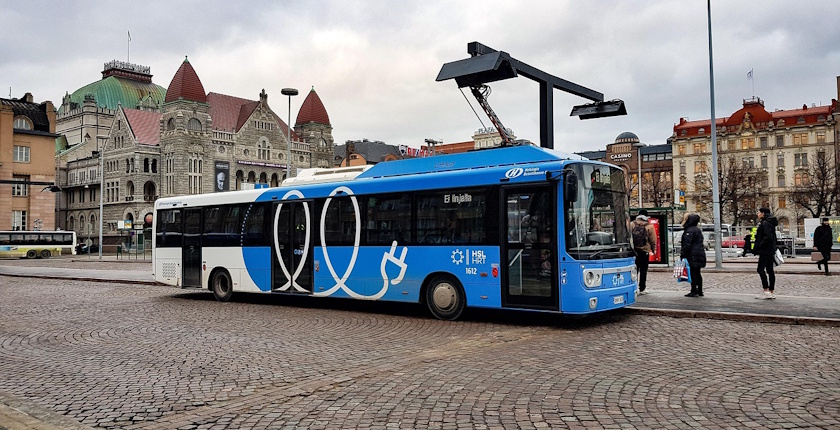
Croatian cities are purchasing 206 electric buses

Seventeen Croatian cities and municipalities have received EUR 143 million overall for the procurement of 206 electric buses. The total investment is estimated at EUR 163 million.

Croatia’s Ministry of the Sea, Transport and Infrastructure has signed seven contracts for subsidizing the procurement of electric buses.

The cities of Jastrebarsko, Zaprešić, Sisak, Osijek, Pula, and Zadar, and the Municipality of Pisarovina have been awarded funds from the National Recovery and Resilience Plan (NRRP) under a public call for the procurement of alternative fuel vehicles for public urban and suburban transport.

The total value of these seven projects, for the procurement of 68 electric buses, amounts to EUR 53.3 million, with EUR 41.9 million provided as subsidies.

The program is worth EUR 163 million

The contracts were signed by the Deputy Prime Minister and Minister of the Sea, Transport and Infrastructure Oleg Butković, and the Director of the Central Finance and Contracting Agency for European Union programs and projects Dragan Jelić, alongside representatives of public transport operators.

With the signing of these contracts, the program for the modernization and ecological transformation of public urban and suburban transport has been completed, according to the ministry.

The EUR 163 million program enabled the purchase of 206 electric buses for 17 Croatian cities and municipalities, the ministry explained.

Last year, contracts were signed with the cities of Križevci, Krapina, Ludbreg, Varaždin, Dubrovnik, Zagreb, Rijeka, and Split. All the local authorities also received subsidies for the construction of charging infrastructure.

Minimum range is 300 kilometers

Zadar-based transport operator Liburnija should receive its buses by August 31, according to CEO Slobodan Erslan. The vehicles will have a minimum range of 300 kilometers, he added.

Mayor of Osijek Ivan Radić said that the city will procure 19 vehicles, which should be delivered in November. Rijeka is receiving 20 buses, while Sisak, which currently operates 42 buses in its public transport fleet, is purchasing twelve electric ones.

Butković: Bus deliveries to follow very soon

Photo: Ministry of the Sea, Transport and Infrastructure

The projects represent a strategic transition for public transport by switching to electric and alternative, the ministry said. The goals are to reduce CO2 emissions, increase energy efficiency, and align with European standards for sustainable mobility, while providing safer traffic and higher-quality public services for citizens.

Minister Butković pointed out that the transition from modern diesel vehicles to alternative powertrains was a logical continuation of previous investments. Croatia is following the current European trends, he stressed.

Butković expects that bus deliveries will follow very soon.

Dragan Jelić, Director of the Central Finance and Contracting Agency, said that the first bus deliveries are expected shortly in Osijek, Jastrebarsko, Zadar, Pula, Zaprešić, Sisak, and Pisarovina.

Of note, in 2020, the Government of Croatia began subsidizing the purchase of electric buses for urban transport. It is also providing incentives for the construction of necessary infrastructure.


February 5, 2026
by AEA in News

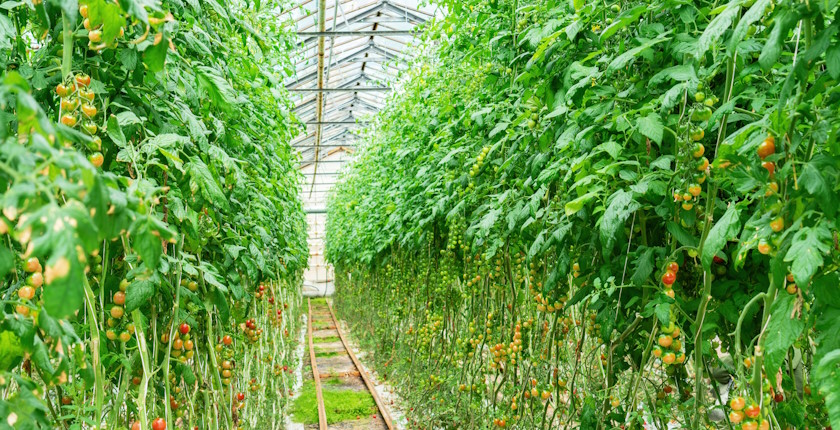
Romanian tomato grower to halve costs by installing own cogeneration units

One of the largest greenhouse tomato growers in Romania is about to start producing power and heat with two natural gas cogeneration units, of 9.9 MW in combined electricity capacity. The solution includes a system for capturing carbon dioxide, which is required for stimulating photosynthesis. The firm’s owners expect to cut operating costs by up to 50%.

A range of technologies for energy and resource efficiency in the production of fruit and vegetables are becoming increasingly accessible. They include agrisolar plants with batteries and geothermal energy, digitalization platforms, hydroponics, water reuse and high-pressure sodium lights. One of the largest greenhouse tomato growers in Romania opted for combined heat and power (CHP) plants, Profit.ro reported.

CO2 from the combustion of natural gas would be scrubbed and piped back into the greenhouse to boost photosynthesis. Cogeneration systems aren’t new in the greenhouse business, but it is the first time in Romania that such a facility would deliver excess output to the grid.

Silvia and Damian Răileanu’s company Hortihaus produces 1,500 tons of cherry tomatoes per year in the Biled commune in Timiș county, in the country’s far west. The greenhouses span five hectares overall, and this year the surface is expanding by three hectares.

Both CHP units coming online before year-end

The National Energy Regulatory Authority (ANRE) of Romania has just issued the so-called establishment authorization for the first cogeneration unit. It implies that the investor, in this case Silvia Răileanu’s own enterprise, has obtained the necessary financing and is ready to build the facility.

Total investment in the two cogeneration facilities amounts to EUR 4.4 million

Importantly, the permit includes capturing carbon dioxide from the combined heat and power system. The greenhouse gas would be used in – the greenhouses, for stimulating photosynthesis. The project is for 3.2 MW in electricity capacity. It got the technical connection approval (ATR) in 2023, alongside the other proposed unit, of 6.6 MW.

Both are planned for commissioning in the second half of the year, Silvia Răileanu revealed. The investments amount to EUR 2.2 million each, according to her. A cogenerator is EUR 1.5 million, installation costs EUR 400,000 and the connection expenses are EUR 300,000, she said.

Hortihaus consuming six tons of CO2 per day

In tomato production in modern greenhouses, thermal energy, CO2 and electricity costs together make up over 35% of turnover, Răileanu pointed out. Carbon dioxide costs EUR 280 per ton, she said and added that Hortihaus consumes six tons a day.

Own electricity, heat and CO2 will cut operating costs by 40% to 50%, Răileanu claimed.

Of note, surplus heat can be stored in water tanks for later use.


February 5, 2026
by AEA in News

GGF seeks to hire new board member to help shape growth strategy

The Green for Growth Fund (GGF) has invited applications for the position of an independent non-executive director, tasked with providing strategic leadership as well as constructive oversight and guidance to the alternative investment fund manager (AIFM). The new member of GGF’s Board of Directors is expected to assume the role in July 2026.

The new independent non-executive director will attend board meetings, contributing to the quality of debate and helping shape GGF’s growth strategy. The initial term of office is four years, with a possible four-year extension subject to satisfactory performance, according to an announcement on LinkedIn.

The successful candidate will have a track record of more than five years in international energy markets, climate finance, renewable energy project finance, or energy efficiency investments, as well as experience in business model transformation, geographic expansion, or fund restructuring.

The requirements include experience in international energy markets, climate finance, and renewables

The requirements include experience in strategic analysis and control, the ability to monitor AIFM performance, and a track record of overseeing EUR 500 million in alternative assets or infrastructure funds.

Additional expertise sought by GGF includes a 10-year board experience in the asset management industry, involvement in senior-level decisions at institutions regulated by Luxembourg-based financial sector regulator CSSF (La Commission de Surveillance du Secteur Financier), familiarity with best practice corporate governance, and experience in the regulatory and statutory framework in which GGF operates.

The successful candidate must have an international mindset and cultural sensitivity

An international mindset and approach will be important, with a cultural sensitivity to the markets in which GGF operates, according to the call.

The fund supports measures that mitigate climate change and promote sustainable economic growth in Southeast Europe including Turkey, the European Eastern Neighborhood region, and the Middle East and North Africa.


February 5, 2026
by AEA in News

Greece achieves record renewables output but also curtailments in 2025

Renewable electricity production reached a new high last year in Greece, amidst increased curtailments and a low lignite share.

According to official data and the Green Tank’s analysis, renewable energy accounted for 46.7% (26,381 GWh) of output. Lignite fell to a historic low, 4.8% or 2,723 GWh, and natural gas contributed 41.3% (23,338 GWh), the most so far.

Notably, Greece expanded its net exports in 2025. The result spiked tenfold to over 3 TWh, with strong demand from neighboring countries, such as Albania, North Macedonia and Bulgaria. This was the result of low hydroelectric reserves elsewhere in the Balkan region, as well as Ukraine’s increased import needs.

Curtailments plagued the renewables sector, reaching 6.6% of total green electricity generated, or 1,867 GWh. In fact, they doubled from the 968 GWh of 2024, with negative price hours also becoming more frequent in the day-ahead market (DAM).

A jump in curtailments is expected during the spring season. Last year, 2.5 GW to 3 GW in new renewable projects have been connected to the grid, according to estimations, with final official data not yet available. At the same time, the first battery storage units are expected to come online gradually by the middle of 2026. Therefore, storage will not be able to provide substantial relief in time for renewables.

Carbon intensity falls to new low

These developments affected the country’s carbon intensity and overall emissions. Lignite plants fell to a historic low (3.68 million tons), though gas plants reached a historic high, 8.8 million tons.

For 2025, the carbon intensity of electricity production stood at 264.7 grams of CO2 per kWh, the lowest ever recorded, Green Tank noted. However, the decrease from 2024 was only 2.2%, a significantly smaller improvement than in the previous two years, when carbon intensity recorded an average annual reduction of 14.5%.

  • 1
  • …
  • 9
  • 10
  • 11
  • 12
  • 13
  • …
  • 140

AEA – Albania Energy Association is a industry association dedicated to representing the interests of Albanian and West Balkan for energy producers and consumers. AEA works to advance the development and adoption of sustainable energy solutions in Albania and the Western Balkans, supporting the region’s transition toward a cleaner, more secure, and more competitive energy future. AEA is registered by decision of the Court of Tirana, DECISION NO. 3032, (VAT:L11827451K).

[email protected]

Address
Blv Zogu 1
Tirana
1057
ALBANIA

LinkedIn  |  Facebook
Events
May 25, 2022 Connecting Green Hydrogen Europe 2022
May 25, 2022 Energy Week Western Balkans 2022
Copyright © Albania Energy Association