AEA-Albania Energy Association
  • Main
  • About Us
  • Services
  • Sectors
  • News
  • EventsEvents
  • PublicationPublication
  • Contact Us
AEA-Albania Energy Association
  • Main
  • About Us
  • Services
  • Sectors
  • News
  • EventsEvents
  • PublicationPublication
  • Contact Us
AEA-Albania Energy Association
  • Home Page
  • About Us
  • Sectors
  • Our Services
  • News
  • Contact Us
February 16, 2026
by AEA in News

Albania’s Energy Sector: Key 2025 Insights and Outlook

Albania’s energy sector in 2025 remains dominated by hydro and oil, but undergoing rapid change. Gross available energy (supply) in 2023 was 2,234 ktoe, against primary production of 1,799 ktoe. Imported oil and electricity cover the gap: the country needs roughly 4–5 TWh of net imports annually. In 2023 final energy consumption was 1,942 ktoe (down 2.8% year-on-year), with industry (~27%), residential (~34%), transport (~22%), services (~11%) and other sectors (~6%) each accounting for a share. Albania’s energy intensity remains fairly low – roughly 0.17 ktoe per million EUR of GDP (–4.0% in 2023) – reflecting both efficiency gains and a modest economic base.

Infrastructure investments are focused on grid upgrades and new pipelines. Two major 400 kV transmission projects are planned or underway: closing the internal 400 kV ring and building a 400 kV Albania–Kosovo* interconnector (both under WBIF support). The long-delayed Elbasan–Bitola 400 kV line (a 2018 Energy Community project of common interest) still awaits completion. On gas, Albania currently has no domestic market – it consumes virtually no pipeline gas today – but this will change. A Fier exit point on the Trans-Adriatic Pipeline (TAP) is under construction (targeted commissioning October 2027), and a planned Fier–Vlora feeder line is in planning. Meanwhile a new Korça gasification scheme (Azerbaijani Azeri gas via TAP) was agreed in November 2024, aiming to extend distribution into eastern Albania. These gas projects could underpin future power and industrial expansion.

2023 Albania Primary Energy Production by Fuel (ktoe) – oil and hydro dominate

Electricity Market: Liberalization and Infrastructure

Since 2023 Albania has made notable strides in power market integration, but wholesale trading remains limited. A day-ahead market was launched in April 2023 and coupled with Kosovo* from January 2024 – the first cross-border market coupling in the Energy Community. Complementary regional intraday auctions (CRIDAs) between Albania and Kosovo* began in December 2024. (Plans for a continuous intraday market are pending.) The Albanian Power Exchange (ALPEX) operates these markets: by 2024 it had 26 registered participants, of which 16 trade intraday, and traded roughly 12% of Albania’s final electricity consumption on the day-ahead market.

However, full liberalization is unfinished. The day-ahead and intraday markets run in parallel with a traditional regulated market. The state-owned utility KESH still supplies universal service customers (low-voltage households) under a public service obligation (PSO) at government-set prices. Regulated tariffs and supply obligations extend to most small businesses and residential clients. Only customers on 10–110 kV networks (large industry) face market prices, with lower-voltage consumers still sheltered under universal service tariffs. Indeed, current regulations keep in place a PSO for KESH (originally a temporary crisis measure) and a supplier-of-last-resort (SoLR) regime for others. Retail prices for low-voltage consumers thus remain controlled (free market entry is limited), and new retail deregulation phases (10 kV by 2025, 6 kV by 2026) are planned. (These interventions still fall short of EU requirements.)

Balancing and ancillary services are developing along European lines. A 15-minute imbalance settlement period was introduced in 2025 (after delays). Balancing energy is procured via a merit-order market operated by OST (the national TSO). Cross-border balancing cooperation is currently minimal: Albania only shares frequency-restoration reserves with Kosovo* under a joint “AK block” agreement. Full participation in European balancing platforms will require transposing the EU Electricity Regulation (2019/943) and Network Code on balancing (2017/2195) – work that has only just begun.

On network infrastructure, the transmission system operator OST is certified (ownership unbundled) and a member of ENTSO-E, but key grid upgrades lag. The TEN-E revision (2022/869) – which would designate new energy corridors – has not been transposed. In the meantime, two grid projects of regional interest are under development: closing Albania’s internal 400 kV loop and a new 400 kV tie to Kosovo*, both backed by EU grants. Investment plans for OST and the DSO (OSSH) are now regularly approved by the regulator ERE; ERE also endorsed the 2025–27 capital plan of OST in 2025, which includes these projects. Distribution network upgrades (smart metering, loss reduction) remain on the agenda but face funding constraints.

[Insert chart: Albania Electricity Market Coupling Timeline (Day-ahead April 2023, coupling Jan 2024, CRIDAs Dec 2024)]

Gas Market: Emerging Supply and Infrastructure

Historically, Albania had no natural gas consumption; electricity and heating ran on oil and biomass. This is changing. Although no domestic gas market exists yet, Albania is transposing EU gas rules in anticipation. The regulator has applied REMIT transparency rules (excluding market rules). Certification under the Third Package is in place: TAP AG (cross-border pipeline) is certified as an exempt TSO, and Albgaz (Albania’s gas TSO) was conditionally certified under ownership unbundling. Albgaz’s remaining unbundling issues have been repeatedly extended (new deadline end-2025), and TAP and Albgaz plan separate network codes once pipelines operate.

Two key pipeline projects will shape Albania’s gas landscape. First, the TAP Fier exit point will link Albania to the Trans-Adriatic Pipeline. Construction is slated to start May 2026 and complete by October 2027. This facility (a pressure-reduction station and meter) will allow Azeri gas from TAP to enter Albanian networks. Second, the Korça Gasification Project – a private initiative by Azerbaijan’s SOCAR – will build a local grid from a new Fier (TAP) connection eastward. A 2024 MoU commits Albgaz and SOCAR to design and build the exit and local pipeline, with a TAP capacity nomination already in place. If realized (final investment decision pending), Korça would for the first time supply gas to industries and possibly power plants in southern Albania by the late 2020s.

Domestic gas demand is expected to grow once these are online (power plants and industry will switch from oil), but there is no wholesale gas trade yet. Secondary legislation to allow retail gas supply exists, but without an existing network to serve, these serve mainly as placeholders. In practice, Albania’s future gas wholesale is effectively TAP-dominated; a functioning national hub or trading platform is still years away.

Renewable Energy and Decarbonisation

Albania’s power system is already very green by global standards, but has room to diversify. In 2024 total renewable electricity capacity reached about 3,005 MW – dominated by small hydropower (<10 MW) at some 2,181 MW and utility-scale hydro (≈375 MW), with 449 MW of solar PV. (Wind and biogas are currently negligible: the report notes only 3 MW of wind.) Renewables supplied most of Albania’s generation in 2023 (hydro plus a modest biomass cogeneration), but exact shares are not broken out in the report. What is clear is that Albania’s 2030 renewables target is ambitious: the adopted National Energy and Climate Plan (NECP) aims for 54.4% of final energy consumption from renewables by 2030, above the 52.0% goal set by the Energy Community Decision. The NECP also envisions sectoral sub-targets (e.g. ~178% for electricity, 34.6% transport, 16.6% heating/cooling) that exceed current EU RED II mandates.

Policy reforms are in motion to boost renewables. The 2023 Renewable Energy Law shifted from fixed feed-in tariffs to competitive auctions (contracts-for-difference/premium) for green power. Two auctions were already held with fixed prices, with plans to transition to pure CfDs once Albania’s day-ahead market achieves liquidity. So far no statistical transfers or joint schemes (EU cooperation mechanisms) have been used. Net metering is enabled (rooftop systems up to 500 kW) and Albania plans to move to net billing (full retail credit) as of 2024. The law also incorporated guarantees-of-origin (GOs) for all renewable generation: an electronic GO registry became operational under ERE in May 2023, laying groundwork for tracking clean energy. However, “renewable energy communities” are still theoretical – no community project has been set up yet.

In the heating sector, Albania is rolling out support for solar thermal collectors and heat pumps. A recent scheme reimburses 70% of solar water heater costs for low-income households (vs. 20–30% for other systems). Draft legislation for broader RES heating/cooling incentives is pending. On bioenergy, Albania has transposed most RED II provisions, but needs secondary rules for verifying sustainability (GHG savings and land-use criteria) for bioliquids and solid biomass used in heat and power.

Overall, the renewables pipeline is robust: capacity grew by +279 MW in 2024 (mostly PV additions). Auctions and net-billing should further drive solar rooftop uptake, especially for homes and businesses now escaping fixed feed-in tariffs. Hydropower will remain the backbone of Albania’s system; future small hydro additions and the potential for wind in the flat coastal plains (not yet tapped) could further diversify output.

Energy Efficiency and Buildings

Improving efficiency is a strategic priority. Albania’s buildings are its largest energy sink, consuming 38% of final energy in 2023. Recognizing this, in June 2025 Albania adopted a new Energy Performance of Buildings law, aligning key provisions with EU directives (including upcoming 2024 requirements). An Energy Performance Certificate (EPC) system is now operational, with ongoing training and software development. Crucially, a long-term renovation strategy (in line with the EU’s Renovation Wave) was approved in February 2025. The government is developing a detailed renovation plan to reduce building energy use, tackle energy poverty, and modernize housing and offices across Albania’s regions.

Albania’s energy consumption is already edging down. Primary energy use fell to 2,141 ktoe in 2023 (–1.5% year-on-year), while final consumption was 1,942 ktoe (–2.8%). For comparison, the 2030 NECP targets are much higher: 2,600 ktoe (primary) and 2,400 ktoe (final). The continuing decline reflects efficiency measures and structural changes. Energy intensity (use per GDP) is among the lowest regionally at ~0.17 ktoe/MEUR. Key upcoming measures include a new Energy Efficiency Law (planned in 2025 to transpose the recast EU EED), full implementation of the energy obligation scheme, and mandatory labelling and standards (a product-labeling law was passed in mid-2024). So far Albania lacks a dedicated EE fund; financing for retrofits has come from budgets and donor programs, with early ESCO activity in the housing sector. Improved access to credit and subsidies for vulnerable households are being discussed as next steps.

Policy, Regulation and EU Alignment

Albania’s legislative framework is being steadily updated to meet EU/EnC requirements, but gaps remain. The Electricity Integration Package (EIP) – the core EU rulebook for electricity markets – is not yet fully transposed. A draft law (May 2025) would implement many EIP provisions (market design, unbundling, RES integration, etc.), but it has not been passed. In the interim, ERE has adopted some CACM rules: a national capacity allocation & congestion management regulation (EUR 543/2013) was approved in April 2025. Albania also uses the SEE Regional Auction Office (SEE CAO) for cross-border capacity. Notably, the EU rule requiring at least 70% of interconnector capacity to be offered to the market is not in force yet.

In gas, Albania’s alignment is behind schedule. The EU’s Gas Security of Supply Regulation (2017/1938) is only partly implemented in law (via amendments to the 2021 Gas Law). A national Risk-Preparedness regulation (EU 2019/941) is due by end-2025; a draft Power Sector Law under discussion could designate the ministry as risk authority and mandate a preparedness plan. On emissions, Albania’s 2021 Law on Climate Change set up GHG inventories and MRV (monitoring/reporting) systems, and a new climate law (expected 2025) will refine MRVA obligations. However, Albania has no 2050 neutrality strategy yet – a critical missing piece. The Energy Community Secretariat notes this as an opportunity: the new climate law is a chance to embed a 2050 net-zero goal aligned with regional climate neutrality. Similarly, the EU’s new targets (at least –55% GHG by 2030 vs 1990) should be written into law; Albania’s NECP-included target of –53.2% by 2030 has yet to be codified.

Installed Renewable Energy Capacity by Type (MW, 2024) – large hydro vs small hydro vs solar

On renewables and energy, many EU directives are in place but not fully enforced. The transposition of RED II’s sustainability criteria for bioenergy remains incomplete (secondary rules are pending). The Energy Efficiency Directive’s Article 5/7 energy savings obligations are being revised (a new Energy Efficiency Law is expected in 2025). ERE, the energy regulator, is largely independent and well-funded (through fees), but it needs more capacity in market integration and surveillance. The Competition Authority and audit agencies are updating rules: notably, Albania’s competition law still lacks a ban on anti-competitive decisions by associations, a gap being addressed.

Challenges and Investment Opportunities

Challenges for Albania’s energy sector are many. The system is highly hydro-dependent, making it vulnerable to droughts (although the report does not quantify this risk, it is implicit). Hydropower output can swing year-to-year; in dry seasons Albania may import costly thermal power. The wholesale market is still tightly regulated: KESH’s PSO obligation and the tariff freeze for households suppress price signals. With only ~12% of demand traded on the exchange, liquidity and competition are low. Energy poverty is acute – in 2023, 34.8% of households fell behind on utility bills – and subsidies for low-income consumers cost the state ~€14.2 million per year (for under-300 kWh relief). Distribution losses remain high (the report’s chart shows ~27% of primary energy lost in losses and transformation). Regulatory delays (EIP, RED II, TEN-E) also pose risks: without quick reforms, Albania could be left out of key EU market frameworks. Finally, the lack of domestic fossil fuel resources (all oil is imported) means geopolitics still loom large.

Yet opportunities abound for investors. Albania’s grid needs modernization: the 400 kV ring and new interconnectors will unlock capacity and relieve bottlenecks. The Western Balkans Investment Framework (WBIF) and EU funds stand ready to de-risk these projects. On renewables, Albania has proven technology potential. Small hydropower already leads capacity, but solar PV has room to grow – rooftop solar in particular is financially attractive given high sunshine hours and net-billing rules. The successful launch of auctions means new wind and solar projects can seek investors. Albania also has significant wind potential along its Adriatic coast and offshore (noted by developers, though not yet realized).

In gas, early movers will find unique first-mover advantage. The imminent TAP exit point and new Korça pipeline will create an Albanian gas market where none exists. Gas-fired power plants (modern CCGTs) could then enter the mix to complement variable renewables and stabilize supply – currently discussions are underway for a planned new gas power plant (with a 2023 EIA completed). Domestic industries (steel, chemicals, cement) will benefit from cheaper and cleaner gas fuel.

The drive toward European integration is another driver. Albania’s commitment to join the EU means it can tap structural funds and grants (as the 400 kV and efficiency projects already do) to lower investment risk. The Regional Electricity Market (REM) in Southeast Europe is expanding; full day-ahead coupling with North Macedonia, Greece, and others is slated for the coming years through the IBWT process. Albanian power can thus access wider markets (raising price realization for producers). New balancing and reserve-sharing arrangements in the synchronous continental Europe grid could also enhance system stability.

Outlook (2025–2035)

Looking ahead 5–10 years, Albania’s energy transition will be shaped by how quickly reforms and investments are realized. If the EIP is transposed and markets liberalized, Albania could see a virtuous cycle: more foreign investment, deeper regional trading, and faster renewables rollout. The TAP exit (online ~2027) will mark a milestone – enabling real gasification of the economy and likely powering a switch away from oil in power and transport. The 400 kV grid projects (current timeline by 2030) will significantly improve domestic reliability and export capacity.

However, several risks remain. Climate variability poses growing uncertainty: reduced rainfall could lower hydropower generation, necessitating backup thermal plants or imports during dry spells. Delays in drafting the 2050 climate-neutrality strategy or failing to meet Energy Community targets could hinder access to green financing. Continued energy poverty and fiscal pressure from subsidies could constrain budgets for infrastructure. Geopolitical shocks (e.g. regional supply disruptions or price spikes) remain possible, underscoring the need for energy diversification.

On balance, Albania’s prospects are positive: an increasingly competitive energy mix is emerging. By 2030 Albania could comfortably meet its 54% renewables share and even push beyond with new solar and pumped hydro. Improved interconnections and market coupling will integrate Albania into the European grid both technically and economically. Enhanced efficiency in buildings and industry will moderate demand growth (the country’s 2030 NECP actually foresees higher consumption targets than today). This combination – rising renewables and efficiency gains – will bolster Albania’s sustainability, reduce emissions, and hedge fossil-fuel price risks.

In conclusion, the 2025 Energy Community Country Report highlights a period of transition for Albania: from a historically state-dominated, hydro-driven system towards a more liberalized, diversified, and EU-aligned energy economy. Achieving this vision will require sustained reform and investment. The payoff – in terms of economic competitiveness, cleaner air, and greater energy security – promises to be substantial for Albania and its regional partners.

Sources: Energy Community Secretariat, Albania – Annual Implementation Report, Nov. 2025
February 16, 2026
by AEA in News

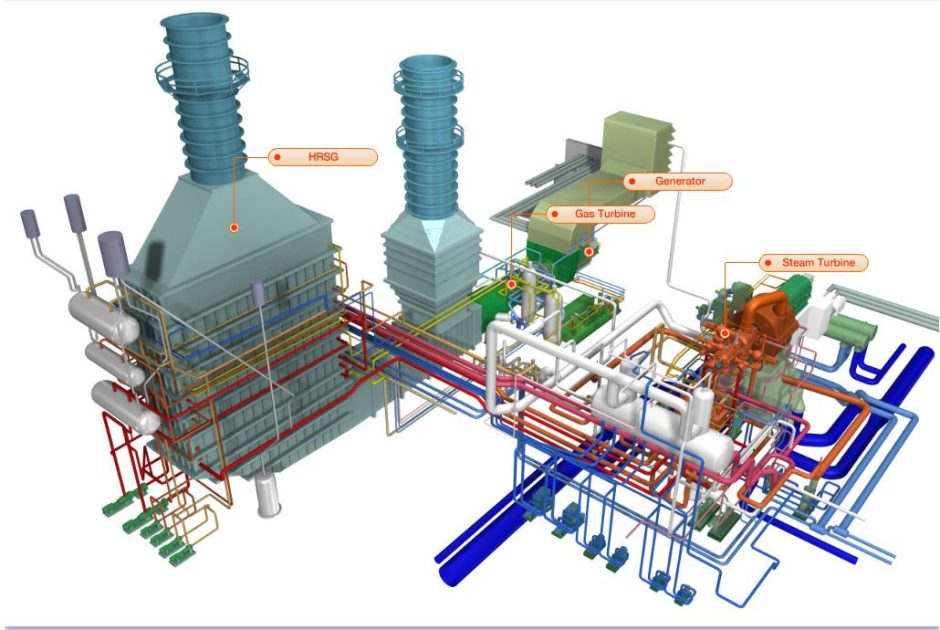
Serbia and Azerbaijan sign EUR 600m deal to build ~500 MW combined-cycle gas plant near Niš

An agreement to develop, design, construct and operate a combined-cycle gas-fired power plant near the city of Niš was signed by the governments of Serbia and Azerbaijan, launching a project with an expected installed capacity of about 500 MW and an estimated investment of EUR 600 million.

The document — exchanged between the Government of Serbia and the Government of Azerbaijan — was signed by Serbian Minister of Mining and Energy Dubravka Đedović Handanović and Azerbaijan’s Minister of Economy Mikail Jabbarov during a visit by Azerbaijani President Ilham Aliyev. Officials said the plant will supply power and heat underpinning growth in the south of Serbia, including rising electricity demand, new data centers and industrial needs.

Project details released by Serbian authorities put the plant’s output at 350 MW of electricity and 150 MW of heat, with natural gas for generation to be supplied by Azerbaijan. Serbian President Aleksandar Vučić told visiting counterparts that construction is expected to take a little more than two years. The president also described the signed document as a term sheet and said Belgrade plans to complete preparatory steps within two to three months so conceptual design work can begin.

Parliament speaker Ana Brnabić had previously indicated that negotiations on the plant were complete and reiterated the EUR 600 million investment estimate in September 2025.

Alongside the power-plant agreement, the two countries exchanged six additional documents covering cooperation in media and communications, the economy, food safety and health insurance, and they held the inaugural session of a strategic partnership council to deepen bilateral ties. Observers say the project strengthens Serbia’s energy links with Azerbaijan and complements earlier gas-supply arrangements between the two states.

The Do-to-build timeline, financing structure and operator responsibilities will now move into more detailed planning and negotiation. Government sources emphasized the strategic objective: add baseload capacity quickly while securing fuel supplies and supporting regional development.

Tags: Serbia-Azerbaijan energy deal, Niš gas power plant, combined cycle gas, EUR 600 million investment, baseload capacity, gas supply Azerbaijan, Serbian energy security, data center power, Dubravka Đedović Handanović, Mikail Jabbarov

February 16, 2026
by AEA in News

Romania approves final investment decision for 462 MW NuScale SMR.

Romania’s state-owned nuclear utility Nuclearelectrica has approved the final investment decision (FID) for a 462 MW small modular reactor (SMR) power plant based on technology from US developer NuScale Power.

However, Romanian media report that the rollout will follow a phased approach: only one of the six planned 77 MW reactor modules will initially be constructed and tested before a decision is made on building the remaining five.

If completed as planned, Romania would become the first European Union member state to deploy NuScale’s SMR technology. The project is being developed by RoPower Nuclear at the site of a former coal-fired power plant in Doicești, northwest of Bucharest in Dâmbovița county.

RoPower Nuclear is a 50-50 joint venture between Nuclearelectrica and Nova Power and Gas (NPG), part of the Cluj-based E-Infra Group.

Six modules planned, but phased development

The full 462 MW facility, initially estimated at EUR 4.9 billion, is designed to consist of six identical SMR units using NuScale’s VOYGR technology. NuScale, headquartered in the US state of Oregon, will serve as the technology provider.

Shareholders of Nuclearelectrica endorsed the FID for the project in Doicești, formally moving it from the analysis phase into implementation. Yet, according to local reports, a key condition for accelerating the process is the construction and operational testing of a single 77 MW reactor first.

Only if the pilot module proves successful would the company proceed with the remaining five units. Even if additional modules are purchased, RoPower would initially assume responsibility solely for the first reactor.

In its official statement, Nuclearelectrica said the FID was adopted “based on a series of additional conditions aimed at establishing a solid framework of support and cooperation, at the level of partnerships and authorities, for the optimal development and implementation” of the project.

Replacing coal with nuclear capacity

Romanian Energy Minister Bogdan Ivan said the decision cements Romania’s ambition to lead Europe’s next-generation nuclear sector.

“The final investment decision for the SMR project in Doicești marks the transition from the analysis phase to the implementation phase, consolidating Romania’s position at the forefront of the new European nuclear industry. We are replacing 600 MW from a former thermal power plant with 462 MW of clean, stable, and predictable energy,” Ivan stated.

Over the next six months, the project will enter a financial structuring and partnership consolidation phase, including defining financing mechanisms and advancing talks with potential investors.

Target: early next decade

According to Nuclearelectrica CEO Cosmin Ghiță, the global SMR project pipeline has expanded by 65% since 2021, reaching a planned capacity of 22 GW. The company aims to bring the Doicești facility online at the beginning of the next decade. Earlier projections indicated the first module could enter commercial operation by mid-2033.

RoPower CEO Valentin Ovidiu Nae described the development as securing “60 years of clean energy” for the site.

The investment is expected to generate around 200 permanent jobs, approximately 1,500 positions during construction, and 2,300 jobs in component manufacturing and assembly.

Ownership shifts and funding hurdles

Romania’s Ministry of Energy holds more than 82% of Nuclearelectrica. It has twice rejected attempts by DSPE Beta Private Equity Fund to acquire a stake in RoPower Nuclear.

On the technology provider’s side, NuScale has seen changes in its shareholder structure. Goldman Sachs recently acquired a 9% stake in the company. Vanguard Group increased its holding to 5.5%, while BlackRock raised its stake to 3.4% from 2%. Meanwhile, Fluor Corp., NuScale’s largest shareholder with 37.3%, has announced plans to fully exit its position by mid-year.

Preparatory works and utility connections at the Doicești site have already been completed.

There is also the possibility that the SMR facility could operate off-grid in the future, supplying dedicated power to energy-intensive AI hubs and data centers — an option that reflects the growing intersection between advanced nuclear technologies and digital infrastructure.

February 16, 2026
by AEA in News

Bosnia and Herzegovina launches two-year national hydrogen strategy project.

Bosnia and Herzegovina has kicked off a two-year initiative to produce a draft national strategy and roadmap for hydrogen, a project officials say will help steer the country toward a cleaner, more competitive energy system.

The implementation phase of the project — CEI Support to Hydrogen Strategy Development and Know-How Transfer for Bosnia and Herzegovina — opened with an official meeting in Sarajevo. The effort is being carried out by a consortium led by Green Sustainable Solutions (based in Zagreb), the Association for Green Hydrogen and Renewable Energy Sources (H2OIE), state utility Elektroprivreda Bosne i Hercegovine (EPBiH), and local engineering firm Energoinvest. The project receives backing from the Central European Initiative (CEI) and the Ministry of Foreign Affairs and International Cooperation of Italy.

Project partners described the initiative as a decisive step for the country’s energy transition. At the opening meeting they exchanged experience, reviewed European and regional best practices, and reaffirmed their intention to embed hydrogen technologies in long-term national development plans.

According to H2OIE, the programme is designed to strengthen institutional capacity and accelerate knowledge transfer so that hydrogen can be introduced sustainably into the national energy mix. Activities will include expert workshops, study visits to the European Union, advisory missions, and the preparation of the draft national strategy and a practical roadmap.

Those workstreams are intended to map Bosnia and Herzegovina’s hydrogen potential, identify barriers, and define development priorities. Organizers say the roadmap will highlight practical steps for integrating hydrogen across power, industry and transport sectors, and for aligning national regulations with European standards.

Stakeholders argue hydrogen offers a major opportunity to boost energy security and to decarbonize energy-intensive industries. Energoinvest noted the country’s abundant renewable resources, established industrial base and strategic location make hydrogen development a strategically important path for economic and environmental progress.

As the project proceeds over the next two years, officials and experts will aim to translate international know-how into locally tailored policies and investments — positioning the country to compete in regional energy markets and to meet its climate commitments.

February 12, 2026
by AEA in News

PPC Renewables Romania Adds 60.12 MWh Battery to Sălbatica Wind Complex

PPC Renewables Romania plans to install a battery energy storage system (BESS) with a capacity of 60.12 MWh within its Sălbatica 1 wind farm, as the company accelerates its storage rollout alongside existing renewable assets.

The storage project is valued at RON 68.2 million (EUR 13.4 million), PPC Renewables Romania said. The company operates the Sălbatica 1 and Sălbatica 2 wind farms, which together total 140 MW, located in Tulcea County in southeastern Romania.

PPC Renewables Romania is a subsidiary of Greece’s state-controlled Public Power Corporation (PPC).

Modernization Fund support of EUR 1.9 million

The BESS investment will be supported by the European Union’s Modernization Fund, through a public call aimed at financing electricity storage capacities connected to existing renewable generation facilities.

From the overall investment, RON 9.87 million (EUR 1.9 million) will come from the Modernization Fund, while the remainder will be financed by PPC Renewables Romania.

According to PPC, the battery will contribute to the development of storage capacity and improve the flexibility and efficiency of electricity produced from renewable sources.

Broader storage pipeline underway

PPC Renewables Romania is developing a series of storage projects across the country. The company plans to install:

  • 27 MWh at the Topolog wind farm,

  • 80 MWh at the Corugea wind farm, and

  • 120 MWh in total at the Nicolae Bălcescu and Târgușor wind farms.

PPC operates 1.3 GW of wind, photovoltaic, and hydropower capacity in Romania. Its 600 MW Fântânele–Cogealac–Grădina wind farm is the country’s largest wind facility and already includes a BESS installation.

Romania’s largest BESS commissioned in December 2025

Romania’s largest battery storage system was inaugurated in December 2025 by Nova Power & Gas, doubling the country’s total BESS capacity. The facility in Florești, Cluj County, has an operating power of 200 MW and an energy capacity of 400 MWh.

February 12, 2026
by AEA in News

Montenegro Approves EIA for 118.8 MW Bijela Wind Farm and 110 kV Line

Montenegro’s Environmental Protection Agency has approved the environmental impact assessment (EIA) study for the construction of the Bijela wind farm, including a 110 kV transmission line. The project is planned at 118.8 MW, with Alcazar Energy Partners listed as the investor.

The Bijela wind project is located near the town of Šavnik in northern Montenegro. It envisages 17 wind turbines installed on hilly terrain across a mountain plateau, with total capacity reaching 118.8 MW.

Study sets mitigation measures for construction and operation

The approved EIA outlines protection and mitigation measures for environmental impacts that could arise during both construction and operation of the wind farm and the associated transmission line. The measures cover impacts on air quality, soil, and biodiversity, as well as noise and visual effects.

Grid and offtake steps already underway

Alcazar Energy signed a grid connection agreement with Montenegro’s transmission system operator CGES in September 2024. The company took over the Bijela project a year earlier, with total investment in the wind farm valued at $200 million.

On the commercial side, Alcazar Energy signed a memorandum of understanding in January 2025 with Montenegro’s state power utility Elektroprivreda Crne Gore (EPCG), launching negotiations on a power purchase agreement (PPA) for electricity from the Bijela project.

Wider expansion plans across the Western Balkans

In October 2025, Alcazar Energy said it would increase its investment in Montenegro from $200 million to $500 million. The plan was presented at the EU–Montenegro Investment Conference by the company’s Co-Founder and Managing Partner, Daniel Calderon.

Alcazar Energy’s Western Balkans portfolio also includes projects in North Macedonia and Serbia. In North Macedonia, the company is building what it describes as the region’s largest wind farm, a 400 MW project backed by a $500 million investment. In Serbia, Alcazar Energy is developing the 200 MW Celzijus 1 wind farm east of Belgrade.

February 12, 2026
by AEA in News

El-Mor Pushes Two 203 MW Stand-Alone BESS Projects Toward Delivery in Romania

Romania’s grid-scale energy storage market is rapidly shifting from development into execution, making time-to-market an increasingly decisive differentiator. In this context, El-Mor Electric Installations & Services is progressing two large stand-alone Battery Energy Storage System (BESS) projects structured for fast delivery: BRADU BESS (Argeș) and BRAZI BESS (Prahova).

Each project is planned at 203 MW with up to 800 MWh of energy capacity (4-hour duration) and is designed to connect at 110 kV to substations operated by Romania’s transmission system operator, Transelectrica. Both projects already hold an ATR (technical connection approval) and are targeted to achieve RTB (ready-to-build) status in Q1 2026, with a defined pathway to commissioning in H1 2027, subject to investor execution and financing.

As Romania’s BESS market expands and moves into what many describe as a “delivery phase,” projects can look similar on paper. Increasingly, however, the separation between bankable opportunities and speculative pipelines comes down to execution certainty—particularly connection clarity, permitting maturity, optimized grid-connection CAPEX, and documentation capable of meeting lender-grade due diligence requirements.

El-Mor’s development model is focused on de-risking the items that most commonly delay BESS delivery—especially the grid interface and permitting quality—so investors can move quickly with fewer late-stage disruptions.

Quality control, risk management, and bankability

El-Mor Electric Installations & Services is a public company listed on the Tel Aviv Stock Exchange, reporting over €200 million in 2025 sales. Across its PV and BESS activities, the company highlights an engineering-led approach supported by decades of high-voltage experience, shaping a development practice centered on quality control, risk management, and overall bankability of the permitting package.

A key element of El-Mor’s strategy is technology flexibility. The projects are permitted on an equipment-agnostic basis, enabling investors to select BESS containers and Power Conversion System (PCS) technology during detailed design. This approach is intended to protect schedules as equipment availability, pricing, and lender requirements evolve—while avoiding the need to reopen permits to accommodate technology decisions.

BRADU BESS: permits issued, grid agreement targeted for March

BRADU BESS is a 203 MW / up to 800 MWh project located in Bradu commune (Argeș), planned to connect to Transelectrica’s BRADU 400/220/110 kV substation. El-Mor said the underground 110 kV cable route is approximately 0.6 km, supporting both schedule execution and connection cost optimization. The company noted that building permits were issued in January 2026, with Grid Connection Agreement (GCA) signature targeted for March 2026.

BRAZI BESS: advanced development track toward RTB in Q1 2026

BRAZI BESS is a 203 MW / up to 800 MWh project in Brazi commune (Prahova), planned to connect to Transelectrica’s BRAZI 400/220/110 kV substation via an underground 110 kV cable route of approximately 1.2 km. Development began in 2023, and the project remains on track to reach full RTB in Q1 2026.

In a market where speed and certainty are becoming core investment criteria, “delivery-ready” must withstand rigorous diligence to be meaningful. El-Mor’s positioning centers on disciplined VDR (virtual data room) management and a permitting approach designed to keep technology options open while enabling rapid execution.

February 12, 2026
by AEA in News

INOVA Launches €25m Green Grants for SMEs in North Macedonia

North Macedonia’s Agency for Innovation, Scientific and Technological Development and Entrepreneurship has launched a grant program to support small and medium-sized businesses investing in environmental protection and sustainability.

The green business support program for 2026–2030 is valued at €25 million, with €22 million earmarked for direct subsidies, according to the agency (INOVA). Eligible companies can receive between €5,000 and €300,000, provided they co-finance 20% to 50% of the investment, depending on the project type.

The European Union is providing €18 million, while the remaining funding will come from the Government of North Macedonia.

At least 300 companies expected to benefit

INOVA said it expects to support at least 300 companies, focusing primarily on micro, small, and medium-sized enterprises, particularly in manufacturing, while remaining open to applicants from other sectors. The program is designed to back projects that reduce CO₂ emissions and waste and increase the use of renewable energy, with a particular emphasis on solar power, the agency noted.

Through public calls, businesses will be able to apply for technical and advisory assistance, standardization support, and financial backing for the purchase of equipment, deployment of new technologies, and development of new products.

INOVA expects the first public call around mid-year.

Previously, the agency said the initiative would be implemented through three instruments: green startups (grants up to €40,000), green modernization (up to €150,000 per beneficiary), and transformation of industrial systems (subsidies of €300,000 per beneficiary).

Officials frame program as competitiveness and climate action measure

INOVA CEO Daniela Dimovska said the initiative offers both financial and expert support to companies investing in sustainable, environmentally friendly, and innovative solutions, describing it as a step toward an economy guided by long-term thinking and responsible action.

Daniela Dimovska, Hristijan Mickoski, and Michalis Rokas (photo: INOVA/Facebook)

Prime Minister Hristijan Mickoski said the program aims to help the country advance toward the climate neutrality goals set out in the Green Agenda for the Western Balkans, by strengthening the private sector and promoting sustainable business practices. He added that green transformation should be viewed not as a cost, but as an investment in economic resilience, environmental quality, and citizens’ well-being.

EU Ambassador to North Macedonia Michalis Rokas said the program is expected to stimulate innovation and the adoption of green technologies among SMEs, supporting a new stage of development that improves competitiveness and strengthens integration into EU value chains.

February 12, 2026
by AEA in News

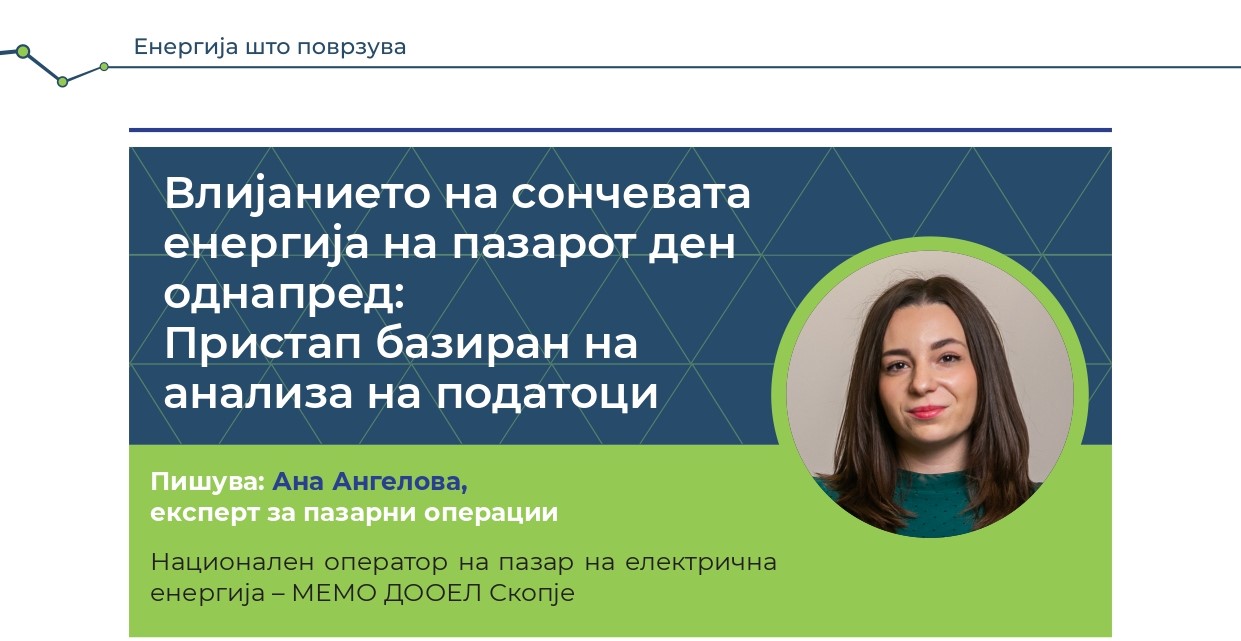
MEMO Analysis Links Solar Output to Lower Day-Ahead Power Prices in North Macedonia

Electricity generation from solar power plants tends to push prices down on the power exchange, while reduced solar output is associated with price increases, according to an analysis by Ana Angelova, a market operations specialist at the National Electricity Market Operator (MEMO).

The analysis aimed to identify seasonal trends and highlight the relationship between photovoltaic (PV) generation, electricity consumption, traded volumes, and day-ahead prices on the North Macedonian power exchange. MEMO noted that the day-ahead market operates in an isolated mode.

Angelova used official power exchange data for 2024, focusing on hours when PV plant efficiency exceeded 30%.

Consumption remains broadly stable across the year

The findings point to a clear seasonal pattern. Electricity consumption stays relatively steady throughout the year, with only minor declines during spring and summer. PV generation, however, shows a pronounced seasonal swing—peaking in summer and reaching its lowest levels in winter.

Angelova also stressed that higher PV output coincides with increased traded volumes on the day-ahead market.

Prices bottom out in April, rise toward winter

According to the analysis, day-ahead prices are lowest in April, a period linked to milder weather, lower demand, and stronger solar production. From summer onward—and particularly during winter—prices trend higher, peaking in November.

The November price peak aligns with a combination of weak PV generation and higher consumption.

“Increased electricity generation from photovoltaic plants is associated with lower prices, while low generation leads to higher market prices, emphasizing the impact of renewable energy availability on price formation. The trend indicates that energy policies should focus on addressing weaknesses during the winter period and harnessing the potential of solar energy in summer,” Angelova wrote.

Proposed measures to strengthen renewables integration

north macedonia solar analysis memo power exchange ana angelova

Photo: MEMO

Angelova outlined several options to improve the integration of renewables—especially solar—into the power system. The proposed mechanisms include:

  • Flexible market mechanisms: introduction of a 15-minute trading interval, creation of an intraday market, dynamic tariffs, and guarantees of origin.

  • Energy storage technologies: battery energy storage systems (BESS) and pumped-storage hydropower plants.

  • Alignment with the European energy framework: adoption of ENTSO-E grid codes, coupling with the single European electricity market, deployment of smart meters, and use of financial instruments such as contracts for difference (CfD) and power purchase agreements (PPA).

February 12, 2026
by AEA in News

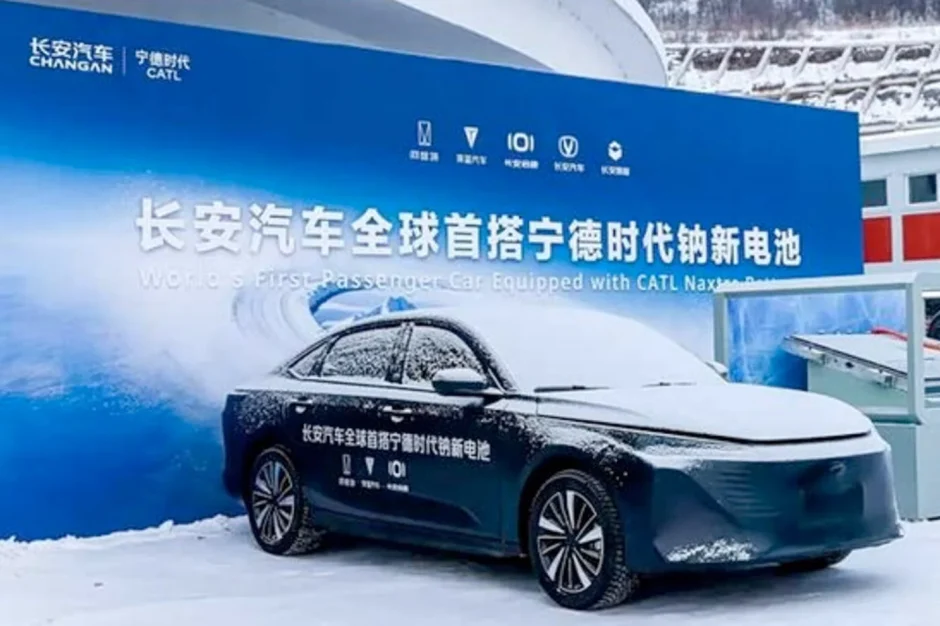
Changan and CATL Debut First Mass-Produced Sodium-Ion Passenger EV

Chinese automotive manufacturer Changan has introduced the world’s first mass-produced passenger vehicle equipped with sodium-ion batteries, developed in partnership with CATL. The companies are positioning the technology around strong performance in extremely low temperatures and enhanced fire safety.

After a decade of research and development, Contemporary Amperex Technology Co. Ltd. (CATL), the world’s largest battery producer, has reached a key milestone in commercializing sodium-ion technology. State-owned China Changan Automobile Group has now unveiled the first passenger vehicle to deploy the solution at mass scale.

According to the companies, the Changan Nevo A06 (Changan Qiyuan A06) sedan is expected to reach the market by mid-year. They report a driving range of more than 400 kilometers under the China Light-Duty Vehicle Test Cycle (CLTC), powered by CATL’s 45 kWh Naxtra battery—while noting that Western testing standards are generally more stringent.

Naxtra is built as a cell-to-pack (CTP) system, integrating cells directly rather than using an intermediate module structure.

Safety as a differentiator in the EV market

While the Nevo A06 is not the first vehicle to use sodium-ion batteries, Changan and CATL are aiming to achieve true mass production. Changan plans to expand Naxtra adoption across its wider brand portfolio, including AVATR, Deepal, and UNI.

CATL emphasized that sodium-ion batteries are intended to complement—not replace—lithium-ion solutions. The company described the launch as a significant step toward a dual-chemistry ecosystem in which sodium-ion and lithium-ion batteries work together to meet diverse customer requirements. CATL also underscored its view that the technology is safe, reliable, and high-performing.

Cold-weather performance and fire safety claims

CATL stated that its Naxtra sodium-ion battery reaches an energy density of up to 175 Wh/kg, which it described as the current benchmark for mass production and approaching the average levels of lithium-iron-phosphate (LFP) batteries.

The manufacturer added that as the sodium-ion supply chain matures, driving ranges are projected to rise to 500–600 kilometers.

On low-temperature performance, CATL said the battery remains reliable in extreme cold, delivering nearly three times the discharge power of comparable LFP batteries at minus 30°C. It also reported more than 90% capacity retention at minus 40°C and stable power delivery down to minus 50°C.

CATL further said the battery has been tested under harsh conditions—including crushing, drilling, and sawing—while remaining free of smoke and fire and continuing to provide power.

In addition, the companies argue that sodium costs a fraction of LFP material, potentially strengthening the cost case for broader adoption.

Given sodium-ion’s claimed resistance to cold, the partners are eyeing colder-climate markets as an avenue to support electric-vehicle sales, noting that lithium-ion solutions are more sensitive to low temperatures.

Ouyang Xiaolong, CATL’s head engineer for passenger cars, told the South China Morning Post that more than 10,000 new battery units would be deployed this year, with the goal of reaching “hundreds of thousands” by 2027.

  • 1
  • …
  • 7
  • 8
  • 9
  • 10
  • 11
  • …
  • 140

AEA – Albania Energy Association is a industry association dedicated to representing the interests of Albanian and West Balkan for energy producers and consumers. AEA works to advance the development and adoption of sustainable energy solutions in Albania and the Western Balkans, supporting the region’s transition toward a cleaner, more secure, and more competitive energy future. AEA is registered by decision of the Court of Tirana, DECISION NO. 3032, (VAT:L11827451K).

[email protected]

Address
Blv Zogu 1
Tirana
1057
ALBANIA

LinkedIn  |  Facebook
Events
May 25, 2022 Connecting Green Hydrogen Europe 2022
May 25, 2022 Energy Week Western Balkans 2022
Copyright © Albania Energy Association