AEA-Albania Energy Association
  • Main
  • About Us
  • Services
  • Sectors
  • News
  • EventsEvents
  • PublicationPublication
  • Contact Us
AEA-Albania Energy Association
  • Main
  • About Us
  • Services
  • Sectors
  • News
  • EventsEvents
  • PublicationPublication
  • Contact Us
AEA-Albania Energy Association
  • Home Page
  • About Us
  • Sectors
  • Our Services
  • News
  • Contact Us
February 5, 2026
by AEA in News

Saudi Arabia to build 2 GW of solar power in Turkey within 5 GW deal

Following prolonged talks, Saudi Arabia signed an agreement for its companies to build solar power plants totaling 2 GW in two provinces in Turkey. It is part of a bilateral deal for 5 GW of photovoltaics and wind power..

Minister of Energy and Natural Resources of Turkey Alparslan Bayraktar and Saudi Minister of Energy Abdulaziz bin Salman Al Saud signed an intergovernmental agreement for renewable electricity plants. The aim is to build solar and wind power plants of 5 GW overall in Turkey with Saudi Arabian companies, Bayraktar pointed out.

In the first stage, two solar power plants of 1 GW each would be installed in Taşeli in Karaman province, and in Sivas provinces, he revealed.

Bilaterals are new model for large-scale electricity production projects

The tenders under state support mechanism Renewable Energy Zones (REZ or YEKA) are continuing, together with investments in power plants for self-consumption and energy storage projects, Bayraktar underscored. The new model for large-scale projects are intergovernmental agreements and bilateral agreements, he explained. Through them, Turkey can obtain electricity at much lower prices for a long time, the minister said in Riyadh, where the marathon negotiations were completed.

He recalled that his country aims to triple the combined wind and PV capacity by 2035, to 120 GW.

“All of these investments, which we see as one of the most important examples of foreign direct investments for our energy sector, will be made through external financing. Loans will also be provided by international financial institutions,” Bayraktar stated.

Cheapest electricity so far, under 25-year contracts

Electricity will be purchased for 25 years, from the power plant in Karaman, at 1,995 euro cents per kilowatt-hour (EUR 19.95 per MWh), the minister asserted. Electricity from the other PV behemoth would be 2,3415 euro cents per kilowatt-hour. Both are the lowest among all renewable electricity plants in Turkey, Bayraktar stressed.

“In addition, the power plants will make a significant contribution to the electrical equipment and service sectors of our country with their 50% locality rate,” he added. The first two solar power plants, in an investment of approximately USD 2 billion, will meet the electricity needs of 2.1 million households, the minister said.

According to Bayraktar, foundations will be laid in 2027, and the entire project will be completed in 2028 and 2029.

He earlier said that Turkey was negotiating with the Saudi partly state-owned utility ACWA.

The country hosted 25.1 GW of solar power at the end of last year, and 14.8 GW in wind power plants, out of 122.5 GW in total.

Bayraktar said last week that 3.5 GW of capacity for self-consumption would be allocated this year. Local authorities, public institutions and strategic and export-oriented sectors would be prioritized.


January 28, 2026
by AEA in News

BiH’s electricity imports double to record EUR 321.6 million in 2025

Electricity imports into Bosnia and Herzegovina in 2025 reached a record BAM 629 million (EUR 321.6 million), twice as much as the previous year. The surge was due to production halts caused by coal shortages, power plant maintenance, and changes in electricity prices. On the other hand, exports were significantly higher than in 2024, but still well below the record levels seen in previous years.

The exact value of electricity imports into BiH in 2025 was BAM 628,956,500, compared with BAM 312,612,000 in 2024, Capital reported, citing data from the Indirect Taxation Authority of BiH.

The largest share of imported electricity in 2025 came from Croatia (BAM 267 million) and Slovenia (BAM 108 million), followed by Albania (BAM 89 million) and Serbia (BAM 86.7 million). 

The largest share of imported electricity in 2025 came from Croatia

In previous years, electricity imports fluctuated but remained significantly lower than in 2025, amounting to BAM 215.9 million in 2023, BAM 393.5 million in 2022, BAM 218.8 million in 2021, and just BAM 96.3 million in 2020.

In May and June 2025, two thermal power plants, which together produce 65% of electricity in the Republic of Srpska, one of the two political entities of BiH, were offline simultaneously for about 10 days during maintenance. Due to the overlapping overhauls of the two facilities, Ugljevik and Gacko, state-owned power utility Elektroprivreda Republike Srpske (ERS) was forced to import large quantities of electricity, Capital noted.

The planned annual overhaul at Ugljevik was carried out from April 21 to June 5, lasting 45 days, while the major, five-year overhaul at Gacko took 70 days, from May 24 to August 2.

Both entities of Bosnia and Herzegovina are struggling with coal shortages

In addition, Ugljevik halted production several times last year due to a lack of coal.

Coal shortages, coupled with outdated thermal power plants, are also a problem in the other BiH entity, the Federation of BiH, where electricity production has decreased by almost a quarter over the past four years, Capital recalled.

Electricity exports also rose, but 2022 and 2023 remain record years

When it comes to exports, Bosnia and Herzegovina sold electricity worth BAM 868.8 million in 2025, compared with BAM 669.8 million the previous year.

In 2022 and 2023, the country posted record electricity exports, over BAM 1 billion each. In 2022, the value of exports was 1.056 billion, and the following year, BAM 1.075 billion.

January 28, 2026
by AEA in News

ContourGlobal enters Greece with battery projects, small PV plants purchase

KKR-owned ContourGlobal bought a group of small solar power plants in Greece, alongside a portfolio of battery storage projects totaling 500 MW in operating power and 2 GWh in capacity. It is the company’s debut in the country’s energy sector.

Right after the inauguration of its standalone battery energy storage system in Bulgaria of 202 MW and 500 MWh, ContourGlobal revealed that it entered neighboring Greece through three acquisitions. The London-based company said it acquired photovoltaic systems of 37 MW in overall peak capacity and a group of mature projects for battery energy storage systems (BESS).

There are 26 solar power plants, commissioned between 2011 and 2022. They were owned by Quest Energy, a subsidiary of Quest Holdings, listd on the Athens Stock Exchange. The assets are contracted under feed-in tariff (FiT) and feed-in premium (FiP) supporting schemes, providing both predictable and premium revenues, ContourGlobal pointed out.

Expected yearly output is 51 GWh, enough to power as many as 15,000 Greek households per year.

ContourGlobal has acquired in recent months the full ownership of six battery storage projects through two different transactions with FRV (Fotowatio Renewable Ventures) from Spain and Greek developer Zephiros, the announcement adds. They total 500 MW in capability and 2 GWh of storage capacity.

ContourGlobal is breaking ground for its first BESS plant in Greece this quarter

The ready-to-build (RtB) Taxiarches project is for 100 MW and 400 MWh, respectively. The site is in Farkadona in the Trikala regional unit in Thessaly. Construction is scheduled to begin before the end of March and commercial operation is expected by early 2027.

“Building on our experience operating large-scale BESS projects from Chile to Bulgaria and on the developments already underway in the United States, we see Greece as a key market to scale our battery storage portfolio in Europe and support the country’s energy transition,” Chief Executive Officer Antonio Cammisecra said.

All BESS projects have permits

All projects have secured environmental approvals and key permits, and have applied for grid connection, ContourGlobal stressed.

Although Greece is a relatively small power market in Europe with 24 GW of installed capacity, it is the second-largest in the Balkan region and is experiencing rapid growth in renewables, the company added.

“While historically dominated by lignite and gas, the country is accelerating renewable development, with solar and wind capacity projected to reach around 60 GW by 2060. At the end of the current decade, nearly 70% of installed capacity and electricity generation are expected to come from renewable sources, increasing the need for flexible, grid-scale storage. Moreover, the country is projected to become a net exporter of electricity from 2026,” the update reads.

Expansion ambitions for Greece, Europe

The company said it is assessing further development opportunities in Greece as part of its long-term growth strategy in renewables and battery storage.

ContourGlobal underscored that the new transactions are strengthening its European platform for further growth in renewables and battery storage, building on its established presence in Italy, Spain and Austria.

As for Southeastern Europe, Bulgaria is booming with BESS throughout, Romania is gaining momentum, while Greece is taking a long jump approach, with some administrative hurdles continuing. Turkey is commissioning its first hybrid power plants.

Of note, ContourGlobal was involved in a coal power project in Kosovo* but eventually decided to quit, citing political issues.

Post Views:43
* This designation is without prejudice to positions onstatus and is in line with UNSCR 1244/99 and the ICJ Opinion on the Kosovo declaration of independence.
January 28, 2026
by AEA in News

Empowering the next generation: Youth engagement as a pillar of the Energy Transition

Author: Anna Cocchi, Project Officer,  ‘Fast & FairRenewables’ (FFRes) and Meie Kleijburg, Stakeholder Officer for Youth-lead Organisations  ‘Fast & FairRenewables’ (FFRes) at the European Youth Energy Network (EYEN), a partner organisation of EUSEW  

The 2050 net zero target is often talked about as a distant milestone on a map, but for us as young people, 2050 isn’t just a target; it’s our future. If we really want to achieve net zero, it is essential to recognize young people as essential, local partners today. Including youth as professional actors of the energy transition goes hand in hand with the “Local Projects – Local Influence” principle, showing that early and meaningful engagement of local groups is key to accelerating renewable deployment. From our experience as a European youth network, it is clear that youth must be involved from the start.

Positioning youth at the heart of the clean energy transition: a youth-led perspective

The mission of the European Youth Energy Network (EYEN) is to place young people at the heart of the clean energy transition: we believe in a future where European youth is instrumental in shaping a just and sustainable transition. As a volunteer-based think tank, EYEN works to build intergenerational collaboration and trust, equip young people with the necessary knowledge and skills, and create concrete spaces for them to act.

EYEN addresses a knowledge gap among decision-makers on how to meaningfully involve youth and respond to the needs and challenges of future generations. While the EU’s decarbonisation framework sets ambitious 2050 targets, implementation at the local level often lacks the structured engagement needed to ensure youth participation. Young people are ready to contribute but frequently face closed decision-making processes due to limited resources or unclear entry points. Beyond inclusion, youth represent an untapped energetic force in the energy transition: the more young people are involved, the faster policies and projects translate into real-world impact. When young people are meaningfully involved in decision-making, momentum increases, innovation flourishes, and implementation capacity is strengthened. Young people bring long-term vision and strong local networks, making them essential partners in the transition happening today.

At EYEN, our stance is clear: young people are not merely the “owners of the future,” but essential, professional partners whose participation must be embedded beyond tokenism into the core of energy policy, infrastructure planning, and grid development.

Local projects, local influence: delivering fast & fair renewables

A strong belief in action at the local level is a central pillar of EYEN’s work. In 2024, EYEN collaborated with ICLEI, a global network of more than 2,500 local and regional governments, to develop European baseline principles for the so-called Fast & Fair Renewables project. These principles emphasise that early and meaningful engagement of local interest groups is a prerequisite for successful renewable deployment, not an optional extra. Partnerships between municipalities, networks like ICLEI, and youth organisations demonstrate how youth engagement can be scaled beyond isolated initiatives.

It is within this gap that EYEN seeks to intervene, identifying effective ways to connect municipalities with youth organisations: this requires transparent communication, adequate resources, and feedback mechanisms to build trust. When meaningfully involved, young people act as catalysts at the local level, amplifying awareness of renewable projects and translating policy objectives into community-wide action.

Energy communities as intergenerational infrastructure

The transition to a decarbonised Europe is a shared journey. Empowering young people to influence energy infrastructure in their own local contexts through energy communities is, therefore, a crucial policy topic. In this context, the Fast & Fair Renewables project is closely connected to the Renewable Energy Directive (RED III), which provides the legal framework for Renewable Energy Communities (RECs). RECs enable citizens to take direct ownership of energy production and governance. By aligning youth engagement with RED III, municipalities can transform energy projects from top-down impositions into community-led initiatives, building more resilient, transparent, and equitable energy systems.

From the perspective of youth organisations across Europe, a joint and collaborative public engagement strategy is needed, built on early youth involvement, dedicated resources, transparent communication, and dialogue formats tailored to younger audiences. Equipping youth with knowledge builds trust; professionalising this dialogue ensures that young people’s input is traceable and reflected in final decisions. In this way, youth-led organisations become credible partners for municipalities, ensuring that climate objectives are not only ambitious on paper but achievable in practice.

This opinion editorial is produced in co-operation with the European Sustainable Energy Week (EUSEW) – the biggest annual event dedicated to renewables and efficient energy use in Europe. #EUSEW2026 marks the 20th edition and will once again bring together the community of people who care about building a secure and clean energy future for the next generations.  Check the currently open calls to join.

Disclaimer: This article is a contribution from a partner. All rights reserved. Neither the European Commission nor any person acting on behalf of the Commission is responsible for the use that might be made of the information in the article. The opinions expressed are those of the author(s) only and should not be considered as representative of the European Commission’s official position.

Post Views:42
January 28, 2026
by AEA in News

BIG Mega Renewable Energy secures financing for Văcăreni wind farm project

BIG Mega Renewable Energy, a renewable energy developer and a joint venture between BIG Shopping Centers and MEGA OR Holdings, has reached financial close for its Văcăreni onshore wind project in Tulcea county in Romania. The package, amounting to over EUR 100 million, will support the development, construction and operation of the future 102 MW facility.

The financing was provided by Erste Group Bank and Intesa Sanpaolo, which have extensive experience with large-scale renewable energy projects in Central and Eastern Europe, BIG Mega Renewable Energy pointed out.

The Văcăreni wind farm project is backed by a 10-year power purchase agreement (PPA) with a major European energy trader, the update reads. It is providing long-term revenue stability and underpinning the project’s financial structure, the company underscored.

“The financial close of the Văcăreni project, with financing exceeding EUR 100 million, alongside the completion of the Urleasca wind farm, both with an installed capacity of 102 MW, demonstrates our strong execution capabilities in delivering large-scale, complex projects and our commitment to supporting Romania’s transition to green, sustainable energy.” Chief Executive Officer Eran Davidi said.

The Văcăreni site is in Romania’s main wind power area

The Văcăreni commune is in Tulcea county in Northern Dobruja, or Dobrogea, in the country’s southeast. It is one of the windiest parts of Romania and the main hub for a long time for such projects.

BIG Mega Renewable Energy has obtained a senior loan for Urleasca of up to EUR 45.9 million from the European Bank for Reconstruction and Development, and EUR 92 million overall. The project got its name after a village in Traian commune, in the vicinity of the city of Brăila.

For both projects, the developer has hired CJR Renewables for the balance of plant (BoP) scope. It covers access roads, turbine foundations and other accompanying equipment and infrastructure.

BIG Mega acquired Urleasca in late 2021. BIG Shopping Centers is an Israeli shopping mall developer.

Post Views:53
January 28, 2026
by AEA in News

Enercon inks first delivery of its 7 MW wind turbines to Turkey

Enercon received the first order from Turkey for its latest, 7 MW wind turbines, from Reges Elektrik.

The agreement with Reges Elektrik is for the first deployment of Enercon’s 7 MW onshore turbine in Turkey, according to the German wind turbine producer. At the same time, it is the Turkish company’s first wind energy investment.

Enercon and Reges Elektrik have launched a strategic partnership by signing a turbine supply agreement for the Demirli wind farm to be constructed in Kırşehir.

Under the deal, Enercon will supply ten of its new E‑175 EP5 E2 wind turbines, totaling 70 MW of installed capacity.

The new top model is among the highest yielding onshore wind turbines in Europe

It is the first collaboration between the two companies. The agreement was signed at Reges Elektrik’s headquarters in Istanbul.

According to Enercon, featuring a large rotor diameter of 175 meters, advanced engineering solutions, and high energy yield, the E‑175 EP5 E2 stands as its most powerful and efficient onshore turbine to date.

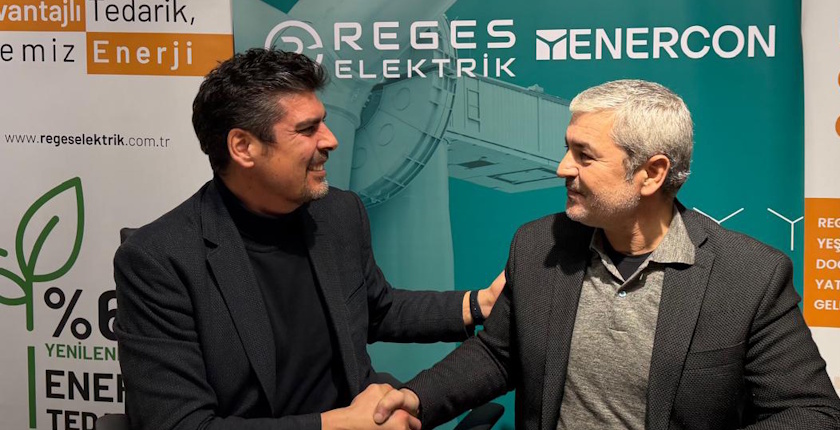
turkey enercon reges elektrik contract Arif Günyar Mustafa Ünal
Arif Günyar and Mustafa Ünal (photo: Enercon)

It is among the highest-yielding onshore wind turbines in Europe, the German company claimed.

Ünal: The agreement represents a significant milestone for Reges Elektrik as it makes its first investment in wind energy

Arif Günyar, Enercon Regional Head for Central Asia, the Middle East and Africa (CAMEA), thanked Reges Elektrik for its trust in his company’s technology.

“We look forward to strengthening our cooperation through future projects,” he added.

According to Mustafa Ünal, Chairman of the Board of Reges Elektrik, the agreement represents a significant milestone for his firm as it makes its first investment in wind energy.

“Partnering with Enercon and deploying the E-175 EP5 E2 turbines aligns perfectly with our long-term vision to expand our renewable energy portfolio with high-efficiency, future-proof technologies,” he stressed.

Of note, Enercon has installed wind turbines with a total capacity of 60 GW in more than 50 countries around the world.

Post Views:48
January 28, 2026
by AEA in News

North Seas region signs landmark offshore wind deal

Seven heads of state and government and energy ministers of nine countries gathered in Hamburg today to boost the expansion of offshore wind. Together with industry and transmission system operators, the countries launched the Offshore Wind Investment Pact for the North Seas. They envisage cross-border projects totaling 100 GW.

Nine European countries committed to building 15 GW of offshore wind per year over 2031-2040 and derisking offshore wind investments. The industry, in return, pledged cost reductions, 91,000 additional jobs and EUR 1 trillion of economic activity.

Europe is charting the massive offshore wind buildout it needs to deliver on its energy security and competitiveness objectives, WindEurope said.

At the North Sea Summit in Hamburg today, Belgium, Denmark, France, Germany, Ireland, Luxembourg, the Netherlands, Norway and the United Kingdom confirmed their ambition to build 300 GW of offshore wind in the so-called North Seas by 2050.

Over one hundred companies participate in offshore wind pact

Governments, the wind industry and transmission system operators (TSOs) signed the Offshore Wind Investment Pact for the North Seas. The agreement is underpinned by separate declarations of the heads of state, energy ministers and the industry. The last of the three is an undertaking by more than 100 offshore wind companies across the value chain, the update adds.

Offshore wind has been a European success story with 37 GW installed across 13 countries, WindEurope stressed.

“That’s more than 6,000 turbines providing homegrown, clean and competitive electricity at scale. But deployment has been dragged by suboptimal auction design, increased costs of capital and lack of visibility for the supply chain due to an uncertain project pipeline,” the organization pointed out.

Two-sided CfDs to be auction standard

In the Investment Pact, governments pledge to provide planning and investment security and derisk offshore wind projects. It involves two-sided contracts for difference (CfDs) as the standard for offshore wind auction design, for visibility on revenue. The countries agreed to remove any regulatory obstacles to power purchase agreements (PPAs) – direct agreements between electricity producers and corporate end-consumers.

A steady pipeline of offshore wind projects will bring the needed confidence to invest in new capacity for manufacturing, ports infrastructure and vessels, according to WindEurope.

In return, Europe’s offshore wind industry pledges to drive down costs of offshore wind by 30% towards 2040 against the 2025 levels. The cost reduction would be driven by scale effects, lower costs of capital and further industrialization underpinned by clarity and visibility on the project pipeline.

The industry vowed to create lasting value for the economy, communities and consumers. It also said it would invest EUR 9.5 billion in the value chain including manufacturing, port infrastructure and vessels.

The TSOs intend to identify cost-effective cooperation opportunities and 20 GW of economically promising cross-border endeavors by 2027 for deployment in the 2030s. It includes offshore projects with interconnections to more than one country. The operators are about to develop cost-sharing principles.

The new partnership will secure 100 GW of joint offshore wind projects, Britain said.

Post Views:53
January 28, 2026
by AEA in News

Enery secures EUR 250 million for hybrid power plants in four EU states

Austrian green energy producer Enery has secured financing for hybrid power plants in Czechia, Slovakia, Bulgaria, and Slovenia.

Enery said it has successfully raised more than EUR 250 million in long-term portfolio project financing.

Československá obchodní banka, a. s. (ČSOB) is acting as the sole lender, while United Bulgarian Bank AD and Československá obchodná banka, a.s. Slovakia are subparticipants. The financing has a tenor of 22 years.

The transaction is structured as portfolio project finance, featuring a single borrower and a single lender, and supported by several operating companies as guarantors, Enery explained.

Enery currently operates a portfolio with 566 MW of installed capacity

The financing will be used to support the development and operation of a cross-border renewable energy portfolio in Czechia, Slovakia, Bulgaria, and Slovenia, according to the announcement.

It includes 300 MW of solar capacity and 100 MW / 220 MWh of co-located battery energy storage systems (BESS) assets spanning four countries.

“Securing more than EUR 250 million through this long-term portfolio financing is another strong endorsement of our strategy and execution capabilities,” Enery CEO Richard König underscored.

König: Another strong endorsement of Enery’s strategy and execution capabilities

Teodor Filip, VP Financing at Enery, pointed to this long-term financing as a major milestone for the company. It strengthens its ability to scale renewable generation and storage solutions in the region and supports its contribution to long-term decarbonization goals, he added.

In early January, the company started the construction of one of the largest photovoltaic plants and hybrid power plants in Europe. The Ogrezeni facility will feature an installed peak capacity of 761 MW, coupled with a 1 GWh battery energy storage system.

Enery also intends to commission a four-hour battery storage system of 150 MW in central Bulgaria by the end of the first quarter.

The company currently operates a portfolio of 566 MW in installed capacity, 90% which is solar.

Post Views:45
January 28, 2026
by AEA in News

Greece outlines long-term investment plan to solve water crisis

The Greek government presented a plan to maintain water supply as drought has reduced reserves to worrying levels in certain areas.

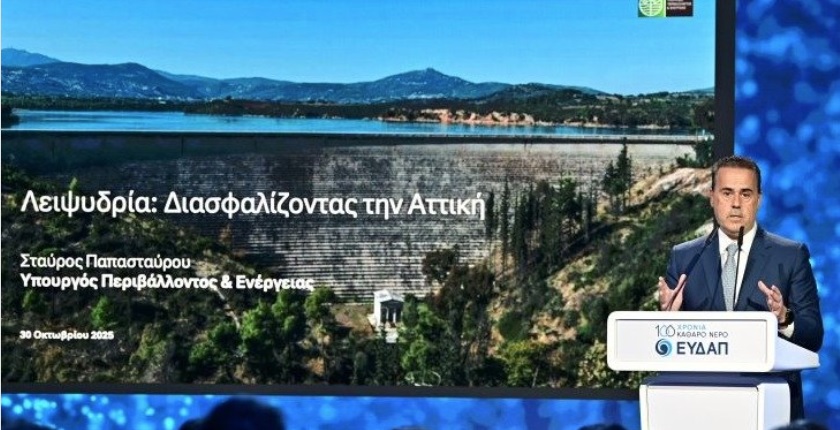
The Ministry of Environment and Energy outlined short-term and long-term measures, with a focus on Attica, the peninsula where Athens is located. The area consumes by far the most water in Greece. This year, the level in the nearby Mornos lake in Fokida has dropped to just 152.9 million cubic meters, with its area reduced to 8.3 square kilometers. It marks a 15-year low for the major reservoir and a steep 45% drop in reserves from 2024.

For the long term, the government has launched the Evrytos project for using water from the Evinos river in Aetolia-Acarnania. It will provide Attica with 220 million cubic meters annually, for a cost of EUR 500 million. Necessary infrastructure will become operational by 2029, according to Minister Stavros Papastavrou.

Desalination plants to increase power demand

In the meantime, the government and the Athens Water Supply and Sewerage Company (EYDAP) are examining the installation of three desalination plants: in Thisvi, Nea Peramos and Lavrion. Papastavrou said they can together provide 87.5 million cubic meters annually.

However, such units are both expensive and energy hungry. An average desalination plant consumes about 3.5 kWh of electricity for every cubic meter of water it produces. Therefore, the total for all three is about 600 GWh per year.

The new energy demand has not been anticipated in the ten year development plan of Independent Power Transmission Operator (IPTO or ADMIE) nor the National Energy and Climate Plan (NECP). The 600 GWh is not much compared to a national consumption of 52 TWh, but it would be concentrated in Attica and needs to be taken into account.

Demand is already expected to rise in the region, as a result of electrification and new large-scale construction works in places like Ellinikon.

Post Views:312
January 27, 2026
by AEA in News

Turkey’s first large solar-BESS power plant inaugurated

Oze Grup has built a 49 MW photovoltaic facility with a 34 MWh battery storage system southwest of Ankara. It is the first such hybrid power plant in Turkey.

Energy storage systems are indispensable for grid security and price stability, according to Chairman of Turkey’s Energy Market Regulatory Authority (EMRA or EPDK) Mustafa Yılmaz. “Energy is no longer just about production. The real issue is ensuring that the electricity produced is integrated into the system at the right time, in the right place, and safely,” he said at the inauguration of the country’s first large solar power plant with energy storage, built by Oze Grup.

The site is in Sivrihisar in Eskişehir, some one hundred kilometers southwest of Ankara. The solar power plant has 49.2 MW in peak capacity. Its 29 MW grid connection matches the capability of the battery energy storage system (BESS), which has 34.1 MWh in capacity.

Oze Grup got the first project approval and the trial permit in the DGES category. The acronym is for licensed solar-storage systems, as opposed to self-consumption facilities. It was the Ankara-based construction company’s first energy project.

PVI Enerji designed and built the facility for Oze İnşaat ve Beton Sanayi. BS Distributed Energy Systems (BS DES) was involved in all stages. The other contractors are ELIN Enerji, HMK Demir Çelik, Sunroof Enerji and Solex Energy.

The chief regulator said the new hybrid power plant marks a vision change. “The sun doesn’t always shine, the wind doesn’t always blow. Renewable energy can only become a primary driver through storage,” Yılmaz stated.

He added that Turkey is now fully prepared for investments in renewable electricity plants with storage. The process has been rather slow, as the legislation for fast-tracking such projects was issued more than three years ago.

Oze Grup completed the hybrid power plant late last year. Notably, Polat Enerji received the approval from the Ministry of Energy and Natural Resources for its licensed wind-storage system (DRES), the first in Turkey.

Post Views:69
  • 1
  • …
  • 10
  • 11
  • 12
  • 13
  • 14
  • …
  • 140

AEA – Albania Energy Association is a industry association dedicated to representing the interests of Albanian and West Balkan for energy producers and consumers. AEA works to advance the development and adoption of sustainable energy solutions in Albania and the Western Balkans, supporting the region’s transition toward a cleaner, more secure, and more competitive energy future. AEA is registered by decision of the Court of Tirana, DECISION NO. 3032, (VAT:L11827451K).

[email protected]

Address
Blv Zogu 1
Tirana
1057
ALBANIA

LinkedIn  |  Facebook
Events
May 25, 2022 Connecting Green Hydrogen Europe 2022
May 25, 2022 Energy Week Western Balkans 2022
Copyright © Albania Energy Association