by in News

Borusan EnBW puts 80 MW Pelit wind farm online in Turkey

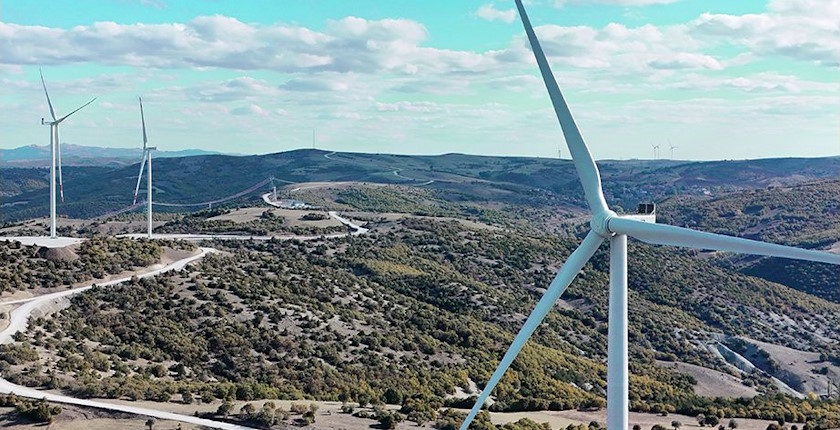
Borusan EnBW Enerji’s first wind investment in Central Anatolia, the Pelit wind power plant, began production. Located near Sivas, it has 80 MW in capacity.

The joint venture of Borusan Holding and Energie Baden-Württemberg increased its wind power portfolio in Turkey to 212 turbines in operation and 776 MW. Its tenth facility, Pelit, is located near Sivas and is the first in Central Anatolia.

Borusan EnBW’s new wind park consists of 14 Nordex machines, of which 13 have 5.7 MW each, according to project documentation. The remaining one is of 5.9 MW.

At 80 MW, Pelit is the firm’s fifth-largest wind park in Turkey. It said it would and prevent 178,000 tons of carbon dioxide emissions, equivalent to the carbon sequestration of 4.6 million trees.

Estimated annual output, 280 GWh, is sufficient for the needs of 122,000 households. The partners, which established the firm in 2009, initially intended to install 40 turbines of 2 MW apiece.

Due to its location, the Pelit wind farm creates seasonal and regional diversity in Borusan EnBW Enerji’s generation portfolio, the update reads. The largest wind power plant is Saros, at 143 MW, in Çanakkale. A 94 MW photovoltaic system was built and integrated with it, creating a hybrid power plant.

The joint venture has two other small solar power plants and the Yedigöl Aksu hydropower system, of 50.3 MW. It is also active in electricity sales and trading, as well as the operation of an electric vehicle charger network.

Turkey hosts wind power plants of more than 14 GW in combined capacity.

by in News

North Macedonia’s third wind farm enters trial operation

According to the Energy Regulatory Commission (ERC or RKE) of North Macedonia, a 44 MW wind power plant has entered trial operation in Demir Kapija. Almost three years ago, Kaltun Enerji hired YEO Technology, also based in Turkey, to build the first part of the Dren wind farm. It is the third such facility in the country, but another one was built nearby and is about to be commissioned.

North Macedonia added 210 MW from renewable sources to the electricity grid this year through November, of which 44 MW is a wind power plant in Demir Kapija that entered trial operation, President of RKE Marko Bislimoski revealed. According to the body, officially called the Energy, Water Services, and Municipal Waste Management Services Regulatory Commission, the rest are photovoltaics.

Given that solar power capacity amounted to 848 MW at the end of 2024, it means that it has recently surpassed 1 GW.

The share of renewables in production capacity was 55% last year, while they generated 40% of domestic electricity, Bislimoski added.

Dren wind power plant has nine turbines

In early 2023, Kaltun Enerji hired YEO Technology (YEO Teknoloji Enerji ve Endüstri) for its 44 MW wind power plant project in Dren in North Macedonia. Both companies are based in Turkey. The eponymous village is in the municipality of Demir Kapija, but parts of the area are in the neighboring Negotino and Gevgelija, which borders Greece.

Kaltun Enerji obtained licenses this year for the trial operation of Dren 1 (33.6 MW) and Dren 2 (9.6 MW). They consist of seven and two Goldwind turbines, respectively, of 4.8 MW each.

North Macedonia’s first wind power plant, Bogdanci, is nearby.

Nearby wind park awaiting commissioning

Project firm Park na veterni elektrani Perun, formerly known as Euroing, received a temporary license from RKE in April for electricity production for a 30 MW wind power plant, also known as Rosoman facility. The location is in the Bogdanci municipality, in the same area. The wind park comprises five Siemens Gamesa turbines. According to the latest updates, it was about to be commissioned.

The country’s second wind power plant, put into operation last year, is called Bogoslovec.

Alcazar Energy Partners held a groundbreaking ceremony in July for its Štip wind farm in North Macedonia. At 400 MW, it would be the biggest in the Western Balkans.

Of note, Bislimoski said that RKE has started amending the licenses for solar power plants that added battery storage, but also pointed out that he doesn’t expect power surpluses this winter. Consumption is increasing, especially among households, as a large share uses electricity for heating, he added.

by in News

Quota surpassed at Romania’s bonus wind power auction

Romania apparently achieved moderately lower prices at its additional wind power auction for contracts for difference (CfDs) than in the regular round. According to a media report, nine bids were approved, for seven proposed facilities, and the winners include OX2, Qair and Zen Energy Group.

All wind farm projects in Romania that obtained the right to state support at the latest renewable electricity auction need to be completed by 2028. The Ministry of Energy and transmission system operator Transelectrica have approved 315.8 MW, compared to the targeted minimum of 290 MW, Economica.net learned.

The bonus round was organized because of a weak turnout in the regular, second wind power auction. Winners are eligible for 15-year CfDs, in a EUR 3 billion scheme covered via the European Union’s Modernisation Fund.

According to the report, the prices were also more favorable for the government than in the previous auction: between EUR 59.95 per MWh and EUR 74.9 per MWh, against EUR 65.17 per MWh to EUR 79.5 per MWh. The ceiling was the same, EUR 80 per MWh.

Cheapest two lots are part of same project

Naxxar Wind Energy Project Zenon won two lots, at 64.8 MW each, for the same project – Tudor Vladimirescu in Brăila county, northeast of Bucharest. The strike prices are EUR 59.95 per MWh and EUR 61.05 per MWh.

Owners of the special purpose vehicle are Renewable Investors and Kaizer Gerhard, an individual, both from Germany.

Aukera Project Company Beta has won a CfD contract for 27.2 MW in the proposed Făurei wind farm. The price is EUR 67.12 per MWh. It is owned by AtlasInvest, headquartered in Belgium.

In Romania, it is working on the projects for the Delesti wind farm in Vaslui county and the Gura Ialomiței storage facility in Ialomița. The battery would have 250 MW in operating power and a capacity of 500 MWh.

The first phase, of 300 MWh, is under construction. The company obtained a EUR 9.9 million grant last year through the National Recovery and Resilience Plan (NRRP or, in Romanian, PNRR) and signed a loan facility of EUR 60 million with Kommunalkredit Austria for the storage system.

OX2 wins CfDs for additional capacity for its future wind farms

Brăila Green Energy qualified for 12.4 MW of its Urleasca wind power project, at EUR 69.86 per MWh. The firm is controlled by OX2, which already won a CfD for a part of the same future facility.

The Sweden-based company also snatched 25.6 MW for its Cerchezu project. It is another winner from the previous round. This time, the South Wind subsidiary secured a contract at EUR 74.49 per MWh.

Clever Power has obtained 21 MW and 14 MW by bidding EUR 69.88 per MWh and EUR 72.92 per MWh, respectively. Both lots are for the same project: Falciu wind farm, envisaged to include storage. The company is controlled by Romanian investor Barbu Cristian, the article adds, citing a businesses registry.

AZ Market Construction won just 8 MW for its Bordei Verde wind project. It is eligible for EUR 74.74 per MWh. The firm is owned by France-based Qair.

Traian Energy, a subsidiary of Zen Energy Group from Luxembourg, is getting the highest price from the bonus round. The wind park would receive EUR 74.9 per MWh for the entire 78 MW.

by in News

Wpd obtains wind power approvals in Greece for 225 MW

Wpd has won environmental approvals for a wind power project of 147.6 MW in Central Greece and one for 77 MW in Thrace, in the country’s northeast.

Some of Germany-based wpd’s wind power investments in Southeastern Europe are struggling with delays and controversies – like in Montenegro and Bulgaria, but it is gaining speed in Greece. Right after its subsidiary WPD Wind Energy 2 obtained environmental terms (AEPO) from the Ministry of Environment and Energy in Athens for a 77 MW facility in Boeotia (Viotia), WPD Wind Energy 1 reached the same milestone for a future 147.6 MW wind park near Alexandroupolis, Newmoney reported.

The latter project didn’t go smoothly. It went through numerous changes due to fire and bird protection issues. Nevertheless, the Natural Environment and Climate Change Agency issued a negative opinion a month ago.

Wpd is planning to install 26 wind turbines in Fera in the municipality of Alexandroupolis and in Soufli in neighboring Tychero. The sites, Kato Limnes, Makrylofos, Voskotopos and Kounia, are in the region of Eastern Macedonia and Thrace.

The German renewables developer has more than halved the planned number of turbines in Thrace while the capacity would be virtually the same

The initial design was for 59 units of 2.5 MW each. The developer eventually switched to 21 turbines of 6 MW, two of 4.5 MW and three of 4.2 MW, of which one would be limited to 4.1 MW. They would all be of the Vestas V150 type.

Road construction works would cover 45 kilometers, but including improvements to existing roads in the length of 42 kilometers. The project involves the construction of two 150/33 kV substations and underground cables of 40.5 kilometers for 33 kV and 7.7 kilometers for 150 kV power lines.

The 77 MW wind power project is for the locations of Megali Rachi, Kroniza and Kanavari in the Aliartos-Thespies municipality, in the central part of Greece. The facility would consist of 11 Siemens Gamesa turbines.

Wpd entered the Greek renewable energy market in 2020 and has since been developing wind and photovoltaic projects. It is also active in Croatia, Romania, North Macedonia and Bosnia and Herzegovina.

by in News

Greenvolt orders GE Vernova wind turbines for its 250 MW project in Romania

GE Vernova said it would start the delivery in 2026 of 42 of its 6.1 MW-158m wind turbines to Greenvolt for the Gurbănești project near Bucharest. Together with the recent order for the nearby Ialomiţa wind farm, the Portugal-based firm secured half a gigawatt in capacity.

Greenvolt is nearing the launch of construction of two wind farms in Romania. Soon after acknowledging an order for 42 of its 6.1 MW-158m wind turbines, GE Vernova said it would deliver another identical batch for the Gurbănești project.

The site is just east from Bucharest, in Călărași county. Domestic company Renovatio developed the project through special purpose vehicle Gura Ialomiței Solar, backed by Portuguese investment fund RNVQ FCR.

Greenvolt is a subsidiary of KKR. In Southeastern Europe, it is also active in Greece, Croatia, Bulgaria and Serbia.

As for the wind turbine model, its nameplate capacity is 4.8 MW to 6.1 MW, and the 158 meters is the rotor diameter.

The previous order, in October, was for Greenvolt’s Ialomița Nord project. It received final authorization in June from the National Energy Regulatory Authority (ANRE) of Romania for 246.4 MW. Notably, GE Vernova said the capacity of its turbines would be 252 MW.

Located in neighboring Ialomița county, the wind turbines would be in three groups in the communities of Țăndărei, Gheorghe Lazăr, Grivița and Ograda. The project firm is called Țăndărei Solar.

Both wind farms will benefit from state support for 125 MW each. The developers won contracts for difference at Romania’s first wind power auction, a year ago. Gurbănești has a contract for EUR 64.98 per MWh, compared to Ialomița Nord’s EUR 67.89 per MWh.

GE Vernova has agreed to supply and install all units and commission both wind parks. It said they would amount to 500 MW in total. Deliveries are set to begin next year, for completion in 2027.

The wind turbine manufacturer said the annual output would be sufficient for more than 110,000 Romanian households.

by in News

Renewables investors are seeking tailored financing services as they add BESS, adapt to risks

Market conditions have become challenging for renewables in the CEE region, alongside uncertainties in the regulatory sphere, which calls for advanced and tailored financing solutions, according to participants in UniCredit Serbia’s workshop on navigating capital flows in the segment, including mergers and acquisitions (M&A). Investors, UniCredit’s clients, highlighted the growing importance of battery energy storage systems – and especially adding co-located storage to photovoltaics.

The renewable energy market is evolving in Central and Eastern Europe, as large players join the game and developers emerge as producers. With its surge in photovoltaic capacity and the revival in the construction of wind power plants, Romania has become a frontrunner. In neighboring Bulgaria, the first power purchase agreements (PPAs) are indicating a strong perspective, while Serbia might become more relevant soon, investors agreed at an event that UniCredit Bank Serbia organized in Belgrade.

M&A and financing trends in the region were the central topics. The idea was to have an open discussion with industry players active in the region about their investment strategies and the bank support, said the Head of Specialized Lending in UniCredit Serbia Svetlana Cerović, who moderated a panel within the conference.

A stable top line and a legal framework is the key driver for investments, with a particular emphasis on grid connections

Cerović pointed out that volatility has been on the rise for the last couple of years, after a huge wave of investments that followed the Paris Agreement and the European Green Deal. Sound and predictable regulatory framework along with stable revenues is key. To assure market flexibility and grid stability, new investments in western Europe and in the region are supported with the government programs including investments in battery energy storage systems (BESS). Thus, one of the prerequisites for the execution of future projects in local market will be certainty regarding the third auction timeline and availability of the longer term PPAs.

The participants at the workshop on navigating capital flows in renewables said a stable legal framework is the key driver for investments – grid connections especially, and permitting as a whole. On that note, developers will lean on the slowly maturing PPA market, though support from banks is necessary in the equation. Battery energy storage systems are a game changer, particularly colocated with solar parks for the optimization of the project returns.

UniCredit is strongest player in renewables financing in Serbia

UniCredit has a wide set of tailor-made project finance loans as well as a full range of services from advisory to various financing solutions, Head of Project and Structured Finance in Serbia Jelena Nestorović said.

The Italy-based bank has financed a string of major wind power and photovoltaic projects in the region, including facilities with colocated BESS, like Sunterra RE’s Galabovo in Bulgaria.

As for Serbia, it is the strongest player in the renewable energy segment. UniCredit financed six wind parks in the country, of 430 MW in total, and of which three as the sole lender. Notably, Čibuk 1 and 2 are the largest in Serbia.

UniCredit Bank Serbia is financing the country’s biggest wind power plants – Čibuk 1 and 2

Some of the participants and winners at the first two domestic auctions for contracts for difference (CfDs) are among the bank’s clients as well. Nestorović stressed that Bank is financing in total 30MW of smaller scale solar power plants .

She pointed to one of the largest industrial rooftop solar power plants in the region. UniCredit provided EUR 3.1 million facility and acts as a hedging and account bank for CWP Europe and Resalta’s project company. It built a PV system of 6 MW on a rooftop of Henkel Serbia facility in Kruševac, under an ESCO (energy service company) model.

Since 2019, the bank has participated in the financing of first waste-to-energy cogeneration plant,  located just outside of Belgrade. UniCredit is financing energy efficiency projects in the country, too.

Jelena Nestorovic UniCredit Renewables investors tailored financing services BESS adapt risks
Photo: UniCredit’s Jelena Nestorović presenting

Priority in Europe shifted from energy transition to energy security

Maria Vastola, Managing Director of UniCredit’s Energy Advisory Team covering Power & Utilities across the Group’s core countries, said valuations for renewable energy stocks on public markets are strongly down compared to 2021-2022 period and below the 3Y historical average. Independent power producers (IPPs) are factoring in a great uncertainty related to the permitting process, the regulatory framework in certain countries and the macroeconomic environment, she explained.

The bottom line is the shift in the European paradigm from the energy transition to energy security, due to geopolitical tensions, Vastola underscored. On the other hand, M&A still has good valuations, she said at the panel discussion.

Investors are focusing on operational quality, meaning high-quality assets, returns and value creation, as opposed to growing at any cost, Vastola added.

“There are more investors ready to put capital in projects and in the region. Private capital flow is a good bridge and a complementary tool for banks’ balance sheets,” she asserted and placed an emphasis on large corporations, private equity and M&A.

Scale creates efficiency, and efficiency and flexibility create value in a challenging market, Vastola stressed, highlighting investments in hybrid power plants that include battery storage. Over the past few years, corporates, traders and utilities are flocking into the renewables realm in “a big shift from big oil to big energy,” she said.

Actis to invest in infrastructure projects across region

Vice President for Energy Charles Lachapelle from Actis agreed with the other panelists about the significance of hybrid power plants and underscored that the sustainable infrastructure investment firm is mostly doing very large projects as they are much more competitive.

“Definitely, for solar, I think having a BESS is a must,” he said and added that “it goes without saying at this point.” As for batteries with wind parks, they enable flexibility for offtake, Lachapelle noted.

Actis is a growth market investor in the infrastructure and energy space, best known in the region for Rezolv Energy. In Romania, the company obtained a financing package for the first phase of its giant Vifor wind farm via PPAs with companies in the commercial and industrial (C&I) sector. The second part was secured thanks to the CfD from a renewable energy auction.

The next chapter for Actis could involve more than a billion euros

Among other investments in Romania, Rezolv has the Dama Solar project for 1.2 GW in peak capacity. It would currently be one of the biggest in Europe. The company is also active in Bulgaria.

Actis is looking at a pipeline of projects across the region, including in Serbia, Lachapelle revealed. Asked about the next auction that the country is planning, he said a wind power project in the 200 MW range would be suitable.

Lachapelle specified that the next chapter may involve over EUR 1 billion and that Actis would require support in financing.

On the subject of power purchase agreements, he said the optimal tenure is longer than ten years, with more than 70% of output contracted. “However, we’ve done cross-border PPAs. We’ve looked at solutions, in the past, combining wind, solar and BESS. We can be creative on that front,” Lachapelle stated.

Regulatory stability is essential for investor-friendly countries

While the PPAs of 70% and at least 10 years are necessary for non-EU countries, banks in the EU are more risk-hungry, according to CWP Europe’s General Counsel Jovana Rubežić.

One of the most important factors is how investor-friendly a country is, she added. “When I say investor-friendly, I mean the regulatory framework… The next thing we look at is whether we can connect our project and can the power markets absorb the power,” Rubežić said.

The rules have basically stayed the same in all of CWP Europe’s key markets, except with respect to grid connection, as transmission system operators are becoming stricter, she underscored. The company is transitioning from project development to the IPP sector, Rubežić said. She pointed to the need for support in regulatory matters, especially in sleeved PPAs, both from the government and government-owned utilities such as Elektroprivreda Srbije (EPS) in Serbia.

Structured portfolio transactions are facilitating growth for companies with multiple projects

Bankers generally seem to prefer co-located batteries to standalone ones, UniCredit’s Head of Infrastructure and Export Financing Lazar Nikolić said.

The main reason is the more diversified revenue stack, as a combination of BESS and a renewable electricity plant is effectively a single asset. With global battery storage capacity on a steep growth trajectory, banks and investors will need to look for bankable solutions to enable that.

Firstcomers in the standalone battery segment may have an extremely short payoff period ahead, but the bank needs a revenue stack

Nikolić stressed that developers need advanced capital solutions such as structured portfolio transactions, saying that they pave the way for renewables platforms to grow. Namely, firstcomers in the standalone battery segment may have an extremely short payoff period ahead, however a solid revenue stack remains key for the bank to take on risk. Countries with strong state support schemes will enable standalone BESS faster, he added.

In structured portfolio financing, the client company has different BESS, power plants and projects grouped.

“The assets can be different in terms of technology, they can be different in terms of location, they can be different in terms of offtake, in terms of also the cycle of the assets. We pack them together, bundle assets and structure debt solution on top of them, significantly enhancing portfolio diversification,” Nikolić said.

Lazar Nikolic UniCredit
Photo: UniCredit’s Lazar Nikolić presenting structured portfolio financing options

Battery storage is natural hedge for green power production

Enery, headquartered in Austria, decided at one point to add battery storage across its power plants as well as both mature and greenfield projects in Romania, Vice President for Financing Sebastian Staicu said. BESS is “a natural hedge” and it has become very cheap, he noted.

UniCredit acted as the lead bank for the company’s 230 MW portfolio of wind, photovoltaics and battery storage in the country. “That’s a smart structure where, instead of having to negotiate financing for each project, you have this wholesale facility and you just bring in new projects, which contribute to the diversification element,” Staicu said.

by in News

Energy Community calls for nominations of PECI energy infrastructure projects

Developers of cross-border energy infrastructure investments within the Energy Community or internal ones with significant cross-border dimensions can nominate them by January 19 within the selection process for projects of Energy Community Interest (PECI). In line with the Trans-European Networks for Energy (TEN-E) regulation, the mechanism is for electricity transmission and energy storage including protection, monitoring and control systems, together with smart power and gas grids, hydrogen and carbon dioxide.

The Energy Community Secretariat opened a call for promotors to submit their projects for evaluation within the 2026 PECI selection. EU regulation 2022/869 – revised TEN-E, which the Energy Community Ministerial Council adopted as 2023/02/MC-EnC, stipulates the approval of the second list of projects of Energy Community Interest (PECI) by December 31, 2026.

Nominations are received until January 19. The proposals concern the electricity and gas sectors.

In the first group are high- and extra-high-voltage overhead transmission lines and underground and submarine transmission cables. It includes equipment and installations for offshore renewable electricity.

Eligible electricity segment investments are also for energy storage, as well as protection, monitoring and control systems for all of the above and at all voltage levels.

Projects for smart power and gas grids are both in the scope of the PECI selection process. Hydrogen-based technologies, electrolyzers and CO2 projects are within the gas infrastructure list as well, the call reads.

PECIs are for cross-border energy infrastructure within the Energy Community or internal endeavors with significant cross-border dimensions.

Proposal forms are available at the call’s webpage.

Ministries, regulatory authorities and transmission system operators will be among the institutions evaluating nominated projects. The group also consists of the European Commission, Energy Community Secretariat, Energy Community Regulatory Board, the ECDSO-E entity of Energy Community distribution system operators, the European Network of Transmission System Operators for Electricity (ENTSO-E) and European Network of Transmission System Operators for Gas (ENTSOG).

The Energy Community comprises the Western Balkans, Moldova, Georgia and Ukraine.

by in News

Global wind installations jump 64% in H1 2025

Global wind power installations have risen by 64% in the first half of 2025 from the same period of last year, according to the latest report from the World Wind Energy Association. It expects 2025 to be a record year for new wind farms.

A total of 72.2 GW of new capacity was added between January and June, following 44.1 GW installed in the first half of the previous year, reads the World Wind Energy Association’s (WWEA) Half-year Report 2025.

By the end of June, total installed wind power capacity reached 1.25 TW, with wind energy now supplying approximately 12% of global electricity demand.

According to the report, the first half of 2025 demonstrates continued momentum and resilience of the global wind power sector.

“Driven by strong growth in China and steady expansion across major markets, wind energy is on course for its strongest year ever. With a record 150 GW expected to be installed in 2025 and a global total surpassing 1.3 TW, wind power continues to play a central role in the world’s renewable energy transformation,” WWEA said.

China continues to lead the global wind power deployment. In the first six months of the year, it installed 51.4 GW, compared to 25.8 GW from the same period of 2024 and 23.8 GW in 2023.

The country’s total capacity is over 600 GW, the report adds.

Five countries recorded more than 1 GW of new installations: India (3.5 GW), the United States (2.1 GW), Germany (1.9 GW), France (1.7 GW), and Brazil (1.3 GW).

According to WWEA President Irfan Mirza, the first half of 2025 was a defining period for the global wind energy sector – not only for its record-breaking growth but for the clarity it provides about the world’s energy direction.

“The addition of over 72 GW of new capacity globally demonstrates the sector’s resilience and the trust that governments, investors, and communities continue to place in wind power as a cornerstone of sustainable progress,” he added.

by in News

UAE, Montenegro establish strategic green energy partnership

A new agreement between the UAE and Montenegro will facilitate connecting the energy sector with financial technologies and artificial intelligence. The two countries are also considering to deploy solar, wind, hydropower, green hydrogen and battery projects.

The United Arab Emirates and Montenegro agreed to cooperate in the energy sector, setting up a bilateral strategic partnership for the development of renewables, modern energy infrastructure and advanced technologies. The deal envisages joint contribution to projects of strategic significance to Montenegro from solar, wind and hydropower plants to the application of battery energy storage systems and the development of the green hydrogen technology.

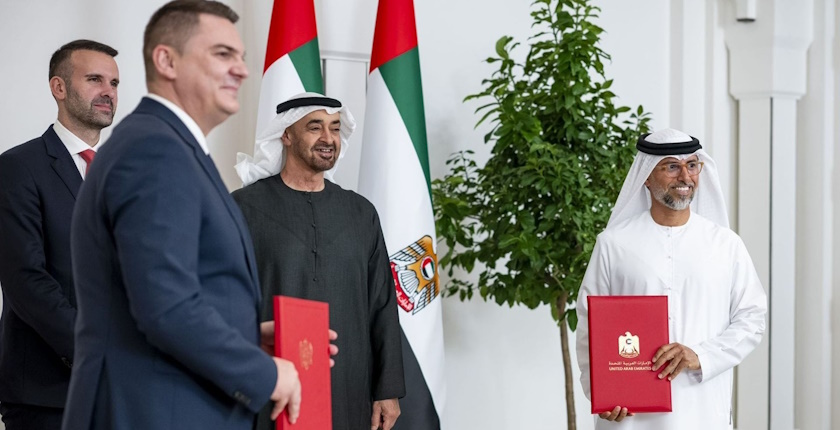
Minister of Energy and Mining Admir Šahmanović signed the agreement with UAE’s Minister of Energy and Infrastructure Suhail Mohamed Al Mazrouei. Montenegrin Prime Minister Milojko Spajić and the President of the UAE Mohamed bin Zayed al-Nahyan attended the ceremony.

Montenegro aspires to become digital hub

The agreement is especially significant for connecting the energy sector with financial technologies and artificial intelligence, the Ministry of Energy and Mining of Montenegro said. The country is aspiring to position itself as a regional hub for innovation, digital transformation and the energy transition, it added.

Within their strategic partnership, the two countries are looking to establish a fintech and AI council. It would consist of representatives of the public and private sector and work on the development of innovative solutions, attracting investments and strengthening the domestic economy through the implementation of progressive technologies.

Joint vision of sustainable development, energy security

The agreement is a new step in the partnership between Montenegro and the UAE, founded on a joint vision of sustainable development, energy security and economic progress, the ministry pointed out.

“The partnership confirms that foreign partners recognize Montenegro as a safe and attractive place for investment in energy and advanced technologies. Our goal is to, through cooperation with the United Arab Emirates, open a new chapter in the development of renewable energy sources, digital infrastructure and innovation,” Šahmanović stressed.

The agreement will facilitate faster materialization of projects strengthening energy security and contributing to the decarbonization of the economy and job creation in the sector of the future, the ministry said.

by in News

Eksim Energy launches production at its Yozgat wind park in central Turkey

Eksim Energy, which operates one of the biggest solar power plants in Turkey, commissioned the first part of its Yozgat wind farm. The company based in Istanbul has surpassed 1 GW in installed capacity.

Eksim Energy (Enerji) is accelerating its expansion in the green energy sector in Turkey – the company said it has received all permits for the first four turbines at its Yozgat wind farm in Central Anatolia. Now half of the planned 56 MW in capacity is online, less than a year since the start of construction.

The company, part of Eksim Holding and headquartered in Istanbul, revealed that 135 people worked 140,000 hours so far. Yozgat is its ninth wind power plant and thirteenth renewable energy facility, the update reads.

With the commissioning of the four turbines, Eksim Energy’s capacity topped 1 GW.

Just within the past year, the company also completed the expansion of its Gevye wind power plant, added a solar power segment to its Susurluk wind park and built the Viranşehir photovoltaic plant, one of the largest in Turkey.

Eksim Energy almost doubled its capacity since the end of 2024

Notably, Eksim Energy finished last year with only 569 MW, data from the annual MW100 Turkey report showed. The Uzundere hydropower plant accounts for 63 MW. The rest was wind power, making the company sixth in the segment in Turkey in 2024.

In the Gevye district in Sakarya in northwestern Turkey, the utility tripled its wind farm’s capacity to 150.2 MW. The additional investment amounted to EUR 80 million. The entire facility, which generated its first megawatt-hour in 2020, cost EUR 195 million in total.

The Viranşehir PV system in Şanlıurfa in the country’s southeast has 191.3 MW in peak capacity. The investment was worth USD 150 million.

“Our next focus will be to accelerate our integrated energy storage investments, in addition to our power plant projects, and to expand hybrid generation, where we combine solar and wind power in suitable locations, Chief Executive Officer Arkın Akbay.