by in News

PPC building three battery storage facilities in Greece

PPC Group has launched the construction of a battery energy storage system in the area of its Amyntaio coal plant. The company is also building BESS facilities at its thermal power plants Kardia and Meliti, as it is preparing to end coal use in Greece. One BESS unit is under construction in Bulgaria, as well. In Romania, PPC is expanding its wind park project Deleni, which would bring its operational portfolio in the country to over 1.5 GW.

Public Power Corp. – PPC Group is investing in energy storage in Greece and surrounding countries, complementing its solar and wind power investments and contributing to the transformation of coal regions. The government-controlled utility revealed that its future battery energy storage system near the Amyntaio coal plant in the Western Macedonia region is under construction.

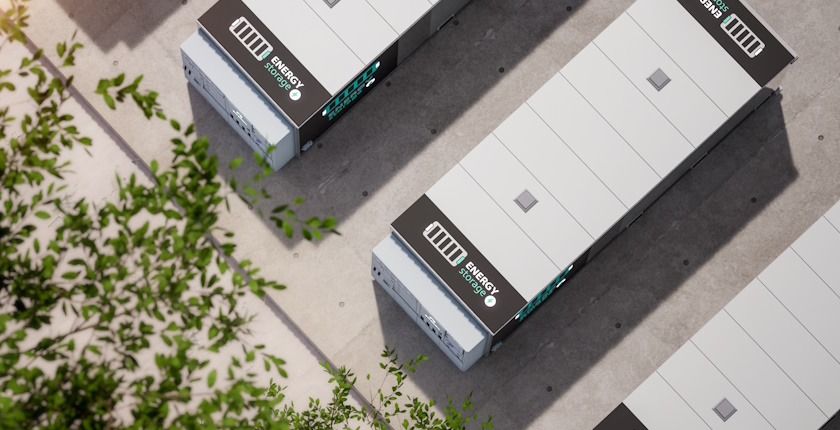
The new station will consist of batteries with 50 MW in operating power and a duration of four hours, translating to a capacity of 200 MWh. Wholly-owned subsidiary PPC Renewables is responsible for the project. It is for liquid-cooled batteries of the LFP (lithium iron phosphate) technology.

The construction of two more electrochemical storage stations is already underway in the same northern region, in the areas of the Kardia and Meliti thermal power plants, the company pointed out. Their combined capability would be 98 MW, for 196 MWh in capacity.

Western Macedonia region to host 860 MW of energy storage

The role of energy storage units for the system is critical, as they aim to support the operation of adjacent photovoltaic power plants and contribute to the stability of the electricity system, PPC Group added. It is planning 860 MW of energy storage in the Western Macedonia coal region. The company said it would create 1,300 jobs in the construction phase and hundreds during operation.

Two pumped storage hydropower projects are included in the portfolio. The one that would transform the Kardia mine is for 320 MW and eight hours, and the facility at the South Field mine would have 240 MW and a 12-hour duration. PPC Group said it has completed the permitting process for the latter.

Solar power plants of 2.13 GW in northern Greece nearing completion

Earlier this month, the utility said its solar power projects in Western Macedonia of 2.13 GW overall are moving ahead at a fast pace and within schedule, in areas around coal plants Ptolemaida, Kardia, Agios Dimitrios and Amyntaio. Overall, upon their completion, the photovoltaic clusters in the region, largest ones in the entire Europe, will generate almost 3.15 TWh of electricity per year, the company added.

Coal land in the Western Macedonia region is turning into endless solar parks

It is equivalent to over 6% of the annual energy consumption in the Greek mainland. Utilising the land of the former lignite mines of Ptolemaida, Kardia, and Agios Dimitrios, PV plants totaling 1.19 GW are being installed, of which 90% is complete and some is in operation.

The clusters include PPC Group’s flagship project, of 550 MW. It would be the biggest facility of its kind in Southeastern Europe excluding Turkey.

In cooperation with the German company RWE, the construction of photovoltaic plants in Amyntaio of 940 MW overall is also advancing rapidly toward completion, the latest update reads.

Advancing investments in Bulgaria, Romania

In addition, the company said it is building a BESS unit of 25 MW and 55 MWh in neighboring Bulgaria.

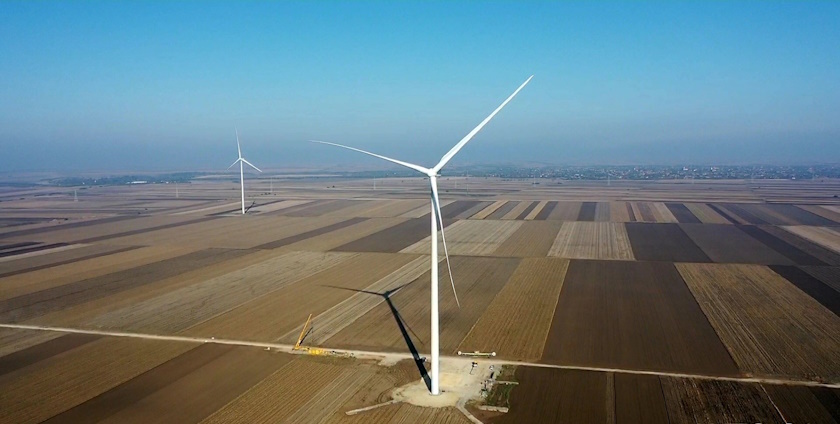
As for other recent news, PPC said it is expanding its Deleni wind park project in Vaslui county in northwest Romania. The first phase, 140 MW, is supposed to be completed by the end of the year. The addition would amount to 85 MW, consisting of 14 turbines, the Greek company added.

The site is at the Bogdănița commune. With the 225 MW in Deleni, PPC in Romania would reach 1.5 GW in operational capacity.
by in News

First section of Čibuk 2 wind park in Serbia begins trial operation

Masdar and Taaleri Energia generated the first megawatt-hours in their Čibuk 2 wind farm in Serbia. The first 35 MW out of the planned 154 MW is now in trial operation.

The installation of all 22 turbines in the Čibuk 2 wind power plant northeast of Belgrade is set to be completed by mid-November, Renewable Energy Sources of Serbia (RES Serbia) revealed. Trial operation of the first part began on October 21 and 35 MW has been connected to the grid so far, according to the update.

The entire wind farm will come online in early December, the association said. The project in the municipality of Kovin in the south Banat area is for 154 MW. The wind farm is between the villages of Bavanište and Mramorak.

Abu Dhabi Future Energy Co. – Masdar and Finland-based Taaleri Energia’s Taaleri SolarWind III Fund reached the financial close just 13 months ago. At the same time, special purpose vehicle (SPV) Čibuk 2 Wind Energy, a subsidiary of their joint venture Masdar Taaleri Generation, signed a power purchase agreement (PPA), as well as contracts on balancing and a market premium, with state-owned power utility Elektroprivreda Srbije (EPS).

UniCredit and Erste provided project financing, while Nordex is the equipment supplier.

The Čibuk 2 project secured a market premium at Serbia’s first wind power auction.

The facility is located next to the existing Čibuk 1 wind farm of 158 MW, the largest in Serbia. Masdar and Taaleri Energia commissioned it in 2019.

by in News

Alerion to begin construction of wind parks in Romania totaling 336 MW

Italy-based Alerion Clean Power has obtained all permits for three wind farms in Romania. All the sites, for a combined 336 MW, are in Constanța county, the country’s wind power hub, and in a small area swarming with renewable energy projects.

When Alerion struck a deal with Monsson Alma for three wind power projects in Romania in 2021, the country was just beginning to revive the sector following several completely dormant years. The Italian company’s investments are entering the construction phase, Profit.ro reported, at a time when investors are preparing to break ground for dozens of such facilities, and some are soon coming online.

The sites are in Crucea, Saraiu and Vulturu in Constanța county, part of the historic Dobruja (Dobrogea) region. It is the heart of Romania’s wind energy production.

Furthermore, there are numerous other projects and facilities in the same area northwest of the port city of Constanța and bordering Tulcea county. The article adds that Italy-based Alerion Clean Power took over the wind power projects from Emanuel Muntmark, who controls Monsson Group. His company has a significant presence in the ongoing investments in and around the territory of the Crucea commune, in the country’s southeast.

Alerion has received the so-called establishment authorization or permit from the National Energy Regulatory Authority (ANRE). The three projects are for 336 MW altogether, consisting of a 108 MW unit and two twin investments of 114 MW each.

Monsson Group has developed several major projects in and around the territory of the Crucea commune

They will all be connected to the grid via a 400/110 kV transformer station that the Italian company needs to build, the update revealed. The estimated commissioning date is 2027.

Alerion expects the future wind parks to generate an overall 1.1 TWh per year, bringing EUR 85 million in earnings before interest, tax, depreciation and amortization (EBITDA).

The company operates 15 solar parks in Romania, with 165 MW in combined peak capacity. Alerion took out an EUR 18 million loan earlier this year from Banca Comercială Română (BCR), part of Erste Group, for a photovoltaic project of 35 MW in Călărași county. The project was valued at EUR 26.8 million.

In neighboring Bulgaria, Alerion operates the Krupen wind power plant of 12 MW.

by in News

Domac: No energy transition without much stronger grid investments

Croatia is investing only half as much in the electricity network as Slovenia and Austria, said Managing Director of North-West Croatia Regional Energy and Climate Agency (REGEA) Julije Domac. He warned that without an acceleration in grid investments, there are no renewable sources and no energy transition.

Croatia is about to overcome one of the biggest obstacles to investments in green energy, with its proposed methodology for the grid connection fee. However, there are several more bottlenecks in the sector, and they mostly also concern the electricity network.

The grid is apparently not among priority segments in Croatia, which depends to a large extent on electricity imports. The situation is similar throughout the Balkans and Europe, and beyond, and the basic question is who will cover the expenses as well as which projects are the most important for enabling the deployment of renewables. Among other difficulties, the administrative capacity for permitting for grid improvements and expansion is too weak, alongside complex environmental and spatial planning requirements.

Managing Director of REGEA Julije Domac outlined his view on the matter in a LinkedIn post. “Without an electricity network, there are no grid connections, no RES, no transition… There is more than 13 GW of solar and wind power projects under development today, but the network cannot integrate it without accelerated investments,” he wrote.

Photo: Julije Domac (REGEA)

Grid operators reacting with emergency measures instead of long-term strategy

The free capacity in the power distribution grid is estimated at 3.7 GW, but a large part is in areas with low interest for investing, Domac pointed out. Of note, he is also Croatian President Zoran Milanović’s special advisor on energy and climate.

“In the coastal area and Dalmatia, where the resources are the best, the network is near the maximum load in many parts – it means a malfunction of one element could jeopardize the system’s stability. To avoid that, the operators are already often turning to emergency measures in dispatching now: shutting down parts of the network, redirecting flows, pausing works. It is ‘putting out fires’ – and not a long-term strategy,” the head of REGEA said.

The regulated income from tariffs limits investments as the transition’s urgency isn’t acknowledged

Domac stressed that Croatia is investing less than EUR 20 per customer per year, only half as much as Slovenia and Austria. In his opinion, the tariff-based methodology is limiting investments. Namely, Croatian Transmission System Operator (HOPS) and HEP-ODS, the national distribution system operator, are funded through regulated income under the Croatian Energy Regulatory Agency (HERA), and the mechanism doesn’t acknowledge the urgency of the transition, according to the energy expert.

Another point is delayed digitalization, as Croatia has a much lower share of smart meters than neighboring Slovenia, where it surpassed 99%, or Italy, where the level is around 95%, he underscored. There is no domestic market for flexibility and no contracts with batteries and with consumers that could help ease the pressure on the grid, Domac claims.

In addition, he highlighted the sluggish grid connection procedure, saying it lasts ten years for wind power plants and four years for photovoltaics, the most in all European Union.

Grid connection costs can be covered with EU funding, green bonds

Domac is recommending to the authorities to introduce temporary connection points, with a controlled power delivery – limited until network enhancements are completed. HERA did envisage such a possibility in its draft methodology.

The grid connection fee for renewable electricity plants should be abolished, which was already promised, Domac recalled. It is an obstacle blocking 60 projects for 3.5 GW in total, he noted. It is the grid operator that should bear the cost and, aside from the tariff items, it can finance them through EU funds and green bonds, like most member states do, Domac added.

He expressed the belief that ten or so most important grid interventions should be accelerated – transformer stations and transmission lines in particular and especially in Dalmatia. Pilot projects for batteries and flexibility would pave the way for more grid connections without the wires, and public procurements need to be streamlined as well for works worth up to EUR 1 million, for instance, so that the replacement of one transformer doesn’t last twelver months, Domac asserted.

by in News

Mingyang presents ultralarge floating twin wind turbine concept

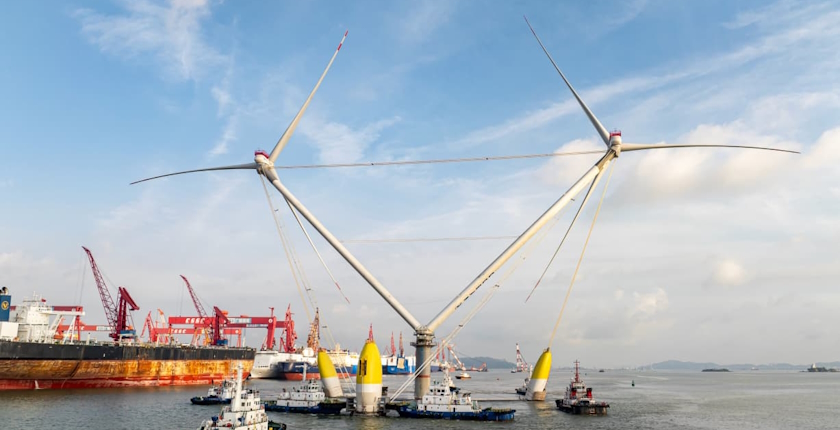
Within its OceanX platform for dual floating wind turbines, Ming Yang Smart Energy is designing a machine for 50 MW. It would be almost two times more than the currently strongest wind turbine.

Manufacturers in China keep pushing the limits in renewable energy technology. Dongfang Electric installed the world’s largest wind turbine for testing just two months ago, and Ming Yang Smart Energy already revealed that it is developing a floating machine that would be almost two times stronger. The company, also known as Mingyang, presented the concept for a 50 MW unit, though it is actually a double turbine.

It is designing it within its OceanX platform for V-shaped floaters. The foundation for the dual rotor will be engineered for waters deeper than 40 meters, according to Mingyang.

Twin floating turbines could turn out to be the new frontier in renewable energy technology

The company said it would provide typhoon resistance, for up to 260 kilometers per hour, and open an entirely new solution for tapping deep sea wind potential. The ultralarge twin turbine is envisaged with 290-meter rotors.

Targeted cost is below USD 1,300 per kW, or almost five time less than the European average. It compares to between USD 3,000 per kW and USD 4,300 per kW in China. OceanX is currently available at 16.6 MW at most.

Mingyang recently said it would build a manufacturing facility in Scotland for floating technology. It valued the project at GBP 1.5 billion.

The largest floating wind power turbine so far has 20 MW. It was manufactured by China Railway Rolling Stock Corp. (CRRC).

by in News

Romania issues call for additional wind power auction for 290 MW

Wind farm project developers in Romania can bid by November 24 for state aid in the form of contracts for difference (CfDs). The call was issued for an additional auction, for 290 MW, after the regular round was completed with more than a third of the quota remaining unallocated.

The Ministry of Energy of Romania and transmission system operator Transelectrica formally launched their third auction today under the CfD state aid scheme for renewable energy. The additional round is only for wind power projects.

Only 1.26 GW was allocated of the available 2 GW in the second, regular auction. It was held within a EUR 3 billion renewable energy program under the European Union’s Modernisation Fund and Romania’s National Recovery and Resilience Plan (NRRP or PNRR).

Aurora Energy Research has interpreted the lack of interest as an indication that developers may have seen more value outside the CfD framework: in power purchase agreements (PPAs) and merchant options. The firm recently said it expected strike prices near the EUR 80 per MWh ceiling.

Financial offers will be opened on December 2, the calendar shows

The maximum price is the same as the last time. Notably, the quota for the additional auction is just 290 MW. Developers have until November 24 to apply with projects of at least 5 MW each. In addition to the bid, they need to submit a technical offer proving eligibility.

Transelectrica, the CfD scheme operator, is due to open the technical offers on November 17. Financial offers of the qualified applicants will be opened on December 2, according to the schedule. The winners would need to sign their contracts for difference by December 18.

The CfDs are for a 15-year period. When the market price of electricity is lower than the price in the contract, the government pays the private operator the difference for the electricity that the beneficiary sells. When it’s the other way around, the producer returns the difference.

by in News

Greek offshore wind farm program at standstill for more than one year

More than three years after the first offshore wind law, Greece made little progress toward achieving the national goal.

According to the National Energy and Climate Plan (NECP), the country should have its first 1.9 GW of offshore wind farms by 2030.

However, the entire program seems to be on hold. No government official has mentioned it within the past year.

The next steps in the process should be the approval of the National Offshore Wind Program through a joint ministerial decree. According to Insider.gr, the decree has been ready for more than a year now, waiting for the signature. It sent a message to investors that the pace is slow.

Companies selected in the initial auctions would conduct exploration in each allocated offshore zone. The main auctions would follow, for the winners to install the wind power plants.

Exploration permits have so far been provided only to Public Power Corporation (PPC), Terna Energy and Motor Oil Hellas, for a zone in the northeast, offshore Alexandroupolis. It is for pilot projects totaling 600 MW. The wind parks are supposed to become operational by 2029, but the Ministry of Environment and Energy has not yet requested approval from the European Commission for a support mechanism through contracts for difference (CfDs).

More wind needed for the energy mix

It should be noted that the government has acknowledged the need for more wind energy in the country’s renewables mix. Currently, it is dominated by photovoltaics, leading to an imbalance and ever-higher curtailments.

Offshore wind farms are seen more as a source of baseload electricity than solar and onshore wind power, given their high capacity factor, at around 50%.

Advisory firm Ricardo said recently that the Greek NECP is likely going to fail, partly as a result of missing its offshore wind goal.

by in News

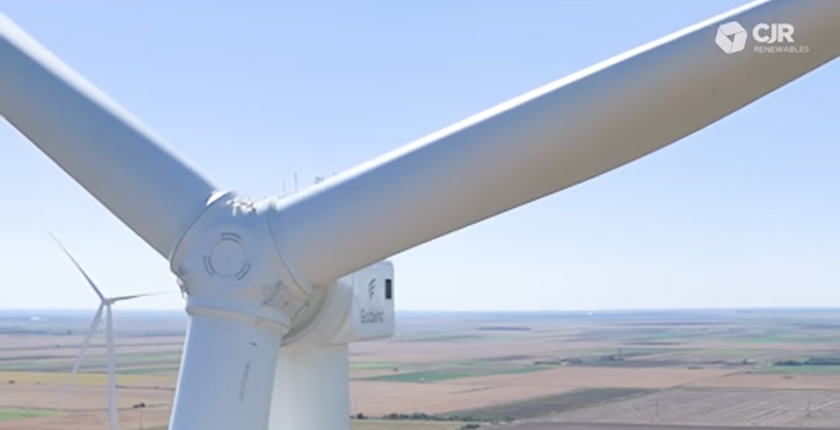
CJR Renewables completes construction of 102 MW Urleasca wind farm in Romania

The Urleasca wind farm in Brăila county in eastern Romania is complete, contractor CJR Renewables said. The 102 MW facility owned by BIG Mega Renewable Energy will generate an estimated 277 GWh.

Wind power investments are returning to full speed in Romania, following a decade-long break and a stellar expansion in the photovoltaics segment over the past several years. Portugal-based CJR Renewables, the contractor in the Urleasca project, announced that the 102 MW facility is complete.

Urleasca is a village in Traian commune, in the vicinity of the city of Brăila, northeast of Bucharest. The developer, BIG Mega Renewable Energy, secured EUR 92 million in financing last year from the European Bank for Reconstruction and Development (EBRD) and OTP Bank. It earlier valued the investment at EUR 109 million,

The Israeli firm achieved a deal in 2021 to purchase the project in Romania. CJR Renewables pointed out that the wind farm would generate an estimated 277 GWh per year, which would displace 115,000 tons of CO2 emissions.

Urleasca consists of 17 wind turbines, Goldwind GW 165-6.0, each of 6 MW. The contractor also built 20.2 kilometers of internal and local roads.

BIG Mega Renewable Energy is fully owned by BIG Energia Holdings, established in Hungary, which is in turn a subsidiary of BIG Shopping Centers and Mega OR.

A different wind power project for a site in Urleasca won state support in August at Romania’s second renewable energy auction.

by in News

Policy changes in US will have marginal impact on global energy transition

Policy changes in the United States introduced by the administration of President Donald Trump will have only a marginal impact on the global energy transition, according to the latest Energy Transition Outlook, produced by DNV.

Norwegian consulting firm DNV pointed out in a report that energy use by artificial intelligence may seem alarming, but that it is projected to stay below booming sectors like electric vehicle (EV) charging and cooling of buildings.

“DNV’s annual Energy Transition Outlook has consistently forecast a shift from today’s 80/20 fossil/non-fossil primary energy mix to a 50/50 mix by 2050. That is still our prediction this year. Although some aspects of the transition are supercharged and progressing rapidly, other aspects have hit turbulence and are delayed. This leads to a marginally slower transition than our forecast last year,” CEO Remi Eriksen said.

According to the report, in the US, fossil fuel promotion and the reversal of clean energy support policies are slowing the nation’s transition.

However, China continues to set renewables buildout records with 390 GW of solar PV (56% share of new global capacity) and 86 GW of wind (60% share) expected to be installed this year. The country is also fueling the transition in the rest of the world with its cleantech exports.

In the meantime, Europe is seeking to balance climate action with competitiveness, the report reads.

The continent is having a slow success with harder-to-decarbonize sectors, but renewable energy buildout remains relatively strong.

In the rest of the world, most countries are embracing competitive Chinese technologies, with year-on-year growth in installations at around 25%, data showed.

Eriksen said cheap renewable electrons stored when necessary in ever-cheaper batteries are already an unstoppable force.

“We forecast that solar – both with and without storage – and wind will be 32% of the global power mix by 2030. We expect a resurgence in offshore wind by 2030, such that variable renewables will provide more than 50% of all electricity by 2040,” he stated.

Solar power is 10% of all power produced worldwide today, and DNV projected it will be 20% in 2029 and 40% in 2045. Renewables would reach 65% in the global electricity mix by 2040, the firm added.

AI’s energy demand would be lowered by efficiency effects

According to Eriksen, soaring power demand from AI data centers is placing additional strain on already congested grids, particularly in North America.

DNV ‘s analysis finds that AI’s energy demand growth is likely to become more linear over time, outpaced, for instance, by EV charging and cooling demand, even as the cognitive services of AI expand exponentially. The main reason is growing efficiency.

AI’s energy use is forecasted at only 3% of global electricity by 2040. Data center energy use will quintuple by 2040, equalling 5% of all global electricity. AI’s share would be 3%, with the remaining 2% for general purpose data centers.

The report highlighted large regional variations – AI is the biggest driver of electricity consumption growth in North America, compared to EV charging in Europe and EVs and cooling in China and India.

For the first time, this year’s analysis extends to 2060

The report noted that this year, the world reached the milestone of more than 50 million EVs on the road. Most of them, 60%, are in China, with Europe at 21%, and North America at 13%.

The point of inflection — EVs at 50% of global new passenger vehicle sales — will be reached in 2032, the report projected.

For the first time, this year’s analysis extends to 2060 to reflect the continued transformation of the energy system after 2050. The report recalled that it is now widely acknowledged that the world will not achieve net zero emissions by 2050, meaning warming would exceed 1.5 degrees Celsius.

A decarbonization of energy mix is unstoppable but too slow, setting up grave risks for future generations, Eriksen concluded.

by in News

Voice from beyond the centre

Balkan Green Energy News, the media partner of the 2025 Just Transition Young Voices Awards, is publishing the three winning articles. The Energy Community Secretariat organized the contest in collaboration with Bankwatch, CAN Europe, the CLEW Network, and the Regional Youth Cooperation Office. The aim is to promote young adults set to shape the climate, energy, and social landscape in the years ahead in the Energy Community region. 

Author: Ani Gogokhia

It is the summer of 2045  – unusually hot compared to previous years – but the unbearable heat is not the only problem. I wake up in my small apartment in western Georgia, open the window, and immediately see clouds of exhaust fumes. For me, this is just another part of everyday life.

After a quick breakfast, I step outside for a short walk to wake myself up. The buildings in the city are the only things that remain unchanged. The number of people on the streets is declining. I feel lonely – most of my peers have either moved to the capital, Tbilisi, or left for European countries.

Thinking of them inevitably leads me to reflect on my own career path. Unfortunately, I haven’t had the opportunity to make a meaningful impact in my region.

Not much choice for young woman

With those thoughts weighing on me, I walk quickly to my first job. I call it my first job because I’ll head to another one later in the afternoon. The commute is long, and public transport only slows me down – so I walk. As I pass the local market, I see vendors, most of them women, standing in the scorching sun.

My job is house cleaning. The pay is just enough to cover groceries and utility bills, but with the cost of living rising daily, I rush to a second cleaning job in the afternoon. Floors, windows, walls – it’s all the same. If you wonder why I chose this line of work, the answer is simple: there wasn’t much choice, especially for a young woman.

The scenario described above could become a regular part of life if we halt progress toward a just transition and neglect it

There’s little to say about the workday. I return home as the sun begins to set, carrying groceries in both hands. As I unpack, I wait for my family. Everyone works – my mother and father in a factory, and my sister at a hospital. We gather for dinner and talk about current events: rising tensions, protests over low wages, unemployment, and deepening poverty.

But these conversations always end the same way – with my mother’s cancer. She developed the disease after years of exposure to harmful substances at the factory, yet she still can’t stop working. We simply can’t afford her treatment otherwise.

The scenario described above could become a regular part of life if we halt progress toward a just transition and neglect it. For the energy transition to be truly just, it must include rural areas, too, creating fair opportunities for people across Georgia.

A just transition refers to a series of policies that ensure fair and equal opportunities for everyone as we shift to a greener economy in the fight against climate change. It’s a process meant to align energy systems with modern, sustainable standards. Local governments play a vital role, though many factors – such as geography and ethnicity – can affect how smoothly this transition occurs.

Just transition in Georgia

Georgia is working to stay aligned with global green trends through international cooperation. Hydropower dominates its energy sector, but the country is slowly incorporating wind and solar systems. Since joining the Energy Community in 2017, Georgia has made notable strides toward harmonizing its legislation with the European Union’s energy standards.

This alignment has attracted major investments in renewable energy. Projects like the Kartli wind farm and a national roadmap for a circular economy – supported by the EU4Environment program – are steps in the right direction.

The city of Zugdidi is among the trailblazers in Georgia in the energy efficiency segment, youth engagement and environmental education

These national achievements are significant, but what about rural areas far from the capital? Each region presents unique challenges and opportunities in the just transition. In western Georgia, Zugdidi has started participating in this process. Although large-scale renewable projects remain concentrated elsewhere, the city has seen pilot initiatives in energy efficiency, youth engagement, and environmental education supported by the EU.

The rural development programs of the United Nations Development Programme (UNDP) in Zugdidi focus on inclusive economic participation, especially for youth, and promote eco-tourism and sustainable agriculture to curb outward migration. One noteworthy initiative involved using hazelnut shells to heat school greenhouses – a clever use of a crop central to local livelihoods. Educational projects and international partnerships have also helped raise awareness about the green economy, yet challenges remain.

Chiatura craves economic diversification away from mining

Take, for example, Chiatura – a mining town east of Zugdidi, known for its manganese industry since Soviet times. Chiatura’s economy has long depended on mining, with consequences such as environmental degradation, poor working conditions, and economic stagnation when mining activity declines. Without economic diversification, residents remain vulnerable and largely excluded from sustainable development benefits.

In 2024, Georgian news outlets reported: The hunger strike entered its 22nd day on July 10, involving eight miners, three of whom have sewn their mouths shut. The unrest stems from decisions to shut down underground mining operations, leaving workers desperate and uncertain about their futures.

While Zugdidi explores decentralized, eco-friendly solutions like biomass heating, Chiatura still lags in implementing alternatives – clean industries, green technologies, or renewable energy – deepening the divide between regions.

Youth massively moving to capital Tbilisi

Unfortunately, Georgia’s development remains overly centralized. Most opportunities are clustered in Tbilisi, causing a massive youth outflow from other regions into the capital.

Geographic and infrastructural limitations in rural and mountainous areas also pose serious barriers. For example, eastern Georgia has high solar radiation – perfect for photovoltaic panels – but varied terrain complicates installation. Wind energy prospects are greater in the east, as western regions are less windy.

A just transition also demands inclusive participation, especially from women. As of 2024, women make up just 28% of the global STEM (science, technology, engineering and mathematics) workforce – a glaring underrepresentation. In Georgia, the meaningful inclusion of women in the just transition remains a significant challenge. Empowering women – politically, economically, and socially – is key.

A difficult past marked by political instability and conflict has left its mark, but the more women engage in public life, the greater their chances of economic empowerment, entry into traditionally male-dominated professions and establishing decent place in economy.

What must be done

While Georgia has made substantial headway towards its climate goals, it is key for the country to create a unified national policy that addresses all regions equitably. We need robust educational campaigns, targeted support for rural areas, and most importantly, greater inclusion of women and minority groups in the just transition.

Only then can we build a fair, resilient society capable of meeting the challenges of the 21st century.

Photo: Just Transition Young Voices Awards