by in News

Kosovo* invites firms to qualify for 100 MW wind power auction

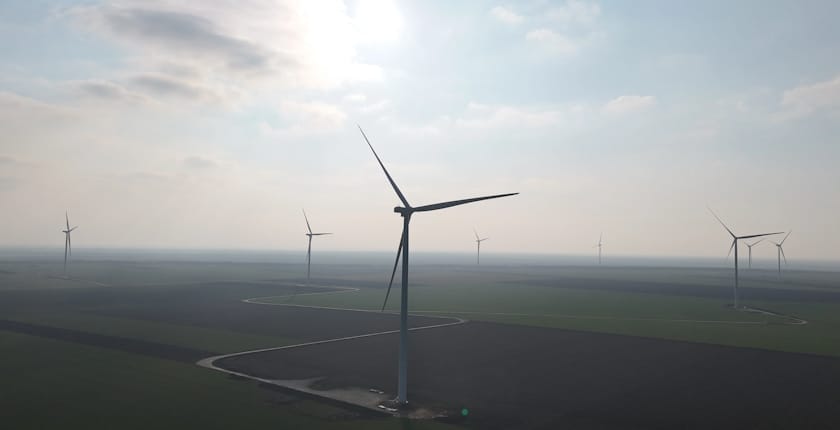
The Ministry of Economy of Kosovo* started the first phase of the first of two planned auctions for wind power. The target capacity for the first round is 50 MW to 100 MW, out of a total of 150 MW.

Qualified companies can submit documentation for the first wind power auction in Kosovo*. They will bid for power purchase agreements (PPAs) and contracts for difference (CfDs) with a duration of 15 years.

The Ministry of Economy said the target capacity in the first round is 50 MW to 100 MW. The auction plan envisages two auctions of an overall 150 MW.

At the presentation, officials announced that it is receiving prequalification documentation by February 20. The ministry aims to publish the list of eligible firms in March. The schedule showed that final bids would be opened in August and the winners declared in September.

Maximum bidding price is EUR 80.2 per MWh

Companies will be obligated to design, build, operate, maintain and decommission wind parks. The maximum price is EUR 80.2 per MWh and the lowest bid, submitted excluding value-added tax, shall win.

According to an earlier brochure, the accepted price will be adjusted every 12 months, based on the inflation rate for the sector.

The Law on Renewable Energy Sources stipulates that the contracts would be converted into CfDs twelve months after the establishment of a day-ahead electricity market price in Kosovo*, the document reads. In addition, balancing responsibility is limited to imbalance volumes greater than 10%. Curtailment is subject to financial compensation.

Kosovo* has extraordinary wind energy potential, Minister of Economy Artane Rizvanolli said. Around 17% of the territory has winds of above six meters per second, while in mountainous areas they reach eight meters per second, she added.

Wind capacity factors range between 28.2% and 32.2%, translating to as much as 2.82 GWh in annual output per 1 MW of installed capacity, the ministry said.

Wind power auction winners to establish public-private partnership with government

Other earlier documents reveal that individual wind projects would be run by special purpose vehicles (SPVs), firms where the government would have a share of up to 49%. The Ministry of Economy intends to use the funds from the International Monetary Fund’s Resilience and Sustainability Facility (RSF) in the development of the 150 MW. The purpose of the public-private partnership scheme is to reduce risk for private investors.

Applicants are required to provide a guarantee of EUR 7,000 per MW of proposed capacity. Winners will be obligated to submit guarantees of EUR 70,000 per MW.

Eligible companies have a net worth of at least EUR 30,000 over the last three calendar years and a minimum annual turnover of EUR 25,000 in the same period.

Kosovo* hosts just three wind power facilities: Selac, also known as Bajgora (104.1 MW), Kitka (32.4 MW) and Golesh (1.35 MW).

Of note, Millennium Challenge Account Kosovo has just invited qualified companies to respond to the prequalification call for a battery storage project. The government earlier said it was planning auctions for 950 MW including battery storage within two years.

The first solar power auction was completed in April.

* This designation is without prejudice to positions onstatus and is in line with UNSCR 1244/99 and the ICJ Opinion on the Kosovo declaration of independence.
by in News

Wind farms Alibunar 1, Alibunar 2 secure market premiums in Serbia’s renewable energy auctions

Wind power projects Alibunar 1 and Alibunar 2, majority-owned by SANY Renewable Energy, a leading global wind turbine manufacturer based in China, have ranked second and third, respectively, in Serbia’s latest renewable energy auction for market premiums in the wind power segment. The auction was organized by the Ministry of Mining and Energy as part of the country’s ongoing efforts to boost renewable energy production.

Alibunar 1, with a capacity of 96.6 MW, and Alibunar 2, with a capacity of 71.4 MW, were recently acquired by SANY Renewable Energy. The projects were originally developed by WV-International, a Dutch renewable energy firm known for its pioneering role in Serbia’s green energy sector, in collaboration with Norwegian developer Emergy.

Following their success in the auction, the company announced that preparations for the construction of both wind farms are underway, with work set to commence in the fourth quarter of 2025. The wind farms will feature SANY Renewable Energy’s S168 wind turbines, each with a capacity of 4.2 MW.

Serbia’s EPS to offtake entire output via 15-year PPA

Upon completion of construction and grid connection, the electricity generated by Alibunar 1 and Alibunar 2 will be sold to Serbia’s state-owned power utility Elektroprivreda Srbije (EPS) under a previously signed 15-year power purchase agreement (PPA). The two wind farms are expected to generate approximately 480 GWh of electricity annually, significantly contributing to Serbia’s transition towards a greener energy mix.

WV-International and Emergy remain committed to expanding their renewable energy footprint in Serbia. The partners are developing an additional portfolio of wind farms totaling 571 MW under the Banat project complex. Furthermore, they are advancing plans for a 125 MW hybrid power plant that will integrate wind and solar energy.

SANY Renewable Energy was listed on Shanghai Stock Exchange in 2022

SANY Renewable Energy Co., Ltd was founded in 2008. It is committed to becoming the global leader in the field of clean energy equipment supply and services.

It was officially listed and traded on the STAR Market of the Shanghai Stock Exchange on June 22, 2022, with the stock code 688349. SANY Renewable Energy’s market share has increased significantly and the company ranked among the top 7 global wind power manufacturers in 2023.

by in News

EDP Renewables inaugurates two wind power plants in Greece

EDP Renewables declared its two new wind farms in Central Greece and Thessaly open, adding almost 70 MW to the transmission grid. The country expanded its wind power capacity by only 125 MW last year.

EDP and its subsidiary EDP Renewables held an inauguration ceremony for two wind parks in Greece. It secured government support for both in 2019 at renewable energy auctions, through 20-year contracts for difference (CfD). At the time, the Portugal-based utility expected to begin commercial operations in 2022.

The two facilities have almost 70 MW in combined capacity connected to the transmission grid. The expected annual output is 143 GWh. It is equivalent to the electricity needs of more than 37,000 Greek households. EDP Renewables estimated carbon dioxide emissions savings to be over 102,000 tons per year.

Greece increased its wind power capacity by only 125 MW last year.

EDP Renewables relies on 20-year CfDs in its wind power investments in Greece

The event was held at the Xironomi site in Boeotia (also Beotia and Viotia) in the region of Central Greece. The wind farm has a capacity of 36 MW and the CfD is for 33 MW.

The other facility is Chalcodonio. It is located in the Magnesia regional unit in Thessaly. The 33.6 MW wind farm project has won a 30 MW contract for difference.

“Greece is emerging as a regional leader in renewable energy, as its abundant wind and solar resources offer enormous potential. The country’s commitment to reduce carbon emissions by 55% by 2030, in line with EU targets, makes it an attractive market for clean energy investments,” said Country Manager of EDP Renewables Dionysios Andronas.

Company has four facilities online

The company has 150 MW online in Greece in four wind parks, positioning it among the top 10 operators in the segment, according to the announcement.

Last year EDP Renewables commissioned its Erimia wind power plant of 35 MW and an estimated annual production of 71 GWh. It entered the Greek market in 2018 with two 20-year CfDs.

The company later reached an agreement with infrastructure group Ellaktor for the joint development of onshore wind projects.

EDP plans 3 GW of renewable energy capacity per year, focusing on wind and solar power as well as energy storage. In its business plan for the period 2023-2026, the company earmarked EUR 12 billion for investments on a global scale.

by in News

Greek renewables sector slams curtailments bill for not including compensation

Power network operators won’t need to compensate renewable energy producers in Greece for curtailments, according to the latest bill of law. It prompted reactions in the renewable energy market.

The bill, submitted for public consultation, received damning remarks from the Hellenic Wind Energy Association (HWEA or ELETAEN) and various other bodies and corporations for the provisions regarding curtailments.

The country’s two operators wouldn’t be obligated to pay compensation. It should be noted that last year curtailments rose by 277% and reached 3.3% of all renewable production in Greece. They are projected to reach new highs in 2025.

The issue primarily plagues larger plants including wind farms, as they have the technical ability to respond to curtailment orders from the Independent Power Transmission Operator (IPTO or Admie). Conversely, smaller photovoltaic facilities connected to the grid of the Hellenic Distribution Network Operator (HEDNO or DEDDIE) have no such telemetering equipment, so they produce freely at all times.

Indeed, Greek authorities aim to make such systems mandatory in smaller renewables plants to be able to curtail them, to maintain system stability, especially during the days of Easter. If an owner fails to make necessary changes, they would be subject to a high penalty, yet to be determined.

Producers point to European law for compensation

HWEA expressed the belief operators should be exempted from compensation only if a proper framework is established that compensates larger producers for curtailments. In practice, it means any revenue collected from the penalties should be used as compensation for other producers.

HWEA: Producer compensation mechanism is necessary

The association added that compensation is obligatory under European law and therefore needs to be included in the regulatory framework.

“The only right way is for the government to conclude the long-awaited framework and introduce a specific producer compensation mechanism,” HWEA pointed out.

Cero Generation Holdings Greece said it is very concerned about proposals for IPTO and HEDNO not to be obliged to provide any compensation.

Curtailment responsibility shifted to aggregators

Another issue concerns the role of renewable energy aggregators, which represent groups of smaller producers in the market. Both HWEA and Elpedison said it is the operators that need to enforce and manage curtailments, and not aggregators, as in the proposed law.

With such measures, aggregators will face increased costs as well as the possibility of having their license recalled if they cannot carry out their new duties, the company pointed out.

by in News

Terna Energy to build solar power plant of 130 MW in Bulgaria

Terna Energy is developing a project for a 130 MW photovoltaic plant near Burgas in Bulgaria. The company, owned by Masdar, plans to connect it to the grid already by the end of next year. Recently it also reached landmark points in the development of wind power projects in Greece.

Abu Dhabi Future Energy Co. (Masdar), which has high ambitions for its expansion in Southeastern Europe, relies to a great extent on its recently acquired subsidiary Terna Energy. The Greek company revealed that it is preparing to install a 130 MW solar park near the village of Vratitsa in eastern Bulgaria.

The project in the municipality of Kameno in Burgas province includes design and procurement, as well as grid connection works including a new 33/110 kV substation. Terna Energy Group said it is targeting completion by the end of 2026.

As part of the strategic cooperation with the former parent company, GEK Terna, its construction arm Terna SA was selected as the contractor, the announcement reads.

Terna Energy operates two wind farms in Bulgaria, with 30 MW in overall capacity.

With its recent share purchases, Masdar boosted its stake in the Greek company to 97.6% from 87.9%. The green energy giant based in the United Arab Emirates acquired Terna Energy last year.

Wind power projects in Evia progressing

In other recent news, Terna Energy received operating licenses for four projects for a wind power complex. The sites are in Karystos in Greece’s second largest island – Evia, also known as Euboea. It is one of the country’s wind power hubs and an important area for the company.

The Terna Energy Omalies subsidiary is responsible for the said investments, of 78 MW in total. They are part of an endeavor consisting of 11 wind farms.

The location for the biggest of the four, at 36 MW and with 12 turbines, is called Praro. The company ordered 3 MW machines from Enercon for all the sites. Molizeza 1 and Kalamaki 2 are for 18 MW each, and Kalamaki would have 6 MW.

Joint venture with MORE for Greece’s first offshore wind farm

Of note, the construction of wind parks in the Balkans has mostly slowed down. Moreover, Bulgaria has been at a standstill since the first wave of investments died down more than a decade ago, while Romania is struggling to pick up pace. Greece added only 125 MW last year.

Terna Energy is counting on opportunities in the offshore wind domain. In January, it joined forces with Greek refiner Motor Oil in the pilot project for the country’s first facility of the kind.

Motor Oil Renewable Energy (MORE) now holds 50% of joint venture Aioliki Provata Traianoupoleos. The project firm is tasked with developing a 400 MW offshore wind power plant on the Ionnian Sea between Alexandroupolis and the island of Samothrace. The two companies aim to complete it by the end of the decade.

by in News

Eurowind Energy signs virtual PPA in Romania with automotive manufacturer

Denmark-based Eurowind Energy signed a 12-year virtual power purchase agreement (PPA) with Autoliv in Romania, for the supply of electricity from the Pecineaga wind park. The automotive manufacturer headquartered in Stockholm also signed one such deal for a solar park in Finland.

The strongest wind turbines in Romania will generate electricity for Autoliv, which makes safety systems for vehicles including airbags and seatbelts, as well as steering wheels and other components. Eurowind Energy will supply the energy from its Pecineaga wind power plant for 12 years under a virtual PPA. In addition, the Swedish automotive manufacturer has another new contract in Finland.

Eurowind Energy recently completed the construction of all eight SG 6.6-170 turbines at the site in Northern Dobruja (Dobrogea in Romanian). However, the 48 MW wind farm is expected to become operational by 2027, according to an update from Autoliv.

PPAs essential for project development for Eurowind Energy

Estimated annual output is 176 GWh, equivalent to the electricity needs of 48,000 Romanian households. The investment is worth EUR 79 million. Eurowind Energy, based in Hobro, Denmark, is one of the biggest wind and solar power developers in Romania.

The company is also a partner in the construction of a giant photovoltaic plant in Bulgaria. The Tenevo facility is planned to be combined with a future wind park and a battery energy storage system into a hybrid power plant.

“PPAs are essential in developing new energy parks. Power purchase agreements with large, ambitious companies like Autoliv ensure the continuous development of new parks and a cleaner future for all of us,” Commercial Director Jesper Schaumburg-Düring said. Eurowind Energy is 50% owned by EWE Holding while Norlys Holding controls the other half.

Autoliv is combining wind with solar in different countries to optimize electricity production

Autoliv’s other new virtual PPA, also for 12 years, is with Alight, for a proposed solar power plant of 100 MW in peak capacity. The two deals are important for ensuring a consistent and reasonably priced energy supply for the manufacturer’s activities in Europe, reducing the risks associated with potential future energy price fluctuations, the announcement reads.

“The innovative approach of combining solar and wind technologies ensures optimal energy generation during both day and night. This approach and the fact that the facilities are located in two different European countries provides flexibility in Autoliv’s physical operations and electricity procurement,” the company added.

The PV park in Eurajoki, Finland is supposed to come online in 2026. Autoliv revealed that it intends to “contract a majority of the clean electricity produced.” Construction is set to start during the spring, the statement adds.

“Through these initiatives, we support our ability to supply customers seeking sustainable products and we take a significant step forward in achieving our climate targets for the European operations,” said Autoliv Europe’s President Magnus Jarlegren. The company aims to achieve carbon neutrality in own operations by 2030 and net zero emissions across the supply chain by 2040.

by in News

Ecomondo and Key Energy biggest energy event on 2018

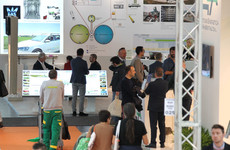
Ecomondo and Key Energy offers today’s biggest platform for the entire Mediterranean basin with 1250 exhibiting companies attracting over 116,000 attendees. Ecomondo has successfully anticipated business changes over time, from waste processing to dialoguing with industry on the development of an economic model based on green technologies. All sectors are efficiently represented, from waste to integrated water cycle, to air, bio-based industry and energy.

The intended vision is that of the circular economy, which involves the formation of new  interconnected industrial clusters as set out in the future investment plans of the European Commission.

Key Energy is the leading fair for renewable energy in the Mediterranean Area.

Focus on photovoltaic and storage, solution for energy efficiency in industry and residential, solutions for sustainable intermodal, connected mobility and sustainable cities.

THE ENERGY CHAIN

The world of energy efficiencyrenewable energy and electric mobility is experiencing an incredibly fast evolution on a global scale as a consequence of the obligations taken in the Paris Climate Agreement.

In Italy there are some interesting signals with a forecasted growth in these sectors. The recently approved National Energy Strategy pushes the country towards targets  such as 55% production of renewable energy and 5 million electric vehicles by 2030.

Considerable investments will be addressed towards urban centres, hubs of economic and cultural activities.  70% of the 7,798 municipalities has a population equal to or less than 5,000 inhabitants. Cities with a high urban development represent only the 3.4% but also accommodate the 33% of the total population. Improve the quality of the air, transports, common areas and services means invest on quality and well-being, and this represents one of the biggest challenges for the local administrations and for the country.

Service’s high standards can be achieved only with a correct investments’ planning together with industrial capacities, engineering and adequate forecasting, all with one common goal: sustainability and inhabitants’ quality of life.

Backed by this favourable background, Key Energy aims to become the flagship event in the field of renewable energy solutions.

CURRENT AND FUTURE TRENDS

Global renewable energy in 2017:

  • Investments amounting to 333,5 bil. $
     
  • with a record injection of 160 bil. on photovoltaic, +18% year on year, regardless the reduction of costs.

Italian investments has seen an increase of +15%, for a total amount of 2,5 bil. $ according to the BNEF statistics.

In 2018 global solar plants will reach at least 107GW, compared to the 98GW in 2017 (+10%).

Italy’s National Energy Strategy has set the target of achieving  55% share of renewables in electricity consumption by 2030: by that time, 5 million vehicles will be electric and 145 billion will have been invested in renewable energy and energy efficiency.

In Italy there are projects aiming to develop photovoltaic plants for hundreads of MW, achieved with no incentives; Regional calls have contributed to the increase of  storage systems.

The exhibition area dedicated to the most innovative integrated solar technologies and to combination with storage systems, mains supply provided from storage and Demand Response and Virtual Power Plant (VPP) systems.


An entire hall of technology, systems and solutions for a more intelligent use of energy resources in industry.
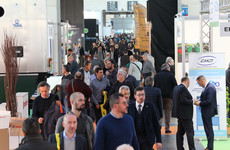
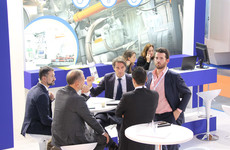
Key Efficiency is the meeting point between technology producers, funding bodies and industry, where best practice among those who have chosen the path of efficiency can be tested.


Key Energy Storage is the exhibition area dedicated to storing energy from renewable sources.

The project was launched to highlight the importance of a technology which is key to energy efficiency. Energy Storage Systems avoid the requirement to acquire energy, allowing energy obtained from renewable sources to be used when the user needs it.

Making optimal use of this energy is imperative. The need to achieve the Cop21 targets and the advantages and economic benefits that Energy Storage Systems offer make them a reality that will guide the market in the coming years.

Over time, Ecomondo Key Energy has proven capable of adapting to the changing market and aims to become the Mediterranean base for this product.

Key Energy Storage offers a series of conferences on the theme of storage on the days of the exhibition, with presentation of best practices and targeted communication for countries in the Mediterranean, Middle East and Eastern Europe for B2B meetings at the exhibition.

The only reference wind power show in the Mediterranean basin, the Balkans and the Middle East. Key Wind, in partnership with ANEV, the Italian Wind Energy Association, collaborates to develop the sector in Italy, in terms of content, training, information and design.

  • Producers of plants and components for large-scale wind power
  • Producers of plants and components for mini wind power
  • Managers of wind farms/wind power producers
CONTACTS

Brand Manager
Sara Quotti Tubi
(+39) 0541/744.226
[email protected]

Sale Department
Claudia Costella
(+39) 0541/744.457
[email protected]

https://en.keyenergy.it/

by in News

AEA concluded, 2017 Seminar on Small Hydropower Development and Management for CEE

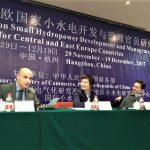
Albania Energy Association chairman Mr.Erlet Shaqe, took part 2017 Seminar on Small Hydropower Development and Management for Central and East Europe Countries supported by the government of the People’s Republic of China / the Ministry of Commerce, ICSHP and HRC initiate, planned and organizing this very comprehensive training workshop for 21 days with participants of over 9 different countries from Asia, Africa, Europe to learn about China’s practice and achievements in small hydro power development and in utilizing SHP to play a positive role in electrification. We were introduced to water resources, green hydropower, the technology, planning, construction and management of small hydropower.

Presentation : Albania Investments and Hydropower Development 2017

[pdfjs-viewer url=”https%3A%2F%2Finfo.aea-al.org%2Fwp-content%2Fuploads%2F2017%2F12%2FAlbania-Investments-and-Hydropower-Development-2017.pdf” viewer_width=100% viewer_height=1360px fullscreen=true download=true print=true]

This training promoted further cooperation and exchange hydropower development experiences between China and participants countries, to support and achieve a bright future for the sustainable development of hydropower in our communities developing countries.

The seminar also integrates classroom presentations with field survey/study tours which include the sites of different hydropower plants, the analogous experimental platform, the equipment manufacturers as well as the Three Gorges Project.

We were  introduced the experience on SHP development and management mode and technology, including Small
Hydropower Development in China, SHP Developing Modes, Method for SHP Feasibility Study, SHP Equipment in China, SHP Norms in China, Operation and Maintenance of Hydropower Plant, SCADA System, Refurbishment of SHP Stations, and some other special topics, such as China in brief, China’s foreign aid, etc.

The organizers:

International Center on Small Hydro Power (ICSHP) is a public and non-profit institution directly under auspices of United Nations Industrial and Development Organization (UNIDO), China’s Ministry of Water Resources and Ministry of Commerce, as well as, ICSHP is headquarters of International Network on Small Hydro Power (INSHP), which is an international organization with more than about 400 members from 80 countries.

ICSHP aims at the promotion of global SHP development through triangle technical and economic cooperation among developing countries, developed countries and international organizations, hence to supply the rural areas in developing countries with environmentally sound, affordable and adequate energy, which will lead to the increase of
employment opportunities, improvement of ecological environment, poverty alleviation, improvement of local living and cultural standards and economic development in rural areas.

HRC, also called NRIRE, was founded with the joint sponsorship’s of Chinese  government and UN organizations such as UNDP/UNIDO in 1981 in Hangzhou, China, specializing in R+D and training etc, in the fields of renewable energy development including SHP and rural electrification. Entrusted by Chinese Ministry of Water Resources, the Ministry of Commerce, the Ministry of Science & Technology, the Ministry of Foreign Affairs, UNDP, UNIDO, ILO, FAO and ASEAN Secretariat etc., HRC has until now, successfully hosted 87 seminars/training courses for more
than 1700 participants of 112 countries regarding the subjects of rural electrification, water resources and renewable energy, inclusive of small hydropower, solar energy and wind power, etc.