by in News

Romania launches renewables auction for 3.5 GW

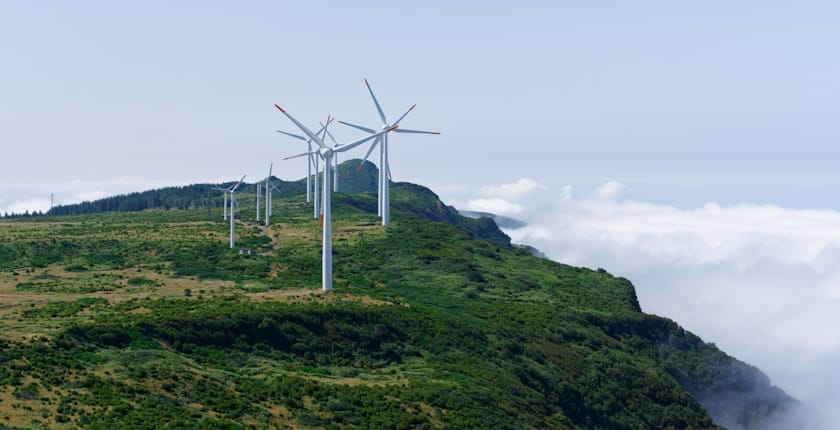
Following a successful first round, in which developers won government support for projects of 1.53 GW altogether, the Romanian Ministry of Energy issued another call, for 3.47 GW of wind and solar power capacity. The deadline for submissions is July 11.

The Ministry of Energy of Romania issued a public call for the second round of auctions under a mechanism for awarding contracts for difference (CfDs). With EUR 3 billion at hand, via the European Union’s Modernisation Fund, the country is supporting an overall 5 GW of wind and solar power capacity.

Developers can apply by July 11 for the remaining quotas of 2 GW for wind parks and 1.47 GW for photovoltaic facilities. In the first round, 21 participants won the subsidies for 1.1 GW and 432 MW, respectively.

Romania cuts ceiling prices

Ceiling prices for government support are lower this time. Wind power is at EUR 80 per MWh or EUR 2 per MWh under the previous maximum possible bid. The authorities slashed the cap for solar power to EUR 73 per MWh from EUR 78 per MWh.

The contracts for difference would last 15 years. The burden of administrative and electricity transmission expenses is passed on to consumers.

More leeway for large players as they are no longer limited to 25% of quota

Another difference is that the 25% cap on the maximum capacity awarded per applicant was scrapped, the documentation shows. In addition, there is a possibility to award up to 20% more capacity than in the nominal quota. Minister of Energy Sebastian Burduja explained that the idea is to avoid the risk of losing a large project with a marginal bid.

He noted that Radramo Power is developing the largest wind power project from the first auction, 245 MW. The Heliowin project, for 125 MW, is the biggest one in the PV segment. It belongs to Israeli company Econergy. Both proposed facilities will launch production by January 28, according to the schedule.

In the first phase, applicants will qualify with their technical offers. The plan is to open financial bids from eligible entities on August 13, and the winners would have until September 9 to sign the contracts. Romania’s transmission system operator Transelectrica has the task to evaluate the applications.
by in News

Major offshore wind projects shelved in another blow to industry

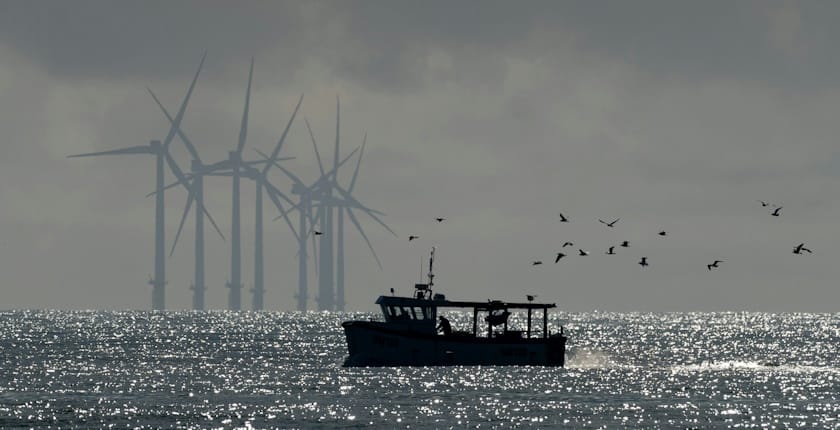
Investors in offshore wind farms, especially European ones, are facing increasing losses – Ørsted decided to halt its Hornsea 4 project in the United Kingdom, while the United States stopped the construction of Equinor’s Empire Wind 1 facility.

After the energy crisis and the impact of Russia’s invasion of Ukraine, the resulting surge in inflation and the European industry’s weakening competitiveness, the offshore wind sector has suffered another blow from the drastic reversal of energy and climate policy in the United States. The administration of United States President Donald Trump turned against wind power, particularly offshore projects.

Meanwhile, China’s expansion in the sector is looking more and more like the case with solar power, where it has achieved absolute dominance on the global market. It is making it even more difficult for Western wind turbine producers and project developers to remain above water.

Ørsted announced that it is discontinuing its Hornsea 4 project in the United Kingdom “in its current form.” The Denmark-based developer and operator left the possibility of restarting the endeavor later “in a way that is more value-creating.”

The company won a contract for difference (CfD) at an auction in September for the 2.4 GW project, but it still couldn’t keep it afloat – financially, that is.

Hornsea 4 could have become the second-largest facility of its kind off European shores. The CfD is equivalent to GBP 83 per MWh in current prices.

Offshore wind expansion depends on potential returns for investors

Ørsted cited a continued rise in supply chain costs, higher interest rates, and an increase in the risk regarding the timeline. Group President and Chief Executive Officer Rasmus Errboe pointed out that the company made the move “well ahead of the planned final investment decision later this year.” He also mentioned adverse macroeconomic developments.

Breakaway costs are estimated at EUR 469 million to EUR 603 million, Ørsted said. It sees the impact on earnings before interest, tax, depreciation and amortization (EBITDA) at EUR 402 million to EUR 469 million. It includes a writedown of the offshore transmission assets and cancellation fees. The company expects to write down EUR 67 million to EUR 134 million in construction costs.

WindEurope: Costs can go up between bidding in an auction and procuring equipment, and auctions have to be fully indexed to reflect that

“The pause on Hornsea 4 shows how difficult it is to get offshore wind projects over the line. Costs can go up between bidding in an auction and procuring equipment, and auctions have to be fully indexed to reflect that. More broadly, the investors who make projects happen need a return,” WindEurope commented.

The association stressed that governments are responsible for making value achievable. “Then they’ll get the volumes they want,” the statement adds.

Empire Offshore project stopped in middle of construction in US

In probably the most drastic example of the offshore wind industry’s troubles in the US, the federal authorities forced Equinor to stop its Empire Offshore project last month. The Empire Offshore 1 segment, of 810 MW, was in the middle of construction! The Bureau of Ocean Energy Management (BOEM) ordered the halt pending a comprehensive review.

Notably, the Norwegian government-controlled company was developing the project under a contract with the State of New York. It is in a group of 17 US states and Washington DC which this week challenged, at a federal court in Massachusetts, Trump’s executive order on wind power.

At the end of March, Empire Wind had a gross book value of USD 2.5 billion, including South Brooklyn Marine Terminal, Equinor revealed. By that moment it drew USD 1.5 billion from the loan facility for the project.

by in News

Serbia’s EPS signs PPAs for wind parks Alibunar 1, Alibunar 2

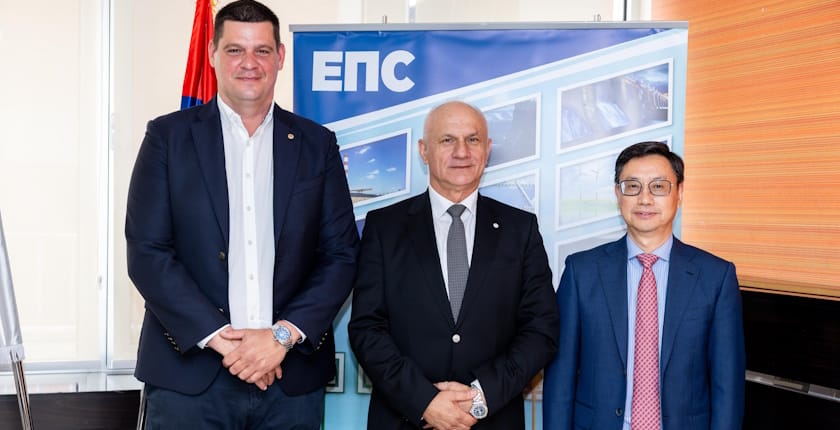
Serbian state-owned power utility Elektroprivreda Srbije will offtake electricity from future wind parks Alibunar 1 and Alibunar 2, of 168 MW in combined capacity. EPS’s Chief Executive Officer Dušan Živković and Project Director of WV-International in Serbia Lazar Lazendić signed today the power purchase agreements (PPAs) and the contracts for difference (CfD) and balancing responsibility.

Wind power projects Alibunar 1 (96.6 MW) and Alibunar 2 (71.4 MW) are among the winners from the latest round of auctions for market premiums for renewable energy in Serbia.

CEO of state-owned power utility Elektroprivreda Srbije (EPS) Dušan Živković signed the power purchase agreements (PPAs) and the contracts for difference (CfD) and balancing responsibility for the two planned facilities with Project Director of WV-International in Serbia Lazar Lazendić.

“EPS is committed to investing in the construction of power plants running on renewable sources, and this way we are strengthening our production portfolio and market position, and we actively support all investors in renewable energy sources. EPS will offtake all the generated electricity, the energy remains in Serbia, and the purchase and balancing price is set according to market principles, which incentivizes investors and enables additional profit for EPS. This energy will also give a substantial, additional security to the operations of our electricity system and to supplying citizens and companies,” Živković asserted.

Commitment to domestic market solidified

At the signing ceremony, Lazar Lazendić pointed out that the said success in auctions represents the materialization of important objectives in the development of the projects Alibunar 1 and Alibunar 2.

“Today’s signing of the contract with Elektroprivreda Srbije, encompassing market premiums, the purchase of electricity, and balance responsibility for our future wind farms solidifies our strong commitment to this market and plays a crucial role in driving Serbia’s energy transition forward,” he added.

Alibunar 1 and Alibunar 2 are SANY Renewable Energy’s first investment in Serbia

The special purpose vehicles, SPVs, or project firms for the two facilities are called Windvision Windfarm A and Windvision Windfarm B, respectively. They are majority owned by SANY Renewable Energy.

“The Alibunar 1 and Alibunar 2 wind farm projects are crucial for our company. SANY Renewable Energy is entering the Serbian market and the Western Balkans region through these projects. This will be the first installation of our wind turbines in these wind farms, serving as a model for our future expansion. We are eager to collaborate with local stakeholders and partners to enhance the country’s energy security,” said Zhou Fugui, Chairman of SANY Renewable Energy and member of the Board and Executive President of SANY Group.

WV-International is the gold sponsor of the Belgrade Energy Forum – BEF 2025, which will be held on May 14 and 15 in Serbia’s capital city, and SANY Renewable Energy is an exhibitor.

Živković: EPS obtained additional 2.6 GW from renewable sources

Živković also said that in the two rounds of auctions facilitated 850 MW of wind and solar power capacity and that, with investors that participated in the two rounds of auctions and other independent producers in Serbia, it already has an additional 2.6 GW from renewable energy sources.

The level will increase by 1 GW in 2028 from the self-balancing solar power plants that the company is developing with its strategic partner, the consortium of UGT Renewables and Hyundai Engineering, he added. “That’s when we expect the production from renewable energy sources to reach 50% of the total electricity production,” the head of EPS underscored.

by in News

Electricity system in Spain, Portugal collapses

Power was out today throughout Spain and Portugal as well as in Andorra and parts of southern France, in one of the most serious such incidents so far, on a European scale. The European Commission’s Executive Vice President Teresa Ribera and other officials from the EU and the affected countries said there are no indications of sabotage or cyberattack.

Grid operators and electricity producers are gradually restoring the power supply after a massive outage struck the Iberian peninsula today. Prime Minister of Spain Pedro Sánchez convened the National Security Council. It is one of the most serious blackouts in Europe in many years. The outage spread throughout Spain and Portugal.

Power was out in Andorra and, briefly, in parts of southern France. Transportation and telecommunications were heavily affected.

Spanish TSO Red Eléctrica de España called it a “collapse of the Iberian electricity network.” The company said it would take six to ten hours to restore it. Notably, the production system is relying almost completely on photovoltaics and wind farms at the moment, so just a few hours of solar power production remain.

The outage paralyzed major cities including Madrid, Barcelona and Lisbon and caused disturbances in the European grid. The European Commission’s Executive Vice President for Clean, Just and Competitive Transition and Commissioner for Competitiveness Teresa Ribera said there were no indications that “any kind of sabotage or cyberattack” was behind the grid collapse.

According to the Government of Portugal, the incident started from outside the country

According to the Government of Portugal, the incident started from outside the country and, apparently, in Spain.

Shares of solar, wind power production in Spain breaking records

In the spring and autumn, when there is little to no demand for heating or cooling, electricity grids in most of Europe are sometimes strained from surges in high solar and wind power production, amid a lack of energy storage and flexibility capabilities that would balance the surplus.

On April 16, the Spanish electricity system achieved total coverage for the first time with renewable energy sources. At one point during the day, wind and solar met 100.6% of demand. Then on April 21, solar power generation was equivalent to a record 78.6% of domestic demand for a moment.

Reid: The massive outage occurred while prices are negative in electricity markets across Europe

“Spanish grid operator Red Eléctrica has so far blamed a power ‘oscillation’ on the power outage. We still don’t know the cause but it looks like problems at the Spanish-French power interconnector led to the Spanish grid operator islanding their power system and I would say at this point they lost control,” said Gerard Reid, investor and strategic advisor in energy, finance and geopolitics.

It has also proven difficult to restore power with multiple black start (restart) procedures taking place, but the issue is that at the time of the blackout there were no conventional power units in operation, he pointed out. Reid added it makes the restart complicated and stressed that Europe requires enhanced grid-scale battery storage solutions, including for black start capabilities.

He also highlighted the fact that the massive outage occurred while prices are negative in electricity markets across Europe.

Of note, a grid incident last summer left much of the Western Balkans and parts of Croatia out of power for several hours.

by in News

Nordex Group – from a sketch on the wall to a leading Western wind turbines developer

Nordex Group, one of the largest wind turbine manufacturers in the world, is celebrating its 40th anniversary. The company’s portfolio in Croatia, Serbia and Montenegro recently reached a total of 1 GW in installed capacity and projects under development, underscoring Nordex’s strong commitment to supporting Southeastern Europe’s energy transition goals.

Nordex will participate in the leading regional conference, the Belgrade Energy Forum, and take this opportunity to mark this milestone. At the event, Anne-Catherine de Tourtier, Vice-President Mediterranean, will contribute to discussions as a panelist, and the company will host an anniversary celebration.

It was back in the early eighties, in Denmark, that Flemming Pedersen and his two sons, Carsten and Jens, had a vision: develop innovative products that could generate electricity in a cost-effective way while protecting environment. To put this idea into practice, they devised a wind turbine which they first sketched on a wall.

They built the first 65 kW turbine, installed on the family property and made it work.

This was the starting signal ; in 1985, Carsten and Jens Pedersen founded Nordex A/S in Give, laying the foundations for Nordex as a company.

The founders had a vision to generate cost-effective power with no impact on the environment

A lot has changed in 40 years. Nordex Group has become one of the world’s leading Western manufacturers of wind turbines, successful around the globe and the market leader in Europe. Technology and the industry have been developed at an impressive pace.

Electricity from wind power has become cost competitive. A strong focus on innovation and cost of energy (COE) has significantly reduced the cost per kilowatt-hour, turning wind into the cheapest source of electricity in many regions.

A crucial role in protecting the planet from climate change

One thing has not changed in the four decades of the Nordex story: Developing and delivering clean power plants that make 100% renewable energy a reality for the world, is still the shared mission and driver of today’s more than 10,900 Nordex Group employees, and its valued partners and clients around the globe.

The company kicked off the 40th anniversary series by thanking its customers, suppliers, colleagues and friends who have made its journey of innovation and growth possible.

“A special thank you to the Pedersen family for following a vision and believing in a technology that was once perceived by many as an utopian dream, and today recognized as playing a crucial role in protecting our planet from climate change, safeguarding it for generations to come!” said Vice-President Mediterranean Anne-Catherine de Tourtier, who will participate at Belgrade Energy Forum next month.

The first Nordex-branded wind turbine

In 1986, just one year after the company was founded, the first Nordex-branded wind turbine started to produce energy. Developed by the visionary Pedersen brothers and Nordex’s inaugural employee, Knud Buhl Nielsen, the N27 marked the beginning of a groundbreaking journey towards sustainable energy production.

The firm rented the tallest crane in Denmark to lift the first N27 turbine in 1986

Looking back on this milestone, Carsten Pedersen fondly recalls“The first real Nordex turbine was the N27 with a rotor diameter of 27 meters, on a 30-meter tubular tower which we erected at our factory in 1986. At that time, it was one of the biggest turbines on the market and we thought that it was really big. We had to rent the tallest crane in Denmark to erect it.”

From today’s perspective, the whole development process in the early stages of Nordex seems truly adventurous. In the absence of a computer, the design was done by hand, and the loads were calculated using a pocket calculator.

However, it’s safe to say that both processes were conducted thoroughly and expertly. “The turbine actually kept running for 30 years, as we did not dismantle it until 2016,” remembers Jens Pedersen.

Three decades since the company’s first 1 MW wind turbine

Looking back, based on the first steps with the N27, it seems that “thinking big” was the beginning of the Nordex Group natural approach. A further humble milestone was accomplished today: 30 years of producing turbines of the megawatt class. In 1995, Nordex introduced the worldwide first series-produced megawatt turbine, the N52, with 1 MW.

Today, Nordex’s Delta4000 series boasts a rated power more than 45 times that of the N27, showcasing the remarkable advancements in technology and engineering expertise. Over the past 40 years, the rotor diameter has increased 6.5-fold, reaching an impressive 175 meters, with its swept area increasing accordingly by a factor of 42. Today, Nordex wind turbines are manufactured with capacities ranging from 4 MW to 7 MW.

Anniversary celebration at BEF 2025 is affirming Nordex’s commitment to the Balkans

The global company is marking its 40th anniversary at the upcoming Belgrade Energy Forum, affirming its commitment to the Balkans.

Vice-President Mediterranean Anne-Catherine de Tourtier is one of the speakers in the panel discussion ‘Energy revolution underway – uniting efforts to deliver green, intelligent and sustainable energy solutions’.

Organized by Balkan Green Energy News, BEF 2025 will be held on May 14 and 15 in Serbia’s capital city.

Belgrade Energy Forum is a central meeting point for representatives of regional and international institutions, organizations and the business community from the region, Europe, and beyond.

Make sure you register on time via this link.

In the evening on May 14, Nordex is organizing its anniversary celebration party for all the participants at the conference.

The group is actively focusing on the Balkan market, with a robust presence across the region, currently involved in six projects in Croatia, three in Serbia, and one in Montenegro.

“We have successfully contracted 1 GW in Serbia, Croatia, and Montenegro, encompassing 222 wind turbines across 16 wind farms. Our team in the Balkans region has grown to over 30 employees, reflecting our significant investment in local talent and development,” said Managing Director for Serbia Vladimir Kolarević.

Nordex highlighted the Balkans as one of its key growth areas, with several ongoing projects in other countries within the region as well. As a crucial partner in the energy transition, the wind turbine manufacturer leverages its footprint and network in Croatia, Serbia, and Montenegro to enter new markets and drive sustainable development, according to the update.

The company is listed on the Frankfurt Stock Exchange, and has installed so far 57 GW of wind power capacity in over 40 markets.

In Turkey, one of its manufacturing hubs, Nordex received orders for more than 1 GW in 2024. And then 750 MW was booked in the country just in the first quarter of this year.

As for the other markets tracked by Balkan Green Energy News, a notable example is Greece, where Nordex surpassed 1 GW.

by in News

Electricity system in Spain, Portugal collapses amid extreme temperature variations

Power was out today throughout Spain and Portugal as well as in Andorra and parts of southern France, in one of the most serious such incidents so far, on a European scale. The European Commission’s Executive Vice President Teresa Ribera and other officials from the EU and the affected countries said there are no indications of sabotage or cyberattack.

REN, the transmission system operator (TSO) of Portugal, said extreme temperature variations inside Spain led to anomalous oscillations in 400 kV lines.

Grid operators and electricity producers are gradually restoring the power supply after a massive outage struck the Iberian peninsula today. Prime Minister of Spain Pedro Sánchez convened the National Security Council. It is one of the most serious blackouts in Europe in many years. The outage spread throughout Spain and Portugal.

Power was out in Andorra and, briefly, in parts of southern France. Transportation and telecommunications were heavily affected.

Spanish TSO Red Eléctrica de España called it a “collapse of the Iberian electricity network.” The company said it would take six to ten hours to restore it. Notably, the production system is relying almost completely on photovoltaics and wind farms at the moment, so just a few hours of solar power production remain.

Outage could have originated from power line in France damaged by fire

The outage paralyzed major cities including Madrid, Barcelona and Lisbon and caused disturbances in the European grid. The European Commission’s Executive Vice President for Clean, Just and Competitive Transition and Commissioner for Competitiveness Teresa Ribera said there were no indications that “any kind of sabotage or cyberattack” was behind the grid collapse.

According to the Government of Portugal, the incident started from outside the country

According to the Government of Portugal, the incident started from outside the country and, apparently, in Spain.

Portuguese transmission system operator REN first suggested that damage to a high-voltage line in southwestern France from a fire was a possible cause. The company later blamed extreme temperature variations inside Spain for anomalous oscillations in 400 kV lines.

Shares of solar, wind power production in Spain breaking records

In the spring and autumn, when there is little to no demand for heating or cooling, electricity grids in most of Europe are sometimes strained from surges in high solar and wind power production, amid a lack of energy storage and flexibility capabilities that would balance the surplus.

On April 16, the Spanish electricity system achieved total coverage for the first time with renewable energy sources. At one point during the day, wind and solar met 100.6% of demand. Then on April 21, solar power generation was equivalent to a record 78.6% of domestic demand for a moment.

Reid: The massive outage occurred while prices are negative in electricity markets across Europe

“Spanish grid operator Red Eléctrica has so far blamed a power ‘oscillation’ on the power outage. We still don’t know the cause but it looks like problems at the Spanish-French power interconnector led to the Spanish grid operator islanding their power system and I would say at this point they lost control,” said Gerard Reid, investor and strategic advisor in energy, finance and geopolitics.

It has also proven difficult to restore power with multiple black start (restart) procedures taking place, but the issue is that at the time of the blackout there were no conventional power units in operation, he pointed out. Reid added it makes the restart complicated and stressed that Europe requires enhanced grid-scale battery storage solutions, including for black start capabilities.

He also highlighted the fact that the massive outage occurred while prices are negative in electricity markets across Europe.

Of note, a grid incident last summer left much of the Western Balkans and parts of Croatia out of power for several hours.

by in News

Episodes of negative power prices in Slovenia, Romania spread to workdays

Romania registered the first negative day-ahead electricity price for a workday. The phenomenon, which only used to occur on holidays and weekends, has emerged in Slovenia as well.

In spring and autumn, most of Europe occasionally faces periods of excessive power grid loads. The rapid rise in solar and wind power production and the lack of accompanying energy storage and flexibility capabilities are straining the system at times when demand is low. Advanced electricity markets countered the issue by introducing negative prices.

When prices hit zero or go below zero, the seller delivers electricity without compensation or even has to pay to the buyer, respectively. The phenomenon was normally reserved for holidays and weekends, but more day-ahead markets are now experiencing it for workdays as well.

Downward pressure in Romania from strong inflow of negatively priced electricity via Hungary

Romania saw its first such episode yesterday, on Sunday, in the session for today, Profit.ro reported. Prices in its day-ahead market are negative in five out of 24 periods of one hour, between 11:00 and 16:00.

The country is importing at almost 2 GW via Hungary and exporting at up to 1.5 GW to Bulgaria, the news website added. The article notes that renewable energy producers, especially in Germany, where prices are also negative, are exporting to other markets to ease the impact. They usually benefit from subsidies, so generating electricity isn’t necessarily unprofitable even when they sell at a loss.

In addition, shutting down and restarting power plants can be more costly than paying the other side to take excess output.

The level in Romania went to as low as EUR 6.18 per MWh below zero. But the daily average is EUR 76.54 per MWh. The peak, is EUR 198.16 per MWh, between 20:00 and 21:00, when there is no sunlight and prosumers only consume.

Negative prices turn Slovenia’s HSE into electricity consumer

Prices in Slovenia for today also came in negative between 11:00 and 16:oo, which is very rare for a workday, Naš stik reported. Among other factors, the two-day May 1 holiday shortens the current workweek. The lowest, between 14:00 and 15:00, is EUR 6.18 euros per MWh below zero.

In comparison, the lowest price for Sunday on the BSP Southpool exchange was EUR 104 per MWh under zero.

At one point during the Easter holiday, virtually all HSE’s production capacities were offline and the Avče pumped storage hydropower plant was storing electricity from the grid

“Last year, we had 219 hours in Slovenia when prices were negative. This year, we are already at number 72, and we have only just entered the critical period,” said Deputy Director of System Operations of ELES Aleš Donko. The company is Slovenia’s transmission and distribution system operator.

State-owned power utility Holding Slovenske elektrarne (HSE) found itself in an unusual situation during the Easter holidays because of negative prices.

“For a while, we were actually an energy consumer, not a producer, which is our core mission… Virtually all our power plants were shut down, and the Avče pumped storage hydropower plant was pumping water into the upper reservoir at full capacity,” Head of Operation Planning and Management Jernej Brglez said.

Portugal and Spain, which suffered major outages today together with France, both registered negative prices every day in the third week of April.

Also of note, Greece is preparing to introduce negative prices in the balancing market.

by in News

Turkey to manufacture green hydrogen, nuclear, CCS equipment

The 2030 Industry and Technology Strategy includes setting up industrial facilities in Turkey for nuclear energy, green hydrogen, battery storage and carbon capture and storage (CCS). The country is planning to establish a value chain for critical raw materials. The government vowed to support the development of semiconductor technology, autonomous and flying vehicles and cybersecurity solutions, alongside innovations for electric vehicles and solar and wind power.

With its recently unveiled 2030 Industry and Technology Strategy, Turkey announced the ambition to upgrade its industrial production to one of the most advanced in the world. As Russia’s Rosatom is completing the country’s first nuclear reactor in Akkuyu, the government is planning to develop its own technology in the segment.

The strategy involves setting up industrial clusters for equipment and infrastructure. Among the possible technologies are molten salt reactors. The Scientific and Technological Research Council of Türkiye (TÜBİTAK), Turkish Energy, Nuclear and Mineral Research Agency (TENMAK) and Istanbul Technical University (İTÜ) are tasked with establishing a nuclear tech park.

Green hydrogen mostly needed for decarbonizing hard-to-abate industrial production

TÜBİTAK is responsible for developing domestic electrolyzers as well. The national hydrogen program is set to bring support for integrating the production of green hydrogen, storage, transportation and consumption. The last of the four is especially focused on energy-intensive industries such as steel, petrochemicals and fertilizers.

Another segment that would get incentives is the use of hydrogen in fuel cell vehicles including heavy vehicles. The strategy envisages setting up pilot zones for green hydrogen production, with electrolyzers powered by wind and solar energy.

Turkey has high ambitions for high-tech exports

Turkey has revealed the goal of tripling its high-tech exports to USD 30 billion by the end of the decade. It is part of an ambition to lift industrial exports to USD 400 billion from last year’s USD 247 billion. At the same time, the government’s target for the overall valuation of domestic tech startups is USD 100 billion.

The 2030 Industry and Technology Strategy has other chapters, too, like carbon capture, utilization and storage (CCUS or just CCS), access to critical raw materials, semiconductor and battery manufacturing and cybersecurity. Officials vowed to continue prioritizing domestic electric vehicles, but with investments in autonomous operation systems and even flying cars.

Cybersecurity solar and wind turbine technologies. Turkey apparently remains dedicated to expanding the industrial base for solar panels and wind turbines as well.

by in News

Terna Energy to make pumped storage, wind power hybrid in Amari in Crete

Greek renewable energy company Terna Energy, recently acquired by Masdar, made a step forward in its Amari hybrid power plant project in Crete.

The facility in the country’s largest island would comprise two wind farms with a total capacity of 81.6 MW and a pumped storage hydropower station, at the Amari dam reservoir, of 50 MW. The Ministry of Environment and Energy approved a construction site study, advancing the investment.

It should be noted that the project has been plagued by delays. The initial environmental license was published back in 2019. The total planned capacity has been reduced from 161.1 MW to 131.6 MW.

The pumped storage system would consist of two turbines and four pumps, the update shows. The sites for the wind farms are in the municipality of Sitia.

Terna Energy has said it would be the largest hybrid power plant in Europe, valuing the investment at EUR 280 million. Masdar’s subsidiary is also building its Amfilochia pumped storage hydropower plant in mainland Greece, which will have a capacity of 680 MW.

Investors mainly interested in standalone storage, not hybrids

Interest in hybrid power plants has been low in Greece, as there are only a few small investment proposals per licensing cycle.

But companies are keen on building standalone pumped hydropower units. In the April round, Freenergy submitted seven proposals of 80 MW apiece. It follows 14 applications in March by various groups, each for more than 100 MW.

Greek authorities are eager to facilitate the first standalone storage projects, including batteries. The country faced a grid overload issue during the Easter holiday, as electricity from photovoltaics far exceeded demand and it had to be heavily curtailed. The first storage installations are expected this year. The technology is seen gradually easing the curtailments and allowing further renewable energy penetration.

by in News

MORE puts 43.2 MW wind park in northern Greece into regular operation

Motor Oil Renewable Energy (MORE) received the operating license for its 43.2 MW wind power plant near the border with North Macedonia. The facility was in test operation since the fourth quarter of 2023.

MORE has 839 MW in renewable electricity plants in operation, aiming to reach 2 GW by 2030. There is already almost 3 GW in the project pipeline. The subsidiary of oil refiner Motor Oil Hellas recently received the operating license for its Kellas (Kella) wind park in Amyntaio in the Western Macedonia region.

The facility was in test operation since the fourth quarter of 2023. It has 43.2 MW in nominal capacity, while the maximum is 40 MW. The wind power plant, consisting of nine Nordex N-149 turbines, is near the border with North Macedonia.

The parent company financed the endeavor by buying a EUR 41.3 million bond that a project firm issued. In 2023 it refinanced it with EUR 47 million. MORE said that it recently also completed a wind farm in Phocis (Fokida). The combined capacity with the one in Amyntaio is 65 MW.

Partnership with Terna Energy for Greece’s first offshore wind park

The renewable energy company is planning floating and conventional wind farms as well. Its joint venture with Masdar’s Terna Energy, called Aioliki Provata Traianoupoleos, is developing a 400 MW project for a site on the Ionian Sea between Alexandroupolis and the island of Samothrace. It would be Greece’s first offshore wind power plant.

MORE’s solar power joint venture with PPC Renewables, the green energy branch of government-controlled Public Power Corp., has received final connection offers earlier this month for 882.4 MW. Six locations, for 742.4 MW altogether, are in the Kozani region, a 92 MW project is in Kilkis and another one, of 48 MW, is in Serres, all in northern Greece.

The idea is to sell the electricity to the Greek industry through bilateral power purchase agreements (PPAs), as well as to support farmers participating in the GAIA program, with a special tariff.

The two renewable energy companies already have final connection offers for 300 MW and they expect another 311 MW soon. Separately, PPC and Motor Oil are planning a 50 MW hydrogen production facility, as Hellenic Hydrogen.

MORE invested over EUR 1.6 billion in past two years

MORE said it invested over EUR 1.6 billion in the past two years. It entered a partnership in 2024 in Romania with Premier Energy for solar power plants with storage. MORE’s battery projects are underway in Greece, too.

GEK Terna and Motor Oil have built an 877 MW gas power plant in Komotini, in the region of East Macedonia and Thrace. The facility is about to enter regular operation, Energypress reported.