by in News

Wind power investments in Turkey surge as major plants inaugurated in May

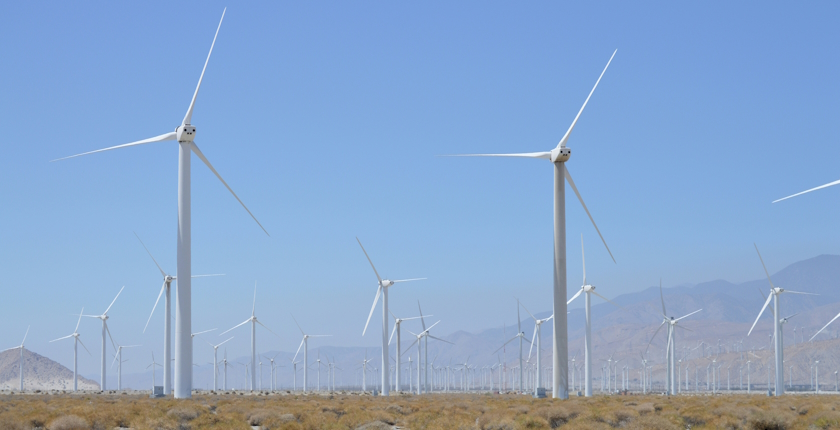
Investments in wind power in Turkey are on an upward trajectory – this year they are expected to surpass USD 1.5 billion, translating to 1.5 GW of new capacity, President of the Turkish Wind Energy Association (TÜREB) Ibrahim Erden estimated. Among other factors, the country has an extensive manufacturing base for the equipment. Several major wind farms were inaugurated last month.

The first wind turbine in Turkey was installed in 1998, and now total capacity is nearing 14 GW. The growth rate is picking up amid administrative reforms and state support through renewable energy auctions, requiring a high rate of domestically sourced equipment.

President of the Turkish Wind Energy Association (TÜREB) Ibrahim Erden said investments last year amounted to USD 1.3 billion, with 1.3 GW installed. The figure will top USD 1.5 billion in 2025, resulting in over 1.5 GW of new capacity, in his view.

Erden attributed the expansion to new licenses for projects with storage and projects from the YEKA mechanism of renewable energy auctions coming online. Investors from the Middle East and China participated in the bidding, he pointed out.

TÜREB’s chief said he expects 2 GW next year and gradual growth to 3.5 GW by 2028 or 2029.

There are 150 manufacturers in Turkish wind industry

There are 150 manufacturers of wind turbine components and accompanying gear in Turkey, covering 65% of the technology. The country reportedly hosts some 380 wind power plants, with more than ten turbines each on average.

The Grand National Assembly is expected to vote soon on legislation aimed at cutting the permitting process by half, to 24 months or less.

Hundreds of megawatts spring up in western provinces

Several big wind farms were inaugurated last month. Atares-2, in the Karacabey district of Bursa in Turkey’s northwest, has 113 MW. It consists of 23 turbines and the investment is worth almost EUR 150 million. CABA, the investor, expects to generate 400 GWh per year.

Eksim expanded its wind power plant in the Geyve district, southeast of Istanbul, in Sakarya province. The original facility had 11 turbines of 52.8 MW in total. The company’s project is for another 14 turbines of 7 MW apiece.

According to Eksim’s website, the combined installed capacity reached 129.8 MW out of 150.8 MW planned overall.

Enerjisa’s Uygar project would at the moment be the second-biggest wind farm in Turkey

Yıldızlar Group and ERN Holding built a 148.8 MW wind farm in Denizgöründü in the Çanakkale district and province. The location is near the Dardanelles Strait, on the country’s Asian side. The companies earlier said the Gülpınar facility would reach 194 MW.

Enerjisa Üretim, which won most of the capacity at the last YEKA auction, launched production at the first part of its 30th power plant. The Uygar wind farm in Balıkesir is set to grow to 250 MW. Currently, it would make it the second-biggest in the country, after Soma.

The Uygar site also spans parts of the neighboring provinces of Manisa, where Soma is located, and Izmir. Its 60 turbines are seen generating 1 TWh per year, according to the project. Enerjisa Üretim is a joint venture between German E.ON and Turkey-based Sabanci.

City of Kayseri builds first municipal wind park in Turkey

In addition, the Kayseri Metropolitan Municipality in central Turkey inaugurated its three wind turbines in Incesu district. They were built to cover the local trams and electric buses, the local authority said.

The municipal transportation firm is operating the 21 MW facility, which will produce 60 GWh per year. It is the first municipal wind farm among 30 largest cities. Kayseri also has its own solar power plants.
by in News

Kosovo* receives four applications for wind power auction

German, Kosovar, French and Turkish companies submitted documentation to qualify for the first wind power auction in Kosovo*. The plan is for the government to have a share of up to 49% in selected projects.

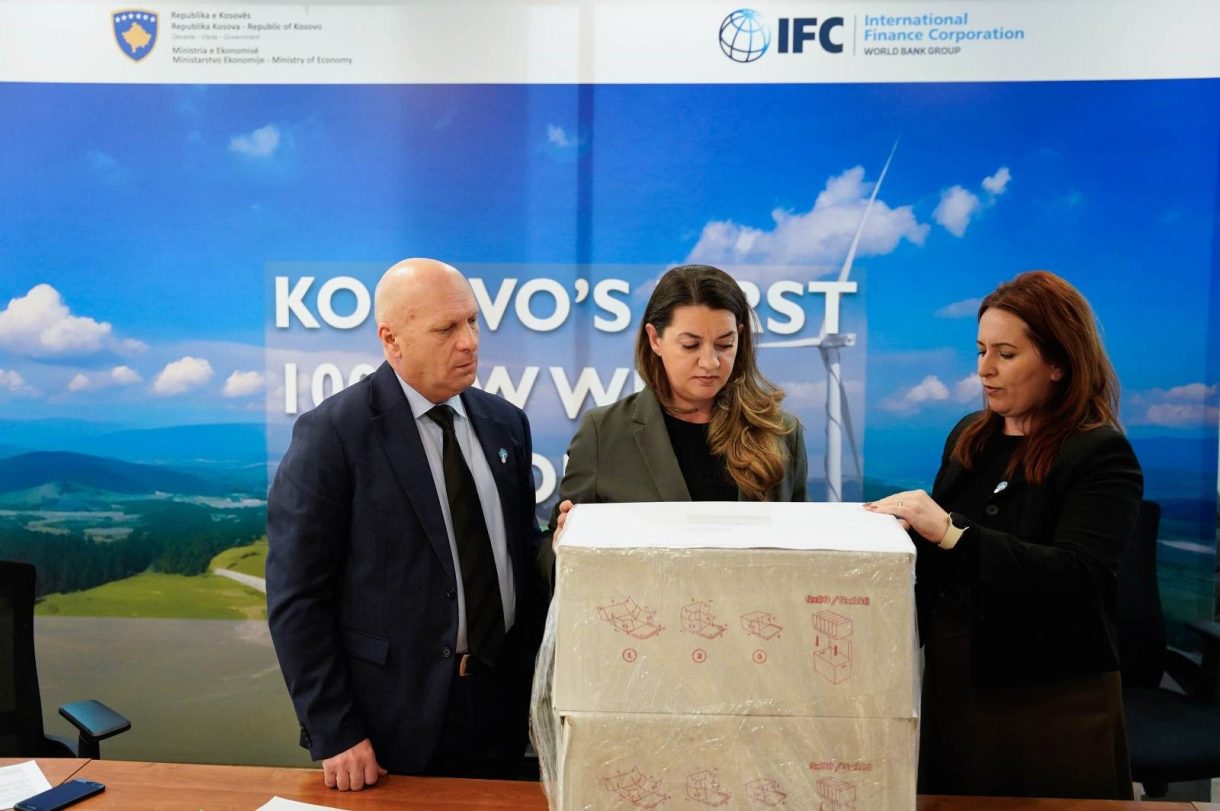
The Ministry of Economy of Kosovo* has publicly opened the applications within the qualifications call for the first wind power auction. The quota is 50 MW to 100 MW and the plan is to support 150 MW in total in two rounds. Participants will bid for 15-year power purchase agreements (PPAs) and contracts for difference (CfDs).

One applicant is a consortium of Notus Energy, based in Germany, and Stublla Energy from Kosovo*. The ministry also received documentation from Akuo Energy from France and a consortium led by Güri̇ş, headquartered in Turkey. Both companies participated in the first solar power auction as well, held last year.

The fourth one is the Kosovar consortium One Era. However, its application came half an hour after the deadline passed.

“The experience from the first 100 MW solar auction has taught us that only when we offer an opportunity for fair and transparent competition for the private sector, we not only evoke interest from serious and prestigious global companies, but also ensure favorable prices for citizens,” Minister of Economy Artane Rizvanolli said. She expressed commitment to high transparency and competition procedures.

Ministry planning to open final bids in August

The members of the auction commission are from the Ministry of Economy, Ministry of Environment, Spatial Planning and Infrastructure, Energy Regulatory Office (ERO) and Transmission, System and Market Operator (KOSTT). They are responsible for evaluating the applications concerning the financial, legal and technical requirements.

Next in the schedule is a request for proposals, due in March, after the completion of the qualifications phase. The participants can send their technical and financial proposals. The final bids would be opened in August. The maximum price is EUR 80.2 per MWh excluding value-added tax.

Curtailment is subject to financial compensation

The ministry plans to launch the second round by the end of the year. The winners will be obligated to design, build, operate, maintain and decommission wind parks. According to one brochure, the accepted price will be adjusted every 12 months, It will depend on the inflation rate for the sector.

Balancing responsibility is limited to imbalance volumes greater than 10%. Curtailment is subject to financial compensation.

Wind projects would be run by special purpose vehicles (SPVs), firms where the government would have a share of up to 49%. The Ministry of Economy intends to use the funds from the International Monetary Fund’s Resilience and Sustainability Facility (RSF) in the development of the 150 MW. The purpose of the public-private partnership scheme is to reduce risk for private investors.

* This designation is without prejudice to positions onstatus and is in line with UNSCR 1244/99 and the ICJ Opinion on the Kosovo declaration of independence.
by in News

Velimir Gavrilović, Fortis Energy: We are developing huge portfolio in SEE

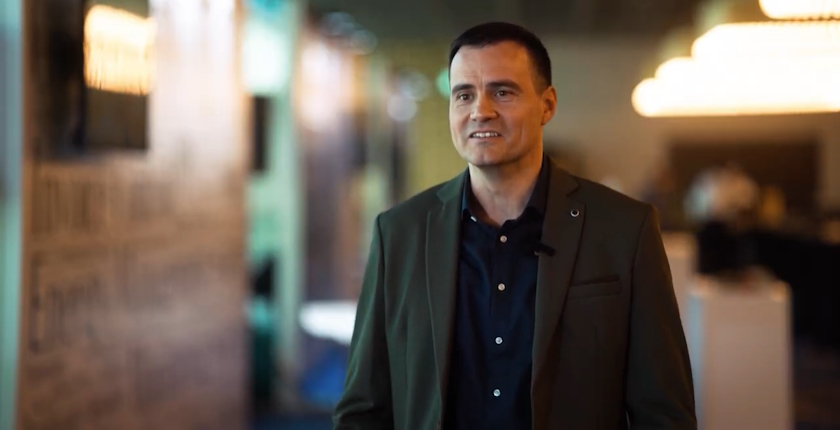
Fortis Energy is working on renewable energy projects of 2 GW altogether in Southeast Europe. One half of the planned capacity is for solar and wind power plants in Serbia, Chief Operational Officer Velimir Gavrilović said at Belgrade Energy Forum (BEF 2025).

Turkey-based Fortis Energy’s projects Noćaj 1 and Noćaj 2 in Serbia for solar power plants with battery energy storage systems (BESS) is nearing a ready-to-build status. They are part of its 2 GW under development in the region. “We are developing a huge portfolio of different renewable energy sources in whole Southeast Europe. This is predominantly in Serbia,” COO Velimir Gavrilović said at Belgrade Energy Forum (BEF 2025).

He addded that one half is for photovoltaic plants and the other for wind parks in the country. Gavrilović revealed that the company is investing in 600 MW in Albania, mainly photovoltaics, together with endeavors in Bosnia and Herzegovina and North Macedonia.

Fortis Energy is exploring new projects in Spain and Italy as well. It also operates biogas power plants in Turkey and Serbia, Gavrilović noted.

[wpcc-iframe title=”Velimir Gavrilović, Fortis Energy at the Belgrade Energy Forum 2025″ width=”500″ height=”281″ src=”https://www.youtube.com/embed/ohliuXIzeko?feature=oembed” frameborder=”0″ allow=”accelerometer; autoplay; clipboard-write; encrypted-media; gyroscope; picture-in-picture; web-share” referrerpolicy=”strict-origin-when-cross-origin” allowfullscreen=””]

CBAM’s impact still unclear

Among the challenges for investors in the sector, he pointed to the Carbon Border Adjustment Mechanism (CBAM), the European Union’s CO2 tax. Gavrilović stressed that the exact effect on electricity producers remains to be seen, as well as for the consumers of electricity in industrial production in the region.

Fortis Energy’s COO recalled that investors in renewables in Serbia are obligated to secure energy storage to get grid connection and said there are still some bylaws missing to complete the legal framework.

Grid connection contract signed for 110 MW solar power plant with batteries in Serbia

Earlier this month, the company signed a grid connection contract for its Erdevik solar park in Šid, Serbia, of 110 MW in peak capacity. It is planned to include a BESS facility of 31.2 MWh.

The Turkish developer and engineering, procurement and construction (EPC) operator has three wind power projects in the pipeline in the country: Vranje, Gornjak and Juhor.

Fortis Energy has a 79.9 MW solar power plant in operation in Oslomej in North Macedonia, commissioned last year. The connection capacity is 68.7 MW. In February, the company said it contracted a lithium ion BESS facility to be added, with 62 MW in operating power and a two-hour duration.

by in News

Decarbonization of Southeastern European region: both renewables and nuclear are speeding up

Energy transition in Southeastern Europe is accelerating, and the progress depends on individual countries’ strategies and legal frameworks. At the Belgrade Energy Forum (BEF 2025), representatives of state-owned power utilities and private producers discussed the different approaches to decarbonization. The domination of investments in renewable energy is unquestionable, but there are also ambitions to develop nuclear capacities, spearheaded by Slovenia. The country is already operating one nuclear reactor and is developing a project for another one.

The electricity sector in Southeast Europe still depends for a large part on thermal power plants that burn fossil fuels. In 2023, they accounted for 43% of overall output, of which two-thirds were from lignite and the rest from gas. There is a need for accelerated decarbonization, and the speed of the transition will depend on financial possibilities and the political will and decisions, said the panel’s moderator and Director of Zagreb-based Energy Institute Hrvoje Požar Dražen Jakšić.

The acceleration trend in decarbonization is also evident in the electricity market projections for the region until 2030. The plans for the period until the end of the decade include shutting down 6.2 GW of thermal power plant capacity and installing 42.3 GW from renewable sources. Greece, Romania, Serbia and Bulgaria are expected to add the most.

Top executives of state-owned utilities in Serbia, Slovenia and Montenegro and independent power producers that invest in renewables in the region gathered at a panel called Decarbonisation strategies for power generation in Southeast Europe 2040/2050 at Belgrade Energy Forum 2025.

They agreed that decarbonization is well underway and an unstoppable process already speeding up significantly. The participants in the discussion presented the different strategies their companies will act upon in the following years and decades, leading the process to fulfilment.

Among the messages that they shared is that they expect each government to promote investments and make the legal framework clear and certain, while the countries strengthen their ties and exchange experiences. Green energy is the pillar of the energy transition and decarbonization in the region, but several states are also interested in building their first nuclear power plants—conventional ones or small modular reactors (SMRs)—or expanding the existing capacity.

EPS’s Živković: Decarbonization requires energy storage, nuclear plants

Chief Executive Officer of Serbia’s Elektroprivreda Srbije (EPS) Dušan Živković pointed out that the state-controlled electricity producer is committed to its goals regarding green energy and emission reductions as well as to the country’s targets. “We will work on that, of course, believing in these objectives, but without compromising energy security and the energy sovereignty of Serbia. It was proven to be the only sustainable path,” he asserted.

The company particularly counts on the project for solar power plants with a total connection capacity of 1 GW, with batteries of 200 MW in combined capability. The investment is conducted through a strategic partnership with Hyundai Engineering and UGT Renewables (UGTR).

A study is underway in Serbia on the potential for the construction of large nuclear power plants and small modular reactors

The decarbonization process won’t be easily feasible without serious energy storage capacity, Živković warned and added that nuclear energy wouldn’t be unrealistic. A study is underway on the possibilities of building large nuclear plants and small modular reactors in Serbia.

The head of EPS expressed the belief that “the quality of that energy needs to be visualized” for citizens of every country and that they should be explained that it is necessary to provide energy for the economy and its security.

CEOs Dejan Paravan of GEN energija, Dušan Živković of EPS and Eric Scotto of Akuo

No dilemma in Serbia about energy transition

Country Manager of WV-International in Serbia Neda Lazendić highlighted the said strategic partnership for solar power plants with battery energy storage systems (BESS), saying Hyundai Engineering is a world-renowned company.

In her view, the endeavor will be a milestone for the entire region and it is exceptionally important for gaining experience at the domestic level.

The recent second round of auctions for electricity from renewable sources showed that Serbia opted for the energy transition “and there is not any dilemma about it anymore,” Lazendić stressed and said the country is an example for the region. The prices from the bidding that were accepted are appealing and they match European trends, she noted.

Country Manager of WV-International Neda Lazendić

Lignite is highly unprofitable

Slovenia and GEN energija, one of the state-owned power utilities, are relying on both renewable sources and nuclear energy in their decarbonization investments, the company’s CEO Dejan Paravan pointed out.

“We want to get rid of coal as soon as possible. And in the short term, renewables are the only option. Why get rid of coal? The current production of domestic lignite is highly unprofitable, and because of climate goals,” he explained.

Nevertheless, it is exceptionally complicated to get permits for renewables and place them in the environment, Paravan added. On the other hand, nuclear energy is emissions-free and very stable and reliable, he asserted. The technology takes up the least space and enables the production of huge amounts of electricity, the head of GEN energija said.

Nuclear power plant Krško 2 could come online in 2040

Paravan recalled that two years ago nuclear power plant Krško marked four decades since it was commissioned and that its operating life was extended by 20 years. GEN energija is working on the Krško 2 project. The chief executive expects construction to begin in 2022 or 2023 and that the reactor could be connected to the grid in 2040.

In parallel, the company is studying SMRs. Still, the development of the technology will take a long time and, importantly, such facilities won’t have the advantage of scale like large reactors, he said. One who expects electricity from SMRs to be cheaper than from big nuclear plants is wrong, in Paravan’s view.

As for the dilemma between renewable sources and nuclear energy, he expressed the belief that they are not mutually exclusive. “We need renewables and they can provide us a lot of CO2-free electricity in the short run. But let’s make it clear that once we come to 70%, 80%, 90% based on renewables, that we have a problem of seasonal storage, that things will get very difficult,” Paravan stated.

Batteries are ten times cheaper than ten years ago

Conversely, Akuo Energy’s CEO Eric Scotto pointed out that nuclear power is expensive. “It’s over. We won the race. Renewable is the cheapest way to produce energy,” he underscored.

The price of energy storage capacity is ten times lower than ten years ago, the head of the French company noted. Moreover, operating power of a battery system in a standard TEU container, twenty feet or 6.1 meters long, now reaches 6 MW, which is three times more than three years ago, according to Scotto.

To attract investments, stability is necessary, he stressed. Scotto went on to highlight some “simple things” that could help Akuo, which was one of the winners at the last auction round in Serbia, to materialize its projects for two wind parks. He mentioned the speed of permitting for telecommunication systems and road construction, for power plants.

Turning to the slowness of the energy transition in Balkan countries, he emphasized its positive side. “We are late. Then we will benefit from the cheapest resource, the cheapest way to produce energy,” Scotto concluded.

EPCG’s Solari project kicked off energy transition in Montenegro

Technical Director of Elektroprivreda Crne Gore (EPCG) Ljubiša Đurković called the state-owned power utility’s projects Solari 3000+ and Solari 500+ the start of the energy transition in Montenegro. Since the beginning of 2023 and including Solari 5000+, launched later, the company set up photovoltaic systems on 7,380 structures, he revealed.

Total peak capacity reached 76 MW and another 125 MW will be installed by the end of the year, EPCG’s official said.

Among its projects, the company is building the Gvozd wind farm, and the Kapino polje solar park near Nikšić.

Technical Director of EPCG Ljubiša Đurković

There is already 10 MW on roofs in the former Željezara steel plant in Nikšić, and before the end of the year another 15.5 MW will be connected to the grid, Đurković said. A contract has been signed for the construction of the eighth generator in the Perućica hydropower plant, of 58 MW. It is scheduled for completion in 2027.

Đurković: A realistic date for the closure of the Pljevlja thermal power plant is between 2045 and 2050

The energy transition is about a single and connected system, including storage capacities and measures to improve energy efficiency, he underscored. “You have to create the conditions for a swift integration of renewable energy sources into the distribution and transmission networks. We were supposed to do that already. We didn’t do it, particularly in the Western Balkans. We didn’t reconstruct the distribution and transmission networks,” he stated.

As for the current reconstruction of the coal-fired Pljevlja thermal power plant, the only one in Montenegro, Đurković said the project wouldn’t make sense if the facility were to keep operating only for a short while longer.

žAccording to the National Energy and Climate Plan (NECP), which is almost complete, it will remain active at least until 2041, although the realistic date for its closure is only between 2045 and 2050, in the opinion of EPCG’s technical director. The main phase of the reconstruction began at the end of March.

by in News

Battery storage market in SEE emerging, Western Balkans lagging behind with positive prospects

The deployment of battery energy storage systems (BESS) across Southeast Europe is progressing at an uneven pace. State subsidies and financing mechanisms have enabled the rapid implementation of BESS solutions in Greece, Romania and Bulgaria, while markets in the Western Balkans are lagging behind. However, the outlook remains positive, as experiences from neighboring markets and best practices from other parts of the European Union can help overcome initial challenges and streamline the deployment process. This was highlighted by participants of the panel dedicated to BESS at the Belgrade Energy Forum.

Among the technologies required for the energy transition, battery energy storage systems (BESS) stand out as a key factor for integrating electricity from intermittent renewable sources – wind and solar power – into the grid. There are few such facilities in Southeastern Europe and the segment is yet to even be fully regulated in the narrower Western Balkans region. The panelists at a session called Energy storage system market in SEE: trends and forecasts, at Belgrade Energy Forum (BEF 2025), outlined the trends in the budding market.

There are more and more cases of low and negative hourly prices in the wholesale electricity market in the region, providing a clear business case for BESS investments. In addition, the grid is often overloaded on weekends and holidays when solar and wind power production is high, given the weak demand.

Managing Director of Go2Power Consulting Goran Vukojević, who moderated the discussion, warned that negative prices may jeopardize system stability as well, if operators of power plants disconnect them from the grid at the same time, to avoid costs.

He highlighted the preparations in Serbia’s transmission system operator Elektromreža Srbije (EMS) for auctions for ancillary services and praised the company for transparency in regulating the competitive process. The other option for battery operators is to participate in the open market.

Managing Director of Go2Power Consulting Goran Vukojević moderated the panel discussion

Region seen with 9 GW of BESS operating power in 2030

Ioanna Barouni from Aurora Energy Research said a total of 40 GW of solar and wind power is expected to be online at the end of 2025 in the SEE region, comprising 12 countries, including Hungary. In 2030, the level is expected to reach 70 GW, which is expected to be doubled to 145 GW by mid-century. As for BESS, projections stand at 9 GW in 2030 and 25 GW in 2050.

Barouni: We miss flexibility and ancillary services for transmission and distribution system operators

The countries of the region are retiring power plants that use fossil fuels, a firm capacity, in Barouni’s words, while adding renewables. “It’s not very easy to predict how the generation profile is going to be during the day, so we miss flexibility and we miss ancillary services for TSOs and DSOs,” she said.

The gap between power prices for midday and the evening is gradually increasing. Barouni explained that batteries “create some artificial demand and absorb these low prices.” At peak demand and with less renewables, a battery can replace expensive fossil fuels, lowering the price.

Ioanna Barouni from Aurora Energy Research (pictured left) and Head of Specialized Lending at UniCredit Bank Serbia Svetlana Cerović

Serbia preparing auctions for ancillary services

Division Manager of transmission system operator (TSO) EMS Nikola Tošić acknowledged that Serbia is preparing auctions for ancillary services. He revealed that there would probably be one auction for 70% of the needed reserve in the first year. The next rounds would be more frequent, shifting toward daily auctions for balancing capacity.

In the verification process, EMS’s System Operation Department will first test the battery, Tošić added. State-owned power utility Elektroprivreda Srbije (EPS) already provides ancillary services to the TSO, so it won’t require tests, he asserted.

Serbian law defines ancillary services the same as European Union does

EMS drafted the new grid code, and it will publish the draft balancing market code for public discussion soon, according to Tošić. He said the domestic law defines ancillary services in the same way as the EU defines them in its legislation. One part is balancing services: frequency containment reserve (FCR, primary), automatic frequency restoration reserve (aFRR, secondary) and manual frequency restoration reserve (mFRR, tertiary). The other part are non-frequency services – energy.

“We think that it would be good to incentivize the periods of the year or periods of day when the needed amount of reserve is more attractive or more in demand,” Tošić said.

Market Division Manager of EMS Nikola Tošić

Fortis Energy moving ahead with battery investments regardless of government support schemes

Fortis Energy’s Chief Executive Officer for Eastern Europe Nikola Oklobdžija considers the lack of regulation to be the biggest challenge for developers. An investor can currently only focus on charging the batteries when the prices are low and sell when they are high, he underscored.

The Turkey-based company develops photovoltaic, wind power and BESS projects in the region. The first bigger investments in renewable electricity plants with energy storage are the ones that will break the ice, in Oklobdžija’s opinion.

“Of course, it helps if you have a CfD contract, so the banks will look at it more favorably,” he stated. Oklobdžija added that companies need to be able to present revenue to the lenders and what the fees are for renting the capacity or providing different services.

Bankability depends on state support and PPA contracts, cash flow models and insurance

In the meantime, Fortis is examining the experiences in Bulgaria and Greece, which have already held auctions for standalone batteries. Financing a project is easier with a CfD – contract for difference, but the company is determined to push ahead anyway, Oklobdžija stressed.

In North Macedonia it commissioned a solar power plant in Oslomej and recently contracted a BESS to be added to the facility. Oklobdžija said it wasn’t a requirement but that Fortis opted for energy storage because of market pressure with prices and occasional curtailments, like during Easter last month.

The introduction of ancillary services would facilitate the development for standalone battery systems, he explained.

Fortis Energy’s CEO for Eastern Europe Nikola Oklobdžija

Cerović: First there will be more projects for colocated BESS units than for standalone facilities

Head of Specialized Lending at UniCredit Bank Serbia Svetlana Cerović highlighted the intensive activity in Germany and Italy, for instance, but also in neighboring Romania. UniCredit is present in those markets and is analyzing the development of the battery storage market, she pointed out, arguing that the best practices in the EU are the best way for building and financing battery storage.

Cerović said there would first be more projects in the region for BESS colocated with renewable energy plants than standalone units.

She suggested that the proposed investments that include storage should be better pondered at the next renewable energy auction in Serbia. It is in the country’s interest to enable providing flexibility and to support the projects, she said.

There may be a rationale for subsidizing prosumers to add storage in Serbia, Cerović said. Turning to small-scale projects, she expressed the belief that power purchase agreements (PPAs) are “convenient” for them. She is recommending dedicating a certain capacity for the category at the next auction in the country.

The first projects in Serbia, conditioned by energy storage requirements for a grid connection, are in the process of negotiating financing, according to Cerović.

Fire protection is especially significant for insurers

Renewable Energy Insurance Broker (REIB) has insured some 4 GWh of energy storage capacity in Bulgaria and just as much elsewhere in the world, Business Development Manager Dimitar Dimitrov said. Developers should contact insurance companies when the design is done, as well as for cargo insurance, he suggested and added it is particularly important for projects that get subsidies.

“We’re not only insurance brokers, but we’re also investors, which helps us understand a bit more about the clients’ needs, and what we can definitely do more in cases of coverage. Understanding clients’ needs helps us also prevent risks that could occur during certain stages,” Dimitrov stated.

Most insurers prefer at least a six-meter distance between containers or rows of three to four containers holding batteries, he said. It is the most important factor in fire protection, in Dimitrov’s opinion. When the distance is shorter than three meters, a firewall is required for insurance, he explained.

REIB’s Business Development Manager Dimitar Dimitrov

The next segment is construction insurance. For insurance companies, it is not a higher risk profile, Dimitrov asserted. Next, he recommended operational risk insurance including coverage for business disruption, and insurance against cyberattacks. In such events, the grid connection can be damaged, the company’s representative pointed out. “Insurance policies are definitely bankable,” he added.

Bulgaria has completed its tenders for state support to BESS combined with renewable energy plants, and for standalone units. But even before subsidies, batteries have been delivered and facilities are under construction, Dimitrov stressed. Many photovoltaic projects in Bulgaria have emerged in the past few months and most of them include BESS, he said.

by in News

Romania to commission offshore wind study, targeting 3 GW by 2035

The Ministry of Energy of Romania launched a public call for expressions of interest for a study identifying areas in the Black Sea for concession agreements for offshore wind farms. It encouraged consortia of international and domestic firms and research institutions to apply.

Romania is gradually developing the legal framework for the start of the first offshore wind power projects in domestic waters in the Black Sea. Qualified companies and research institutions can express interest in conducting the necessary Specialized Study for the Delimitation of Offshore Areas that Can Be Concessioned for the Exploration, Construction, and Operation of Offshore Wind Power Plants, the Ministry 0f Energy said.

The country adopted the relevant law last year, followed by a roadmap.

“The study we are preparing will form the basis of strategic decisions on the concession of offshore perimeters and will provide investors with a clear vision, scientifically substantiated and in line with international best practices,” Minister of Energy Sebastian Burduja said. Interested entities can submit their expressions of interest by email by June 10.

Study to determine areas with offshore wind power potential of at least 800 MW each

The ministry said consortia of international and domestic firms are encouraged to apply. The World Bank estimated Romania’s wind power potential in the Black Sea at 76 GW.

The Energy Strategy 2025-2035 with a perspective until 2050 targets the first 3 GW by 2035, the announcement notes. Burduja said a year ago that the first facility could come online already in 2032.

Areas or perimeters will have a potential capacity of at least 800 MW each, according to the call. The study needs to establish the technical and strategic basis for the development of offshore wind farms in Romania’s Black Sea Exclusive Economic Zone.

Best practices, standardized methodology required

The task involves wind potential analysis, geotechnical and seabed studies, biodiversity and marine environment assessment and the connectivity to the national energy system. In the study, the selected contractor must include commercial navigation routes, fishing areas, existing submarine cables and pipelines, oil and gas exploration and production areas, military or national security zones and other
maritime uses and restrictions that may interfere with offshore wind development.

The work should be based on best practices and standardized methodology, the ministry pointed out. It said the offshore wind study implies collection and analysis of available metocean, geological, ecological, infrastructure and other data, use of GIS systems to overlay information layers (wind, depths, habitats and constraints), and modelling and calculations of estimated energy production.

by in News

Alteo’s Chikán: Aggregators have AI solutions for grid stability, production optimization (video)

Factors like power price volatility, the global shift in policy making and the need for flexible solutions for the integration of renewables are creating an important momentum for developers and aggregators, Chief Executive Officer of Alteo, Attila Chikán, said at Belgrade Energy Forum 2025. The company is expanding in Central and Southeastern Europe with investments in power plants and its AI-backed platform for operating third-party assets.

The electricity system needs to become more and more flexible to accommodate weather-dependent, intermittent sources – solar, wind and hydropower, Alteo’s CEO and Chairman of the Board Attila Chikán said and pointed out that the outage in Spain and Portugal on April 28 highlighted the need for investing in grid stability and upgrades.

In his keynote speech at Belgrade Energy Forum (BEF 2025), he stressed that a global shift in policy making in the sector, particularly in the United States and Europe, is bringing both challenges and opportunities. In Chikán’s view, the situation creates an important momentum for developers and aggregators.

[wpcc-iframe title=”Belgrade Energy Forum 2025 – Attila Chikan Jr., CEO and President of the Board, ALTEO Plc” width=”500″ height=”281″ src=”https://www.youtube.com/embed/FZCrhx8yh6E?feature=oembed” frameborder=”0″ allow=”accelerometer; autoplay; clipboard-write; encrypted-media; gyroscope; picture-in-picture; web-share” referrerpolicy=”strict-origin-when-cross-origin” allowfullscreen=””]

“In the past five years we have seen a great deal of price volatility on the markets in the region. If you look into the future, taking into account the impact of the ambitious plans of regional countries to expand renewable power, one might expect even more pressure on balancing price volatility,” he asserted.

Role of international initiatives

Alteo’s CEO said tailored incentive mechanisms are essential for developing a balanced energy mix. There are also major endeavors on an international scale, Chikán added: connecting markets with diverse geographical characteristics, power plant portfolios and different supply-demand balances.

He explained that cross-border initiatives such as PICASSO and the Blue Sky project bring electricity exchanges in the region closer together. Interconnectors like the Pannonian Corridor and the proposed Black Sea green cable contribute to balancing and the management of energy price volatility, Chikán noted.

Future-proof tech solutions required for risk mitigation

In risk mitigation, the energy system’s stability benefits from future-proof technological solutions as well, namely smart metering, advanced weather forecasting and artificial intelligence–based production optimization, he said. This is where aggregator companies like Alteo come into the picture, its chief underscored.

As for its hardware, the company based in Budapest operates a diverse and balanced production portfolio of gas power plants and renewables, combined with storage, Chikán added.

Alteo runs a portfolio of gas power plants, renewables and storage facilities

“Sounds good, but without a well-designed and functional software, any hardware is purely a collection of materials. And even if they do operate, for sure they operate in a suboptimal way, without synchronization,” he stated.

That’s why Alteo developed its own production management platform, which it offers as a software-as-a-service (SaaS) solution as well. The company also supports the operation of 2 GW in third-party capacity, mostly photovoltaics.

“We optimize production in an automated way, using artificial intelligence, integrating real-time weather forecast data, capacity data and market data,” Chikán stressed.

The platform includes executing trading activities. The partners don’t have to deal with scheduling and the balancing energy costs, he said. The company makes a renewable electricity product closer to baseload, Alteo’s head asserted.

Slovakia, Croatia, Serbia are primary investment destinations in Alteo’s regional expansion

Early this year, the company unveiled a strategy for expansion in Hungary as well as into Slovakia, Croatia and Serbia as primary investment destinations. Alteo revealed it is interested in Poland, Czechia, Slovenia, Bosnia and Herzegovina, Montenegro and North Macedonia, too.

Chikán said it also aims to position itself in operations and maintenance (O&M), among other segments. Alteo is particularly seeking stable and reliable AI-based aggregator partnerships, he noted. The company has an investment target of up to EUR 3.5 billion by the end of the decade.

by in News

Akuo Energy signs PPA with EPS for Bela Anta 2 wind project in Serbia

French renewable energy company Akuo Energy has signed a power purchase agreement (PPA) with Serbia’s state-owned power utility Elektroprivreda Srbije (EPS) for the Bela Anta 2 wind power project, for the full capacity and including the balancing responsibility.

The project is being developed through Matrix Power, a special purpose vehicle (SPV) fully owned by Akuo Energy. With a total installed capacity of 80 MW, Bela Anta 2 was among the awarded projects in Serbia’s second round of renewable energy auctions, held in early 2025. Akuo secured a contract for difference (CfD), positioning it with the largest wind projects contracted with EPS to date, under the new market-based support scheme.

Milestone for Serbia’s energy transition

The agreement marks a major step in Serbia’s ongoing shift toward renewable energy, Akuo Energy said. All electricity produced by Bela Anta 2 will be supplied to the domestic market, supporting energy security and sustainability, it added.

“Akuo Energy is honored to support Serbia’s renewable energy goals in partnership with EPS. This PPA reflects strong institutional support and our shared commitment to accelerating the country’s green transition,” said a company spokesperson. The CfD ensures price stability and investment certainty, creating long-term benefits for both investors and the Serbian power system, Akuo Energy pointed out.

Akuo Energy: Global expertise with regional depth

Akuo Energy is an independent global renewable (wind, solar and storage) energy producer and developer. The group is present across the entire value: development, financing, construction and operation.

All electricity produced by Bela Anta 2 will be supplied to the domestic market

As of the end of 2024, the company had a total capacity of 1.9 GW in operation or under construction and a total project portfolio of over 12 GW. With more than 450 employees, the group, headquartered in Paris, France, develops projects in more than twenty countries around the world.

With nearly two decades of experience, Akuo has delivered projects in onshore wind, photovoltaics, hydropower, biomass, and battery energy storage systems (BESS). In Central and Eastern Europe, it operates more than 324 MW, with a strong and established presence in the Western Balkans.

More projects to come in Serbia

Akuo Energy plans to further expand its presence in Serbia’s renewable energy sector. One of its most advanced upcoming projects is the Bašaid Wind Farm (85 MW) near Kikinda, which is fully permitted and ready for construction. The company is also exploring new solar power and hybrid opportunities across the country.

With the PPA for Bela Anta 2, Akuo strengthened its long-term commitment to Serbia’s energy transition and to supporting the growth of a reliable, sustainable power system in the region, the update reads.

Akuo was a silver sponsor of Belgrade Energy Forum (BEF 2025), held last week in Serbia’s capital city.

by in News

Wind farm project in Cyprus rejected to protect birds, habitats

The Department of Environment of Cyprus scrapped a proposal for a wind power plant partly within or near protected areas due to the expected impact, including on vulnerable bird species such as the Bonelli eagle and long-legged buzzard. The project was launched in 2008 and amended several times.

Stivo Trading and its wind farm project in Cyprus failed to renew a temporary planning approval. The developer initially proposed 33 turbines of 49.5 MW in total, the domestic press reported.

Since 2008, when the project was launched, it was amended several times. The final version, from 2023, is for just four wind turbines instead of the previous ten, and a capacity of 18 MW, down from 22.5 MW.

Irreversible impact on Natura 2000 zones

The sites are within and near the Panagia Stazousa River special protection area and as close as one kilometer from the Stavrovouni forest, designated a special area of conservation.

The locations belong to the local communities of Pyrga, Klavdia and Alethriko. The Department of Environment said it expects that the investment would directly, negatively and irreversibly impact the Natura 2000 zones. It includes vulnerable species, habitats and conservation objectives.

Environmental authority highlights risk to birds from collisions, electrocution

Sensitive species would be displaced and their populations reduced, the update reads. The environmental authority also highlighted the risk to birds from collisions and electrocution.

It pointed to a cumulative impact from supporting infrastructure and the existing projects. In the wider area there are four wind power plants, of which the one in the northeast is in the Panagia Stazousa River special protection area. West of Stivo Trading’s zone, the fifth one, is a nesting area.

The department highlighted the Bonelli eagle, long-legged buzzard, the European roller and thrush, among other birds. At least three Bonelli’s eagles died in collisions with energy infrastructure and another five by electrocution.

by in News

North Macedonia adopts Law on Energy

With a majority of votes, 62 out of 120, the Assembly of North Macedonia adopted the Law on Energy. The government’s representatives say it is systemic, comprehensive, and reform-oriented legislation laying the foundation for the country’s new energy policy. The act aligns the country’s legal framework with the European Union.

The new Law on Energy will bring numerous benefits to the country and its energy future, according to the Government of North Macedonia. They include a liberalized, transparent and competitive electricity market ensuring fairer prices and more choice for consumers, the introduction of smart meters for more accurate consumption measurement, and daily insight for consumers into their electricity usage.

The law is compatible with the reform agenda for the Western Balkans and with EU directives. Its pillars are:

  • A significant increase in the share of renewable energy sources in final consumption;
  • Greater energy efficiency and reduction of losses;
  • An open energy market in which citizens become active participants – producers, sellers, and members of energy communities.

The law supports new concepts such as citizen energy communities and demand-side management models, increased market liquidity, and broader access to energy sources for the economy, along with equal investment opportunities.

It addresses infrastructure stability through investments in storage systems and their digitalization, as well as providing a stable, transparent, and predictable framework for domestic and foreign investors. The law strengthens the capacities of regulators and operators, creates conditions for greater integration with regional and European energy networks, and enables new investments in solar, wind and other renewable sources, district heating, gasification, storage and digitalized grid infrastructure.

Božinovska: New law paving way for energy sovereignty for Macedonia

Minister of Energy, Mining and Mineral Resources Sanja Božinovska said in parliament ahead of the vote that the Law on Energy is the foundation of the national transformation toward a clean, sustainable and fair energy future.

„This is a law that creates opportunities but also demands responsibility. Energy is not just the engine of the economy; it is the basis for a quality life. With this law, we are opening the door to an energy sovereign, green and European Macedonia. This law is more than a normative act – it is a signpost for the future. A chance we must not miss,” she said.

Transparent, predictable investment framework

The law includes provisions for protecting vulnerable groups, supporting the fight against energy poverty and ensuring fair access to energy for all.

According to the ministry, the law provides a stable, transparent and predictable framework for domestic and foreign investors.

All EU energy directives have been implemented, said President of the Energy, Water Services and Municipal Waste Management Services Regulatory Commission (ERC or RKE) Marko Bislimoski. Of note, yesterday he spoke at the Belgrade Energy Forum – BEF 2025, organized by Balkan Green Energy News.

The drafting process involved institutions, experts, the business community, operators and the national regulator. A total of 61 amendments were adopted.

Unlike the ruling majority, the Left (Levica), an opposition party, claimed the Law on Energy does not protect consumers or national interests. Out of 11 amendments that it submitted, only four were adopted. They include provisions aimed at protecting consumers from unrealistically high electricity bills.