by in News

Faria Renewables secures financing for 49.9 MW battery project in Greece

Faria Renewables has signed a loan agreement with Attica Bank for the construction of a battery energy storage system (BESS). The project is worth EUR 28 million. In addition, Cero Generation passed a milestone toward a 250 MW battery storage investment.

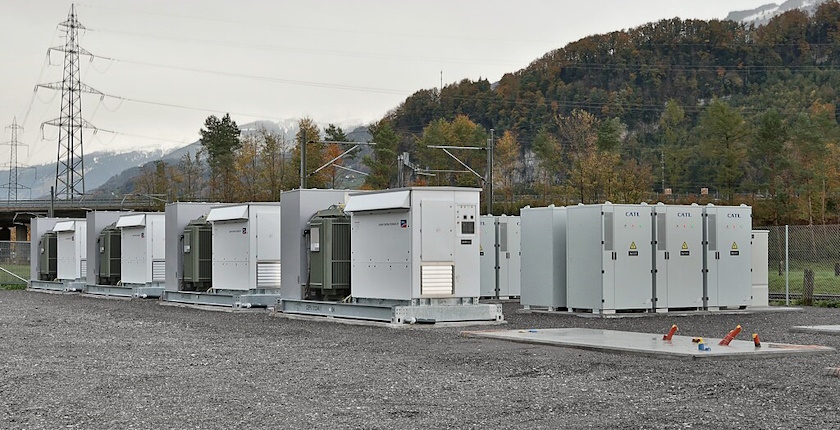
A BESS project selected last year in Greece’s second battery storage auction is now a step closer to materialization, Faria Renewables revealed. The company signed a loan deal with Attica Bank for the construction of the system. It would have 49.9 MW in capability and a capacity of 134.2 MWh.

The investment is worth EUR 28 million, the company added. Its first BESS unit, for which it earlier signed a contract with Huawei, would be connected to a 150/20 kV substation, currently under construction. Construction is expected to be completed before the end of September, the update adds.

BESS project benefitting from EU funds

The project is being implemented under the National Recovery and Resilience Plan Greece 2.0, with funding from the European Union – the NextGenerationEU and its Recovery and Resilience Facility (RRF) segment.

“Our collaboration with Attica Bank for the implementation of this significant energy storage project marks another crucial step in delivering sustainable energy solutions that support the country’s energy transition goals. We share a common vision to contribute to a greener society by designing and carrying out energy solutions that combine expertise, sustainability, and innovation,” Faria Renewables’ Chair and Chief Executive Officer Thalia Valkouma stated.

The renewables and energy storage developer has a portfolio in Greece exceeding 3 GW. It said it is exploring opportunities in new markets in Europe.

One of largest energy storage investments in Greece

According to Attica Bank’s Chief of Asset and Specialized Financing Christos Iliopoulos, the new agreement is for one of the largest investments in the energy storage sector in Greece.

“Attica Bank remains strategically committed to supporting the green transition and energy security of the country by financing projects that enhance the transformation and resilience of the energy system. Our partnership with Faria Renewables for the construction of a storage project is fully aligned with this philosophy,” he said.

The investment will help the integration of renewable sources into the national grid and enhance system flexibility, the announcement reads.

Greece has held a series of three auctions for subsidizing standalone BESS to get the market segment rolling, on the path toward its 2030 target of 4.7 GW.

Cero Generation makes progress toward 250 MW battery storage investment

In other news, Cero Generation Holdings, a subsidiary of Macquarie Asset Management, won an approval from Greece’s Ministry of the Environment and Energy for five BESS stations. Each would have 50 MW in operating power and 153 MWh in effective capacity (or 170 MWh nominally).

Project firms Energy Ventures 6 and Energy Ventures 10, in which Cero Generation holds 85%, received environmental terms (AEPO) for the proposed investment in Pelinnaioi, in the municipality of Farkadona in Trikala, Thessaly.
by in News

Meet VIREAS: new AI-powered virtual assistant for energy

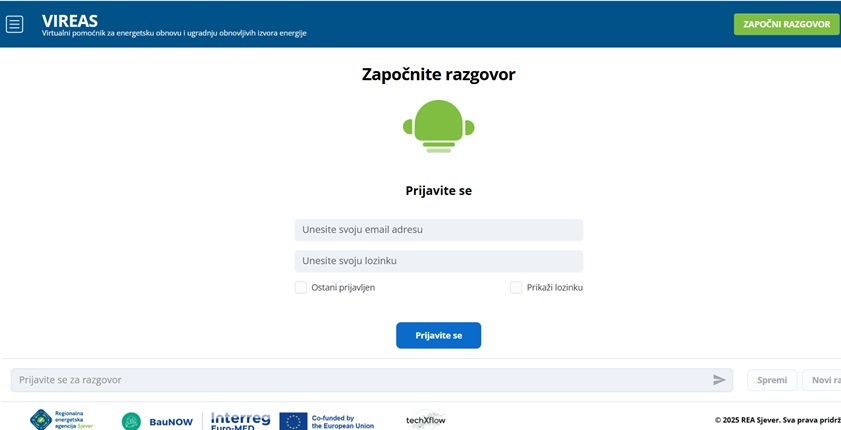
Croatia’s Regional Energy Agency North has launched VIREAS – a virtual energy assistant powered by artificial intelligence.

VIREAS answers users’ questions about energy renovation and renewable energy sources in real time, provides recommendations tailored to users’ homes and needs, helps identify opportunities to save energy and reduce costs, and explains technical concepts in simple terms, the Regional Energy Agency North (REA North) said.

The VIREAS app is an interactive platform that enables users to engage with an AI assistant on various topics related to energy efficiency and renewable energy.

VIREAS is designed for those who want to save energy and use renewables

The idea behind the chatbot is to help owners of houses and buildings improve energy efficiency or install facilities for the use of renewable energy sources. For example, it assists in renovating the facade, replacing the heating system, or installing a heat pump or solar power plant.

It enables faster, easier, and more secure decision-making processes related to energy renovation, without the need for expert knowledge, the agency claimed.

VIREAS can be used both by people with very little knowledge and by experts

Using VIREAS is simple and user-friendly for everyone, whether you have very little knowledge or you are an expert, according to REA North.

In addition to technical recommendations, VIREAS informs users about available subsidies and public calls from the Environmental Protection and Energy Efficiency Fund or FZOEU, making it easier to access public funds and further reduce investment costs.

The agency warned that VIREAS doesn’t replace a project designer or a certified energy consultant

REA North underlined that VIREAS uses official sources of information. It includes public calls launched by FZOEU, technical rules on thermal protection and heating and cooling systems, and energy certification rulebooks.

The agency stressed that although its chatbot provides useful information and tips, it doesn’t replace a project designer or authorized energy consultant. REA North advised citizens to consult experts to make a final decision and for the preparation of project documentation.

The design of the chatbot was co-financed by the BauNOW project under the Interreg Euro-MED program.

by in News

Slovenia kicks off grants program for renewables-based district heating, cooling

The Ministry of the Environment, Climate and Energy of Slovenia launched a public call for cofunding the construction or restructuring of district heating and cooling systems using renewable energy sources. The grants, for companies and cooperatives, are from the European Union’s cohesion support mechanisms.

The introduction of renewables-based district heating and cooling systems reduces pollution, greenhouse gas emissions and the dependence on fossil fuels. Much of the European household and business sectors still rely on gas boilers for heating. In addition, the ever-increasing severity and length of heat waves are prompting the need for a systemic cooling solution.

As part of its decarbonization and energy efficiency efforts, Slovenia launched a EUR 51.2 million cofunding package for companies and cooperatives.

The program covers the construction or restructuring of district heating and cooling systems using renewable energy sources. The first deadline for applications is September 11, followed by one on January 8, the Ministry of the Environment, Climate and Energy said.

The public call will be open until the entire sum is allocated, or at the latest until September 11, 2026, the third deadline. The EU’s cohesion funding accounts for 85% and Slovenia is providing the rest.

District heating projects that include cooling get additional points

While primarily aimed at increasing the production of electricity and heat from renewable energy sources and from waste heat, the scheme includes additional points for projects that involve cooling. The systems are required to cover at least 350 kW of consumption.

Eligible equipment includes heat pumps, solar collectors, wood biomass boilers and combined heat and power (CHP or cogeneration) solutions.

Large companies can receive up to 45% of their investment, while mid-sized ones can get 55%. The cap for small and micro enterprises is 65%. The maximum individual grant is EUR 30 million.

Slovenia’s current calls for subsidizing sustainable mobility, energy efficiency and renewables projects are worth more than EUR 300 million altogether. The government is preparing four more, for EUR 62 million overall.

by in News

Clean transition, decarbonization among priorities in EU’s draft budget

Within the European Union’s proposed budget for the period from 2028 to 2034, the EUR 409 billion European Competitiveness Fund is for investments in strategic technologies, including for the clean transition and decarbonization. The new Connecting Europe Facility (CEF), worth EUR 81.4 billion, would finance the completion of Trans-European Networks and foster the EU’s green and clean transition in energy and transportation.

The European Commission proposed the next long-term budget of almost EUR 2 trillion, of which 35% would be earmarked for climate and environment. Energy infrastructure spending in the so-called Multiannual Financial Framework (MFF) for 2028-2034 will be EUR 29.5 billion, five times higher than in the previous seven-year period, it said, arguing it would reinforce energy independence and accelerate the clean transition.

The entire proposed sum amounts to 1.26% of the expected gross national income, on average. The framework is aimed at an independent, prosperous, secure, and thriving society and economy, the update adds.

“Europe faces an increasing number of challenges in numerous areas such as security, defence, competitiveness, migration, energy and climate resilience. These are not temporary but reflect systemic geopolitical and economic shifts that require a strong and forward-looking response,” the EU’s top executive body said.

Adapting to local needs

The European Commission pointed out that the budget would be tailored to local needs. National and regional partnership plans based on investments and reforms would be introduced, for targeted impact where it matters most and ensuring a faster and more flexible support for more economic, social and territorial cohesion across the union, according to the outlined measures.

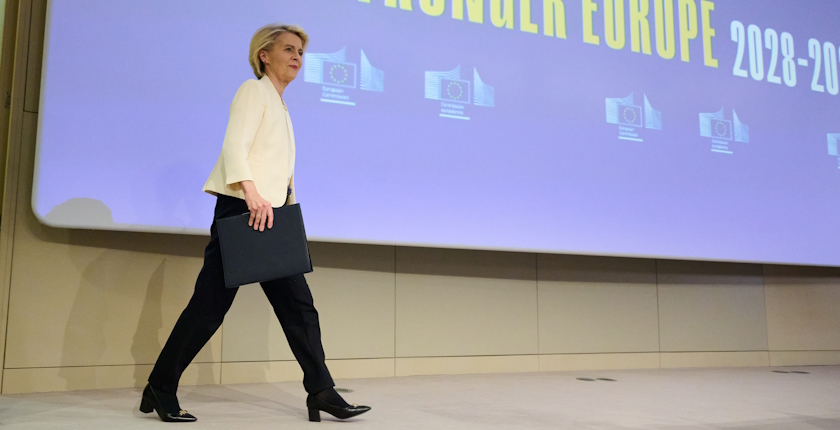
“Our new long-term budget will help protect European citizens, strengthen Europe’s social model and make our European industry thrive,” European Commission President Ursula von der Leyen stated.

For the first time, the spending plan would enable member states to invest more in the EU objectives, with loans of up to 150 billion EUR altogether. “We will call it Catalyst Europe. The loans are backed by the EU budget. It targets common European priorities. You can invest it – for example in defence industry or energy infrastructure or strategic technologies,” Von der Leyen said.

The budget plan includes a European Competitiveness Fund, worth EUR 409 billion, for investment in strategic technologies. Operating under one rulebook, and offering a single gateway to funding applicants, it aims to simplify and accelerate EU funding and catalyse private and public investment. The focus is on four areas:

  • clean transition and decarbonization,
  • digital transition,
  • health, biotech, agriculture and bioeconomy,
  • defense and space.

In close connection with the European Competitiveness Fund, the EU research framework, with its flagship Horizon Europe worth EUR 175 billion, will continue to finance world-class innovation, the commissioners revealed.

Commissioners line up EUR 81.4 billion in budget for next Connecting Europe Facility

The next Connecting Europe Facility (CEF), worth EUR 81.4 billion, would finance the completion of Trans-European Networks and foster the EU’s green and clean transition in energy and transportation. It covers cross-border projects for energy, transportation and military mobility that are essential for competitiveness and security and reducing strategic dependencies.

To simplify external action financing, the EU’s top executive body envisaged an item called Global Europe, of EUR 200 billion, to maximise impact on the ground and improve visibility of EU external action in partner countries. It would allow the EU budget to step up support to candidate countries and prepare for their accession.

Among other segments, the European Commission said it plans to direct 75% of revenues from the Carbon Border Adjustment Mechanism (CBAM) to the EU budget. It expects the resource to generate EUR 1.4 billion per year.

by in News

Slovenia publishes call for incentives for wind, solar power projects

Solar and wind power projects with or without energy storage that are on Slovenia’s priority list can be submitted for grants from the European Union’s Modernisation Fund. The round is worth EUR 29.5 million and the deadline is January 7. Notably, of the 1,117 projects for renewables and cogeneration approved for state support so far, only 254 were completed by the end of 2024.

The Ministry of the Environment, Climate and Energy launched a public call for cofunding under a mechanism for the modernization of energy systems in Slovenia and improvement of energy efficiency. It is for projects for solar and wind power plants, with or without storage, from the so-called A list of indicative, priority investments.

Eligible companies can receive support from the EU’s Modernisation Fund under the RES Scheme (Part A). It was approved by the European Investment Bank. The list was published in March of last year.

Total planned support amounts to over EUR 84 million and the selected projects must be completed by the end of September 2030. The deadline for submissions in the current round is January 7, 2026.

The grants can cover up to 45% of the costs for photovoltaic and wind power systems and a maximum of 30% of the electricity storage segment, the documentation shows. Storage capacity must be at least 0.75 kWh per kW of the nominal capacity of the power plant.

All five eligible projects are within state-owned HSE Group

There are 21 items on the A list and most are power grid investments. Only five are for renewables, of which Dravske elektrarne Maribor (DEM) is present with its controversial Ojstrica wind farm project, the proposed expansion of the Zlatoličje-Formin solar park, and the ZOOP photovoltaic project for 9.9 MW in peak capacity on the former Pobrežje waste landfill.

The largest priority investment among the ones that can apply in the current round is HSE’s proposed floating PV plant with batteries

The company is part of state-owned Holding Slovenske elektrarne – HSE. Another subsidiary on the list, Soške elektrarne Nova Gorica (SENG), intends to expand its recently commissioned Kanalski Vrh solar power plant.

HSE itself has the largest project – for the Družmirje floating solar power plant, which would include storage. It also plans to produce green hydrogen using electricity from the facility.

Few completed energy production projects among ones selected through public calls

The Energy Agency of Slovenia has so far approved 1,117 renewables and cogeneration projects to enter the support scheme, selected through 13 public calls. The combined planned capacity is 794 MW, of which there were 996 renewable energy projects, for 682 MW.

However, only 254 endeavors, with 112.6 MW altogether, were completed by the end of last year. In the previous round, the agency selected 507 projects, for a total nominal capacity of just over 259 MW, mostly for PV plants.

Of note, lengthy procedures, strict environmental rules and local opposition are keeping Slovenia at the bottom of the European Union’s wind power capacity chart in the European Union. The country hosts just three standalone wind turbines and DEM has contracted the fourth one.

by in News

Montenegro sets November 10 deadline for first solar power auction

Legal entities and entrepreneurs in Montenegro are preparing to compete for market premiums with their solar power projects. The quota for the first such auction in the country is 250 MW, and applications close on November 10.

Following the completion of the legal framework with laws and decrees, the Montenegrin Ministry of Energy and Mining issued a public call for investors to participate in an auction for market premiums with their solar power projects. The government would provide support for 12 years.

Legal entities and entrepreneurs have until November 10 to send the envelopes with bank guarantees, documents proving that they are qualified, and their financial bids. The address is: Ministarstvo energetike i rudarstva, Rimski trg 46, 81000 Podgorica. The first such auction in Montenegro will be held for “unspecified locations,” which means that the planned photovoltaic systems can be located in any area in the country.

The available capacity is 250 MW, and eligible projects are for at least 400 kW each. There is no nominal upper limit for project capacity for which a potential participant bids, except the total quota itself.

However, the quota can be extended, by a maximum of 20%. The government said there is an extra 50 MW available for the inclusion of an entire eligible project that entered the quota only partially, or more such projects, in case the bids for them were equal. But if the part of the capacity that surpassed the quota is larger than the possible extension, the commission would award a market premium only for the part that did fit the quota.

Price to be adjusted for inflation every year

The accepted price, from the financial offer of a participant that obtained the status of a temporarily privileged producer through the auction, will be adjusted for the Eurozone inflation rate once per year.

Some of the qualification conditions are that the project didn’t or doesn’t benefit from government incentives, that construction works haven’t begun and that the developer hasn’t secured financing for their completion.

The lowest bids win, and the maximum allowed price is EUR 65 per MWh. The market premium is awarded via a contract for difference (CfD).

Namely, the operator of a renewable electricity plant has a guaranteed price, approved through the auction. When the firm sells electricity in the market at a higher price, it must return the difference. And vice versa: when the beneficiary gets less per megawatt-hour than the contract price, they are reimbursed.

Bank guarantees are EUR 20 per kW or EUR 40 per kW

As for the bank guarantees, they are determined at EUR 20 per kW (EUR 20,000 per MW) of the offered capacity for participants that have signed a contract for the construction of the infrastructure for a grid connection and for connecting the facility, or EUR 40 per kW for ones that have at least obtained an analysis of the possibility for a grid connection, from the transmission or distribution system operator, according to the documentation.

Upon the expiration of the deadline, the commission conducts the process of determining the eligibility of the bidders and projects, after which it opens and ranks the financial bids.

Minister of Energy and Mining Admir Šahmanović said the competitive bidding process is in the public interest: for the security of supply, opening the way for investments in other sectors and for investor confidence. He told the Mina-business news agency that the auction would bring more stable prices in the long run.

Conducting renewable electricity auctions is one of the commitments toward the European Union that were defined by the Reform Agenda of Montenegro 2024-2027. It contains the conditions for the approval of up to EUR 383 million from the Growth Plan for the Western Balkans and the Reform and Growth Facility (RGF).

by in News

Montenegro determines quota, maximum price for solar power auction

At the forthcoming auction for market premiums for electricity from solar power plants in Montenegro, the participants will bid for state support for 250 MW in total capacity. The maximum price to compete for is EUR 65 per MWh and the contracts will last 12 years.

The Government of Montenegro adopted the decisions and directives necessary for issuing a public call to auction for solar power projects of at least 400 kW. The lowest bids will win, and the maximum price is EUR 65 per MWh. Market premiums will be awarded, via 12-year contracts for difference (CfDs).

Conducting renewable electricity auctions is one of the commitments toward the European Union that were defined by the Reform Agenda of Montenegro 2024-2027. It contains the conditions for the approval of up to EUR 383 million from the Growth Plan for the Western Balkans and the Reform and Growth Facility (RGF).

The sum consists of EUR 110 million in grants via the Western Balkans Investment Framework and highly concessional loans, as the EU calls them. WBIF would provide EUR 95 million and the remainder is for the state treasury.

The commission responsible for the auction will extend the quota by up to 50 MW if it fits in one or more eligible projects in their entirety

The country plans solar and wind power auctions for 400 MW in total capacity. The quota for the first auction for the rights to market premiums, only for photovoltaic projects, is 250 MW.

However, the quota can be extended, by a maximum of 20%. The government said the extra 50 MW is available for the inclusion of an entire eligible project that entered the quota only partially, or more such projects, in case the bids for them were equal. But if the part of the capacity outside of the quota is larger than the possible extension, the commission would award a market premium only for the part that did fit the quota.

Conversely, in case a share of the quota isn’t awarded, it can be switched to the next auction.

Under a CfD, the operator of a renewable electricity plant has a guaranteed price, approved through the auction. When the firm sells electricity in the market at a higher price, it must return the difference. And vice versa: when the beneficiary gets less per megawatt-hour than the contract price, they are reimbursed.

by in News

EU’s Modernisation Fund disburses EUR 3.66 billion for clean energy projects in nine countries

Energy modernization projects in nine member states of the European Union will receive a total of EUR 3.66 billion from the Modernisation Fund, in the largest disbursement to date from the facility financed by carbon pricing revenues, according to a press release from the European Commission. The selected projects focus on renewable energy, grid upgrades, energy storage, and energy efficiency.

The largest beneficiary of the latest disbursement is Poland, which will receive EUR 1.33 billion for its projects, followed by the Czech Republic, with EUR 1.05 billion, and Romania, with EUR 712.3 million. Hungary will get EUR 181.3 million, Croatia EUR 170 million, and Greece EUR 113.6 million. The rest will go to Latvia (EUR 40 million), Lithuania (EUR 37 million), and Slovenia (EUR 19.7 million).

Croatia will finance renewable heat production and zero-emission transportation, and Slovenia will upgrade power grid to integrate renewables

In Croatia, EUR 80 million will be used for the production and use of heat from renewable energy sources and energy efficiency improvement in heating and cooling systems. The rest will go to investments in zero-emission transportation. In Slovenia, the funding will facilitate renewables integration through the modernization and development of the electricity transmission and distribution network.

Greece, which became a Modernisation Fund beneficiary in January 2024, intends to replace urban diesel buses with new electric buses, improve energy efficiency in municipal swimming pools, and switch the heating and cooling systems in its greenhouse infrastructure to renewables.

In Romania, the funding will help improve the energy efficiency of facilities covered by the European Union’s Emissions Trading System (EU ETS), support the contract-for-difference (CfD) scheme for onshore wind and solar, and finance the installation of solar and wind power plants for self-consumption in the agricultural and food sectors and public institutions. It is also intended for investments in new solar, wind, and hydropower capacities and to support the modernization and rehabilitation of the district heating network.

In the Czech Republic and Lihtuania, the funding will support energy storage projects

Other example projects include investments in storage capacity for renewable electricity in the Czech Republic, investments in large-scale energy storage capacities in Lithuania, and a clean air program in Poland that focuses on energy efficiency improvements and heat source replacements in single-family houses, according to the press release.

The investments will reduce greenhouse gas emissions in the energy, industry, and transportation sectors, improve energy efficiency, and help the beneficiary states meet climate and energy targets, the commission said.

The projects will also help improve people’s everyday lives, by reducing bills, improving public services, creating jobs, and making the energy transition real, fair, and beneficial for all, according to Teresa Ribera, the European Commission’s Executive Vice-President for Clean, Just and Competitive Transition.

With this latest round of funding, the total disbursements from the Modernisation Fund since January 2021 have climbed to EUR 19.1 billion. The fund is financed by revenues from the auctioning of emission allowances under the EU ETS.

by in News

Serbia, North Macedonia working on gas interconnector project

Serbia’s state gas company Srbijagas and North Macedonia’s gas transmission system operator Nomagas signed a memorandum of understanding expressing their intention to soon build a gas interconnector between the two countries. Srbijagas is also expected to present a plan for a gas interconnection with Romania.

The memorandum, signed by Srbijagas General Manager Dušan Bajatović and Nomagas Executive Director Muhamet Elmazi, confirms the pipeline’s border crossing point, an important step in preparing technical documentation and project implementation, according to a press release from Srbijagas.

The interconnector’s planned two-way capacity is 1.5 billion cubic meters of natural gas per year. The feasibility study, financed through the Western Balkans Investment Framework (WBIF), is expected to be completed soon, according to a statement by Nomagas.

The interconnector’s planned capacity is 1.5 billion cubic meters

In North Macedonia, the interconnector would be connected to the existing Klečovce gas pipeline, and in Serbia, to a pipeline in Vranje that has already been built. Its total length would be approximately 70 kilometers – about 47 kilometers in Serbia and 23 kilometers in North Macedonia.

The memorandum reaffirms the political will expressed in a memorandum signed by the two countries’ relevant ministries in October 2024, particularly the importance of interconnecting energy markets, strengthening the security of gas supply, and diversifying supply routes, according to Srbijagas.

With this document, the two sides also declare their support for increased cooperation between Southeast European countries and the establishment of a regional energy market as part of the European Union’s internal energy market.

Serbia-Romania interconnector project to be presented in September

Srbijagas has also signed a memorandum of understanding with Romania’s national gas transmission system operator SNTGN Transgaz. On the sidelines of a meeting in Bucharest, the two companies’ top executives agreed to present a joint plan in September for a gas interconnection.

The project involves the construction of a new natural gas pipeline to link the BRUA pipeline in Romania with the Mokrin hub in Serbia. The plan is also expected to include the construction of a gas pipeline between Južni Mokrin and Belgrade, via the Banatski Dvor underground gas storage facility and the city of Pančevo, according to a press release from Srbijagas.

The Serbia-Bulgaria gas interconnector was put into trial operation at the end of 2023.

by in News

Clean energy, grid upgrade projects in Western Balkans to be backed under EU’s Growth Plan

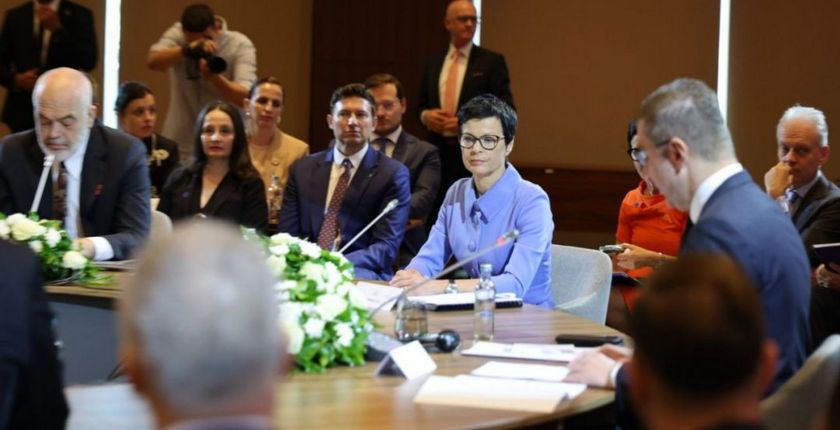
The European Commission has proposed the first support package, of EUR 87.7 million, under the European Union’s Growth Plan for the Western Balkans, to help implement EUR 487.3 million worth of hydropower, solar district heating, and grid modernization projects in Albania, Montenegro, and Serbia. The package was announced following a high-level meeting between European Commissioner for Enlargement Marta Kos and Western Balkan partners in North Macedonia’s capital, Skopje.

The package, funded from the EUR 6 billion Reform and Growth Facility (RGF), set up under the Growth Plan, will be rolled out through the Western Balkans Investment Framework (WBIF). The proposal was made to the WBIF Operational Board, according to a press release from the commission.

The eight proposed projects include building a new generation unit and upgrading existing ones at Serbia’s Potpeć hydropower plant, which would increase its annual production to 236 GWh while reducing CO2 emissions. The investment is valued at EUR 72.1 million, with the RGF support amounting to EUR 15.8 million. The project is targeted for completion in 2030, according to the commission’s fact sheet.

Serbia could get support for introducing solar energy in district heating

The other project in Serbia is the construction of a 31 MW solar-thermal plant and 17 MW heat pump in Novi Sad, which will introduce renewable energy sources to the district heating system. The project would cost a total of EUR 114.3 million, with the RGF support at EUR 25 million. The targeted completion date is 2028.

In Montenegro, the package would support three projects. The first is an EUR 18.3 million investment in building a 38-kilometer 110kV overhead transmission line between Vilusi and Herceg Novi, aimed at increasing transmission capacity and reducing energy losses. It would receive EUR 3.1 million from the RGF.

The EU plans to back Montenegro’s SCADA roll-out

The second project in Montenegro is the introduction of SCADA in the power distribution system, estimated at EUR 26.5 million, with the proposed RGF support of EUR 5 million. The third one is a planned upgrade of the Brezna substation on the Trans-Balkan Electricity Corridor. The EUR 35.6 million investment would be backed with EUR 6.3 million from the RGF.

Albania plans to digitalize its transmission network in EUR 64.2 million project

The support package also includes Albania’s EUR 95.3 million investment in upgrading the Fierza hydropower plant, aimed at increasing its capacity by 10% and extending its lifespan by at least 30 years. The support from the RGF would amount to EUR 10.5 million. The other project to be supported in Albania is the EUR 64.2 million digitalization of the transmission network, which would receive 13.6 million from the RGF.