by in News

Romanian town Beiuș to boost geothermal distring heating to 100%

The local authority in Beiuș, a trailblazer in geothermal district heating in Romania, should apply for European funding to cover the entire area, according to a new study. The town already has the cheapest energy in the country.

Beiuș is the only town in Romania where geothermal energy accounts for more than 70% of the district heating of homes, institutions and firms. A new technical study is opening the way to a system upgrade by using European grants, state news agency Agerpres reported.

The project was funded by Innovation Norway, a state-owned development bank based in Oslo. Mayor of Beiuș Gabriel Popa said at a presentation marking its completion that his municipality aims to achieve 100% coverage. Iceland managed the endeavor and a company from the island country conducted the study on the geology of the local geothermal water reservoir.

The research covered possibilities to prevent losses in the geothermal district heating system. Beiuș, in Bihor county in northwestern Romania, has just under 10,000 inhabitants.

According to the authors, European development programs are accessible. A new guide is under public consultation.

Dozens of local authorities including capital Bucharest are developing geothermal heating projects.

EEA funding available to get full coverage

The speakers at the conference presented prospects for development using subsidies from the European Economic Area (EEA). The region consists of European Union member states and Iceland, Liechtenstein and Norway.

Engineer Horia Ban said heat pumps could save 30% to 50% of the energy of the water returned from the geothermal district heating system. He is the head of the Oradea-based SRG association, which promotes heat pump solutions for geothermal heating, ventilation and air conditioning (HVAC), and of local renewable energy company Termoline.

The European Commission and European Geothermal Energy Council (EGEC) funded complementary research into air conditioning from geothermal wastewater.

Agriculture can tap water from geothermal district heating system in Beiuș

To lower the losses, the study’s authors recommend insulated PE-Xa pipes and directing the exit flow from the geothermal district heating system to greenhouses, wood dryers and fish farms.

Transgex, based in the county’s capital Oradea, supplies the geothermal water in Beiuș. The reservoir was discovered in 1996 at a depth of 2.6 kilometers. The temperature is 85 degrees Celsius.

The prefeasibility study was funded in 2017 in partnership with Iceland, through EEA Grants. Beiuș is now a town with the cheapest energy in Romania, the article adds.

An EU project worth EUR 33.6 million began a year ago for the construction of an aquapark. It envisages a facility with eight outdoor pools of 6,691 square meters overall in Beiuș. The grant amounts to EUR 12.5 million.

Looking at entire Southeastern Europe, Turkey sticks out as one of the main global players in geothermal energy including power plants, a more complex technology. The potential in Romania and Greece is among the highest in the EU. Bulgaria is also working with EEA funds. Serbia only has small projects for now.

Croatia hosts one geothermal power plant, though is currently offline due to an ownership dispute. Numerous municipal and private projects are underway.

by in News

Kosovo* to subsidize solar panels for prosumers, solar thermal systems

Kosovo* is using an EU grant for public calls for families and firms to install solar power panels and solar thermal collectors. The subsidies for photovoltaics amount to EUR 250 per kW, or EUR 200 per kW for businesses that set up larger systems. There is a bonus for female-owned enterprises.

The Ministry of Economy of Kosovo* launched a mechanism to support households and micro, small, and medium-sized enterprises in investing in renewable energy. The measures are funded with a EUR 75 million grant from the European Union within its EUR 500 million direct budget aid package for the Western Balkans. It was approved at the height of the energy crisis, to subsidize the energy bills of households and businesses that were at high risk.

The authorities issued a call for photovoltaics for self-consumption for families and micro, small, and medium-sized enterprises. Households can apply for support for solar systems with capacities ranging from 3 kW to 7 kW. They will be subsidized with EUR 250 per kW to become prosumers but only up to EUR 1,750 overall.

Firms that build photovoltaic systems of 10 kW and more are entitled to as much as EUR 6,000 per beneficiary

For micro, small, and medium-sized enterprises, the subsidy will be EUR 250 per kW for capacities ranging from 3 kW to 9 kW. The maximum payment to one beneficiary is EUR 2,000. For capacities of 10 kW and above, future prosumers in the business sector will be subsidized with EUR 200 per kW or up to EUR 6,000 in total.

In cases where businesses are owned by women or are jointly owned by women holding at least 51% of ownership, the government will add EUR 200 to the subsidy.

The deadline for the first phase is May 31 or until all funds are reserved, on a first-come-first-served basis. Applications in the second phase will be accepted until September 30, according to the announcement.

Public call for solar thermal systems for firms expected in one week

The other call, which the ministry expects to be launched in mid-February, is for supporting micro, small, and medium-sized enterprises in investing in solar thermal systems, for water heating.

The share of subsidies is 40% of the investment value or up to EUR 4,000 in total.

Government promises pathways for investments

Kosovo’s Prime Minister Albin Kurti expressed commitment to the energy transition pathway.

“While we are working on projects with large capacities such as the solar auction, we are also pushing forward opportunities for our citizens to develop small-scale energy capacities for consumption and self-consumption. Not only are we reducing the burden on our system, but we are also empowering families and businesses to make sustainable and affordable choices,” he said.

The Law on Renewable Energy Sources has passed the first reading in parliament

It is a favorable time for investments in renewables, Minister of Economy Artane Rizvanolli claimed and highlighted the work on the Law on Renewable Energy Sources. It has passed the first reading in parliament.

The law will make the installation of solar systems more attractive and obligate operators to make it easier for citizens, she added. The energy strategy stipulates that citizens should be in the center with regard to development and benefit from the energy transition, Rizvanolli asserted.

Alessandro Bianciardi from the European Union Office in Kosovo* vowed to continue supporting the government’s initiatives in the sector. They are cooperating on the 2024-2027 agenda to boost the economy of Kosovo* and other Western Balkan countries with grants and subsidies in the energy sector, he stressed.

* This designation is without prejudice to positions onstatus and is in line with UNSCR 1244/99 and the ICJ Opinion on the Kosovo declaration of independence.
by in News

Kosovo* adopts Law on the Promotion of the Use of Renewable Energy Sources

Only after the first auction was held, lawmakers in Prishtina enabled subsidizing renewable electricity plants through contracts for difference (CfDs). Passing the Law on the Promotion of the Use of Renewable Energy Sources, they also cleared the way for the introduction of guarantees of origin, a renewable energy operator and support fund, energy communities and energy storage in Kosovo*. The legislation includes provisions on self-consumption.

Kosovo’s parliament adopted the Law on the Promotion of the Use of Renewable Energy Sources. It won praise from the Energy Community Secretariat for aligning the legal framework with the Renewable Energy Directive. The international organization based in Vienna also commended the move toward sustainable energy development.

“This law will bring benefits to the private sector, through new concepts of consumer involvement in the energy sector and through the definition of procedures that must be done competitively. In this way, all enterprises are treated equally, benefiting from their competition which leads to lower prices and affordable costs for citizens,” the Ministry of Energy said.

Provisions for green heating, cooling, transportation

Among the objectives are increasing the security of supply and protecting the environment. The Law on the Promotion of the Use of Renewable Energy Sources includes provisions on the combined generation of heat and power (CHP or cogeneration).

The legislation covers the electricity sector, heating and cooling and transportation. The law cleared the way for incentivizing consumers to produce, store and sell the surplus of renewable electricity.

A system for guarantees of origin of electricity is envisaged to be rolled out as well. Notably, the Energy Regulatory Office (ERO) expects to establish a registry in June. The law stipulates that a renewable energy operator would be founded. The entity would manage a renewable energy support fund.

Liquid day-ahead market was necessary to have reference prices for CfDs

In addition, the legislation defines energy communities, energy storage activities and behind-the-meter installations for renewables self-consumers. Such units wouldn’t be able to inject electricity into the grid.

The adoption of the law was apparently on hold until the Albanian Power Exchange (ALPEX) set up a liquid day-ahead market. Kosovo* and Albania jointly launched the bourse. The reference price set in trading is necessary for obligations determined in contracts for difference (CfDs). The subsidies are awarded in renewable energy auctions.

On the other hand, the first such competitive bidding process was completed late last month, before the Law on the Promotion of the Use of Renewable Energy Sources was passed.

The Government of North Macedonia sent a similar bill to the national assembly a month ago.

* This designation is without prejudice to positions onstatus and is in line with UNSCR 1244/99 and the ICJ Opinion on the Kosovo declaration of independence.
by in News

Prequalification open for 170 MW of battery storage in Kosovo*

Millennium Challenge Account Kosovo invited qualified companies to respond to the prequalification call for a battery storage project. The two lots are for 45 MW and 125 MW in operating power, with a duration of two hours.

The United States, acting through its Millennium Challenge Corp. (MCC) and the Government of Kosovo*, entered into a Millennium
Challenge Compact in 2022. The project contributes to poverty reduction through economic growth. Within the mechanism, a new prequalification call is on until February 14 for the design and build of utility-scale battery energy storage systems (BESS) and transmission connection infrastructure.

The US participates with USD 202 million and the government in Prishtina allocated USD 34.7 million for the entire endeavor. Kosovo* intends to apply a portion to eligible payments under one or two contracts for BESS, the documentation shows.

The contracting authority in the prequalification process is called Millennium Challenge Account Kosovo (MCA-K). The subproject will be instrumental in enhancing the stability of the power grid and improving the management of energy imbalances, the call reads. It is the biggest investment in BESS in the Western Balkans.

Facilities to provide grid services, conduct energy arbitrage

The first lot will be for batteries with 45 MW in capability and a duration of two hours. It translates to 90 MWh in capacity. The second lot is for 125 MW and 250 MWh, respectively.

According to the project presentation MCC released earlier, the first facility will provide automatic frequency restoration reserve (aFRR) services. It would work for the Transmission, System and Market Operator (KOSTT) of Kosovo* and within the Albania-Kosovo (AL-KS) Control Block.

The site for one BESS facility is next to US Army base Camp Bondsteel

The site, near the city of Ferizaj (Uroševac), is right next to Camp Bondsteel. Led by the US Army, it is the seat of the Kosovo Force (KFOR).

The second BESS system would provide ancillary, balancing and other services and conduct energy arbitrage. It would operate under government-controlled Energy Storage Corp. (ESC or ESCorp). The location is in the municipality of Peja or, in Serbian, Peć.

The two future lithium-ion battery systems have budgets of USD 46 million and USD 125 million, respectively, the document shows.

They will be connected to 400/110 kV substations Ferizaj 2 and Peja 3, via underground cables.

Online conference scheduled for December 23

The current announcement adds there would be a prequalification webinar on December 23.

MCC expects to issue the call for bids in July and that construction would start in May 2026. The targeted commercial operation date is August 2028.

Of note, the Millennium Challenge Compact program includes the Just and Equitable Transition Acceleration (JETA) project. It consists of reskilling and the promotion of an inclusive energy sector workforce.

* This designation is without prejudice to positions onstatus and is in line with UNSCR 1244/99 and the ICJ Opinion on the Kosovo declaration of independence.
by in News

Kosovo* invites firms to qualify for 100 MW wind power auction

The Ministry of Economy of Kosovo* started the first phase of the first of two planned auctions for wind power. The target capacity for the first round is 50 MW to 100 MW, out of a total of 150 MW.

Qualified companies can submit documentation for the first wind power auction in Kosovo*. They will bid for power purchase agreements (PPAs) and contracts for difference (CfDs) with a duration of 15 years.

The Ministry of Economy said the target capacity in the first round is 50 MW to 100 MW. The auction plan envisages two auctions of an overall 150 MW.

At the presentation, officials announced that it is receiving prequalification documentation by February 20. The ministry aims to publish the list of eligible firms in March. The schedule showed that final bids would be opened in August and the winners declared in September.

Maximum bidding price is EUR 80.2 per MWh

Companies will be obligated to design, build, operate, maintain and decommission wind parks. The maximum price is EUR 80.2 per MWh and the lowest bid, submitted excluding value-added tax, shall win.

According to an earlier brochure, the accepted price will be adjusted every 12 months, based on the inflation rate for the sector.

The Law on Renewable Energy Sources stipulates that the contracts would be converted into CfDs twelve months after the establishment of a day-ahead electricity market price in Kosovo*, the document reads. In addition, balancing responsibility is limited to imbalance volumes greater than 10%. Curtailment is subject to financial compensation.

Kosovo* has extraordinary wind energy potential, Minister of Economy Artane Rizvanolli said. Around 17% of the territory has winds of above six meters per second, while in mountainous areas they reach eight meters per second, she added.

Wind capacity factors range between 28.2% and 32.2%, translating to as much as 2.82 GWh in annual output per 1 MW of installed capacity, the ministry said.

Wind power auction winners to establish public-private partnership with government

Other earlier documents reveal that individual wind projects would be run by special purpose vehicles (SPVs), firms where the government would have a share of up to 49%. The Ministry of Economy intends to use the funds from the International Monetary Fund’s Resilience and Sustainability Facility (RSF) in the development of the 150 MW. The purpose of the public-private partnership scheme is to reduce risk for private investors.

Applicants are required to provide a guarantee of EUR 7,000 per MW of proposed capacity. Winners will be obligated to submit guarantees of EUR 70,000 per MW.

Eligible companies have a net worth of at least EUR 30,000 over the last three calendar years and a minimum annual turnover of EUR 25,000 in the same period.

Kosovo* hosts just three wind power facilities: Selac, also known as Bajgora (104.1 MW), Kitka (32.4 MW) and Golesh (1.35 MW).

Of note, Millennium Challenge Account Kosovo has just invited qualified companies to respond to the prequalification call for a battery storage project. The government earlier said it was planning auctions for 950 MW including battery storage within two years.

The first solar power auction was completed in April.

* This designation is without prejudice to positions onstatus and is in line with UNSCR 1244/99 and the ICJ Opinion on the Kosovo declaration of independence.
by in News

EDP Renewables inaugurates two wind power plants in Greece

EDP Renewables declared its two new wind farms in Central Greece and Thessaly open, adding almost 70 MW to the transmission grid. The country expanded its wind power capacity by only 125 MW last year.

EDP and its subsidiary EDP Renewables held an inauguration ceremony for two wind parks in Greece. It secured government support for both in 2019 at renewable energy auctions, through 20-year contracts for difference (CfD). At the time, the Portugal-based utility expected to begin commercial operations in 2022.

The two facilities have almost 70 MW in combined capacity connected to the transmission grid. The expected annual output is 143 GWh. It is equivalent to the electricity needs of more than 37,000 Greek households. EDP Renewables estimated carbon dioxide emissions savings to be over 102,000 tons per year.

Greece increased its wind power capacity by only 125 MW last year.

EDP Renewables relies on 20-year CfDs in its wind power investments in Greece

The event was held at the Xironomi site in Boeotia (also Beotia and Viotia) in the region of Central Greece. The wind farm has a capacity of 36 MW and the CfD is for 33 MW.

The other facility is Chalcodonio. It is located in the Magnesia regional unit in Thessaly. The 33.6 MW wind farm project has won a 30 MW contract for difference.

“Greece is emerging as a regional leader in renewable energy, as its abundant wind and solar resources offer enormous potential. The country’s commitment to reduce carbon emissions by 55% by 2030, in line with EU targets, makes it an attractive market for clean energy investments,” said Country Manager of EDP Renewables Dionysios Andronas.

Company has four facilities online

The company has 150 MW online in Greece in four wind parks, positioning it among the top 10 operators in the segment, according to the announcement.

Last year EDP Renewables commissioned its Erimia wind power plant of 35 MW and an estimated annual production of 71 GWh. It entered the Greek market in 2018 with two 20-year CfDs.

The company later reached an agreement with infrastructure group Ellaktor for the joint development of onshore wind projects.

EDP plans 3 GW of renewable energy capacity per year, focusing on wind and solar power as well as energy storage. In its business plan for the period 2023-2026, the company earmarked EUR 12 billion for investments on a global scale.

by in News

Greece presents 3.55 GW plan for standalone batteries

A new ministerial decree sets the framework for the installation of 3.55 GW of energy storage – standalone batteries, without subsidies.

The new framework for batteries, presented by the Ministry of Environment and Energy, is under public consultation.

It drastically increases the ambition, originally for between 2 GW and 2.5 GW. Now the government aims for 2.65 GW of batteries in the transmission grid plus another 900 MW in the distribution grid.

It should be noted that the Greek National Energy and Climate Plan (NECP) calls for 4.3 GW of storage by 2030. So far, 900 MW was allocated through auctions, which means that all the rest would be under the scope of the new plan. The difference is that there are no more subsidies, as battery storage is considered a mature technology.

Strict completion times for new standalone batteries

To participate in auctions, batteries will need to provide at least two hours of storage. The new projects will face strict completion deadlines, including 14 months for grid connection terms. Otherwise, investors will lose the EUR 200,000 per MW letter of guarantee required for projects in the transmission network and EUR 50,000 per MW in distribution.

Another interesting aspect is the inclusion of a competition restriction. Each company would be able to submit applications for a maximum 200 MW in combined capability.

Capability quota split among several categories

Future auctions for standalone batteries will be divided into categories.

In the transmission network, 500 MW was allocated to projects with power purchase agreements (PPAs) of at least eight years with energy intensive industries.

Another 100 MW is set for batteries of over 10 MW each, also with private PPAs.

There is a 250 MW quota for batteries in coal regions. The largest part, 1.8 GW, is for other projects

When it comes to the distribution level, 400 MW is for battery energy storage systems (BESS) of at least 5 MW apiece.

The categories of 1 MW to 5 MW, and under 1 MW, have quotas of 200 MW each. The ministry envisages 100 MW for investments with PPAs signed with businesses or industrial production facilities.

The regions of Central Macedonia and Western Macedonia account for the largest shares of the planned operating power, 300 MW each.

by in News

Greece awards 188.9 MW for subsidized battery storage in final auction

Greece’s third energy storage auction has been completed with nine projects selected.

It was the final auction where the state provides subsidies to build battery energy storage systems (BESS). A total of almost 800 MW in capability has been awarded through all three storage auctions.

In the latest bidding, nine projects with a four-hour storage duration have been selected for a total capacity of 188.9 MW.

HELLENiQ Energy and PPC are biggest winners

HELLENiQ Renewables and government-controlled Public Power Corp. (PPC) were the biggest winners, with two plants of 25 MW and one 50 MW plant, respectively. The rest of the list comprises Amber Energy (18 MW), Plain Solar (7.9 MW), Enercoplan (25 MW), Arkadia Storage (10 MW), Heliothema (10 MW) and Ardassa Energy (18 MW).

The facilities will be installed in the Western Macedonia region in northern Greece and in the municipalities of Megalopolis, Tripoli, Gortynia and Oichalia in the Peloponnese region. They are the country’s lignite regions, covered by the Just Transition Development Plan.

The investments will benefit from a public grant of EUR 200,000 per MW and they must now submit a letter of guarantee for EUR 35,000 per MW within the next three months.

Average price rises

As for the average price, it landed at EUR 52,589.16 per MW per year in the auction. The lowest offer was EUR 43,927 per MW, by HELLENiQ Renewables, while the highest was EUR 58,773 per MW, by Plain Solar.

The average prices in the first and second auctions were EUR 49,748 per MW and EUR 47,680 per MW.

It should be pointed out that from now on, new facilities in the sector will operate commercially and get income strictly from the market. The Ministry of Environment and Energy has already published a decree setting the rules for the installation of 4.7 GW of new battery systems until 2030.

Investors are getting ready for future auctions. They will submit their applications to the Regulatory Authority for Energy, Waste and Water (RAEWW or RAAEY). Only last month, applications in the segment reached almost 1.5 GW, showing an enormous interest.

by in News

Bulgaria aims to make Europe’s biggest energy community

The Ministry of Energy, Electricity System Operator (ESO) and the Bulgarian Development Bank (BDB) are launching a solar power program for municipalities, schools, kindergartens, hospitals and small businesses. There are no upfront costs and the installations become the beneficiary’s ownership within eight years.

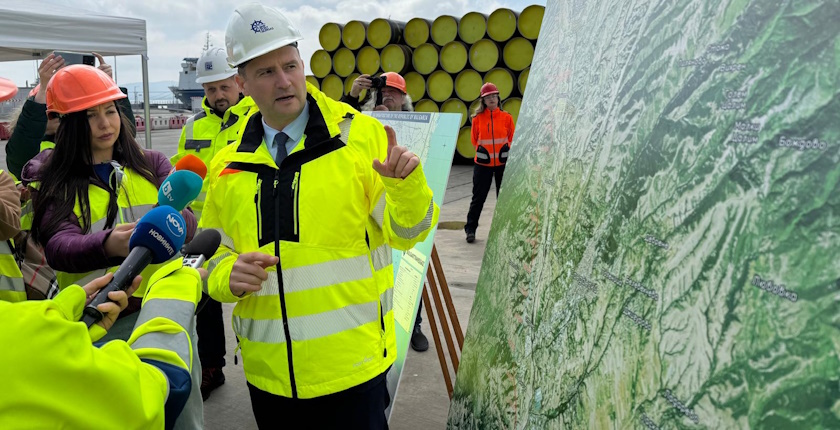
Minister Zhecho Stankov said the goal is to create the largest energy community in Europe and hinted that the government would finance the scheme with a green bond. He also declared the start of the regional Vertical Gas Corridor project in Bulgaria as the first pipes were delivered.

Every school and hospital in Bulgaria can become an electricity producer, Minister of Energy Zhecho Stankov stressed as he presented a financial support mechanism designed with the ambition to create the largest energy community in Europe. The model will benefit both the public sector and private business, he pointed out in the port city of Burgas at a ceremony marking the arrival of the first 4,000 pipes for the Bulgarian sections of the regional Vertical Gas Corridor.

The joint initiative with the country’s power transmission system operator ESO and the Bulgarian Development Bank is for the installation of solar panels with no upfront costs. Beneficiaries – municipalities, schools, kindergartens, hospitals and small businesses – would pay through energy savings and become owners in six to eight years, Stankov claimed.

Bulgaria mulls issuing green bond to finance sustainable energy

The minister also said the project could lead to the government’s first green bond to finance clean and locally produced energy available to a wide range of consumers.

For example, Burgas Municipality can equip all schools, hospitals, kindergartens and other facilities with photovoltaic panels without spending a penny from the local budget, Stankov explained.

Government to invest EUR 57 million in Vertical Gas Corridor

The Vertical Gas Corridor is envisaged to connect Greece, Bulgaria, Romania, Moldova and Ukraine. They plan to transport the fuel from liquefied natural gas (LNG) terminals Alexandroupolis and Revithoussa in Greece, and from the Caspian region, via the Southern Gas Corridor.

The government is fully funding the first stage of the project on Bulgarian territory, with EUR 57 million. The pipes for the pipelines came from India.

Stankov: Bulgaria will never again be left without natural gas

“Bulgaria will never again be left without natural gas,” said Minister Stankov. The capacity of the line between Kulata, on the border with Greece, and Kresna will be increased to 3.6 billion cubic meters per year from 2.3 billion, he added. The distance is 48.5 kilometers.

The most difficult part is between Mikrevo and Ribnik, where three kilometers will be built by horizontal drilling, the minister revealed. He explained there would be no aboveground work, so that nature and infrastructure wouldn’t be affected.

Another section, 80 kilometers, is from Rupcha to Vetrino. The purpose of the investment is to double the maximum annual flow toward Romania to 10 billion cubic meters, Stankov stressed. The last one, Tarnik-Piperovo, is 51 kilometers long.

The compressors on the corridor are reversible, allowing gas supply in both directions, the minister noted.

by in News

Number of prosumers in Romania spikes 79% in one year to 204,000

Prosumers in Romania operated 2.44 GW of capacity at the end of January or 63% more than one year before. Their number soared 79% to 203,984 and it is set to keep growing substantially with more government subsidies underway.

Once again, prosumers confirmed their role as the main pillar of Romania’s energy transition. Growth in the segment is fueled by government support, mostly through funds obtained via the European Union. The number of households, small firms and institutions with the status reached 203,984 by the end of January or a stunning 79% more than 12 months earlier. There were only 303 registered at the end of 2019!

Total capacity jumped 63% on an annual basis, to 2.44 GW, the National Energy Regulatory Authority (ANRE) said. Photovoltaic installations in Romania surged 57% last year, to 4.7 GW, according to the International Renewable Energy Agency (IRENA). It means prosumers still account for more than half.

The Environment Fund Administration (AFM) said it would propose a record EUR 442 million budget for the Casa Verde Fotovoltaice subsidy scheme for prosumers

The number of households was 180,617 two months ago, so roughly 2.4% are currently prosumers. They had 1.13 GW installed.

The remaining ones are legal entities, 23,277 of them, with 1.31 GW.

Most prosumers are in Ilfov county, almost 13,783, followed by Timiș (10,007) and Bihor (8,286).

The Environment Fund Administration (AFM) said it would propose a record EUR 442 million budget for Casa Verde Fotovoltaice. It is a subsidy program for the installation of solar panels, mostly for households. Last year the sum amounted to EUR 402 million.

This year the fund is introducing a scheme worth EUR 80.4 million for battery storage for prosumers. More than 66,000 candidates already applied for a maximum of EUR 6,000 per household for solar panels with storage systems.

President of the APCE association of prosumers and energy communities Dan Pîrșan said EUR 80.4 million for 2025-2026 enables one in four existing prosumers to install batteries and become almost energy independent.