by in News

CWP Europe signs PPA, CfD for its Solarina PV project with Serbia’s EPS

CWP Europe signed a power purchase agreement (PPA), including balancing responsibility, and a contract for difference (CfD) for its Solarina photovoltaic project, with Serbia’s state-owned power utility Elektroprivreda Srbije (EPS).

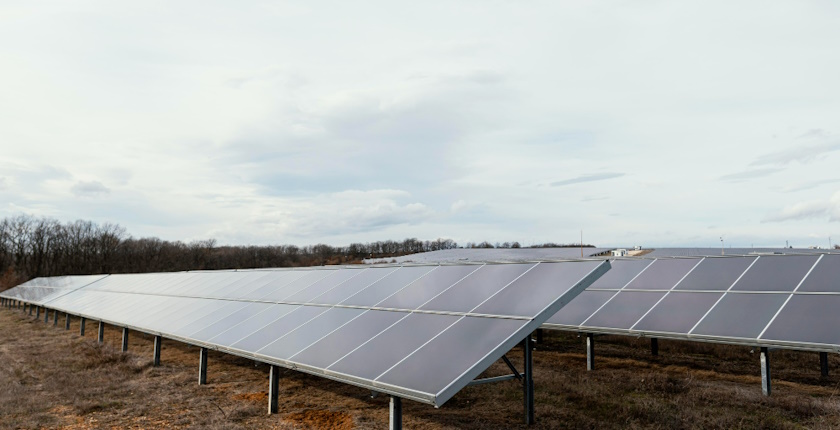
Solarina is a special purpose vehicle or SPV for a photovoltaic park of 150 MW in connection capacity. Its site is near the city of Zaječar in eastern Serbia. The developer, CWP Europe, won a CfD in February for 105 MW at the country’s second solar power auction. All other projects were for 10 MW at most.

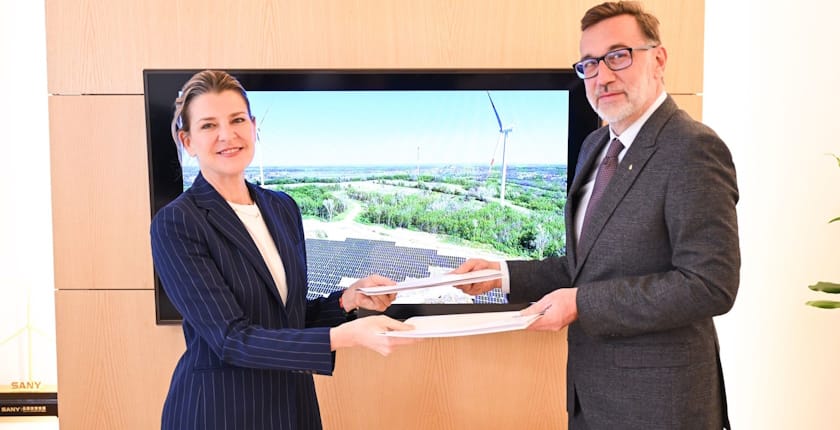
Executive Vice President of CWP Europe Maja Turković signed a PPA and the contracts for difference and balancing responsibility for Solarina with Assistant to CEO of EPS for Power Portfolio Management David Žarković.

Largest single PPA ever signed for solar power with EPS

The agreement marks a major milestone in Serbia’s energy transition – it is the largest single PPA ever signed for a solar project with EPS, Turković pointed out. “We thank the Ministry of Mining and Energy and EPS for their trust and another opportunity to jointly contribute to a more stable and greener energy future for Serbia,” she added.

CWP Europe has a project pipeline of more than 10 GW in Southeastern Europe, Moldova and Ukraine

All green electricity generated by the Solarina solar park will be supplied to the domestic market at a competitive price, enhancing the stability and sustainability of the country’s energy supply, CWP Europe added. Of note, the CfD is for EUR 52.89 per MWh.

“The continuation of the cooperation confirms once more that EPS is a reliable partner and associate to everyone whose business activity involves green energy. In addition, this way we also confirm the joint dedication to Serbia’s energy transition and the development of renewable energy sources, as EPS will offtake all produced energy and it will remain in our country,” Žarković stated.

PPAs for projects Solarina, Vetrozelena are both for entire output

Serbia’s state-owned power utility has the same arrangement since 2023 for the Vetrozelena wind power project, which was developed by CWP Europe and also won market premiums, at the first round of renewable energy auctions. Both PPAs are for the entire output.

The company has a project portfolio of more than 10 GW in total for wind and solar power and battery energy storage systems in Serbia, Bulgaria, Romania, Montenegro, Albania, North Macedonia, Croatia, Moldova and Ukraine.

CWP is a silver sponsor of the two-day Belgrade Energy Forum – BEF 2025, which is starting tomorrow. Maja Turković will participate in the panel discussion ‘Energy revolution underway – uniting efforts to deliver green, intelligent and sustainable energy solutions’.

by in News

Romania launches renewables auction for 3.5 GW

Following a successful first round, in which developers won government support for projects of 1.53 GW altogether, the Romanian Ministry of Energy issued another call, for 3.47 GW of wind and solar power capacity. The deadline for submissions is July 11.

The Ministry of Energy of Romania issued a public call for the second round of auctions under a mechanism for awarding contracts for difference (CfDs). With EUR 3 billion at hand, via the European Union’s Modernisation Fund, the country is supporting an overall 5 GW of wind and solar power capacity.

Developers can apply by July 11 for the remaining quotas of 2 GW for wind parks and 1.47 GW for photovoltaic facilities. In the first round, 21 participants won the subsidies for 1.1 GW and 432 MW, respectively.

Romania cuts ceiling prices

Ceiling prices for government support are lower this time. Wind power is at EUR 80 per MWh or EUR 2 per MWh under the previous maximum possible bid. The authorities slashed the cap for solar power to EUR 73 per MWh from EUR 78 per MWh.

The contracts for difference would last 15 years. The burden of administrative and electricity transmission expenses is passed on to consumers.

More leeway for large players as they are no longer limited to 25% of quota

Another difference is that the 25% cap on the maximum capacity awarded per applicant was scrapped, the documentation shows. In addition, there is a possibility to award up to 20% more capacity than in the nominal quota. Minister of Energy Sebastian Burduja explained that the idea is to avoid the risk of losing a large project with a marginal bid.

He noted that Radramo Power is developing the largest wind power project from the first auction, 245 MW. The Heliowin project, for 125 MW, is the biggest one in the PV segment. It belongs to Israeli company Econergy. Both proposed facilities will launch production by January 28, according to the schedule.

In the first phase, applicants will qualify with their technical offers. The plan is to open financial bids from eligible entities on August 13, and the winners would have until September 9 to sign the contracts. Romania’s transmission system operator Transelectrica has the task to evaluate the applications.

by in News

Major offshore wind projects shelved in another blow to industry

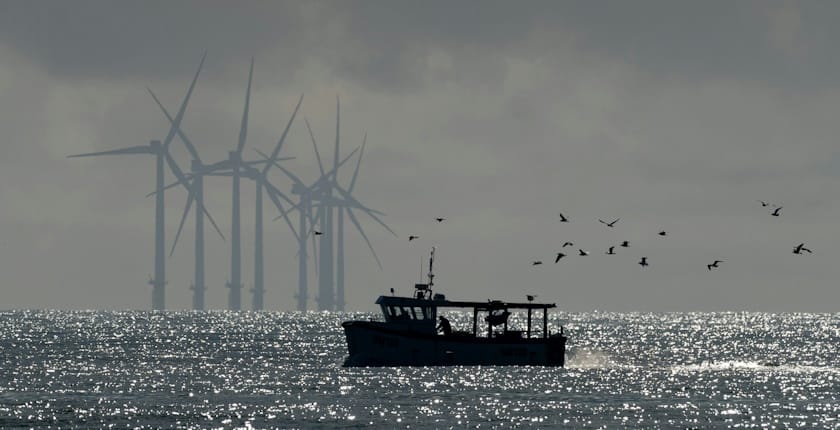
Investors in offshore wind farms, especially European ones, are facing increasing losses – Ørsted decided to halt its Hornsea 4 project in the United Kingdom, while the United States stopped the construction of Equinor’s Empire Wind 1 facility.

After the energy crisis and the impact of Russia’s invasion of Ukraine, the resulting surge in inflation and the European industry’s weakening competitiveness, the offshore wind sector has suffered another blow from the drastic reversal of energy and climate policy in the United States. The administration of United States President Donald Trump turned against wind power, particularly offshore projects.

Meanwhile, China’s expansion in the sector is looking more and more like the case with solar power, where it has achieved absolute dominance on the global market. It is making it even more difficult for Western wind turbine producers and project developers to remain above water.

Ørsted announced that it is discontinuing its Hornsea 4 project in the United Kingdom “in its current form.” The Denmark-based developer and operator left the possibility of restarting the endeavor later “in a way that is more value-creating.”

The company won a contract for difference (CfD) at an auction in September for the 2.4 GW project, but it still couldn’t keep it afloat – financially, that is.

Hornsea 4 could have become the second-largest facility of its kind off European shores. The CfD is equivalent to GBP 83 per MWh in current prices.

Offshore wind expansion depends on potential returns for investors

Ørsted cited a continued rise in supply chain costs, higher interest rates, and an increase in the risk regarding the timeline. Group President and Chief Executive Officer Rasmus Errboe pointed out that the company made the move “well ahead of the planned final investment decision later this year.” He also mentioned adverse macroeconomic developments.

Breakaway costs are estimated at EUR 469 million to EUR 603 million, Ørsted said. It sees the impact on earnings before interest, tax, depreciation and amortization (EBITDA) at EUR 402 million to EUR 469 million. It includes a writedown of the offshore transmission assets and cancellation fees. The company expects to write down EUR 67 million to EUR 134 million in construction costs.

WindEurope: Costs can go up between bidding in an auction and procuring equipment, and auctions have to be fully indexed to reflect that

“The pause on Hornsea 4 shows how difficult it is to get offshore wind projects over the line. Costs can go up between bidding in an auction and procuring equipment, and auctions have to be fully indexed to reflect that. More broadly, the investors who make projects happen need a return,” WindEurope commented.

The association stressed that governments are responsible for making value achievable. “Then they’ll get the volumes they want,” the statement adds.

Empire Offshore project stopped in middle of construction in US

In probably the most drastic example of the offshore wind industry’s troubles in the US, the federal authorities forced Equinor to stop its Empire Offshore project last month. The Empire Offshore 1 segment, of 810 MW, was in the middle of construction! The Bureau of Ocean Energy Management (BOEM) ordered the halt pending a comprehensive review.

Notably, the Norwegian government-controlled company was developing the project under a contract with the State of New York. It is in a group of 17 US states and Washington DC which this week challenged, at a federal court in Massachusetts, Trump’s executive order on wind power.

At the end of March, Empire Wind had a gross book value of USD 2.5 billion, including South Brooklyn Marine Terminal, Equinor revealed. By that moment it drew USD 1.5 billion from the loan facility for the project.

by in News

Croatia earmarks EUR 1.6 billion for Social Plan for Climate Policy

Croatia plans to achieve an efficient and just green transition by implementing its EUR 1.6 billion Social Plan for Climate Policy.

The Ministry of Environmental Protection and Green Transition has presented the Social Plan for Climate Policy and the European Union’s upcoming Emissions Trading System 2 (EU ETS 2) in Croatia’s capital Zagreb.

The event was organized as part of the process of developing the country’s Social Plan for Climate Policy. According to the ministry, the document outlines the green transition and includes measures and investments that would benefit vulnerable households, micro businesses, and users of transportation services.

The plan is being prepared within the framework of the Social Fund for Climate Policy, which is part of the EU’s Fit-for-55 legislative package. The aim is to reduce greenhouse gas emissions by 55% by 2030 from the 1990 level.

The social plan will be funded with proceeds from EU ETS 2

The new EU ETS 2 will cover CO2 emissions from buildings, road traffic, and small firms. Funding for the social plan will be secured from proceeds from the supplementary carbon pricing mechanism.

Minister Marija Vučković noted that after the public debate is over, the Social Plan for Climate Policy needs to be sent to the European Commission for adoption.

“With more than EUR 1.6 billion, our goal is to secure an efficient and just green transition that won’t leave behind the most vulnerable members of our society – households at risk of energy poverty, micro enterprises with limited adaptation capacities, but also the citizens that have difficulties accessing public transportation,” she pointed out.

The ministry is aware of the challenges that the transition carries, so it places special focus on mitigating socio-economic consequences and preventing risks affecting the most vulnerable people, as well as on education.

The plan defines various measures

The plan includes various measures. Some examples are renovating family houses with the worst energy performances, improving the availability of public transport in suburban, rural, and remote areas, subsidizing the purchase of vehicles with zero emissions, and providing direct financial incentives.

Representatives of the ministry Ana Juras and Predrag Božac described the operation and the establishment of the new part of the Emissions Trading System and presented the sectors that it would cover. They also spoke about the first round of measures and investments from the plan.

In another presentation, the audience learned the effect of EU ETS 2 on the prices of fossil fuels, the ministry said.

by in News

Two PV parks of 117 MW in total coming online near Bucharest

Eximprod Grup is about to commission a 65 MW photovoltaic facility in Prahova county, north of Bucharest, before adding a battery system, and Simtel obtained financing for the completion of a 52 MW solar power plant in Giurgiu, south of Romania’s capital city. Additionally, the developer of a project of a similar size in Alba county in Transylvania, including energy storage, applied for an environmental permit.

Eximprod Group said it completed a solar park of 49.5 MW in connection capacity in Ciorani, Prahova county, north of Bucharest. Commissioning and grid integration are underway.

According to its documentation, the facility has 65 MW in peak capacity. It consists of five units with 9.9 MW in grid connections each.

The PV plant is coming online through a 20/110 kV power station and a single metering point. Eximprod, controlled by investors Manole Gheorghe and Vasile Domente, thanked Transelectrica, DEER, Ostenweg Sysplan SRL and Alive Capital for cooperation in the project. The company bought 590 W solar panels.

Eximprod has won a EUR 13.4 million grant for the Ciorani project from NRRP

The EUR 56.2 million endeavor includes a grant of EUR 13.4 million from the National Recovery and Resilience Plan (NRRP or, in Romanian, PNRR). It is part of the European Union’s Recovery and Resilience Facility (RRF).

Eximprod invested in the solar park, which features trackers, through its project firm Solar System Project. The facility was built on an 89-hectare land plot. It is located next to a solar power plant of the same owners, with a 15.5 MW connection and 20 MW in peak capacity.

The company plans to add a 21 MW battery energy storage system to the Ciorani PV park. Eximprod recently completed the first of seven foundations of a 38.4 MW wind park in Galați county in the region of Western Moldavia.

Banca Transilvania approves loans for large solar power project in Giurgiu

The Giurgiu county, west and south of Romania’s capital city, is emerging as one of the country’s solar power and energy storage hubs. Major projects are being materialized in other areas around Bucharest as well. Engineering company Simtelhttps://balkangreenenergynews.com/imports-from-china-dont-exceed-26-of-pv-project-costs-in-romania/ said it has signed financing contracts for a PV plant of 52 MW in peak capacity, which is 80% finished.

Annual output is estimated at 69 GWh.

Banca Transilvania, Romania’s largest, has approved a ten-year investment loan of EUR 16 million and a bridge loan of EUR 12.2 million. The latter is denominated in local currency and matures in March 2026.

Simtel has completed its first three smaller PV plants

“Since 2023, with the completion of our first proprietary photovoltaic park in Pleșoiu, our company has entered a new stage of development, becoming an electricity producer. The Giurgiu project represents an important step in this direction, as it covers more than half of the total capacity we aim to have completed and operational in our portfolio by mid-2026,” said Simtel Team’s Chief Executive Officer Mihai Tudor.

Romania has supported the investment in Giurgiu through NRRP. The bridge loan covers the financing needs before the company collects the grant.

Simtel, which is also a contractor, has completed three of its PV projects – in Pleșoiu, Salonta, and Iacobeni. Four others are in various stages of construction or permitting – in Anina, Ianca, Mangalia, and Movilița. Together with the facility in Giurgiu, their combined peak capacity is above 83 MW. The eight units will generate an estimated 111 GWh per year.

The company is listed on the main market of the Bucharest Stock Exchange (BSE). Simtel offers consultancy services, authorization, design, engineering, construction, maintenance, operation, measurement, control, and energy supply. It was founded in 2010 by Iulian Nedea, Sergiu Bazarciuc and Radu Vilău.

Solar-BESS hybrid power plant project on monastery land in Alba is worth EUR 53.1 million

As for other relevant news in Romania, Bucharest-based Ponor Energy requested an environmental approval for a solar power project of 56.7 MW in peak capacity, which would include batteries. The site is in Ponor commune in Transylvania’s Alba county, spanning 48.6 hectares. The firm leased monastery land for 25 years.

The facility would consist of 166 Huawei inverters of 49.8 MW in total and Trina Solar’s 85,852 bifacial panels of 660 W. The battery segment would have 81.5 MWh in capacity.

Excluding value-added tax, the investment is worth an estimated EUR 53.1 million.

by in News

Bulgaria grants EUR 587 million to 82 battery storage projects

Developers of 82 standalone battery storage projects in Bulgaria, for an overall 9.71 GWh in capacity, got approval for EUR 587 million in subsidies from the Ministry of Energy. Another 30 landed below the line, but the government intends to boost the program by EUR 120 million.

More than four months after the deadline for applications, the Ministry of Energy of Bulgaria ranked 112 projects for standalone battery energy storage systems (BESS). Through the RESTORE call for grants, it approved EUR 587 million for 82 of them, exhausting the budget.

The scheme is part of the National Recovery and Resilience Plan (NRRP), under the Recovery and Resilience Facility (RRF), which the European Commission controls.

The selected investments envisage an overall 9.71 GWh of storage capacity, compared to the target of at least 3 GWh. The aim is to provide balancing to enable a significant increase in the share of wind and solar power in the energy mix, as well as to ensure the security and stability of the country’s electricity system. The facilities will be connected to the grid at both the transmission and distribution levels.

Notably, Bulgaria is struggling to meet the conditions and deadlines for NRRP funding, including for battery projects. Moreover, the ministry apparently decided not to move forward with a second call for subsidies for households for solar panels with or without batteries, and for solar collectors. It risks losing the European Union’s funding.

Project underway for 125 MW battery system in Burgas

The largest selected investment is BESS Burgas. The project is worth EUR 90 million, of which the grant would cover 26.5%. The proposed facility would have 125 MW in operating power and a four-hour duration, translating to 500 MWh.

The list lacks data on planned capacities for many of the projects. Among them is the one from ContourGlobal Maritsa East 3 (Maritsa iztok 3), the operator of a coal power plant that recently ceased operations. The company intends to invest EUR 74.5 million, the fifth-highest amount. The ministry said it would provide 40% of the total.

The owner of the recently closed Maritsa East 3 coal power plant won a 40% subsidy for its EUR 74.5 million BESS proposal

Weapons and ammunition producer Arsenal 2000 won a 44% subsidy for its EUR 48.9 million project. It intends to install a BESS of 80 MW and 350 MWh. One of the selected proposals is called Verila Solar Park 2. The share of the approved grant in the EUR 65.7 million investment is 32%.

Toki Storage stands out among the beneficiaries with 11 approved projects of the same size and valuation: 10 MW, 40 MWh and EUR 6 million each. The grants would cover 30% to 39.3%.

NEK fails to qualify with its project for battery system at Topolnitsa hydropower plant

Out of 151 applications, 118 initially passed to the ranking stage. The ministry said they were worth a combined EUR 838 million. The 30 projects in reserve are worth EUR 212 million, it added.

They include proposals from coal plant operators Toplofikatsiya Pernik and Bobov Dol. The ministry rejected four projects, of which one from state-owned National Electricity Co. (NEK), for a 20 MWh battery unit at its Topolnitsa hydropower plant.

According to consulting firm New I, involved in more than 40% of the winners in the call, they are worth EUR 1.59 billion altogether, Bulgarian language EU Funds website reported. Requested support ranges between just below EUR 40,000 per MWh and EUR 80,000 per MWh, and the weighted average came in at EUR 60,000 per MWh, it revealed.

Many of the 151 projects were duplicated, the article adds.

Importantly, the government has proposed increasing the RESTORE program by EUR 120.6 million, which would be sufficient for at least 20 projects in the reserve group.

The ministry was supposed to select the beneficiaries by January. The deadline for drawing the EU funds is June next year, so the developers must rush to install their battery systems – but first they need to sign contracts with the government.

by in News

All applicants qualify for first wind power auction in Kosovo*

Three potential bidders met the legal, technical and financial criteria for the upcoming wind energy auction in Kosovo*, for a quota of 100 MW.

Ahead of its request for proposals in the competitive bidding process for wind power projects, the Ministry of Economy of Kosovo* confirmed that all applicants passed the qualifications stage. The quota is 50 MW to 100 MW and the plan is to support 150 MW in total in two rounds. Participants will bid for 15-year power purchase agreements (PPAs) and contracts for difference (CfDs).

The next phase will “start soon,” Minister of Economy Artane Rizvanolli said. It was due in March. International Finance Corp. – IFC, which is part of World Bank Group, and the United States Agency for International Development (USAID) have provided support for organizing the first wind power auction in Kosovo*.

According to the schedule, the call for the remaining capacity will be issued the second half of the year.

Six-month deadline for financial proposals

One applicant is a consortium of Notus Energy, based in Germany, and Stublla Energy from Kosovo*.

The ministry also received documentation from Akuo Energy from France and a consortium led by Güri̇ş, headquartered in Turkey. Both participated in the first solar power auction as well, held last year. The companies submitted documentation on February 20.

All met the legal, technical and financial criteria for the upcoming bidding, the ministry said. It revealed that the request for proposals would last half a year and vowed to conduct it in line with the highest transparency standards.

Potential investors can attend a planned presentation and submit questions regarding necessary documentation

In the meantime, the ministry and IFC are planning to hold a presentation for the qualified investors. After that, they can send questions.

The auction commission is responsible for assessing the fulfillment of the legal, technical, environmental and social criteria, before opening the financial proposals. The winner, among the companies and consortia that qualified, is the one offering the lowest price per megawatt-hour. The upper limit is EUR 80.2 per MWh.

Wind projects would be run by special purpose vehicles (SPVs), firms where the government would have a share of up to 49%. The Ministry of Economy intends to use the funds from the International Monetary Fund’s Resilience and Sustainability Facility (RSF) in the development of the 150 MW.

Power consumption far exceeded domestic supply last week

Among other developments in Kosovo*, which has the world’s highest share of coal in electricity production, consumers have received another warning.

Distribution system operator KESCO said last week, ahead of the Easter holiday, that domestic production capacity amounted to 315 MW from coal and 130 MW from renewable sources. Consumption was 43% higher than in the equivalent period of last year, surpassing 700 MW. Devices with high consumption should be used only when necessary, especially during peak hours, the company pointed out.

* This designation is without prejudice to positions onstatus and is in line with UNSCR 1244/99 and the ICJ Opinion on the Kosovo declaration of independence.
by in News

Nofar Energy inks deal for 265 MW solar power plant near Bucharest

The operator of the biggest solar power plant in Romania is about to start building a much bigger facility. Nofar Energy signed a turnkey contract including operation and management for a 265 MW system in Corbii Mari in Dâmboviţa County.

Just west of Bucharest, one of the largest photovoltaic projects in Romania is nearing materialization. A consortium of COX Energy from Spain and domestic firm AJ Construction, part of AJ Brand, is the designated contractor and operator for a proposed 265 MW solar power plant in Corbii Mari. A multijurisdictional team of Clifford Chance lawyers, coordinated by its Bucharest office, advised Nofar Energy, the developer, and revealed the news.

The small commune is in Dâmboviţa county. The Israeli company acquired the project in late 2023.

The Clifford Chance Badea law office said the Corbii Mari endeavor is the fourth engineering, procurement and construction (EPC) and operation and maintenance (O&M) contract in which it assists Nofar Energy. The overall collaboration concerns renewable energy projects in Romania for over 650 MW, it added.

Nofar recently said is meeting the timelines for its key projects in the country including Ghimpați (146 MW) and Iepurești (169 MW) and Slobozia, of 74 MW. The last of the three won government support through a contract for difference (CfD) at the country’s first auction. The Israeli company added that it has a project portfolio of 970 MW and 120 MWh. The latter item apparently concerns battery storage.

In addition, Nofar Energy said last month that it connected to the electricity grid its solar park in Ada, the largest such system in neighboring Serbia.

by in News

Eurowind Energy completes its 60.2 MW solar park in Romania

Eurowind Energy’s 60.2 MW photovoltaic park in Transylvania will be put into operation in late April, Minister of Energy Sebastian Burduja said. The facility is joining the almost 600 MW in new capacity funded from the National Recovery and Resilience Plan. In addition, the ministry prepared a EUR 450 million package of grants for companies for energy efficiency and self-consumption.

After 14 years of doing business in Romania, Denmark-based European Energy is materializing its first major endeavors in the country. Minister of Energy Sebastian Burduja revealed that the company’s solar power plant in Teiuş would be commissioned by the end of the month.

The location is in the Transylvania region. Eurowind Energy received EUR 15 million from the government for the project. It costs EUR 47.2 million in total, or EUR 55 million with value-added tax. Construction began a year ago. The system in Alba county will generate an estimated 104 GWh per year.

Burduja said almost 600 MW of capacity has been commissioned within the projects that Romania funds through the National Recovery and Resilience (NRRP or, in Romanian, PNRR).

Eurowind Energy has major renewables projects lined up in Romania, Bulgaria

Eurowind Energy, based in Hobro, Denmark, is one of the biggest wind and solar power developers in Romania.

The Danish company recently signed a 12-year virtual power purchase agreement (PPA) with Autoliv in Romania, for the supply of electricity from the Pecineaga wind park. Eurowind Energy is preparing to put the facility into operation.

It is also building a 238 MW solar power plant in Yambol in neighboring Bulgaria, with Renalfa IPP. They plan to add wind turbines and batteries.

EUR 450 million available for firms for energy efficiency, self-consumption

At the same event, Burduja said the ministry is launching two calls worth EUR 450 million combined. They are intended for support to the energy-intensive industry.

The package for is for companies. It consists of EUR 150 million for energy efficiency – the replacement of outdated equipment – and more than EUR 300 million for the production of electricity for self-consumption.

The Ministry of Energy has set an extremely ambitious target of 2.5 GW of new capacity to be put into operation this year, Burduja stressed. It is two times more than in 2023. Active energy storage capacity is nearing 400 MWh, he added.

In the energy efficiency call, fims can receive as much as EUR 30 million each from the Modernisation Fund. The self-consumption segment is for the ones with available land and projects for photovoltaic parks or even wind farms and micro hydropower plants.

According to the International Renewable Energy Agency (IRENA), Romania increased its solar power capacity at the end of last year by 57% to 4.7 GW. Most of it is from prosumers. The wind power segment is picking up, but slowly, after a stagnation that began a decade ago.

by in News

Bulgaria suspends ill-designed solar energy support program

The Ministry of Energy of Bulgaria doesn’t intend to publish the second call for subsidies for households for solar panels with batteries and solar collectors. The program is partly covered by the European Union’s Recovery and Resilience Facility, so now the country risks losing the funds.

The Ministry of Energy of Bulgaria told Kapital that it does not plan to launch a second procedure to support households in purchasing and installing rooftop photovoltaic panels and solar water heaters. The measure was one of the few for citizens in the National Recovery and Resilience Plan (NRRP) rather than businesses or municipalities.

Through the first call, 1,500 households were selected for grants, worth some EUR 20.5 million in total. There is EUR 123 million for the entire scheme, called Support for Renewable Energy for Households. The solar power panel segment includes an option to install batteries as well.

Procedure too complicated

Initially there were fears that there would be more applications than the sum can cover, the article adds. But the procedure turned out to be so complicated that few people actually submitted documentation, the news outlet wrote. So now Bulgaria is about to lose the funds, after the European Commission already blocked the second NRRP tranche late last year.

The Ministry of Energy said it expects all the remaining contracts from the first round to be signed by the end of the month.

The program covers up to 70% of the costs for PV panels and 100% for solar collectors

According to Balin Balinov from Greenpeace, the government is once again demonstrating lack of commitment when it comes to energy poor households.

The program covers up to 70% of the costs for PV panels and 100% for solar collectors. But beneficiaries must buy them on their own and get reimbursed afterward. Notably, people who can afford such devices don’t want to deal with the bureaucracy, the report adds.

Installers struggling with backlogs amid tight deadlines

Moreover, Balinov said, there are hardly any firms available at the moment for installing solar panels, and the deadlines are short. Another issue is the lack of a net metering mechanism for rooftop and balcony photovoltaics. In such a setting, the electricity that beneficiaries generate would be subtracted from their bills.

The draft Law on Energy from Renewable Sources, currently in procedure in the National Assembly of Bulgaria includes the introduction of virtual net metering for prosumers and renewable energy communities. The deadline for approving an application for the installation of a solar power system of up to 20 kW would be just one month, the ministry pointed out.

Moreover, to get a grid connection, prosumers with up to 10.8 kW would only be required to notify the operator.