by in News

Turkey selects first hydropower reservoir for YEKA floating solar power auction

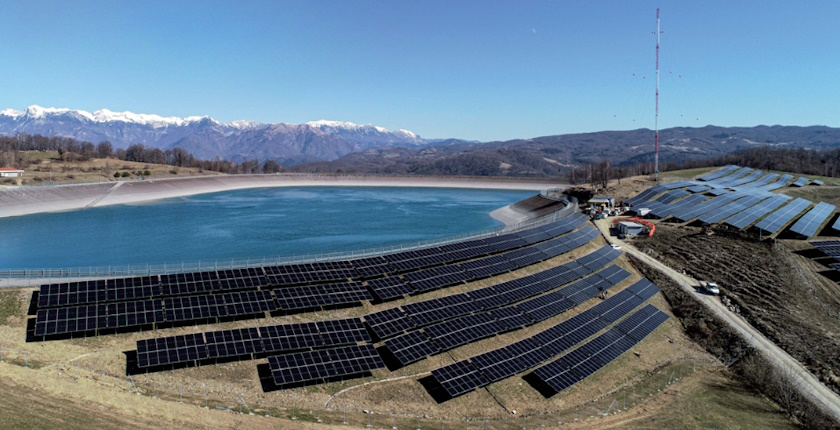
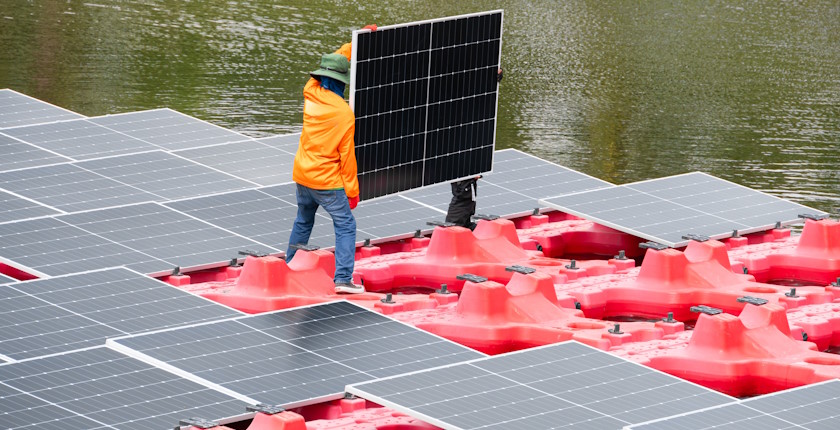
The reservoir of state-owned Electricity Generation Corp.’s Demirköprü hydropower plant is the first proposed area for Turkey’s planned floating solar power auction. The YEKA support mechanism provides grid permits for several decades and a period with guaranteed prices.

Within its ambition to grow the solar and wind power capacity to 120 GW in total by 2035, the Turkish government is counting on floating photovoltaics as well. The Ministry of Energy and Natural Resources proposed the reservoir of the Demirköprü hydropower plant for the first dedicated auction for the technology.

Detailed studies of the area are underway under the framework for the Renewable Energy Zones (REZ) state support mechanism, the announcement revealed. The scheme is better known by its Turkish acronym YEKA.

Demirköprü is on the Gediz river, east of Izmir, in Manisa province. Its owner is state-owned Electricity Generation Corp. (Elektrik Üretim A.Ş. – EÜAŞ). The 69 MW hydropower plant’s dam holds a reservoir with a regular surface of just under 48 square kilometers.

The Demirköprü hydropower plant’s reservoir spans almost 48 square kilometers under regular conditions

The country’s second floating solar power plant came online early this year. The only other such facilities in the region that Balkan Green Energy News covers are in Romania and Albania.

Turkey held auctions for 7.85 GW in total for wind and solar power, of which 3.8 GW for PV projects. Winners get grid permits for several decades and a period with guaranteed prices.

The country’s total electricity production capacity reached 119.3 GW by the end of May, of which 72.5 GW ran on renewable sources. Solar power accounted for 22.6 GW, compared to 20.4 GW in mid-February.

The ministry selected the first offshore wind power zones in August 2023.
by in News

Hungary’s MAVIR commissions 60 MWh battery energy storage system

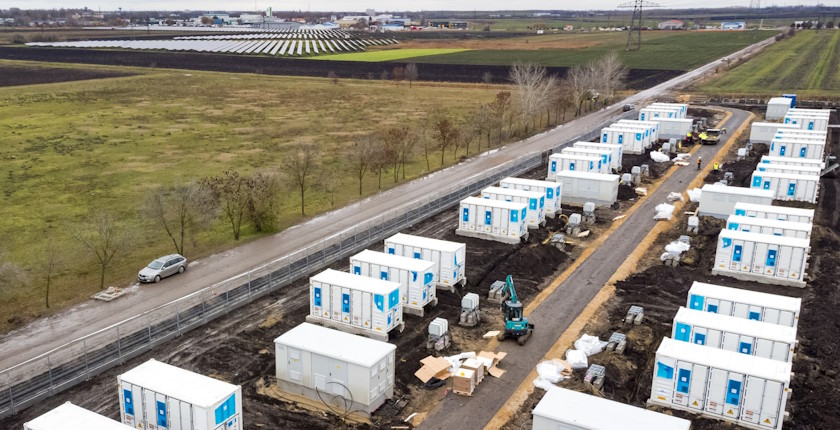
MAVIR, the Hungarian electricity transmission system operator (TSO), put into operation a battery energy storage system, BESS, of 20 MW in capability and a three-hour cycle. It will help grid security and the integration of renewable energy sources.

After entering the world’s top ten in photovoltaic capacity per capita, Hungary is picking up pace in terms of batteries as well. Energy storage units are coming online to maintain grid stability and bridge the hours between the peaks of daily solar power production and electricity consumption. Transmission system operator MAVIR commissioned a BESS of 20 MW in operating power and a three-hour cycle, translating to 60 MWh in capacity.

The EUR 20.3 million project received support in the form of a grant via the European Union. MET Group also put into operation a similarly-sized BESS last month in Hungary, while MOL Group launched construction of another one.

MAVIR’s battery energy storage system is in Szolnok, southeast from the capital Budapest. The company picked Forest-Vill as the contractor in late 2023. They signed the contract in February 2024. The same firm built MET Group’s BESS and also used equipment from Huawei Technologies.

Investors in BESS in Hungary are benefiting from EU grants

MAVIR’s new facility will contribute to grid security and a more efficient integration of renewable energy sources and support a sustainable, green future, said Deputy Minister of Energy and Parliamentary State Secretary of the Ministry of Energy Gábor Czepek.

The government’s EUR 45.1 million subsidy program for residential and corporate investments resulted in the installation of 12,000 batteries in households of 109 MWh in total, the official pointed out. Hungary now hosts 114 MW in battery capability.

Czepek estimated that the grants would bring 1 GW online by 2030, as targeted. Another call, of EUR 12.5 million, will soon be launched for energy storage for the industrial sector, he stressed.

Notably, the Ministry of Energy said solar power production reached 6.25 GW around noon on June 25. It was more than the country’s entire electricity demand at the time, it added.

by in News

Grants for public institutions’ solar projects in Romania top EUR 500 million

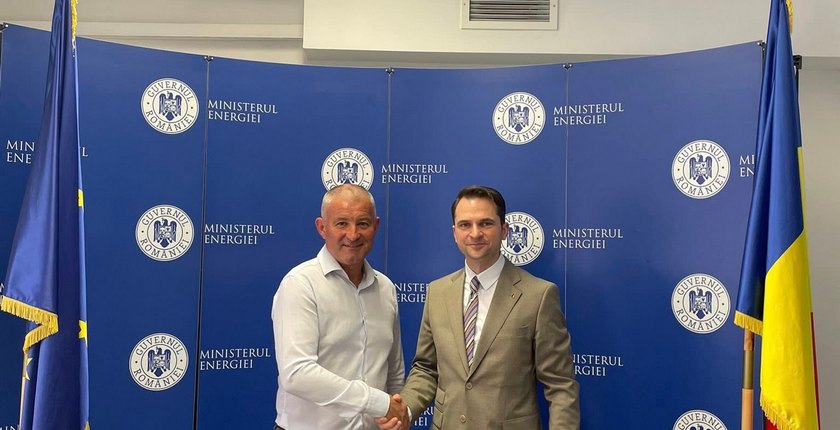
The Romanian Ministry of Energy has signed 29 more grants to public entities for investments in solar power plants for self-consumption, bringing the total number of projects under the program to 1,046. The latest round of grants is worth EUR 11.3 million, putting the total sum approved so far at EUR 502 million.

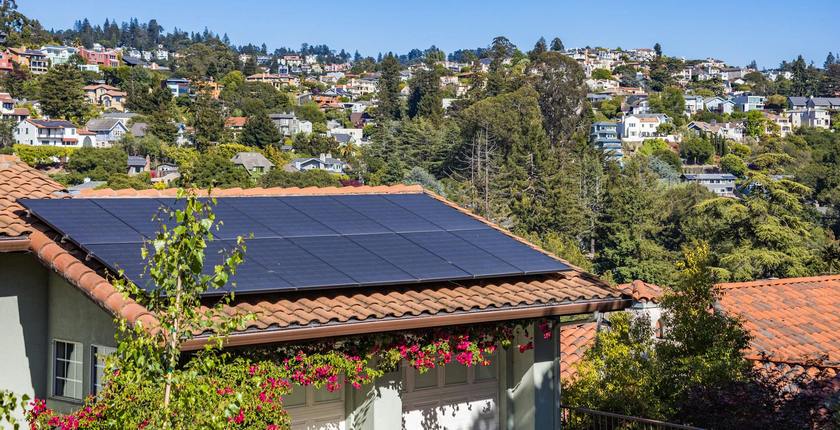
The 29 grants, financed from the European Union’s Modernisation Fund, will help build solar power plants with a total installed capacity of 9.13 MW at schools, hospitals, city halls, and other institutions across Romania. It brings the total installed capacity supported under the program to over 403 MW, according to a press release from the Ministry of Energy.

The latest batch of projects puts the total planned capacity at over 403 MW

In many cases, installed renewable capacities cover up to 70% of the energy needs of public institutions, the ministry noted.

Romania’s outgoing Minister of Energy Sebastian Burduja hailed the program as a “paradigm shift,” noting that Romania was already in a new energy era, with local communities no longer just consumers, but active participants.

“Over the past two years, the Ministry of Energy has consistently provided support to local public authorities that understood the importance of investing in energy production for their own consumption. We have made funds available, simplified procedures, and worked side by side with beneficiaries so that the projects move forward quickly,” Burduja stated in a Facebook post.

The latest round of contracts covers public entities in 18 counties across the country: Arad, Argeș, Bacău, Brăila, Călărași, Constanța, Dâmbovița, Galați, Brașov, Gorj, Hunedoara, Maramureș, Mehedinți, Olt, Sibiu, Suceava, Teleorman, and Timiș.

The number of contracts has increased from 633 in March

In March, the ministry said it had signed 633 contracts, worth a combined EUR 339 million, of which EUR 294 million was from the Modernisation Fund. Total planned capacity at the time was 237.4 MW.

by in News

Federation of BiH launches grants program for prosumers

The Federation of BiH, one of the two entities constituting Bosnia and Herzegovina, has launched a grants program to co-finance the installation of rooftop solar power plants, expected to cover around 500 households a year and lead to an increase of 4.2 GWh in renewable electricity production.

Operator for Renewable Energy Sources and Efficient Cogeneration – Operator za OIEiEK estimates that the average installed capacity of the solar power plants will be 6 kW, and that the grants will help reduce greenhouse gas emissions by 3,800 tons a year.

The program will be funded from renewable energy surcharges

The program will be funded from renewable energy surcharges paid through electricity bills by all consumers in FBiH. Grants will be approved for two categories of applicants. The first one is vulnerable households whose annual consumption exceeds 3,500 kWh. The second covers those who consume more than 5,500 kWh a year and whose connection power is equal to or less than the requested installed capacity of the solar installation, according to the decision of the Operator za OIEiEK.

The maximum grant amount per applicant is BAM 7,000 (EUR 3,580), or up to 60% of the investment cost for users in the second category.

Damir Miljević: People in extreme energy poverty will get solar power plants for free

Although the budget and the anticipated scope of the program are modest, one positive aspect is that part of it is intended to fully cover the cost of PV installations for people in extreme energy poverty. They will receive a rooftop system free of charge, eliminating, partially but permanently, some of the concerns about financing their energy needs, according to Damir Miljević, a member of the Board of the Center for Sustainable Energy Transition (RESET), a BiH think tank.

Prosumers were introduced in the FBiH legislation two years ago, with the passage of a set of reform energy bills, including the Law on the Use of Renewable Energy Sources and Efficient Cogeneration.

At the national level in Bosnia and Herzegovina, prosumer regulations have not been adopted yet. According to some estimates, the country could cover half of its electricity consumption by installing solar panels on about a million roofs.

by in News

Slovenia to subsidize battery storage for businesses with EUR 17 million

Slovenia’s Ministry of the Environment, Climate and Energy, in cooperation with electricity market operator Borzen, has allocated nearly EUR 17 million in grants for businesses planning to install battery storage systems.

The grants are intended for the purchase and installation of battery storage units, hybrid inverters, and electrical installations and equipment. The subsidy can cover up to 45% of eligible investment costs, or a maximum of EUR 225 per kWh of battery storage capacity.

New batteries can be combined with existing energy storage capacities or solar power plants

Eligible applicants are companies, sole proprietors, and cooperatives. Grants can be combined with a solar power plant or existing storage units without restrictions.

The total amount of aid that can be granted to an individual beneficiary may not exceed EUR 300,000 over three years. More information will be available after a public call is announced, the ministry added in a LinkedIn post.

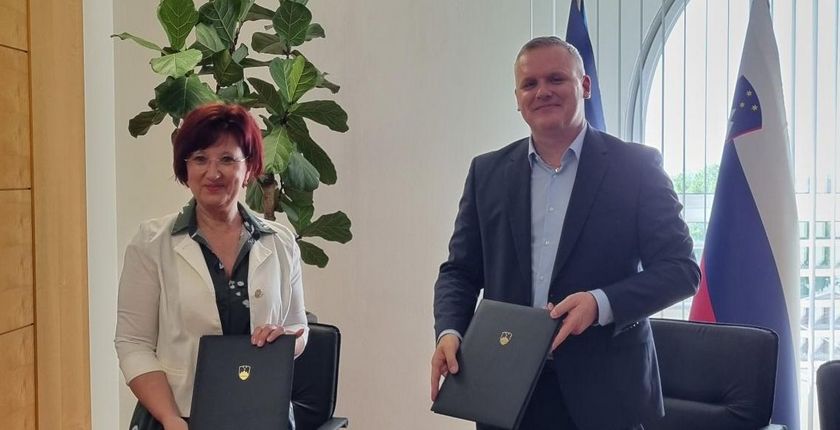
A contract on launching a public call for grants was signed by Minister of the Environment, Climate and Energy Bojan Kumer and Borzen General Manager Mojca Kert.

Slovenia is using EU funds to support new solar and wind projects, including batteries

Slovenia’s Ministry of Cohesion and Regional Development recently approved EUR 63.5 million in European Union funds for co-financing investments in new solar and wind power plants in the period until 2029. The scheme includes the possibility of storing electricity, according to the announcement.

At the same time, the ministry allocated EUR 23.5 million in EU funds for a program to tackle energy poverty in Slovenia in the 2024-2027 period.

by in News

Future Green Business conference highlights role of Croatian companies, EU-Africa partnership in climate action

The International Institute for Climate Action (IICA) held its third international Future Green Initiative conference on climate change. The event in Zagreb was dedicated to the role of the business and financial sectors in mitigating climate change. President of IICE Marija Pujo Tadić said Europe wants other states and the main global players to join its ambitious climate targets and action.

Abze Djigma, one of the most prominent African negotiators on the global climate, was a special guest and keynote speaker at the conference. In her words, a just transition isn’t possible without African mineral resources, and Africa is ready to cooperate in the sector, with mutual respect.

Within the trajectory to reaching climate neutrality by the mid-21st century, the EU and its member states intend to determine an intermediate 2040 target of 90% for greenhouse gas emission cuts. It implies a rapid switch to a low-carbon and sustainable economy. The International Institute for Climate Action (IICA) is contributing to the efforts through training, communications and awareness raising for the business and financial sectors and the facilitation of networking.

With its activities, IICA promotes knowledge exchange and strengthening social and personal responsibility toward sustainability. It helps companies adapt their operations and governance to the requirements for stable growth, to tackle the climate crisis.

At its third international conference Future Green Business, the institute gathered Croatian and EU officials and Croatian company executives. The event in Zagreb was titled How the Business and Financial Sector Can Contribute to Climate Change Mitigation (EU & Africa).

Reliable partners are exceptionally important for transition to sustainable economy

President of IICA and Special Advisor-Envoy for Climate Action of the Government of Croatia Marija Pujo Tadić stressed that the conference was a reflection of the recently held 3rd European Union – African Union Ministerial Meeting, which marked 25 years of the partnership. The aim of the event in Zagreb was to highlight the significance of cooperation, particularly in the context of the climate crisis, for the corporate and financial sectors.

The EU is Africa’s biggest trade partner as well as the biggest investor and donor of development and humanitarian aid

“Both continents inevitably have to undergo their path of transforming the economy to a sustainable economy. And on that path, it is exceptionally important to have reliable partners. Europe and Africa are an example with their strong global cooperation of 25 years, directed toward peace, security, governance, prosperity and a human dimension,” Pujo Tadić underscored.

In her view, Africa is EU’s geopolitical priority at a time of increased geopolitical instability. Marija Pujo Tadić recalled that the EU is Africa’s biggest trade partner as well as the biggest investor and donor of development and humanitarian aid.

“Europe remains committed to its climate goals and ambitions and it is calling on other states and the main players to join these ambitious goals and action, and all other countries to meet their national commitments in the runup to COP30 in Brazil,” she asserted.

The conference featured a panel discussion between the representatives of large Croatian companies in the spheres of industrial production, logistics and finance.

Čović Vidović: EU’s Africa policy is no longer developmental but directed toward market-based partnerships

Deputy Head of the European Commission Representation in Croatia and the Head of Press and Media Andrea Čović Vidović said the Council of the EU has just announced that the administration in Brussels and member states mobilized EUR 28.6 billion of international climate finance from public and EUR 7.2 billion from private sources in 2023.

“That support is increasingly targeted not only towards adaptation and mitigation, but towards strategic partnerships, such as with Africa, our very important partner for a sustainable future,” she stated.

The European Commission is spearheading change through legislative initiatives that shape the global climate transition, Čović Vidović stressed. “As for our policy toward Africa, it is no longer developmental. It is aimed at market-based partnerships for mutual benefits. Of course, also for the benefit of the global climate,” she added.

Decisions that political, business leaders make at climate negotiating table affect everyone

A special guest and keynote speaker at the conference was Princess of the Mossi people of Burkina Faso and Co-Chair of the UNFCCC Paris Commitee on Capacity-building Abze Djigma. She has been participating in international climate negotiations for the last two decades.

Abze Djigma highlighted the significance of the concept of just transition. Both political and business leaders need to be aware that their decisions in climate talks affect everyone, and especially that they have the responsibility to improve living conditions, in her words.

At their recent meeting, the European Union and African Union considered the possibilities for cooperation in the critical minerals segment, Abze Djigma noted. A just transition is not possible without African mineral resources, and Africa is ready for cooperation in that field with mutual respect, she underscored.

It is not fair that licenses issued to foreign mining companies enable them to access the international finance market and the billions for their investments, while neither the African countries hosting their projects nor the domestic economy can’t use the asset that way, Abze Djigma asserted. It is why the legal framework needs to include provisions on ownership shares for the government and local firms, so that there are joint opportunities, she explained.

Abze Djigma also promotes empowering youth, the less fortunate and women through, for instance, enabling access to sustainable and affordable energy in rural areas.

Private sector has responsibility but also unique chance to be part of solution

Without systemic and determined action, global temperature will keep growing, with ever more serious consequences for the economy, society and nature, said Croatia’s State Secretary at the Ministry of Environmental Protection and Green Transition Tanja Radić Lakoš.

“The business and financial sectors have the responsibility, but also a unique chance to become part of the solution, with their tools, knowledge and capital. Enterprises that integrate climate change management, climate risks, into the core of their strategies, not only contribute to environmental protection, but become more resilient, more competitive and more attractive to investors,” she asserted.

 Radić Lakoš: Social fairness must be an integral part of the green transition

Radić Lakoš stressed that Croatia would utilize European and national funds for the green transition in a targeted and transparent manner, making sure that no one is left behind.

“Social fairness must be an integral part of the green transition, as it is not a privilege, but the right of all our citizens,” she added and pointed out that the country is eligible for EUR 1.26 billion from the EU’s Social Climate Fund (SCF). Radić Lakoš noted that Croatia is adding EUR 420 million to the sum. SCF is intended for financial support to vulnerable households and enterprises.

The funding contributes to climate objectives through the decarbonization of transportation, improvement of the energy efficiency of buildings and the creation of green jobs.

Croatia getting EUR 1.3 billion by 2030 from proceeds from sales of CO2 certificates

Furthermore, Croatia is receiving the proceeds from the sales of carbon certificates via the Modernisation Fund, Radić Lakoš recalled. The amount allocated to the country until 2030 currently has a market value of EUR 1.3 billion. The funds are intended, among other uses, for the decarbonization of heating systems, energy efficiency measures and low-carbon road transportation.

Another five public calls are envisaged this year, worth an overall EUR 285 million from the Modernisation Fund

So far there were three calls, where 224 beneficiaries were awarded a total of EUR 80 million. There are five more calls envisaged for 2025 and they are worth a combined EUR 285 million, of which part of the support will go through financial instruments, Radić Lakoš added.

In the 20 years since its inception, the Environmental Protection and Energy Efficiency Fund (EPEEF or, in Croatian, FZOEU) conducted almost 60,000 sustainable development and green transition projects, its Director Luka Balen told the audience at the event. “As we can see, climate change is not an issue for the future. It is a matter of everyday life,” he stated.

by in News

PV plant built next to Slovenia’s only pumped storage hydropower plant Avče

Slovenian company Soške elektrarne Nova Gorica (SENG) commissioned its first solar power plant – Kanalski Vrh. The facility is at its Avče pumped storage hydropower plant, the only one in the country.

Surfaces around large infrastructure such as railways are convenient for photovoltaics as there are very few options for the utilization of such sites. Existing power plants, including hydropower plant reservoirs, are even better locations, as they provide access to strong grid connections and transformers.

With its strict environmental and social regulations and standards, Slovenia is struggling to determine suitable locations for wind turbines, but also larger ground-mounted solar power plants. But state-owned power utility Soške elektrarne Nova Gorica (SENG) managed to fit a photovoltaic system on the banks of the upper reservoir of its Avče pumped storage hydropower plant, in cooperation with the local community.

Kanalski Vrh solar power plant hooked to existing power line

The 2.9 MW solar power plant north of the village of Kanalski Vrh is connected to an existing 20 kV power line. The hydropower operator estimated the annual output at 3.3 GWh. It plans to expand the PV facility to 8 MW by the end of next year.

The first phase was worth EUR 2.2 million. The firm, part of Holding Slovenske elektrarne – HSE Group, used its own funds and won government subsidies.

Area gets natural science park, cycling paths together with PV facility

In the local spatial planning process, Kanalski Vrh got a natural science park and walking and cycling paths. SENG’s first solar power plant spans two hectares and consists of 4,736 modules.

“We have witnessed increasing opposition to the construction of new energy facilities for the production of electricity from renewable sources, but the Kanalski Vrh solar power plant is proof that projects can be successfully completed in an open and transparent dialogue with the local community,” Managing Director of HSE Tomaž Štokelj said.

Avče is the only pumped storage hydroelectric plant in Slovenia. It has 180 MW in pumping mode and 185 MW for production. Avče and four out of five SENG’s hydropower plants on the Soča river are in the municipality of Kanal ob Soči. The first one, Doblar 1, was built in 1939.

Kanal ob Soči is at Slovenia’s western border, with Italy. The firm also operates a group of small hydropower plants.

If the operation of a solar power plant is integrated with a hydroelectric facility, as a hybrid power plant, it can help save water on sunny days.

Slovenia hosts two other PV facilities next to hydropower plants: Brežice and Zlatoličje-Formin.

by in News

Montenegro preparing first renewable energy auction to accelerate green transition

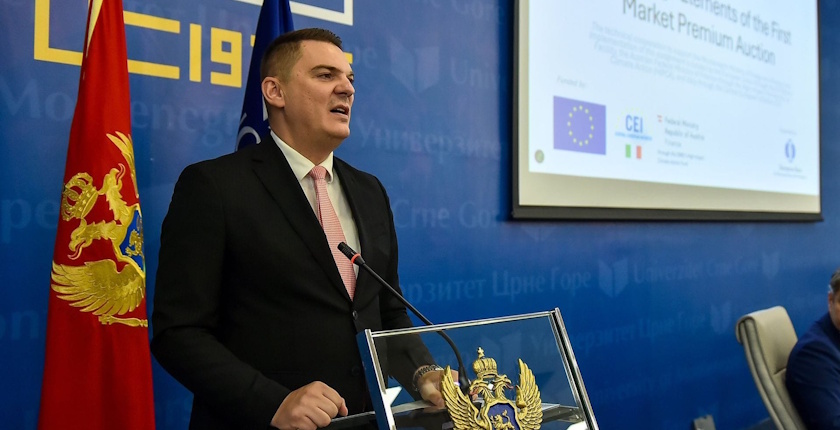
A model for Montenegro’s first auction for market premiums for solar power was outlined at an event in the capital Podgorica. The new legal framework for the green energy transition includes guarantees of origin, citizen energy communities and streamlined permitting. Stakeholders will be able to participate with their comments and suggestions in the renewables auction design.

The Ministry of Energy and Mining of Montenegro organized a conference today to present the key design elements of the first market premium auction for renewables. The competitive bidding process for wind and solar power is part of the reform agenda within the European Union’s Growth Plan for the Western Balkans.

The country’s new legal framework includes guarantees of origin, citizen energy communities and simplified permitting aimed at facilitating investment. They were defined with the new laws on energy and renewables.

The ministry said the first auction would be for photovoltaics. Solar power is the segment with the greatest potential and the lowest share in domestic electricity production, it explained.

EBRD’s Zakaria: First auction should match market needs

The Head of Montenegro in the European Bank for Reconstruction and Development (EBRD) Remon Zakaria urged stakeholders to send their comments and suggestions. The design of the first auction should match the needs of the market as much as possible, he argued.

EBRD participated in drafting the model. The ministry also thanked the Ministry of Finance of Austria, Central European Initiative (CEI) and other partners for their assistance.

At the event in Podgorica, a team of experts presented the technical matters concerning the upcoming auction.

Montenegro to boost renewables’ share in electricity output to 70% by 2030

This is not just the beginning of a technical process – it is a strategic leap, according to Minister of Energy and Mining Admir Šahmanović. He pointed out that Montenegro is transitioning from state incentives to a market-based support model, saying it aligns with the best European practices.

“We know our ambitions and goals for 2030 – a 50% share of renewable energy sources in final consumption and 70% of electricity to be produced from renewable sources. They are indeed demanding targets, but reachable – especially with support from international partners and the private sector,” Šahmanović added.

Montenegro has demanding, but achievable green energy targets, Minister Admir Šahmanović said

Montenegro doesn’t see itself isolated in its energy future but as an integral part of the European market, the minister asserted. With the forthcoming auction, the country is sending a clear message that it is ready for the next steps in the green transition, in his view.

The government is committed to decarbonization, digitalization and preparations for the European Union’s instruments like the emissions trading system (ETS) and Carbon Border Adjustment Mechanism (CBAM), Šahmanović underscored.

“We don’t see this process as a political goal – but as an economic opportunity and social imperative,” the minister said.

by in News

Kosovo* receives four applications for wind power auction

German, Kosovar, French and Turkish companies submitted documentation to qualify for the first wind power auction in Kosovo*. The plan is for the government to have a share of up to 49% in selected projects.

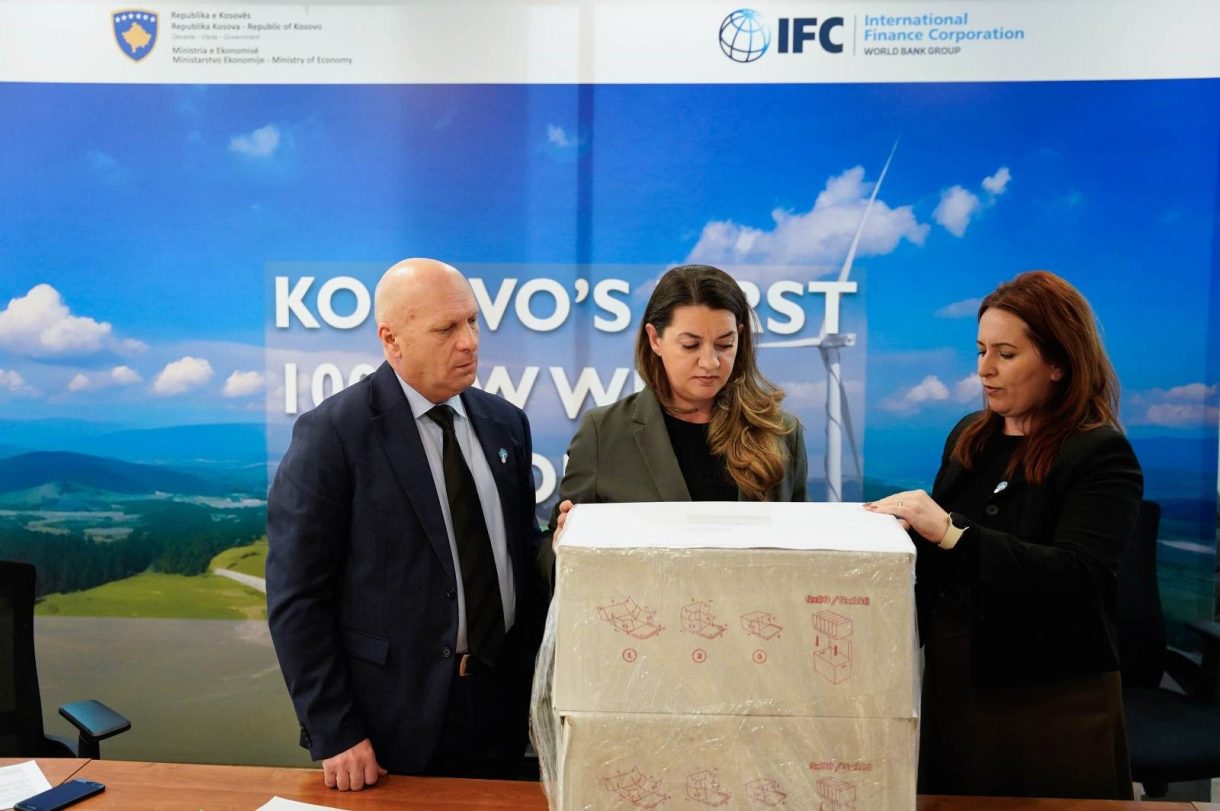
The Ministry of Economy of Kosovo* has publicly opened the applications within the qualifications call for the first wind power auction. The quota is 50 MW to 100 MW and the plan is to support 150 MW in total in two rounds. Participants will bid for 15-year power purchase agreements (PPAs) and contracts for difference (CfDs).

One applicant is a consortium of Notus Energy, based in Germany, and Stublla Energy from Kosovo*. The ministry also received documentation from Akuo Energy from France and a consortium led by Güri̇ş, headquartered in Turkey. Both companies participated in the first solar power auction as well, held last year.

The fourth one is the Kosovar consortium One Era. However, its application came half an hour after the deadline passed.

“The experience from the first 100 MW solar auction has taught us that only when we offer an opportunity for fair and transparent competition for the private sector, we not only evoke interest from serious and prestigious global companies, but also ensure favorable prices for citizens,” Minister of Economy Artane Rizvanolli said. She expressed commitment to high transparency and competition procedures.

Ministry planning to open final bids in August

The members of the auction commission are from the Ministry of Economy, Ministry of Environment, Spatial Planning and Infrastructure, Energy Regulatory Office (ERO) and Transmission, System and Market Operator (KOSTT). They are responsible for evaluating the applications concerning the financial, legal and technical requirements.

Next in the schedule is a request for proposals, due in March, after the completion of the qualifications phase. The participants can send their technical and financial proposals. The final bids would be opened in August. The maximum price is EUR 80.2 per MWh excluding value-added tax.

Curtailment is subject to financial compensation

The ministry plans to launch the second round by the end of the year. The winners will be obligated to design, build, operate, maintain and decommission wind parks. According to one brochure, the accepted price will be adjusted every 12 months, It will depend on the inflation rate for the sector.

Balancing responsibility is limited to imbalance volumes greater than 10%. Curtailment is subject to financial compensation.

Wind projects would be run by special purpose vehicles (SPVs), firms where the government would have a share of up to 49%. The Ministry of Economy intends to use the funds from the International Monetary Fund’s Resilience and Sustainability Facility (RSF) in the development of the 150 MW. The purpose of the public-private partnership scheme is to reduce risk for private investors.

* This designation is without prejudice to positions onstatus and is in line with UNSCR 1244/99 and the ICJ Opinion on the Kosovo declaration of independence.
by in News

Battery storage market in SEE emerging, Western Balkans lagging behind with positive prospects

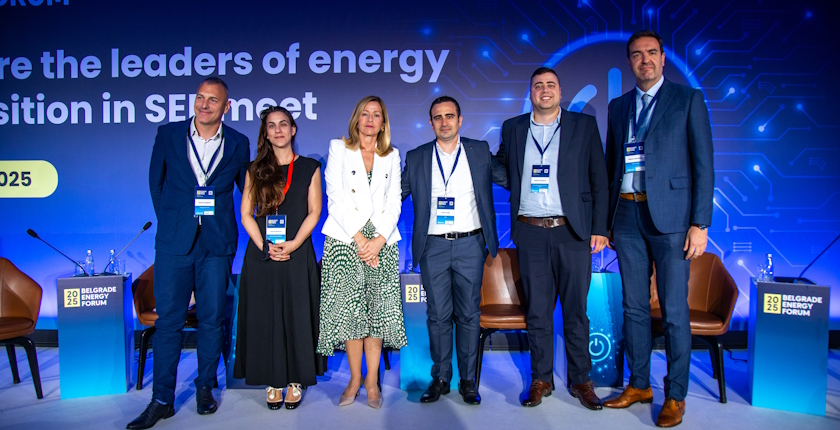
The deployment of battery energy storage systems (BESS) across Southeast Europe is progressing at an uneven pace. State subsidies and financing mechanisms have enabled the rapid implementation of BESS solutions in Greece, Romania and Bulgaria, while markets in the Western Balkans are lagging behind. However, the outlook remains positive, as experiences from neighboring markets and best practices from other parts of the European Union can help overcome initial challenges and streamline the deployment process. This was highlighted by participants of the panel dedicated to BESS at the Belgrade Energy Forum.

Among the technologies required for the energy transition, battery energy storage systems (BESS) stand out as a key factor for integrating electricity from intermittent renewable sources – wind and solar power – into the grid. There are few such facilities in Southeastern Europe and the segment is yet to even be fully regulated in the narrower Western Balkans region. The panelists at a session called Energy storage system market in SEE: trends and forecasts, at Belgrade Energy Forum (BEF 2025), outlined the trends in the budding market.

There are more and more cases of low and negative hourly prices in the wholesale electricity market in the region, providing a clear business case for BESS investments. In addition, the grid is often overloaded on weekends and holidays when solar and wind power production is high, given the weak demand.

Managing Director of Go2Power Consulting Goran Vukojević, who moderated the discussion, warned that negative prices may jeopardize system stability as well, if operators of power plants disconnect them from the grid at the same time, to avoid costs.

He highlighted the preparations in Serbia’s transmission system operator Elektromreža Srbije (EMS) for auctions for ancillary services and praised the company for transparency in regulating the competitive process. The other option for battery operators is to participate in the open market.

Managing Director of Go2Power Consulting Goran Vukojević moderated the panel discussion

Region seen with 9 GW of BESS operating power in 2030

Ioanna Barouni from Aurora Energy Research said a total of 40 GW of solar and wind power is expected to be online at the end of 2025 in the SEE region, comprising 12 countries, including Hungary. In 2030, the level is expected to reach 70 GW, which is expected to be doubled to 145 GW by mid-century. As for BESS, projections stand at 9 GW in 2030 and 25 GW in 2050.

Barouni: We miss flexibility and ancillary services for transmission and distribution system operators

The countries of the region are retiring power plants that use fossil fuels, a firm capacity, in Barouni’s words, while adding renewables. “It’s not very easy to predict how the generation profile is going to be during the day, so we miss flexibility and we miss ancillary services for TSOs and DSOs,” she said.

The gap between power prices for midday and the evening is gradually increasing. Barouni explained that batteries “create some artificial demand and absorb these low prices.” At peak demand and with less renewables, a battery can replace expensive fossil fuels, lowering the price.

Ioanna Barouni from Aurora Energy Research (pictured left) and Head of Specialized Lending at UniCredit Bank Serbia Svetlana Cerović

Serbia preparing auctions for ancillary services

Division Manager of transmission system operator (TSO) EMS Nikola Tošić acknowledged that Serbia is preparing auctions for ancillary services. He revealed that there would probably be one auction for 70% of the needed reserve in the first year. The next rounds would be more frequent, shifting toward daily auctions for balancing capacity.

In the verification process, EMS’s System Operation Department will first test the battery, Tošić added. State-owned power utility Elektroprivreda Srbije (EPS) already provides ancillary services to the TSO, so it won’t require tests, he asserted.

Serbian law defines ancillary services the same as European Union does

EMS drafted the new grid code, and it will publish the draft balancing market code for public discussion soon, according to Tošić. He said the domestic law defines ancillary services in the same way as the EU defines them in its legislation. One part is balancing services: frequency containment reserve (FCR, primary), automatic frequency restoration reserve (aFRR, secondary) and manual frequency restoration reserve (mFRR, tertiary). The other part are non-frequency services – energy.

“We think that it would be good to incentivize the periods of the year or periods of day when the needed amount of reserve is more attractive or more in demand,” Tošić said.

Market Division Manager of EMS Nikola Tošić

Fortis Energy moving ahead with battery investments regardless of government support schemes

Fortis Energy’s Chief Executive Officer for Eastern Europe Nikola Oklobdžija considers the lack of regulation to be the biggest challenge for developers. An investor can currently only focus on charging the batteries when the prices are low and sell when they are high, he underscored.

The Turkey-based company develops photovoltaic, wind power and BESS projects in the region. The first bigger investments in renewable electricity plants with energy storage are the ones that will break the ice, in Oklobdžija’s opinion.

“Of course, it helps if you have a CfD contract, so the banks will look at it more favorably,” he stated. Oklobdžija added that companies need to be able to present revenue to the lenders and what the fees are for renting the capacity or providing different services.

Bankability depends on state support and PPA contracts, cash flow models and insurance

In the meantime, Fortis is examining the experiences in Bulgaria and Greece, which have already held auctions for standalone batteries. Financing a project is easier with a CfD – contract for difference, but the company is determined to push ahead anyway, Oklobdžija stressed.

In North Macedonia it commissioned a solar power plant in Oslomej and recently contracted a BESS to be added to the facility. Oklobdžija said it wasn’t a requirement but that Fortis opted for energy storage because of market pressure with prices and occasional curtailments, like during Easter last month.

The introduction of ancillary services would facilitate the development for standalone battery systems, he explained.

Fortis Energy’s CEO for Eastern Europe Nikola Oklobdžija

Cerović: First there will be more projects for colocated BESS units than for standalone facilities

Head of Specialized Lending at UniCredit Bank Serbia Svetlana Cerović highlighted the intensive activity in Germany and Italy, for instance, but also in neighboring Romania. UniCredit is present in those markets and is analyzing the development of the battery storage market, she pointed out, arguing that the best practices in the EU are the best way for building and financing battery storage.

Cerović said there would first be more projects in the region for BESS colocated with renewable energy plants than standalone units.

She suggested that the proposed investments that include storage should be better pondered at the next renewable energy auction in Serbia. It is in the country’s interest to enable providing flexibility and to support the projects, she said.

There may be a rationale for subsidizing prosumers to add storage in Serbia, Cerović said. Turning to small-scale projects, she expressed the belief that power purchase agreements (PPAs) are “convenient” for them. She is recommending dedicating a certain capacity for the category at the next auction in the country.

The first projects in Serbia, conditioned by energy storage requirements for a grid connection, are in the process of negotiating financing, according to Cerović.

Fire protection is especially significant for insurers

Renewable Energy Insurance Broker (REIB) has insured some 4 GWh of energy storage capacity in Bulgaria and just as much elsewhere in the world, Business Development Manager Dimitar Dimitrov said. Developers should contact insurance companies when the design is done, as well as for cargo insurance, he suggested and added it is particularly important for projects that get subsidies.

“We’re not only insurance brokers, but we’re also investors, which helps us understand a bit more about the clients’ needs, and what we can definitely do more in cases of coverage. Understanding clients’ needs helps us also prevent risks that could occur during certain stages,” Dimitrov stated.

Most insurers prefer at least a six-meter distance between containers or rows of three to four containers holding batteries, he said. It is the most important factor in fire protection, in Dimitrov’s opinion. When the distance is shorter than three meters, a firewall is required for insurance, he explained.

REIB’s Business Development Manager Dimitar Dimitrov

The next segment is construction insurance. For insurance companies, it is not a higher risk profile, Dimitrov asserted. Next, he recommended operational risk insurance including coverage for business disruption, and insurance against cyberattacks. In such events, the grid connection can be damaged, the company’s representative pointed out. “Insurance policies are definitely bankable,” he added.

Bulgaria has completed its tenders for state support to BESS combined with renewable energy plants, and for standalone units. But even before subsidies, batteries have been delivered and facilities are under construction, Dimitrov stressed. Many photovoltaic projects in Bulgaria have emerged in the past few months and most of them include BESS, he said.