by in News

Elektrohertz gets concession for solar project in Republic of Srpska

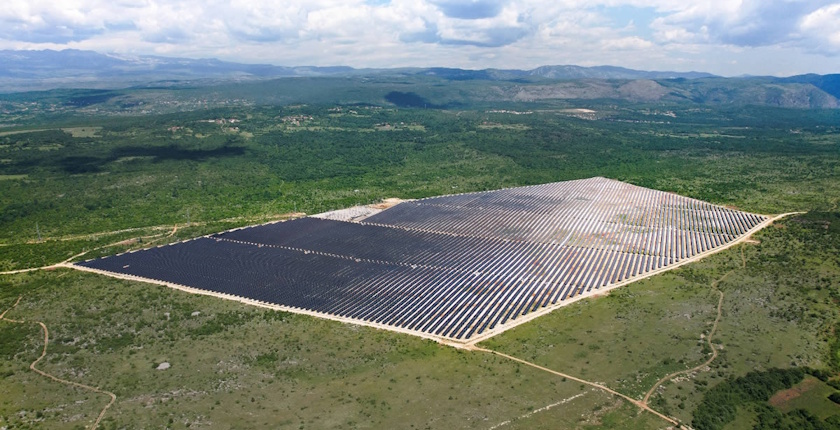
Republic of Srpska, one of the two entities constituting Bosnia and Herzegovina, is set to host another solar power plant. It would be one of the largest ones, with a capacity of 150 MW.

In late May, construction began on Bosnia and Herzegovina’s largest solar power plant so far, with a capacity of 125 MW. The most recently inaugurated large photovoltaic facility was Stolac, with a capacity of 64 MW.

Now the Ministry of Energy and Mining of the Republic of Srpska signed a concession agreement for the construction and operation of the Javor photovoltaic plant in the municipality of Rogatica.

In May, the entity government granted the concession to Elektrohertz, based in the same town in the country’s east, for the construction and operation of the facility, of 150 MW.

The concession has been granted for 30 years

The estimated annual production of the solar park is 197 GWh, and the concession was granted for a period of 30 years. The total investment value is BAM 194.4 million (EUR 99.4 million). It is scheduled to go online within the next four years, the ministry said.

Before finalizing the concession contract, the concessionaire, private developer Elektrohertz, delivered a one-off payment to the budget of the Republic of Srpska, of BAM 971,932 (EUR 497,000).

The Rogatica municipal budget is entitled to 95% of the concession fee

When the facility becomes operational, the concessionaire will be obligated to pay a fee of BAM 0.0055 (EUR 0.0028) per kWh of generated electricity to the budget of the Republic of Srpska. A 95% share is allocated for the Rogatica municipal budget.

The most recent concession granted by the entity Ministry of Energy and Mining went to state-owned power utility Elektroprivreda Republike Srpske (ERS) for the proposed Trebinje 3 solar power plant. It was in late April.

It is ERS’s third concession for photovoltaic plants.
by in News

R. Power Renewables to start construction of 55 MW PV project in Romania

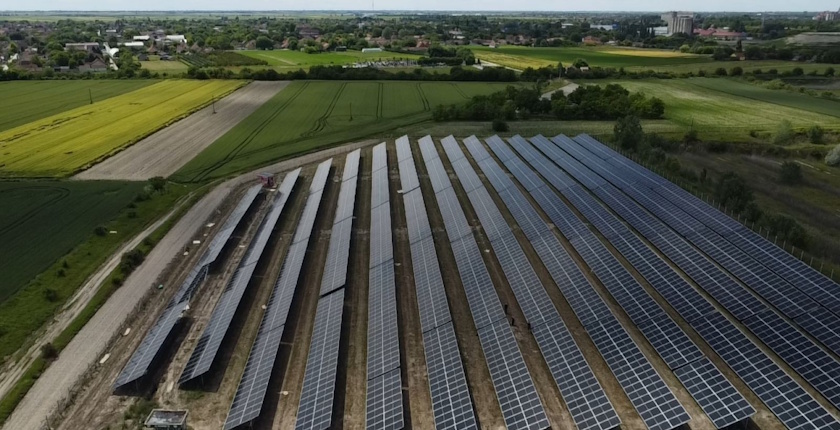
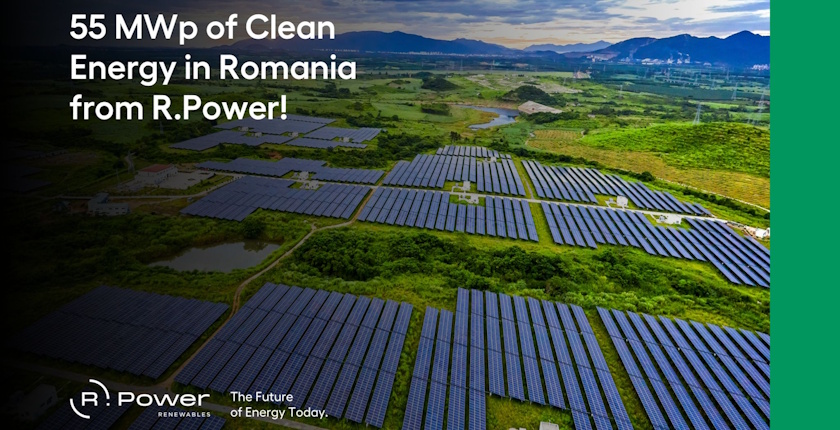
Polish company R. Power Renewables is about to build a solar power plant in Romania of 55 MW in peak capacity.

R. Power Renewables published the main details ahead of the start of construction of its Lazuri Solar Park, located in Satu Mare county in Romania.

The company said it is a major step forward in its commitment to expanding sustainable energy infrastructure in Central and Eastern Europe.

The works are set to begin before the end of September, according to the update. The facility is scheduled to come online in the third quarter of 2026.

The Lazuri Solar Park will be connected to the national grid through a newly constructed 110 kV switching station

The Lazuri Solar Park will be connected to the national grid through a newly constructed 110 kV switching station, implementing a loop-in/loop-out connection on the existing Vetiș–Abator 110 kV overhead transmission line, according to R. Power Renewables.

The project will not only contribute to Romania’s renewable energy targets but also strengthen local energy security and grid resilience, the Warsaw-based company underlined.

The solar farm of 55 MW in peak terms would generate approximately 70 GWh of clean electricity per year — enough to meet the annual needs of over 48,000 households and avoid nearly 17,000 tonnes of CO2 emissions.

Lazuri is one of five R. Power’s solar farms in Romania that secured a 15-year power purchase contract

Lazuri is one of five R. Power’s solar power projects in Romania that secured 15-year contracts-for-difference (CfDs) through the national auction scheme, the firm said and added that in total, it won support for 85 MW of installed capacity.

In December 2024, after years of delays, the Ministry of Energy finally selected projects of an overall 1.53 GW, slightly more than the quota, in the first round of auctions.

Wind and solar power projects are eligible for subsidies under the CfD scheme. The first round of auctions resulted with ten and eleven winning bids, respectively.

by in News

INA, E.ON sign power purchase agreement in Croatia

Croatian oil and gas company INA and German energy giant E.ON’s subsidiary in the Southeastern European country have signed a power purchase agreement for electricity from renewable sources.

The power purchase agreement (PPA) will enable INA, majority-owned by Hungarian MOL, to use energy from its own power plants, even from remote locations where the produced electricity or surplus is fed into the grid, the companies said.

The electricity purchase covers three cogeneration plants and 18 photovoltaic plants with a total annual production of 20 GWh. INA’s largest solar power units, Virje and Sisak, have a combined capacity of about 13 MW.

The companies said it is a 2-in-1 solution – supply and purchase of electricity, creating a long-term sustainable energy system and allowing energy produced at one location to be used at another.

E.ON Croatia said it is connecting production and consumption into one efficient, closed energy system

With the partnership, the two firms are connecting production and consumption into one efficient, closed energy system, said E.ON Croatia.

It marks a new phase of cooperation, focused on developing a smarter, more flexible energy system, sustainable in the long term, according to the German energy giant’s subsidiary.

Ivica Kuliš, manager of the energy retail division of E.ON Croatia, said the utility is proud to become INA’s key partner in its electrification efforts, not only through supply but also by purchasing electricity. It directly enables flexible, locally produced energy to be available where it is needed most, he added.

Sokolović: INA is laying the foundation for long-term energy independence and decarbonization

By investing in its own production and using the PPA model, INA is laying the foundation for long-term energy independence and the decarbonization of its operations, said Dalibor Sokolović, head of the company’s department for new and sustainable businesses.

Such solutions enable more flexible and responsible resource management, Sokolović added.

Of note, according to an earlier analysis by Pexapark, the European PPA market entered an adjustment chapter last year, characterized by record deal-making for smaller volumes. Namely, the firm’s tracker registered a decrease of around 11% in total disclosed contracted volumes vis-à-vis 2023, to 15.2 GW.

by in News

Project underway for 99 MW Bokšić solar plant with battery storage

The Croatian Ministry of Environmental Protection and Green Transition has initiated a procedure to determine the need for an environmental impact assessment for the planned 99 MW solar power project Bokšić, which includes a battery energy storage system.

The annual electricity production of the Bokšić solar power plant is estimated at just under 120 GWh. The facility, with a planned connection power of 89 MW, would be connected to the grid through a new 110/33 kV transformer station, and then to the existing 110 kV Našice-Slatina transmission line.

The annual electricity output is estimated at just under 120 GWh

The project also includes a battery energy storage system (BESS), according to the environmental impact assessment report prepared in February and updated in June. It would be designed for an operating power of 38 MW and a capacity of 70.8 MWh, with an expected lifespan of 20 years.

Solar power plant Bokšić will have a 70.8 MWh battery system

The assessment procedure is necessary because the developer, Zagreb-based Funicula, intends to build a stand-alone photovoltaic plant, according to the ministry. The project’s site is near Bokšić, in the Đurđenovac municipality in Osijek-Baranja County.

The solar power plant is planned to occupy ​​about 123.8 hectares of land, with photovoltaic panels covering about 46 hectares. The site will be enclosed by a protective masonry fence up to two meters high, raised at least 15 centimeters above the ground to allow small animals to pass underneath, according to the ministry.

Bokšić is among the largest solar projects in Croatia

Few solar projects in Croatia are for a larger capacity than Bokšić. State power utility Hrvatska elektroprivreda (HEP) is working on the Korlat endeavor, also of 99 MW. At an auction last year, two major solar power projects were awarded market premiums – Promina, with a planned installed capacity of around 189 MW, developed by Spain-based Acciona Energia, and Obrovac Sinjski, for 144 MW, to be built by Aurelis Solis.

by in News

Danish Eurowind Energy to build 220 MW solar park in Romania

Denmark-based renewable energy company Eurowind Energy has announced plans to develop a 220 MW solar park in Romania in an investment valued at EUR 174.8 million. It would be its largest solar park in Romania and one of the biggest in the country. In addition, the company ordered wind turbines from Vestas for its three projects in Romania.

Eurowind’s future solar park, located in Vișina in Dâmbovița County, will span 345 hectares, comprising over 400,000 photovoltaic panels. Its projected annual electricity output is 400 GWh, equivalent to the consumption of around 150,000 Romanian households.

The Vișina solar park is the fifth photovoltaic project developed by Eurowind in Romania, following those in Hălchiu, Măgurele, Pufești, and Teiuș. By the end of 2025, the company plans to operate a local portfolio of 124 MW, alongside a pipeline of about 7.5 GW of solar, wind, hybrid, and storage solutions, according to its website.

Vișina is Eurowind’s fifth solar project in Romania

The Teiuș Solar Park, with a capacity of 60.2 MW, was commissioned in April this year. The EUR 55 million project was developed in collaboration with local firm Teiuș Solar. Its planned annual production is 103.59 GWh of electricity.

Also in April, Eurowind signed a 12-year virtual power purchase agreement (PPA) in Romania for the supply of electricity from its Pecineaga wind park. The contract was signed with Sweden-based automotive manufacturer Autoliv.

Eurowind has ordered 143 MW of Vestas wind turbines for its wind farms in Romania

Wind turbine manufacturer Vestas said yesterday that Eurowind Energy has placed a 143 MW order for its Frumușița, Vector, and Pecineaga Northeast (NordEst) wind power projects in Romania. The contract includes the supply and installation of 23 wind turbines from the EnVentus platform, Vestas added.

In addition to wind and solar, Eurowind Energy’s portfolio includes hydrogen, biogas, power-to-heat, and battery storage projects. It operates in 16 markets across Europe and the United States, according to the Danish company’s website.

by in News

Europe’s largest floating solar power plant begins operation

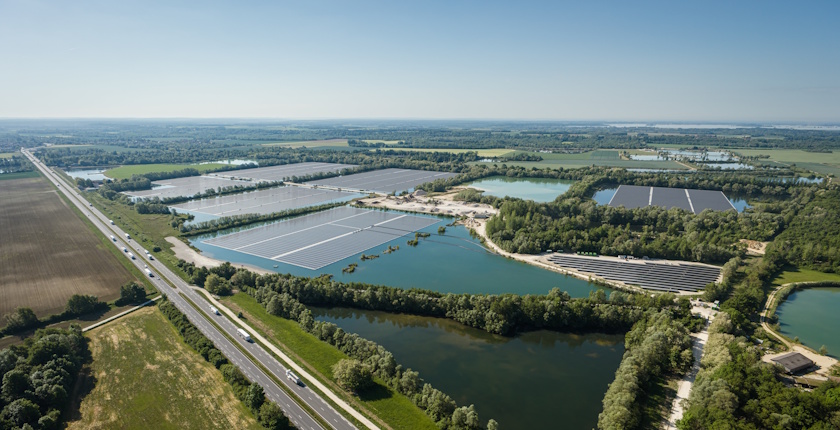
The largest floating solar power plant in Europe, named Les Ilots Blandin, has officially begun operation in France. With a total capacity of 74.3 MW, the facility is located in the Haute-Marne department, on the site of former gravel pits, and is expected to generate enough electricity to supply 37,000 people annually.

In the Haute-Marne department, the largest floating solar plant in Europe was launched by Q Energy and Velto Renewables. Located near the commune of Perthes, the facility features 135,000 solar panels installed on floating platforms.

It sits on basins formed by flooded former gravel pits, closed in 2020 and owned by local company Etablissements Blandin. The newly inaugurated floating solar power plant was named Les Ilots Blandin, which translates as Blandin’s islets.

The solar panels cover 45.5 hectares

The total area spans 127 hectares, and the solar panels cover 45.5 hectares, project manager at French floating solar developer Ciel et Terre, Vincent Pinchou, told pv magazine France. The company was responsible for supplying and installing the floating structures, modules, and inverters.

The power plant has a total peak capacity of 74.3 MW, with 72.3 MW installed on floating platforms and 2 MW on land. The ground-mounted section was strategically integrated to optimize both energy production and the site’s economic performance. The installation consists of six separate platforms, each ranging in capacity from 8 MW to 17 MW.

According to the developers, the plant will generate enough renewable electricity to supply 37,000 people and prevent 18,000 tons of CO₂ emissions per year.

Floating solar plants are more expensive to build and maintain than ground-mounted ones

In northern regions of France, there is significant potential for the development of floating solar technology. However, Corentin Sivy, Development Director of Q Energy, emphasized that one of the main challenges remains economic. Floating solar plants are more expensive to build and maintain than ground-mounted ones. Moreover, France’s Commission de Régulation de l’Énergie (CRE) does not hold separate tenders for floating projects; they must compete directly with ground-based systems.

The project’s financing was secured in September 2024, with more than EUR 50 million provided by Crédit Agricole Transitions & Energies and Bpifrance. In early 2025, Spanish renewable energy company Velto Renewables acquired a 50% stake in the project.

“Velto is accelerating its development in France with a clear objective: to establish a long-term presence in France for several decades. We are here to stay. Our mission is to develop, operate, and support projects over the long term, in harmony with local specificities; this is one of the reasons we are proud of our partnership with Q Energy in France,” CEO of Velto Renewables Lucas de Haro said at the inauguration.

by in News

Coal power plant Maritsa East 3 plans to build solar plant, 200 MW battery system

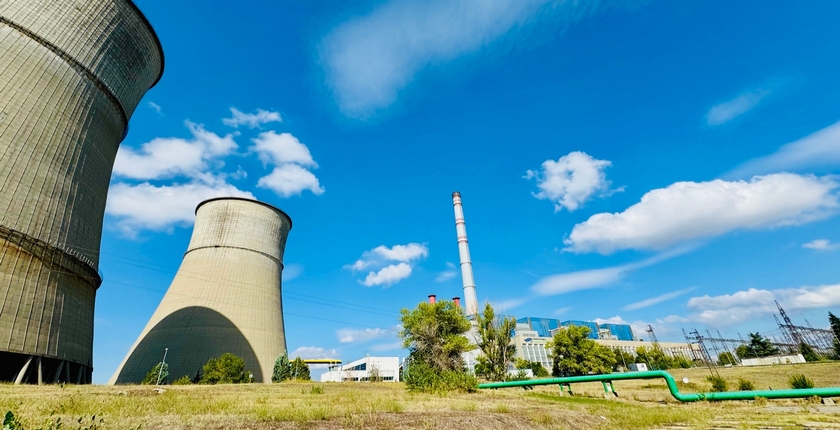
Coal-fired power plant ContourGlobal Maritsa East 3, which operates only sporadically to ensure the stability of supply for Bulgaria’s power system, plans to repurpose the grid infrastructure of its units 1 and 2 for solar and battery storage capacities. Units 3 and 4 will remain on standby to generate electricity during peak demand periods in the summer and winter months, but the plant will need state support to cover maintenance and workforce costs.

Maritsa East 3 (Maritsa iztok 3), majority owned by the US-based ContourGlobal, plans to use the existing grid infrastructure, including transformers and switchgear, to speed up the green energy project within the complex, according to Vassil Shtonov, Executive Director of ContourGlobal Bulgaria.

The central element is a 200 MW standalone battery energy storage system (BESS), the largest of its kind in Bulgaria, which would improve the flexibility and stability of the national power system, Shtonov explained in an interview with Capital.bg.

The project involves a 200 MW standalone battery system and a solar power plant

The planned battery system at Maritsa East 3 was among 82 projects selected to receive a total of EUR 587 million in subsidies from Bulgaria’s Ministry of Energy in April this year.

“In parallel, we are considering the development of an additional hybrid solar park with a battery at the same site,” he said. This will allow for faster deployment of new clean energy capacity, while preserving all options for future use of the coal-fired plant and its original infrastructure, Shtonov added.

ContourGlobal plans to build 400MW to 500 MW of renewable energy capacity combined with batteries

ContourGlobal plans to invest hundreds of millions of euros to develop 400 MW to 500 MW of renewable energy capacity combined with storage systems, he said, adding that nearly half of this target is under construction or final approval. The company’s goal is to phase out coal by 2027 and achieve carbon neutrality by 2040, he stressed, recalling that Bulgaria’s targeted coal phaseout date is 2038.

Keeping coal plants on standby requires state support

Bulgaria’s state-owned National Electricity Co. (NEK) holds a minority stake in Maritsa East 3. After the plant’s 15-year power purchase contract with NEK expired in February 2024, it has only been able to operate on the free market for a few months a year. This year, units 3 and 4 were online from January to the end of March to maintain energy security.

Shtonov: Key coal-fired power plants should get a fixed amount from the state

However, to be on standby for system security, the plant needs to keep workers on the payroll even when it is not operating. For this reason, strategically important coal-fired power plants should receive a fixed amount from the state to cover ongoing personnel and maintenance costs, and then be switched on when necessary to protect consumers from sharp increases in electricity prices, as happened last year in July and November, according to Shtonov.

by in News

64 MW Stolac Solarni Park PV plant in BiH begins power generation

The 64 MW solar power plant Stolac Solarni Park, located near the city of Stolac in the Herzegovina region of Bosnia and Herzegovina, has been connected to the grid and has begun generating electricity. No further details have been disclosed, but the facility appears to be an extension of Hodovo, the largest photovoltaic plant in the country.

“We are proud to announce the successful grid connection of the Stolac Solarni Park photovoltaic plant in Bosnia and Herzegovina,” China-based solar technology company AIKO said in a statement. Developed by Tibra Pacific, the project has entered full operation and is now supplying clean solar power to the regional grid, according to the statement.

The company hailed Stolac Solarni Park as a major milestone, as AIKO and Tibra Pacific completed the grid connection of Europe’s first utility-scale solar project based on Back Contact technology. AIKO claims to have invented N-Type ABC (All Back Contact) technology.

AIKO disclosed few additional details about the project.

Stolac Solarni Park forms a key part of the largest grid-connected ground-mounted PV installation in BiH to date

With an installed capacity of 64 MW using AIKO modules, Stolac Solarni Park forms a key part of the largest grid-connected ground-mounted PV installation in BiH to date, AIKO noted. Originally launched in 2024, the project adopted AIKO’s innovative Stellar 1N+ ABC modules. The system is built on a fixed-tilt structure with an optimized layout to maximize land use.

According to Robert Brajković, Chairman of Tibra Pacific, the project marks a milestone for renewable energy in BiH.

Brajković: We needed technology that performs not just in labs, but on-site as well

“As the country’s largest operational ground-mounted PV plant, we needed technology that performs not just in labs, but on-site as well. AIKO’s modules delivered 12% more energy output and helped reduce electricity costs by 3% in the first phase, compared to the TOPCon setup. As a result, we transitioned the entire second phase to ABC. Their No.1 efficiency and consistency in real-world conditions set a new benchmark for us,” he said.

AIKO noted that Stolac Solarni Park represents more than a utility-scale project – it is a symbol of regional commitment to clean energy. “By deploying advanced PV technology at scale, the project supports BiH’s energy diversification goals,” the company said.

The two firms did not provide any additional information on the projects.

The largest photovoltaic plant in BiH is Hodovo, with a capacity of 92.5 MW, according to the Independent System Operator in Bosnia and Herzegovina. It is operated by Eco-Wat, a local firm owned by Tibra-Pacific. In December 2021, Eco-Wat said it intended to install a 150 MW solar park near Stolac. It appears the project has now reached its planned capacity.

In the same municipality in May, construction was launched on another solar project, with a capacity of 125 MW.

by in News

SunCarlito Beta issues tokens to raise funds for 2.2 MW solar power plant in Serbia

SunCarlito Beta has offered tokens worth EUR 1.7 million to raise funds for installing a 2.2 MW solar power plant near the northern Serbian city of Subotica. The deadline to purchase the tokens is July 9.

Investors can buy 3,402 tokens called Solar Token ST_1, priced at EUR 500 each.

This is the second token offering in Serbia’s energy sector. In mid-March, AVR Solar Park successfully completed the first tokenization in the energy sector, introducing this innovative financing method to the Serbian market.

So far, SunCarlito Beta has invested EUR 450,000 in land acquisition, permitting, and digital token technology. The total project value is estimated at EUR 2.1 million, according to the White Paper, approved by the Securities Commission.

A building permit has been obtained for the construction of the solar power plant

A construction permit for the solar power plant has been granted, and the installation is well underway. Trial operation is expected to begin by the end of 2025, with an anticipated annual output of 1.2 GWh.

The company has identified two main goals: to finance the project with funds raised via tokenization and to allow interested parties to invest in digital assets.

A digital token has the characteristics of a dematerialized bond, the company explained.

The tokens yield an annual return of 6%

The tokens are issued for a period of 15 years and yield an annual return, a fixed interest rate of 6% per year calculated on the remaining principal, according to the White Paper.

During the investment period, token owners are entitled to principal repayments. The first two repayments are set at 33% of the principal every five years, with the final repayment at 34% of the principal.

The tokens can be purchased by individuals or legal entities, including entrepreneurs, with residence in the Republic of Serbia, who must also pass the accreditation process.

by in News

Construction of largest solar power plant in Bosnia and Herzegovina begins

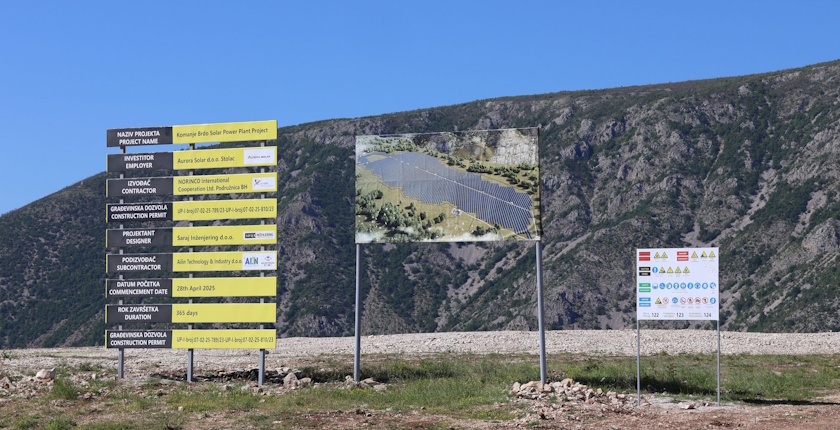
The construction of Bosnia and Herzegovina’s largest solar power plant has officially commenced. The location for the facility with a peak capacity of 125 MW is in the municipality of Stolac, near the village of Komanje Brdo. The project has caused discontent among some residents.

The investment is valued at EUR 100 million. According to the investor’s estimates, the power plant is expected to generate around 200 GWh of electricity annually over the next three decades.

The cornerstone was laid by Mayor of Stolac Stjepan Bošković, along with the representatives Aurora Solar, which developed the project, and Chinese company Norinco International, the contractor.

In recent years, the City of Stolac has actively promoted solar initiatives, with a particular focus on Komanje Brdo, according to the local authority’s website. It expects to collect between EUR 1.53 and EUR 2.05 million per year through the concession and utility fees.

 The project has faced public criticism

Despite its scale and potential, the project has faced criticism from a part of the public. Citizens gathered in an informal initiative called Za Komanje Brdo (For Komanje Brdo) have repeatedly raised concerns about a lack of transparency, the absence of public consultation, and alleged non-compliance with environmental protection laws. They claim the permitting process wasn’t transparent and that the local community was not adequately involved in decisions that directly affect its environment and quality of life.

“We are not against renewable energy sources, but we are against arbitrariness, the disregard for the law, and the neglect of residents’ interests. This project was launched against the will of the people,” residents said at a protest held on the same day that construction began, local media outlet Glas Stoca reported.

On the other hand, the investors claim the project is of strategic importance, promising new jobs and long-term benefits for the local community. They also maintain that all necessary permits were obtained in accordance with the law.

Despite public opposition and official complaints submitted to relevant institutions, construction works began on April 28. The plant is expected to be completed within a year and is set to become the largest photovoltaic park in Bosnia and Herzegovina. Currently, the largest solar power plant in the country is Hodovo, operated by Eco-Wat.