by in News

Engie Romania takes over 54 MW wind power project

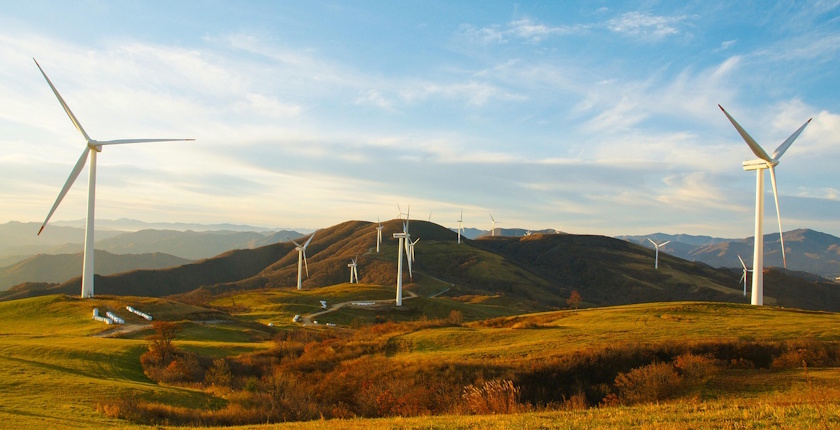
Engie Romania has completed the acquisition of a 54 MW wind power project located in Mereni in central Romania.

Engie Romania said the Mereni wind project is located in Constanța county, an area with high wind potential, recognized for its superior yields in green energy production.

The project represents a strategic step in expanding the company’s renewable energy portfolio and supports its goal of reaching an installed capacity of 1 GW by 2030, according to Engie Romania, a subsidiary of the French energy giant Engie.

The project was acquired in a “ready-to-build” stage, with all necessary building permits in place to begin construction. Installation is scheduled to begin later this year, with commissioning scheduled for 2027, according to a press release.

The Mereni wind farm will deliver 180 GWh of renewable energy annually

With an estimated annual production of 180 GWh, the Mereni wind farm will deliver renewable energy equivalent to the annual consumption of approximately 90,000 households. Engie estimates that this amount of electricity can support the operation of about 20 medium-sized data centers with 1 MW of continuous power each.

Cristian Buzan, Deputy General Manager of Engie Romania, underlined that this acquisition reflects the company’s constant commitment to actively contributing to the energy transition by developing a diversified portfolio of renewable projects.

Engie Romania currently operates an installed capacity of 211 MW from renewable sources

“We continue our evolution with concrete steps, supported by the ambition to be a trusted partner for our customers, offering sustainable and competitive solutions, adapted to their long-term needs,” Buzan noted.

Engie Romania currently operates an installed capacity of 211 MW from renewable sources. The portfolio comprises three wind farms with a combined capacity of 178 MW and five photovoltaic plants totaling 33 MW. These assets are located in different regions of the country.

The company’s latest projects are its first 57 MW hybrid power plant and the acquisition of an operational 80 MW wind farm.

Its next move is to put into operation a 37.2 MWp solar power plant in Ariceștii Rahtivani, Prahova County.
by in News

Janom Investments reaches ready-to-build stage for 30 MW solar power plant in Croatia

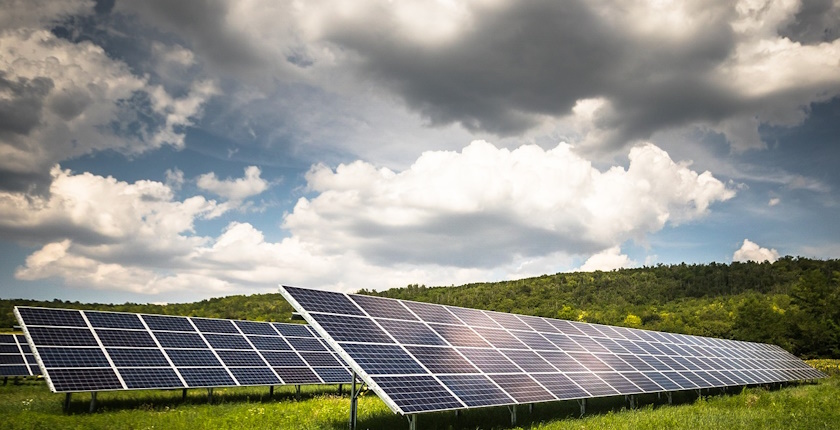
Around a year after announcing its pilot project in Croatia’s Slavonia region, Janom Investments has reached the ready-to-build stage for the 30 MW photovoltaic plant.

This marks Janom Investments’s first investment in Croatia and a significant step in its regional expansion. Construction is scheduled to begin in August 2025, with commissioning planned for the second quarter of 2026.

The project is supported by Ekonerg, a Croatian engineering firm, which is providing technical assistance throughout the development and construction process.

Sršeň: We will do our utmost to deliver this solar power plant to the grid by Q2 2026

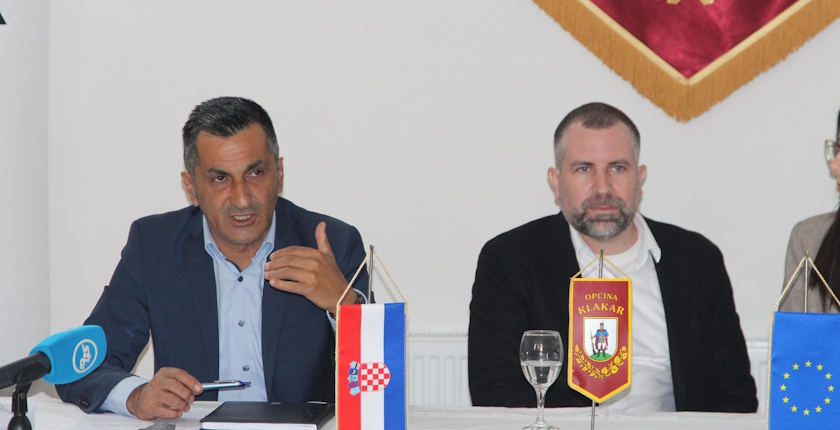
A recent meeting in Klakar in Slavonia brought together Janom Investments’ CEO Andrej Sršeň and CIO Radovan Šavolt, Ekonerg’s Boris Režek, and Klakar Mayor Tomislav Pendić to discuss the upcoming construction phase and long-term cooperation.

Andrej Sršeň, CEO of Janom Investments, said they are proud to be part of one of the largest PV projects in Croatia to date.

“We appreciate the strong support from the Municipality of Klakar throughout the permitting process and will do our utmost to deliver this solar power plant to the grid by Q2 2026,” Sršeň stated.

According to Tomislav Pendić, Mayor of Klakar, the project will contribute to Croatia’s decarbonization goals. “This solar power plant not only supports the country’s green transition but will also bring tangible benefits to our municipality through a long-term land lease, providing additional revenue to support public services,” he stressed.

Janom Investments is currently advancing the permitting for a portfolio of solar and wind projects totaling more than 200 MW

Janom Investments is currently advancing the permitting process for a portfolio of solar and wind projects totaling more than 200 MW in Croatia.

The company also plans to leverage its expertise in battery energy storage systems (BESS) to support grid modernization and resilience.

Of note, a month ago Janom Investments, a leading CEE investor in clean technologies and co-founder of GreenWay, reaffirmed its commitment to sustainable mobility by participating in another investment round for the company. This round was worth more than EUR 50 million.

by in News

OMV Petrom, CE Oltenia pick contractors for four solar power plants

Oil and gas company OMV Petrom and coal power utility Complexul Energetic Oltenia (CE Oltenia) have signed design and installation contracts for four solar power plants.

In October 2022, OMV Petrom and Complexul Energetic Oltenia said they would build four photovoltaic parks with a combined capacity of 450 MW at former coal mining locations using European Union funds. The two companies are equal partners in the joint venture, each holding a 50% stake.

Now OMV Petrom announced that the four projects would have a total installed capacity of approximately 550 MW, higher than initially planned.

The capacity increase is a result of innovative solutions maximizing power production capability

The increase is a result of innovative solutions that the contractors proposed, to maximize the power production capability, according to the company.

The design and execution of three of the four photovoltaic parksRovinari, Tismana 1, and Tismana 2with a combined capacity of around 460 MW, was awarded to a consortium formed by US-based Ameresco and Sunel, reads the press release. The latter is registered in the United Kingdom, but its operational headquarters are in Athens, Greece. 

The consortium is already active in the region, and recently it launched construction of a giant solar power plant in Greece.

Girisim Elektrik installed the  largest solar power plant in Serbia

Turkish company Girişim Elektrik is in charge of the fourth photovoltaic park, with a capacity of around 90 MW. The site is at the former CE Ișalnița power plant, on its slag deposit.

The latest project in the surrounding region that was completed by the contractor is thelargest solar power plant in Serbia. Girişim also installed one of the first utility-scale solar power plants in the Western Balkans – the 10 MW Oslomej unit in North Macedonia.

Of note, tenders for contractorsattracted investors from China, Turkey, the United States, Germany, and Ukraine.

EUR 400 million investment

OMV Petrom estimates the total investment for the four solar projects at over EUR 400 million, of which approximately 70% is financed through the European Union’s Modernisation Fund.

According to Frank Neel, member of the company’s executive board responsible for gas and power, the new contracts are a firm step in strengthening its position in the renewable power sector.

“Through our Strategy 2030, we aim to be a key player in Romania’s energy transition, with the ambitious target of developing 2.5 GW of capacity, including partnerships, from renewable sources – wind and solar,” he added.

The projects will be built on land owned by CE Oltenia, in the Gorj and Dolj counties.

The generated electricity would be delivered to the national power grid and it is expected to cover the annual electricity consumption equivalent of approximately 410,000 households in Romania, OMV Petrom said.

by in News

Kosovo* signs three agreements for 105 MW solar project

The Ministry of Economy has signed three agreements with the winners of the first renewable energy auction in Kosovo*, for a photovoltaic project with a grid connection of up to 105 MW.

Minister of Economy Artane Rizvanolli has signed an agreement with newly-founded Lindja Solar on the development of the solar power project selected in the first renewable energy auction.

The firm was founded by the winning consortium, led by Groupe Orllati. The remaining members are Holdigaz from Switzerland, ZPV from Germany and domestic solar panel producer and engineering, procurement, and construction (EPC) firm Jaha Solar, the ministry said.

KOSTT signed a PPA with the investors

Rizvanolli said the ministry also signed a land lease agreement with Lindja Solar. In addition, Transmission, System and Market Operator (KOSTT) signed a power purchase agreement (PPA) with the project firm.

The consortium led by Switzerland-based construction company Orllati was selected in early April to build and operate a solar park of up to 105 MW in connection capacity for 30 years, including a 15-year contract for difference (CfD).

The group won the first renewable electricity auction in Kosovo* with a bid of EUR 48.88 per MWh.

Officials stressed at the time that Orllati is run by businesspeople from the Kosovar diaspora.

The investment in the PV facility is estimated at EUR 70 million

Artane Rizvanolli now said that the successful auction would be the first of many that Kosovo* is preparing.

Orllati Chief Financial Officer Destan Orllati stressed that the project, covering 117 hectares, is part of the country’s push to boost renewable energy production. In addition to the production of clean energy, it will create jobs and stimulate the regional economy, he asserted.

According to the ministry, the four companies plan to invest a total of EUR 70 million in the project.

The agreements were signed by Orllati Managing Director Avni Orllati, Holdigaz Chairman and Managing Director Philippe Petitpierre, Chief Executive Officer of Jaha Solar Fadil Hoxha, CEO of ZPV  Peter Zehendner, Director of Lindja Solar Luisa Helms and the CEO of KOSTT Evetar Zeqiri.

* This designation is without prejudice to positions onstatus and is in line with UNSCR 1244/99 and the ICJ Opinion on the Kosovo declaration of independence.
by in News

Serbia’s first-ever tokenization in energy sector: Saraorci solar project yields 6% interest

The first tokenization in Serbia’s energy sector has been completed, with AVR Solar Park selling 80% of AVR Solar Tokens, worth EUR 600,300, out of EUR 725,000 on offer. The company emphasized that this innovative financing model has the potential to address the issue of unfavorable financing conditions in the Serbian market.

The recepits from the sale of AVR tokens will finance the expansion of the Saraorci solar power plant. The facility, with a capacity of 9,856 MW, was built by Power China and commissioned in May last year. Until a few days ago, along with the DeLasol plant, it was the largest photovoltaic plant in Serbia.

Marko Đurić, who is in charge of finance at AVR Solar Park, told Balkan Green Energy News that even during the construction of  Saraorci power plant, there was an idea to expand it and increase production by 10-12%. The annual output would rise from 15.1 GWh to 16.8 GWh, with the capacity remaining at 9.856 MW.

Đurić: The investors are struggling to meet financing requirements

“Our company had already invested significant funds in the preparatory works for the expansion. Among other things, we had already secured a building permit. With tokenization, we tried to raise the rest of the funding needed for the expansion,” he said, noting that the expansion has been completed.

According to Đurić, the construction of solar power plants in Serbia has slowed considerably. The demanding financing requirements, which investors find difficult to meet, are among the main contributors. In most cases, companies are required to have ten-year power purchase agreements (PPAs) at a fixed price.

However, PPAs on the Serbian market are signed for a maximum of five years, he noted.

In his words, a fixed price can be achieved through auctions, but this implies fixed income over 15 years, and there is no progress. Also, financial institutions cannot back a project unless the investors secure 60% of the cost from their own funds, which very few can do, according to Đurić.

Token buyers receive 6% interest

AVR Solar Park offered 7,250 tokens with a nominal value of EUR 100 apiece, payable in RSD. The initial offering of AVR Solar Tokens started on November 22, 2024, and ended on February 19.

Buyers of the token acquired the right to receive 10% of the principal at the end of each year and a fixed 6% interest. The minimum investment amount per investor was EUR 3,000. The tokenization was approved by the Securities Commission. The table below shows an example of an investment in 100 AVR Solar Tokens.

Digital tokens make it possible to bypass the bank as the chief intermediary in financing, and AVR Solar Park sees this as a benefit, especially for those who want to invest their money in a specific project – institutional investors or individual, small investors.

Đurić: the opportunity to be part of the green transition

The company has opted for tokenization as a way of financing, primarily because it enables transparency. “By purchasing AVR Solar Tokens, you not only ensure a stable financial return, but you also get the opportunity to be part of the green transition in the energy sector and thereby contribute to reducing pollution in our country and on our planet,” Đurić stressed.

Compared to other investment opportunities, investors in tokens could benefit from the fact that tokens are denominated in euros.

Also, the 6% interest is more than what any bank or bond offers, especially for such a long period, Đurić asserted. Another benefit for investors is the simplicity of investing in tokens as it can be done “from the comfort of one’s bed.”

How are token buyers protected?

Solar power plant Saraorci (photo: AVR Solar Park)

Đurić said there are various measures to reduce the risk for investors. First and foremost, the solar plant is fully operational, generating income.

“The return for investors is guaranteed based on a 10-year PPA signed with a licensed electricity trader. It could be annexed to add the output from the expanded facility. This contract is the biggest guarantee for the interest payments, enabling steady income,” Đurić pointed out.

In addition, the project also includes additional security measures. For example, if production is lower than projected, the contractor Boffetti Balcan, a subsidiary of Italy-based Boffetti SPA, is required to compensate for the difference. The project is also fully insured.

The construction of a new solar power plant is underway

AVR Solar Park said tokenization was a pilot project to test the market. The company also sees it as a crucial step toward the broader use of tokenization in Serbia and the region.

According to Đurić, the company aims to finance much larger projects in the future. Anyone who invested in this pilot project will have an advantage in investing in the next ones, he added.

The firm is currently building the Zvečka solar power plant, with a capacity of 9.95 MW, in the municipality of Obrenovac. The plan is to put it into operation by June 2026.

by in News

Montenegro labels 15 energy projects as infrastructure priorities

The most valuable priority infrastructure projects in the energy sector of Montenegro are the Komarnica and Kruševo hydropower plants, the Trans-Balkan Electricity Corridor and the Ionian-Adriatic pipeline.

The Government of Montenegro has adopted a list of priority infrastructure projects for the energy sector to fulfill the final criteria of chapter 21 – Trans-European Network, of the country’s negotiations on the accession to the European Union.

The list consists of 15 projects with a total estimated value of around EUR 1.38 billion, according to the announcement.

The EU will use list to consider financial support from the Western Balkans Investment Framework

The list was updated in line with the Western Balkans Investment Framework (WBIF) methodology. In line with priorities defined at the state level, the list is for the European Commission to select projects for financial support from the scheme.

WBIF is the main mechanism for the EU’s financial support in the region in the period from 2024 to 2027, the government noted.

The following projects are on the list:

  • HPP Komarnica – EUR 315 million
  • Ionian-Adriatic Pipeline for natural gas (IAP) – EUR 210 million
  • interconnection Italy – Montenegro – Serbia – Bosnia and Herzegovina (Trans-Balkan Electricity Corridor) – EUR 163 million
  • HPP Kruševo – EUR 160 million
  • energy efficiency in public and residential buildings – EUR 104 million
  • improving the quality of power supply in tourist regions – EUR 78 million
  • creation of conditions for the integration of renewables and the construction of a new power interconnection – EUR 73.6 million
  • solar power project Solari 10,000+ – EUR 66 million
  • Slano floating solar power plant – EUR 60 million
  • Krupac photovoltaic plant – EUR 40 million
  • smart grid and smart metering system for electricity distribution system operator CEDIS – EUR 35 million
  • A8 unit at HPP Perućica – EUR 24 million
  • smart grid program of electricity transmission system operator CGES – EUR 21 million
  • decarbonization – EUR 21 million
  • reconstruction of oil storage tanks – EUR 10 million.

Montenegro also has a list of priority infrastructure projects, including energy. It was introduced in 2018 and updated in the meantime.

Compared to the list from 2021, the Gvozd wind farm and the ecological reconstruction of the Pljevlja thermal power plant were erased, while the following projects were added: HPP Kruševo, Krupac solar power plant, decarbonization and the reconstruction of oil storage tanks.