by in News

HEP plans to build 91 MW solar power plant on Adriatic coast

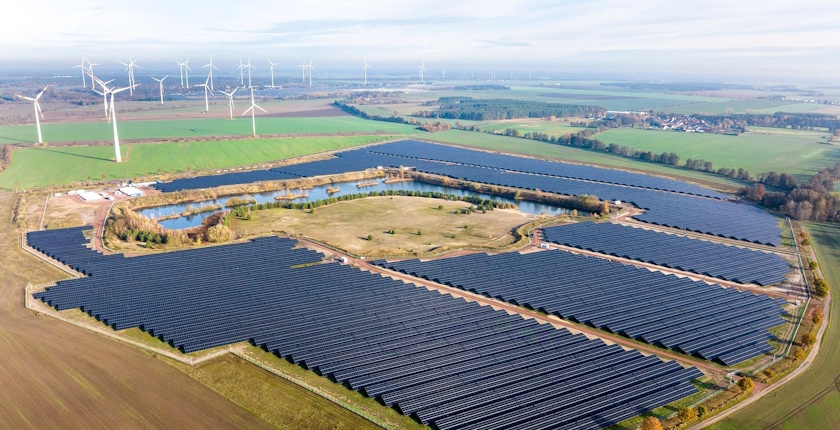
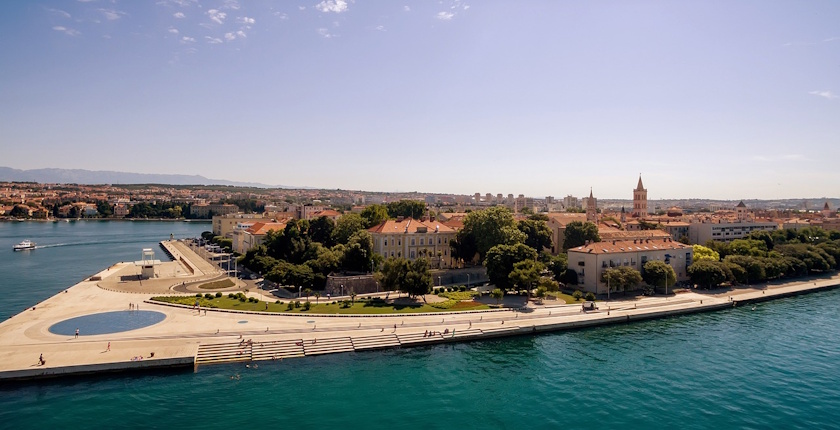
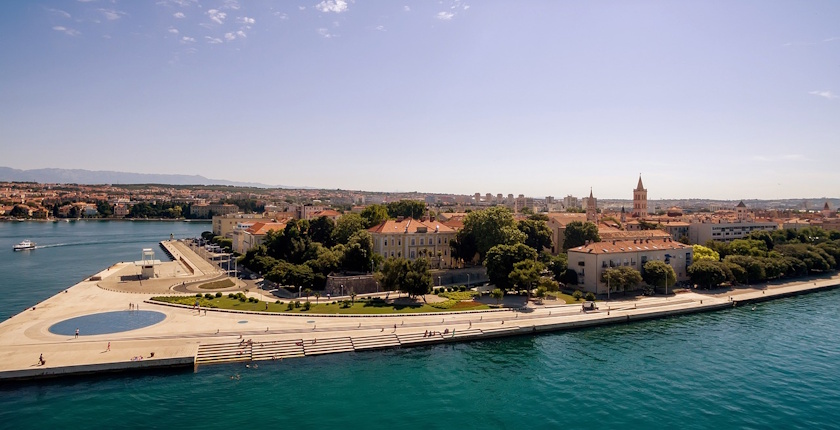
Croatian state-owned power utility Hrvatska Elektroprivreda (HEP) is planning to build a 91 MW solar power plant near the city of Zadar, on the Adriatic coast.

The photovoltaic facility will be slightly smaller than the 99 MW Korlat system – HEP’s largest, which it is building in nearby Benkovac. The company’s biggest two solar power plants will be located just a few dozen kilometers apart.

HEP plans to install the solar panels in the Crno area, eZadar reported. It is approximately six kilometers east of Zadar. The site is located within the planned Crno business zone.

Eleven solar power plants are planned near the Crno location

The power plant would span approximately 93 hectares. Its estimated annual electricity production is 119.8 GWh. HEP’s facility in Crno would consist of roughly 139,800 photovoltaic modules.

The news website pointed out that there are projects for 11 PV plants at locations within a ten-kilometer radius. They are intended to cover an area of about 483 hectares. None have been installed so far.

Neoen Renewables Croatia developed one of the projects, Vlaka, for 62.5 MW in peak capacity.

HEP is also planning 90 rooftop solar plants

The Korlat solar power plant, which will be the largest in Croatia, is being built by Chinese companies Shandong Electric Power Engineering Consulting Institute Corporation (SDEPCI) and Norinco International Cooperation.

Together with HEP’s first wind farm, commissioned in 2021, the Korlat solar plant is about to form the country’s first renewable hybrid energy park.

In addition to large ground-mounted PV facilities, HEP is planning to set up 90 solar power plants on its buildings across Croatia. Its subsidiary HEP ESCO is carrying out the project.
by in News

HEP plans to build 91 MW solar power plant on Adriatic coast

Croatian state-owned power utility Hrvatska Elektroprivreda (HEP) is planning to build a 91 MW solar power plant near the city of Zadar, on the Adriatic coast.

The photovoltaic facility will be slightly smaller than the 99 MW Korlat system – HEP’s largest, which it is building in nearby Benkovac. The company’s biggest two solar power plants will be located just a few dozen kilometers apart.

HEP plans to install the solar panels in the Crno area, eZadar reported. It is approximately six kilometers east of Zadar. The site is located within the planned Crno business zone.

Eleven solar power plants are planned near the Crno location

The power plant would span approximately 93 hectares. Its estimated annual electricity production is 119.8 GWh. HEP’s facility in Crno would consist of roughly 139,800 photovoltaic modules.

The news website pointed out that there are projects for 11 PV plants at locations within a ten-kilometer radius. They are intended to cover an area of about 483 hectares. None have been installed so far.

Neoen Renewables Croatia developed one of the projects, Vlaka, for 62.5 MW in peak capacity.

HEP is also planning 90 rooftop solar plants

The Korlat solar power plant, which will be the largest in Croatia, is being built by Chinese companies Shandong Electric Power Engineering Consulting Institute Corporation (SDEPCI) and Norinco International Cooperation.

Together with HEP’s first wind farm, commissioned in 2021, the Korlat solar plant is about to form the country’s first renewable hybrid energy park.

In addition to large ground-mounted PV facilities, HEP is planning to set up 90 solar power plants on its buildings across Croatia. Its subsidiary HEP ESCO is carrying out the project.

by in News

Petrović: ERS to launch construction of Trebinje 3, Hrgud this year

Power utility Elektroprivreda Republike Srpske plans to start the installation of the Trebinje 3 solar power plant and the Hrgud wind farm this year, according to CEO Luka Petrović.

Elektroprivreda Republike Srpske (ERS) already has projects in a ready-to-build phase through its subsidiary companies, Luka Petrović explained, Srpskainfo reported.

ERS is the dominant power producer and supplier in the Republic of Srpska, one of the two entities constituting Bosnia and Herzegovina.

The Trebinje 3 solar power plant, with a capacity of 53 MW, will be built first. The company has received a concession from the Government of the Republic of Srpska. The tender for construction will be launched soon, Petrović stressed.

Preparations for the Hrgud wind farm are also in the final stages, he added. Multi-year wind potential assessments and environmental studies have been completed. Petrović anticipates the start of construction this year. The planned capacity is 60 MW.

Wind energy attracts the most attention in the Republic of Srpska

The installation of the two power plants is expected to be finished by the end of 2027 or in early 2028, he asserted. The CEO added they would significantly contribute to the development of renewable energy sources.

He noted that wind energy attracts the most attention in the entity. The concessions commission of the Republic of Srpska has also awarded approvals for the construction of more than 1,200 MW of photovoltaic plants, Petrović recalled.

In his view, investments by private firms are dormant because solar power production is no longer profitable without battery energy storage systems (BESS).

Petrović: Many solar projects will not be completed

Solar energy prices are significantly lower than they were four to five years ago, Petrović added.

Many of these solar projects will not be finished, he underscored.

Of note, ERS decided late last year to revive the Hrgud wind project, which was halted after a decision by the German government.

The concession for the Trebinje 3 solar power project was awarded in April 2025.

by in News

Petrović: ERS to launch construction of Trebinje 3, Hrgud this year

Power utility Elektroprivreda Republike Srpske plans to start the installation of the Trebinje 3 solar power plant and the Hrgud wind farm this year, according to CEO Luka Petrović.

Elektroprivreda Republike Srpske (ERS) already has projects in a ready-to-build phase through its subsidiary companies, Luka Petrović explained, Srpskainfo reported.

ERS is the dominant power producer and supplier in the Republic of Srpska, one of the two entities constituting Bosnia and Herzegovina.

The Trebinje 3 solar power plant, with a capacity of 53 MW, will be built first. The company has received a concession from the Government of the Republic of Srpska. The tender for construction will be launched soon, Petrović stressed.

Preparations for the Hrgud wind farm are also in the final stages, he added. Multi-year wind potential assessments and environmental studies have been completed. Petrović anticipates the start of construction this year. The planned capacity is 60 MW.

Wind energy attracts the most attention in the Republic of Srpska

The installation of the two power plants is expected to be finished by the end of 2027 or in early 2028, he asserted. The CEO added they would significantly contribute to the development of renewable energy sources.

He noted that wind energy attracts the most attention in the entity. The concessions commission of the Republic of Srpska has also awarded approvals for the construction of more than 1,200 MW of photovoltaic plants, Petrović recalled.

In his view, investments by private firms are dormant because solar power production is no longer profitable without battery energy storage systems (BESS).

Petrović: Many solar projects will not be completed

Solar energy prices are significantly lower than they were four to five years ago, Petrović added.

Many of these solar projects will not be finished, he underscored.

Of note, ERS decided late last year to revive the Hrgud wind project, which was halted after a decision by the German government.

The concession for the Trebinje 3 solar power project was awarded in April 2025.

by in News

Sunotec advances Germany’s largest EEG hybrid power plant

Sofia-based solar and battery developer Sunotec announced a key milestone in the construction of the Hybrid Power Plant Zerbst. The company claims it is set to become Germany’s largest solar-battery hybrid power plant under the Renewable Energy Sources Act (EEG).

Located on a 41-hectare former gravel pit, the site combines 73,000 solar modules with a capacity of 46.4 MWp and a 57 MWh battery energy storage system (BESS).

The facility is designed and built to operate as a fully co-located hybrid asset, providing grid-supportive, dispatchable renewable power, Sunotec explained.

The project is being developed by Statkraft

The project is being developed by Statkraft. The Hybrid Power Plant Zerbst will deliver 50,000 MWh of renewable electricity per year. It is sufficient for 14,000 households.

This is the company’s first hybrid power plant in Germany and a proof of concept for its fully integrated, beyond-EPC delivery model, according to Sunotec.

The model is different from a traditional EPC contract. Sunotec implemented the core phases of the Zerbst hybrid power plant internally, including engineering, geotechnical assessments, and environmental planning.

Following completion, Sunotec will continue to manage the operations and maintenance of the PV plant.

​Atanasov-Lankes: we demonstrate the strength of Sunotec’s integrated model

This integrated approach reduces interfaces, eliminates fragmentation, and guarantees high-quality delivery, the company said.

“With the Hybrid Power Plant Zerbst, we demonstrate the strength of Sunotec’s integrated model and our ability to deliver complex systems at scale,” Zharin Atanasov-Lankes, Managing Director of Sunotec Germany, stressed.

He underscored that the project reflects the engineering depth and execution capability of the firm’s teams.

Over the last six months, Sunotec has made major steps in developing its operations in Europe.

In November 2025 the company signed an agreement with oil and gas major Shell on the development of battery energy storage systems in Central Eastern Europe. In July it has agreed with China-based Sungrow to install 2.4 GWh of BESSs.

by in News

Sunotec advances Germany’s largest EEG hybrid power plant

Sofia-based solar and battery developer Sunotec announced a key milestone in the construction of the Hybrid Power Plant Zerbst. The company claims it is set to become Germany’s largest solar-battery hybrid power plant under the Renewable Energy Sources Act (EEG).

Located on a 41-hectare former gravel pit, the site combines 73,000 solar modules with a capacity of 46.4 MWp and a 57 MWh battery energy storage system (BESS).

The facility is designed and built to operate as a fully co-located hybrid asset, providing grid-supportive, dispatchable renewable power, Sunotec explained.

The project is being developed by Statkraft

The project is being developed by Statkraft. The Hybrid Power Plant Zerbst will deliver 50,000 MWh of renewable electricity per year. It is sufficient for 14,000 households.

This is the company’s first hybrid power plant in Germany and a proof of concept for its fully integrated, beyond-EPC delivery model, according to Sunotec.

The model is different from a traditional EPC contract. Sunotec implemented the core phases of the Zerbst hybrid power plant internally, including engineering, geotechnical assessments, and environmental planning.

Following completion, Sunotec will continue to manage the operations and maintenance of the PV plant.

​Atanasov-Lankes: we demonstrate the strength of Sunotec’s integrated model

This integrated approach reduces interfaces, eliminates fragmentation, and guarantees high-quality delivery, the company said.

“With the Hybrid Power Plant Zerbst, we demonstrate the strength of Sunotec’s integrated model and our ability to deliver complex systems at scale,” Zharin Atanasov-Lankes, Managing Director of Sunotec Germany, stressed.

He underscored that the project reflects the engineering depth and execution capability of the firm’s teams.

Over the last six months, Sunotec has made major steps in developing its operations in Europe.

In November 2025 the company signed an agreement with oil and gas major Shell on the development of battery energy storage systems in Central Eastern Europe. In July it has agreed with China-based Sungrow to install 2.4 GWh of BESSs.

by in News

Đedović Handanović: Construction of 1 GW solar project to start in 2026

The start of construction of solar power plants in a project for a total capacity of 1 GW is expected in 2026, Minister of Mining and Energy of Serbia Dubravka Đedović Handanović said.

State-owned power utility Elektroprivreda Srbije (EPS) announced that its shareholders’ assembly adopted the Three-Year Business Plan for the period 2026-2028.

Dubravka Đedović Handanović pointed out that the company had good production and financial results for three consecutive years. According to the adopted three-year business plan, this trend will continue in 2026, she added.

EPS will invest EUR 1 billion in 2026

The minister recalled that in 2025 EPS built its first wind farm – Kostolac, and the Petka solar power plant, with a combined capacity of 76 MW. The company also finished the construction of the desulfurization facility at its coal-fired power plant Nikola Tesla B (TENT B), allowing the reduction of sulfur dioxide (SO2) emissions by 20 to 40 times, she added.

“Investments this year have also been at a high level, 97% in fact, considering that due to the scope and complexity of preparatory activities, the start of materialization of the project for the construction of solar power plants of 1 GW is expected in 2026. The focus of investments of around EUR 1 billion in 2026 will be on maintenance and improvement of the reliability of the power system and, primarily, on increasing the share of renewable energy sources in EPS’s energy mix,” Đedović Handanović stressed.

The company will build new solar power plants as well

The largest portion of the investments, in her words, is planned for new renewable energy plants, such as the construction of solar power plants totaling GW and pumped storage hydropower plant Bistrica, as well as the development of a larger number of solar power plants on land owned by EPS.

Of note, the company is developing the 1 GW solar project, which includes batteries, in collaboration with a consortium comprising Hyundai Engineering and UGT Renewables.

EPS yesterday invited bids for a preliminary feasibility study and conceptual design for a solar power plant on the ash disposal site of TENT A.

The minister revealed that next year’s plan includes an increase in employees’ salaries.

The company will continue its transformation activities, she added. Đedović Handanović welcomed the fact that EPS didn’t take out liquidity loans this year.

by in News

Đedović Handanović: Construction of 1 GW solar project to start in 2026

The start of construction of solar power plants in a project for a total capacity of 1 GW is expected in 2026, Minister of Mining and Energy of Serbia Dubravka Đedović Handanović said.

State-owned power utility Elektroprivreda Srbije (EPS) announced that its shareholders’ assembly adopted the Three-Year Business Plan for the period 2026-2028.

Dubravka Đedović Handanović pointed out that the company had good production and financial results for three consecutive years. According to the adopted three-year business plan, this trend will continue in 2026, she added.

EPS will invest EUR 1 billion in 2026

The minister recalled that in 2025 EPS built its first wind farm – Kostolac, and the Petka solar power plant, with a combined capacity of 76 MW. The company also finished the construction of the desulfurization facility at its coal-fired power plant Nikola Tesla B (TENT B), allowing the reduction of sulfur dioxide (SO2) emissions by 20 to 40 times, she added.

“Investments this year have also been at a high level, 97% in fact, considering that due to the scope and complexity of preparatory activities, the start of materialization of the project for the construction of solar power plants of 1 GW is expected in 2026. The focus of investments of around EUR 1 billion in 2026 will be on maintenance and improvement of the reliability of the power system and, primarily, on increasing the share of renewable energy sources in EPS’s energy mix,” Đedović Handanović stressed.

The company will build new solar power plants as well

The largest portion of the investments, in her words, is planned for new renewable energy plants, such as the construction of solar power plants totaling GW and pumped storage hydropower plant Bistrica, as well as the development of a larger number of solar power plants on land owned by EPS.

Of note, the company is developing the 1 GW solar project, which includes batteries, in collaboration with a consortium comprising Hyundai Engineering and UGT Renewables.

EPS yesterday invited bids for a preliminary feasibility study and conceptual design for a solar power plant on the ash disposal site of TENT A.

The minister revealed that next year’s plan includes an increase in employees’ salaries.

The company will continue its transformation activities, she added. Đedović Handanović welcomed the fact that EPS didn’t take out liquidity loans this year.

by in News

EPS plans to build solar power plant on TENT A ash dump

Serbia’s state power utility, Elektroprivreda Srbije (EPS), has invited bids for producing a preliminary feasibility study and conceptual design for a solar power plant on the ash disposal site of the Nikola Tesla A (TENT A) thermal power plant in Obrenovac.

The study should assess the feasibility and viability of the project, as well as the total solar potential of the site. The estimated value of the contract is RSD 14.91 million, and the deadline to submit bids is 23 January 2026.

The document must clearly define the proposed capacity of the planned solar power plant, the grid connection method, and the expected operating regime, according to the public call.

The capacity of the future solar power plant will be determined by the study

The project aims to expand EPS’ renewable energy capacities, reduce dependence on fossil fuels, and remediate the ash disposal site.

In July, EPS connected to the grid its first larger photovoltaic facility, the 10 MW Petka solar power plant. The plant is located in the Kostolac coal mining complex east of Belgrade, next to a 66 MW wind farm, which was put into trial operation in late November.

The design of the planned solar power plant at the TENT A ash disposal site should allow for integration with TENT’s existing safety and SCADA systems, while energy stability should be ensured through backup power sources, including solar panels with battery storage and/or an uninterruptible power supply (UPS) system.

The project should envisage battery energy storage

The photovoltaic panels should have a minimum power of 600 Wp, a minimum efficiency of 24%, and guaranteed production over 30 years of operation, while the efficiency of the inverters must be around 98% by European standards.

The part of the TENT A ash disposal site allocated for the solar power plant is slated for closure, and its usable area is about 67.2 hectares. The exact usable area will be determined following the completion of the study.

The selected bidder will be required to complete the task within six months of receiving all necessary documentation from EPS.

by in News

Turkey to launch carbon market, sign deals for large renewables projects in 2026

Turkey will launch a national carbon trade market, sign intergovernmental agreements on large-scale renewable energy projects and connect 2,000 MW of energy storage to the grid in 2026. These moves will be accompanied by the historic start of electricity production at the country’s first nuclear power plant Akkuyu, and a doubling of domestic natural gas production from the Sakarya field.

These developments represent the core of the 2026 vision for energy and mining in Turkey, revealed by Minister of Energy and Natural Resources Alparslan Bayraktar.

Large-scale projects will be launched next year through intergovernmental agreements, he stressed.

The deals include solar and other renewable energy technologies and storage, Bayraktar explained.

According to the minister, Turkey remains committed to its emission reduction targets. The government plans to launch a carbon trade center and market in 2026 within the Energy Exchange Istanbul (EXIST or EPİAŞ), he said.

Of note, Turkey’s imports of a group of goods and electricity to the European Union will be subject to the CBAM carbon border tax from January 1, 2026.

Energy storage facilities totaling 2,000 MW will be commissioned in 2026

Bayraktar recalled that the country issued permits for the installation of an overall 33,500 MW of energy storage. A very small portion has been implemented so far, but 2,000 MW will be commissioned in 2026, he underlined.

The minister said Turkey is considering the introduction of Storage Resources Zones or Depolama Alanları (DEKA) in 2026.

It would be similar to Renewable Energy Zones mechanism – REZ or YEKA – for support for solar and wind projects.

Bayraktar mentioned that a 5,000 MW solar power arrangement with Saudi Arabia-based ACWA is being discussed. Of note, it is equivalent to between 30% and 40% of Turkey’s current photovoltaic capacity.

Locations for the 2,000 MW solar project are in Sivas and Taşeli

He expressed belief that the agreement for the first phase, which envisages 2,000 MW, would be finalized in the first quarter of 2026. The plan is for 1,000 MW in Sivas and 1,000 MW in Taşeli.

A solar-plus-storage project with another company from a different country in the Persian Gulf is also under consideration, Bayraktar revealed. The investment is estimated at EUR 1.5 billion to EUR 2 billion.

A floating solar power plant of about 3,000 MW will be built as soon as possible, according to Bayraktar

In Bayraktar’s view, there is great potential in floating solar power plants. The country intends to implement a floating solar power plant of about 3,000 MW as soon as possible, the minister underlined.

The partners in this endeavour could be private companies or Turkish government-controlled Electricity Generation Corp. (EÜAŞ), the minister said. He claimed significant plans have been developed for offshore wind projects for 2026.

“We are considering a model similar to YEKA for offshore wind,” he added.

Russia to provide USD 9 billion for Akkuyu

turkey 2026 vision energy Alparslan Bayraktar brifing
Photo: Ministry of Energy and Natural Resources

The Akkuyu project is entering its final stages, according to the minister.

The country secured a USD 9 billion financing package from Russia for the investment, of which USD 4 billion to USD 5 billion is intended to be drawn in 2026.

Simultaneously, the ministry is in talks with South Korea, the US, China, and Russia for nuclear projects in Sinop and Thrace.

The Sakarya gas field is expected to double its current output in 2026, to 7.5 billion cubic meters, Bayraktar underscored.

This surge will prevent approximately USD 3.2 billion in energy imports, he explained.