by in News

Fortis kicks off construction of solar power plant in Albania

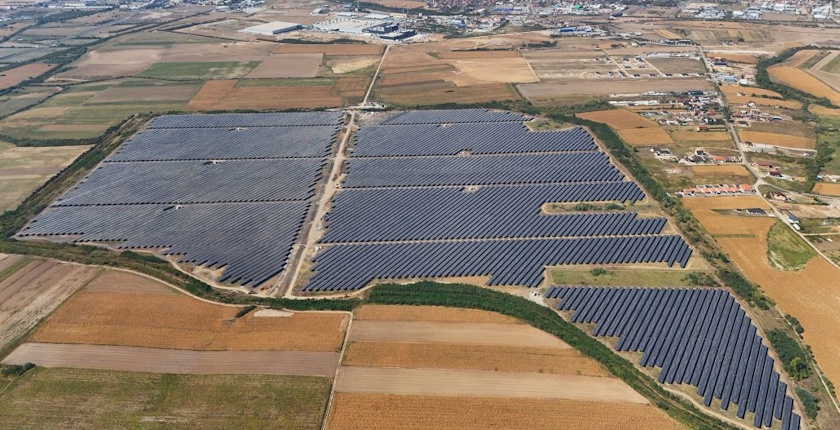
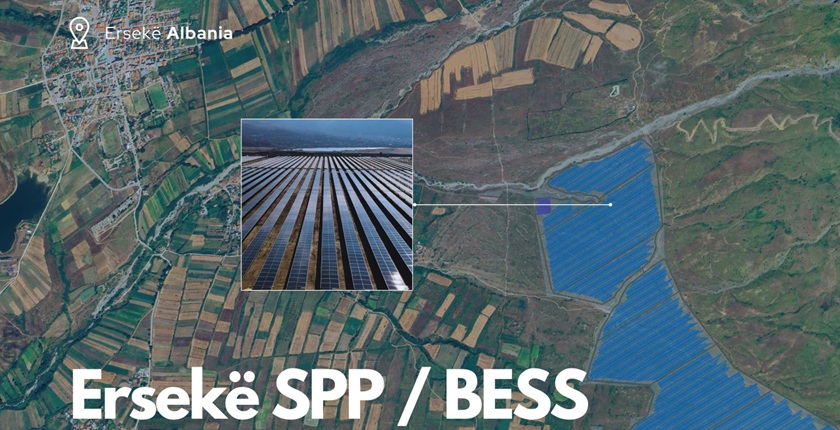
Fortis Energy has started the construction of solar power plant Ersekë with a capacity of 75 MW.

The Ersekë Solar Power Plant project in Albania has transitioned to the construction phase, featuring a total peak capacity of 75 MW, and it will be integrated with a 25 MWh battery energy storage system (BESS), Turkey-based Fortis Energy said.

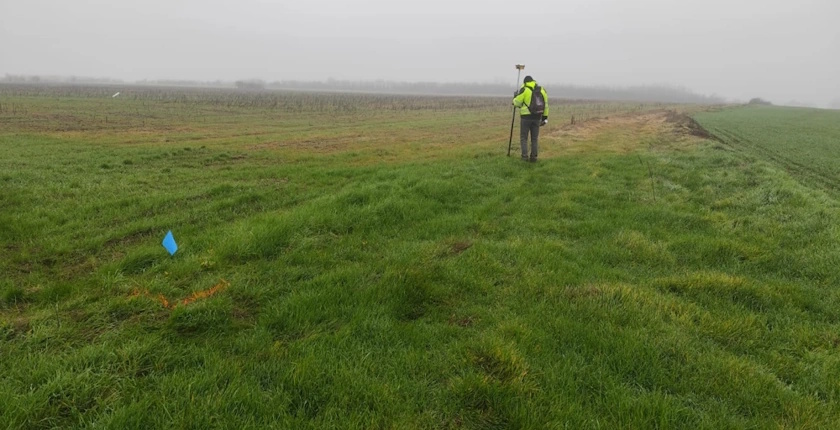
Following the formal approval, the company moved to the execution stage in the village of Taç-Lartë, in the municipality of Kolonja in the country’s southeast.

Of note, in June Fortis Energy received approval from the Albanian government for the construction of a photovoltaic plant. The company is allowed to operate the facility for 49 years from the entry of the decision into force.

The PV project is set to generate 135 GWh per year

Now the company recalled that the PV facility is set to generate 135 GWh per year of clean energy. It would mark a major milestone in Albania’s green energy transition by combining solar generation with advanced storage capabilities, it added.

Fortis, which was a bronze sponsor this year at Belgrade Energy Forum 2025 (BEF 2025), organized by Balkan Green Energy News, has also invited qualified suppliers and contractors to submit their inquiries for upcoming construction and procurement packages.

“We are looking for partners who share our commitment to health, safety & environment (HSE) excellence, technical precision, timely delivery,” the company stressed.

Fortis Energy is working on renewable energy projects totaling 2 GW

The facility must be built within 36 months from the entry of the decision into force, according to the government’s approval.

The 36 months for construction, ancillary works and commissioning are included in the said 49 years of the operation of the facility.

Of note, Fortis Energy is working on renewable energy projects of 2 GW altogether in Southeast Europe. One half of the planned capacity is for solar and wind power plants in Serbia.

Three months ago the company obtained a construction permit for a solar park of 270 MW on the territory of the city of Sremska Mitrovica in Serbia. The project includes a BESS of 36 MWh.
by in News

EPS plans to build solar power plant on TENT A ash dump

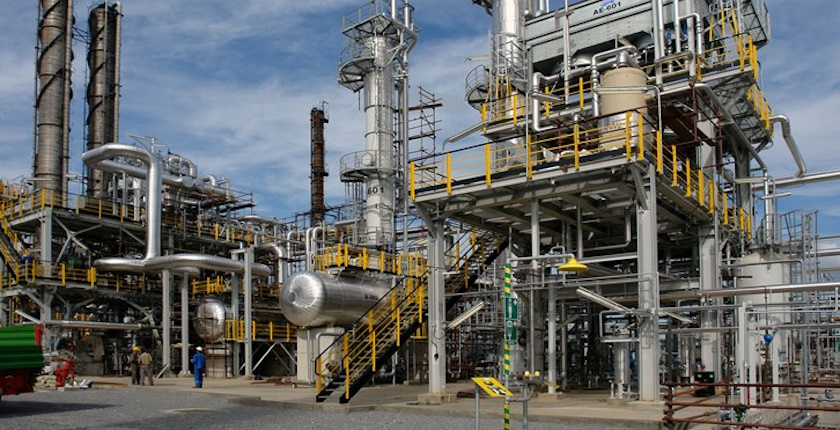
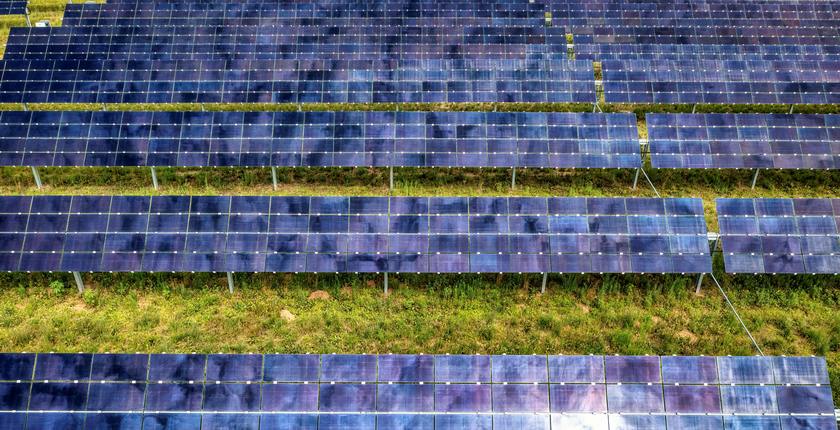
Serbia’s state power utility, Elektroprivreda Srbije (EPS), has invited bids for producing a preliminary feasibility study and a conceptual design for a solar power plant on the ash disposal site of the Nikola Tesla A (TENT A) thermal power plant in Obrenovac.

The study should assess the feasibility and viability of the project, as well as the total solar potential of the site. The estimated value of the contract is RSD 14.91 million, and the deadline to submit bids is 23 January 2026.

The document must clearly define the proposed capacity of the planned solar power plant, the grid connection method, and the expected operating regime, according to the public call.

The capacity of the future solar power plant will be determined by the study

The project aims to expand EPS’ renewable energy capacities, reduce dependence on fossil fuels, and remediate the ash disposal site.

In July, EPS connected to the grid its first larger photovoltaic facility, the 10 MW Petka solar power plant. The plant is located in the Kostolac coal mining complex east of Belgrade, next to a 66 MW wind farm, which was put into trial operation in late November.

The design of the planned solar power plant at the TENT A ash disposal site should allow for integration with TENT’s existing safety and SCADA systems, while energy stability should be ensured through backup power sources, including solar panels with battery storage and/or an uninterruptible power supply (UPS) system.

The project should envisage battery energy storage

The photovoltaic panels should have a minimum power of 600 Wp, a minimum efficiency of 24%, and guaranteed production over 30 years of operation, while the efficiency of the inverters must be around 98% by European standards.

The part of the TENT A ash disposal site allocated for the solar power plant is slated for closure, and its usable area is about 67.2 hectares. The exact usable area will be determined following the completion of the study.

The selected bidder will be required to complete the task within six months of receiving all necessary documentation from EPS.

by in News

Turkey to launch carbon market, sign deals for large renewables projects in 2026

Turkey will launch a national carbon trade market, sign intergovernmental agreements on large-scale renewable energy projects and connect 2,000 MW of energy storage to the grid in 2026. These moves will be accompanied by the historic start of electricity production at the country’s first nuclear power plant Akkuyu, and a doubling of domestic natural gas production from the Sakarya field.

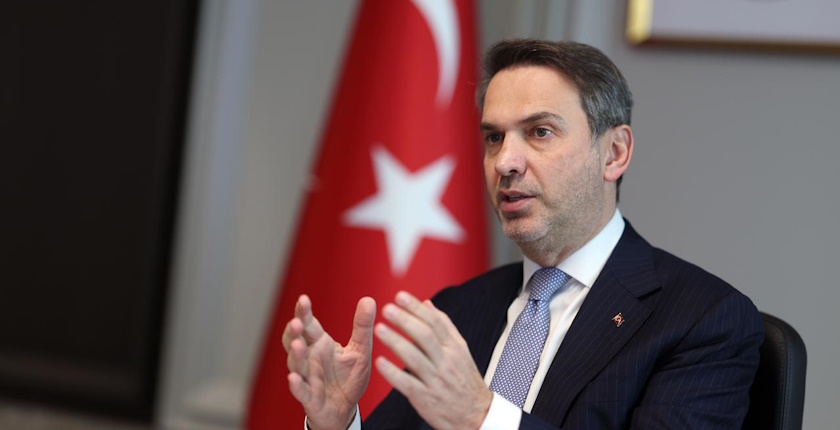
These developments represent the core of the 2026 vision for energy and mining in Turkey, revealed by Minister of Energy and Natural Resources Alparslan Bayraktar.

Large-scale projects will be launched next year through intergovernmental agreements, he stressed.

The deals include solar and other renewable energy technologies and storage, Bayraktar explained.

According to the minister, Turkey remains committed to its emission reduction targets. The government plans to launch a carbon trade center and market in 2026 within the Energy Exchange Istanbul (EXIST or EPİAŞ), he said.

Of note, Turkey’s imports of a group of goods and electricity to the European Union will be subject to the CBAM carbon border tax from January 1, 2026.

Energy storage facilities totaling 2,000 MW will be commissioned in 2026

Bayraktar recalled that the country issued permits for the installation of an overall 33,500 MW of energy storage. A very small portion has been implemented so far, but 2,000 MW will be commissioned in 2026, he underlined.

The minister said Turkey is considering the introduction of Storage Resources Zones or Depolama Alanları (DEKA) in 2026.

It would be similar to Renewable Energy Zones mechanism – REZ or YEKA – for support for solar and wind projects.

Bayraktar mentioned that a 5,000 MW solar power arrangement with Saudi Arabia-based ACWA is being discussed. Of note, it is equivalent to between 30% and 40% of Turkey’s current photovoltaic capacity.

Locations for the 2,000 MW solar project are in Sivas and Taşeli

He expressed belief that the agreement for the first phase, which envisages 2,000 MW, would be finalized in the first quarter of 2026. The plan is for 1,000 MW in Sivas and 1,000 MW in Taşeli.

A solar-plus-storage project with another company from a different country in the Persian Gulf is also under consideration, Bayraktar revealed. The investment is estimated at EUR 1.5 billion to EUR 2 billion.

A floating solar power plant of about 3,000 MW will be built as soon as possible, according to Bayraktar

In Bayraktar’s view, there is great potential in floating solar power plants. The country intends to implement a floating solar power plant of about 3,000 MW as soon as possible, the minister underlined.

The partners in this endeavour could be private companies or Turkish government-controlled Electricity Generation Corp. (EÜAŞ), the minister said. He claimed significant plans have been developed for offshore wind projects for 2026.

“We are considering a model similar to YEKA for offshore wind,” he added.

Russia to provide USD 9 billion for Akkuyu

turkey 2026 vision energy Alparslan Bayraktar brifing
Photo: Ministry of Energy and Natural Resources

The Akkuyu project is entering its final stages, according to the minister.

The country secured a USD 9 billion financing package from Russia for the investment, of which USD 4 billion to USD 5 billion is intended to be drawn in 2026.

Simultaneously, the ministry is in talks with South Korea, the US, China, and Russia for nuclear projects in Sinop and Thrace.

The Sakarya gas field is expected to double its current output in 2026, to 7.5 billion cubic meters, Bayraktar underscored.

This surge will prevent approximately USD 3.2 billion in energy imports, he explained.

by in News

Fortis kicks off construction of solar power plant in Albania

Fortis Energy has started the construction of solar power plant Ersekë with a capacity of 75 MW.

The Ersekë Solar Power Plant project in Albania has transitioned to the construction phase, featuring a total peak capacity of 75 MW, and it will be integrated with a 25 MWh battery energy storage system (BESS), Turkey-based Fortis Energy said.

Following the formal approval, the company moved to the execution stage in the village of Taç-Lartë, in the municipality of Kolonja in the country’s southeast.

Of note, in June Fortis Energy received approval from the Albanian government for the construction of a photovoltaic plant. The company is allowed to operate the facility for 49 years from the entry of the decision into force.

The PV project is set to generate 135 GWh per year

Now the company recalled that the PV facility is set to generate 135 GWh per year of clean energy. It would mark a major milestone in Albania’s green energy transition by combining solar generation with advanced storage capabilities, it added.

Fortis, which was a bronze sponsor this year at Belgrade Energy Forum 2025 (BEF 2025), organized by Balkan Green Energy News, has also invited qualified suppliers and contractors to submit their inquiries for upcoming construction and procurement packages.

“We are looking for partners who share our commitment to health, safety & environment (HSE) excellence, technical precision, timely delivery,” the company stressed.

Fortis Energy is working on renewable energy projects totaling 2 GW

The facility must be built within 36 months from the entry of the decision into force, according to the government’s approval.

The 36 months for construction, ancillary works and commissioning are included in the said 49 years of the operation of the facility.

Of note, Fortis Energy is working on renewable energy projects of 2 GW altogether in Southeast Europe. One half of the planned capacity is for solar and wind power plants in Serbia.

Three months ago the company obtained a construction permit for a solar park of 270 MW on the territory of the city of Sremska Mitrovica in Serbia. The project includes a BESS of 36 MWh.

by in News

ENNA kicks off installation of its first solar power plant outside of Croatia

Romanian ENEVO Group has started the construction of a solar power plant for Croatia-based ENNA Group.

The site for the 87.5 MW photovoltaic plant is 25 kilometers southwest of Romania’s capital Bucharest. It is ENNA Group’s first major investment outside of Croatia.

Installation began after an EPC contract was signed in November between PVP Cepheus, owned by ENNA Solar, which is part of ENNA Group, and Romanian Enevo Group, ENNA said.

The Giurgiu solar power plant will be built in the Mihăilești area on 93 hectares. The expected annual electricity production is 133 GWh, the company added.

The investment is part of ENNA’s ten-year plan

The plant’s commercial operation and power delivery to the grid are scheduled for the first quarter of 2027. It is an investment of around EUR 60 million, according to the update.

“We are extremely pleased to announce the start of construction of our solar power plant just a few months after taking over the project. It is also a confirmation that we have chosen very reliable partners,” ENNA Group CEO Boštjan Napast stressed.

With this investment, the company is proving its commitment to a ten-year business plan with planned investments of EUR 330 million in solar energy in Croatia and abroad, he explained.

Under the EPC contract, Enevo is responsible for the entire solar power project – design, procurement, and construction.

Bureau Veritas is in charge of supervision services

Enevo Group Technical Director Radu Brașoveanu said it supports the expansion of the ENNA Group into the Romanian renewable energy market with this strategic solar investment.

Bureau Veritas will be in charge of supervision services in line with FIDIC standards, ENNA added.

Of note, the project in Romania was acquired in April.

It is implemented by ENNA Solar, which is part of the energy division of the ENNA Group. The parent company said it has around 50 MW in operational renewable energy plants or advanced projects, as well as about 350 MW in various stages of development.

ENNA is developing two geothermal power projects – Zagocha (Slatina) and Babina Greda.

In addition to energy, the company operates in the logistics sector.

by in News

Nofar Energy launches work on Romania’s largest solar park

Israel’s Nofar Energy has begun construction of the 282 MW Corbii Mari solar park in Romania, with plans to connect it to the grid next year. The project is being financed from a recently secured EUR 192 million financing package that also covers the company’s two other large solar facilities in Romania.

The financing for Nofar’s projects was arranged by the European Bank for Reconstruction and Development (EBRD). The bank is providing a EUR 64 million loan, with the remaining EUR 128 million mobilized from commercial lenders.

In addition to Corbii Mari, the financial package covers the Iepurești II and Slobozia solar parks. The total capacity of all three projects is 531 MW, and the planned annual electricity production is 676 GWh.

Two solar parks are zero-subsidy projects, while the third has secured a contract for difference

Corbii Mari and Iepurești II will sell electricity on Romania’s competitive day-ahead market, while Slobozia will benefit from a 15-year contract for difference (CfD), according to an EBRD press release.

In late 2023, when Nofar acquired the Corbii Mari project, it was announced that the solar power plant would produce 362 GWh of electricity a year, enough to meet the needs of around 160,000 households.

There are several solar projects in Romania larger than Corbii Mari in various stage of development. These include the 1 GW Dama Solar, developed by Czech company Rezolv Energy, and the 300 MW Butimanu project, implemented by the investment division of Sweden-based Ingka Holding, the largest IKEA franchisee company.

Austria-based Enery is preparing to begin construction works early next year on a photovoltaic facility of 750 MW in peak capacity just outside of Bucharest.

Corbii Mari is set to be Romania’s biggest solar park to date

Given the longer completion timelines for these projects, Corbii Mari is expected to be Romania’s largest solar park for a time, local media reported. The top spot is currently held by Econergy’s Rătești solar power plant, with an installed capacity of 155 MW.

Nofar is also building its Ghimpați solar project near Bucharest, with an installed capacity of 146 MW. Earlier this year, the Israeli company said it had connected to the grid its solar park in Ada, the largest such system in neighboring Serbia.

by in News

Slovenia draws up first climate vulnerability, risks assessment for energy sector

In cooperation with the Jožef Stefan Institute, the Ministry of the Environment, Climate and Energy has issued the first national assessment of climate vulnerability and risks for the energy sector. The analysis shows that the sector is moderately vulnerable under current climate conditions.

The main threats to the energy sector in Slovenia are floods, fires, storms, landslides, sleet and wet snow, heatwaves, and drought.

The assessment of climate vulnerability and risks for the energy sector was produced in line with the IPCC AR5 methodology and the national guidelines of the Faculty of Biotechnology.

The greatest threat to the energy sector are floods, which jeopardize fuel storage, substations, electricity distribution networks, and other elements of the supply chain, the ministry underscored.

The most important subsystem is liquid fuels

By using weighting and considering the current energy mix and the state of infrastructure, the most important subsystems for the functioning of the overall system are liquid fuels (34%) and electricity (33%), followed by natural gas (18%), solid fuels (10%), and heat (5%), the assessment reads.

This reflects a high dependence on imported liquid fuels and the key role of electricity in all consumption sectors, the ministry explained.
The overall weighted vulnerability score for the energy sector is 2.3 on a scale of one to five, with the electricity subsystem having the highest vulnerability, 2.6.

Electricity distribution grids, solar power plants, and fuel transport and logistic routes also show high vulnerability, according to the assessment.

Subsector ratings:

  • electricity subsector (2.6)
  • liquid fuel supply (2.2)
  • solid fuel supply (2.2)
  • natural gas supply (around 2.0)
  • heat supply (1.9)

Regarding individual elements of the sector, the most vulnerable are the electricity distribution network (3.5), electricity transmission system and imports (3), preparation of firewood, wood chips and pellets, and photovoltaic plants (3); vehicles/tanks for liquid fuels and vehicles/trucks for solid fuels, fuel stations, and other renewable energy sources (2.5).

The identified risks are expected to intensify in the future

The assessment reveals that Slovenia’s energy sector comprises critical elements whose failure could lead to significant supply disruptions.

It provides a technical basis and starting point for preparing a climate change adaptation strategy and for drafting measures such as strengthening infrastructure resilience, reviewing planning for new facilities, and incorporating climate risks into strategic documents and investment plans, according to the ministry.

Climate change scenarios indicate that the already identified risks will intensify in the future – especially floods, storms, and heatwaves.

The ministry said it would be necessary to implement adaptation measures to ensure a reliable energy supply.

by in News

Siemens Energy, Končar to install electrolyzer, solar power plant for INA

Siemens Energy and Končar will install an electrolyzer and a solar power plant for Croatian oil and gas company INA.

INA said it has signed two important contracts for the implementation of the green hydrogen production project at its Rijeka refinery.

By signing contracts with reputable companies, with a total value of EU 33 million, INA has secured the preconditions for the implementation of the first commercial green hydrogen production plant in Croatia, according to the update.

A contract with Siemens Energy and Končar was signed for the construction of a 10 MW green hydrogen production and distribution plant. The order is estimated at EUR 22.5 million excluding VAT.

INA has already secured the delivery of the electrolyzer

The second contract, worth nearly EUR 11 million excluding VAT, was signed with Končar. It envisages the construction of a 11 MW photovoltaic plant. The facility would supply electricity to the electrolyzer.

As part of the project, INA has already secured the electrolyzer, a key system for water electrolysis and hydrogen production from renewable sources. Its majority owner, Hungarian MOL, inaugurated its first 10 MW electrolyzer in April last year.

Green hydrogen is intended for use in transportation

The green hydrogen that would be produced is intended for the market, primarily for transportation purposes, and it could also be used in the refinery’s production process. The company recalled that, by a decision of the Ministry of Economy, it received a EUR 15 million grant from the National Recovery and Resilience Plan.

The program is for the production and distribution of hydrogen in transportation.

The hydrogen market in Croatia is in an early development phase. INA’s plant could produce about 1,500 tons of green hydrogen annually.

Of note, Croatia adopted a hydrogen strategy in 2022. The government subsidizes the installation of chargers for hydrogen fueled vehicles.

Ortutay: Hydrogen could open new market opportunities for INA

INA CEO Zsuzsanna Ortutay said European and national strategies consider renewable hydrogen a technology of the future.

The renewable hydrogen that INA will produce can open new opportunities for the company in the market, but also improve the sustainability of Rijeka refinery through emission reductions, Ortutay stressed.

According to Končar CEO Gordan Kolak, green hydrogen isn’t only a technology of the future but a key element for decarbonizing industry and transport.

As the main contractor for the construction of this plant, Končar confirmed its role as a reliable partner developing key expertise for the European energy infrastructure in the decades to come, Kolak added.

by in News

Econergy secures financing for 87 MW Oradea solar plant in Romania

Econergy Renewable Energy has signed a EUR 40.5 million project finance agreement with UniCredit Bank for its 87 MW Oradea solar power plant in the Crișana region in north-west Romania.

The Oradea photovoltaic facility has been fully connected to the grid since August 2025, and is generating revenues, according to Israel-based Econergy.

The proceeds will be used for various purposes including refinancing of the loans spent to construct the power plant, the company explained.

Within a strategy to hybridize its Romanian solar portfolio, Econergy plans to add a 68 MW BESS component at the Oradea site.

It is the second project finance agreement secured with UniCredit

The expected investment in energy storage is about EUR 21 million, with an estimated annual contribution of EUR 8.4 million in revenues and EUR 6.7 million in EBITDA, based on the first five full operating years, the update reads.

The company said it is its second project finance agreement secured with UniCredit.

Econergy Group is operating in key European markets, including Germany, the UK, Italy, Spain, Romania, Poland, and Greece. It develops photovoltaic, wind, and energy storage projects.

The current project pipeline exceeds 14 GW, according to the company’s website.

Econergy is the owner of the largest PV facility in Romania

The company generates revenue by selling electricity, earning development and operation fees, and selling projects at various stages of development.

Of note, Econergy is the owner of the largest PV facility in Romania. In October it agreed to buy out Nofar’s 50% stake in the 155 MW Rătești solar power plant. The firm plans to add a 120 MW BESS.

Econergy has four PV plants in Romania. With the inauguration of Oradea, the company’s operational and ready-to-connect capacity in the country has reached 447 MW. It is building another 788 MW and expects to start the construction of 559 MW more by the end of 2025.

The project was developed with Phoenix Holdings.

by in News

CWP Europe gets European Commission’s backing for renewables projects in Albania, Montenegro

CWP Europe has signed a joint declaration with the European Commission, the Albanian Investment Development Agency, and the Montenegrin Investment Agency in support of its two landmark renewable energy projects – the Tropoja wind farm in Albania and the Montechevo solar farm with battery storage in Montenegro.

The declaration of support for CWP Europe’s projects was signed during the EU-Western Balkans Investment Forum in Albania’s capital, Tirana, in the presence of Albanian Prime Minister Edi Rama and European Commission President Ursula von der Leyen, according to a press release from CWP Europe, a leading renewable energy project developer in Southeast Europe.

The 600 MW Tropoja wind farm will advance Albania’s energy independence by providing clean, affordable electricity, supporting the country’s energy strategy, the company stressed.

The 600 MW Tropoja wind farm will boost Albania’s energy independence

In Montenegro, the 400 MW Montechevo solar farm will combine solar generation with battery storage directly connected to the country’s new 400 kV transmission grid. It will leverage Montenegro’s strategic interconnections – including the undersea power cable to Italy – to maximize the export of clean electricity and its integration into the European energy market.

A new energy backbone for the Western Balkans and Europe

Speaking at the signing ceremony, von der Leyen emphasized the Western Balkans’ increasing role in Europe’s clean energy transition.

“Today you are signing several investments that will do just that. From clean energy production in all six Western Balkan partners to energy storage in Montenegro. They will bring the cost of electricity down. And they will also contribute to our collective energy independence. You are building a new energy backbone not only for the Western Balkans. But for all of Europe,” said von der Leyen.

CWP Europe CEO Dimitar Enchev signed the declaration on behalf of the company, alongside Executive Vice Presidents Maja Turković and Viktor Garbev.

Enchev: We are unlocking the region’s immense renewable energy potential

“With Tropoja and Montechevo, we are unlocking the region’s immense renewable energy potential and strengthening cooperation across the Western Balkans. We greatly appreciate the support of the European Commission, the Albanian Investment Development Agency, and the Montenegro Investment Promotion Agency in advancing this shared vision for a clean, economically competitive and secure energy future of the region and Europe as a whole,” said Enchev.

Over the past 17 years, CWP has invested in sustainable development and the energy transition, successfully developing the largest wind farms in the region, including the largest one in Europe – the 600 MW Fântânele-Cogealac project in Romania. It is currently developing over 7 GW of renewable energy capacity, according to the statement.