by in News

Elektroprivreda BiH to invest EUR 885 million over next three years

Government-controlled power company Elektroprivreda BiH plans to invest BAM 1.73 billion (EUR 884.6 million) over the next three years, according to its 2026-2028 business plan.

The investments would be financed through loans, and BAM 538 million (EUR 275 million) from own funds of Elektroprivreda BiH (EPBiH), which operates in the Federation of BiH. Of note, it is one of the two entities making up Bosnia and Herzegovina. The other one is the Republic of Srpska.

In line with available funds and restructuring plans, the company intends to continue investing in coal mines within the EPBiH group over the three-year period.

The goal is a stable and sustainable coal production at the volume needed for the planned operation of the thermal power plants, the utility said.

The previous business plan, for the 2025-2027 period, provided for investments of BAM 2.1 billion (EUR 1.074 billion).

The three-year period should be marked by the construction of a large number of PV plants

EPBiH has highlighted the construction of new renewable energy power plants as a long-term strategic and priority goal. The construction of several solar power plants at already identified locations are particularly significant, the plan reads.

The upcoming three-year period should be marked by the construction of a large number of PV facilities at multiple locations on mining sites, company-owned land, on the roofs of its own facilities and those of its customers, EPBiH explained.

EPBiH also plans to acquire operational renewable energy facilities as well as projects in development. The plan envisages the purchase or lease of land suitable for the construction of solar power plants.

Positive business performance and maintaining the position as the dominant electricity supplier in BiH are also outlined in the business plan, adopted by the company’s assembly.

Desulfurization and denitrification of flue gases projects are planned for two thermal power plants

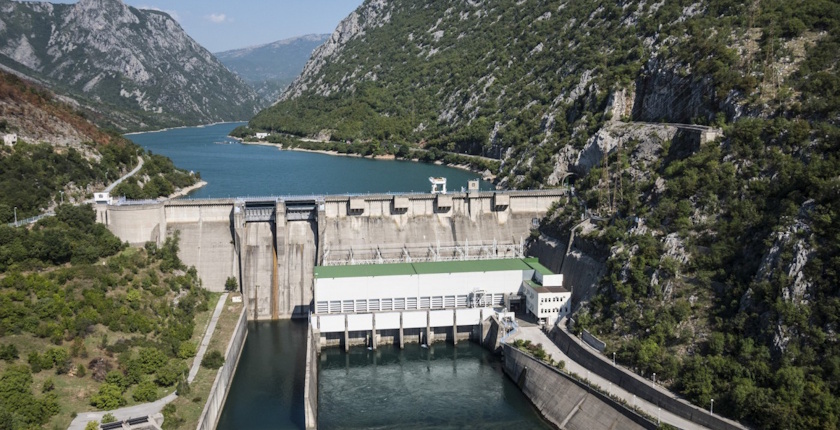
EPBiH has launched flue gas desulfurization and denitrification projects for its Tuzla and Kakanj coal-fired power plants. It would also upgrade unit 7 in Kakanj, unit 4 in Tuzla, and the Salakovac hydropower plant.

The document envisages the establishment of the distribution system operator (DSO), based on the provisions of the Law on Electricity of the Federation of BiH. It came into force in August 2023.

The law stipulates unbundling the distribution activity from EPBiH and establishing the DSO as a separate legal entity, a 100%-owned subsidiary, the company underlined.


by in News

AI and Energy: the dynamic duo shaping the power grid

Author: Mbuwir Brida, EUSEW  Young Energy Ambassador

Have you tried asking ChatGPT what the world’s most pressing challenge is? It ranks climate change as the first challenge. So, how about we use the technology behind ChatGPT to solve that challenge?

The most significant way to mitigate climate change is to move from fossil fuels to renewable energy: the energy transition. This entails bolstering the integration of variable renewable energy sources into the power grid. Thus, more powerful and innovative tools are required to plan and operate the grid to ensure a secure and reliable grid as the energy transition progresses.

This need comes at a time when ground-breaking advancements are being made in artificial intelligence (AI), mimicking several aspects of human intelligence via large scale data analysis and relevant domain knowledge to generate outcomes. The digitalisation of the grid (e.g., via smart meters, sensors, and digital twins) provides massive amounts of data, making AI uniquely placed to support the energy transition. But will AI fix all grid challenges?

Forecasting for a more reliable power grid

Photo: Mbuwir Brida, EUSEW Young Energy Ambassador

The predictive capability of AI models is a game-changer for the energy sector, from energy generation to consumption and energy markets. One major application has been to predict and optimise energy generation of solar and wind installations: e.g., AI models use weather data together with historical measurements to predict energy production and consumption required for grid planning.

For example, the transmission network operator in Belgium, Elia, has developed an AI-based tool that reduces the system imbalance forecast error by 41% in their effort to keep the grid frequency stable with increasing renewable energy integration. This predictive capacity of AI models has also been used for predictive maintenance of wind farms and power lines. Thus, AI-based algorithms facilitate real-time monitoring and control of electricity transmission and distribution, allowing for dynamic adjustments in response to fluctuating energy supply and demand.

Moreover, AI algorithms automatically detecting faults, generating real-time power restoration strategies, and switching to backup power sources can reduce system downtime, enhancing power system reliability. Hence, AI not only facilitates grid management and renewable energy integration but also fosters a more efficient, reliable, and secure power grid.

On the energy consumption side, AI-driven energy management systems have seen significant progress. These energy management systems optimise energy usage by learning user preferences, adapting to weather conditions, and other external events such as electricity prices. For example, Belgian tech startup Pleevi has developed machine learning based algorithms to control electric vehicle charging, reducing electricity cost up to 30% while promoting the use of forecasted local energy generation. Swedish-Swiss electrification and automation company, ABB, on the other hand has developed AI-based tools for predicting and managing energy consumption peaks in commercial and industrial buildings, helping these large consumers to avoid peak demand charges.

Advanced technology comes with risks and roadblocks

While notable advancements have been made, the complexity of regulatory frameworks, ethical considerations, and the multifaceted nature of energy systems still challenge the integration of AI in the energy sector. Security concerns and data privacy issues raise important questions on the safe use of AI in the energy sector and, therefore, compliance with the European Artificial Intelligence Act. Additionally, the environmental impact of manufacturing AI hardware and the high energy and water consumption of data centres highlight some roadblocks that must be addressed for the sustainable use of AI. Moreover, the decision-making process of AI algorithms often remains unexplainable and unaccountable. All these aspects make the adoption of AI-based solutions challenging for users due to the significant energy security and financial implications.

Will AI fix all grid challenges related to the energy transition?

As the synergy between AI and the energy sector continues to unfold, interdisciplinary collaboration and a commitment to ethical and responsible AI deployment remain essential to fully unlock the potential of this intersection. However, the promise of fully autonomous systems, where AI orchestrates every aspect of the grid, is still a long way from becoming reality, considering the aforementioned hurdles. In reality, the integration is an ongoing process marked by incremental achievements and new challenges.

In 2026, the European Commission will adopt a Strategic Roadmap for digitalisation and AI in the energy sector, aiming to leverage the potential of digital and AI technologies while mitigating the associated risks.

This opinion editorial is produced in co-operation with the European Sustainable Energy Week 2026. See ec.europa.eu/eusew for open calls.

Disclaimer: This article is a contribution from a partner. All rights reserved.

Neither the European Commission nor any person acting on behalf of the Commission is responsible for the use that might be made of the information in the article. The opinions expressed are those of the author(s) only and should not be considered as representative of the European Commission’s official position.

by in News

EU presents European Grids Package: faster permitting, stronger interconnections, lower energy bills

The European Commission presented the European Grids Package, a comprehensive plan to modernise transmission infrastructure, accelerate permitting procedures, and overcome bottlenecks in Europe’s electricity networks. It also unveiled the Energy Highways initiative, which consists of eight major infrastructure projects critical for energy security, renewable energy integration, and cross-border electricity market connectivity.

Energy infrastructure is the backbone of the energy system. Yet the EU’s energy network remains insufficiently integrated, and investment levels fall short of what is needed, a situation that directly affects household energy bills.

Ageing infrastructure and limited interconnection capacity are creating bottlenecks that slow the energy transition. Although some progress has been made within the existing EU legislative framework, the level of interconnection among member states remains inadequate. Several countries are not on track to meet the 15% interconnection target by 2030.

To address these challenges, the European Commission has presented the European Grids Package and Energy Highways initiative. The aim is to enable a more efficient flow of energy across the EU, integrate greater volumes of renewable energy into the system, and accelerate electrification.

Jørgensen: A truly interconnected energy system is the foundation of a strong and independent Europe

The Grids Package is designed to speed up permitting and ensure a fairer distribution of costs for cross-border infrastructure. It should also improve the use of existing infrastructure and accelerate the development of networks and other physical energy assets across the EU.

Among the measures is a new mechanism that allows the commission to initiate the search for additional infrastructure projects when existing initiatives do not cover identified cross-border needs.

“A truly interconnected and integrated energy system is the foundation of a strong and independent Europe. To achieve it, we need an energy infrastructure network of cables, pipes and grids that is up to date, fully interconnected, and that enables clean, affordable, homegrown energy to flow freely and securely to every corner of our union. This is exactly what we are proposing today: a common European energy project that supports affordable living, economic competitiveness, security, and decarbonisation,” said Dan Jørgensen, European Commissioner for Energy and Housing.

Permitting reform

Slow permitting remains one of the biggest bottlenecks for energy infrastructure and renewable energy projects in the EU.
Obtaining permits for transmission infrastructure currently takes more than five years on average, while renewable energy projects may face delays of up to nine years.

The Grids Package introduces simplified and accelerated permitting procedures. The commissioners have proposed setting time limits within which decisions must be taken for all types of projects. If the competent authority fails to respond within the deadline, the permit would be considered granted.

Permits for smaller projects would be issued through faster and more streamlined procedures

Permits for smaller projects would be issued through faster and more streamlined procedures. All processes would have to be fully digitalised, and national administrations would be required to have adequate staffing and technical capacity to process applications.

The commission is proposing to move away from the current first-come, first-served model and introduce a system that ensures timely and non-discriminatory access to the grid, one that balances social acceptance and industrial competitiveness.

Public and private financing

According to the commission’s estimates, EUR 1.2 trillion in investment will be needed for Europe’s electricity grid by 2040. Distribution networks account for EUR 730 billion within the sum, compared to EUR 240 billion for hydrogen infrastructure.

The commission said additional financing tools are required, including cost-sharing arrangements, arguing that cross-border infrastructure generates benefits that extend beyond the territory in which a project is located.

Another suggested solution is the formation of project firms (special purpose vehicles – SPVs) to attract additional private investment.

Given that grid infrastructure is largely financed through network tariffs, part of the burden falls on consumers. To ease this pressure, the commission announced it would boost financial support through the Multiannual Financial Framework (MFF), the EU’s regular seven-year budget, including a significant expansion of the Connecting Europe Facility (CEF). The tool is designed to support investments in new cross-border energy infrastructure and upgrades or rehabilitation of existing assets.

The current 2021–2027 EU budget contained EUR 5.8 billion for cross-border projects under CEF. For the 2028–2034 period, the commission said the amount would be raised almost fivefold, to EUR 29.91 billion.

On the private side, the EU is working on its Clean Energy Investment Strategy, to launch it in 2026 by outlining measures for private sector participation including institutional investors, as well as additional support from the European Investment Bank (EIB).

Energy Highways

The Energy Highways initiative comprises eight of the EU’s largest and most critical infrastructure projects, essential for energy security, renewable energy integration, and cross-border electricity market connectivity.

They have already been already listed as Projects of Common Interest (PCI) or Projects of Mutual Interest (PMI), but under the new initiative, they would receive elevated political priority, accelerated financing, and faster permitting.

Energy Highways
Photo: European Commission

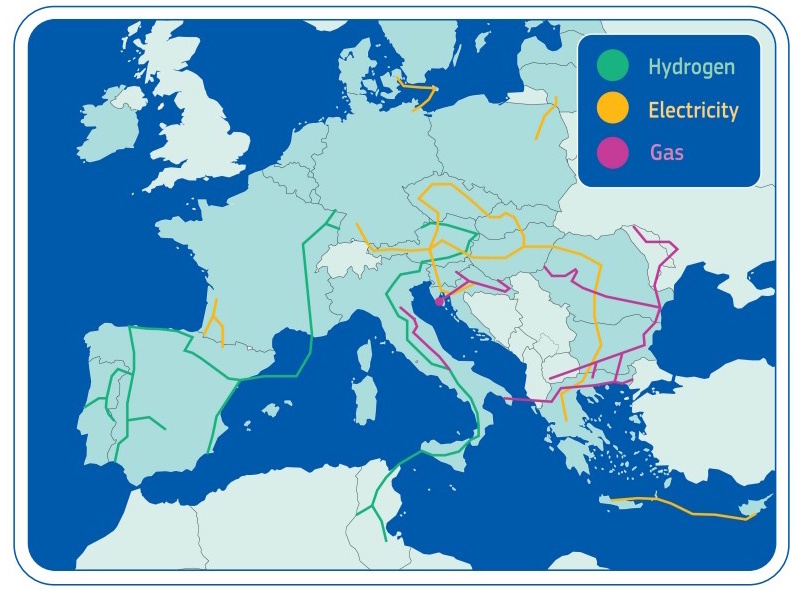
Among the projects are the reinforcement of interconnections across the Pyrenees to improve the integration of the Iberian Peninsula, the connection of Cyprus with continental Europe through the Great Sea Interconnector, as well as an upgrade of electricity links between the Baltic states, including the Harmony Link to Poland, which is essential for the full synchronisation of the region with the European grid.

The commission has also endorsed the establishment of Denmark’s hub on the island of Bornholm, which could, in the coming years, be connected to additional locations in the Baltic Sea.

Among the priorities are strengthening energy storage capacity in South-Eastern Europe

Among the priorities are strengthening energy storage capacity in South-Eastern Europe, as well as the modernisation of the Trans-Balkan Pipeline (TBP) for gas.

The list includes two hydrogen corridors. The southern one would connect Tunisia, Italy, Austria, and Germany, and the south-western corridor is a planned link between Portugal, Spain, France, and Germany. The commission has announced strong coordination and political support for the latter.

The commission views these projects as pillars of Europe’s future energy network, essential for lower electricity prices, greater system stability, and reduced dependence on fossil fuels.

In a regular legislative procedure, the proposals now move to the European Parliament and the Council of the EU for further deliberation.

by in News

Elnos Group – a night of grand jubilees at the Sava Center

In Belgrade’s Sava Center, Elnos Group marked a remarkable dual jubilee – 80 years of tradition and 30 years of modern business development. This impressive celebration brought together partners, friends, and employees of Elnos Group, transforming the evening into a vibrant stage that reflected the company’s journey and cast a clear light on its vision for the future.

For years, the company has been pushing the boundaries of the green transition across the region, with its participation in renewable energy projects surpassing two gigawatts. With more than 900 employees and operations in 18 countries, Elnos Group today stands as a company shaping the future of modern energy.

Energy, movement, and unforgettable moments

jubilee celebration Elnos Group
Photo: Elnos Group

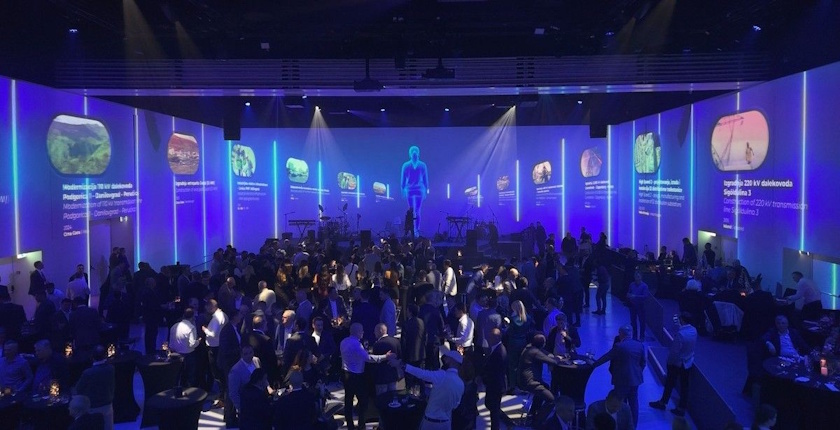
Instead of a traditional ceremony, guests were welcomed by an evening full of motion, emotion, and visual spectacle – showing that energy companies certainly know how to create a true celebratory atmosphere. From the very first moment, it was clear that evening would be more than protocol.

Guests from across the region and Europe gathered in a space that, thanks to a digital animation in the Immersive Hall, seemed to breathe with energy. The animation spectacularly transformed the story of the energy sector and Elnos Group into an unforgettable visual experience.

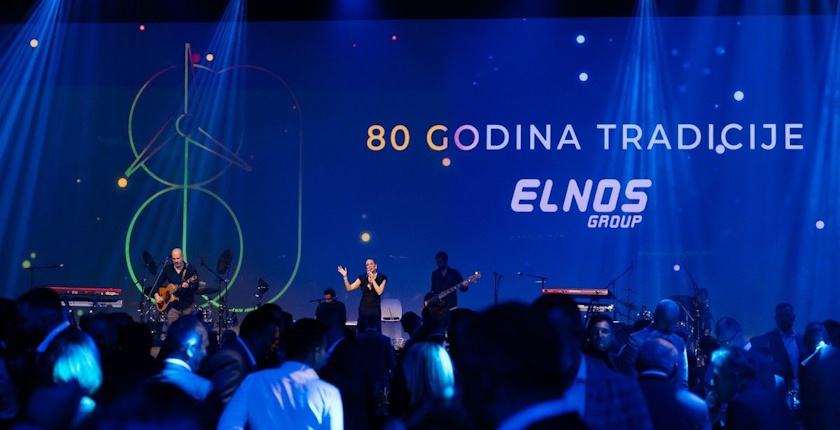
In an atmosphere of powerful symbolism and even stronger unity, Elnos Group celebrated its journey – from its earliest steps to an international company.

“Elnos is defined not by words, but by results” – a message from the heart of the celebration

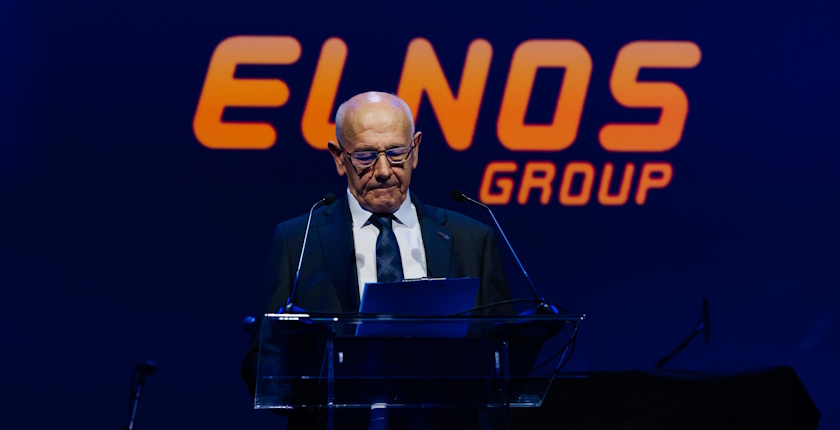
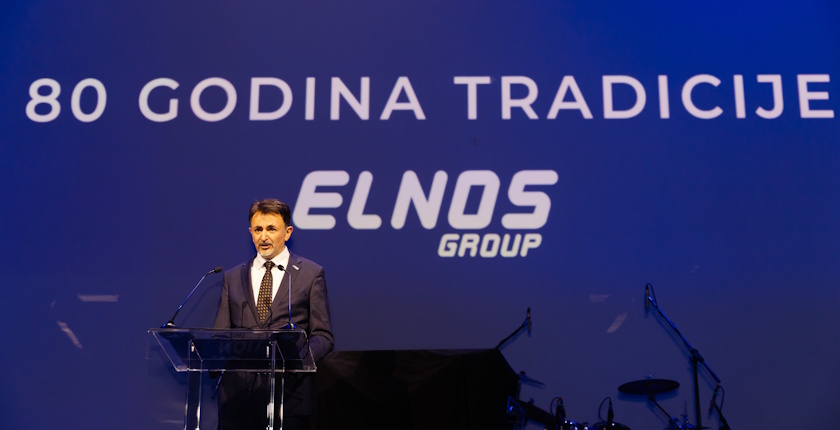
In an address that blended both emotion and vision, Dušan Torbica, President of the Management Board of Elnos Group, shared a message that became a defining tone of the entire evening.

“Elnos Group is not defined by grand words but by the results that stand behind them. These results are the measure of our work and our reputation. The energy sector of the future requires reliable and fast contractors, and we are ready to meet those demands,” he said.

Dusan Torbica, Elnos
Photo: Dušan Torbica, President of the Management Board of Elnos Group

A strong energy filled the hall, while on stage Marijana Zlopaša and Tropico Band brought rhythm, color, and warmth to the celebration. Yet, at the very center of the evening remained a message of gratitude – directed toward all those who have been part of Elnos Group’s path: in the past, the present, and those who are ready to shape its future.

Elnos Group
Photo: Elnos Group

Vetrozelena – a major contract signed on the day of the jubilee

On the very day of this grand celebration, Elnos Serbia signed an EPC contract with Sinohydro Corporation Limited, a subsidiary of Power China Construction Group, for the construction of the Vetrozelena wind farm – soon to become the largest single wind project in the Balkans.

Vetrozelena will have a total capacity of 300 MW, featuring 48 turbines of 6.25 MW each. Elnos Serbia, as part of Elnos Group, will take on the task of building the complete grid connection to the transmission system of Elektromreža Srbije.

bih serbia elnos Sinohydro powerchina vetrozelena wind farm contract
Photo: Signing a contract with the Power China Construction Group for the construction of the largest wind farm in the Balkans – Vetrozelena

Company teams will construct a 35/400 kV substation with four 90 MVA transformers, a 400 kV switchyard with six bays, a 7.5-kilometer double-circuit 400 kV transmission line, as well as accompanying infrastructure upgrades within the power distribution and telecommunications networks.

This project is another EPC-based contract through which Elnos Serbia will deliver complete engineering services: design, construction, equipment procurement and installation, integration, testing, and commissioning.

People as the foundation and the future

Among the stage lights and project presentations, the message of Predrag Ćulibrk, Director of Elnos Serbia, resonated particularly strongly.

“Our employees are the heart of all our successes. Every engineer, technician, and worker has built a part of themselves into projects across Europe. Without them, no strategy could come to life,” Ćulibrk emphasized.

Predrag Culibrk, Director of Elnos Serbia
Photo: Predrag Ćulibrk, Director of Elnos Serbia

His words were a reminder that behind every project stand people – the ones who build networks and connect communities. Among them is a new generation, represented by the experience of Dalibor Šošić, an engineer whose career began alongside the modern era of Elnos.

“As part of the new generation of Elnos, I can say that we are determined to take responsibility for the next 30 years. We are inspired by the vision of those who built this company before us, and by the support we receive today to develop new ideas,” he said.

A look at the future, built on the strength of the past

With 80 years of tradition and 30 years of modern business, Elnos Group has shown not only that it knows how to celebrate, but that it knows how to plan.

Elnos Group
Photo: Elnos Group

And after this night in the Sava Center, one thing is clear: Elnos Group steps into the coming decades with confidence and purpose – with results as its measure and a strong team spirit as its signature.

by in News

COP30 in Brazil: one decade after Paris Agreement, world is still far from its climate goals

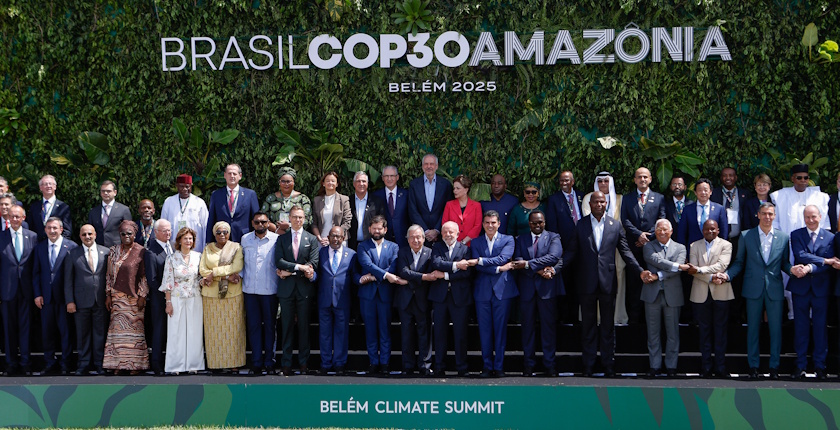
The two-week United Nations Climate Change Conference COP30 is taking place in Brazil. It brought together delegations from more than 190 countries to discuss the challenges of climate change and measures for mitigation and adaptation. The current COP marks ten years since the Paris Agreement, at a time of significant hurdles on the path to achieving global climate goals.

According to preliminary data from the World Meteorological Organization, this year will be the second or third warmest ever recorded on the planet. The 30th Conference of the Parties (COP30) to the United Nations Framework Convention on Climate Change (UNFCCC) is being held in Belém, Brazil — a city situated in the heart of our planet’s lungs, the Amazon rainforest.

Brazil carries symbolic weight, as the UNFCCC was signed there in 1992.

Lula da Silva: Climate change is no longer a threat of the future, it is a tragedy of the present

In the decade following the adoption of the Paris Agreement at COP21, some progress has been made in the fight against climate change — but it remains insufficient. In his opening speech, Brazilian President Luiz Inácio Lula da Silva stressed that climate change is no longer a threat of the future but a tragedy of the present. He called this year’s summit a “moment of truth.”

When the Paris Agreement was signed, scientific projections were showing that without decisive climate action, global temperatures could rise by more than four degrees Celsius before the end of the 21st century. “We are moving in the right direction, but at the wrong speed,” Lula said, also pointing to climate misinformation as a major obstacle to planning and implementing effective measures.

Guterres: We have failed to stop global warming

United Nations Secretary-General António Guterres said in his address that the harsh truth is that the world has failed to keep global warming within 1.5 degrees Celsius.

Just days before the summit, the UN Environment Programme (UNEP) released its annual report showing that, under current policies, the 1.5-degree limit will be reached within the next decade – and the planet will warm by 2.8 degrees by the end of the century.

Guterres: This is moral failure – and deadly negligence

“Even a temporary overshoot will have dramatic consequences. It could push ecosystems past irreversible tipping points, expose billions to unlivable conditions, and amplify threats to peace and security. Every fraction of a degree means more hunger, displacement, and loss – especially for those least responsible. This is moral failure – and deadly negligence,” Guterres warned.

Still, he emphasized that the UN has not given up on the 1.5-degree goal. “We have never been better equipped to fight back,” he said, adding that the clean energy revolution is gaining unstoppable momentum.

In the first half of 2025, renewables overtook coal as the top source of global electricity. Renewable energy is now cheaper than fossil fuels, and the cost of electricity storage continues to decline.

The US will not participate in negotiations

One of the world’s largest greenhouse gas emitters – the United States – has sent representatives to the summit, but President Donald Trump’s administration announced it would not take part in negotiations. In January, he announced that his country would withdraw from the Paris Agreement, and later called climate change “the greatest con job ever perpetrated on the world” during a speech at the UN in September.

Focus on implementing existing commitments

The main focus of COP30 in Belém is the implementation of previously agreed commitments and the enforcement of the Paris Agreement. The reduction of greenhouse gas emissions remains a key topic, alongside the first Global Stocktake – a comprehensive assessment of progress toward the Paris goals, aimed at encouraging countries to submit more ambitious national climate plans.

Despite some progress, the latest nationally determined contributions (NDCs) remain far from sufficient to prevent the most severe effects of climate change.

Another central issue will be the establishment of a New Collective Quantified Goal on Climate Finance – determining the scale, timelines, and mechanisms for funding, as well as the share of resources that must go toward adaptation and support for the most vulnerable communities.

According to UNEP’s Adaptation Gap Report 2025, developing countries will need more than USD 310 billion annually by 2035 to adapt to climate impacts, yet they currently have access to only a fraction of that amount.

Toward a just transition and nature protection

Delegates will also discuss operationalizing the Global Goal on Adaptation, which aims to measure progress in building climate resilience.

Another key topic will be the concept of a just transition, with a proposal to establish the Belém Action Mechanism for Just Transition – a new framework to ensure that climate and economic transitions put people at the center. It would include job creation, retraining programs, and support for communities dependent on fossil fuel industries.

Given that COP30 is taking place in the heart of the Amazon, particular attention is dedicated to nature and forest conservation. Brazil plans to present the Tropical Forests Forever Facility, an initiative designed to secure long-term funding for the protection of tropical forests.

by in News

EUSEW2026: Focus on clean, secure, competitive Energy Union

The European Sustainable Energy Week (EUSEW), Europe’s largest annual gathering dedicated to renewable energy and energy efficiency, will take place from June 9 to 11, 2026, under the theme ‘A clean, secure and competitive Energy Union’. The 20th edition of EUSEW will be held in a hybrid format, both in Brussels and online. The event will highlight the importance of building a secure, resilient Energy Union while ensuring clean and affordable energy for all.

EUSEW2026 will feature a diverse program of events, including the EUSEW Policy Conference, the EUSEW Awards, the Energy Fair, the seventh edition of the European Youth Energy Day, and Sustainable Energy Days.

The EUSEW Policy Conference will host over 60 engaging and innovative sessions organized by the clean energy community. The European Commission has opened a call for policy session proposals until January 22, inviting industry stakeholders, policymakers, civil society representatives, and academics to contribute their insights and expertise.

EUSEW Awards will be presented in three categories

The EUSEW Awards will recognize outstanding individuals and projects that drive progress in energy efficiency and renewable energy. This year, awards will be presented in three categories: Local Energy Action, Women in Energy, and, for the first time, Small and Medium-sized Enterprises (SMEs) Driving Energy Efficiency. Applications and nominations are open until January 29.

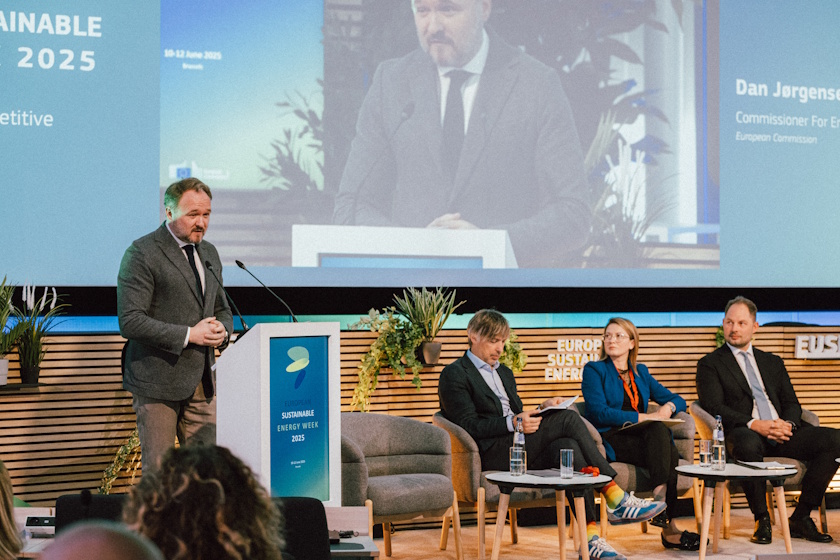
European Commissioner for Energy and Housing Dan Jørgensen at EUSEW 2025

Interested participants can also join an online info session on Wednesday, December 3, from 11:00 to 12:30 CET. Representatives of the European Commission will present this year’s theme, key milestones leading up to and during the conference, and the requirements and selection criteria for policy sessions and EUSEW Awards contributions. A timeline, Q&A, and a recording of the info session will be made available on the EUSEW2026 info page.

Additional opportunities to get involved will be announced in January and February, including options to exhibit at the Energy Fair, become a Young Energy Ambassador, or organize a local Sustainable Energy Day.

by in News

One megawatt per day: North Macedonia enjoys strong renewable energy growth

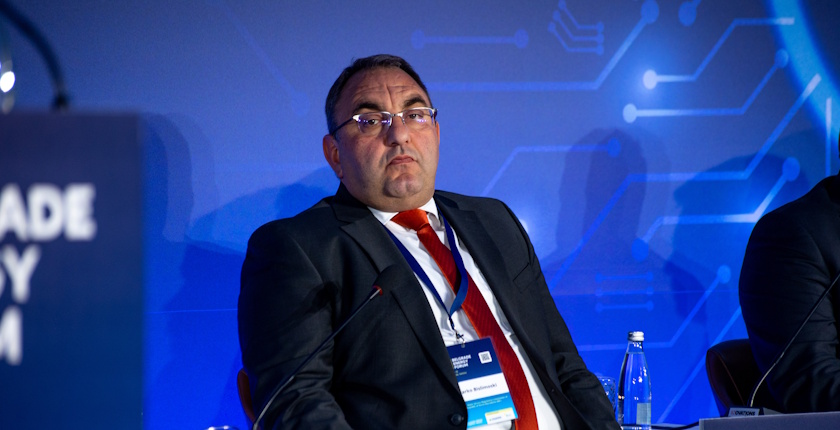
Over the past four years, North Macedonia has achieved strong growth in renewable energy sources. A total of 1,200 MW of capacity has been connected to the grid, marking a new phase of the country’s energy transition, according to Marko Bislimoski, President of the Energy, Water Services, and Municipal Waste Management Services Regulatory Commission of the Republic of North Macedonia (ERC or RKE).

According to ERC data, almost 1 MW of renewable capacity has been added to the grid every day over the past four years.

Between 2022 and October 2025, North Macedonia built 1,200 MW of renewable power generation capacity, Bislimoski said at the Regional Conference on Green Transformation of the Western Balkans, held in Tirana, Albania.

“Electricity generation from solar power has become a reality – the El Dorado of photovoltaic plants has heralded the country’s energy transition, initiating a transformation of the power sector. The figures are encouraging, but the period ahead will be full of challenges, among which is balancing the system, when it comes to renewable electricity generation,” Bislimoski said.

Solar power capacity has overtaken hydropower

At the recently held 14th International Forum on Energy for Sustainable Development (IFESD-14), Sanja Božinovska, Minister of Energy, Mining and Mineral Resources, said that renewable energy sources account for more than half of North Macedonia’s total installed electricity generation capacity – 56% as of 2024.

Solar power plants account for 28%, while large hydropower plants have a 24% share.

“For the first time in our history, solar has overtaken hydro – a symbolic and practical milestone in our path toward decarbonization,” Božinovska stated.

Need for investments in baseload generation

Bislimoski emphasized that in the current phase of the energy transition, it is necessary to encourage investments in energy facilities that produce baseload energy.

The use of battery storage has its role, but it is essential to implement projects that will replace coal-fired power generation with gas or biomass, he added

The digitalization of administrative procedures for obtaining the necessary permits and documentation was highlighted as a key prerequisite for increasing the number of green investments, according to the panel How to Create Zones for Faster Implementation of Green Projects.

Speakers, including energy experts, economists, and representatives of national and local authorities, agreed that the energy transition will only be successful if households also feel its benefits, not just industry. Policies and reforms aimed at building a smart and green energy future must be a priority for regional governments to facilitate integration into the European energy market.

by in News

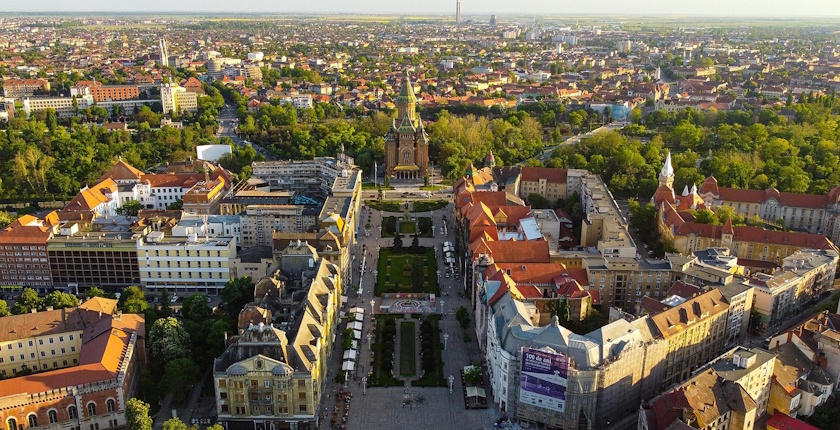
Romanian city of Timișoara nearing construction of its own solar park

Romania is experiencing strong growth in photovoltaic capacity, with 1.7 GW installed in 2024 alone. Local authorities are actively contributing to the energy transition. They include Timișoara, which will soon get its own solar power plant, of 5.6 MW.

According to data from the Romanian Photovoltaic Industry Association (RPIA), solar power plants with a total capacity of 1.7 GW were installed in Romania last year. The expansion is driven by accessible financing, legal reforms, simplified permitting procedures, and auctions for contracts for difference (CfD).

Local authorities, including counties, are one of the pillars of the country’s energy transition. For example, in the small town of Turceni in southwestern Romania, home to only about 7,000 residents, a EUR 380 million project was recently launched. The municipal authority signed an agreement with the European Investment Bank (EIB) for the construction of agrosolar parks, energy storage systems, and facilities for green hydrogen production and storage.

Timișoara is part of a growing group of local authorities developing solar power projects for their own needs

In northern Romania, the municipality of Târgu Lăpuș has established a public-private partnership with a company founded by Turkish and Romanian investors. The goal is to build a 200 MW solar power plant with an energy storage system. The investment is estimated at EUR 100 million.

Timișoara, the capital of Timiș county and the largest city in western Romania, has long been a part of the growing group of municipalities developing solar power projects for their own needs. Mayor Dominic Fritz and Minister of Environment Diana Buzoianu have signed a grant agreement for the construction of the city’s first solar park, of 5.6 MW, marking the start of the investment’s next phase.

The municipality will now launch the tender procedure for design and construction services. The solar power plant is expected to generate an average of 7.8 GWh of green energy annually.

Solar park to deliver direct benefits for the city

The total investment value is RON 32.2 million lei (EUR 6.3 million) including value-added tax. The project is conducted under the European Union’s Modernisation Fund, managed by the Ministry of Energy. The fund supports investments in renewable energy, energy efficiency, storage, grids, and just transition in 13 European Union member states with lower incomes. It uses the proceeds from the sale of greenhouse gas emission allowances under the EU Emissions Trading System (EU ETS).

“The solar park will bring direct benefits to the city – lower costs, reduced emissions, and more sustainable infrastructure. It is just one of the projects through which we are transforming Timișoara into a green and smart city, capable of producing a significant share of the energy it consumes from renewable sources,” said Fritz.

The solar power plant will cover two thirds of public lighting needs

PV panels will be installed near the wastewater treatment plant in the Freidorf district, on 20 hectares. The generated electricity will cover around two thirds of the city’s public lighting consumption. The facility would contribute to lowering greenhouse gas emissions with 4,800 tonnes of CO₂ equivalent annually.

The solar power plant is part of the local administration’s broader plan to switch to renewable energy sources and reduce pollution. Timișoara has also expressed interest in a state aid mechanism for the production and transport of geothermal energy for district heating and cooling systems, worth EUR 300 million, covered from the Modernisation Fund. Last year, the city signed a strategic partnership with OMV Petrom to utilize geothermal energy for district heating.

by in News

Croatia finally close to removing major obstacle to investments in renewables

After three years of delays, Croatia is finally close to adopting a methodology for the calculation of the grid connection fee for renewable power plants. Investors have repeatedly urged the authorities to enact the document, arguing it was the main obstacle to investments in renewable energy sources.

The Croatian Energy Regulatory Agency (HERA) said it has developed a draft methodology for determining the electricity grid connection fee. The public discussion, which began on October 23, lasts until November 21.

According to HERA, the effect of required investments in the transmission network on the network usage fee depends on the share of the connection fee in the total costs of developing the high and very high voltage network, as well as on the amount of grants.

It is possible to connect to the grid even before all technical conditions are met

The effect on the network usage fee will become evident when the relevant network reinforcements are completed, for example, in 10 to 15 years, the agency said.

The costs of developing the transmission network to achieve goals from the National Energy and Climate Plan (NECP) will be financed partly from the grid connection fee and partly from the network usage fee.

HERA pointed out that the legislative framework allows network users to connect even before all technical conditions met, by signing flexible connection agreements, which envisage the possibility of operational restrictions regarding connection capacity.

Personnel decisions have delayed the process of determining the fee

The Renewable Energy Sources of Croatia (RES Croatia) association repeatedly warned that the failure to determine the grid connection fee has halted projects worth around EUR 3 billion overall.

In mid-September, together with SolarPower Europe and WindEurope, RES Croatia sent a letter to the European Commission to raise concerns about the crisis in the country’s renewable energy sector.

According to domestic media, one of the main reasons for the delay in determining the grid connection fee was that HERA’s Management Board was incomplete for two years.

by in News

Dušan Jerković Primary School in Ruma – first prosumer school in Serbia’s Srem district

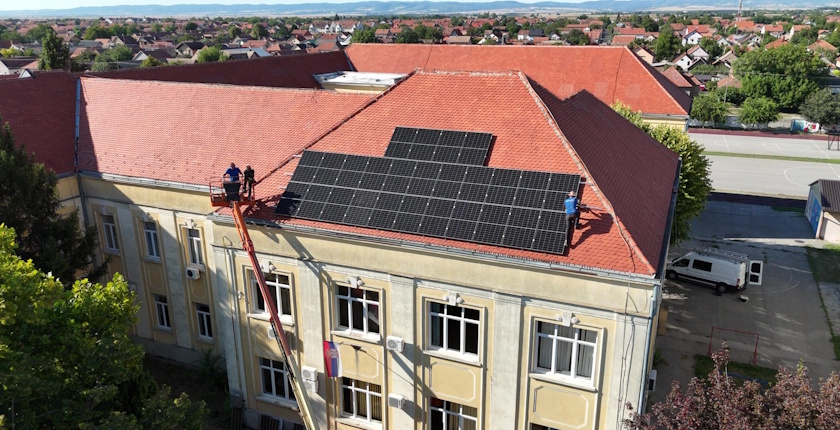
The Dušan Jerković Primary School in Ruma is the first school in the Srem (Syrmia) region, in Serbia’s north, with a solar power plant installed on its roof, and it is in the process of obtaining the prosumer status. The project was implemented in cooperation with the Elektropionir energy cooperative and funded by German Development Cooperation. The Deutsche Gesellschaft für Internationale Zusammenarbeit (GIZ) GmbH implemented the endeavor.

Although the number of prosumers in Serbia is growing, it still remains relatively small compared to the vast potential of rooftops and the abundance of sunshine that the country enjoys. According to recent data from electricity distribution system operator Elektrodistribucija Srbije (EDS), there were 5,310 registered prosumers, formally called buyers-producers.

Their total installed capacity was over 113 MW. Most were households (3,848), followed by legal entities (1,457), while the number of residential communities producing their own energy remains very small, only five.

A few years ago, upon an assessment of rooftop areas in Serbia suitable for solar panel installation, the surface was estimated at as much as 600 square kilometers. Installing solar panels on just 10% would translate to 6 GW of solar power capacity.

On a bright note, awareness of renewable energy sources and their importance is steadily increasing, as shown by the growing number of institutions — including kindergartens, primary and secondary schools — choosing to take steps toward energy independence and become prosumers. One such example is in the Syrmia area, locally called Srem, and specifically in Ruma, where the Dušan Jerković Primary School recently became the proud owner of a rooftop solar power plant. The town is located west of Belgrade.

[wpcc-iframe title=”Solarna elektrana na krovu škole Dušan Jerković u Rumi prva škola prozjumer u Sremu” width=”500″ height=”281″ src=”https://www.youtube.com/embed/9w4_aGTyiEU?feature=oembed” frameborder=”0″ allow=”accelerometer; autoplay; clipboard-write; encrypted-media; gyroscope; picture-in-picture; web-share” referrerpolicy=”strict-origin-when-cross-origin” allowfullscreen=””]

According to school principal Ivana Milojević, the idea was born in September 2024, when representatives of the energy cooperative Elektropionir first visited the school and proposed a partnership.

Elektropionir organized a series of lectures and workshops for students, parents, and school staff

Before the solar installation began, Elektropionir organized a series of lectures and workshops for students, parents, and school staff, focusing on renewable energy sources and the benefits of installing solar panels. The proposal to set up a photovoltaic system on the school’s roof was enthusiastically supported by both the school administration and the Municipality of Ruma, which owns the building.

Foto: Elektropionir

The power plant will significantly reduce the school’s electricity bill

The German Development Cooperation fully funded the installation of a 10 kW solar power plant in a project implemented by GIZ. The system was completed in late August, and the process of obtaining the prosumer status from DSO Elektrodistribucija Srbije (EDS) is underway.

It means that the generated electricity will be used to cover the building’s energy needs, and any surplus will be delivered to the grid, while the school will be able to utilize the excess energy later, when its consumption exceeds production.

“I am very proud that the Dušan Jerković Primary School is the first school in Srem to have a solar power plant. Our school, known for its yellow color, has now got a touch of green, symbolizing our commitment to protecting nature and raising environmental awareness among our students and fellow townspeople. We sincerely thank GIZ and the Elektropionir energy cooperative for their effort, work, and financial support in materializing a wonderful idea,” principal Ivana Milojević said.

The new solar plant will significantly reduce the school’s electricity bills, allowing it to use the savings for other improvements — such as upgrading classrooms or purchasing teaching materials to enhance the learning process.