by in News

Public voting open for EUSEW Awards

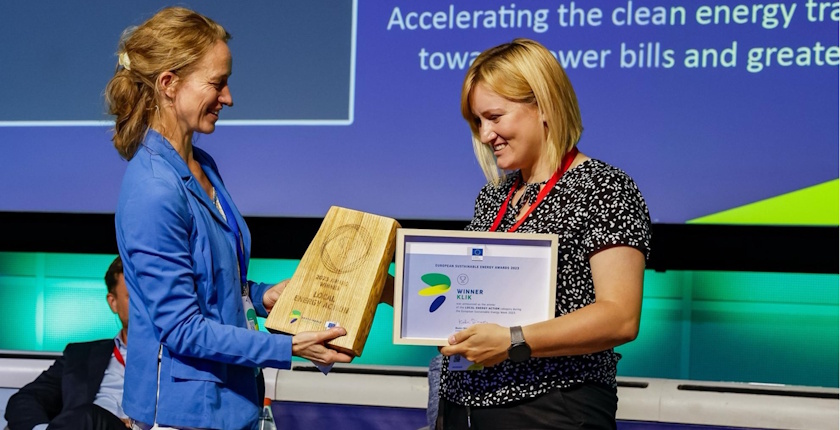
EUSEW Awards will be presented on June 10, within the European Sustainable Energy Week (EUSEW), to outstanding individuals and organisations driving Europe’s energy transition. A jury has selected nine finalists across three categories: Innovation, Local Energy Action, and Woman in Energy. The public now gets to decide the winners.

Online public voting for EUSEW Awards is open until June 1. Voters can support one finalist in each category.

The winners will be announced during the official awards ceremony in Brussels on June 10.

Innovation category

The Innovation Award recognises outstanding projects funded by the European Union that are ongoing or recently completed, demonstrating original and innovative approaches to the energy transition and delivering tangible results.

Dutch company AquaBattery has launched a pilot project in Delft for a long-duration energy storage (LDES) battery system that uses only salt and water as storage medium.

During charging, renewable electricity converts saltwater into acid and base, which are stored in separate tanks, effectively storing the electricity. During discharge, the acid and base are recombined into saltwater, generating electricity. This enables a stable power supply even when there is no sun or wind, without relying on critical raw materials like lithium.

[wpcc-iframe title=”EUSEW2025 Finalist | Dutch saltwater battery commercialises groundbreaking energy storage solution” width=”500″ height=”281″ src=”https://www.youtube.com/embed/1xs2khpQB2k?list=PLMKHMvnaraHMd4y5rZuvjnnW1veToA8qm” frameborder=”0″ allow=”accelerometer; autoplay; clipboard-write; encrypted-media; gyroscope; picture-in-picture; web-share” referrerpolicy=”strict-origin-when-cross-origin” allowfullscreen=””]
The LIFE4GreenBroadband project in Croatia, led by telecom operator A1 Hrvatska, is the second finalist in the Innovation category. It aims to reduce emissions in the telecommunications sector by introducing solar panels and passive cooling systems to mobile base stations.

[wpcc-iframe title=”EUSEW2025 Finalist | Project cutting emissions in Croatian telecoms sector” width=”500″ height=”281″ src=”https://www.youtube.com/embed/UHkQHJ4e9ls?start=7&feature=oembed” frameborder=”0″ allow=”accelerometer; autoplay; clipboard-write; encrypted-media; gyroscope; picture-in-picture; web-share” referrerpolicy=”strict-origin-when-cross-origin” allowfullscreen=””]
The third finalist is the Spanish-Italian project LIFE Turbines, focused on developing smart cities and generating green electricity by using surplus pressure in water pipelines. By integrating microturbines directly into existing infrastructure, the project demonstrates how to harness urban hydropower without affecting water quality or supply.

[wpcc-iframe title=”EUSEW2025 Finalist | Spanish-Italian project harnessing hydropower from urban water systems” width=”500″ height=”281″ src=”https://www.youtube.com/embed/E2VLw49_WCs?list=PLMKHMvnaraHMd4y5rZuvjnnW1veToA8qm” frameborder=”0″ allow=”accelerometer; autoplay; clipboard-write; encrypted-media; gyroscope; picture-in-picture; web-share” referrerpolicy=”strict-origin-when-cross-origin” allowfullscreen=””]
Local Energy Action

The Local Energy Action Award celebrates implemented sustainable energy initiatives carried out by citizens or consumers at the local level, contributing to their community’s energy transition. It also aims to inspire similar efforts across the EU by showcasing economic and environmental benefits. This year’s finalists are: Amiestas, proKlima, and Shared Energy for Social Housing in Otterbeek.

Amiestas is a public, non-profit organisation managing a centre for energy-efficient renovation of residential buildings in Vilnius, Lithuania. It streamlines processes for residents and provides technical and financial support to improve building energy efficiency by 50% to 60%.

[wpcc-iframe title=”EUSEW2025 Finalist | non-profit supporting multi-apartment renovations in Vilnius” width=”500″ height=”281″ src=”https://www.youtube.com/embed/nTZG3NTDI_E?list=PLMKHMvnaraHMd4y5rZuvjnnW1veToA8qm” frameborder=”0″ allow=”accelerometer; autoplay; clipboard-write; encrypted-media; gyroscope; picture-in-picture; web-share” referrerpolicy=”strict-origin-when-cross-origin” allowfullscreen=””]

ProKlima is a public-private partnership funding clean energy projects in and around Hanover. It brings together municipal utility enercity, local authorities, and NGOs. Nearly 40,000 clean energy projects were funded so far within the endeavor.

The partners created a fundraising instrument independent of municipal budgets. The money, sourced from gas sales, profit sharing from the said energy supplier and from concession fees, is distributed to local projects addressing climate change and raising awareness about global warming.

[wpcc-iframe title=”EUSEW2025 Finalist | German clean energy fund” width=”500″ height=”281″ src=”https://www.youtube.com/embed/RsKK4HZ4w1I?list=PLMKHMvnaraHMd4y5rZuvjnnW1veToA8qm” frameborder=”0″ allow=”accelerometer; autoplay; clipboard-write; encrypted-media; gyroscope; picture-in-picture; web-share” referrerpolicy=”strict-origin-when-cross-origin” allowfullscreen=””]

Shared Energy for Social Housing in Otterbeek, Belgium, gives access to renewable energy to residents in vulnerable groups. Two hundred social housing units have been equipped with solar panels, allowing residents to receive green electricity at a fixed, lower-than-market rate.

[wpcc-iframe title=”EUSEW2025 Finalist | Belgian social housing energy initiative” width=”500″ height=”281″ src=”https://www.youtube.com/embed/Q30AOi-58ck?list=PLMKHMvnaraHMd4y5rZuvjnnW1veToA8qm” frameborder=”0″ allow=”accelerometer; autoplay; clipboard-write; encrypted-media; gyroscope; picture-in-picture; web-share” referrerpolicy=”strict-origin-when-cross-origin” allowfullscreen=””]

Woman in Energy

The Woman in Energy Award recognises the efforts of women whose actions, if replicated, can accelerate the transition to clean energy in Europe. Special attention is given to promoting gender equality and equal opportunities in the energy sector.

This year’s finalists are Carmen Sánchez-Guevara, Sofie Loots, and Stella Tsani.

Spanish architect and professor Carmen Sánchez-Guevara is a leading voice in the fight against summer energy poverty, which affects vulnerable households exposed to extreme heat. Through projects like Cooltorise, she has helped people in five countries protect themselves through education, greening initiatives, and improved public spaces.

[wpcc-iframe title=”EUSEW2025 Finalist | Spanish architect tackling summer energy poverty” width=”500″ height=”281″ src=”https://www.youtube.com/embed/LqwFIljOk1c?list=PLMKHMvnaraHMd4y5rZuvjnnW1veToA8qm” frameborder=”0″ allow=”accelerometer; autoplay; clipboard-write; encrypted-media; gyroscope; picture-in-picture; web-share” referrerpolicy=”strict-origin-when-cross-origin” allowfullscreen=””]

Sofie Loots advocates for local energy cooperatives in Belgium. For 16 years, she worked as a sustainability advisor in the Municipality of Edegem near Antwerp, focusing on climate action through energy efficiency and building renovation.

In 2016, Sophie co-founded the energy cooperative ZuidtrAnt with a group of other volunteers. Their goal was to prioritise citizens’ interests in the energy transition and to make renewable energy more affordable.

[wpcc-iframe title=”EUSEW2025 Finalist | Pioneer of Flemish energy cooperatives” width=”500″ height=”281″ src=”https://www.youtube.com/embed/x-uyBKLxXPU?list=PLMKHMvnaraHMd4y5rZuvjnnW1veToA8qm” frameborder=”0″ allow=”accelerometer; autoplay; clipboard-write; encrypted-media; gyroscope; picture-in-picture; web-share” referrerpolicy=”strict-origin-when-cross-origin” allowfullscreen=””]

Stella Tsani, an associate professor at the University of Athens, links academic research with real-world energy policy, focusing on economic incentives for a sustainable energy transition.

Through work with organisations such as the United Nations Environment Programme (UNEP) and the Intergovernmental Panel on Climate Change (IPCC), her research informs policies that balance economic growth with environmental protection. She is also dedicated to empowering young women in the energy sector through mentorship and education, believing that future female leaders are key to achieving the EU’s climate goals.

[wpcc-iframe title=”EUSEW2025 Finalist | Greek academic driving country’s energy transition” width=”500″ height=”281″ src=”https://www.youtube.com/embed/YIizBrFETqc?feature=oembed” frameborder=”0″ allow=”accelerometer; autoplay; clipboard-write; encrypted-media; gyroscope; picture-in-picture; web-share” referrerpolicy=”strict-origin-when-cross-origin” allowfullscreen=””]

by in News

An EU budget that works for the people: unlocking finance for energy communities

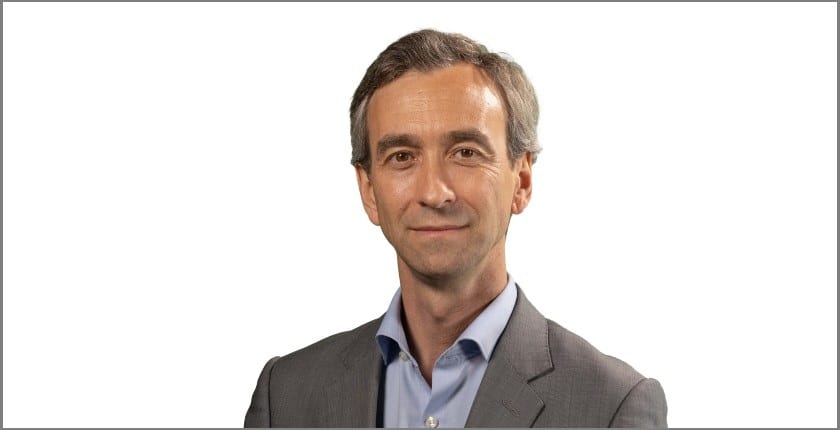
Authors: Dirk Vansintjan, President of REScoop.eu, EUSEW’s digital ambassador; Sara Tachelet, ACCE project coordinator and Chris Vrettos, policy advisor finance, also EUSEW’s young energy ambassador.

Europe’s transition to a clean energy system requires unprecedented investment, but today’s financing tools fail to unlock the full potential of citizen-led energy initiatives. Energy communities can mobilise billions of euros in renewable energy investments, yet their potential remains untapped due to complex state aid rules, inaccessible funding mechanisms, and burdensome regulations. Considering the broader policy landscape of the Clean Industrial Deal and the ongoing negotiations around the Multiannual Financial Framework, how can Europe close this gap and ensure fair access to finance for energy communities?

Financing the future: the role of citizens’ investments

Europe needs major investments in renewable energy, energy efficiency, and grids to meet its decarbonisation goals. The European Commission estimates an annual €400 billion shortfall by 2030. While the Action Plan for Affordable Energy Prices acknowledges the potential of energy communities in stabilising and lowering energy prices, the Clean Industrial Deal (CID) ignores their potential in mobilising investment.

A study shows that citizens could contribute €176 billion to wind energy alone by 2030. These citizens’ investments boost local economies while helping to democratise the energy system and stabilise prices. Every euro invested in citizen energy projects generates two to eight euros locally.

In contrast, up to 75% of the profits from investments in energy projects by large energy companies are distributed as shareholder dividends, limiting their local impact. Interestingly, energy communities are increasingly investing in industrial-scale projects such as offshore wind and large-scale district heating, demonstrating their ability to contribute to Europe’s reindustrialisation objectives. However, without tailored financial support, their expansion remains constrained.

Foto: Dirk Vansintjan, President of REScoop.eu, EUSEW’s digital ambassador and Chris Vrettos, policy advisor finance, also EUSEW’s young energy ambassador

Breaking barriers: state aid rules and public funding gaps

Energy communities face financial and regulatory barriers, particularly restrictive state aid regulations and a lack of investment mechanisms tailored to their needs. Many Member States fail to use EU funds effectively to support energy communities, while commercial banks often hesitate to lend, disregarding the social and economic benefits these communities can bring.

To fill this gap, national federations of energy communities in countries such as the Netherlands, France, and Spain have created ‘Community Energy Financing Schemes’ (CEFS), designed to support and finance energy community projects. These schemes effectively pool investments from citizens, public institutions, and private investors. Experience from the Netherlands and France shows their impact: every euro of public funding in the early stages can attract up to 60 euros in private investment for project implementation.

While revised EU State aid Guidelines have improved conditions for renewable energy communities, the framework remains difficult to navigate. Member States need clearer guidance on designing support schemes that are accessible to energy communities. Additionally, administrative and regulatory hurdles, such as grid connection fees and complex licensing processes, continue to slow down community-led projects.

Foto: Sara Tachelet, ACCE project coordinator

A call to action: targeted financial support for energy communities:

To fully unlock energy communities’ potential, the EU should support the creation of dedicated financial instruments tailored to their needs. This includes:

  • An EU Guarantee Facility, similar to InvestEU’s SME window
  • Simplified State Aid procedures for energy communities
  • Stable financing mechanisms for energy communities in the next Multiannual Financial Framework
  • Technical assistance for Member States to help ensure that energy communities can access the Social Climate Fund and Just Transition Fund
  • Support for national federations in scaling up financing models like CEFS can also help advance and professionalise community-led energy projects across Europe

Unlocking community potential in the energy transition

The EU’s energy transition cannot be left solely in the hands of large corporations and institutional investors. Energy communities have shown they can drive the shift to renewables, help citizens access affordable local production, and invest in industrial-scale projects like offshore wind and district heating. However, the right financial and policy tools are needed to help scale up. By improving these tools, policymakers can empower energy communities to become a cornerstone of Europe’s clean energy future.

This opinion editorial is produced in co-operation with the European Sustainable Energy Week (EUSEW) 2025. See ec.europa.eu/eusew for open calls.

by in News

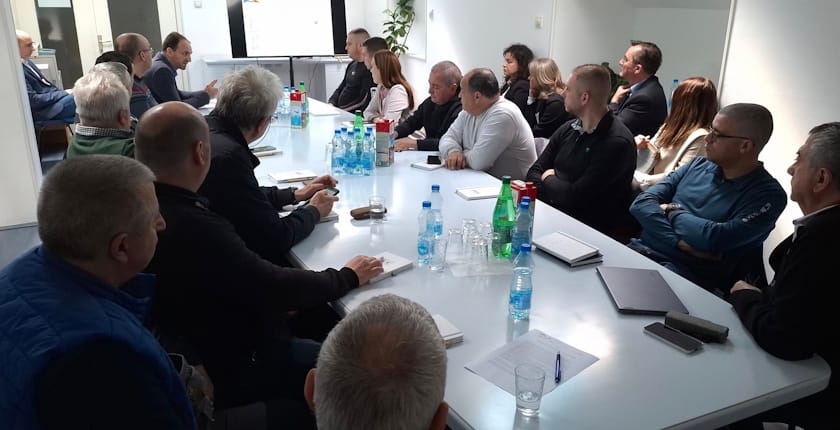
Energy Advisory Center established in Knjaževac in Serbia for citizens, firms

Knjaževac in Serbia got an Energy Advisory Center, intended for all citizens and small entrepreneurs who want to save energy, reduce costs, and improve their living and working conditions, as well as for those considering or already implementing energy efficiency measures.

The opening of the Energy Advisory Center in Knjaževac, a town in eastern Serbia, was marked by holding a roundtable discussion with local partners. At the event, the representatives of institutions, public companies, organizations, and the business sector were invited to join the facility’s mission and contribute to the dissemination of knowledge within their respective fields.

“Energy efficiency needs to become a higher priority for everyone. That’s why we need an Energy Advisory Center that communicates with all members of the local community, and not just subsidy beneficiaries,” said Daniela Kostadinova, senior advisor in the project Promotion of Renewable Energy Sources and Energy Efficiency in Serbia, implemented by GIZ.

She added that investing in expanding the scope of the center – which provides not only financial but also advisory support – contributes to an improved quality of life for a greater number of citizens and to a better understanding of their needs.

The Energy Advisory Center in Knjaževac will offer free advice to all interested citizens and entrepreneurs on energy efficiency and investment opportunities in renewable energy sources. Visitors will also be able to get information on subsidies and other financing options for such investments and learn from examples of good practice.

“The opening of the Energy Advisory Center represents an important step toward improving the quality of life of our fellow citizens. By providing relevant information and advice, we are enabling both citizens and businesses to use energy more efficiently, reduce their costs, or even generate new income,” said Milan Đokić, Mayor of Knjaževac.

The center will be operated by the municipality’s enterprise for development, urban development and construction. It is located in its premises, too. The public firm’s director Mladen Radosavljević stated at the opening that the center would be open for one-on-one consultations, group discussions on various topics, and for providing all necessary advice related to energy efficiency.

The establishment of the Energy Advisory Center in Knjaževac was supported by the German Federal Ministry for Economic Cooperation and Development (BMZ), in cooperation with the Regional Development Agency of Eastern Serbia (RARIS). The project was implemented by Deutsche Gesellschaft für Internationale Zusammenarbeit (GIZ) GmbH.

by in News

EUSEW 2025: Registration open for the European Sustainable Energy Week

Registration is now open for participation in the 19th edition of the European Sustainable Energy Week – EUSEW 2025, which will be held from June 10 to 12. Participants can register to attend the event in Brussels or join online.

EUSEW is the largest annual event dedicated to renewable energy and efficient energy use in Europe. It is organized by the European Climate, Infrastructure and Environment Executive Agency (CINEA) in cooperation with the European Commission’s Directorate-General for Energy.

In order to ensure competitiveness and achieve clean energy goals, Europe must take concrete action. The rapid deployment of renewable energy sources and the implementation of energy efficiency measures will be key elements in supporting industry, the European Commission said. It added that Europe would need to respond to the challenges of energy price spikes and market instability, which affect both businesses and citizens.

In line with the challenges, the slogan of this year’s European Sustainable Energy Week is ‘Powering a fair and competitive green transition’.

The number of in-person seats is limited

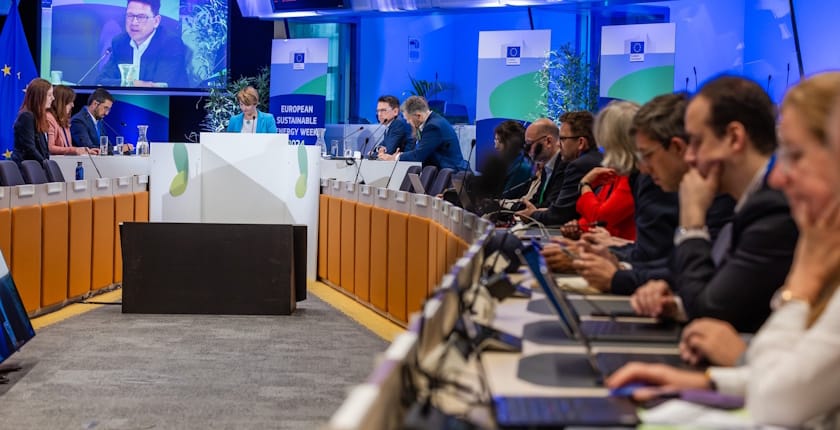
This year, EUSEW will be held in a hybrid format, from June 10 to 12. The gatherings are in the European Commission’s Charlemagne building and the nearby Martin Hotel in Brussels. All sessions will be livestreamed via a dedicated online event platform.

As the number of in-person seats is limited, organizers are encouraging interested participants to register as soon as possible.

Photo: EUSEW

EUSEW 2025 features a variety of events. The high-level conference, with over 60 sessions, will feature prominent speakers exploring five main themes: competitiveness and investments in clean energy, energy affordability, renewables, energy efficiency, decarbonization, and international cooperation. The conference will be officially opened on June 10 by European Commissioner for Energy and Housing Dan Jørgensen.

Following the opening, the EUSEW Awards ceremony will take place. They recognize outstanding individual and collective achievements in the fields of energy efficiency and green energy and are presented in three categories: Innovation, Local Energy Action, and Women in Energy.

EUSEW will also offer opportunities for informal networking during the Energy Fair. Additionally, for the sixth year in a row, the European Youth Energy Day will be held. A group of 30 young energy ambassadors will organize their own sessions and side events, including workshops with energy experts.

Dozens of locally organized Sustainable Energy Days will also be held across the world before and after the main week of the event.

by in News

Building resilient cities: how to align competitiveness and sustainability in Europe’s energy transition?

By Filipe Araùjo, Deputy Mayor of Porto, Portugal and Vice President of Energy Cities,one of EUSEW partner organisations

With the new EU Institutions taking office, it seems that the main discourse has shifted from the EU Green Deal to competitiveness. This new narrative presents both a challenge and an opportunity for European cities. We want our territories to prosper, but this can’t happen at the expenses of our health and safety.

Resilient local economies for a competitive Europe

A city that is thriving is a place where there is community wealth: the needs of its inhabitants are met, preferably by local economic actors. This contributes to reinforcing the local economic system, the social bonds and overall help withstand crisis situations. Resilient local economies are a precondition to EU’s competitiveness.

This community wealth approach applies to many sectors, but I believe it’s quite effective when it comes to energy. Nowadays, very few are questioning the need to have more renewable energy fed into the grid, not only to fight climate change, but also to ensure everyone (businesses and citizens alike) has access to energy at a relatively stable and affordable price, no matter the geopolitical context. But if we want to speed up RES deployments, we need to ensure everyone is on board. Not in my backyard behaviours (NIMBY) are still a reality many local leaders are confronted with. According to our experience in Porto, local ownership of renewable energy is a way for cities to address NIMBY, but also to help tackling energy poverty and contribute to thriving local economies.

Community energy addressing energy poverty in Porto

That is why Porto is planning to include all municipal social housing, around 12% of buildings in the municipality, in community energy projects. 6MW of solar power is going to be installed, providing clean electricity to vulnerable families at a lower price.

While some of the projects are still being tendered, some are already in the implementation phase. For example, the energy community in the Agra do Amial district, active since May 2024, is already providing its members with renewable energy, with around 50% of the energy generated consumed by vulnerable families

While our ambition is high, we can’t ignore the many challenges we are confronted with – some are common to many European municipalities. Cities frequently lack staff and financial resources to lead highly participatory process, often involving citizens who are very difficult to engage (such as vulnerable households) or even to provide information to their community on energy related issues. This, combined with the complexity of such topics, makes our work even more difficult.

In addition, burdensome administrative processes and challenging legal frameworks at national level can halt innovative projects and discourage citizens and small businesses from participating. When setting up Porto’s first energy community, it took us 2 years to get social housing units connected to the solar panels we installed.

Leveraging on local ecosystems for a more resilient Europe

Luckily, solutions do exist to ensure local communities can play their part to contribute to a more resilient and democratic Europe. Aside from ensuring legislation is properly transposed so that everyone across Europe can benefit from the same energy rights, we need capacity building programmes, develop local One Stop Shops to inform/engage citizens on the opportunities available to them and energy literacy programs.

For this to happen, cities will have to access finance, and the integration among the different initiatives at all levels that aim at increasing renewable energy deployment (and energy security) is fundamental. Another important aspect will be to ensure multilevel governance, so that cities can participate in the decision making around what concerns them, and not just been asked to implement.

In the coming period, the new European Commission is set to work on a new Citizens Energy Package, but also to develop a Clean Industrial Deal and reform the EU Cohesion Policy. This presents as a unique opportunity to align the EU approach to competitiveness with its energy and environmental targets, by establishing proper governance mechanisms and funnelling the necessary resources accordingly.

This opinion editorial is produced in co-operation with the European Sustainable Energy Week (EUSEW) 2025. See ec.europa.eu/eusew for open calls.

by in Events

South-East European Exhibition on Energy Efficiency and Renewable Energy

South-East European Exhibition on Energy Efficiency and Renewable EnergyEXHIBITION

Date: 5-7 April 2016
Frequency: Annual
Sequence: 12th edition
Organizer: Via Expo
Venue: Sofia, Inter Expo Center
Working hours for visitors: 5 – 6 April: 10.00 – 18.00 h.; 7 April: 10.00 – 17.00 h.

The EE & RE Exhibition puts on display a great set of existing energy technologies and it is a starting point for the launch of innovative products. It facilitates the development of energy sector and encourages the large-scale usage of energy-saving solutions in South-East Europe.

The 2016 Edition at a Glance

  • Direct exhibitors from Austria, Bulgaria, Germany, Greece, Italy, Poland, Portugal and the Netherlands. Finding distributors and launching new products are the main aim for them to take part.
  • For 7th year in a row there will be an Austrian Pavilion.
  • Innovative isolation systems, energy storage devices, energy-saving HVAC equipment, systems for renewable energy production, cogeneration,  etc. will be among the exhibition highlights.

EE & RE 2015

  • Austrian Pavilion
  • Norwegian and Italian Group Participations were realized for the first time.
  • Visitors from 39 counties visited the Exhibition and the parallel events.
  • The products which captivated their interest were energy saving lighting, biogas installations and technologies, ‘made in Bulgaria’ PV systems which can be applied in dynamic city architecture, as well as in agriculture and road infrastructure, solar thermal system with patented safe-proof sun tracking mechanics, prototype of wind turbine with unique high efficiency, etc. 

           Post Event Report 2015

The opportunities and perspectives of the SE European market

Security of energy supply, fast climate change, strong economic and social benefits have prompted many countries in South-East Europe to diversify their energy mix and to reduce the import of fossil fuels, keeping money circulation within the regional economy.

The Region has a great potential for utilization of the renewables. Well-developed agriculture and forestry industries, availability of organic waste are a prerequisite for biogas, methane and biomass production. The decentralized solar electricity generation for heating and cooling is encouraging, too. A very perspective market segment is the realization of waste-to-energy projects through public private partnerships.

Countries with a sea outlet have the opportunity to drive forward the ‘blue energy’ sector and only 40% of the hydro energy sources is developed in SE Europe.

The energy systems transformation will need a new grid that combines capacity for high volume transfers and distribute energy with smart power management.

Investments for improvement of energy efficiency in private and public buildings as well as in industry are coming – the South-East European countries are developing also strategies for zero energy buildings.

The CO2 reduction in transport sector is the other priority issue and in the Region solutions for replacement of the fossil fuels with alternative low carbon fuels are sought. In terms of e-mobility, the South-East Europe is at its early stage and governments are going to stimulate this emerging industry. According a recently research at the end of 2014 in Bulgaria there were registered 497 electric vehicles – 36% more than the previous year and 1031 hybrid vehicles  – 61 % more than 2013.


Contact:

Maya Kristeva: +359 (32) 960 011, 966 813
[email protected]

[embeddoc url=”https://aea-al.org/wp-content/uploads/2016/03/Brochure_EERE_EE.pdf” download=”all” viewer=”google”]