by in News

Green solutions in practice: Roundtable in Knjaževac points the way to a sustainable, energy-efficient future

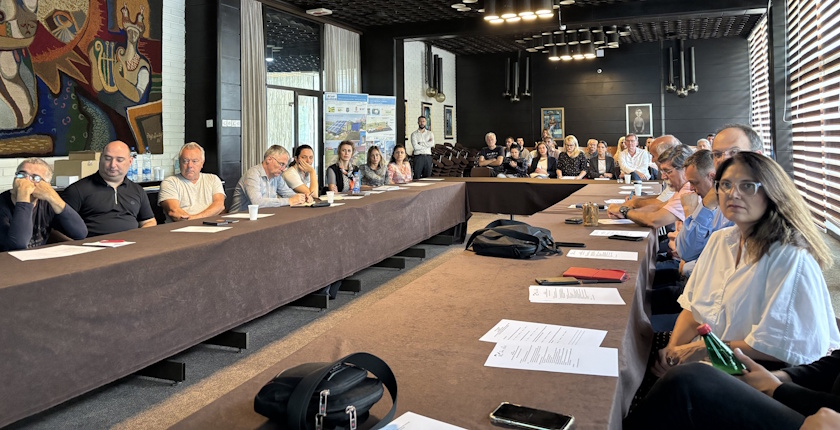
A roundtable titled Green Solutions in Practice, held in the eastern Serbian town of Knjaževac, brought together local government officials, experts, rural tourism providers, entrepreneurs, and citizens to exchange experiences on renewable energy sources and energy efficiency.

The event was organized by the Regional Development Agency of Eastern Serbia (RARIS) as part of the Promotion of Renewable Energy Sources and Energy Efficiency in Eastern Serbia project, implemented by German Cooperation in Serbia GIZ. The gathering demonstrated that eastern Serbia is becoming an increasingly active player in implementing green solutions and strengthening energy sustainability.

The roundtable Green Solutions in Practice was opened by Saša Petrović, Deputy Mayor of Knjaževac, who highlighted the importance of the green transition for promoting rural development and improving the quality of life.

Daniela Kostadinova, a representative of GIZ, presented the organization’s contribution to achieving energy sustainability in Serbia. She said that the project’s results so far have been highly significant, but added that she believes further development and awareness-raising are still necessary.

Photo: RARIS

Kostadinova also stressed the importance of financial support for citizens to implement energy efficiency measures, and she pointed out that energy poverty should be the next priority to address. She expressed hope that some ideas would be realized by the end of the Promotion of Renewable Energy Sources and Energy Efficiency in Serbia project, which runs until December.

Expressing her satisfaction at the opportunity to visit partner municipalities, Kostadinova noted that GIZ strives to provide both advice and support to its partners in the implementation of projects. She added that long-term success is extremely important to GIZ, which seeks to maintain its reputation as a high-quality and reliable partner.

Empowering eastern Serbia through renewable energy

Vladan Jeremić, Director of RARIS, presented the results of the Promotion of Renewable Energy Sources and Energy Efficiency in Eastern Serbia project. Four key results have been achieved: establishing a regional platform for renewable energy and energy efficiency in Eastern Serbia as a mechanism for aligning the positions, interests, and policies of key local and regional stakeholders; strengthening regional capacities; opening the Energy Advisory Center; and raising public awareness about the importance of renewable energy sources and energy efficiency.

Jeremić: People are eager to learn about renewable energy sources and energy efficiency

As a result of the regional platform’s work, the first renewable energy and energy efficiency fair was held in Zaječar. Numerous workshops and training sessions have been organized, and a guide on applying renewable energy and energy efficiency in rural tourism has been produced.

According to Jeremić, the project has shown that people are eager to acquire the knowledge they need to improve their lives in practice, making them more cost-effective, affordable, and sustainable, while also contributing to the energy transition.

“At the initiative of citizens, although it wasn’t planned within the project, we organized the fair. Even though we didn’t have an appropriate exhibition space, and despite the demanding nature of such events, we worked with great enthusiasm. The fair brought together technicians, engineers, and representatives of local governments and the private sector, many of whom are here today, which we see as a strong indicator of our success,” he said.

Managing energy efficiently in rural tourism

As part of the project, an interesting guide has been prepared for owners of rural tourism households, offering practical tips for improving energy efficiency, reducing costs, and introducing sustainable solutions into their business.

Ivan Svetozarević, the author of the guide and owner of a rural tourism household called Gorski konak in the village of Zubetinac, presented the guide through an engaging presentation filled with personal examples. The presentation addressed the question of how to manage energy efficiently in rural tourism. Situated on the slopes of Stara Planina, Gorski konak stands out as a model of sustainability.

Photo: Ivan Svetozarević / RARIS

The Svetozarević family equipped the household with solar panels, solar collectors for water heating, and a heat pump. Guests can use electric bicycles to reduce car use and emissions. Cooperation with neighbors and local producers further enhances the sustainability of the entire complex.

“My wife and I have been in this for over 20 years, but only a few years ago did we have the opportunity to install solar panels and a heat pump. Sustainability is actually our way of life,” said Svetozarević.

Multidisciplinary approach as a key to communication

Maja Lalić, Creative Director of the Mikser Festival, emphasized the importance of communication in promoting sustainable practices and raising public awareness about renewable energy sources and energy efficiency.

“The Mikser Festival is a partner of GIZ in popularizing these topics, seeking to involve the culture and creative industries sector, which has so far been rarely represented in discussions on renewable energy and energy efficiency. As a multidisciplinary platform, Mikser brings together numerous actors from different fields and engages in citizen education to bring these important topics closer to a wider audience,” she said.

For years, the organization has been staging events in revitalized abandoned industrial facilities as part of circular economy measures, applying various sustainable practices, such as issuing e-tickets, using reusable cups, and avoiding PVC branding.

Photo: RARIS

In cooperation with GIZ, this year’s edition of the festival developed an interactive educational program to increase energy literacy among three target groups: architecture and design professionals, young people, and the general population. The program included a panel discussion titled New Citizen Energy, where experts and prosumers dispelled myths about energy, shared experiences, and presented local challenges and solutions.

A special focus was placed on youth and children through workshops, empowering them to become agents of community change and develop creative ways to raise energy awareness and sustainable habits.

Mikser as a communicator and a dissemination platform

Maja Lalić highlighted the importance of decentralization, noting that successful initiatives from different parts of Serbia are encouraging, though they often remain less known to the wider public.

“Mikser positions itself as a communicator and a platform for disseminating success stories, giving people and communities space to share their experiences and inspire others. It is precisely this openness that makes the festival a dynamic place of meeting and exchange, supporting the further development of sustainability,” she said.

Examples of good practice

The application of renewable energy sources and energy efficiency measures goes far beyond installing solar panels or replacing windows, as demonstrated by various innovative examples of good practice.

Ilija Stevanović from the Mihajlo Pupin Institute presented innovative solutions developed in cooperation with farmers, schools, and festivals. As a special example, he cited the “digitalized field” implemented in collaboration with farmer Nikola Lončar from Belegiš and the smart device Mobisan – a mobile solar power generator.

Mobisan combines soil sensors, a weather station, and wireless communication to collect data on microclimate and soil conditions, enabling automated irrigation and fertilization. The device is controlled remotely and powered by solar panels, saving resources and reducing the use of chemicals.

Ognjen Tomašević from the Exit Foundation presented the “Green Exit” initiative and plans to improve the energy efficiency of one of the region’s largest events.

Innovative solutions are contributing to the festival’s energy efficiency

In addition to recycling, which has been a focus of the Exit Festival’s activities for five years, a “solar guitar” and gramophone-shaped solar collectors have been developed in cooperation with the Mihajlo Pupin Institute. These two devices provide electricity and hot water to Exit camp users, aiming to improve its energy efficiency.

Photo: Solar guitar / Mihajlo Pupin Institute

Aleksandar Branković, the owner of one of the first home solar power plants in eastern Serbia, presented his 6.7-kilowatt system installed back in 2013, making it one of the first in Serbia.

Vladan Dragićević, energy manager at the Municipality of Knjaževac, presented the achievements of the Energy Advisory Center. “The Energy Advisory Center is not just a place – it is a network of trust, a space where knowledge turns into savings and the energy transition into an opportunity for all,” he emphasized.

More than 70 citizens have received support at the Energy Advisory Center

The center provides relevant information and advice enabling citizens and businesses to use energy more efficiently, reduce costs, and even generate additional income. To date, more than 70 citizens have received advisory support.

The center is open for both individual consultations and group discussions on various topics, and it offers all necessary advice related to energy efficiency.
by in News

Greece loses EU grant intended for renewable electricity for vulnerable consumers

The ambitious Apollo program, which the Greek government outlined in late 2023, is losing EUR 100 million. The European Union earlier approved the grant for investments in renewable energy and storage, intended to lower energy costs for vulnerable consumers through self-consumption.

The first phase of the Apollo program was envisaged to help vulnerable households. It aimed to support renewable energy projects, through auctions, of 400 MW to 500 MW overall, combined with battery systems.

Each of Greece’s 13 regions, also known as peripheries, would get a green power plant, and eligible consumers who join a local energy community get discounted electricity bills. Therefore, the program is in the form of virtual self-consumption. It is the first of its kind in the region that Balkan Green Energy News tracks.

Apollo fails to take off on time

The scheme was supposed to benefit from an EUR 100 million grant from the European Union’s Recovery and Resilience Facility (RRF). It is implemented via the National Recovery and Resilience Plan Greece 2.0.

However, Apollo was significantly delayed and now the deadlines are considered impossible to achieve, even if they are extended. It means RRF funds are going to be lost. Energypress reported that they have already been removed from the budget.

Namely, the issue is with the batteries. Now their costs would have to be covered entirely by the producers. In turn, they are expected to lock higher prices in Apollo’s auctions, possibly passing them on to end consumers and making the whole initiative less effective at combating energy poverty.

It should be noted that the rest of Apollo remains intact for the time being, despite the setback. The loss of funds concerns household consumers with special tariff A. Funding is still available, in theory, for the other category of vulnerable households, defined by different income criteria.

The entire initiative also aims to lower energy costs for municipal authorities, water utilities and irrigation associations. They haven’t been affected so far.

Standalone battery plants also at risk

Another Greek initiative, for subsidized standalone battery plants, faces very short deadlines. It is eligible for EUR 341 million in RRF funding. In total, projects for 900 MW overall have been selected through three auctions.

The first wave of investors should declare connection readiness this month, so their facilities can become operational by the end of 2025.

HAESS: Selected projects may not receive support

They have complained of a lengthy licensing process and logistical difficulties. The investors asked the Ministry of Environment and Energy for an extension.

In July, the Ministry of Finance submitted a request for the sixth RRF tranche, EUR 2.1 billion in grants, after completing 39 more targets. If it is approved by the administration in Brussels, Greece will have secured EUR 23.4 billion overall, or 65% of allotted funds.

by in News

New generation of sodium-ion batteries developed in Estonia

A new generation of sodium-ion batteries, developed and manufactured in Estonia, offers a safer, more sustainable, and more affordable alternative to lithium-based energy storage systems. The newly developed batteries are modular and scalable, allowing them to meet the needs of a wide range of users — from homeowners and farmers to commercial and industrial operators.

Estonian company Freen OÜ has introduced a new generation of sodium-ion battery systems. Sodium-ion batteries are presented as an alternative to lithium-based systems. Unlike lithium, sodium is one of the most abundant and widely distributed resources on Earth.

In addition to the high cost of lithium, its mining and extraction from salt flats cause significant environmental damage and deplete water reserves. In contrast, sodium can be obtained more sustainably — most commonly through the electrolysis of common salt.

Unlike lithium batteries, which are prone to overheating, Freen OÜ’s technology ensures thermal stability for sodium-ion batteries, virtually eliminating the risk of fire or explosion. The company also highlights that, unlike lithium-based systems, Freen batteries are not subject to international transportation restrictions and are cobalt-free, making them a more environmentally friendly and geopolitically secure solution.

In addition to chemical safety, Freen emphasizes the practicality of its systems. The batteries feature integrated wheels for easy handling, and their plug-and-play installation makes setup fast and straightforward.

Freen battery systems have a wide range of applications

Their modular design makes them suitable for a wide range of applications, including energy-demanding households, remote farms, telecom infrastructure, commercial facilities, EV charging stations, the oil and gas sector, and public institutions such as schools and hospitals.

“The launch of sodium-ion batteries represents a major innovation in our portfolio, following the successful development of small wind turbines. These batteries stand out for their safety, versatility, and competitive pricing — and we are ready to collaborate with partners across all sectors to accelerate the energy transition”, said Andrey Khimenkov, CEO of Freen OÜ.

Freen has developed Freen-BSH, a high-voltage system capable of storing 10.08 kWh per module, and Freen-BSL, a low-voltage system with a capacity of 7.5 kWh per module.

Freen batteries can be recharged more than 5,000 times

Both systems support over 5,000 charging cycles, offering long service life, low maintenance, and high operational safety, even under extreme weather conditions.

“Whether used for energy independence, peak shaving, or as part of a hybrid renewable energy system, Freen’s solutions deliver efficiency and reliability across a variety of scenarios,” the company noted in its statement.

Freen also highlights the potential of its batteries in the Western Balkans, where several major initiatives are driving investments in renewable energy and energy storage.

Kosovo* recently announced a EUR 1.2 billion auction for renewables and storage — one of the largest in the region. In parallel, the European Union continues to fund the green transition through instruments such as the Western Balkans Investment Framework (WBIF) and the EU Growth Plan, providing grants and technical support for projects focused on renewable energy, storage, and grid flexibility.

These initiatives create opportunities for innovative solutions, such as Freen’s sodium-ion batteries, to become an integral part of the region’s evolving energy landscape.

* This designation is without prejudice to positions onstatus and is in line with UNSCR 1244/99 and the ICJ Opinion on the Kosovo declaration of independence.
by in News

Record solar panel imports in Africa: a lifeline for a continent where 600 million people lack electricity

Half of Africa’s population still lacks access to electricity, but a record surge in solar panel imports could signal a turning point. A report by the Ember research center shows a 60% increase in solar panel imports from China to Africa. Although it is too early to make forecasts, the report suggests that the solar boom could positively impact the power systems of many African countries.

As many as 570 million people in Africa still lack reliable access to electricity, which is almost half of the continent’s population. According to data from the Energy Progress Report, in 2022, 685 million people worldwide did not have access to electricity, meaning that Africa accounts for 80% of the global population without access.

While North African nations and countries like Ghana, Gabon, and South Africa have made progress, major challenges remain in Central Africa and the Sahel region (Burkina Faso, Mali, Niger, Cameroon, Guinea, Gambia, Senegal, Nigeria, Chad, and Mauritania), where entire communities remain off the grid.

Solar energy could be an opportunity for Africa to skip the phase of relying on fossil fuels and make a significant step toward an energy transition. It is still too early to say if this process is already underway, but the latest report by Ember shows that solar power is gaining serious momentum.

The total imported capacity reached 15,032 MW

According to their analysis, from June 2024 to June 2025, solar panel imports from China to Africa increased by 60%. The total imported capacity during these 12 months amounted to 15,032 MW. Ember used Chinese customs data in the report because China is the world’s largest producer and exporter of solar panels, accounting for around 80% of the global output in 2024.

The last significant increase in solar imports was recorded in 2023, when South Africa experienced a solar boom due to its energy crisis. However, new data shows that interest in solar energy is spreading to other countries as well. Solar panel imports outside South Africa nearly tripled in the last two years, rising from 3,734 MW to 11,248 MW.

The report shows that a record solar panel import was set in as many as 20 African countries, while 25 countries imported at least 100 MW of solar capacity from June 2024 to June 2025.

Increasing solar panel imports could reduce fuel imports

Ember’s analysis suggests that solar could significantly contribute to electricity production in many African countries. If Sierra Leone installed all the panels imported in the last 12 months, it could produce the equivalent of 61% of its total electricity output from 2023. Similar results are seen in Chad — 49%.

In five countries, newly imported solar panels could contribute more than 10% of total electricity production from 2023: Liberia (25%), Somalia (15%), Eritrea (15%), Togo (11%), and Benin (10%). Overall, 16 countries have the potential to increase electricity production by at least 5%, according to the report.

In addition, solar panel imports can significantly reduce fossil fuel imports, especially diesel, on which many African countries still rely. According to 2022 research by Wood Mackenzie, 17 African countries had more diesel generator capacity than grid-connected power plants.

In some countries, such as Nigeria, if diesel imports for electricity production were stopped, savings could cover the cost of solar panels in approximately six months or even less.

Although solar expansion in Africa is accelerating, experts emphasize that the process is still in its early stages and that more data and research are needed to fully understand its potential.

by in News

Europe’s largest floating solar power plant begins operation

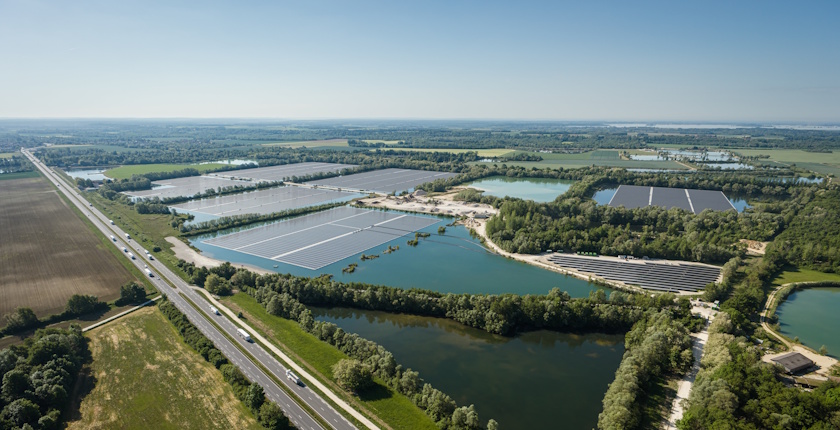
The largest floating solar power plant in Europe, named Les Ilots Blandin, has officially begun operation in France. With a total capacity of 74.3 MW, the facility is located in the Haute-Marne department, on the site of former gravel pits, and is expected to generate enough electricity to supply 37,000 people annually.

In the Haute-Marne department, the largest floating solar plant in Europe was launched by Q Energy and Velto Renewables. Located near the commune of Perthes, the facility features 135,000 solar panels installed on floating platforms.

It sits on basins formed by flooded former gravel pits, closed in 2020 and owned by local company Etablissements Blandin. The newly inaugurated floating solar power plant was named Les Ilots Blandin, which translates as Blandin’s islets.

The solar panels cover 45.5 hectares

The total area spans 127 hectares, and the solar panels cover 45.5 hectares, project manager at French floating solar developer Ciel et Terre, Vincent Pinchou, told pv magazine France. The company was responsible for supplying and installing the floating structures, modules, and inverters.

The power plant has a total peak capacity of 74.3 MW, with 72.3 MW installed on floating platforms and 2 MW on land. The ground-mounted section was strategically integrated to optimize both energy production and the site’s economic performance. The installation consists of six separate platforms, each ranging in capacity from 8 MW to 17 MW.

According to the developers, the plant will generate enough renewable electricity to supply 37,000 people and prevent 18,000 tons of CO₂ emissions per year.

Floating solar plants are more expensive to build and maintain than ground-mounted ones

In northern regions of France, there is significant potential for the development of floating solar technology. However, Corentin Sivy, Development Director of Q Energy, emphasized that one of the main challenges remains economic. Floating solar plants are more expensive to build and maintain than ground-mounted ones. Moreover, France’s Commission de Régulation de l’Énergie (CRE) does not hold separate tenders for floating projects; they must compete directly with ground-based systems.

The project’s financing was secured in September 2024, with more than EUR 50 million provided by Crédit Agricole Transitions & Energies and Bpifrance. In early 2025, Spanish renewable energy company Velto Renewables acquired a 50% stake in the project.

“Velto is accelerating its development in France with a clear objective: to establish a long-term presence in France for several decades. We are here to stay. Our mission is to develop, operate, and support projects over the long term, in harmony with local specificities; this is one of the reasons we are proud of our partnership with Q Energy in France,” CEO of Velto Renewables Lucas de Haro said at the inauguration.

by in News

Hitachi Energy: Game-changing solutions for a sustainable energy future

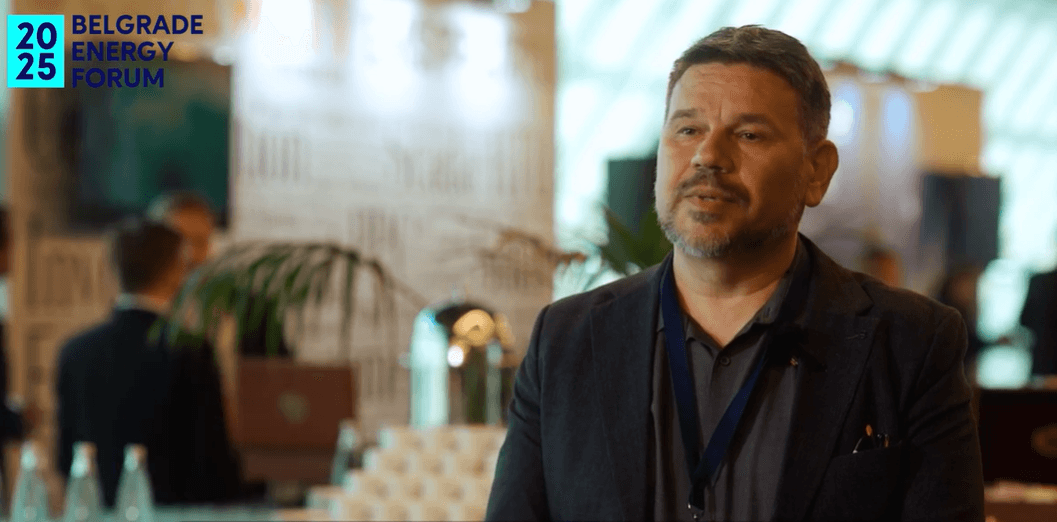
Hitachi Energy, a global leader in energy technology, develops system solutions and offers products and services that actively contribute to sustainable energy and a better future, Igor Anđelković, the company’s Country Marketing and Sales Leader in Serbia, said at Belgrade Energy Forum 2025. Game-changing technologies for high-voltage grids and transportation, along with solutions for renewables integration, support decarbonization efforts and deliver added value to both clients and local communities.

Multinational company Hitachi Energy, a silver sponsor of the BEF 2025 conference, is present in the Southeast Europe region through its Balkan Cluster, which covers seven markets – Albania, Bosnia and Herzegovina, Montenegro, Croatia, Kosovo*, North Macedonia, and Serbia.

[wpcc-iframe title=”Igor Andjelkovic, Country Lead Serbia, Hitachi Energy at the Belgrade Energy Forum 2025″ width=”500″ height=”281″ src=”https://www.youtube.com/embed/KVbO8HI5oLk?feature=oembed” frameborder=”0″ allow=”accelerometer; autoplay; clipboard-write; encrypted-media; gyroscope; picture-in-picture; web-share” referrerpolicy=”strict-origin-when-cross-origin” allowfullscreen=””]

Inspiring the next era of sustainable energy

Since 2010, Hitachi Energy has implemented eco-efficient solutions for high-voltage grids of up to 550kV. The company’s innovative and eco-efficient EconiQ® high-voltage portfolio applies revolutionary technology free of sulfur hexafluoride (SF6) and proven to significantly reduce carbon footprint throughout the life cycle.

The high-voltage EconiQ® roadmap demonstrates the scalability of this technology, which allows customers and industry to quickly transition to eco-efficient solutions.

Photo (Hitachi Energy): Hitachi Energy has implemented eco-efficient solutions for high-voltage grids of up to 550kV

Now more than ever, pioneering technologies like EconiQ are needed to advance a sustainable energy future, says Anđelkovic.

Efficient renewables integration

In the renewable energy segment, Hitachi Energy offers a range of substation solutions that help to efficiently integrate renewable energy into the transmission grid and distribution network. This includes grid connection solutions for all types of renewables power plants.

Hitachi solutions are used in a large number of wind projects in Southeast Europe

The major projects in Southeast Europe, completed or in the implementation phase, which use Hitachi Energy’s technology are wind farms Pupin and Crni Vrh in Serbia, Gvozd in Montenegro, Komanje Brdo and Ivan Sedlo in Bosnia and Herzegovina, and Pometeno Brdo and Korlat in Croatia.

Photo (Hitachi Energy): Hitachi Energy offers a range of substation solutions that help to efficiently integrate renewable energy into the transmission grid and distribution network

Driving transportation and energy towards carbon neutrality

Hitachi Energy is also committed to decarbonizing the transportation sector. Its revolutionary ‘grid-to-plug’ electric vehicle charging system, called Grid-eMotion® Fleet, is a smart mobility solution that enables operators to efficiently scale up their operations and is expected to contribute to sustainable society for millions living in urban areas.

Grid-eMotion® Fleet marks a game-changing shift from a charger-product based approach to a charging-system based approach, which helps to accelerate the future of smart mobility.

Hitachi Energy has been pioneering EV charging solutions since 2013, when it first introduced innovative flash-charging eBus solutions in Geneva and Nantes.

Advanced technologies for smart airports

With its innovative solutions, Hitachi Energy has made significant advancements in air traffic as well, with the development of smart airports being one of its key innovations. This includes advanced technologies such as artificial intelligence (AI), video analytics, and 3D LiDAR to improve the passenger experience and improve airport operational efficiency.

Hitachi Energy also helps airport to decarbonize and become more sustainable with its electrification and digitization solutions.

* This designation is without prejudice to positions onstatus and is in line with UNSCR 1244/99 and the ICJ Opinion on the Kosovo declaration of independence.
by in News

Winners of EUSEW Awards announced

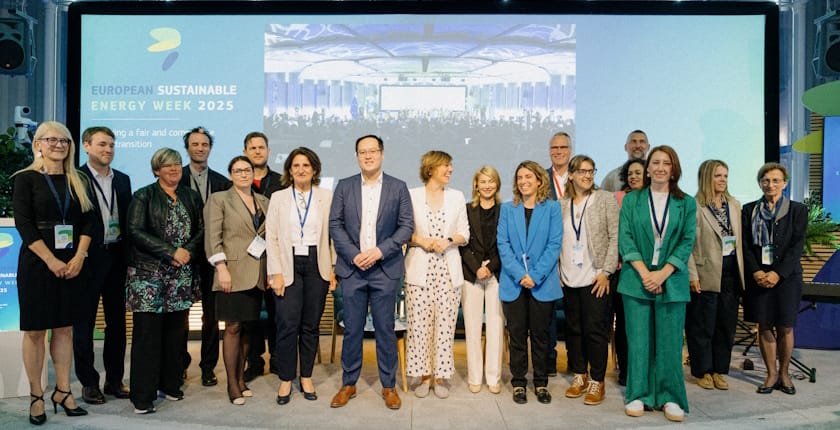
Stella Tsani is this year’s winner of the EUSEW Woman in Energy Award. The Innovation Award went to the Dutch company AquaBattery, while the initiative Community Energy for Social Housing in Otterbeek won in the Local Energy Action category.

EUSEW Awards honor outstanding individuals and projects for their innovation and efforts in energy efficiency and renewable energy. After a high-level jury selected nine finalists, the winners were chosen through online public voting in three categories: Innovation, Local Energy Action, and Woman in Energy.

The award ceremony took place on the first day of the European Sustainable Energy Week (EUSEW) in Brussels. This year’s winners are Stella Tsani, AquaBattery, and Community Energy for Social Housing in Otterbeek.

EUSEW, the largest event in Europe dedicated to sustainable energy, was opened by European Commissioner for Energy and Housing Dan Jørgensen. In his speech, he stressed the European Union would need to become fully independent from Russian energy. “The way we will do it is by banning the import of gas. By the end of this year, we plan to ban spot market gas purchases, and by the end of 2027, we will also ban long-term contracts,” he stated.

The European Union imports fossil fuels worth EUR 400 billion annually, which, according to Jørgensen, is neither economically nor environmentally sustainable.

“Instead of constantly buying expensive energy, we must start producing our own sustainable and renewable energy,” he stressed.

Climate change is here and now

Jørgensen noted that in addition to the energy crisis, Europe is now facing a climate crisis.

“Climate change is here. It’s not something that might happen in the future. It’s not something that we fear could be a prospect. It’s here and now”, he emphasized, adding that Europe has a moral responsibility to combat climate change because, historically, the West, including Europe, has polluted for more than a hundred years.

The third crisis Europe faces, according to the commissioner, is a competitiveness crisis. He pointed out that energy in Europe is two to three times more expensive than in the United States or China, and that last year, 47 million Europeans were unable to adequately heat their homes.

“To address these three challenges, security, climate change, and competitiveness, we need to stay on track. The green transition is not the reason for these problems. The green transition is the answer for these challenges”, Jørgensen concluded.

Energy produced in Europe is always better and more competitive than imported energy

Poland’s Secretary of State at the Ministry of Climate and Environment, Krzysztof Bolesta, also spoke at the opening. He highlighted three key elements for a successful energy transition: affordable energy, fairness, and sustainable energy independence.

Bolesta stressed that citizens must feel tangible benefits from the energy transition through more affordable energy. He also underlined the importance of a just transition, particularly for workers in hard-to-decarbonize industries.

According to him, energy produced in Europe is always better and more competitive than imported energy. “We don’t want to swap one dependency on Russian oil, say, with tech import dependency from Asia. So let’s not swap oil for batteries. Let’s try to bring as much of the value chain to Europe as possible,” the Polish official said.

Woman in Energy – Stella Tsani

Stella Tsani, a scientist and associate professor at the University of Athens, is this year’s winner of the EUSEW Woman in Energy Award. She combines scientific research in energy transition with active participation in high-level policymaking, contributing to practical progress through evidence-based recommendations.

Through work with organisations such as the United Nations Environment Programme (UNEP) and the Intergovernmental Panel on Climate Change (IPCC), her research informs policies that balance economic growth with environmental protection. She is also dedicated to empowering young women in the energy sector through mentorship and education, believing that future female leaders are key to achieving the EU’s climate goals.

In her speech at the award ceremony, Tsani highlighted her belief in the vast, untapped potential of youth. “That’s what I’m trying to do at the University of Athens support all future leaders, the future changemakers. So I truly believe in you and I urge everyone in this room, the European Commission, to support young people,” she stated.

[wpcc-iframe title=”EUSEW2025 Finalist | Greek academic driving country’s energy transition” width=”500″ height=”281″ src=”https://www.youtube.com/embed/YIizBrFETqc?feature=oembed” frameborder=”0″ allow=”accelerometer; autoplay; clipboard-write; encrypted-media; gyroscope; picture-in-picture; web-share” referrerpolicy=”strict-origin-when-cross-origin” allowfullscreen=””]

Innovation category – AquaBattery

The Innovation Award recognises outstanding projects funded by the European Union that are ongoing or recently completed, demonstrating original and innovative approaches to the energy transition and delivering tangible results.

This year’s winner is AquaBattery from the Netherlands. Its pilot project in Delft could soon commercialize a sustainable and affordable solution for long-duration energy storage based on kitchen salt and water. The unique innovation, using widely available and environmentally friendly materials, could help Europe reduce its reliance on critical raw materials and develop better energy storage solutions.

[wpcc-iframe title=”EUSEW2025 Finalist | Dutch saltwater battery commercialises groundbreaking energy storage solution” src=”https://www.youtube.com/embed/1xs2khpQB2k?list=PLMKHMvnaraHMd4y5rZuvjnnW1veToA8qm” width=”500″ height=”281″ frameborder=”0″ allowfullscreen=”allowfullscreen” data-mce-fragment=”1″]

Local Energy Action – Community Energy for Social Housing in Otterbeek

The Local Energy Action category highlights citizen or consumer-led initiatives at the local level that contribute to the energy transition in their communities. Such initiatives are meant to inspire others across the EU by demonstrating both economic and environmental benefits.

This year’s winner is Community Energy for Social Housing in Otterbeek, based in the city of Mechelen, Belgium. The project provides socially vulnerable tenants with access to renewable energy. Two hundred households in the Otterbeek social housing district have been equipped with solar panels, receiving green energy at a fixed rate below market prices.

Supported by the EU under the TANDEMS project, the initiative has developed a EUR 1 million investment model funded through citizen contributions, showcasing the power of community-driven change.

“By demonstrating how social inclusion can accelerate the clean energy transition, we advocate policies that support energy sharing, community-driven renewable projects, and affordable access to clean energy for low-income households,” says Bart De Bruyne, Energy Sharing Expert at the City of Mechelen.

[wpcc-iframe title=”EUSEW2025 Finalist | Belgian social housing energy initiative” width=”500″ height=”281″ src=”https://www.youtube.com/embed/Q30AOi-58ck?list=PLMKHMvnaraHMd4y5rZuvjnnW1veToA8qm” frameborder=”0″ allow=”accelerometer; autoplay; clipboard-write; encrypted-media; gyroscope; picture-in-picture; web-share” referrerpolicy=”strict-origin-when-cross-origin” allowfullscreen=””]

by in News

Interenergo launches its first wind farm in Bosnia and Herzegovina

The Ivan Sedlo wind farm, located on the mountain of the same name in the municipality of Hadžići, is the first power-generating wind facility in Sarajevo Canton. The project was developed by Slovenian company Interenergo, owned by Austria-based energy group Kelag. It is it’s first wind power plant in Bosnia and Herzegovina.

With a total installed capacity of 25 MW, the wind farm is equipped with five Siemens Gamesa 5.0 turbines. According to the company’s update, the wind farm will generate enough green electricity to power approximately 11,000 households in Bosnia and Herzegovina and prevent over 32,000 tons of CO2 emissions annually.

The construction of the Ivan Sedlo wind farm began in late September 2022, following more than six years of preparation. Interenergo acquired the project from the previous investor, Suzlon Energy BH, a company owned by Danish firm Suzlon Wind Energy.

“We’re proud to launch our first wind project in Bosnia and Herzegovina. Despite challenging site conditions, the project was delivered without major delays or compromises in quality. This achievement reflects the strong cooperation we’ve built with the Municipality of Hadžići and the surrounding communities, whose support was vital throughout the development process”, stated David Huber, Director of Interenergo.

According to him, the wind farm is expected to generate over 65 GWh annually, marking a significant milestone in the development of clean energy for Hadžići, Bosnia and Herzegovina, and the wider Balkan region.

Photo: Interenergo

“The importance of the investment for the local community is diverse — from a cleaner environment and new jobs to additional funds for the Municipality of Hadžići’s budget. I believe this is just the beginning, as we have a clear goal: the development of environmentally sustainable, long-term profitable, and socially responsible energy solutions. We also have the potential and the will to continue in that direction,” said Eldar Čomor, Mayor of Hadžići.

Nihad Uk, the prime minister of Sarajevo Canton, emphasized at the inauguration that projects like this are becoming increasingly important because, as he said, it’s not a question of years, but months before the European Union introduces so-called carbon taxes.

Interenergo has been active in the Bosnia and Herzegovina market since 2007.  Today, in addition to the wind park, the company operates eight hydropower plants with a total capacity of 43 MW and an average annual production of over 125 GWh — enough to supply more than 31,000 households and avoid 61,500 tons of CO2 emissions each year.

By 2032, Interenergo plans to develop new renewable energy projects across the region, aiming to add more than 300 MW of new capacity.

by in News

Construction of largest solar power plant in Bosnia and Herzegovina begins

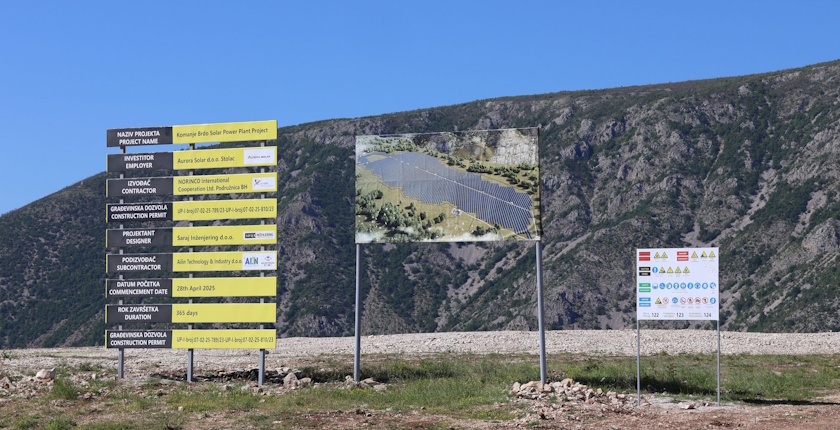
The construction of Bosnia and Herzegovina’s largest solar power plant has officially commenced. The location for the facility with a peak capacity of 125 MW is in the municipality of Stolac, near the village of Komanje Brdo. The project has caused discontent among some residents.

The investment is valued at EUR 100 million. According to the investor’s estimates, the power plant is expected to generate around 200 GWh of electricity annually over the next three decades.

The cornerstone was laid by Mayor of Stolac Stjepan Bošković, along with the representatives Aurora Solar, which developed the project, and Chinese company Norinco International, the contractor.

In recent years, the City of Stolac has actively promoted solar initiatives, with a particular focus on Komanje Brdo, according to the local authority’s website. It expects to collect between EUR 1.53 and EUR 2.05 million per year through the concession and utility fees.

 The project has faced public criticism

Despite its scale and potential, the project has faced criticism from a part of the public. Citizens gathered in an informal initiative called Za Komanje Brdo (For Komanje Brdo) have repeatedly raised concerns about a lack of transparency, the absence of public consultation, and alleged non-compliance with environmental protection laws. They claim the permitting process wasn’t transparent and that the local community was not adequately involved in decisions that directly affect its environment and quality of life.

“We are not against renewable energy sources, but we are against arbitrariness, the disregard for the law, and the neglect of residents’ interests. This project was launched against the will of the people,” residents said at a protest held on the same day that construction began, local media outlet Glas Stoca reported.

On the other hand, the investors claim the project is of strategic importance, promising new jobs and long-term benefits for the local community. They also maintain that all necessary permits were obtained in accordance with the law.

Despite public opposition and official complaints submitted to relevant institutions, construction works began on April 28. The plant is expected to be completed within a year and is set to become the largest photovoltaic park in Bosnia and Herzegovina. Currently, the largest solar power plant in the country is Hodovo, operated by Eco-Wat.

by in News

Citizens, activists in Bulgaria oppose wind farm project that would destroy forest

In the municipality of Avren in Bulgaria, citizens and activists will gather on May 18 to express their opposition to a plan to build a wind farm with 29 turbines, which implies the clearing of 30 hectares of forest.

The eastern Bulgarian municipality of Avren is home to valuable forest ecosystems and it lies along one of the most important bird migration routes in Europe – the Via Pontica. A local forest protection initiative, which is organizing a protest on May 18 against a wind farm project, said the decision to change the forest land designation was made without public consultation or an environmental impact assessment, arguing it was against the law.

The said natural resources are of both national and international importance for biodiversity conservation and maintaining the ecological balance of the Black Sea region, protest organizers claim. Although the wind farm project may appear green at first glance, the construction of 29 turbines would require cutting down 30 hectares of forest, they warned. Moreover, the project is located near protected areas within the Natura 2000 network and intersects a key migratory route for birds.

Nearly 9,000 citizens have signed a petition calling for a moratorium on projects affecting forests

Almost 9,000 citizens have signed a petition demanding a moratorium on all projects affecting forests in the area until a comprehensive assessment of cumulative environmental impacts is conducted. They are calling for the suspension of the procedure to amend the general urban development plan and for halting the project, which they deem illegal and harmful to both nature and people.

They are demanding a full and independent environmental impact assessment, including a compatibility evaluation with Natura 2000, the organization of a transparent public debate involving the local community, scientists, and environmentalists, as well as to consider alternative locations outside of sensitive ecological zones.

On the other hand, the company developing the project claims the turbines would be equipped with thermal cameras and sensors to detect approaching birds, and that the wind turbines would automatically shut down if necessary. It added that the minimum distance from residential areas would be between 850 and 1,200 meters, in line with regulations.

The local authority supports the wind farm project. Mayor Emanuel Manolov said about fifty jobs would be created and that the local budget would receive between EUR 1 million and EUR 1.5 million annually.

A protest was also held in Kyustendil against wind and solar projects in nearby mountain areas

Citizens of the Kyustendil municipality have also voiced their opposition to wind turbines. On April 30, a protest was held in Kyustendil against the construction of a wind farm on Osogovo mountain and the expansion of a solar power plant on the Konjavska mountain. The municipal leadership and assembly have supported the citizens’ demands.

Bulgarian citizens have been fighting wind turbines for over a decade

Since 2012, no new wind farms have been put into operation in Bulgaria, mainly due to administrative barriers and legal uncertainty. Late last year, citizens from four districts – Dobrich, Silistra, Shumen, and Varna – protested in Varna, demanding a referendum on the construction of solar and wind power plants on agricultural land.

Earlier, the municipal assembly of Dobrichka (also known as Dobrich-selska – Dobrich rural) voted to ban the conversion of agricultural land into construction land for wind farms. A similar decision was made by the local parliament in General Toshevo. German company wpd plans to install wind turbines in both municipalities.

In 2023, authorities in Vetrino blocked CWP’s massive wind energy project. That same year, a draft law on offshore wind power in Bulgaria sparked opposition from fishermen, the tourism industry, nongovernmental organizations, and local authorities in the coastal city of Varna and its surroundings. It contributed to the fall of the government at the time, and the legislative process didn’t get far.

Citizens in other countries covered by Balkan Green Energy News are also resisting wind power projects. Last year, residents of several villages near Livno in Bosnia and Herzegovina managed to halt the planned construction of the Orlovača wind farm. Around the same time in Serbia, the Ministry of Environmental Protection issued nature protection conditions that prevented the construction of the Čestobrodica wind farm.