by in News

Strengthening Europe’s Energy Sovereignty: The Imperative of a Clean Heat Transition

While often framed as a macroeconomic abstraction, Europe’s reliance on fossil fuel imports carries direct, tangible consequences for millions of households. Domestic energy security is fundamentally tied to the home; space and water heating account for 77.6% of the average EU household’s energy consumption, with approximately one-third of these homes relying on gas. By 2025, 90% of the EU’s gas supply was sourced from third countries, creating a strategic vulnerability to energy coercion that endangers the stability of millions of residences.

Diversification vs. Decarbonization: The REPowerEU Challenge

Historically, Russia served as the primary architect of Europe’s gas supply. In the wake of the full-scale invasion of Ukraine, the EU successfully pivoted, slashing Russian imports from 45% to 12%. This shift was codified through the REPowerEU Regulation, which aims to secure energy independence by permanently banning Russian fossil gas.

However, the broader imperative is not merely to swap suppliers, but to reduce gas demand entirely. This requires equal commitment to the other two pillars of the 2022 REPowerEU Plan: energy conservation and an accelerated clean energy transition. Current projections are sobering:

  • Heat Pump Shortfall: Europe is currently on track to meet only half of its deployment targets.

  • Demand Impact: This lag means fossil gas demand will likely only decrease by 60% of 2024 Russian import levels, rather than the intended 120%.

Bridging the €78 Billion Funding Gap

Achieving a clean heat transition requires significant capital. A study by LCP Delta for the Cool Heating Coalition identifies an annual investment gap of €78 billion through 2050. At present, combined public and private sector contributions cover only half of this requirement.

To close this disparity, Europe must look toward smarter fiscal reallocation:

  • Subsidy Realignment: The EU currently directs approximately €111 billion per year toward fossil fuel subsidies. Redirecting this capital toward renewable solutions would effectively bridge the clean heat funding gap.

  • Innovative Business Models: Policymakers should incentivize “social leasing” frameworks. This requires updating the Consumer Credit Directive to ensure these schemes are covered by robust consumer protection laws.

  • The Role of ETS2: The upcoming ETS2—which prices emissions from buildings and road transport—will be a pivotal market driver. When paired with the Social Climate Fund, it provides a mechanism to finance the transition while shielding the most vulnerable consumers.

The Path to Strategic Autonomy

The postponement of ETS2 for one year in December 2025 sent a confusing signal to the clean heat market. There is no longer room for delay. Member States must utilize this additional window to aggressively support the shift to decarbonized heating, remediate housing inadequacies, and reduce the energy load of the continent’s worst-performing buildings.

Since 2022, the EU has demonstrated remarkable resilience in reducing its dependence on Russian energy. However, as new geopolitical shocks emerge, Europe must prioritize the elimination of all strategic vulnerabilities. The legal framework exists; the transition now requires the political resolve to see it through.

by in News

Albania to Launch New Renewable Energy Auction in Q3 2026

Albania is preparing to launch a new renewable energy auction in the third quarter of 2026, as the focus of its energy policy increasingly shifts toward strengthening the transmission grid and international interconnections.

Speaking at an event with foreign investors, the Minister of Energy and Infrastructure, Enea Karakaçi, emphasized that geopolitical developments have rendered the sector one of the most exposed to external shocks. “Dealing with global crises has now become routine; today, once again, due to a war far from our borders, the energy sector is being placed in a stressful and difficult situation,” he stated.

According to the Minister, this situation requires a rapid response and stronger institutional coordination to guarantee energy security. In this regard, the government has undertaken reforms to build a more resilient system and attract investment, moving beyond the standard obligations of European integration. “This is not only a result of the need for EU alignment but also a necessity to attract investments,” the Minister added.

Diversification and Private Investment

One of the primary pillars of this transformation remains the diversification of energy sources. Since 2019, Albania has built a more balanced energy portfolio, where solar energy is steadily gaining ground. “Approximately 10 percent of domestic production now comes from solar energy, reducing our dependence on hydropower plants,” he underlined.

The sector’s development has been increasingly supported by private investments that extend beyond state support schemes. According to the Minister, the market now includes both projects realized through formal auctions and independent private investments.

Strengthening the Transmission Grid

However, recent developments in Europe have highlighted a structural vulnerability: the critical importance of the transmission network. “Energy security is not only about production but also about transmission. If we build generation capacities, we must simultaneously build the corresponding transmission infrastructure,” he said.

In this framework, Albania is accelerating regional interconnection projects, including the link with North Macedonia, the doubling of capacity with Greece, and a strategic project with Italy. These investments aim to increase flexibility and enable more efficient utilization of production resources.

Strategic Goals for 2030

Another strategic objective remains the country’s transformation from a net importer to a net exporter of energy by 2030. “Our goal is for Albania to become a net exporter of energy,” the Minister declared.

In parallel, the government aims to increase energy efficiency through dedicated financial instruments. “We will create a financing fund for energy efficiency,” he said, noting that approximately 400 MW of self-production capacity has already been installed by businesses and households.

Investments will not be limited to infrastructure alone. The Minister emphasized the need for human capital development, announcing the creation of an Energy Academy with international support. Simultaneously, major public projects are being planned, including the development of dams and storage technologies such as “pumped storage,” aimed at increasing overall system flexibility.

The upcoming 2026 renewable energy auction is expected to be a significant step toward market consolidation and capacity growth, reflecting an integrated approach between energy production and transmission.

by in News

The Green Backbone: Albania and Western Balkan Partners Unveil Strategic Energy Projects for 2026 EU Funding

The Energy Community has officially opened the public consultation for the 2026 list of Projects of Energy Community Interest (PECI), marking a pivotal moment for the Western Balkans’ energy infrastructure. Running from March 16 to April 17, 2026, the consultation evaluates eight critical projects designed to dismantle cross-border bottlenecks and pave the way for a massive influx of renewable energy.

For Albania and its neighbours, Kosovo, North Macedonia, Montenegro, and Bosnia and Herzegovina the selected projects represent a shift from traditional hydroelectric production to a sophisticated, integrated system of large-scale storage and high-voltage transmission corridors. These projects are now positioned to seek diverse financing, including EU grants, Western Balkans Investment Framework (WBIF) funds, and favourable loans from international financial institutions.

Below is a detailed technical and strategic breakdown of the flagship projects currently in the PECI selection pipeline.

1. Project E12: Moglice Pumped-Storage – The Balkans’ “Giant Battery”

At the heart of Albania’s green transition is the Moglice Extension Pumped-Storage Hydropower Plant (PSH). Developed by Devoll Hydropower Sh.A. (part of the Statkraft Group), this project is set to become one of the largest flexibility assets in the region.

  • Technical Parameters:

    • Maximum Power (Pmax): 1,620 MW (with a dynamic operational range of -1,620 MW to +1,620 MW).

    • Storage Capacity: 30,000 MWh (approx. 30 GWh).

    • Voltage: 400 kV.

    • Efficiency: 77% roundtrip efficiency.

  • Strategic Role: The plant will function as a “green battery,” utilizing the existing Moglice reservoir (380 million m³) and a new upper reservoir (25 million m³). It is designed to store surplus energy during periods of high production and release it during peak demand, providing critical balancing services to Albania and neighboring EU markets like Greece and Italy.

  • Timeline: Currently in the economic feasibility stage, with the earliest commissioning targeted for 2033.

2. Project E04: The 220 kV Balkan Triangle Rehabilitation

To ensure the reliability of the “Balkan Triangle” (Albania, Montenegro, and Bosnia & Herzegovina), the rehabilitation of the aging 220 kV Trebinje–Vau i Dejës corridor has been prioritized. This line is a vital artery that has recently struggled with congestion due to new solar and hydro capacities.

  • Technical Parameters:

    • Voltage: 220 kV.

    • Length: 162.92 km.

    • Transmission Power: Upgraded to carry 1,500 A using specialized high-capacity conductors.

    • Promoters: NOS BiH, Elektroprijenos-Elektroprenos BiH, and CGES (Montenegro).

  • Strategic Role: The project addresses severe climatic challenges and infrastructure depreciation. By replacing OPGW, insulation, and conductors on existing poles without increasing mechanical load, the project will increase Net Transfer Capacity (NTC) and resolve long-standing congestions between BA–ME, ME–AL, and AL–BA.

  • Timeline: Currently in the Detail Design Study phase, with an expected commissioning date of 2030.

3. Project E05 & Regional Corridors: Integrating Wind and Strengthening East-West Links

The expansion of the 400 kV network is a two-pronged strategy: strengthening regional East-West ties and unlocking wind potential in Northeast Albania.

A. The East-West Western Section (Project E05)

Connecting Kosovo and North Macedonia, this 103 km interconnector is a key link in the regional transmission “rings.”

  • Technical Parameters: 400 kV; 1330 MW Pmax.

  • Objective: Connecting the upgraded Prizren (XK) substation to a new substation in Tetovo (MK). This project enhances the security of supply and supports the large-scale integration of Renewable Energy Sources (RES) across the corridor.

  • Timeline: Expected commissioning by 2035.

B. The Albania–Kosovo Interconnection (Strategic Link)

As highlighted by recent strategic filings, Albania is pushing for a new 400 kV interconnection between Fierza (AL) and Prizren (XK).

  • Strategic Role: This link is deemed essential to facilitate the integration of over 1 GW of planned wind energy capacity in Northeast Albania. It will alleviate existing 220 kV grid overloads and significantly boost regional energy trading.

Financing the Future

These PECI projects are governed by the revised EU TEN-E Regulation, which streamlines the path toward final approval in December 2026. Because these projects provide cross-border benefits, they are eligible for a “blended” financing model. This includes state budget allocations, private investment from promoters like Statkraft and KOSTT, and significant support from European Union grants and loans.

As the Western Balkans move away from coal and toward a renewable-heavy mix, these projects—Moglice’s storage, the 220 kV rehabilitation, and the 400 kV corridors—form the essential hardware of a modernized, secure, and decarbonized European energy market.

by in News

Slovenia Bolsters Energy Transition with €174 Million Grid Investments

Slovenia has taken a decisive step toward a decarbonized future, announcing a €174 million investment package dedicated to the comprehensive modernization of its national power transmission and distribution networks. This strategic initiative aims to bolster grid capacity, enhance supply reliability, and—most critically—facilitate the rapid integration of renewable energy sources into the national mix.

The project is supported by €59 million in co-funding from the European Union’s Modernisation Fund, a financial instrument fueled by the EU Emissions Trading System (ETS) designed to assist member states in meeting climate targets.

A Foundation for the Green Transition

Minister of the Environment, Climate and Energy, Bojan Kumer, formalized the initiative by signing four contracts and two strategic decisions with the CEOs of Slovenia’s six state-owned energy entities. The group includes the transmission system operator (TSO) ELES and five distribution system operators (DSOs).

“The energy transition actually begins with the grid,” Minister Kumer noted during the signing ceremony. “A strong, resilient network is the bedrock upon which our future energy autonomy and sustainability are built.”

Key Projects and Financial Breakdown

The modernization efforts are distributed across the country’s regional operators, focusing on infrastructure upgrades, digitalization, and increased transformer capacity.

Operator Project Focus Total Investment EU Support
Elektro Ljubljana Urban network upgrades, cabling, and digitalization €53.2 Million €19.6 Million
Elektro Gorenjska Upgrading Trata and Brnik substations €32.9 Million €14.9 Million
Elektro Maribor New 110 kV line (Murska Sobota – Lendava) €32.3 Million €11.1 Million
ELES (TSO) Upgrading 110 kV line (Dravograd–Velenje) €12.9 Million €5.7 Million
Elektro Celje Switchgear refurbishment & transformer replacement €11.0 Million €5.5 Million
Elektro Primorska Reconstruction of Vrtojba substation switchgear €3.5 Million €1.7 Million

The 2030 Vision: Scaling Smart Infrastructure

This current wave of investment is only the beginning of a broader strategic roadmap. Slovenia has secured over €300 million from the Modernisation Fund to be utilized through 2030, specifically earmarked for grid refurbishment, energy efficiency, and renewable deployments.

The Ministry is already preparing a subsequent public call, expected in April, which will allocate €69 million for smart electricity grid investments between 2026 and 2030. These funds will prioritize three pillars:

  1. Renewables Development: Strengthening the grid to handle intermittent wind and solar inputs.

  2. Electrification of Heating: Supporting the transition away from fossil-fuel boilers to heat pumps.

  3. E-Mobility: Building the infrastructure necessary for the widespread adoption of electric vehicles.

By reinforcing its electrical backbone today, Slovenia is ensuring that its infrastructure can meet the demands of a more electrified and sustainable tomorrow.

by in News

Designing Renewable Energy Auctions for Smart Risk Allocation – IRENA findings

The global energy transition has entered a critical phase of accelerated deployment, yet the financial architecture underpinning this expansion remains profoundly unequal. As governments worldwide race to decarbonize their power grids, competitive procurement mechanisms—specifically renewable energy auctions—have emerged as the undisputed engine of capacity growth. Historically celebrated for driving down the levelized cost of electricity (LCOE) for wind and solar, auctions are now facing intense scrutiny regarding their long-term macroeconomic impacts, particularly in emerging markets.

In its landmark January 2026 report, Renewable Energy Auctions: Design for Risk Allocation, the International Renewable Energy Agency (IRENA), in collaboration with the Sustainable Renewables Risk Mitigation Initiative (SRMI) and major multilateral development banks, delivers a sobering assessment of the current paradigm. The report argues that while contemporary auction models successfully deliver low-cost electrons, they often do so by enforcing a structural asymmetry that disproportionately burdens developing nations. For policymakers, investors, and energy professionals, understanding this shift from a purely price-driven model to a more holistic, risk-equitable framework is absolutely essential for navigating the next decade of global energy finance.

Key Drivers and Context

The imperative to reform auction design is driven by a confluence of economic, geopolitical, and developmental factors. At the core is the staggering disparity in global climate finance. While global energy transition investments reached a record $2.4 trillion in 2024, the distribution of this capital was starkly concentrated. Advanced economies and China captured more than 90% of these funds, leaving the Global South drastically undercapitalized despite possessing some of the world’s most abundant renewable resources.

To bridge this financing gap, developing nations have increasingly relied on competitive auctions to signal market readiness and attract international developers. However, the prevailing geopolitical and economic environment characterized by fluctuating inflation, currency volatility, and rising debt distress has exposed the fragility of these mechanisms. The standard blueprint for renewable energy auctions was largely forged in mature, low-risk markets. Exporting this blueprint to developing economies without tailoring it to local realities has created a systemic bottleneck, hampering the very sustainable development these projects are meant to catalyze.

Market Trends and Data

Over the past decade, auctions have universally replaced fixed feed-in tariffs as the primary tool for renewable energy procurement. Their core strength lies in price discovery and transparency, which has driven solar and wind prices to historic lows. Yet, recent market trends indicate that the era of relentless price declines may be plateauing, giving way to a more complex calculus.

Data from recent procurement cycles reveals a troubling trend: a hyper-focus on securing the absolute lowest bid price has frequently resulted in “underbidding,” where developers submit unviable financial proposals to win contracts, ultimately leading to project delays or outright cancellations. Furthermore, to secure rock-bottom prices from international developers in emerging markets, host countries have been forced into rigid financial concessions. This typically includes Power Purchase Agreements (PPAs) denominated entirely in hard currencies (such as USD or EUR) and sweeping sovereign guarantees. While these terms successfully de-risk projects for private capital and foreign lenders, they inadvertently transfer massive macroeconomic liabilities onto host governments.

Challenges and Risks

The most profound insights from the IRENA report center on the hidden systemic risks embedded in traditional auction architectures. Under current norms, the allocation of risk is highly asymmetrical. Private developers and financiers are heavily shielded by host government guarantees, leaving developing states to shoulder severe macroeconomic vulnerabilities.

First, the reliance on hard-currency PPAs exposes host nations to crippling foreign exchange risks. If the local currency depreciates against the dollar, the cost of servicing the PPA spikes, threatening to deplete national currency reserves and plunging utilities and by extension, governments deeper into debt distress.

Second, traditional auctions overwhelmingly prioritize the lowest tariff, effectively penalizing developers who might otherwise invest in local supply chains. Consequently, projects are frequently constructed using entirely imported equipment and foreign labor. This dynamic transforms the energy transition into an extractive process for developing nations, stripping them of the socio-economic dividends—such as job creation, industrial capacity building, and technology transfer—that should accompany multibillion-dollar infrastructure investments. For investors, this lack of local integration creates a secondary risk: fragile social license to operate, which can lead to regulatory backlash or political instability over the lifespan of a 20-year asset.

Opportunities and Innovation

Recognizing these pitfalls, IRENA and its partners including the World Bank, the European Bank for Reconstruction and Development (EBRD), and transform advocate for a paradigm shift toward “value-centric” auction designs. This evolution presents significant opportunities to restructure global energy finance.

The foremost innovation is the transition to multi-criteria auctions. Rather than awarding contracts based solely on price, forward-thinking governments are beginning to integrate qualitative metrics into their clearing mechanisms. By rewarding bids that commit to local content requirements, community ownership models, and environmental circularity, auctions can serve as powerful levers for green industrialization.

Equally critical is the reimagining of risk allocation. The report provides actionable blueprints for moving away from blanket sovereign guarantees toward more nuanced, targeted risk mitigation instruments. Innovations such as hybrid contract indexation where a PPA is partially pegged to local inflation and partially to foreign exchange rates can help distribute currency risks more equitably between the state and the developer. Furthermore, Multilateral Development Banks (MDBs) have a pivotal role to play in providing credit enhancements, blended finance, and liquidity guarantees that reduce the cost of capital for developers without bankrupting the host country’s treasury.

Future Outlook

Looking ahead to the next 5–10 years, the global energy sector will likely witness the widespread adoption of “Auctions 2.0.” As developing countries become increasingly wary of debt traps, they will demand procurement frameworks that prioritize economic resilience alongside decarbonization. We can expect a surge in tailored auction designs that factor in grid integration costs, energy storage requirements, and strict socio-economic deliverables.

For major international developers and energy companies, this signifies a strategic pivot. Firms that can localize their supply chains, partner effectively with domestic enterprises, and navigate complex, multi-criteria bidding environments will hold a distinct competitive advantage. Meanwhile, the role of international financial institutions will shift from merely funding projects to structurally enabling local markets, offering “auctions-as-a-service” and standardized, equitable PPA templates that protect both investor returns and sovereign balance sheets.

Conclusion

The 2026 IRENA report, Renewable Energy Auctions: Design for Risk Allocation, serves as both a warning and a vital roadmap. While competitive procurement has been instrumental in making renewable energy the cheapest source of bulk electricity globally, its current financial architecture is structurally unsustainable for much of the developing world. By shifting the focus from the lowest possible tariff to equitable risk-sharing and local value creation, policymakers can transform renewable energy auctions from mere procurement exercises into catalysts for holistic economic development. Ultimately, the success of the global energy transition will not be measured solely in gigawatts deployed, but in the financial resilience and industrial equity it brings to the nations powering it.

by in News

OECD Launches Strategic Initiative to Modernize South East Europe’s Aging Power Grids

The Organisation for Economic Co-operation and Development (OECD), in partnership with the Delphi Economic Forum, has unveiled a high-level initiative aimed at overhauling the energy and digital landscape of South East Europe.

The project, titled “Electricity, Digital and Regional Interconnectivity in South East Europe,” was officially launched in Thessaloniki—a city historically positioned as a strategic bridge between Europe and the Balkans. The initiative arrives at a critical juncture as the region grapples with inefficient infrastructure and the urgent need for energy security amid shifting geopolitical realities.

Addressing the 14% Efficiency Gap

Data presented at the launch highlighted a stark disparity between the Western Balkans and the broader European Union. OECD Secretary-General Mathias Cormann noted that outdated power grids in the region suffer from electricity losses of approximately 14%, nearly triple the EU average.

The infrastructure deficit is compounded by a slow transition to green energy. Despite significant natural resources, the Western Balkans currently harness only 4% of their solar potential and 2% of their wind potential. Furthermore, regulatory alignment remains a hurdle, with only 48% of relevant EU energy standards currently implemented across the region.

Greece and Romania Spearheading Integration

The project is designed and funded by Greece, with additional co-financing from Romania. For Athens, the initiative reinforces its growing status as a regional energy hub and a net electricity exporter.

Nikos Tsafos, Greece’s Deputy Energy Minister, emphasized that modern energy security is built on three pillars: affordability, strategic autonomy, and robust interconnectivity. This regional push is also deeply tied to EU enlargement. Giorgos Pagoulatos, Greek Ambassador to the OECD, noted that Western Balkan EU accession has gained new urgency. He signaled that regional integration will be a cornerstone of Greece’s upcoming presidency of the Council of the EU in 2027.

A Roadmap to 2027

To bridge the gap, Secretary-General Cormann outlined four strategic priorities for the Western Balkans:

  • Regulatory Convergence: Full alignment with EU energy frameworks.

  • Corporate Governance: Strengthening competition and oversight within state-owned utilities.

  • Infrastructure Modernization: Replacing aging coal-fired plants and upgrading transmission lines.

  • Digital Transformation: Scaling up smart-meter adoption and renewable energy deployment.

The stakes are high: experts at the event warned that European electricity demand could surge by 60% by 2030. To meet this challenge, the OECD plans to conduct a series of technical workshops across the Balkans, culminating in a comprehensive policy roadmap scheduled for release in 2027.

by in News

Balkan power play: why the Western Balkans must ditch Russian fuels and fast-track EU market integration

A short, sharp truth: the Western Balkans sits at the crossroads of Europe’s energy security and its green ambitions, but patchy rules, lingering dependence on Russian fuels and slow market reforms mean the region risks being a weak link rather than a bridge. A new working paper from Bruegel lays out what’s at stake and what needs to happen next.

From leverage to liability: Russian ties still matter

Gas pipeline system in the Western Balkans

Gas pipeline system in the Western Balkans

The report finds that several Western Balkan states remain exposed to Russian energy influence notably Serbia and Bosnia and Herzegovina on oil and gas  which leaves them vulnerable to geopolitical pressure and imported price shocks. Negotiations and occasional extensions of Russian contracts in 2024–25 underline that diversification on paper does not always mean real independence. That dependence isn’t just political theatre: it alters investment choices, weakens bargaining power and complicates alignment with EU rules.

Why this matters beyond the region: the Western Balkans is a major transit corridor for electricity between the EU and Southeast Europe. The paper highlights that as much as “up to 70%” of electricity flows tied to the region actually pass between EU countries a signal that grid interdependence already exists and that isolation is neither realistic nor desirable. Faster regulatory alignment and market coupling would therefore strengthen European system resilience as well as the region’s.

 Western Balkan electricity imports and exports (TWh), 2020-2024

Western Balkan electricity imports and exports (TWh), 2020-2024

Market coupling: planned, stalled, urgent

European market coupling the technical and regulatory merging of power markets is the single policy lever that could deliver immediate gains: better price signals, more efficient dispatch across borders, and a buffer against supply shocks. The Bruegel authors point out that integration planned for the mid-2020s (originally aiming around 2027) is running behind because national rulebooks and market institutions in the Western Balkans are not yet aligned with EU standards. That delay has real costs: lost efficiency, higher system operation expenses, and a slower rollout of renewables.

 Day-ahead auction average prices (€/MWh), EU, Norway and Western Balkans, 2024

Day-ahead auction average prices (€/MWh), EU, Norway and Western Balkans, 2024

Uneven green progress  leaders and laggards

Not all Western Balkan countries are on the same page when it comes to the green transition. The paper singles out Albania as a regional leader largely because of its hydropower legacy and relatively favorable renewables policies and Montenegro as advanced across several indicators. Meanwhile, solar and wind potential across much of the region remains largely untapped and constrained by underdeveloped grids, weak permitting frameworks and scarcity of private investment. Simply put: the natural resource advantage (sun, wind, hydro) is mostly unexploited.

This mix of actors creates both a challenge and an opportunity. Countries with stronger renewables backbones could become exporters and stabilizers for neighbors but only if cross-border trade is enabled and market rules are harmonised.

Domestic electricity prices (€/MWh), EU, Norway and Western Balkans, 2024 and 2014

Domestic electricity prices (€/MWh), EU, Norway and Western Balkans, 2024 and 2014

Coal’s long shadow political economy vs. emissions

Phasing out coal is politically charged across the Western Balkans. Coal still provides baseload power and jobs in several countries, and switching it off without credible compensation or alternative industrial plans risks social backlash. The paper recommends phased, socially sensitive coal retirement plans tied to clear investment pathways for renewables and grid upgrades. In short: decarbonisation must be realistic and sequenced fast where possible, compensated where needed.

Practical steps the paper recommends (and why policymakers should care)

  1. Accelerate regulatory alignment with the EU. Aligning rules is the low-hanging fruit that unlocks market coupling and immediate efficiency gains. Market reforms are technical, but the payoff — lower costs and stronger security — is political and strategic.

  2. Reduce real dependence on Russian fuels. Diversification must go beyond headline contracts. It requires investments in LNG connections, alternative import routes, and faster roll-out of domestic renewables to reduce import vulnerability.

  3. Design a just coal phase-out. Pair plant retirement timetables with retraining, economic revitalisation, and clean-energy investment envelopes so communities are not left behind.

  4. Mobilise private capital for renewables and grids. Improve permitting, de-risk projects with public guarantees, and create transparent auction frameworks to attract the investors the region needs.

Political and financial headwinds plus a window of opportunity

The paper is candid about constraints: weak institutions, fragmented markets, and geopolitical tensions complicate reform. But it also notes a narrow window where EU enlargement dynamics, conditional funding instruments (the EU Growth Plan for the Western Balkans) and post-Ukraine energy policy realignments create momentum and conditional financing that can be leveraged if countries move quickly and coherently.

Electricity generation mix in the Western Balkans, 2014 and 2024

Electricity generation mix in the Western Balkans, 2014 and 2024

What success looks like

A successful pathway would see the Western Balkans converge with EU market rules, complete market coupling, significantly reduce Russian fuel exposure, and scale renewables deployment while phasing out coal with social protections. Practically, that means lower wholesale price volatility, better utilisation of regional transmission assets, and an energy sector that attracts investment rather than fears it.

Conclusion integration first, transition faster

The Bruegel working paper’s central message is straightforward: the Western Balkans has the geographic and resource advantages to be a strategic partner for Europe’s energy security and green goals but only if the political will to align rules, diversify supplies and invest in renewables is found. Fast-tracking market coupling and decarbonisation in parallel, not in sequence will deliver both security and economic opportunity. For policymakers in Tirana, Sarajevo, Pristina, Podgorica, Skopje and Belgrade, the choice is clear: remain a transit corridor vulnerable to outside influence, or become a resilient, integrated bridge to Europe’s clean-energy future.

by in News

PPC and Metlen Forge 1.5 GW Regional Battery Storage Alliance

In a major move to solidify their dominance in the Southeast European energy transition, Greece-based PPC Group and Metlen Energy and Metals (formerly Mytilineos) have entered into a strategic joint venture. The agreement aims to develop, construct, and operate a massive portfolio of Battery Energy Storage Systems (BESS) totaling 1.5 GW in power capacity and 3 GWh in energy storage across Romania, Bulgaria, and Italy.

Fast-Tracking Storage Infrastructure

The partnership is designed for rapid deployment, with both companies targeting the completion of 1 GW of capacity within just 12 months. This aggressive timeline underscores the urgency of integrating flexible assets into regional grids to manage the influx of intermittent renewables.

The technical specifications of the portfolio focus on high-efficiency, utility-scale technology:

  • Total Capacity: 1.5 GW / 3 GWh (representing two-hour duration systems).

  • Technology: Liquid-cooled Lithium-Iron-Phosphate (LFP) batteries.

  • Asset Management: The venture will be equally owned (50/50), leveraging PPC’s regional market presence and Metlen’s specialized EPC (Engineering, Procurement, and Construction) expertise.

Synergy Beyond Solar

This deal follows a landmark 2024 agreement between the two entities, which saw them collaborate on a 2 GW solar pipeline across Italy, Romania, Bulgaria, and Croatia. While that previous arrangement focused on an “at-completion” acquisition model by PPC, this new BESS venture creates a deeper operational partnership.

The storage facilities are intended to perform two critical functions:

  1. Renewable Support: Balancing the output of adjacent photovoltaic and wind farms.

  2. Grid Stability: Providing essential ancillary services to national electricity systems to prevent frequency fluctuations.

Strategic Implications for Southeast Europe

For the government-controlled PPC Group, this alliance secures a significant portion of its three-year energy storage targets. For Metlen, the deal represents a pivotal milestone in its broader European strategy, positioning the firm as a leading player in the continent’s storage infrastructure sector.

“This agreement creates value for both parties and further expands our group’s already significant presence in Southeast Europe,” noted Konstantinos Mavros, PPC Group’s Deputy CEO for Renewables.

As the Balkan and Mediterranean markets continue to decarbonize, the rapid commissioning of these 3 GWh of storage capacity is expected to be a cornerstone for regional energy security and market liquidity.

by in News

Croatia Launches Espoo Convention Procedure Over Gornji Horizonti Hydropower Project in Bosnia and Herzegovina

The Ministry of Environmental Protection and Green Transition has formally initiated proceedings under the Espoo Convention concerning the Gornji Horizonti hydropower subsystem in Republika Srpska, Bosnia and Herzegovina. The large-scale energy project предусматриes the construction of three hydropower plants.

Environment Minister Marija Vučković confirmed that the official procedure was launched in November through the Secretariat of the Espoo Convention, formally known as the UNECE Convention on Environmental Impact Assessment in a Transboundary Context. Both Croatia and Bosnia and Herzegovina are signatories to the convention.

According to Vučković, the ministry issued a written opinion arguing that the project’s development has not complied with provisions related to the participation of potentially affected states in projects with possible cross-border environmental impacts. While Croatia does not have the authority to block such infrastructure investments, it is entitled to be adequately consulted and to receive comprehensive responses to its inquiries.

Longstanding Environmental Concerns

Vučković emphasized that energy infrastructure development in the Trebišnjica river basin has, for decades, produced visible adverse effects in the Neretva river valley. She noted that numerous expert questions raised by Croatian authorities over the past 15 years — ranging from the HPP Dabar project to subsequent initiatives — remain unresolved.

“In the spirit of good-neighborly relations, Croatia will continue to insist on clear and substantiated answers,” the minister stated.

The Prefect of Dubrovnik-Neretva County, Blaž Pezo, warned that the Gornji Horizonti project poses a risk to the natural freshwater flow of the Neretva River. He underscored that Croatia is actively pursuing all available mechanisms to challenge aspects of the project that could negatively affect its territory.

Ministry of Environmental Protection and Green Transition

Parallel Investment to Combat Salinity in Lower Neretva

The issue was discussed in Opuzen during a visit by Vučković and Pezo to the site of a EUR 85.5 million environmental protection project in the Donja Neretva region. The initiative aims to safeguard land and water resources from salinization in the lower Neretva area.

The first phase foresees the construction of a barrier on the Neretva River to prevent seawater intrusion, with works valued at approximately EUR 30 million and an implementation timeline of four years. The second phase includes the development of a freshwater reservoir upstream of the barrier, intended to flush salt from agricultural soils and secure reliable irrigation supplies.

Structure of the Gornji Horizonti Subsystem

The Gornji Horizonti hydropower subsystem involves diverting water from the Gatačko (Gacko) and Nevesinjsko (Nevesinje) plains through the Dabarsko (Dabar) and Fatničko (Fatnica) plains into Bilećko (Bileća) Lake.

The project encompasses three hydropower plants — Dabar, Bileća and Nevesinje — and is being developed by Elektroprivreda Republike Srpske. Construction of the Dabar hydropower plant is currently underway.

by in News

Croatia Confirms Fourth Geothermal Discovery Near Zaprešić, Marking 100% Exploration Success

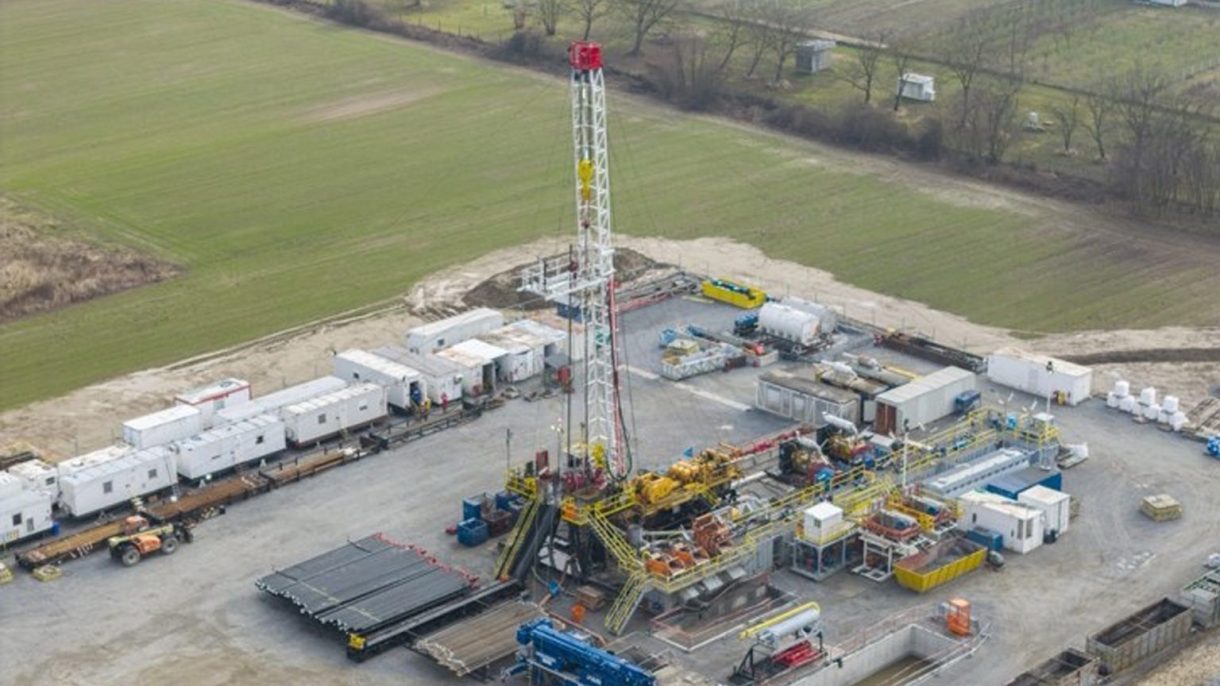
Geothermal Reservoir Confirmed near Zaprešić; Croatian Hydrocarbon Agency (AZU) Reports Four-for-Four Exploration Success, geothermal, Croatia, district heating, energy independence, exploration

The Croatian Hydrocarbon Agency (AZU) has completed exploration activities at all four sites under the project Preparation and Exploration of Geothermal Potential in the Context of Centralized Heating, confirming substantial geothermal resources near Zaprešić. This site is the fourth positive discovery following successful exploration campaigns in Velika Gorica, Osijek and Vinkovci.

AZU President Marijan Krpan said the agency achieved a 100% success rate at the planned locations, delivering maximum project effectiveness and demonstrating full operational capability. He emphasized that the results validate the agency’s technical expertise and ability to execute complex subsurface exploration and resource assessment, and noted ambitions to export that expertise internationally.

Independent analysis has also pointed to strong national potential: a recent study by think tank Ember outlined significant geothermal prospects across Croatia.

Temperature and geology at Zaprešić
Exploration near Zaprešić — in Zagreb County — confirmed a geothermal reservoir primarily developed in dolomitic formations at depths exceeding 1,600 metres, with measured temperatures above 95 °C. The work in the area included two-dimensional seismic surveys, magnetotelluric measurements and the drilling and testing of an exploratory well; the site had been the least well-documented by prior geophysical and borehole data.

“Just two months ago we announced the start of works on a project of exceptional importance for our citizens and economy. I am pleased that today we can confirm positive results, creating the prerequisites for a step toward sustainable and long-term solutions for our community,” said Mayor Željko Turk.

Historic milestones for national heating capacity
AZU described the cumulative findings in the Pannonian region as historic for Croatia’s energy independence. In June, exploration near Velika Gorica recorded reservoir temperatures exceeding 100 °C; subsequent analyses indicated the source could supply nearly 60% of a local district-heating system’s demand. The investment in that site exceeded EUR 11 million.

In August, a site near Osijek also yielded temperatures above 100 °C with an estimated capacity close to 5 MW; that programme, valued at more than EUR 8 million, has been presented as an opportunity to support local agricultural and broader economic development.

Late last year, exploration in Vinkovci returned a record temperature of 131 °C at a depth of 2,700 metres, a result that AZU described as offering exceptional commercial potential for district heating and industrial applications.

Project funding and implementation
The exploration programme is financed under the National Recovery and Resilience Plan (NRRP), with a total allocation of EUR 50.8 million. Drilling and field operations were carried out by Crosco, a contractor within the INA Group.

Current state of geothermal power in Croatia
Despite the renewed momentum in exploration, Croatia presently has no active geothermal power plants. The Velika 1 facility in Velika 1 plant (Ciglena, near Bjelovar) has been out of operation for three years owing to an ownership dispute, underscoring a gap between resource discovery and commercial generation that authorities and investors will need to address to translate these exploration successes into operational capacity.