by in News

PV plant built next to Slovenia’s only pumped storage hydropower plant Avče

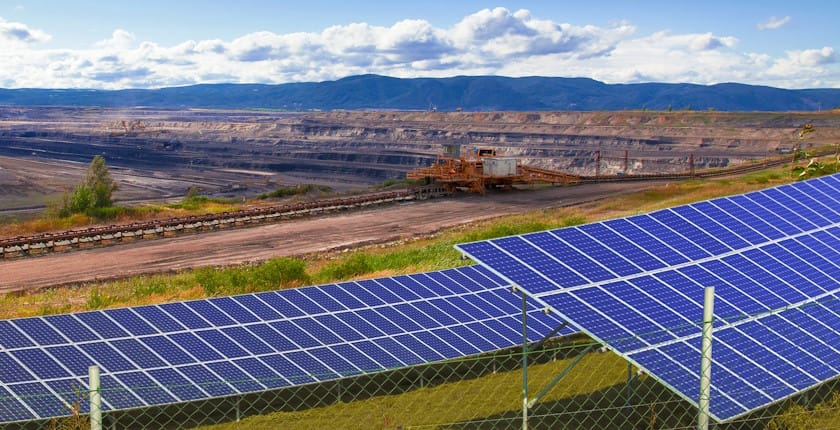
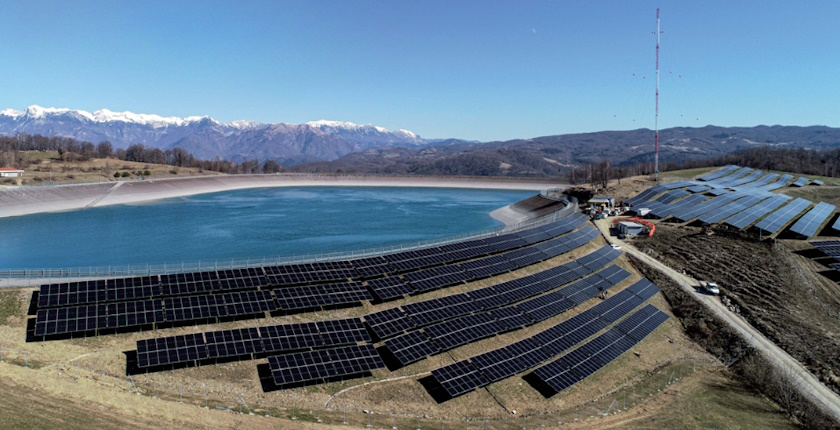
Slovenian company Soške elektrarne Nova Gorica (SENG) commissioned its first solar power plant – Kanalski Vrh. The facility is at its Avče pumped storage hydropower plant, the only one in the country.

Surfaces around large infrastructure such as railways are convenient for photovoltaics as there are very few options for the utilization of such sites. Existing power plants, including hydropower plant reservoirs, are even better locations, as they provide access to strong grid connections and transformers.

With its strict environmental and social regulations and standards, Slovenia is struggling to determine suitable locations for wind turbines, but also larger ground-mounted solar power plants. But state-owned power utility Soške elektrarne Nova Gorica (SENG) managed to fit a photovoltaic system on the banks of the upper reservoir of its Avče pumped storage hydropower plant, in cooperation with the local community.

Kanalski Vrh solar power plant hooked to existing power line

The 2.9 MW solar power plant north of the village of Kanalski Vrh is connected to an existing 20 kV power line. The hydropower operator estimated the annual output at 3.3 GWh. It plans to expand the PV facility to 8 MW by the end of next year.

The first phase was worth EUR 2.2 million. The firm, part of Holding Slovenske elektrarne – HSE Group, used its own funds and won government subsidies.

Area gets natural science park, cycling paths together with PV facility

In the local spatial planning process, Kanalski Vrh got a natural science park and walking and cycling paths. SENG’s first solar power plant spans two hectares and consists of 4,736 modules.

“We have witnessed increasing opposition to the construction of new energy facilities for the production of electricity from renewable sources, but the Kanalski Vrh solar power plant is proof that projects can be successfully completed in an open and transparent dialogue with the local community,” Managing Director of HSE Tomaž Štokelj said.

Avče is the only pumped storage hydroelectric plant in Slovenia. It has 180 MW in pumping mode and 185 MW for production. Avče and four out of five SENG’s hydropower plants on the Soča river are in the municipality of Kanal ob Soči. The first one, Doblar 1, was built in 1939.

Kanal ob Soči is at Slovenia’s western border, with Italy. The firm also operates a group of small hydropower plants.

If the operation of a solar power plant is integrated with a hydroelectric facility, as a hybrid power plant, it can help save water on sunny days.

Slovenia hosts two other PV facilities next to hydropower plants: Brežice and Zlatoličje-Formin.
by in News

Montenegro preparing first renewable energy auction to accelerate green transition

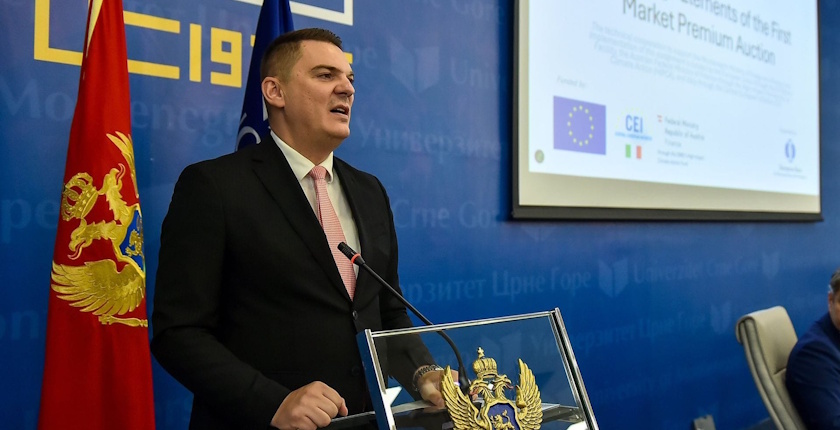
A model for Montenegro’s first auction for market premiums for solar power was outlined at an event in the capital Podgorica. The new legal framework for the green energy transition includes guarantees of origin, citizen energy communities and streamlined permitting. Stakeholders will be able to participate with their comments and suggestions in the renewables auction design.

The Ministry of Energy and Mining of Montenegro organized a conference today to present the key design elements of the first market premium auction for renewables. The competitive bidding process for wind and solar power is part of the reform agenda within the European Union’s Growth Plan for the Western Balkans.

The country’s new legal framework includes guarantees of origin, citizen energy communities and simplified permitting aimed at facilitating investment. They were defined with the new laws on energy and renewables.

The ministry said the first auction would be for photovoltaics. Solar power is the segment with the greatest potential and the lowest share in domestic electricity production, it explained.

EBRD’s Zakaria: First auction should match market needs

The Head of Montenegro in the European Bank for Reconstruction and Development (EBRD) Remon Zakaria urged stakeholders to send their comments and suggestions. The design of the first auction should match the needs of the market as much as possible, he argued.

EBRD participated in drafting the model. The ministry also thanked the Ministry of Finance of Austria, Central European Initiative (CEI) and other partners for their assistance.

At the event in Podgorica, a team of experts presented the technical matters concerning the upcoming auction.

Montenegro to boost renewables’ share in electricity output to 70% by 2030

This is not just the beginning of a technical process – it is a strategic leap, according to Minister of Energy and Mining Admir Šahmanović. He pointed out that Montenegro is transitioning from state incentives to a market-based support model, saying it aligns with the best European practices.

“We know our ambitions and goals for 2030 – a 50% share of renewable energy sources in final consumption and 70% of electricity to be produced from renewable sources. They are indeed demanding targets, but reachable – especially with support from international partners and the private sector,” Šahmanović added.

Montenegro has demanding, but achievable green energy targets, Minister Admir Šahmanović said

Montenegro doesn’t see itself isolated in its energy future but as an integral part of the European market, the minister asserted. With the forthcoming auction, the country is sending a clear message that it is ready for the next steps in the green transition, in his view.

The government is committed to decarbonization, digitalization and preparations for the European Union’s instruments like the emissions trading system (ETS) and Carbon Border Adjustment Mechanism (CBAM), Šahmanović underscored.

“We don’t see this process as a political goal – but as an economic opportunity and social imperative,” the minister said.

by in News

Wind power investments in Turkey surge as major plants inaugurated in May

Investments in wind power in Turkey are on an upward trajectory – this year they are expected to surpass USD 1.5 billion, translating to 1.5 GW of new capacity, President of the Turkish Wind Energy Association (TÜREB) Ibrahim Erden estimated. Among other factors, the country has an extensive manufacturing base for the equipment. Several major wind farms were inaugurated last month.

The first wind turbine in Turkey was installed in 1998, and now total capacity is nearing 14 GW. The growth rate is picking up amid administrative reforms and state support through renewable energy auctions, requiring a high rate of domestically sourced equipment.

President of the Turkish Wind Energy Association (TÜREB) Ibrahim Erden said investments last year amounted to USD 1.3 billion, with 1.3 GW installed. The figure will top USD 1.5 billion in 2025, resulting in over 1.5 GW of new capacity, in his view.

Erden attributed the expansion to new licenses for projects with storage and projects from the YEKA mechanism of renewable energy auctions coming online. Investors from the Middle East and China participated in the bidding, he pointed out.

TÜREB’s chief said he expects 2 GW next year and gradual growth to 3.5 GW by 2028 or 2029.

There are 150 manufacturers in Turkish wind industry

There are 150 manufacturers of wind turbine components and accompanying gear in Turkey, covering 65% of the technology. The country reportedly hosts some 380 wind power plants, with more than ten turbines each on average.

The Grand National Assembly is expected to vote soon on legislation aimed at cutting the permitting process by half, to 24 months or less.

Hundreds of megawatts spring up in western provinces

Several big wind farms were inaugurated last month. Atares-2, in the Karacabey district of Bursa in Turkey’s northwest, has 113 MW. It consists of 23 turbines and the investment is worth almost EUR 150 million. CABA, the investor, expects to generate 400 GWh per year.

Eksim expanded its wind power plant in the Geyve district, southeast of Istanbul, in Sakarya province. The original facility had 11 turbines of 52.8 MW in total. The company’s project is for another 14 turbines of 7 MW apiece.

According to Eksim’s website, the combined installed capacity reached 129.8 MW out of 150.8 MW planned overall.

Enerjisa’s Uygar project would at the moment be the second-biggest wind farm in Turkey

Yıldızlar Group and ERN Holding built a 148.8 MW wind farm in Denizgöründü in the Çanakkale district and province. The location is near the Dardanelles Strait, on the country’s Asian side. The companies earlier said the Gülpınar facility would reach 194 MW.

Enerjisa Üretim, which won most of the capacity at the last YEKA auction, launched production at the first part of its 30th power plant. The Uygar wind farm in Balıkesir is set to grow to 250 MW. Currently, it would make it the second-biggest in the country, after Soma.

The Uygar site also spans parts of the neighboring provinces of Manisa, where Soma is located, and Izmir. Its 60 turbines are seen generating 1 TWh per year, according to the project. Enerjisa Üretim is a joint venture between German E.ON and Turkey-based Sabanci.

City of Kayseri builds first municipal wind park in Turkey

In addition, the Kayseri Metropolitan Municipality in central Turkey inaugurated its three wind turbines in Incesu district. They were built to cover the local trams and electric buses, the local authority said.

The municipal transportation firm is operating the 21 MW facility, which will produce 60 GWh per year. It is the first municipal wind farm among 30 largest cities. Kayseri also has its own solar power plants.

by in News

BESS factory of 1.5 GWh per year opening near Sofia in Bulgaria

International Power Supply (IPS), a Bulgarian manufacturer of battery energy storage systems, is about to launch operations at its new facility near Sofia. Its latest model has 8.2 MWh and fits into a standard container. The company plans to double the factory’s annual capacity to 3 GWh already by the end of the year.

IPS, headquartered in Sofia, is automating and scaling its production of battery energy storage systems (BESS). It is counting on growing demand in Europe, including the domestic market. The company already has orders for 7 GWh for the next three years, Chief Executive Officer Alexander Rangelov told the Kapital news website.

The systems in the new X-BESS line have 8.2 MWh in capacity, fitting into a standard TEU container of 20 feet (6.1 meters). Each consists of seven liquid-cooled modules of 1.17 MWh. The model has inverters of 4 MW, translating to a two-hour duration.

Serial production is about to begin in the Hemus high-tech industrial park near Bulgaria’s capital city. Initially, the annual capacity would be 1.5 GWh, but IPS aims to double it already by the end of the year.

IPS plans another, fully robotic factory

X-BESS started three years ago with a 6.5 MWh version. IPS is currently fulfilling contracts for 670 MWh for projects funded through the country’s National Recovery and Resilience Plan (NRRP or, in Bulgarian, PVU). The company also applied for EUR 150 million from the European Union’s Innovation Fund, for a fully robotic 5 GWh factory.

The majority owner of IPS, with 65.5%, is Power Technology Investment Group. It is controlled by the family of the founder Stoil Rangelov Trifonov. SIL Energy Invest has 31.5%. The Capital Investments Fund (CIFund) of the Bulgarian Development Bank holds the remaining 3%.

X-BESS includes a battery management system developed by IPS

The company mainly uses European parts and the lithium-iron-phosphate (LFP) battery cells are from China. The battery management system (BMS) is proprietary. The project pipeline includes a 5 MW rooftop solar power plant for the new factory, combined with own batteries.

IPS is looking for a strategic partner for further expansion.

Just ten days ago, a BESS facility of 124.1 MW – 496.4 MWh was inaugurated in Lovech in Bulgaria. The Ministry of Energy said it is the biggest in the European Union.

Deal with NEK for BESS at Vacha 1 hydroelectric plant

In consortium with GBS Energy Solutions, IPS recently won a tender for equipping the Vacha 1 hydropower plant with BESS. It is a pilot project of state-owned National Electricity Co. (NEK), which has several such investments underway.

The deal is for a system of at least 5 MW in capability and 10 MWh in capacity. The minimum round-trip efficiency is 85%. At 365 cycles per year, the contractors guarantee at least 60 GWh within the duration the 15-year arrangement. They won the job, which includes maintenance, with a bid of EUR 3.4 million.

NEK is also planning another pumped storage hydropower plant at the Vacha dam

Notably, Minister of Energy Zhecho Stankov said last week that NEK sent applications to the European Commission for four pumped storage hydropower projects. Initially, two facilities were planned, at the Batak and Dospat sites. Stankov revealed there would be two systems at Dospat.

The fourth new pumped storage hydroelectric plant is planned near Ravnogor, he said. The village is right next to Vacha 1 and the existing Orphey pumped storage system. The proposed facility would have some 800 MW in capacity, similar to Chaira, according to Stankov. The three existing pumped storage hydropower plants and the sites for the four projects are all in the Rhodope mountains in the south.

by in News

Western Balkans urged to step up just transition measures

In its new guidelines for the just transition, the Energy Community Secretariat highlighted the lack of policies and measures in its contracting parties in the Western Balkans. The concept implies incorporating a people-centred and regionally tailored approach, in national energy and climate planning, to phasing out fossil fuels while providing targeted support to those most affected. Just transition plans can help attract investments.

The Energy Community Secretariat published the Policy Guidelines on Just Transition as part of integrated energy and climate planning. It aims to assist the contracting parties in aligning with their legal obligations. The international organization called on them to adopt dedicated just transition plans (JTPs) or roadmaps, matching their national energy and climate plans (NECPs). The criticism of the Western Balkans mostly concerns the lack of policies and measures in the NECPs.

Of note, Serbia issued its draft Just Transition Action Plan last month. The World Bank approved a EUR 79.9 million loan and a EUR 2.89 million grant for the purpose, to the Federation of Bosnia and Herzegovina, one of the two entities constituting BiH.

Signing the Sofia Declaration in 2020, the Western Balkans committed to decarbonizing their economies to net zero by 2050

The secretariat recommended that the contracting parties improve their reporting on the matter as well. The just transition is a people-centred and regionally tailored approach to phasing out fossil fuels while providing targeted support to those most affected by the process, it pointed out.

In the Sofia Declaration on the Green Agenda for the Western Balkans, adopted in 2020, six contracting parties in the region committed to decarbonizing their economies and the 2050 climate neutrality objective.

A just transition implies support to affected workers and communities, addressing energy poverty, promoting inclusive governance, and ensuring fair access to the benefits of the transition, according to the guidelines. The economies would need to switch to clean, secure and affordable energy for all, the document notes.

Average coal power plant is almost five decades old

In most contracting parties, coal-based electricity generation is still dominant, characterised by low efficiency and high levels of emissions of carbon dioxide and pollutants.

Coal plants in the Western Balkans are between 34 and 67 years old, with an average age of 46 years in 2023. It entails risks to the security of electricity supply, the Energy Community Secretariat warned.

For comparison, it provided an overview of the situation in the European Union. The authors noted that Romania has no national JTP, but that it developed six territorial just transition plans or TJTPs. They cover the coal regions of Hunedoara, Gorj, Dolj, Galați, Prahova and Mureș.

Due to the insufficient level of integration of just transition in NECPs and the decision by many Energy Community contracting parties to create separate policies and measures in the form of just transition plans, the secretariat recommends that they develop them replicating the structure and content of TJTPs and base them on lessons learnt from European Union member states.

Authorities should support firms, job creation, equal opportunities

JTPs should be based on a granular identification of territories most impacted by decarbonisation, supported by thorough socio-economic and environmental impact assessments.

According to the guidelines, decision makers should support economic stakeholders such as micro, small and medium-sized enterprises and startups. It applies to the creation of firms, too, including through business incubators and consulting services. Workers and jobseekers need upskilling, reskilling and training, the update reads.

Women’s labour market participation and entrepreneurship, as well as equal pay, play an important role in ensuring equal opportunities

Women’s labour market participation and entrepreneurship, as well as equal pay, play an important role in ensuring equal opportunities, the document adds.

“Although no dedicated financing is currently available solely for just transition in the Energy Community, the preparation of comprehensive and credible just transition plans can significantly increase the chances of mobilising both public and private funding in the future. Just transition plans can serve as strategic investment roadmaps,” the authors of the guidelines underscored.

by in News

Green for Growth Fund launches partnership with Swedish International Development Cooperation Agency

An agreement between the Green for Growth Fund (GGF) and Swedish International Development Cooperation Agency (Sida) enabled the expansion of green lending in the Western Balkans and the European Union’s Eastern Neighborhood. With the new unfunded guarantee of EUR 60 million, GGF can provide EUR 120 million in loans through financial intermediaries and directly to companies.

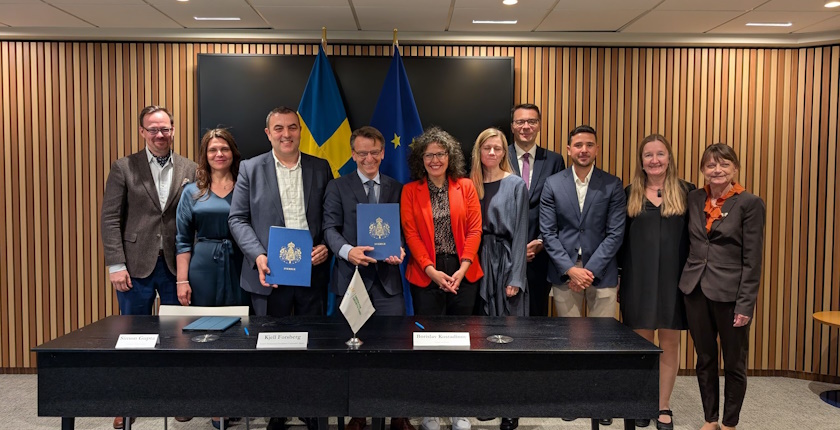
The Green for Growth Fund established a new partnership, with the Swedish International Development Cooperation Agency. It facilitates GGF’s first risk-sharing, unfunded guarantee. The Luxembourg-based fund and Sweden’s development cooperation agency said they both support real economies and acceleration of the green transition in the Western Balkans and the countries of the EU’s Eastern Neighborhood.

The signed unfunded guarantee amounts to EUR 60 million. It enables GGF to provide EUR 120 million in loans to private businesses and households through financial intermediaries and directly to companies. The package is for urgently needed investments in the decarbonization of the economy – expanding renewable energy generation and improving energy efficiency.

With unfunded portfolio risk-sharing facilities, international financing institutions or similar lenders and agencies accept a share of risk in an investment instead of committing capital.

New funding approach is major milestone for Green for Growth Fund

The Green for Growth Fund promotes energy efficiency and renewable energy in Southeast Europe, the Caucasus, Middle East and North Africa. By providing refinancing to local financial institutions, it helps businesses and households access sustainable energy solutions, fostering energy efficiency and reducing carbon emissions.

GGF was initiated as a public-private partnership by the European Investment Bank and Germany’s KfW Development Bank, with financial support from the European Union, the German Federal Ministry for Economic Cooperation and Development (BMZ) and other international investors. Finance in Motion serves as GGF’s advisor.

“We are excited to welcome Sida as a new guarantee partner to the Green for Growth Fund. This innovative funding approach, being the first of its kind for us, represents a major milestone. We are grateful to Finance in Motion for their exceptional work in structuring this deal. This partnership not only strengthens our capacity to support green initiatives but also enhances our ability to prepare financial institutions and businesses for future opportunities in the EU market,” GGF’s Board Chairperson Simon Gupta stated.

Bridging investment gap in high-risk markets

The Swedish International Development Cooperation’s Agency’s Assistant Director General Kjell Forsberg, responsible for trade, private sector and financial instruments, said the partnership is aimed at supporting countries highly prioritized by Sweden. The guarantee collaboration between the agency and the Green for Growth Fund bridges the investment gap in high-risk markets while complementing other Swedish official development assistance (ODA) contributions as well as the European Union’s programs.

“We are grateful to Sida for their partnership and support. This collaboration is crucial for the Green for Growth Fund, enhancing our efforts in promoting energy efficiency and renewable energy projects,” said Borislav Kostadinov, Fund Director of GGF at Finance in Motion.

by in News

CyberGrid is committed to energy transition in SEE with its aggregation solutions

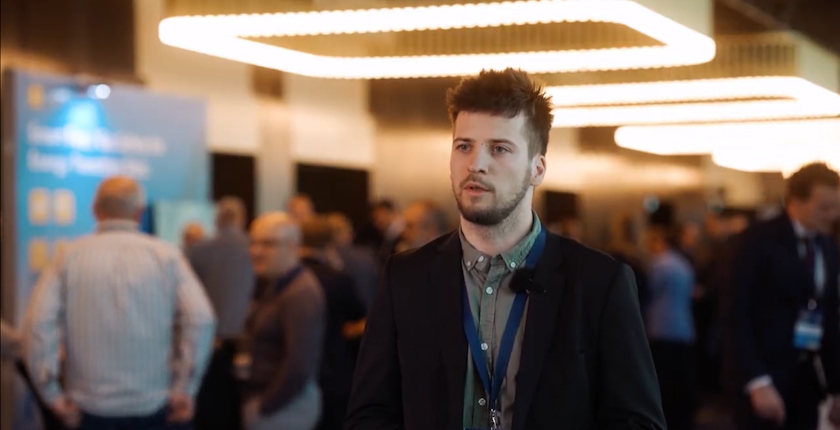
Project Manager and Market Intelligence Specialist Nikolaj Candellari from CyberGrid said at the Belgrade Energy Forum 2025 that the company believes in the energy transition in Southeastern Europe and is contributing with its VPP solutions. The Austrian software developer is open to partnerships with aggregators or future aggregators and the region’s electricity transmission and distribution system operators.

CyberGrid connects different energy resources to different markets. It uses cloud-based flexibility management technology and provides software as a service (SaaS).

“Our core belief is that every energy resource should be renewable, or at least green, and flexible. And to support this transition which we are in at the moment, we have developed our own product called CyberNoc,” Project Manager and Market Intelligence Specialist Nikolaj Candellari said at Belgrade Energy Forum (BEF 2025).

[wpcc-iframe title=”Nikolaj Candellari, Project Manager and Market Intelligence, CyberGrid at Belgrade Energy Forum 2025″ width=”500″ height=”281″ src=”https://www.youtube.com/embed/T_Oy574YR9k?feature=oembed” frameborder=”0″ allow=”accelerometer; autoplay; clipboard-write; encrypted-media; gyroscope; picture-in-picture; web-share” referrerpolicy=”strict-origin-when-cross-origin” allowfullscreen=””]

CyberNoc in real time aggregates the assets – batteries, renewables and even loads and is putting them to the markets, Candellari explained.  In this way, the company supports grid stability and resilience and generates additional revenue streams for owners.

“We are heavily present in the region because we believe in this transition in Southeastern Europe. We helped partners in Croatia, Bulgaria and North Macedonia to connect to different markets,” he stressed and added that the firm has established cooperation in Slovenia and Greece.

Candellari called on aggregators or future aggregators, transition and distribution system operators and all other entities in the electricity system to contact CyberGrid.

The company, founded in 2010 and headquartered in Vienna, is one of the friends of the Belgrade Energy Forum, organized in Serbia’s capital city by Balkan Green Energy News.

CyberNoc enables trading, balancing services

CyberNoc manages battery storage, power plants and consumption, optimizing them in line with market and grid conditions. The platform continuously communicates with the transmission system operator (TSO). It facilitates energy trading as well as the provision of balancing services including frequency control reserve (FCR), automatic frequency restoration reserve (aFRR) and manual frequency restoration reserve (mFRR).

Candellari also participated in a panel discussion at BEF 2025 called Market Flexibility: The Backbone of a Resilient Energy System. He recalled that the market went from 15-minute time intervals all the way down to just two seconds and stressed the significance of real-time data for TSOs and other participants.

“I think we can connect everything, including households,” Candellari underscored.

Notably, CyberGrid is part of the SPRINT project, launched at the beginning of the year, for the development of innovative quasi-solid-state sodium-ion batteries for stationary purposes. The endeavor received funding through the Horizon Europe program.

by in News

ACER’s Zinglersen: Integrate electricity markets to bolster flexibility as new era is already here

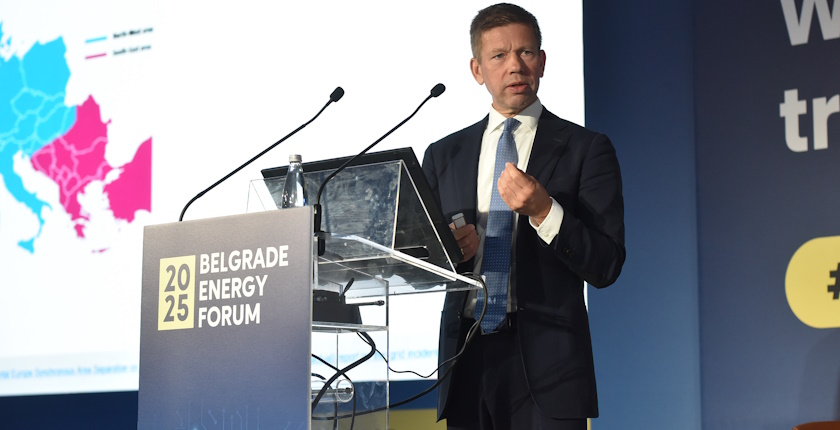
The surge in the number of hours with negative wholesale electricity prices in Europe made 2024 the second consecutive record year. According to ACER’s Director Christian Zinglersen, it means a new era is here. Speaking at Belgrade Energy Forum – BEF 2025, he called on governments, regulators and system operators to tackle the issue with more flexibility and reap the benefits of integrated electricity markets.

At EUR 81 per MWh, the average day-ahead power price in the European Union and Norway was lower last year than in 2021, when the energy crisis began. This is good news, but there are significant differences in price averages across the continent, Director of the EU Agency for the Cooperation of Energy Regulators (ACER) Christian Zinglersen asserted.

In a keynote speech at Belgrade Energy Forum, BEF 2025, he also pointed out that the percentage of days with significant price swings remained elevated. “This suggests that we need much more short-term flexibility in the system,” Zinglersen said.

[wpcc-iframe title=”Belgrade Energy Forum 2025 Christian Zinglersen, Director, ACER” width=”500″ height=”281″ src=”https://www.youtube.com/embed/c2JGLvLEInQ?feature=oembed” frameborder=”0″ allow=”accelerometer; autoplay; clipboard-write; encrypted-media; gyroscope; picture-in-picture; web-share” referrerpolicy=”strict-origin-when-cross-origin” allowfullscreen=””]

Prices in Romania, Bulgaria, Greece, Hungary among highest in Europe

In 2024, the share of time when prices were above EUR 150 per MWh landed at 6.1%, compared to 11.3% in the previous year and 66.7% in 2022. The number of days with price swings greater than EUR 50 per MWh accounted for a strong 70.4% of the total, though down from 77.1% in 2023 and 87.8% one year before.

The average price in Romania was virtually unchanged in 2024. It fell only 1% in Bulgaria and 5% in Hungary. Conversely, the drop was the strongest in Sweden, Norway, France and Belgium: 22% to 39%.

The average day-ahead electricity price in Romania was virtually unchanged last year, while in several countries it tumbled by at least 22%

Last year, prices were the highest across Italy, between EUR 106 per MWh and EUR 112 MWh, in Ireland (EUR 109 per MWh), Romania (EUR 104 per MWh), Bulgaria (EUR 103 per MWh) and Greece and Hungary (both EUR 101 per MWh).

Importantly, 2024 was the second consecutive record year in the number of hours with negative wholesale prices. Their share jumped to 2.8% from 1.9%.

“This is very significant and it shows we are already, in my view, in a new era. We’re not just embarking upon it. We’re there,” Zinglersen stressed.

Photo: ACER

Share of very low wholesale prices rallies back to level from 2020

As for the share of time with very low wholesale prices, it surged last year to 8.8%. The level was last seen in 2020, when the pandemic erupted and resulted in an unprecedented demand shock, ACER’s chief noted. He called on governments, regulators and system operators to tackle the issues with more flexibility.

Grid tariffs increasingly need to show what the system needs, in his view: more time nuance and more locational nuance. “That combination of an energy signal and a tariff signal should hopefully enable us to build more of what we need in the right places, as opposed to build what we don’t need, in the wrong places,” Zinglersen stated.

Integrated markets bring benefits

A policy brief that Brussels-based think tank Bruegel published last year pointed to the benefits of the integration of electricity markets. Among other factors, there is more security with fewer backup power plants and more flexibility with less investment in energy storage, together with lower capital costs. In 2022, ACER, based in Ljubljana, estimated benefits from cross-border trade alone at EUR 34 billion in the EU.

“It has very significant security of supply implications as well, to be in a very integrated-type jurisdiction,” Zinglersen underscored. But integrated markets come with tradeoffs, he said.

One of the examples is an incident in 2021 that split the Continental Europe synchronous area into two parts for an hour and reserves were pulled from across the continent. “But you can also bring the system much more quickly back together again,” Zinglersen said at the conference.

The same goes for the June 2024 blackout in the Balkans.

There are many solutions in Europe, but they are not evenly distributed

ACER’s director also recalled the power price decorrelation that affected Southeastern Europe and Hungary from July to September. He attributed some of the spikes in day-ahead prices to the lack of short-term flexibility, for instance batteries.

There are lots of technical solutions and frameworks in place across Europe, but they are not very evenly distributed, he added.

Zinglersen pointed to the opportunities and benefits of further integrating the electricity market of the Western Balkans region and the EU.

by in News

NGEN showcases solutions at BEF 2025 for decentralized electricity grid of tomorrow

Slovenia-based NGEN, widely regarded as the most innovative energy company in the SEE region, is expanding throughout Europe with its software platforms and equipment, as well as battery energy storage systems for decentralized grids that enable scaling up the decarbonization of the electricity sector. Co-Founder and CEO Roman Bernard said at the Belgrade Energy Forum 2025 that the company is establishing a digital endpoint for every network element. It enables real-time control over production and consumption, preventing blackouts and providing cybersecurity. At the conference, NGEN presented its services for the construction and operation of BESS and access to all segments of the electricity market.

In NGEN’s vision, the electricity system becomes fully digital and decentralized, with every house and business taking an active part in it.

Grid congestion is becoming more frequent, limiting the current rapid deployment of renewables. Most of Europe has centralized networks, where energy flows in one direction, from large power plants to consumers. Grid balancing is still conducted on a 15-minute basis, which is too slow for real-time demand.

NGEN has created platforms for energy that is produced, stored and consumed locally. It is developing a more efficient and reliable environment that can keep up with the scaling up of renewable energy technologies.

Photo: NGEN

NGEN has answers for all challenges of power system

The Slovenia-based company is tackling all current challenges that the power system is facing, Co-founder and Chief Executive Officer Roman Bernard said at Belgrade Energy Forum – BEF 2025. NGEN, the technology sponsor of this year’s conference, operates in nine European countries.

[wpcc-iframe title=”Roman Bernard, Co founder & CEO, Ngen at the Belgrade Energy Forum 2025″ width=”500″ height=”281″ src=”https://www.youtube.com/embed/BchbVdSzoMo?feature=oembed” frameborder=”0″ allow=”accelerometer; autoplay; clipboard-write; encrypted-media; gyroscope; picture-in-picture; web-share” referrerpolicy=”strict-origin-when-cross-origin” allowfullscreen=””]

Pointing to the pace of increase in solar and wind power plant capacity over the past years, Bernard said a centralized system wouldn’t be able to support the overall production and consumption anymore. “We want to make a digital endpoint for every unit that is included in the network. Through it we can communicate and raise or decrease consumption or production,” he explained.

Bernard: Cybersecurity is the most important part of digitalization

It enables control over the system, as otherwise it is in risk of blackouts, while such a transformation also brings significant savings in infrastructure, according to Bernard. He also stressed cybersecurity as the most important part of digitalization.

The CEO of NGEN, which stands for next generation, added that the sector needs to be further regulated across Europe to facilitate the construction of a new kind of infrastructure, as well as to motivate the corporate sector to get involved.

The company’s representatives Marco Scholz and Patrick Simon held a presentation at BEF 2025

Instant frequency response preventing cascading blackouts

In Bernard’s view, now is the time for battery energy storage systems (BESS), after a massive renewables capacity was added to the system in the last seven or eight years. The CEO was one of the panelists at BEF 2025 in a session on flexibility services called Market Flexibility: The Backbone of a Resilient Energy System.

NGEN developed its own software as well as hardware for running decentralized systems, cybersecurity and access to all segments of the energy market. The software has never gone down so far, its representatives said during their presentation at the conference. The firm is a contractor for engineering, procurement and construction (EPC) of BESS, also providing maintenance and operation.

[wpcc-iframe title=”BEF 2025, Grid Intelligence for energy security how NGEN Synaptic prevents systmatic blackouts” width=”500″ height=”281″ src=”https://www.youtube.com/embed/kcm6UtVTcpA?feature=oembed” frameborder=”0″ allow=”accelerometer; autoplay; clipboard-write; encrypted-media; gyroscope; picture-in-picture; web-share” referrerpolicy=”strict-origin-when-cross-origin” allowfullscreen=””]

Its intelligent software ESGP, Energy Smart Grid Platform, provides instant frequency response preventing cascading blackouts. NGEN’s digital platform, called SG Connect, reacts automatically, providing backup in the event of a failure in under 20 milliseconds, enabling real-time grid balancing. At the same time, it monitors and manages in two-second intervals, through the NGEN Synaptic artificial intelligence (AI controller).

It is a plug-and-play module, installed at energy assets, connecting them to ESGP, the transmission system operator (TSO) and all relevant markets, the company said. On the customer side is the SG Connect application.

NGEN has projects of 2 GWh in Europe under development or in construction. As for notable operational facilities, it installed a BESS in Kidričevo in Slovenia, with 35 MW in operating power and 70 MWh in capacity. The facility is about to get an extension of 70 MW – 140 MWh.

by in News

Kosovo* receives four applications for wind power auction

German, Kosovar, French and Turkish companies submitted documentation to qualify for the first wind power auction in Kosovo*. The plan is for the government to have a share of up to 49% in selected projects.

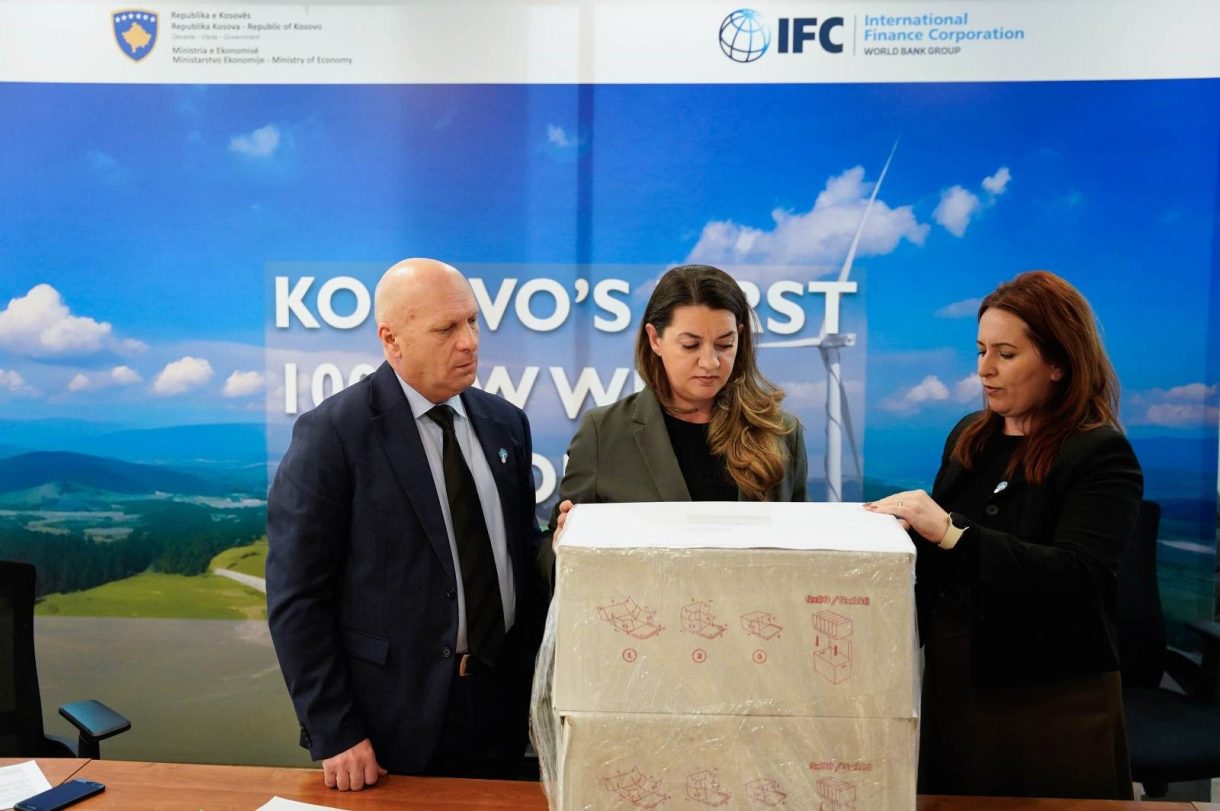
The Ministry of Economy of Kosovo* has publicly opened the applications within the qualifications call for the first wind power auction. The quota is 50 MW to 100 MW and the plan is to support 150 MW in total in two rounds. Participants will bid for 15-year power purchase agreements (PPAs) and contracts for difference (CfDs).

One applicant is a consortium of Notus Energy, based in Germany, and Stublla Energy from Kosovo*. The ministry also received documentation from Akuo Energy from France and a consortium led by Güri̇ş, headquartered in Turkey. Both companies participated in the first solar power auction as well, held last year.

The fourth one is the Kosovar consortium One Era. However, its application came half an hour after the deadline passed.

“The experience from the first 100 MW solar auction has taught us that only when we offer an opportunity for fair and transparent competition for the private sector, we not only evoke interest from serious and prestigious global companies, but also ensure favorable prices for citizens,” Minister of Economy Artane Rizvanolli said. She expressed commitment to high transparency and competition procedures.

Ministry planning to open final bids in August

The members of the auction commission are from the Ministry of Economy, Ministry of Environment, Spatial Planning and Infrastructure, Energy Regulatory Office (ERO) and Transmission, System and Market Operator (KOSTT). They are responsible for evaluating the applications concerning the financial, legal and technical requirements.

Next in the schedule is a request for proposals, due in March, after the completion of the qualifications phase. The participants can send their technical and financial proposals. The final bids would be opened in August. The maximum price is EUR 80.2 per MWh excluding value-added tax.

Curtailment is subject to financial compensation

The ministry plans to launch the second round by the end of the year. The winners will be obligated to design, build, operate, maintain and decommission wind parks. According to one brochure, the accepted price will be adjusted every 12 months, It will depend on the inflation rate for the sector.

Balancing responsibility is limited to imbalance volumes greater than 10%. Curtailment is subject to financial compensation.

Wind projects would be run by special purpose vehicles (SPVs), firms where the government would have a share of up to 49%. The Ministry of Economy intends to use the funds from the International Monetary Fund’s Resilience and Sustainability Facility (RSF) in the development of the 150 MW. The purpose of the public-private partnership scheme is to reduce risk for private investors.

* This designation is without prejudice to positions onstatus and is in line with UNSCR 1244/99 and the ICJ Opinion on the Kosovo declaration of independence.