by in News

Hidroelectrica picks contractor for PV systems on 20 hydropower plants

Romanian state-owned hydropower plant operator Hidroelectrica signed a deal with Servelect and subcontractor Electroplus, which need to install solar panels on the roofs of 20 hydroelectric plants. They are on the middle and downstream parts of the Olt river.

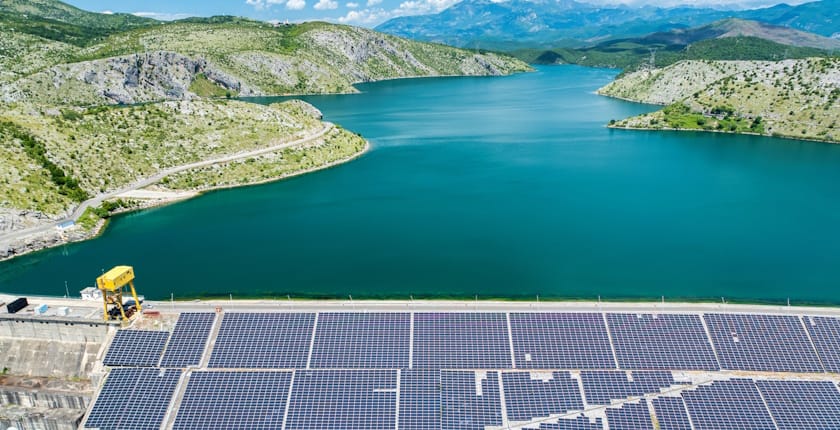
Combining hydropower with photovoltaics including floating solar power plants is becoming popular. The two sources are compatible, especially if there is a dam, as it can save water in reservoirs. The grid infrastructure for PV panels is already there and there are usually no land ownership issues. Hidroelectrica, which mostly operates hydropower plants, is about to solarize its existing facilities.

The Romanian state-owned company pursuing diversification signed an agreement with Servelect and its subcontractor Electroplus. There were four bids in the tender.

First solar power project for Hidroelectrica

Solar power systems will be on the roofs of 20 hydropower units on the middle and downstream sections of the Olt river. Hidroelectrica, listed at the Bucharest Stock Exchange since 2023, turnkey deal, said it aims to optimize production costs. However, it didn’t reveal whether it would operate the colocated assets jointly, as hybrid power plants.

Hidroelectrica is the largest electricity producer in the country, but it will be its first solar power units. The deal, for an overall 2.96 MW, is worth EUR 1.77 million excluding value-added tax. The deadline is 24 months, of which four months for the design.

Servelect, Electroplus responsible for all phases from procurement to commissioning

The utility also tasked the two firms, based in Cluj-Napoca, with manufacturing and procurement, transportation, testing and commissioning. The PV systems would consist of 620 W panels and 100 kW inverters. Hidroelectrica estimated the combined annual output at 3.71 GWh.

The company operates 188 hydropower plants, 6.4 GW overall, and the Crucea Nord wind park of 108 MW. Earlier, Hidroelectrica and Masdar were considering a pilot project, under an upcoming joint venture, for floating solar power plants on seven reservoirs, also on the Olt.

Servelect is active in engineering and energy services. It was founded in 2005. Electroplus, which handles electrical installations, operates since 2001.

by in News

Works beginning on North Macedonian side of gas interconnector with Greece

The North Macedonian section of the gas interconnector with Greece is expected to be completed by early 2027. The construction contract was signed by the Ministry of Energy, Mining and Mineral Resources, domestic contractor Rapid Build and the country’s gas transmission system operator Nomagas.

The construction of the gas pipeline connecting North Macedonia with Greece is set to begin in a month, according to officials. Land expropriation is 90% complete. The initial capacity of the interconnector would be 1.5 billion cubic meters per year, with a potential to double it. The works are expected to be completed within 22 months.

„With the signing of the contract for the construction of the Macedonian section of the gas interconnector with Greece, we are marking the beginning of the largest energy investment in North Macedonia in the last ten years. The interconnector is proof that when there is political will, regional trust, and professional dedication – the results are real and tangible,” said Minister of Energy, Mining and Mineral Resources Sanja Božinovska.

The contract was signed by the ministry, contractor Rapid bild, based in Kumanovo in North Macedonia, and the country’s gas transmission system operator Nomagas. The future pipeline would be able to carry both natural gas and hydrogen.

Repeated tender slashes price by EUR 12 million

The winning bid was EUR 59.9 million or EUR 12 million less than in the initial tender, which was annulled.

The project is worth over MKD 5.1 billion (EUR 82.9 million). It is financed by the European Investment Bank (EIB) and the European Bank for Reconstruction and Development (EBRD). It includes grants of EUR 2.5 million for technical assistance and another EUR 9.9 million via the Western Balkans Investment Framework (WBIF).

The project is financed by the EIB and EBRD

„This contract ensures diversification and access to a greater number of natural gas sources, enables economic development, progress and environmental protection, and contributes to the security of energy supply,” said Executive Director of Nomagas Muhamet Elmazi.

Gasification would significantly improve air quality, especially in areas where wood and fuel oil are currently used for heating.

Greek section of interconnector under construction since February

On the North Macedonian side, the interconnector route is 68 kilometers long, out of a total of 123 kilometers. It will run from Nea Mesimvria in Greece through Evzoni (Mačukovo) and Gevgelija at the border, to Negotino. The next phase involves building gas links from Gostivar to Kičevo (34 kilometers) and from Sveti Nikole to Veles (28 kilometers).

Greek company Terna began constructing its country’s section of the pipeline in February.

Nomagas and Greece’s National Natural Gas System Operator (DESFA) made their final investment decision a year and a half ago.

The companies leaned the investment on the project for the Alexandroupolis LNG Terminal. The liquefied natural gas facility in northeastern Greece was opened on October 1. However, due to a malfunction, it has been out of operation for more than three months. According to the latest update, gradual reactivation is expected to begin by the end of May.

by in News

Weakness in Serbian energy system is no option

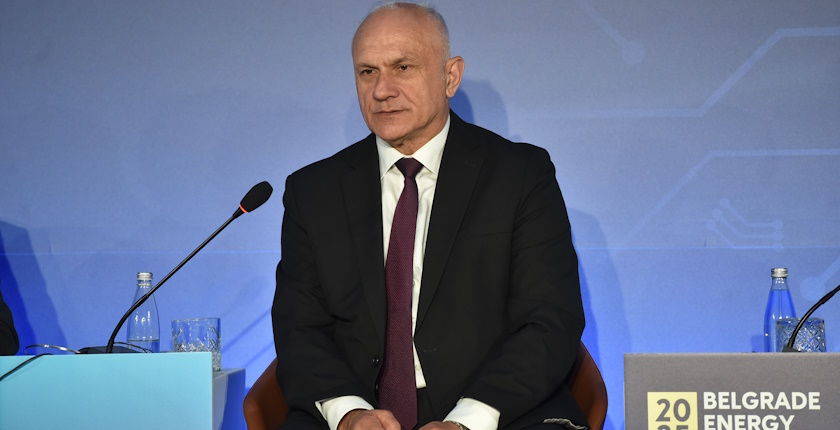
Serbia’s state-owned power utility Elektroprivreda Srbije (EPS) is committed to its own and the country’s goals for green energy and emission cuts, but it is sustainable only if it doesn’t jeopardize energy security, Chief Executive Officer Dušan Živković said. Weakness in the energy system is not an option, he underscored.

The recent blackout in entire Spain and Portugal and the one last year in the Balkans have imposed the topic of large energy storage facilities which would support the integration of renewables, CEO of EPS Dušan Živković said at Belgrade Energy Forum (BEF 2025). The company is committed to its own and the country’s goals for green energy and emission cuts, he asserted.

“We will work on that, of course, believing in these objectives, but without compromising energy security and the energy sovereignty of the state of Serbia. It was proven to be the only sustainable path and that if we don’t follow it, it can result in situations that are not a good message toward consumers, and they are not a good message toward investors either. Weakness in the energy system is certainly not an option”, Živković stated.

In its Integrated National Energy and Climate Plan (INECP or NECP), Serbia is targeting for 2030 a 45.2% share of renewable energy sources in electricity production and a decrease of greenhouse gases by 40.3% from the 1990 level.

Decarbonization is not easy without serious storage

Among its other activities, EPS is working on its small green energy projects on open cast coal mines, while the strategic partner, a consortium of UGT Renewables (UGTR) and Hyundai Engineering, is tasked with building a group of solar power plants of 1 GW in combined connection capacity alongside 200 MW of battery energy storage, and transfer them to Serbia’s government-controlled power utility, Živković noted. But the process of decarbonization with necessary renewable energy capacity won’t be easy “without serious storage,” he stressed.

Serbia hosts fossil fuel power plants of 4 GW in total

Big energy storage projects are financially challenging, only marginally cost effective, and they are not easy to build, EPS’s head claims. They are necessary to be able to draw enough baseload energy, and in Serbia they need to contribute replacing a large fossil fuel capacity – currently it amounts to 4 GW, Živković said.

Pumped storage hydropower project Bistrica, existing facility Bajina Bašta enable comfort for signing PPAs

EPS primarily focuses on the Bistrica pumped storage hydropower project and the possibility to develop the one for Đerdap 3, he added. That way conditions would be created for the facilities to provide new services in the market, so “the region feels safer, too,” Živković underscored.

Counting on Bistrica and the existing pumped storage hydropower plant, Bajina Bašta, EPS is in “a comfortable zone” for signing power purchase agreements (PPA) with companies for their green power plants, Živković explained. Bajina Bašta is undergoing the second half of reconstruction works.

Turning back to the April 28 collapse of the Iberian electricity system, Živković pointed to the adverse interest of private investors – get profit in the short term – and companies responsible for energy security. In his view, it is necessary to act “more intergenerationally responsibly” and very important to find balance in relation to profits.

by in News

North Macedonia adopts Law on Energy

With a majority of votes, 62 out of 120, the Assembly of North Macedonia adopted the Law on Energy. The government’s representatives say it is systemic, comprehensive, and reform-oriented legislation laying the foundation for the country’s new energy policy. The act aligns the country’s legal framework with the European Union.

The new Law on Energy will bring numerous benefits to the country and its energy future, according to the Government of North Macedonia. They include a liberalized, transparent and competitive electricity market ensuring fairer prices and more choice for consumers, the introduction of smart meters for more accurate consumption measurement, and daily insight for consumers into their electricity usage.

The law is compatible with the reform agenda for the Western Balkans and with EU directives. Its pillars are:

  • A significant increase in the share of renewable energy sources in final consumption;
  • Greater energy efficiency and reduction of losses;
  • An open energy market in which citizens become active participants – producers, sellers, and members of energy communities.

The law supports new concepts such as citizen energy communities and demand-side management models, increased market liquidity, and broader access to energy sources for the economy, along with equal investment opportunities.

It addresses infrastructure stability through investments in storage systems and their digitalization, as well as providing a stable, transparent, and predictable framework for domestic and foreign investors. The law strengthens the capacities of regulators and operators, creates conditions for greater integration with regional and European energy networks, and enables new investments in solar, wind and other renewable sources, district heating, gasification, storage and digitalized grid infrastructure.

Božinovska: New law paving way for energy sovereignty for Macedonia

Minister of Energy, Mining and Mineral Resources Sanja Božinovska said in parliament ahead of the vote that the Law on Energy is the foundation of the national transformation toward a clean, sustainable and fair energy future.

„This is a law that creates opportunities but also demands responsibility. Energy is not just the engine of the economy; it is the basis for a quality life. With this law, we are opening the door to an energy sovereign, green and European Macedonia. This law is more than a normative act – it is a signpost for the future. A chance we must not miss,” she said.

Transparent, predictable investment framework

The law includes provisions for protecting vulnerable groups, supporting the fight against energy poverty and ensuring fair access to energy for all.

According to the ministry, the law provides a stable, transparent and predictable framework for domestic and foreign investors.

All EU energy directives have been implemented, said President of the Energy, Water Services and Municipal Waste Management Services Regulatory Commission (ERC or RKE) Marko Bislimoski. Of note, yesterday he spoke at the Belgrade Energy Forum – BEF 2025, organized by Balkan Green Energy News.

The drafting process involved institutions, experts, the business community, operators and the national regulator. A total of 61 amendments were adopted.

Unlike the ruling majority, the Left (Levica), an opposition party, claimed the Law on Energy does not protect consumers or national interests. Out of 11 amendments that it submitted, only four were adopted. They include provisions aimed at protecting consumers from unrealistically high electricity bills.

by in News

Consortium completing spatial plan for solar-BESS strategic partnership in Serbia

Representatives of Hyundai Engineering and UGT Renewables, the companies developing a solar power project in Serbia of 1.2 GW in total, and with batteries, said the strategic partnership is a step toward expansion in the surrounding region. Spatial planning is nearly complete.

Following the signing of grid connection contracts last week, the Hyundai Engineering – UGT Renewables consortium is advancing the design and permitting procedures within its strategic partnership in Serbia.

The two companies are tasked with building a group of photovoltaic plants of 1.2 GW in total peak capacity and connections of 1 GW overall, alongside battery energy storage systems (BESS) with a combined 200 MW in operational power and a maximum 400 MWh in capacity.

Group of hybrid power plants to be transferred to EPS

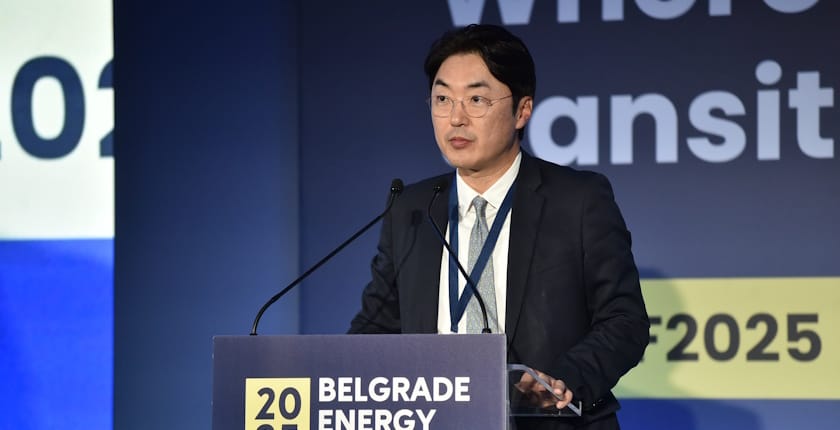
In a keynote speech at Belgrade Energy Forum – BEF 2025, Vice President of Hyundai Engineering Seung-Won Lee revealed that the consortium is finalizing the special plans for special purpose areas. The facilities will be handed over to Serbia’s state-owned power utility Elektroprivreda Srbije (EPS), he noted.

The representative of the South Korea–based company added that the PV plants would generate 1.5 TWh per year and offset more than one million tons of carbon dioxide emissions. It is one of the largest renewable energy projects in Europe and a cornerstone for Hyundai Engineering, Lee pointed out.

UGT Renewables has project pipeline of 20 GW

Global Executive Advisor of UGT Renewables Chan-Woo Park said it is the largest renewable energy developer, internationally, in the United States. Its portfolio of companies is operating on four continents, he added. The regions include Southern Africa, the Middle East and Latin America, Park underscored.

The solar power and energy infrastructure projects under development account for 20 GW, UGT’s representative asserted.


It has established partnerships worth over USD 30 billion altogether, with Hyundai Engineering and other companies including Nextracker, Shoals Technologies, Hitachi Energy and Tesla Energy, Park stressed.

According to the update, the strategic partnership in Serbia is the beginning of the consortium’s regional expansion in the surrounding region.

by in News

Belgrade Energy Forum 2025 – energy market reforms accelerate integration into EU

Electricity market coupling with neighbors in the European Union is a major factor in the EU integration of Energy Community contracting parties and the Western Balkans, alongside deeper coordination within the region, the establishment of energy interconnections, investments in renewables and progress in carbon pricing, top officials pointed out at the opening of Belgrade Energy Forum – BEF 2025.

Founder and Editor of Balkan Green Energy News Branislava Jovičić said the current changes in the energy sector can already be called an energy revolution.

The third Belgrade Energy Forum, BEF 2025, started today in Serbia’s capital city, welcoming four hundred participants from more than 30 countries from the region, Europe and beyond. The two-day conference, organized by Balkan Green Energy News, features eight panels with over 50 officials, executives and prominent energy experts.

Serbia was the first in the region to meet the preconditions for electricity market coupling with neighboring countries in the European Union and Energy Community, said Minister of Mining and Energy Dubravka Đedović Handanović. She added that the technical process would be completed within 18 months after the EU Agency for the Cooperation of Energy Regulators (ACER) and European Network of Transmission System Operators for Electricity (ENTSO-E) conduct the necessary steps.

Electricity market coupling will be completed within 18 months when the technical process starts

“It will be a historic event for our country for its benefits for citizens and companies, as it will ensure a more stable electricity supply and access to more affordable energy prices. It will turn us into an equal member within the region but also the EU as concerns the energy sector,” Đedović Handanović stated.

The SEEPEX power exchange has already prepared implementation projects with its counterparts in Hungary and Bulgaria for market coupling on their borders, the minister stressed.

Up to EUR 15 billion needs to be invested in energy

Đedović Handanović also pointed out that domestic and European regulators certified Serbia’s gas transmission system operator Transportgas for the first time. The start of construction of the Serbia-Hungary oil pipeline is expected to begin early next year at the latest, the minister said.

The baseline for the development plan for energy infrastructure and energy efficiency should be completed by the end of May, she revealed. It identifies the need for EUR 14 billion to EUR 15 billion in investments in the next ten years, according to Đedović Handanović. Renewables and new hydropower potential account for EUR 7 billion, she said.

Serbia will double the electricity transmission capacity with Hungary and increase it with Bulgaria, the minister asserted.

Serbia is frontrunner in region with its progress toward market coupling

As the Western Balkan region confronts the trailing trilemma of decarbonization, affordability, and energy security, the need for an accelerated integration with the European Union has never been more urgent, Energy Community Secretariat Director Artur Lorkowski said.

The organization provides a platform for the process, a strategic window of opportunity to inspire market confidence now, not in years or months to come, he explained. Lorkowski said it implies deeper coordination among Energy Community contracting parties in removing cross-border bottlenecks and harmonizing market operations.

Above all, there is an urgent need to move forward on electricity market integration with the EU, so the region can fully benefit from it in 2027, he noted, underscoring that Serbia is the frontrunner.

Exporters of electricity to the EU can attend a technical consultative meeting in Brussels on July 1

The Carbon Border Adjustment Mechanism (CBAM) is another urgent priority, Lorkowski said. He announced that the Energy Community Secretariat and European Commission would organize a technical consultative meeting in Brussels on July 1 for electricity exporters to the EU.

The establishment of domestic carbon pricing mechanisms is inevitable, Lorkowski warned. The question is how to introduce domestic carbon pricing and keep energy prices affordable for households and competitive for businesses, he told the audience at BEF 2025.

“The way forward is clearly defined, and the conditions linked to energy market reform and decarbonization are well known. And I’m, frankly speaking, very optimistic that progress on these issues can be substantive in months and years to come,” the secretariat’s head stressed.

Jovičić: Energy revolution underway

Energy and climate issues are among the most important ones in the world today, as well as in Southeastern Europe, Founder and Editor of Balkan Green Energy News Branislava Jovičić said. All stakeholders, aware of the necessity of rapid changes and prudent solutions, are working toward a secure energy supply and decarbonization, she added.

“Last year we spoke about the energy transition. This year we can freely call the changes in the energy sector an energy revolution,” Jovičić stated. The five pillars of the energy revolution are solar and wind power, battery storage, digitalization, nuclear energy and decentralized generation and consumption, she stressed.

Balkan Green Energy News is a leading energy media website in the region and one of the top 50 in the world, Branislava Jovičič said.

by in News

CWP Europe signs PPA, CfD for its Solarina PV project with Serbia’s EPS

CWP Europe signed a power purchase agreement (PPA), including balancing responsibility, and a contract for difference (CfD) for its Solarina photovoltaic project, with Serbia’s state-owned power utility Elektroprivreda Srbije (EPS).

Solarina is a special purpose vehicle or SPV for a photovoltaic park of 150 MW in connection capacity. Its site is near the city of Zaječar in eastern Serbia. The developer, CWP Europe, won a CfD in February for 105 MW at the country’s second solar power auction. All other projects were for 10 MW at most.

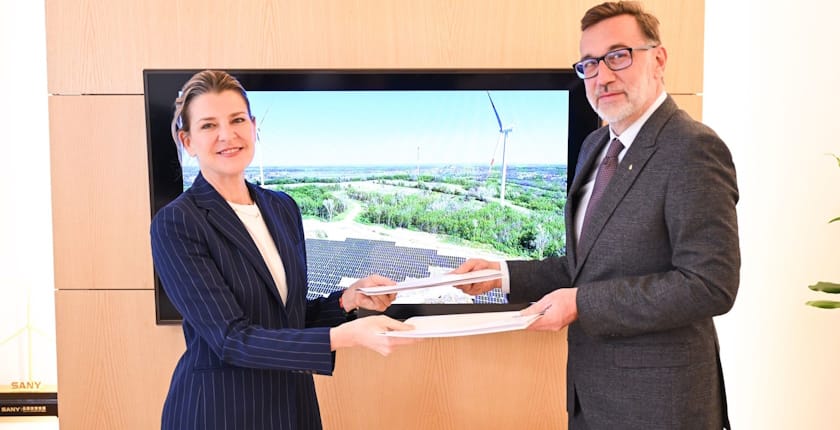
Executive Vice President of CWP Europe Maja Turković signed a PPA and the contracts for difference and balancing responsibility for Solarina with Assistant to CEO of EPS for Power Portfolio Management David Žarković.

Largest single PPA ever signed for solar power with EPS

The agreement marks a major milestone in Serbia’s energy transition – it is the largest single PPA ever signed for a solar project with EPS, Turković pointed out. “We thank the Ministry of Mining and Energy and EPS for their trust and another opportunity to jointly contribute to a more stable and greener energy future for Serbia,” she added.

CWP Europe has a project pipeline of more than 10 GW in Southeastern Europe, Moldova and Ukraine

All green electricity generated by the Solarina solar park will be supplied to the domestic market at a competitive price, enhancing the stability and sustainability of the country’s energy supply, CWP Europe added. Of note, the CfD is for EUR 52.89 per MWh.

“The continuation of the cooperation confirms once more that EPS is a reliable partner and associate to everyone whose business activity involves green energy. In addition, this way we also confirm the joint dedication to Serbia’s energy transition and the development of renewable energy sources, as EPS will offtake all produced energy and it will remain in our country,” Žarković stated.

PPAs for projects Solarina, Vetrozelena are both for entire output

Serbia’s state-owned power utility has the same arrangement since 2023 for the Vetrozelena wind power project, which was developed by CWP Europe and also won market premiums, at the first round of renewable energy auctions. Both PPAs are for the entire output.

The company has a project portfolio of more than 10 GW in total for wind and solar power and battery energy storage systems in Serbia, Bulgaria, Romania, Montenegro, Albania, North Macedonia, Croatia, Moldova and Ukraine.

CWP is a silver sponsor of the two-day Belgrade Energy Forum – BEF 2025, which is starting tomorrow. Maja Turković will participate in the panel discussion ‘Energy revolution underway – uniting efforts to deliver green, intelligent and sustainable energy solutions’.

by in News

Electrohold Trade partners with TMH to optimize 2.5 GWh of battery storage in Bulgaria

Early next year, The Mobility House (TMH) is set to ramp up the aggregation of Electrohold’s energy assets in Bulgaria under a newly signed deal. It focuses on the planned 2.5 GWh in battery energy storage systems (BESS).

Electricity trading firm Electrohold Trade selected The Mobility House (TMH) to provide advanced aggregation and trading software. The solution will optimize the Bulgarian firm’s portfolio, enhance returns from its energy assets, and support the electricity system’s balance and stability, according to the announcement.

The subsidiary of Eurohold Bulgaria’s or Eurohold Group (Evrohold) manages a pool of photovoltaic assets and battery energy storage systems. The assets are expected to reach 1 GW and 2.5 GWh, respectively. The full commercial rollout is targeted to begin in the last quarter of 2025, with further rampup expected into early 2026, the company said.

TMH GOING Far beyond traditional feed-in models

Germany-based TMH is active since 2016. Electrohold Trade said it is leveraging the aggregator’s technology to commercialize energy storage systems and maximize returns on its solar power assets through advanced flexibility and intermittence trading – going far beyond traditional feed-in models.

TMH stressed that Electrohold’s energy storage initiative is the largest in Europe.

Colocation project with signaling impact

A defining feature of the initiative is its colocation concept, where battery storage systems are installed directly adjacent to solar parks. It enables optimal utilization of both assets, the companies said. By directly linking them, the fluctuating output of renewable energy can be more effectively managed – enhancing grid stability while minimizing the need for expensive grid expansions.

It not only results in improved grid flexibility, but also contributes to the grid’s better balancing, the update reads. The project positions battery storage systems as a central element in Bulgaria’s future energy landscape, leveraging advanced algo trading software and innovative incentive structures to unlock the full potential of renewable integration, the partners added.

“By strategically employing colocation solutions and the latest technology, we are creating a platform that is not only economically attractive but also significantly enhances the technical resilience of the Bulgarian power grid at lower costs,” said Eurohold Bulgaria’s Chair of the Supervisory Board Assen Christov.

by in News

Construction starting in second phase of giant PV plant in Peloponnese coal land

Terna won the contract for the construction of the second of the three parts of a 490 MW solar park in Megalopolis, on former lignite mines. Public Power Corp. – PPC Group said the third phase would begin next year.

The second phase of the construction of a 490 MW photovoltaic plant in Megalopolis is beginning, transforming former lignite sites in the Peloponnese peninsula into a green energy hub. PPC Group’s subsidiary PPC Renewables signed an engineering, procurement and construction (EPC) contract for 125 MW on 49.4 hectares with Terna, part of the GEK Terna conglomerate.

The first phase, 125 MW, is under construction. PPC intends to complete it by the end of the year. It expects to begin building the third phase, 240 MW, in 2026.

Bifacial panels to be on fixed structures

The second part entails 215,000 bifacial solar panels on fixed structures. The facility would be connected to the Megalopoli Ultra High Voltage Substation via a new high voltage substation at the Neo Choremi site.

The entire 490 MW would generate an estimate 860 GWh per year, the announcement reads. It is equivalent to the electricity needs of 215,000 households. The projected output would prevent carbon dioxide emissions of 430,000 tons per year.

PPC already has a 50 MW photovoltaic plant in Megalopolis, the smaller of the two coal regions in Greece.

Replicating solar makeover from Western Macedonia

Deputy Chief Executive Officer of PPC Group and CEO of PPC Renewables Konstantinos Mavros compared the project in the Peloponnese to the ones in coal land in Western Macedonia in the country’s north. Just like in Ptolemaida, the Megalopoli photovoltaic plant is going to replace the the production of electricity from coal and ensure the historic continuity of the area’s role in energy supply, he pointed out.

The utility’s three-year strategic plan for the period through 2027 is to install 5.6 GW more from renewables in Greece and Southeastern Europe, reaching 11.8 GW in the segment. PPC said it is also looking to expand its portfolio with new technologies such as offshore wind power and floating photovoltaics, also known as floatovoltaics.

by in News

Romania launches renewables auction for 3.5 GW

Following a successful first round, in which developers won government support for projects of 1.53 GW altogether, the Romanian Ministry of Energy issued another call, for 3.47 GW of wind and solar power capacity. The deadline for submissions is July 11.

The Ministry of Energy of Romania issued a public call for the second round of auctions under a mechanism for awarding contracts for difference (CfDs). With EUR 3 billion at hand, via the European Union’s Modernisation Fund, the country is supporting an overall 5 GW of wind and solar power capacity.

Developers can apply by July 11 for the remaining quotas of 2 GW for wind parks and 1.47 GW for photovoltaic facilities. In the first round, 21 participants won the subsidies for 1.1 GW and 432 MW, respectively.

Romania cuts ceiling prices

Ceiling prices for government support are lower this time. Wind power is at EUR 80 per MWh or EUR 2 per MWh under the previous maximum possible bid. The authorities slashed the cap for solar power to EUR 73 per MWh from EUR 78 per MWh.

The contracts for difference would last 15 years. The burden of administrative and electricity transmission expenses is passed on to consumers.

More leeway for large players as they are no longer limited to 25% of quota

Another difference is that the 25% cap on the maximum capacity awarded per applicant was scrapped, the documentation shows. In addition, there is a possibility to award up to 20% more capacity than in the nominal quota. Minister of Energy Sebastian Burduja explained that the idea is to avoid the risk of losing a large project with a marginal bid.

He noted that Radramo Power is developing the largest wind power project from the first auction, 245 MW. The Heliowin project, for 125 MW, is the biggest one in the PV segment. It belongs to Israeli company Econergy. Both proposed facilities will launch production by January 28, according to the schedule.

In the first phase, applicants will qualify with their technical offers. The plan is to open financial bids from eligible entities on August 13, and the winners would have until September 9 to sign the contracts. Romania’s transmission system operator Transelectrica has the task to evaluate the applications.