by in News

Second HVDC link from mainland Greece to Crete coming online

Greece’s Independent Power Transmission Operator (IPTO) is completing the last elements of the Ariadne Interconnection project, one of the deepest subsea links in the world. The company plans to switch on the double high-voltage direct current (HVDC) cable between Attica and Crete by the end of the month. In addition, IPTO and its Italian counterpart Terna are developing a project for a second interconnector between them.

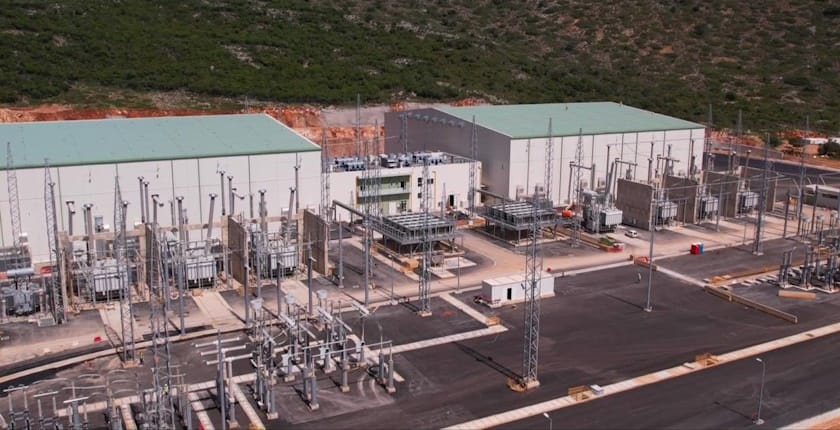
Final tests and equipment checks are being completed at the Damasta Converter Station in Heraklion ahead of the start of the trial operation of the Crete-Attica electricity link. The management of IPTO, also known by its Greek acronym Admie, and the HDVC Ariadne Interconnection project firm inspected the site.

The transmission system operator said it plans to energize it this week by injecting reactive power into the electricity system in the country’s biggest island.

The transmission of active power from Attica to Crete is set to begin in late May, the update adds. Ariadne consists of two 500 kV cables of  500 MW each. One end is in Pachi in the city of Megara, between Athens and Corinth, and the other one in Korakia in Crete. The submarine and underground cables were tested earlier.

Line on mainland is under trial electrification

At the same time, on the Attica side, a trial electrification of a 400 kV cable system is taking place between the Koumoundouros Converter Station and the adjacent Extra High Voltage Center. Ariadne Interconnection is the largest and most complex electricity transmission project in Greece so far, IPTO underscored.

Furthermore, a 150 kV transmission line between Chania and Damasta recently received the decision on the approval of environmental conditions (AEPO), the company added. It is considered necessary for an optimal combined use of Crete’s two interconnections with the mainland, the announcement reads. The first one, from Peloponnese, was established in 2021.

Ariadne, worth more than EUR 1.1 billion, is one of the three deepest interconnections in the world. The HVDC line’s capacity matches the interconnector to Sardinia, the strongest power link so far with an island.

The project is co-financed through the National Strategic Reference Framework (NSRF 2014-2020 and NSRF 2021-2027), via the European Union, with up to EUR 535.5 million. The idea for the endeavor dates back to the 1990s.

The contractors are Nexans and Prysmian. Each was responsible for one of the two cables while the latter also laid two submarine telecommunication lines.

Erdoğan again taunts Great Sea Interconnector by promising alternative cable

Ariadne is part of a proposed corridor with the Great Sea Interconnector project, formerly EuroAsia Interconnector, envisaged going to Cyprus and Israel. The Crete-Cyprus investment has been suffering heavy delays amid financing issues, ownership disputes and Turkey’s threats.

In early May, President Recep Tayyip Erdoğan visited the Cypriot Turkish breakaway republic, recognized only by Turkey, and promised an interconnection with his country. He compared it to an existing water pipeline.

“Did we bring water from under the sea to Northern Cyprus from Turkey? Now we are in the second stage. God willing, we will bring electricity and with that we will cover the needs of Northern Cyprus in water and electricity,” Erdoğan stated.

Notably, IPTO denied yesterday a press report that it is considering the possibility, together with Nexans, the contractor, to alter the route and connect Crete with the Dodecanese Islands instead of with Cyprus. The archipelago includes Rhodes, Astypalaia (Astypalea), Kos and Tilos.

EBRD is providing a grant for the first studies for an interconnection between Greece and Egypt

In other news, the European Bank for Reconstruction and Development (EBRD) and Elica Interconnector, a member of the Copelouzos Group, signed a grant agreement for the first studies for the planned Egypt-Greece (GREGY) electricity interconnection.

IPTO and its Italian counterpart Terna signed today a memorandum of understanding to install a second undersea HDVC power line. The GR.ITA 2 project is for a double cable, two times 500 MW, scheduled for completion in 2031. The two sides earmarked a total of EUR 1.9 billion.

The existing 500 MW interconnector, in operation since 2002, is temporarily down due to a malfunction.
by in News

Bulgaria’s IBEX launches guarantees of origin market

Four participants registered last month at the Independent Bulgarian Energy Exchange’s guarantees of origin platform, creating a national market. Separately, IBEX is preparing to roll out a 15-minute market time unit in the Single Day-Ahead Coupling on June 11 with other European nominated electricity market operators.

The Independent Bulgarian Energy Exchange (IBEX) said it launched a market for guarantees of origin (GOs) of electricity with the Sustainable Energy Development Agency (SEDA or, in Bulgarian, AUER). It is part of the efforts to develop a liberalized energy market and promote renewable energy, it added.

IBEX is Bulgaria’s nominated electricity market operator or NEMO. The country’s legal framework envisages issuing GOs monthly, quarterly and semianually.

After the launch of registration on March 31, four companies joined last month: Aurubis Bulgaria, Armaco Energy, Energo-Pro Energy Services and KER Toki Power, the announcement reads.

No timeline for kickoff yet

IBEX, solely owned by the Bulgarian Stock Exchange (BSE), reiterated that its new platform provides for trading with clear rules, guaranteed payments and price transparency. Notably, there is no timeline for the kickoff.

The preparations for the rollout of a GO market lasted several years. The certificates are issued by renewable energy producers. Consumers buy them to prove their progress in decarbonization.

One GO covers 1 MWh of electricity production or consumption. When SEDA achieves integration with the European guarantees of origin system, the participants in the Bulgarian platform will be able to trade abroad as well. Neighboring Greece introduced GOs last June.

IBEX, founded in 2014, operates day-ahead and intraday markets and a mechanism for bilateral contracts.

Europe transitioning to 15-minute products in day-ahead electricity market

In other recent news, the Bulgarian NEMO co-signed a statement with its counterparts across Europe, affirming the commitment to transition to a 15-minute market time unit (MTU) within the Single Day-Ahead Coupling (SDAC) project on June 11.

The group includes Hellenic Energy Exchange – HEnEx (EnExGroup), Energy Exchange Austria (EXAA), Nord Pool, Croatian Power Exchange (CROPEX) and the Romanian Commodities Exchange (BRM).

by in News

Major offshore wind projects shelved in another blow to industry

Investors in offshore wind farms, especially European ones, are facing increasing losses – Ørsted decided to halt its Hornsea 4 project in the United Kingdom, while the United States stopped the construction of Equinor’s Empire Wind 1 facility.

After the energy crisis and the impact of Russia’s invasion of Ukraine, the resulting surge in inflation and the European industry’s weakening competitiveness, the offshore wind sector has suffered another blow from the drastic reversal of energy and climate policy in the United States. The administration of United States President Donald Trump turned against wind power, particularly offshore projects.

Meanwhile, China’s expansion in the sector is looking more and more like the case with solar power, where it has achieved absolute dominance on the global market. It is making it even more difficult for Western wind turbine producers and project developers to remain above water.

Ørsted announced that it is discontinuing its Hornsea 4 project in the United Kingdom “in its current form.” The Denmark-based developer and operator left the possibility of restarting the endeavor later “in a way that is more value-creating.”

The company won a contract for difference (CfD) at an auction in September for the 2.4 GW project, but it still couldn’t keep it afloat – financially, that is.

Hornsea 4 could have become the second-largest facility of its kind off European shores. The CfD is equivalent to GBP 83 per MWh in current prices.

Offshore wind expansion depends on potential returns for investors

Ørsted cited a continued rise in supply chain costs, higher interest rates, and an increase in the risk regarding the timeline. Group President and Chief Executive Officer Rasmus Errboe pointed out that the company made the move “well ahead of the planned final investment decision later this year.” He also mentioned adverse macroeconomic developments.

Breakaway costs are estimated at EUR 469 million to EUR 603 million, Ørsted said. It sees the impact on earnings before interest, tax, depreciation and amortization (EBITDA) at EUR 402 million to EUR 469 million. It includes a writedown of the offshore transmission assets and cancellation fees. The company expects to write down EUR 67 million to EUR 134 million in construction costs.

WindEurope: Costs can go up between bidding in an auction and procuring equipment, and auctions have to be fully indexed to reflect that

“The pause on Hornsea 4 shows how difficult it is to get offshore wind projects over the line. Costs can go up between bidding in an auction and procuring equipment, and auctions have to be fully indexed to reflect that. More broadly, the investors who make projects happen need a return,” WindEurope commented.

The association stressed that governments are responsible for making value achievable. “Then they’ll get the volumes they want,” the statement adds.

Empire Offshore project stopped in middle of construction in US

In probably the most drastic example of the offshore wind industry’s troubles in the US, the federal authorities forced Equinor to stop its Empire Offshore project last month. The Empire Offshore 1 segment, of 810 MW, was in the middle of construction! The Bureau of Ocean Energy Management (BOEM) ordered the halt pending a comprehensive review.

Notably, the Norwegian government-controlled company was developing the project under a contract with the State of New York. It is in a group of 17 US states and Washington DC which this week challenged, at a federal court in Massachusetts, Trump’s executive order on wind power.

At the end of March, Empire Wind had a gross book value of USD 2.5 billion, including South Brooklyn Marine Terminal, Equinor revealed. By that moment it drew USD 1.5 billion from the loan facility for the project.

by in News

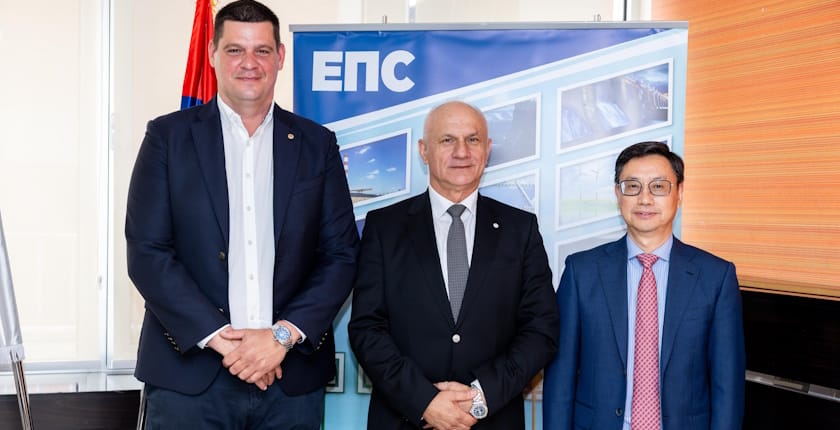
Serbia’s EPS signs PPAs for wind parks Alibunar 1, Alibunar 2

Serbian state-owned power utility Elektroprivreda Srbije will offtake electricity from future wind parks Alibunar 1 and Alibunar 2, of 168 MW in combined capacity. EPS’s Chief Executive Officer Dušan Živković and Project Director of WV-International in Serbia Lazar Lazendić signed today the power purchase agreements (PPAs) and the contracts for difference (CfD) and balancing responsibility.

Wind power projects Alibunar 1 (96.6 MW) and Alibunar 2 (71.4 MW) are among the winners from the latest round of auctions for market premiums for renewable energy in Serbia.

CEO of state-owned power utility Elektroprivreda Srbije (EPS) Dušan Živković signed the power purchase agreements (PPAs) and the contracts for difference (CfD) and balancing responsibility for the two planned facilities with Project Director of WV-International in Serbia Lazar Lazendić.

“EPS is committed to investing in the construction of power plants running on renewable sources, and this way we are strengthening our production portfolio and market position, and we actively support all investors in renewable energy sources. EPS will offtake all the generated electricity, the energy remains in Serbia, and the purchase and balancing price is set according to market principles, which incentivizes investors and enables additional profit for EPS. This energy will also give a substantial, additional security to the operations of our electricity system and to supplying citizens and companies,” Živković asserted.

Commitment to domestic market solidified

At the signing ceremony, Lazar Lazendić pointed out that the said success in auctions represents the materialization of important objectives in the development of the projects Alibunar 1 and Alibunar 2.

“Today’s signing of the contract with Elektroprivreda Srbije, encompassing market premiums, the purchase of electricity, and balance responsibility for our future wind farms solidifies our strong commitment to this market and plays a crucial role in driving Serbia’s energy transition forward,” he added.

Alibunar 1 and Alibunar 2 are SANY Renewable Energy’s first investment in Serbia

The special purpose vehicles, SPVs, or project firms for the two facilities are called Windvision Windfarm A and Windvision Windfarm B, respectively. They are majority owned by SANY Renewable Energy.

“The Alibunar 1 and Alibunar 2 wind farm projects are crucial for our company. SANY Renewable Energy is entering the Serbian market and the Western Balkans region through these projects. This will be the first installation of our wind turbines in these wind farms, serving as a model for our future expansion. We are eager to collaborate with local stakeholders and partners to enhance the country’s energy security,” said Zhou Fugui, Chairman of SANY Renewable Energy and member of the Board and Executive President of SANY Group.

WV-International is the gold sponsor of the Belgrade Energy Forum – BEF 2025, which will be held on May 14 and 15 in Serbia’s capital city, and SANY Renewable Energy is an exhibitor.

Živković: EPS obtained additional 2.6 GW from renewable sources

Živković also said that in the two rounds of auctions facilitated 850 MW of wind and solar power capacity and that, with investors that participated in the two rounds of auctions and other independent producers in Serbia, it already has an additional 2.6 GW from renewable energy sources.

The level will increase by 1 GW in 2028 from the self-balancing solar power plants that the company is developing with its strategic partner, the consortium of UGT Renewables and Hyundai Engineering, he added. “That’s when we expect the production from renewable energy sources to reach 50% of the total electricity production,” the head of EPS underscored.

by in News

EU outlines measures to end Russian gas, oil imports by end-2027

The European Commission set out a plan to phase out by the end of 2027 the purchases of Russian natural gas, including in the form of LNG, and oil. The package includes proposals aiming to replace Russian nuclear fuel and materials as well.

The European Union will end its dependency on Russian energy by stopping the import of Russian gas and oil and phasing out Russian nuclear energy, while ensuring stable energy supplies and prices, the European Commission said. Its new REPowerEU Roadmap targets full energy independence from Russia.

Since Russia’s invasion of Ukraine in 2022, the EU was lowering the share of Russian fossil fuels under the REPowerEU plan and via sanctions. However, Russian gas imports rebounded last year by 18%, led by Italy, Czechia and France. The commissioners argued that the “overdependency on Russian energy imports is a security threat” and called for new coordinated actions.

Von der Leyen: It is now time for Europe to completely cut off its energy ties with an unreliable supplier

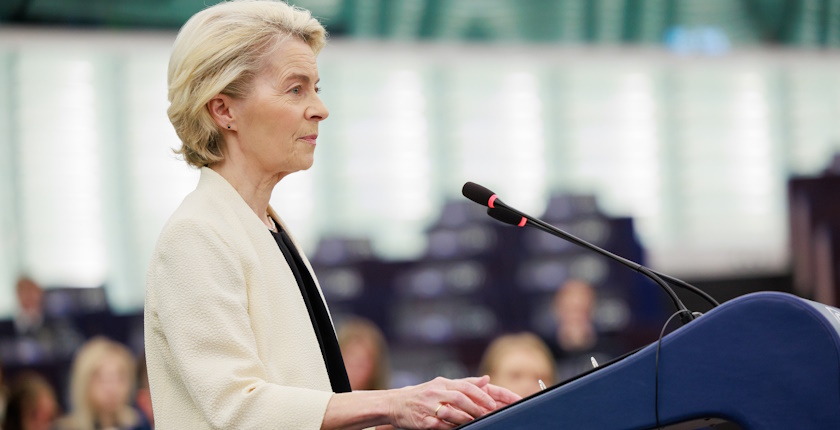
“The war in Ukraine has brutally exposed the risks of blackmail, economic coercion and price shocks. With REPowerEU, we have diversified our energy supply and drastically reduced Europe’s former dependency on Russian fossil fuels. It is now time for Europe to completely cut off its energy ties with an unreliable supplier. And energy that comes to our continent should not pay for a war of aggression against Ukraine. We owe this to our citizens, to our companies and to our brave Ukrainian friends,” European Commission President Ursula von der Leyen stated.

The volumes of imported Russian gas fell to last year’s 52 billion cubic meters from 150 billion in 2021. The share of Russian gas imports dropped from 45% to 19%. All imports of the country’s coal have been banned by sanctions. Russian oil imports have shrunk from 27% at the beginning of 2022 to the current 3%.

Member states need to roll out national plans by end-2025

The new measures have been designed to preserve the security of energy supply while limiting any impact on prices and markets. They would be applied in parallel to advancing the energy transition.

“Last year we in the EU paid EUR 23 billion to Russia for our energy imports. That is EUR 1.8 billion per month. This needs to stop,” European Commissioner for Energy Dan Jørgensen stressed.

The administration in Brussels expects to replace up to 100 billion cubic meters of natural gas by 2030, which means a decrease in demand by 40-50 billion by 2027. It sees an increase in liquefied natural gas (LNG) capacities by 200 billion cubic meters by 2028, which is five times more than current EU imports of Russian gas. The EU still hasn’t imposed sanctions on Russian LNG.

Member states will be asked to prepare national plans by the end of this year, the announcement reveals. All the measures will be accompanied by continuous efforts to accelerate the energy transition and diversify energy supplies, including via the aggregation of gas demand and a better use of infrastructure, according to the document.

Administration in Brussels intends to tackle Russian shadow tanker fleet carrying oil

The European Commission said the proposed measures would improve the transparency, monitoring and traceability of Russian gas.

“Crucially, new contracts with suppliers of Russian gas (pipeline and LNG) will be prevented, and existing spot contracts will be stopped by the end of 2025. This measure will ensure that already by the end of this year, the EU will have slashed by one third remaining supplies of Russian gas. The commission will further propose to stop all remaining imports of Russian gas by the end of 2027,” the plan reads.

Under the roadmap, the commission will put forward new actions to address Russia’s shadow fleet transporting oil. It said the vessels are circumventing sanctions and the international oil price cap.

EU depends on Russia for quarter of its uranium conversion, enrichment needs

As regards nuclear, the proposals coming next month cover enriched uranium and supply contracts co-signed by the Euratom Supply Agency (ESA) for uranium, enriched uranium and other nuclear materials. The EU intends to increase its production of medical radioisotopes.

“While diversification efforts might create uranium and fuel price volatility over access to uranium supply on global markets, major impacts on electricity prices are unlikely as the price of nuclear fuel and related services represent only a small portion of the final cost of electricity from nuclear power plants,” the plan adds.

The EU intends to increase its production of medical radioisotopes

More than 14% of uranium was sourced in the EU from Russia in 2024. The commissioners highlighted the concentration of uranium conversion and enrichment services – needed to transform processed uranium into the material for nuclear fuel manufacturing – in a limited number of companies.

In 2024, around 23% of the whole EU demand for uranium conversion services and almost 24% of enrichment was covered by Russia.

While more than 85% of uranium is produced in Kazakhstan, Canada, Australia, Namibia, Niger and Russia, uranium mines currently operate in many countries and unmined deposits exist in some EU member states.

It will take years to make use of domestic, other Western resources

European enrichment companies have expansion plans but the first new enrichment installation is not expected earlier than 2027.

“Moreover, the global uranium conversion industry is facing obstacles in ramping up production due to technological complexity and market uncertainties, and new conversion capacities are currently announced only for early 2030s. The EU’s nuclear sector also continues to rely on Russia for some spare parts and maintenance services,” the European Commission said.

EEB: Replacing Russian gas with US gas is senselless

The European Environmental Bureau (EEB) noted that imports of Russian gas including LNG rose 18% in 2024 despite no growth in demand.

Numbers of shadow LNG tankers from Russia have also increased, as have indirect imports of Russian energy via third countries, it added. Plans to tackle the shadow fleet are vague, the organization claimed. It went on to label the United States a clearly unreliable trade partner.

“Phasing out Russian coal and gas only to replace it with a dependence on US fracking gas is not in the EU’s security or financial interests. EU countries should instead focus on accelerating their deployment of wind and solar energies. The technologies to move to 100% renewable energy are available,” EEB’s Policy Manager for Climate and Energy Luke Haywood underscored.

by in News

Global solar power capacity hits 2.2 TW in 2024, with Turkey among top growers

The world added 597 GW of photovoltaic capacity last year, achieving an astounding 36% rate of growth, SolarPower Europe found. China accounted for 55.1% of all new installations. Turkey is in the global top ten with its 1.42% annual share, while Greece is sixth in the world in the category of solar capacity per person.

SolarPower Europe calculated a much higher global total, 2.2 TW, for photovoltaic facilities at the end of 2024, than the International Renewable Energy Agency (IRENA) – 1.87 TW. The Global Market Outlook for Solar Power 2025-2029 showed annual growth of 36%, by a record 597 GW. The increase itself was 33% higher than in 2023, the update reads.

Photovoltaics accounted for 81% of all new renewable electricity capacity added worldwide. While remaining a modest contributor to overall electricity generation for now, its share reached 6.9%, nearly doubling in just three years. It took nearly 70 years to reach the first terawatt, but only two to more than double it.

Total global capacity is projected at 7.1 TW by 2030

Other renewables accounted for 25% of electricity output in 2024.

In its “most realistic,” moderate scenario, the report’s authors anticipate a 10% increase in new installations to 655 GW this year. Annual growth rates remain in the low double digits through 2029, reaching 930 GW. Total capacity is projected at 7.1 TW by 2030, compared to the 11 TW renewable energy target from the United Nations Climate Change Conference COP28.

China hosted 44% of global solar fleet at end-2024

A key issue is the uneven distribution of solar market growth, SolarPower Europe pointed out. China grew by 329 GW, which is 30% more than in 2023 and more than the combined total of the other top 10 markets! Of note, IRENA measured just 278 GW.

China’s increase was 55.1% of the global total last year. It hit 985 GW overall, the report reads. It is 44% of the global photovoltaics fleet, after 40% in 2023 and 34% in 2022. In IRENA’s statistics, China topped 50% of all solar power installations in the world.

Turkey spikes 76% to 19.7 GW

Turkey, the largest country in the region that Balkan Green Energy News covers, delivered 8.5 GW, catapulting its capacity by 76% to complete 2024 at 19.7 GW.

Its addition made up 1.42% of the world’s annual increase, earning it the seventh position. Turkey’s absolute increase was five times higher than in 2023. Rooftop photovoltaics attributed a stunning 90%.

There are nearly 70 companies in the country actively engaged in PV module manufacturing, with a total capacity exceeding 40 GW. Several investments in solar cell production increased the segment to 2 GW altogether in annual terms.

The number of countries with expansion greater than 1 GW per year is 35, after 31 in 2023. The group, which includes Greece, Romania and Bulgaria, is seen getting ten more members in 2025.

EU within reach of 2030 target

At the end of last year, Europe had a total installed capacity of 407 GW, which is 25.2% more than in 2023. The European Union accounted for 338 GW, growing 23.9%.

The medium scenario suggests the EU would climb to 797 GW altogether by 2030, exceeding the REPowerEU target of 750 GW. But it is 11% lower than in last year’s outlook.

In 2024, solar power generation in the European Union surpassed coal for the first time. Its share in the electricity mix exceeded 10% and reached 20% or more in markets such as Cyprus, Greece, Hungary and Spain. The last two even touched 25%.

Germany is Europe’s largest solar market for 13 years in a row. Overall capacity surged 21% to 101 GW.

Romania is advancing in 2025 by an estimated 67% to 2.9 GW. The government provided strong backing for the rally, advancing large-scale solar projects.

Greece is sixth in world in watts per capita

The report reveals that Germany became the third country hosting more than 1 kW of solar power per capita. It spiked 20.5% to 1,187 W.

The first is Australia, which leaped 10.9% to 1,521 W per person. The Netherlands advanced 13.4% to 1,491 W.

All other countries in the top 10 chart are in Europe. Greece is in the global vanguard, in the sixth place, after spiking 40.3% to 964 W for every inhabitant.

by in News

Landmark report demonstrates safety, cybersecurity, higher yield of SolarEdge PV systems

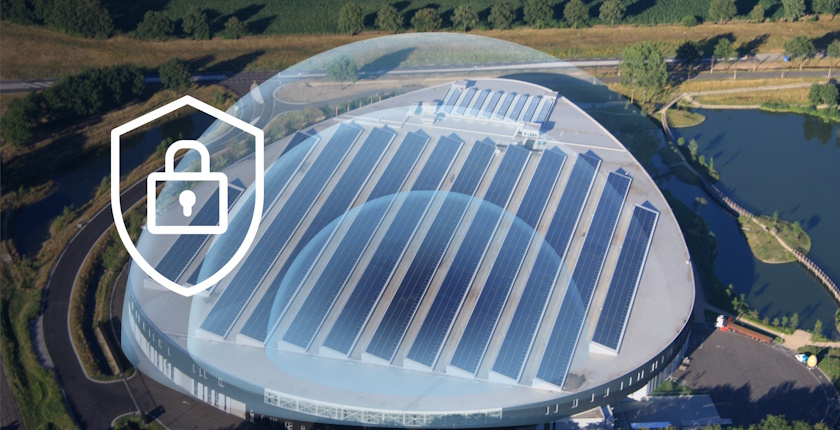
VDE Renewables found in its new report that SolarEdge’s advanced safety capabilities minimize photovoltaic system risks and effectively prevent fire hazards, while exceeding international PV safety regulations. SolarEdge has robust cybersecurity mechanisms, essential to mitigating risks associated with cyberthreats, and its solutions bring higher energy yields for both simple and complex roofs.

A new report by VDE Renewables, a subsidiary of the VDE Group, has demonstrated that SolarEdge’s inverter and Power Optimizer-based PV systems deliver measurable advantages in advanced safety, cybersecurity and higher energy production across a wide range of installation types.

In its in-depth assessment of Module-Level Power Electronics (MLPE) topology and SolarEdge’s approach to PV systems, the report highlights how SolarEdge’s advanced safety features reduce PV system vulnerabilities and exceed international PV safety standards. Reviewed and validated by VDE Renewables, the integration of multiple protective mechanisms including Sense Connect proactively identifies and addresses faulty connections long before abnormal temperature is reached.

SafeDC™, rapid shutdown, and module-level monitoring was reported to provide a proactive approach to risk mitigation to ensure a significantly higher level of protection for system operators, maintenance personnel, and emergency responders.

Photo: SolarEdge’s inverter + Power Optimizer solution shown to produce higher energy yields for both simple and complex roofs (4% and 10.5% more power, respectively)

Unsecure PV systems becoming more vulnerable to cyberthreats

The VDE Renewables report also emphasizes cybersecurity as a top priority in PV systems, noting that as solar technology becomes increasingly digitized and interconnected, unsecure PV systems also become more vulnerable to cyberthreats.

With PV systems now integral to energy infrastructure, the consequences of cyberattacks can extend far beyond individual installations, raising wider concerns around grid security and resilience. In this context, VDE Renewables validated SolarEdge’s strong cybersecurity credentials, recognizing its comprehensive, built-in defence architecture and highlighting its robust cybersecurity mechanisms that mitigate risks associated with cyberthreats.

These mechanisms comply with leading international cybersecurity regulations, including IEC 62443, NIST Cybersecurity Framework, and ISO/IEC 27001. Additionally, SolarEdge’s solution includes encrypted communication protocols, secure remote firmware updates, multi-level access control, continuous monitoring, and penetration-tested system architecture.

SolarEdge provides residential solutions bolstering output on complex roofs by 10.5%

VDE Renewables also validated the performance of SolarEdge’s residential solution against leading traditional string inverter systems, even when using multiple MPPTs. The report confirms results that show a 4% increase in energy production on simple (single facet with no shading) rooftops and an impressive 10.5% increase on complex rooftops.

These gains are attributed to SolarEdge’s use of MLPE-based Power Optimizers and advanced Buck and Boost technology. The VDE Renewables report highlights the SolarEdge ONE energy optimization platform that helps maximize saving potentials with support for both fixed and dynamic electricity tariffs, as well as design advantages such as the ability to use longer strings, enabling lower BoS costs and larger systems within the same roof area – further contributing to overall energy yield.

Gruenewald: SolarEdge’s technology demonstrates its strategic market position in safety, cybersecurity, and performance

The report was sponsored by SolarEdge to evaluate its Power Optimizer-based PV system.

Arne Gruenewald, Project Manager Batteries and Energy Storage Systems, VDE Renewables: “Our assessment shows that SolarEdge’s technology demonstrates its strategic market position in safety, cybersecurity, and performance – criteria that are essential for the technology’s long-term viability and trust.”

VDE Group offers quality assurance services for the global renewable energy sector.

Christian Carraro, General Manager Europe, SolarEdge: “We welcome VDE Renewables’ validation of our technology, being a trusted partner for quality assurance, risk minimization and certification. As the solar industry grows and evolves, it’s essential that we continue to prioritize not just performance, but also safety and cybersecurity. This report encourages us to keep raising the bar and deliver technologies that support more powerful and secure energy solutions.“

About SolarEdge

SolarEdge is a global leader in smart energy technology. By leveraging world-class engineering capabilities and with a relentless focus on innovation, SolarEdge creates smart energy solutions that power our lives and drive future progress.

SolarEdge developed an intelligent inverter solution that changed the way power is harvested and managed in photovoltaic systems. The SolarEdge DC-optimized inverter seeks to maximize power generation while lowering the cost of energy produced by the PV system.

Continuing to advance smart energy, SolarEdge addresses a broad range of energy market segments through its PV, storage, EV charging, batteries, and grid services solutions.

by in News

Electricity system in Spain, Portugal collapses

Power was out today throughout Spain and Portugal as well as in Andorra and parts of southern France, in one of the most serious such incidents so far, on a European scale. The European Commission’s Executive Vice President Teresa Ribera and other officials from the EU and the affected countries said there are no indications of sabotage or cyberattack.

Grid operators and electricity producers are gradually restoring the power supply after a massive outage struck the Iberian peninsula today. Prime Minister of Spain Pedro Sánchez convened the National Security Council. It is one of the most serious blackouts in Europe in many years. The outage spread throughout Spain and Portugal.

Power was out in Andorra and, briefly, in parts of southern France. Transportation and telecommunications were heavily affected.

Spanish TSO Red Eléctrica de España called it a “collapse of the Iberian electricity network.” The company said it would take six to ten hours to restore it. Notably, the production system is relying almost completely on photovoltaics and wind farms at the moment, so just a few hours of solar power production remain.

The outage paralyzed major cities including Madrid, Barcelona and Lisbon and caused disturbances in the European grid. The European Commission’s Executive Vice President for Clean, Just and Competitive Transition and Commissioner for Competitiveness Teresa Ribera said there were no indications that “any kind of sabotage or cyberattack” was behind the grid collapse.

According to the Government of Portugal, the incident started from outside the country

According to the Government of Portugal, the incident started from outside the country and, apparently, in Spain.

Shares of solar, wind power production in Spain breaking records

In the spring and autumn, when there is little to no demand for heating or cooling, electricity grids in most of Europe are sometimes strained from surges in high solar and wind power production, amid a lack of energy storage and flexibility capabilities that would balance the surplus.

On April 16, the Spanish electricity system achieved total coverage for the first time with renewable energy sources. At one point during the day, wind and solar met 100.6% of demand. Then on April 21, solar power generation was equivalent to a record 78.6% of domestic demand for a moment.

Reid: The massive outage occurred while prices are negative in electricity markets across Europe

“Spanish grid operator Red Eléctrica has so far blamed a power ‘oscillation’ on the power outage. We still don’t know the cause but it looks like problems at the Spanish-French power interconnector led to the Spanish grid operator islanding their power system and I would say at this point they lost control,” said Gerard Reid, investor and strategic advisor in energy, finance and geopolitics.

It has also proven difficult to restore power with multiple black start (restart) procedures taking place, but the issue is that at the time of the blackout there were no conventional power units in operation, he pointed out. Reid added it makes the restart complicated and stressed that Europe requires enhanced grid-scale battery storage solutions, including for black start capabilities.

He also highlighted the fact that the massive outage occurred while prices are negative in electricity markets across Europe.

Of note, a grid incident last summer left much of the Western Balkans and parts of Croatia out of power for several hours.

by in News

Nordex Group – from a sketch on the wall to a leading Western wind turbines developer

Nordex Group, one of the largest wind turbine manufacturers in the world, is celebrating its 40th anniversary. The company’s portfolio in Croatia, Serbia and Montenegro recently reached a total of 1 GW in installed capacity and projects under development, underscoring Nordex’s strong commitment to supporting Southeastern Europe’s energy transition goals.

Nordex will participate in the leading regional conference, the Belgrade Energy Forum, and take this opportunity to mark this milestone. At the event, Anne-Catherine de Tourtier, Vice-President Mediterranean, will contribute to discussions as a panelist, and the company will host an anniversary celebration.

It was back in the early eighties, in Denmark, that Flemming Pedersen and his two sons, Carsten and Jens, had a vision: develop innovative products that could generate electricity in a cost-effective way while protecting environment. To put this idea into practice, they devised a wind turbine which they first sketched on a wall.

They built the first 65 kW turbine, installed on the family property and made it work.

This was the starting signal ; in 1985, Carsten and Jens Pedersen founded Nordex A/S in Give, laying the foundations for Nordex as a company.

The founders had a vision to generate cost-effective power with no impact on the environment

A lot has changed in 40 years. Nordex Group has become one of the world’s leading Western manufacturers of wind turbines, successful around the globe and the market leader in Europe. Technology and the industry have been developed at an impressive pace.

Electricity from wind power has become cost competitive. A strong focus on innovation and cost of energy (COE) has significantly reduced the cost per kilowatt-hour, turning wind into the cheapest source of electricity in many regions.

A crucial role in protecting the planet from climate change

One thing has not changed in the four decades of the Nordex story: Developing and delivering clean power plants that make 100% renewable energy a reality for the world, is still the shared mission and driver of today’s more than 10,900 Nordex Group employees, and its valued partners and clients around the globe.

The company kicked off the 40th anniversary series by thanking its customers, suppliers, colleagues and friends who have made its journey of innovation and growth possible.

“A special thank you to the Pedersen family for following a vision and believing in a technology that was once perceived by many as an utopian dream, and today recognized as playing a crucial role in protecting our planet from climate change, safeguarding it for generations to come!” said Vice-President Mediterranean Anne-Catherine de Tourtier, who will participate at Belgrade Energy Forum next month.

The first Nordex-branded wind turbine

In 1986, just one year after the company was founded, the first Nordex-branded wind turbine started to produce energy. Developed by the visionary Pedersen brothers and Nordex’s inaugural employee, Knud Buhl Nielsen, the N27 marked the beginning of a groundbreaking journey towards sustainable energy production.

The firm rented the tallest crane in Denmark to lift the first N27 turbine in 1986

Looking back on this milestone, Carsten Pedersen fondly recalls“The first real Nordex turbine was the N27 with a rotor diameter of 27 meters, on a 30-meter tubular tower which we erected at our factory in 1986. At that time, it was one of the biggest turbines on the market and we thought that it was really big. We had to rent the tallest crane in Denmark to erect it.”

From today’s perspective, the whole development process in the early stages of Nordex seems truly adventurous. In the absence of a computer, the design was done by hand, and the loads were calculated using a pocket calculator.

However, it’s safe to say that both processes were conducted thoroughly and expertly. “The turbine actually kept running for 30 years, as we did not dismantle it until 2016,” remembers Jens Pedersen.

Three decades since the company’s first 1 MW wind turbine

Looking back, based on the first steps with the N27, it seems that “thinking big” was the beginning of the Nordex Group natural approach. A further humble milestone was accomplished today: 30 years of producing turbines of the megawatt class. In 1995, Nordex introduced the worldwide first series-produced megawatt turbine, the N52, with 1 MW.

Today, Nordex’s Delta4000 series boasts a rated power more than 45 times that of the N27, showcasing the remarkable advancements in technology and engineering expertise. Over the past 40 years, the rotor diameter has increased 6.5-fold, reaching an impressive 175 meters, with its swept area increasing accordingly by a factor of 42. Today, Nordex wind turbines are manufactured with capacities ranging from 4 MW to 7 MW.

Anniversary celebration at BEF 2025 is affirming Nordex’s commitment to the Balkans

The global company is marking its 40th anniversary at the upcoming Belgrade Energy Forum, affirming its commitment to the Balkans.

Vice-President Mediterranean Anne-Catherine de Tourtier is one of the speakers in the panel discussion ‘Energy revolution underway – uniting efforts to deliver green, intelligent and sustainable energy solutions’.

Organized by Balkan Green Energy News, BEF 2025 will be held on May 14 and 15 in Serbia’s capital city.

Belgrade Energy Forum is a central meeting point for representatives of regional and international institutions, organizations and the business community from the region, Europe, and beyond.

Make sure you register on time via this link.

In the evening on May 14, Nordex is organizing its anniversary celebration party for all the participants at the conference.

The group is actively focusing on the Balkan market, with a robust presence across the region, currently involved in six projects in Croatia, three in Serbia, and one in Montenegro.

“We have successfully contracted 1 GW in Serbia, Croatia, and Montenegro, encompassing 222 wind turbines across 16 wind farms. Our team in the Balkans region has grown to over 30 employees, reflecting our significant investment in local talent and development,” said Managing Director for Serbia Vladimir Kolarević.

Nordex highlighted the Balkans as one of its key growth areas, with several ongoing projects in other countries within the region as well. As a crucial partner in the energy transition, the wind turbine manufacturer leverages its footprint and network in Croatia, Serbia, and Montenegro to enter new markets and drive sustainable development, according to the update.

The company is listed on the Frankfurt Stock Exchange, and has installed so far 57 GW of wind power capacity in over 40 markets.

In Turkey, one of its manufacturing hubs, Nordex received orders for more than 1 GW in 2024. And then 750 MW was booked in the country just in the first quarter of this year.

As for the other markets tracked by Balkan Green Energy News, a notable example is Greece, where Nordex surpassed 1 GW.

by in News

OMV opens Austria’s largest green hydrogen plant

OMV put into operation its green hydrogen plant in Schwechat near Vienna. The facility can produce 1,500 tons per year.

OMV is producing green hydrogen on a commercial scale for the first time. The Vienna-based fossil fuel and petrochemicals producer started up a 10 MW plant at its Schwechat refinery near Austria’s capital. It is the largest in the country.

The investment amounts to EUR 25 million. The electrolyzer system can produce up to 1,500 tons per annum. OMV said the green hydrogen would be used to make more sustainable fuels and chemicals including sustainable aviation fuel (SAF) and renewable diesel (HVO).

PEM electrolyzer uses wind power, hydropower, photovoltaics

The new 10 MW polymer electrolyte membrane (PEM, also called proton exchange membrane) electrolyzer is powered entirely by renewable electricity. It is generated by wind power, hydropower plants and photovoltaics.

The innovation enables annual savings of up to 15,000 metric tons of carbon dioxide emissions, according to the comparator from the European Union’s Renewable Energy Directive. It is equivalent to 2,000 persons per year, based on the EU’s 2024 average of 7.5 tons of CO2 equivalent per capita.

“With the start-up of Austria’s largest electrolysis plant, we are re-inventing how essentials we use in everyday life are produced sustainably. Green hydrogen is at the heart of this transformation, serving as a critical component in producing fuels and chemicals while advancing the decarbonization of our Schwechat site,” said board member Martijn van Koten, responsible for fuels, feedstock and chemicals.

Green hydrogen project is step toward making OMV carbon neutral

The majority owner of Romanian OMV Petrom aims to cut its net emissions to zero by 2050. Its transformation is based on projects including for geothermal energy and chemical recycling. Green hydrogen can be utilized in the production process in refineries.

The green hydrogen plant is certified for producing renewable fuels of non-biological origin (RFNBOs).

Making green hydrogen through PEM electrolysis involves splitting water into hydrogen and oxygen using renewable electricity. At the anode, oxygen and positively charged hydrogen protons are generated. The protons pass through the PEM, and at the cathode, they combine with electrons to form hydrogen gas.