by in News

Greece’s DEPA Commercial picks contractors for PV plants of 500 MW

Construction companies Terna and Aktor are about to start building a solar power plant of 400 MW in northern Greece and another 100 MW near Larissa, for state-owned DEPA Commercial, according to a new report. In its switch toward cleaner sources, the gas holding has also finished the construction of its biomethane plant.

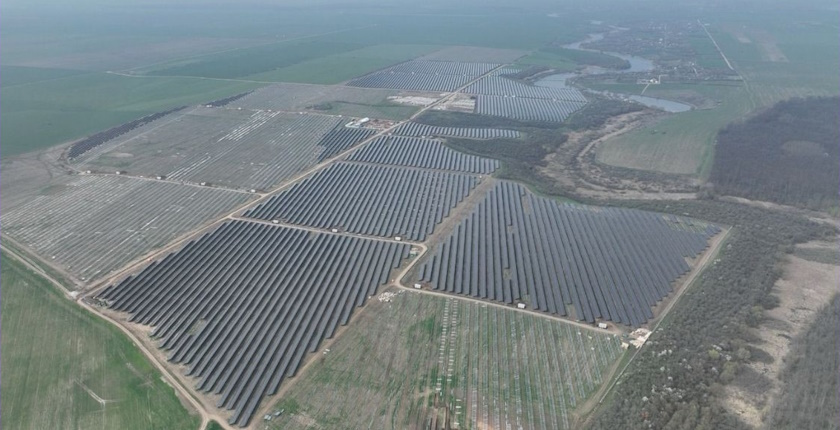
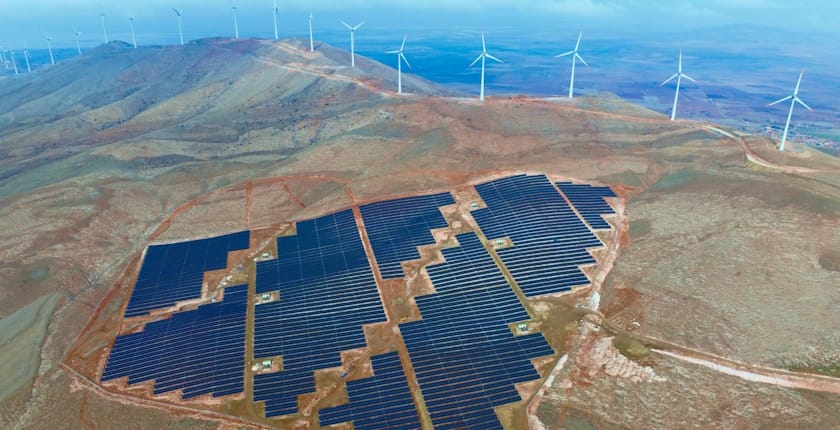
Greek state-controlled gas supplier, importer and trader DEPA Commercial has completed the tenders for photovoltaic parks of 500 MW overall, OT learned. The 400 MW facility in Kozani in the Western Macedonia province would currently be the largest in the country.

However, Lightsource bp, owned by BP, started the construction of a 560 MW solar park last summer in Central Greece and Thessaly. State-controlled Public Power Corp. (PPC or DEI) is about to finish a 550 MW photovoltaic facility in Ptolemaida, near Kozani.

DEPA Commercial is also known as DEPA Emporias (in Greek), DEPA Commerce and DEPA Trading. Both for the giant PV plant in northern Greece and another 100 MW in Farsala, Larissa, it selected the consortium of Terna, part of the GEK Terna conglomerate, and Ellaktor’s Aktor.

The turnkey deals are worth EUR 270 million in total

The turnkey agreements are worth a combined EUR 270 million. The company obtained a EUR 390 million loan in July from the European Investment Bank (EIB) for its photovoltaic projects. The portfolio amounted to 816 MW.

The projects, which are at various stages of maturity, are conducted under subsidiaries North Solar, North Solar 1 and New Spes Concept.

DEPA Commercial’s new move comes after the government bought a 35% stake from Helleniq Energy. The company is now fully owned by the Hellenic Republic Asset Development Fund (HRADF or TAIPED). The transaction was completed at the turn of the year, when the vehicle also integrated the so-called Superfund.

DEPA Commercial starts producing biomethane for its fuel stations

Within its energy transition efforts, the gas giant is entering biomethane production as well. DEPA Commercial said early this month that it produced Greece’s first quantities of the fuel.

The new pilot unit, Farma Hitas (Chitas) in Filippiada in the country’s west, makes 97% pure methane and compresses it. The bio-CNG goes to the company’s Fisikon gas stations, where it is mixed with natural (fossil) gas and sold as vehicle fuel.

Ownership stakes in Alexandroupolis gas complex, IGB pipeline

As for its conventional business operations, DEPA Commercial holds a 29% stake in special purpose firm Ilektroparagogi Alexandroupolis (Alexandroupolis Electricity Production). PPC is the majority partner, with 71%.

They are building a combined-cycle gas turbine (CCGT) of 840 MW. In addition, DEPA Commercial owns 20% of the Alexandroupolis LNG Terminal and 25% of ICGB, which operates the Interconnector Greece-Bulgaria (IGB) gas pipeline.

The company is participating in the Fier Thermoelectric project for a 174 MW gas power plant in Albania. DEPA Commercial intends to supply some of the renewable electricity that it generates to its wholly-owned subsidiary Fysiko Aerio – Hellenic Energy Co. The gas and electricity distributor has more than 530,000 customers.

Notably, DEPA Commercial already owns an aggregator license – FOSE, allowing it to trade in the wholesale power market on behalf of a group of producers.
by in News

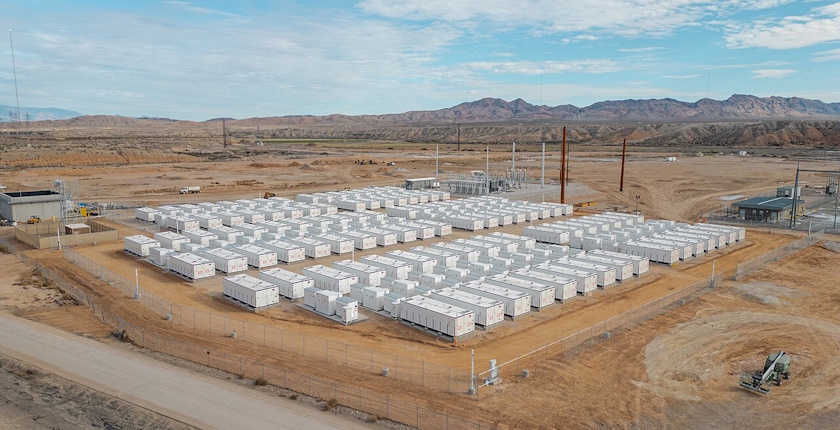
Bulgaria grants EUR 587 million to 82 battery storage projects

Developers of 82 standalone battery storage projects in Bulgaria, for an overall 9.71 GWh in capacity, got approval for EUR 587 million in subsidies from the Ministry of Energy. Another 30 landed below the line, but the government intends to boost the program by EUR 120 million.

More than four months after the deadline for applications, the Ministry of Energy of Bulgaria ranked 112 projects for standalone battery energy storage systems (BESS). Through the RESTORE call for grants, it approved EUR 587 million for 82 of them, exhausting the budget.

The scheme is part of the National Recovery and Resilience Plan (NRRP), under the Recovery and Resilience Facility (RRF), which the European Commission controls.

The selected investments envisage an overall 9.71 GWh of storage capacity, compared to the target of at least 3 GWh. The aim is to provide balancing to enable a significant increase in the share of wind and solar power in the energy mix, as well as to ensure the security and stability of the country’s electricity system. The facilities will be connected to the grid at both the transmission and distribution levels.

Notably, Bulgaria is struggling to meet the conditions and deadlines for NRRP funding, including for battery projects. Moreover, the ministry apparently decided not to move forward with a second call for subsidies for households for solar panels with or without batteries, and for solar collectors. It risks losing the European Union’s funding.

Project underway for 125 MW battery system in Burgas

The largest selected investment is BESS Burgas. The project is worth EUR 90 million, of which the grant would cover 26.5%. The proposed facility would have 125 MW in operating power and a four-hour duration, translating to 500 MWh.

The list lacks data on planned capacities for many of the projects. Among them is the one from ContourGlobal Maritsa East 3 (Maritsa iztok 3), the operator of a coal power plant that recently ceased operations. The company intends to invest EUR 74.5 million, the fifth-highest amount. The ministry said it would provide 40% of the total.

The owner of the recently closed Maritsa East 3 coal power plant won a 40% subsidy for its EUR 74.5 million BESS proposal

Weapons and ammunition producer Arsenal 2000 won a 44% subsidy for its EUR 48.9 million project. It intends to install a BESS of 80 MW and 350 MWh. One of the selected proposals is called Verila Solar Park 2. The share of the approved grant in the EUR 65.7 million investment is 32%.

Toki Storage stands out among the beneficiaries with 11 approved projects of the same size and valuation: 10 MW, 40 MWh and EUR 6 million each. The grants would cover 30% to 39.3%.

NEK fails to qualify with its project for battery system at Topolnitsa hydropower plant

Out of 151 applications, 118 initially passed to the ranking stage. The ministry said they were worth a combined EUR 838 million. The 30 projects in reserve are worth EUR 212 million, it added.

They include proposals from coal plant operators Toplofikatsiya Pernik and Bobov Dol. The ministry rejected four projects, of which one from state-owned National Electricity Co. (NEK), for a 20 MWh battery unit at its Topolnitsa hydropower plant.

According to consulting firm New I, involved in more than 40% of the winners in the call, they are worth EUR 1.59 billion altogether, Bulgarian language EU Funds website reported. Requested support ranges between just below EUR 40,000 per MWh and EUR 80,000 per MWh, and the weighted average came in at EUR 60,000 per MWh, it revealed.

Many of the 151 projects were duplicated, the article adds.

Importantly, the government has proposed increasing the RESTORE program by EUR 120.6 million, which would be sufficient for at least 20 projects in the reserve group.

The ministry was supposed to select the beneficiaries by January. The deadline for drawing the EU funds is June next year, so the developers must rush to install their battery systems – but first they need to sign contracts with the government.

by in News

Turkey aims to become major lithium producer with its geothermal wells

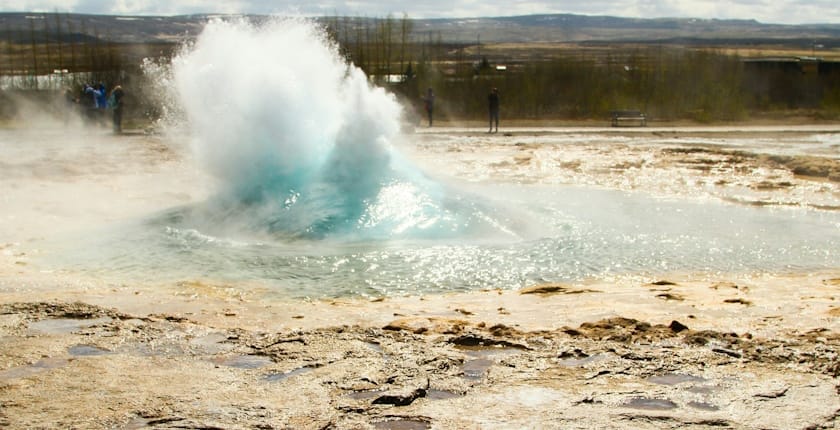
Turkey is using only 10% of its geothermal potential, according to Chairman of the Geothermal Power Plant Investors Association (JESDER) Ufuk Şentürk. He said existing wells alone could open the way for the country to become one of the world’s major producers of lithium.

Studies are underway to determine the accessibility of valuable minerals in Turkey’s geothermal waters. There are already some one thousand wells with 100,000 tons of water coming out every hour, Chairman of JESDER Ufuk Şentürk told Anadolu Agency Energy Terminal. He pointed to the potential for the extraction of lithium, cesium, selenium and silicon.

Turkey is utilizing only 10% of its geothermal potential, Şentürk stressed. An inventory is under development of wells that were drilled to find oil and left unused, he added. The temperatures are as high as 150 degrees Celsius and the said resources can provide heat for 5,000 hectares of greenhouses, the organization’s chief said.

Researchers have found a lithium source in Turkey of 20 parts per million in geothermal water

The İzmir Institute of Technology (İYTE) and Afyon Kocatepe University have been conducting studies for two years, within the Turkish-German Energy Partnership, on obtaining minerals, Şentürk noted. He said there are 100 parts per million of lithium in one geothermal source in Germany, while 20 parts per million were found in Turkey.

Investment costs are much lower without exploratory drilling, if lithium is extracted from geothermal water already coming to the surface. The head of JESDER, Geothermal Power Plant Investors Association, estimated that Turkey could produce 35,000 tons per year and said global production came in at 36,000 tons last year.

“Even if we obtain 10%, we will still be one of the countries with the largest lithium resources in the world,” he stated.

Volumes of lithium extracted from geothermal waters are still symbolic

As Şentürk didn’t elaborate, it remains unclear if he compared the country’s potential to the output from so-called direct lithium extraction (DLE) or perhaps evaporation from brine pumped from underground. They make up one tenth and one quarter, respectively, of the 240,000 tons of lithium produced last year in the world. The rest is mined.

A different benchmark, the lithium carbonate equivalent or LCE, is almost five times larger. Additionally, about 5% of lithium ion batteries are recycled. The volumes of lithium extracted from geothermal waters are still symbolic.

Investors are betting on the combination with geothermal energy, to make lithium production cost effective, as it is found in very small quantities in underground water. Direct extraction of the alkali metal from water has an immeasurably lower environmental impact than mining.

Existing geothermal power plants can provide heat to 4,000 hectares of greenhouses

Şentürk pointed out that Turkey hosts 65 geothermal power plants of 1.74 GW overall. They generated 11.2 TWh in 2024 of the total 350 TWh.

Geothermal energy currently heats 7,000 hectares of greenhouses in Turkey and 160,000 homes, Şentürk said. The Ministry of Agriculture and Forestry is providing incentives for greenhouse zones of 2,800 hectares in total. But existing geothermal power plants alone could, with such support, provide for 3,500 to 4,000 hectares of greenhouses, the association’s chief estimated.

On a global scale, Turkey trails only the United States, Indonesia and the Philippines in geothermal power. Nevertheless, after several years of rapid growth, it only added 120 MW in capacity since 2020.

A recent study, conducted within the project called Li+Fluids, showed geothermal waters in north Germany and its Thuringia state contain between 0.39 and 26.5 million tons of lithium. The country’s demand for 2030 is projected at 0.17 million tons.

by in News

All applicants qualify for first wind power auction in Kosovo*

Three potential bidders met the legal, technical and financial criteria for the upcoming wind energy auction in Kosovo*, for a quota of 100 MW.

Ahead of its request for proposals in the competitive bidding process for wind power projects, the Ministry of Economy of Kosovo* confirmed that all applicants passed the qualifications stage. The quota is 50 MW to 100 MW and the plan is to support 150 MW in total in two rounds. Participants will bid for 15-year power purchase agreements (PPAs) and contracts for difference (CfDs).

The next phase will “start soon,” Minister of Economy Artane Rizvanolli said. It was due in March. International Finance Corp. – IFC, which is part of World Bank Group, and the United States Agency for International Development (USAID) have provided support for organizing the first wind power auction in Kosovo*.

According to the schedule, the call for the remaining capacity will be issued the second half of the year.

Six-month deadline for financial proposals

One applicant is a consortium of Notus Energy, based in Germany, and Stublla Energy from Kosovo*.

The ministry also received documentation from Akuo Energy from France and a consortium led by Güri̇ş, headquartered in Turkey. Both participated in the first solar power auction as well, held last year. The companies submitted documentation on February 20.

All met the legal, technical and financial criteria for the upcoming bidding, the ministry said. It revealed that the request for proposals would last half a year and vowed to conduct it in line with the highest transparency standards.

Potential investors can attend a planned presentation and submit questions regarding necessary documentation

In the meantime, the ministry and IFC are planning to hold a presentation for the qualified investors. After that, they can send questions.

The auction commission is responsible for assessing the fulfillment of the legal, technical, environmental and social criteria, before opening the financial proposals. The winner, among the companies and consortia that qualified, is the one offering the lowest price per megawatt-hour. The upper limit is EUR 80.2 per MWh.

Wind projects would be run by special purpose vehicles (SPVs), firms where the government would have a share of up to 49%. The Ministry of Economy intends to use the funds from the International Monetary Fund’s Resilience and Sustainability Facility (RSF) in the development of the 150 MW.

Power consumption far exceeded domestic supply last week

Among other developments in Kosovo*, which has the world’s highest share of coal in electricity production, consumers have received another warning.

Distribution system operator KESCO said last week, ahead of the Easter holiday, that domestic production capacity amounted to 315 MW from coal and 130 MW from renewable sources. Consumption was 43% higher than in the equivalent period of last year, surpassing 700 MW. Devices with high consumption should be used only when necessary, especially during peak hours, the company pointed out.

* This designation is without prejudice to positions onstatus and is in line with UNSCR 1244/99 and the ICJ Opinion on the Kosovo declaration of independence.
by in News

Minister Admir Šahmanović formally assumes energy, mining portfolio in Montenegro

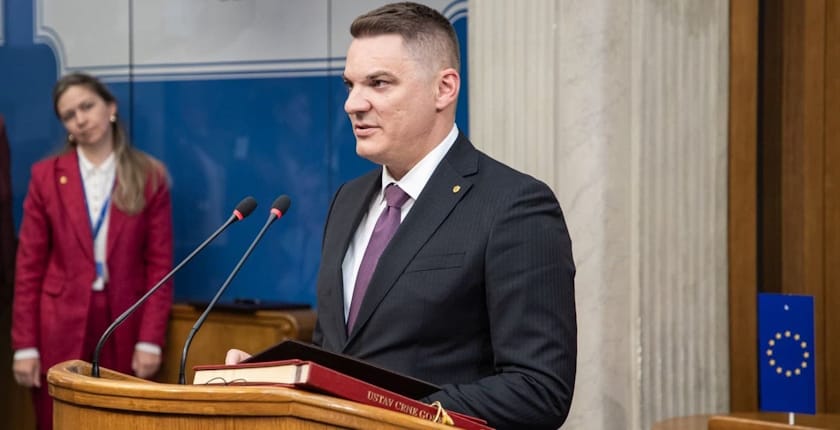
Prime Minister of Milojko Spajić has merged two ministries, so Minister of Mining, Oil and Gas and Coordinator of the Ministry of Energy Admir Šahmanović took the helm at the joint energy and mining portfolio. Among his primary responsibilities are the completion of the domestic part of the Trans-Balkan Electricity Corridor, the installation of the second line of the Monita submarine interconnector with Italy and power market coupling with the European Union.

The Parliament of Montenegro elected Minister of Energy and Mining Admir Šahmanović. He led the Ministry of Mining, Oil and Gas in  since July. As Minister of Energy Saša Mujović was elected mayor of the capital Podgorica, Šahmanović recently took over as coordinator,

Prime Minister Milojko Spajić now formally merged the two ministries again. “If we complete the Trans-Balkan Corridor – only a few kilometers are left, the second line of the underwater cable toward Italy, Montenegro is becoming the cooperation bridge between the Balkans and the EU,” he said in the national assembly, promoting Šahmanović.

The list of priority energy infrastructure, adopted in December, also includes the Komarnica and Kruševo hydropower projects, the Ionian-Adriatic Pipeline (IAP), a subsidy scheme for rooftop solar power plants, energy efficiency measures and a floating solar power unit.

The Trans-Balkans Electricity Corridor is a project for upgrading transmission systems in Serbia, Bosnia and Herzegovina and Montenegro. The proposed lines run from Romania to the Monita subsea interconnector with Italy.

Admir Šahmanović will participate in the first panel discussion within Belgrade Energy Forum (BEF 2025), organized by Balkan Green Energy News. The two-day conference in Serbia, starting on May 14, is the central meeting point for representatives of regional and international institutions, organizations and the business community from the region, Europe, and beyond.

Minister has master’s degree in financial management

The minister said earlier this month that current photovoltaic and wind power projects would boost Montenegro’s electricity capacity fivefold, to 5 GW. Admir Šahmanović, born in 1985, has a master’s degree in financial management. He is in the leadership of the Bosniak Party.

Early in his career, he worked in PricewaterhouseCoopers in both Montenegro in Serbia, in Montenegro’s ministries of sustainable development and tourism and public administration, and the British Council in Podgorica. The current minister has experience in managing funds received from the European Union.

Šahmanović entered energy policy sphere in 2022

Three years ago, Šahmanović was named state secretary in the Ministry of Capital Investments, which included the energy portfolio. He participated in the negotiations on the EU accession and on obtaining loans from international financial institutions.

According to his official biography, the minister has promoted sustainable energy and transportation and environmental protection and worked on the country’s strategic documents and action plans.

Additionally, Šahmanović has managed EU-funded projects for wastewater purification and green energy.

Last month he oversaw the adoption of the new Law on Energy.

by in News

Nofar Energy inks deal for 265 MW solar power plant near Bucharest

The operator of the biggest solar power plant in Romania is about to start building a much bigger facility. Nofar Energy signed a turnkey contract including operation and management for a 265 MW system in Corbii Mari in Dâmboviţa County.

Just west of Bucharest, one of the largest photovoltaic projects in Romania is nearing materialization. A consortium of COX Energy from Spain and domestic firm AJ Construction, part of AJ Brand, is the designated contractor and operator for a proposed 265 MW solar power plant in Corbii Mari. A multijurisdictional team of Clifford Chance lawyers, coordinated by its Bucharest office, advised Nofar Energy, the developer, and revealed the news.

The small commune is in Dâmboviţa county. The Israeli company acquired the project in late 2023.

The Clifford Chance Badea law office said the Corbii Mari endeavor is the fourth engineering, procurement and construction (EPC) and operation and maintenance (O&M) contract in which it assists Nofar Energy. The overall collaboration concerns renewable energy projects in Romania for over 650 MW, it added.

Nofar recently said is meeting the timelines for its key projects in the country including Ghimpați (146 MW) and Iepurești (169 MW) and Slobozia, of 74 MW. The last of the three won government support through a contract for difference (CfD) at the country’s first auction. The Israeli company added that it has a project portfolio of 970 MW and 120 MWh. The latter item apparently concerns battery storage.

In addition, Nofar Energy said last month that it connected to the electricity grid its solar park in Ada, the largest such system in neighboring Serbia.

by in News

Serbian Minister of Mining and Energy Dubravka Đedović Handanović gets third mandate; Sara Pavkov takes over environment

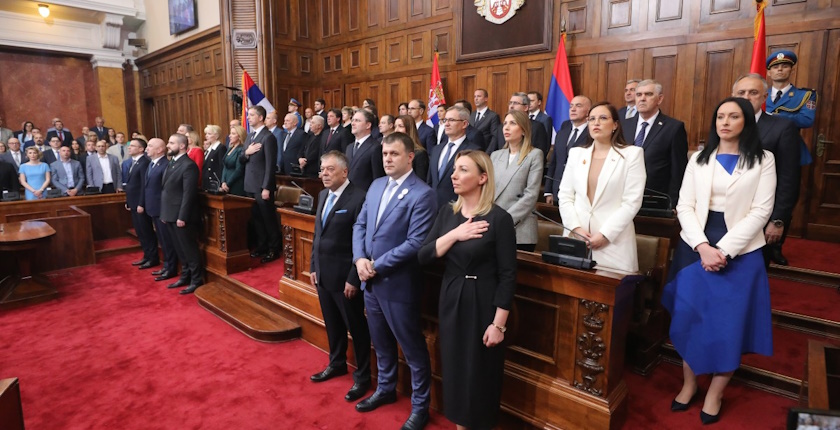
The National Assembly of Serbia reelected Minister of Mining and Energy Dubravka Đedović Handanović for her third term. The youngest member of the new cabinet, led by Prime Minister Đuro Macut, is the new Minister of Environmental Protection – Sara Pavkov.

Members of parliament voted in the new Government of Serbia today with 153 in favor and 46 against the proposal, while 51 lawmakers were absent from the session. The lineup under Prime Minister Đuro Macut, who has just entered the political arena now, includes Sara Pavkov, responsible for environmental protection. At 33, she is the youngest member of the cabinet.

Minister of Mining and Energy Dubravka Đedović Handanović was elected for her third mandate.

At 33 years old, Sara Pavkov is the youngest minister in the team of new Prime Minister Đuro Macut

Pavkov holds a graduate and master’s degree from the biology and ecology department of the University of Novi Sad Faculty of Sciences (FTN). She is a doctoral candidate and research intern at the faculty, according to her official biography.

Since 2022, she has served as a state secretary at the Ministry of Environmental Protection. Before that, she was the chief of staff since June 2021, after holding the position of special advisor for environmental protection from November 2020.

As one of the vice-presidents of the Bureau of the United Nations Framework Convention on Climate Change (UNFCCC), Sara Pavkov participated in the UN Climate Change Conference COP26 in Glasgow in 2021.

From 2013 to 2020, she coordinated more than 20 civil society projects for environmental protection. The new minister has authored or coauthored 11 scientific and professional papers in the same field.

She joined the ruling Serbian Progressive Party (SNS) since 2012. Since November 2021, Sara Pavkov has been a member of its presidency.

Third run for Dubravka Đedović Handanović as minister of mining and energy

Dubravka Đedović Handanović was first elected minister of environment and energy in October 2022 in the cabinet of Prime Minister Ana Brnabić. She was reappointed last May, when Miloš Vučević became the prime minister of Serbia.

Before becoming minister, she was a member of the Executive Board of NLB Komercijalna banka, responsible for corporate and investment banking. She has an international experience in banking of more than 16 years.

Minister Đedović Handanović, who remained in position in the new government, has worked in the EIB

Đedović Handanović has graduated in banking and finance from the Faculty of Economics in Belgrade and obtained her master’s degree in finance and management from SDA Bocconi University in Milan and the Anderson School of Management at the University of California in Los Angeles (UCLA).

She headed the Regional Office of the European Investment Bank (EIB) for the Western Balkans from 2016 to 2021, before moving to NLB Komercijalna banka.

Until the start of her tenure in Belgrade, Dubravka Đedović Handanović was the manager for Albania, North Macedonia and Serbia at the headquarters of the EIB in Luxembourg. It is the European Union’s main lending institution. She was also in charge of public-private partnership projects and project financing in countries including Ireland, France, the United Kingdom and the Benelux.

Before starting her career in banking, the reelected minister of mining and energy worked in the media and communications sector.

by in News

Solar park of 46.6 MW integrated with Turkey’s fifth-largest wind farm

The newest hybrid power plant in Turkey consists of wind turbines of 168 MW and a solar park with 46.6 MW in capacity. Polat Enerji is about to expand the Geycek facility with a 10 MW battery energy storage system.

Hybrid power plants are all the rage in Turkey and the ones coming online are bigger and bigger. The latest addition to the fleet is Polat Enerji’s Geycek facility. It is the country’s fifth-largest wind park, and now it also features a 46.6 MW photovoltaic unit. It is classified as an auxiliary source in domestic law.

That’s not all. The company, which has been pioneering the technology in Turkey, contracted a battery energy storage system (BESS) two months ago. T Dinamik Enerji’s subsidiary Tegnatia is tasked with installing a Sungrow unit with 10 MW in operating power and 13.4 MWh in capacity.

Polat Enerji is turning Geycek into Turkey’s first utility-scale hybrid of wind, solar power and BESS

It would be the country’s first wind-solar-battery hybrid on a utility scale. Polat Enerji said it would be commissioned “in the near future.”

Geycek is in Mucur district in the province of Kırşehir, southeast of Ankara. The wind park has 168 MW.

The contractor for the solar power segment was SPI (Schmid Pekintaş Investments) Energy Solutions. The Schmid Pekintaş joint venture supplied the PV panels.

Polat also operates Turkey’s largest wind power plant – Soma. It recently expanded it by 8.4 MW in nameplate capacity, or 8 MW effectively, reaching 328.9 MW and 304.1 MW, respectively. It is the first such facility in the country with over 300 MW on the grid.

The Soma wind park includes a small BESS unit – 4 MW of capability and a one-hour duration, translating to 4 MWh.

Polat Enerji is a joint venture of Polat Holding and İş Enerji Yatirimlari, each holding 50%. The latter is a subsidiary of Türkiye İş Bankası, the largest private sector bank in Turkey.

by in News

Elektroprivreda BiH seeks contractor for three solar power projects

Power utility Elektroprivreda BiH (EPBiH) called on companies to apply for designing and building three solar power plants. Two sites are on depleted coal land and the third one could become a hybrid power plant with existing wind farm Podveležje.

Within a project called EPBiH Solar Transition Programme, Bosnia and Herzegovina’s state-owned company Elektroprivreda BiH launched a tender for three photovoltaic facilities of 28 MW in total. The public call is on the EBRD Client e-Procurement Portal (ECEPP) of the European Bank for Reconstruction and Development. The lender pointed out it is the first phase of the first tranche.

EBRD is considering financing the investment valued at EUR 80.8 million with a EUR 36.5 million loan. EPBiH would provide EUR 7.7 million and secure the rest from other sources.

The tender consists of two stages while applications are received until May 26. The company selected for the first phase would be tasked with designing and building solar power plants Gornja Breza (15 MW), Višća (8 MW) and Podveležje 3 – with 5 MW in capacity.

EPBiH has 30-year concession for its PV project Podveležje 3

Phase 2 of the second tranche, for 56 MW, would comprise the proposed facilities Potočari 1, of 16 MW, Bedrock 1-3 (two times 8 MW plus 16 MW) and Banovići Selo, of 8 MW. Combined with the second tranche, the plan envisages 13 solar power plants of 195 MW overall.

Gornja Breza is on a former dump of the Breza coal mining complex north of the capital Sarajevo. Višća is at a depleted open cast coal mine on the territory of the city of Živinice near Tuzla.

The Podveležje 3 solar power project is colocated with the Podveležje wind power plant, owned by Elektroprivreda BiH. If the two systems are connected to the same infrastructure and digitally integrated, together they will become a hybrid power plant. The company won a concession last year for 30 years for 4.8 MW in the photovoltaic segment.

Abandoned coal land to host PV plants of Elektroprivreda BiH

EPBiH intends to build its other PV units in the first tranche also at abandoned parts of its mining complexes.

EBRD and UniCredit are financing the Gračanica 1 and 2 projects, located at a former tailings dump of the Gračanica mine. They are for 25 MW each and the connection capacity of the solar park would be 45 MW.

Notably, the company has been reporting losses quarter after quarter. It concluded last year with EUR 29.4 million in the red, compared to EUR 170 million in 2023. However, the company said in December that Chinese contractors have returned the advance payment of EUR 127 million that it payed them for the failed Tuzla 7 coal-fired power plant project.

Elektroprivreda BiH is planning another two wind farms: Vlašić and Bitovnja.

by in News

Aurora forecasts Western Balkans power capacity growth of 20 GW by 2040

The Western Balkans could see a 20 GW increase in installed capacity by 2040, with nearly 65% coming from renewables, Aurora Energy Research found. Short-term volatility and increased costs of commodities are expected to keep electricity prices near or over EUR 100 per MWh until 2030.

Aurora Energy Research issued its first forecast for the Western Balkans, eyeing investor movement. The firm expanded its market forecasting services, now offering full granularity modeling for Albania, Kosovo*, North Macedonia, Montenegro and Bosnia and Herzegovina, available in its Western Balkans Power and Renewables Market Forecast.

The announcement follows the conclusion of a multiclient study comprising three workshops, the results of which reveal increased investor interest in the region.

Photovoltaics have the fastest growth rate and biggest capacity in the forecast

The combined installed capacity in the Western Balkans excluding Serbia is expected to grow by 20 GW by 2040 and by as much as 35 GW by 2060 from the current levels, leading to tens of billions in investments, Aurora said. Renewables account for the lion’s share with nearly 65% while battery energy storage systems (BESS), interconnectors and hydrogen-fired combined-cycle gas turbines (CCGT) make up the remaining capacity additions.

Solar power shows the fastest rate of growth and absolute capacity value, according to the global power market analytics provider.

Electricity market prices returning below EUR 100 per MWh only after 2030

Looking into wholesale prices, the analysis expects the Western Balkans to follow similar trends as other SEE markets but with regional nuances, based on the local energy system evolution. Short-term volatility and increased commodities are foreseen to keep prices near or over the EUR 100 per MWh mark until 2030 while long-term baseload prices under Aurora’s central scenario are expected at between EUR 70 per MWh and EUR 80 per MWh, driven by high commodity prices, while an increasing renewables’ penetration acts in the opposite direction.

Early movers have an advantage as cannibalization looms

Renewable energy assets capture prices will benefit from lower cannibalization levels in the early years compared to other SEE countries, as there is less capacity in the system, giving early movers an advantage, the analysis reads. Over time, the momentum for storage seen in SEE likely spreads to the Western Balkans.

Coal phaseout seen by 2045

The speed of decarbonization in the region largely depends on the implementation of the European Union’s Carbon Border Adjustment Mechanism (CBAM) or alignment with the EU Emissions Trading System (EU ETS). The shift away from lignite could take time, Aurora’s experts say, with a full exit expected by 2045, but its share in the power system is expected to decrease significantly in the next decade due to pressure from CBAM and carbon taxes.

“The Western Balkans are Europe’s most rapidly changing power markets. Ageing thermal fleets, liberalisation of markets, policy support schemes, and strong fundamental economics are poised to bring the Western Balkans at the forefront of developers’ agendas,” said Panos Kefalas, Research Lead at Aurora Energy Research.

The Western Balkans Power and Renewables Market Forecast provides in-depth insights, detailed market analysis, and data-driven projections for investors, developers, and stakeholders.

Established in 2013, Aurora Energy Research provides power market forecasting and analytics for investment and financing decisions. Headquartered in Oxford, it operates out of 16 offices worldwide covering Europe, North and South America, Asia, and Australia. The firm’s services include market outlook for energy industry participants, advisory support, and software solutions.

* This designation is without prejudice to positions onstatus and is in line with UNSCR 1244/99 and the ICJ Opinion on the Kosovo declaration of independence.