by in News

Solar power exceeds Bulgaria’s entire electricity demand for first time

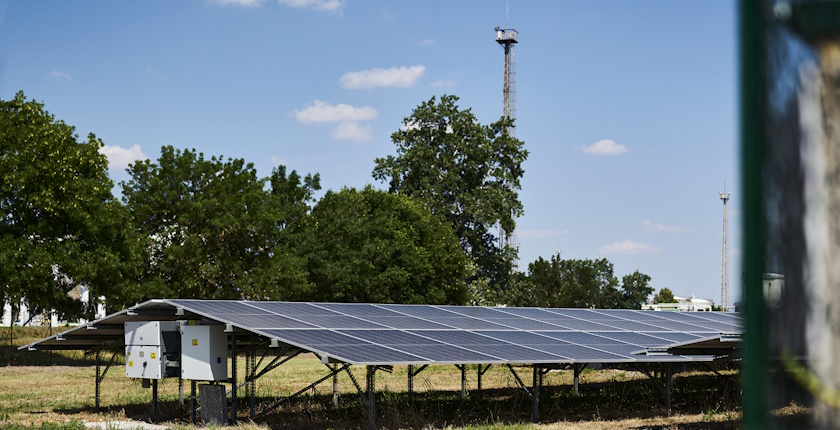
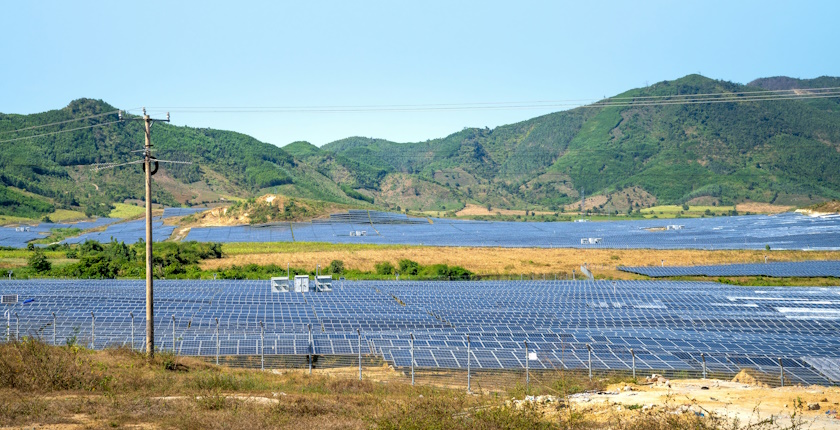
For the first time, photovoltaic production alone surpassed power consumption in Bulgaria – for two hours. Interestingly, even more electricity was exported at the same time.

On Friday, June 20, the active photovoltaic capacity in Bulgaria between 10:00 and 11:00 before noon was 2,935 MW, and in the following hour it grew to 3,230 MW, state news agency BTA reported. According to data from the Electricity System Operator (ESO) and the European Network of Transmission System Operators for Electricity (ENTSO-E), it exceeded the country’s entire consumption for the first time ever, by 17 MW and 313 MW, respectively.

Even more electricity was exported at the same time, as total domestic production amounted to 6,567 MW and 6,736 MW.

Of note, not all solar power went to Bulgarian consumers, given that some traders and customers have long-term contracts with other suppliers, like the National Electricity Co. (NEK) and nuclear power plant Kozloduy, the article adds.

“This is a significant event and a great success for Bulgaria and the Bulgarian energy sector. Positioning us this way – as a leading country in the production of photovoltaic energy – not only supports the implementation and fulfillment of the commitments that Bulgaria has made for decarbonization, but it also has a positive effect on the country’s investment climate. Thanks to the solar energy that we transform into electricity, we are modernizing the entire Bulgarian energy sector,” Chairwoman of the Bulgarian Photovoltaic Association Meglena Rusenova commented.

Photovoltaics are perhaps the fastest-growing private investment sector in Bulgaria, she said.

Photovoltaics are biggest factor lowering prices at the electricity exchange

Over the past two years, over EUR 2 billion have been invested in electricity production, according to Rusenova. On top of that there are capital investments in energy storage and infrastructure, she pointed out.

Solar energy contributes to reducing prices for end users, and in practice, photovoltaics are the most significant factor for lower prices on the Independent Bulgarian Energy Exchange (IBEX), Rusenova underscored.

According to ESO, a total of 3.5 GW of photovoltaic capacity has been connected in the last three years, bringing the total to 4.7 GW.

by in News

Greece to rely on carbon price, renewables potential in green hydrogen development

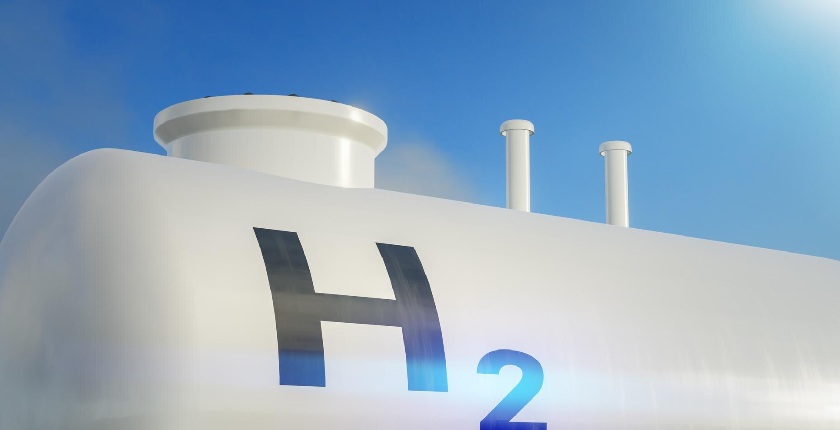
Despite early efforts to develop green hydrogen and its first regulatory framework, Greece finds itself on a steep curve.

The government has presented the first law on hydrogen and renewable gases in parliament. At the same time, refineries and other industries are working on projects that will determine green hydrogen’s cost-effectiveness.

However, a significant obstacle is the government’s unwillingness to support the new technology, either through subsidies or other financial instruments. The Ministry of Environment and Energy has specified that no upcoming technology would benefit from public funds. The goal is to maintain a low cost for the consumer during the energy transition.

According to Professor Pantelis Kapros from the National Technical University of Athens (NTUA), it means hydrogen will have to rely almost exclusively on the price of carbon. As the European Union’s European Trading System (EU ETS) is about to enter its second phase in 2026, the price of carbon allowances is projected to rise steeply.

Even so, market participants estimate that a ton of carbon dioxide equivalent would need to cost EUR 140, two times more than today, to make green hydrogen competitive against grey hydrogen, which is produced from natural gas.

Exports and power prices added to the equation

Regardless, Greece sees an opportunity to produce and export green hydrogen. The reason is its high renewables potential and production. The ever-increasing photovoltaic capacity has caused an overabundance of energy during the day. More demand is needed to balance the system and hydrogen can provide a way out.

Tsafos: We want to become a supplier

The hope is that the low renewable energy cost, combined with potential interest in shipping hydrogen abroad, will justify long-term investments.

“Our view is that as long as the market is interested, we want to become a supplier,” Deputy Minister of Environment and Energy Nikos Tsafos said at the Hydrogen & Green Gases Forum in Athens.

A potential problem is that green hydrogen plants are not expected to be viable if they only produce during the day, when renewable energy prices are usually lower. “Ten hours of operation are not enough to support producers and there are also technical issues to solve,” said Dimitris Kardomateas, head of the Center for Renewable Energy Sources and Saving (CRES).

He also pointed to the average daily wholesale power price, as it is higher in Greece than in most other European markets. It should be noted that electricity makes up about 70% of the total operating cost of electrolyzers.

Biomethane considered more mature

On the other hand, biomethane is considered much easier to develop.  The technology depends less on power prices and also faces fewer technical hurdles. “Biomethane has a clear role, especially through its ability to enter the gas network, and we want to utilize it”, said Tsafos.

Gas distribution company Enaon EDA emphasized its readiness to include biomethane in its network. Its CEO Barbara Morgante noted that a study is underway to pinpoint the various existing and planned biomethane production plants around the country, as well as their proximity to Enaon’s network.

Biomethane is usually obtained by processing biogas to get methane of the same purity as in fossil gas. The renewable fuel can also be produced from clean hydrogen and CO2.

by in News

WISE Serbia mentorship program successfully completed: trust, support, and personal growth

The first mentorship program of the WISE Serbia women’s network, focusing on sustainable energy, the green economy, and climate action, and implemented with the support of German development cooperation GIZ, was successfully concluded with an event held in Belgrade. Over six months of intensive collaboration, seven mentor-mentee pairs built mutual trust, exchanged knowledge, and developed leadership potential, demonstrating the vital role of support in career development.

The WISE Serbia mentorship program brought together 14 remarkable women. Seven experienced leaders from the energy and environmental sectors shared their extensive knowledge with seven young network members in the early stages of their careers.

The mentorship pairs included:

  1. Maja Adamović, Director of the Transmission System Maintenance Division at Serbia’s electricity transmission system operatorElektromreža Srbije (EMS), and Jelena Perović, ESG Consultant at Deloitte Advisory d.o.o.;
  2. Ivona Milić, Senior ESG Specialist for Corporate Clients at Raiffeisen Bank, and Marija Rošulj, Credit and Environmental Risk Officer at ProCredit Bank;
  3. Maja Turković, Executive Vice President at CWP Europe, and Marina Arsenijević, Project Manager at Voltiza Inc.;
  4. Aleksandra Lukić, Chief Engineer in the thermal energy production department at municipal heating utility JKP Novosadska toplana in Novi Sad, and Bojana Petrović Raičević, Senior Specialist for Energy and Environmental Law at NIS a.d. Novi Sad;
  5. Svetlana Cerović, Head of Specialized Financing at UniCredit Bank, and Ana Minić, Technical Consultant for Renewable Energy and Energy Efficiency at MACS Energy & Water;
  6. Ankica Barbulov, Director of Negawatt Solutions, and Milica Vujošević, Energy Efficiency Manager at Delta Holding;
  7. Nataša Zdravković, Investment Manager at Ezpada Group, and Sara Ostojić, Lawyer at SOG a.o.d. in cooperation with Kinstellar.

The closing event was held in partnership with and under the patronage of Kinstellar, one of the leading law firms in Belgrade, operating across Central and Eastern Europe, Southeastern Europe, and Central Asia.

Founded in 2008, Kinstellar now operates in 12 countries and employs more than 300 lawyers. In Serbia, it is particularly recognized for its work in the energy and infrastructure sectors, advising on some of the region’s largest energy investments, including wind farms, mining projects, and renewable energy transactions.

Photo (Balkan Green Energy News): Radovan Grbović, Partner at Kinstellar, welcomes program participants

One of the mentees, Sara Ostojić, is an attorney at Kinstellar and Head of the Energy Sector in Serbia. She expressed great satisfaction that her firm was hosting the closing event.

Radovan Grbović, partner and attorney with over 20 years of experience, addressed the participants, emphasizing the importance of mutual support and a stronger role for women in sustainable energy and the green transition.

Mentorship is about sharing life experience

The program’s outcomes were presented by Nataša Vukmirović, professional mentorship coach from the International Institute for Coaching and Mentoring, who highlighted that the program’s goals had been fully achieved. She noted that strong relationships of trust had been built and that most participants had expressed a desire to continue engaging in similar initiatives.

“Through evaluation and facilitation of joint sessions, I had the opportunity to witness meaningful knowledge exchange and feel the power of support, trust, and shared learning. The program demonstrated that developmental mentoring is a valuable approach in the sustainable energy and green economy sectors and can significantly impact participants’ career development,” said Vukmirović.

According to her, the program goes beyond education—it is based on values that empower individuals and protect the common good. This is echoed in the positive experiences of participants.

Marija Rošulj emphasized that her positive experience with Ivona Milić inspired her to become a mentor herself. “Mentorship is not just about work, but about a person’s character and sharing life experience, not just professional experience.”

The pair plans to continue working together and develop a joint project beyond the formal program.

Photo: (Balkan Green Energy News) mentorship pair Marija Rošulj, ProCredit Bank, and Ivona Milić, Raiffeisen Bank

“One of the things I appreciated most was that my mentor helped me achieve a deeper reflection on my career path and supported the development of my emotional intelligence and effective communication,” said Ana Minić, whose mentor was Svetlana Cerović, last year’s recipient of the Female Leader in Sustainable Energy 2024 award.

Photo (Balkan Green Energy News): Ana Minić, MACS Energy & Water

Mutual learning – the heart of the program

Mentors noted the process was reciprocal, and that through working with young women, they carried out a kind of introspection of their career paths. “It was especially interesting to identify what made me successful, which I could share with Milica, who also works in renewables and energy efficiency. I tried, by talking about my career, my development path, my ups and downs, to identify the golden thread that has kept me afloat and thanks to which I can say that I am doing well in business today,” said Ankica Barbulov, co-founder and director of Negawatt Solutions and the first to introduce the ESCO financing model in Serbia.

Mentee Milica Vujošević said that her mentor was an inspiration and that working with her was a great honor.

Photo (Balkan Green Energy News): Mentorship pair Milica Vujošević, Delta Holding, and Ankica Barbulov, Negawatt Solutions

Aleksandra Lukić, Chief Engineer and one of the first women in the thermal energy production department at heating utility JKP Novosadska Toplana, emphasized that she and her mentee, Bojana Petrović Raičević, are very different and that this was a strength in their relationship.

“At first, I wondered how I could help someone from a completely different profession. I’m a mechanical engineer, and Bojana is a lawyer. But our differences allowed for deeper exchange, not only about careers but also life values, work-life balance, and personal development. In the end, I think we both gained more than we expected.”

Bojana added: “Aleksandra helped me clarify my goals and map out a plan for my career, both short-term and long-term steps. I’m grateful she was my mentor.”

Photo (Balkan Green Energy News): Mentorship pair Aleksandra Lukić, JKP Novosadska Toplana, and Bojana Petrović Raičević, NIS

Maja Adamović, Director at Elektromreža Srbije, saw the program as an opportunity to learn and improve future programs. She highlighted progress in strengthening women’s networks in the energy sector, citing the launch of the Women in Energy section within CIGRE Serbia as a great example of women’s growing interest in connection, empowerment, and collective impact.

Photo (Balkan Green Energy News): Maja Adamović, Elektromreža Srbije

Maja Turković, Executive Vice President of CWP Europe and co-founder of WISE Serbia, also served as a mentor. “Marina and I worked on identifying her potential in line with her education, interests, and labor market trends, as well as on shaping her career profile. I think we have defined a direction for her professional development and competencies she can further build on,” said Turković, adding she would gladly be a mentor again.

Marina Arsenijević, her mentee, said the program came at the right time: “After this program, I’m more aware of who I am and what I want to do in the next five or ten years.”

Photo (Balkan Green Energy News): Mentorship pair Maja Turković, CWP Europe, and Marina Arsenijević, UGT Renewables

Throughout the program, mentors generously shared knowledge, experiences, and insights, while mentees showed openness to learning and a willingness to build their leadership capacities. All mentors expressed great satisfaction with participation in the program, highlighting mutual learning as one of its most valuable aspects.

The WISE Serbia program demonstrated how important mentorship is for women’s professional and personal development in green industries. Through experience-sharing, knowledge transfer, and mutual support, participants not only strengthened their capacities but also contributed to creating a strong community of women working on a more sustainable and equitable future.

by in News

Alteo building solar park with battery storage for MOL Group

MOL’s 37.4 MW solar power plant with a battery energy storage system (BESS) of 40 MWh will contribute to the energy independence of its oil and gas complex in southern Hungary. Alteo is the contractor building the facility. The battery segment has received grants totaling EUR 20.5 million.

MOL Group marked the start of construction of a solar park and BESS at its Algyő site in Csongrád-Csanád county. The Hungarian company pointed out that smart green transition, reducing external energy consumption, is a key element of its Shape Tomorrow strategy.

The investment will significantly contribute to the energy independence of the oil and gas complex in southern Hungary, improve the flexibility of electricity supply and lower the site’s CO2 emissions by 13,000 tons per year, according to the announcement.

MOL Group hired Alteo, in which it holds minority stake

The photovoltaic plant project is for 37.4 MW and the battery energy storage system would have 40 MWh in capacity. Alteo, listed at the Budapest Stock Exchange, is the contractor for the construction of the facility. MOL Group, which holds a minority stake, controls a total of 73.8% of its shares together with two private equity funds.

The company’s full name is Alteo Energy Services. As an aggregator, it owns or operates gas power plants and renewables, combined with energy storage, while also providing software as a service (SaaS).

Storage is essential for smart energy transition

MOL has won support of EUR 20.5 million in total for the energy storage project in Algyő. A EUR 6.7 million grant came via the European Union’s Recovery and Resilience Facility (RRF) and Hungary’s National Recovery and Resilience Plan (NRRP), while the government secured the remainder.

“Our strategic goal is a smart energy transition, for which energy storage is essential, as it ensures the integration and flexible use of sustainable energy systems. Algyő is a symbolic location for us – it is here that six decades of industrial experience meet the technology of the future,” said Managing Director of MOL Exploration and Production Hungary Péter Archibald Schubert.

Solar power capacity in Hungary has topped 8 GW

The solar power plant’s output is equivalent to the annual consumption of 22,500 households in the county, while the BESS can flexibly cover 7,300 households, he added.

MOL Group operates seven solar parks in Hungary and two in Croatia, of 111 MW altogether. Its goal is to reach 200 MW in renewable energy capacity by the end of next year.

Alteo will operate MOL’s other battery energy storage system, in Tiszaújváros

Of note, the company broke ground in March for a 40 MWh battery system at the MOL Petrochemicals site in Tiszaújváros, in northeastern Hungary. It selected Alteo as its operator. The investment is worth EUR 16.3 million, of which EUR 6.7 million is a grant from NRRP.

As for the PV and battery investment in Algyő, the local authority made the 47-hectare site available to the integrated hydrocarbons producer, Hungarian media reported.

At the ceremony, Deputy State Secretary for Energy Transition at the Ministry of Energy Viktor Horváth said that the country’s solar power capacity has surpassed 8 GW. It is ninth in the world in PV capacity per capita.

In other storage news, MET Group inaugurated the largest BESS in Hungary last week at its gas power plant near Budapest.

by in News

MET Group inaugurates Hungary’s largest battery energy storage system

MET Group installed a battery energy storage system of 40 MW and a two-hour duration at its gas power plant Dunamenti near Budapest. The company said it is the largest BESS in Hungary.

Hungary’s largest standalone battery energy storage system (BESS) has been inaugurated today. MET Group put into operation a facility of 40 MW in nominal operating power and a two-hour cycle, translating to 80 MWh in capacity. The Switzerland-based company said it is part of a series of its investments in BESS throughout Europe.

MET already installed a 4 MW / 8 MWh demonstrator unit in 2022, also at its gas-fired Dunamenti Power Station in Százhalombatta, in Pest county. It is based on Tesla Megapack 2 batteries.

The combined capacity would be sufficient to supply the entire decorative and public lighting needs of Budapest for four hours, the energy company pointed out. The supplier of the new equipment is Huawei Technologies and the main contractor is Forest-Vill, MET Group added.

BESS is essential for energy transition

Battery energy storage systems are a key element for the energy transition, as they allow greater penetration of renewable sources into the power grid, Dunamenti’s Chief Executive Officer Péter Horváth said at the inauguration ceremony.

“We must strive by all possible means to exploit Hungary’s renewable energy sources as extensively as possible, using well-established, cost-effective technologies. Therefore, the Hungarian Battery Association supports the efforts of the Hungarian energy policy, which deals with the green energy transition as a top priority,” the association’s President Péter Kaderják stated.

MET Group investing in batteries colocated with solar power plants

MET Group said that with its ongoing investments in BESS projects across Europe, it aims to address the increasing need of balancing technologies to support the energy transition. The company acquired French battery storage operator and developer Comax in 2024.

A significant part of the investments is for storage facilities colocated with solar parks, the update reads.

MET is present in 17 countries, 32 national gas markets and 44 international energy trading hubs. It has more than 1,100 employees. The company’s consolidated sales revenue amounted to EUR 17.9 billion last year, with a total traded volume of natural gas amounting to 140 billion cubic meters and total traded electricity of 76 TWh.

by in News

Spain’s voltage control was insufficient at time of April blackout

The Government of Spain said the total blackout in the Iberian Peninsula, which occurred on April 28, was caused by overvoltage, with several factors contributing to the crash. Notably, the system run by the country’s TSO Red Eléctrica de España lacked sufficient voltage control. Deputy Prime Minister Sara Aagesen even said the point of no return could have been avoided if voltage control action had been taken earlier.

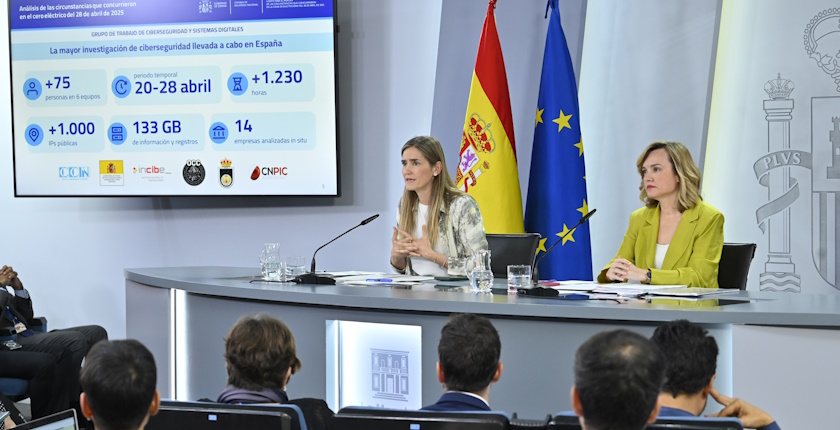
In a long-awaited document, a government committee that investigated the April 28 collapse of the Iberian electricity network ruled out that a cyberattack caused it. The panel analyzed more than 300 gigabytes of data related to the total blackout, which was one of the worst ever in Europe.

“In 49 days, practically half the timeframe established by the EU, the committee has provided a rigorous and verified diagnosis that will allow us to strengthen the electricity system, a solid foundation on which we can work to design rapid responses to prevent this from happening again. Next week’s Council of Ministers will approve several relevant measures,” said Third Vice-President of the Government of Spain and Minister for Ecological Transition and Demographic Challenge Sara Aagesen.

The cybersecurity investigation, the largest ever undertaken in the country, did identify vulnerabilities that could expose networks or systems to future risks, she asserted.

The blame game is continuing as citizens and businesses are demanding accountability for the massive damage. The European Network of Transmission System Operators for Electricity (ENTSO-E) issued a preliminary report two weeks after the incident.

Overvoltage caused the blackout, according to the new analysis. The committee attributed it to multiple factors. The system had insufficient voltage control capacity, there were frequency oscillations, and power plants were disconnected, “in some cases in an apparently improper manner,” the document reads.

Renewables accounted for 82% of power generation mix just before blackout

The Iberian grid crashed at 12:33. Restoration began with energy from France and Morocco and with self-starting hydroelectric plants in the Duero basin and other locations, which formed energy islands. By 22:00, nearly 50% of demand in Spain was met, reaching 99.95% by 7:00 the next day.

At 12:30 on April 28, renewable energy sources accounted for 82% of the electricity generation mix, followed by nuclear power (10%). Gas plants had a 3% share, coal contributed 1%, while cogeneration and waste amounted to a combined 4%.

Data show a drop in solar generation as prices at the power exchange were going negative, and it coincided with a rise in voltages

There was significant voltage volatility in the transmission system in the morning on the day of the blackout, the document’s authors noted, pointing out that such a situation was also registered on April 22 and 24.

The rise in voltages between 10:30 and 11:10 coincided with a drop in solar generation, probably due to the power market signals, as wholesale prices went negative, the report adds. At the same time, the direction of the exchange with France switched from exports to imports.

Voltage control fleet failed to contain chain reaction

At 12:03, there was an atypical frequency oscillation, by 0.6 hertz, causing large voltage fluctuations for 4.42 minutes. Another one, of 0.2 hertz, occurred at 12:16, followed by an equivalent one at 12:19.

Red Eléctrica de España, the transmission system operator (TSO), conducted mitigation measures, which contributed to the rise in voltages, the committee underscored.

Aagesen said the point of no return could have been avoided if voltage control action had been taken earlier. The government controls 20% of the company, which is listed on the Bolsa de Madrid stock exchange.

At 12:32, voltage began to rise rapidly and steadily, and numerous progressive disconnections of generation facilities were recorded. The names of all power plants in the document are blacked out.

A number of units responsible for voltage control produced reactive power, the opposite of what they were supposed to

The chain reaction could not be contained, as each disconnection contributed to further voltage increases, the analysis showed. A drop in frequency resulted in the loss of synchronization with France, tripping the interconnection with the rest of the continent.

The committee stressed that the number of synchronous plants regulating voltage on the day of the incident was the lowest since the beginning of the year. One of the 10 units that Red Eléctrica scheduled the day before experienced an outage on the same afternoon, and the TSO didn’t replace it in time, the analysis reveals.

Moreover, several units in the group did not respond adequately to the TSO’s instructions to reduce the voltage. Some even produced reactive power, the opposite of what was required, contributing to the issue, the committee added.

Some power plants went offline too early

There were disconnections of the generating power plants that occurred before the voltage thresholds in the 400 kV system were exceeded (380 kV and 435 kV), the report finds.

Among the committee’s recommendations is to allow asynchronous installations to apply power electronics solutions to manage voltage fluctuations. The panel proposed boosting demand, flexibility, storage and interconnection capacities.

Photovoltaics with grid-forming inverters, storage can contribute to voltage control

Photovoltaics are already capable of controlling voltage, but regulations did not allow the application of the technology, according to the Spanish Photovoltaic Union (UNEF), Portuguese Renewable Energy Association (APREN), SolarPower Europe, Global Solar Council and Global Renewables Alliance.

In a joint statement that they issued as a reaction to the report, they called for accelerated investment in grid resilience and system flexibility – especially through grid-forming inverters and battery storage.

The associations recalled that Spain ranked 14th last year in Europe in new battery capacity. Less than 250 MWh came online and nearly all were smaller-scale batteries, not at a utility level. It compares to 9 GW of solar power capacity that the country added in 2024.

by in News

Gas power plant Brestanica in Slovenia adds photovoltaic unit

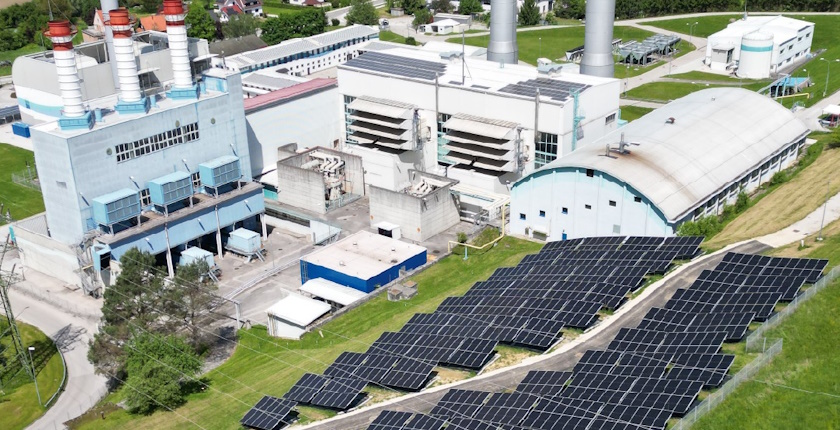
A ground-mounted solar power plant of 466 kW started generating electricity on a regular basis at Slovenian state-owned gas power plant Termoelektrarna Brestanica (TEB).

GEN-I’s subsidiary GEN-I Sonce installed a photovoltaic system, as the contractor, at the gas power plant run by fellow GEN Group member Termoelektrarna Brestanica (TEB). The 466 kW ground-mounted solar power plant entered regular operation, Naš stik reported.

The new facility in Brestanica in the municipality of Krško near Slovenia’s border with Croatia consists of 810 modules. The project was backed by the government’s renewable energy grant program. It covered 20% of the cost, which amounted to just under EUR 600,000.

MFE TEB4, the new unit, entered test operation in February. It is the fourth PV system at the Brestanica gas power plant. Two are on roofs and one is a solar canopy on the parking lot. Commissioned in 2009 and 2010, they have 170 kW in combined peak capacity.

The estimated annual production of the fourth solar power system can meet the electricity needs of more than one hundred Slovenian households.

Almost a third of the project budget was invested in the installation of a transformer. It enables more renewable electricity capacity to be connected to the grid around TEB, the article reveals.

GEN Group’s state-owned parent company GEN energija operates the Krško nuclear power plant, also known by the acronym NEK and, in Slovenian, JEK.

by in News

EDPR reportedly exiting Greece as all power plants, projects are on sale

EDP Renewables (EDPR) is about to divest of all its assets in Greece and leave next year, according to the domestic media. Market-oriented green electricity producers in the country are at a disadvantage, due to low and negative prices and curtailments, against companies involved in retail supply and with long-term power purchase agreements (PPAs) and feed-in tariff support.

Green energy giant EDP Renewables (EDP Renováveis) is expecting official bids for its four wind parks northwest of Athens, while also looking to sell all its other assets to MORE, the renewables subsidiary of oil refiner Motor Oil Hellas, according to news reports. The latter portfolio is said to include their joint venture.

EDPR, part of Portugal-based EDP Group, is apparently planning to exit the country next year, as early as the summer, and is already cutting jobs. The company entered Greece in 2018.

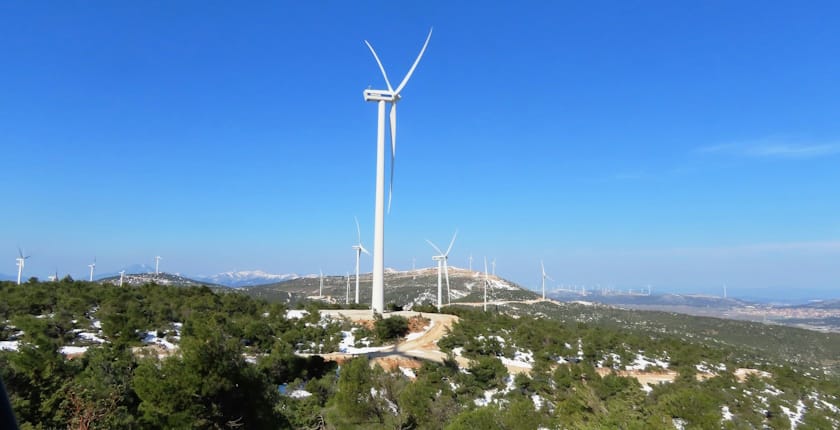
The wind parks, reportedly pursued by four domestic companies, are Livadi (45 MW) and Erimia (35 MW) in Malesina, Phthiotis, both commissioned last year, and new facilities Xironomi (36 MW)  and Chalcodonio (33.6 MW). They are located in Boeotia, Central Greece, and Magnesia, Thessaly, respectively.

Of note, EDP Renewables is headquartered in Spain, but traded on the Euronext Lisbon stock exchange.

Project portfolio includes major wind power clusters in Evia

The Greek press learned that MORE is likely to buy out EDPR’s 51% share in their projects for two wind farm clusters in Evia (Euboea), of 150 MW and 214 MW. Other assets that the oil refiner would pursue include another cluster under development for sites in the same island, of 156 MW, an operating 22 MW photovoltaic park in the Peloponnese and two wind farms under construction in Boeotia (also Beotia and Viotia).

In addition, the company has a pipeline of less mature projects for photovoltaics, standalone battery energy storage systems (BESS), hybrid power plants and wind power. They could all fit into one large package for sale.

EDPR is also exiting Hungary, Belgium, the Netherlands, Colombia, Brazil and a group of Asian countries.

Vertical integration or bust

Analysts have pointed out that the Greek market is no longer attractive to companies in the sector that are not vertically integrated. Namely, renewable energy producers oriented toward the market are exposed to curtailments and low, zero and negative power prices at electricity exchanges.

The ones also active in the supply and retail market have an advantage, as do the operators of power plants that receive subsidies like feed-in tariffs or have long-term PPAs.

The share of curtailed electricity in Greece is set to be more than doubled this year

Since the beginning of the year, over 860 GWh has been curtailed, Euro2day wrote. It is already more than all last year, when the share of lost electricity was 4%

But some companies seem dedicated to the Greek market.

France-based Valorem recently completed a wind park of 27 MW in Vlasti in the municipality of Eordaia. It is located in the Kozani regional unit in the region of Western Macedonia in northern Greece. The facility consists of six turbines, with an estimated annual output of 68 GWh overall.

Also in Kozani, Principia inaugurated a photovoltaic cluster of 95 MW. The firm is a joint venture between Enel and funds managed by Macquarie Asset Management. The Perasma facility, near the villages of Mavrodendri and Sidera, is set to generate 126.8 MW per year. It comprises seven solar power plants.

by in News

TotalEnergies to build 100 MW solar power plant with energy storage in Cyprus

TotalEnergies is betting big on the solar power market in Cyprus. It won the environmental approval for a photovoltaic park of 100 MW in peak capacity, with energy storage. It intends to build it in an area previously designated for a golf course.

France-based TotalEnergies is an oil supermajor, but also one of the world’s largest renewable energy developers. The company is planning to build a photovoltaic system in Cyprus equivalent to a quarter of all the current capacity in larger solar power units in the country, even though the competition in the segment is enormous.

At the same time, grid stability in the island state is under jeopardy given the surge in PV investments and the lack of energy storage. According to a recent statistical report, Cyprus hosted almost 850 MW of solar power, of which less than 400 MW was in commercial photovoltaic plants. Prosumers operated the rest. Licensed projects amounted to 2.8 GW.

In the first five months of the year, according to the CyprusGrid tracker, 58% of green electricity production was curtailed, out of a potential 251 GWh, pv magazine reported. It compares to 29% in all of 2024, 13.4% the year before and 3.3% in 2022.

The Department of Environment has issued consent for TotalEnergies’ solar power project of 100 MW in peak capacity, Philenews reported. The company is conducting it in cooperation with Universal Green Energies. It is a subsidiary of Universal Golf Enterprises, the owner of the land.

The environmental authority’s positive opinion is valid for the duration of urban planning and other permits.

Environmental approval conditioned on wildlife protection, reforesting

The area of 200 hectares was originally intended for a golf course. It is on the territory of the villages of Vasa Kellakiou, Asgata and Sanida in the Limassol district.

The photovoltaic park would cover 83 hectares, of which 44 hectares would be under solar panels. The plan includes a substation and energy storage. Annual output is estimated at 160 GWh, equivalent to the electricity needs of 33,000 households.

The PV park would generate an estimated 160 GWh per year

TotalEnergies and its partner are obligated to protect fauna and flora and exclude water streams and protected zones from construction works. They are not allowed to install solar panels on land with a slope higher than 25%. The companies especially need to preserve the habitats of protected species, including the Bonelli eagle.

The environmental approval was issued with a condition to plant trees and shrubs instead of the ones that would be removed during construction.

Villagers concerned about environmental, economic impact

Some representatives of the local population in Sanida expressed concern, among other matters, over the effect of the planned solar park on the air temperature in the area. Residents of Asgata argued that the local community would benefit more from a golf course.

At the end of the first quarter, TotalEnergies had 28 GW of gross renewable electricity capacity installed worldwide. It aims to reach 35 GW by the end of the year and 100 GW in 2030.

by in News

Turkey-based Çalık Enerji secures financing for Zatriq wind farm in Kosovo*

Çalık Enerji, part of Turkey-based Çalık Holding, obtained EUR 112 million in financing for its 73 MW Zatriq wind power project in Kosovo*.

In a consortium with fellow Turkish company Limak, Çalık Holding took over Kosovo Electricity Supply Company (KESCO) and Electricity Distribution Services in Kosovo (KEDS) in 2013. The conglomerate is expanding to electricity production with a wind farm project. Çalık Enerji closed the financing for the Zatriq facility of 73 MW in planned capacity.

The deal is worth EUR 112 million, according to the company’s legal advisor Watson Farley and Williams. It is Çalık Renewables’ first renewable energy investment outside of Turkey and the first wind project supported by Swiss Export Risk Insurance (SERV), the law firm revealed.

Çalık Enerji secured financing from Helaba bank and Deutsche Bank

Calik Enerji Swiss, Çalık Enerji’s engineering, procurement and construction (EPC) subsidiary, acted as the EPC provider, while the financing was provided to project firm EV Wind Park. The lender is Landesbank Hessen-Thüringen Girozentrale (Helaba), headquartered in Frankfurt.

Zatriq or Zatrić is a village in the municipality of Rahovec-Orahovac. The wind potential at the site is one of the highest in Kosovo*.

Çalık Enerji said it established cooperation with wind turbine manufacturer GE Vernova for the project.

The financing package led by Helaba bank is for the construction period and another 14 years, and there is also a commercial uncovered tranche, the company added. Çalık Enerji said it received equity financing as well, from Deutsche Bank, under Japan’s Nippon Export and Investment Insurance (NEXI).

Çalik and Limak participated in the first solar power auction in Kosovo*. The first wind power auction is underway.

* This designation is without prejudice to positions onstatus and is in line with UNSCR 1244/99 and the ICJ Opinion on the Kosovo declaration of independence.