by in News

The Great Atomic Pivot: EU Reclaims Nuclear Power as a Strategic Pillar for Energy Security

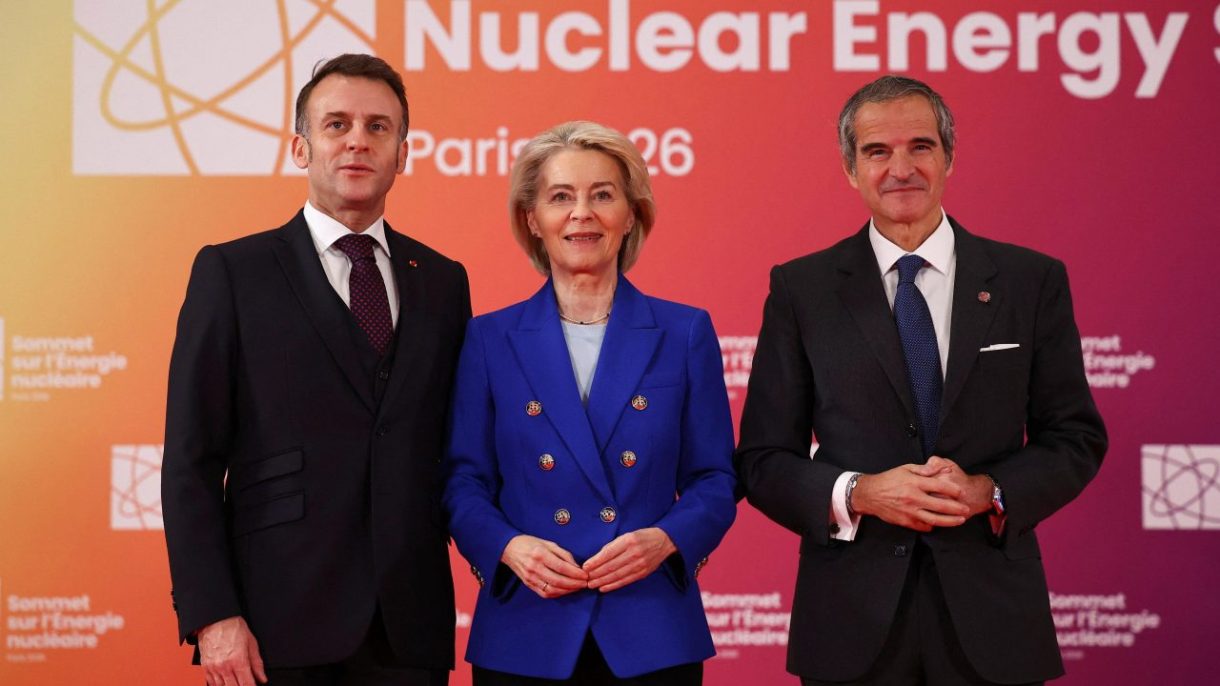
In a significant rhetorical shift for the European Union’s energy policy, Commission President Ursula von der Leyen characterized the continent’s historical move away from nuclear power as a “strategic mistake.” Speaking at the Nuclear Energy Summit in Paris, hosted by the International Atomic Energy Agency (IAEA), von der Leyen argued that turning away from the atom left Europe dangerously exposed to the volatility of global fossil fuel markets.

A Continent Re-evaluating its Baseload

The President noted a stark decline in nuclear’s contribution to the European grid, falling from one-third of total electricity generation in 1990 to approximately 15% today. This retreat, she argued, exacerbated Europe’s dependence on expensive, imported oil and gas—a vulnerability underscored by ongoing instability in the Middle East.

“I believe it was a strategic mistake for Europe to turn its back on a reliable, affordable source of low-emissions power,” von der Leyen stated.

She outlined a vision for a modernized energy system where nuclear works in tandem with renewables, supported by robust storage and smart grids.

The Rise of Small Modular Reactors (SMRs)

The EU’s strategy is increasingly focused on the next generation of nuclear technology. Key initiatives include:

  • Regulatory Reform: Recent changes to state aid rules now allow for expanded support for nuclear fission and fuel cycles.

  • Industrial Alliance: The launch of the world’s first industrial alliance dedicated to Small Modular Reactors (SMRs).

  • Financial Backing: Proposed investments of over €5 billion in fusion research and an additional €200 million in guarantees through 2028 to support the first commercial units of innovative nuclear technologies.

The goal is to have SMRs operational across Europe by the early 2030s to complement existing traditional plants.

Regional Expansion: Greece, Romania, and Serbia

The shift in sentiment at the Commission level is mirrored by renewed interest among member states and neighboring nations:

  • Greece: Prime Minister Kyriakos Mitsotakis echoed von der Leyen’s sentiments, noting that it is time for Greece to explore how SMRs could be integrated into the domestic grid. While Greece remains committed to renewables and gas as a bridge, a new committee will officially study nuclear integration.

  • Romania: Energy Minister Bogdan Ivan announced plans to triple the nation’s nuclear capacity over the next decade. This includes the modernization of the Cernavodă plant and the development of a pioneering SMR project in Doicești.

  • Serbia: Minister of Mining and Energy Dubravka Đedović Handanović signaled Serbia’s intent to join the “nuclear revival.” To support a growing economy and AI infrastructure, Serbia aims to select a technology by 2032, with the goal of bringing a plant online by approximately 2040.

As Europe seeks to reconcile its climate goals with energy security, the message from Paris was clear: the nuclear option is no longer on the sidelines—it is back at the center of the strategy.

by in News

IEA: Power Demand Up 3.6%/yr to 2030 as Renewables Rise

Global electricity demand is projected to grow by an average of 3.6% per year through 2030, propelled largely by industrial electrification, the rapid uptake of electric vehicles, and the expanding power needs of data centres and artificial intelligence, the International Energy Agency (IEA) said.

In its Electricity 2026 report, the IEA expects renewables, natural gas and nuclear to cover all additional demand over the period. Electricity generation from coal is forecast to edge down, leaving CO₂ emissions from power generation broadly flat to the end of the decade. By 2030, renewables and nuclear are set to provide half of global electricity output, up from 42% today, the agency said.

Power Use Accelerates Faster Than Overall Energy Demand

The IEA estimates that electricity demand will expand at least 2.5 times faster than total energy demand. Key drivers include rising electricity use in industry, stronger EV adoption, higher air-conditioning demand, and continued growth in data centres and AI.

Global electricity consumption rose 3% year-on-year in 2025, after a 4.4% increase in 2024, the report notes.

Grid Investment and Flexibility Become the Next Bottlenecks

IEA Director of Energy Markets and Security Keisuke Sadamori said meeting the demand surge will require a significant upgrade of power networks. The IEA expects annual investment in electricity grids to rise by 50% by 2030.

Flexibility measures—such as storage, demand response and other balancing tools—will also be essential as power systems evolve, alongside stronger attention to security and resilience, Sadamori said.

Renewables Overtake Coal on the Back of Record Solar Growth

The IEA said global renewable power generation reached parity with coal in 2025 and is now moving ahead, supported by record solar installations. Renewable electricity output is expected to increase by around 1,000 TWh each year, with solar alone contributing more than 600 TWh annually.

Even so, the agency cautions that coal would still remain the single largest fuel source for electricity generation globally, despite a gradual decline.

EU: Renewables Share Seen at 63% by 2030

In the European Union, electricity demand is increasingly being met by renewables as coal use falls sharply. According to the report, renewables’ share of total EU power generation is expected to surpass all non-renewables combined as early as this year.

The IEA forecasts that renewables will exceed 50% of EU electricity generation in 2026, and rise to 63% by 2030, up from 48% in 2025. Wind and solar are projected to account for 46% of EU power output by 2030, compared with 30% in 2025.

By the end of the decade, the EU is expected to add more than 400 GW of net renewable capacity, around 70% from solar, split roughly evenly between utility-scale and distributed installations.

Nuclear Output Hits Record, Battery Storage Expands

The IEA said nuclear power is regaining strategic importance in many advanced economies. Global nuclear generation set a new record in 2025 and is expected to keep rising steadily through 2030.

The report also highlights rapid growth in utility-scale battery storage, particularly in California, Germany, Texas, South Australia and the United Kingdom, strengthening short-term system flexibility.

Connection Queues and Curtailment Rise as Grids Struggle

Despite strong momentum in renewables and storage, grid congestion is creating delays. The IEA estimates that as of 2025, at least 1,700 GW of advanced-stage renewable projects and more than 600 GW of battery storage projects were waiting in connection queues.

Grid bottlenecks are also driving higher curtailment. In Germany, wind curtailment rates between 2022 and 2024 were above 5%, while solar curtailment climbed to 2% in 2024. In China, 4.1% of wind and 3.2% of solar generation were curtailed in 2024, up from 2.7% and 2% in 2023, with preliminary 2025 data indicating curtailment rose above 5% for both wind and solar.

Coal Declines, Keeping Power-Sector CO₂ Emissions Flat

On the fossil side, the IEA expects natural gas-fired generation to increase, driven by rising demand in the United States and a shift from oil to gas in the Middle East.

Coal-fired generation is projected to fall as renewables expand, returning to 2021 levels by the end of the decade. As a result, global CO₂ emissions from electricity generation are expected to remain broadly flat through 2030.

The IEA forecasts emissions declines in major markets: between 2026 and 2030, China’s power-sector CO₂ emissions are expected to decrease by 0.2% per year on average, the United States by 1.4% annually, and the EU by around 11% per year. India, however, is projected to see emissions rise by an annual average of 2.4% over the same period.

by in News

Renewables account for 99% of Turkey’s net electricity capacity additions

Electricity capacity in Turkey reached 122 GW in 2025, of which 62% was from renewable sources, according to the SHURA Energy Transition Center. Photovoltaics grew by 4.9 GW, compared to 1.7 GW in the wind power segment. Renewables made up 99% of the net additions, amounting to 6.3 GW, the think tank calculated. This year, however, the first unit of the Akkuyu nuclear power plant is scheduled to come online, adding 1.2 GW.

Gross electricity production in Turkey increased 2% last year, to 360 TWh, the SHURA Energy Transition Center estimated in a new report. The share of renewables dropped to 44.1% from 46%. Namely, hydropower output is on a downward trajectory, due to droughts. Wind, solar and geothermal power rallied to 24.6%, though. Photovoltaics and wind power together surpassed 20%.

Renewables continue to dominate the sector’s development, accounting for 99% of the overall 6.3 GW in net additions, the think tank calculated. The total reached 122 GW. Renewable sources made up 62%, compared to 59.7% in 2024.

Solar power surged by 4.9 GW and the wind power capacity jumped by 1.7 GW, while the natural gas item declined by 684 MW.

Importantly, the picture is about to change, as the first, 1.2 GW reactor in Akkuyu, Turkey’s first nuclear power plant, is scheduled to be commissioned this year. Coal plant projects remain dormant and uncertain.

Race to 2035 targets

Daily power consumption reached an all-time high of 1,244 GWh on July 29. SHURA attributed the record to cooling demand caused by rising temperatures.

To reach the 2035 targets, an average of 8 GW of combined solar and wind capacity must be commissioned each year. The high momentum is expected to continue in 2026, the report reads. The government aims to hit 120 GW altogether from the two technologies, against the current 40 GW.

However, grid constraints for self-consumption units (formally, unlicensed power plants) may slow solar energy growth, the authors warned. The plan is to resolve the issue through capacity allocations for the segment. The increasing prevalence of renewable and hybrid power plants with storage will enhance system flexibility, SHURA added.

Electricity decarbonization plan costs USD 15 billion per year

Just transition plans for coal regions are critical, the think tank said. It estimated that decarbonizing the electricity sector by 2053 would require an average annual investment of USD 15 billion.

Decisions regarding fossil fuels made for security of supply reasons must be more carefully balanced with the net zero target, SHURA stressed. Temporary solutions risk creating a permanent deadlock, it underscored.

Focus switching to grid, flexibility

Turkey has reached a critical juncture in its energy transformation, according to the update. The authors commended the rise in capacity and new tenders and investments. Nevertheless, they claim the pace cannot be sustained without strengthening the grid, flexibility and implementation capacity, while implying expansion in storage, electrification and financing.

In the view of SHURA’s Steering Committee Chair Selahattin Hakman, energy transition should no longer be considered solely as a topic of climate policy, but rather in conjunction with geopolitical developments, security and economic resilience. Clean energy investments, particularly in solar and wind power, continue to grow despite increasing global uncertainties, he noted.

“In this new era, energy transition is defined at the intersection of geopolitical independence, economic resilience and social justice. Energy policies have transcended the boundaries of the environment and have become central to foreign policy, industrial strategy and trade policies,” Hakman stated.

by in News

Renewables account for 99% of Turkey’s net electricity capacity additions

Electricity capacity in Turkey reached 122 GW in 2025, of which 62% was from renewable sources, according to the SHURA Energy Transition Center. Photovoltaics grew by 4.9 GW, compared to 1.7 GW in the wind power segment. Renewables made up 99% of the net additions, amounting to 6.3 GW, the think tank calculated. This year, however, the first unit of the Akkuyu nuclear power plant is scheduled to come online, adding 1.2 GW.

Gross electricity production in Turkey increased 2% last year, to 360 TWh, the SHURA Energy Transition Center estimated in a new report. The share of renewables dropped to 44.1% from 46%. Namely, hydropower output is on a downward trajectory, due to droughts. Wind, solar and geothermal power rallied to 24.6%, though. Photovoltaics and wind power together surpassed 20%.

Renewables continue to dominate the sector’s development, accounting for 99% of the overall 6.3 GW in net additions, the think tank calculated. The total reached 122 GW. Renewable sources made up 62%, compared to 59.7% in 2024.

Solar power surged by 4.9 GW and the wind power capacity jumped by 1.7 GW, while the natural gas item declined by 684 MW.

Importantly, the picture is about to change, as the first, 1.2 GW reactor in Akkuyu, Turkey’s first nuclear power plant, is scheduled to be commissioned this year. Coal plant projects remain dormant and uncertain.

Race to 2035 targets

Daily power consumption reached an all-time high of 1,244 GWh on July 29. SHURA attributed the record to cooling demand caused by rising temperatures.

To reach the 2035 targets, an average of 8 GW of combined solar and wind capacity must be commissioned each year. The high momentum is expected to continue in 2026, the report reads. The government aims to hit 120 GW altogether from the two technologies, against the current 40 GW.

However, grid constraints for self-consumption units (formally, unlicensed power plants) may slow solar energy growth, the authors warned. The plan is to resolve the issue through capacity allocations for the segment. The increasing prevalence of renewable and hybrid power plants with storage will enhance system flexibility, SHURA added.

Electricity decarbonization plan costs USD 15 billion per year

Just transition plans for coal regions are critical, the think tank said. It estimated that decarbonizing the electricity sector by 2053 would require an average annual investment of USD 15 billion.

Decisions regarding fossil fuels made for security of supply reasons must be more carefully balanced with the net zero target, SHURA stressed. Temporary solutions risk creating a permanent deadlock, it underscored.

Focus switching to grid, flexibility

Turkey has reached a critical juncture in its energy transformation, according to the update. The authors commended the rise in capacity and new tenders and investments. Nevertheless, they claim the pace cannot be sustained without strengthening the grid, flexibility and implementation capacity, while implying expansion in storage, electrification and financing.

In the view of SHURA’s Steering Committee Chair Selahattin Hakman, energy transition should no longer be considered solely as a topic of climate policy, but rather in conjunction with geopolitical developments, security and economic resilience. Clean energy investments, particularly in solar and wind power, continue to grow despite increasing global uncertainties, he noted.

“In this new era, energy transition is defined at the intersection of geopolitical independence, economic resilience and social justice. Energy policies have transcended the boundaries of the environment and have become central to foreign policy, industrial strategy and trade policies,” Hakman stated.

by in News

Why CEE is one of most attractive regions for investment in new energy projects

Munir Hassan and Thomas Hamerl, partners in CMS’s world-leading energy practice, discussed the most significant developments in the renewable energy market for 2026 with Balkan Green Energy News.

There is great potential for early movers in the segments of battery storage and ancillary services, according to Munir Hassan, global head of the energy and climate change at CMS (London), and Thomas Hamerl, regional head of energy and climate change at CMS Vienna.

Interconnection and interoperability with the EU’s electricity market will enhance the region’s value for established producers and increase its attractiveness for new investors, they told Balkan Green Energy News.

Beyond grid availability and tariffs, potential investors in renewables and storage focus on the target country’s policy direction and the scalability of projects, Hassan and Hamerl explained.

Investors need advisors who are familiar with international contracts and can navigate local energy markets

Potential investors in renewables and storage do not just look for efficient support with time-sensitive grid availability and network tariffs. They appreciate legal advisors who are familiar with international contracts and can also navigate local energy markets. The current policy direction of the target country and the scalability of projects are more interesting than ever, Hassan and Hamerl asserted.

CMS’s regional footprint and its global network enable it to share expertise across jurisdictions, and its local teams contribute to regulatory initiatives. With over 70 offices worldwide, including 17 offices in CEE region, CMS supports renewable energy developers and investors. The global law firm follows policy developments that are shifting from saturated markets to the CEE region, with the aim of applying best practices and overcoming challenges and bottlenecks beforehand.

Speaking to Balkan Green Energy News, Hassan and Hamerl said companies should ride the investment wave and use opportunities as legal frameworks in Southeast Europe and the wider CEE region are advancing rapidly and opening new market segments.

At CMS’s traditional annual CEE Energy Conference (CEE Energy Conference 2025), held in London in October 2025, most investors were seriously considering to add energy storage to power plants and PPAs for industrial customers.

Data center projects are adding to demand growth in green electricity

Hassan pointed to digital infrastructure as the main driver of demand, even more in SEE than the rest of the CEE region, alongside the decommissioning of coal and gas-fired power plants.

Things are starting to move with data center projects in Slovenia, Croatia and Austria, for example, Hamerl stressed.

“Usually, data center developers are international and well-experienced, bringing technical and commercial know-how. These need not be only global hyperscalers such as Amazon, Google and Microsoft. Smaller data centre operators and telecom companies are strengthening their presence in CEE. They may all seek out the expertise and networks of local infrastructure developers,” he added.

CMS is involved in major projects throughout Southeast Europe

The changes are spurring the need for more resilience in the energy sphere and national sources. It is one of the factors behind the nuclear energy program in Poland, for shielding against geopolitical shocks, according to Hassan.

There are also nuclear power projects in Romania, including an advanced one for a small modular reactor (SMR) system, and Bulgaria, and CMS is involved in all of them. It has also contributed to deals for the giant Vifor wind power endeavor in Romania. Slovenia and Serbia are next.

Financing through debt could contribute to nuclear energy and interconnector projects

Hassan said there is a notable appetite for debt financing in CEE and suggested that the model could contribute to nuclear projects including the ones for SMRs.

“Another relevant development that we see is the development of electricity networks and even interconnectors. There’s a lot of private capital that’s looking to build electricity grids in Southeast Europe and Central and Eastern Europe. But the regimes there are designed for the existing system operators to develop these projects. The difficulty, like here in the UK and other parts of the world, is that they are unable to deliver the infrastructure quickly because they don’t have the resources and financial capability,” he asserted.

Western Europe is comfortable with the idea that private companies can own and run such assets, Hassan underscored and added that transmission upgrades in general could be financed the same way. But TSOs would typically take ownership of transmission system infrastructure including interconnectors.

EU funds would have better effect as loan guarantees

Among the investment appeal factors in CEE, Hassan highlighted the grants via the European Union’s Modernization Fund and Recovery and Resilience Facility (RRF).

“Those sorts of funds are very, very important. I think the governments need to find smart ways of effectively using that money to help create conditions in which you can get private international investment into the region, rather than simply as grant funding. If you give it as a way of, let’s say, underwriting debt, in case there’s a risk issue, that’s a better way, that kind of multiplier effect,” he stressed.

Knowhow for navigating legal frameworks in emerging market segments in CEE

The United Kingdom and other parts of Western Europe are experiencing growth of the markets for new system support services. Southeast Europe and Central and Eastern Europe may follow soon. For instance, Austria is about to introduce a capacity market. Serbia is rolling out an ancillary services market in January 2026, enabling a potential revenue stream for standalone battery energy storage systems (BESS).

“It’s not a mature market yet, but market entrants with the required experience and knowhow, will find a lot of possibilities in the region. If you want to be a first mover or an early mover, you must go there now,” said Hamerl. He added it is an opportunity for battery storage, to support the grid through the flexibility market or frequency restoration and new kinds of services, instead of just arbitrage.

It is much more expensive to expand the power grid than to use energy storage capacity available in the market

Regulatory frameworks are either in place or will very soon be in place, Hamerl noted.

“Batteries play an important role in supporting the grids and saving money because building new grids is always much more expensive than storage capacity in the market. I still see a long way to go for alternatives to batteries,” he said.

The fact is that it takes several years to build a pumped storage hydropower plant, while hydrogen and ammonia production and distribution infrastructure are not sufficiently developed yet.

Photovoltaics, BESS in sharply upward trajectory

Locations for photovoltaics in Southeast Europe are much better than in most parts of Europe, Hamerl underscored, adding that the coastal areas are particularly favorable for wind power.

For instance, experts predict the total operational solar and wind capacity in Montenegro to reach 400 MW by the end of this year. For Croatia, RES generation capacity is expected to increase from 4.7 GW in 2025 to almost 12 GW by 2040.

In Bulgaria, PV capacity jumped fivefold since 2019, to 5 GW, the law firm pointed out and emphasized the surge in both co-located and standalone BESS as well. Forecasts see the segment, currently at 600 MW, to hit 5 GW by the middle of 2026.

CMS Sofia has advised on more than 50% of all installed renewable energy capacities in Bulgaria. One of the clients, Renalfa IPP, has an investment program worth EUR 1.2 billion, involving 1.6 GW in electricity generation assets and 3.3 GWh of battery storage in Bulgaria, Romania, Hungary and North Macedonia.

CMS helping optimize regulations to suit governments as well as investors

There are obviously differences in every country of Central and Eastern Europe, but there are similarities drawing investors into the region, according to Hassan.

“They want to see the revenue risk is dealt with, the technical risks are dealt with, the political risk is kind of dealt with, et cetera. So our job as lawyers is to help people understand the frameworks, but also our local teams are helping to design some of these frameworks. To that extent, we can try and design them upfront in a way that achieves not only what the countries want, the governments want, but also what the international investors will be looking for,” he asserted.

The most important factors for investors are a clear direction of law making and scalability

In his view, the most important factors are a clear direction of lawmaking and regulation – strong policy backing, and scalability, in the sense that a company can do many more projects on the back of the first one.

Hamerl said that the waiting time for grid connection remains one of the most important elements, together with network charges. Investors seek stable grid fees or at least clarity about the pace and way of growth, he stressed.

“They are always asking us about the stability of the grid and the grid usage charges. However, in some markets there is a diversity of federal, provincial, and  local laws requiring different permits. Investors ask themselves in which province it is possible to obtain permits in time. Zoning and spatial planning is crucial too. For most of our clients, it’s nice to get subsidies, but those other issues are more important,” Hamerl asserted.

by in News

Why CEE is one of most attractive regions for investment in new energy projects

Munir Hassan and Thomas Hamerl, partners in CMS’s world-leading energy practice, discussed the most significant developments in the renewable energy market for 2026.

There is great potential for early movers in the segments of battery storage and ancillary services, according to Munir Hassan, global head of the energy and climate change at CMS (London), and Thomas Hamerl, regional head of energy and climate change at CMS Vienna.

Interconnection and interoperability with the EU’s electricity market will enhance the region’s value for established producers and increase its attractiveness for new investors, they told Balkan Green Energy News.

Beyond grid availability and tariffs, potential investors in renewables and storage focus on the target country’s policy direction and the scalability of projects, Hassan and Hamerl explained.

Investors need advisors who are familiar with international contracts and can navigate local energy markets

Potential investors in renewables and storage do not just look for efficient support with time-sensitive grid availability and network tariffs. They appreciate legal advisors who are familiar with international contracts and can also navigate local energy markets. The current policy direction of the target country and the scalability of projects are more interesting than ever, Hassan and Hamerl asserted.

CMS’s regional footprint and its global network enable it to share expertise across jurisdictions, and its local teams contribute to regulatory initiatives. With over 70 offices worldwide, including 17 offices in CEE region, CMS supports renewable energy developers and investors. The global law firm follows policy developments that are shifting from saturated markets to the CEE region, with the aim of applying best practices and overcoming challenges and bottlenecks beforehand.

Speaking to Balkan Green Energy News, Hassan and Hamerl said companies should ride the investment wave and use opportunities as legal frameworks in Southeast Europe and the wider CEE region are advancing rapidly and opening new market segments.

At CMS’s traditional annual CEE Energy Conference (CEE Energy Conference 2025), held in London in October 2025, most investors were seriously considering to add energy storage to power plants and PPAs for industrial customers.

Data center projects are adding to demand growth in green electricity

Hassan pointed to digital infrastructure as the main driver of demand, even more in SEE than the rest of the CEE region, alongside the decommissioning of coal and gas-fired power plants.

Things are starting to move with data center projects in Slovenia, Croatia and Austria, for example, Hamerl stressed.

“Usually, data center developers are international and well-experienced, bringing technical and commercial know-how. These need not be only global hyperscalers such as Amazon, Google and Microsoft. Smaller data centre operators and telecom companies are strengthening their presence in CEE. They may all seek out the expertise and networks of local infrastructure developers,” he added.

CMS is involved in major projects throughout Southeast Europe

The changes are spurring the need for more resilience in the energy sphere and national sources. It is one of the factors behind the nuclear energy program in Poland, for shielding against geopolitical shocks, according to Hassan.

There are also nuclear power projects in Romania, including an advanced one for a small modular reactor (SMR) system, and Bulgaria, and CMS is involved in all of them. It has also contributed to deals for the giant Vifor wind power endeavor in Romania. Slovenia and Serbia are next.

Financing through debt could contribute to nuclear energy and interconnector projects

Hassan said there is a notable appetite for debt financing in CEE and suggested that the model could contribute to nuclear projects including the ones for SMRs.

“Another relevant development that we see is the development of electricity networks and even interconnectors. There’s a lot of private capital that’s looking to build electricity grids in Southeast Europe and Central and Eastern Europe. But the regimes there are designed for the existing system operators to develop these projects. The difficulty, like here in the UK and other parts of the world, is that they are unable to deliver the infrastructure quickly because they don’t have the resources and financial capability,” he asserted.

Western Europe is comfortable with the idea that private companies can own and run such assets, Hassan underscored and added that transmission upgrades in general could be financed the same way. But TSOs would typically take ownership of transmission system infrastructure including interconnectors.

EU funds would have better effect as loan guarantees

Among the investment appeal factors in CEE, Hassan highlighted the grants via the European Union’s Modernization Fund and Recovery and Resilience Facility (RRF).

“Those sorts of funds are very, very important. I think the governments need to find smart ways of effectively using that money to help create conditions in which you can get private international investment into the region, rather than simply as grant funding. If you give it as a way of, let’s say, underwriting debt, in case there’s a risk issue, that’s a better way, that kind of multiplier effect,” he stressed.

Knowhow for navigating legal frameworks in emerging market segments in CEE

The United Kingdom and other parts of Western Europe are experiencing growth of the markets for new system support services. Southeast Europe and Central and Eastern Europe may follow soon. For instance, Austria is about to introduce a capacity market. Serbia is rolling out an ancillary services market in January 2026, enabling a potential revenue stream for standalone battery energy storage systems (BESS).

“It’s not a mature market yet, but market entrants with the required experience and knowhow, will find a lot of possibilities in the region. If you want to be a first mover or an early mover, you must go there now,” said Hamerl. He added it is an opportunity for battery storage, to support the grid through the flexibility market or frequency restoration and new kinds of services, instead of just arbitrage.

It is much more expensive to expand the power grid than to use energy storage capacity available in the market

Regulatory frameworks are either in place or will very soon be in place, Hamerl noted.

“Batteries play an important role in supporting the grids and saving money because building new grids is always much more expensive than storage capacity in the market. I still see a long way to go for alternatives to batteries,” he said.

The fact is that it takes several years to build a pumped storage hydropower plant, while hydrogen and ammonia production and distribution infrastructure are not sufficiently developed yet.

Photovoltaics, BESS in sharply upward trajectory

Locations for photovoltaics in Southeast Europe are much better than in most parts of Europe, Hamerl underscored, adding that the coastal areas are particularly favorable for wind power.

For instance, experts predict the total operational solar and wind capacity in Montenegro to reach 400 MW by the end of this year. For Croatia, RES generation capacity is expected to increase from 4.7 GW in 2025 to almost 12 GW by 2040.

In Bulgaria, PV capacity jumped fivefold since 2019, to 5 GW, the law firm pointed out and emphasized the surge in both co-located and standalone BESS as well. Forecasts see the segment, currently at 600 MW, to hit 5 GW by the middle of 2026.

CMS Sofia has advised on more than 50% of all installed renewable energy capacities in Bulgaria. One of the clients, Renalfa IPP, has an investment program worth EUR 1.2 billion, involving 1.6 GW in electricity generation assets and 3.3 GWh of battery storage in Bulgaria, Romania, Hungary and North Macedonia.

CMS helping optimize regulations to suit governments as well as investors

There are obviously differences in every country of Central and Eastern Europe, but there are similarities drawing investors into the region, according to Hassan.

“They want to see the revenue risk is dealt with, the technical risks are dealt with, the political risk is kind of dealt with, et cetera. So our job as lawyers is to help people understand the frameworks, but also our local teams are helping to design some of these frameworks. To that extent, we can try and design them upfront in a way that achieves not only what the countries want, the governments want, but also what the international investors will be looking for,” he asserted.

The most important factors for investors are a clear direction of law making and scalability

In his view, the most important factors are a clear direction of lawmaking and regulation – strong policy backing, and scalability, in the sense that a company can do many more projects on the back of the first one.

Hamerl said that the waiting time for grid connection remains one of the most important elements, together with network charges. Investors seek stable grid fees or at least clarity about the pace and way of growth, he stressed.

“They are always asking us about the stability of the grid and the grid usage charges. However, in some markets there is a diversity of federal, provincial, and  local laws requiring different permits. Investors ask themselves in which province it is possible to obtain permits in time. Zoning and spatial planning is crucial too. For most of our clients, it’s nice to get subsidies, but those other issues are more important,” Hamerl asserted.

by in News

YEO invests in ARC Clean Technology to pave way for SMRs in Turkey

YEO Technology’s strategic investment in ARC Clean Technology, which develops advanced small modular reactors, brings potential cooperation opportunities for the deployment of the technology in Turkey. The startup with headquarters in Canada and the United States has closed a series B financing round, with a focus on its advanced sodium-cooled fast reactor of 100 MW.

Amid its push into other sectors and markets, Istanbul-based YEO Technology (YEO Teknoloji Enerji ve Endüstri) aspires to be an early mover in advanced small modular reactor (aSMR) technologies, counting on Turkey’s upcoming investments in nuclear power. The company revealed that it invested in ARC Clean Technology, valuing the startup at USD 60.4 million.

Advanced small modular reactors are expected to become a complementary solution for baseload power demand, the update adds. YEO said it expects the transaction to open the way for cooperation with the startup, which has headquarters both in Canada and the United States, in the deployment of the technology in Turkey and the surrounding region.

The investment is strategic, in line with the company’s goals of early positioning in future energy technologies, access to carbon-free and sustainable energy solutions, and long-term value creation, according to the announcement. YEO didn’t reveal other details.

ARC counts on rising demand for AI computing

ARC Clean Technology is developing the ARC-100, a generation 4 sodium-cooled fast reactor. It originates from the Experimental Breeder Reactor-II (EBR-II), which worked for 30 years at Idaho National Laboratory.

Using metallic uranium-zirconium fuel, ARC-100 provides 100 MW of electricity capacity, from 286 MW of heat. It is also intended for supplying steam for industrial processes as well as powering electrolyzers in hydrogen production and data and artificial intelligence (AI) centers.

The ARC-100 would only need to be refueled after 20 years

The startup is targeting a 20-year refueling cycle and a design life of 60 years.

Just last week, ARC Clean Technology said it closed its series B financing round. It involved new and existing investors from the energy, infrastructure and technology sectors. The proceeds are for advancing commercialization programs for the ARC-100.

Additionally, the funding will support work with the US Department of Energy, the collaboration agreement with Korea Hydro and Nuclear Power (KHNP) for global aSMR fleet deployment, and continuation of a Canadian project supported by strategic partner Hatch.

Global search for partners for nuclear reactors in Turkey

Turkey expects to put the first reactor at the Akkuyu nuclear power plant into operation in 2026. While developing the legal framework for small modular reactors (SMRs), the government is also considering a partnership with South Korea and the US for the second conventional nuclear plant, in Sinop.

Discussions about small reactors and a large nuclear power plant in Eastern Thrace are also underway with China and Russia. Turkish officials earlier mentioned contacts with Canada, France and the United Kingdom as well. The country aims to reach 7.2 GW in nuclear power capacity by 2035 and 20 GW by 2050.

The capacity of Reap Battery’s new LFP battery production facility is 5 GWh per year

Of note, YEO’s subsidiary Reap Battery launched production in mid-December of lithium-iron-phosphate (LFP) battery energy storage systems (BESS) in Tuzla, Istanbul.

In addition to the domestic market, the facility with an annual capacity of 5 GWh is targeting the US, Europe, the Middle East, Central Asia and Africa. It manufactures systems for renewable energy projects, the power grid, mobility, commercial and industrial applications, and residential energy storage.

by in News

YEO invests in ARC Clean Technology to pave way for SMRs in Turkey

YEO Technology’s strategic investment in ARC Clean Technology, which develops advanced small modular reactors, brings potential cooperation opportunities for the deployment of the technology in Turkey. The startup with headquarters in Canada and the United States has closed a series B financing round, with a focus on its advanced sodium-cooled fast reactor of 100 MW.

Amid its push into other sectors and markets, Istanbul-based YEO Technology (YEO Teknoloji Enerji ve Endüstri) aspires to be an early mover in advanced small modular reactor (aSMR) technologies, counting on Turkey’s upcoming investments in nuclear power. The company revealed that it invested in ARC Clean Technology, valuing the startup at USD 60.4 million.

Advanced small modular reactors are expected to become a complementary solution for baseload power demand, the update adds. YEO said it expects the transaction to open the way for cooperation with the startup, which has headquarters both in Canada and the United States, in the deployment of the technology in Turkey and the surrounding region.

The investment is strategic, in line with the company’s goals of early positioning in future energy technologies, access to carbon-free and sustainable energy solutions, and long-term value creation, according to the announcement. YEO didn’t reveal other details.

ARC counts on rising demand for AI computing

ARC Clean Technology is developing the ARC-100, a generation 4 sodium-cooled fast reactor. It originates from the Experimental Breeder Reactor-II (EBR-II), which worked for 30 years at Idaho National Laboratory.

Using metallic uranium-zirconium fuel, ARC-100 provides 100 MW of electricity capacity, from 286 MW of heat. It is also intended for supplying steam for industrial processes as well as powering electrolyzers in hydrogen production and data and artificial intelligence (AI) centers.

The ARC-100 would only need to be refueled after 20 years

The startup is targeting a 20-year refueling cycle and a design life of 60 years.

Just last week, ARC Clean Technology said it closed its series B financing round. It involved new and existing investors from the energy, infrastructure and technology sectors. The proceeds are for advancing commercialization programs for the ARC-100.

Additionally, the funding will support work with the US Department of Energy, the collaboration agreement with Korea Hydro and Nuclear Power (KHNP) for global aSMR fleet deployment, and continuation of a Canadian project supported by strategic partner Hatch.

Global search for partners for nuclear reactors in Turkey

Turkey expects to put the first reactor at the Akkuyu nuclear power plant into operation in 2026. While developing the legal framework for small modular reactors (SMRs), the government is also considering a partnership with South Korea and the US for the second conventional nuclear plant, in Sinop.

Discussions about small reactors and a large nuclear power plant in Eastern Thrace are also underway with China and Russia. Turkish officials earlier mentioned contacts with Canada, France and the United Kingdom as well. The country aims to reach 7.2 GW in nuclear power capacity by 2035 and 20 GW by 2050.

The capacity of Reap Battery’s new LFP battery production facility is 5 GWh per year

Of note, YEO’s subsidiary Reap Battery launched production in mid-December of lithium-iron-phosphate (LFP) battery energy storage systems (BESS) in Tuzla, Istanbul.

In addition to the domestic market, the facility with an annual capacity of 5 GWh is targeting the US, Europe, the Middle East, Central Asia and Africa. It manufactures systems for renewable energy projects, the power grid, mobility, commercial and industrial applications, and residential energy storage.

by in News

Synthos Green Energy, Blue Bird Energy join forces to deploy SMRs in Bulgaria

Warsaw-based Synthos Green Energy and Bulgarian firm Blue Bird Energy agreed to cooperate in the installation of small modular reactors.

Synthos Green Energy (SGE) and Blue Bird Energy (BBE) have signed a letter of intent (LOI) to partner on the deployment of small modular reactors in Bulgaria, SGE said.

The two firms plan to establish a joint venture aimed at building a fleet of up to six BWRX-300 SMRs in Bulgaria.

The project will bring Bulgaria zero-emission, affordable baseload electricity to the power industry, support AI and other data centers, and decarbonize district heating. according to the update.

SGE: The BWRX-300 is the most commercially advanced SMR in the market today

SGE claims that the BWRX-300, designed by US company GE Vernova Hitachi Nuclear Energy, is the most commercially advanced SMR in the market today.

A 300 MW facility is currently under construction in Ontario, Canada, the Polish company added and pointed to GE Vernova Hitachi’s 65 years of experience “developing proven nuclear technology.”

The new joint venture in Bulgaria will select and prepare deployment sites, facilitate site and design licensing, manage construction and project development and coordinate project funding.

SGE CEO Rafał Kasprów said partnering with BBE would strengthen his company’s European SMR development platform and help deliver affordable energy that meets the needs of the Bulgarian people.

Kasprów: Bulgaria joins the US, Canada, Poland, Hungary, and others who are in the process of deploying US technology

“With today’s announcement, Bulgaria joins the US, Canada, Poland, Hungary, and others who are in the process of deploying this world-leading US technology,” he added.

Of note, in September, Bulgaria’s Minister of Energy Zhecho Stankov said the country should discuss the possibility of installing SMRs on its territory with companies developing the technology.

According to Kalin Peshov, Chairman of the Board of Directors of Blue Bird Energy, the company is excited to partner with energy frontrunners such as GE Vernova Hitachi (GVH) and SGE.

The 65 years of nuclear experience of GVH and the proven track record of SGE bringing the BWRX-300 technology to Europe would be invaluable in supporting the company’s mission to provide Bulgaria with a secured long-term energy supply, he explained.

Young companies

BBE and SGE were established to secure the deployment of an SMR fleet in Bulgaria, Poland, and Europe, according to their websites.

The main shareholders of BBE are construction firm Glavbolgarstroy Holding (GBS) and copper mining and processing company Asarel-Medet JSC. It was founded four years ago.

SGE was established in 2019 by Michał Sołowow, Polish tycoon and owner of the biggest privately held industry group in Poland, MS Galleon, the website reads.

by in News

Energy system based on renewables is cheapest solution to achieve net zero by 2050 – study

A European energy system based on a high share of renewable energy is the cheapest scenario until 2050 for achieving the net-zero goal, when compared to an increased use of nuclear capacity, or hydrogen, or carbon capture and storage, and against a delayed energy transition, according to a study produced by Hitachi Energy for WindEurope.

Costs for each scenario include not only generation facilities, but investments in grids, storage and back-up systems, according to WindEurope.

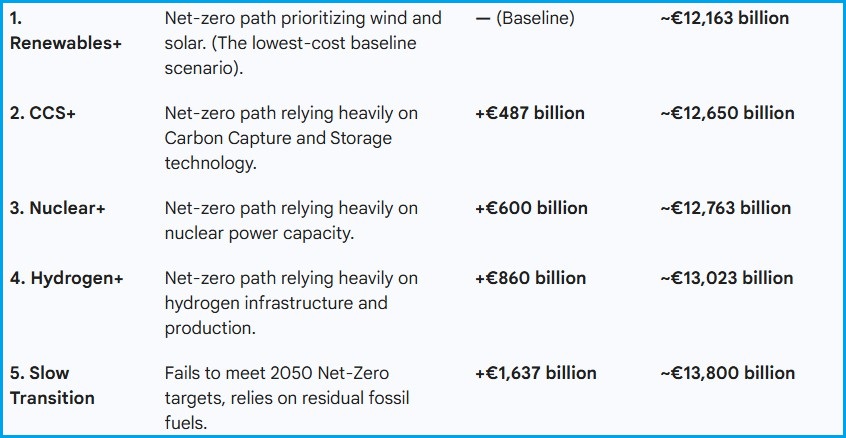
The study has mapped out the total system costs of five energy scenarios. Four scenarios deliver net zero and the remaining one is for a slow transition, where Europe doesn’t meet its climate targets, wind power advocacy group said.

The difference between the cheapest net zero path (Renewables+) and the most expensive path (Slow Transition) is EUR 1.64 trillion, the study reveals.

eu energy system 2050 scenarios costs hitachi study

The study’s authors calculated the total societal cost of building, operating, and adapting to the required energy system across electricity, transport, heat, and industry to meet or fall short of the 2050 climate targets.

The total system costs have three major groups of expenses.

The first group are new infrastructure investments in generation assets, as well as in grid, hydrogen, storage and carbon capture and storage (CCS) infrastructure.

Operational expenses are represented by fuel and CO2 costs, while the third group are electrification and demand shift costs.

The Renewables+ scenario drastically lowers import dependency

The Renewables+ scenario achieves net zero by 2050 through a massive deployment of variable renewable energy, primarily wind and solar power, leading to high electrification across the energy mix.

The renewables share reaches 85% of total electricity and nearly 70% of total gross available energy. Dependency on imported energy fuels falls drastically from 71% in 2030 to just 22% in 2050, the report reads.

“As Europe looks ahead to 2050, it is revealing to think what our energy system looked like 25 years ago. Back in 2000 the share of wind and solar in Europe’s electricity was a combined 0.8%. It’s 30% today. And Europe’s emissions are down by nearly 1/3 compared to 2000 while the economy has grown 45%. Let’s build on this success,” WindEurope stressed.

It is an inception report for the Energy System Costs Study, a project commissioned by WindEurope.