by in News

Romania begins overhaul to extend operating life of Cernavodă nuclear reactor by 30 years

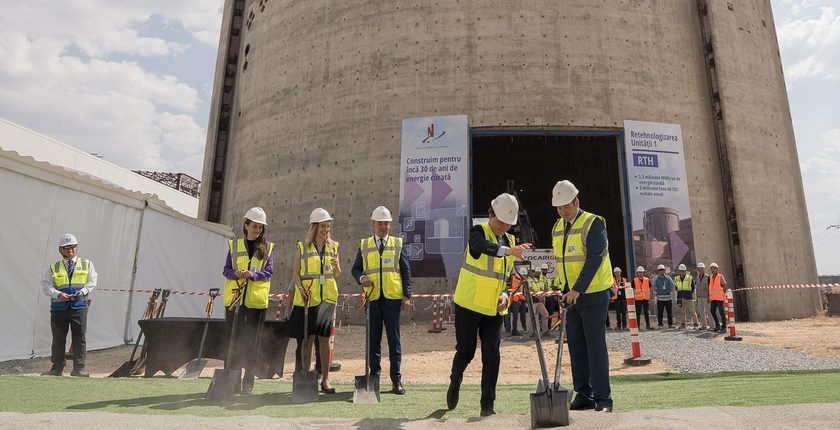
An international consortium led by South Korean state-owned Korea Hydro & Nuclear Power Co. (KHNP) has launched an overhaul of a reactor at Romania’s only nuclear power plant, Cernavodă. The refurbishment will extend the operating life of Cernavodă’s Unit 1 by 30 years.

The reactor, with a capacity of around 700 MW, has been in operation since 1996, and its 30-year license is set to expire in 2027. The reconstruction project is valued at about USD 2.01 billion, KHNP said following a groundbreaking ceremony.

Romania’s state-run Nuclearelectrica, the operator of the Cernavodă plant, signed an agreement with the consortium last December. The group of contractors includes KHNP, Canada’s AtkinsRealis, the Canadian Commercial Corporation, and Italy’s Ansaldo Nucleare, according to Romania-Insider.

The works, targeted for completion by 2030, include the complete replacement of the reactor systems and power-generating turbines, as well as the construction of new infrastructure, including radioactive waste storage facilities, said KHNP, a subsidiary of Korea Electric Power Corporation (KEPCO).

The overhaul is targeted for completion by 2030

KHNP said that four other South Korean firms – Kepco Plant Service & Engineering, Doosan Enerbility, Hyundai Engineering & Construction, and Samsung C&T- will participate as project partners.

At the groundbreaking ceremony, Romanian Minister of Energy Bogdan Ivan said the project would ensure another 30 years of on-grid, environmentally friendly electricity. According to him, it represents the future of Romania’s energy security, accoridng to a report by Profit.ro.

The overhaul will ensure another 30 years of environmentally friendly electricity

Over the last 10 years, Romania has shut down about 56% of its coal- and natural gas-fired capacity, resulting in the country now importing 22% of the electricity it consumes. According to Ivan, this has led Romania to look for alternatives, one of which is nuclear energy.

He recalled that the country was preparing to invest EUR 11 billion in the construction of Units 3 and 4 at the Cernavodă nuclear power plant, adding that “certain phases have already begun.” Ivan also said he believed that in seven years’ time, Romania could become a net exporter of electricity.

The two new reactors would each have a capacity of around 700 MW, according to earlier reports. Cernavodă’s Unit 2, which has been in operation since 2007, also has a capacity of around 700 MW.
by in News

Serbia, South Korea’s KHNP to cooperate on nuclear energy, hydrogen

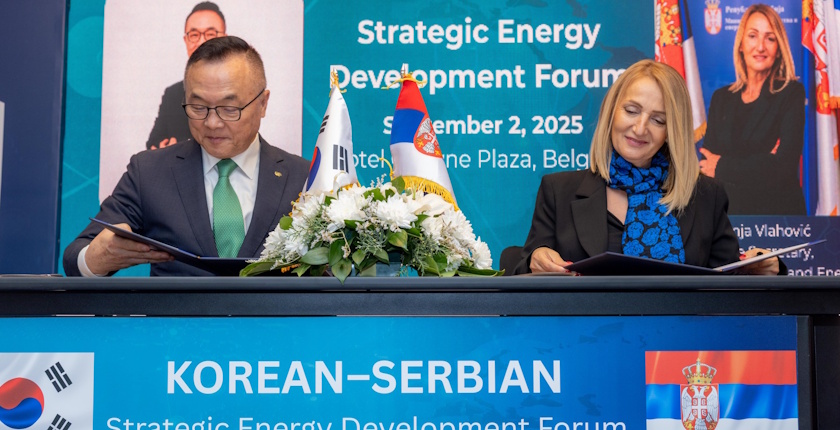
Serbia and South Korean company Korea Hydro & Nuclear Power have signed two memorandums of understanding on cooperation in the fields of nuclear energy and hydrogen.

The memorandums were signed by Sonja Vlahović, State Secretary at the Ministry of Mining and Energy, and Joo-ho Whang, President and CEO of Korea Hydro & Nuclear Power (KHNP), a subsidiary of Korea Electric Power Corporation (KEPCO).

Notably, South Korean company Hyundai Engineering is part of Serbia’s largest renewable energy project—the deployment of 1,000 MW of solar power plants with battery storage.

The memorandums were signed during the Korea-Serbia Strategic Energy Development Forum, held in Belgrade and organized by the Ministry of Mining and Energy and the Korea Trade-Investment Promotion Agency (KOTRA).

So far, Serbia has established contacts or started cooperation on nuclear energy with China, France, Russia, Slovenia, and the United States.

Vlahović: We’ll consider pilot hydrogen projects

The main goal of the nuclear energy memorandum is to help the ministry develop and train personnel in Serbia in the field of nuclear technologies, as well as to facilitate the exchange of technical information and expertise.

Photo: Balkan Green Energy News

The second memorandum, on hydrogen cooperation, will enable joint work to assess the potential for developing pilot green hydrogen projects in Serbia. It envisages technical exchanges and support for human resource development, as well as sharing know-how in the full hydrogen cycle and supply chain management.

State Secretary in the Ministry of Mining and Energy Sonja Vlahović noted that Serbia is considering nuclear energy as one of the potential energy sources that could help it achieve energy security while transitioning to clean energy sources.

Joo-ho Whang: Cooperation will enable sustainable growth for Serbia and the company

“For us, it is very important to develop cooperation with countries and companies that are global leaders in nuclear technologies, to exchange knowledge and experience, and to invest in the development of our experts. We are also very interested in the opportunities offered by hydrogen technologies and, together with partners from South Korea, we will explore potential pilot projects,” she said.

According to KHNP President and CEO Joo-ho Whang, the cooperation will enable sustainable growth for both Serbia and the company.

“We particularly expect that demonstration projects in the field of hydrogen will play a key role in developing the hydrogen industry in Serbia. Additionally, the agreement will open new opportunities for cooperation in the clean energy sector,” he added.

KHNP to assist with workforce training

The nuclear energy memorandum calls for KHNP to support the development of training programs for personnel in the ministry and other relevant government institutions, faculties, and companies. The support is expected to cover various aspects of nuclear technologies, safety, and the regulatory framework.

It also includes establishing a mechanism for regular exchange of technical information, research results, and best practices in nuclear energy, the ministry said.

Dimović: Serbia could have a nuclear power plant by 2040

Photo: Ministry of Mining and Energy/Nenad Kostić

The signing was followed by presentations delivered by KHNP, the ministry, state power utility Elektroprivreda Srbije (EPS), the Vinča Institute for Nuclear Sciences, and KOTRA.

Park So-hyun, Senior Manager of Overseas SMR Project Section, presented nuclear power plant projects that the company is developing in South Korea and other parts of the world.

Hydrogen projects and cooperation with Serbia were the theme of a presentation by Kim Su-Jy, Senior Manager of Global KHNP Hydrogen & Energy Business Sector.

EPS is conducting a hydrogen study

Assistant Minister of Mining and Energy Radoš Popadić outlined the main goals and planned activities of Serbia’s Energy Development Strategy through 2040. Aleksandar Latinović, Head of Ancillary Services at EPS, presented the company’s development projects, recalling that EPS is currently conducting a study on possibilities for hydrogen utilization.

The Vinča Institute highlighted its rich history. CEO Slavko Dimović announced a public discussion aimed at explaining nuclear energy to all of Serbia, not just Belgrade. His optimistic yet realistic plan is for Serbia to have a nuclear power plant by 2040.

Milan Rajić, Senior Specialist at KOTRA, highlighted the agency’s results and invited Serbian entrepreneurs to collaborate with Korean companies.

The signing ceremony was also attended by the Ambassador of the Republic of Korea, Kim Hyung Tae, Serbia’s Minister of Science, Technological Development, and Innovation, Bela Balint, and the Director General for KOTRA Europe Headquarters, Kim Hyeon-cheol.

by in News

Germany, France move to bridge nuclear divide with joint EU energy policy

Germany and France have agreed to work together on shaping a common European energy policy that would include nuclear power as a low-carbon energy source. The deal could help resolve the two countries’ long-standing division over the role of nuclear energy in Europe’s green transition.

Paris and Berlin might offer joint proposals for the European Union’s energy policy through 2040 that would “ensure non-discrimination among all net-zero and low-carbon energy technologies in their respective contribution to European energy, sustainability, and climate goals,” according to a joint economic agenda adopted at a meeting in Toulon, France.

The common EU policy would ensure non-discrimination among all net-zero and low-carbon energy technologies

In Europe, nuclear power is widely considered a low-carbon technology that provides reliable energy while also supporting climate goals and reducing dependence on fossil fuels, with France advocating for its revival. However, Germany shut down its last remaining reactors in 2023 and is focusing on renewables as a way to achieve climate neutrality.

The two countries have now agreed to promote technology neutrality and try to harmonize their respective energy policies in the interests of Europe, said French President Emmanuel Macron.

In turn, France will support Germany’s plans to establish hydrogen interconnections to southwestern Europe. This includes the long-stalled Southwestern Hydrogen Corridor, which connects Spain, Portugal, France, and Germany, according to reports. The corridor comprises the pipeline projects H2Med and HY-FEN.”

Germany and France will support hydrogen interconnections with Spain and Portugal

The initiative will be continuously supported through a Franco-German working group on hydrogen, according to the Franco-German Economic Agenda.

The two countries’ deal to jointly lead the way in shaping a competitive, secure, sustainable, and decarbonized European energy market also involves supporting a potential new electricity interconnector that transmission system operators Amprion, TransnetBW, and RTE are assessing, reads the document.

by in News

Đedović Handanović discusses Serbia’s nuclear power plan with Russian ambassador

Russia is interested in cooperating with Serbia in the nuclear energy sector. According to the authorities, the country is still a long way away from the potential construction of a nuclear power plant.

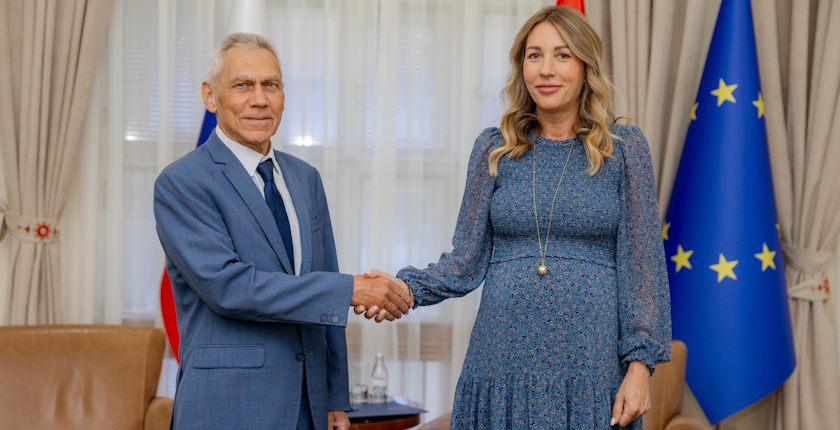
Minister of Mining and Energy of Serbia Dubravka Đedović Handanović met with the Ambassador of the Russian Federation Alexander Botsan-Kharchenko to discuss joint projects and initiatives in the energy sector. The topics included nuclear energy, natural gas and oil.

Ambassador Botsan-Kharchenko said the Russian Federation is interested in establishing cooperation with Serbia in the peaceful use of nuclear energy. Minister Đedović Handanović stressed that the preliminary technical study on the peaceful use of nuclear energy in Serbia has been completed.

The next steps in the development process have been defined, while the potential construction of a nuclear power plant remains a long way away, she stressed.

Serbia is ready to cooperate with relevant partners

She reiterated that Serbia respects the guidelines of the International Atomic Energy Agency, which are also incorporated in the country’s legal framework.

“We are currently discussing the necessary studies that would allow us, at least five years from now, to discuss the potential construction of a nuclear power plant,” she underscored.

Đedović Handanović pointed out that Serbia needs technical assistance, knowledge exchange, and capacity building to create the staff that would be capable of managing a power plant in the future. The country is eager to collaborate with relevant partners, she added.

So far, Serbia has discussed cooperation with China, France, Russia, Slovenia, South Korea and the United States.

A regulatory entity for nuclear energy will be established

Currently, the institutional framework is being prepared, primarily within the ministry, after which a regulatory entity for nuclear energy needs to be established, Đedović Handanović announced.

She stressed that Serbia aims to continue the good cooperation and finalize a new long-term natural gas supply agreement with Gazprom.

The two officials also touched upon the potential sanctions of the US Office of Foreign Assets Control (OFAC) against the national oil and gas company, Naftna Industrija Srbije (NIS). The measures have recently been postponed for the fifth time, until August 27.

Regarding the construction of the Serbia-Hungary oil pipeline, Đedović Handanović said companies NIS, Transnafta, and MOL are continuing to negotiate capacity and financial aspects of the project, and pointed out that the technical specifications of the pipeline have been agreed upon.

by in News

Private equity fund to take over 39.5% stake in Romanian SMR project

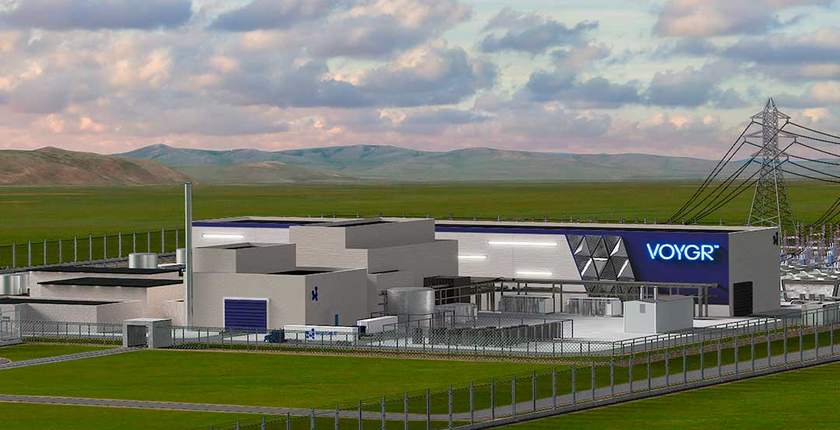
DS Private Equity (DSPE) is reportedly entering ownership in RoPower Nuclear, a project firm working to build a small modular reactor (SMR) in Romania. In a proposed capital increase, current co-owners Nuclearelectrica and Nova Power and Gas, now at 50% each, would land at 46.5% and 14%, respectively. The South Korean firm’s DSPE Beta Private Equity Fund would control the remaining stake in the Doicești project.

RoPower Nuclear is getting a third co-owner. The joint venture established for the SMR project northwest of Bucharest is about to get a capital increase as part of the financing process, according to a document that Profit.ro obtained.

State-owned Nuclearelectrica, which operates Romania’s Cernavoda nuclear power plant, and Nova Power and Gas (NPG) of the E-Infra group, now own 50% each. Under a new deal, DSPE Beta Private Equity Fund, controlled by DS Private Equity from South Korea, would contribute EUR 68 million in cash and get a 39.5% stake, the report reveals.

Nuclearelectrica to be biggest shareholder

Nuclearelectrica has earmarked EUR 76 million, with an option to convert part of its loans to RoPower Nuclear into ownership, instead of providing cash, the article reads. It would lower the company’s stake to 46.5%.

NPG would add EUR 20 million and have 14% after the transaction. E-Infra is controlled by Romanian entrepreneurs Teofil Mureșan, Simion Mureșan and Marian Pantazescu.

The proposed agreement would lift the project firm’s capital from EUR 8 million to EUR 172 million. DSPE is a shareholder in NuScale Power, which owns the technology for the planned SMR facility of 462 MW. It would be built in Doicești in Dâmbovița county in the Muntenia region. It is the site of a former coal plant.

DSPE could bring KEXIM, Samsung on board

NuScale, based in Oregon in the United States, recently said that it expects Romania to reach a final investment decision early in the second quarter of next year at the latest.

DSPE can bolster the project through its relationship with financial institutions such as Korea Export-Import Bank (KEXIM) and potential contractors including Samsung, the news outlet learned.

The Ministry of Energy in Bucharest earlier estimated the cost of the Doicești project at EUR 4.9 billion.

by in News

Rolls-Royce SMR to start works with ČEZ on small modular reactors

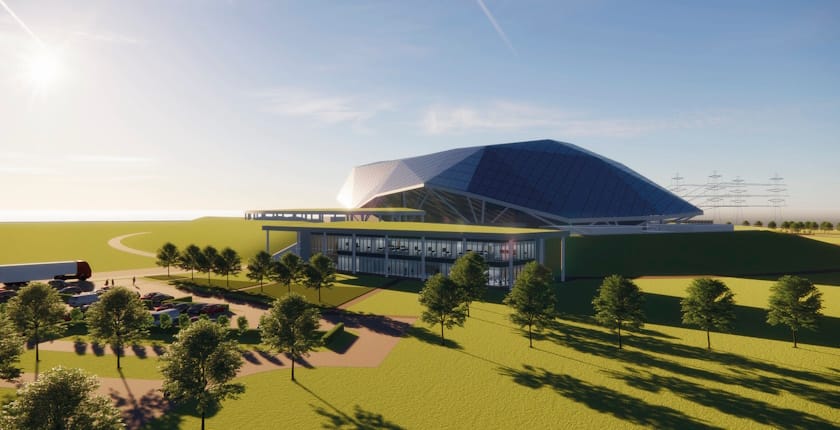
Rolls-Royce SMR and Czech utility ČEZ have signed an early works agreement. It paves the way for site-specific work on their small modular reactor project at the Temelín nuclear power plant.

British Prime Minister Sir Keir Starmer and Czech Prime Minister Petr Fiala have signed a deal to work together to seize SMR export opportunities, support highly skilled jobs, boost economic growth and deliver clean, homegrown energy in both countries. It was followed by an early works agreement between Rolls-Royce SMR and ČEZ as a step forward in their strategic partnership for up to 3 GW of low-carbon energy in the Czech Republic.

ČEZ has acquired 20% of Rolls-Royce SMR

The two companies said that now they can launch site-specific work on their small modular reactor project at the Temelín nuclear power plant. Last year ČEZ selected Rolls-Royce SMR as its preferred SMR technology partner and agreed to purchase 20% of the company based in the United Kingdom. After that, they declared the transaction complete in early March.

“We are proud to be working alongside ČEZ to deliver a programme that will bring significant industrial and economic benefits to both our nations, while helping to meet critical energy security and decarbonisation goals,” Chief Executive Officer of Rolls-Royce SMR Chris Cholerton said.

Czech Republic’s first SMR to be deployed in mid-2030s

ČEZ will closely cooperate with Rolls-Royce SMR on preparing the construction of the country’s first small modular reactor, expected to be built at the site of the Temelín nuclear power plant in the mid-2030s, according to the Czech utility’s board member Tomáš Pleskač, who is at the helm of its New Energy Division.

Modular reactors represent a significant opportunity for the country’s economy and are an essential part of the ongoing energy transformation, he added and stressed that the cooperation offers a unique opportunity for growth and prosperity in the field of nuclear energy.

Additional opportunities at ČEZ’s Tušimice nuclear plant

The activities would initially be focused on the site of ČEZ’s Temelín nuclear plant in the South Bohemian region, the update reveals. The companies pointed to additional deployment opportunities at the location of ČEZ’s Tušimice nuclear plant, in the Ústí nad Labem region.

The early works would include regulatory approvals and licensing and environmental assessments. Rolls-Royce SMR is designing units of 470 MW, set to operate for 60 years.

Temelín is near the city of České Budějovice. It is the largest power station in Czechia, housing two VVER 1000 reactors.

by in News

Bulgaria partners with Citi to secure financing for new nuclear power units in Kozloduy

US-based bank Citi and Bulgaria have established a partnership to secure funding for the construction of units 7 and 8 at the existing 2,000 MW Kozloduy nuclear power plant.

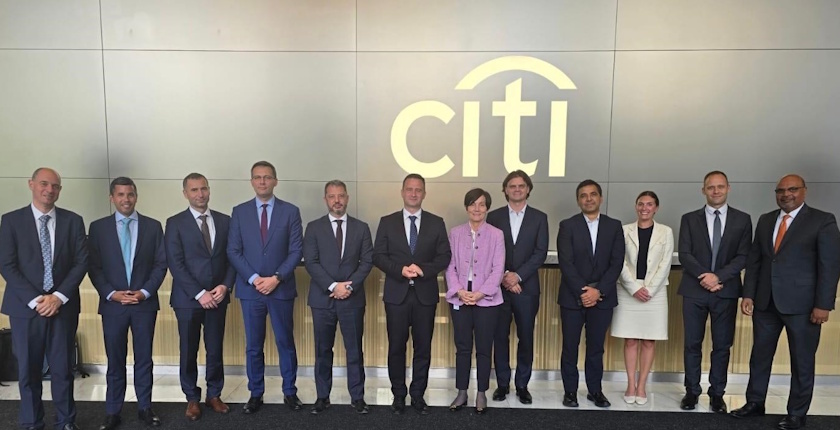
Bulgaria’s Ministry of Energy said minister Zhecho Stankov and his delegation have held final talks in New York with Citi’s management.

Following a detailed review and analysis of a technical proposal, both sides agreed to make a partnership between Kozloduy NPP – New Builds and Citi to secure funding for new nuclear power units at the Kozloduy Nuclear Power Plant site, according to the ministry.

Stankov stressed the agreement with Citi is a significant step toward the implementation of the energy project, pointing out it is a priority for the government.

Units 7 and 8 would be the first in Europe with Westinghouse’s AP1000 reactors

The construction of units 7 and 8, which would be the first in Europe to deploy Westinghouse’s AP1000 technology, will ensure the country’s energy independence and long-term stability, Stankov stressed at his meeting with Stephanie von Friedeburg, Global Head of Public Sector Banking at Citi.

With the lender’s proven expertise and strong global network, Kozloduy NPP – New Builds will provide the necessary financial framework to deliver safe, sustainable, and affordable energy for future generations, according to the project company’s Executive Director Petyo Ivanov.

Citi was picked as the exclusive coordinator and lead arranger of the export credit package

The ministry explained that Citi is becoming the exclusive coordinator and lead arranger of the export credit package. It would be the bank’s largest nuclear financing project in Central and Eastern Europe, the statement reads.

“Citi is proud to be at the forefront of financing low-carbon energy solutions. The Kozloduy expansion represents a landmark transaction, one of the first large-scale projects of its kind. This project is pivotal for Bulgaria’s energy future, and Citi is committed to providing the financial expertise to make it a reality,” Stephanie von Friedeburg said.

Of note, in November 2024, Hyundai Engineering and Construction Co., Westinghouse Electric Co., and Kozloduy NPP – New Builds signed an engineering services contract for two AP1000 reactors.

by in News

Solar beats nuclear in June, becoming EU’s biggest electricity source for first time

Solar became the EU’s largest source of electricity for the first time in June 2025. National records for both photovoltaics and wind rolled in in May and June, pushing coal to an all-time low.

Solar was the largest source of electricity in the European Union for the first time last month, with multiple countries producing record amounts of solar power, Ember found. Wind power achieved the highest ever generation for the months of May and June, the think tank said.

Solar power generated 22.1% of EU electricity (45.4 TWh) in June, more than any other power source. It was a year-over-year increase of 22%. In second place was nuclear, with 21.8% (44.7 TWh), followed by wind, with 15.8% (32.4 TWh).

The big opportunity now comes from adding battery storage and flexibility to extend the use of renewable power into mornings and evenings, where fossil fuels still set high power prices, according to Ember’s Senior Energy analyst Chris Rosslowe.

At least thirteen EU countries set monthly solar records

At least thirteen countries recorded their highest-ever month of solar generation, amid an ongoing surge in photovoltaic installations. Among them were Bulgaria, Croatia, Greece, Slovenia and Romania, all the EU countries in the region that Balkan Green Energy News is focused on except Cyprus, for which there was no data for June.

Wind power reached an all-time high shares of 16.6% (33.7 TWh) and 15.8% (32.4 TWh) in May and June, respectively

Strong photovoltaic output helped the power system to handle higher levels of demand resulting from heatwaves that gripped the continent towards the end of the month, according to the report.

Wind farms generated 16.6% (33.7 TWh) and 15.8% (32.4 TWh) of EU electricity in May and June, respectively. It was an all-time high for both months. Notably, at the start of the year, wind conditions were relatively poor. They improved, and they were the main driver, though capacity has been continuously growing over the past year. Several large offshore wind farms were commissioned.

Coal falls to record low

As a result of high renewables generation in June, coal had the lowest-ever share of EU electricity. Total fossil generation was also low, but it grew in the entire first half of the year on an annual basis.

Coal generated just 6.1% (12.6 TWh) of EU electricity in June, down from the 8.8% registered in the same month of last year.

The two countries that account for the vast majority of EU coal power (79% in June) both saw record lows in June. Namely, Germany generated just 12.4% (4.8 TWh) of its power from coal, and Poland 42.9% (5.1 TWh). Four other countries recorded their lowest-ever month of coal generation in June: Czechia (17.9%), Bulgaria (16.7%), Denmark (3.3%) and Spain (0.6%), which is approaching its coal phaseout.

Fossil fuels generated 23.6% (48.5 TWh) of EU electricity in June, just above the record low of 22.9% in May 2024. Nevertheless, fossil generation in the first half of 2025 was 13% higher (by 45.7 TWh) than in the first half of 2024, mainly due to a jump in gas generation by 19% or 35.5 TWh. Lower hydropower (due to drought) and wind generation than last year, and increasing demand marked the period.

Electricity demand continued on an upward trajectory. In the first half of 2025, the EU consumed 1.31 PWh of electricity or 2.2% more than in the same period of last year.

by in News

Heatwave strains European grid, brings profit to energy storage operators

Record solar power production, backed by yet insufficient energy storage capacity, helped maintain the stability of the electricity system in Europe during the latest heatwave, Ember said. Many nuclear and other thermal power plants reduced their activity as river water temperature wasn’t low enough for efficient cooling. Intraday price spreads at European power exchanges landed a windfall for owners of battery energy storage systems and pumped storage hydropower plants.

The heatwave since late June has caused stress for European power systems, driving electricity demand and doubling daily power prices. Yet grids remained stable, fueled by record volumes of solar, think tank Ember pointed out in a report.

Outside temperatures jumped to more than 40 degrees Celsius, triggering an increase in electricity demand as the use of air conditioners soared. Outages in nuclear and thermal power plants exacerbated the challenges.

Daily electricity demand on July 1 was by up to 6% higher in Germany, 9% in France and 14% in Spain than on June 24. As for peak demand, it jumped by 12% in France, 15% in Spain, and 5% in Germany and Poland.

A bigger electricity price spread within one day means higher income for operators of battery energy storage systems

The average daily price surged 15% in Spain, 106% in Poland, 108% in France and 175% in Germany.

“Despite the huge pressure, European grids passed the stress test, and solar electricity played a major role in keeping them running. The surplus of solar energy during the day helped prevent blackouts. However, the use of energy storage is still insufficient, leading to reduced energy supply after sunset. This translated into a sharp increase in electricity prices,” said Ember’s Europe Programme Director Paweł Czyżak.

Record EU solar generation helps keep power supply stable

June saw the highest solar generation on record in the European Union – 45 TWh, which kept the grid well-supplied during daytime hours. The result was 22% up from one year before.

“Heatwaves will not go away – they will only get more severe in the future. Solutions that can help mitigate their impacts, such as battery storage, interconnection, demand flexibility and dynamic tariffs, should become a key part of grid planning and power market design,” Czyżak added. The biggest opportunity is to store solar electricity, to help power air conditioning well into the evening, he stressed.

Outages limited but still posing concern

The overheating of cables is the likely cause of power outages in Italy on July 1. With rising air and water temperatures, the cooling of thermal power plants becomes more challenging as well. It led to forced reductions in electricity generation from nuclear power plants in France and Switzerland.

The French nuclear fleet has been impacted the most, with all but one of the 18 facilities experiencing some type of capacity reduction. According to the update, up to 15% of the capacity may have been impacted.

A blackout of several hours struck large parts of the Czech Republic including Prague on July 4. However, the authorities only blamed it on a transmission cable in the country’s northwest falling, and the resulting domino effect. Notably, the air temperature was much lower than in previous days.

Sun brings power alongside heat

In the peak days of the heatwave in Germany, solar delivered 50 GW and even more, generating 33% to 39% of Germany’s electricity. The country hosts 14 GW of battery energy storage systems (BESS) and 10 GW of pumped storage, which partly bridged the gap between the peaks of production and consumption.

The rallies in electricity prices in the evenings are getting passed on to consumers, so using air conditioners gets more expensive upon sunset. It is a business case for clean flexibility solutions. Due to a high supply of solar electricity during the day, and a cooling-related demand peak in the late afternoon hours, the daily electricity price spreads skyrocketed.

The spread in Poland in the day-ahead segment almost reached EUR 500 per MWh on July 1. Namely, the daily low was EUR 21.04 per MWh below zero, and the peak amounted to EUR 471 per MWh. In Germany, the benchmark went from EUR 0.16 per MWh in negative territory to EUR 404.91 per MWh.

Storage assets charge at low prices and discharge during peak time, reducing the need for costly imported fossil fuels in the evening, and supporting the balancing of the grid, the analysts underscored.

Interconnection played a role as well. The heatwave peaked in different countries on different days, so interconnectors moved electricity to where it was needed most, dissipating the price peaks in the process.

by in News

Serbia preparing nuclear, hydrogen deal with South Korea’s KHNP

After contacts with Russia, Slovenia and China regarding nuclear energy, and the start of cooperation with France, Serbia is expecting to sign an agreement with South Korean state-owned power utility KHNP, involving hydrogen as well. Among the other options are joint activities in the segment of small modular reactors.

Like many countries in the Balkans, Europe and beyond that want to build their first or additional nuclear power plants, Serbia is considering the possibilities for such projects. Assistant Minister of Mining and Energy Radoš Popadić, responsible for electricity, visited the biggest nuclear power complex in the world. It is located in Ulsan in South Korea and owned by Korea Hydro and Nuclear Power (KHNP).

The Serbian official got acquainted with the technological and safety standards there, according to the announcement.

An agreement with KHNP on the exchange of knowledge and experiences concerning nuclear energy and hydrogen is expected to be finalized soon, Popadić revealed.

“The Ministry of Mining and Energy has been in contact for some time now with the representatives of KHNP and we are expecting an agreement with prestigious South Korean company KHNP to be finalized soon, regarding the exchange of knowledge and experiences in the nuclear energy segment and hydrogen, having in mind that we actually see nuclear energy as one of the key solutions for Serbia’s secure, stable and low-carbon future. Hydrogen is an energy product of the future and its use is also envisaged in our strategic documents and it is important to exchange knowledge on the application of this technology,” Popadić stated.

The assistant minister stressed that South Korean companies have proven results in the construction of nuclear facilities abroad. He highlighted the Barakah project in the United Arab Emirates, which is led by state-owned KHNP’s parent company Korea Electric Power Corp. (KEPCO). Of note, the first of four reactors entered regular operation in September.

The ministry added that Popadić also spoke to his hosts about the possibilities of cooperation regarding projects for small modular reactors (SMRs).

Serbia amended its Law on Energy in November, abolishing a moratorium on the construction of nuclear plants, imposed in 1989.

Nuclear plants are among solutions for price, grid stability, supply security

Participants in the energy markets generally anticipate strong growth in power demand due to the electrification of transport and heating and cooling as well as for future data centers and the needs for artificial intelligence.

The other major factors making the case for nuclear energy are the efforts to make prices affordable, maintain the security of supply and replace baseload energy sources. Namely, coal power plants in Europe are shutting down on a massive scale and the long-term status of fossil gas is still uncertain.

At the same time, there is the meteoric rise in wind and solar power capacity – the operation of such facilities depends on meteorological conditions, so unpredicted variations are frequent. Batteries and other balancing and flexibility solutions mitigate such disturbances affecting the grid, but the pace of their deployment is lagging.

Serbia working on national program for peaceful use of nuclear energy

Serbian President Aleksandar Vučić met in 2021 with Director General of Russia’s State Atomic Energy Corp. Rosatom, Alexey Likhachev. They discussed the possibility of building a nuclear power plant.

Likhachev visited Serbia four months ago, too. He offered help with projects, Rosatom said after he met with Vučić and other state officials. “What we can offer already today is lower than the current prices, and in the long term it will be even more appealing,” the director general stated.

Serbia established cooperation last year with France’s government-owned energy utility EDF. Together with Egis Industries, the company was then selected for the development of a technical study on the peaceful use of nuclear energy.

Minister of Mining and Energy Dubravka Đedović Handanović spoke in February with Ambassador of Slovenia Damjan Bergant about the possibilities for bilateral cooperation. The following month, state-owned public enterprise Nuclear Facilities of Serbia signed a memorandum of understanding with the China Institute of Atomic Energy (CIAE).