by in News

Greece to participate in European Nuclear Alliance

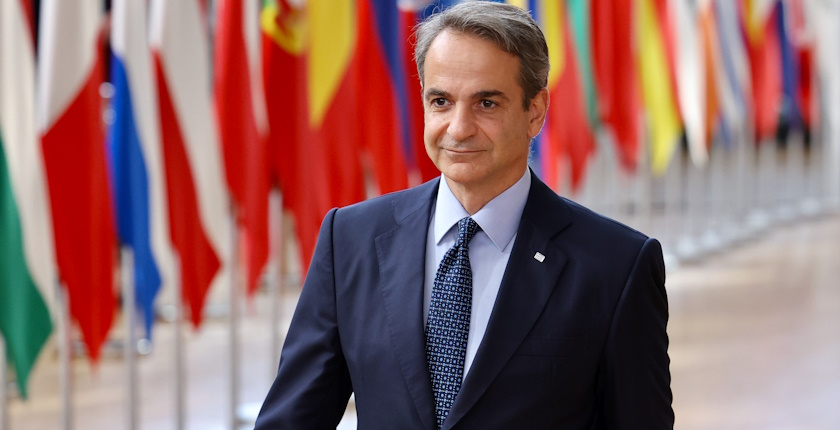
Greece is going to explore its options for the introduction of nuclear energy, according to Prime Minister Kyriakos Mitsotakis.

Speaking during the Energy Transition Summit in Athens, Mitsotakis expanded on his previous statements about nuclear energy and its possible role in the Greek energy mix.

“We are ready to join the Nuclear Alliance. This is not something that is going to happen tomorrow, but Greece must be a part of the discussion,” said the prime minister. The European Nuclear Alliance, launched in 2023, is an initiative of 13 European Union member states. Among them are Bulgaria, Croatia and Romania.

Its goal is to promote nuclear energy and help maintain its role in Europe. Italy has just joined the group.

It is not the first time that Greece has shown interest in the technology. The current government has floated the idea of co-financing a new nuclear power plant in Bulgaria, as part of the deal that would include guaranteed power imports. So far, nothing has materialized.

Mitsotakis also mentioned small modular reactors (SMRs) again as a possible solution, as well as installing reactors in ships to help the sector decarbonize. “We must explore how a naval nation such as Greece can utilize nuclear energy in its fleet,” Mitsotakis noted.

Mitsotakis: Net zero is impossible without nuclear

He added that the world would not be able to cut net greenhouse gas emissions to zero without the technology. According to the prime minister, nuclear fusion is very promising.

Public mistrust and cost issues

There are difficult obstacles to the government’s ambitions. Greek people remain heavily opposed to the installation of nuclear facilities, both inside and near the country. The energy crisis made public opinion only a bit more favorable.

Furthermore, Greece has no experience with nuclear energy and no people engaged in the sector. Everything would have to be created from scratch, from the regulatory framework to the technical knowhow.

Then there is the matter of cost. Even though many voices around the world support a nuclear revival, few new commercial projects have been initiated for traditional nuclear stations. Most new reactors, like in China, are subsidized by the state. Even in Europe, a large part of the discussion concerns renewing and upgrading existing reactors.

The Greek government has raised energy costs as a primary issue for the country and Southeastern Europe. It remains to be seen whether such power plants could operate on a purely commercial basis or if a support scheme could be used.
by in News

EU nuclear ambitions: EUR 241 billion in investment needed by 2050

The European Commission has estimated that EUR 241 billion in investment is needed for the implementation of member states’ plans for nuclear energy until 2050. It includes extending the lifetime of existing power plants and building new large-scale reactors.

Additional investment is needed for small modular reactors (SMRs), advanced modular reactors (AMRs), and microreactors, as well as for fusion for the longer-term future, according to the European Commission’s eighth Nuclear Illustrative Programme (Programme Illustrative Nucleaire – PINC).

A few days ago, the World Bank decided to lift its 2013 moratorium on financing nuclear energy projects amid growing global electricity demand.

The commission has now underlined that for some EU countries, nuclear energy is an important component of decarbonization, industrial competitiveness, and security of supply strategies. The commission estimates that over 90% of electricity in the EU in 2040 will be produced from decarbonized sources, primarily renewables, complemented by nuclear energy.

Jørgensen: To truly deliver the clean energy transition, we need all zero- and low-carbon energy solutions

Nuclear installed capacity across the EU is projected to grow from 98 GWe in 2025 to 109 GWe by 2050.

The commission recognizes that all zero- and low-carbon energy solutions are needed to decarbonize the EU’s energy system. Accordingly, the Nuclear Illustrative Programme is intended to help drive member states’ actions towards priority areas.

“To truly deliver the clean energy transition, we need all zero- and low-carbon energy solutions. Nuclear energy has a role to play in building a resilient and cleaner energy system. Ensuring the necessary framework conditions will allow the EU to keep its industrial leadership in this sector while also upholding the highest safety standards and responsible management of radioactive waste,” said Dan Jørgensen, Commissioner for Energy and Housing.

The highest standards of nuclear safety are among the EU’s top priorities

The commission highlighted the highest nuclear safety standards and a responsible management of radioactive waste as a top priority for the EU.

The commercialization and market uptake of cutting-edge nuclear technologies, including SMRs, AMRs, microreactors, and fusion for the longer term, will also be central for the sector’s future in Europe and beyond, according to the EU’s executive arm.

A requirement under Article 40 of the Euratom Treaty, PINC provides a comprehensive, fact-based overview of nuclear development trends, as well as the scope of investment needs across the EU.

The commission will publish the final version of PINC after receiving the Opinion of the European Economic and Social Committee.

by in News

World Bank to back nuclear projects again amid rising electricity needs

The World Bank has decided to end its 2013 moratorium on financing nuclear energy projects amid growing global electricity demand. The move means the lender would support projects to extend the operating life of existing nuclear power plants and speed up the rollout of small modular reactors (SMRs).

The World Bank board’s decision comes at a time when nuclear energy is experiencing a global revival, as electricity demand in developing countries is projected to more than double by 2035.

Ajay Banga, the president of the World Bank Group, said the institution would work closely with the International Atomic Energy Agency (IAEA) on the issues of safety, security, and regulation.

Banga: Delivering electricity as a driver of development

“We’ve made real progress toward a clear path forward on delivering electricity as a driver of development,” Banga said.

Recently, Germany agreed with France to end its opposition to new nuclear power technologies in the European Union. Economy and energy minister Katherina Reiche said Germany would respect other EU member states’ choice of energy mix, but would not return to nuclear power itself. The country shut down its last remaining nuclear reactors in 2023.

Nuclear energy is making a comeback in Southeast Europe as well

The global nuclear energy revival includes the region tracked by Balkan Green Energy News as well. Slovenia is developing its second reactor, Krško 2, while Romania and Bulgaria are planning new units, as well as SMR projects. Croatia is also taking steps to introduce nuclear energy, including SMRs.

Hungary is already building new reactors at the Paks nuclear power plant, as is Turkey, while Serbia is considering the use of nuclear energy.

Banga said the World Bank’s revised strategy would allow countries to determine the best energy mix, with some choosing solar, wind, geothermal, or hydroelectric power, while others might opt for natural gas or nuclear.

However, no agreement has been reached yet on ending a ban on upstream natural gas projects, with further discussions needed on the issue, according to him.

by in News

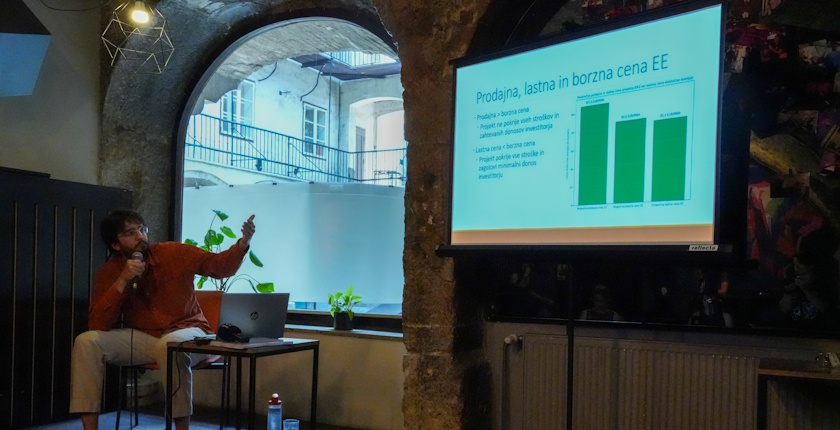
Krško 2 nuclear project not profitable for private investors but state could find motive – study

Slovenian non-governmental organization Mladi za Podnebno Pravičnost (Youth for Climate Justice) has conducted what it claims to be the first independent economic study on the construction of a second unit of the Krško nuclear power plant.

The economic study on the Krško 2 project (JEK2) showed that the project would not be profitable for a private investor but could be viable for the Government of Slovenia. The authors recommended that, before making a final decision, studies should be produced under two nationwide scenarios: 100% renewable energy or a combination of renewable energy and Krško 2.

Youth for Climate Justice said the largest project in Slovenia’s history requires at least one independent, detailed economic study. It needs to set aside both the potential investors’ aspirations and the opposition to the construction of the second nuclear power plant, the NGO stressed.

The referendum fiasco opened the way for a different approach to the project, but politicians demonstrated no interest, so the organization took the initiative. The study and proposal for a comprehensive project management framework took over a year.

The organization presented four main findings from the study.

The state can go through with the project if it doesn’t count on a profit margin

First, the project is not economically viable for a private company, the authors said and added such a scenario is therefore unlikely. Under a common economic logic, the state would also decide against the endeavor as it wouldn’t be able to achieve the desired return on investment.

However, due to the project’s strategic importance, the state could opt for a version without a profit margin and define the price of electricity generated in Krško 2 at a breakeven level, the study reads.

In that case, there is a chance the project could be profitable after all, as such a price would still be a bit lower than the one that the operator would achieve in the market.

The state could also secure other benefits such as low-carbon, stable energy with minimal impact on biodiversity, the organization noted.

Two important recommendations

The study’s authors suggested establishing a new management framework, giving the project a chance of success and to avoid repeating the issues seen with the TEŠ 6 project, for the sixth unit of the Šoštanj coal-fired power plant.

Of note, there was much controversy over the decision to build it. TEŠ 6 began operating in 2016, but now it is facing closure. The construction cost exceeded the budget, raising suspicions of corruption.

There are two scenarios for the development of Slovenia’s power system

Finally, the NGO recommended reviewing two scenarios for the development of Slovenia’s power system before making a final decision: 100% renewable energy and renewable energy combined with Krško 2.

“Based on that, we will know whether it makes sense for the state to waive financial gains and build JEK 2 or if there are better alternatives for the development of the system,” Youth for Climate Justice underlined.

The study has been presented to the public, but stakeholders will have another opportunity to discuss it on Wednesday, June 18, in Ljubljana.

by in News

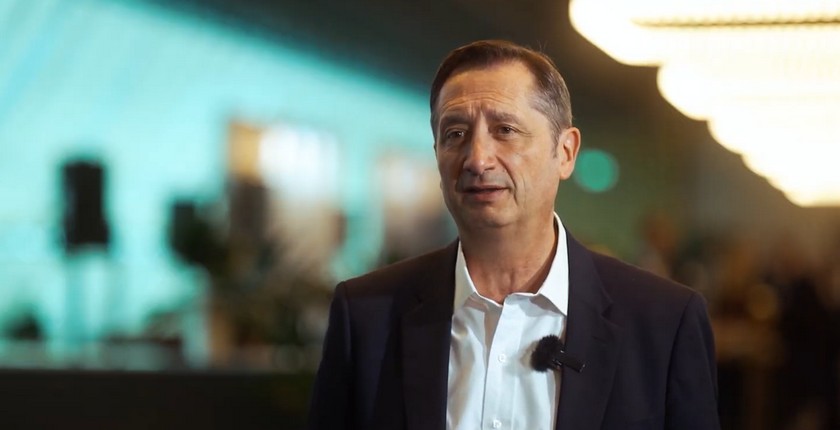
Eric Scotto: Falling storage and renewables costs will help meet rising electricity demand

Declining energy storage costs and expanding renewables capacity will enable Europe to meet the challenge of intensified electrification and rising consumption, according to Eric Scotto, CEO of Akuo Energy. Thanks to falling costs, renewable energy has already won the race against nuclear power, he emphasized at Belgrade Energy Forum 2025.

The price of energy storage today is ten times lower than it was ten years ago, and the density of storage has tripled in the last three years, Eric Scotto said. Speaking at a panel on decarbonization in Southeast Europe, he explained that the operating power of a battery system in a standard TEU container, twenty feet or 6.1 meters long, now reaches 6 MW.

“Today, the challenge is flexibility. We know how to produce cheap, but what is important is to reconcile offer and demand… Thanks to storage, we can do that today,” Scotto said on the sidelines of the conference.

Renewables have already won the race against nuclear energy

Talking about the cost of generation from renewable sources and nuclear power, he argued that the race has already been decided. “It’s over. We won the race. Renewable is the cheapest way to produce energy,” he underscored.

[wpcc-iframe title=”Eric Scotto, CEO, Akuo Energy at the Belgrade Energy Forum” width=”500″ height=”281″ src=”https://www.youtube.com/embed/ZVg8ole0VaM?feature=oembed” frameborder=”0″ allow=”accelerometer; autoplay; clipboard-write; encrypted-media; gyroscope; picture-in-picture; web-share” referrerpolicy=”strict-origin-when-cross-origin” allowfullscreen=””]

Scotto emphasized that the Balkan region, which is lagging in the energy transition, can now enjoy the benefits of the latest and cheapest renewable energy and storage technologies. “This morning, some people were saying that we are late in the Balkans, and that’s the best news we could get this morning because renewables are the cheapest way to produce energy, so we’re going to benefit from the latest and most efficient technologies… from solar, from wind, from hydro, and storage,” claims the top man of the French renewable energy company.

The slow energy transition is good news for the Balkans

Scotto stressed the importance of collaboration among Western Balkan countries, adding that he hopes to see more of it in the coming days, weeks, and months. “We have the skills and we have the know-how in those countries. We need to share, we need to work more together, and, of course, we need more international interconnection,” he said.

Akuo Energy has secured a PPA for its Bela Anta 2 wind project in Serbia

Talking about Akuo Energy, Scotto said that it brings to the region its knowledge and experience from numerous project around the world. The France-based independent global renewable energy producer recently signed a power purchase agreement (PPA) with Serbia’s state-owned power utility Elektroprivreda Srbije (EPS) for the Bela Anta 2 wind project.

With a total installed capacity of 80 MW, Bela Anta 2 was among the awarded projects in Serbia’s second round of renewable energy auctions, held in early 2025, securing a contract for difference (CfD).

by in News

Decarbonization of Southeastern European region: both renewables and nuclear are speeding up

Energy transition in Southeastern Europe is accelerating, and the progress depends on individual countries’ strategies and legal frameworks. At the Belgrade Energy Forum (BEF 2025), representatives of state-owned power utilities and private producers discussed the different approaches to decarbonization. The domination of investments in renewable energy is unquestionable, but there are also ambitions to develop nuclear capacities, spearheaded by Slovenia. The country is already operating one nuclear reactor and is developing a project for another one.

The electricity sector in Southeast Europe still depends for a large part on thermal power plants that burn fossil fuels. In 2023, they accounted for 43% of overall output, of which two-thirds were from lignite and the rest from gas. There is a need for accelerated decarbonization, and the speed of the transition will depend on financial possibilities and the political will and decisions, said the panel’s moderator and Director of Zagreb-based Energy Institute Hrvoje Požar Dražen Jakšić.

The acceleration trend in decarbonization is also evident in the electricity market projections for the region until 2030. The plans for the period until the end of the decade include shutting down 6.2 GW of thermal power plant capacity and installing 42.3 GW from renewable sources. Greece, Romania, Serbia and Bulgaria are expected to add the most.

Top executives of state-owned utilities in Serbia, Slovenia and Montenegro and independent power producers that invest in renewables in the region gathered at a panel called Decarbonisation strategies for power generation in Southeast Europe 2040/2050 at Belgrade Energy Forum 2025.

They agreed that decarbonization is well underway and an unstoppable process already speeding up significantly. The participants in the discussion presented the different strategies their companies will act upon in the following years and decades, leading the process to fulfilment.

Among the messages that they shared is that they expect each government to promote investments and make the legal framework clear and certain, while the countries strengthen their ties and exchange experiences. Green energy is the pillar of the energy transition and decarbonization in the region, but several states are also interested in building their first nuclear power plants—conventional ones or small modular reactors (SMRs)—or expanding the existing capacity.

EPS’s Živković: Decarbonization requires energy storage, nuclear plants

Chief Executive Officer of Serbia’s Elektroprivreda Srbije (EPS) Dušan Živković pointed out that the state-controlled electricity producer is committed to its goals regarding green energy and emission reductions as well as to the country’s targets. “We will work on that, of course, believing in these objectives, but without compromising energy security and the energy sovereignty of Serbia. It was proven to be the only sustainable path,” he asserted.

The company particularly counts on the project for solar power plants with a total connection capacity of 1 GW, with batteries of 200 MW in combined capability. The investment is conducted through a strategic partnership with Hyundai Engineering and UGT Renewables (UGTR).

A study is underway in Serbia on the potential for the construction of large nuclear power plants and small modular reactors

The decarbonization process won’t be easily feasible without serious energy storage capacity, Živković warned and added that nuclear energy wouldn’t be unrealistic. A study is underway on the possibilities of building large nuclear plants and small modular reactors in Serbia.

The head of EPS expressed the belief that “the quality of that energy needs to be visualized” for citizens of every country and that they should be explained that it is necessary to provide energy for the economy and its security.

CEOs Dejan Paravan of GEN energija, Dušan Živković of EPS and Eric Scotto of Akuo

No dilemma in Serbia about energy transition

Country Manager of WV-International in Serbia Neda Lazendić highlighted the said strategic partnership for solar power plants with battery energy storage systems (BESS), saying Hyundai Engineering is a world-renowned company.

In her view, the endeavor will be a milestone for the entire region and it is exceptionally important for gaining experience at the domestic level.

The recent second round of auctions for electricity from renewable sources showed that Serbia opted for the energy transition “and there is not any dilemma about it anymore,” Lazendić stressed and said the country is an example for the region. The prices from the bidding that were accepted are appealing and they match European trends, she noted.

Country Manager of WV-International Neda Lazendić

Lignite is highly unprofitable

Slovenia and GEN energija, one of the state-owned power utilities, are relying on both renewable sources and nuclear energy in their decarbonization investments, the company’s CEO Dejan Paravan pointed out.

“We want to get rid of coal as soon as possible. And in the short term, renewables are the only option. Why get rid of coal? The current production of domestic lignite is highly unprofitable, and because of climate goals,” he explained.

Nevertheless, it is exceptionally complicated to get permits for renewables and place them in the environment, Paravan added. On the other hand, nuclear energy is emissions-free and very stable and reliable, he asserted. The technology takes up the least space and enables the production of huge amounts of electricity, the head of GEN energija said.

Nuclear power plant Krško 2 could come online in 2040

Paravan recalled that two years ago nuclear power plant Krško marked four decades since it was commissioned and that its operating life was extended by 20 years. GEN energija is working on the Krško 2 project. The chief executive expects construction to begin in 2022 or 2023 and that the reactor could be connected to the grid in 2040.

In parallel, the company is studying SMRs. Still, the development of the technology will take a long time and, importantly, such facilities won’t have the advantage of scale like large reactors, he said. One who expects electricity from SMRs to be cheaper than from big nuclear plants is wrong, in Paravan’s view.

As for the dilemma between renewable sources and nuclear energy, he expressed the belief that they are not mutually exclusive. “We need renewables and they can provide us a lot of CO2-free electricity in the short run. But let’s make it clear that once we come to 70%, 80%, 90% based on renewables, that we have a problem of seasonal storage, that things will get very difficult,” Paravan stated.

Batteries are ten times cheaper than ten years ago

Conversely, Akuo Energy’s CEO Eric Scotto pointed out that nuclear power is expensive. “It’s over. We won the race. Renewable is the cheapest way to produce energy,” he underscored.

The price of energy storage capacity is ten times lower than ten years ago, the head of the French company noted. Moreover, operating power of a battery system in a standard TEU container, twenty feet or 6.1 meters long, now reaches 6 MW, which is three times more than three years ago, according to Scotto.

To attract investments, stability is necessary, he stressed. Scotto went on to highlight some “simple things” that could help Akuo, which was one of the winners at the last auction round in Serbia, to materialize its projects for two wind parks. He mentioned the speed of permitting for telecommunication systems and road construction, for power plants.

Turning to the slowness of the energy transition in Balkan countries, he emphasized its positive side. “We are late. Then we will benefit from the cheapest resource, the cheapest way to produce energy,” Scotto concluded.

EPCG’s Solari project kicked off energy transition in Montenegro

Technical Director of Elektroprivreda Crne Gore (EPCG) Ljubiša Đurković called the state-owned power utility’s projects Solari 3000+ and Solari 500+ the start of the energy transition in Montenegro. Since the beginning of 2023 and including Solari 5000+, launched later, the company set up photovoltaic systems on 7,380 structures, he revealed.

Total peak capacity reached 76 MW and another 125 MW will be installed by the end of the year, EPCG’s official said.

Among its projects, the company is building the Gvozd wind farm, and the Kapino polje solar park near Nikšić.

Technical Director of EPCG Ljubiša Đurković

There is already 10 MW on roofs in the former Željezara steel plant in Nikšić, and before the end of the year another 15.5 MW will be connected to the grid, Đurković said. A contract has been signed for the construction of the eighth generator in the Perućica hydropower plant, of 58 MW. It is scheduled for completion in 2027.

Đurković: A realistic date for the closure of the Pljevlja thermal power plant is between 2045 and 2050

The energy transition is about a single and connected system, including storage capacities and measures to improve energy efficiency, he underscored. “You have to create the conditions for a swift integration of renewable energy sources into the distribution and transmission networks. We were supposed to do that already. We didn’t do it, particularly in the Western Balkans. We didn’t reconstruct the distribution and transmission networks,” he stated.

As for the current reconstruction of the coal-fired Pljevlja thermal power plant, the only one in Montenegro, Đurković said the project wouldn’t make sense if the facility were to keep operating only for a short while longer.

žAccording to the National Energy and Climate Plan (NECP), which is almost complete, it will remain active at least until 2041, although the realistic date for its closure is only between 2045 and 2050, in the opinion of EPCG’s technical director. The main phase of the reconstruction began at the end of March.

by in News

Serbia to soon finish study on use of nuclear energy – minister

The preliminary study on the use of nuclear energy in Serbia should be completed by the end of the second quarter, according to Dubravka Đedović Handanović, the Minister of Mining and Energy.

A preliminary technical study for considering the peaceful use of nuclear energy is being prepared by French state-owned energy utility EDF and engineering company Egis Industries. The two companies won a tender organized by the Ministry of Mining and Energy.

Minister Dubravka Đedović Handanović told public broadcaster RTS that the study focuses on three aspects. The first one is developing a roadmap for the implementation of 19 institutional and infrastructural steps for a potential nuclear program.

Experts from Serbia’s TSO EMS are involved in the preparation of the study

The roadmap, in her words, must be in line with the guidelines of the International Atomic Energy Agency (IAEA).

The second topic is an analysis of available technologies, including conventional nuclear power plants and small modular reactors (SMRs), and the third is to consider how a nuclear plant, depending on capacity, could be integrated into the country’s energy system.

Experts from Serbia’s transmission system operator Elektromreža Srbije are providing help in the third part, she noted.

Serbia would need to choose a partner for the development of a nuclear power project

According to Đedović Handanović, SMRs are a technology under development for cheaper facilities, which require less time to be built than conventional reactors.

“It is up to us to look at the advantages and disadvantages of both technologies, of which one is under development and the other is proven in the market, and say what we want to go with. Of course, if all the preconditions are met. Also, finally, with whom, as all the main developers of the technologies are certain companies from different parts of the world,” she stressed.

Baseload energy is crucial for the stability of the energy system

The minister pointed out that the IAEA prescribes clear steps each country must fulfill if it is considering the development of a nuclear program. It means no country can do anything on its own, she added.

“All those institutional and infrastructural prerequisites have to be checked, approved, verified, and ultimately monitored by the IAEA,” Đedović Handanović underlined.

Speaking about the long-term strategy, she recalled that baseload energy is crucial to secure the stability of the energy system. In Serbia it is currently provided from coal and natural gas, while nuclear plants can also play the role.

Natural gas, in her words, will serve as a transitional fuel for baseload energy for another 20-30 years, so it is necessary to find a long-term solution. Nuclear energy is one of the options, but it requires a lot of experience, time, and investment, Đedović Handanović noted.

by in News

EU outlines measures to end Russian gas, oil imports by end-2027

The European Commission set out a plan to phase out by the end of 2027 the purchases of Russian natural gas, including in the form of LNG, and oil. The package includes proposals aiming to replace Russian nuclear fuel and materials as well.

The European Union will end its dependency on Russian energy by stopping the import of Russian gas and oil and phasing out Russian nuclear energy, while ensuring stable energy supplies and prices, the European Commission said. Its new REPowerEU Roadmap targets full energy independence from Russia.

Since Russia’s invasion of Ukraine in 2022, the EU was lowering the share of Russian fossil fuels under the REPowerEU plan and via sanctions. However, Russian gas imports rebounded last year by 18%, led by Italy, Czechia and France. The commissioners argued that the “overdependency on Russian energy imports is a security threat” and called for new coordinated actions.

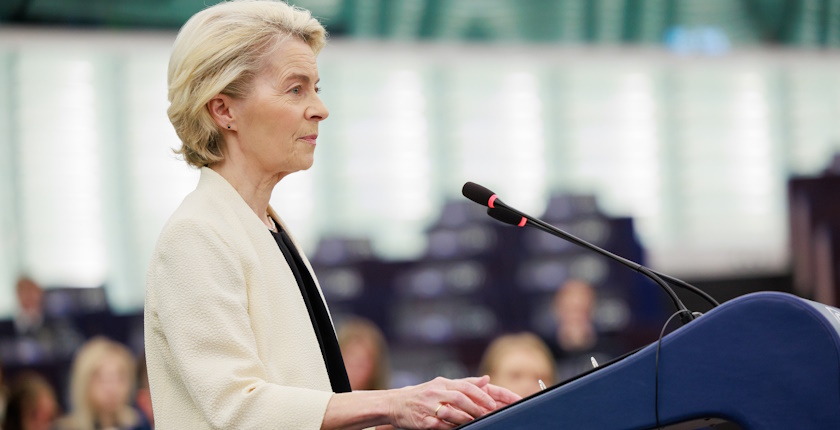
Von der Leyen: It is now time for Europe to completely cut off its energy ties with an unreliable supplier

“The war in Ukraine has brutally exposed the risks of blackmail, economic coercion and price shocks. With REPowerEU, we have diversified our energy supply and drastically reduced Europe’s former dependency on Russian fossil fuels. It is now time for Europe to completely cut off its energy ties with an unreliable supplier. And energy that comes to our continent should not pay for a war of aggression against Ukraine. We owe this to our citizens, to our companies and to our brave Ukrainian friends,” European Commission President Ursula von der Leyen stated.

The volumes of imported Russian gas fell to last year’s 52 billion cubic meters from 150 billion in 2021. The share of Russian gas imports dropped from 45% to 19%. All imports of the country’s coal have been banned by sanctions. Russian oil imports have shrunk from 27% at the beginning of 2022 to the current 3%.

Member states need to roll out national plans by end-2025

The new measures have been designed to preserve the security of energy supply while limiting any impact on prices and markets. They would be applied in parallel to advancing the energy transition.

“Last year we in the EU paid EUR 23 billion to Russia for our energy imports. That is EUR 1.8 billion per month. This needs to stop,” European Commissioner for Energy Dan Jørgensen stressed.

The administration in Brussels expects to replace up to 100 billion cubic meters of natural gas by 2030, which means a decrease in demand by 40-50 billion by 2027. It sees an increase in liquefied natural gas (LNG) capacities by 200 billion cubic meters by 2028, which is five times more than current EU imports of Russian gas. The EU still hasn’t imposed sanctions on Russian LNG.

Member states will be asked to prepare national plans by the end of this year, the announcement reveals. All the measures will be accompanied by continuous efforts to accelerate the energy transition and diversify energy supplies, including via the aggregation of gas demand and a better use of infrastructure, according to the document.

Administration in Brussels intends to tackle Russian shadow tanker fleet carrying oil

The European Commission said the proposed measures would improve the transparency, monitoring and traceability of Russian gas.

“Crucially, new contracts with suppliers of Russian gas (pipeline and LNG) will be prevented, and existing spot contracts will be stopped by the end of 2025. This measure will ensure that already by the end of this year, the EU will have slashed by one third remaining supplies of Russian gas. The commission will further propose to stop all remaining imports of Russian gas by the end of 2027,” the plan reads.

Under the roadmap, the commission will put forward new actions to address Russia’s shadow fleet transporting oil. It said the vessels are circumventing sanctions and the international oil price cap.

EU depends on Russia for quarter of its uranium conversion, enrichment needs

As regards nuclear, the proposals coming next month cover enriched uranium and supply contracts co-signed by the Euratom Supply Agency (ESA) for uranium, enriched uranium and other nuclear materials. The EU intends to increase its production of medical radioisotopes.

“While diversification efforts might create uranium and fuel price volatility over access to uranium supply on global markets, major impacts on electricity prices are unlikely as the price of nuclear fuel and related services represent only a small portion of the final cost of electricity from nuclear power plants,” the plan adds.

The EU intends to increase its production of medical radioisotopes

More than 14% of uranium was sourced in the EU from Russia in 2024. The commissioners highlighted the concentration of uranium conversion and enrichment services – needed to transform processed uranium into the material for nuclear fuel manufacturing – in a limited number of companies.

In 2024, around 23% of the whole EU demand for uranium conversion services and almost 24% of enrichment was covered by Russia.

While more than 85% of uranium is produced in Kazakhstan, Canada, Australia, Namibia, Niger and Russia, uranium mines currently operate in many countries and unmined deposits exist in some EU member states.

It will take years to make use of domestic, other Western resources

European enrichment companies have expansion plans but the first new enrichment installation is not expected earlier than 2027.

“Moreover, the global uranium conversion industry is facing obstacles in ramping up production due to technological complexity and market uncertainties, and new conversion capacities are currently announced only for early 2030s. The EU’s nuclear sector also continues to rely on Russia for some spare parts and maintenance services,” the European Commission said.

EEB: Replacing Russian gas with US gas is senselless

The European Environmental Bureau (EEB) noted that imports of Russian gas including LNG rose 18% in 2024 despite no growth in demand.

Numbers of shadow LNG tankers from Russia have also increased, as have indirect imports of Russian energy via third countries, it added. Plans to tackle the shadow fleet are vague, the organization claimed. It went on to label the United States a clearly unreliable trade partner.

“Phasing out Russian coal and gas only to replace it with a dependence on US fracking gas is not in the EU’s security or financial interests. EU countries should instead focus on accelerating their deployment of wind and solar energies. The technologies to move to 100% renewable energy are available,” EEB’s Policy Manager for Climate and Energy Luke Haywood underscored.

by in News

Croatia discusses installation of small modular reactors with US

Croatian and United States officials have discussed the possibilities for energy cooperation to diversify the energy supply in Central and Southeastern Europe. Croatia has expressed particular interest in joint work in the nuclear energy sector.

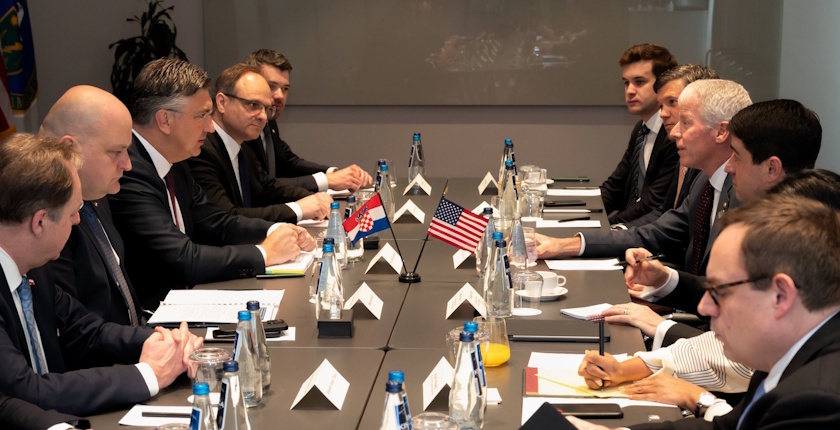
On the sidelines of the 10th summit meeting of the Three Seas Initiative, held in Warsaw, Croatian Prime Minister Andrej Plenković met with United States Secretary of Energy Chris Wright. Minister of Economy Ante Šušnjar attended the discussion as well and separately sat with a delegation from the Nuclear Energy Institute, based in Washington.

Of note, at the same event, Wright invited Central European countries to abandon the European Union’s energy and climate policy and join his country on “team energy freedom.”

Talks between the two delegations covered various topics, including the expansion of the liquefied natural gas (LNG) terminal on the island of Krk, development of gas infrastructure toward Hungary and Slovenia, and strengthening the security of energy supply in Central and Southeastern Europe.

The two sides have discussed the enhancement of energy independence for Croatia and Southeastern Europe

According to Croatia’s Ministry of Economy, representatives of the two countries exchanged views on further opportunities for US involvement in projects focused on diversifying energy sources and strengthening the region’s energy resilience.

Croatian officials highlighted the importance of ongoing cooperation with the US, particularly regarding the diversification of energy supply and the enhancement of energy independence for Croatia and Southeastern Europe, the ministry underlined.

Maria Korsnick and Ante Šušnjar (photo: Government of Croatia)

Minister Šušnjar and Maria Korsnick, CEO of the Nuclear Energy Institute, discussed potential cooperation in the development of nuclear energy, particularly the application of small modular reactor (SMR) technology.

Šušnjar: SMRs is an alternative to existing fossil fuel sources

Šušnjar noted that nuclear energy is increasingly vital for achieving decarbonization and ensuring a stable electricity supply. Croatia has established a workgroup to analyze the potential use of nuclear energy including SMRs as an alternative to existing fossil fuel sources, he added.

“We are interested in partnering with companies that offer advanced, safe, and cost-effective solutions. The Nuclear Energy Institute is a key partner in that process,” Šušnjar said.

Croatia has been expressing interest for the past several years in the Krško 2 nuclear power project in neighbouring Slovenia.

However, Minister Šušnjar recently said his country would focus on developing its own nuclear power capabilities including SMRs.

by in News

US interested in pumped storage hydropower projects in Romania, Bulgaria

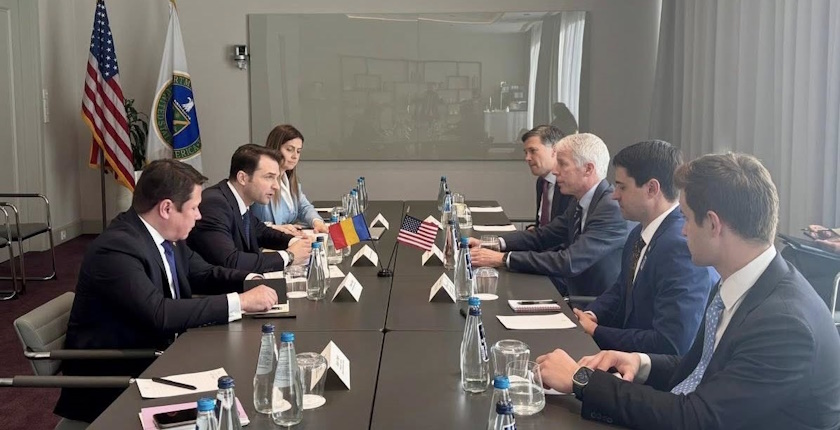
Minister of Energy of Romania Sebastian Burduja and Minister of Energy of Bulgaria Zhecho Stankov both met with United States Secretary of Energy Chris Wright and discussed bilateral cooperation in projects in their countries including for pumped storage hydropower plants and nuclear power plants. Burduja said studies would be conducted with American support for a string of pumped storage hydroelectric facilities throughout the Carpathians.

At the sidelines of the 2025 Three Seas Business Forum in Warsaw, Minister of Energy Sebastian Burduja held a meeting with US Secretary of Energy Chris Wright about ongoing strategic projects in which American companies are involved. He revealed that state-owned power utility Hidroelectrica has signed a memorandum with the National Renewable Energy Laboratory (NREL) of the United States on cooperation in pumped storage hydropower projects.

The initiative will put Romania “at the forefront of Europe” as it will store green energy throughout the Carpathian mountain range, according to Burduja. Prefeasibility and feasibility studies will be developed with American support, he added.

“In this era of energy transition, we need pragmatic and effective solutions that ensure secure, affordable, and clean energy – in that order of priorities. Romania and the United States share a vision for a common energy future, and our collaboration will significantly contribute to achieving this goal,” the minister stated.

Significant involvement of US companies in strategic energy projects in Romania

Burduja highlighted NuScale’s project for small modular reactors (SMRs) in Doicești and the contract signed with Fluor and Sargent and Lundy for units 3 and 4 at the Cernavodă nuclear power plant. Fluor is also participating in a project for a high-voltage direct current interconnector (HVDC), he pointed out.

The lack of interconnections is bolstering energy prices

The minister noted that American partners are involved in a project for mapping and utilizing geothermal sources for district heating in Bucharest, with support from the European Union’s Modernisation Fund. Namely, Electrocentrale Bucharest (ELCEN) has established cooperation with US-based SAGE Geosystems

Burduja recalled that American platform Transocean Barents is drilling for gas in the Neptun Deep project in the Black Sea.

The Romanian ministry said the two officials discussed the rise of energy prices, attributing it to the lack of interconnections and the challenge of closing coal-fired power plants without viable alternatives. They also touched upon the costs of carbon dioxide certificates and how they affect competitiveness, the announcement reads.

Stankov, Wright discuss possibility of building AI ‘gigafactories’

Bulgarian Minister of Energy Zhecho Stankov separately met with US Secretary of Energy Chris Wright. Bulgaria will be the first in Europe to deploy the American AP1000 technology, Stankov claimed.

The country is preparing to build two more units at the Kozloduy nuclear power plant, in a deal with Westinghouse Electric. State-owned Bulgarian Energy Holding is controlling the project.

The two officials discussed the possibility of building “artificial intelligence gigafactories” to complement the nuclear infrastructure and promote innovation and employment, the ministry said. In addition, Stankov and Wright spoke about projects for new pumped storage hydropower and the exploration of oil and natural gas in the Black Sea.