by in News

IAEA hosts landmark symposium: Nuclear, AI to forge Atoms for Algorithms alliance 

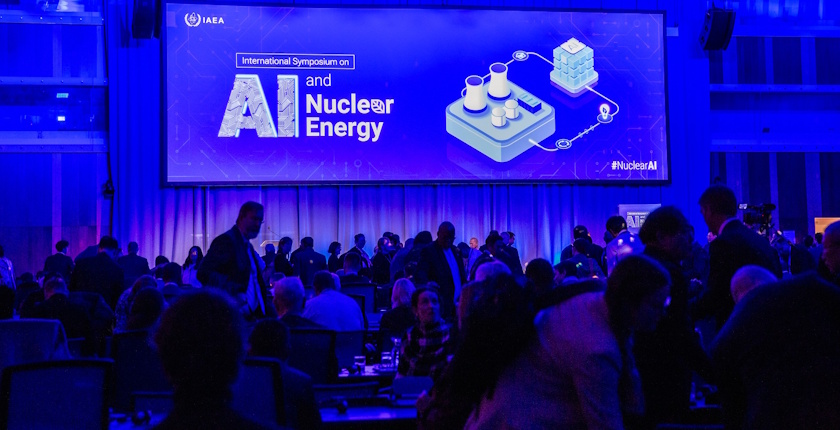
Global energy and technology leaders from over 250 organizations, including companies, nuclear operators, regulators, and research institutions, have gathered at the IAEA headquarters in Vienna for the first-ever International Symposium on Artificial Intelligence and Nuclear Energy.

The International Atomic Energy Agency (IAEA) said the two-day event brought together senior representatives from ministries, international organizations, the nuclear industry and major tech firms, including Google and Oracle.

They discussed how nuclear energy can help meet the surging electricity demand of AI data centres, and how AI can support nuclear technology development.

The first symposium on nuclear energy and AI provided a platform for governments, organizations and industry to discuss how to make the Atoms for Algorithms alliance happen, according to IAEA.

Grossi: I call it not just a partnership, but a structural alliance: Atoms for Algorithms

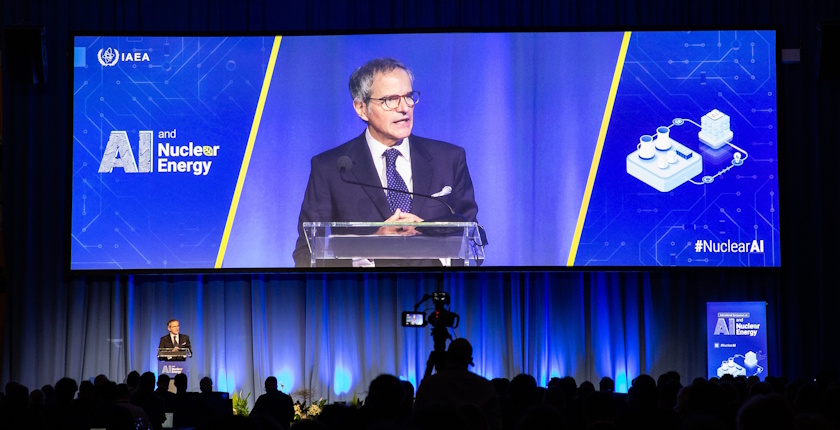
Director General Rafael Mariano Grossi said the two forces are reshaping humanity’s horizon at an unprecedented pace.

“The world’s energy map is being redrawn before our eyes. The essential point, our opportunity and our responsibility, is that these forces are not unfolding separately. They are converging and redefining the new global economy,” he stressed.
world iaea nuclear energy ai atoms for algorithms Rafael Mariano Grossi
Photo: IAEA

IAEA recalled that according to the International Energy Agency, data centres accounted for 1.5% of worldwide electricity demand in 2024 – a figure that could double by 2030.

“There is only one energy source that can meet combined demands of low-carbon generation, 24/7 reliability, massive power density, grid stability and genuine scalability: nuclear energy. This is why I call it not just a partnership, but a structural alliance: Atoms for Algorithms,” he stressed.

Greisinger: We are currently building the engine of the 21st century
world iaea vienna conference nuclear energy ai atoms for algorithms Manuel Greisinger
Photo: IAEA

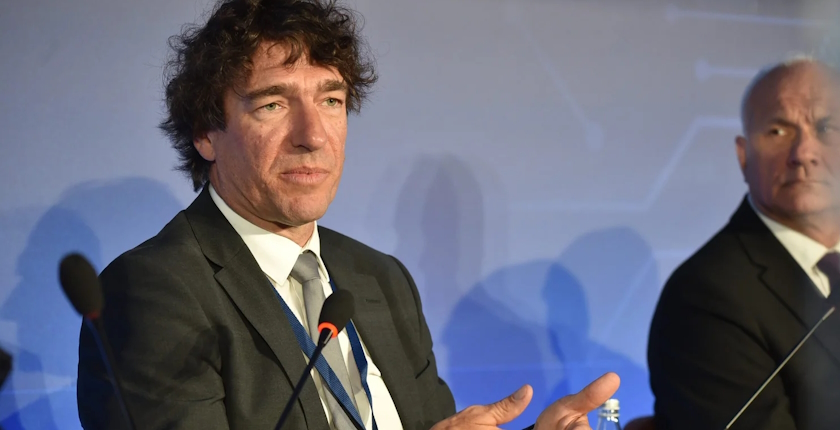
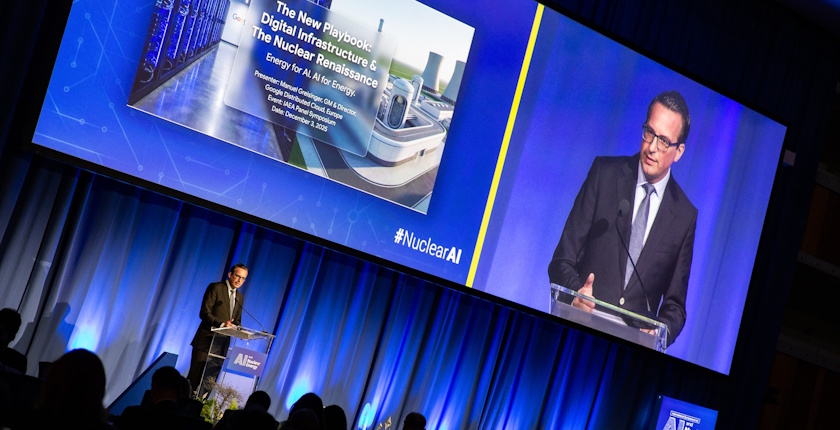
IAEA underlined that major tech companies are weighing in on the nuclear-AI conversation. Manuel Greisinger, Google Distributed Cloud Director, shared why hyperscalers are turning to nuclear energy to power their data centres.

“We are currently building the engine of the 21st century, which is artificial intelligence. But as everyone in this room knows, an engine is pretty much useless without fuel. So the digital infrastructure community is here at the symposium because we have crunched the numbers and we have realized that nuclear energy is not just an option. It is an essential, non-negotiable component of our future fuel mix,” he stressed.

Sama Bilbao y León, Director General of World Nuclear Association, pointed out that nuclear energy is a key piece of the puzzle to electrify the world, improve quality of life, and support AI’s need for 24/7 carbon-free electricity.

She welcomed the pledge by major tech companies to support the goal to triple global nuclear energy capacity by 2050, according to IAEA.
by in News

Serbia’s Vinča Institute, EDF to cooperate in nuclear energy

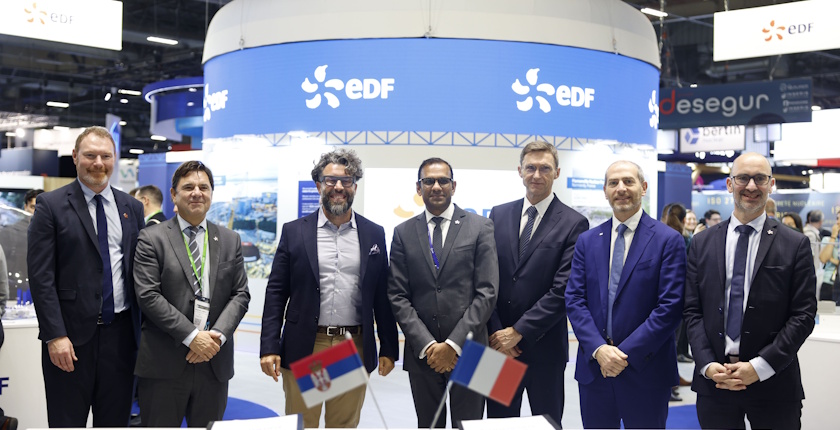
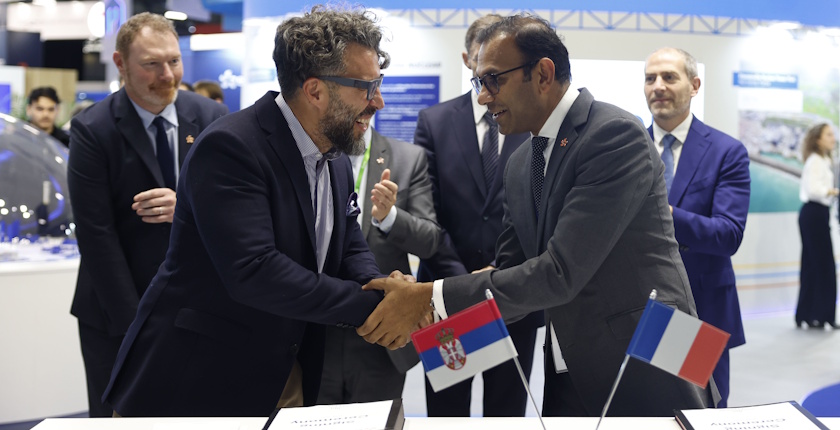
During the World Nuclear Exhibition in Paris 2025, the Vinča Institute of Nuclear Sciences signed a memorandum of cooperation with Électricité de France (EDF).

The Serbian Vinča Institute of Nuclear Sciences said its new memorandum of cooperation with French state-owned energy utility EDF establishes a framework for scientific, technological, and educational cooperation in the nuclear energy sector.

The document was signed by the Vinča Institute’s CEO Slavko Dimović and Vakisasai Ramany, EDF’s Senior Vice President for International Nuclear Development.

Four main sectors of cooperation

The deal envisages joint activities in the areas of scientific research cooperation, professional training and development of employees, international exchange, and public communication on nuclear topics, according to the institute.

The goal is to enhance knowledge, develop expertise, and promote informed public discussion about the potential role of nuclear energy in our country, the Vinča Institute revealed in a social network post.

serbia edf france nuclear energy memoradnum dimovic paris
Slavko Dimović and Vakisasai Ramany (photo: Vinča)

The International Institute of Nuclear Energy I2EN, founded by EDF, will play a key role in implementing the educational programs. It will organize joint academic projects, student exchanges, and research visits.

Dimović: The memorandum is a pledge that we are going to support the growth of young scientists and engineers

The Vinča Institute’s CEO Slavko Dimović stressed that the memorandum represents a continuation of the Serbian-French friendship and an important step toward strengthening the institute’s international cooperation and the exchange of knowledge with one of the world’s leaders in the nuclear energy sector.

The Vinča Institute has long stood as a pillar of scientific and nuclear excellence in Serbia and the region, in his view. EDF brings expertise, experience, knowledge and strong commitment to innovation and the future, Dimović added.

“This memorandum is not just a document, it’s a pledge that we are going to learn from each other, to support the growth of young scientists and engineers, and to promote and help public acceptance of nuclear energy in Serbia,” he underlined.

EDF is active in the region

The Government of Serbia and EDF signed a memorandum of cooperation in April 2024. A few months later, in September, EDF and Egis Industries were awarded a contract for a preliminary technical study for considering the peaceful use of nuclear energy.

France and EDF are very active in the energy sector in the region. The company has established cooperation with the Government of Montenegro, and with the country’s power utility Elektroprivreda Crne Gore (EPCG). France and Slovenia recently signed a declaration on cooperation in the nuclear energy sector, while EDF is in the race to build the new Krško 2 nuclear power plant.

On a bilateral level, Serbia has established contacts or started cooperation in the nuclear energy sphere with China, France, Russia, Slovenia, the United States, and South Korea.

by in News

France, Slovenia sign declaration on nuclear energy

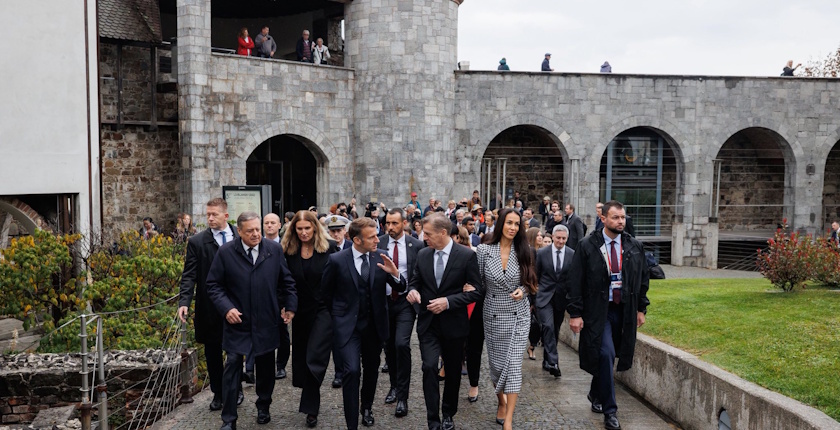
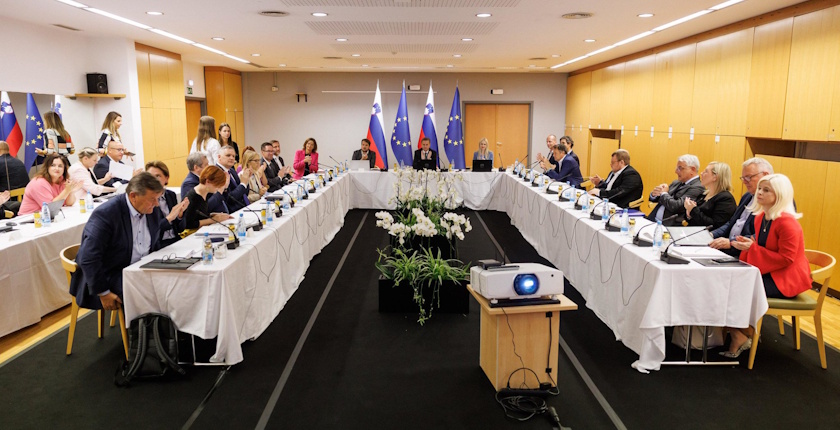
Slovenia and France have signed a declaration on cooperation in the nuclear energy sector. The document was signed during French President Emmanuel Macron’s visit to Slovenia.

Slovenia has been developing a project to build a new unit at the Krško nuclear power plant for several years. In early September, the project’s developer, GEN Energija, said that three reactor projects offered by EDF and Westinghouse had been assessed as technically feasible for the site of the future Krško 2 nuclear power plant.

According to the Slovenia Times, Macron and Slovenian Prime Minister Robert Golob committed to closer cooperation between the two countries, particularly in the economy and energy.

 Golob: France is a European nuclear power

The two countries signed an agreement on cooperation in the field of education and a declaration of intent to establish long-term cooperation in the nuclear energy sector.

According to Golob, France is a European nuclear power that is building its carbon-free future based on the development of this energy source. There is good cooperation between experts from the two countries, he recalled at a joint press conference in Slovenia’s capital, Ljubljana, stressing that the declaration opens up new opportunities.

Golob said he is convinced that between two equally qualified bidders for Krško 2, Slovenia will be able to choose the solution that best serves its long-term interests and that gives regional importance to the project.

The potential new power plant is not intended only for Slovenia

Krško 1 was built using US technology, but Golob also sees certain advantages in the French bidder, EDF. He revealed that the potential new power plant is not intended only for Slovenia, but would also enable Southeastern Europe to meet a significant portion of its electricity needs.

In October 2024, Slovenia canceled a referendum on building its second nuclear unit. However, GEN Energija continued to develop the project.

In July this year, the Ministry of Natural Resources and Spatial Planning initiated the preparation of a spatial plan for the second unit of the Krško nuclear power plant and invited the public to submit comments.

by in News

UPDATE: CEO Dejan Paravan leaving Slovenian state-owned GEN energija

CEO of Slovenian state-owned energy utility GEN energija Dejan Paravan has resigned. According to a news report, he is joining NGEN, but the company still didn’t comment on the speculation.

GEN energija, which is developing a project for Slovenia’s second nuclear power plant, is about to appoint a new CEO. After necenzurirano.si reported that Dejan Paravan, the current head of the government-controlled energy company, has quit, the supervisory board officially acknowledged that he submitted his resignation on October 10.

The news website also learned that he would assume a position at privately owned NGEN, which didn’t issue any statements yet on the matter. The same media outlet later wrote that Paravan has agreed to step down at the end of November.

Nada Drobne Popović and Bruno Glaser, the other two members of the board, allegedly offered their resignations and they were rejected.

Paravan has been a close associate of Prime Minister Robert Golob for two decades. The government appointed him as CEO in October 2022.

GEN energija holds the Slovenian half of the Krško nuclear power plant (NEK or, in Slovenian, JEK), and owns hydropower plant operators Savske elektrarne Ljubljana (SEL) and Hidroelektrarne na Spodnji Savi (HESS), and the Brestanica gas-fired power plant.

GEN-I, which was co-founded by Prime Minister Golob, is also part of GEN Group. He was the firm’s CEO until 2021.

As GEN energija’s chief, Paravan is responsible for the NEK 2 (JEK 2) project, for another nuclear power plant. The investment is valued at between EUR 9 billion and EUR 16 billion.

A referendum was scheduled about the proposal, but the National Assembly canceled the vote a year ago.

NGEN builds and operates battery energy storage systems (BESS), and develops software and hardware for running decentralized systems, cybersecurity and access to all segments of the energy market.

Of note, both Dejan Paravan and Co-Founder and CEO of NGEN Group Roman Bernard spoke at this year’s Belgrade Energy Forum (BEF 2025), organized by Balkan Green Energy News.

by in News

Bulgaria to start talks with developers of small modular reactors

Bulgaria should discuss the possibility of installing small modular reactors on its territory with companies developing the technology, according to Minister of Energy Zhecho Stankov. In his view, it is a logical step after the country signed a memorandum of understanding with the United States on nuclear energy and assistance in preliminary studies.

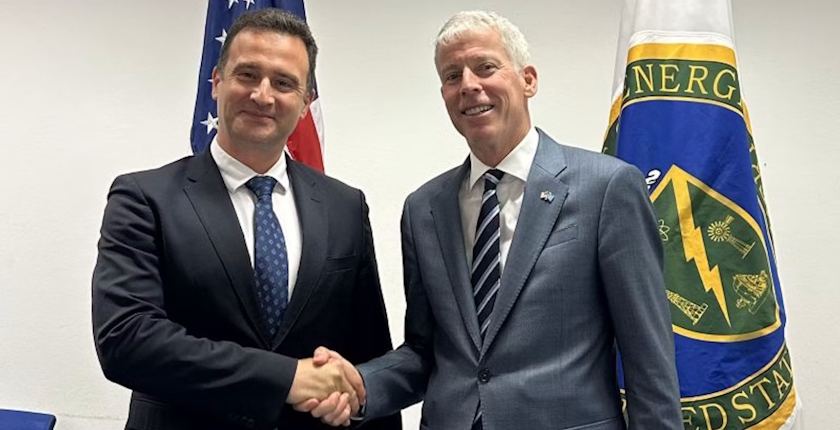
Minister of Energy of Bulgaria Zhecho Stankov said that during his forthcoming visit to Ontario, Canada, he is going to a site where the first four small modular reactors (SMRs) are being built. Last week, he signed a memorandum of understanding with United States Secretary of Energy Chris Wright reaffirming the objectives of the bilateral agreement to strengthen cooperation in civil nuclear energy use.

Bulgaria’s government considers the SMR technology a tool for long-term stability, predictability and affordable low-emission electricity production.

“After signing a joint statement last week with the US Secretary of Energy Chris Wright on that country’s assistance for sites on Bulgarian territory for small modular reactors – it is a new, modern technology, very flexible, which attracts investments in data centers and artificial intelligence centers – the normal next step for the Bulgarian side is to start talks with potential companies that develop this type of technology,” Stankov told reporters in New York City.

US to assist Bulgaria in prefeasibility studies

The memorandum envisages cooperation in the development and deployment of innovative technologies for nuclear reactors, aimed at enhancing Bulgaria’s economic security and energy resilience with the support of the US Department of Energy’s Office of Nuclear Energy.

Minister Stankov called for regional cooperation to reduce vulnerabilities and form a sustainable energy market

The Balkan country would benefit from the expertise of US laboratories in conducting preliminary studies of the feasibility and suitability of potential sites for the deployment of small modular reactors. The US Trade and Development Agency has said it is prepared to fund the assessment of SMR technologies to identify the ones most adequate for Bulgaria, the ministry added.

Speaking in New York City, Stankov also outlined the priorities – new energy corridors, investments in green energy and balancing capacities including pumped storage hydropower plants and battery energy storage systems (BESS), the projects for units 7 and 8 at the Kozloduy nuclear power plant, and regional cooperation for reducing vulnerabilities and forming a sustainable energy market.

Prime Minister Zhelyazkov endorses both rival projects for electricity corridors

Notably, Prime Minister Rosen Zhelyazkov said that he spoke with President of Azerbaijan Ilham Aliyev about the supply of green energy from the Caspian region to Europe. The plans involve 6 GW from Azerbaijan or, potentially, 10 GW if Kazakhstan and Turkmenistan are involved, he added

The proposed subsea power interconnector under the Black Sea is increasingly realistic and so is an onshore corridor from Armenia and Georgia through Turkey, according to Zhelyazkov.

by in News

Serbia in talks with Rosatom on nuclear power plant project

Serbian authorities and Rosatom have begun talks on the nuclear power plant construction project, according to the Ambassador of Serbia to Russia Momčilo Babić.

Serbia recently completed the preliminary technical study on the peaceful use of nuclear energy in the country. However, the country is still a long way away from the potential construction of a nuclear power plant, according to Minister of Mining and Energy of Serbia Dubravka Đedović Handanović.

So far, Serbia has established contacts or started cooperation on nuclear energy with China, France, Russia, Slovenia, South Korea, and the United States.

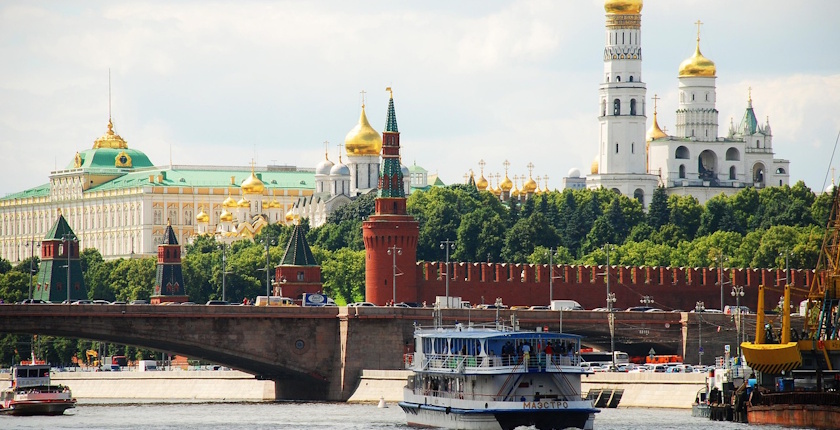
Serbia is seriously discussing the issue with Rosatom, the country’s Ambassador to Russia Momčilo Babić told Izvestia.

Babić: There’s no better company than Rosatom

He underlined that there’s no better company in the world to build a nuclear power plant. Babić is confident that there will be progress in the coming years, as he argues that Serbia needs electricity. The country will “do it anyway,” the ambassador added.

According to Igor Yushkov, an expert at the Financial University and the National Energy Security Fund, it is possible that Russia will also provide Belgrade with a preferential loan, in line with its standard practice.

Nuclear energy is experiencing a global renaissance, and the states created after the Socialist Federal Republic of Yugoslavia fell apart in the early 1990s are no exception.

US-based nuclear power startup Aalo has begun the construction of an extra-modular reactor, a type of modular reactor, which could introduce big changes in the sector.

Everyone wants to build a nuclear power plant

As for Europe, Germany has changed its mind on nuclear energy in the continent, agreeing with France to work together on shaping a common European energy policy. The strategy would include nuclear power as a low-carbon energy source.

Slovenian authorities are developing the Krško 2 project. A few days ago, news emerged that the country sent an official proposal to Croatia to jointly build the facility. However, Slovenia denied that it has made such an offer.

Croatia, on the other hand, reiterated that it is interested in building a nuclear power plant on its territory.

Serbia has recently signed a memorandum of understanding on cooperation in the field of nuclear energy with South Korean company Korea Hydro & Nuclear Power.

by in News

Slovenia denies sending offer to Croatia for joint construction of Krško 2 nuclear power plant

Slovenian authorities denied a report that they sent Croatia an offer for the joint construction of the Krško 2 nuclear power plant.

Earlier, Croatian Novi List reported that Slovenia has sent Croatia an official proposal to build a new unit in the existing nuclear power plant Krško.

The model is far less favorable for Croatia than the current management model of the Krško nuclear power plant, the media outlet noted.

However, the office of Slovenia’s Prime Minister Robert Golob, Minister of the Environment, Climate and Energy Bojan Kumer, and GEN Energija, the company in charge of the project, denied proposing such an offer.

Golob has recently informed Plenković about preparations for Krško 2

At the last bilateral meeting with Croatian Prime Minister Andrej Plenković in Vinica, Prime Minister Golob informed him about activities related to preparations for the decision on the construction of a new nuclear power plant in Krško, the prime minister’s office added.

Minister Kumer stressed that Slovenia hasn’t made any offer to Croatia. He noted that Slovenia has only just begun spatial planning for a potential new nuclear power plant.

Kumer: Slovenia must first do its homework

Slovenia first needs to do its homework and set a business model, and then it could begin talks about a joint venture, Kumer added.

According to Novi List, experts called the proposal inappropriate. The Slovenian side allegedly offered Croatia a 25% stake, compared to the current 50% in the Krško nuclear power plant.

Moreover, Croatia would only receive the profit from the sale of electricity equivalent to its ownership in the power plant, according to the article. The country now gets 50% of the electricity produced in the existing Krško nuclear power plant.

Slovenia’s state-owned power company GEN would control 25% of the project, while the Slovenian government would hold 51%, the news website learned.

​ Šušnjar: The country should build a nuclear power plant on its territory

Of note, Croatian Economy Minister Ante Šušnjar repeated last week that his country should build a nuclear power plant on its territory.

He noted that several sites were being considered, and recalled that when Croatia was part of the Socialist Federal Republic of Yugoslavia, which fell apart in the early 1990s, the authorities were examining locations in Ivanić Grad, Erdut, and Vir island.

Also, there is new speculation that the site of the Plomin coal-fired thermal power plant is a potential location for. Šušnjar confirmed that the facility is scheduled to be closed in 2032 or 2033.

by in News

Croatia considering nuclear power plant on its territory – minister

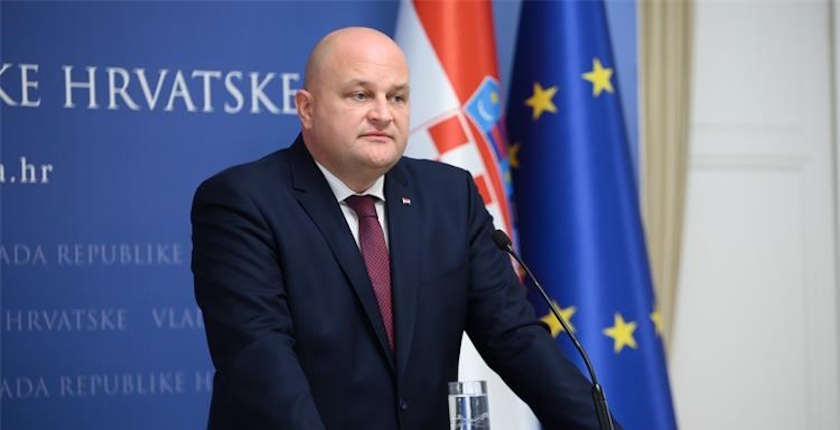
Croatia is considering the possibility of building a nuclear power plant on its territory, according to Minister of Economy Ante Šušnjar.

Experts will decide whether it will be small modular reactors (SMRs) or a conventional nuclear power plant, Ante Šušnjar stressed, as quoted by Novi List.

He opined that building a nuclear power plant is a geopolitical and security gain for a country. The minister suggested that Croatia could apply for funds from the European Union’s Multiannual Financial Framework – the seven-year budget.

Three locations were considered in former Yugoslavia

Šušnjar said multiple sites were being considered for the nuclear plant, but he wouldn’t reveal details. He recalled that when Croatia was part of the Socialist Federal Republic of Yugoslavia, which fell apart in the early 1990s, the authorities were examining locations in Ivanić Grad, Erdut, and Vir island. The last of the three was rejected due to tourism.

Croatia and Slovenia jointly operate the Krško nuclear power plant, and cooperation on building a second unit is also possible.

Meetings about cooperation have already taken place with the US

Šušnjar’s claims that everyone in the world and the EU considers nuclear energy a low-carbon source for the transition to renewables. He added it is baseload energy that can power the production of green hydrogen.

In February, the ministry established a working group for analysis and legislation that could enable the introduction of nuclear energy in the country Croatia has already held meetings with United States officials on possible cooperation in the nuclear energy sector.

Of note, just a week ago, Germany and France agreed to work together on shaping a common European energy policy that would include nuclear power as a low-carbon energy source.

by in News

Von der Leyen: EU needs more homegrown renewables with nuclear as baseload

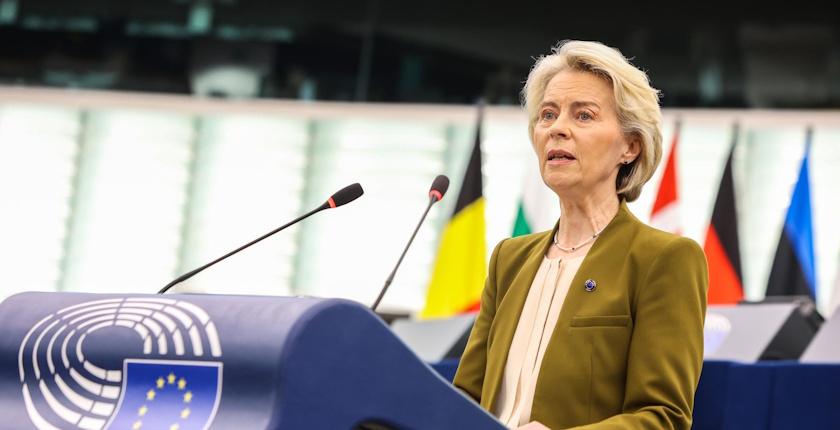
European Commission President Ursula von der Leyen delivered her 2025 State of the Union address at the European Parliament in Strasbourg. She said the single energy market would be completed and pointed out that clean homegrown energy is a tool to lower energy prices.

Ursula von der Leyen said the European Union’s greatest asset is the single market, but that it remains incomplete. The IMF, she noted, has estimated that the internal barriers within the single market are equivalent to a 45% tariff on goods, and 110% on services.

Most gaps are in three domains: finance, energy, and telecommunications.

“We need clear political deadlines. This is why we will present a single market roadmap to 2028. On capital, services, energy, telecoms,” she stated.

Energy bills are still a real source of anxiety for millions of Europeans

The EU’s top official said the commission would put forward a series of packages on affordability and the cost of living. One would be for energy.

Von der Leyen recalled that the EU managed to stabilize prices and secure supply during the energy crisis, and insisted that the 27-member bloc is now on the path to energy independence.

But, she told EU lawmakers, energy bills are still a real source of anxiety for millions of Europeans.

Von der Leyen unveiled an initiative called Energy Highways

“We know what drove prices up: dependency on Russian fossil fuels. So it is time to get rid of dirty Russian fossil fuels. And we know what brings prices down: clean homegrown energy. We need to generate more homegrown renewables – with nuclear as a baseload,” Von der Leyen stressed.

She reiterated that the commission would propose a grids package to strengthen infrastructure and speed up permitting.

Von der Leyen unveiled an initiative called Energy Highways. “We have identified eight critical bottlenecks in our energy infrastructure. From the Øresund Strait to the Sicilian Canal. We will now work to remove these bottlenecks one by one,” the European Commission president asserted.

by in News

EDF, Westinghouse complete technical feasibility studies for Krško 2 nuclear power plant

Three reactor projects offered by EDF and Westinghouse have been assessed as technically feasible for the site of the future Krško 2 nuclear power plant, according to technical feasibility studies presented by GEN Energija during the announcement of its 2024 results. GEN Group ended last year with a EUR 186 million profit, down 9% from 2023, when it posted a profit of EUR 204.5 million.

GEN Energija, the parent company of GEN Group, noted that the Krško 2 (JEK2) project is going ahead according to the previously confirmed timeline. In October 2024, Slovenia canceled a referendum on building the second nuclear unit.

In January, it was announced that Westinghouse Electric and EDF would conduct technical feasibility studies for the deployment of their reactor models.

In July, the Ministry of Natural Resources and Spatial Planning initiated the preparation of a spatial plan for the second unit of nuclear power plant Krško and invited the public to submit comments.

GEN Energija has now presented the results of the technical feasibility studies. The reactor projects – EDF’s EPR or EPR1200 and Westinghouse’s AP1000 – were found to be technically feasible for the JEK 2 site.

Planinc: Both technologies include cooling by a natural draft cooling tower

According to Vinko Planinc, head of GEN Energija’s New Nuclear Build Division, the studies confirm that the project enables safe and efficient installation within the existing environment, taking into account flood and earthquake protection requirements.

The expected operational lifespan of both proposed reactors is 60 years, but it could be extended to 80 years if conditions are met, he added.

The location will also allow for the appropriate storage of used nuclear fuel, as well as low- and intermediate-level radioactive waste. Both technologies, he said, use natural draft cooling towers – the most environmentally friendly solution, minimizing the impact on the Sava River and creating the smallest carbon footprint.

The estimated investment from the studies matches the amount in GEN Energija’s study presented in 2024, which projected that JEK 2 would cost at least EUR 9.3 billion for 1,000 MW.

The financing method significantly affects the project’s viability

Regarding an analysis of the JEK2 investment by NGO Mladi za Podnebno Pravičnost (Youth for Climate Justice), Jan Lokar, lead engineer at GEN Energija, said the company estimates the minimum electricity price needed for the project’s economic feasibility at EUR 70.2 per MWh, compared to the NGO’s estimate of EUR 107.

The differences arise primarily from varying assumptions about capital costs, he stressed. GEN Energija expects state support in financing, while the NGO estimate assumes private capital investment.

Paravan: 2024 results exceed planned targets

Photo: GEN Energija

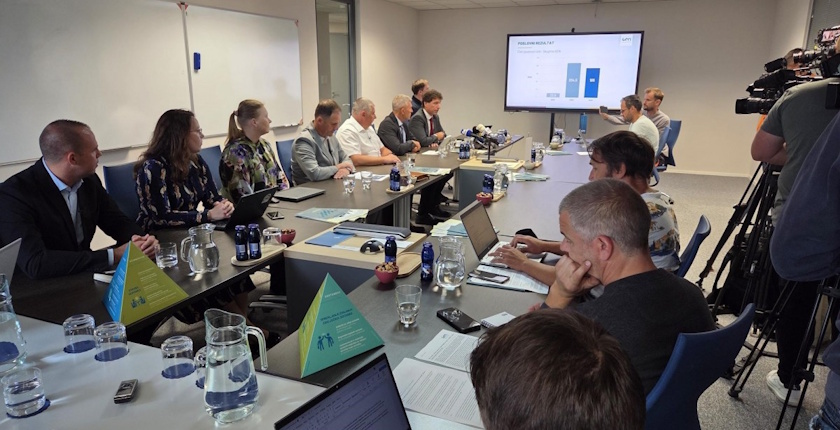
GEN Energija CEO Dejan Paravan presented GEN Group’s business results for 2024. The group had revenues of EUR 2.2 billion, a net profit of EUR 186 million, and added value per employee of EUR 276,000, all exceeding the annual financial targets, he added.

“All our production units operated safely and without major interruptions, reflecting years of investment in knowledge, technology, and maintenance. The important role of GEN Group in Slovenia’s energy supply is confirmed by the fact that in 2024, we reliably supplied Slovenian consumers exclusively with low-carbon electricity at affordable and predictable prices,” Paravan noted.

Alongside the JEK2 project studies, the company said, a small modular reactor (SMR) study is underway, aiming to identify possible locations for this type of reactor in Slovenia.

Photo: GEN Energija