by in News

Serbia launches construction of two transmission lines as part of BeoGrid 2025 project

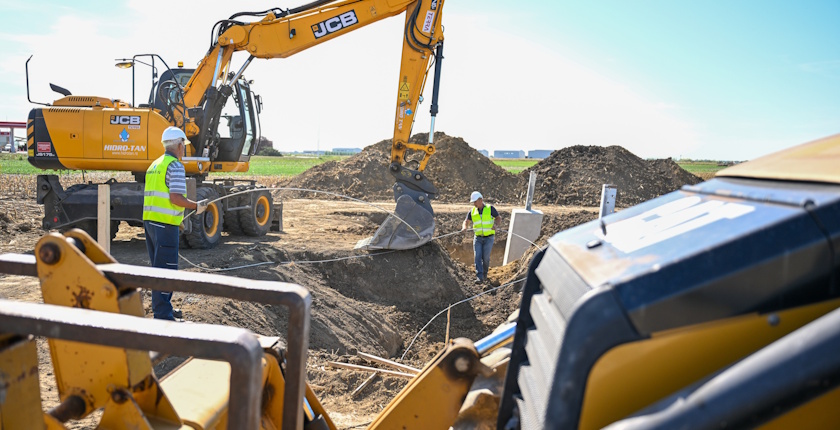
Serbia has launched works as part of the BeoGrid 2025 project, aimed at improving the power transmission infrastructure in Serbia, the region, and Europe, as well as facilitating electricity offtake from renewable energy power plants in the South Banat region of Vojvodina.

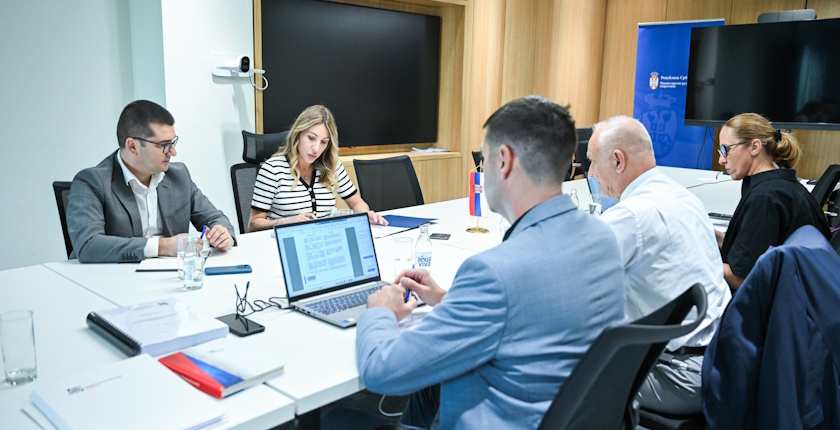
The BeoGrid 2025 project, worth EUR 205 million, comprises six distinct components, according to Radoš Popadić, Assistant Minister of Mining and Energy in charge of the power engineering sector. He attended the start of works in Belgrade’s Surčin suburb together with Jelena Matejić, the general manager of Serbia’s transmission system operator, Elektromreža Srbije (EMS).

“Construction is being launched today on two new high-voltage transmission lines that will connect Belgrade and Novi Sad, with a total value of around EUR 22 million,” he said, adding that work on a substation in Belgrade is also expected to begin soon.

The project is valued at EUR 205 million

The substation will be connected to the Čibuk 1 substation [wind farm Čibuk 1] by a new 83-kilometer transmission line, ensuring a stable transmission of electricity produced from renewable energy sources in South Banat, as well as reducing strain on the existing network, Popadić explained.

Radoš Popadić and Jelena Matejić (photo: Ministry of Mining and Energy/Danilo Mijatović)

Two single-circuit 400 kV transmission lines, intended for connecting transmission line 450 (switching station Mladost – substation Novi Sad 3) to the future 400/110 kV substation Beograd 50, will have a total length of 25.5 kilometers.

EMS General Manager Jelena Matejić said that BeoGrid 2025 is of particular importance for Serbia, but also part of the broader North Continental South East (CSE) Corridor project, which includes doubling the existing 400 kV interconnection between hydropower plant Đerdap 1 and Portile de Fier in Romania.

Matejić: The North CSE Corridor is part of the European ten-year network development plan, TYNDP 2020

The North CSE Corridor project is part of the European ten-year network development plan (TYNDP 2020) and the regional investment plan (RgIP 2020). It is supported by the Romanian transmission system operator, Transelectrica, as well as the German development bank KfW, with a feasibility study.

The North CSE Corridor is of regional importance as it increases the transmission capacity between Serbia and Romania, helping create an integrated European electricity market, Matejić pointed out, adding that BeoGrid 2025 is also important for additional backup power supply for the EXPO 2027 project.

The project aims to enable the transmission of electricity generated from renewable sources in the South Banat region and to ease the load on the 220/110/35 kV Beograd 5 substation, which supplies a large part of Belgrade, particularly parts of New Belgrade and Zemun, EMS stated.

Popadić: The total value of all planned projects is EUR 1 billion

Photo: Ministry of Mining and Energy/Danilo Mijatović

Radoš Popadić recalled that large investments in the transmission network are underway.

“Serbia has recognized the importance of investing in the power transmission system to enable the integration of more renewable energy capacity, increase the exchange of electricity with neighbors, and ensure a secure, stable, and efficient supply to consumers. That is why we launched investments in interconnection with the transmission systems of eight neighboring countries, with EUR 500 million to be invested in priority projects by the end of the decade. The total value of all planned projects will amount to around one billion euros,” said Popadić.

BeoGrid 2025 is financed partly from the Serbian budget, as well as from EMS’ own funds. The project consists of six distinct components, or investments:

  • 400/110 kV substation Beograd 50;
  • Two-circuit 400 kV transmission line between substation Beograd 50 and Čibuk 1, including the installation of a 400 kV bay at switching station Čibuk 1;
  • Single-circuit 400 kV transmission lines for the integration of transmission line 450 (switching station Mladost – substation Novi Sad 3) into substation Beograd 50;
  • Two double-circuit 110 kV transmission lines for the integration of transmission line 104/8 (substation Stara Pazova – substation Inđija 2) into substation Beograd 50;
  • two double-circuit 110 kV transmission lines for the integration of transmission line 1178 AB (substation Beograd 5 – substation Beograd 9) into substation Beograd 50;
  • Double-circuit 110 kV cable between substation Beograd 50 and substation Beograd 49 (Airport).

Photo: Ministry of Mining and Energy/Danilo Mijatović

by in News

Croatian Bank for Reconstruction and Development secures EUR 50 million for firms for green investments

The Croatian Bank for Reconstruction and Development has secured EUR 150 million from the European Investment Bank, of which at least one third is dedicated to green investments by businesses in the country.

A new finance contract with the European Investment Bank (EIB) provides EUR 150 million to finance projects of mid-caps, large private companies and public entities in Croatia, the Croatian Bank for Reconstruction and Development (HBOR) said.

The loan particularly promotes green investments. It is the first tranche of a new EUR 350 million financing agreement between the EIB and HBOR to expand access to financing for Croatian companies.

The package will be deployed via direct lending by HBOR and through commercial banks and other financial intermediaries.

At least 30% of the financing is for projects contributing to green transition

At least 30% of the financing is for projects contributing to green transition, including investments in energy efficiency, renewable energy sources, sustainable construction and clean transport, Croatia’s bank noted.

According to EIB Vice-President Teresa Czerwińska, the initiative will expand financial support to a broad range of Croatian companies and public entities, with a strong emphasis on climate action and sustainability.

The operation is structured as a multi-beneficiary intermediated loan (MBIL). In addition to advancing the European Union‘s goals to promote climate action and environmental sustainability, it will help foster economic activity and social cohesion across Croatia, HBOR said.

The EIB and HBOR have concluded 28 finance contracts worth EUR 3.8 billion overall

HBOR will ensure, as it has so far in cooperation with EIB, that all end-beneficiaries comply with relevant national and EU legislation, with a special focus on preserving environmental, climate and social standards.

The new financing further reinforces HBOR’s role in supporting green and climate-resilient projects, contributing to the achievement of the strategic goals of Croatia and the European Union for the ​​green transition, according to Hrvoje Čuvalo, President of the Management Board of HBOR.

EIB and HBOR have concluded 28 finance contracts so far, worth EUR 3.8 billion, for financing more than 8,000 projects across Croatia.

by in News

Šahmanović: Montenegro expects first large private wind and solar plants to be online in 2026

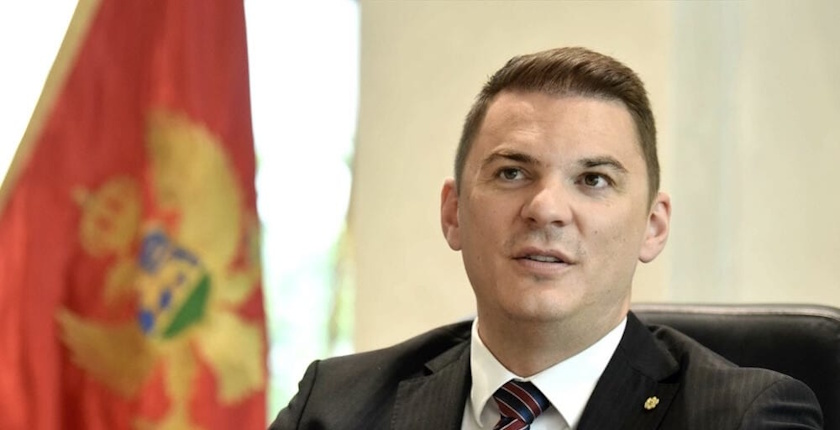
Over the past year, Montenegro has adopted two reform laws – on energy and on renewable energy sources – and scheduled its first auctions for market premiums. Admir Šahmanović, Minister of Energy and Mining, told Balkan Green Energy News that the new regulations fully align the sector with the European Union acquis, sending a clear signal to investors that Montenegro now has a stable regulatory framework and market-based prices that safeguard citizens’ interests. Becoming part of the European energy space, he added, is not only a political goal but also the path Montenegro should follow to ensure cleaner and more secure energy for future generations.

Admir Šahmanović served as Minister of Mining, Oil and Gas in the government of Prime Minister Milojko Spajić. In February this year, he became the coordinator of the Ministry of Energy, and since April, he has served as Montenegro’s Minister of Energy and Mining. In an interview with Balkan Green Energy News, Šahmanović discusses his plans to mobilize larger investments, Montenegro’s timeframe for coupling its electricity market with Italy and the EU, the ministry’s steps to prepare the country for the EU’s carbon border tax, and plans for investments in the natural gas sector.

What are the key innovations introduced by Montenegro’s law on renewable energy sources?

The law on renewable energy sources introduced, for the first time, a clear, competitive and fully transparent support mechanism for green energy production – an auction scheme.

Over the past months, we have worked hard to ensure the law really takes hold. We have prepared about 15 by-laws that enabled us to launch the first auctions. I believe this is one of the most important contributions of the new law, as it sends a clear message to investors that Montenegro has a stable framework and market-based prices that safeguard citizens’ interests.

In this way, we are laying a solid foundation for a rapid energy transition, which is both our strategic choice and our responsibility to future generations.

Montenegro has also adopted a new law on energy. What does this regulation bring?

The Law on Energy is our umbrella regulation, providing a framework that fully aligns the sector with the EU acquis. It introduces stricter standards, greater protection of end consumers, better competition, and stronger institutional oversight.

It also opens Montenegro’s energy sector to the European market and creates a stable, predictable environment. This is important not only for investors but also for all consumers, as people are ultimately the ones affected by any change in the system.

You stated that these reforms set a clear strategic path for Montenegro, which sees its energy future within the European market. What will this future bring to Montenegro, its economy, and its citizens?

Our ambition is to make Montenegro a country with clean energy and a stable system. Being part of the European energy space ensures greater security of supply, lower costs in the long term, and a strong inflow of investments. Our economy will have access to a larger market, and our citizens will benefit from safe, sustainable, and environmentally friendly energy.

It is not just a political goal – it is a path I want us to follow in our development, so that we leave our children a country with cleaner and more secure energy.

Admir Šahmanović visiting northern Montenegro with EPCG Director Ivan Bulatović

Applications have been invited for Montenegro’s first auctions for market premiums. What benefits do you expect from auctions?

The auction mechanism allows us to select the most favorable and serious investors through a fair and competitive process. Projects are implemented without budget subsidies and with minimal risk to the state.

We expect auctions to ensure new capacities, create jobs, improve the use of our natural resources, and strengthen overall energy stability. These are the benefits citizens will feel, both on their electricity bills and through new opportunities that will open up in local communities.

Investor interest in wind and solar is strong, with requests to build power plants totaling around 5.5 GW. When do you expect these projects to be realized?

Such strong interest is the best proof that the reforms are yielding results. We expect the first large projects to be online in 2026, with significant capacities ready by 2030. Transparent procedures, good cooperation with local communities, and improved grid infrastructure will be key to making these investments a reality.

What are the main obstacles to these projects? How to remove them?

The biggest challenges are administrative procedures, transmission network limitations, and spatial planning documents. We are working to address them through interdepartmental cooperation, digitalization of processes, and the state’s commitment.

We are strengthening capacities, speeding up permitting, and modernizing regulations. I want to ensure that investors coming to Montenegro know they can work in a clear, predictable, and fair environment.

Admir Šahmanović at the ministerial panel at Belgrade Energy Forum 2025 in May

Preparations are underway to link Montenegro’s electricity market with the EU via Italy, with 2027 featuring as the target year.

Yes, we are working diligently on institutional and market integration. This involves harmonizing the rules, passing the remaining by-laws, and preparing the market operator. With the support of the EU and the Energy Community, I am confident that 2027 will remain the year when we will fully open our market to Europe.

All countries in the region are facing CBAM. How prepared is Montenegro?

CBAM will change the rules for electricity exports to the EU, bringing new costs as well as opportunities. We are aware that it will be a financial burden on our economy, but that is precisely why we view it as an additional incentive to accelerate the implementation of renewable energy projects and increase our own production of green electricity.

We are working on adjusting the regulatory framework, harmonizing economic activities, and ensuring the largest possible share of clean energy to remain competitive and maintain full access to the European market while reducing emissions.

Montenegro also has ambitious plans in the natural gas sector – a gas pipeline, a terminal for liquefied natural gas (LNG), and gas-fired power plants. How far along are these projects?

I see gas as a development opportunity – to ensure greater security of supply, diversification, and new opportunities for the economy. But I also believe that such strategic projects must be developed through dialogue with local communities, with full respect for their views.

We are currently preparing and developing the Ionian Adriatic Pipeline (IAP) project and assessing the potential for an LNG terminal. We are doing this responsibly, one step at a time, and in line with the EU’s energy transition goals.

by in News

Serbia’s EPS reports EUR 234 million profit for first half of 2025

Elektroprivreda Srbije achieved a profit of RSD 27.4 billion (EUR 233.8 million) in the first half of 2025.

The financial result of the state-owned Elektroprivreda Srbije (EPS) is lower than in the same period of 2024, when profit amounted to RSD 32.8 billion (EUR 280.3 million). The company posted RSD 26.1 billion (EUR 222.8 million) in net income for the entire year.

The Ministry of Mining and Energy said the shareholder assembly of the Serbian joint stock company EPS has adopted the report on the implementation of its three-year business plan for the first six months of 2025, declaring a profit of RSD 27.4 billion (EUR 233.8 million).

Minister of Mining and Energy Dubravka Đedović Handanović, the sole shareholder assembly member, noted that the trend of continuous production and financial stability of the company has continued, and highlighted the importance of the results achieved in the mining sector.

The priority is to prepare machinery for the new Radljevo mine in the Kolubara basin

Coal production exceeded the plan by 8%, but more importantly, the year-over-year rise in coal production was 7%, according to Đedović Handanović.

However, in her words, it is crucial to continue the same pace, which is why great effort must be put into completing the machinery preparation project for the new Radljevo mine in Kolubara, so that overburden production can begin next year.

Reduced costs for coal procurement from outside the company

She said that through careful management of the electricity portfolio, coal stocks in depots have been maintained at a high level, around 1.68 million tons. The costs of purchasing coal from third parties are RSD 1.35 billion (EUR 11.5 million) lower than planned and significantly lower than in the past three years, Đedović Handanović said.

The minister highlighted the fact that hydrology has been unfavorable for the second consecutive year, affecting electricity production.

She recalled that in the first quarter of this year, the Petka solar power plant in Kostolac was put into trial operation. Soon, the blades of EPS’s first wind farm will be spun for testing, she Đedović Handanović added.

EPS investing in a subsidiary in Kosovo and Metohija

“It is essential to improve the management of investment activities, especially considering that work is underway on the most significant energy project – the construction of the Bistrica pumped storage hydropower plant. At the same time, it is important to continue efforts to reduce operational costs and improve customer relations,” the minister stressed.

She revealed that as part of the company’s transformation process, key performance indicators (KPIs) were introduced for executive and middle management.

The EPS assembly also approved the decision to invest in the capital of Elektrosever, the company’s subsidiary in Kosovo and Metohija.

That way it enables supplying Serbia’s citizens in four municipalities in the province’s north, she explained. More than 45% of consumers got smart meters by now from Elektrosever, the ministry stressed.

by in News

Bulgaria, Romania offer much higher renewable energy project returns than Greece – HELLENiQ Energy

The newly purchased wind and solar projects in Romania and Bulgaria will bring much higher returns than ones in the Greek market, claims George Alexopoulos, Deputy Chief Executive Officer of HELLENiQ Energy.

HELLENiQ Renewables Romania, operating under Greece-based HELLENiQ Energy, bought a wind project in Scânteiesti in Galaţi in eastern Romania, with a licensed capacity of 96 MW, and a wind project in the Vaslui region, with a licensed capacity of 186 MW.

In addition, HELLENiQ Energy completed the purchase of a photovoltaic project of 123 MW in Haskovo region in southern Bulgaria, which marks the company’s entry into the country.

The company is facing delays in the Greek renewables market

“We achieved deals on three new projects at a ready-to-build phase in Romania and Bulgaria, which are effectively consistent with our announced strategy and they allow us to have better visibility of the achievement of the interim target of 1.5 GW in operation in the next few years,” the company’s CEO Andreas Shiamishis stressed at the presentation of the financial results from the second quarter and first half of 2025.

Unfortunately, he added, when it comes to the Greek renewables market, the company is facing delays, primarily because of Greek connection terms clarity.

The three new projects are much less susceptible to future curtailment

In the view of George Alexopoulos, Deputy CEO and GM Group Strategic Planning & New Activities, the three said projects are much less susceptible to future curtailment. They also bring notably much higher financial returns than what the company is observing in the Greek market, he said.

Alexopoulos stressed the construction of one project in Romania is starting immediately and that the company expects all the assets to be operational by 2028.

“We expect returns of 10% to 12%, which is considerably higher than Greece, and capex of approximately EUR 0.5 billion, which will be financed on a project finance basis, for the most part,” Alexopoulos explained.

by in News

INVL fund secures loan for 71 MW of solar projects in Romania

INVL Renewable Energy Fund I has secured a EUR 29.3 million loan for the installation of solar power plants with a capacity of 71 MW in Romania.

INVL Renewable Energy Fund I, managed by INVL Asset Management, invests in renewable energy projects.

The new EUR 29.3 million loan agreement has been signed with Kommunalkredit Austria AG, the fund revealed.

It is its second loan to the fund. In November 2023, the bank approved EUR 25 million for the construction of solar power plants in Romania.

Kommunalkredit’s long-term support plays an important role in accelerating the transition to green energy in the region, according to Liudas Liutkevičius, Managing Partner at INVL Renewable Energy Fund I.

INVL Renewable Energy Fund I is focusing on the Polish and Romanian markets

Construction of the facilities of an overall 71 MW in Dolj County is scheduled for completion by the end of September next year, according to the update. It is the fund’s third large-scale solar energy project in Romania.

INVL Renewable Energy Fund I is focusing on the Polish and Romanian markets, having a combined portfolio of projects in development of 389 MW.

In Romania, the fund is planning eight photovoltaic units with a total capacity of 356 MW. Its future solar parks in Poland would have 32 MW overall. All are due to be completed by the end of 2027.

Ponomarenko: The bank is committed to enabling the energy transition in high-growth markets

Investments in Romania and Poland are expected to exceed EUR 250 million altogether, the fund added.

Konstantin Ponomarenko, a Senior Structurer at Kommunalkredit Austria, said the development of solar energy infrastructure in Romania reflects both the fund’s strategic vision and the bank’s commitment to enabling the energy transition in high-growth markets.

The transaction underlines Kommunalkredit’s dedication to delivering bespoke financing solutions that empower sustainable development across Europe, he added.

by in News

Montenegro’s EPCG, NTE Energy sign memorandum of understanding

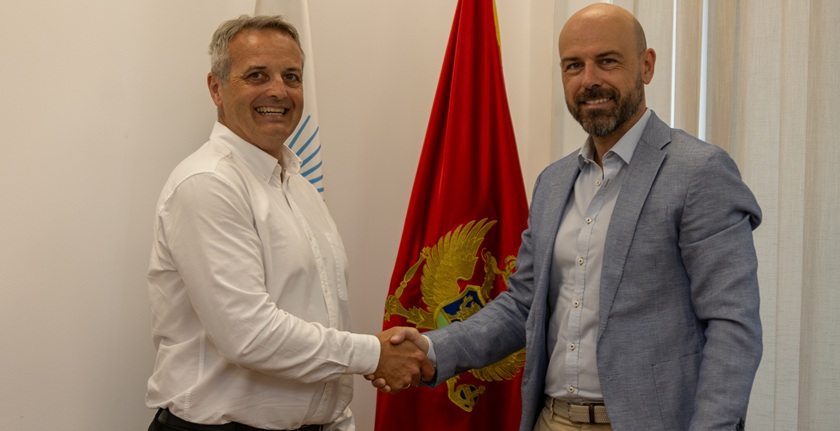
Power utility Elektroprivreda Crne Gore and Norwegian company NTE Energi AS have signed a memorandum of understanding confirming their mutual commitment to intensifying cooperation in the renewable energy sector in Montenegro.

The memorandum of understanding envisages the exchange of information, coordination of activities, and consideration of specific projects through joint venture Zeta Energy, established by state-owned Elektroprivreda Crne Gore (EPCG) and NTE Energi.

Zeta Energy operates small hydropower plants Glava Zete and Slap Zete, operational since 2021.

Bulatović: The MoU is an important step in EPCG’s ongoing transformation

The memorandum was signed by EPCG’s CEO Ivan Bulatović and NTE Energi’s CEO Inge Forseth.

According to Bulatović, the focus of the cooperation between the two companies will be the development of the hydropower potential of the rivers Ćehotina, Ibar, and Morača, with the possibility of expanding it to other renewable energy sources.

In the search for stable partnerships and the development of domestic renewable capacities, the memorandum represents a significant step forward in EPCG’s transformation, Bulatović asserted.

In his words, collaboration with a renowned company like NTE Energi aligns with EPCG’s goals.

Forseth: Zeta Energy provides a platform for implementing concrete projects

Inge Forseth, NTE Energi CEO, underlined that his company has an extensive track record in energy and decarbonization. He described Montenegro as an attractive market for sustainable energy development.

By signing the MoU, the two firms are opening a new chapter in their cooperation, he stressed.

Montenegro has enormous natural potential, and Zeta Energy serves as a platform to implement concrete projects for the benefit of the local community and partners, according to Forseth.

EPCG has four HPPs in the pipeline

EPCG recently said it planned to include an international partner in the development of the Komarnica hydropower project. The company cited the experiences of Norway, Austria, and France.

The company has four hydropower projects in the pipeline: Komarnica, Kruševo, Ćehotina, and Sutorina. The first two are the most advanced. Kruševo and Ćehotina could be implemented with EDF.

by in News

Sunotec, Sungrow sign 2.4 GWh battery storage agreement

China-based Sungrow and Bulgarian-German company Sunotec have agreed to install 2.4 GWh of battery energy storage systems (BESS) in Europe.

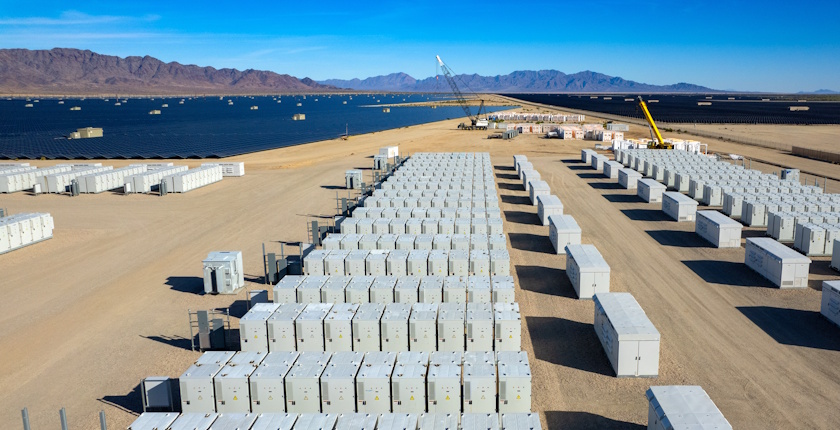
Sunotec and Sungrow have signed a strategic agreement to deploy 2.4 GWh of battery energy storage systems (BESS) across multiple solar power projects in Europe, according to Sunotec.

The 2.4 GWh of energy storage capacity will support grid stability, enable better renewable energy integration, and enhance the reliability of solar parks developed and constructed by Sunotec throughout Bulgaria and wider Europe.

The portfolio includes several large-scale projects across Bulgaria, which will serve energy storage needs, the update reads. Some of the projects in the pipeline will be supported by funds under Bulgaria’s RESTORE national support program.

Velichkov: The next chapter of clean energy

Sungrow intends to supply its industry-leading PowerTitan 2.0 BESS, recognized globally as a top-tier solution for utility-scale applications, while the string inverter SG350HX-20 and Sungrow’s MVS will be used for a hybrid project (PV and BESS) in the portfolio. It would be the first BESS project in Bulgaria with Sungrow technology.

“The global energy transition depends not only on how much renewable power we produce, but on how intelligently we manage and store it,” Sunotec CEO Kaloyan Velichkov said.

The partnership with Sungrow, in his words, reflects shared ambition to lead the next chapter of clean energy – by building resilient, storage-enabled infrastructure that brings stability, sustainability, and scale to markets across Europe and beyond.

Gkinis: The deal is a cornerstone of the two companies’ mission to accelerate clean energy deployment in Bulgaria and Europe

According to Anastasios Gkinis, Regional Director of Sungrow for CEE, SEE and CIS, the collaboration with Sunotec is a cornerstone of his company’s mission to accelerate clean energy deployment in Bulgaria and across Europe.

“Combining Sungrow’s cutting-edge energy storage technology with Sunotec’s execution excellence, we create a powerful force to redefine the energy landscape in Bulgaria and support the region’s transition to a sustainable energy future,” he stressed.

Sunotec has delivered over 650 solar projects with a total installed PV capacity of 11 GW. As of December 2024, Sungrow has installed 740 GW of power electronic converters worldwide, the update reads.

by in News

Government of Serbia interested in taking over Plandište wind project

The Government of Serbia is interested in taking over the Plandište wind farm project from oil and gas company Naftna Industrija Srbije and renewable energy firm MET Renewables. They have been jointly developing the project for over ten years.

The Plandište project, with a capacity of 102 MW, was a topic at the latest meeting of the Board of Directors of Naftna Industrija Srbije (NIS), attended by Minister of Mining and Energy Dubravka Đedović Handanović and Chairman of Gazprom Neft’s Executive Board Alexander Dyukov.

Gazprom Neft holds a 44.85% share in NIS, while its parent company Gazprom has another 11.3%.

Alexey Urusov was elected as the new chairman of the NIS Board of Directors, while Dragutin Matanović was appointed vice chairman.

Serbia aims to increase its renewable energy capacity

During the meeting it was noted that there is interest by the state of Serbia in taking over the construction of the Plandište wind park together with Hungarian company MET, thereby increasing the capacities from renewable sources in line with the strategic energy transition goals, the ministry said.

It revealed no further details. The current owners of the project are NIS and Switzerland-based MET Renewables.

The Plandište wind farm was one of the projects that obtained feed-in tariffs from the ministry under the first quota of 500 MW for wind power plants in Serbia. All other projects, totaling 397 MW, have long been completed –  Čibuk 1, Kovačica, Košava 1, Alibunar, Kula, Malibunar, and La Piccolina.

The wind farm was initially scheduled for completion in 2014, then postponed to 2019

The project was originally owned by Energowind, a company founded in 2005 by private investors. In late 2012, NIS bought a 50% share, and the firm was renamed NIS Energowind. Energowind’s CEO Goran Novaković, who was earlier Serbia’s energy minister, has signed the contract with NIS’s then-CEO Kirill Kravchenko.

At the time, the wind farm was scheduled to be completed in 2014, and construction formally began in September 2013. However, there was no progress until March 2019, when MET Renewables, owned by Hungarian private investors, purchased the other 50% stake from the initial owners. The joint firm was named NIS MET Energowind.

The building permit was amended in 2023

Shortly afterward, it was announced that the wind farm would be completed by 2021.

Project firm Wind Park Plandište received the status of privileged renewable energy producer in 2015. It is a right to feed-in premiums, a fixed price for electricity, over a 12-year period. The status has been extended multiple times, most recently in 2018 until 2020, according to the registry of privileged producers on the ministry’s website.

The project firm said that the building permit, amended in 2023, envisages the construction of 17 wind turbines, each with a capacity of 6 MW. The detailed regulation plan, revised in 2022, enables the construction of up to 20 wind turbines with a capacity of up to 7 MW each, according to the firm’s website.

by in News

North Macedonia, Kazancı sign memorandum on gas power plants

The Government of North Macedonia and Kazancı Holding have signed a memorandum of understanding that paves the way for a EUR 1 billion investment in the country’s energy sector.

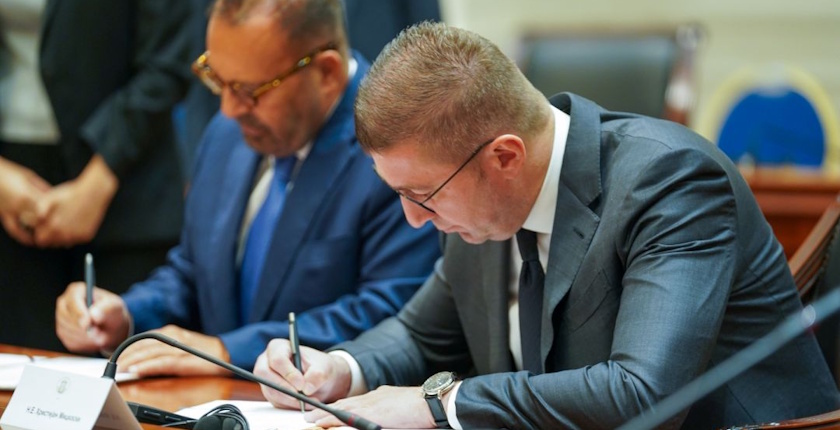
The memorandum of understanding was signed by Prime Minister Hristijan Mickoski and Cemil Kazancı, President of the Board of Directors of Kazancı Holding.

In February, Mickoski announced that the company would invest EUR 1 billion in gas power plants, gas and heat distribution grids.

Now he stressed that the memorandum demonstrates the country’s determination and plan to secure its energy sovereignty and protect its economic interests.

Mickoski: We are reducing import dependence and the impact of external price and political risks

According to the government, the document creates the conditions for a project with a long-term impact on the country’s energy sector.

It consists of three segments: development of new power production facilities, construction of natural gas and heat distribution grids, and implementation of measures to increase gas supply security, Mickoski explained.

Photo: Government of North Macedonia

In his view, a domestic energy source and a stable energy distribution system represent security, predictability, and control over one of the country’s most vital systems.

By developing domestic production facilities, North Macedonia is reducing its reliance on imports and minimizing exposure to external price and political shocks, the prime minister added.

Kazancı: The project is already prepared

Cemil Kazancı recalled that discussions about the investment began a long time ago. The project, in his words, is already prepared. Now research will be conducted, after which the implementation of the EUR 1 billion endeavor will start, he claimed.

It will be a strategic center in the Balkans, according to Kazancı. He expressed confidence that the project would be implemented shortly.

The government has not disclosed details of the memorandum with the company, which operates in the energy sector through its Aksa brand.

Earlier, Prime Minister Mickoski said the two sides were considering cogeneration facilities of 500 MW in combined capacity. They would produce 4.1 TWh of electricity and 720 GWh of heat per year.

The construction of a distribution grid for gas and heat would enable gas and heat to be distributed to as many citizens as possible.