by in News

Celje, Šoštanj among Slovenian municipal authorities pursuing energy independence

The City of Celje in Slovenia plans to install 11 solar power plants on its public buildings, and the Municipality of Šoštanj agreed contracted four such units. The photovoltaic systems would be part of energy communities. Šoštanj expects to save EUR 70,000 per year while Celje is counting on EUR 200,000.

Novo Mesto, another municipality in Slovenia, recently made a similar move toward achieving energy independence.

The total capacity of the solar power plants in Celje and Šoštanj is 1.9 MW. They have signed contracts with ECE, a subsidiary of state-owned power utility Holding Slovenske Elektrarne (HSE). The projects are funded from the National Recovery and Resilience Plan (NRRP) and by the two municipal authorities.

Šoštanj is set to get solar power plants with a capacity of 500 kW altogether, at four locations: the sports hall of the Karel Destovnik Kajuh elementary school, a music school, health center, and the Pilon Center.

The total investment is EUR 500,000, with the local authority receiving a EUR 450,000 grant via the NRRP.

Both municipal authorities now have energy communities

In Celje, approximately 1.4 MW would be installed at several locations including the Z’dežele Stadium, Celje Summer Pool, Celje Health Center, elementary schools and kindergartens.

The City of Celje secured a EUR 1 million grant from NRRP, and the total investment is estimated at EUR 1.4 million.

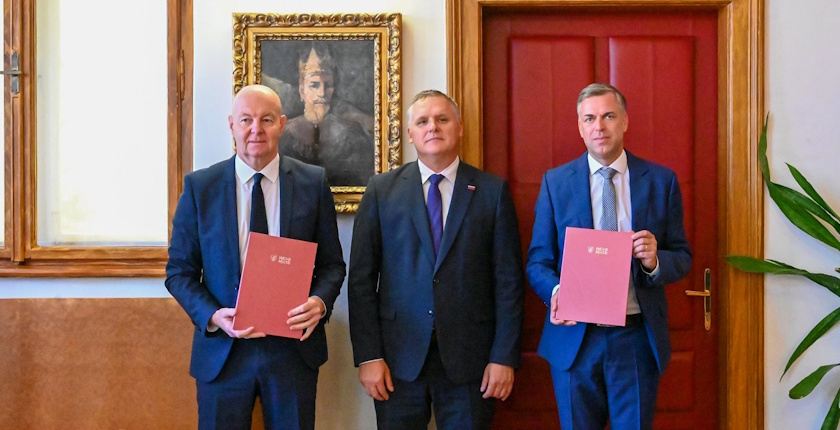
Sebastijan Roudi and Boris Goličnik (photo: Municipality of Šoštanj)

In addition to building solar power plants, the contract includes five years of maintenance, offtaking surplus electricity production, and supply during insufficient power generation. It also involves managing the energy community.

In Šoštanj, the energy community would involve more than 15 public buildings, and the one in the City of Celje would consist of PV units on more than 40 public buildings.

The two projects are scheduled for completion in December and November, respectively.

Šoštanj aims to produce 70% of the electricity consumed by its public buildings

When the power plants are built, the municipality expects to cover 70% of the consumption of all public buildings, and the third-largest city in Slovenia aims for a 15% share.

The Šoštanj project is envisaged for 500 MWh of clean electricity output per year, reducing electricity costs by about EUR 70,000. Total savings over the entire lifespan of the solar power systems is seen at EUR 2 million.

Celje’s PV plants would produce 1,462 MWh of energy annually and save approximately EUR 200,000, translating to around EUR 5 million throughout their service life.

Investment for the long-term benefit of the community

Mayor of Šoštanj Boris Goličnik said the contract signifies the continuation of the municipality’s vision of energy independence.

“This is an investment in the future, in the green transition, and for a permanent benefit of our community,” he stated.

According to Celje’s Mayor Matija Kovač, it is a strategic decision on managing energy, costs, and the environment in the future. He said the planned PV units are just the beginning.

Sebastijan Roudi, ECE CEO, asserted that as part of the HSE group, the firm places grea t emphasis on demanding energy projects, developing new billing models, and seeking ways to accelerate the green transition.
by in News

Greece mulls subsidizing green energy as loan to energy-intensive industry

The Greek government intends to support energy-intensive industries through a new mechanism involving renewable energy.

In recent days, discussions took place between the Hellenic Federation of Enterprises (SEV) and the ministries of environment and energy, finance, and development. The employers’ organization presented a so-called Italian plan. It is based on Italy’s Energy Release 2.0 scheme.

The assistance would be provided in the form of a green energy loan. Around 400 industrial consumers would benefit from lower power prices, at EUR 60 per MWh, for three years. In return, they would be obliged to invest in renewable energy and return twice as much cheap electricity within a period of 20 years.

Based on the proposal, the industries are expected to add about 1.75 GW, of which 80% in photovoltaics and 20% in wind power capacity. The estimated amount of low-cost electricity that they would be entitled to is 10 TWh, and the cost of the scheme is seen at EUR 285 million per year for three years.

Brussels approval critical

SEV expressed the belief that the European Commission would easily accept the plan, after Italy got partial approval. However, another industry association, the Hellenic Union of Industrial Consumers of Energy (UNICEN), warned that the other country’s scheme has not yet formally obtained a green light from the administration in Brussels.

Namely, the EU sent a letter to the Italian authorities, listing the changes they needed to make. According to UNICEN, the Greek model would be approved if it follows the proposed revised version.

The ministers consider SEV’s proposal acceptable, but they said they needed to figure out the financing details. Other mechanisms are not yet off the table. Importantly, they cannot include direct state support because of restrictions set by European competition law. It stipulates that a government cannot simply provide money to a sector unless the scheme implies investments, such as in green energy.

“We are interested in a fair intervention with a holistic view, in order to focus on the most heavily affected businesses. Also, the scheme should not cause fiscal problems,” Deputy Prime Minister Kostis Hatzidakis stated.

by in News

Renewables account turns red in Greece amid more low and negative power prices

Conditions in the Greek market have worsened in recent months for renewable energy producers, especially in the solar power segment, as a result of low and negative electricity prices.

So far in September, the total number of hours with a negative price in the day-ahead market (DAM) has reached 27. Prices usually fall slightly below zero, between EUR 0.01 per MWh and EUR 1, but for Sunday, September 21, they reached a negative EUR 14.8 per MWh.

In Greece, over 7 GW of renewable electricity plants with individual capacities above 400 kW operate under contracts for difference (CfDs).

Negative prices hurt producers. They receive no payment if the price is zero or below for two or more consecutive hours.

Low positive prices harm market operator

There is another issue, caused by a great number of barely positive prices during the day, when solar farms reach their maximum output. The so-called special purchase price for photovoltaics, determined once a month, has fallen steeply. In August it reached a record low of EUR 25 per MWh.

Namely, the Operator of Renewable Energy Sources & Guarantees of Origin (DAPEEP) pays a producer the difference between the special purchase price and the price in the CfD contract, which is much higher.

Therefore DAPEEP benefits from negative hourly prices, since it avoids some payments, but it loses much more from low positive prices.

Special renewables account swings back into red

The operator’s special renewables account reached a breakeven level at the beginning of this year, but turned steeply negative in recent months. The latest official data show a deficit of EUR 160 million for the period through July. Initially, a gap of EUR 173 million was projected for the end of 2025, so investors are worried.

Payments to producers remain unaffected so far and they continue in a timely fashion. Regardless, conditions in the market have made investments in solar energy less profitable. Certain players have chosen to abandon their projects. EDP Renewables and ABO Energy have decided to leave Greece altogether.

The trend has fueled demand for the purchase of solar farms benefiting from feed-in tariffs, as they are not affected by fluctuations in the wholesale market. According to information that Energypress obtained, such facilities are currently sold for around EUR 700,000 per MW.

by in News

Serbia in talks with Rosatom on nuclear power plant project

Serbian authorities and Rosatom have begun talks on the nuclear power plant construction project, according to the Ambassador of Serbia to Russia Momčilo Babić.

Serbia recently completed the preliminary technical study on the peaceful use of nuclear energy in the country. However, the country is still a long way away from the potential construction of a nuclear power plant, according to Minister of Mining and Energy of Serbia Dubravka Đedović Handanović.

So far, Serbia has established contacts or started cooperation on nuclear energy with China, France, Russia, Slovenia, South Korea, and the United States.

Serbia is seriously discussing the issue with Rosatom, the country’s Ambassador to Russia Momčilo Babić told Izvestia.

Babić: There’s no better company than Rosatom

He underlined that there’s no better company in the world to build a nuclear power plant. Babić is confident that there will be progress in the coming years, as he argues that Serbia needs electricity. The country will “do it anyway,” the ambassador added.

According to Igor Yushkov, an expert at the Financial University and the National Energy Security Fund, it is possible that Russia will also provide Belgrade with a preferential loan, in line with its standard practice.

Nuclear energy is experiencing a global renaissance, and the states created after the Socialist Federal Republic of Yugoslavia fell apart in the early 1990s are no exception.

US-based nuclear power startup Aalo has begun the construction of an extra-modular reactor, a type of modular reactor, which could introduce big changes in the sector.

Everyone wants to build a nuclear power plant

As for Europe, Germany has changed its mind on nuclear energy in the continent, agreeing with France to work together on shaping a common European energy policy. The strategy would include nuclear power as a low-carbon energy source.

Slovenian authorities are developing the Krško 2 project. A few days ago, news emerged that the country sent an official proposal to Croatia to jointly build the facility. However, Slovenia denied that it has made such an offer.

Croatia, on the other hand, reiterated that it is interested in building a nuclear power plant on its territory.

Serbia has recently signed a memorandum of understanding on cooperation in the field of nuclear energy with South Korean company Korea Hydro & Nuclear Power.

by in News

Slovenia denies sending offer to Croatia for joint construction of Krško 2 nuclear power plant

Slovenian authorities denied a report that they sent Croatia an offer for the joint construction of the Krško 2 nuclear power plant.

Earlier, Croatian Novi List reported that Slovenia has sent Croatia an official proposal to build a new unit in the existing nuclear power plant Krško.

The model is far less favorable for Croatia than the current management model of the Krško nuclear power plant, the media outlet noted.

However, the office of Slovenia’s Prime Minister Robert Golob, Minister of the Environment, Climate and Energy Bojan Kumer, and GEN Energija, the company in charge of the project, denied proposing such an offer.

Golob has recently informed Plenković about preparations for Krško 2

At the last bilateral meeting with Croatian Prime Minister Andrej Plenković in Vinica, Prime Minister Golob informed him about activities related to preparations for the decision on the construction of a new nuclear power plant in Krško, the prime minister’s office added.

Minister Kumer stressed that Slovenia hasn’t made any offer to Croatia. He noted that Slovenia has only just begun spatial planning for a potential new nuclear power plant.

Kumer: Slovenia must first do its homework

Slovenia first needs to do its homework and set a business model, and then it could begin talks about a joint venture, Kumer added.

According to Novi List, experts called the proposal inappropriate. The Slovenian side allegedly offered Croatia a 25% stake, compared to the current 50% in the Krško nuclear power plant.

Moreover, Croatia would only receive the profit from the sale of electricity equivalent to its ownership in the power plant, according to the article. The country now gets 50% of the electricity produced in the existing Krško nuclear power plant.

Slovenia’s state-owned power company GEN would control 25% of the project, while the Slovenian government would hold 51%, the news website learned.

​ Šušnjar: The country should build a nuclear power plant on its territory

Of note, Croatian Economy Minister Ante Šušnjar repeated last week that his country should build a nuclear power plant on its territory.

He noted that several sites were being considered, and recalled that when Croatia was part of the Socialist Federal Republic of Yugoslavia, which fell apart in the early 1990s, the authorities were examining locations in Ivanić Grad, Erdut, and Vir island.

Also, there is new speculation that the site of the Plomin coal-fired thermal power plant is a potential location for. Šušnjar confirmed that the facility is scheduled to be closed in 2032 or 2033.

by in News

Slovenia’s Novo Mesto makes important step on path to energy independence

The Municipality of Novo Mesto has made an important step toward becoming the first major local authority in Slovenia to achieve energy independence.

In the presence of Minister of the Environment, Climate and Energy Bojan Kumer, Mayor of Novo Mesto Gregor Macedoni and President of the Management Board of Petrol Sašo Berger signed an agreement on the construction of solar power plants on municipal land and structures.

The Municipality of Novo Mesto estimated that the new photovoltaic units would get it to a nearly 80% energy self-sufficiency.

The Ministry of the Environment, Climate, and Energy supported the project with co-financing of EUR 882,000 from the European Union’s Recovery and Resilience Facility. The total cost of the project is EUR 1.1 million. The municipality secured support from the ministry and Petrol is covering the remainder.

The collaboration will be implemented as a public-private partnership

Within the public-private partnership (PPP), Petrol will build ten new solar power plants and will also operate them.

Mayor Gregor Macedoni explained that the new investment will include the construction of solar power plants at the Portoval sports center, primary schools Stopiče, Otočec, Bršljin, Dragotin Kete, and Brusnice, as well as kindergartens Pedenjped, Ostržek, Ciciban, and Videk.

The municipality also plans to install a community solar power plant on the old CEROD landfill and additional ones on the remaining municipal facilities and parking canopies.

Total production in the municipality would be 2.5 GWh annually

“This year, we have already installed six solar power plants, and together with four facilities from 2010 and planned additional capacities, the total production in our municipality will reach 2.5 GWh per year,” Macedoni stated.

According to the mayor, the goal remains clear – to achieve complete self-sufficiency of the municipality with electricity from renewable sources

Minister Bojan Kumer underlined that the signing demonstrates that the path set by the ministry, more than three years ago, was the right one.

The projects, in his words, are primarily beneficial for the citizens. “Together, we will all be better prepared for future energy challenges,” Kumer stated.

According to him, the municipality has become a good example, and it will continue on the same path.

by in News

RES Croatia to Brussels: Renewables have no future in Croatia

RES Croatia, together with SolarPower Europe and WindEurope, has sent a letter to the European Commission to raise concerns about the crisis in Croatia’s renewable energy sector.

The three associations emphasized that for several years, 60 projects for investments in solar, wind, geothermal, and batteries have been blocked, and that if nothing is done, many of them would soon be abandoned.

Without urgent deblocking of renewable energy projects, Croatia will lose investments, increase fossil fuel imports, which already exceed 25%, and miss the European Union’s and national target of at least 42.5% of energy consumption coming from renewables by 2030, according to Renewable Energy Sources of Croatia (RES Croatia), SolarPower Europe and WindEurope.

The national organization warned that the government is gradually phasing out subsidies for electricity prices for citizens and entrepreneurs. At the same time, the development of renewable energy sources as the only sustainable solution for lower bills and lowering imports is at a complete standstill, it added.

Projects with a total capacity of 3.5 GW and investments of EUR 3 billion are blocked

Croatia is currently subject to infringement proceedings due to delays in implementing the European Union’s RED II and RED III directive. They aren’t just a piece of paper, but a mechanism to ensure energy security and independence, which is of strategic interest for Croatia and its citizens, RES Croatia underscored.

The organizations are urging the European Commission to use its tools to demand from the government to determine the grid connection fee, but at EUR 0 per kWh, open up the balancing market for renewable energy producers, and integrate battery energy storage systems (BESS) and electrification into national planning.

Currently, 60 projects for solar power plants, wind farms, geothermal power plants, and batteries with a total capacity of 3.5 GW and investments of EUR 3 billion are blocked, according to the letter, accompanied by an annex.

The domestic industry is unable to sign long-term PPAs

For these projects, the state has already charged EUR 25 million through energy approvals— the first in a series of documents that requires payment to the state, which, due to the blockage, are beginning to expire at the end of this year.

Organizations stressed that these projects are permanently losing the paid money, while local communities are losing significant revenues that would have been allocated to them from the implementation of renewable energy projects.

They also drew attention to the domestic industry’s inability to sign long-term power purchase agreements (PPAs) with renewable energy producers, securing more favorable market conditions and thereby increasing its competitiveness in European and global markets.

Of note, the European Commission advised Croatia in June to speed up the installation of renewable energy capacities.

If nothing is done, projects of as much as 2.5 GW overall will be abandoned as early as next week

The associations pointed out that the development of new projects larger than 10 MW has stalled since 2022 because the Croatian Energy Regulatory Agency (HERA) has not set a transmission network connection fee for renewable power plants.

Instead, they added, Croatia’s transmission system operator (TSO) HOPS is trying to shift the costs of network modernization – planned over ten years ago and not related to new projects – to new renewable energy projects.

The minister of economy said in March that the upcoming connection fee would be EUR 0 per kW

It is increasing the project cost by 30% to 40%, making them unprofitable, RES Croatia said.

Such a model for financing the network is not from European practice, because 80% of member states rely on EU funds and their national budgets, rather than on producers.

They also recalled that the minister of economy announced in March that a connection fee would be set at EUR 0 per kW and that developers would be offered flexible contracts to encourage investment in battery storage. But that promise has not yet been fulfilled.

The three organizations warn that if nothing is done, projects of up to 2.5 GW altogether would be abandoned as early as next week after HOPS’s decision,. It means companies would withdraw from the Croatian market and lose millions in investments that would have permanently lowered energy prices in the country, RES Croatia claimed.

The balancing market is not functional

An additional problem is the non-functional balancing market, according to the letter.

HEP Proizvodnja, a subsidiary of state-owned utility Hrvatska Elektroprivreda (HEP), is the dominant provider of balancing services, and often the only one. HOPS is legally obliged to ensure market-based procurement of these services, yet it is itself a wholly owned subsidiary of HEP.

It creates an obvious conflict of interest and undermines market competition, the signatories underlined.

“Despite the demonstrated technical ability of solar and wind power plants to provide balancing services, HOPS doesn’t allow these plants to participate in balancing markets. As a result, HOPS frequently activates extremely expensive balancing resources, often at maximum regulated prices even during hours of high renewable generation and positive market prices,” the letter reads.

Croatia has no serious electrification plan

The organizations pointed out that such pricing constitutes a clear violation of the EU principle that balancing services must reflect only the actual costs incurred by the TSO.

They also stressed that Croatia lacks a concrete electrification plan. In 2022, renewable energy accounted for only 2.4% of final energy consumption in transport, with electricity from renewables contributing just 0.2%.

The target for renewable electricity in transport by 2030 is only 5.8%, reflecting limited ambition compared to the EU ambitions, according to the letter.

Electrification of railways could significantly reduce emissions and accelerate the transition, however, it remains an untapped potential, the signatories organizations noted.

by in News

Zen Energy Group kicks off construction of hybrid PV-BESS project in North Macedonia

Luxembourg-based Zen Energy Group has started the installation of a hybrid energy project in North Macedonia, combining a solar power plant and a battery energy storage system.

A solar power plant with a battery energy storage system (BESS) could become the country’s second hybrid power plant, with Fortis Energy installing energy storage near Oslomej solar park.

Zen Energy Group kicked off the construction of a landmark solar plus storage project in North Macedonia, Yossi Edelstein, Chief Executive Officer of Zen Energy Group, wrote on LinkedIn.

From concept to construction, Zen Energy Group is making the future of energy a reality in the country, he added.

“We are proud to share that our 82 MW utility-scale solar project with 50 MWh BESS in North Macedonia has officially entered the construction phase,” Edelstein stated.

The PV plant will use LONGi bifacial solar panels

The company’s team kicked off earthworks, development of access roada and cut-and-fill activities. The project is scheduled to start delivering green electricity to the national grid by late April 2026 and to achieve full commercial operation date in August 2026, according to Edelstein.

The project marks another significant step toward advancing clean energy generation in the region, he added.

According to the firm’s website, the photovoltaic plant will be located near Negotino. It will use LONGi bifacial solar panels for the expected annual production of 124,198 MWh.

The financing was secured from NLB bank, the website reads.

The developer revealed that it has signed a power purchase agreement (PPA) for 10 years in total, with a six-year fixed price period.

Seven projects in the pipeline

Works near Negotino (photo: Zen Energy Group/LinkedIn)

Zen Energy Group is developing seven energy investments – for three solar parks, two wind farms, a standalone BESS, and a commercial and industrial (C&I) portfolio in the UK.

Wind farms Unirea (102 MW) and Traian (78 MW) are located in Romania, while two PV facilities in North Macedonia would have a total capacity of 137 MW. The Negotino endeavor is for 82 MW and the Armatus investment envisages 55 MW.

Solar project Hajdučica of 125 MW is planned in Serbia. All three PV plants would have BESS. The company is developing the Lacu Sarat standalone battery facility in Romania. If it were in operation now, it would be the largest BESS in Europe.

by in News

Croatia considering nuclear power plant on its territory – minister

Croatia is considering the possibility of building a nuclear power plant on its territory, according to Minister of Economy Ante Šušnjar.

Experts will decide whether it will be small modular reactors (SMRs) or a conventional nuclear power plant, Ante Šušnjar stressed, as quoted by Novi List.

He opined that building a nuclear power plant is a geopolitical and security gain for a country. The minister suggested that Croatia could apply for funds from the European Union’s Multiannual Financial Framework – the seven-year budget.

Three locations were considered in former Yugoslavia

Šušnjar said multiple sites were being considered for the nuclear plant, but he wouldn’t reveal details. He recalled that when Croatia was part of the Socialist Federal Republic of Yugoslavia, which fell apart in the early 1990s, the authorities were examining locations in Ivanić Grad, Erdut, and Vir island. The last of the three was rejected due to tourism.

Croatia and Slovenia jointly operate the Krško nuclear power plant, and cooperation on building a second unit is also possible.

Meetings about cooperation have already taken place with the US

Šušnjar’s claims that everyone in the world and the EU considers nuclear energy a low-carbon source for the transition to renewables. He added it is baseload energy that can power the production of green hydrogen.

In February, the ministry established a working group for analysis and legislation that could enable the introduction of nuclear energy in the country Croatia has already held meetings with United States officials on possible cooperation in the nuclear energy sector.

Of note, just a week ago, Germany and France agreed to work together on shaping a common European energy policy that would include nuclear power as a low-carbon energy source.

by in News

Montenegro plans to develop LNG terminal with JERA

The Ministry of Energy and Mining of Montenegro and Japanese company JERA have signed a memorandum of cooperation in the development of projects for a liquefied natural gas (LNG) terminal and gas power plant.

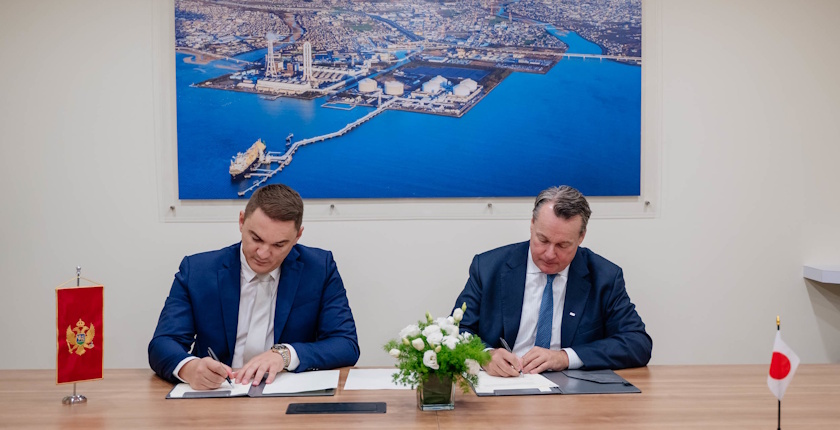
The memorandum was signed at the Gastech 2025 conference in Italy by Minister of Energy and Mining Admir Šahmanović and Steve Winn, chief global strategist of JERA. They agreed to explore the possibilities for developing a project of an LNG terminal and associated gas power plant in Montenegro, according to the Ministry of Energy and Mining.

Within the strategic partnership, the government will use JERA’s extensive global experience to enhance its national energy mix, strengthen supply security, support decarbonization goals, and position Montenegro as an important energy hub in the Western Balkans.

The Japanese company and the ministry will conduct a feasibility study for the project

They will carry out a comprehensive feasibility study, covering the technical, commercial, and financial viability of the proposed LNG terminal and associated gas power plant, including an analysis of multiple potential locations.

According to the ministry’s press release, the study will provide detailed data on the cost-effectiveness and future expansion in the use of LNG in Montenegro, making a solid ground for strategic decisions beneficial to the country’s energy security and sustainable development.

Of note, in May 2023 Montenegro signed a cooperation memorandum on the planned LNG terminal and gas power plant with companies Enerflex Energy Systems and Wethington Energy Innovation, based in the United States. The European Union has also expressed its interest in the project.

Šahmanović: The study will provide data on the profitability of developing LNG in the country

Admir Šahmanović and Steve Winn (photo: Ministry of Energy and Mining of Montenegro)

Minister Admir Šahmanović said JERA is a renowned and credible global player in the areas of energy and LNG.

In his words, Japan is recognized for innovation and advanced technologies, and the cooperation will give Montenegro access to knowledge and experience necessary for the further development of its energy sector.

“The planned feasibility study will provide us with concrete data on potential locations and the profitability of developing liquefied natural gas in Montenegro, creating the basis for making strategic decisions in the interest of our country’s energy security and sustainable development,” Šahmanović underlined.

Winn: JERA is an ideal partner to support Montenegro in achieving its strategic energy goals

Steve Winn, JERA’s chief global strategist, said its extensive experience in LNG infrastructure and proven results in implementing complex international energy projects make it an ideal partner to support Montenegro in reaching its strategic energy objectives.

“We look forward to supporting Montenegro’s vision of strengthening energy security and decarbonization through practical and economically viable solutions,” he stressed.