by in News

CGES Secures €15 Million Investment to Upgrade Tri-Nation Power Infrastructure in the Western Balkans

Crnogorski Elektroprenosni Sistem (CGES), Montenegro’s national transmission system operator, has successfully secured a €15 million loan to finance the modernization of the 220-kilovolt (kV) power line connecting Montenegro, Bosnia and Herzegovina, and Albania.

This strategic initiative is designed to enhance the efficiency and reliability of Montenegro’s domestic electricity transmission network while simultaneously fortifying cross-border energy connectivity throughout the Western Balkans. According to CGES, the project represents a critical step toward the broader regional integration of power systems.

The financial agreement was formally signed by CGES Chief Executive Officer Ivan Asanović, European Bank for Reconstruction and Development (EBRD) Vice President Mark Bowman, and Montenegrin Minister of Finance Novica Vuković. The Ministry of Finance backed the initiative by issuing a state guarantee, underscoring the government’s steadfast commitment to supporting strategic investments that bolster both national infrastructure and regional connectivity.

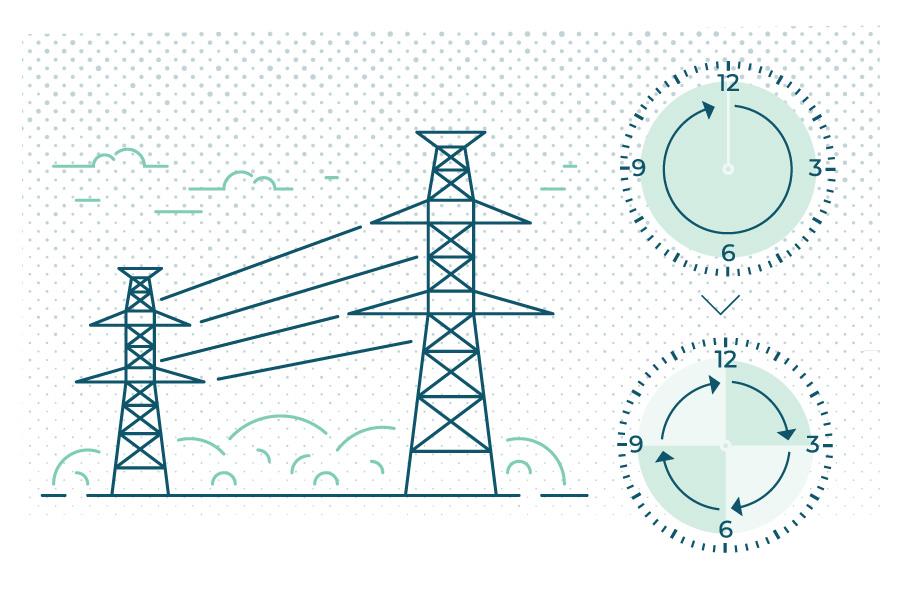
Detailing the technical improvements, CEO Ivan Asanović noted that the modernization project will effectively double the transmission line’s current capacity from 300 megawatts (MW) to approximately 600 MW. He characterized the upgrade as a foundational investment in a secure, stable, and integrated energy future for the region, resulting in a more resilient grid capable of meeting increasing systemic demands and facilitating deeper regional cooperation.

EBRD Vice President Mark Bowman echoed these sentiments, emphasizing that reinforcing transmission networks is essential for securing long-term energy security and regional integration in the Western Balkans. Bowman noted that the project will overhaul vital infrastructure in Montenegro, aligning with the EBRD’s mandate to foster sustainable and resilient infrastructural development.

Looking forward, this project falls under a broader capital expenditure strategy for CGES, which plans to invest a total of €200 million into transmission infrastructure over the next five years.

by in News

Albania’s Solar Surge: Capital Inflows, Grid Pressures and a Market in Transition

Photovoltaic energy is attracting capital at an accelerated pace in Albania, emerging as a new investment pillar for both traditional energy players and diversified business groups. With licenses granted for nearly 980 MW of solar capacity and hundreds of megawatts already operational, the market is undergoing a structural transformation—shifting from overwhelming dependence on hydropower toward a more diversified generation mix.

Private investment in the sector is estimated at around €1.5 billion, encompassing solar, wind and hydropower projects. Yet the rapid expansion is placing mounting pressure on existing infrastructure, highlighting the urgent need for parallel grid investments. Without reinforcement of transmission and distribution networks, the growth of photovoltaics risks outpacing the system’s capacity to absorb new output. Once again, the private sector appears to be moving faster than institutions.

When Albania first adopted its legal framework “On Renewable Energy Sources” in 2017, few anticipated the scale of transformation that would unfold less than a decade later.

From Slow Beginnings to Accelerated Growth

The early years of renewable development, particularly solar, were marked by bureaucratic hurdles, limited institutional experience and an energy market still in reform. The turning point came through two key developments.

First, market liberalization opened space for self-producers—an expanding segment entitled to install capacities of up to 500 MWp. Second, and more decisively, the global energy crisis that erupted in October 2021 dramatically reshaped market dynamics.

Post-pandemic raw material inflation, surging energy demand driven by economic recovery, and the war in Ukraine—triggering disruptions in Russian gas supplies—sent shockwaves through global energy markets. In 2022, prices reached record highs. Albania spent nearly €500 million on electricity imports, while on the Hungarian exchange—an important regional benchmark—prices peaked at €1,037 per MWh.

Although prices later retreated, volatility remains a defining feature of the market. This climate of uncertainty has become a major catalyst for new energy projects. Authorities report more than €2 billion invested in Albania’s energy sector in recent years. Currently, over 700 MW of private photovoltaic capacity is operational, alongside approximately 400 MW installed by self-producers.

The development pipeline could lift total photovoltaic and wind capacity to around 1,500 MW, while more than 1,600 MW of storage projects are under study or seeking financial facilitation.

Licensing and Market Structure

Despite numerous projects in various administrative stages, only a portion have secured production licenses. The Energy Regulatory Authority (ERE) has issued 71 production licenses for photovoltaic plants, totaling approximately 980 MW of installed capacity.

Most licensed projects fall within the sub-2 MW category, which benefited from a simplified regulatory framework introduced several years ago. These smaller plants were approved through accelerated procedures and supported by reference tariffs set periodically by the regulator. Electricity is purchased by OSHEE Group under a scheme similar to that applied to priority hydropower producers.

At the same time, a growing number of independent producers operate in the liberalized market. Supply liberalization has pushed thousands of businesses to secure electricity via private contracts, creating a stable demand base for new generators.

Solar projects also benefit from technical flexibility: they can be commissioned in phases, allowing electricity production before full completion of investment works.

Production Growth and Flagship Projects

Photovoltaic output rose sharply in 2025. According to preliminary data from INSTAT for January–September, the category “Other Producers”—which includes solar plants—generated 775 GWh, doubling year-on-year. Even compared to full-year 2024 output of 506 GWh, nine-month 2025 production was 53% higher.

Solar accounted for roughly 15.3% of Albania’s net electricity generation during the same period—more than double its 2024 share. This proportion is expected to rise steadily as new plants enter operation.

Among the largest projects is the 140 MW Karavasta solar park, developed by Voltalia. Additional operational projects include Blue (130 MW combined), Nova Solar System (50 MW) and multiple 20 MW facilities in Ersekë.

Projects under development include GreeNNat Solar Park Ballsh (100 MW), Faethon (78.6 MW), Sunny Side Energy (50 MW, part of the Kastrati Group), and the 100 MW Spitalla Solar park, also owned by Voltalia.

The rapid growth of solar capacity is gradually reshaping Albania’s electricity mix—historically dominated by hydropower—reducing exposure to imports and cushioning the impact of extreme price swings in international markets.

Year Energy Production (Thousand MWh)
2019 25
2020 35
2021 40
2022 52
2023 88
2024 506
2025 (9-Months) 775

European Bank for Reconstruction and Development: Strong Potential, Grid Constraints

The European Bank for Reconstruction and Development (EBRD) has been instrumental in supporting Albania’s renewable transition, advising the government on early photovoltaic auctions, including Karavasta—the country’s first large-scale solar plant.

Ekaterina Solovova, EBRD Resident Representative in Albania, has emphasized that the country’s solar potential remains considerable due to favorable geography and high solar irradiation. However, large-scale integration requires adequate transmission infrastructure.

Recent EBRD support includes sustainability-linked financing for OSHEE, restructuring short-term liabilities into longer-term financing to free up investment for grid upgrades. The bank is also cooperating with OST on EU grant-funded technical projects: closing the national transmission loop and modernizing the Fier substation—currently among the most congested solar zones—and developing a new cross-border transmission line with Kosovo to enhance regional interconnection.

Through initiatives such as the Renewable Energy Market Acceleration Program (REMA), the EBRD has supported the allocation of roughly 800 MW of new renewable capacity via Contracts for Difference (CfD) schemes.

Albania stands at a critical juncture: rich in renewable potential but constrained by infrastructure that requires substantial upgrading to ensure system stability.

European Investment Bank: Solar Could Reach 1 GW by 2030

Alessandro De Concini, EIB representative in Albania, notes that while Albania’s green credentials are strong, they remain vulnerable due to hydropower dependence and climate variability.

Solar capacity could reach 1 GW and wind 600 MW by 2030, supported by recent reforms easing licensing and auction procedures. However, climate risks—floods, fires and landslides—could cost up to 7% of GDP by mid-century.

Albania’s energy strategy prioritizes supply security, diversification, competition and environmental protection, aligned with EU legislation. The EIB’s forward plans include infrastructure modernization to ensure year-round supply security and price stabilization.

Investor Appetite and Market Diversification

Government-backed auctions—facilitating land access and streamlining procedures—sparked early investment during the pandemic. Yet a growing number of investors have entered the sector without subsidies, relying instead on private land, private power purchase agreements and market-based strategies.

Besnik Leskaj, founder of Blessed Investment Group, explains that detailed analysis of photovoltaic technology costs and regional price trends pointed to a favorable long-term risk-return profile. The group, alongside Matrix Konstruksion, has invested in fully private solar projects, emphasizing financial discipline and direct market exposure.

The Blue Parks, spanning 230 hectares with 263,000 smart panels, aim to build a 1 GW portfolio over the medium term, with 400 MW currently under development. Wind energy (two 25 MW projects) and battery storage systems are also part of the strategy.

Supporting Industries and Vertical Integration

The solar boom has stimulated domestic supply chains, from workforce training to mounting structure manufacturing. Companies such as Emante sh.p.k have expanded into producing Magnelis steel support structures for ground-mounted systems, supplying projects including Nova Solar (74 MW) in Seman and Info-Telecom (101.5 MW) in Ballsh.

Rapid sector growth is encouraging vertical integration, with firms expanding into mounting accessories and specialized structures to enhance added value.

End-of-Life Challenges

As solar installations multiply, long-term waste management is emerging as a strategic issue. Panels have a 25–30 year lifespan, meaning the first wave of mass installations will soon approach end-of-life. The International Energy Agency estimates panel waste could reach tens of millions of tons by 2050.

While recycling is technically feasible, it is often not yet economically competitive. The European Union mandates extended producer responsibility for collection and recycling, while China is scaling industrial recycling plants. The US and Japan are experimenting with high-value material recovery models.

Albania will need to address this issue proactively to ensure sustainability extends beyond generation.

Credit Growth and Corporate Performance

Energy and tourism have been the most dynamic sectors in recent years, reflected in rising bank lending. According to the Bank of Albania, outstanding credit to the energy sector grew 19% to 47 billion lek (€470 million) by December 2025, representing 9% of total business lending.

Karavasta Solar, managed by Voltalia, generated revenues of 3.5 billion lek in 2024 and profits of approximately 2 billion lek, with a 57% margin. The plant produced 258.3 GWh last year—3.2% of domestic net output and more than half of total solar generation, according to ERE. Under its 15-year contract, 70 MW is sold at a regulated tariff (€24.89/MWh) and 70 MW on the free market.

Spitalla Solar (100 MW) follows a similar structure, though progress has been slower.

Blue 1 (50 MW), commissioned in May 2024 at Sheq Marinas, Fier, operates entirely in the free market—one of the first large projects outside support schemes. Owned 51% by Blessed Investment and 49% by Matrix Konstruksion, it generated revenues of 680 million lek and profits of 380 million lek in 2024, producing around 72,000 MWh—roughly 15% of total solar output.

Other players, such as EZ5 Energy and Nova Solar System (50 MW), are reporting rapid revenue and profit growth, underscoring solar’s emergence as one of Albania’s most profitable and strategically significant industries.

Company Revenue (2023) Revenue (2024) Pre-tax Profit (2023) Pre-tax Profit (2024)
KARAVASTA SOLAR 450 17,000 408 2,000
EZ-5 ENERGY 412 1,422 83 265
SPV BLUE 1 266 679 102 379

Albania’s solar expansion reflects a decisive shift in its energy landscape—driven by private capital, catalyzed by crisis and increasingly supported by multilateral finance. The next phase will depend on grid modernization, storage deployment and responsible lifecycle management. If these elements advance in tandem, Albania could consolidate its position as a regional renewable energy hub.

by in News

Montenegro Achieves Regulatory Milestone: Full Alignment with EU Electricity Integration Package

In a significant leap toward European energy integration, Montenegro has officially completed the transposition of the European Union’s Electricity Integration Package (EIP). According to the Energy Community Secretariat, this regulatory alignment positions Montenegro alongside Moldova and Serbia as frontrunners in the Western Balkans’ effort to merge with the European single electricity market.

The move is designed to catalyze Montenegro’s energy transition by enhancing market competitiveness and ensuring the country can participate in regional power exchanges even before formal EU accession.

The Gateway to Market Coupling: SDAC and SIDC

The primary objective of transposing the EIP is to enable Market Coupling. By harmonizing its domestic laws with EU standards, Montenegro is preparing to join two critical pillars of the European energy infrastructure:

  • Single Day-Ahead Coupling (SDAC): A mechanism that optimizes electricity prices and cross-border flows across Europe for the following day.

  • Single Intraday Coupling (SIDC): A continuous trading environment that allows market participants to adjust their positions as close to real-time as possible.

This integration is expected to lower costs for consumers, provide clearer signals for renewable energy investors, and significantly bolster the security of the national supply.

The Legislative Roadmap

The finalization of this process occurred on February 15, 2026, when the Montenegrin government adopted two pivotal decrees governing:

  1. System Operation: Establishing technical rules for grid stability.

  2. Emergency and Restoration: Outlining protocols for grid recovery during unforeseen outages.

These decrees complement existing legislation, including the Law on Energy and the Law on Cross-Border Exchanges in Electricity and Natural Gas. Together, these legal frameworks form the “four pillars” identified by the Secretariat as essential for a cost-efficient clean energy transition:

  • Clear investment signals.

  • Strengthened regional cooperation.

  • Reinforced fair competition.

  • Enhanced security of supply.

The Path to Verification

While the legislative work is complete, Montenegro now enters the Verification Phase. This process involves a rigorous audit by the Energy Community Secretariat and the European Commission to ensure that the laws on paper translate into functional market practices.

Country Status of EIP Transposition Verification Phase
Serbia Completed In Progress (Started Oct 2025)
Moldova Completed Initiating
Montenegro Completed Pending Request
North Macedonia Partial Pending Legislation

“Montenegro is now stepping up efforts to submit a formal request initiating the verification process,” the Secretariat noted, echoing recent sentiments from Director Artur Lorkowski regarding the rapid progress of the “Vienna Group” of energy reformers.

Expert Analysis: What This Means for the Region

For a small economy like Montenegro, market coupling is a “force multiplier.” By removing the barriers to cross-border electricity trade, the country can better manage the intermittency of new wind and solar projects. This regulatory bridge to the EU not only modernizes the grid but also makes Montenegro a more attractive destination for “green” capital, as energy produced domestically can now be more easily sold into the massive European market.

by in News

INOVA Launches €25m Green Grants for SMEs in North Macedonia

North Macedonia’s Agency for Innovation, Scientific and Technological Development and Entrepreneurship has launched a grant program to support small and medium-sized businesses investing in environmental protection and sustainability.

The green business support program for 2026–2030 is valued at €25 million, with €22 million earmarked for direct subsidies, according to the agency (INOVA). Eligible companies can receive between €5,000 and €300,000, provided they co-finance 20% to 50% of the investment, depending on the project type.

The European Union is providing €18 million, while the remaining funding will come from the Government of North Macedonia.

At least 300 companies expected to benefit

INOVA said it expects to support at least 300 companies, focusing primarily on micro, small, and medium-sized enterprises, particularly in manufacturing, while remaining open to applicants from other sectors. The program is designed to back projects that reduce CO₂ emissions and waste and increase the use of renewable energy, with a particular emphasis on solar power, the agency noted.

Through public calls, businesses will be able to apply for technical and advisory assistance, standardization support, and financial backing for the purchase of equipment, deployment of new technologies, and development of new products.

INOVA expects the first public call around mid-year.

Previously, the agency said the initiative would be implemented through three instruments: green startups (grants up to €40,000), green modernization (up to €150,000 per beneficiary), and transformation of industrial systems (subsidies of €300,000 per beneficiary).

Officials frame program as competitiveness and climate action measure

INOVA CEO Daniela Dimovska said the initiative offers both financial and expert support to companies investing in sustainable, environmentally friendly, and innovative solutions, describing it as a step toward an economy guided by long-term thinking and responsible action.

Daniela Dimovska, Hristijan Mickoski, and Michalis Rokas (photo: INOVA/Facebook)

Prime Minister Hristijan Mickoski said the program aims to help the country advance toward the climate neutrality goals set out in the Green Agenda for the Western Balkans, by strengthening the private sector and promoting sustainable business practices. He added that green transformation should be viewed not as a cost, but as an investment in economic resilience, environmental quality, and citizens’ well-being.

EU Ambassador to North Macedonia Michalis Rokas said the program is expected to stimulate innovation and the adoption of green technologies among SMEs, supporting a new stage of development that improves competitiveness and strengthens integration into EU value chains.

by in News

GCL Moves Knjaževac Solar Project Forward as Serbia’s Large-Scale PV Pipeline Expands

Chinese energy group GCL has advanced its plans for the Knjaževac solar power plant, a major photovoltaic project proposed for eastern Serbia and among the country’s largest developments currently in the pipeline.

The Municipal Council of Knjaževac has launched the process to draft a detailed regulation plan for the facility. A public consultation on the draft decision was held from February 3 to 5. Once the decision to prepare the plan is formally adopted, authorities will open a second public discussion lasting 15 days.

According to the draft decision, the initiative was filed by the prospective investor, Central Europe Energy Company, a Belgrade-registered entity. The company is 90% owned by China’s GCL Intelligent Energy (Suzhou), with the remaining 10% held by Central Europe Consulting Company, also based in Belgrade.

The project has already cleared an important grid-related milestone. In May 2025, Central Europe Energy Company signed a grid connection agreement with Serbia’s transmission system operator, Elektromreža Srbije (EMS). The signing was part of a broader package of 11 renewable energy projects contracted by EMS at the time. EMS said that, among nine solar projects included in that round, the Knjaževac photovoltaic plant carried the highest proposed capacity at 136 MW.

Municipality head Milan Đokić described the development as the largest investment in Knjaževac’s history, estimating its value at EUR 200 million, as reported by local outlet Knjaževačke Novine.

Planning documentation will cover roughly 267 hectares, spanning parts of the cadastral municipalities of Krenta, Ponor, Mučibaba, and Miljkovac within the municipality of Knjaževac. The preparation deadline for the detailed regulation plan is set at 12 months, and the decision also предусматривает a strategic environmental assessment.

Serbia’s solar market is growing from a relatively low base. The country’s largest operating solar park is currently the 27 MW facility installed by Nofar Energy, while the biggest project by planned capacity is CWP Europe’s 150 MW Solarina development.

GCL is active across most continents, with a core business centered on solar module and energy storage battery manufacturing, alongside the development of low-carbon energy solutions.

by in News

Slovenia opens its first highway solar power plant

Slovenia’s road management firm Družba za Avtoceste v Republiki Sloveniji has installed a solar power plant on a noise barrier alongside a highway. It is the first such photovoltaic system in the country.

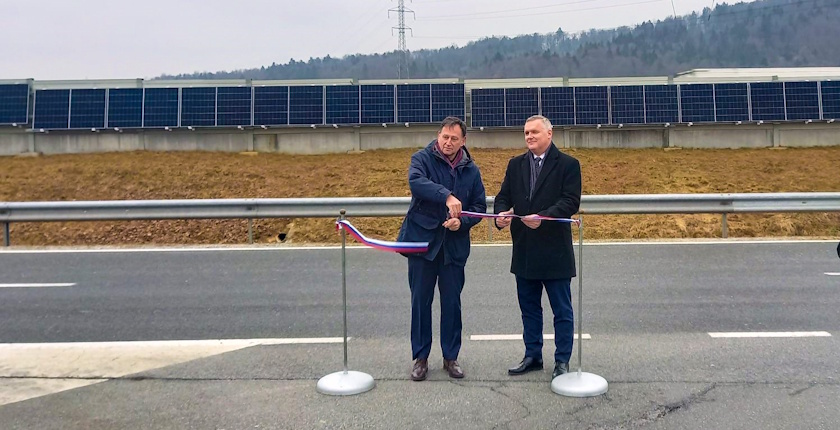
Družba za avtoceste v Republiki Sloveniji (DARS) has officially opened its first photovoltaic plant on a noise barrier at the Šmarje Sap West rest area. It is about ten kilometers from Ljubljana on the motorway connecting the Slovenian capital and Zagreb.

According to DARS, the project is part of a series of activities to achieve the company’s strategic goals in sustainable development, decarbonization, and efficient energy use.

The firm announced the development of such projects in July 2023. A pioneering idea in the region, it was later followed by Bosnia and Herzegovina, Montenegro, and Croatia.

Ribič: An example of thoughtful siting of renewable power plants

The opening ceremony was attended by the Chairman of the Management Board of DARS Andrej Ribič, Minister of the Environment, Climate and Energy Bojan Kumer, representatives of the contractor – Solvera Lynx, and representatives of distribution system operator Elektro Ljubljana.

Andrej Ribič stressed that the project is significant for electricity production but also as an example of thoughtful siting of renewable energy power plants without impacting traffic safety or routine highway maintenance.

The electricity generated by the PV system will be used for DARS’s own consumption, including public lighting and tunnel systems, he explained. This will ensure greater energy independence and more rational management of the energy system, Ribič added.

DARS plans to continue building PV plants

In line with its strategy, DARS aims to gradually reduce energy consumption from the grid and lower CO2 emissions in scopes 1 and 2. By 2030, the goal is to reduce energy consumption and carbon emissions by 30% from the 2024 levels, according to the firm.

Based on its revised strategy, DARS adopted several energy measures in 2024. They included the establishment of an energy department and the implementation of the first phase of solar installations across its five facilities, with a total capacity of 420 kW.

These plants can cover approximately 2% of the company’s annual electricity consumption.

DARS intends to further expand its solar energy projects. The plan includes building bigger plants in degraded areas and more PV systems on buildings and along highway tunnels.

The electricity produced would primarily power lighting and other road systems to ensure the safe and smooth operation of the motorway network, the company added.

Careful site selection for solar plants is crucial

In July 2023, DARS and state-owned hydropower operator Soške Elektrarne Nova Gorica (SENG) announced plans to build solar power plants along highways.

The first one was planned in the Slovenian Littoral and Coastal-Karst area. However, the new solar power plant is not located there.

The two firms later established similar cooperation with the Ministry of Defense and the Municipality of Vipava.

Solar energy use is expanding all over the planet. Experts warn that the optimal siting of PV panels is crucial to avoid occupying large areas of arable land or harming the environment. Therefore, the best solution is to install solar panels in locations that cannot be used for other purposes, such as alongside railways and roads, or on rooftops.

by in News

Petrović: ERS to launch construction of Trebinje 3, Hrgud this year

Power utility Elektroprivreda Republike Srpske plans to start the installation of the Trebinje 3 solar power plant and the Hrgud wind farm this year, according to CEO Luka Petrović.

Elektroprivreda Republike Srpske (ERS) already has projects in a ready-to-build phase through its subsidiary companies, Luka Petrović explained, Srpskainfo reported.

ERS is the dominant power producer and supplier in the Republic of Srpska, one of the two entities constituting Bosnia and Herzegovina.

The Trebinje 3 solar power plant, with a capacity of 53 MW, will be built first. The company has received a concession from the Government of the Republic of Srpska. The tender for construction will be launched soon, Petrović stressed.

Preparations for the Hrgud wind farm are also in the final stages, he added. Multi-year wind potential assessments and environmental studies have been completed. Petrović anticipates the start of construction this year. The planned capacity is 60 MW.

Wind energy attracts the most attention in the Republic of Srpska

The installation of the two power plants is expected to be finished by the end of 2027 or in early 2028, he asserted. The CEO added they would significantly contribute to the development of renewable energy sources.

He noted that wind energy attracts the most attention in the entity. The concessions commission of the Republic of Srpska has also awarded approvals for the construction of more than 1,200 MW of photovoltaic plants, Petrović recalled.

In his view, investments by private firms are dormant because solar power production is no longer profitable without battery energy storage systems (BESS).

Petrović: Many solar projects will not be completed

Solar energy prices are significantly lower than they were four to five years ago, Petrović added.

Many of these solar projects will not be finished, he underscored.

Of note, ERS decided late last year to revive the Hrgud wind project, which was halted after a decision by the German government.

The concession for the Trebinje 3 solar power project was awarded in April 2025.

by in News

From Austria to Albania: Verbund, Nordex to deploy 105 wind turbines across Europe

Verbund Green Power has forged a partnership with Nordex Group for the potential procurement of wind turbines.

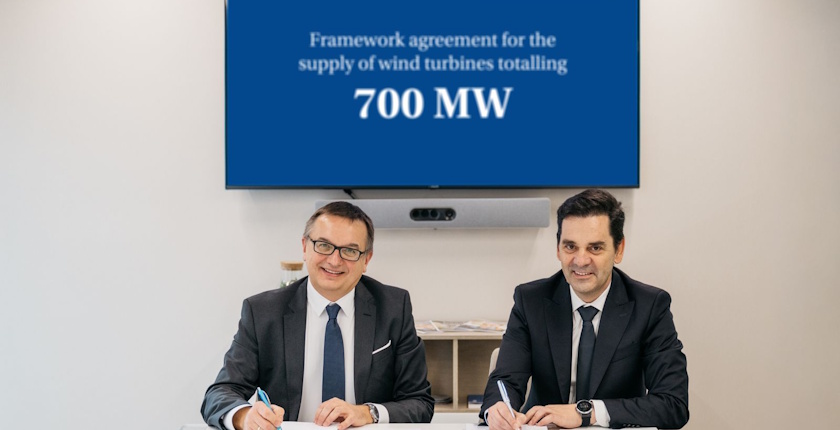
Verbund Green Power, a subsidiary of Austrian state-owned energy utility Verbund, has entered into a multiyear framework agreement with leading wind turbine producer Nordex Group for the potential procurement of wind turbines of up to 700 MW in total capacity, according to a joint press release.

The agreement runs through 2030.

The power plants are planned in six markets

The agreement was officially signed in Verbund Green Power’s Madrid office by Dietmar Reiner, Managing Director of Verbund Green Power, and José Luis Blanco, CEO of Nordex Group.

They expressed willingness to facilitate the supply and delivery of up to 105 Nordex onshore wind turbines for Verbund Green Power’s wind projects. They are are planned in Austria, Germany, Spain, Italy, Romania and Albania, the update reads.

europe verbund nordex Dietmar Reiner José Luis Blanco
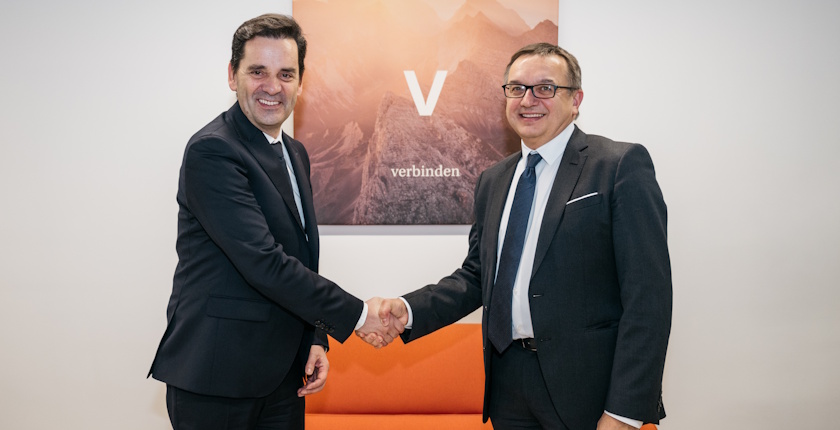
José Luis Blanco and Dietmar Reiner (photo: Verbund)

Of note, Christopher Billot, Sales Director for the Mediterranean region of Nordex Group, said at Belgrade Energy Forum 2025 that the Balkans is a key region for his company.

The deal would cover approximately 50% of Verbund Green Power’s wind project pipeline.

Blanco: We’re creating a clear path to deliver reliable, cost-efficient wind energy together with Verbund

Nordex Group CEO José Luis Blanco explained that through this multi‑year framework, the company would provide the turbine capacity to convert an ambitious pipeline into clean generation across six multi‑country markets in Europe.

“With up to 700 MW of our latest 7 MW class onshore turbines slated across Austria, Germany, Spain, Italy, Romania and Albania, we’re creating a clear path to deliver reliable, cost-efficient wind energy together with Verbund through 2030,” he stressed.

Strugl: The collaboration with Nordex strengthens our supply options as our projects mature

Blanco recalled that late last year Nordex received a first order from Verbund for nine N175/6.X turbines for Romania. “We’re expanding our footprint in this country,” he added.

According to Verbund CEO Michael Strugl, the collaboration with Nordex supports his company’s strategic objective of scaling up renewable generation across Europe.

“It strengthens our supply options as our projects mature, allowing us to secure the supply chain in a very competitive environment and deliver on Mission V targets, contributing to a secure and accelerated energy transition in our markets,” Strugl added.

by in News

From Austria to Albania: Verbund, Nordex to deploy 105 wind turbines across Europe

Verbund Green Power has forged a partnership with Nordex Group for the potential procurement of wind turbines.

Verbund Green Power, a subsidiary of Austrian state-owned energy utility Verbund, has entered into a multiyear framework agreement with leading wind turbine producer Nordex Group for the potential procurement of wind turbines of up to 700 MW in total capacity, according to a joint press release.

The agreement runs through 2030.

The power plants are planned in six markets

The agreement was officially signed in Verbund Green Power’s Madrid office by Dietmar Reiner, Managing Director of Verbund Green Power, and José Luis Blanco, CEO of Nordex Group.

They expressed willingness to facilitate the supply and delivery of up to 105 Nordex onshore wind turbines for Verbund Green Power’s wind projects. They are are planned in Austria, Germany, Spain, Italy, Romania and Albania, the update reads.

europe verbund nordex Dietmar Reiner José Luis Blanco
José Luis Blanco and Dietmar Reiner (photo: Verbund)

Of note, Christopher Billot, Sales Director for the Mediterranean region of Nordex Group, said at Belgrade Energy Forum 2025 that the Balkans is a key region for his company.

The deal would cover approximately 50% of Verbund Green Power’s wind project pipeline.

Blanco: We’re creating a clear path to deliver reliable, cost-efficient wind energy together with Verbund

Nordex Group CEO José Luis Blanco explained that through this multi‑year framework, the company would provide the turbine capacity to convert an ambitious pipeline into clean generation across six multi‑country markets in Europe.

“With up to 700 MW of our latest 7 MW class onshore turbines slated across Austria, Germany, Spain, Italy, Romania and Albania, we’re creating a clear path to deliver reliable, cost-efficient wind energy together with Verbund through 2030,” he stressed.

Strugl: The collaboration with Nordex strengthens our supply options as our projects mature

Blanco recalled that late last year Nordex received a first order from Verbund for nine N175/6.X turbines for Romania. “We’re expanding our footprint in this country,” he added.

According to Verbund CEO Michael Strugl, the collaboration with Nordex supports his company’s strategic objective of scaling up renewable generation across Europe.

“It strengthens our supply options as our projects mature, allowing us to secure the supply chain in a very competitive environment and deliver on Mission V targets, contributing to a secure and accelerated energy transition in our markets,” Strugl added.

by in News

Petrović: ERS to launch construction of Trebinje 3, Hrgud this year

Power utility Elektroprivreda Republike Srpske plans to start the installation of the Trebinje 3 solar power plant and the Hrgud wind farm this year, according to CEO Luka Petrović.

Elektroprivreda Republike Srpske (ERS) already has projects in a ready-to-build phase through its subsidiary companies, Luka Petrović explained, Srpskainfo reported.

ERS is the dominant power producer and supplier in the Republic of Srpska, one of the two entities constituting Bosnia and Herzegovina.

The Trebinje 3 solar power plant, with a capacity of 53 MW, will be built first. The company has received a concession from the Government of the Republic of Srpska. The tender for construction will be launched soon, Petrović stressed.

Preparations for the Hrgud wind farm are also in the final stages, he added. Multi-year wind potential assessments and environmental studies have been completed. Petrović anticipates the start of construction this year. The planned capacity is 60 MW.

Wind energy attracts the most attention in the Republic of Srpska

The installation of the two power plants is expected to be finished by the end of 2027 or in early 2028, he asserted. The CEO added they would significantly contribute to the development of renewable energy sources.

He noted that wind energy attracts the most attention in the entity. The concessions commission of the Republic of Srpska has also awarded approvals for the construction of more than 1,200 MW of photovoltaic plants, Petrović recalled.

In his view, investments by private firms are dormant because solar power production is no longer profitable without battery energy storage systems (BESS).

Petrović: Many solar projects will not be completed

Solar energy prices are significantly lower than they were four to five years ago, Petrović added.

Many of these solar projects will not be finished, he underscored.

Of note, ERS decided late last year to revive the Hrgud wind project, which was halted after a decision by the German government.

The concession for the Trebinje 3 solar power project was awarded in April 2025.