by in News

Greece’s energy transition at risk amid gridlock with batteries, new tech

An overreliance on photovoltaics, combined with slow growth in the deployment of new technologies and storage, threatens Greece’s renewable energy future.

The country achieved rapid growth in renewable energy in the past five years, and penetration has surpassed 50% of the electricity mix.

However, the very success of the energy policies also led to significant issues that the government must address to achieve its 2030 goals.

Curtailments slashing profits as storage lags

This year, curtailments doubled from 2024, alongside a rising number of hours of zero or negative prices in the day-ahead market (DAM). It means that producers are subject to a loss of profits. Some investors have exited the Greek market as a result of worsening conditions.

At the same time, there is a huge licensing queue, as more than 15 GW of projects have acquired connection terms from the network operators. This is more than enough to cover the country’s 2030 goal and even beyond.

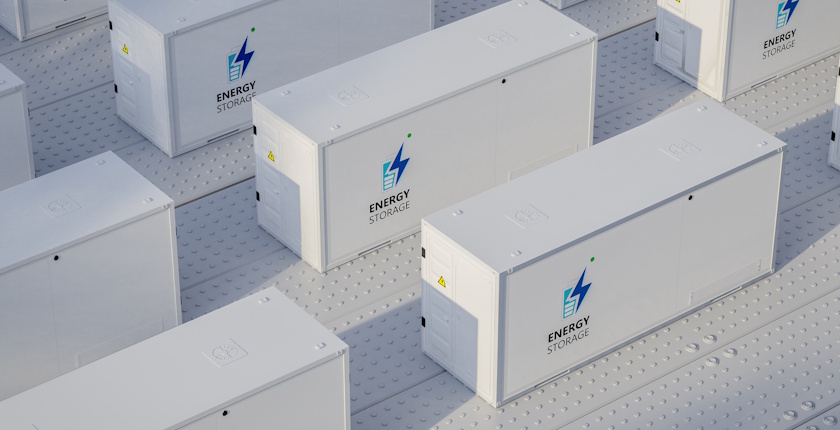
Energy storage is expected to provide a solution to curtailments and zero pricing. However, the first standalone battery projects have been pushed back nine months, as the original deadline was deemed too strict. Developers are competing against time to secure European funding through the Recovery and Resilience Facility (RRF), via the National Recovery and Resilience Plan Greece 2.0.

Energy mix diversification needed

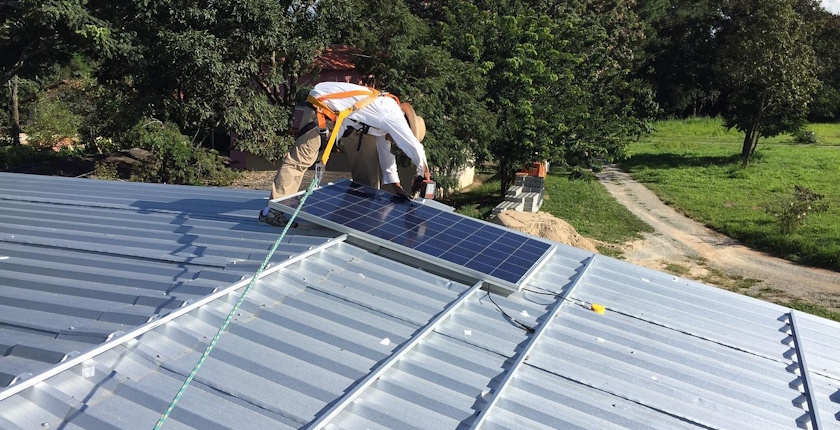
Photovoltaics dominate the energy mix and this year they are expected to surge by 2 GW. There is growth in every segment of the solar market, although small investors complain of a preferential policy towards larger players. This is especially evident in the case of energy communities and farmers‘ photovoltaics, where such issues are abundant.

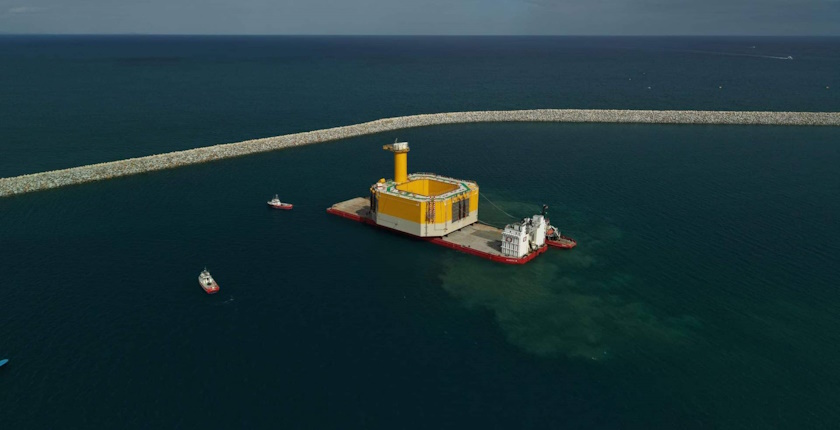
Wind installations have stalled in recent years and the offshore wind program has not made any progress towards the 2030 goal. The European Commission warned that investments in carbon capture and storage (CCS) are in danger of losing RRF funding at the current pace. Pilot projects in hydrogen are advancing, but it remains uncertain when they will become operational and at what scale.

The special renewables account turned red this summer, with an ever-growing deficit. There is also uncertainty surrounding projections about the country’s future electricity demand. Sales of electric cars and heat pumps are lagging behind the European average, while large data centers are seen as a way to increase consumption and support more power production.

All these issues mean that Greece may not achieve all its 2030 goals from the final National Energy and Climate Plan (NECP). The country initially presented a highly ambitious first version, but later reduced it to keep costs low for consumers.

by in News

Đokić: We expect EU to accept request to postpone CBAM implementation

Minister of Energy and Mining of the Republic of Srpska Petar Đokić expressed belief that the European Commission would postpone the implementation CBAM, set for January 1, 2026.

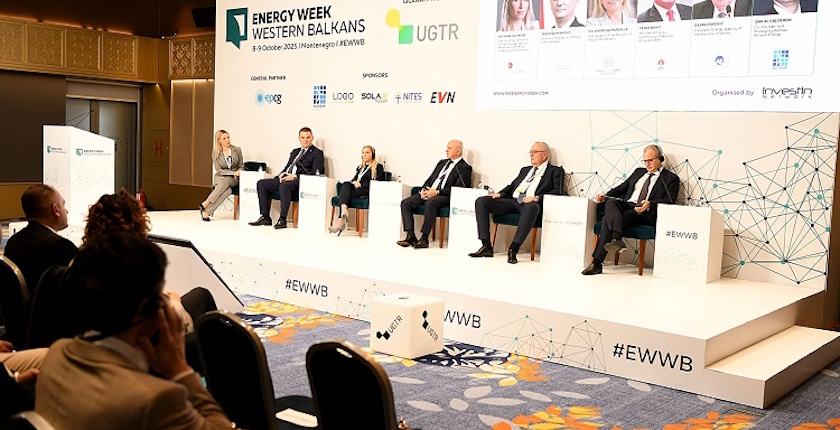
Minister Petar Đokić participated in the Energy Week Western Balkans 2025 conference, where he recalled that the Republic of Srpska has signed several contracts with domestic and foreign partners for the construction of renewable power plants totalling 2,170 MW. The investments are estimated at BAM 5 billion (EUR 2.56 billion).

Đokić noted that the construction of two hydropower plants, of 159 MW and 34 MW, is underway, as well as of the Buk Bijela hydropower plant, in cooperation with Serbia.

Đokić: The rest of the world no longer follows European politics

So far, two contracts have been signed for the construction of wind farms, of which one is in an advanced stage of construction, he underlined. The plan is to complete all contracted projects within three years, according to Đokić.

It will further increase the share of clean energy in total production.

He highlighted the challenges posed by the European Union’s policies, including the Carbon Border Adjustment Mechanism (CBAM), a cross-border emissions tax. Its application could have a very negative impact on the local economy, Đokić noted.

As the rest of the world no longer follows European policies, the question arises whether Europe has the right to impose new obligations on its members, especially if such obligations cause economic disruptions, he claimed.

Đokić: The request of the Republic of Srpska to postpone the implementation of CBAM is justified

Đokić said that the request of the Republic of Srpska to postpone the implementation of CBAM is justified. According to him, Bosnia and Herzegovina has fulfilled the last condition, the adoption of the law on the electricity regulator, transmission, and market, as it is now in parliamentary procedure.

CBAM brings fees on the CO2 emissions of goods imported to the EU from countries that don’t have equivalently priced carbon schemes. They include the Western Balkans.

The tax will cover cement, iron and steel, aluminum, fertilizers, electricity, and hydrogen.

Serbia, which is also part of the Western Balkans region, launched public consultations last week on its draft Law on Greenhouse Gas Emissions Tax and the Law on Carbon-Intensive Product Imports Tax.

Đokić spoke at a panel with Minister of Energy and Mining of Montenegro Admir Šahmanović, Ambassador of Italy to Montenegro Andreina Marsella, President of the Energy Agency of the Republic of Serbia (AERS) Dejan Popović, and co-founder and managing partner of Alcazar Energy Daniel Calderon.

by in News

North Macedonia receives applications for 4.2 GW of battery projects

North Macedonia has received requests for new wind farms, solar parks and gas power plants of 7,100 MW in total capacity, as well as for standalone batteries and ones that would be co-located with power plants, for 4,172 MW in overall operating power, Minister of Energy, Mining and Mineral Resources Sanja Božinovska revealed.

The Ministry of Energy, Mining and Mineral Resources has received an initiative for a 495 MW gas-fired cogeneration plant. Sanja Božinovska said the details are unknown as the submitted documentation is too extensive and is still being analyzed, state news agency MIA reported.

Of note, there were already proposals for gas-fired power plants in the country. The government has signed a memorandum of understanding with Kazancı Holding on projects for such facilities.

Investors intend to install standalone and co-located BESS

Investors submitted initiatives for wind farms of 1,590 MW altogether, as well as for a total of 402 MW and 1,080 MWh in battery energy storage systems (BESS) that would be co-located with wind farms.

So-called initiatives were also received for solar power projects totaling 5,052 MW and accompanying BESS of 1,174 MW in combined capability and 3,018 MWh in capacity. Investors plan to build standalone batteries of an overall 2,596 MW and 3,094 MWh, respectively.

Božinovska said it is great news, though that it’s more important whether the documentation is valid.

She recalled that the recently adopted Law on Energy introduced an annual construction plan for priority energy projects.

October 1 was the deadline for foreign investors to submit their projects

October 1 was the deadline for foreign investors interested in the construction of power plants to submit documentation, Božinovska noted. The ministry received a huge number of documents and it will take time to process them, she stressed.

Batteries became all the rage in the renewable energy sector worldwide. North Macedonia is set for a landmark achievement in its region.

YESS Power plans to commission a 60 MW BESS in the country next month. It would be the first large facility of its kind in the Western Balkans.

by in News

Indian ChemVolt Global, Serbian ElevenEs forge strategic partnership for batteries

Indian company ChemVolt Global and ElevenEs, based in Serbia, established a strategic partnership to accelerate the development of battery energy storage systems (BESS), lithium-ion cell manufacturing, and electric vehicle (EV) battery pack supply across India.

ChemVolt Global is a clean energy and storage solutions company and ElevenEs develops lithium-ion battery cell technology.

The collaboration combines ChemVolt Global’s extensive expertise in project development, engineering, procurement, and construction (EPC), and local market execution, with ElevenEs’ industry-leading experience in lithium-iron-phosphate (LFP) cell technology and large-scale European manufacturing, the Serbian company said.

The first objective is to deploy advanced BESS solutions across India and the Middle East

The two companies aim to establish a robust ecosystem for advanced energy storage and electric mobility in India.

The partnership includes three key objectives.

The first one is to deploy advanced BESS solutions across India and the Middle East, with advanced lithium ion cells with a higher life cycle and less degradation and high thermal stability.

The two companies also plan lithium-ion cell manufacturing collaboration based on ElevenEs’ pioneering European cell technology and production capabilities, the update reads.

The companies intend to accelerate the adoption of electric mobility across India

The third goal is to supply EV battery packs to original equipment manufacturers (OEMs).

The partners plan to enable domestic automotive manufacturers to access high-performance, safe, fast-charging and reliable battery packs, accelerating the adoption of electric mobility across India.

Gupta: The deepening industrial and technological cooperation between India and Europe

ChemVolt Global CEO Kuldeep Gupta said the partnership with ElevenEs represents a defining moment for India’s clean energy and electric mobility ambitions.

“Beyond technology, this collaboration reflects the deepening industrial and technological cooperation between India and Europe, positioning both nations at the forefront of the global energy transition,” he stated.

Mikać: We are not just participating

According to Nemanja Mikać, CEO of ElevenEs, the partnership is a decisive move to bring the company’s proven LFP cell technology and large-scale manufacturing to India.

ElevenEs’ expertise, in his words, is ready to deliver nothing less than advanced battery solutions that will be foundational to India’s energy independence.

“We are not just participating; we are positioned to define the future of this industry,” Mikać stressed.

by in News

Under Reform Agenda, BiH commits to aligning electricity prices with market

By adopting the Reform Agenda, Bosnia and Herzegovina committed to liberalizing the electricity market, aligning electricity prices with market levels, and supporting the green transition through renewable energy sources and energy efficiency.

The Council of Ministers of Bosnia and Herzegovina adopted the Reform Agenda, after a delay longer than one year, and submitted it to the European Commission. It made the move just as the deadline, set by the commission, was about to expire on September 30.

If it failed to adopt the document, BiH would have lost EUR 108 million out of a total of EUR 976.6 million that was allocated to the country under the Growth Plan for the Western Balkans, worth around EUR 6 billion overall. Due to the delay, BiH already lost EUR 108 million in July.

The first step in price harmonization is to conduct a study on different scenarios

One of the obligations from the Reform Agenda is to align household electricity prices with market prices in the region and the European Union by 2027, domestic media reported.

The measure is aimed at making price formation more transparent and integrating BiH better into the regional and European electricity markets.

The first step in price harmonization would be to conduct a study on different scenarios for price deregulation for households. It will serve as a tool to plan price increases. The study is expected to be completed before the end of the year.

The current price of electricity in BiH is below ten eurocents

According to the latest Eurostat data, for the second half of last year, the price of electricity for households in BiH was below ten eurocents. Prices in the European Union ranged from ten eurocents in Hungary to 40 in Ireland.

The European Commission is required to assess the Reform Agenda and approve it if it matches expectations. Payments are directly linked to the measures that governments in the region vow to implement.

Of note, in early July, the European Commission proposed the first tranches from the support package, worth EUR 87.7 million in total, for projects in Albania, Montenegro, and Serbia.

by in News

EU solar jobs headed to first decrease in decade

Jobs in the European Union’s solar industry reached a record level last year, however they are dropping in 2025.

Nevertheless, the decrease in solar jobs this year could be only temporary, according to SolarPower Europe’s latest report.

Europe’s green job expansion continued in 20254, with EU solar jobs rising to a record high of 865,000. The sector’s 5% increase outperformed the wider EU labour market’s 0.8% growth, the EU Solar Jobs Report 2025 showed.

Most jobs, 86%, are provided by the solar deployment sector.

EU solar employment will face a temporary drop in 2025, of 5% decline to 825,000 jobs, due to slower solar deployment and manufacturing challenges, the update reads.

Nevertheless, the association expects solar workforce to grow over the coming years and reach 916,000 by 2029.

Solar delivers 825,000 quality jobs for Europe in 2025, said Walburga Hemetsberger, CEO of SolarPower Europe. It is incredible, she added.

“However, this falls short of the one million solar job mark we were hoping to reach by now, and for the first time in a decade, solar jobs growth has halted. We can’t ignore this warning. EU leaders have the opportunity to reverse course, stabilise the market, support EU solar manufacturers, and strengthen its skills strategy,” Hemetsberger stated.

The main reason for the decrease this year is a slowdown in residential solar. The share of EU rooftop solar workforce has been shrinking for the last three years, from 73% in 2022, to 59% in 2024, and it is projected to land at 56% in 2029, according to the report.

In July, the association estimated that the EU’s annual solar installations would come in weaker year-on-year in 2025 for the first time in a decade. The warning coincided with the month when solar power became the EU’s biggest electricity source for the first time.

Germany remained the leading EU country for employment

The largest national solar markets also represented the largest sources of solar employment in the EU.

Germany remained in the lead in employment last year, with around 128,000 direct and indirect full-time equivalent (FTE) jobs. However, the level tumbled from 154,000, registered in 2023, despite a jump in new installations to 17.2 GW from 15.1 GW.

Spain ranked second, with 122,000 FTEs. Italy saw significant growth, with the solar job market surpassing 100,000 workers, placing it third in the EU. Other top markets included Poland (90,000), France (66,000), Romania (62,000), and Hungary (47,000), the report adds.

SolarPower Europe issued ten policy recommendations for maintaining job growth:

  1. Establish a European solar skills intelligence hub.
  2. Scale and stabilize funding for renewable skills, with simplified access for small and medium-sized enterprises (SMEs).
  3. Map existing skills initiatives.
  4. Conclude sectoral agreements to enable large-scale retraining.
  5. Run coordinated campaigns to improve the attractiveness of technical green careers as well as apprenticeships and vocational training.
  6. Promote gender balance and diversity in solar careers.
  7. Develop cross-renewable career pathways and portable competence frameworks.
  8. Introduce a European solar skills passport.
  9. Adopt an electrification skills strategy that links photovoltaics with heat, mobility and storage.
  10. Invest in advanced digital and artificial intelligence (AI) training.
by in News

Croatian company Brodosplit delivers equipment for French floating wind farm pilot project

Croatian shipbuilding company Brodosplit has manufactured steel structures for the floating foundations of an offshore wind farm in one of the first such pilot projects in France.

The site for the EolMed project is approximately 18 kilometers from the coastal town of Gruissan in the Occitanie region of southern France.

Qair is leading the consortium, which includes oil and gas giant Total Energies and floating platform provider BW Ideol as its partners. The three 10 MW wind turbines, supplied by Vestas, are about to be installed at a spot where the sea is 55 meters deep.

According to Brodosplit, the project has entered its final phase after the successful launch of the three floating platforms in September.

It isn’t Brodosplit’s first floating wind farm project

The Croatian firm said it manufactured and delivered the metal structures for the floating foundations, in line with the highest quality and safety standards.

Before joining the EolMed project, it entered the floating wind farm segment through cooperation with Ocergie. Brodosplit has created an innovative measuring buoy, OCG-Data, for the France-based company’s Blue Oracle project.

The EolMed project received state support as part of the investments for the future program

The buoy is equipped with a LiDAR (light detection and ranging) system and advanced sensors for monitoring wind, waves, currents, and sea biodiversity, enabling the collection of crucial data for the development of floating wind farms and the preservation of the marine environment, Brodosplit pointed out.

Since EolMed’s initial design in 2016, it has been adjusted and adapted to incorporate the latest technologies. Initially comprising four wind turbines, the number has since been reduced to three for equivalent capacity.

The change also affected the choice of material for the floats – now steel instead of concrete. Construction began in April 2023, and completion is planned for this year.

The project received state support through the Investments for the Future Programme (Programme d’Investissements d’Avenir – PIA). The goal is to demonstrate the economic viability of floating wind farm technology.

Photo: Brodosplit
by in News

Croatia’s HEP to install 90 solar power plants on rooftops of its facilities

Croatia’s power utility Hrvatska Elektroprivreda intends to install 90 solar power plants on its facilities across Croatia.

HEP ESCO, a subsidiary of Hrvatska Elektroprivreda (HEP), has launched a public procurement for the installation of 90 photovoltaic plants under a design-and-build model and on a turnkey basis.

The firm develops, implements, and finances energy efficiency projects based on the ESCO model.

The investment is estimated at EUR 5.3 million, and the deadline for submitting bids is November 3.

HEP ESCO plans to sign a contract with the best bidder within 90 days after selecting it. The deadline for the completion of works will be 18 months, according to the public call.

Five groups of solar power plants

The public call is divided into five geographical groups in Croatia.

Group 1 is for Zagreb and its surroundings. Solar panels would be installed at ten locations, with an estimated investment of EUR 1.2 million. Group 2 covers hydropower plants Zavrlje, Orlovac, Peruća, and Zakučaci in the coastal region of Dalmatia, as well as power distribution facilities. The works in the segment are valued at EUR 770,000, local media reported.

Four cities in the region of Slavonia make up the third group, with 20 locations. Solar panels would be installed for EUR 1.21 million in Virovitica, Požega, Vinkovci, and Vukovar.

HEP has over 50 solar power plants on the rooftops of its buildings and facilities

A total of 15 locations in the areas of Međimurje and Zagorje and the Sisak-Moslavina county, and including hydropower plant Ozalj, all in northwestern Croatia, are in the fourth group. The estimated value is EUR 1.1 million.

The value of the investment in Istria, Primorje, and Gorski Kotar is EUR 1.03 million. It entails the Fužine hydropower plant, Rijeka, Vinodol, and electricity distribution facilities.

Of note, HEP has more than 50 solar power plants on the rooftops of its buildings and facilities.

HEP Proizvodnja, HEP’s power production arm, has 12 PV plants on administrative buildings, thermal power plants and hydropower plants. The total capacity is about 1.5 MW. HEP ODS, the country’s distribution system operator, has another 44 solar power plants with a total capacity of 1.1 MW on its roofs.

by in News

Batteries totaling 5,899 MWh in grid connection procedure in Serbia

Investors in Serbia are obtaining approvals for connecting their planned battery energy storage systems of an overall 2,021 MW and 5,899 MWh to the grid. The projects are for standalone batteries and ones that would be co-located with power plants.

Battery energy storage systems (BESS) are rapidly expanding worldwide, and Southeast Europe is no exception. European Union member states in the region such as Bulgaria and Romania are making major strides, while the other countries are trying to catch up. For example, Bosnia and Herzegovina, Montenegro, North Macedonia and Serbia.

As of September 29, Serbia’s transmission system operator (TSO) Elektromreža Srbije (EMS) received a total of 12 applications for the development of connection studies for standalone BESS, Nebojša Vučinić, manager of the Development Division of EMS, told Balkan Green Energy News.

Two applications were submitted in January for the study development interval of March 1 to June 30, 2025, and ten more were received for the current interval, which lasts from September 1 to December 31. Out of the first two applications, the one from Green BESS KV is no longer valid, because the firm didn’t submit a bank guarantee.

EMS develops connection studies every year in two intervals.

The following companies are in the process of connecting standalone BESS:

  • MKBDP Energy
  • Green Land New Energy
  • Green Mountain New Energy
  • BP WPP
  • Blue BESS KV
  • Red BESS KV
  • Yellow BESS KV
  • ENLIGHTNES PV OPERATIONS
  • ENLIGHTNES PV PARK
  • Gridflex

As for the status of their applications, MKBDP Energy has submitted a bank guarantee, and the signing of the grid connection contract is expected.

For the other ten requests, the grid connection studies are underway. They are expected to be completed by December 31.

Standalone storage facilities are planned in Valjevo, Vranje, Subotica, Kovačica, Vršac, Leskovac, Kragujevac, Kruševac, Jagodina, and Ćuprija.

A total of 55 battery projects are in the connection procedure

The 11 standalone storage projects amount to 1,072.66 MW and 2,981.98 MWh altogether, Vučinić said.

The 44 storage facilities that would be co-located with power plants utilizing variable renewable energy sources would have 948.46 MW and 2,917.31 MWh, as stipulated in the Law on the Use of Renewable Energy Sources.

All battery storage projects in the grid connection process amount to 2,021.12 MW and 5,899.29 MWh, Vučinić stressed.

MKBDP Energy’s project has advanced the most in the connection process

According to Vučinić, implementation of BESS projects depends on the progress that an investor achieves. Currently, MKBDP Energy’s investment has passed the most milestones in the connection process, he added.

EMS noted that the grid connection process for standalone battery storage is defined by the Law on Energy and bylaws.

The deployment of standalone batteries complements the integration of power plants running on variable renewable sources

The state-owned company sees no obstacles to integrating standalone BESS into the transmission system. The TSO expressed commitment to assisting investors while maintaining the safety of the entire power system’s operation.

EMS also called the increase in applications for standalone batteries a positive development.

The emergence of standalone batteries complements the integration of power plants utilizing variable renewable energy, and since a large number of such power plants are expected to be connected, the integration of standalone storage helps the power system’s flexibility and safety, Vučinić underlined.

by in News

Hydropower plant Dabar to be completed by end-2027

The Dabar hydropower plant is expected to be completed by the end of 2027, according to Petar Đokić, Minister of Energy and Mining of the Republic of Srpska.

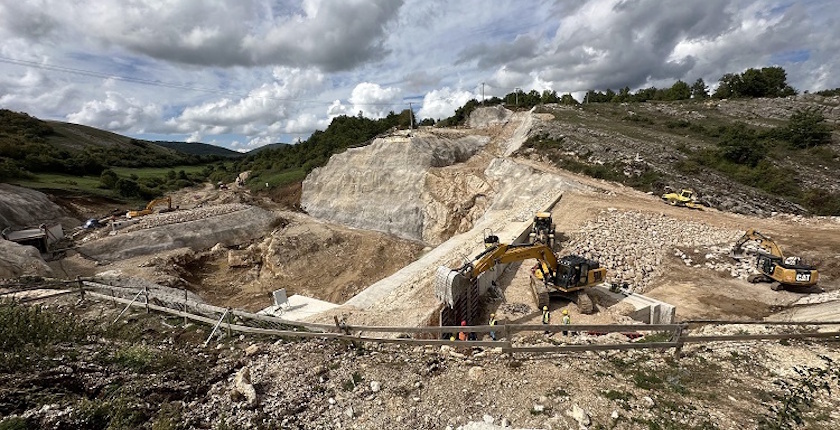
The operation of the Dabar hydropower plant, the most complex hydropower facility, in which EUR 339.5 million has been invested, will bring benefits for the entire eastern Herzegovina area, Petar Đokić said during a visit to the construction site, Srna reported.

The works on the 160 MW hydropower plant, with an expected annual production of 500 GWh, began in June 2023.

Đokić noted that the project is located in four municipalities – Nevesinje, Bileća, Berkovići, and Ljubinje – spanning 40 kilometers. As a key part of the project, Đokić highlighted a 12-kilometer tunnel, which is nearly finished.

Đokić: It is an exceptional construction undertaking, the first of its kind in the world in the 21st century

It is an exceptional construction undertaking, the first of its kind in the world in the 21st century, the minister said and added that he is proud to be part of the project from the beginning of its implementation.

Photo: Ministry of Energy and Mining

He spoke with the representatives of China-based Gezhouba Group Co., the main contractor, and Integral and Elnos, its domestic subcontractors.

Đokić stressed that some issues regarding the construction were discussed. HPP Dabar is a financially demanding project, he noted.

Photo: Ministry of Energy and Mining

Wind farm Grebak will be completed by 2027

Minister Đokić recalled that projects for solar power plants and wind farms with a capacity of 680 MW are under development in the territory of Nevesinje municipality, with investments estimated at an overall EUR 409 million.

He underlined that one of the projects, the Grebak wind farm, has experienced delays. Numerous companies, including the investor in the Grebak project, are hostages to the European policies mistrustful of Bosnia and Herzegovina, Đokić claimed.

Of note, the Republic of Srpska is one of the two political entities of BiH. The concession for the Grebak wind farm was granted in April 2019.

The minister expressed hope that the investor would overcome the challenges, conclude a financing agreement, secure equipment, and start construction work, expected to be finished by late 2026 or early 2027.

Investors in solar projects in Nevesinje are currently preparing documentation and purchasing equipment, Đokić said.