by in News

Nova Power & Gas to install 200 MW BESS in Romania

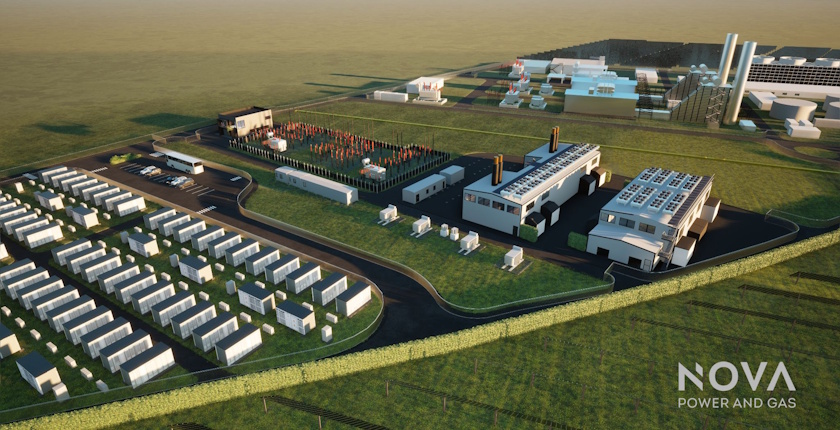
Amid a battery investment frenzy in Romania, Nova Power & Gas is about to build a battery energy storage system that would double the current total capacity in the country. In addition, the company is beginning the construction of a 150 MW gas power plant.

Nova Power & Gas claims it is currently the national leader in energy storage capacity, with 240 MWh already operational. According to the latest data published by Transelectrica, the current total battery energy storage capacity in Romania is 398.8 MWh.

Part of the Romanian E-Infra Group, Nova Power & Gas announced the launched of the largest battery energy storage project in Romania.

The installation in Florești, Cluj county, will have 200 MW in operational power and a capacity of 400 MWh, and is expected to become operational by the end of 2025, according to the firm.

The first phase of the gas power plant is scheduled to become operational by December 2026

Once completed, the facility will double Romania’s current total energy storage capacity, directly contributing to the stability of the national grid and the integration of renewable sources, the company added.

Apart from the BESS, Nova Power & Gas said it is starting to build a 150 MW gas-fired power plant in Câmpia Turzii, with the first phase set to come online by December 2026.

By 2028, the company plans to install one more gas power plant, of 200 MW, and energy storage systems of another 600 MW / 1,200 MWh overall.

Costea: Investments in gas plants to support balance and flexibility in the energy system

“Through these investments, we aim to maintain and strengthen our leadership in energy storage, while making substantial investments in gas-fired electricity generation to support balance and flexibility in the national energy system,” Septimiu Costea, CTO of Nova Power & Gas, stated.

The company is also active in the region, with subsidiaries in Bulgaria, Serbia, Hungary, and Moldova.

Contractors picked for two more investments over the last two weeks

Over the past two weeks, there were two major announcements regarding BESS investments.

Romanian engineering and technology company Simtel said it would install a 98.6 MW / 196.4 MWh system for Turkey-based Güriş.

Simtel noted that the size of the facility is significant, considering that the total battery energy storage capacity in Romania was 398.8 MWh at that moment.

Another firm, Visual Fan, plans to build a 65 MWh energy storage unit for Renovatio Trading in Toplița in Romania’s Harghita county.
by in News

Resalta takes over Statkraft’s operations in Croatia 

Statkraft has sold its Croatian platform to Resalta, according to the two companies. The transaction, which includes the renewable energy project pipeline and the transfer of employees, was signed and closed in July.

Norway-based Statkraft has decided to leave India, the Netherlands and Croatia in October 2024. The company started its Croatian operations in 2021. Resalta is part of Aggreko Group from Scotland.

Statkraft, Europe’s largest renewable energy producer, and Resalta, an international energy services provider operating across Central and Eastern European markets, and with a growing presence in Croatia, said Statkraft sold its Croatian platform to Resalta.

The integration process is now underway, they added.

Bellanger: Resalta will continue to develop the Croatian platform to its full potential

The platform includes a significant pipeline of renewable energy projects fully aligned with Resalta growth plan. The integration of the local team into Resalta’s operations ensures continuity and builds on their expertise to advance future development, the two companies claimed.

“We are delighted to have completed this transaction with Resalta, a company that shares our commitment to renewable energy and sustainability. With the team of seasoned project developers, we are confident that Resalta will continue to develop the Croatian platform to its full potential,” said Arnaud Bellanger, Statkraft Country Manager Croatia and France.

Komazec: Resalta is expanding its footprint in renewable energy sector in Croatia

Resalta Group CEO Luka Komazec stressed that the acquisition represents a significant step forward for Resalta as the company expands its footprint in renewable energy project development in Croatia.

“We are excited to welcome the talented team from Statkraft and look forward to working together to advance our shared vision of a sustainable energy future,” he added.

In Komazec’s words, Resalta is committed to ensuring a smooth transition for all stakeholders involved.

by in News

Construction of largest wind farm in Western Balkans kicks off in Štip in North Macedonia

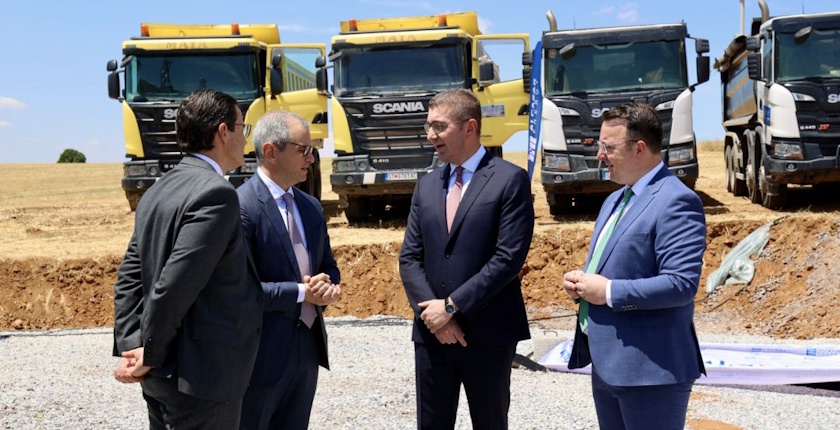
The construction of the largest wind farm in the Western Balkans region has begun in North Macedonia. The Government of North Macedonia and investor Alcazar Energy Partners held a groundbreaking ceremony near the city of Štip for the 400 MW facility.

The Štip wind farm will cover an area of 326 hectares in the municipalities of Karbinci, Radoviš, and Štip, southeast of the capital city of Skopje. Alcazar Energy Partners, which is developing the largest renewable energy platform in the Western Balkans, plans to invest USD 500 million and install 55 wind turbines, which would generate electricity equivalent to the needs of 100,000 households.

The largest operational wind farm in the Western Balkans is Čibuk 1, with a capacity of 158 MW, while the largest project in the pipeline is Maestrale Ring, also in Serbia, for 854 MW.

Co-Founder and Managing Partner of Alcazar Energy Daniel Calderon praised North Macedonia’s readiness to launch such a large-scale project.

The investment will create 600 jobs

The foundation is being laid for a project worth over USD 500 million, which will create 600 jobs, provide clean energy, and reduce carbon dioxide emissions, he stated.

Photo: Government of North Macedonia

Calderon also recalled that in a Bloomberg analysis, investments in renewable energy in the Western Balkans were estimated at USD 11 billion. Due to its advantages, including location, North Macedonia can expect to receive 30% to 40% of it.

North Macedonia’s Prime Minister Hristijan Mickoski noted that the ceremony represents the fulfillment of what the newly formed government promised and agreed with the investor a year ago. He added it is only the first phase.

The power plant will produce 1 TWh of electricity per year

There are many more ideas on how the investment can add even greater value and be more significant both for the investor and for North Macedonia, but it will be discussed at a later stage, according to Mickoski.

He added that the power plant would generate 1 TWh of electricity per year.

North Macedonia currently has two wind farms – Bogdanci, with a capacity of 36.8 MW and a 15 MW expansion underway, and Bogoslovec, of 36 MW, in which the Green Growth Fund (GGF) is a minority shareholder.

The largest wind farm in Europe has a capacity of 2,000 MW

In mid-April, Alcazar Energy Partners signed a development support agreement for the Štip project with the International Finance Corporation, a member of the World Bank Group. The company has a 1.6 GW pipeline of greenfield onshore wind and solar assets,

Of note, the largest operational wind farm in Europe is Markbygden in Sweden, with a capacity of 2,000 MW. Among the top ten, there is another wind farm in Sweden and one in Norway, while the others are in the United Kingdom. The list also includes the 600 MW Fântânele-Cogealac-Gradina wind park in Romania.

by in News

Elektrohertz gets concession for solar project in Republic of Srpska

Republic of Srpska, one of the two entities constituting Bosnia and Herzegovina, is set to host another solar power plant. It would be one of the largest ones, with a capacity of 150 MW.

In late May, construction began on Bosnia and Herzegovina’s largest solar power plant so far, with a capacity of 125 MW. The most recently inaugurated large photovoltaic facility was Stolac, with a capacity of 64 MW.

Now the Ministry of Energy and Mining of the Republic of Srpska signed a concession agreement for the construction and operation of the Javor photovoltaic plant in the municipality of Rogatica.

In May, the entity government granted the concession to Elektrohertz, based in the same town in the country’s east, for the construction and operation of the facility, of 150 MW.

The concession has been granted for 30 years

The estimated annual production of the solar park is 197 GWh, and the concession was granted for a period of 30 years. The total investment value is BAM 194.4 million (EUR 99.4 million). It is scheduled to go online within the next four years, the ministry said.

Before finalizing the concession contract, the concessionaire, private developer Elektrohertz, delivered a one-off payment to the budget of the Republic of Srpska, of BAM 971,932 (EUR 497,000).

The Rogatica municipal budget is entitled to 95% of the concession fee

When the facility becomes operational, the concessionaire will be obligated to pay a fee of BAM 0.0055 (EUR 0.0028) per kWh of generated electricity to the budget of the Republic of Srpska. A 95% share is allocated for the Rogatica municipal budget.

The most recent concession granted by the entity Ministry of Energy and Mining went to state-owned power utility Elektroprivreda Republike Srpske (ERS) for the proposed Trebinje 3 solar power plant. It was in late April.

It is ERS’s third concession for photovoltaic plants.

by in News

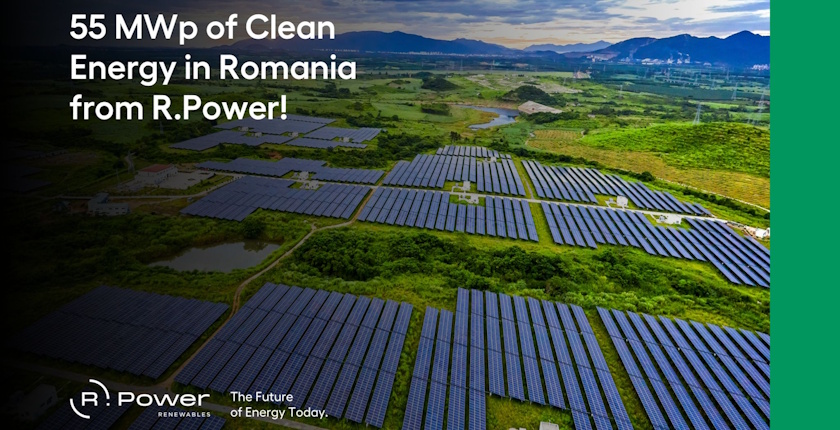
R. Power Renewables to start construction of 55 MW PV project in Romania

Polish company R. Power Renewables is about to build a solar power plant in Romania of 55 MW in peak capacity.

R. Power Renewables published the main details ahead of the start of construction of its Lazuri Solar Park, located in Satu Mare county in Romania.

The company said it is a major step forward in its commitment to expanding sustainable energy infrastructure in Central and Eastern Europe.

The works are set to begin before the end of September, according to the update. The facility is scheduled to come online in the third quarter of 2026.

The Lazuri Solar Park will be connected to the national grid through a newly constructed 110 kV switching station

The Lazuri Solar Park will be connected to the national grid through a newly constructed 110 kV switching station, implementing a loop-in/loop-out connection on the existing Vetiș–Abator 110 kV overhead transmission line, according to R. Power Renewables.

The project will not only contribute to Romania’s renewable energy targets but also strengthen local energy security and grid resilience, the Warsaw-based company underlined.

The solar farm of 55 MW in peak terms would generate approximately 70 GWh of clean electricity per year — enough to meet the annual needs of over 48,000 households and avoid nearly 17,000 tonnes of CO2 emissions.

Lazuri is one of five R. Power’s solar farms in Romania that secured a 15-year power purchase contract

Lazuri is one of five R. Power’s solar power projects in Romania that secured 15-year contracts-for-difference (CfDs) through the national auction scheme, the firm said and added that in total, it won support for 85 MW of installed capacity.

In December 2024, after years of delays, the Ministry of Energy finally selected projects of an overall 1.53 GW, slightly more than the quota, in the first round of auctions.

Wind and solar power projects are eligible for subsidies under the CfD scheme. The first round of auctions resulted with ten and eleven winning bids, respectively.

by in News

Three quarters of global solar, wind capacity under construction is in China

China continues to dominate the renewable energy landscape, representing 29% of all planned wind and solar capacity and a staggering three quarters of the segment under construction, according to the Global Energy Monitor.

All prospective projects in the world would have 4,484 GW in total capacity, of which 1,302 GW is in China. Next are Brazil, Australia and the United States.

The group consists of announced projects and the ones in the pre-construction phase and under construction. The list comprises solar projects of 20 MW or more and wind projects of at least 10 MW, both in terms of connection capacity.

There is 689 GW of new wind farms and photovoltaic plants in the world under construction. China accounts for 74% or 510 GW, the data reads.

According to Global Energy Monitor’s Global Solar Power Tracker, China has over 709 GW of prospective solar capacity, representing over one third of the global pipeline in 2025.

The country’s wind capacity has a similar rate of growth as solar, per Global Energy Monitor’s Global Wind Power Tracker. There is over 590 GW in prospective phases — nearly 530 GW onshore and 63 GW offshore. China’s prospective capacity accounts for about one third of the worldwide total.

The rapid buildout underscores China’s drive to accelerate its renewable energy development, with at least 205 GW slated to come online by the end of the year, though the total capacity is expected to be even higher, the update shows.

“China is fast-tracking a 1.3 TW pipeline of utility-scale solar and wind projects. Of this, 510 GW is already under construction, primed to be added to China’s 1.4 TW solar and wind capacity already in operation,” Global Energy Monitor said.

As of March 2025, China is the world’s offshore wind powerhouse, growing from under 5 GW in 2018 to 42.7 GW in 2025 (50% of global capacity).

China’s 1.4 TW in operating solar and wind parks outstrips thermal power

In Q1 2025, China’s combined wind and solar capacity surpassed its total coal and gas segment for the first time, supplying nearly 23% of the country’s total electricity consumed, compared to roughly 18% in Q1 2024, the National Energy Administration (NEA) revealed.

Moreover, the increase in output from solar, wind, and other non-fossil energy met China’s additional electricity demand in Q1 2025. Its operating solar and wind capacity soared to 1.4 TW altogether, now accounting for 44% of the global total. It is also more than the combined total of the European Union, United States, and India, the Global Energy Monitor underscored.

by in News

EU nuclear ambitions: EUR 241 billion in investment needed by 2050

The European Commission has estimated that EUR 241 billion in investment is needed for the implementation of member states’ plans for nuclear energy until 2050. It includes extending the lifetime of existing power plants and building new large-scale reactors.

Additional investment is needed for small modular reactors (SMRs), advanced modular reactors (AMRs), and microreactors, as well as for fusion for the longer-term future, according to the European Commission’s eighth Nuclear Illustrative Programme (Programme Illustrative Nucleaire – PINC).

A few days ago, the World Bank decided to lift its 2013 moratorium on financing nuclear energy projects amid growing global electricity demand.

The commission has now underlined that for some EU countries, nuclear energy is an important component of decarbonization, industrial competitiveness, and security of supply strategies. The commission estimates that over 90% of electricity in the EU in 2040 will be produced from decarbonized sources, primarily renewables, complemented by nuclear energy.

Jørgensen: To truly deliver the clean energy transition, we need all zero- and low-carbon energy solutions

Nuclear installed capacity across the EU is projected to grow from 98 GWe in 2025 to 109 GWe by 2050.

The commission recognizes that all zero- and low-carbon energy solutions are needed to decarbonize the EU’s energy system. Accordingly, the Nuclear Illustrative Programme is intended to help drive member states’ actions towards priority areas.

“To truly deliver the clean energy transition, we need all zero- and low-carbon energy solutions. Nuclear energy has a role to play in building a resilient and cleaner energy system. Ensuring the necessary framework conditions will allow the EU to keep its industrial leadership in this sector while also upholding the highest safety standards and responsible management of radioactive waste,” said Dan Jørgensen, Commissioner for Energy and Housing.

The highest standards of nuclear safety are among the EU’s top priorities

The commission highlighted the highest nuclear safety standards and a responsible management of radioactive waste as a top priority for the EU.

The commercialization and market uptake of cutting-edge nuclear technologies, including SMRs, AMRs, microreactors, and fusion for the longer term, will also be central for the sector’s future in Europe and beyond, according to the EU’s executive arm.

A requirement under Article 40 of the Euratom Treaty, PINC provides a comprehensive, fact-based overview of nuclear development trends, as well as the scope of investment needs across the EU.

The commission will publish the final version of PINC after receiving the Opinion of the European Economic and Social Committee.

by in News

Đukanović: EPCG is implementing three key strategic policies

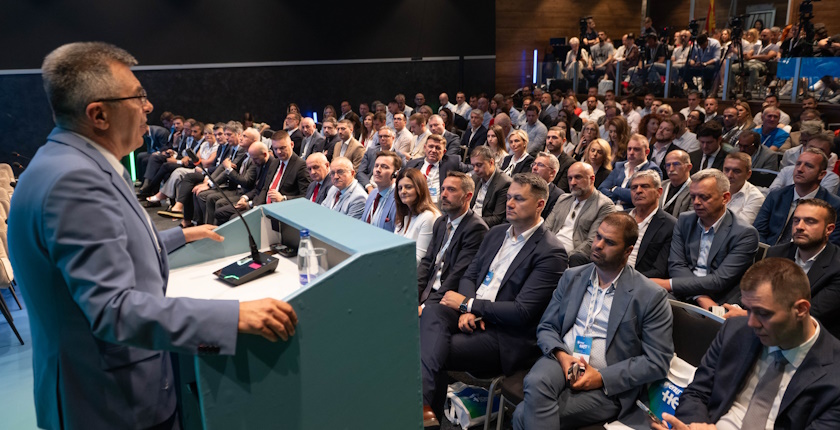
State-owned power company Elektroprivreda Crne Gore is currently implementing three key strategic policies: producing energy at the point of consumption, utilizing existing hydropower infrastructure to connect solar power plants, and developing battery energy storage systems, the President of EPCG’s Board of Directors, Milutin Đukanović, said at the EPCG NET conference.

EPCG NET is organized by Elektroprivreda Crne Gore (EPCG) and its partners. At the event’s opening in Budva, Milutin Đukanović announced the start of trial operations at the Gvozd wind farm and the launch of tendering to install battery energy storage systems (BESS).

“Our ‘produce where you consume’ policy is, in our view, the winner of the energy transition. At the same time, hydropower infrastructure provides technical and meteorological compatibility for connecting solar power plants. However, these activities will have their full impact only with the development of BESS,” Đukanović noted.

The 10,000+ solar project is expected to begin in mid-2026

He also said that numerous investments are underway. By the end of the year, the 55 MW Gvozd wind farm, an EUR 82 million investment backed by KfW, will enter trial operation. Early next year, the company expects to start construction on the second phase of the project – Gvozd 2, with a capacity of 21–22 MW.

A few days ago, tendering was completed for the installation of the eighth unit at the Perućica hydropower plant, with a capacity of 58 MW. The new unit is expected to be online in 2027.

Đukanović recalled that the 3000+ project, featuring 35 MW of solar capacity across 3,500 facilities, has been completed, while the 5000+ project is halfway through, with 40 MW and over 4,000 consumers involved. The 10,000+ project is expected to start in mid-2026, he added.

Preparations are ongoing for the construction of several solar power plants: Krupac (50 MW), Štedim (150 MW), four plants at Kapino Polje (totaling 50 MW), as well as facilities in the Željezara Nikšić industrial complex, where 10 MW of the planned 30 MW has already been installed.

The first tendering for procuring BESS will be launched soon, covering two systems with a capacity of 30 MW each (120 MWh). By the end of 2027, EPCG plans five such systems, with a combined capacity of 600 MWh.

The energy transition is a great opportunity for progress

Đukanović also announced an upcoming call for bids for the construction of a tunnel that will connect the Krupac and Slano reservoirs, valued at EUR 12 million, as part of a broader plan to enhance the utilization of the water resources of Nikšićko polje, Montenegro’s largest karst field. Additionally, plans are underway to develop Lake Liverovići and underground waters in the Nikšićko polje, with total investments potentially exceeding EUR 1 billion and a projected capacity reaching 700 MW, he added.

“The energy transition is a great opportunity for progress, but also a serious threat if risks are overlooked. Time is of the essence – we must act immediately,” Đukanović urged, calling on forum participants to focus their discussions on concrete solutions and offer ideas for improving existing policies.

The two-day forum has brought together numerous experts, investors, and representatives of institutions from the energy sector across the region and Europe.

by in News

SunCarlito Beta issues tokens to raise funds for 2.2 MW solar power plant in Serbia

SunCarlito Beta has offered tokens worth EUR 1.7 million to raise funds for installing a 2.2 MW solar power plant near the northern Serbian city of Subotica. The deadline to purchase the tokens is July 9.

Investors can buy 3,402 tokens called Solar Token ST_1, priced at EUR 500 each.

This is the second token offering in Serbia’s energy sector. In mid-March, AVR Solar Park successfully completed the first tokenization in the energy sector, introducing this innovative financing method to the Serbian market.

So far, SunCarlito Beta has invested EUR 450,000 in land acquisition, permitting, and digital token technology. The total project value is estimated at EUR 2.1 million, according to the White Paper, approved by the Securities Commission.

A building permit has been obtained for the construction of the solar power plant

A construction permit for the solar power plant has been granted, and the installation is well underway. Trial operation is expected to begin by the end of 2025, with an anticipated annual output of 1.2 GWh.

The company has identified two main goals: to finance the project with funds raised via tokenization and to allow interested parties to invest in digital assets.

A digital token has the characteristics of a dematerialized bond, the company explained.

The tokens yield an annual return of 6%

The tokens are issued for a period of 15 years and yield an annual return, a fixed interest rate of 6% per year calculated on the remaining principal, according to the White Paper.

During the investment period, token owners are entitled to principal repayments. The first two repayments are set at 33% of the principal every five years, with the final repayment at 34% of the principal.

The tokens can be purchased by individuals or legal entities, including entrepreneurs, with residence in the Republic of Serbia, who must also pass the accreditation process.

by in News

Brussels to Croatia: Boost renewables, flexibility for cheaper industrial electricity

The European Commission advised Croatia to speed up the installation of renewable energy capacities and add non-fossil flexibility solutions, to reduce electricity prices for businesses.

Electricity prices for the corporate sector in Croatia in the first half of 2024 were the third-highest in the European Union, according to the European Commission.

At about EUR 0.244 per kWh, only Cyprus and Ireland had higher prices – EUR 0.2578 per kWh and EUR 0.256 per kWh, respectively.

“In the first half of 2024, Croatia had the third-highest electricity price in the EU for business/industrial consumers. This continues to hold back the cost competitiveness of Croatian companies,” the commission said in its Country Specific Recommendations under the 2025 European Semester: Spring Package.

Despite a record increase in solar capacity in 2024, by 397 MW, its share in electricity generation remains low, at less than 6%.

An increase in the uptake of large-scale renewables, including solar, is hampered by an uncertain regulatory framework

Against this background, faster roll-out of new renewable energy capacity, especially solar, and non-fossil flexibility solutions could help reduce price levels, the update reads.

The commission said an increase in the uptake of large-scale renewables, including solar, is hampered by an uncertain regulatory framework as the national energy regulator HERA is yet to adopt updated grid connection fees. The situation creates uncertainty for potential investors and has effectively prevented projects from securing financing, the European Union’s executive arm stressed.

Increased investment in the electricity grid, beyond what’s in Croatia’s National Recovery and Resilience Plan (NRRP), would be crucial for an uptake of renewable energy, according to the commission. In the short term, it would imply incentives for hybrid storage and renewable energy projects, the document reads.

Speed up rollout of smart meters

In 2023, only 24% of household consumers had smart meters installed, which is significantly less than the EU target of 80%.

To be able to fully capitalize on an increased uptake of renewable energy, significant funding for the rollout of smart meters – beyond the measures in the NRRP – and dynamic contracts will be needed to empower consumers and foster demand response, the commission noted.

It advised Croatia to review and simplify administrative procedures for installing renewable energy facilities, including in multi-apartment buildings, and for setting up energy communities.

The measures would help reduce the reliance on fossil fuels and increase the low number of registered energy communities, according to the commission.