by in News

Serbia shelves plan for strategic partnership for 1 GW in wind farms

Serbia has revised its Baselines of the Energy Infrastructure Development Plan and Energy Efficiency Measures for the period up to 2028, with projections up to 2030. It defines priority projects in the energy sector.

The Baselines of the Energy Infrastructure Development Plan and Energy Efficiency Measures were adopted in mid-2023 at the proposal of the Ministry of Mining and Energy. In the new document, the construction of 1 GW wind farms is no longer among the priority projects. The plan was to involve with a strategic partner, similar to the project for 1 GW of solar power plants, which is currently being developed by state-owned power utility Elektroprivreda Srbije (EPS) with a strategic partner.

The development plan serves as a basis for the implementation of Serbia’s Energy Development Strategy and the National Energy and Climate Plan (NECP).

The ministry outlined projects across six sectors

The investment cycle planned for the upcoming strategic period represents the backbone of the Energy Development Strategy. It provides the foundation for further assessments and projections of the targeted energy mix through 2030 and 2050. It aligns with the international commitments undertaken in the process of European Union accession as well as with the obligations within the Energy Community, the document reads.

The plan includes projects in six sectors: electricity generation, transmission network, distribution network, natural gas, oil and petroleum products, and energy efficiency. It ranks the projects within each sector.

The most significant change in renewable energy is that the construction of wind farms with a combined capacity of 1 GW is no longer on the list of priority projects.

Solar power plants Kolubara and Morava on the priority list

The 1 GW of solar power and the Kostolac wind farm remained among the four most important endeavors, while the new items are the Morava and Kolubara photovoltaic projects. The Klenovnik solar power plant has been removed from the list. According to the document, the projects on the list are the most advanced.

In total, EPS has 41 projects for power generation or 20 less than in the original document.

Fewer projects, but more realistic

The authors explained that the number of renewable energy projects is lower, but more realistic and better optimized. The entire EPS investment portfolio across all areas requires significant funds and loans, so it would not be realistic to pursue a larger number of high-value projects that cannot be financially or physically implemented within a reasonable timeframe, the document underlined.

It was also taken into account that many private projects, mainly wind farms, are being developed through the auction system, so the focus of EPS’s projects is primarily on solar power plants, to create a balanced ratio between wind and solar power plants in the system. The company’s project for the wind farms with a strategic partner remained a backup option, in case an additional capacity is needed, according to the document.

There are new items on the list for the electricity distribution network

There were no changes in the transmission network segment. The priority projects are the third and fourth sections of the Trans-Balkan Corridor, the Pannonian Corridor, and Beogrid 2025. The list contains 66 investments, five fewer than in the original plan.

Changes have been made regarding investments in the power distribution network. The most important projects now are the 110/10 kV substations National Stadium and Surčin. Automation of the medium-voltage network was kept, together with the ongoing replacement of wooden poles with concrete ones and the replacement of electricity meters with smart ones.

The integrated system for remote monitoring, diagnostics, and control of the low-voltage distribution network has been removed from the list. Instead of replacing transformers at 10 kV, 20 kV, 35 kV, and 110 kV voltage levels, the new focus is on the reconstruction of 25 substations of 110/35 kV.

Planning the first district cooling systems

The energy efficiency part of the baselines was changed the most.

The previous document was primarily focused on reviewing and securing financial support for ongoing projects, while the current one is envisaging expanding the scope and considering new financial mechanisms and sectors that require additional support.

Among other initiatives, the Strategic Plan for the Decarbonization Policy of the District Heating and Cooling Sector in the Republic of Serbia is being prepared. It is a joint endeavour of the European Bank for Reconstruction and Development (EBRD), the Association of Serbian Heating Plants, and the Ministry of Mining and Energy.

The project aims to define steps to improve the district heating system, including heat storage, the use of heat pumps, utilization of heat generated from waste treatment, and the development of the first district cooling systems, according to the document.

Special attention will be devoted to developing guidelines for expanding the district heating system by connecting new users while simultaneously shutting down fossil fuel boilers. It will directly contribute to reducing CO2 emissions and pollution, the authors noted.

by in News

Greenpeace maps Croatia’s path to 100% renewable power by 2030

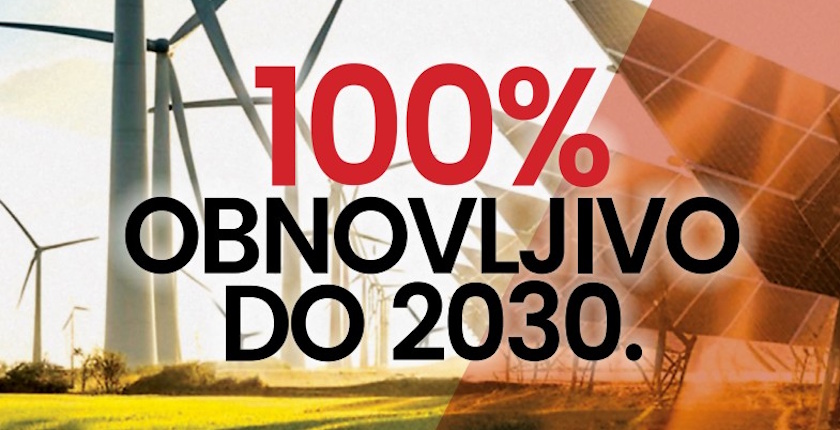
Croatia can fully transition to using only renewable electricity by 2030, according to Greenpeace. The organization presented its study: 100% Renewable by 2030 – A Plan for the Green Transition of Croatian Power Sector in the country’s capital Zagreb. Political will is the precondition for materializing the goal, it said.

The study was conducted by an expert team led by Professor Goran Krajačić from the Faculty of Mechanical Engineering and Naval Architecture in Zagreb. Of note, at the end of 2023, the share of electricity produced from renewables in total power consumption in the country exceeded 55%.

Greenpeace Croatia said the climate crisis, fueled by the fossil fuel industry, affects the entire world, including Europe and Croatia. The results are lost human lives and increasing material damage caused by extreme weather conditions, the organization noted.

Its ambitious goal for Croatia, to source all electricity from renewables by 2030, is based on a shift to solar and wind energy, as well as investments in the transmission network. The study puts the necessary solar power capacity at 5 GW, compared to 4.2 GW from wind.

In just five years, Greece, installed 7 GW of solar capacity, and Hungary added 5.5 GW

Greenpeace cites examples from the region. Croatia has five years until 2030, and the same period was enough for Greece to install 7 GW of solar capacity, while Hungary added 5.5 GW. Croatia has only recently reached 1 GW from photovoltaic system, despite ranking among the top countries in Europe in terms of solar potential, Greenpeace said.

According to Professor Goran Krajačić, the results of the study indicate that a firm political decision is needed to achieve 100% renewable electricity consumption in Croatia.

Andrić: A strong shift toward renewable energy is a strategic move for energy security, reduced dependence on fossil fuels, and economic opportunities

“Such a decision should include clear signals toward improving the power system, building and strengthening the grid and ensuring energy storage. Renewables also promote the democratization of society by involving citizens in energy communities to produce, store, and share energy,” Krajačić said.

Petra Andrić, program lead at Greenpeace in Croatia, stressed that a strong shift toward renewable energy as an ecologically sound decision. But it is also a strategic move for strengthening energy security, reducing dependence on fossil fuels, and creating economic opportunities, she added.

Calculation: large investments but even greater savings


Power generation mix

The authors estimate the costs of building facilities and underwater cables and strengthening cross-border grid capacities at EUR 12.2 billion by 2030. If it were financed through commercial loans at a 5% interest rate with a 25-year repayment period, the annual payment would be EUR 864 million, according to the calculation.

The repayment would be financed from savings and additional revenues, the study revealed.

Savings from allowances for CO2 emissions from electricity production, using 2023 as a reference year with a CO2 price of EUR 83 per ton, would amount to EUR 198 million by 2030.

The presentation of the study also featured a panel discussion

Fuel cost savings for electricity production were estimated at EUR 231.2 million in 2030, and profits from net exported electricity would bring in EUR 360 million.

The savings and profits would cover the annual repayments of loans needed to build the facilities, making them financially viable under commercial terms, the study claimed.

The event also hosted a panel discussion featuring Professor Krajačić, member of the Croatian Parliament Dušica Radojčić, Mario Stipetić (Ministry of Environmental Protection and Green Transition), Davor Škrlec (Faculty of Electrical Engineering and Computing – FER), Melani Furlan (Green Energy Cooperative – ZEZ), and Nina Domazet (Croatian Chamber of Commerce – HGK). It was moderated by Robert Pašičko from the United Nations Development Programme (UNDP).

by in News

Montenegro to bring in international partner for HPP Komarnica project

Montenegro’s state-owned power utility Elektroprivreda Crne Gore plans to include an international partner in the development of the Komarnica hydropower project. The company cited the experiences of Norway, Austria, and France. The plant, with a proposed capacity of 172 MW, is expected to have an annual production of around 213 GWh.

Elektroprivreda Crne Gore (EPCG) has four hydropower plants in the pipeline: Komarnica, Kruševo, Ćehotina, and Sutorina. The Komarnica and Kruševo projects have made the most progress, but challenges remain. Environmental organizations oppose the Komarnica project, while in September last year, President of EPCG’s Board of Directors Milutin Đukanović noted that the project has been on hold for two years.

Importantly, Kruševo and Ćehotina have been mentioned as investments that could be implemented within a partnership with French state-owned power utility EDF.

EPCG now told Vijesti that it has temporarily withdrawn the environmental impact assessment (EIA) for the Komarnica project because the Environmental Protection Agency of Montenegro set a short deadline to revise it.

EPCG  intends to prepare a study on the project’s impact on Durmitor National Park, a UNESCO site

The plan is to include a renowned international partner, in cooperation with the Government of Montenegro, to ensure transparent and professional project implementation, particularly considering the experiences and best practices of countries like Austria, France, and Norway, according to EPCG, which claimed the three countries have successfully aligned environmental standards with energy development.

In addition to supplementing the EIA report, the company plans to conduct a study on HPP Komarnica’s impact on Durmitor National Park, a UNESCO site, in line with the international organization’s methodology. EPCG also intends to prepare the required environmental studies in a way that would match the rules of one of international financial institutions.

EPCG expressed the belief that, due to the differing views on hydropower plant construction, not only in Montenegro but worldwide, the best solution is to implement the projects together with a reputable international partner, and in cooperation with the government. The utility said it would prove its commitment to transparency and adherence to all European Union standards.

If Austria, France, and Norway could achieve compromise, so can Montenegro

EPCG expects to make a decision on the project and continue the process later this year.

The company pointed out that countries such as Austria, France, and Norway succeeded in finding a compromise between environmental protection, development, and necessary investments. Since they did it, EPCG sees no reason why Montenegro could not do the same in cooperation with companies from these countries.

Turning to the benefits of HPPs, EPCG recalled that they ensure the technical reliability and stability of the power system and integration of a significant number of planned solar power plants and wind farms.

by in News

Billot: Balkans is key region for Nordex

This year Nordex Group is celebrating its 40th anniversary as one of the largest wind turbine manufacturers in the world. “We’re number one in Europe and the Balkans is actually a key region for us,” Christopher Billot, Sales Director for the Mediterranean region of Nordex Group, said at Belgrade Energy Forum 2025.

Nordex installed its first N27 turbine with a capacity of 250 kW in 1986, just one year after the company was founded. In 1995, it became the first in the world to start serial production of a megawatt-class turbine. Today, the capacity of its units ranges from 4 MW to 7 MW.

Christopher Billot noted that the company has been manufacturing wind turbines for the last 40 years.

Nordex entered the Balkans 10 years ago

“We’re number one in Europe and the Balkans is actually a key region for us where we focus intensively. We’ve been there for the last 10 years, and so far we have achieved up to 1 GW of wind turbine installation but also construction across Croatia, Montenegro, and Serbia,” Billot stated.

Nordex is spreading within the region and that’s key, in his words, for the company and its future in the region and overall.

[wpcc-iframe title=”Christopher Billot, Director Sales Region Mediterranean, Nordex Group at Belgrade Energy Forum 2025″ width=”500″ height=”281″ src=”https://www.youtube.com/embed/rUDrekSnYGI?feature=oembed” frameborder=”0″ allow=”accelerometer; autoplay; clipboard-write; encrypted-media; gyroscope; picture-in-picture; web-share” referrerpolicy=”strict-origin-when-cross-origin” allowfullscreen=””]

“We’re happy to be a silver sponsor of the Belgrade Energy Forum. This is for us a great opportunity to network and to basically partner with all the institutions, clients, and continue to grow and build the network for growth in the Balkans,” Billot stressed.

The global company has marked its 40th anniversary at the recently held Belgrade Energy Forum 2025 (BEF 2025), affirming its commitment to the region.

Helping the pioneering steps in renewables development

Nordex installed and contracted an overall 1 GW in Croatia, Montenegro, and Serbia, encompassing 222 wind turbines across 16 wind farms. Looking at the company’s portfolio, it can be said that it plays a pioneering role in the development of renewable energy sources in the region.

Here are a few examples.

In November last year, it signed an agreement with Montenegro’s state-owned power utility Elektroprivreda Crne Gore (EPCG) for its first wind farm, Gvozd, with a capacity of 54.6 MW. The contract is worth EUR 46.4 million.

A few months earlier, it was announced that Nordex would participate in the expansion of the largest wind farm in Serbia. It received an order for 22 turbines with a total capacity of 154 MW for the Čibuk 2 project. The investors are Masdar and Taaleri SolarWind III Fund.

Nordex was also a partner to Croatian state-owned Hrvatska Elektroprivreda (HEP) in building its first wind power plant. The contract for the delivery of 18 wind turbines with a total capacity of 58 MW for the Korlat wind farm was signed in July 2019.

by in News

TPG Rise Climate takes over Aurora Energy Research

TPG Rise Climate, the climate investing platform of global alternative asset management firm TPG, has acquired Aurora Energy Research, a global provider of power market forecasting and analytics for critical investment and financing decisions.

As part of the transaction, existing private equity sponsors of Aurora Energy Research – CGE Partners, 22C Capital, and the company’s CEO John Feddersen will all make significant reinvestments in the business, Aurora said.

Leveraging TPG’s extensive resources and expertise, Aurora will be well-positioned to enter its next phase of growth and innovation, while continuing to deliver meaningful impact, directly advancing the mission and investment objectives of both the Company and the Rise Climate Fund, according to the company’s press release.

Feddersen: A major milestone along Aurora’s journey

This transaction represents a landmark deal in the data and analytics sector, and specifically the energy and commodities vertical. It is expected to close in the second half of 2025, subject to customary regulatory approvals and closing conditions, the update reveals.

“This investment represents a major milestone along Aurora’s journey. TPG Rise Climate’s portfolio is driving the energy transition forward globally and we’re delighted to have the opportunity to contribute to this exceptional track record,” said John Feddersen, Aurora Energy Research Founder and CEO.

Beckley: Aurora’s service offering has already proved invaluable

According to Edward Beckley, Partner at TPG, with increasing power demand across the globe, Aurora’s service offering has already proved invaluable. “We expect it to have strong growth prospects in the US, Asia and beyond,” he added.

Chloe Holding Curtis, Partner at CGE, said she is proud to have supported Feddersen and his team at Aurora in its growth journey. CGE is delighted to remain investors alongside management, TPG Rise and 22C in this next phase of growth, Curtis asserted.

Founded in 2013 and headquartered in Oxford in the United Kingdom, Aurora Energy Research operates out of 17 offices worldwide covering Europe, North America, South America, Asia, and Australia. Its comprehensive services include market outlook packages for energy industry participants, advisory support, and innovative software solutions.

TPG was founded in San Francisco in 1992. It has USD 251 billion of assets under management, and investment and operational teams around the world.

by in News

Investment risk highest for nuclear power, lowest for solar

Nuclear power plants have the highest construction cost overrun and the longest time delays of all energy projects. In the clean energy sector, the worst marks for violation of set construction cost and timelines go to hydrogen, carbon capture and storage as well as gas power plants, according to a study by the Boston University Institute for Global Sustainability.

The average project costs 40% more than expected for construction and takes almost two years longer than planned, the Boston University Institute for Global Sustainability (IGS) said.

Its researchers used an original dataset 50% larger than the ones in previous literature. They examined cost overrun risks for 662 energy infrastructure projects across 83 countries built between 1936 and 2024, covering USD 1.358 trillion in investment and a total capacity of more than 400 GW.

In total, the study evaluated ten types of projects: coal-, oil-, and natural gas–fueled power plants; nuclear reactors; hydropower plants; utility-scale wind farms; utility-scale solar photovoltaic and concentrated solar power (CSP) facilities; high-voltage transmission lines; bioenergy and geothermal power plants; hydrogen production units; and carbon capture and storage (CCS) facilities.

Both hydrogen and CCS projects exhibited significant time and cost overruns

“We found that more than three fifths of the projects experienced cost overruns, with these overruns being particularly prominent in projects exceeding 1,561 MW in capacity. Positively, the escalation rate in cost overruns has been declining since 1976,” reads the study, published in the Energy Research & Social Science journal.

However, the findings show patterns of cost overruns varied by fuel source. Nuclear and fossil thermal projects exhibited higher cost escalation rates over time, whereas solar power projects showed a decline.

Critically, both hydrogen and CCS projects exhibited significant time and cost overruns, casting doubt on their ability to be rapidly scaled up, to address climate change or meet energy and climate policy priorities, the authors underlined.

The average nuclear power plant has a construction cost overrun of 102.5% and ends up costing USD 1.56 billion more than expected, IGS said.

Red flag for efforts to substantially push forward a hydrogen economy

“Worryingly, these findings raise a legitimate red flag concerning efforts to substantially push forward a hydrogen economy,” said Benjamin Sovacool, lead and first author of the study, director of IGS, and professor at Boston University’s Department of Earth and Environment.

In the results, solar energy and electricity grid transmission projects have the best construction track record and that they are often completed ahead of schedule or below expected cost.

Wind farms also performed favorably in the financial risk assessment, according to the study, called ‘Beyond economies of scale: Learning from construction cost overrun risks and time delays in global energy infrastructure projects’.

“Low-carbon sources of energy such as wind and solar not only have huge climatic and energy security benefits, but also financial advantages related to less construction risk and less chance of delays,” Sovacool stated.

For him, it’s further evidence that such technologies have an array of underrated and underappreciated social and economic value.

by in News

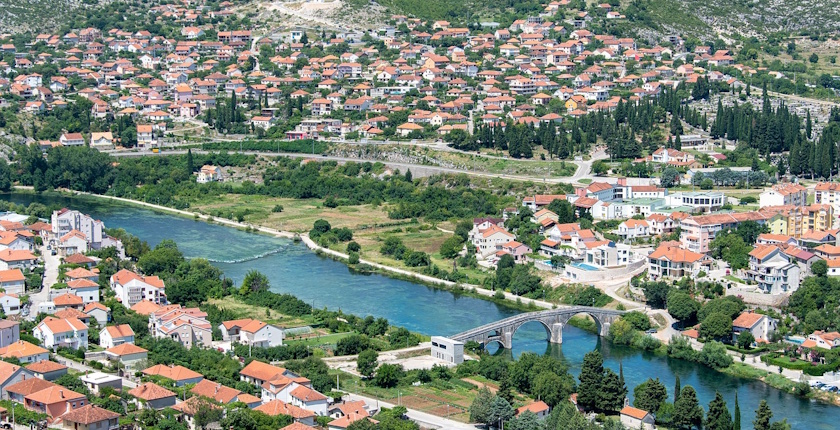
Zhongbo Group to install wind farm near Trebinje

In addition to the plans for several solar power plants in Trebinje, the city in the far south of the Republic of Srpska is paving the way for a wind farm. Chinese company Zhongbo Group is interested in investing in the project.

The Assembly of the City of Trebinje has approved the proposition to develop a zoning plan, the first step in the Trebinje 1 wind farm project, according to local news website Trebinje danas.

The owner of Zhongbo Group, registered in Banja Luka, is Everest Power Pte. Ltd., headquartered in Singapore.

The company has conducted research and preparatory works on the site and obtained approval from electricity transmission company Elektroprenos BiH.

The city authorities will monitor the development of the plan to protect the local population

According to Siniša Vučurević, head of the capital investments department of the City of Trebinje, the zoning plan covers three locations. The first is for the areas of Domaševo, Ždrijelovići, Ugarci, Čvarići, and Vrpolje. The second part are the villages Bodiroge, Vladušići, Turani, and Grkavci, and the third one entails Staro Slano, Tulje, and Dobromani.

He stressed that the department would oversee the preparation of the planning document to ensure the protection of the local population living in the area.

Vučurević added it is in the city’s interest to obtain revenue from concession fees. According to the regulations in the Republic of Srpska, one of the two entities making up Bosnia and Herzegovina, 95% of the fee belongs to the local authority.

Power utility Elektroprivreda Republike Srpske holds three concessions

As for solar power plants, state-owned power utility Elektroprivreda Republike Srpske (ERS) has been awarded the three concessions for photovoltaic plants – Trebinje 1, Trebinje 2 and Trebinje 3. The company Modul Energy holds the concession for the Čičevo PV plant on city territory.

In September last year, the Government of the Republic of Srpska signed an agreement on strategic cooperation in the field of renewable energy sources with two China-based companies. One of them was Zhongbo Group.

The first project envisaged by the agreement is a wind farm. A few months earlier, Zhongbo Group was mentioned as a potential investor in the Hrgud wind farm project.

by in News

Serbia drafts just transition action plan

Serbia plans to invest EUR 88.8 million by 2030, through its just transition action plan, in activities aimed at mitigating the impacts of the planned reduction in coal-based energy production, and ensuring a just transition.

The Ministry of Mining and Energy has published a draft just transition action plan and launched a public debate. Within the process, it scheduled a meeting for June 9 in the Chamber of Commerce and Industry (PKS) in Belgrade.

A decarbonization plan will be subsequently defined, including for the shutdown of coal power plants and the transition of underground mines run by state-owned firm JP PEU Resavica, the document reads.

The draft includes an analysis of the planned closure of two coal power plants

The draft contains an analysis of the planned closure of coal-fired thermal power plants Kolubara A and Morava, the oldest in the country. State-owned power utility Elektroprivreda Srbije (EPS) operates them, alongside four other such facilities and open pit mining complexes Kolubara and Kostolac, while Resavica comprises nine mines.

Of note, EPS presented a preliminary plan in 2023 for shutting down its coal power plants.

A significant workforce reduction in lignite production is expected after 2030

The total number of employees in coal power plants and coal mines in Serbia is 25,288. About 20,000 are in the mines.

If the Kolubara and Morava plants were closed, about 472 jobs in the Kolubara region could be indirectly affected, mainly within subcontractors and firms in EPS’s value chain. The draft’s authors estimated that at Rembas, the largest mine within JP PEU Resavica, a total of 930 jobs could be directly affected by 2030, with an additional 958 to 1,367 jobs in indirect risk, primarily in mining subcontractors.

New jobs in the renewable energy sector

Citing Serbia’s Integrated National Energy and Climate Plan, the document adds the thermal power plants are expected to operate at reduced capacity after 2030, but that an accelerated closure is not foreseen. It would result in significant job cuts in lignite production, the draft reads.

The draft’s authors expect the transition to a green economy to create full-time jobs by 2030 and beyond, nationwide, in the construction, management, and maintenance of new renewable energy capacities.

The renewable energy industry in Serbia is projected to create up to 6,105 jobs across the country by 2030, of which 4,397 in the solar energy sector.

EUR 60 million allocated for industrial parks

Out of the planned EUR 88.6 million, the largest portion – EUR 60 million, would be allocated for the improvement of economic infrastructure in existing industrial parks. Local authorities would get grants to upgrade them, amounting to EUR 12 million.

The measure is expected to diversify local economies and attract new investments within industrial parks in affected areas.

The second-largest allocation in the draft would be EUR 12 million for an entrepreneurship and self-employment support program. It includes grants and tax incentives for starting new businesses, with investments of at least EUR 50,000 for small and medium-sized enterprises and EUR 10,000 for self-employed individuals.

Again, the initiative is expected to facilitate the creation of at least 200 businesses and support 200 self-employed individuals.

The draft is the result of a project financed by the European Bank for Reconstruction and Development (EBRD). It began in October 2021.

by in News

Western Balkans power markets: hope for coupling with EU, concerns about CBAM

Energy Community contracting parties are doing their best to meet the challenging requirements and use the opportunity to couple their electricity markets with the European Union in Q4 2026 or Q1 2027. Apart from other benefits, coupling could represent a strong incentive for investment in renewables. However, the introduction of CBAM could be a step back for electricity markets, investments and energy transition in the region, according to representatives of transmission system operators, regulators, and power exchanges who spoke at Belgrade Energy Forum 2025.

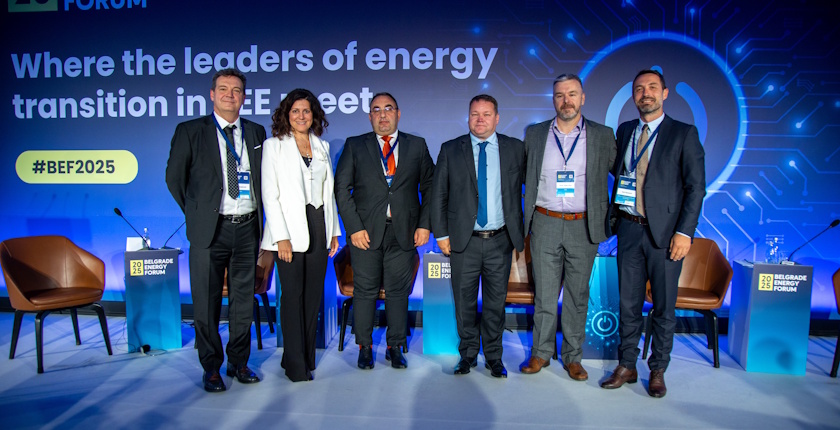
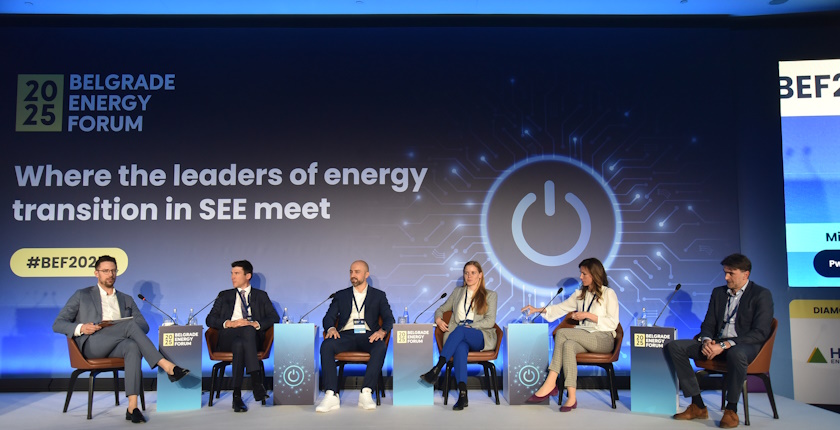
The third Belgrade Energy Forum, BEF 2025, organized by Balkan Green Energy News, welcomed four hundred participants from more than 30 countries from the region, Europe, and beyond.

Participants in the panel called Integration of Western Balkans electricity markets into internal European market through market coupling were:

  • Anže Predovnik, ADEX Group, CEO,
  • Jasmina Trhulj, Energy Community Secretariat, Head of Electricity Unit,
  • Ivan Asanović, TSO Crnogorski Elektroprenosni Sistem (CGES), CEO,
  • Marko Bislimoski, Energy, Water Services and Municipal Waste Management Services Regulatory Commission of the Republic of North Macedonia (RKE or ERC), President,
  • Zoran Vujasinović, EU Agency for the Cooperation of Energy Regulators (ACER), Policy Officer.

They discussed very hot topics including market coupling, the Carbon Border Adjustment Mechanism (CBAM), and blackouts.

Market coupling: The first go-live window scheduled for Q4 2026 or Q1 2027

Dejan Stojčevski and Jasmina Trhulj (photo: Balkan Green Energy News)

In his opening remarks, panel moderator Dejan Stojčevski, CTO of the SEEPEX power exchange, emphasized the importance of integrating the electricity markets of the Energy Community contracting parties (EnC CPs) with the EU internal electricity market as a key element in the energy transition process.

“Market coupling, which is a prerequisite for a successful energy transition, brings about greater transparency, increased competition, the establishment of a unified regional reference price, and stronger incentives for investment in renewable energy sources,” he stressed.

However, in his words, the integration is not without challenges. Countries in the region must address several issues, including the transposition of relevant regulations, the designation of nominated electricity market operators (NEMOs), and the operational connection process through the implementation of local projects, Stojčevski underlined.

Trhulj: The transposition of EIP enables accelerated electricity market integration into the single EU electricity market

The most important regulation is the Energy Integration Package (EIP). Jasmina Trhulj, Head of Electricity Unit of the Energy Community Secretariat, recalled that the transposition of EIP by the contracting parties enables their accelerated electricity market integration into the single EU electricity market before accession into the EU takes place.

To achieve that, EnC CPs have to adopt and implement the laws in a compliant manner, including extending ACER’s jurisdiction to the cross-border issues between EU member states and EnC CPs, she noted.

With regard to regional methodologies, ACER is competent to the extent that neighboring EU countries are involved, which is most often the case.

The preparation of the Market Coupling Operator Integration Plan is underway

Another important piece of the puzzle is the Market Coupling Operator Integration Plan (MCO IP), which will set guidelines and timelines for the implementation of the day-ahead and intraday market coupling of EnC CPs. Trhulj confirmed that the preparation is currently underway.

According to the draft MCO IP, the first go-live window is scheduled for Q4 2026 or potentially by Q1 2027, provided that the following prerequisites are met, she revealed.

The prerequisites are the transposition of the EIHP completed and its compliance verified; NEMO designated in a compliant manner; operational readiness of transmission system operators (TSOs) and NEMOs confirmed; and full contractual adherence completed.

“Provided that the legislation is transposed and its compliance verified and MCO IP approved by ACER, a NEMO may submit requests for accession to market coupling. This is followed by an accession process lasting up to 18 months,” Trhulj explained.

Serbia, Montenegro “locked and ready” for the first go-live window

Anže Predovnik and Zoran Vujasinović (photo: Balkan Green Energy News)

ADEX Group CEO Anže Predovnik shared Slovenia’s experience in various market coupling processes within the internal European electricity market, including different products such as day-ahead, intraday continuous, and intraday auction market coupling.

He particularly emphasized the importance of market coupling and its impact on liquidity, transparency, competition, and increased investments in renewable energy sources.

Predovnik presented HUPX’s integration into the ADEX Group, which was completed in late 2024, and highlighted the benefits ADEX brings to the market and its participants through the unification of the power exchanges of Slovenia, Serbia, and Hungary.

Enhanced transparency, the use of a unified trading and clearing technology, a single market operation, a harmonized market access process across the ADEX markets, alignment of rules, and improved client services are just some of the advantages offered by the formation of ADEX Group, he pointed out.

One immediate benefit already implemented is that market participants active in one ADEX market do not pay entry fees when accessing another market within the group.

Predovnik: Market participants active in one ADEX market don’t pay entry fees when accessing another market within the group

“Additionally, all resources within the group are contributing to the implementation of the local project for coupling the Serbian and Hungarian day-ahead markets, with the project expected to be completed at the first available slot, anticipated for Q4 2026 or Q1 2027,” Predovnik noted.

CEO of Montenegro’s TSO Crnogorski Elektroprenosni Sistem (CGES) Ivan Asanović also spoke about the market coupling project timeframe.

After compliance of the transposition of EIP is verified and provided that the necessary adaptations of the Day-ahead Operations Agreement (DAOA) and the Intraday Operations Agreement (IDOA) regarding the extension to the price zones of EnC CPs are adopted at the Market Coupling Steering Committee (MCSC) level, CGES and power exchange BELEN could sign these contracts, becoming non-operating parties in the MCSC, he revealed.

According to Asanović, obtaining the status in MCSC is a precondition for the submission of a request for change, and it is extremely important to carry it out in a timely manner, to complete the process, which lasts 18 months, until Q4 2026 or Q1 2027.

Of note, a week ago, North Macedonia’s Minister of Energy, Mining and Mineral Resources Sanja Božinovska said it is realistic to aim for coupling in the fourth quarter of 2026 or the first quarter of 2027.

CBAM and blackouts are looming

Anže Predovnik, Zoran Vujasinović and Ivan Asanović (photo: Balkan Green Energy News)

Apart from market coupling, the stakeholders in the region are also concerned about the developments regarding the Carbon Border Adjustment Mechanism (CBAM) as well as about blackouts.

Dejan Stojčevski (SEEPEX) sees the potential effect of CBAM on the electricity sector, starting on January 1, 2026, as a major issue.

The mechanism could pose a serious threat to the overall energy transition in the region, he added.

In addition, it is crucial to discuss system security and the root causes of the blackouts that recently occurred across Europe, Stojčevski pointed out.

“As there was no announcement that the application of CBAM will be postponed, we are operating under the assumption that it will apply to electricity as of January 1, 2026, given that the contracting parties will not be ready for market coupling by that date,” Jasmina Trhulj (Energy Community Secretariat) underlined.

Trhulj: There is a risk that certain stakeholders may shift their trading activities and renewable investments away from the region

In her words, it creates a number of risks to the functioning of the regional electricity market and the energy transition process that the secretariat has been raising on behalf of the contracting parties, electricity traders, power utilities, renewable energy developers, and other stakeholders.

She warned of a risk that certain stakeholders shift their trading activities and investments in renewables away from the region, thereby potentially undermining integration and decarbonization efforts.

Dejan Stojčevski, Jasmina Trhulj and Marko Bislimoski (photo: Balkan Green Energy News)

In addition, market participants are raising the issue of the considerable uncertainty regarding the exact technical implementation of CBAM for electricity – inherently unique within a group of goods, Trhulj recalled.

It is crucial for the countries in the region to speak openly with Brussels, said Marko Bislimoski, president of the Energy, Water Services and Municipal Waste Management Services Regulatory Commission of the Republic of North Macedonia. In addition, they need to come up with an action plan, together with the Energy Community Secretariat, defining the phases for the introduction of carbon pricing, in his view.

Bislimoski: We need to define the items for which we need financial assistance from the EU

“We need a serious approach and to say what we can do ourselves, and then immediately make it happen. At the same time, we need to define the items for which we will need financial assistance from the EU,” Bislimoski asserted.

The panelists agreed the region needs to present a single coordinated position on CBAM at an upcoming meeting on July 1 in Brussels.

Bislimoski recalled that North Macedonia recently adopted the new Law on Energy and added that bylaws would follow. The end goal is to provide security and stability in the transmission and distribution of electricity like in the EU, but also to lower the prices of electricity for consumers, he added.

Asanović: It is necessary to take urgent measures to improve coordination in the region

Regarding the issue of blackouts, Ivan Asanović (CGES) emphasized the importance of coordinating transmission capacities and maintenance plans for transmission lines across the wider Balkan region.

He recalled the challenging operational conditions experienced last winter, when exchanges planned along the Greece-Bulgaria-Romania-Hungary corridor were largely physically realized via the southwestern Balkans, leading to significant network stress. Such situations must be avoided through more comprehensive coordination, he warned.

It is necessary, in his words, to take urgent measures to improve coordination in the region to alleviate the current problems until the establishment of the mechanisms and structures prescribed in the CACM and SOGL regulations.

“These rules will fully harmonize the operation of the system in the region with the rest of Europe and significantly improve the security of functioning and create the necessary preconditions for connecting the markets of the WB6 countries with the single European market,” Asanović stressed.

Vujasinović (ACER): Full operational readiness of CCRs is not a prerequisite for market coupling

Zoran Vujasinović and Ivan Asanović

TSOs made a breakthrough in December. They agreed on a Joint Declaration on Regional Coordination. The declaration, facilitated by ENTSO-E, outlined a new comprehensive cooperation framework for the Western Balkans TSOs within South-East Europe.

Zoran Vujasinović, Policy Officer at the EU Agency for the Cooperation of Energy Regulators (ACER), mentioned that in January the body submitted a request to the TSOs to propose the configuration of capacity calculation regions (CCRs), incorporating the bidding zone borders of EnC CPs within the framework of the EU CCR methodology.

The TSOs’ proposal is expected by the end of July, after which ACER will issue a decision within six months, he said.

The current TSO proposal envisions:

  • the inclusion of the southeastern bidding zone borders in the Balkans into the South East Europe (SEE) region, which already includes the borders between Romania, Bulgaria, and Greece.
  • the formation of a separate region in the northwestern part (covering the mutual borders of bidding zones of Serbia, Bosnia and Herzegovina, and Montenegro, as well as their bidding zone borders with the EU), with a perspective of integration into the Central Europe region.
  • the Italy-Montenegro region and the Eastern Europe region (including Ukraine, Moldova, Poland, Slovakia, Hungary, and Romania) to remain unchanged, as defined by the CACM Regulation of the Energy Community.

According to Vujasaninović, ACER’s position is that the entire region should, over time, transition to flow-based capacity calculation and allocation methodologies. However, the initial step will be participation in market coupling based on Net Transfer Capacity (NTC) values.

“It is important to note that full operational readiness of CCRs is not a prerequisite for market coupling. The coupling can proceed based on existing NTC calculation procedures, provided that regional operational security is not compromised at any time and that maximum coordination in capacity calculation is ensured,” Vujasinović stressed.

by in News

BEF 2025: Corporates’ education, product diversification crucial to speed-up PPA uptake

Capacity building and education for corporates, together with product diversification and an upgrade of the regulatory framework, could clear the obstacles for power purchase agreements in the Western Balkans, which are lagging behind the other countries in Southeast Europe. In addition to their other benefits, such contracts could contribute to securing baseload energy from hybrid facilities, given that baseload is a key issue for the decarbonization of the region, according to the participants of a panel on power purchase agreements, held at Belgrade Energy Forum 2025 (BEF 2025).

BEF 2025 has gathered four hundred participants from more than 30 countries in the region, Europe, and beyond.

The panel PPAs as a key to renewable energy growth in SEE featured stakeholders from all segments of the PPA market: developers, corporates, utilities and consultants. The discussion comprised five segments – the global trends, main drivers, the region’s specifics, challenges and trends, and the implications of the model.

The panel’s moderator was Mislav Slade-Šilović, Energy, Utilities & Resources Consulting Leader for Southeast Europe and member of the core PPA team at the consultancy PwC.

Global trends: PPAs are hot, but the solar capture rate is becoming an issue

Mislav Slade-Šilović, Joffroy Beckers and Nikola Gazdov

According to Natalija Ljubić, Manager of PPA & BESS Transactions at Pexapark, PPAs are still hot in Europe. On a monthly basis, between 500 MW and 2,000 MW of new PPAs are signed (15 to 30 deals). She referred to long-term, fixed-price PPAs considered bankable and publicly announced. There is much more together with short-term PPAs, for two to three years.

There is an impression that everything comes down to corporate PPAs, but there are many utility PPAs that aren’t always made public, she added.

The majority are physical PPAs but Pexapark is registering more and more financial PPAs. In 2025, almost 20% of all the announced PPAs were financial, whereas a couple of years ago, they made up 5% to 10%. There are more pay-as-produced contracts than the monthly ones for baseload energy.

Mislav Slade-Šilović (PwC) added that 70% of PPAs in SEE are virtual or financial.

It’s quite challenging in the region to find a creditworthy counterparty on the consumer side

For developer Joffroy Beckers, Head of PPA at DRI, it’s quite challenging to find a creditworthy counterparty on the consumer side of the market in the region comprising Greece, Bulgaria and Romania. So when the firm wants to speed things up with selling its electricity, it goes to utilities or traders.

Negative prices are emerging in the region, with much more cannibalization for solar in the long term, he added.

According to Bulgaria’s Association for Production, Storage, and Trading of Electricity – APSTE, the situation in the region is different than five years ago. “There were zero PPAs in the region, but now they start to get common. Paradoxically, the conditions start getting much more and more complex,” chairman Nikola Gazdov said.

Mislav Slade-Šilović (PwC) pointed to the decline in the solar capture rate – the ratio of the price of solar power and wholesale price. It is spilling over to the PPA price and increasing its complexity, and solar PPAs are generally more complex than the ones for wind power, he added.

Main drivers: Different priorities ask for different PPA models

Natalija Ljubić, Ivana Đurović and Davor Pupovac

For Ivana Đurović, Category Manager Renewable Energy at Knauf Group, PPAs are a game changer in energy procurement because essentially it’s no longer just about buying energy or hedging. “Now corporate PPAs bring the long-term deal, so they even extend the tenure for those hedging, and they also allow us to achieve our sustainability targets,” she explained.

PPAs aren’t for companies with consumption below 30 GWh or 40 GWh per year, while branding and cost savings are often the reasons for companies to sign them.

Such factors determine the PPA product that the offtaker opts for, Mislav Slade-Šilović (PwC) stressed.

According to Nikola Gazdov (APSTE), in the region comprising Bulgaria, Romania, and Greece, PPAs are usually signed by corporates that have some ESG commitments or want to show their clients and customers that they are thinking green.

The key feature of a PPA is the partnership between two companies

As examples of the various kinds of deals, he mentioned a physical PPA with an electricity-intensive consumer, virtual PPA with a telecom and a PPA with a big international company producing tires, combining the two types.

As a developer, DRI is modifying its strategy toward a mixed portfolio. Instead offering a solar asset for a PPA, it adds wind power plants and combines different technologies into a single contract. “It allows us to capture a better price, and this is also usually more beneficial for the off-taker. The second thing is that we’re trying to keep this upside in our PPA by entering a floor price instead of a fixed price,” Joffroy Beckers (DRI) revealed.

For Mislav Slade-Šilović (PwC) the key characteristic of a PPA is the partnership between two companies. It needs to be balanced, to ensure that both parties can fulfill throughout the tenure. If one goes bankrupt, then it doesn’t make sense for both parties, he underlined.

The specifics in the region: Corporates need to learn, PPAs should be more diverse

Nikola Gazdov, Natalija Ljubić and Ivana Đurović

Serbia’s state-owned power utility Elektroprivreda Srbije (EPS) has been signing a lot of PPAs. However, the difference from the conventional deals is that they are based on premiums. But according to Davor Pupovac, head of the company’s market analysis and risk management, it is interested in corporate PPAs that don’t include government support. There is not much interest among consumers for corporate PPAs with EPS, he revealed.

Mislav Slade-Šilović (PwC) said the role of EPS and big power utilities is very important in developing the PPA market. A dominant supplier in a market has a critical role, either as a sleever or as someone that will provide B2B products to off-takers and developers or producers for entering the market, he said.

Joffroy Beckers (DRI) agreed with him about the role of big utilities in facilitating PPAs and expressed the belief that in the near future, they would get a larger share as intermediaries.

Asked if corporate PPAs are coming anytime soon in Serbia, Davor Pupovac (EPS) said: “Not so soon.” However, he claimed EPS wouldn’t lose consumers regardless of the fact that it has no such product.

Corporates aren’t super ready for PPAs because they are seeking stability when it comes to the energy price

In Ivana Đurović’s (Knauf) view, there are several reasons for the slow uptake of corporate PPAs in the Western Balkans. Corporate buyers aren’t super ready for PPAs because they are seeking stability when it comes to the energy price, but the pay-as-produced PPA model is dominant in the market, which doesn’t ensure price stability. Monthly baseload deals would enable more price stability.

A bigger offtake through PPAs requires corporates to build their capacity for closing such deals and for the offer to be more diverse, she stressed.

Natalija Ljubić (Pexapark) agreed with her and suggested that companies need to understand more about the risks and accounting. Also, not many corporates are willing to enter five- to ten-year agreements as they don’t know their demand or costs that far ahead, Ljubić underlined.

Challenges, risks: Management boards are delving into energy-related topics in detail

Ivana Đurović and Davor Pupovac

Creditworthiness is one of the key challenges, Joffroy Beckers (DRI) said. As he sees it, credit insurance could be key, providing a kind of a state guarantee. Nikola Gazdov (APSTE) again stressed education. He also recalled that all European countries needed time to get along with PPAs.

“But coming to credit risk, I think that now we also see the European Commission taking note of the situation,” Gazdov noted.

As for education, Mislav Slade-Šilović (PwC) said it requires one to two years. Management boards of companies from different industries on the offtake side are forced to delve into energy-related topics in detail, he noted.

There are practically no obstacles for PPAs in Serbia

Slade-Šilović asked EPS’s representative whether the utility is prepared to offer B2B products, arguing that they go hand-in-hand with PPA market development.

Davor Pupovac (EPS) responded that there are practically no obstacles to PPAs in Serbia. Namely, there is an electricity exchange, EPS is willing to sign contracts with developers for sleeving or balancing, the guarantees of origin (GO) system is in place, and EPS is active on power exchanges in the region as a producer and supplier.

“EPS could also offer a route to market to the off-taker. However, currently, it cannot offer access to the spot or forward market,” he explained.

Coming from a corporate electricity consumer, Ivana Đurović (Knauf) was curious what EPS could offer to a perfect corporate off-taker asking for a physical PPA. Pupovac answered that currently it would be a pay-as-produced deal.

What does the implementation bring us: hybrid combinations open the room for innovative deals

Joffroy Beckers, Nikola Gazdov and Natalija Ljubić

Mislav-Slade Šilović (PwC) summarized the landscape. “If you look at the broader EU situation and challenges, especially with solar capture rates, negative prices, we are now already discussing technology advanced structures including batteries and other hybrid solutions on the PPA side,” he underlined.

Natalija Ljubić (Pexapark) pointed out that last month in Germany the solar capture rate was just 40%, calling it almost unbearable for photovoltaic projects. All developers or energy producers, especially in the solar power sphere, are seriously considering adding batteries, while projects for standalone battery storage facilities are appearing, in her words.

She and Nikola Gazdov (APSTE) agreed that the outcome is a lot of interesting innovative structures, room for different solutions.

BESS with solar reduces cannibalization and increases capture rates

Ljubić said it is a challenge to maximize revenues from a battery system and make it bankable. Gazdov pointed to the dilemmas of a single company owning different assets versus a big utility combining and aggregating everything, and whether the producers or optimizers manage the revenue streams.

When it comes to standalone storage units, he sees a perspective only in arbitrage and, perhaps, system services further down the road.

Joffroy Beckers (DRI) explained the main purpose of a battery energy storage system (BESS) in Romania, from the point of view of a developer and power producer. A BESS combined with solar power reduces cannibalization and increases capture rate, whereas wind lowers the balancing cost, he stressed.

“If you co-locate a battery next to solar, you will be in a position to negotiate a higher price on the off-take side,” he pointed out.

A combination of wind, solar and batteries is equivalent to a new power plant

In the future, he anticipates more PPAs with a pay-as-nominated structure rather than pay as produced, arguing that it enables more flexibility for monetizing batteries on different markets.

“With those combinations of wind, solar, and battery, basically you have a new power plant, baseload structure,” Mislav Slade-Šilović (PwC) stated.

That way PPAs fit into the broader discussion on the energy transition and decarbonization. EPS is decarbonizing its production through its role as a renewable energy offtaker.

“Hybrid combinations are partly addressing the baseload needs. So, many different technologies, including storage, can provide a part of the answer this region heavily needs, and this is the baseload substitution problem,” Slade-Šilović concluded.