by in News

European Commission launches call for investment in green transition, critical raw materials in Western Balkans

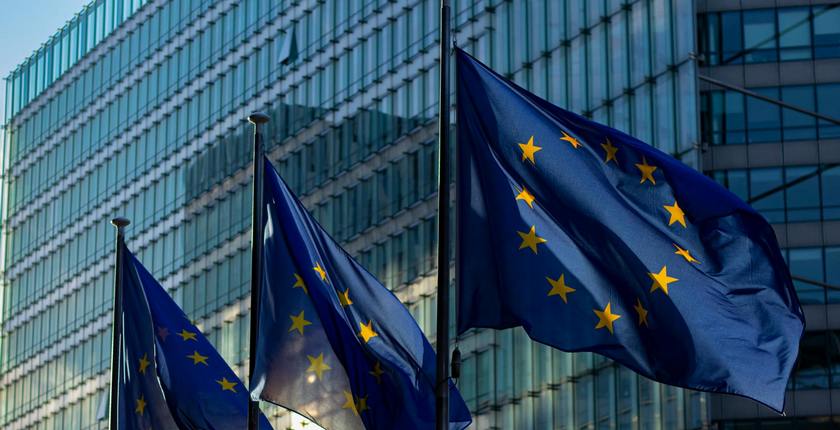
As part of its Growth Plan for the Western Balkans, the European Commission has invited private businesses from the EU, the European Economic Area (EEA), and the region itself to express interest in investing in sectors including the green transition, critical raw materials, sustainable transportation, and digitalization.

The objective is to open a dialogue on concrete investment opportunities and identify ways to overcome related constraints in the Western Balkans region, according to the call for expressions of interest.

Although financial support is not guaranteed, the European Commission could potentially back some projects with its available policy, technical, and financial instruments. It may also facilitate contact with partner financial institutions for potential financial cooperation on eligible projects.

Financial support is not guaranteed, but some projects could be backed by the European Commission or referred to financial institutions

Proposed investments must take place in one or more of the following economies: Albania, Bosnia and Herzegovina, Kosovo*, North Macedonia, Montenegro, and Serbia. The minimum investment threshold is EUR 10 million, and the required participation by the project promoter is at least 15% of the total value of the investment project.

The deadline to submit expressions of interest is May 21

The first phase of the call is open for submissions until May 21, but it may be reopened for subsequent phases, depending on the number and scope of submissions received.

Investment in green transition, critical raw materials, sustainable transportation

The priority areas are based on the strategic priorities of the Growth Plan for the Western Balkans and the Western Balkans Investment Framework (WBIF), focusing on key economic sectors where foreign investment is needed.

In the area of the green transition, investments are required in renewable energy, energy efficiency, and innovative energy technologies in order to reduce dependence on fossil fuels, foster a circular economy, mitigate climate change, and modernize energy, water, wastewater treatment, and waste management infrastructure, according to the call.

Ensuring environmentally responsible access to critical raw materials

When it comes to critical raw materials, investments are needed to ensure reliable and environmentally responsible access to such materials, in order to support the development of key industries across all supply chain stages, according to the European Commission.

The other areas envisaged by the call are sustainable transportation, including urban mobility; the digital transition, including the roll-out of 5G; integration into the EU industrial supply chains; sustainable tourism; human capital development; and impact finance, including setting up private funds to invest in projects with a strong green and/or social impact.
by in News

Zagreb on track to reach almost 20 MW of solar on public buildings

Zagreb operates solar power plants with a total capacity of 2.43 MW on public buildings, and an additional 16 MW is set to be installed on roofs, according to Mayor Tomislav Tomašević.

In 2021, the capital city of Croatia presented the Sunny Roofs program for the installation of photovoltaic plants with a combined capacity of 50 MW. Implementation began three years ago with the Solarization of Institutions of the City of Zagreb (SOLIZAG) project.

It was worth EUR 1,1 million. Within SOLIZAG, power plants were installed on eight city buildings – swimming pools Utrina, Svetice, and Jelkovec, kindergarten Trnsko, psychiatric hospital Sv. Ivan, homes for the elderly Trešnjevka 1 and 2 and waste management utility Čistoća. They have a total capacity of 1.6 MW.

The city currently has 2.43 MW of solar power plants in operation on public buildings

“In total, we currently have 2.43 MW of solar power plants in operation on public buildings owned by the City of Zagreb. It is three times the capacity we found in June 2021, only 0.7 MW,” Tomašević stated.

Currently, a total of 16 MW of solar power plants on city-owned buildings have been contracted or are in the process of being contracted. A firm has been selected for the design and construction of 10 MW of solar panels on approximately 200 city buildings, with implementation set to begin this year.

The mayor describes it as the largest investment in the solarization of public buildings in Zagreb’s history. In his view, it is a key step toward the goal of a more energy self-sufficient city.

Residents of Zagreb have a digital platform for assessing the solar potential of their roofs

In addition to the investments, commercial projects are being developed through the company Zagrebački Sunčani Krovovi. The PVMax project, supported by the North-West Croatia Regional Energy Agency (REGEA), is also underway for 41 MW in total on company buildings. So far, 6 MW has been installed.

Residents of Zagreb can assess the solar potential of their roof on a digital platform. It also calculates the cost-effectiveness.

Croatia’s capital is also participating in the Climate City Contract, which unites 100 cities committed to achieving climate neutrality by 2030. As part of the initiative, Zagreb is preparing a climate neutrality plan, expecting to adopt it this year.

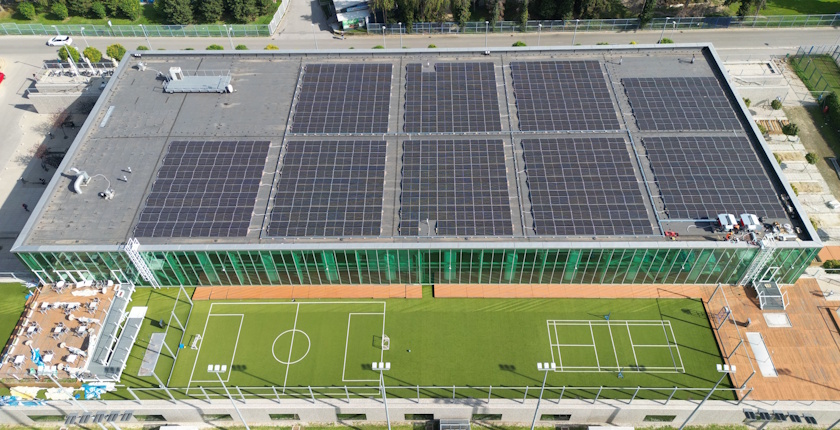
Marking Earth Day, Mayor Tomašević visited one of the PV plants built within the SOLIZAG project, at the Svetice swimming pool complex. He was accompanied by his deputies Danijela Dolenec and Luka Korlaet.

Photo: City of Zagreb
by in News

Montenegro’s CEDIS to invest EUR 30 million in distribution grid

Montenegrin electricity distribution system operator CEDIS plans to invest EUR 30 million this year or EUR 6 million more than in 2024.

The increase in investments demonstrates greater ambitions year after year and that grid works are becoming more intensive and demanding, according to CEDIS.

The country’s distribution system operator (DSO) said it would increase capacity for the integration of new users, improve voltage conditions, strengthen reliability and security of power supply, and reduce losses.

The investments include projects planned to be started this year as well as ones already in motion, such as the modernization of six 35/10 kV substations.

CEDIS is building two substations

CEDIS pointed to several significant endeavors within the primary grid. The most significant ones are the construction of 35/10 kV substations Tivat 3 and Rijeka Crnojevića, and the modernization of the systems Buljarica-Kufin (110/35 kV) and Podgorica 7 (110/10 kV).

Seven 35/10 kV substations are up for reconstruction – Tuzi, Unač, Ptič, Andrijevica, Velika Plaža 1, Velika Plaža 2 and Čanj. The plan includes procuring new equipment for existing 35 kV transmission lines, worth about EUR 1.4 million.

The company is introducing SCADA and ADMS systems

CEDIS will use a EUR 35 million loan from the European Bank for Reconstruction and Development (EBRD) to roll out SCADA and ADMS systems, and to purchase smart meters.

The company highlighted SCADA and ADMS as a key step towards the modernization of the distribution network and the improvement of reliability, efficiency, and security of the power system.

Investments envisaged by the project Decarbonization of the Energy Sector of Montenegro, financed with a loan from the World Bank, are kicking off this year. Its subproject for increasing the operational efficiency of the power distribution grid comprises the reconstruction and modernization of substations, and improvement in the visibility of the distribution network.

EUR 5 million for energy infrastructure on Jaz-Tivat Boulevard

One of the largest investments is the installation of power infrastructure within the construction of the Jaz-Tivat Boulevard. The investment is estimated at EUR 5 million.

Projects within the secondary distribution grid are the construction of 268 substations of 10/0.4 kV, modernization of 10 kV transmission lines, and reconstruction of existing 10/0.4 kV substations. The planned works are valued at more than EUR 6 million.

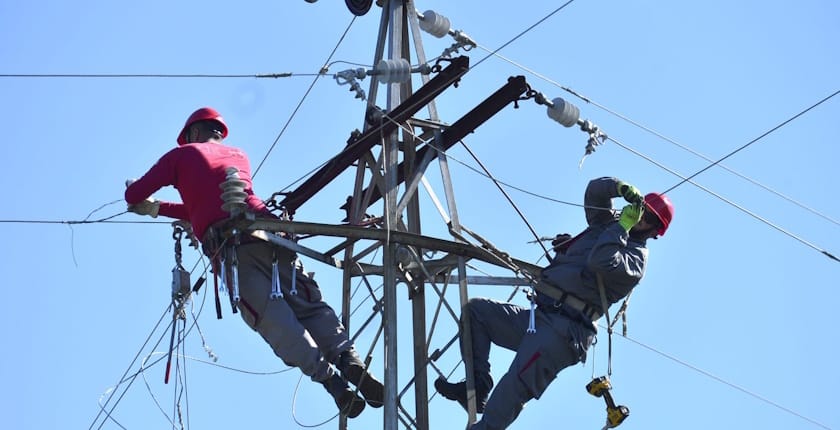
CEDIS is continuing with the revitalization of the middle- and low-voltage grid. It earmarked EUR 9 million for this year for the purpose. The project is for the renewal of four 10 kV transmission lines and 52 substations of 10/0.4 kV and replacing 1,500 poles.

The installation of new meters and the relocation of measuring points will also be continued. The plan is to start phase 4 of the advanced metering management (AMM) project. The investment is estimated at EUR 12 million.

by in News

OMV Petrom, CE Oltenia pick contractors for four solar power plants

Oil and gas company OMV Petrom and coal power utility Complexul Energetic Oltenia (CE Oltenia) have signed design and installation contracts for four solar power plants.

In October 2022, OMV Petrom and Complexul Energetic Oltenia said they would build four photovoltaic parks with a combined capacity of 450 MW at former coal mining locations using European Union funds. The two companies are equal partners in the joint venture, each holding a 50% stake.

Now OMV Petrom announced that the four projects would have a total installed capacity of approximately 550 MW, higher than initially planned.

The capacity increase is a result of innovative solutions maximizing power production capability

The increase is a result of innovative solutions that the contractors proposed, to maximize the power production capability, according to the company.

The design and execution of three of the four photovoltaic parksRovinari, Tismana 1, and Tismana 2with a combined capacity of around 460 MW, was awarded to a consortium formed by US-based Ameresco and Sunel, reads the press release. The latter is registered in the United Kingdom, but its operational headquarters are in Athens, Greece. 

The consortium is already active in the region, and recently it launched construction of a giant solar power plant in Greece.

Girisim Elektrik installed the  largest solar power plant in Serbia

Turkish company Girişim Elektrik is in charge of the fourth photovoltaic park, with a capacity of around 90 MW. The site is at the former CE Ișalnița power plant, on its slag deposit.

The latest project in the surrounding region that was completed by the contractor is thelargest solar power plant in Serbia. Girişim also installed one of the first utility-scale solar power plants in the Western Balkans – the 10 MW Oslomej unit in North Macedonia.

Of note, tenders for contractorsattracted investors from China, Turkey, the United States, Germany, and Ukraine.

EUR 400 million investment

OMV Petrom estimates the total investment for the four solar projects at over EUR 400 million, of which approximately 70% is financed through the European Union’s Modernisation Fund.

According to Frank Neel, member of the company’s executive board responsible for gas and power, the new contracts are a firm step in strengthening its position in the renewable power sector.

“Through our Strategy 2030, we aim to be a key player in Romania’s energy transition, with the ambitious target of developing 2.5 GW of capacity, including partnerships, from renewable sources – wind and solar,” he added.

The projects will be built on land owned by CE Oltenia, in the Gorj and Dolj counties.

The generated electricity would be delivered to the national power grid and it is expected to cover the annual electricity consumption equivalent of approximately 410,000 households in Romania, OMV Petrom said.

by in News

Montenegro’s EPCG, DSO, TSO to establish Consolidated Data Center

The three key companies in the electricity sector of Montenegro – Elektroprivreda Crne Gore (EPCG), distribution system operator (DSO) CEDIS, and transmission system operator (TSO) CGES – have signed a letter of intent to start strategic cooperation on the installation of the Consolidated Data Center (CDC).

The initiative for the construction of the Consolidated Data Center represents a significant step towards the digital transformation of the Montenegrin power system and the establishment of a modern information hub, according to EPCG, CEDIS, and CGES.

Within the partnership, the three companies are jointly invest resources and know-how to create a technologically advanced data management system and digital services. The Consolidated Data Center will be located in the Željezara Nikšić industrial complex.

CDC’s capacity could be used commercially for the needs of other institutions and businesses

Apart from CDC’s primary role, the modernization of the state-owned power companies, its capacity could offer services to other institutions and companies.

The signatories have already initiated the first step – the preparation of a feasibility study that will define the technical and economic parameters of the project. Based on its results, a special agreement will be adopted to specify the next steps.

EPCG CEO Ivan Bulatović said the Consolidated Data Center isn’t just an infrastructure project.

Bulatović: The goal is to create a system set for the challenges of the future

“It is the foundation of digital transformation that will enable more accurate data analysis, greater efficiency in decision making, and a safer power system. Our goal is to create a system set for future challenges. Digitalization is an inevitable step in the modernization of the sector, and CDC is a key segment of that process,” Bulatović stressed.

According to Vladimir Ivanović, CEDIS CEO, the cooperation of key Montenegrin energy companies is significant, as is providing support to other businesses.

Ivanović: CDC to enable better coordination between companies

“The development of the power system doesn’t only mean investments in the grid and capacities, but also in smart solutions enabling greater flexibility and safety in operations,” Ivanović noted.

He underlined the CDC’s role in improving coordination between companies, reduction of operating costs, and improvement of IT infrastructure.

Asanović: A strong step forward in the modernization of the sector

CGES CEO Ivan Asanović stressed the project’s importance for digitalization and the creation of a system that will enable more efficient management of power resources at the level of the entire country.

CDC represents a strong step forward in upgrading the sector and ensures a better connection between all key participants in the power system, according to Asanović.

by in News

Alcazar joins forces with IFC to develop Štip wind farm project

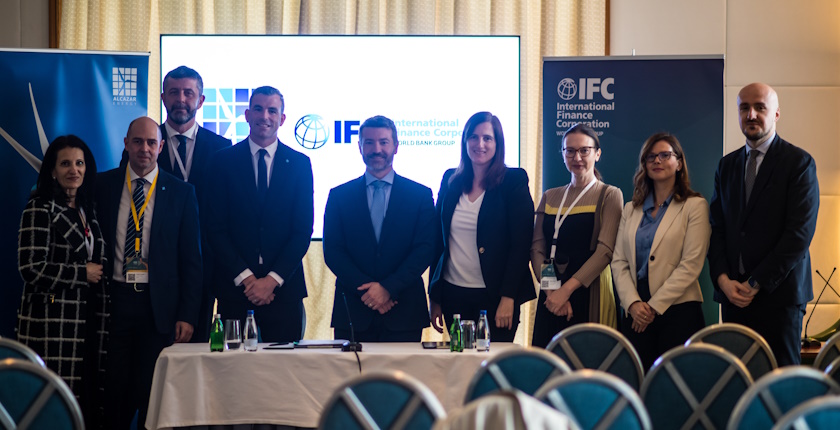
Alcazar Energy Partners has signed a development support agreement with the International Finance Corporation, a member of the World Bank Group. The company intends to develop the largest renewable energy platform in the Western Balkans.

Alcazar Energy Partners (AEP) said the agreement provides access to development assistance funding for phase 1 of the Štip wind farm, the largest wind power project in North Macedonia, reinforcing both parties’ commitment to mobilizing private capital for sustainable infrastructure in strategic growth markets.

The start of construction of the first phase of the EUR 500 million Štip wind farm is envisaged later this year. The total installed capacity, once all phases are complete, would be approximately 400 MW.

According to Alcazar, the project will provide clean, reliable power to over 100,000 households and mitigate up to 690,000 CO2-equivalent tons emissions each year, marking a significant step towards strengthening North Macedonia’s energy security and renewable energy objectives.

Štip wind farm is AEP’s first project in North Macedonia

Štip wind farm is AEP’s first project in North Macedonia. It reflects the firm’s strategy to expand its presence across the Western Balkans, where it has already acquired a 1.5 GW pipeline of greenfield onshore wind and solar assets, delivering renewable energy infrastructure that supports national ambitions and global climate goals.

The project was launched ten months ago. The sites for more than 50 turbines are on the territories of the municipalities of Karbinci, Radoviš, and Štip, southeast of the capital city of Skopje.

The signing ceremony took place on the sidelines of the ESG Adria Summit in Porto Montenegro.

AEP is currently advancing a detailed project design

“Our continued partnership with IFC is instrumental as we progress with the Štip wind farm. Together, we’re not only advancing the energy transition but also supporting economic development and long-term energy security. We look forward to delivering a project that brings lasting value to communities and reinforces North Macedonia’s sustainability ambitions,” Co-Founder and Managing Partner of Alcazar Energy Partners Daniel Calderon stated.

AEP, currently advancing a detailed project design, has engaged leading engineering, environmental, legal, and social advisors to ensure the project meets the highest international standards.

Avato: The Štip wind Farm in North Macedonia is a natural extension of our collaboration

According to Patrick Avato, IFC’s Manager for Infrastructure and Energy in Europe, the two sides built a strategic partnership over more than a decade, working together to advance sustainable energy projects across emerging markets.

“The Štip wind farm in North Macedonia is a natural extension of this collaboration, aimed at expanding access to affordable, clean energy—essential for economic competitiveness and growth. In addition to strengthening the country’s energy security, the project also reflects IFC’s commitment to supporting sustainable energy solutions that meet international standards and contribute to a just energy transition in the region,” he asserted.

The signing was also attended by Tim Sheahan, Senior Director at AEP.

Alcazar Energy Partners is an independent infrastructure fund manager focused on the development, financing, construction, and operation of utility-scale renewable energy projects in growth markets since 2014. It now has a cumulative renewable energy portfolio of more than 4 GW, reads the press release.

by in News

Belgrade Energy Forum 2025 – 50 speakers at eight panels to track pace of SEE energy transition

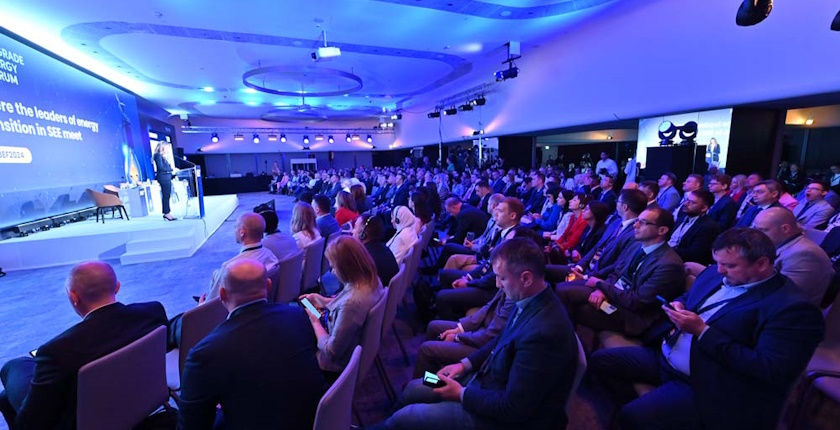
The agenda of the third Belgrade Energy Forum, taking place on May 14-15, has been finalized with the addition of further prominent energy experts and companies. The conference, organized by Southeast Europe’s leading energy news portal, Balkan Green Energy News, will feature eight panels covering key topics in the energy sector, with an impressive lineup of speakers. Make sure you register on time via this link.

The Belgrade Energy Forum will once again be a meeting place for representatives of regional and international institutions and organizations, as well as the business community from across the region, Europe, and the world.

Eight panels featuring more than 50 speakers will offer an overview of the current challenges in the energy sector. Conference participants will hear in-depth analyses of the current situation, but also projections for the future. The thread that connects everything at this year’s BEF is digitalization – it permeates energy production, consumption, and storage and allows enough flexibility for the stable functioning of the energy systems of the future, where renewable energy will dominate.

Chikán: Electricity knows no borders

One of the key speakers at the conference, Alteo Group CEO Chikán Attila, will lead the company’s high-level delegation. Alteo has recently launched a regional expansion drive, aiming to establish a green platform of up to 2 GW in energy production, including operation, software, maintenance, storage, and waste management.

The Hungarian company primarily targets its home market, Slovakia, Croatia, and Serbia.

“Electricity knows no borders, therefore partnerships and collaborations among energy market players are essential, even at the regional level. Such cooperation is vital to ensuring the security and reliability of electricity supply, facilitating the integration of renewable energy sources, and providing essential digital solutions, supported by expertise and professional know-how,” Chikán stressed.

Decarbonization strategies for power generation in Southeast Europe 2040/2050

  • Dejan Paravan, CEO, GEN Energija
  • Dušan Živković, CEO, EPS
  • Eric Scotto, CEO, AKUO
  • Milutin Đukanović, Chairman, EPCG Board of Directors
  • Neda Lazendić, Country Manager, WV-International

Although at the heart of national energy systems, state-owned power utilities are faced with an environment that has changed and continues to change rapidly. The key shift is the entry of private capital into electricity production through the construction of solar power plants and wind farms.

The energy transition, at this stage, requires cooperation between state power utilities and private companies. With decarbonization as the main objective, the key challenge lies in choosing appropriate strategies and electricity generation technologies.

Moderating the panel will be Dražen Jakšić, Director of the Energy Institute Hrvoje Požar (EIHP).

“The transition to a low-carbon energy system is a key challenge for our region, demanding innovation, investment, and cooperation. As a sponsor of the Belgrade Energy Forum, EIHP is committed to fostering dialogue and driving sustainable energy solutions. I look forward to an insightful discussion,” he stressed.

Jakšić: The transition to a low-carbon energy system is a key challenge for our region, demanding innovation, investment, and cooperation

In recent years, nuclear energy has emerged as a possible alternative. There is hardly a better interlocutor on this topic in the region than Dejan Paravan, the top man of GEN Energija, the Slovenian company developing the Krško 2 nuclear power plant project.

Dušan Živković, CEO of Elektroprivreda Srbije (EPS), will tell us about the Serbian power utility’s plans when it comes to nuclear energy.

Živković: Without decarbonization, the region’s energy sector has no future

“Without decarbonization, there is no future for the region’s energy sector, and that is the biggest challenge ahead of us. It is essential to accelerate decisions and ensure sustainable project financing mechanisms that will provide energy security for every country and power utility in the decades to come. By investing in existing capacities and new renewable energy projects, EPS, as the biggest utility in the region, will make its own contribution to energy security. That’s why we have initiated a transformation process – because we need to be more profitable, more efficient, and fully prepared to tackle any challenge,” Živković pointed out.

The energy transition, in his words, is the path EPS has chosen, and all its plans will align with that goal, based on the belief that the diversification of energy sources and new technologies are essential for achieving it. “These are just some of the key messages I will share with the participants of this year’s BEF,” said Živković.

Eric Scotto, co-founder and CEO of French company Akuo, will share the latest information on the energy transition from across the globe.

The company’s portfolio consists of 1.9 GW of power plants in operation and under construction, with a further 12 GW in the pipeline in more than 20 countries around the world, including a number of countries in the Southeast Europe region.

Integration of Western Balkans electricity markets into internal European market through market coupling

  • Anže Predovnik, Director, ADEX Group
  • Ivan Asanović, Executive Director, CGES
  • Marko Bislimoski, President, Energy, Water Services and Municipal Waste Management Services Regulatory Commission of the Republic of North Macedonia
  • Zoran Vujasinović, Policy Officer, ACER

The integration of the Western Balkans’ electricity markets with the European Union (EU) markets is a process that deserves much greater public attention than it currently receives. It is safe to say that its true importance will become evident only once it is completed.

Full integration will unlock significant synergies, maximizing the benefits of a unified market by enhancing supply security, accelerating the integration of renewable energy sources, and fostering greater competition and transparency.

Moderator Dejan Stojčevski, CTO of the SEEPEX power exchange, says the panel seeks to encourage dialogue on the importance of cross-border collaboration and market efficiency in bolstering energy security and sustainability in the region.

Bislimoski: The time for inspiring speeches is over. Geopolitical developments demand action – now!

Since market integration is largely the job of regulators, the challenges they face will be analyzed by Marko Bislimoski, president of North Macedonia’s Energy and Water Services Regulatory Commission (RKE).

He says that three things are essential for the regional integration of electricity markets into a single European market: investment, investment, and nothing but investment. In his words, the energy crisis demonstrated that limitations become a reality when governments fail to prioritize the implementation of key energy infrastructure capacities in their budgets.

“This past winter, the region faced the highest electricity prices compared to the rest of Europe. Why? Because the implementation of energy investments is not just a ribbon-cutting ceremony. Today, more than ever before, the countries of the former Yugoslavia must demonstrate maturity. These are the years when energy independence will be built through action. The time for inspiring speeches is over. Geopolitical developments demand action – now!” he stressed.

Energy revolution underway – uniting efforts to deliver green, intelligent and sustainable energy solutions

  • Aleš Prešern, VP, Head of Southeast Europe, Siemens Energy
  • Maja Turković, SVP, CWP Europe
  • Ann-Catherine de Tourtier, Managing Director Mediterranean, Nordex Group

As much as contesting the energy transition may be futile, there are still those who find such a view meaningful, especially in light of certain global political developments. That’s why it is important to give the floor to some of the transition leaders and let them testify that an energy revolution is indeed underway in the region.

The panel’s moderator Mirza Kušljugić – professor, energy expert, and one of the founders of Bosnia and Herzegovina’s Centre for Sustainable Energy Transition Centre (RESET) – goes one step further to show that change is not only happening but also accelerating.

“The key words are a new energy paradigm driven by the four Ds – decarbonization, digitalization, decentralization, and democratization. But now we also have another D: disruption, or radical change in the industry and market caused by technological innovation. Of course, we must focus the discussion – from global processes (China, the US, the EU, the Global South) to where the region stands in all of this,” Kušljugić points out, providing a perfect introduction to the panel.

Turković: It’s more important than ever to have open discussions about real solutions

Aleš Prešern, Vice President and Head of Southeast Europe at Siemens Energy, has worked in the energy sector for more than 20 years. He recalls that digitalization is key, along with grid resilience and electricity transmission.

With nearly 100,000 employees in more than 90 countries, Siemens Energy develops the energy systems of the future, ensuring that the growing energy demand of the global community is met reliably and sustainably. The technologies created in the company’s research departments and factories drive the energy transition and provide the base for one sixth of the world’s electricity generation.

As a leader in renewable energy development, CWP is actively working on several large-scale projects across the SEE region with a total capacity exceeding 7 GW, positioning the company at the forefront of the region’s energy transition. Given its global expertise and insights into the regional energy market, CWP’s contribution to this year’s conference will be invaluable.

Maja Turković, Executive Vice President of CWP Europe, says that BEF 2025 is a key gathering of leading experts driving the energy transition in Southeast Europe.

“As this shift gains momentum, it’s more important than ever to have open, action-driven discussions about real solutions to the challenges and opportunities ahead,” says Turković.

PPAs as a key to renewable energy growth in SEE

  • Nikola Gazdov, Chairman, Association for production, storage and trading of electricity – APSTE
  • Natalija Ljubić, Manager PPA & BESS Transactions, Pexapark
  • Ivana Đurović, Category Manager Renewable Energy, Knauf Group

Power Purchase Agreements (PPAs) are, like flexibility, a tool for fixing the imperfections of renewable energy sources, and they are recognized as a key mechanism within the new electricity market design. They ensure price stability, attract new investment, and accelerate the decarbonization of industry.

Is the region ready for PPAs? What are the dominant models? What is the current market practice? How are PPAs viewed by financial institutions? What do they offer to end consumers and what to investors in new power plants? Answers to these questions will be sought at the panel moderated by Mislav Slade-Šilović, Energy, Utilities & Resources Consulting Leader for Southeast Europe and member of the core PPA team at consultancy PwC.

Experience with PPAs for more than 500 GWh of electricity

Slade-Šilović’s experience in concluding PPAs for the production and consumption of over 500 GWh of electricity per year in the SEE region will certainly be of help.

Nikola Gazdov, Chairman of Bulgaria’s association for electricity production, storage, and trading (APSTE) and member of the Board of Directors of the European solar industry association SolarPower Europe, has no shortage of experience either. As CEO of three companies – Enery Element GmbH, Element Power Group, and Renergy – he is involved in the development of a large number of projects.

Pexapark, a company that provides logistics to businesses in the renewable energy market, is synonymous with PPAs in Europe. Natalija Ljubić is the Manager for PPA and BESS Transactions at Pexapark, which has helped conclude contracts for facilities with a combined capacity exceeding 35 GW.

The views of electricity buyers – without whom there would be no PPAs – will be conveyed by Ivana Đurović, Category Manager for Renewable Energy at Knauf Group.

Market flexibility: the backbone of a resilient energy system

  • Roman Bernard, CEO, NGEN
  • Luka Renko, COO, KOER
  • Alteo Group representative
  • Nikolaj Candellari, Project Manager and Market Intelligence, CyberGrid
  • Marko Zarić, EMS

Moderating the panel will be Elena Boškov Kovač, co-founder and CEO of Blueprint Energy Solutions, and a leading voice on market flexibility in Europe.

She will host representatives of the sector’s leading companies: NGEN, Alteo, KOER, CyberGrid, as well as Serbia’s transmission system operator Elektromreža Srbije (EMS).

“Excited to moderate a high-impact panel on ‘Market Flexibility: The Backbone of a Resilient Energy System’ at the Belgrade Energy Forum 2025,” says Boškov Kovač, whose work has shaped smart grid strategies and digitalization innovation agendas across the EU and under ETIP SNET.

As Europe accelerates its shift to renewables, market flexibility is emerging as the cornerstone of reliable, affordable, and decarbonized energy systems. With the European flexibility market promising to unlock over EUR 20 billion in savings, this session will explore how digital tools, flexible assets, and new market designs are unlocking value and resilience across the grid.

Slovenia’s NGEN is the technology sponsor of BEF 2025

Slovenian energy company NGEN, the technology sponsor of the conference, has managed to establish itself as a significant player in European markets in just five years of operation and is now ready to enter the Western Balkans’ markets.

Specializing in premium battery storage systems and smart energy solutions, the company is developing systems with a total capacity of 1.6 GWh in European countries. Its founder, Roman Bernard, will be speaking at the panel.

Also taking part in the panel will be Luka Renko, COO of KOER, a pioneer in virtual power plants in the region.

Rounding off the lineup of exceptional panelists will be Nikolaj Candellari, who is responsible for project management at CyberGrid. The software company was acquired a few years ago by Austria’s EVN, one of the first to demonstrate that greater integration of renewable energy sources, battery storage, and prosumers is not possible without digitalization and software solutions.

In a nutshell, this innovative company stands for the digitalization of the energy sector, with a focus on virtual power plants.

by in News

Delta Green launches platform in CEE for households to provide grid balancing

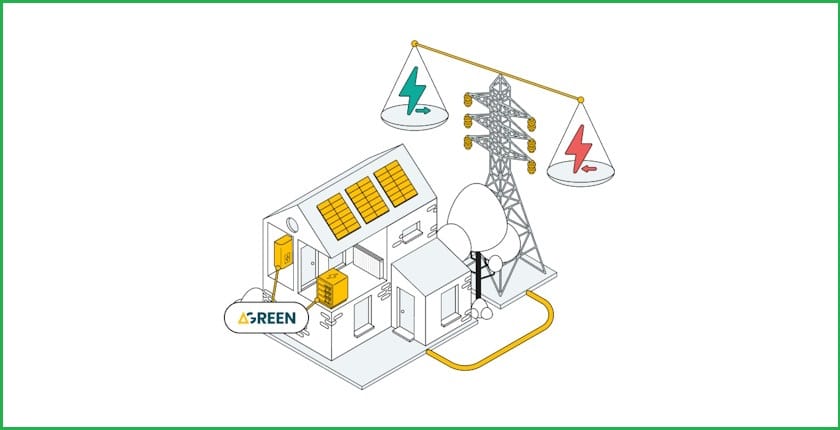
Czech energy startup Delta Green has launched a platform enabling households to provide grid balancing for transmission system operators. The company claims it is the first in Central and Eastern Europe and among the first in Europe to implement such a solution.

Delta Green said it just became the first in the CEE region to launch a platform that lets ordinary households help stabilize the energy grid, arguing it’s never been done before at this scale in the region.

The startup stressed the innovation comes at a critical time when European flexibility needs are projected to more than double, from 220 TWh in 2025 to 530 TWh by 2033, according to the latest projections by ENTSO-E.

Flexibility could bring benefits to consumers, and savings to grid operators, but also reduce electricity prices and grid investments.

The platform transforms ordinary households into active participants in the energy market

The platform transforms ordinary households into active participants in the energy market, allowing them to adjust electricity consumption or supply power in response to grid demands – a capability that directly addresses Europe’s growing flexibility challenges, the company underlined.

“A standard home solar system with battery storage can save up to EUR 40 per month. In Germany and France, where millions of homes have solar setups, 10% participation could offset the output of several power plants, reducing fossil fuel reliance and boosting grid resilience,” co-owner and Chief Product Officer of Delta Green Jan Hicl said.

Delta Green says its platform is the Airbnb of grid balancing

The company added its tech is already saving consumers money and reducing fossil fuel reliance. One can think of it as the Airbnb of grid balancing, Delta Green said.

The company is now working on expanding its services beyond the Czech Republic to both Western and Eastern Europe, for example the DACH region (Germany, Austria, and Switzerland), Italy, and Romania.

Delta Green was established in 2008 as Nano Green under the Nano Energies group. It rebranded itself last year. The company is jointly owned by David Brožík, Prokop Čech, Lukáš Beneš, and Jan Hicl.

Demand-side flexibility could deliver over EUR 300 billion in benefits for European consumers

A recent study from the Smart Energy Europe Association (smartEn) demonstrates that demand-side flexibility could deliver over EUR 300 billion in benefits for European consumers by 2030. Grid flexibility from available assets, including household systems, could contribute a projected EUR 4 billion in annual savings for European grid operators.

According to the European Agency for the Cooperation of Energy Regulators (ACER), grid expansion and flexibility measures potentially could reduce electricity prices by 11% by 2035 and by 30% in 2040 in a net zero scenario.

The European Union needs EUR 584 billion in grid upgrades by 2030. Flexibility solutions, combined with grid optimization, could lower the much needed grid investments from an anticipated EUR 67 billion to EUR 55 billion annually between 2025 and 2050.

by in News

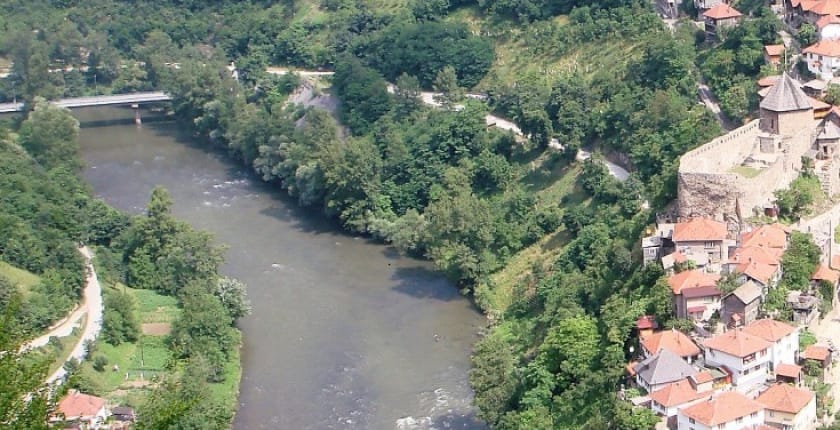
Court annuls environmental permits for EPBiH’s hydro projects Janjići, Vranduk

The Cantonal Court in Sarajevo overturned two decisions of the Federal Ministry of Environment and Tourism regarding the proposed Vranduk and Janjići hydropower plants.

The Janjići and Vranduk hydropower projects, with a total capacity of 36 MW, are being developed by state-owned power company Elektroprivreda BiH. The sites are on the Bosna river near the city of Zenica.

The two decisions were challenged by the Aarhus Centre in Bosnia and Herzegovina.

The Cantonal Court in Sarajevo has ruled that the 16 MW Janjići project requires a new environmental permit to move forward, news website Zenit.ba reported. Namely, the Aarhus Centre in BiH disputed the ministry’s decision in December 2021 that the existing one was valid. According to the court, the explanation was legally unsubstantiated.

The ministry didn’t take into account the ecological sensitivity of the Janjići area

The ministry also failed to acknowledge the complexity of the planned hydropower facility and that, in line with the regulations, a new permit is necessary if the deadline expires, the ruling reads.

According to the court, the ministry didn’t take into account the ecological sensitivity of the Janjići area. The location is a habitat of protected plant and animal species, among which is the otter.

Of note, in January 2022, Germany’s KfW Development Bank said it canceled the plan to finance the Janjići hydropower project with EUR 30 million. Total investment was valued at EUR 55 million.

The loan agreement between KfW and EPBiH was signed in 2014. Environmental organizations opposed the project, arguing it would flood one of the most beautiful areas around the Bosna river.

The Aarhus Convention was violated in the case of HPP Vranduk

The court also annulled the ministry’s 2023 environmental permit for the HPP Vranduk project of 20 MW.

The ministry violated several provisions of an environmental protection law of the Federation of BiH, the court stressed. By issuing the permit, it violated the right of the public to access information and participate in the decision-making process, thereby also violating the Aarhus Convention.

The environmental impact assessment (EIA) was inadequate while the environmental risks determined earlier and comments from experts weren’t taken into account, the ruling reads.

In early 2022, Austria-based Strabag won at the International Court of Arbitration in Brussels in a case against EPBiH. The panel ordered the power utility to pay EUR 16.4 million to the company.

by in News

Serbia allocates entire quota at second auctions, investors to install 645 MW of wind, solar

Serbia allocated the entire 424.8 MW quota in its second wind and solar power auction. According to the Ministry of Mining and Energy, the winning bids came from investors from China, the United States, France, and Serbia. They intend to install ten power plants with a total capacity of 645 MW.

The Ministry of Mining and Energy conducted the second round of renewable electricity auctions. Forty-one applications were submitted for market premiums, and 37 were declared valid. Both segments were oversubscribed. Investors in wind submitted bids for 444 MW, and the quota was 300 MW. For solar, they applied for premiums for 260 MW, compared to the available 124.8 MW.

The winners have the right to sign 15-year contracts for difference (CfDs).

Seven bids were declared valid for wind, and five filled the quota. Investors will build wind parks with an overall capacity of 468 MW, and premiums will be awarded for 300 MW, according to the proposed ranking list, published on the ministry’s website, which tracks renewable energy tender procedures. The maximum acceptable bid for wind farms was EUR 79 per MWh, and the investors offered from EUR 53.59 to EUR 68.25, according to the announcement.

These are the winning bidders: Matrix Power, owned by French developer Akuo Energy, Windvision Windfarm A, Windvision Windfarm B, Crni Vrh Power, owned by Chinese companies Shanghai Electric Power & Energy Development Limited and CMC Capital, and Jasikovo, owned by Serbian citizens.

The crowd was much bigger for the solar segment. Five projects won the right to market premiums. A total of 30 applications were valid. The quota was 124.8 MW, and the selected investors are set to install photovoltaic plants with 177 MW in combined capacity, the ministry’s proposed ranking list shows.

It said that the investors offered prices from EUR 50.9 to EUR 59 per MWh. The ceiling for electricity from photovoltaic plants was EUR 72. The following firms had winning bids: Vemi Biogas, Kobra Global, Solarina, Mona Green Energy 2, and Brankov Solar. The 150 MW Solarina project is the only large one, while Brankov Solar is an agrisolar one.

Solarina is owned by CWP Europe, and Mona Green Energy 2 by Serbia’s Mona Holding. The three other firms are owned by Serbian citizens.

The ministry noted that the total planned investments of the winning bids is EUR 782 million.

Đedović Handanović: All produced electricity will be offtaken by Serbia’s utility EPS

Minister Dubravka Đedović Handanović said the second round of auctions was highly successful in capacity and offered prices. Importantly, all electricity from the power plants that get the premiums will go to state-owned power utility Elektroprivreda Srbije (EPS) and be used to supply domestic businesses and households.

“The offered prices are very competitive, i.e. EUR 50.9 per MWh for solar and EUR 53.5 per MWh for wind, which is significantly below the market levels. According to our incentives model, this means we don’t expect power plants will be subsidized but that they will return windfall profit to the state as long as market prices are higher than those offered by the auction winners,” she stated.

The confirmation of good conditions for investment in Serbia

Đedović Handanović stressed that the high interest by investors is a confirmation of good conditions for investments in Serbia.

“In addition to domestic investors, the winners of these auctions are also investors from China, the USA, and France. It demonstrates that Serbia is globally recognized as a good destination for investment, which will be very significant in achieving our strategic goals in the energy transition process,” she said.

In 2023, the Government of Serbia adopted the incentives plan for renewables for a three-year period through 2025. It said it would award market premiums for 1.3 GW. The first round of auctions was conducted in 2023. The selected projects, for 715 MW in total capacity, are all supposed to be connected to the grid by the end of next year.