by in News

Bulgaria’s NEK to launch offering of guarantees of origin on IBEX

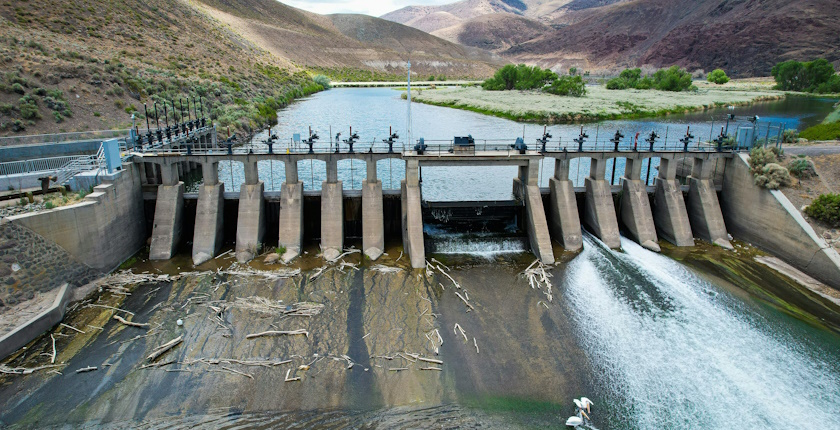
State-controlled hydropower plant operator NEK said it would launch auctions for gurarantees of origin in Bulgaria, providing liquidity in the market segment. There is currently no offering scheduled on the IBEX electricity exchange.

Following the first auction for guarantees of origin (GOs) in Bulgaria last month, state-owned hydropower operator Nаtsionalna elektricheska kompania (NEK) is preparing its first offering. The company said it would ensure liquidity in the segment.

NEK is one of the 12 participants in the market, operated by the Independent Bulgarian Energy Exchange (IBEX). The utility said it is the leader in guarantees of origin and the production of electricity from renewable sources. It is part of Bulgarian Energy Holding (BEH).

The company operates 31 hydropower and pumped storage hydropower plants, of 2.74 GW in total capacity. All guarantees of origin owned by NEK will be offered on the platform through auctions for the sale of guarantees of origin, starting this month, according to the update. However, there are no auctions in IBEX’s schedule.

A small wind power plant broke the ice in Bulgaria by selling 2,475 guarantees of origin last month. Each represents 1 MWh. The exchange established the platform four months earlier.

NEK revealed that it would start to sell GOs before the end of the month

Electricity consumers buy guarantees of origin from producers to verify that they used renewable energy.

IBEX, solely owned by the Bulgarian Stock Exchange (BSE) and the Sustainable Energy Development Agency (SEDA) of Bulgaria are authorized to jointly operate the organized market. The legal framework envisages issuing GOs monthly, quarterly and semianually.

When SEDA achieves integration with the European guarantees of origin system, the participants in the Bulgarian platform will be able to trade abroad as well.

IBEX, founded in 2014, operates day-ahead and intraday markets and a mechanism for bilateral contracts.

Neighboring Greece introduced GOs in June of last year. Also of note, Greece and Bulgaria recently enabled bilateral trade in balancing energy within the Platform for the International Coordination of Automated Frequency Restoration and Stable System Operation (PICASSO).
by in News

Bulgaria on track to add 1.5 GW of solar power by mid-2026

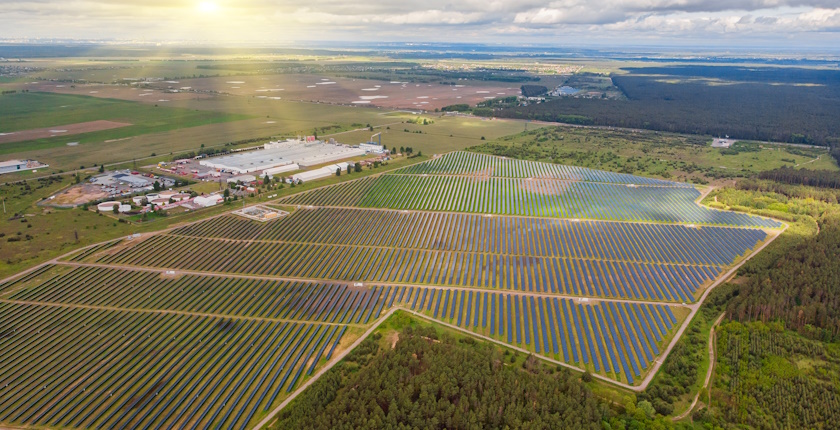
The pace of large photovoltaic projects in Bulgaria indicates that total capacity can reach 6 GW by the middle of next year. The expansion isn’t slowing down.

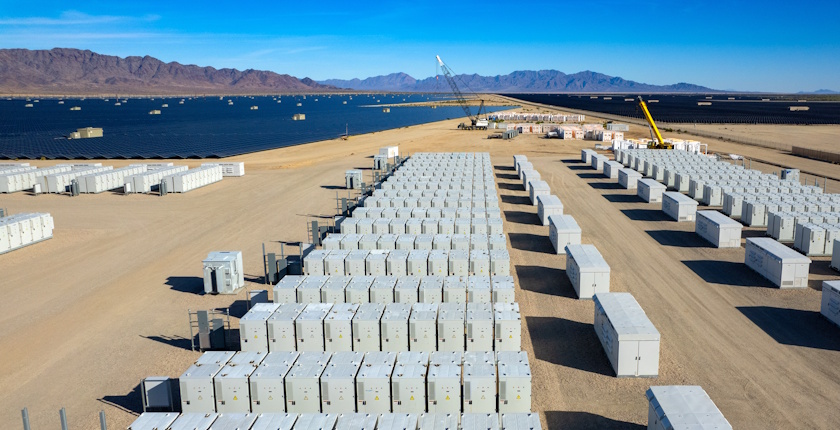
Investors in large solar power plants in Bulgaria don’t seem intimidated by zero and negative wholesale electricity prices eating away at their revenues. One of the factors is a surge in the construction of battery energy storage systems (BESS), which iron out the gap between intraday peak production and the power demand curve. In a new analysis, Capital.bg estimated that the country’s photovoltaic capacity is set to increase by 1.5 GW by the end of the first half of next year, only accounting for big projects.

The total would reach 6 GW. The report lists 14 projects, of which some are benefitting from BESS grants from one of Bulgaria’s past tenders.

Chinese group building largest current PV project

The biggest solar park under construction is Simeonovgrad-Polyanovo, consisting of two units of 250 MW in total. It is located in the Haskovo region in the southern part of the country.

United Energy Group bought the two projects last year. It it the first significant Chinese investment in Bulgaria, the article reads. The PV plant is expected to be put into operation early next year.

The construction of the first phase of the Tenevo hybrid power plant began almost two years ago

Next on the list is Tenevo. Almost two years ago, Eurowind Energy and Renalfa IPP marked the start of the construction of the solar segment of a hybrid power plant near Yambol. The PV park is envisaged with 237.6 MW in peak capacity and a 213.7 MW grid connection.

The largest solar power plant in Bulgaria is called Apriltsi.

St. George coming online before year-end

Czech company Rezolv Energy bought the St. George project for 229 MW two years ago and broke ground at the construction site last autumn. According to the latest data, the investment is worth almost BGN 1 billion (EUR 511 million) and it is coming online by the end of the year. The developer secured a 199 MW connection.

Greek government-controlled utility Public Power Corp. (PPC) is commissionning its Colosseum (Kolizeum) facility of 165 MW in the coming months, the update reveals. The project in Chirpan has an approved network connection of 120 MW. The company is planning to add batteries of 25 MW in capability and a capacity of 55 MWh.

The company is also building an 88 MW in Vedrare near Plovdiv. The contractor for the facility in the municipality of Karlovo is Chint Green Energy of the Chint Group. The power plant is on track to become operational early next year.

A 123 MW system will be on 400 hectares between the villages of Knizhovnik and Dolno Vojvodino in Haskovo. Austria-based Enery said it would install a BESS of 180 MWh next to its solar park.

Electrohold is testing its Maglizh PV plant, the article adds. The project for 100 MW occupies 127 hectares and the estimated investment is almost EUR 90 million. The plan was changed along the way.

Top Energy Solutions has a construction permit for its Loznitsa project in northeastern Bulgaria. The project is for a peak capacity of 115 MW and a grid connection of 99.99 MW, spanning 82.4 hectares. It is located at the villages of Vesselina and Kamenar in the Loznitsa municipality, Razgrad district.

by in News

Serbia adopts Just Energy Transition Plan until 2030

Serbia now has a Just Energy Transition Plan until 2030. The document contains suggested measures for the mitigation of the impact of reducing fossil fuel use, primarily coal, so that workers, firms and communities aren’t left behind.

Following last month’s completion of the public consultation process regarding the proposed Just Transition Action Plan, the Government of Serbia passed, at its last session, the Just Energy Transition Plan of the Republic of Serbia until 2030. The document leans on the Integrated National Energy and Climate Plan (INECP or NECP)

It lays out sustainable energy policy measures that would need or could be undertaken. The point is in reducing fossil fuel dependence and improving security and efficiency of electricity supply by switching to renewable energy sources, and in an energy efficiency boost.

A just transition aims to promote environmentally sustainable economies in a way that is fair and inclusive for all

“A just transition aims to promote environmentally sustainable economies in a way that is fair and inclusive for all – workers, businesses and communities – by creating opportunities for decent work and leaving no one behind. This initiative should not be seen as a fixed set of rules, but as a dynamic process based on dialogue with a focus on addressing the concerns and needs of local populations and affected stakeholders,” the plan reads.

The approach is based on mitigating the negative effects of the energy transition process. It implies significant investments in retraining and reskilling, to assist workers in adjusting to new industries, as well as education, the plan adds.

It highlights the importance of incentivizing the development of new industries, and supporting small and medium-sized enterprises, which can enable alternative sources of income and employment.

Electricity system collapse in December 2021 marked as turning point?

Until December 2021, domestic electricity production met domestic needs, although even before that, the power system had been making maximum efforts for many years to provide sufficient amounts of electricity or, rather, provide sufficient amounts of coal for the operation of thermal power plants, the document notes.

There is no elaboration on the time reference, but that’s when a major outage struck coal-fired thermal power plants of state-owned power utility Elektroprivreda Srbije (EPS). Of note, it was one in a string of serious incidents in the electricity system.

Coal plants are old and they mostly don’t comply with environmental standards

“The fact is that existing electricity generation plants are old and most of them are not in line with new operating conditions and standards when it comes to environmental protection. Therefore, it is quite clear that in the case of the Serbian energy sector, the energy transition should lead to a radical change in the structure of sources and methods of electricity production,” according to the plan.

Coal plants, open pit mines could be replaced with wide range of activities from culture to gas power plants

Listed among the possibilities for repurposing coal plants and coal mine land after shutting them down are green power plants (but also gas-fueled energy facilities), launching industrial production, logistical and commercial activities, together with sports, culture, education, agriculture, tourism and waste management.

In 2023. there were 25,288 employees in thermal power plants (22.2%) and coal mines (77.8%), the document notes. The oldest coal plant, Kolubara A of 239 MW, was built in 1956, and the newest unit is Kostolac B3, of 350 MW. It came online last year.

“Social dialogue mechanisms should be established to ensure that the voices of all stakeholders are heard and their concerns are addressed. This includes consultations with trade unions, local self-governments and civil society organisations,” the Just Energy Transition Plan of the Republic of Serbia until 2030 suggests.

Expenses are envisaged at EUR 75.4 million, of which EUR 12 million would be for incentives for entrepreneurship and self-employment and EUR 60 million for improving business structure at existing industrial parks.

Carbon pricing system to make coal power plants in Serbia increasingly uncompetitive

One section covers the upcoming rollout of charges within the European Union’s Carbon Border Adjustment Mechanism (CBAM). The tax affects imports of a group of raw materials and electricity. Third countries can be exempted if they establish their own carbon pricing and emissions trading systems.

“In order to balance the economic and environmental impacts of the introduction of domestic carbon pricing in Serbia, a phased approach could be adopted, starting with a modest carbon price and gradually increasing it. Support for affected industries, such as subsidies for low-carbon technologies and worker retraining programs, along with recycling revenues to finance green projects and providing direct rebates to citizens, can mitigate negative effects,” the plan adds.

NGOs have criticized the action plan draft for only describing preparatory activities

Actually, proceeds from greenhouse gas emissions allowances in the EU are used only for the green economic transition, and it is similar with most environmental levies.

The introduction of a carbon tax mechanism will make domestic coal-fired power plants increasingly uncompetitive, especially in regional electricity markets, the government warned.

Nongovernmental organizations and associations earlier criticized the draft, arguing that it delays the energy transition until 2030, only lists preparatory activities and that, inter alia, there is no targeted date for ending the use of coal for electricity production.

In any case, a just energy transition requires defining deadlines and projects and securing funds exclusively for the said purposes. Otherwise the market will trample coal plants and mines, and it will probably happen abruptly, which would jeopardize energy security and employment. Such effects are already tangible in Southeastern Europe, especially in Bosnia and Herzegovina, as well as in Bulgaria and Slovenia.

by in News

Construction of Ingka Investments 300 MW solar park in Romania well underway

Ingka Investments, the investment division of the Sweden-based Ingka Holding, the largest IKEA franchisee company, said the construction of its first solar power plant in Romania is well underway. The Butimanu project is for 300 MW in peak capacity, which would make it the largest in the country.

The biggest IKEA stores operator is proceeding with a major renewable energy investment plan. Following last year’s regulatory approval in Romania, it is building one of Europe’s largest solar power plants.

The construction of a system of 300 MW in peak capacity is “well underway,” according to Ingka Investments. It is part of Ingka Holding, based in the Netherlands. The site is in Butimanu in Romania’s Dâmbovița county.

Ingka Investments bought the project in 2023. At the time, it said it was ready for construction, in two phases, and valued it at more than EUR 200 million. The Romanian Energy Regulatory Authority (ANRE) issued the permit for 247 MW in peak capacity and a 223 MW grid connection.

The company developed its first solar power project, set to become the biggest in Romania, through its special purpose vehicle Butimanu Energy. The facility just north of Bucharest, in the Muntenia region, would generate electricity equivalent to the needs of almost 170,000 households in the country, Ingka Investments said.

It complements Ingka’s nine wind farms in Romania. They consist of 64 turbines, totaling 171 MW.

Of note, IKEA supplies electricity to end consumers, including in Romania. Ingka Group has 594 wind turbines in 29 solar parks in 19 countries. Including PV plants, it generates 5 TWh per year.

by in News

INVL fund secures loan for 71 MW of solar projects in Romania

INVL Renewable Energy Fund I has secured a EUR 29.3 million loan for the installation of solar power plants with a capacity of 71 MW in Romania.

INVL Renewable Energy Fund I, managed by INVL Asset Management, invests in renewable energy projects.

The new EUR 29.3 million loan agreement has been signed with Kommunalkredit Austria AG, the fund revealed.

It is its second loan to the fund. In November 2023, the bank approved EUR 25 million for the construction of solar power plants in Romania.

Kommunalkredit’s long-term support plays an important role in accelerating the transition to green energy in the region, according to Liudas Liutkevičius, Managing Partner at INVL Renewable Energy Fund I.

INVL Renewable Energy Fund I is focusing on the Polish and Romanian markets

Construction of the facilities of an overall 71 MW in Dolj County is scheduled for completion by the end of September next year, according to the update. It is the fund’s third large-scale solar energy project in Romania.

INVL Renewable Energy Fund I is focusing on the Polish and Romanian markets, having a combined portfolio of projects in development of 389 MW.

In Romania, the fund is planning eight photovoltaic units with a total capacity of 356 MW. Its future solar parks in Poland would have 32 MW overall. All are due to be completed by the end of 2027.

Ponomarenko: The bank is committed to enabling the energy transition in high-growth markets

Investments in Romania and Poland are expected to exceed EUR 250 million altogether, the fund added.

Konstantin Ponomarenko, a Senior Structurer at Kommunalkredit Austria, said the development of solar energy infrastructure in Romania reflects both the fund’s strategic vision and the bank’s commitment to enabling the energy transition in high-growth markets.

The transaction underlines Kommunalkredit’s dedication to delivering bespoke financing solutions that empower sustainable development across Europe, he added.

by in News

Price of residential battery storage in Europe drops over 50% in two years

The mature residential battery storage markets in Europe are stabilizing, while policy-driven and emerging markets are gaining traction, according to EUPD Research. Its new report showed prices of home batteries slumped more than 50% between the first half of 2023 and the first half of this year.

The European residential battery storage market has remained resilient in 2025, with notable growth across mid-sized and emerging markets, according to EUPD Research’s latest Electrical Energy Storage (EES) Report. It tracked systems of up to 20 kWh.

While mature markets such as Germany and Italy began the year with more subdued figures, the overall market trajectory points to continued expansion, with over one million new residential storage systems expected to be installed across Europe this year. Although the phaseout of subsidies and adjustments to support schemes led to a weaker start in top markets, the outlook for the second half is more optimistic, the firm said.

Home batteries are overwhelmingly intended for storing electricity from household photovoltaic systems, usually installed on roofs, balconies or on canopies next to houses.

Dynamic electricity tariffs, self-consumption fueling residential battery storage push

Increasing interest in dynamic electricity tariffs and enhanced self-consumption is expected to stimulate demand for residential market storage. Mature markets are stabilizing, while policy-driven and emerging markets are gaining traction, the update showed.

The sector continues to benefit from falling battery prices. A significant drop in lithium prices, combined with intensified competition due to the influx of new market players in the past two years, has accelerated price erosion and reduced overall system costs.

The data provider’s price index more than halved between the first half of 2023 and the first half of this year. The current average selling price of residential battery storage, in the second half of 2025, came in at EUR 711 per kWh. It is 46.6% lower than in the first half of 2023.

The segment of newly installed residential battery storage in Germany is in a moderate decline

Despite a moderate decline in residential battery installations during the first half of 2025, Germany remains the strongest market in Europe, with demand expected to stay resilient throughout the year. The projected 6% year-on-year decline is mainly due to slower deployment of photovoltaics, reduced regional incentives, and a growing shift in focus toward commercial and industrial (C&I) and utility-scale storage.

Alongside Italy, Germany is estimated to account for the lion’s share of new residential storage capacity additions through 2028, despite Italy’s current slowdown amid the gradual weakening of the Superbonus scheme.

This year’s residential battery storage additions in Europe’s largest economy are seen at 4.7 GWh, compared to a projected 6.04 GW in home PV installations of up to 20 kW. Italy accounts for an expected 1.24 GWh and 1.44 GW, respectively.

Steady, robust growth in several markets

Markets such as Austria, France, the Netherlands, and the Czech Republic are demonstrating steady and robust growth, driven by rising electricity costs since 2023, increasing PV adoption, stable policy support, and increased awareness of the benefits of energy independence.

Sweden, bolstered by tax rebates and a national push toward energy self-sufficiency, has seen a record number of PV systems being installed with residential storage.

As for equipment providers, BYD maintained its top position in 2024, capturing a 20% market share, which is expected to reach 21% this year.

by in News

Sunotec, Sungrow sign 2.4 GWh battery storage agreement

China-based Sungrow and Bulgarian-German company Sunotec have agreed to install 2.4 GWh of battery energy storage systems (BESS) in Europe.

Sunotec and Sungrow have signed a strategic agreement to deploy 2.4 GWh of battery energy storage systems (BESS) across multiple solar power projects in Europe, according to Sunotec.

The 2.4 GWh of energy storage capacity will support grid stability, enable better renewable energy integration, and enhance the reliability of solar parks developed and constructed by Sunotec throughout Bulgaria and wider Europe.

The portfolio includes several large-scale projects across Bulgaria, which will serve energy storage needs, the update reads. Some of the projects in the pipeline will be supported by funds under Bulgaria’s RESTORE national support program.

Velichkov: The next chapter of clean energy

Sungrow intends to supply its industry-leading PowerTitan 2.0 BESS, recognized globally as a top-tier solution for utility-scale applications, while the string inverter SG350HX-20 and Sungrow’s MVS will be used for a hybrid project (PV and BESS) in the portfolio. It would be the first BESS project in Bulgaria with Sungrow technology.

“The global energy transition depends not only on how much renewable power we produce, but on how intelligently we manage and store it,” Sunotec CEO Kaloyan Velichkov said.

The partnership with Sungrow, in his words, reflects shared ambition to lead the next chapter of clean energy – by building resilient, storage-enabled infrastructure that brings stability, sustainability, and scale to markets across Europe and beyond.

Gkinis: The deal is a cornerstone of the two companies’ mission to accelerate clean energy deployment in Bulgaria and Europe

According to Anastasios Gkinis, Regional Director of Sungrow for CEE, SEE and CIS, the collaboration with Sunotec is a cornerstone of his company’s mission to accelerate clean energy deployment in Bulgaria and across Europe.

“Combining Sungrow’s cutting-edge energy storage technology with Sunotec’s execution excellence, we create a powerful force to redefine the energy landscape in Bulgaria and support the region’s transition to a sustainable energy future,” he stressed.

Sunotec has delivered over 650 solar projects with a total installed PV capacity of 11 GW. As of December 2024, Sungrow has installed 740 GW of power electronic converters worldwide, the update reads.

by in News

Two small hydropower turbines to be integrated into Sofia water supply lines

Veolia received a green light from Bulgaria’s capital city to install two hydropower generators within the city’s major water supply lines. The system is envisaged to generate 12 GWh of electricity per year.

Mostly owned by local authorities and underfunded, water and sewerage utilities in Southeastern Europe are struggling to provide enough drinking water and even to remain financially stable. They are under pressure from the effects of global warming and volatile electricity costs. After a water supply firm in Bansko in southwestern Bulgaria installed a miniature in-pipe hydropower generator, the solution sparked interest throughout the country.

Sofiyska voda, Veolia’s subsidiary that produces drinking water and manages wastewater for the capital city, is about to deploy the technology. In-pipe hydropower systems could play a part in decarbonization and energy efficiency as they are simple and don’t harm the environment. Such devices utilize the flowing water’s kinetic and potential energy and excess pressure – otherwise it would be released in the form of heat through a valve and wasted.

Making Sofia sustainable, energy-efficient, modern European city

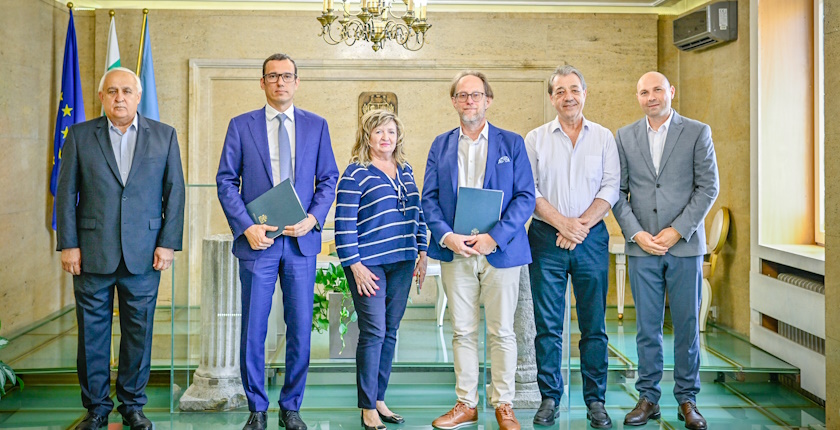
Sofia Mayor Vasil Terziev and Country Director of Veolia for Bulgaria, Greece and Albania Francois Debergh signed a memorandum of cooperation for the construction of two small hydropower plants along the city’s trunk water mains.

Earlier, the Sofia Municipal Council approved the findings of a joint working group that explored the possibilities for the investment.

“Our goal is to work consistently for making Sofia a sustainable, energy-efficient and modern European city. One of the key priorities in our vision for development is the use of renewable energy sources. Therefore, among the important fields in which we are working is the construction of small hydropower plants that will allow our city to generate clean electricity locally – with care for nature,” said Mayor Vasil Terziev.

Sofia has been planning in-pipe hydroelectric systems for more than two decades

Such facilities will help reduce the carbon footprint of the capital city and improve the management of water resources, according to the company and the Sofia Municipality, also known as Stolichna (capital) Municipality. They added that renewable energy investments are contributing to the city’s efforts toward energy independence and climate neutrality.

“The project is an example of how the existing infrastructure can be best utilized for clean energy production. After commissioning, the plants will produce approximately 12 GWh of renewable energy per year, which will account for additional annual savings of over 8,000 tonnes of CO2 emissions. The memorandum is fully aligned with Sofia’s commitments to climate neutrality and Veolia’s participation in the NetZeroCities initiative,” Debergh stated.

Sofiyska voda utility striving for energy independence

Sofiyska voda’s wastewater treatment plant in Kubratovo has been energy independent since 2015. It produces biogas from the sludge separated in the process. The parent company stressed that a pending solar power project would make Sofiyska voda the first energy-neutral water supply and sewerage operator in the region, among only a few on the global scale.

The local authority in Sofia recalled there was an idea already in 2003 for eight hydropower facilities on the water supply lines.

Another alternative hydroelectric project was recently unveiled in northwestern Bulgaria. With the ambition to build several hydroelectric plants on pontoons on the Danube river, a local company intends to install a 20 kW pilot facility in Vidin.

by in News

Romania preparing EUR 300 million in subsidies for geothermal heating, cooling

The Romanian Government has drafted a state aid mechanism for the production and transport of geothermal energy for district heating or cooling systems. The proposed scheme would be worth EUR 300 million, sourced from the European Union’s Modernisation Fund.

In addition to solar and wind energy, hydropower and battery energy storage systems, Romania is increasingly counting on geothermal potential for its energy transition and decarbonization efforts. The government in Bucharest is preparing EUR 300 million in subsidies for geothermal district heating or cooling systems, Profit.ro reported.

It drafted a state aid package that would be covered from the Modernisation Fund. It is a tool for supporting investments in renewables, energy efficiency, storage and networks and a just transition in 13 European Union member states with lower incomes. The funds are from the proceeds of the sales of greenhouse gas emission certificates within the EU Emissions Trading System (EU ETS).

The proposed subsidies are aimed at the production and transport of heat from geothermal energy, including modernization projects, to the points of connection with the district heating network, according to the document.

No need for auction as budget is sufficient for all mature projects

The budget would be divided into EUR 50 million per year through 2030. The funds are intended to cover the net additional costs of the projects – funding gaps. Typically, they are determined as the difference between the net present value of the factual scenario and the counterfactual scenario over the life of the project, the update reveals.

The government estimated that nine projects would split the available funds

There would be nine beneficiary projects, translating to EUR 33.3 million each, the government estimated. Eligible are thermal energy producers and municipal authorities and their units.

There won’t be a competitive bidding process for allocating the state aid, as the Ministry of Energy received too few mature proposals since 2023, within its exploratory public call, the document adds. The government has concluded the budget would cover the potential demand.

Bucharest, Timișoara among potential beneficiaries

State-owned Electrocentrale București (ELCEN), which produces thermal energy for the district heating system in the capital Bucharest, and National Company Bucharest Airports (CNAB), are among the entities interested in the subsidies.

Bucharest’s Sector 1 administrative authority and the Municipality of Timișoara are in the group as well. The latter, Romania’s fifth-largest city, established cooperation last year with OMV Petrom for district geothermal heating.

The article noted that Green Tech International, listed on the Bucharest Stock Exchange (BSE or BVB), is on the list. It operates geothermal wells in Călimănești-Căciulata in the country’s south. The company also supplies heat and sanitary hot water in Nădlac in Arad county in the northwest.

One other company interested in the state aid scheme is Transgex. The city of Oradea, where it is based, inaugurated an 18 MW geothermal district heating plant two months ago.

The government recently launched a EUR 56 million grant program for municipal authorities for geothermal energy projects.

In other relevant news from Southeastern Europe, Slovenia launched a EUR 51.2 million cofunding package for green district heating and cooling ten days ago, for companies and cooperatives.

by in News

Turkish renewables firm to drill for geothermal lithium

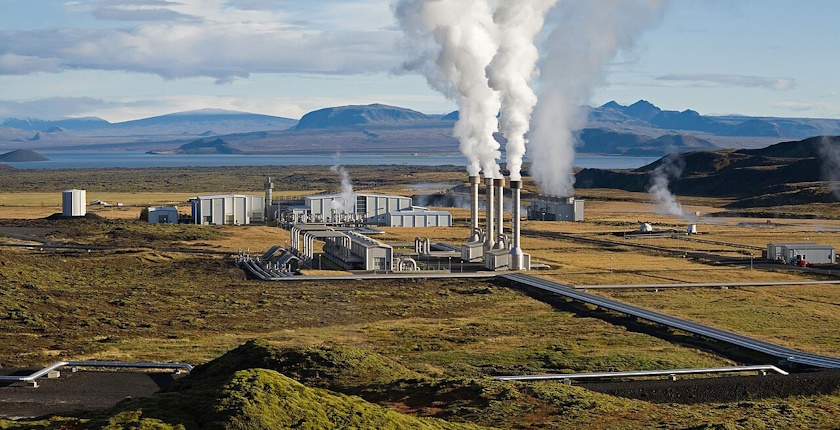
Margün Energy intends to search for lithium in geothermal waters in Seferihisar in western Turkey, where it took over a 12 MW geothermal power plant. It also launched a project to add a photovoltaic unit of 5.4 MW to the existing facility and create a hybrid power plant.

Turkey, the fourth in the world in geothermal power capacity, also has significant potential for lithium extraction. The production of the mineral used in batteries can increase the cost-effectiveness of geothermal energy projects. Margün Energy, listed at the Istanbul Stock Exchange since 2021, said it would conduct exploration works on 3,125 hectares in Izmir province.

The company recently bought a geothermal power plant in the area for USD 16 million from RSC Elektrik. The 12 MW facility is in Kavakdere in Seferihisar district. Margün Energy denied speculation that it would mine lithium.

If it finds a valuable amount of the mineral in geothermal water, it will build an extraction plant, according to the update. Margün Energy issued the statement after local residents expressed concern over potential environmental damage from lithium mining.

“We have not obtained any mining permits. Furthermore, Margün Energy is not a mining company… Mining lithium, which is used in battery production, and extracting lithium from geothermal fluid by separating it are very different things,” the announcement reads.

Margün Energy to look for precious metals as well

The company said it would continue its investments in geothermal energy such as electricity production and greenhouse farming, arguing it would create jobs for locals. It suggested it could extract carbon dioxide for commercial use as well.

Margün Energy added it would explore the presence of precious metals in geothermal fluids.

Planned PV unit to generate 10 GWh per year

In addition, it submitted a proposal to the country’s Energy Market Regulatory Authority (EMRA or EPDK) for the installation of a photovoltaic unit with 5.4 MW in peak capacity. It would be added to the existing facility, creating a hybrid power plant. The solar power system would generate 10 GWh per year and increase revenue by USD 1.05 million, the company estimated.

The PV plant would lift Margün Energy’s total capacity to 135.4 MW. The company mostly operates solar power plants and works as a contractor for engineering, procurement and construction (EPC) and operations and maintenance.

Notably, it owns the largest stake in Enda Energy Holding. The affiliate operates four hydropower plants, five wind power plants, one geothermal power plant and three solar power plants of 200 MW altogether.

Margün Energy rallied 109% since the beginning of the year.