by in News

North Macedonia Moves Closer to European Green Electricity Certification System

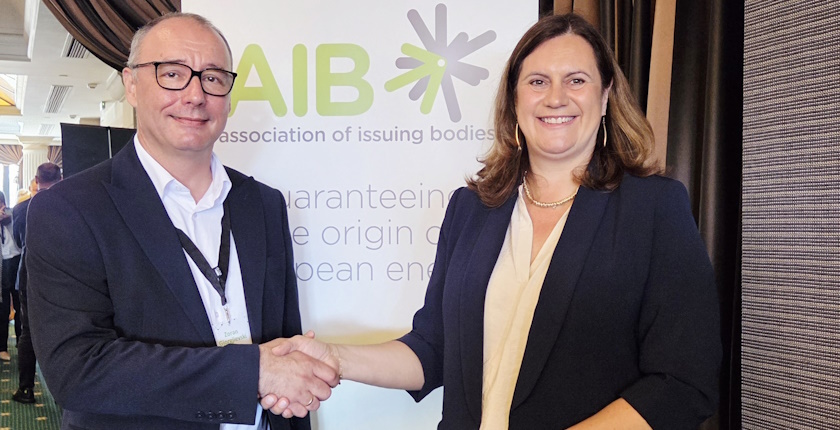
North Macedonia’s National Electricity Market Operator, MEMO, has officially joined the Association of Issuing Bodies (AIB), marking an important step toward deeper integration with the European framework for guarantees of origin and cross-border renewable electricity trade.

The decision was confirmed during the General Assembly of the Association of Issuing Bodies, where MEMO became a full member of the Brussels-based European energy certification organization. The move comes as the Ministry of Energy, Mining and Mineral Resources and the Energy Community Secretariat continue efforts to advance the mutual recognition of guarantees of origin between the European Union and Energy Community countries.

Guarantees of origin are electronic certificates proving that a specific quantity of electricity has been generated from renewable energy sources. They are increasingly important for transparent energy markets, renewable energy producers, suppliers and companies seeking to demonstrate the use of green electricity in line with ESG and decarbonisation standards.

MEMO introduced its electronic registry for guarantees of origin in April last year, in cooperation with energy certificate company Grexel and in line with European Energy Certificate System rules and AIB standards. Since then, North Macedonia has issued around 500,000 guarantees of origin, with each certificate representing 1 MWh of electricity produced from renewable sources.

According to MEMO Chief Executive Officer Zoran Gjorgjievski, AIB membership enables the Macedonian guarantees of origin system to implement the procedures required for future accession to the European Energy Certificate System. This will allow the secure, transparent and internationally recognized issuance and trading of green electricity certificates.

He emphasized that further integration of North Macedonia’s electricity market with the European energy market is essential, as it creates new opportunities for renewable energy producers, suppliers and businesses while strengthening trust, competitiveness and investment attractiveness in the country’s renewable energy sector.

Denko Rafajlovski, Head of MEMO’s Renewable Energy Support Department, noted that guarantees of origin play a key role in promoting renewable energy and giving consumers greater transparency and choice over the source of the electricity they use. Through the AIB Hub, national registries are connected, enabling the efficient cross-border transfer of green certificates between countries.

MEMO became an observer member of AIB last year as a first step toward full membership. Its accession now represents a significant milestone in the development of a modern, transparent and European-aligned electricity market in North Macedonia.

Cross-border trade in guarantees of origin will become possible once national legislation and technical requirements are fully harmonized with European Union standards.

by in News

EPCG Expands Generation and Storage Portfolio with 639 MW of New Projects

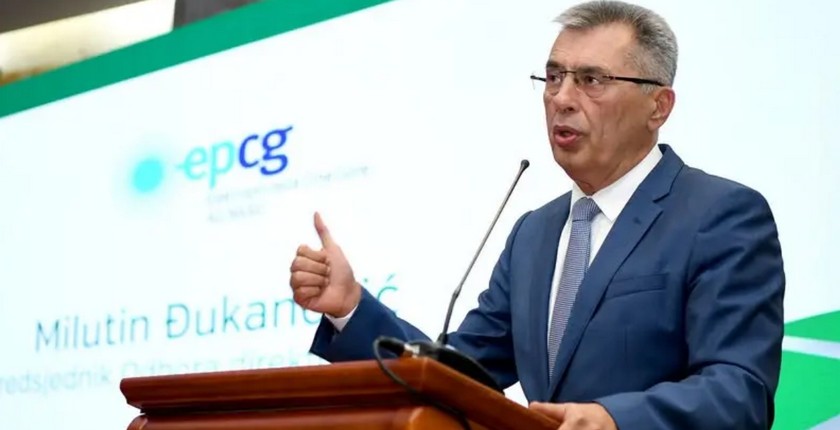
Montenegro’s state-owned utility Elektroprivreda Crne Gore (EPCG) is advancing a broad portfolio of solar, wind, battery storage, and hydropower projects with a combined capacity of 639 MW, and an expected annual electricity output of more than 1 TWh, according to Milutin Đukanović, President of EPCG’s Board of Directors.

In an opinion piece, Đukanović said the company has already completed part of a major investment cycle, including rooftop solar projects, the Gvozd 1 wind farm, the ecological reconstruction of the Pljevlja thermal power plant, and part of the modernization works at the Piva and Perućica hydropower plants. He added that new generation capacities, battery storage systems, hydropower upgrades, rooftop solar, wind projects, and strategic partnerships are EPCG’s response to the operational and market challenges it faced in 2025.

EPCG’s direct project pipeline amounts to around 639 MW/MWp, with estimated investments of approximately EUR 646.5 million and an expected annual output of about 1,024 GWh. Đukanović noted that the investment framework also includes reconstruction and upgrade projects that cannot always be expressed in megawatts.

When strategic and potential private partners are included, the company’s total portfolio rises above 4,636 MW/MWp, with a potential annual electricity generation of more than 8,176 GWh. Đukanović said EPCG is positioning itself for a larger role in Montenegro’s energy transition and in the broader regional power market.

The portfolio includes EPCG-owned solar power plants with a combined capacity of 221.1 MW and projected annual production of 299 GWh, rooftop solar systems for prosumers totaling 209.1 MW and 245 GWh in annual generation, the Gvozd 1 and Gvozd 2 wind farms with a combined capacity of 75.6 MW and expected output of 227 GWh, hydropower projects totaling 71.7 MW and 135 GWh annually, and battery energy storage facilities with an operating power of 60 MW.

A battery energy storage system is also planned at EPCG’s steel plant Željezara Nikšić. The project is estimated at around EUR 48 million and is designed as a 60 MW / 240 MWh system, with an expected annual electricity output of about 118.3 GWh, Đukanović said.

Among the completed investments, EPCG has already added 143.66 MW of new generation capacity, corresponding to around 268 GWh of annual electricity production. The value of these completed projects stands at approximately EUR 258.87 million.

These include rooftop solar systems installed under the Solari 3000+ and Solari 500+ programs, with a total peak capacity of 34.34 MW and expected annual generation of 40.18 GWh, as well as the completed portion of the Solari 5000+ project, which has a total peak capacity of 54.72 MW and expected annual output of 64.02 GWh. A further 20 MW of rooftop solar remains to be installed under the same program.

The 54.6 MW Gvozd 1 wind farm has also been completed, with an investment of EUR 82 million and projected annual output of 163.8 GWh. Together with the second phase, Gvozd 2, the project will raise total wind capacity by about 75.6 MW.

Additional completed investments include the ecological reconstruction of the Pljevlja thermal power plant, valued at EUR 75 million, along with the second phase of reconstruction and modernization works at the Piva hydropower plant, worth EUR 10.83 million, and the second phase at the Perućica hydropower plant, worth EUR 33 million.

Đukanović also noted that the Pljevlja coal mine carried out the diversion of the Ćehotina River during the power plant reconstruction, in a project worth EUR 20 million. The intervention was necessary to secure continued coal mining operations, as available reserves were close to exhaustion.

He said the main reasons for EPCG’s EUR 92.1 million loss in 2025 were the eight-month outage at the Pljevlja thermal power plant due to ecological reconstruction, as well as unfavorable hydrological conditions.

According to Đukanović, once production at Pljevlja resumed, EPCG’s energy balance returned to positive territory. The company then posted a profit of EUR 36.47 million in the first quarter of this year.

by in News

Gramos Hashani appointed as permanent head of KEK in Kosovo

Kosovo Energy Corp. (KEK) has officially appointed Gramos Hashani as its Chief Executive Officer, following a fourteen-month period during which he served as interim head of the state-owned power utility. The decision was confirmed by the company’s Board of Directors after the completion of what it described as an open, transparent, and competitive selection process.

According to the board, the appointment procedure was conducted in full compliance with Kosovo’s Law on Public Enterprises and included the evaluation and interviewing of all candidates who satisfied the requirements outlined in the public vacancy announcement.

Hashani initially assumed the role of interim CEO in February last year, at a time when KEK was facing increasing pressure to improve operational efficiency, strengthen corporate governance, and accelerate modernization efforts within Kosovo’s electricity sector.

His permanent appointment is viewed as a move aimed at ensuring management continuity at one of the country’s most strategically important energy companies, particularly as Kosovo advances energy transition policies, regional market integration, and investment planning for generation and infrastructure upgrades.

Hashani graduated from the Faculty of Economics at the University of Prishtina – Hasan Prishtina and completed his master’s studies at the University of the Incarnate Word in San Antonio, Texas, in the United States.

His professional credentials include certification as an accountant and internal auditor through the Society of Certified Accountants and Auditors of Kosovo (SCAAK), while he is also a member of the United Kingdom-based Association of Chartered Certified Accountants (ACCA).

According to KEK’s Board of Directors, Hashani brings extensive expertise in strategic financial management, corporate governance, energy transition investments, and the implementation of international accounting standards, including IFRS and US GAAP.

The board also highlighted his professional experience across both the energy and financial sectors in Kosovo and the United States, where he has held senior management positions in international and domestic companies.

The appointment comes at a critical period for KEK and Kosovo’s broader energy sector, as authorities seek to modernize aging lignite-based generation assets, strengthen energy security, improve environmental performance, and attract investment into renewable energy and transmission infrastructure.

As Kosovo continues aligning its energy market framework with regional and European standards, KEK is expected to play a central role in balancing legacy thermal generation with the country’s long-term decarbonization and market reform objectives.

by in News

North Macedonia Launches Intraday Electricity Market as Regional Power Trading Evolves

North Macedonia has taken another significant step toward deeper integration with the European electricity market following the launch of its intraday power market by the National Electricity Market Operator (MEMO). The development represents a major advancement in the country’s electricity market liberalization process and strengthens operational flexibility within the regional energy system.

The official launch ceremony gathered senior representatives from the government, energy institutions, market participants, and international partners. The intraday trading platform and clearing infrastructure were delivered by Slovenia’s BSP Energy Exchange, continuing its cooperation with MEMO after supporting the establishment of North Macedonia’s day-ahead market. Intraday trading operates through Deutsche Börse’s M7 trading system, one of Europe’s widely adopted electricity trading platforms.

The introduction of intraday trading comes three years after the launch of the country’s day-ahead market and reflects the increasing sophistication of North Macedonia’s power sector. Intraday markets play a critical role in modern electricity systems by enabling market participants to adjust positions closer to the actual delivery hour. This improves balancing efficiency, reduces imbalance costs, and enhances the integration of variable renewable energy sources such as solar and wind.

Prime Minister Hristijan Mickoski described the launch as evidence of tangible reform progress in the national energy sector. According to him, energy security and resilience have become strategic priorities for all European economies amid accelerating market transformation and geopolitical uncertainty.

“At a time when energy is one of the most critical issues for every country, our obligation is to create a system that is secure, competitive, and resilient to global challenges,” Mickoski stated during the event.

He emphasized that North Macedonia intends to actively participate in European energy flows and policy frameworks rather than remain on the periphery of the continent’s ongoing energy transition.

Minister of Energy, Mining and Mineral Resources Sanja Božinovska underlined that the intraday market is only one phase of a broader market integration strategy. She reiterated the government’s commitment to future market coupling with the European Union and the continued development of regional electricity trading mechanisms.

“This is just the starting point for our full integration into the European energy family,” Božinovska said, adding that authorities will continue advancing regional cooperation and aligning domestic market structures with EU standards.

MEMO Chief Executive Officer Zoran Gjorgjievski highlighted the operational significance of intraday trading in a rapidly changing electricity environment increasingly shaped by renewable generation and real-time balancing requirements.

“From today, our market not only plans for tomorrow – it operates in real time. The intraday market is a direct response to the dynamics of the modern energy sector,” Gjorgjievski noted.

He stressed that transparent and efficient price formation remains essential for optimal resource allocation, prudent investment decisions, and effective risk management across the electricity value chain.

Gjorgjievski also warned that emerging European regulatory frameworks, particularly the Carbon Border Adjustment Mechanism (CBAM), could introduce additional pressure on domestic electricity producers and potentially affect regional market liquidity. While supporting decarbonization objectives, he argued that the energy transition must remain economically sustainable and carefully managed to avoid undermining market competitiveness.

The launch of the intraday market is also viewed as an important preparatory step toward integration into the single European electricity market. Chairman of the Management Board of ADEX Group and CEO of BSP Energy Exchange Anže Predovnik said the project reflects strong institutional cooperation, strategic government support, and MEMO’s operational commitment.

“What lies ahead is integration into the single European market. Together, we will build a more connected and competitive future,” Predovnik stated.

North Macedonia’s intraday market currently includes 21 participants, demonstrating growing interest among regional traders and electricity companies.

According to Martin Martinovski, electricity and statistics expert at the Energy Community Secretariat, the operational intraday market strengthens North Macedonia’s role within the regional balancing framework. As integration with the EU electricity market progresses, the country could increasingly contribute low-carbon flexibility to neighboring systems while benefiting from cross-border balancing support.

Market growth figures indicate a rapid expansion in trading activity since the launch of organized electricity trading in the country. Trading volumes increased from 335 GWh by the end of 2023 to nearly 970 GWh in 2024, before surpassing 1.37 TWh last year. MEMO currently counts forty active market members, while first-quarter 2026 trading volumes were 19% higher compared to the same period a year earlier. 

by in News

Renalfa Advances Oslomej Solar Project with 50 MW Battery Storage Installation

Austria-based developer and independent power producer Renalfa IPP has commenced the installation of a battery energy storage system (BESS) at its solar power plant in Oslomej, North Macedonia. The system will have an operating power of 50 MW and a storage capacity of 200 MWh, marking a significant step in enhancing grid flexibility and renewable integration.

The co-located BESS is being deployed alongside the 65.8 MW Oslomej solar power plant, which is situated on the site of a former coal mine. The project reflects ongoing efforts to repurpose legacy fossil fuel infrastructure into clean energy assets. The solar facility was developed through a public-private partnership with state-owned utility Elektrani na Severna Makedonija (ESM).

Financing for the solar plant was provided by the Green for Growth Fund, which has also committed €24 million to support the deployment of the battery storage system. The combined investment forms part of a broader initiative to transition North Macedonia’s coal-based energy complex toward sustainable generation.

In 2025, Renalfa secured a €315 million loan facility from a consortium led by the European Bank for Reconstruction and Development. The financing underpins the company’s €1.2 billion regional investment program, which targets the development of approximately 1.6 GW of renewable generation capacity and 3.3 GWh of co-located battery storage across Bulgaria, Hungary, Romania, and North Macedonia.

These assets are expected to produce around 2.3 TWh of green electricity annually—sufficient to meet the energy needs of approximately 920,000 households—while supporting grid stability through integrated storage solutions.

Beyond North Macedonia, Renalfa is also advancing a major hybrid renewable project in Hungary. The company is developing a 450 MW solar power plant in Szihalom, complemented by a BESS with an operating power of 250 MW and a capacity of 1 GWh. The battery system is being supplied by HiTHIUM.

According to Renalfa, the Szihalom project represents the largest hybrid renewable energy development undertaken in Hungary to date and ranks among the most significant such projects in Europe.

by in News

Albania’s Hydropower Surge Strengthens Its Position in Regional and EU Energy Markets

The first three months of 2026 marked a substantial increase in electricity generation in Albania, driven primarily by a sharp rise in hydropower output. Production from hydropower plants was 70% higher in January–March 2026 compared to the same period a year earlier.

According to data published in the report of the Energy Community on the Carbon Border Adjustment Mechanism (CBAM), Albania gained a clear advantage over other regional countries in exporting electricity generated from renewable sources.

Specifically, the first quarterly report on CBAM implementation highlights that Albania’s hydropower generation increased significantly, positioning the country as a far more aggressive net exporter of electricity to both the regional market and the European Union.

“Hydropower production in Albania increased by 1.34 TWh (+70%) in the first quarter of 2026 compared to the same period in 2025, rising from 1.93 TWh to 3.27 TWh,” the report states. This growth was concentrated in January and February, with increases of +72% and +84% respectively, reflecting exceptionally favorable hydrological conditions.

This surplus translated directly into higher exports. Albania increased scheduled electricity exports by approximately 4,100 MWh per day to Greece, 3,700 MWh per day to Kosovo, and 2,000 MWh per day to Montenegro.

The report estimates that “these shifts in trade flows represent a net movement of approximately 1.2 TWh of Albanian electricity exported in the first quarter of 2026,” a volume that closely matches the incremental increase in hydropower generation.

The economic impact is further amplified by how CBAM treats Albanian electricity. Unlike Serbia, Bosnia and Herzegovina, or Montenegro, Albania benefits from a zero emissions factor. This means its electricity exports to the European Union are not subject to additional carbon costs.

“Electricity imported into the European Union from Albania was not financially affected by CBAM,” the report notes, adding that this “created a commercial incentive to import Albanian electricity into EU markets.”

Such dynamics position Albania as a preferential energy corridor դեպի the European market, particularly through Greece and onward to Italy. The report observes that exports from Albania to Greece intensified, with Albanian electricity—combined with strong Greek domestic production—subsequently redirected toward Bulgaria and Italy.

The Energy Community further warns that hydropower-dominated systems like Albania’s “appear to be in a structurally more competitive position,” suggesting that CBAM is already creating long-term winners and losers in the region. In contrast, countries with higher coal-based generation face substantial financial penalties.

For example, Montenegro pays approximately €73.8 per MWh of electricity exported to the European Union, while Albania pays zero. “The contrast between Albania and Montenegro illustrates how country-level emission factors shape cross-border electricity trade,” the report concludes, placing Albania firmly on the side of Europe’s evolving energy transition.

by in News

Albania’s Green Finance Push: A Strategic Step Toward Energy Transition and Financial Stability

Albania is taking a structured step toward aligning its financial system with climate and energy transition goals. The initiative led by the Bank of Albania reflects a broader shift underway across emerging European economies: embedding sustainability into financial architecture rather than treating it as a parallel policy track.

At the core of this effort is the development of a national Green Taxonomy, a classification system designed to define which economic activities can be considered environmentally sustainable. This is not merely a technical exercise. In energy terms, such taxonomies directly influence capital allocation—determining whether investments flow into renewable energy, grid modernization, energy efficiency, or continue supporting carbon-intensive assets.

The article emphasizes that the central bank, in cooperation with the European Investment Bank, is working on a first draft of this taxonomy through an inclusive consultation process involving ministries, regulators, financial institutions, and private-sector stakeholders. This multi-layered approach is critical. Green finance frameworks fail when they are designed in isolation; success depends on alignment between policy, regulation, and market implementation.

From an energy expert perspective, one of the most important elements highlighted is the role of the taxonomy in building a climate information architecture. This is often underestimated. Reliable data on emissions, energy use, and climate risks is the backbone of any credible transition strategy. Without it, financial institutions cannot price risk properly, and investors cannot differentiate between genuinely green projects and “greenwashed” ones.

The initiative is also explicitly linked to financial stability, which is a notable shift in central banking priorities. Climate risks—whether physical (extreme weather affecting hydropower, for example) or transition-related (stranded fossil assets)—are increasingly seen as systemic financial risks. By promoting green financing, the central bank is not only supporting environmental goals but also preemptively managing future balance-sheet vulnerabilities in the banking sector.

Another key dimension is EU alignment. The taxonomy is being designed to approximate European Union standards, which is essential for Albania’s accession process. In practical terms, this alignment lowers barriers for international capital, particularly from EU-based investors who are already bound by sustainability disclosure regulations. It also creates a common language for cross-border energy investments, especially in renewable generation and regional interconnection projects.

The consultation process described in the article—bringing together institutions such as finance, energy, agriculture, and environmental ministries, alongside banks and corporations—signals recognition that the green transition is inherently cross-sectoral. For the energy sector specifically, this is crucial. Decarbonization pathways depend not only on energy policy but also on financing conditions, industrial policy, and infrastructure planning.

Importantly, the article notes that the next step will be the formalization of cooperation through a memorandum of understanding and the finalization of the taxonomy framework. This institutionalization phase will determine whether the initiative translates into real investment flows. Many countries develop green taxonomies, but only a subset manage to operationalize them effectively within lending practices and capital markets.

From a broader energy transition standpoint, Albania’s move reflects three structural realities:

First, finance is becoming the primary lever of the energy transition. Regulatory signals alone are insufficient; capital must be directed at scale toward low-carbon assets.

Second, emerging markets face a dual challenge—they must expand energy systems to support growth while simultaneously decarbonizing them. This makes efficient capital allocation even more critical.

Third, regional integration matters. Aligning with EU frameworks is not just about compliance; it is about accessing larger pools of capital and integrating into a wider low-carbon energy system.

In conclusion, the Bank of Albania’s initiative is more than a policy announcement—it is a foundational step toward reshaping how capital flows into the Albanian economy. If effectively implemented, the Green Taxonomy could accelerate investment in sustainable energy infrastructure, improve risk management in the financial sector, and strengthen Albania’s position within the European energy transition landscape.

by in News

Albania’s Day-Ahead Power Market Is Operational, but Still Not Mature Enough for CfD Support

Albania’s electricity market is making measurable progress, but it is not yet ready to serve as the reference price for modern renewable support mechanisms. That is the central conclusion of ERE’s first assessment of the ALPEX day-ahead market (DAM), which evaluates whether the market is sufficiently liquid and competitive to underpin the future conversion of renewable PPAs into contracts for difference (CfDs). Under Albania’s renewable energy law, ERE is required to carry out such periodic assessments, and it approved the market-readiness methodology in November 2025.

The report’s logic is straightforward: a day-ahead market can only act as a reliable CfD benchmark if it produces a frequent, stable, and credible price signal. To test that, ERE examined price availability, churn, bid-ask spreads, market depth, competition, and the effect of Albania’s coupling with Kosovo. It also benchmarked ALPEX against selected EU markets at the stage when those countries first introduced CfDs, choosing Poland, Hungary, and Croatia as comparators. This approach places Albania in a relevant policy context rather than comparing it with the most mature European exchanges.

The assessment does contain important signs of institutional progress. ALPEX generated a market-clearing price in every hour of the 12-month review period, from 1 November 2024 to 31 October 2025, which satisfies ERE’s criterion for continuous price availability over at least 10 months. The market also appears to be functioning as a shared Albanian-Kosovar trading platform, with coupled prices in more than 99% of hours. In policy terms, that is a meaningful achievement: the market is operational, regional, and capable of producing a continuous price signal.

Yet the core liquidity indicators show that ALPEX remains materially underdeveloped relative to the comparison markets. The churn factor is only 0.102, below HUPX, CROPEX, and TGE, indicating that the ratio of traded volume to total consumption is still weak. The bid-ask spread is also wide: the median is 9.7% of the average market-clearing price, the mean is 17.4%, and the 75th percentile reaches 19.2%. By contrast, the report shows that HUPX had a median spread of just 1.2% and a mean of 3.7%. These figures point to a market that can clear prices, but still struggles to do so efficiently and consistently.

Market depth provides the same message in a different form. ERE finds that in 25% of hours, ALPEX would not have been able to absorb more than about 146 MW of new zero-marginal-cost supply while still maintaining a positive clearing price. That is a critical limitation for a power system that is expected to integrate more renewable generation, especially as photovoltaic capacity continues to expand. In practical terms, the report suggests that the market may face stress at times of low demand or high renewable output, when additional capacity needs a deeper and more resilient trading environment.

Competition is stronger than the liquidity indicators alone might suggest. ERE reports 32 sellers and 33 buyers, with an HHI of 853 on the sell side and 1,220 on the buy side. It interprets this as a competitive sell-side structure and a moderately concentrated buy side. That is an important distinction: the market has participants, but participation has not yet translated into the degree of depth and turnover required for a robust reference price.

The broader policy conclusion is therefore cautious but clear. ALPEX is moving in the right direction, but it is not yet sufficiently liquid to support the transition to CfD-based renewable support. ERE explicitly concludes that the ALPEX DAM is not yet ready to be used as the reference price for support contracts in Albania. At the same time, the report treats this not as a failure, but as a transitional stage: the market has a continuous price signal, a reasonable participant base, and a functioning regional coupling, which are all necessary foundations for future readiness. ERE is expected to continue periodic assessments as the market deepens and matures.

In strategic terms, the report captures Albania’s power-market transition at an important midpoint. The system is no longer at the stage of market creation, but it has not yet reached the level of liquidity, depth, and price stability that would allow it to anchor modern renewable support instruments. For policymakers, the message is that market coupling and institutional setup are advancing faster than commercial liquidity. For investors, especially in renewables, the implication is equally clear: Albania’s market architecture is improving, but the price environment is still not mature enough to be treated as a fully reliable CfD benchmark.

by in News

Tariff Methodologies in the Energy Community: Convergence, Cost Recovery, and Albania’s Reform Trajectory (ECRB 2025–2026 Analysis)

The Energy Community was created to extend EU electricity and gas market rules to the Western Balkans, Moldova, Georgia, and Ukraine through a legally binding framework. Within that system, the Energy Community Regulatory Board (ECRB) serves as the regional voice of regulators and, under Article 18 of the Electricity Regulation, prepares a biannual best-practice report on transmission and distribution tariff methodologies. The March 2026 report is the second such exercise and is explicitly designed to reduce market fragmentation by comparing how Contracting Parties set, update, and structure network tariffs.

That matters because tariff methodology is not just a technical exercise. It determines whether TSOs and DSOs recover efficient costs, whether users see price signals that reward efficiency and flexibility, and whether the network can absorb renewables, storage, EV charging, and other new uses without shifting hidden costs onto captive customers. The report frames tariff design around cost reflectivity, transparency, security of supply, and system efficiency, which is exactly where electricity-market reform and energy transition policy intersect.

Regional overview: nine Contracting Parties, one broad direction, uneven speed

Across the nine Contracting Parties—Albania, Bosnia and Herzegovina, Georgia, Kosovo*, Moldova, Montenegro, North Macedonia, Serbia, and Ukraine—the strongest common trend is not full harmonization but gradual convergence toward more incentive-based regulation. Since 2022, almost all regulators have introduced some form of change to improve cost reflectivity, investment incentives, or quality-of-service regulation; the most notable reforms are in Moldova, North Macedonia, Montenegro, Kosovo*, and Ukraine.

A useful way to read the region is by regulatory “maturity” rather than by simple tariff levels. Albania is the clearest price-cap case; Georgia has a sophisticated hybrid “building-blocks” design; Moldova and Kosovo* are moving toward more explicit EIP-aligned frameworks; North Macedonia and Montenegro are actively redesigning components of the charge to reflect flexibility, quality, and capacity; Bosnia and Herzegovina and Serbia remain more conservative and largely cost-plus on transmission; and Ukraine sits between emergency constraints and structural reform, with a major unbundling of renewable-support costs underway.

Table 1. Regional regulatory snapshot by country

Country Transmission regulation Distribution regulation Update cycle / tariff revision Transparency / stakeholder involvement Main reform direction
Albania Price-cap oriented, incentive-based Price-cap oriented, with quality factor 3-year D-cycle; T updates mostly at end of period or via extraordinary review Public consultations; tariffs and methodology publicly available Incremental updates, quality, cost-reflectivity
Bosnia and Herzegovina Cost-plus Cost-plus / regulatory methodologies by entity No fixed regulatory period; revisions when justified Public and specific consultations; info public, incl. English Stability, modest modernization
Georgia Hybrid cost-plus + revenue-cap “building blocks” Hybrid 5-year regulatory period Public/specific consultations; info public incl. English Fixed/capacity elements under review
Kosovo* Allowed-revenue, annual approval under ex-ante regulation New principles adopted in 2024; full methodology expected in 2026 5-year regulatory period Public consultations New users, injection tariffs, capacity signals
Moldova Incentive-based revenue cap Incentive-based, new methodology in 2025 Methodology indefinite; tariff updates annual Public + specific consultations; multi-authority review EIP alignment and innovation
Montenegro Hybrid incentive/performance-based Hybrid; now includes power-based distribution injection charge Flexible multi-year practice; current period 2023–2025 Public consultations Quality, storage, AIT/SAIDI, cost reflectivity
North Macedonia Revenue cap; t-2 base year Revenue cap; t-2 and lump sum access fee 3-year cycle Public and specific consultations Time-of-use, locational and flexibility signals
Serbia Cost-plus Cost-plus / mixed user basis 1-year cycle Public consultations Flexibility services under new by-laws
Ukraine Cost-plus transitional; incentive-based not fully applied Mostly incentive-based for most DSOs 1-year cycle for cost-plus DSOs; special periods for incentive regulation Public and specific consultations Separate RES-support costs; new connection logic

Deep dive: Albania

Albania is the report’s most important “special case” because it combines a comparatively mature regulatory philosophy with a relatively static formal methodology. The transmission methodology, approved in 2017, has not been materially amended since then. The report describes Albania’s transmission regime as price-cap oriented and incentive-based, with allowed revenue built from forecast OPEX and CAPEX, and with cost recovery limited to transmission-related items such as metering, maintenance, losses, ancillary services, third-party services, and taxes.

The distribution methodology is also rooted in a 2017 framework, but unlike transmission it has been incrementally adjusted since 2022 to reflect operational costs, investment plans, and, importantly, quality-of-service indicators. ERE now adds a performance-improvement factor to the D tariff formula, which is a meaningful step toward incentive regulation that is closer to EU practice. The report also notes that Albanian transmission tariffs are updated mainly at the end of the regulatory period unless extraordinary circumstances justify re-evaluation.

That said, Albania is not the most modern tariff system in the region. It remains strongly volumetric on the demand side, with no major transmission-methodology overhaul since 2017 and no reported planned reform program in the report. Compared with peers, Albania is ahead on the clarity of its price-cap logic and on the integration of quality signals, but behind Georgia, Moldova, Montenegro, and North Macedonia in methodological renewal and in preparing for capacity-based and flexibility-related network use.

Table 2. Albania in regional context

Dimension Albania Regional comparison
Transmission framework 2017 methodology, price-cap oriented Less updated than Moldova, Kosovo*, North Macedonia, Montenegro
Distribution framework 2017 methodology, gradually refined More advanced than purely static systems because of quality factor
Quality incentives Yes, D tariff includes performance-improvement factor In line with Georgia, Kosovo*, Montenegro, Ukraine
Injection charges No transmission/distribution injection charges More conservative than Montenegro, and ahead of countries that have not introduced them
Modernization pace Incremental, not transformational Middle of the pack: prudent but not frontrunner

Cost structure and cost recovery: the region still relies on the classic network model

Across the Energy Community, the default cost model remains the “average cost” approach: allowed revenue is divided by forecast volumes of energy or capacity. The report does not find meaningful adoption of incremental or fully forward-looking cost models. That means most systems still recover costs in a way that is structurally familiar, but not always well suited to emerging flexibility services or highly dynamic network use.

On the cost side, all Contracting Parties recover CAPEX, OPEX, and distribution losses through D tariffs, while TSOs also recover losses and ancillary services through T tariffs in most systems. The main divergence lies in “extra” categories: costs for data hubs, redispatching, market coupling, ENTSO-E contributions, R&D, and support schemes are only partially recognized or not recognized at all in many countries. The report is explicit that network charges should not absorb unrelated policy costs, and Ukraine is the clearest example of moving to separate renewable-support costs from the transmission tariff.

Investment treatment is also uneven. Loans are broadly recognized in tariffs and/or RAB, while grants are usually excluded from return. Anticipatory investments are rare in distribution and still selective in transmission, but Kosovo*, Moldova, Montenegro, and North Macedonia are already using forward-looking logic for strategic projects. That is a significant marker of policy maturity because it shows the region is beginning to treat network tariff design as an infrastructure-planning tool, not only a cost-pass-through mechanism.

Table 3. 2024 average transmission tariffs and 2020–2024 change

Country 2024 transmission tariff (EUR/MWh) 2020 tariff Change 2020–2024
Albania 8.44 6.06 +39.3%
Bosnia and Herzegovina 5.25 4.97 +5.7%
Georgia 7.07 5.85 +20.8%
Kosovo* 9.58 5.37 +78.4%
Moldova 9.48 7.43 +27.6%
Montenegro* 27.97 29.99 -6.7%
North Macedonia 4.77 2.86 +66.8%
Serbia 5.21 4.25 +22.6%
Ukraine 12.16 6.46 +88.2%

* Montenegro’s figure is not directly comparable to all others because distribution-connected consumers are charged capacity fees without a clean T/D breakdown.

The tariff series show three striking facts. First, Ukraine and Kosovo* experienced the fastest transmission tariff growth, and by 2024 Ukraine had the highest clearly comparable T tariff among the nine CPs. Second, North Macedonia, Albania, and Moldova also show strong upward movement, reflecting reform and/or cost pressure. Third, Montenegro is a structural outlier because of its capacity-fee design and very high reported average transmission-related value.

Table 4. 2024 household and non-household distribution tariffs

Country HH D tariff 2024 (EUR/MWh) 2020 Change Non-HH D tariff 2024 (EUR/MWh) 2020 Change
Albania 58.21 38.69 +50.5% N/A N/A N/A
Bosnia and Herzegovina 30.20 28.75 +5.0% 21.24 15.66 +35.6%
Georgia 30.99 19.54 +58.6% 30.99 12.80 +142.1%
Kosovo* 25.49 25.24 +1.0% 22.54 22.32 +1.0%
Moldova 33.22 27.00 +23.0% 33.22 27.00 +23.0%
Montenegro* 30.60 35.76 -14.4% 27.10 31.25 -13.3%
North Macedonia 38.96 25.03 +55.7% 38.96 25.03 +55.7%
Serbia 36.64 30.19 +21.4% 22.92 20.35 +12.6%
Ukraine 37.00 22.00 +68.2% 29.00 16.00 +81.3%

The distribution data show that Albania, North Macedonia, and Ukraine have seen especially strong growth in household distribution tariffs, while Georgia’s non-household tariff rose sharply. In contrast, Montenegro is the only country with a clear decline in both household and non-household distribution values over the 2020–2024 period. The cross-country average in 2024 is about EUR 35.7/MWh for household D tariffs and EUR 28.2/MWh for non-household D tariffs, underscoring how distribution still dominates the final network bill.

Tariff design and charges: the region is still dominated by withdrawal charges

All Contracting Parties apply withdrawal tariffs on both transmission and distribution. Injection charges are the exception, not the rule: they exist on transmission only in Bosnia and Herzegovina, Montenegro, and Ukraine, and on distribution only in Montenegro. Kosovo* and Georgia are explicitly preparing reforms in this direction.

The tariff base is also revealing. Transmission withdrawal tariffs are energy-only in Albania, Georgia, Moldova, and Ukraine, but energy-plus-power in Bosnia and Herzegovina, Kosovo*, Montenegro, North Macedonia, and Serbia. Distribution withdrawal tariffs are energy-only in Albania, Georgia, Kosovo*, Moldova, and Ukraine; energy-plus-power in Bosnia and Herzegovina, Montenegro, North Macedonia, and Serbia; and lump-sum elements are now visible in Bosnia and Herzegovina, Montenegro, and North Macedonia. That makes the latter three countries the most structurally diversified on D-tariff design.

Injection charges are particularly important because they show whether a country is moving away from the historic assumption that only consumers cause network costs. Montenegro is the clearest example of a system where producers share transmission and distribution costs in a measurable way: 34% of transmission costs are allocated to producers, and 0.16% of DSO costs are recovered from distribution-connected producers. Bosnia and Herzegovina and Kosovo* also recover part of transmission costs through injection charges, but Ukraine uses its dispatch tariff primarily to recover system-operation and ancillary-service costs.

Connection charges are another area where the region is differentiating. Albania and Montenegro use shallow connection charges at transmission and Albania uses a detailed multi-component D connection fee. Bosnia and Herzegovina and Ukraine use deep connection logic in several cases, while Georgia and Kosovo* are moving toward more detailed and differentiated rules for producers, small generators, EV charging, and storage. The policy message is clear: connection methodology is becoming a central instrument for shaping the next wave of grid users.

Table 5. Tariff-design signals and network-user treatment

Feature Leaders / current practice Where it is still limited
Injection charges Montenegro; parts of BiH and Ukraine; future plans in Georgia and Kosovo* Most CPs still have none
Time-of-use T tariffs Montenegro and Serbia Not widely applied elsewhere
Time-of-use D tariffs Bosnia and Herzegovina, Montenegro, Serbia No broader rollout yet
Locational signals None currently applied All CPs
Reactive charges Widely used on D level; selective on T level Many are administrative, not cost-based
New users (storage, EVs, prosumers) Kosovo*, North Macedonia, Ukraine, Georgia moving fastest Most systems still adapting

Energy transition and future trends

The report’s most important forward-looking conclusion is that tariff methodology is now being pulled into the energy-transition agenda. The EIP requires tariffs to reflect new users and new services, including flexibility, storage, distributed generation, smart grids, and renewable-energy communities. On that criterion, North Macedonia, Montenegro, Moldova, Serbia, Ukraine, Georgia, and Kosovo* are all in active reform mode, though with different starting points.

Ukraine is the clearest case of structural transition: renewable-support costs are being separated from the transmission tariff under a roadmap extending to 2030, which is the right direction if the goal is to remove unrelated policy costs from network charges. North Macedonia is preparing to empower time-of-use tariffs and locational signals under its new Energy Law. Montenegro plans AIT- and SAIDI-based incentives from 2027, while Moldova and Serbia are tasked to develop new EIP-aligned methodologies in 2025–2026. Georgia is considering fixed and/or power-based components in future regulatory periods, and Kosovo* has already adopted the principles that will underpin a new distribution-use-of-system methodology.

Comparative insights

The best-performing systems are not necessarily the cheapest. They are the ones that combine transparency, incentive compatibility, and room for new network users. On that basis, Georgia, Moldova, Montenegro, and North Macedonia are the most dynamic reformers; Albania is strong on regulatory clarity and quality signals; Kosovo* is making a significant methodological leap; and Ukraine is undertaking the most consequential structural separation of non-network costs.

The lagging systems are those where the methodology is still heavily cost-plus, the revision process is relatively static, and the tariff structure has not yet been redesigned for storage, EVs, distributed generation, or flexibility. Bosnia and Herzegovina and Serbia are the clearest examples on transmission; Albania is the clearest example of a system that is stable but too static; and Ukraine, while reform-minded, remains constrained by wartime conditions and transitional cost recovery.

There is also a visible convergence trend. Most CPs now publicly disclose tariff-related information, consult stakeholders, and use incentive-based language even where the practical model remains cost-plus. But there is still divergence in three areas: the share of cost recovered from producers, the treatment of losses, and the introduction of capacity-based or time-differentiated charges. Those are likely to be the decisive battlegrounds of the 2025–2027 reform cycle.

Conclusions and recommendations

The report shows a region that is no longer debating whether tariff methodology should change, but how fast and in what direction. The best systems are moving from simple volumetric pass-through toward more nuanced designs that reward efficient use of the grid, preserve cost recovery, and prepare for flexibility, storage, and electrification. The most important policy lesson is that network tariffs must stop carrying unrelated policy costs and must begin sending clearer signals to both consumers and producers.

For the region, the priority should be to widen the use of capacity-based and time-differentiated charges where smart metering and system conditions justify them; to standardize transparent treatment of losses and investment recovery; and to ensure that injection charges, where used, are designed around clear cost causation rather than purely administrative objectives. Regulators should also accelerate methodology updates so that storage, EV charging, demand response, and renewable-energy communities are not forced into legacy tariff rules.

For Albania specifically, the recommendation is not radical deregulation but methodological modernization. ERE should preserve the strengths of its price-cap framework and quality factor, but update the transmission methodology so it can explicitly accommodate new cost categories, emerging users, and possibly limited capacity-based or time-differentiated elements. Albania should also improve the linkage between tariff design and network modernization, because its current framework is credible but comparatively static beside Moldova, North Macedonia, Montenegro, and Kosovo*.

If Albania uses the next reform cycle to combine price-cap discipline with a more explicit treatment of flexibility, data, and new users, it can remain one of the region’s clearest regulatory references while closing the gap with the most dynamic reformers. That would align well with the Energy Community acquis and with the report’s central message: tariff methodology is now a core instrument of energy-transition governance, not a back-office accounting exercise.

by in News

The Great Atomic Pivot: EU Reclaims Nuclear Power as a Strategic Pillar for Energy Security

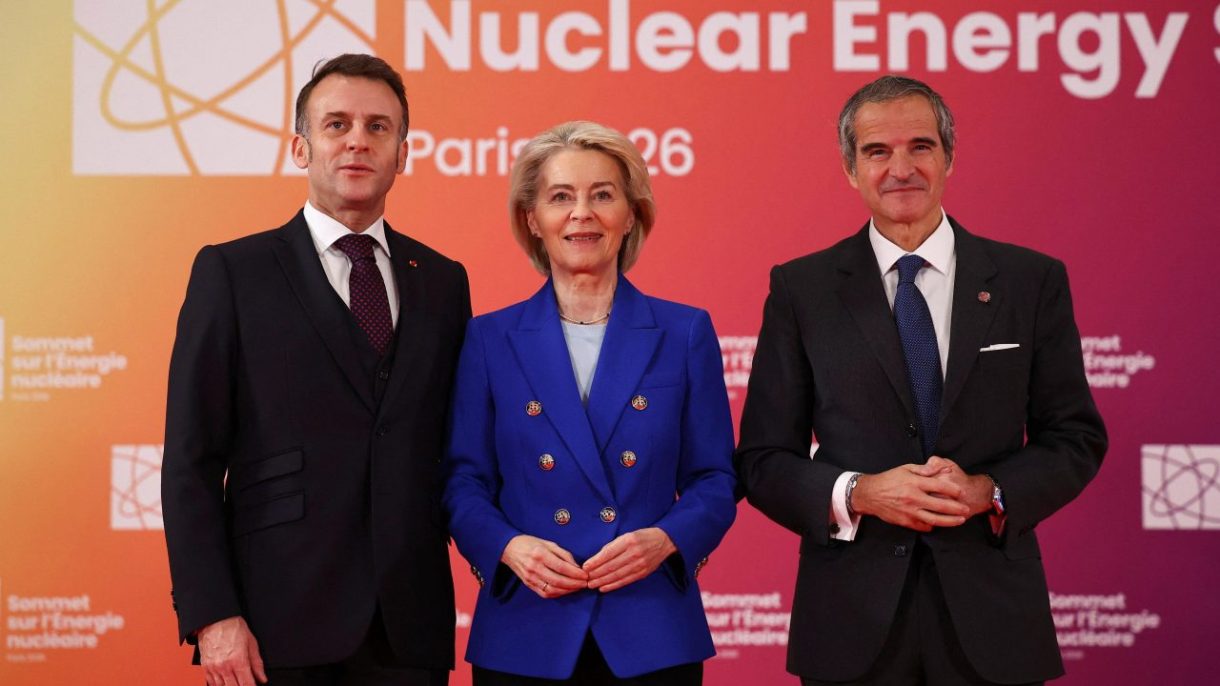
In a significant rhetorical shift for the European Union’s energy policy, Commission President Ursula von der Leyen characterized the continent’s historical move away from nuclear power as a “strategic mistake.” Speaking at the Nuclear Energy Summit in Paris, hosted by the International Atomic Energy Agency (IAEA), von der Leyen argued that turning away from the atom left Europe dangerously exposed to the volatility of global fossil fuel markets.

A Continent Re-evaluating its Baseload

The President noted a stark decline in nuclear’s contribution to the European grid, falling from one-third of total electricity generation in 1990 to approximately 15% today. This retreat, she argued, exacerbated Europe’s dependence on expensive, imported oil and gas—a vulnerability underscored by ongoing instability in the Middle East.

“I believe it was a strategic mistake for Europe to turn its back on a reliable, affordable source of low-emissions power,” von der Leyen stated.

She outlined a vision for a modernized energy system where nuclear works in tandem with renewables, supported by robust storage and smart grids.

The Rise of Small Modular Reactors (SMRs)

The EU’s strategy is increasingly focused on the next generation of nuclear technology. Key initiatives include:

  • Regulatory Reform: Recent changes to state aid rules now allow for expanded support for nuclear fission and fuel cycles.

  • Industrial Alliance: The launch of the world’s first industrial alliance dedicated to Small Modular Reactors (SMRs).

  • Financial Backing: Proposed investments of over €5 billion in fusion research and an additional €200 million in guarantees through 2028 to support the first commercial units of innovative nuclear technologies.

The goal is to have SMRs operational across Europe by the early 2030s to complement existing traditional plants.

Regional Expansion: Greece, Romania, and Serbia

The shift in sentiment at the Commission level is mirrored by renewed interest among member states and neighboring nations:

  • Greece: Prime Minister Kyriakos Mitsotakis echoed von der Leyen’s sentiments, noting that it is time for Greece to explore how SMRs could be integrated into the domestic grid. While Greece remains committed to renewables and gas as a bridge, a new committee will officially study nuclear integration.

  • Romania: Energy Minister Bogdan Ivan announced plans to triple the nation’s nuclear capacity over the next decade. This includes the modernization of the Cernavodă plant and the development of a pioneering SMR project in Doicești.

  • Serbia: Minister of Mining and Energy Dubravka Đedović Handanović signaled Serbia’s intent to join the “nuclear revival.” To support a growing economy and AI infrastructure, Serbia aims to select a technology by 2032, with the goal of bringing a plant online by approximately 2040.

As Europe seeks to reconcile its climate goals with energy security, the message from Paris was clear: the nuclear option is no longer on the sidelines—it is back at the center of the strategy.