by in News

Empowering the next generation: Youth engagement as a pillar of the Energy Transition

Author: Anna Cocchi, Project Officer,  ‘Fast & FairRenewables’ (FFRes) and Meie Kleijburg, Stakeholder Officer for Youth-lead Organisations  ‘Fast & FairRenewables’ (FFRes) at the European Youth Energy Network (EYEN), a partner organisation of EUSEW  

The 2050 net zero target is often talked about as a distant milestone on a map, but for us as young people, 2050 isn’t just a target; it’s our future. If we really want to achieve net zero, it is essential to recognize young people as essential, local partners today. Including youth as professional actors of the energy transition goes hand in hand with the “Local Projects – Local Influence” principle, showing that early and meaningful engagement of local groups is key to accelerating renewable deployment. From our experience as a European youth network, it is clear that youth must be involved from the start.

Positioning youth at the heart of the clean energy transition: a youth-led perspective

The mission of the European Youth Energy Network (EYEN) is to place young people at the heart of the clean energy transition: we believe in a future where European youth is instrumental in shaping a just and sustainable transition. As a volunteer-based think tank, EYEN works to build intergenerational collaboration and trust, equip young people with the necessary knowledge and skills, and create concrete spaces for them to act.

EYEN addresses a knowledge gap among decision-makers on how to meaningfully involve youth and respond to the needs and challenges of future generations. While the EU’s decarbonisation framework sets ambitious 2050 targets, implementation at the local level often lacks the structured engagement needed to ensure youth participation. Young people are ready to contribute but frequently face closed decision-making processes due to limited resources or unclear entry points. Beyond inclusion, youth represent an untapped energetic force in the energy transition: the more young people are involved, the faster policies and projects translate into real-world impact. When young people are meaningfully involved in decision-making, momentum increases, innovation flourishes, and implementation capacity is strengthened. Young people bring long-term vision and strong local networks, making them essential partners in the transition happening today.

At EYEN, our stance is clear: young people are not merely the “owners of the future,” but essential, professional partners whose participation must be embedded beyond tokenism into the core of energy policy, infrastructure planning, and grid development.

Local projects, local influence: delivering fast & fair renewables

A strong belief in action at the local level is a central pillar of EYEN’s work. In 2024, EYEN collaborated with ICLEI, a global network of more than 2,500 local and regional governments, to develop European baseline principles for the so-called Fast & Fair Renewables project. These principles emphasise that early and meaningful engagement of local interest groups is a prerequisite for successful renewable deployment, not an optional extra. Partnerships between municipalities, networks like ICLEI, and youth organisations demonstrate how youth engagement can be scaled beyond isolated initiatives.

It is within this gap that EYEN seeks to intervene, identifying effective ways to connect municipalities with youth organisations: this requires transparent communication, adequate resources, and feedback mechanisms to build trust. When meaningfully involved, young people act as catalysts at the local level, amplifying awareness of renewable projects and translating policy objectives into community-wide action.

Energy communities as intergenerational infrastructure

The transition to a decarbonised Europe is a shared journey. Empowering young people to influence energy infrastructure in their own local contexts through energy communities is, therefore, a crucial policy topic. In this context, the Fast & Fair Renewables project is closely connected to the Renewable Energy Directive (RED III), which provides the legal framework for Renewable Energy Communities (RECs). RECs enable citizens to take direct ownership of energy production and governance. By aligning youth engagement with RED III, municipalities can transform energy projects from top-down impositions into community-led initiatives, building more resilient, transparent, and equitable energy systems.

From the perspective of youth organisations across Europe, a joint and collaborative public engagement strategy is needed, built on early youth involvement, dedicated resources, transparent communication, and dialogue formats tailored to younger audiences. Equipping youth with knowledge builds trust; professionalising this dialogue ensures that young people’s input is traceable and reflected in final decisions. In this way, youth-led organisations become credible partners for municipalities, ensuring that climate objectives are not only ambitious on paper but achievable in practice.

This opinion editorial is produced in co-operation with the European Sustainable Energy Week (EUSEW) – the biggest annual event dedicated to renewables and efficient energy use in Europe. #EUSEW2026 marks the 20th edition and will once again bring together the community of people who care about building a secure and clean energy future for the next generations.  Check the currently open calls to join.

Disclaimer: This article is a contribution from a partner. All rights reserved. Neither the European Commission nor any person acting on behalf of the Commission is responsible for the use that might be made of the information in the article. The opinions expressed are those of the author(s) only and should not be considered as representative of the European Commission’s official position.

by in News

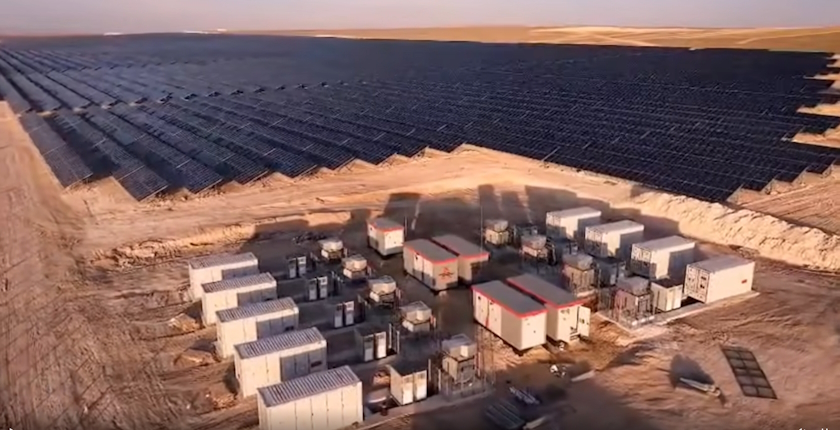
Turkey’s first large solar-BESS power plant inaugurated

Oze Grup has built a 49 MW photovoltaic facility with a 34 MWh battery storage system southwest of Ankara. It is the first such hybrid power plant in Turkey.

Energy storage systems are indispensable for grid security and price stability, according to Chairman of Turkey’s Energy Market Regulatory Authority (EMRA or EPDK) Mustafa Yılmaz. “Energy is no longer just about production. The real issue is ensuring that the electricity produced is integrated into the system at the right time, in the right place, and safely,” he said at the inauguration of the country’s first large solar power plant with energy storage, built by Oze Grup.

The site is in Sivrihisar in Eskişehir, some one hundred kilometers southwest of Ankara. The solar power plant has 49.2 MW in peak capacity. Its 29 MW grid connection matches the capability of the battery energy storage system (BESS), which has 34.1 MWh in capacity.

Oze Grup got the first project approval and the trial permit in the DGES category. The acronym is for licensed solar-storage systems, as opposed to self-consumption facilities. It was the Ankara-based construction company’s first energy project.

PVI Enerji designed and built the facility for Oze İnşaat ve Beton Sanayi. BS Distributed Energy Systems (BS DES) was involved in all stages. The other contractors are ELIN Enerji, HMK Demir Çelik, Sunroof Enerji and Solex Energy.

The chief regulator said the new hybrid power plant marks a vision change. “The sun doesn’t always shine, the wind doesn’t always blow. Renewable energy can only become a primary driver through storage,” Yılmaz stated.

He added that Turkey is now fully prepared for investments in renewable electricity plants with storage. The process has been rather slow, as the legislation for fast-tracking such projects was issued more than three years ago.

Oze Grup completed the hybrid power plant late last year. Notably, Polat Enerji received the approval from the Ministry of Energy and Natural Resources for its licensed wind-storage system (DRES), the first in Turkey.

by in News

Guarantees of origin: turning renewable ambition into action

Author: Naida Hausmann, Lead of the Renewable Energy Taskforce, Energy Community Secretariat

Far from being mere certificates, guarantees of origin (GOs) underpin the entire renewable energy value chain – building trust and accountability among producers, businesses and consumers. By ensuring transparent tracking of green electricity and enabling cross-border recognition, GOs can accelerate decarbonisation across the EU and the Energy Community, helping Europe achieve its climate targets. Mutual recognition between the EU and the Energy Community would open regional markets, attract investment, and give consumers and businesses a tangible role in the energy transition.

A guarantee of origin (GO) certifies that one megawatt-hour (MWh) of electricity was generated from renewable sources. It provides a transparent chain of information about where and how electricity was produced, allowing consumers and companies to claim the renewable origin of the electricity they use, even if they draw it from a mixed grid.

In the European Union, the national systems for guarantees of origin are well established. Cross-border transfer of certificates is enabled through the Association of Issuing Bodies (AIB), helping to build confidence among suppliers and buyers alike.

As part of the Energy Community regional project, nearly all issuing bodies have now established national electronic registries for issuing GOs

In the Energy Community, similar systems are advancing rapidly, laying the groundwork for a fully integrated regional market for renewable electricity. As part of the Energy Community regional project, nearly all issuing bodies have now established national electronic registries for issuing GOs.

Work is ongoing to finalise disclosure rules, with the goal of fully aligning these systems with EU legislation and requirements. Once fully aligned, these systems can enable seamless cross-border trade in renewable electricity – bringing the Energy Community a step closer to the EU’s internal energy market.

Empowering consumers and corporates

GOs transform energy consumers from passive users into active participants in the energy transition. When a household subscribes to a “100% renewable” tariff, or when a company purchases GOs to match its electricity use, it signals clear market demand for renewable generation. This demand translates into investment: it strengthens developers’ business cases, supports project financing, and helps accelerate the construction of new renewables capacity.

Moreover, when GOs are sold separately from electricity, they provide an additional revenue stream for developers, making projects more financially viable.

For corporates, GOs have become an essential tool to meet sustainability and reporting obligations and demonstrate that their electricity consumption is renewable. GOs therefore form the backbone of corporate energy procurement strategies and sustainability claims, particularly when coupled with long-term power purchase agreements (PPAs).

Naida Hausmann Guarantees of origin GOs turning renewable ambition into action features

Why mutual recognition matters

Under the EU’s Renewable Energy Directive, GOs can only be mutually recognised with third countries once a formal agreement is concluded – a requirement that carries significant implications. For the Energy Community contracting parties, such recognition would effectively link their systems with the EU market for renewable attributes, allowing renewable energy producers to access European buyers and investors.

Importantly, such recognition would also catalyse other mechanisms that drive the uptake of renewables, enabling regional PPAs, enhancing liquidity and sending stronger investment signals. For investors and utilities alike, a unified GO market reduces risk, increases price transparency and ensures that renewable attributes are valued consistently across borders.

For investors and utilities alike, a unified GO market reduces risk, increases price transparency and ensures that renewable attributes are valued consistently across borders

In the Energy Community region, where access to capital remains a barrier to the deployment of renewables, this is not a minor issue – it is a gateway to unlocking the private investment needed to meet regional and European decarbonisation goals.

The Energy Community Secretariat, together with the European Commission, has been advancing a decision for mutual recognition. Once in place, it will allow certificates issued in the Energy Community to be traded and recognised within the EU, provided they meet equivalent standards of reliability and verification.

Criteria for recognition

Beyond the technical criteria for establishing and maintaining a system of guarantees of origin by national competent authorities, including membership in the AIB, the draft decision on the mutual recognition of guarantees of origin, as presented by the European Commission, sets out additional requirements. These include criteria for the transposition and implementation of the acquis communautaire on electricity and renewable energy.

The Energy Community Secretariat is expected to support the assessment of compliance and monitor implementation. Together, these criteria aim to establish a credible and transparent framework for mutual recognition, ensuring that GOs issued across the region are reliable and can be confidently traded.

Way forward

With almost all issuing bodies in Energy Community contracting parties having operationalised electronic registries for GOs, the focus should now shift to implementing robust disclosure rules and meeting the remaining criteria for mutual recognition. Ensuring alignment with EU legislation and participating in the AIB will be essential to create a transparent and trusted system, unlocking cross-border trade, investment and market confidence in renewable electricity.

Issuing bodies in Albania, the Republic of Srpska (Bosnia and Herzegovina), Georgia, Kosovo*, North Macedonia, Montenegro, Serbia, and Ukraine have operationalised their registries. The issuing body in Moldova has signed an agreement with a service provider and is expected to operationalise its registry by the end of 2025, while the only issuing body without an electronic registry remains that of the Federation of BiH.

Conclusion

GOs translate environmental ambition into measurable progress toward decarbonisation. They give visibility to renewable electricity, credibility to corporate climate action and empower consumers with choice and the ability to participate in the clean energy transition. For the Energy Community and the European Union alike, mutual recognition of GOs would mark a practical and symbolic step toward a truly integrated European renewables market – one where clean electricity, investment and trust flow freely across borders.

By turning certificates into confidence and ambition into action, GOs can help bridge the remaining gap between policy objectives and market reality, ensuring that the path to decarbonisation is both transparent and inclusive.

by in News

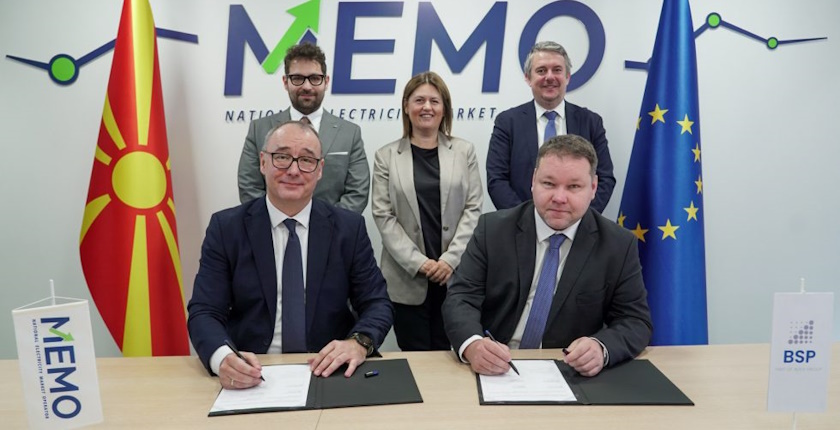
North Macedonia’s MEMO power exchange starts work with BSP on intraday segment launch

North Macedonia’s National Electricity Market Operator – MEMO signed an agreement with the Slovenian BSP Energy Exchange for the provision of trading platforms and a clearing platform. The deal marked the start of work on the introduction of the intraday electricity market by mid-year. It is part of efforts toward North Macedonia’s integration into the single European electricity market.

North Macedonia’s National Electricity Market Operator – MEMO has selected Slovenia’s BSP Energy Exchange to provide trading platforms and a clearing platform for the day-ahead and intraday segments. Chief Executive Officer of MEMO Zoran Gjorgjievski signed the agreement today with Chairman of the Management Board of ADEX and CEO of BSP Anže Predovnik.

Their cooperation has been expanding since the launch of North Macedonia’s day-ahead power market on May 10, 2023. Through partnership, the intraday segment is expected to be established by mid-year, the officials noted.

Commitment to transparent, reliable, efficient market

MEMO pointed out that the deal is aimed at enhancing the functionality of the organized electricity market and preparing it for integration with the single European market.

“This agreement represents a continuation of the cooperation with BSP and EPEX SPOT, and an important step in the development of the Macedonian power exchange, as well as in strengthening its technical and institutional readiness for market integration with the European Union. Partnering with a renowned exchange such as BSP and EPEX SPOT, with whom we have already established cooperation based on trust and proven results, confirms our commitment to a transparent, reliable and efficient market,” Gjorgjievski stated.

The representatives of MEMO and BSP kicked off the preparations for the launch of the intraday segment

He added that following the signing, activities to establish the intraday market officially began at a kickoff meeting with BSP’s representatives. It is expected to become operational by the end of the second quarter of 2026, the CEO recalled.

“The establishment of the intraday market is of crucial importance for greater flexibility and efficiency in electricity trading, particularly in conditions of increased participation of renewable energy sources. It enables market participants to timely adjust their positions and significantly contributes to the reduction of imbalances,” Gjorgjievski said.

Predovnik: Strategically important step

MEMO and North Macedonia took a strategically important step, Predovnik underscored.

“The signing of the contract for the establishment of the intraday electricity market and the implementation of the project to be completed in Q2 2026 mark an important milestone in the country’s integration into the European electricity market. With clear and ambitious guidance, and the strong support of the responsible minister and the ministry, North Macedonia continues to make convincing progress on its path towards full integration into the European electricity market – recognized both in the region and across the EU. The high-performing MEMO and BSP / EPEX SPOT teams, together with the minister and the ministry’s support, provide a powerful and clear guarantee that North Macedonia will be among the first countries in the region to join the single European electricity market,” he said.

Direct benefit for market participants as well as energy stability

North Macedonian Minister of Energy, Mining and Mineral Resources Sanja Božinovska attended the signing of the agreement.

Božinovska stressed the role of the intraday market in flexibility, use of renewables and risk reduction.

“With such concrete projects, we are building market stability, transparency and competitiveness. The ministry actively and continuously supports the institutional and technical readiness of market operators. Our goal is clear – a functional, secure, and European-aligned electricity market. The intraday market brings greater flexibility, improved management of renewable energy sources, and a reduction of systemic risks. This represents a direct benefit both for market participants and for the country’s overall energy stability,” Božinovska stated.

BSP Energy Exchange (BSP Southpool) is wholly owned by ADEX Group, created in a merger with its Serbian counterpart SEEPEX. In December 2024, ADEX completed a merger with the Hungarian Power Exchange (HUPX).

by in News

Twin pumped storage hydropower projects in Greece get environmental approval

Proposals for two pumped storage hydropower plants next to each other in northern Greece received the environmental conditions. The Flampouro project is for 450 MW in both modes while Trani Rachi would be able to generate 594 MW and consume up to 600 MW.

Greece has an ambition to become a Mediterranean and European hub for renewable energy and energy transmission. Among other important segments, energy storage is rising in popularity among investors. Such technologies have a major role in accommodating the deployment of renewables and balancing supply and demand.

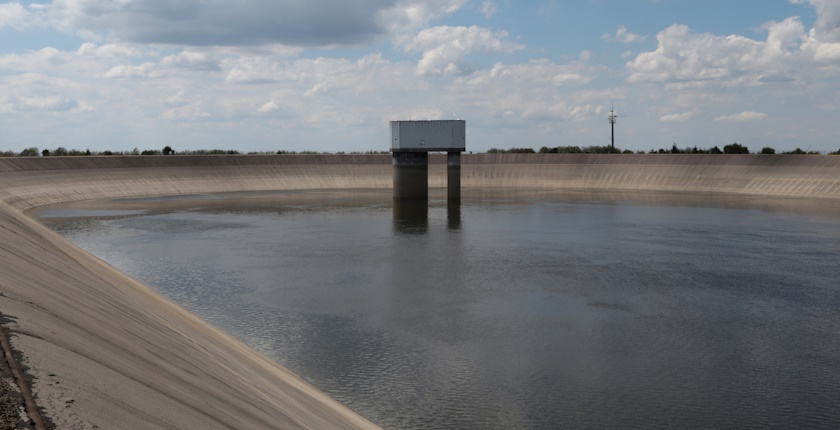
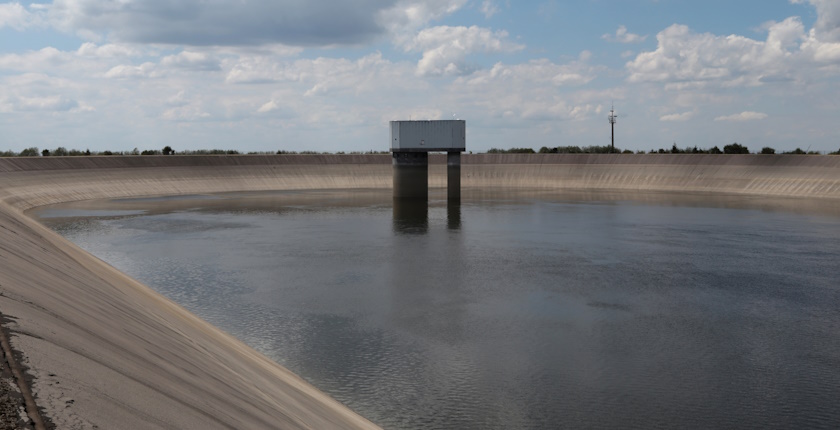
Within a string of proposed investments in pumped storage hydropower, twin projects Flampouro and Trani Rachi have just passed an important point in development. Both locations are next to the reservoir of the Ilarion dam and hydropower plant, near Kozani in the Western Macedonia province.

The projects were developed by investors from the Katselis family, the country’s media pointed out. The Ministry of Environment and Energy issued environmental terms (AEPO) for the two investment proposals in the north of Greece, under special purpose vehicles Aliakmonas 1 and Aliakmonas 2.

Public Power Corp. (PPC Group) operates the existing facility, of 154 MW, which consists of two turbines. Commissioned in 2014, it is part of a hydropower cascade of 1 GW on the Haliacmon (Aliakmonas) river, the longest in Greece. Government-controlled PPC Group is working on several pumped storage endeavors.

Storage capacity would total 6.2 GWh

The Flampouro pumped storage hydropower plant would work at up to 450 MW both in the generation and pumping modes. In storage capacity terms, it is seen holding 2.7 GWh. The upper reservoir would be at an altitude of 1,065 meters, four kilometers from the lower one.

The location is in municipal units Ventzio, Deskati and Kamvounia in the municipalities of Grevena, Deskati and Servia, respectively.

Trani Rachi is for 594 MW in production capacity and 600 MW in the pumping mode, for 3.5 GWh in storage. The site for the upper reservoir is at 1,380 meters above sea level and three kilometers from the lower reservoir.

Documentation shows that the facility would be in the municipal units of Deskati and Kamvounia.

Combined production estimated at 1.34 TW per year

The developers estimated annual output at 1.34 TWh, of which Flampouro would account for 581 MWh and Trani Rachi for 763 GWh.

Both projects involve road repair and construction, water tunnels and the installation of transformers, substations and 400 kV transmission lines. The investments envisage machine rooms underground.

by in News

North Macedonia’s MEMO power exchange starts work with BSP on intraday segment launch

North Macedonia’s National Electricity Market Operator – MEMO signed an agreement with the Slovenian BSP Energy Exchange for the provision of trading platforms and a clearing platform. The deal marked the start of work on the introduction of the intraday electricity market by mid-year. It is part of efforts toward North Macedonia’s integration into the single European electricity market.

North Macedonia’s National Electricity Market Operator – MEMO has selected Slovenia’s BSP Energy Exchange to provide trading platforms and a clearing platform for the day-ahead and intraday segments. Chief Executive Officer of MEMO Zoran Gjorgjievski signed the agreement today with Chairman of the Management Board of ADEX and CEO of BSP Anže Predovnik.

Their cooperation has been expanding since the launch of North Macedonia’s day-ahead power market on May 10, 2023. Through partnership, the intraday segment is expected to be established by mid-year, the officials noted.

Commitment to transparent, reliable, efficient market

MEMO pointed out that the deal is aimed at enhancing the functionality of the organized electricity market and preparing it for integration with the single European market.

“This agreement represents a continuation of the cooperation with BSP and EPEX SPOT, and an important step in the development of the Macedonian power exchange, as well as in strengthening its technical and institutional readiness for market integration with the European Union. Partnering with a renowned exchange such as BSP and EPEX SPOT, with whom we have already established cooperation based on trust and proven results, confirms our commitment to a transparent, reliable and efficient market,” Gjorgjievski stated.

The representatives of MEMO and BSP kicked off the preparations for the launch of the intraday segment

He added that following the signing, activities to establish the intraday market officially began at a kickoff meeting with BSP’s representatives. It is expected to become operational by the end of the second quarter of 2026, the CEO recalled.

“The establishment of the intraday market is of crucial importance for greater flexibility and efficiency in electricity trading, particularly in conditions of increased participation of renewable energy sources. It enables market participants to timely adjust their positions and significantly contributes to the reduction of imbalances,” Gjorgjievski said.

Predovnik: Strategically important step

MEMO and North Macedonia took a strategically important step, Predovnik underscored.

“The signing of the contract for the establishment of the intraday electricity market and the implementation of the project to be completed in Q2 2026 mark an important milestone in the country’s integration into the European electricity market. With clear and ambitious guidance, and the strong support of the responsible minister and the ministry, North Macedonia continues to make convincing progress on its path towards full integration into the European electricity market – recognized both in the region and across the EU. The high-performing MEMO and BSP / EPEX SPOT teams, together with the minister and the ministry’s support, provide a powerful and clear guarantee that North Macedonia will be among the first countries in the region to join the single European electricity market,” he said.

Direct benefit for market participants as well as energy stability

North Macedonian Minister of Energy, Mining and Mineral Resources Sanja Božinovska attended the signing of the agreement.

Božinovska stressed the role of the intraday market in flexibility, use of renewables and risk reduction.

“With such concrete projects, we are building market stability, transparency and competitiveness. The ministry actively and continuously supports the institutional and technical readiness of market operators. Our goal is clear – a functional, secure, and European-aligned electricity market. The intraday market brings greater flexibility, improved management of renewable energy sources, and a reduction of systemic risks. This represents a direct benefit both for market participants and for the country’s overall energy stability,” Božinovska stated.

BSP Energy Exchange (BSP Southpool) is wholly owned by ADEX Group, created in a merger with its Serbian counterpart SEEPEX. In December 2024, ADEX completed a merger with the Hungarian Power Exchange (HUPX).

by in News

Twin pumped storage hydropower projects in Greece get environmental approval

Proposals for two pumped storage hydropower plants next to each other in northern Greece received the environmental conditions. The Flampouro project is for 450 MW in both modes while Trani Rachi would be able to generate 594 MW and consume up to 600 MW.

Greece has an ambition to become a Mediterranean and European hub for renewable energy and energy transmission. Among other important segments, energy storage is rising in popularity among investors. Such technologies have a major role in accommodating the deployment of renewables and balancing supply and demand.

Within a string of proposed investments in pumped storage hydropower, twin projects Flampouro and Trani Rachi have just passed an important point in development. Both locations are next to the reservoir of the Ilarion dam and hydropower plant, near Kozani in the Western Macedonia province.

The projects were developed by investors from the Katselis family, the country’s media pointed out. The Ministry of Environment and Energy issued environmental terms (AEPO) for the two investment proposals in the north of Greece, under special purpose vehicles Aliakmonas 1 and Aliakmonas 2.

Public Power Corp. (PPC Group) operates the existing facility, of 154 MW, which consists of two turbines. Commissioned in 2014, it is part of a hydropower cascade of 1 GW on the Haliacmon (Aliakmonas) river, the longest in Greece. Government-controlled PPC Group is working on several pumped storage endeavors.

Storage capacity would total 6.2 GWh

The Flampouro pumped storage hydropower plant would work at up to 450 MW both in the generation and pumping modes. In storage capacity terms, it is seen holding 2.7 GWh. The upper reservoir would be at an altitude of 1,065 meters, four kilometers from the lower one.

The location is in municipal units Ventzio, Deskati and Kamvounia in the municipalities of Grevena, Deskati and Servia, respectively.

Trani Rachi is for 594 MW in production capacity and 600 MW in the pumping mode, for 3.5 GWh in storage. The site for the upper reservoir is at 1,380 meters above sea level and three kilometers from the lower reservoir.

Documentation shows that the facility would be in the municipal units of Deskati and Kamvounia.

Combined production estimated at 1.34 TW per year

The developers estimated annual output at 1.34 TWh, of which Flampouro would account for 581 MWh and Trani Rachi for 763 GWh.

Both projects involve road repair and construction, water tunnels and the installation of transformers, substations and 400 kV transmission lines. The investments envisage machine rooms underground.

by in News

Motor Oil’s MORE completes three battery systems in Greece

MORE, standing for Motor Oil Renewable Energy, built three standalone battery energy storage systems in Greece. The company won government support for the projects two years ago at an auction.

Oil refiner Motor Oil Hellas said its green energy arm has installed 72 MW in BESS capability, with 144 MWh in total capacity. The three standalone facilities are in Phocis (Fokida), Florina, and Boeotia (Viotia).

MORE, which is an acronym of Motor Oil Renewable Energy, completed the battery systems in just three months, the update reveals. The company pointed out they are among the first of such a scale in Greece.

“The operation of these energy storage systems will lead to a substantial further reduction in electricity prices for consumers by utilizing renewable energy that is currently being curtailed. At the same time, they will contribute to grid stability and enhance the country’s energy security,” Motor Oil added.

The three projects were selected during the second competitive process of the Regulatory Authority for Energy, Waste and Water (RAAEY or RAEWW) for energy storage systems. It was held in 2024. The investments are funded through the National Recovery and Resilience Plan Greece 2.0 and the European Union’s Recovery and Resilience Facility, under the NextGenerationEU program.

According to recent reports, new BESS facilities of 300 MW in combined operating power were waiting for approvals in Greece to be able to start operating.

Athens International Airport (AIA) Eleftherios Venizelos inaugurated a large solar-BESS hybrid power plant last month. Government-controlled Public Power Corp. – PPC Group is building three standalone battery storage systems at its coal plants.

Motor Oil is also involved in hydrogen projects, wind power and carbon capture and storage.

by in News

Motor Oil’s MORE completes three battery systems in Greece

MORE, standing for Motor Oil Renewable Energy, built three standalone battery energy storage systems in Greece. The company won government support for the projects two years ago at an auction.

Oil refiner Motor Oil Hellas said its green energy arm has installed 72 MW in BESS capability, with 144 MWh in total capacity. The three standalone facilities are in Phocis (Fokida), Florina, and Boeotia (Viotia).

MORE, which is an acronym of Motor Oil Renewable Energy, completed the battery systems in just three months, the update reveals. The company pointed out they are among the first of such a scale in Greece.

“The operation of these energy storage systems will lead to a substantial further reduction in electricity prices for consumers by utilizing renewable energy that is currently being curtailed. At the same time, they will contribute to grid stability and enhance the country’s energy security,” Motor Oil added.

The three projects were selected during the second competitive process of the Regulatory Authority for Energy, Waste and Water (RAAEY or RAEWW) for energy storage systems. It was held in 2024. The investments are funded through the National Recovery and Resilience Plan Greece 2.0 and the European Union’s Recovery and Resilience Facility, under the NextGenerationEU program.

According to recent reports, new BESS facilities of 300 MW in combined operating power were waiting for approvals in Greece to be able to start operating.

Athens International Airport (AIA) Eleftherios Venizelos inaugurated a large solar-BESS hybrid power plant last month. Government-controlled Public Power Corp. – PPC Group is building three standalone battery storage systems at its coal plants.

Motor Oil is also involved in hydrogen projects, wind power and carbon capture and storage.

by in News

Kosovo’s* just energy transition: greening the Kingdom of Coal

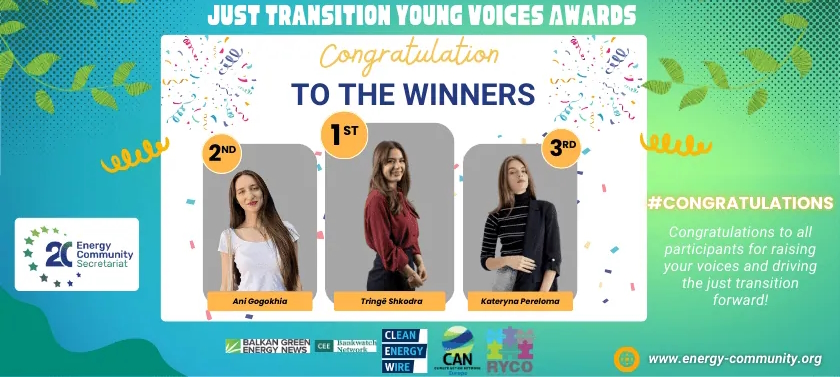
Author: Tringë Shkodra

Kosovo’s* energy transition has great potential but key players such as small and medium-sized enterprises (SMEs) and young people are facing structural exclusion.

Our energy system is still heavily dependent on dirty fossil fuels and overburdened by frequent outages, reliance on imports, and growing costs, particularly during the winter when demand is at its highest and most households and businesses can no longer afford to pay energy bills. While infrastructure upgrades are essential, they are not enough. In order to succeed, this transition must be just, meaning it needs to be inclusive and rooted in the lived experiences of the people it aims to serve.

Understanding Kosovo’s* distinct socio-economic landscape, with the country having the youngest population in Europe as well as a large number of SMEs, is essential for addressing its development challenges and unlocking its potential.

SMEs form the backbone of the Kosovan* economy but get structurally excluded from accessing energy-saving practices. Many studies shed light on energy efficiency within Kosovo’s* private sector – particularly among SMEs, and show that these businesses face serious barriers to adopting sustainable practices. While larger firms are more likely to invest in energy-saving technologies, SMEs struggle with access to finance, lack awareness, and get minimal institutional support.

Businesses require energy efficiency for survival

Yet energy audits show that many could reduce consumption by up to 40% with low-cost interventions. This isn’t about reluctance, but structural exclusion. Energy efficiency, in this context, is not just a technical fix but a survival strategy for businesses.

With the right incentives, this sector can become a driver of Kosovo’s* green transition, creating jobs and fostering innovation.

Youth rarely invited to table

Another overlooked potential for Kosovo’s* energy transition are the youth. Over half of Kosovo’s* population is under the age of 30, yet their involvement in environmental governance remains limited. A study of youth participation in environmental and climatic concerns across ten municipalities of Kosovo* found that, while 63% of young respondents reported a strong desire to contribute to environmental policymaking, only 15% had ever participated in such processes.

Youth-led initiatives, innovation hubs, and climate advocacy networks are lacking institutional trust and real influence

This isn’t a lack of engagement; it’s again a lack of access. Youth-led initiatives, innovation hubs, and climate advocacy networks are already active, but they need to be met with institutional trust and real influence. The potential of our youth is vast – from engineers developing solar microgrids to community organizers shaping local green agendas. However, without inclusion, this potential remains untapped. We are ready to lead, but we are rarely invited to the table.

Dependence on lignite is cause of public health crisis

Advancing fundamental reforms aligned with European values is a prerequisite for sustainable development. This includes harmonizing structural reforms outlined in the Economic Reform Programmes (ERPs), strengthening the rule of law, and embedding the energy transition within the European Union’s broader green agenda. Kosovo’s* overreliance on lignite coal poses not only environmental but social risks, and the outdated mindset of living in the Kingdom of Coal clashes with the urgent need for a clean, secure, and just energy future.

Data from Riinvest Institute outlines clearly that over 90% of Kosovo’s* electricity is still produced from coal, while renewable energy accounts for less than 6%. This dependence is more than an economic liability – it is a public health crisis. Around 300,000 to 400,000 people live within 30 kilometers of lignite-fired power plants Kosovo A and Kosovo B, which lack modern emission controls.

Air pollution and outdated technology put thousands at risk every day. The urgency to diversify the energy mix isn’t only environmental – it is humanitarian. Energy, when approached with justice in mind, can become a tool for dignity and equal opportunity.

Despite a myriad of strategies and policy documents, Kosovo* has made only partial progress in aligning with EU energy and environmental standards. The Energy Community Annual Implementation Report (2024) shows that implementation across clusters such as decarbonization and energy security ranges from just 40% to 66%. True transformation demands more than technical upgrades as it requires institutional coordination, transparency, and strong evidence-based policymaking.

We are transitioning lives

In a recent conversation, a national energy expert put it simply: “We are not just transitioning technologies. We are transitioning lives.” A just energy transition must therefore encompass more than grid modernization or solar farms. It requires tailored policies – legislation that removes bureaucratic bottlenecks, the rollout of incentives for low-income households to adopt renewables, and clear pathways for communities to become prosumers.

Kosovo’s* policy frameworks, such as the forthcoming National Energy and Climate Plan and the renewable energy law, must be instruments of real transformation – practical, inclusive, and focused on impact.

Permitting procedures for renewables need to be simplified

To catalyze a just energy transition, the country requires comprehensive investments across its energy infrastructure while ensuring that reforms are socially inclusive and environmentally sound. This begins with diversifying the energy mix by prioritizing renewables – particularly solar and wind – through competitive auctions and de-risked investment environments that attract private sector participation. Kosovo* must simplify permitting procedures, build institutional expertise, and enhance the grid’s technical capacity to absorb renewable inputs.

Alongside infrastructure upgrades, investments are needed in energy efficiency for public and private buildings, especially given the country’s high winter heating demand and grid losses. Carbon-free heating solutions and retrofitting programs can help reduce both emissions and energy poverty, especially among vulnerable groups.

Subsidies must be designed for low-income households

Financing this transformation requires a blended approach – mobilizing domestic resources, securing grants from the EU and the United States, and leveraging international financial institutions through loans with state guarantees. But energy justice is not only about technology or money, it is about who benefits. Subsidies and support schemes must be designed for low-income households to participate in renewable adoption as consumers and prosumers.

A just transition brings inclusive growth and long-term climate resilience

Moreover, Kosovo* must link its investment strategies to broader social objectives, like upskilling labor for green jobs, protecting coal-reliant communities, and embedding equity and participation in every step of reform.

Kosovo* needs to make use of its strengths, and supports its young population, smaller enterprises and low-income households. Without an integrated approach, it risks reinforcing existing inequalities, but if it creates an energy transition that is just for the people, the country can turn its transition into a platform for inclusive growth, and long-term climate change resilience.

Tringe Shkodra Just Transition Young Voices Awards

* This designation is without prejudice to positions onstatus and is in line with UNSCR 1244/99 and the ICJ Opinion on the Kosovo declaration of independence.