by in News

Over 20,000 prosumer units connected in Greece in last 18 months

Greece’s distribution system operator HEDNO added more than 20,000 prosumers in the past year and a half, although the new net billing program faces delays.

Last year the government in Athens formally ended the net metering scheme and enacted net billing, aligning with the European Union’s regulations. Any aspiring prosumer with an existing application can switch to the new mechanism for free. The connection charge is EUR 370 per unit.

In the net billing mechanism, the compensation for the prosumer for the electricity delivered to the grid is based on the hourly wholesale price of electricity, instead of a fixed tariff. Projects are limited to a maximum 10.8 kW for households and 100 kW for businesses and energy communities. Virtual billing is also allowed, meaning that production and consumption can be in different locations.

Total capacity almost at 1 GW

According to data from the Hellenic Electricity Distribution Network Operator (HEDNO or DEDDIE), more than 20,000 individual prosumer units have been connected to the grid over the last 18 months, with the majority being connected under net metering.

It brought the overall number of prosumer installations to 35,312, with a total capacity of 995 MW, according to the update.

HEDNO also said 705 applications were in the final stages of the licensing process.

Limited interest from suppliers and aggregators

Despite high interest, progress in adding units within the net billing scheme has been slow. Only two electricity suppliers currently provide such contracts to prosumers and just one of them includes businesses, Energypress reported.

There is limited interest among aggregators to represent corporate net billing installations in the market. As for household units, the Renewable Energy Sources Operator and Guarantees of Origin (DAPEEP) provides the service free of charge.

Market participants are urging improvements in the relevant ministerial decree on net billing, for things to move forward. One of them would be to simplify contracts.
by in News

Project underway for 81 MW solar park on coal mine in Montenegro

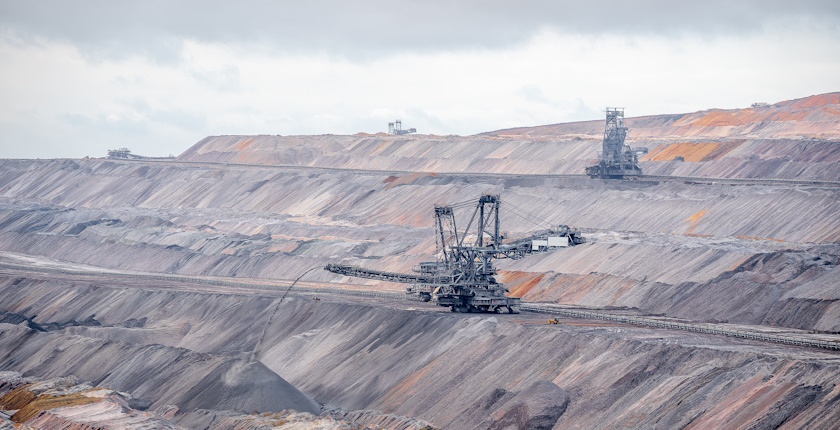
The Government of Montenegro adopted urban planning and technical conditions for a solar power plant of 81.1 MW in peak capacity in Pljevlja. The site for the facility is part of a coal mining complex.

Greece is the most successful by far in the Balkans in transforming coal land into clean energy and advanced technology hubs. The projects in the region are mostly for solar power plants. Neighboring North Macedonia is next when it comes to implementation, while Romania and Bulgaria as well as Serbia and Slovenia have made their first steps. Bosnia and Herzegovina and Kosovo* are still in the planning phase, and now Montenegro is joining them with a photovoltaic project.

The government in Podgorica adopted the urban planning and technical conditions for a solar power plant of 81.1 MW in peak capacity in Pljevlja. The facility in the country’s north called Rudnik uglja would be in the Ilino Brdo I cadastral unit, on the site of the Potrlica open cast coal mine.

According to a study submitted with the application, the connection capacity would be 62.5 MW. The coal mine’s operator and PV project developer, Rudnik uglja Pljevlja, said the location spans 62.6 hectares.

The government plans to close the Pljevlja coal plant in 2041

The firm is a subsidiary of state-owned power utility Elektroprivreda Crne Gore (EPCG), which runs the Pljevlja power plant in the same complex. It is the only coal-fired facility in Montenegro. The government plans to close the thermal power plant, currently under reconstruction, in 2041.

Rudnik uglja Pljevlja presented a just transition plan in March. It aims to establish 12 businesses to transform the region and spin them off. They include construction, transportation and the installation of a small hydropower plant called Durutovići and a photovoltaic facility.

The previous government initiated the development of a plan two years ago for an industrial complex in Pljevlja. There are several separate renewable energy projects in the area as well.

* This designation is without prejudice to positions onstatus and is in line with UNSCR 1244/99 and the ICJ Opinion on the Kosovo declaration of independence.
by in News

Faria Renewables secures financing for 49.9 MW battery project in Greece

Faria Renewables has signed a loan agreement with Attica Bank for the construction of a battery energy storage system (BESS). The project is worth EUR 28 million. In addition, Cero Generation passed a milestone toward a 250 MW battery storage investment.

A BESS project selected last year in Greece’s second battery storage auction is now a step closer to materialization, Faria Renewables revealed. The company signed a loan deal with Attica Bank for the construction of the system. It would have 49.9 MW in capability and a capacity of 134.2 MWh.

The investment is worth EUR 28 million, the company added. Its first BESS unit, for which it earlier signed a contract with Huawei, would be connected to a 150/20 kV substation, currently under construction. Construction is expected to be completed before the end of September, the update adds.

BESS project benefitting from EU funds

The project is being implemented under the National Recovery and Resilience Plan Greece 2.0, with funding from the European Union – the NextGenerationEU and its Recovery and Resilience Facility (RRF) segment.

“Our collaboration with Attica Bank for the implementation of this significant energy storage project marks another crucial step in delivering sustainable energy solutions that support the country’s energy transition goals. We share a common vision to contribute to a greener society by designing and carrying out energy solutions that combine expertise, sustainability, and innovation,” Faria Renewables’ Chair and Chief Executive Officer Thalia Valkouma stated.

The renewables and energy storage developer has a portfolio in Greece exceeding 3 GW. It said it is exploring opportunities in new markets in Europe.

One of largest energy storage investments in Greece

According to Attica Bank’s Chief of Asset and Specialized Financing Christos Iliopoulos, the new agreement is for one of the largest investments in the energy storage sector in Greece.

“Attica Bank remains strategically committed to supporting the green transition and energy security of the country by financing projects that enhance the transformation and resilience of the energy system. Our partnership with Faria Renewables for the construction of a storage project is fully aligned with this philosophy,” he said.

The investment will help the integration of renewable sources into the national grid and enhance system flexibility, the announcement reads.

Greece has held a series of three auctions for subsidizing standalone BESS to get the market segment rolling, on the path toward its 2030 target of 4.7 GW.

Cero Generation makes progress toward 250 MW battery storage investment

In other news, Cero Generation Holdings, a subsidiary of Macquarie Asset Management, won an approval from Greece’s Ministry of the Environment and Energy for five BESS stations. Each would have 50 MW in operating power and 153 MWh in effective capacity (or 170 MWh nominally).

Project firms Energy Ventures 6 and Energy Ventures 10, in which Cero Generation holds 85%, received environmental terms (AEPO) for the proposed investment in Pelinnaioi, in the municipality of Farkadona in Trikala, Thessaly.

by in News

IRENA: 91% of new renewables units are more cost-effective than fossil fuel alternatives

The fossil fuel age is crumbling, according to UN Secretary-General António Guterres. Renewables maintained their cost leadership in global power markets, the International Renewable Energy Agency said in an annual report. In 2024, onshore wind farms were the cheapest of all versus the lowest-cost fossil fuel alternatives, by 53% on average, while photovoltaic systems were 41% cheaper.

Onshore wind power was also the cheapest in levelized cost of electricity (LCOE) terms, followed by solar power. At the same time, 91% of newly commissioned utility-scale capacity was delivering power at a cost lower than for the cheapest electricity from new fossil fuel–fired units.

The Renewable Power Generation Costs in 2024 report confirmed the price advantage of renewables over fossil fuels, with cost declines driven by technological innovation, competitive supply chains and economies of scale, the International Renewable Energy Agency said. IRENA expects cost reductions to continue, but highlighted the short-term challenges.

Geopolitical shifts including trade tariffs, raw material bottlenecks, and evolving manufacturing dynamics, particularly in China, could temporarily raise costs.

Asia, Africa and South America, with stronger learning rates and high renewable potential, could see pronounced cost declines.

Higher costs are likely to persist in Europe and North America, driven by structural challenges such as permitting delays, limited grid capacity, and higher balance-of-system expenses, according to the update. In contrast, regions like Asia, Africa and South America, with stronger learning rates and high renewable potential, could see pronounced cost declines.

The organization pointed to the need for stable and predictable revenue frameworks to lower investment risk and attract capital.

“Clean energy is smart economics – and the world is following the money,” United Nations Secretary-General António Guterres stressed. In his view, the fossil fuel age is crumbling.

Capital costs inflating LCOE in developing countries

Mitigating financing risk is central to scaling renewables in both mature and emerging markets. Instruments such as power purchase agreements (PPAs) play a pivotal role in accessing affordable finance, while inconsistent policy environments and opaque procurement processes undermine investor confidence, IRENA added.

In many developing countries of the Global South, high capital costs, influenced by macroeconomic conditions and perceived investment risks, significantly inflate the levelized cost of electricity (LCOE) of renewables.

Onshore wind power production cheapest by far of all kinds of electricity

In 2024, onshore wind farms were the cheapest of all versus the lowest-cost fossil fuel alternatives, by 53% on average, while photovoltaic facilities were 41% cheaper. Of note, the cost of battery energy storage systems (BESS) declined by 93% from 2010 to 2024, to USD 192 per kWh.

Onshore wind remained the most affordable source of new renewable electricity, with a global weighted average LCOE at USD 0.034 per kWh (USD 34 per MWh), followed by new solar, at USD 0.043 per kWh, and new hydropower plants, USD 0.057 per kWh.

Again per the levelized cost of electricity, 91% of newly commissioned utility-scale renewables capacity was delivering power at a lower cost than the most affordable new fossil fuel–based units.

That said, LCOE increased slightly for solar power, by 0.6%. Onshore wind power was 3% more expensive than in 2023, compared to 4% for offshore wind and 13% for the bioenergy segment. Meanwhile, costs declined for concentrated solar power (CSP), by 46%, followed by electricity from geothermal units, 16%, and hydropower, which slipped 2%.

Solar and wind energy prices have begun to stabilize, which is a natural sign of market maturity, the authors underscored.

Photo: Renewable energy LCOE 2010-2024, in United States dollars per kilowatt-hour (IRENA)

Clear path to affordable, secure, sustainable energy

The addition of 582 GW of renewables capacity in 2024 led to significant cost savings, avoiding fossil fuel use valued at about USD 57 billion, new data shows. Looking at all renewables in operation, the avoided fossil fuel costs in 2024 reached up to USD 467 billion, IRENA’s Director-General Francesco La Camera stated.

New renewable power outcompetes fossil fuels on cost, offering a clear path to affordable, secure and sustainable energy, he pointed out.

by in News

Rolls-Royce SMR to start works with ČEZ on small modular reactors

Rolls-Royce SMR and Czech utility ČEZ have signed an early works agreement. It paves the way for site-specific work on their small modular reactor project at the Temelín nuclear power plant.

British Prime Minister Sir Keir Starmer and Czech Prime Minister Petr Fiala have signed a deal to work together to seize SMR export opportunities, support highly skilled jobs, boost economic growth and deliver clean, homegrown energy in both countries. It was followed by an early works agreement between Rolls-Royce SMR and ČEZ as a step forward in their strategic partnership for up to 3 GW of low-carbon energy in the Czech Republic.

ČEZ has acquired 20% of Rolls-Royce SMR

The two companies said that now they can launch site-specific work on their small modular reactor project at the Temelín nuclear power plant. Last year ČEZ selected Rolls-Royce SMR as its preferred SMR technology partner and agreed to purchase 20% of the company based in the United Kingdom. After that, they declared the transaction complete in early March.

“We are proud to be working alongside ČEZ to deliver a programme that will bring significant industrial and economic benefits to both our nations, while helping to meet critical energy security and decarbonisation goals,” Chief Executive Officer of Rolls-Royce SMR Chris Cholerton said.

Czech Republic’s first SMR to be deployed in mid-2030s

ČEZ will closely cooperate with Rolls-Royce SMR on preparing the construction of the country’s first small modular reactor, expected to be built at the site of the Temelín nuclear power plant in the mid-2030s, according to the Czech utility’s board member Tomáš Pleskač, who is at the helm of its New Energy Division.

Modular reactors represent a significant opportunity for the country’s economy and are an essential part of the ongoing energy transformation, he added and stressed that the cooperation offers a unique opportunity for growth and prosperity in the field of nuclear energy.

Additional opportunities at ČEZ’s Tušimice nuclear plant

The activities would initially be focused on the site of ČEZ’s Temelín nuclear plant in the South Bohemian region, the update reveals. The companies pointed to additional deployment opportunities at the location of ČEZ’s Tušimice nuclear plant, in the Ústí nad Labem region.

The early works would include regulatory approvals and licensing and environmental assessments. Rolls-Royce SMR is designing units of 470 MW, set to operate for 60 years.

Temelín is near the city of České Budějovice. It is the largest power station in Czechia, housing two VVER 1000 reactors.

by in News

Slovenia kicks off grants program for renewables-based district heating, cooling

The Ministry of the Environment, Climate and Energy of Slovenia launched a public call for cofunding the construction or restructuring of district heating and cooling systems using renewable energy sources. The grants, for companies and cooperatives, are from the European Union’s cohesion support mechanisms.

The introduction of renewables-based district heating and cooling systems reduces pollution, greenhouse gas emissions and the dependence on fossil fuels. Much of the European household and business sectors still rely on gas boilers for heating. In addition, the ever-increasing severity and length of heat waves are prompting the need for a systemic cooling solution.

As part of its decarbonization and energy efficiency efforts, Slovenia launched a EUR 51.2 million cofunding package for companies and cooperatives.

The program covers the construction or restructuring of district heating and cooling systems using renewable energy sources. The first deadline for applications is September 11, followed by one on January 8, the Ministry of the Environment, Climate and Energy said.

The public call will be open until the entire sum is allocated, or at the latest until September 11, 2026, the third deadline. The EU’s cohesion funding accounts for 85% and Slovenia is providing the rest.

District heating projects that include cooling get additional points

While primarily aimed at increasing the production of electricity and heat from renewable energy sources and from waste heat, the scheme includes additional points for projects that involve cooling. The systems are required to cover at least 350 kW of consumption.

Eligible equipment includes heat pumps, solar collectors, wood biomass boilers and combined heat and power (CHP or cogeneration) solutions.

Large companies can receive up to 45% of their investment, while mid-sized ones can get 55%. The cap for small and micro enterprises is 65%. The maximum individual grant is EUR 30 million.

Slovenia’s current calls for subsidizing sustainable mobility, energy efficiency and renewables projects are worth more than EUR 300 million altogether. The government is preparing four more, for EUR 62 million overall.

by in News

Germany supports Serbia in clean energy supply, environmental protection

The Republic of Serbia and Germany’s KfW Development Bank signed a loan agreement on July 18 for EUR 135 million for the second phase of the credit program Green Transition Development Policy Operation (DPO II).

The signatures underscore the joint activities by Germany and Serbia aimed at a climate-compliant and socially just energy transition, said Chargés d’Affaires ad interim Carsten Meyer-Wiefhausen from the Embassy of the Federal Republic of Germany in Serbia. “We will continue to be with Serbia on this path and support its reform efforts,” he stressed.

Within the financing for the reforms, the World Bank, French Development Agency (AFD) and the German KfW Development Bank are supporting the Republic of Serbia in conducting its ambitious reform agenda. The goal is to accelerate the transition to energy from clean sources and align with EU standards in environmental protection and climate.

Series of reforms through DPO II

Several successful reforms have been materialized within DPO II, among which:

  1. Promoting investments that are acceptable in environmental and climate terms: Public investments are graded under environmental criteria and with regard to the risk of natural disasters, and with models developed solely for the purpose. The citizens of Serbia benefit from the government’s more sustainable investment decisions.
  2. Enhanced transparency in the public budget: The Government of the Republic of Serbia has committed to publishing information on the execution of the public budget, not only at the end of the fiscal year, but also during the year. It improves the transparency of public expenditures, primarily concerning investments in environmental and climate protection.
  3. Affordable energy prices: The Government of the Republic of Serbia has rolled out temporary targeted subsidies for households with low income, like citizens with low pensions. The share of households receiving such aid has grown from 2.7%, registered in 2021, to last year’s 8%.
  4. Improvement in waste disposal: Aligning with EU standards brings a better approach to sanitary landfills, namely from 42% (2021) to last year’s 50%. The citizens of Serbia benefit from improved waste disposal and a cleaner environment.
  5. Prepared for CBAM: Since this year, large industrial facilities and power plants report their CO2 emissions in line with EU standards. That way Serbia is more prepared for the upcoming full implementation of the European Carbon Border Adjustment Mechanism (CBAM) for carbon prices. For instance, the country would be able to price CO2 emissions and charge them.

Financing reforms within climate partnership

Germany’s contribution to financing reforms is an integral part of Germany’s climate partnership with Serbia and the entire Western Balkans. The purpose of the partnership is to support Serbia’s work on achieving its national climate goals and adapting to climate change. The key goal of the partnerships is for the transformation that is necessary to meet climate goals, in the interest of Serbian citizens, to be socially just, a just transition.

This year, Serbia and Germany are celebrating the 25th anniversary of their development cooperation. In the meantime, KfW financed projects worth EUR 2.5 billion in Serbia.

by in News

Ninth Energy Community Summer School gathers 40 participants in Montenegro from 28 countries

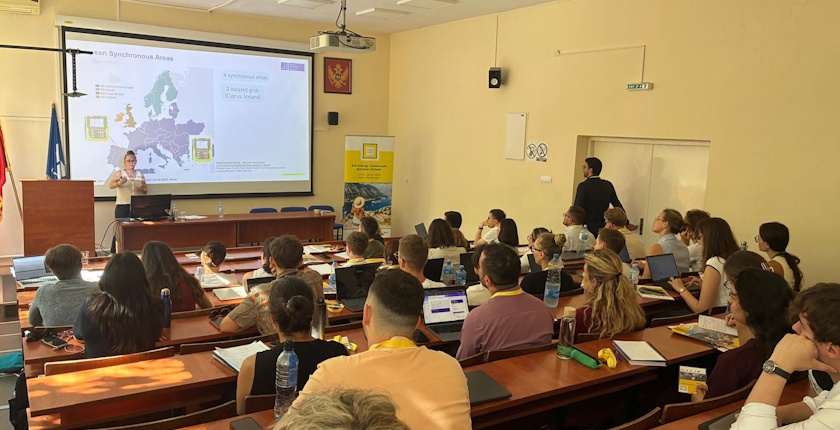
The ninth Energy Community Summer School has kicked off in Montenegro, gathering 40 participants from 28 countries.

On July 19, forty young professionals and researchers from 28 countries convened at the Faculty of Maritime Studies in Kotor, Montenegro, to dive deep into the pressing technical, political, and economic issues driving the energy transition, according to the Energy Community Secretariat.

“The energy transition is no longer a distant goal—it’s happening now, shaped by technology, driven by policy, and tested by crises,” Artur Lorkowski, Director of the Energy Community Secretariat, said in his welcoming address.

Lorkowski: A successful and just transition depends on bringing together diverse people and perspectives

A successful and just transition depends on bringing together diverse people and perspectives to learn and exchange ideas—just as the secretariat does each year at this summer school, and as it has done for two decades across the Energy Community: building connections, aligning energy rules, and driving the shift to cleaner, more secure energy systems in our region, according to Lorkowski.

The 2025 edition attracted 242 applications from 58 countries. At the end of the selection procedure, 40 participants representing 28 countries were selected: 18 from Energy Community contracting parties, one from an observer country, 18 from EU member states (including seven from the Visegrád Group), and the remainder from Switzerland, South Africa, and the United States.

Among them, 27 hold a master’s degree and 13 have a PhD.

The seven-day program is organized by the Energy Community Secretariat, in collaboration with the International Visegrad Fund, Friedrich-Ebert-Stiftung – Dialogue Southeast Europe (FES-SOE), and Montenegro’s state-owned companies – power utility Elektroprivreda Crne Gore (EPCG), and distribution system operator Crnogorski Elektrodistributivni Sistem (CEDIS).

The Energy Community’s long-standing commitment to building the next generation of leaders

Since its launch in 2016, the initiative has also been supported by Polis University (Tirana), Comenius University (Bratislava), Jagiellonian University (Krakow), Masaryk University (Brno), and REKK (Budapest).

The Summer School reflects the Energy Community’s long-standing commitment to building the   next generation of leaders—those who will drive long-term integration, cooperation, and sustainable energy transformation across the region, the secretariat pointed out.

Throughout the week, participants will work closely with leading experts from academia, industry, and policymaking circles to examine real-world approaches to transforming energy systems.

Through lectures, case studies, and collaborative discussions, they will explore how innovation, cross-border cooperation, and policy reform can drive decarbonization while supporting economic development and regional stability, according to the secreatariat.

by in News

Biggest PV plant in Slovenia begins regular operation

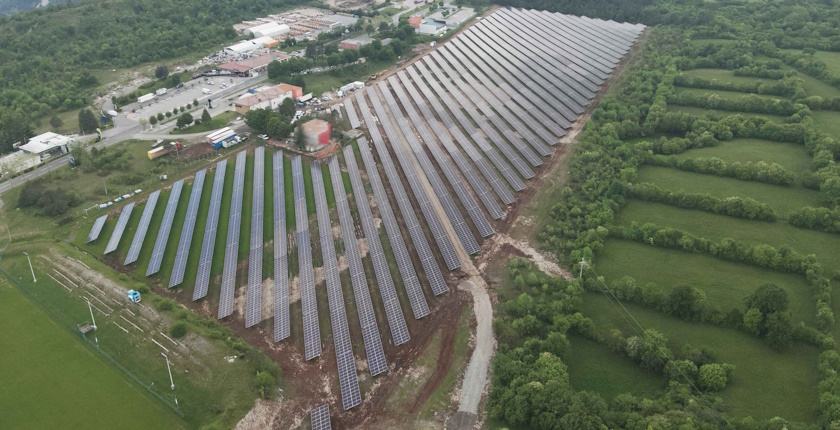
The largest solar power plant in Slovenia has only 7.1 MW in peak capacity and a 5 MW grid connection. The facility in the country’s southwest, on the border with Italy, has begun regular operation, according to its developer Moja elektrarna.

Slovenia is mostly leaning on small photovoltaic and battery storage installations for its renewables expansion. Moja elektrarna, a firm based in Maribor, the second-largest city, built the country’s biggest solar power facility.

The PV plant consists of 12,888 modules of 550 W apiece, Naš stik reported. It translates to barely 7.1 MW in peak capacity, in terms of direct current or DC. The grid connection, for alternating current (AC), is 5 MW.

Moja elektrarna installed the PV park at the Krvavi Potok village on the border with Italy. The facility in southwestern Slovenia is on the territory of the Hrpelje-Kozina municipality. It is expected to generate 8.4 GWh per year. The projected output is equivalent to the electricity consumption of 2,400 domestic households, the article adds.

Located next to one of the main roads to Italy, the PV plant in Krvavi Potok is suitable for powering future electric vehicle charging points

The firm said the test operation began on April 1 and that the solar power plant entered regular operation on July 1. It expects to receive the certificate of occupancy, the final permit, by September.

Moja elektrarna is a subsidiary of Austria-based PV-Invest, which earlier said the PV plant spans 7.2 hectares. The company has calculated that the solar power plant would prevent an equivalent of almost 64,000 tons of carbon dioxide emissions in total over its 30-year operating life.

Located next to one of the main roads to Italy, the facility is suitable for powering future electric vehicle charging points, according to the company. PV-Invest develops funding plans for private and institutional investors for joint photovoltaic projects supported by banks and financial institutions, according to its website.

In 2023, HESS built the now second-largest solar power plant in Slovenia in Brežice, at its hydropower plant.

by in News

Pexapark: PPA activity in Europe drops in first half of 2025

The number of power purchase agreements (PPAs) for renewables in Europe fell by 31% and the volume tumbled 26% in the first half of the year from the levels in the same period of 2024, Pexapark found. Germany and France registered sharp declines in the photovoltaics segment, but a surge in Italy and Spain has more than offset the drop.

The meteoric rise in deals for battery energy storage systems, BESS, is a clear sign of its maturity.

In its latest report, analytics and advisory firm Pexapark provided a detailed look into PPAs and contracts for battery energy storage systems in the first six months of 2025. It found that PPA activity shrank by more than a quarter in year-over-year terms, but not everywhere and not due to solar power.

Across 124 deals, 6.08 GW of renewable electricity capacity was contracted in the first half, which is 31% and 26% down, respectively, from the same period of 2024. Conversely, the average deal size advanced 5% to 48.2 MW.

Notably, the April-June period was much weaker than the first quarter of the year, with just 50 deals, but the volumes were almost evenly split.

The main technologies in the first half were solar power, 4.2 GW from 73 deals, onshore wind (1.4 GW and 32 PPAs), mixed technology (290 MW and nine deals) and offshore wind (134 MW and four deals). The result is proportionate to the picture from January through June 2024.

Despite concerns over saturation of demand for standalone solar, volumes have firmed. The 4.2 GW of solar capacity contracted under PPAs compares to 3.9 GW of the first half of last year. The deal count landed at 73, against 95, which is in line with the overall trend.

PPA activity in Germany plunged 84% in terms of volume

Solar offtake activity reveals a clear split in market momentum. It is slowing down in markets where cannibalization has worsened drastically and rapidly – such as Germany and France. In fact, Germany saw the largest decline in volumes – a remarkable 84% year-on-year decrease in terms of overall volumes, with 228 MW across eight deals in the last six months, versus 1.2 GW and 31 deals in last year’s equivalent.

There is stable or even upward appetite in markets which have had time to adjust to cannibalization and the lower valuation of solar production, or where cannibalization levels are still very low

Conversely, solar PPA activity in Italy and Spain spiked, more than making up for the said decline.

“These numbers support the hypothesis that there is stable, or even upward appetite in markets which have had time to adjust to cannibalization and the lower valuation of solar production – i.e., Spain, or cannibalization levels are still very low – such as Italy. Italy’s solar PPA volumes grew 184% year-on-year, with nearly an additional 700 MW procured compared to the same period last year. Corporate appetite in the country is growing, and so is deal size – with a 420 MW solar corporate deal announced in June comprising the country’s largest PPA ever recorded,” the analysis reads.

As for Southeastern Europe, OMV Petrom’s deal with Enery for their joint solar power project Gabare in Bulgaria was Europe’ third-largest PPA in June.

Flexibility monetization is opportunity for market players with right profile

In a market increasingly driven by flexibility monetization, today’s challenges – cannibalization, future capture dynamics and balancing risks – are becoming opportunities for market players with the right profile. And with corporate buyers more hesitant to pay premiums for solar, transactable prices are—perhaps for the first time in a while – closer to perceived fair value, according to the report’s authors.

Wholesale electricity prices in Sweden were negative for almost two fifths of the time in the first six months of 2025

Hourly periods with negative prices at wholesale electricity markets continued strong in the first half. Sweden maintained its top position by far, with most such events. There were 1,635 hours with negative prices from January until the end of June. It is a stunning 37.8% share of the entire period and already 63% of the tally from all last year.

The other jurisdictions that make up the top five in Europe: Finland, Germany, the Netherlands and Belgium, remained the same since 2024.

On average, European countries have already reached around 67% of the number of hours counted in 2024 as a whole. Norway hit 90%, Denmark 87% and Spain climbed to 86%, suggesting that last year’s records would fall.

Top five European markets by number of negative price hours, 2024 vs. the first half of 2025

BESS deal volumes already three times higher than in all 2024

The maturity of the BESS industry is clearly reflected in the deal count and contracted volumes over the past 18 months, with the trend increasingly pronounced in 2025.

Battery storage capacity being contracted under optimization or fixed-revenue offtake contracts (so-called floors and tolls, respectively) amounted to a total of 4.6 GW in capability and 9.2 GWh in capacity across 36 deals. It is just over three times more than in entire 2024 in both benchmarks. The deal count was 44% up from all last year.

The lion’s share of the deal count concerns BESS assets with a two-hour duration

The rapid growth was driven by a wave of new agreements in the two most advanced markets – Great Britain and Germany – alongside first-ever BESS deals emerging in Belgium, Poland, Greece, and Bulgaria. The lion’s share of the deal count concerns BESS assets with a two-hour duration, which the ratio of operating power and capacity also indicates.

Pexapark provides of price data, market intelligence, and advisory services for renewable energy. It was one of the knowledge partners at this year’s edition of Belgrade Energy Forum, organized by Balkan Green Energy News.