by in News

The cost of keeping warm: delivering a just clean heat and cooling transition for European citizens

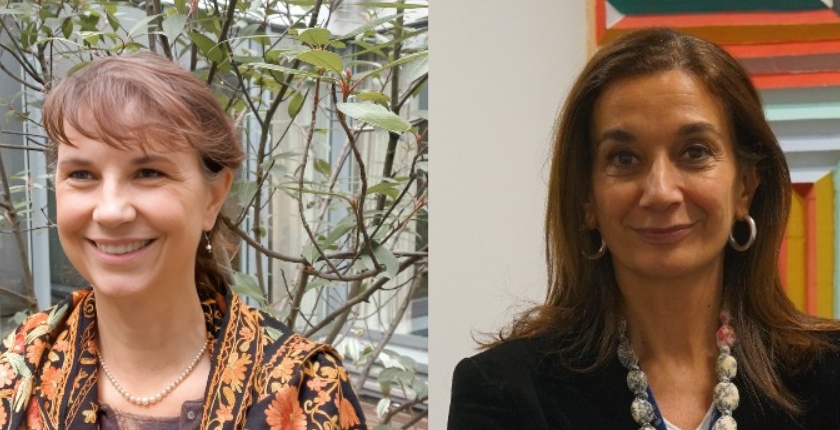
Author: Delia Villagrasa, Director of the Cool Heating Coalition, EUSEW’s partner organisation, and Beatriz Yordi, Director, Carbon Markets and Clean Mobility, DG CLIMA, European Commission

Millions of people already struggle to pay energy bills in Europe. ETS2 – which will be launched in 2027 and will put a price on carbon emissions from buildings and transport – risks deepening the energy poverty problem. However, a significant share of ETS2 revenue will be directed to energy efficiency upgrades and clean heating solutions. Through the Social Climate Fund, vulnerable groups will also receive access to these benefits. With clean heat at its heart, the fund could mark a pivotal step in the EU’s journey to net-zero, tackle energy poverty, slash emissions, and finance a fair, fossil-free future.

In 2023, 47 million Europeans were unable to afford to heat their homes. Europe’s largely inefficient building stock relies heavily on fossil fuels for thermal comfort, subjecting citizens to volatile energy prices. Amidst high energy bills and other increases in the cost of living, it has never been more important to get the pricing right on fossil fuels.

Clean heat is the key to energy independence

​​​Following the onset of the energy crisis in 2021, gas prices experienced significant volatility, peaking on the Dutch TTF at more than 10 times current gas prices (340€/MWh in late 2022 vs 32€/MWh today). As Russia continued to wage war against Ukraine, citizens have had to ​ shoulder the burden of fossil fuel import costs to the tune of €427 billion in 2024. ​As long as Europe remains dependent on fossil fuels, citizens will continue to face soaring energy prices, whether through taxes which fund gas subsidies or through their rising energy bills. The way forward is through independence from fossil fuels.

Decarbonising heating and cooling, which together account for around half (47%) of the EU’s energy consumptionis a major step towards energy independence. Over 73% of EU household heating comes from fossil fuels. Households that are able and willing to invest in energy efficiency works and clean heat technologies face multiple barriers. Consumers across Europe are often not able to easily decarbonise their homes as they are battling high upfront costs and face a lack of skills and structural factors that make clean heating and cooling technologies more expensive to use, like a high electricity-to-gas price ratio and fiscalities. Markets are currently misaligned with our ambition for a fossil-free future, and need a clear policy steer towards decarbonisation.

Enabling Europe’s energy transformation

Starting in 2027, the Emissions Trading System 2 (ETS2) will put a price on carbon emissions from fossil fuel use within buildings. The policy incentivises the switch to efficient, low-carbon solutions by increasing the costs for fossil fuels. The roll-out of ETS2 could cause fossil fuels prices to rise, but it also provides funding opportunities for modern and clean heat technologies.

Instead of directing money from higher energy bills towards paying for Europe’s fossil fuel imports, ETS2 will raise money that Member States can use to invest in modernising their energy systems. Member States will collectively raise approximately €270 billion before 2032, generating an unprecedented amount of funds for investment in energy efficiency improvements, renewables, and bill assistance. While pricing out the fossil fuel status quo, which has long been upheld by subsidies, ETS2 will ensure a stream of investments that can transform our energy systems.

Fairness and fossil-free futures

For many consumers, well-designed programmes and investments will mean they have the freedom to choose cleaner, modern technologies. However, low-income households will likely have more difficulties absorbing the higher costs of fossil fuel use. Though responsible for the lowest amount of emissions, the poorest households are likely to feel the deepest effects of the rise in costs.

To shelter the vulnerable from rising prices, revenues from ETS2 will also provide at least €86.7 billion towards the Social Climate Fund (SCF). This instrument ensures that the distribution of revenues remains fair by earmarking a sizeable amount for direct support of those most in need. The five countries who will receive the largest amounts from the SCF pot will be Poland, France, Italy, Spain, and Romania. Relative to the number of vulnerable households, Greece, Bulgaria, Slovakia, and Romania will receive the most resources to provide assistance to those with the lowest income.

Copyright: Bruegel

For instance, a quarter of the Romanian population experienced some form of energy poverty in 2021. Romania is also one of the Member States with the highest percentage of households struggling with unpaid utility bills. The country stands to receive approximately €6 billion to enact its Social Climate Plan, supporting low-income and vulnerable households and SMEs to make green investments.

Beyond a new pricing system, ETS2 is a signal for the buildings and heating markets to decarbonise, a way of raising the capital needed to invest in renewables and energy efficiency, and an opportunity to foster solidarity between Member States and in society. Pricing fossil fuel use aligns global financial flows with our vision of the future: one where energy independence, warm homes, and thriving citizens are the norm.

This opinion editorial is produced in co-operation with the European Sustainable Energy Week (EUSEW) 2025. See ec.europa.eu/eusew for more details.
by in News

Green for Growth Fund launches partnership with Swedish International Development Cooperation Agency

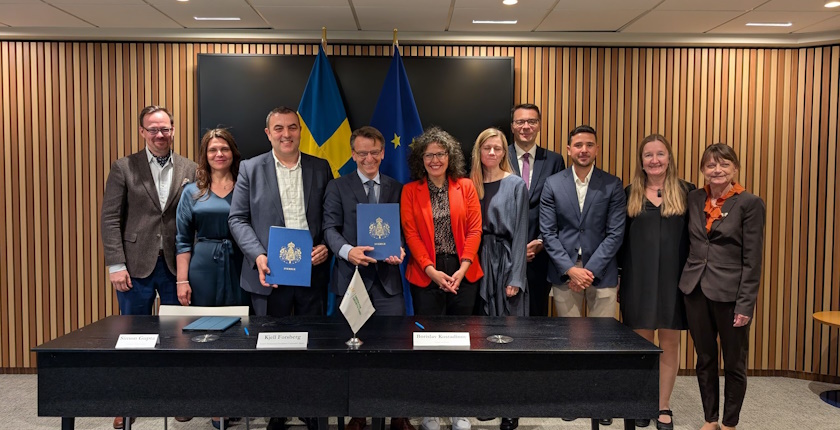
An agreement between the Green for Growth Fund (GGF) and Swedish International Development Cooperation Agency (Sida) enabled the expansion of green lending in the Western Balkans and the European Union’s Eastern Neighborhood. With the new unfunded guarantee of EUR 60 million, GGF can provide EUR 120 million in loans through financial intermediaries and directly to companies.

The Green for Growth Fund established a new partnership, with the Swedish International Development Cooperation Agency. It facilitates GGF’s first risk-sharing, unfunded guarantee. The Luxembourg-based fund and Sweden’s development cooperation agency said they both support real economies and acceleration of the green transition in the Western Balkans and the countries of the EU’s Eastern Neighborhood.

The signed unfunded guarantee amounts to EUR 60 million. It enables GGF to provide EUR 120 million in loans to private businesses and households through financial intermediaries and directly to companies. The package is for urgently needed investments in the decarbonization of the economy – expanding renewable energy generation and improving energy efficiency.

With unfunded portfolio risk-sharing facilities, international financing institutions or similar lenders and agencies accept a share of risk in an investment instead of committing capital.

New funding approach is major milestone for Green for Growth Fund

The Green for Growth Fund promotes energy efficiency and renewable energy in Southeast Europe, the Caucasus, Middle East and North Africa. By providing refinancing to local financial institutions, it helps businesses and households access sustainable energy solutions, fostering energy efficiency and reducing carbon emissions.

GGF was initiated as a public-private partnership by the European Investment Bank and Germany’s KfW Development Bank, with financial support from the European Union, the German Federal Ministry for Economic Cooperation and Development (BMZ) and other international investors. Finance in Motion serves as GGF’s advisor.

“We are excited to welcome Sida as a new guarantee partner to the Green for Growth Fund. This innovative funding approach, being the first of its kind for us, represents a major milestone. We are grateful to Finance in Motion for their exceptional work in structuring this deal. This partnership not only strengthens our capacity to support green initiatives but also enhances our ability to prepare financial institutions and businesses for future opportunities in the EU market,” GGF’s Board Chairperson Simon Gupta stated.

Bridging investment gap in high-risk markets

The Swedish International Development Cooperation’s Agency’s Assistant Director General Kjell Forsberg, responsible for trade, private sector and financial instruments, said the partnership is aimed at supporting countries highly prioritized by Sweden. The guarantee collaboration between the agency and the Green for Growth Fund bridges the investment gap in high-risk markets while complementing other Swedish official development assistance (ODA) contributions as well as the European Union’s programs.

“We are grateful to Sida for their partnership and support. This collaboration is crucial for the Green for Growth Fund, enhancing our efforts in promoting energy efficiency and renewable energy projects,” said Borislav Kostadinov, Fund Director of GGF at Finance in Motion.

by in News

Serbia to invest EUR 60 million in renewables in district heating

Serbia plans to sign an agreement by the end of the year on introducing renewable sources in district heating plants, according to the Ministry of Mining and Energy.

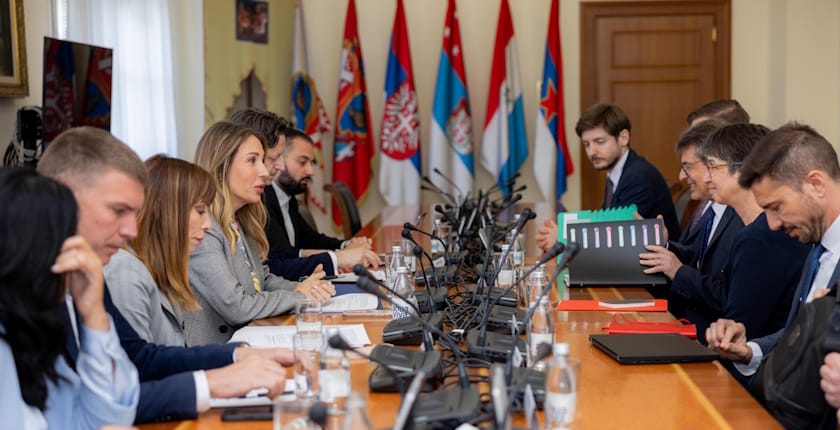
Minister of Mining and Energy Dubravka Đedović Handanović met with Ambassador of Germany Anke Konrad and Director of Germany’s KfW Development Bank for Southeast Europe and Turkey Klaus Müller.

They discussed cooperation on ongoing projects in the energy sector and a plan for further investments in renewables and energy efficiency.

The minister highlighted the successful cooperation with KfW in the construction of biomass heating plants and the introduction of renewable energy in district heating systems. She recalled that four biomass heating plants have been installed.

In the coming years, new boilers will be installed in several heating plants

She noted that in the second phase of the project, in the coming years, heating plants in Prijepolje, Novi Pazar, Niš, Rača, Vranje and Majdanpek are envisaged to get new boilers.

By the end of the year, Serbia plans to sign an agreement on the introduction of renewables in district heating plants, namely solar technology and heat pumps, Đedović Hanadanović announced.

The investment is estimated at EUR 60 million, of which EUR 20 million would be a donation, thanks to the support of KfW, she added.

Serbia and Germany plan to strengthen cooperation

Đedović Handanović stressed the importance of the climate partnership with Germany and thanked for the support that the other country provides to Serbia in the modernization of the energy sector.

“We are grateful to the German government and the KfW Development Bank for their continuous support in different subsectors in energy, from district heating and energy efficiency to the development of new capacities from renewable energy sources,” she stated.

In line with its ambitions and reform goals in energy, Serbia intends to deepen cooperation with Germany through new projects.

Of note, the four heating plants were installed in Priboj, Mali Zvornik, Novi Pazar and Majdanpek. The agreement for the second phase of the project was signed in May last year.

by in News

North Macedonia adopts Law on Energy

With a majority of votes, 62 out of 120, the Assembly of North Macedonia adopted the Law on Energy. The government’s representatives say it is systemic, comprehensive, and reform-oriented legislation laying the foundation for the country’s new energy policy. The act aligns the country’s legal framework with the European Union.

The new Law on Energy will bring numerous benefits to the country and its energy future, according to the Government of North Macedonia. They include a liberalized, transparent and competitive electricity market ensuring fairer prices and more choice for consumers, the introduction of smart meters for more accurate consumption measurement, and daily insight for consumers into their electricity usage.

The law is compatible with the reform agenda for the Western Balkans and with EU directives. Its pillars are:

  • A significant increase in the share of renewable energy sources in final consumption;
  • Greater energy efficiency and reduction of losses;
  • An open energy market in which citizens become active participants – producers, sellers, and members of energy communities.

The law supports new concepts such as citizen energy communities and demand-side management models, increased market liquidity, and broader access to energy sources for the economy, along with equal investment opportunities.

It addresses infrastructure stability through investments in storage systems and their digitalization, as well as providing a stable, transparent, and predictable framework for domestic and foreign investors. The law strengthens the capacities of regulators and operators, creates conditions for greater integration with regional and European energy networks, and enables new investments in solar, wind and other renewable sources, district heating, gasification, storage and digitalized grid infrastructure.

Božinovska: New law paving way for energy sovereignty for Macedonia

Minister of Energy, Mining and Mineral Resources Sanja Božinovska said in parliament ahead of the vote that the Law on Energy is the foundation of the national transformation toward a clean, sustainable and fair energy future.

„This is a law that creates opportunities but also demands responsibility. Energy is not just the engine of the economy; it is the basis for a quality life. With this law, we are opening the door to an energy sovereign, green and European Macedonia. This law is more than a normative act – it is a signpost for the future. A chance we must not miss,” she said.

Transparent, predictable investment framework

The law includes provisions for protecting vulnerable groups, supporting the fight against energy poverty and ensuring fair access to energy for all.

According to the ministry, the law provides a stable, transparent and predictable framework for domestic and foreign investors.

All EU energy directives have been implemented, said President of the Energy, Water Services and Municipal Waste Management Services Regulatory Commission (ERC or RKE) Marko Bislimoski. Of note, yesterday he spoke at the Belgrade Energy Forum – BEF 2025, organized by Balkan Green Energy News.

The drafting process involved institutions, experts, the business community, operators and the national regulator. A total of 61 amendments were adopted.

Unlike the ruling majority, the Left (Levica), an opposition party, claimed the Law on Energy does not protect consumers or national interests. Out of 11 amendments that it submitted, only four were adopted. They include provisions aimed at protecting consumers from unrealistically high electricity bills.

by in News

Public voting open for EUSEW Awards

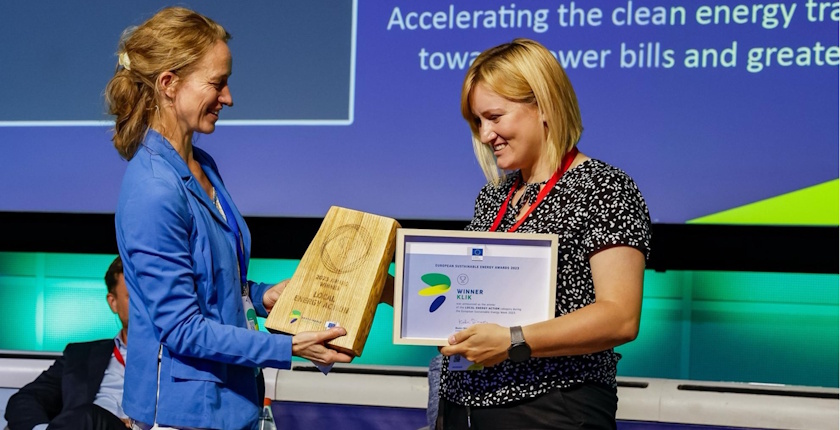
EUSEW Awards will be presented on June 10, within the European Sustainable Energy Week (EUSEW), to outstanding individuals and organisations driving Europe’s energy transition. A jury has selected nine finalists across three categories: Innovation, Local Energy Action, and Woman in Energy. The public now gets to decide the winners.

Online public voting for EUSEW Awards is open until June 1. Voters can support one finalist in each category.

The winners will be announced during the official awards ceremony in Brussels on June 10.

Innovation category

The Innovation Award recognises outstanding projects funded by the European Union that are ongoing or recently completed, demonstrating original and innovative approaches to the energy transition and delivering tangible results.

Dutch company AquaBattery has launched a pilot project in Delft for a long-duration energy storage (LDES) battery system that uses only salt and water as storage medium.

During charging, renewable electricity converts saltwater into acid and base, which are stored in separate tanks, effectively storing the electricity. During discharge, the acid and base are recombined into saltwater, generating electricity. This enables a stable power supply even when there is no sun or wind, without relying on critical raw materials like lithium.

[wpcc-iframe title=”EUSEW2025 Finalist | Dutch saltwater battery commercialises groundbreaking energy storage solution” width=”500″ height=”281″ src=”https://www.youtube.com/embed/1xs2khpQB2k?list=PLMKHMvnaraHMd4y5rZuvjnnW1veToA8qm” frameborder=”0″ allow=”accelerometer; autoplay; clipboard-write; encrypted-media; gyroscope; picture-in-picture; web-share” referrerpolicy=”strict-origin-when-cross-origin” allowfullscreen=””]

The LIFE4GreenBroadband project in Croatia, led by telecom operator A1 Hrvatska, is the second finalist in the Innovation category. It aims to reduce emissions in the telecommunications sector by introducing solar panels and passive cooling systems to mobile base stations.

[wpcc-iframe title=”EUSEW2025 Finalist | Project cutting emissions in Croatian telecoms sector” width=”500″ height=”281″ src=”https://www.youtube.com/embed/UHkQHJ4e9ls?start=7&feature=oembed” frameborder=”0″ allow=”accelerometer; autoplay; clipboard-write; encrypted-media; gyroscope; picture-in-picture; web-share” referrerpolicy=”strict-origin-when-cross-origin” allowfullscreen=””]

The third finalist is the Spanish-Italian project LIFE Turbines, focused on developing smart cities and generating green electricity by using surplus pressure in water pipelines. By integrating microturbines directly into existing infrastructure, the project demonstrates how to harness urban hydropower without affecting water quality or supply.

[wpcc-iframe title=”EUSEW2025 Finalist | Spanish-Italian project harnessing hydropower from urban water systems” width=”500″ height=”281″ src=”https://www.youtube.com/embed/E2VLw49_WCs?list=PLMKHMvnaraHMd4y5rZuvjnnW1veToA8qm” frameborder=”0″ allow=”accelerometer; autoplay; clipboard-write; encrypted-media; gyroscope; picture-in-picture; web-share” referrerpolicy=”strict-origin-when-cross-origin” allowfullscreen=””]

Local Energy Action

The Local Energy Action Award celebrates implemented sustainable energy initiatives carried out by citizens or consumers at the local level, contributing to their community’s energy transition. It also aims to inspire similar efforts across the EU by showcasing economic and environmental benefits. This year’s finalists are: Amiestas, proKlima, and Shared Energy for Social Housing in Otterbeek.

Amiestas is a public, non-profit organisation managing a centre for energy-efficient renovation of residential buildings in Vilnius, Lithuania. It streamlines processes for residents and provides technical and financial support to improve building energy efficiency by 50% to 60%.

[wpcc-iframe title=”EUSEW2025 Finalist | non-profit supporting multi-apartment renovations in Vilnius” width=”500″ height=”281″ src=”https://www.youtube.com/embed/nTZG3NTDI_E?list=PLMKHMvnaraHMd4y5rZuvjnnW1veToA8qm” frameborder=”0″ allow=”accelerometer; autoplay; clipboard-write; encrypted-media; gyroscope; picture-in-picture; web-share” referrerpolicy=”strict-origin-when-cross-origin” allowfullscreen=””]

ProKlima is a public-private partnership funding clean energy projects in and around Hanover. It brings together municipal utility enercity, local authorities, and NGOs. Nearly 40,000 clean energy projects were funded so far within the endeavor.

The partners created a fundraising instrument independent of municipal budgets. The money, sourced from gas sales, profit sharing from the said energy supplier and from concession fees, is distributed to local projects addressing climate change and raising awareness about global warming.

[wpcc-iframe title=”EUSEW2025 Finalist | German clean energy fund” width=”500″ height=”281″ src=”https://www.youtube.com/embed/RsKK4HZ4w1I?list=PLMKHMvnaraHMd4y5rZuvjnnW1veToA8qm” frameborder=”0″ allow=”accelerometer; autoplay; clipboard-write; encrypted-media; gyroscope; picture-in-picture; web-share” referrerpolicy=”strict-origin-when-cross-origin” allowfullscreen=””]

Shared Energy for Social Housing in Otterbeek, Belgium, gives access to renewable energy to residents in vulnerable groups. Two hundred social housing units have been equipped with solar panels, allowing residents to receive green electricity at a fixed, lower-than-market rate.

[wpcc-iframe title=”EUSEW2025 Finalist | Belgian social housing energy initiative” width=”500″ height=”281″ src=”https://www.youtube.com/embed/Q30AOi-58ck?list=PLMKHMvnaraHMd4y5rZuvjnnW1veToA8qm” frameborder=”0″ allow=”accelerometer; autoplay; clipboard-write; encrypted-media; gyroscope; picture-in-picture; web-share” referrerpolicy=”strict-origin-when-cross-origin” allowfullscreen=””]

Woman in Energy

The Woman in Energy Award recognises the efforts of women whose actions, if replicated, can accelerate the transition to clean energy in Europe. Special attention is given to promoting gender equality and equal opportunities in the energy sector.

This year’s finalists are Carmen Sánchez-Guevara, Sofie Loots, and Stella Tsani.

Spanish architect and professor Carmen Sánchez-Guevara is a leading voice in the fight against summer energy poverty, which affects vulnerable households exposed to extreme heat. Through projects like Cooltorise, she has helped people in five countries protect themselves through education, greening initiatives, and improved public spaces.

[wpcc-iframe title=”EUSEW2025 Finalist | Spanish architect tackling summer energy poverty” width=”500″ height=”281″ src=”https://www.youtube.com/embed/LqwFIljOk1c?list=PLMKHMvnaraHMd4y5rZuvjnnW1veToA8qm” frameborder=”0″ allow=”accelerometer; autoplay; clipboard-write; encrypted-media; gyroscope; picture-in-picture; web-share” referrerpolicy=”strict-origin-when-cross-origin” allowfullscreen=””]

Sofie Loots advocates for local energy cooperatives in Belgium. For 16 years, she worked as a sustainability advisor in the Municipality of Edegem near Antwerp, focusing on climate action through energy efficiency and building renovation.

In 2016, Sophie co-founded the energy cooperative ZuidtrAnt with a group of other volunteers. Their goal was to prioritise citizens’ interests in the energy transition and to make renewable energy more affordable.

[wpcc-iframe title=”EUSEW2025 Finalist | Pioneer of Flemish energy cooperatives” width=”500″ height=”281″ src=”https://www.youtube.com/embed/x-uyBKLxXPU?list=PLMKHMvnaraHMd4y5rZuvjnnW1veToA8qm” frameborder=”0″ allow=”accelerometer; autoplay; clipboard-write; encrypted-media; gyroscope; picture-in-picture; web-share” referrerpolicy=”strict-origin-when-cross-origin” allowfullscreen=””]

Stella Tsani, an associate professor at the University of Athens, links academic research with real-world energy policy, focusing on economic incentives for a sustainable energy transition.

Through work with organisations such as the United Nations Environment Programme (UNEP) and the Intergovernmental Panel on Climate Change (IPCC), her research informs policies that balance economic growth with environmental protection. She is also dedicated to empowering young women in the energy sector through mentorship and education, believing that future female leaders are key to achieving the EU’s climate goals.

[wpcc-iframe title=”EUSEW2025 Finalist | Greek academic driving country’s energy transition” width=”500″ height=”281″ src=”https://www.youtube.com/embed/YIizBrFETqc?feature=oembed” frameborder=”0″ allow=”accelerometer; autoplay; clipboard-write; encrypted-media; gyroscope; picture-in-picture; web-share” referrerpolicy=”strict-origin-when-cross-origin” allowfullscreen=””]

by in News

Turkey aims to become major lithium producer with its geothermal wells

Turkey is using only 10% of its geothermal potential, according to Chairman of the Geothermal Power Plant Investors Association (JESDER) Ufuk Şentürk. He said existing wells alone could open the way for the country to become one of the world’s major producers of lithium.

Studies are underway to determine the accessibility of valuable minerals in Turkey’s geothermal waters. There are already some one thousand wells with 100,000 tons of water coming out every hour, Chairman of JESDER Ufuk Şentürk told Anadolu Agency Energy Terminal. He pointed to the potential for the extraction of lithium, cesium, selenium and silicon.

Turkey is utilizing only 10% of its geothermal potential, Şentürk stressed. An inventory is under development of wells that were drilled to find oil and left unused, he added. The temperatures are as high as 150 degrees Celsius and the said resources can provide heat for 5,000 hectares of greenhouses, the organization’s chief said.

Researchers have found a lithium source in Turkey of 20 parts per million in geothermal water

The İzmir Institute of Technology (İYTE) and Afyon Kocatepe University have been conducting studies for two years, within the Turkish-German Energy Partnership, on obtaining minerals, Şentürk noted. He said there are 100 parts per million of lithium in one geothermal source in Germany, while 20 parts per million were found in Turkey.

Investment costs are much lower without exploratory drilling, if lithium is extracted from geothermal water already coming to the surface. The head of JESDER, Geothermal Power Plant Investors Association, estimated that Turkey could produce 35,000 tons per year and said global production came in at 36,000 tons last year.

“Even if we obtain 10%, we will still be one of the countries with the largest lithium resources in the world,” he stated.

Volumes of lithium extracted from geothermal waters are still symbolic

As Şentürk didn’t elaborate, it remains unclear if he compared the country’s potential to the output from so-called direct lithium extraction (DLE) or perhaps evaporation from brine pumped from underground. They make up one tenth and one quarter, respectively, of the 240,000 tons of lithium produced last year in the world. The rest is mined.

A different benchmark, the lithium carbonate equivalent or LCE, is almost five times larger. Additionally, about 5% of lithium ion batteries are recycled. The volumes of lithium extracted from geothermal waters are still symbolic.

Investors are betting on the combination with geothermal energy, to make lithium production cost effective, as it is found in very small quantities in underground water. Direct extraction of the alkali metal from water has an immeasurably lower environmental impact than mining.

Existing geothermal power plants can provide heat to 4,000 hectares of greenhouses

Şentürk pointed out that Turkey hosts 65 geothermal power plants of 1.74 GW overall. They generated 11.2 TWh in 2024 of the total 350 TWh.

Geothermal energy currently heats 7,000 hectares of greenhouses in Turkey and 160,000 homes, Şentürk said. The Ministry of Agriculture and Forestry is providing incentives for greenhouse zones of 2,800 hectares in total. But existing geothermal power plants alone could, with such support, provide for 3,500 to 4,000 hectares of greenhouses, the association’s chief estimated.

On a global scale, Turkey trails only the United States, Indonesia and the Philippines in geothermal power. Nevertheless, after several years of rapid growth, it only added 120 MW in capacity since 2020.

A recent study, conducted within the project called Li+Fluids, showed geothermal waters in north Germany and its Thuringia state contain between 0.39 and 26.5 million tons of lithium. The country’s demand for 2030 is projected at 0.17 million tons.

by in News

Minister Admir Šahmanović formally assumes energy, mining portfolio in Montenegro

Prime Minister of Milojko Spajić has merged two ministries, so Minister of Mining, Oil and Gas and Coordinator of the Ministry of Energy Admir Šahmanović took the helm at the joint energy and mining portfolio. Among his primary responsibilities are the completion of the domestic part of the Trans-Balkan Electricity Corridor, the installation of the second line of the Monita submarine interconnector with Italy and power market coupling with the European Union.

The Parliament of Montenegro elected Minister of Energy and Mining Admir Šahmanović. He led the Ministry of Mining, Oil and Gas in  since July. As Minister of Energy Saša Mujović was elected mayor of the capital Podgorica, Šahmanović recently took over as coordinator,

Prime Minister Milojko Spajić now formally merged the two ministries again. “If we complete the Trans-Balkan Corridor – only a few kilometers are left, the second line of the underwater cable toward Italy, Montenegro is becoming the cooperation bridge between the Balkans and the EU,” he said in the national assembly, promoting Šahmanović.

The list of priority energy infrastructure, adopted in December, also includes the Komarnica and Kruševo hydropower projects, the Ionian-Adriatic Pipeline (IAP), a subsidy scheme for rooftop solar power plants, energy efficiency measures and a floating solar power unit.

The Trans-Balkans Electricity Corridor is a project for upgrading transmission systems in Serbia, Bosnia and Herzegovina and Montenegro. The proposed lines run from Romania to the Monita subsea interconnector with Italy.

Admir Šahmanović will participate in the first panel discussion within Belgrade Energy Forum (BEF 2025), organized by Balkan Green Energy News. The two-day conference in Serbia, starting on May 14, is the central meeting point for representatives of regional and international institutions, organizations and the business community from the region, Europe, and beyond.

Minister has master’s degree in financial management

The minister said earlier this month that current photovoltaic and wind power projects would boost Montenegro’s electricity capacity fivefold, to 5 GW. Admir Šahmanović, born in 1985, has a master’s degree in financial management. He is in the leadership of the Bosniak Party.

Early in his career, he worked in PricewaterhouseCoopers in both Montenegro in Serbia, in Montenegro’s ministries of sustainable development and tourism and public administration, and the British Council in Podgorica. The current minister has experience in managing funds received from the European Union.

Šahmanović entered energy policy sphere in 2022

Three years ago, Šahmanović was named state secretary in the Ministry of Capital Investments, which included the energy portfolio. He participated in the negotiations on the EU accession and on obtaining loans from international financial institutions.

According to his official biography, the minister has promoted sustainable energy and transportation and environmental protection and worked on the country’s strategic documents and action plans.

Additionally, Šahmanović has managed EU-funded projects for wastewater purification and green energy.

Last month he oversaw the adoption of the new Law on Energy.

by in News

Energy Advisory Center established in Knjaževac in Serbia for citizens, firms

Knjaževac in Serbia got an Energy Advisory Center, intended for all citizens and small entrepreneurs who want to save energy, reduce costs, and improve their living and working conditions, as well as for those considering or already implementing energy efficiency measures.

The opening of the Energy Advisory Center in Knjaževac, a town in eastern Serbia, was marked by holding a roundtable discussion with local partners. At the event, the representatives of institutions, public companies, organizations, and the business sector were invited to join the facility’s mission and contribute to the dissemination of knowledge within their respective fields.

“Energy efficiency needs to become a higher priority for everyone. That’s why we need an Energy Advisory Center that communicates with all members of the local community, and not just subsidy beneficiaries,” said Daniela Kostadinova, senior advisor in the project Promotion of Renewable Energy Sources and Energy Efficiency in Serbia, implemented by GIZ.

She added that investing in expanding the scope of the center – which provides not only financial but also advisory support – contributes to an improved quality of life for a greater number of citizens and to a better understanding of their needs.

The Energy Advisory Center in Knjaževac will offer free advice to all interested citizens and entrepreneurs on energy efficiency and investment opportunities in renewable energy sources. Visitors will also be able to get information on subsidies and other financing options for such investments and learn from examples of good practice.

“The opening of the Energy Advisory Center represents an important step toward improving the quality of life of our fellow citizens. By providing relevant information and advice, we are enabling both citizens and businesses to use energy more efficiently, reduce their costs, or even generate new income,” said Milan Đokić, Mayor of Knjaževac.

The center will be operated by the municipality’s enterprise for development, urban development and construction. It is located in its premises, too. The public firm’s director Mladen Radosavljević stated at the opening that the center would be open for one-on-one consultations, group discussions on various topics, and for providing all necessary advice related to energy efficiency.

The establishment of the Energy Advisory Center in Knjaževac was supported by the German Federal Ministry for Economic Cooperation and Development (BMZ), in cooperation with the Regional Development Agency of Eastern Serbia (RARIS). The project was implemented by Deutsche Gesellschaft für Internationale Zusammenarbeit (GIZ) GmbH.

by in News

Eurowind Energy completes its 60.2 MW solar park in Romania

Eurowind Energy’s 60.2 MW photovoltaic park in Transylvania will be put into operation in late April, Minister of Energy Sebastian Burduja said. The facility is joining the almost 600 MW in new capacity funded from the National Recovery and Resilience Plan. In addition, the ministry prepared a EUR 450 million package of grants for companies for energy efficiency and self-consumption.

After 14 years of doing business in Romania, Denmark-based European Energy is materializing its first major endeavors in the country. Minister of Energy Sebastian Burduja revealed that the company’s solar power plant in Teiuş would be commissioned by the end of the month.

The location is in the Transylvania region. Eurowind Energy received EUR 15 million from the government for the project. It costs EUR 47.2 million in total, or EUR 55 million with value-added tax. Construction began a year ago. The system in Alba county will generate an estimated 104 GWh per year.

Burduja said almost 600 MW of capacity has been commissioned within the projects that Romania funds through the National Recovery and Resilience (NRRP or, in Romanian, PNRR).

Eurowind Energy has major renewables projects lined up in Romania, Bulgaria

Eurowind Energy, based in Hobro, Denmark, is one of the biggest wind and solar power developers in Romania.

The Danish company recently signed a 12-year virtual power purchase agreement (PPA) with Autoliv in Romania, for the supply of electricity from the Pecineaga wind park. Eurowind Energy is preparing to put the facility into operation.

It is also building a 238 MW solar power plant in Yambol in neighboring Bulgaria, with Renalfa IPP. They plan to add wind turbines and batteries.

EUR 450 million available for firms for energy efficiency, self-consumption

At the same event, Burduja said the ministry is launching two calls worth EUR 450 million combined. They are intended for support to the energy-intensive industry.

The package for is for companies. It consists of EUR 150 million for energy efficiency – the replacement of outdated equipment – and more than EUR 300 million for the production of electricity for self-consumption.

The Ministry of Energy has set an extremely ambitious target of 2.5 GW of new capacity to be put into operation this year, Burduja stressed. It is two times more than in 2023. Active energy storage capacity is nearing 400 MWh, he added.

In the energy efficiency call, fims can receive as much as EUR 30 million each from the Modernisation Fund. The self-consumption segment is for the ones with available land and projects for photovoltaic parks or even wind farms and micro hydropower plants.

According to the International Renewable Energy Agency (IRENA), Romania increased its solar power capacity at the end of last year by 57% to 4.7 GW. Most of it is from prosumers. The wind power segment is picking up, but slowly, after a stagnation that began a decade ago.

by in News

Bulgaria suspends ill-designed solar energy support program

The Ministry of Energy of Bulgaria doesn’t intend to publish the second call for subsidies for households for solar panels with batteries and solar collectors. The program is partly covered by the European Union’s Recovery and Resilience Facility, so now the country risks losing the funds.

The Ministry of Energy of Bulgaria told Kapital that it does not plan to launch a second procedure to support households in purchasing and installing rooftop photovoltaic panels and solar water heaters. The measure was one of the few for citizens in the National Recovery and Resilience Plan (NRRP) rather than businesses or municipalities.

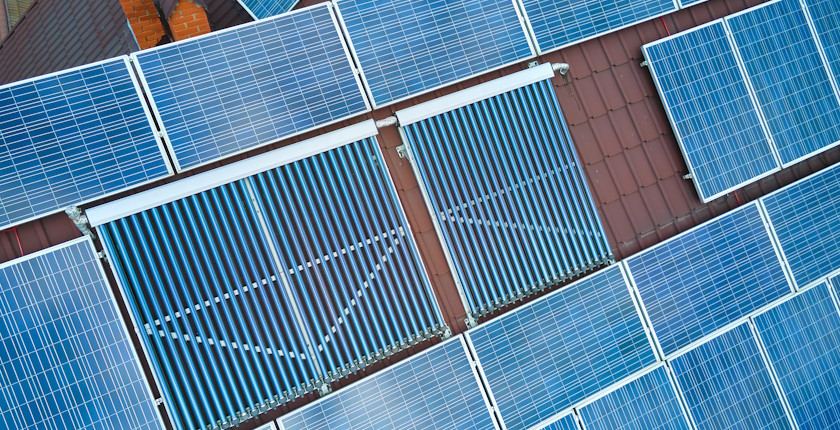
Through the first call, 1,500 households were selected for grants, worth some EUR 20.5 million in total. There is EUR 123 million for the entire scheme, called Support for Renewable Energy for Households. The solar power panel segment includes an option to install batteries as well.

Procedure too complicated

Initially there were fears that there would be more applications than the sum can cover, the article adds. But the procedure turned out to be so complicated that few people actually submitted documentation, the news outlet wrote. So now Bulgaria is about to lose the funds, after the European Commission already blocked the second NRRP tranche late last year.

The Ministry of Energy said it expects all the remaining contracts from the first round to be signed by the end of the month.

The program covers up to 70% of the costs for PV panels and 100% for solar collectors

According to Balin Balinov from Greenpeace, the government is once again demonstrating lack of commitment when it comes to energy poor households.

The program covers up to 70% of the costs for PV panels and 100% for solar collectors. But beneficiaries must buy them on their own and get reimbursed afterward. Notably, people who can afford such devices don’t want to deal with the bureaucracy, the report adds.

Installers struggling with backlogs amid tight deadlines

Moreover, Balinov said, there are hardly any firms available at the moment for installing solar panels, and the deadlines are short. Another issue is the lack of a net metering mechanism for rooftop and balcony photovoltaics. In such a setting, the electricity that beneficiaries generate would be subtracted from their bills.

The draft Law on Energy from Renewable Sources, currently in procedure in the National Assembly of Bulgaria includes the introduction of virtual net metering for prosumers and renewable energy communities. The deadline for approving an application for the installation of a solar power system of up to 20 kW would be just one month, the ministry pointed out.

Moreover, to get a grid connection, prosumers with up to 10.8 kW would only be required to notify the operator.