by in News

GGF’s new partnership powering sustainability of SMEs in Turkey

The Green for Growth Fund (GGF) has partnered with ING Leasing Türkiye, a subsidiary of ING Türkiye, through a EUR 20 million financing agreement to help small and medium-sized enterprises (SMEs) invest in cleaner, smarter, and more efficient technologies, from energy-efficient equipment and machinery upgrades to self-consumption photovoltaic systems and other low-carbon solutions.

GGF’s first collaboration with ING Leasing Türkiye is marking the start of a new strategic relationship. In addition, it is ING Leasing’s first direct access to international development financing supported by funding from international financial institutions and development finance institutions through the Green for Growth Fund, the update adds.

The deal is expected to deliver around 21,000 MWh of primary energy savings and avoid approximately 5,800 tonnes of CO₂ emissions each year, according to GGF.

The signing was attended by Onur Gul, General Manager of ING Leasing Türkiye, and Pınar Cumalı, Treasury and Financial Institutions Manager at ING Leasing Türkiye, alongside, representing GGF through its advisor Finance in Motion, the company’s Regional Director Burcu Karpuz and Investment Associate Mehmet Sena Bakar.

Luxembourg-based GGF has become one of the largest green blended-finance funds. It ended last year with EUR 1.09 billion in assets under management and an outstanding investment portfolio of EUR 1.03 billion.
by in News

Just Transition Forum unites regional leaders to tackle energy poverty, shape fair energy future

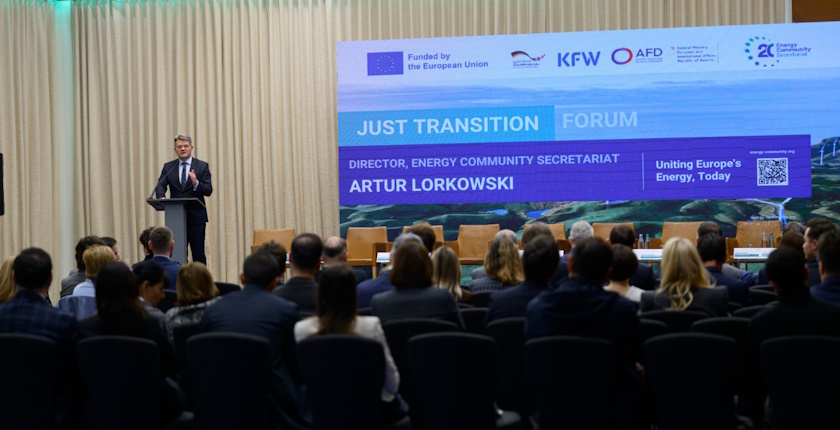
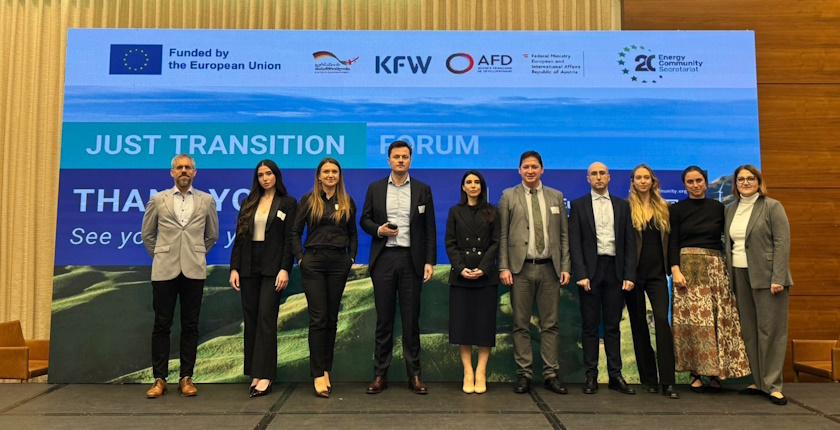
Governments, partners, civil society and community leaders from across Europe gathered in Tbilisi for the Energy Community’s Just Transition Forum to explore how energy efficiency can help end energy poverty and strengthen public trust in the clean-energy transition.

The forum delivered a clear message: a just transition cannot succeed without meaningful dialogue with diverse civil society and non-governmental partners, whose expertise and perspectives must be integrated into planning. As contracting parties begin preparing their new national energy and climate plans (NECPs), embedding just transition in transparent frameworks and long-term strategies is key to turning decarbonization commitments into real benefits for people and communities.

This principle is further reflected in the Energy Community’s newly published Just Transition Policy Guidelines, which guide governments in integrating just transition elements into energy and climate planning – ensuring that decarbonization goes hand in hand with social protection, local opportunity, and public trust, while supporting alignment with the European Union’s clean energy and climate objectives.

Lorkowski: New NECPs should tell story of just, sustained transition

Opening the forum, Energy Community Secretariat Director Artur Lorkowski underscored the importance of the current moment for regional energy and climate planning. The new NECPs, he stressed, should tell the story of a just and sustained transition.

“We are entering a pivotal moment for the region’s energy and climate future. With just transition principles at the core, they can pave the way toward EU energy market integration and turn the green transition into an engine of investment, inclusion, and shared prosperity,” Lorkowski stated.

Critically, the Energy Community’s Governance Regulation requires contracting parties to assess and address energy poverty in their NECPs. It is an opportunity to ensure that energy-poor households receive targeted support and remain central to energy efficiency and decarbonization efforts.

Just Transition Forum unites regional leaders energy poverty fair energy future

Energy Efficiency First for Energy Poverty

To drive the agenda forward, forum participants drew on insights from the secretariat’s study Energy Efficiency First for Energy Poverty. It reveals that 30% to 40% of households in Kosovo*, Albania, North Macedonia, and Georgia face energy poverty, and shows how targeted energy efficiency investments can transform lives across the region – making homes warmer, healthier, and more affordable to run.

By prioritizing vulnerable households, establishing renovation funds, and applying the Energy Efficiency First (EE1st) principle, contracting parties could cut household energy demand by more than 60%, create up to 19 local jobs for every EUR 1 million invested, and triple the wider benefits through improved well-being, comfort, and productivity.

Energy Community contracting parties could cut household energy demand by more than 60%

Emphasizing the importance of a people-centred transition, Head of EU Delegation to Georgia Paweł Herczyński stated: “For the European Union, a just transition is not only an environmental goal. It is a commitment to people, fairness and long-term resilience. This transformation must be built through dialogue, transparency and the active participation of communities. Ensuring that this transition succeeds, it will depend on transparent governance, democratic credibility and alignment with the EU standards.”

The forum also celebrated the winners of this year’s Just Transition Young Voices Awards. Their work highlighted how listening to those most affected by the transition — and youth, who will carry it forward — is essential to understanding the diverse realities of communities navigating the shift to a greener economy.

Cooperating partners for the forum included the Delegation of the European Union to Georgia, KfW on behalf of the German government, AFD – Agence Française de Développement, and the Federal Ministry for European and International Affairs of Austria.

* This designation is without prejudice to positions onstatus and is in line with UNSCR 1244/99 and the ICJ Opinion on the Kosovo declaration of independence.
by in News

GGF ushers in new wave of energy transition investments in Western Balkans with eight deals

The Green for Growth Fund has signed a series of agreements on green lending and support for major solar power and energy storage projects throughout the Western Balkans. The new commitments, backed by an investment from KfW, will lift its green financing portfolio in the region by up to EUR 176 million.

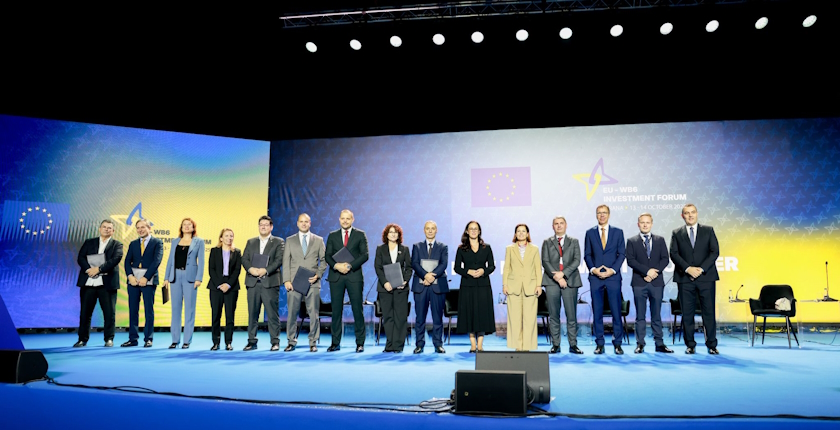
At the EU–Western Balkans Investment Forum in Tirana, held in October, GGF announced the European Union’s EUR 20 million investment in its class C shares, via Germany’s KfW Development Bank. It was accompanied by a EUR 4 million donation to the climate action fund’s capacity building and advisory facility, its advisor Finance in Motion said.

The proceeds are set to mobilize more private capital for renewable energy, energy efficiency and climate resilience across the region, the update revealed.

The Green for Growth fund signed a series of agreements at the forum for green lending, and for financing solar power and battery projects in North Macedonia, Kosovo* and Albania.

Von der Leyen: The time to invest in the Western Balkans is now

The event was attended by European Commission President Ursula von der Leyen and Albanian Prime Minister Edi Rama.

“Your economies are already set to grow rapidly in the coming years. We established the Western Balkans Growth Plan for exactly that. The EU opens sectors of its economy for your business. Together, we work on reforms for a level playing field. And alongside reforms comes investment. The Western Balkans Growth Plan aims at doubling regional GDP in the next decade. So my message to investors today is straightforward: Do not let this opportunity pass by. The time to invest in the Western Balkans is now,” Von der Leyen said.

The commitments signed within a special segment of the Tirana conference are boosting the fund’s cumulative investments into the region to more than EUR 850 million. Earlier it provided over EUR 675 million overall in green finance in the Western Balkans in support of climate action, energy security and sustainable industry.

The new commitments are expected to avoid emissions of some 175,000 tons of CO2. It is equivalent to 400,000 barrels of oil not being burnt.

Trailblazing investments ahead in photovoltaics, BESS

The Green for Growth Fund intends to provide funding for one of the first grid-scale battery projects in North Macedonia and the Western Balkans.

Renalfa IPP is about to expand its 50 MW photovoltaic plant in Oslomej, on the site of a former coal mine, with a 200 MWh battery energy storage system (BESS). GGF has already provided debt financing for the solar installation, and the two sides signed a mandate letter for EUR 24 million for the BESS investment. It is one of the investments for the transformation of the REK Oslomej coal mine and power plant complex.

Renalfa IPP’s pioneering PV plant Oslomej on coal land will get a battery facility

GGF also signed a term sheet for Quant Renewables’ solar power project in Kosovo* for 142.2 MW in peak capacity. It comprises PV plants Tucep (98.5 MW) and Veriq (43.7 MW) on land previously designated for lignite mining.

The Green for Growth Fund would support it with up to EUR 12 million in preferred equity, complementing senior debt financing led by the European Bank for Reconstruction and Development (EBRD). Set to become Kosovo’s* biggest solar park, its estimated annual output would match the electricity needs of 63,000 households.

The facility would save an estimated 168,138 tons of carbon dioxide equivalent per year (22,529 tons prorated to GGF’s investment).

The third renewables project is HD Solar Park in Albania. Through a letter of intent, GGF expressed its goal to provide up to EUR 30 million in senior debt financing. Bindi, the developer, has envisaged 60 MW of peak capacity and a co-located 120 MWh battery system. It would be one of the first large-scale solar-plus-storage initiatives in the country.

Five new deals with financial institutions for as much as EUR 110 million in total

The partner financial institutions that signed agreements with the Green for Growth Fund will channel the financing to their clients for investments in renewables, sustainable mobility, and energy and resource efficiency in buildings and industrial production.

There are five new deals for as much as EUR 110 million in credit lines and subordinated loans.

Two credit lines for partners in Kosovo*

The KRK microfinance institution in Kosovo* aims to utilize a new credit line, of EUR 5 million, for efficiency refurbishments and retrofits of the residential sector as well as small-scale renewable energy. It would be its sixth investment with the Green for Growth Fund since establishing the partnership in 2017.

BpB, the first bank in Kosovo* founded with fully local capital, finances households and small and medium-sized enterprises. Building on a previous partnership, it will channel GGF’s senior credit line of EUR 5 million into energy efficiency and renewable energy.

It will particularly benefit SMEs, including clients in the agricultural sector seeking to upgrade energy systems or invest in low-carbon vehicles, efficient equipment and modern irrigation systems, the fund added.

EUR 95 million in total for Serbian lenders

The Green for Growth Fund signed a loan agreement with UniCredit Bank Serbia for a EUR 50 million senior credit line. The focus is on commercial-scale solar and wind power, helping decarbonize Serbia’s coal-dependent electricity system.

GGF expects it to become one of the fund’s most impactful investments, by avoiding 84,550 tons of emissions in CO2 equivalent terms – equivalent to taking 44,500 cars off the road. The fund has invested EUR 115 million in UniCredit Bank Serbia to decarbonize the country’s electricity system.

Another Serbian lender in the group is AikBank, eligible for a EUR 45 million subordinated loan. The deal is for financing renewables and energy efficiency projects of corporate clients.

The bank will additionally benefit from GGF’s technical assistance for technical due diligence and environmental and social assessments, for the implementation of green energy projects in line with the best practices, the partners stressed.

ProCredit Bank in BiH is eyeing solar power projects

ProCredit Bank in Bosnia and Herzegovina is getting a subordinated loan of up to EUR 5 million, following two such facilities in 2022 and last year. The Green for Growth Fund’s investment is for maintaining the partner’s capital position and supporting the expansion of its green portfolio. The bank especially sees opportunities in solar power, where there is significant potential for BiH to catch up with regional leaders.

“We thank our investors for their continued confidence. This kind of catalytic capital drives tangible impact in Southeast Europe and shows how aligning investment with ambitious climate goals accelerates the green transition,” Finance in Motion said.

* This designation is without prejudice to positions onstatus and is in line with UNSCR 1244/99 and the ICJ Opinion on the Kosovo declaration of independence.
by in News

Germany’s energy and climate cooperation with Serbia improves people’s lives

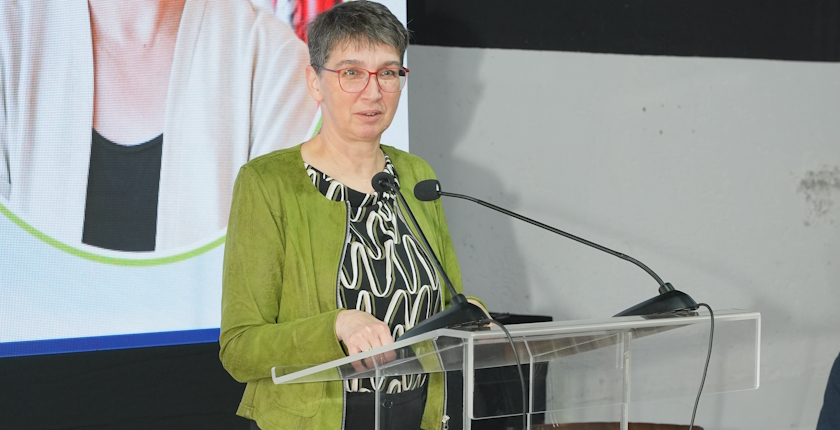
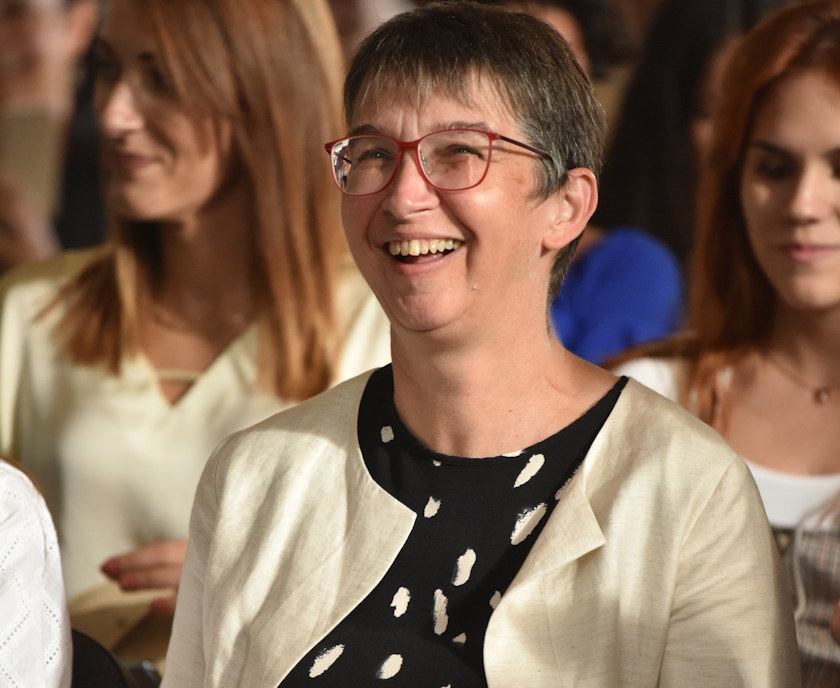
Projects implemented by Deutsche Gesellschaft für Internationale Zusammenarbeit (GIZ) GmbH and the KfW Development Bank in Serbia have introduced modern heating systems to many towns, improved insulation in public buildings and promoted renewable energy to benefit citizens and local communities. Anke Konrad, the German Ambassador to Serbia highlighted these achievements during the interview with the Balkan Green Energy News, commemorating the 25th anniversary of the German Development Cooperation in the country. She emphasized that these initiatives enhance people’s quality of life, reduce emissions and contribute to environmental protection.

Ambassador Konrad also pointed out that the long-term Regional Climate Partnership with the Western Balkans is based on shared values and goals, aimed at investing in more secure and climate-resilient future.

Ambitious reductions of harmful emissions go hand in hand with a strong economy, German Ambassador to Serbia Anke Konrad says. GIZ and KfW are supporting the country’s green transition, which includes a rising solar power capacity, she noted and called it an enormous success.

Climate action is not a cost, but a strategic investment, Ambassador Konrad pointed out.

This year marks the 25th anniversary of development cooperation between the Federal Republic of Germany and the Republic of Serbia. What are the cornerstones of this partnership, and what significant achievements have been realised over the years?

This year, we look back with pride on 25 years of successful development cooperation that has delivered tangible benefits to people all over Serbia, has brought our two countries closer together, and Serbia closer to the European Union. From the outset, Germany’s support has focused on strengthening institutions, supporting economic growth, and improving living standards. Together with our Serbian partners, we have achieved progress in training and vocational education, good governance, environmental protection, and infrastructure development.

For example, thousands of students and hundreds of companies participate in dual education programmes every year. In digitalization projects, more than 2,000 small and medium-sized companies improved their productivity and competitiveness through digitalizing internal procedures. Another great example are digital services for individuals, such as the seasonal worker portal or the Register of Administrative Procedures, an online register for all administrative services with over 2.2 million registered “e-citizens”.

We look forward to continuing to implement projects that will improve the lives for people in Serbia and support Serbia on its path towards the EU

In 2022, the installed capacity for solar energy generation was at 6 MW. Now it stands at 84.4 MW. This equals a reduction of 118,000 tons of CO2 emissions per year. Where there were 400 solar energy prosumers in 2022, now there are almost 4,000. This represents an enormous success toward combating climate change and creating a sustainable economy. We have supported this transition both through technical advice by GIZ and investments by KfW.

What makes our partnership special is its continuity, reliability and spirit of co-creation. We work together with Serbian partners and citizens, building on a strong foundation of dialogue, cooperation and shared responsibility. In this spirit, we look forward to continuing to implement projects that will improve the lives for people in Serbia and support Serbia on its path towards the EU.

Let us turn our attention to energy and climate-related matters. Germany plays a vital role as one of Serbia’s primary partners in supporting the country’s energy transition and climate efforts. Which specific areas of collaboration would you like to highlight?

Combatting climate change and the transition to green energy are some of the most pressing questions of our time. As we are following the 30th UN Climate Change Conference taking place in Brazil in November, it’s clear that international partnerships, innovation and practical initiatives to reduce emissions are key to preserving our environment and, with that, our prosperity and security. Reduction of CO2 emissions will lead to significant health benefits as a result of cleaner air.

That is one of the reasons why energy and climate cooperation has become one of the most visible parts of our partnership with Serbia. Together, we are enabling Serbian citizens to use more clean energy from wind, sun and water, and to make homes, schools and businesses more sustainable and more energy efficient.

Through our projects that are implemented by GIZ and KfW, many towns now have modern heating systems, better-insulated public buildings, and new renewable energy projects that benefit local communities.

This work is not only about technology – it is about improving people’s daily lives, lowering harmful emissions, and protecting the environment for future generations.

Germany energy climate cooperation Serbia improves people lives Ambassador Anke Konrad interview
Anke Konrad, the German Ambassador to Serbia delivered a speech at the opening ceremony of the annual event of WISE Serbia network of women in sustainable energy, climate action and environmental protection (photo: Balkan Green Energy News)

What is the current landscape for German companies operating in Serbia’s energy sector? We have noticed a notable presence of technology firms compared to development companies, which raises questions about the level of interest from German investors in Serbia and the wider Western Balkan region. What factors might contribute to this observed reluctance among German investors?

German investors very much believe in Serbia, its business environment and its progress on the path towards the European Union. That is a major factor why over 900 companies with German capital are operating in Serbia.

Altogether, they account for 6% of Serbia’s GDP and provide employment to over 80,000 people. German companies in Serbia are here to stay.

Future investment decisions will depend on a wide variety of factors. Apart from global developments and trends, Serbia’s reform efforts, the efficiency of public institutions, transparency, rule of law and the fight against corruption are important factors when it comes to investment decisions. A predictable and fair investment environment and steady progress towards the EU offer the best prospects for growth and prosperity.

The ongoing efforts to decarbonise the energy sector and transform the economy towards greener and more climate-friendly solutions have been pivotal in the policies of both the European Union and the German government, which is an integral member of the EU. In light of the current economic stagnation and heightened security concerns that are impacting the budget, will Germany continue to uphold its commitment to this crucial agenda to the same extent?

The European Union aims to become climate-neutral by 2050. This binding goal is enshrined in the EU Climate Law and it is the basis for our commitment to reduce emissions and achieve climate targets. Germany will continue to lead by example. We want to demonstrate that ambitious emissions reductions go hand in hand with a strong economy. And we will continue to invest in climate action worldwide because decarbonization offers vast potential for innovation and economic development.

Here in the region, we have partnered with the Western Balkans to establish Germany’s first regional climate partnership in 2022. At the 2022 summit of the Berlin Process, Germany has pledged EUR 1.5 billion by 2030 to support the fight against climate change and the use of renewable energy in the region. Much of this support has already been commissioned.

Much of the EUR 1.5 billion in Germany’s support for climate action and renewable energy has been materialized

We see climate action not as a cost, but as a strategic investment in our future. It contributes to diversification of energy sources and helps with energy security and thus stability. It can have a positive impact on long-term economic competitiveness. Crucially, joint climate action protects our planet as a place where we can all continue to prosper.

Within the Regional Climate Partnership, we have a structured dialogue on carbon-pricing readiness, renewable energy deployment, power market integration and just transition. This long-term cooperation aims to help partners in the region to advance their energy and climate goals in line with EU standards, ensuring that the benefits of the energy transition reach citizens, communities, and businesses. For Germany, this is a long-term partnership grounded in shared values, shared goals, and an investment in a more secure and climate-resilient future considering the need for strong interconnectivity within Europe.

Anke Konrad, the German Ambassador to Serbia (photo: Balkan Green Energy News)

Germany is Europe’s solar and wind energy front-runner. What valuable insights can be gleaned from this experience that may be beneficial for Serbia in its pursuit of renewable energy advancements?

Germany’s experience shows that the energy transition is achievable when there is clear political will, a stable regulatory environment, and strong public participation. Success depends on combining large-scale renewable projects with opportunities for citizens and municipalities to invest and benefit directly.

Serbia has great potential to apply these insights, building on its natural resources, skilled engineers, and growing public interest in clean energy.

GIZ has been actively supporting WISE Serbia, a network dedicated to empowering women in the fields of sustainable energy, climate action, and environmental protection. In your opinion, does the energy sector provide equitable opportunities for both men and women in Serbia and globally? Also, would you advise girls and young women to pursue careers in those industries?

The energy sector is changing rapidly, and this transformation opens new doors for women to take leading roles in technology, management, and innovation. While there is still progress to be made, both in Serbia and globally, we already see many talented women engineers, researchers, and entrepreneurs shaping the transition to clean energy.

To give some perspective, change is already very visible at the university level, where around 40% of power engineering students at the University of Belgrade are women.

Initiatives such as WISE Serbia play a key role in giving visibility, confidence, and networks to women

We can look to role models in this field, such as this year’s recipient of the Female Leader in Sustainable Energy award, Ljiljana Velimirović. Initiatives such as WISE Serbia play a key role in giving visibility, confidence, and networks to women in this field, which still has great further potential.

My advice to girls and young women is clear: follow your curiosity and ambition, the energy transition needs your creativity and commitment just as much as it needs new technology.

by in News

Croatia discovers series of geothermal sources suitable for heating

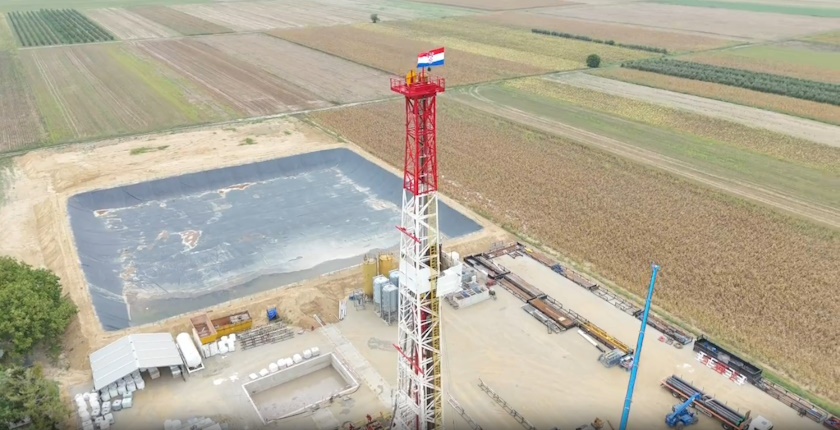
The results of exploration at the Vinkovci GT-1 well have confirmed the area’s significant geothermal potential, Croatian Hydrocarbon Agency said. Maximum temperature is 131 degrees Celsius.

Vinkovci is the third location in Croatia with positive results, as reservoir temperatures exceeding 100 degrees were earlier confirmed in Velika Gorica and Osijek, Croatian Hydrocarbon Agency revealed. The activities are part of a wider project to develop geothermal potential for district heating for six cities and towns.

“The positive findings of the geothermal exploration in Vinkovci, after Velika Gorica and Osijek, are proof that Croatia has significant geothermal potential and the knowledge to use it. Croatian Hydrocarbon Agency is bringing concrete results through its systematic approach and exploration investment, creating the foundations for further projects for renewable energy sources. Namely, geothermal energy is not only a stable and clean source, but a strategic resource that can contribute to the security of energy supply in Croatia. The results show at the same time that Croatian experts can independently and effectively conduct complex energy projects,” President of the Management Board Marijan Krpan said.

Success at 2,700 meters below ground

Crosco naftni servisi (Crosco Integrated Drilling and Well Services), a member of INA Group, ois conducting the works. At a depth of 2,700 meters in the Vinkovci GT-1 exploratory well, an expert team has measured a maximum temperature, 131 degrees, pointing to the possibility of commercial application of geothermal energy in the heating system.

The location is in Croatia’s northeast, in Slavonia area.

“The exploration in Vinkovci has been conducted in line with the highest technical standards and the project’s planned dynamic. Upon the completion of the exploration at the remaining location, in Zaprešić, Croatian Hydrocarbon Agency plans the development of additional wells at sites with confirmed potential. That way we will establish the production-injection pairs required for a secure and long-term geothermal energy use,” the geothermal energy sector’s Director Martina Tuschl stated.

Opportunity for improving local agriculture

Except for heating, access to heat opens up possibilities for companies. Geothermal potential could be used in agricultural production in the municipality of Jarmine, where the exploratory well is located.

The agency is conducting the project with funding from the National Recovery and Resilience Plan (NRRP or, in Croatian, NPOO), within which EUR 50.8 million was secured for exploration in four locations: in Velika Gorica, Osijek, Vinkovci and Zaprešić.

Works at the Zaprešić GT-1 (ZapGT-1) site are underway.

by in News

Romanian company to build geothermal hydroponic greenhouses on 50 hectares

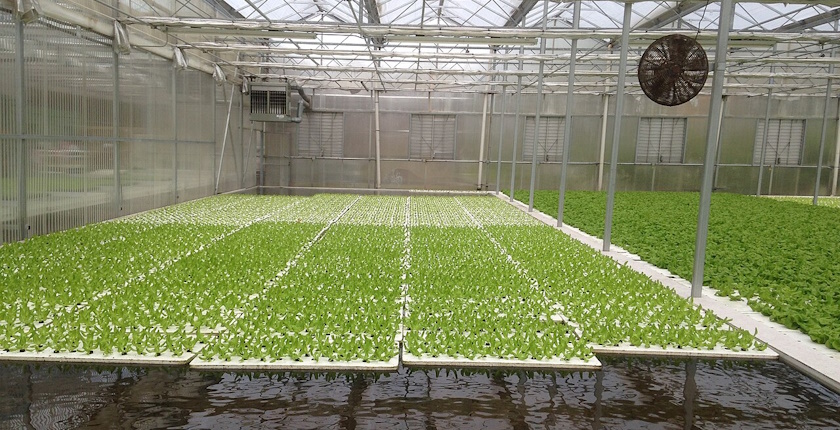
Geothermal well developer and operator Green Tech International started the construction of a geothermal hydroponic greenhouse complex on ten hectares in western Romania. It is part of a five-year plan to reach 50 hectares.

Green Tech International, listed this year on the Bucharest Stock Exchange (BSE or BVB), said it has started the works on the largest hydroponic greenhouse complex in Romania, heated with geothermal water.

The company’s strategy is to develop at least 50 hectares over the next five years. It has 12 years of experience in the development and operation of geothermal wells. Green Tech International, which is also a platform for geothermal energy solutions, directly owns 42 wells and operates another 41. It is one of the largest portfolios in Europe.

The company is conducting the current project through its subsidiary Horti Green Invest. Hydroponics are a method of growing plants without soil. The roots are suspended in a nutrient solution or in an inert medium retaining the nutrients.

Geothermal heat has significant competitive advantage

Geothermal energy has a significant competitive advantage to traditional sources, with renewable heat available 24 hours a day, regardless of the weather, and with a predictable cost in the long term, Green Tech International noted.

Gavriluță: The project will position Green Tech International among the top three greenhouse vegetable producers in Romania

“We are well-positioned to capitalize on our geothermal resources and generate value in complementary sectors with high growth potential. Our strategy focuses on investments in synergistic industries such as sustainable agriculture, where geothermal energy provides a major competitive advantage due to lower costs and supply stability,” Chief Operating Officer Dragoș Gavriluță said in a stock exchange filing.

First phase to cover ten hectares

Green Tech International has started the construction of its first modern geothermal hydroponic greenhouse project, covering an area of 10 hectares in western Romania, he stressed. The project will position Green Tech International among the top three greenhouse vegetable producers in Romania, Gavriluță claimed.

The update reveals that the company intends to invest in the rehabilitation of existing geothermal wells in the area and in the modernization of a thermal power plant to supply heat to the greenhouses. Green Tech International Group also includes Geotherm Distribution and Apoterm Nădlac.

According to an earlier news report, the company is interested in subsidies via the European Union’s Modernisation Fund for the production and transport of geothermal energy for district heating or cooling systems.

As for the rest of the region that Balkan Green Energy News covers, Turkey is one of the world’s biggest geothermal energy producers, including the greenhouses segment.

by in News

Serbia proposes taxes on greenhouse gas emissions, imported carbon-intensive products

The Ministry of Finance of Serbia launched public consultations on the draft Law on Greenhouse Gas Emissions Tax and Law on Carbon-Intensive Product Imports Tax, both at EUR 4 per ton of CO2 equivalent.

On January 1, importers of electricity, cement, iron and steel, aluminum, hydrogen and fertilizers to the European Union will start paying the CBAM carbon dioxide tax. If the country of origin also has a CO2 pricing system and the EU recognizes it, the sum will be deducted from CBAM.

The greenhouse gas emissions tax won’t be a new fiscal burden, but an incentive for modern and cleaner production, the Ministry of Finance of Serbia stressed in its public consultation call on what it said would be two key laws for the country’s green transition. It intends to charge producers and importers of certain goods EUR 4 per ton of CO2 equivalent.

The draft Law on Greenhouse Gas Emissions Tax and draft Law on Carbon-Intensive Product Imports Tax are intended to lower pollution, improve energy efficiency and secure a more equal position for the Serbian industry in the domestic and international markets, according to the announcement.

The public consultation process lasts until October 21, the deadline for submitting comments and suggestions. Presentations and discussions are scheduled for October 8 and October 15 in Belgrade, and online meetings are to be held on October 10 and October 17.

Both laws to enter into force on January 1, when EU also starts charging CBAM

The first of the two taxes is for big industrial emitters in the sectors of cement, fertilizers, iron and steel, aluminum and electricity. The ministry added that it is targeting January 1 for both laws to come into effect.

On the same date, the EU is set to start charging its Carbon Border Adjustment Mechanism (CBAM) tax on imported electricity, the other said goods as well as hydrogen. If the country of origin also taxes CO2 and the EU recognizes its system, the sum that was paid will be deducted from CBAM.

The CBAM tax is envisaged to rise every year until in 2034 it becomes equal as the prices of grenhouse gas emission certificates in the EU’s Emissions Trading System (EU ETS). Of note, the plan is also to expand the mechanism to other segments that EU ETS covers. The price has held above EUR 75 per ton of CO2 equivalent in the past month.

Institutional infrastructure isn’t sufficiently developed to roll out domestic ETS

The draft Law on Carbon-Intensive Product Imports Tax, envisaged as an equivalent to CBAM on the home market, doesn’t include hydrogen (and neither does the other draft), due to negligible production, while electricity wasn’t included because of technical limitations and a lack of a precise taxing methodology, the ministry explained.

The tax on imported carbon-intensive products would cover only the entities that import more than five tons of the designated products per year

Importers would be taxed based on emissions embedded in the production of the goods from abroad, but they will be able to use tax credits if an emissions levy has already been paid in the country of origin, similar to the EU system. The obligation is only for companies importing more than five tons of designated products per year.

The government opted for a tax instead of an ETS because “an emissions trading system requires a developed institutional infrastructure and market mechanisms that currently aren’t completely established,” an accompanying document reads.

Importantly, an independent verification system is under development.

The taxes would cover CO2, nitrous oxide (N2O) and perfluorocarbons (PFCs).

CO2 tax scope limited to certain larger producers

The ministry pointed out that the draft law wasn’t made to be applied extensively, but only to the firms obligated to have a license for emissions from their plants. Mostly they are large and medium-sized companies. The increase in administrative expenses would be limited, as the entities in the group already measure emissions data, in line with the Law on Climate Change, and send them to the Ministry of Environmental Protection.

The production of synthetic fertilizers and nitrogen compounds, cement, pig iron, steel and ferroalloys, aluminum and electricity accounts for over 57% of emissions in Serbia and more than 90% within the national monitoring and reporting system.

Tax deductions for large electricity producers that invest in decarbonization

A payer of the greenhouse emissions tax that predominantly generates electricity, accounting for at least 80% of its income in the previous annual tax period, is eligible for a tax credit amounting to 20% of the sum that it invested in decarbonization measures, the draft shows.

The deduction wouldn’t exceed 80% of the due tax. The government determines the said measures.

The draft greenhouse gas emissions tax envisages incentives for the taxpayers to finance green projects, the just transition and protection of vulnerable households

In addition, entities that pay the tax would be eligible for incentives, from the state budget, for financing climate and energy transformation through investing in renewables and energy efficiency, innovative low-carbon technologies, decarbonization of industrial production, green construction and support to the just transition and protection of vulnerable households.

In the short term, the new fiscal obligation can cause a moderate increase in production costs for facilities with significantly high emissions, the ministry said. Then there is a possibility, over the long term, for a moderate indirect effect on prices of some products, like construction materials and energy, but it would be limited and gradual, the law’s authors claim.

by in News

Croatia to get EUR 44 million in green transition grants

Under the European Economic Area and Norway Grants, Croatia is entitled to EUR 21.6 million from the Green Transition Programme and EUR 22 million from the Green and Blue Business Innovation Programme in the period until 2028. The funding is part of a EUR 111 million mechanism, which includes support for local development and the judiciary.

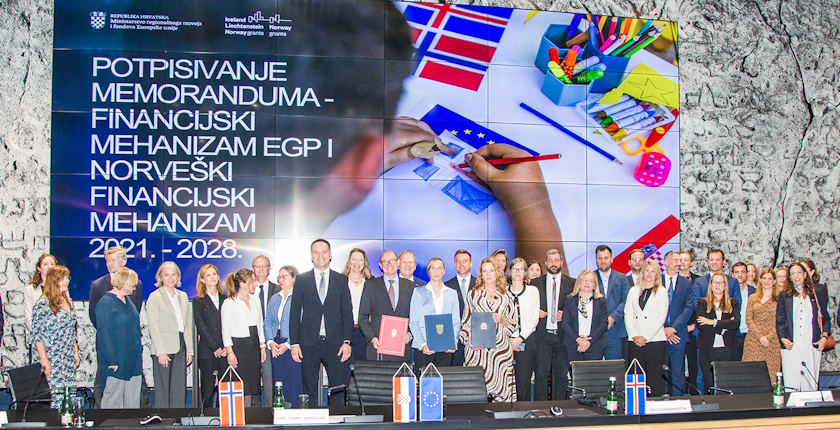
Minister of Regional Development and European Union Funds Nataša Mikuš Žigman, Ambassador of Iceland Helga Hauksdóttir and Ambassador of Norway Arne Sannes Bjørnstad signed memoranda of understanding on the implementation of the European Economic Area (EEA) and Norway Grants for the period until 2028.

Croatia is entitled to EUR 111 million for investments in the green transition, local development, innovation in green and blue business, and the judiciary.

EEA Financial Mechanism to bolster transition to more sustainable society

It confirms the country’s continuous and successful cooperation with Norway, Iceland, and Liechtenstein, Mikuš Žigman asserted.

“Through projects funded by the EEA and Norway Grants, we are strengthening institutional capacities, supporting sustainable development, inclusiveness, and innovation, and contributing long-term to improving the quality of life of our citizens. These mechanisms also enable us to jointly develop solutions for key social and economic challenges and to build the foundations for further cooperation with partner countries,” she stated.

Projects worth more than EUR 103 million were implemented in Croatia in the previous funding period

In the new programming period, the EEA Financial Mechanism is set to fund projects worth EUR 21.6 million under the Green Transition Programme, aimed at accelerating the transition towards a more sustainable society. A further EUR 33 million would be invested through the Local Development Programme, including projects to improve access to STEM education in less developed regions. STEM is an acronym for integrated science, technology, engineering and mathematics.

Hauksdóttir said the cooperation reflects solidarity and helps support equal opportunities and living standards across the EEA. She added that such projects strengthen public institutions, support vulnerable communities, encourage innovation, and establish lasting ties between researchers, local communities, civil society and artists across borders.

Norway Grants helping foster low-carbon circular economy

From the Norway Grants segment, EUR 22 million is earmarked for the Green and Blue Business Innovation Programme, fostering sustainable and competitive development of Croatia’s economy through green and blue innovation, including low-carbon circular economy models.

Through the Justice Programme, there is EUR 21.55 million for improving access to an independent, accountable and efficient judicial system, as well as to enhance correctional institutions in line with international and European standards.

“For many years, Croatia and Norway have been working side by side to build a stronger Europe – one that is more competitive, but also more inclusive and greener, and thus more technologically and economically efficient. In a world marked by uncertainties such as the war in Ukraine, climate change, and global instability, it is clear that European countries are stronger when we act together, in solidarity, defending shared interests and values,” Ambassador Bjørnstad stressed.

In the previous funding period, projects worth more than EUR 103 million were implemented in Croatia, including the establishment of four regional science centres and the construction of a major geothermal well in Bjelovar. The Energy and Climate Change Programme was for a cleaner environment, strengthening energy security and resilience, reducing costs in public institutions and buildings, and raising awareness of energy efficiency.

Norway Grants and EEA Grants are segments of the EEA Financial Mechanism. Its beneficiaries are in EU member states with a gross national income (GNI) per capita below 90% of the average. The current seven-year funding period began in May 2021 and it lasts until April 2028.

by in News

Green solutions in practice: Roundtable in Knjaževac points the way to a sustainable, energy-efficient future

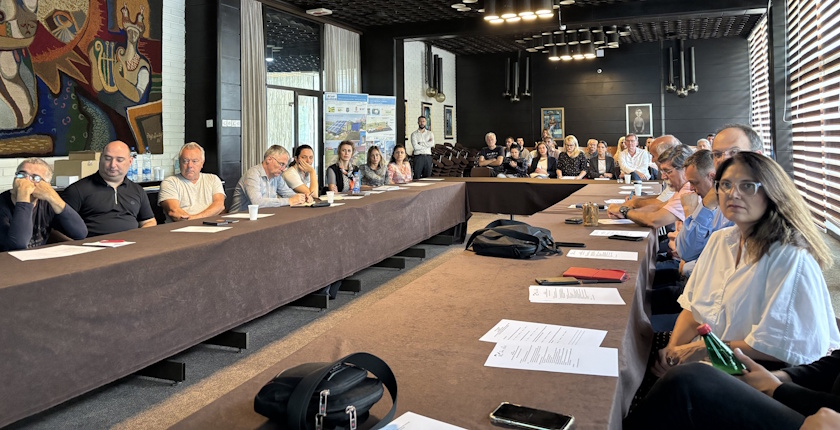
A roundtable titled Green Solutions in Practice, held in the eastern Serbian town of Knjaževac, brought together local government officials, experts, rural tourism providers, entrepreneurs, and citizens to exchange experiences on renewable energy sources and energy efficiency.

The event was organized by the Regional Development Agency of Eastern Serbia (RARIS) as part of the Promotion of Renewable Energy Sources and Energy Efficiency in Eastern Serbia project, implemented by German Cooperation in Serbia GIZ. The gathering demonstrated that eastern Serbia is becoming an increasingly active player in implementing green solutions and strengthening energy sustainability.

The roundtable Green Solutions in Practice was opened by Saša Petrović, Deputy Mayor of Knjaževac, who highlighted the importance of the green transition for promoting rural development and improving the quality of life.

Daniela Kostadinova, a representative of GIZ, presented the organization’s contribution to achieving energy sustainability in Serbia. She said that the project’s results so far have been highly significant, but added that she believes further development and awareness-raising are still necessary.

Photo: RARIS

Kostadinova also stressed the importance of financial support for citizens to implement energy efficiency measures, and she pointed out that energy poverty should be the next priority to address. She expressed hope that some ideas would be realized by the end of the Promotion of Renewable Energy Sources and Energy Efficiency in Serbia project, which runs until December.

Expressing her satisfaction at the opportunity to visit partner municipalities, Kostadinova noted that GIZ strives to provide both advice and support to its partners in the implementation of projects. She added that long-term success is extremely important to GIZ, which seeks to maintain its reputation as a high-quality and reliable partner.

Empowering eastern Serbia through renewable energy

Vladan Jeremić, Director of RARIS, presented the results of the Promotion of Renewable Energy Sources and Energy Efficiency in Eastern Serbia project. Four key results have been achieved: establishing a regional platform for renewable energy and energy efficiency in Eastern Serbia as a mechanism for aligning the positions, interests, and policies of key local and regional stakeholders; strengthening regional capacities; opening the Energy Advisory Center; and raising public awareness about the importance of renewable energy sources and energy efficiency.

Jeremić: People are eager to learn about renewable energy sources and energy efficiency

As a result of the regional platform’s work, the first renewable energy and energy efficiency fair was held in Zaječar. Numerous workshops and training sessions have been organized, and a guide on applying renewable energy and energy efficiency in rural tourism has been produced.

According to Jeremić, the project has shown that people are eager to acquire the knowledge they need to improve their lives in practice, making them more cost-effective, affordable, and sustainable, while also contributing to the energy transition.

“At the initiative of citizens, although it wasn’t planned within the project, we organized the fair. Even though we didn’t have an appropriate exhibition space, and despite the demanding nature of such events, we worked with great enthusiasm. The fair brought together technicians, engineers, and representatives of local governments and the private sector, many of whom are here today, which we see as a strong indicator of our success,” he said.

Managing energy efficiently in rural tourism

As part of the project, an interesting guide has been prepared for owners of rural tourism households, offering practical tips for improving energy efficiency, reducing costs, and introducing sustainable solutions into their business.

Ivan Svetozarević, the author of the guide and owner of a rural tourism household called Gorski konak in the village of Zubetinac, presented the guide through an engaging presentation filled with personal examples. The presentation addressed the question of how to manage energy efficiently in rural tourism. Situated on the slopes of Stara Planina, Gorski konak stands out as a model of sustainability.

Photo: Ivan Svetozarević / RARIS

The Svetozarević family equipped the household with solar panels, solar collectors for water heating, and a heat pump. Guests can use electric bicycles to reduce car use and emissions. Cooperation with neighbors and local producers further enhances the sustainability of the entire complex.

“My wife and I have been in this for over 20 years, but only a few years ago did we have the opportunity to install solar panels and a heat pump. Sustainability is actually our way of life,” said Svetozarević.

Multidisciplinary approach as a key to communication

Maja Lalić, Creative Director of the Mikser Festival, emphasized the importance of communication in promoting sustainable practices and raising public awareness about renewable energy sources and energy efficiency.

“The Mikser Festival is a partner of GIZ in popularizing these topics, seeking to involve the culture and creative industries sector, which has so far been rarely represented in discussions on renewable energy and energy efficiency. As a multidisciplinary platform, Mikser brings together numerous actors from different fields and engages in citizen education to bring these important topics closer to a wider audience,” she said.

For years, the organization has been staging events in revitalized abandoned industrial facilities as part of circular economy measures, applying various sustainable practices, such as issuing e-tickets, using reusable cups, and avoiding PVC branding.

Photo: RARIS

In cooperation with GIZ, this year’s edition of the festival developed an interactive educational program to increase energy literacy among three target groups: architecture and design professionals, young people, and the general population. The program included a panel discussion titled New Citizen Energy, where experts and prosumers dispelled myths about energy, shared experiences, and presented local challenges and solutions.

A special focus was placed on youth and children through workshops, empowering them to become agents of community change and develop creative ways to raise energy awareness and sustainable habits.

Mikser as a communicator and a dissemination platform

Maja Lalić highlighted the importance of decentralization, noting that successful initiatives from different parts of Serbia are encouraging, though they often remain less known to the wider public.

“Mikser positions itself as a communicator and a platform for disseminating success stories, giving people and communities space to share their experiences and inspire others. It is precisely this openness that makes the festival a dynamic place of meeting and exchange, supporting the further development of sustainability,” she said.

Examples of good practice

The application of renewable energy sources and energy efficiency measures goes far beyond installing solar panels or replacing windows, as demonstrated by various innovative examples of good practice.

Ilija Stevanović from the Mihajlo Pupin Institute presented innovative solutions developed in cooperation with farmers, schools, and festivals. As a special example, he cited the “digitalized field” implemented in collaboration with farmer Nikola Lončar from Belegiš and the smart device Mobisan – a mobile solar power generator.

Mobisan combines soil sensors, a weather station, and wireless communication to collect data on microclimate and soil conditions, enabling automated irrigation and fertilization. The device is controlled remotely and powered by solar panels, saving resources and reducing the use of chemicals.

Ognjen Tomašević from the Exit Foundation presented the “Green Exit” initiative and plans to improve the energy efficiency of one of the region’s largest events.

Innovative solutions are contributing to the festival’s energy efficiency

In addition to recycling, which has been a focus of the Exit Festival’s activities for five years, a “solar guitar” and gramophone-shaped solar collectors have been developed in cooperation with the Mihajlo Pupin Institute. These two devices provide electricity and hot water to Exit camp users, aiming to improve its energy efficiency.

Photo: Solar guitar / Mihajlo Pupin Institute

Aleksandar Branković, the owner of one of the first home solar power plants in eastern Serbia, presented his 6.7-kilowatt system installed back in 2013, making it one of the first in Serbia.

Vladan Dragićević, energy manager at the Municipality of Knjaževac, presented the achievements of the Energy Advisory Center. “The Energy Advisory Center is not just a place – it is a network of trust, a space where knowledge turns into savings and the energy transition into an opportunity for all,” he emphasized.

More than 70 citizens have received support at the Energy Advisory Center

The center provides relevant information and advice enabling citizens and businesses to use energy more efficiently, reduce costs, and even generate additional income. To date, more than 70 citizens have received advisory support.

The center is open for both individual consultations and group discussions on various topics, and it offers all necessary advice related to energy efficiency.

by in News

EU launches EUR 17.5 billion energy efficiency initiative for SMEs

The European Union plans to double its support to small and medium-sized enterprises in the 2025-2027 period for investments in energy efficiency and decarbonization.

The European Commission and the European Investment Bank (EIB) Group have launched a EUR 17.5 billion financing initiative.

According to the commission, more than 350,000 companies across Europe are set to make energy efficiency and decarbonization gains through the scheme.

The initiative for energy efficiency for small and medium-sized enterprises (SMEs) is led by the EIB Group. It aims to help firms utilize proven energy-saving technologies to reduce their energy bills and enhance their resilience and competitiveness, the commission underscored.

The EU expects to mobilize over EUR 65 billion in overall investments

The program will use a combination of existing and new financial products, including debt and equity instruments. The EU expects to mobilize over EUR 65 billion of investments in the segment by 2027.

To streamline access and support for businesses, the initiative will introduce a “one-stop shop for energy efficiency for SMEs,” the update adds. The commission explained that a single-entry point would integrate EIB Group’s intermediated lending offering and added it would simplify engagement and accelerate implementation.

The backing by the commission will include EU budget guarantees

The commission’s backing will include EU budget guarantees offered through the InvestEU mechanism and LIFE environmental program.

EU Commissioner for Energy and Housing Dan Jørgensen pointed out that SMEs invest in energy efficiency at only half the rate of larger companies. “This EIB initiative supported by the commission will be key to closing the investment gap, simplifying access to financing, and accelerating the deployment of energy efficiency solutions,” he added.

According to EIB Group President Nadia Calviño, the initiative represents a significant step up in support to help companies cut energy costs.

“Servitisation” or energy efficiency as a service

The EIB said it is partnering with the Solar Impulse Foundation, a nonprofit organization, to promote a model known as “servitisation” or energy efficiency as a service.

For example, instead of purchasing energy-efficient heating or lighting equipment, SMEs pay for the warmth or light they use. The service provider retains ownership of the equipment and ensures its performance. EIB stressed that the model eliminates upfront investment costs for businesses, making it easier and faster to adopt energy efficiency measures.

“The Solar Impulse Foundation has already identified over 1,600 profitable solutions that prove efficiency is not a cost but a gain. With this initiative, we can now bring these innovations to hundreds of thousands of SMEs across Europe,” said Bertrand Piccard, initiator and chairman of the Solar Impulse Foundation.