by in News

EUSEW 2025: Registration open for the European Sustainable Energy Week

Registration is now open for participation in the 19th edition of the European Sustainable Energy Week – EUSEW 2025, which will be held from June 10 to 12. Participants can register to attend the event in Brussels or join online.

EUSEW is the largest annual event dedicated to renewable energy and efficient energy use in Europe. It is organized by the European Climate, Infrastructure and Environment Executive Agency (CINEA) in cooperation with the European Commission’s Directorate-General for Energy.

In order to ensure competitiveness and achieve clean energy goals, Europe must take concrete action. The rapid deployment of renewable energy sources and the implementation of energy efficiency measures will be key elements in supporting industry, the European Commission said. It added that Europe would need to respond to the challenges of energy price spikes and market instability, which affect both businesses and citizens.

In line with the challenges, the slogan of this year’s European Sustainable Energy Week is ‘Powering a fair and competitive green transition’.

The number of in-person seats is limited

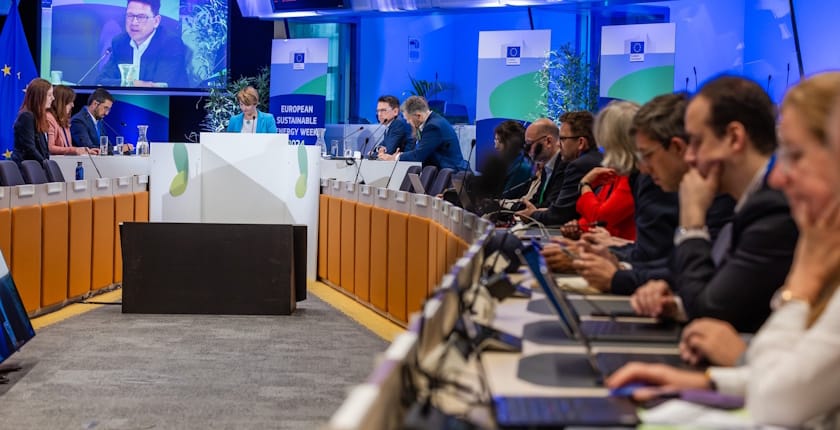
This year, EUSEW will be held in a hybrid format, from June 10 to 12. The gatherings are in the European Commission’s Charlemagne building and the nearby Martin Hotel in Brussels. All sessions will be livestreamed via a dedicated online event platform.

As the number of in-person seats is limited, organizers are encouraging interested participants to register as soon as possible.

Photo: EUSEW

EUSEW 2025 features a variety of events. The high-level conference, with over 60 sessions, will feature prominent speakers exploring five main themes: competitiveness and investments in clean energy, energy affordability, renewables, energy efficiency, decarbonization, and international cooperation. The conference will be officially opened on June 10 by European Commissioner for Energy and Housing Dan Jørgensen.

Following the opening, the EUSEW Awards ceremony will take place. They recognize outstanding individual and collective achievements in the fields of energy efficiency and green energy and are presented in three categories: Innovation, Local Energy Action, and Women in Energy.

EUSEW will also offer opportunities for informal networking during the Energy Fair. Additionally, for the sixth year in a row, the European Youth Energy Day will be held. A group of 30 young energy ambassadors will organize their own sessions and side events, including workshops with energy experts.

Dozens of locally organized Sustainable Energy Days will also be held across the world before and after the main week of the event.

by in News

Energy efficiency: the jack of all trades of EU electrification

By Arianna Vitali, Secretary General at the Coalition for Energy Savings, EUSEW’s partner organisation, highlighting the importance of energy efficiency in EU electrification, including cost savings, better grid flexibility, and protecting consumers.

It is no secret that for the EU to reach climate neutrality, the progressive electrification of our energy system will be essential – and with it, a sound strategy to achieve it in a cost-effective manner. With an Electrification Action Plan on the books for the new European Commission, it is crucial to ensure that the potential of energy efficiency to enable, accelerate, and lower the costs of EU electrification is not overlooked, but rather fully leveraged.

Energy efficiency and electrification: a match made in heaven

Shifting away from fossil fuels and towards renewable energy sources will require accelerating the electrification of both energy production and end-uses. While we all agree that electrification boosts energy efficiency, it is important to remember that this relationship is a two-way street where energy efficiency also has something to offer to the EU electrification process.

Indeed, by reducing overall energy demand, energy efficiency can ease grid congestion, reduce the costs of electrifying the EU energy system, and stabilise the prices paid by consumers. In that vein, the European Commission recently stressed that combined action on electrification and energy efficiency can reduce the EU’s fossil fuel import bill by €32.5 billion every year by 2030 (representing 25% of the total savings that would result from implementing the Action Plan). With the top priorities for this mandate focusing on improving competitiveness and affordability, leveraging the joint potential of energy efficiency and electrification is more relevant than ever.

Flexibility is key

A resilient energy system starts with a flexible energy system. Beyond supporting the EU’s climate neutrality goal, reducing energy demand through demand-side measures eases stress on the grid, allows for more flexible consumption patterns, and ultimately ensures a more adaptable and resilient energy system. The evidence is there: by adopting ambitious demand-side measures (both efficiency and flexibility), peak demand can be reduced by up to 39% in 2030 compared to a scenario without such improvements. This, by extension, lowers the need for additional infrastructure, making the overall electrification process faster and more manageable.

Lowering costs, boosting affordability, and protecting citizens

Energy efficiency’s potential to reduce infrastructure costs, and therefore overall system costs, is significant. For instance, ambitious demand-side measures respectively lower total energy system costs and reduce annual investments in distribution grids by around €40 billion.

These saved costs, which will ultimately not be paid by businesses and citizens, contribute to energy affordability by keeping electricity prices in check, helping European industries decarbonise while improving their competitiveness.

Finally, energy efficiency measures would also cut energy costs for households, helping to protect the most vulnerable. With ambitious demand-side measures, households could save significantly on their annual energy bills. Annual average household energy spending could go down to €900 by 2030, a considerable drop from today’s average of €1,190. This proves particularly useful for heating and road transport, which are expected to increase fossil fuel prices.

Time to put energy efficiency first

The EU transition towards decarbonisation and electrification of the energy system will require careful planning and substantial investment. Luckily, the EU has a jack of all trades on hand. With its wide range of benefits, from reducing infrastructure needs and costs, increasing energy security, cutting energy bills, and supporting both businesses and vulnerable citizens, energy efficiency offers readily available solutions to many of the challenges ahead and must be prioritised.

As stressed in the Action Plan for Affordable Energy, the EU needs a ‘decarbonised energy system, driven by a substantial scale-up of clean energy and electrification, with energy efficiency at its centre’. Prioritising the implementation of energy efficiency solutions on the ground will be key to building an affordable, secure, and competitive energy system for the future.

This opinion editorial is produced in co-operation with the European Sustainable Energy Week 2025. See ec.europa.eu/eusew for more details.

Disclaimer: This article is a contribution from a partner. All rights reserved.

Neither the European Commission nor any person acting on behalf of the Commission is responsible for the use that might be made of the information in the article. The opinions expressed are those of the author(s) only and should not be considered as representative of the European Commission’s official position.

by in News

Romanian town Beiuș to boost geothermal distring heating to 100%

The local authority in Beiuș, a trailblazer in geothermal district heating in Romania, should apply for European funding to cover the entire area, according to a new study. The town already has the cheapest energy in the country.

Beiuș is the only town in Romania where geothermal energy accounts for more than 70% of the district heating of homes, institutions and firms. A new technical study is opening the way to a system upgrade by using European grants, state news agency Agerpres reported.

The project was funded by Innovation Norway, a state-owned development bank based in Oslo. Mayor of Beiuș Gabriel Popa said at a presentation marking its completion that his municipality aims to achieve 100% coverage. Iceland managed the endeavor and a company from the island country conducted the study on the geology of the local geothermal water reservoir.

The research covered possibilities to prevent losses in the geothermal district heating system. Beiuș, in Bihor county in northwestern Romania, has just under 10,000 inhabitants.

According to the authors, European development programs are accessible. A new guide is under public consultation.

Dozens of local authorities including capital Bucharest are developing geothermal heating projects.

EEA funding available to get full coverage

The speakers at the conference presented prospects for development using subsidies from the European Economic Area (EEA). The region consists of European Union member states and Iceland, Liechtenstein and Norway.

Engineer Horia Ban said heat pumps could save 30% to 50% of the energy of the water returned from the geothermal district heating system. He is the head of the Oradea-based SRG association, which promotes heat pump solutions for geothermal heating, ventilation and air conditioning (HVAC), and of local renewable energy company Termoline.

The European Commission and European Geothermal Energy Council (EGEC) funded complementary research into air conditioning from geothermal wastewater.

Agriculture can tap water from geothermal district heating system in Beiuș

To lower the losses, the study’s authors recommend insulated PE-Xa pipes and directing the exit flow from the geothermal district heating system to greenhouses, wood dryers and fish farms.

Transgex, based in the county’s capital Oradea, supplies the geothermal water in Beiuș. The reservoir was discovered in 1996 at a depth of 2.6 kilometers. The temperature is 85 degrees Celsius.

The prefeasibility study was funded in 2017 in partnership with Iceland, through EEA Grants. Beiuș is now a town with the cheapest energy in Romania, the article adds.

An EU project worth EUR 33.6 million began a year ago for the construction of an aquapark. It envisages a facility with eight outdoor pools of 6,691 square meters overall in Beiuș. The grant amounts to EUR 12.5 million.

Looking at entire Southeastern Europe, Turkey sticks out as one of the main global players in geothermal energy including power plants, a more complex technology. The potential in Romania and Greece is among the highest in the EU. Bulgaria is also working with EEA funds. Serbia only has small projects for now.

Croatia hosts one geothermal power plant, though is currently offline due to an ownership dispute. Numerous municipal and private projects are underway.

by in News

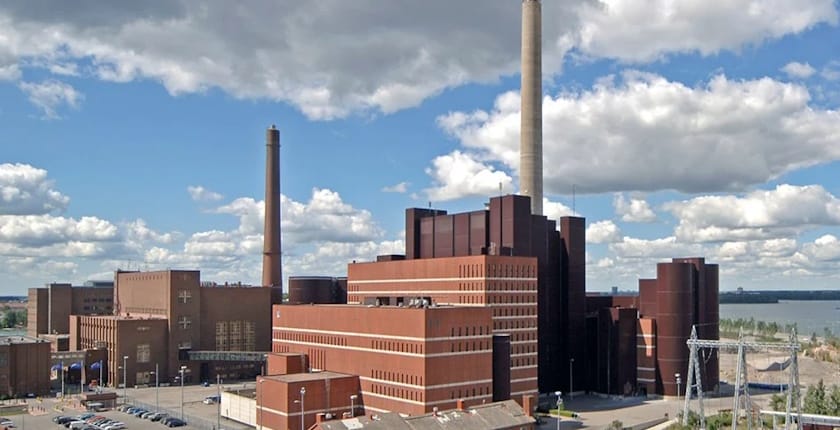
Share of coal power in Finland nearly zero as cogeneration plant shuts down

Helsinki’s municipal energy company Helen closed its last coal facility. Together with the country’s remaining plants that use the solid fossil fuel, Salmisaari accounted for just 0.8% of the electricity mix in 2024. The Government of Finland earlier set May 1, 2029, as the coal exit date.

Two years ago, the Olkiluoto 3 nuclear reactor of 1.6 GW, the strongest in Europe, entered commercial operation. Apparently it helped the energy system of Finland to almost eliminate coal from the board. Helen, controlled by the local authority of the capital Helsinki, closed its Hanasaari B plant in 2023, leaving the Salmisaari combined heat and power (CHP) facility as the only one using coal. This week the company shut it down.

Finland is now using neglectable quantities of coal. Salmisaari has 177 MW in power capacity and 300 MW for heat. Together with the country’s remaining three coal power plants, it accounted for a mere 0.8% of the electricity mix last year, Coal-Free Finland and Beyond Fossil Fuels said.

Moreover, coal amounts to just 30% of fuel in Vaskiluoto 2. The facility mostly uses biomass. The operator of the Martinlaakso coal unit is eliminating fossil fuels from regular operations next year. The third one, Meri-Pori, is in strategic reserve.

Share of coal in Finland is marginal

Finland will retain reserve coal capacity for security of supply purposes, which can be deployed if necessary, Helen said. In addition, some energy companies use small amounts of coal in their energy production for peak, reserve and security of supply reasons, it added. The law forbids using coal in energy production after May 1, 2029.

Wind power output more than doubled in Finland since 2020, reaching a quarter of the total. At the same time, coal-fired generation plummeted 73% while fossil gas is down 82%, according to the report. “Finland has shown what’s possible when clear political signals are matched with rapid investments in renewable power,” said Deputy Campaign Director at Beyond Fossil Fuels Cyrille Cormier. The group called on the authorities to double down on renewables and clean flexibility.

Finnish energy experts can pull off impossible tasks

Helen delayed the closure of Salmisaari by a year. Coal still accounted for 64% of the company’s district heating supply in 2022!

The utility managed to slash its greenhouse gas emissions by more than 80% since 1990. It aims to reach 95% by the end of the decade.

“Helen giving up coal and, at the same time, foreign imported energy with regard to it, will remain a significant part of our country’s industrial history and shows that Finnish energy expertise enables actions that initially seemed impossible,” Chief Executive Officer Olli Sirkka said.

Helen transitioning to clean solutions

Helen is shifting to clean solutions. It enables operating more profitably with lower prices, the CEO pointed out. A range of facilities are under construction.

Heat production is mainly moving to heat pumps – utilizing waste and environmental heat – electric boilers, energy storage and sustainable biofuels. Helen will lean on wind, nuclear energy, hydropower and photovoltaics for electricity.

The new units in Salmisaari will be two electric boilers of a combined 100 MW, in combination with a heat pump of 33 MW in external capacity, as well as a 153 MW plant burning wood pellets. Helen is planning a 200 MW electric boiler facility of four units in Hanasaari, able to store 1 GWh of heat. It would currently be the biggest in Europe.

Helsinki has the ambition to reach climate neutrality by 2030, though including external offsets. It would eliminate them within the following ten years, which means only the city’s carbon sinks are included in the equation. The next step is turning carbon negative.

Market forces are decimating the remaining coal power capacity in Europe as it is expensive because of emissions rights and strict environmental regulations, as well as inflexible. Germany, Poland, Slovenia, the Czech Republic, Serbia, Montenegro, Bosnia and Herzegovina, Kosovo* and Turkey have the largest shares of coal in power production in the European Union and Southeastern Europe. Their phaseout deadlines are all after 2030, but the situation is changing fast.

* This designation is without prejudice to positions onstatus and is in line with UNSCR 1244/99 and the ICJ Opinion on the Kosovo declaration of independence.
by in News

Kosovo* to subsidize solar panels for prosumers, solar thermal systems

Kosovo* is using an EU grant for public calls for families and firms to install solar power panels and solar thermal collectors. The subsidies for photovoltaics amount to EUR 250 per kW, or EUR 200 per kW for businesses that set up larger systems. There is a bonus for female-owned enterprises.

The Ministry of Economy of Kosovo* launched a mechanism to support households and micro, small, and medium-sized enterprises in investing in renewable energy. The measures are funded with a EUR 75 million grant from the European Union within its EUR 500 million direct budget aid package for the Western Balkans. It was approved at the height of the energy crisis, to subsidize the energy bills of households and businesses that were at high risk.

The authorities issued a call for photovoltaics for self-consumption for families and micro, small, and medium-sized enterprises. Households can apply for support for solar systems with capacities ranging from 3 kW to 7 kW. They will be subsidized with EUR 250 per kW to become prosumers but only up to EUR 1,750 overall.

Firms that build photovoltaic systems of 10 kW and more are entitled to as much as EUR 6,000 per beneficiary

For micro, small, and medium-sized enterprises, the subsidy will be EUR 250 per kW for capacities ranging from 3 kW to 9 kW. The maximum payment to one beneficiary is EUR 2,000. For capacities of 10 kW and above, future prosumers in the business sector will be subsidized with EUR 200 per kW or up to EUR 6,000 in total.

In cases where businesses are owned by women or are jointly owned by women holding at least 51% of ownership, the government will add EUR 200 to the subsidy.

The deadline for the first phase is May 31 or until all funds are reserved, on a first-come-first-served basis. Applications in the second phase will be accepted until September 30, according to the announcement.

Public call for solar thermal systems for firms expected in one week

The other call, which the ministry expects to be launched in mid-February, is for supporting micro, small, and medium-sized enterprises in investing in solar thermal systems, for water heating.

The share of subsidies is 40% of the investment value or up to EUR 4,000 in total.

Government promises pathways for investments

Kosovo’s Prime Minister Albin Kurti expressed commitment to the energy transition pathway.

“While we are working on projects with large capacities such as the solar auction, we are also pushing forward opportunities for our citizens to develop small-scale energy capacities for consumption and self-consumption. Not only are we reducing the burden on our system, but we are also empowering families and businesses to make sustainable and affordable choices,” he said.

The Law on Renewable Energy Sources has passed the first reading in parliament

It is a favorable time for investments in renewables, Minister of Economy Artane Rizvanolli claimed and highlighted the work on the Law on Renewable Energy Sources. It has passed the first reading in parliament.

The law will make the installation of solar systems more attractive and obligate operators to make it easier for citizens, she added. The energy strategy stipulates that citizens should be in the center with regard to development and benefit from the energy transition, Rizvanolli asserted.

Alessandro Bianciardi from the European Union Office in Kosovo* vowed to continue supporting the government’s initiatives in the sector. They are cooperating on the 2024-2027 agenda to boost the economy of Kosovo* and other Western Balkan countries with grants and subsidies in the energy sector, he stressed.

* This designation is without prejudice to positions onstatus and is in line with UNSCR 1244/99 and the ICJ Opinion on the Kosovo declaration of independence.
by in News

Energy efficiency, renewables in rural communities in Serbia’s Zlatibor region

Author: Stevan Vujasinović

The population in rural areas in the municipalities of Priboj, Čajetina and Arilje in Serbia have been heavily affected for years with frequent and prolonged interruptions in electricity supply. The interruptions not only disturb everyday life but they also substantially hinder the development of family businesses, especially in tourism and agriculture. However, solutions do exist.

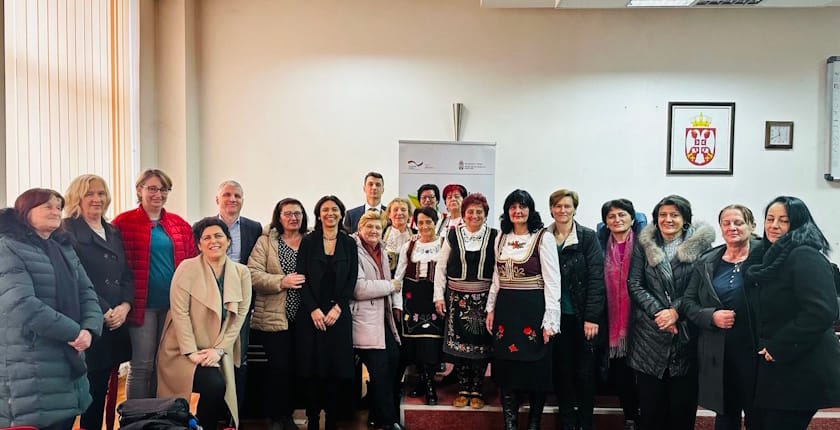
Regional Development Agency Zlatibor almost simultaneously marked World Energy Efficiency Day (March 5) and International Women’s Day (March 8) last week. On the occasion, it organized “energy discussions” with members of women’s associations in rural areas of these municipalities, and the main topics were energy efficiency and renewable energy sources for rural households.

The Zlatibor mountain is one of Serbia’s main tourist and skiing resorts. It partly spans the territories of Priboj, Čajetina and Arilje.

Energy needs and challenges in rural households

“We are without power for several hours at a time in the winter. It is not only discomfort, but a serious problem for heating and preserving food, and especially for us who have guests in rural tourism”, said one of the participants at a discussion in Čajetina. The event gathered the members of the Čajetina Rural Women’s Association and Zlata association.

It became clear from the discussions that there is great interest in installing solar panels, among private households as well as hospitality facilities. However, the access to these technologies is often difficult because of high initial costs and complex procedures for obtaining subsidies, which despite growth in the available volume for the purpose still don’t meet all the existing demand.

High initial expenses and complex procedures for obtaining subsidies make the availability of solar panel installations more difficult

The problem is exacerbated by the fact that many houses in the villages were built illegally, making it more difficult to access energy efficiency subsidies. Besides, the calls are too often only accessible for the beneficiaries that already have initial capital to invest, while the village population often doesn’t know about them.

The Municipality of Čajetina acknowledges the significance of energy efficiency. Last year it issued a public call for cofunding energy efficiency measures in family houses and apartments. However, targeted support for users with the vulnerable energy buyer statuses still hasn’t been provided. Assistance could additionally improve the availability of these measures to the wider population, and in fact the very people who need help the most.

Photo: Members of the Čajetina Rural Women’s Association and Zlata association (Miloš Radojević)

Possibilities for using renewable energy sources

One of the key conclusions of the discussion was that solar panels and heat pumps can significantly improve the situation. Aleksandar Macura from RES Foundation pointed out that the law already enables households to produce their own energy and exchange it with state-owned power utility Elektroprivreda Srbije (EPS). “There are sufficient examples of good practice – around 2,500 households in Serbia already use rooftop power plants and work as buyers-producers,” Macura stated.

Buyers-producers are Serbia’s legal category for prosumers.

Nevertheless, solar panels still require initial investments of several thousand euros, which is an insurmountable obstacle for many. The participants in the discussion proposed solutions such as subsidized loans with delayed payment, in installments, to make the technology more accessible both to retirees and socially disadvantaged persons.

Assembling and energy communities

Another important aspect of the discussion was the possibility of establishing energy communities. In line with European regulations, Serbia is opening the space for joint production and use of solar energy within local communities.

It means any village council could install a solar power plant and distribute the energy among households. It would be especially useful for women running family businesses in agriculture and tourism, as it would provide them with a stable energy source without leaning on an unpredictable power distribution network.

Wood is traditional but inefficient energy source

Wood biomass usage still dominates in many rural households. Some said in Arilje: “Wood is irreplaceable” and “we believe in wood!” However, for people in villages, wood is almost never, even though it is the most accessible, never the most efficient solution for heating. It is partly because of moisture in the solid fuel, and mostly because of inefficient devices.

There are fewer and fewer people in the countryside, so it is getting more difficult and more expensive to timely obtain the wood felling and preparation service, even in one’s own forest. “We have been using wood for decades, but who today can afford quality dried wood? We often heat ourselves using wet wood, which only increases consumption and air pollution,” said one of the participants in an event in Arilje, describing her experience. It was attended by women from two associations: Sibirka and Ariljka.

Photo: Members of associations Sibirka and Ariljke (Miloš Radojević)

How to proceed?

It is clear that rural communities mustn’t be left behind in the energy transition process. Solar panels, energy communities and subsidies for more efficient heating are solutions that can bring concrete changes. However, the key to success lies in a greater accessibility of these solutions for all citizens, regardless of their financial situation or the place of residence.

Energy sustainability in rural communities is not just a matter of comfort but also of the survival and development of local communities. If we want villages to be vital and economically stable, it is necessary to facilitate a stable, sustainable and affordable energy source for them. Through smart investments, better subsidy organization and the development of energy communities it is possible to significantly improve the quality of life in these areas. In addition, additional training in the usage and maintenance of energy-efficient systems can contribute to a greater deployment of the technologies.

The energy discussions with the women of the Zlatibor county was organized within the project Improving the Use of Sustainable Energy in the Zlatibor region, financed by the German Organization for International Cooperation (GIZ) by order of the Government of the Federal Republic of Germany (Federal Ministry for Economic Cooperation and Development – BMZ).

by in Energy, Events, News

15th South-East European Exhibitions & Conferences on Energy Efficiency & Renewables, Smart Cities and Save the Planet

EE & RES , Smart Cities and Save the Planet  16-18 April, Sofia, Bulgaria will present intelligent solutions for buildings, infrastructure, transport and mobility, public services; sustainable alternatives for energy production, distribution, storage and saving; waste utilization and recycling. The event is organized by Via Expo and is one of the most important B2B initiatives in South-East Europe that brings novelties to the market, meets buyers and suppliers. The synergy of the good business environment during the show and the numerous promotional services will help the exhibitors get the maximum value out of the participation and to achieve their marketing goals: to enter a new market, to launch innovations, to find local distributors and clients from SEE. For 10 years in a row an Austrian Pavilion will be realized. 

Some highlights of the exhibiting companies from Austria, Bulgaria, Czech Republic, Germany, Greece, Italy, Poland, Romania, Switzerland, the Netherlands.

EE & RES 

‘In Sofia we will present M7-A03D – it is among the most efficient gas turbine in its power class and has the industry’s lowest level of NOx emissions.’ announces Mr. Cristian Athanasovici, Business Development Manager at Kawasaki Gas Turbine Europe. Herz will draw attention to its latest developments: the first wood chip boiler Herz firematic Condensation 20/35 and Air-to-Air heat pump with inverter technology. Uniconfort product range comprises biomass boilers, cogeneration installations, remote heating systems.

Smart Cities

iSentinel® will be presented for the first time on the Bulgarian market. It is a smart earthquake protection system. The emphasis of Green Embedded Systems participation will be on the latest company development, which is a novelty on the global market – a 60A direct energy meter for home use, with built-in Wi-Fi and with the size of a standard fuse. Innovambiente is a system to manage municipal waste collection processes, from startup to collection monitoring. It will be presented by the Italian company Innova. Intracom Telecom (smart lighting, parking, metering, eHealth), Comicon (building and home automation), VAiOS (video surveillance, alarm systems, access control), National Cluster for Intelligent Transport and Energy Systems (smart systems in transport) etc. have also joined Smart Cities.

Save the Planet

Lindner-Recyclingtech sees a growing potential in the SE European market and has

already realized various projects there. The focus of its participation will be on innovative shredders for the processing of premium SRF and RDF. EREMA has recently presented the new global innovation Vacunite – the company is a leader producer of plastics recycling machines. New additions to the exhibitor line-up include: Hitachi Zosen Inova (waste-to-energy solutions), ELTE GPS (identification tools and weighing systems), Europlast Kunststoffbehälterindustrie (plastic and recycling containers and logistic pallets), M&M Frut (JCO Tracer system), Kahl (wood pelleting plants), etc.

The Conferences will highlight new trends and good practices that can be successfully implemented in SE Europe. Intelligent Solutions for the Buildings, Environment, Transport & Mobility, Smart Governance, Sustainable Technologies & Funding, Bioenergy, Circular Economy will be among the topics.

If you want to be a part of the SE European  market – register your interest here

Brochure

RE, Smart Cities    Brochure Save the Planet   Post Event Report 2018

For more info – www.viaexpo.com

by in News

Ecomondo and Key Energy biggest energy event on 2018

Ecomondo and Key Energy offers today’s biggest platform for the entire Mediterranean basin with 1250 exhibiting companies attracting over 116,000 attendees. Ecomondo has successfully anticipated business changes over time, from waste processing to dialoguing with industry on the development of an economic model based on green technologies. All sectors are efficiently represented, from waste to integrated water cycle, to air, bio-based industry and energy.

The intended vision is that of the circular economy, which involves the formation of new  interconnected industrial clusters as set out in the future investment plans of the European Commission.

Key Energy is the leading fair for renewable energy in the Mediterranean Area.

Focus on photovoltaic and storage, solution for energy efficiency in industry and residential, solutions for sustainable intermodal, connected mobility and sustainable cities.

THE ENERGY CHAIN

The world of energy efficiencyrenewable energy and electric mobility is experiencing an incredibly fast evolution on a global scale as a consequence of the obligations taken in the Paris Climate Agreement.

In Italy there are some interesting signals with a forecasted growth in these sectors. The recently approved National Energy Strategy pushes the country towards targets  such as 55% production of renewable energy and 5 million electric vehicles by 2030.

Considerable investments will be addressed towards urban centres, hubs of economic and cultural activities.  70% of the 7,798 municipalities has a population equal to or less than 5,000 inhabitants. Cities with a high urban development represent only the 3.4% but also accommodate the 33% of the total population. Improve the quality of the air, transports, common areas and services means invest on quality and well-being, and this represents one of the biggest challenges for the local administrations and for the country.

Service’s high standards can be achieved only with a correct investments’ planning together with industrial capacities, engineering and adequate forecasting, all with one common goal: sustainability and inhabitants’ quality of life.

Backed by this favourable background, Key Energy aims to become the flagship event in the field of renewable energy solutions.

CURRENT AND FUTURE TRENDS

Global renewable energy in 2017:

  • Investments amounting to 333,5 bil. $
     
  • with a record injection of 160 bil. on photovoltaic, +18% year on year, regardless the reduction of costs.

Italian investments has seen an increase of +15%, for a total amount of 2,5 bil. $ according to the BNEF statistics.

In 2018 global solar plants will reach at least 107GW, compared to the 98GW in 2017 (+10%).

Italy’s National Energy Strategy has set the target of achieving  55% share of renewables in electricity consumption by 2030: by that time, 5 million vehicles will be electric and 145 billion will have been invested in renewable energy and energy efficiency.

In Italy there are projects aiming to develop photovoltaic plants for hundreads of MW, achieved with no incentives; Regional calls have contributed to the increase of  storage systems.

The exhibition area dedicated to the most innovative integrated solar technologies and to combination with storage systems, mains supply provided from storage and Demand Response and Virtual Power Plant (VPP) systems.


An entire hall of technology, systems and solutions for a more intelligent use of energy resources in industry.
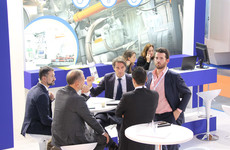
Key Efficiency is the meeting point between technology producers, funding bodies and industry, where best practice among those who have chosen the path of efficiency can be tested.


Key Energy Storage is the exhibition area dedicated to storing energy from renewable sources.

The project was launched to highlight the importance of a technology which is key to energy efficiency. Energy Storage Systems avoid the requirement to acquire energy, allowing energy obtained from renewable sources to be used when the user needs it.

Making optimal use of this energy is imperative. The need to achieve the Cop21 targets and the advantages and economic benefits that Energy Storage Systems offer make them a reality that will guide the market in the coming years.

Over time, Ecomondo Key Energy has proven capable of adapting to the changing market and aims to become the Mediterranean base for this product.

Key Energy Storage offers a series of conferences on the theme of storage on the days of the exhibition, with presentation of best practices and targeted communication for countries in the Mediterranean, Middle East and Eastern Europe for B2B meetings at the exhibition.

The only reference wind power show in the Mediterranean basin, the Balkans and the Middle East. Key Wind, in partnership with ANEV, the Italian Wind Energy Association, collaborates to develop the sector in Italy, in terms of content, training, information and design.

  • Producers of plants and components for large-scale wind power
  • Producers of plants and components for mini wind power
  • Managers of wind farms/wind power producers
CONTACTS

Brand Manager
Sara Quotti Tubi
(+39) 0541/744.226
[email protected]

Sale Department
Claudia Costella
(+39) 0541/744.457
[email protected]

https://en.keyenergy.it/

by in Events

South-East European Exhibition on Energy Efficiency and Renewable Energy

South-East European Exhibition on Energy Efficiency and Renewable EnergyEXHIBITION

Date: 5-7 April 2016
Frequency: Annual
Sequence: 12th edition
Organizer: Via Expo
Venue: Sofia, Inter Expo Center
Working hours for visitors: 5 – 6 April: 10.00 – 18.00 h.; 7 April: 10.00 – 17.00 h.

The EE & RE Exhibition puts on display a great set of existing energy technologies and it is a starting point for the launch of innovative products. It facilitates the development of energy sector and encourages the large-scale usage of energy-saving solutions in South-East Europe.

The 2016 Edition at a Glance

  • Direct exhibitors from Austria, Bulgaria, Germany, Greece, Italy, Poland, Portugal and the Netherlands. Finding distributors and launching new products are the main aim for them to take part.
  • For 7th year in a row there will be an Austrian Pavilion.
  • Innovative isolation systems, energy storage devices, energy-saving HVAC equipment, systems for renewable energy production, cogeneration,  etc. will be among the exhibition highlights.

EE & RE 2015

  • Austrian Pavilion
  • Norwegian and Italian Group Participations were realized for the first time.
  • Visitors from 39 counties visited the Exhibition and the parallel events.
  • The products which captivated their interest were energy saving lighting, biogas installations and technologies, ‘made in Bulgaria’ PV systems which can be applied in dynamic city architecture, as well as in agriculture and road infrastructure, solar thermal system with patented safe-proof sun tracking mechanics, prototype of wind turbine with unique high efficiency, etc. 

           Post Event Report 2015

The opportunities and perspectives of the SE European market

Security of energy supply, fast climate change, strong economic and social benefits have prompted many countries in South-East Europe to diversify their energy mix and to reduce the import of fossil fuels, keeping money circulation within the regional economy.

The Region has a great potential for utilization of the renewables. Well-developed agriculture and forestry industries, availability of organic waste are a prerequisite for biogas, methane and biomass production. The decentralized solar electricity generation for heating and cooling is encouraging, too. A very perspective market segment is the realization of waste-to-energy projects through public private partnerships.

Countries with a sea outlet have the opportunity to drive forward the ‘blue energy’ sector and only 40% of the hydro energy sources is developed in SE Europe.

The energy systems transformation will need a new grid that combines capacity for high volume transfers and distribute energy with smart power management.

Investments for improvement of energy efficiency in private and public buildings as well as in industry are coming – the South-East European countries are developing also strategies for zero energy buildings.

The CO2 reduction in transport sector is the other priority issue and in the Region solutions for replacement of the fossil fuels with alternative low carbon fuels are sought. In terms of e-mobility, the South-East Europe is at its early stage and governments are going to stimulate this emerging industry. According a recently research at the end of 2014 in Bulgaria there were registered 497 electric vehicles – 36% more than the previous year and 1031 hybrid vehicles  – 61 % more than 2013.


Contact:

Maya Kristeva: +359 (32) 960 011, 966 813
[email protected]

[embeddoc url=”https://aea-al.org/wp-content/uploads/2016/03/Brochure_EERE_EE.pdf” download=”all” viewer=”google”]

by in Publication

Energy Efficiency in Albania 2013

energy efficiency albaniaThe process of European integration aims to bring peace and economic prosperity to Europe through the integration of markets and the presence of a safety net for citizens. Within the EU and its member-states, energy and environment are two of the most pressing issues of today. The prospect of sharply rising energy prices and increasing dependence on imports makes the EU energy supply less reliable, and jeopardizes the whole economy. Reducing emissions and curbing climate change are key objectives of the EU energy policy. Environmental policy is one of the most relevant examples of the progressive institutionalization of a system of government built around the original aim of economic integration. Today, indeed, many of the regulations in a Member State’s environmental legal framework are a direct or indirect emanation of the Acquis Communautaire. Candidate and potential candidate countries, when adapting national norms to EU standards, are faced with quite challenging institutional, financial and technical issues. A committed and long-term political agenda can transform these issues into a greater opportunity for development. The present report aims at describing the sub-sector of Energy Efficiency in Albania, as Potential Candidate country, its recent developments and its challenges. It presents the results of a desk study undertaken by the Consultant between May and July 2013 in Albania.

[embeddoc url=”https://aea-al.org/wp-content/uploads/2015/07/CoPlan_Energy-Efficiency_Report-RZajmi_July-2013.pdf” viewer=”google”]