by in News

North Macedonia adopts Law on Energy Efficiency

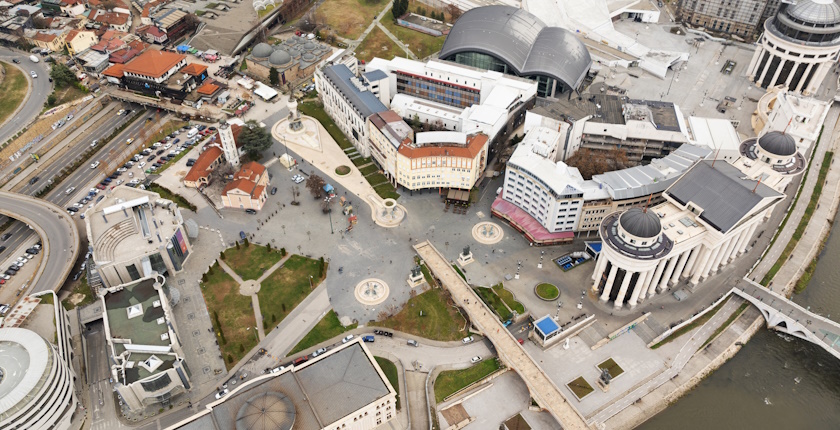
North Macedonia’s new Law on Energy Efficiency brings a long-term strategy for the reconstruction of buildings and the obligation to set up solar collectors on public buildings. It envisages financial support for investments in solar panels, geothermal systems and smart technologies.

The Assembly of North Macedonia adopted the Law on Energy Efficiency at its last session. The new legal framework, aligned with European standards, will directly contribute to lowering bills for citizens and businesses, a cleaner environment and the creation of new green jobs, the Ministry of Energy, Mining and Minerals said.

The law is a substantial step forward in reducing energy consumption, integrating renewable sources and reducing greenhouse gas emissions, the statement reads. It will bring the country closer to fulfilling European climate goals and to a green transition, the ministry added.

The new legislation introduces the European Union’s principle “energy efficiency first,” according to the announcement. One of the novelties is a long-term strategy for the reconstruction of residential, public and commercial buildings.

At least 3% of public buildings must be reconstructed every year

The law mandates tripling energy savings in the public sector. At least 3% of public buildings must be reconstructed every year. In the construction or reconstruction of schools, kindergartens and public institutions, it will be obligatory to install solar collectors.

New measures include financial support for investments in solar panels, geothermal systems and smart technologies. The ministry said the law brings high standards in public procurement, digital transparency and professionalization of energy audits. Energy performance certificates will be included in the real estate cadastre.

The Law on Energy Efficiency is part of the package of reform laws that lay the foundation for a stable, sustainable and competitive energy sector – with energy security, better quality of life for citizens and accelerated accession to the European Union, the ministry underscored.

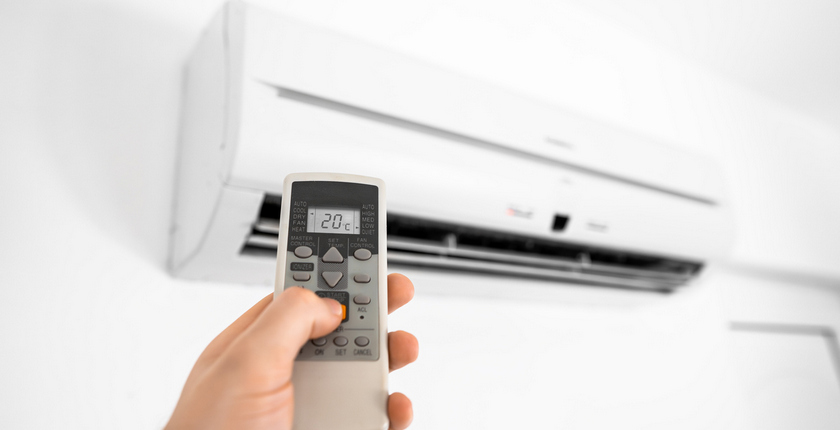
Of note, public calls are ongoing for households in energy poverty, for free inverter air conditioners and financial aid.

by in News

Google reveals Gemini AI’s energy and water consumption

Artificial intelligence (AI) is becoming increasingly important in our daily lives, but its rapid expansion is raising concerns about how much energy it consumes. Google has become the first tech company to publish a report on the energy consumption, emissions, and water use of its AI software, Gemini.

Google estimates that the median Gemini text prompt uses 0.24 watt-hours (Wh) of energy, emits 0.03 grams of CO2 equivalent, and consumes 0.26 milliliters (or about five drops) of water. “The per-prompt energy impact is equivalent to watching TV for less than nine seconds,” according to a press release from the company.

When applying a non-comprehensive methodology, which only considers the consumption of active TPU and GPU chips, the median Gemini text prompt uses 0.10 Wh of energy, emits 0.02 gCO2e, and consumes 0.12 mL of water.

On the other hand, Google’s comprehensive methodology includes the energy and water consumption of the software itself, the operation of IT equipment in data centers, the energy used by chips while idle, as well as the amount of water used to cool the equipment.

It should be noted, however, that energy consumption depends on multiple factors, including prompt length, the number of users, and the model’s efficiency.

Google’s AI is becoming increasingly efficient thanks to innovations

Google claims that its consumption of energy and water for AI is “substantially lower than many public estimates.” It also stresses that its AI systems are becoming more efficient through research innovations and software and hardware efficiency improvements.

Over a recent 12-month period, the energy and total carbon footprint of the median Gemini Apps text prompt dropped by 33 times and 44 times, respectively, while delivering higher-quality responses, the company claims.

Google has announced that it will continue investing in technologies that reduce per-prompt energy and water use, as well as emissions associated with AI systems. By 2030, the company aims to achieve net-zero emissions and to replenish 120% of the freshwater consumed in its data centers and offices.

However, despite Google’s efforts to reduce emissions, they have soared 51% compared to 2019, driven by the expansion of data center capacities needed for training and running AI models.

By 2030, data centers could be consuming 4.5% of global electricity generation

Data centers are essential for the operation of AI systems, and the International Energy Agency (IEA) estimates that their total electricity consumption could double by 2026, reaching 1,000 TWh per year, equivalent to Japan’s entire annual electricity use.

According to research firm SemiAnalysis, the expansion of AI could lead to data centers using 4.5% of total global electricity generation by 2030.

by in News

North Macedonia tackles energy poverty with free inverter air conditioners

North Macedonia’s Ministry of Energy, Mining and Mineral Resources has invited households in energy poverty to apply for free inverter air conditioners and financial aid to help cover electricity bills. The ministry issued two separate public calls under the 2025 program to assist households classified as vulnerable electricity consumers.

Inverter air conditioners (ACs) with a capacity of up to 3.5 kW and an energy class of at least A+, which improve energy efficiency, will be granted to low-income households. The aid includes free installation.

Eligible households are those whose total net monthly income in 2024 did not exceed MKD 25,000 (around EUR 406) for a single-person household, MKD 31,000 (around EUR 504) for a two-person household, MKD 37,000 (around EUR 601) for a three-person household, and MKD 43,000 (around EUR 699) for households with four or more members.

The budget allocated for inverter ACs for low-income households is MKD 120 million (around EUR 1.95 million), according to the public call.

Households whose only source of income is a pension are also eligible for this type of support, provided that in 2024 their monthly pension did not exceed MKD 15,700 (around EUR 255) for a single-person household, MKD 19,800 (around EUR 322) for a two-person household, and MKD 23,700 (around EUR 385) for households with three or more members. The total budget for this group is MKD 50 million (around EUR 813,000).

The overall budget for inverter ACs is around EUR 2.76 million

Households that have received a subsidy for purchasing an AC or a pellet stove in the past five years, and those connected to a district heating system, are not eligible for free inverter ACs, according to the public call. The application deadline is October 5, 2025.

For financial support to cover electricity bills, eligible households include those with one or more members who have severe intellectual disabilities, the most severe physical disabilities, total vision impairment, or complete hearing impairment.

The application deadline for this public call is the end of August 2025.

by in News

EU preparing roadmap on digitalization, AI in energy

The European Commission has launched a public consultation to help shape its upcoming strategic roadmap for digitalization and artificial intelligence (AI) in the energy sector. The roadmap aims to support the rollout of digital solutions, including AI, in areas important for decarbonization.

The areas where the application of digital solutions and AI should be accelerated include electricity grid optimization, energy efficiency in buildings and industry, and demand-side flexibility, according to a press release from the commission.

The consultation should also address the increasingly heavy energy consumption of data centers and look at how they can be more sustainably integrated into the energy system.

The consultation should address the rising energy demand of data centers

Another area of interest is the need to implement safeguards to mitigate potential challenges linked to the large-scale deployment of AI solutions in the energy sector, according to the press release.

The initiative, part of the European Union’s Affordable Energy Action Plan, also aims to facilitate access to energy data via the Common Energy Data Space and unlock innovative services such as demand-side flexibility and bidirectional charging of electric vehicles, according to a LinkedIn post by former Smart Grids Team Leader at the European Commission Manuel Sánchez.

All individuals and organizations are welcome to contribute to the consultation, which is open until November 5. The adoption of the roadmap is planned for the first quarter of 2026.

The roadmap is expected to be adopted in Q1 2026

The target audience for the consultation and the accompanying call for evidence includes stakeholders from digital and energy value chains, such as grid operators, energy intensive industries, data center operators, building operators, car manufacturers, providers of e-mobility solutions, energy communities, aggregators, consumers, researchers, IT suppliers, digital solutions providers, cloud service providers, and appliance manufacturers.

by in News

Heat pump sales in Europe plunge in 2024

The European Union has an ambitious goal to lift the number of heat pumps to 60 million by 2030. Still, total sales of the devices in 19 European countries fell by a combined 22% last year, according to the European Heat Pump Association (EHPA).

As part of its energy transition strategy, the EU aims to have 60 million heat pumps in operation by 2030 at the latest. It would allow at least half of European buildings to be heated, and partly cooled, using renewable energy sources. Gas consumption in buildings would be 40% lower than in 2022, saving EUR 60 billion in energy imports and significantly cutting CO₂ emissions.

More than 25 million heat pumps have already been installed in Europe

The intermediate target of 20 million by 2026 was surpassed before the end of 2024, EHPA data shows. Last year, Europe had more than 25 million heat pumps installed. However, reaching 60 million units in less than six years now appears increasingly challenging.

The report notes that after steady sales growth through 2022, the market declined in both 2023 and 2024. Last year, sales in the observed group of 19 countries fell by 22%. The steepest drops were recorded in the Czech Republic (64%) and Germany (48%).

Photo (EHPA): Number of heat pumps sold every year from 2012 to 2024

The report’s authors warned that if current trends continue, the EU could fall short by about 15 million units in 2030, or 25% below the target.

Leading markets and new data from Southeastern Europe

France and Italy had the strongest sales in 2024, with 546,000 and 348,000 units, respectively. However, looking at the share of households using heat pumps, Scandinavian countries are in the lead.

Scandinavian countries are in the lead in the household heat pump segment

Norway has 632 heat pumps per 1,000 households, followed by Finland, with 524. Sales remained strong in 2024, with 48 and 33 heat pumps per 1,000 households, the highest levels in Europe.

Photo (EHPA): Number of heat pumps sold per 1,000 households in 2024

EHPA published sales estimates for nine additional European countries for the first time, including some that Balkan Green Energy News tracks. Sales in Bulgaria and Croatia amounted to 8,000 units each last year. In Cyprus, 3,000 were bought, compared to 18,000 in Greece, 4,000 in Latvia, 1,000 in Luxembourg, 6,000 in Malta, 10,000 in Romania and 13,000 in Slovenia. There are no historical data for the countries in the group for comparison.

The estimates are based on 2023 sales figures from the EurObserv’ER Heat Pump Barometer 2024, supplemented with 2024 sales estimates provided by heat pump manufacturers.

UK records the largest growth in heat pump sales

The United Kingdom, Ireland, and Portugal were the only countries achieving growth last year. Although the total number of heat pumps in the UK remains relatively small, sales increased by 56% in 2024.

Photo (EHPA): The table shows the number of units sold in 2024, followed by the decrease or increase in sales from 2023 and the total number of heat pumps at the end of 2024 by country

According to EHPA, the progress was driven by a combination of clear and stable policy, the government’s Boiler Upgrade Scheme – offering up to GBP 7,500 per household to replace fossil fuel systems – as well as removing hybrid systems from subsidy schemes, raising public awareness, and increasing the number of trained installers.

Ireland also saw strong sales growth, 19%, underpinned by long-term policy stability and a clear commitment to renewable energy. It ranks fifth in Europe in the share of heat pumps among households. The market initially grew in the new-build sector, where heat pumps have become standard, while the renovation segment is expanding thanks to subsidies and a rising carbon tax.

Additional measures needed

EHPA pointed out that stronger strategic support at the EU level, along with stable legislation and regulations, is crucial for achieving the targets.

“More heat pumps is a win-win for Europe – and it must also be the smart choice for consumers. To get there, electricity prices must be made more competitive, good long-term support schemes put in place and installers trained up, so buying a heat pump is affordable and easy,” said EHPA Executive Director Paul Kenny.

by in News

EU donates EUR 240 million to Serbia for environment, energy efficiency

The European Union approved EUR 240 million in non-repayable assistance to Serbia from pre-accession funds for projects worth an overall EUR 325.2 million. The investments, intended for the period through 2032, are for waste and wastewater management, energy efficiency improvement and the transition to renewable energy sources.

Serbia and the European Union signed a financing agreement for the Multiannual Operational Programme on Environment and Energy, worth EUR 325.2 million. It includes EUR 240 million in non-repayable funds from the Instrument for Pre-accession Assistance, and Serbia is providing the rest.

State institutions will run the mechanism under an indirect management system, in accordance with the way that EU member states conduct programs within the cohesion and regional development funds. The agreement is another type of support in EU accession, the Ministry of European Integration said.

Grants also intended for green energy, waterworks

Serbia’s National IPA Coordinator and State Secretary at the Ministry of European Integration Mira Radenović Bojić said the agreement enables significant financial support for improving environmental protection and further developing the energy sector.

“This way we secured support for sustainable waste management, improvement of wastewater treatment infrastructure and the promotion of energy efficiency measures in public buildings and households,” she stressed. Radenović Bojić added that the assistance package also covers the development of capacities for the transition to renewable energy sources as well as the improvement of public waterworks and sewerage systems.

The program involves measures to protect air quality, aiming to lower harmful emissions and improve public health.

“In addition to renewing or building infrastructure, the program will support the development of strategic documents and plans for the harmonization with European Union standards. We will invest in capacity building of local and national institutions and in the development of technical documentation. Ultimately, the program will enable better cooperation with the relevant national and international stakeholders including civil society organizations and the private sector, in order to secure integrated implementation and improvement of the sustainable development policy,” Mira Radenović Bojić pointed out.

Von Beckerath: Our joint future depends on green, just transition

The agreement is another example of the EU’s strong and long-standing commitment to supporting Serbia on its path toward the EU, said the new Ambassador of the EU in Serbia Andreas von Beckerath.

“Environmental protection and sustainable energy are not only the core of the European Green Deal, but they are key to improving the quality of life of all citizens. With this significant investment, in synergy with the new Growth Plan for the Western Balkans, our goal is to accelerate Serbia’s alignment with EU standards and help the materialization of tangible benefits for citizens and the environment. Our joint future depends on this green and just transition, and we are delighted that we will go down that path together,” the chief of the Delegation of the EU stated.

The plan includes EUR 141.9 million for waste and wastewater and EUR 140 million for air quality and energy efficiency

The program, which covers the programming years 2024-2027, will be implemented from 2025 to 2032. It consists of EUR 141.9 million for waste and wastewater management and waterworks, EUR 140 million for air quality and energy efficiency and EUR 43.3 million for technical support.

There is EUR 44.9 million in the program earmarked for 2024, followed by EUR 108 million for the current year and EUR 76.8 million and EUR 95.5 million for the next two.

by in News

Slovenia kicks off grants program for renewables-based district heating, cooling

The Ministry of the Environment, Climate and Energy of Slovenia launched a public call for cofunding the construction or restructuring of district heating and cooling systems using renewable energy sources. The grants, for companies and cooperatives, are from the European Union’s cohesion support mechanisms.

The introduction of renewables-based district heating and cooling systems reduces pollution, greenhouse gas emissions and the dependence on fossil fuels. Much of the European household and business sectors still rely on gas boilers for heating. In addition, the ever-increasing severity and length of heat waves are prompting the need for a systemic cooling solution.

As part of its decarbonization and energy efficiency efforts, Slovenia launched a EUR 51.2 million cofunding package for companies and cooperatives.

The program covers the construction or restructuring of district heating and cooling systems using renewable energy sources. The first deadline for applications is September 11, followed by one on January 8, the Ministry of the Environment, Climate and Energy said.

The public call will be open until the entire sum is allocated, or at the latest until September 11, 2026, the third deadline. The EU’s cohesion funding accounts for 85% and Slovenia is providing the rest.

District heating projects that include cooling get additional points

While primarily aimed at increasing the production of electricity and heat from renewable energy sources and from waste heat, the scheme includes additional points for projects that involve cooling. The systems are required to cover at least 350 kW of consumption.

Eligible equipment includes heat pumps, solar collectors, wood biomass boilers and combined heat and power (CHP or cogeneration) solutions.

Large companies can receive up to 45% of their investment, while mid-sized ones can get 55%. The cap for small and micro enterprises is 65%. The maximum individual grant is EUR 30 million.

Slovenia’s current calls for subsidizing sustainable mobility, energy efficiency and renewables projects are worth more than EUR 300 million altogether. The government is preparing four more, for EUR 62 million overall.

by in News

Impact Report 2024: GGF grows direct lending, committed to energy transition, energy security

In its Impact Report 2024, the Green for Growth Fund outlined how it powers the green transition across Southeast Europe, the Caucasus and beyond – from repurposing coal sites and decarbonizing industries to strengthening energy security and building climate resilience. It ended last year with EUR 1.09 billion in assets under management and an outstanding investment portfolio of EUR 1.03 billion.

Luxembourg-based GGF has become one of the largest green blended-finance funds. It marked its 15th anniversary in 2024 by passing the EUR 1 billion mark in its portfolio.

“To date, we have delivered over EUR 2 billion in green finance through 70+ active financial institutions, companies, and infrastructure projects. This is impact on a systematic level and reflects the dedication of our partners, teams, and investors. We delivered many landmark projects as we continue to grow our direct lending,” the fund said in its 2024 Impact Report: Breaking the billion for lasting green impact.

GGF highlighted its role in transforming legacy energy systems into clean energy sites in North Macedonia. “We are also investing in corporate decarbonization across resource-intensive sectors in Turkey, including the country’s second-largest retail chain. Working with our financial institution partners, Ukraine’s energy security – and the security of the wider region – remains our focus,” the update reads.

Driving the energy transition and strengthening energy security is an urgent task, the fund said and stressed that its commitment remains strong. It ended 2024 with EUR 1.09 billion in assets under management and an outstanding investment portfolio of EUR 1.03 billion.

Energy-intensive sectors in region can decarbonize

The cumulative volume invested in partner lending institutions has reached EUR 2 billion. GGF is active in 18 countries.

“Passing the EUR 1 billion mark brings greater responsibility. We must continue to show the world that energy-intensive sectors in the region can decarbonize and renewables can lead to energy stability and security,” Chairperson of the Board of Directors Simon Gupta stated.

Headline figures include 1.4 million tons of carbon dioxide emission savings per year, which is the equivalent of taking 949,000 cars off the road. GGF supported 1.76 GW of renewable energy capacity through 2024, which is a whopping 36.4% more than one year before. Its activity resulted in 2.16 million cubic meters of water saved or treated per annum, which translates to 865 swimming pools.

GGF strategically manages impact through supporting measures that mitigate climate change and promote sustainable economic growth in Southeast Europe including Turkey, the European Eastern Neighborhood Region, and the Middle East and North Africa.

From coal pit to solar plant

Recognizing the need for energy independence, the Western Balkans are prioritizing projects that support the green energy transition, GGF pointed out.

“But financing is essential to help countries shift to domestic and clean renewable power. We arranged EUR 25.7 million in project financing for a 50 MW solar power generation project on the site of the former Oslomej coal mine in Kičevo, North Macedonia,” it added.

GGF arranged a EUR 25.7 million package for a PV plant on former coal mining land in the REK Oslomej complex in North Macedonia

The region’s reliance on legacy coal-fired power plants has resulted in outages, shortfalls, closures and volatile energy costs, GGF warned. “Governments recognize this and are increasingly prioritizing sustainable power projects aimed at reducing fossil fuel imports, lowering costs and stabilizing energy supply. To fulfill this ambitious agenda, they need support,” the fund stressed.

Oslomej is GGF’s second project finance transaction in North Macedonia, following its investment as a minority shareholder in the 36 MW Bogoslovec wind farm in 2021.

“Our investment in the Oslomej solar project underscores our commitment to North Macedonia’s green energy transition. By reducing reliance on fossil fuels and enhancing energy security, this project aligns with our mission to mitigate climate change and promote sustainable energy solutions,” said Fund Director for GGF at Finance in Motion Borislav Kostadinov.

Of note, he was one of the keynote speakers at this year’s edition of Belgrade Energy Forum (BEF 2025), organized by Balkan Green Energy News. Finance in Motion is GGF’s advisor.

Future-proofing Turkish businesses

The fund provided USD 26 million to Sanko Tekstil, one of the largest yarn producers in Turkey. It financed the full cost of a 20 MW rooftop photovoltaic system and partially covered the construction of a fiber recycling facility in Gaziantep.

Meanwhile, a USD 18 million investment into A101, the country’s second-largest retail chain, is decarbonizing store operations across 81 cities via a large-scale solar installation. It supported a 30 MW solar power project, expected to meet 10% of the company’s electricity needs.

Embedding sustainability

GGF complements its financing with advisory and capacity-building services, and risk-management support. It includes environmental and social due diligence, as well as monitoring, to keep projects aligned with international best practices.

The advisory and capacity-building activities in 2024 focused on embedding sustainability and advancing green finance across partner institutions.

A key highlight was the completion of four Deep Greening Mainstreaming projects, which supported financial institutions in developing strategies in the environmental, social, and governance (ESG) sector, green products, and internal sustainability structures.

by in News

GGF grows direct lending, committed to energy transition, energy security

In its Impact Report 2024, Green for Growth Fund outlined how it powers the green transition across Southeast Europe, the Caucasus and beyond – from repurposing coal sites and decarbonizing industries to strengthening energy security and building climate resilience. It ended last year with EUR 1.09 billion in assets under management and an outstanding investment portfolio of EUR 1.03 billion.

Luxembourg-based GGF has become one of the largest green blended-finance funds. It marked its 15th anniversary in 2024 by passing the EUR 1 billion mark in its portfolio.

“To date, we have delivered over EUR 2 billion in green finance through 70+ active financial institutions, companies, and infrastructure projects. This is impact on a systematic level and reflects the dedication of our partners, teams, and investors. We delivered many landmark projects as we continue to grow our direct lending,” the fund said in its 2024 Impact Report: Breaking the billion for lasting green impact.

GGF highlighted its role in transforming legacy energy systems into clean energy sites in North Macedonia. “We are also investing in corporate decarbonization across resource-intensive sectors in Turkey, including the country’s second-largest retail chain. Working with our financial institution partners, Ukraine’s energy security – and the security of the wider region – remains our focus,” the update reads.

Driving the energy transition and strengthening energy security is an urgent task, the fund said and stressed that its commitment remains strong. It ended 2024 with EUR 1.09 billion in assets under management and an outstanding investment portfolio of EUR 1.03 billion.

Energy-intensive sectors in region can decarbonize

The cumulative volume invested in partner lending institutions has reached EUR 2 billion. GGF is active in 18 countries.

“Passing the EUR 1 billion mark brings greater responsibility. We must continue to show the world that energy-intensive sectors in the region can decarbonize and renewables can lead to energy stability and security,” Chairperson of the Board of Directors Simon Gupta stated.

Headline figures include 1.4 million tons of carbon dioxide emission savings per year, which is the equivalent of taking 949,000 cars off the road. GGF supported 1.76 GW of renewable energy capacity through 2024, which is a whopping 36.4% more than one year before. Its activity resulted in 2.16 million cubic meters of water saved or treated per annum, which translates to 865 swimming pools.

GGF strategically manages impact through supporting measures that mitigate climate change and promote sustainable economic growth in Southeast Europe including Turkey, the European Eastern Neighborhood Region, and the Middle East and North Africa.

From coal pit to solar plant

Recognizing the need for energy independence, the Western Balkans are prioritizing projects that support the green energy transition, GGF pointed out.

“But financing is essential to help countries shift to domestic and clean renewable power. We arranged EUR 25.7 million in project financing for a 50 MW solar power generation project on the site of the former Oslomej coal mine in Kičevo, North Macedonia,” it added.

GGF arranged a EUR 25.7 million package for a PV plant on former coal mining land in the REK Oslomej complex in North Macedonia

The region’s reliance on legacy coal-fired power plants has resulted in outages, shortfalls, closures and volatile energy costs, GGF warned. “Governments recognize this and are increasingly prioritizing sustainable power projects aimed at reducing fossil fuel imports, lowering costs and stabilizing energy supply. To fulfill this ambitious agenda, they need support,” the fund stressed.

Oslomej is GGF’s second project finance transaction in North Macedonia, following its investment as a minority shareholder in the 36 MW Bogoslovec wind farm in 2021.

“Our investment in the Oslomej solar project underscores our commitment to North Macedonia’s green energy transition. By reducing reliance on fossil fuels and enhancing energy security, this project aligns with our mission to mitigate climate change and promote sustainable energy solutions,” said Fund Director for GGF at Finance in Motion Borislav Kostadinov.

Of note, he was one of the keynote speakers at this year’s edition of Belgrade Energy Forum (BEF 2025), organized by Balkan Green Energy News. Finance in Motion is GGF’s advisor.

Future-proofing Turkish businesses

The fund provided USD 26 million to Sanko Tekstil, one of the largest yarn producers in Turkey. It financed the full cost of a 20 MW rooftop photovoltaic system and partially covered the construction of a fiber recycling facility in Gaziantep.

Meanwhile, a USD 18 million investment into A101, the country’s second-largest retail chain, is decarbonizing store operations across 81 cities via a large-scale solar installation. It supported a 30 MW solar power project, expected to meet 10% of the company’s electricity needs.

Embedding sustainability

GGF complements its financing with advisory and capacity-building services, and risk-management support. It includes environmental and social due diligence, as well as monitoring, to keep projects aligned with international best practices.

The advisory and capacity-building activities in 2024 focused on embedding sustainability and advancing green finance across partner institutions.

A key highlight was the completion of four Deep Greening Mainstreaming projects, which supported financial institutions in developing strategies in the environmental, social, and governance (ESG) sector, green products, and internal sustainability structures.

by in News

WISE Serbia mentorship program successfully completed: trust, support, and personal growth

The first mentorship program of the WISE Serbia women’s network, focusing on sustainable energy, the green economy, and climate action, and implemented with the support of German development cooperation GIZ, was successfully concluded with an event held in Belgrade. Over six months of intensive collaboration, seven mentor-mentee pairs built mutual trust, exchanged knowledge, and developed leadership potential, demonstrating the vital role of support in career development.

The WISE Serbia mentorship program brought together 14 remarkable women. Seven experienced leaders from the energy and environmental sectors shared their extensive knowledge with seven young network members in the early stages of their careers.

The mentorship pairs included:

  1. Maja Adamović, Director of the Transmission System Maintenance Division at Serbia’s electricity transmission system operatorElektromreža Srbije (EMS), and Jelena Perović, ESG Consultant at Deloitte Advisory d.o.o.;
  2. Ivona Milić, Senior ESG Specialist for Corporate Clients at Raiffeisen Bank, and Marija Rošulj, Credit and Environmental Risk Officer at ProCredit Bank;
  3. Maja Turković, Executive Vice President at CWP Europe, and Marina Arsenijević, Project Manager at Voltiza Inc.;
  4. Aleksandra Lukić, Chief Engineer in the thermal energy production department at municipal heating utility JKP Novosadska toplana in Novi Sad, and Bojana Petrović Raičević, Senior Specialist for Energy and Environmental Law at NIS a.d. Novi Sad;
  5. Svetlana Cerović, Head of Specialized Financing at UniCredit Bank, and Ana Minić, Technical Consultant for Renewable Energy and Energy Efficiency at MACS Energy & Water;
  6. Ankica Barbulov, Director of Negawatt Solutions, and Milica Vujošević, Energy Efficiency Manager at Delta Holding;
  7. Nataša Zdravković, Investment Manager at Ezpada Group, and Sara Ostojić, Lawyer at SOG a.o.d. in cooperation with Kinstellar.

The closing event was held in partnership with and under the patronage of Kinstellar, one of the leading law firms in Belgrade, operating across Central and Eastern Europe, Southeastern Europe, and Central Asia.

Founded in 2008, Kinstellar now operates in 12 countries and employs more than 300 lawyers. In Serbia, it is particularly recognized for its work in the energy and infrastructure sectors, advising on some of the region’s largest energy investments, including wind farms, mining projects, and renewable energy transactions.

Photo (Balkan Green Energy News): Radovan Grbović, Partner at Kinstellar, welcomes program participants

One of the mentees, Sara Ostojić, is an attorney at Kinstellar and Head of the Energy Sector in Serbia. She expressed great satisfaction that her firm was hosting the closing event.

Radovan Grbović, partner and attorney with over 20 years of experience, addressed the participants, emphasizing the importance of mutual support and a stronger role for women in sustainable energy and the green transition.

Mentorship is about sharing life experience

The program’s outcomes were presented by Nataša Vukmirović, professional mentorship coach from the International Institute for Coaching and Mentoring, who highlighted that the program’s goals had been fully achieved. She noted that strong relationships of trust had been built and that most participants had expressed a desire to continue engaging in similar initiatives.

“Through evaluation and facilitation of joint sessions, I had the opportunity to witness meaningful knowledge exchange and feel the power of support, trust, and shared learning. The program demonstrated that developmental mentoring is a valuable approach in the sustainable energy and green economy sectors and can significantly impact participants’ career development,” said Vukmirović.

According to her, the program goes beyond education—it is based on values that empower individuals and protect the common good. This is echoed in the positive experiences of participants.

Marija Rošulj emphasized that her positive experience with Ivona Milić inspired her to become a mentor herself. “Mentorship is not just about work, but about a person’s character and sharing life experience, not just professional experience.”

The pair plans to continue working together and develop a joint project beyond the formal program.

Photo: (Balkan Green Energy News) mentorship pair Marija Rošulj, ProCredit Bank, and Ivona Milić, Raiffeisen Bank

“One of the things I appreciated most was that my mentor helped me achieve a deeper reflection on my career path and supported the development of my emotional intelligence and effective communication,” said Ana Minić, whose mentor was Svetlana Cerović, last year’s recipient of the Female Leader in Sustainable Energy 2024 award.

Photo (Balkan Green Energy News): Ana Minić, MACS Energy & Water

Mutual learning – the heart of the program

Mentors noted the process was reciprocal, and that through working with young women, they carried out a kind of introspection of their career paths. “It was especially interesting to identify what made me successful, which I could share with Milica, who also works in renewables and energy efficiency. I tried, by talking about my career, my development path, my ups and downs, to identify the golden thread that has kept me afloat and thanks to which I can say that I am doing well in business today,” said Ankica Barbulov, co-founder and director of Negawatt Solutions and the first to introduce the ESCO financing model in Serbia.

Mentee Milica Vujošević said that her mentor was an inspiration and that working with her was a great honor.

Photo (Balkan Green Energy News): Mentorship pair Milica Vujošević, Delta Holding, and Ankica Barbulov, Negawatt Solutions

Aleksandra Lukić, Chief Engineer and one of the first women in the thermal energy production department at heating utility JKP Novosadska Toplana, emphasized that she and her mentee, Bojana Petrović Raičević, are very different and that this was a strength in their relationship.

“At first, I wondered how I could help someone from a completely different profession. I’m a mechanical engineer, and Bojana is a lawyer. But our differences allowed for deeper exchange, not only about careers but also life values, work-life balance, and personal development. In the end, I think we both gained more than we expected.”

Bojana added: “Aleksandra helped me clarify my goals and map out a plan for my career, both short-term and long-term steps. I’m grateful she was my mentor.”

Photo (Balkan Green Energy News): Mentorship pair Aleksandra Lukić, JKP Novosadska Toplana, and Bojana Petrović Raičević, NIS

Maja Adamović, Director at Elektromreža Srbije, saw the program as an opportunity to learn and improve future programs. She highlighted progress in strengthening women’s networks in the energy sector, citing the launch of the Women in Energy section within CIGRE Serbia as a great example of women’s growing interest in connection, empowerment, and collective impact.

Photo (Balkan Green Energy News): Maja Adamović, Elektromreža Srbije

Maja Turković, Executive Vice President of CWP Europe and co-founder of WISE Serbia, also served as a mentor. “Marina and I worked on identifying her potential in line with her education, interests, and labor market trends, as well as on shaping her career profile. I think we have defined a direction for her professional development and competencies she can further build on,” said Turković, adding she would gladly be a mentor again.

Marina Arsenijević, her mentee, said the program came at the right time: “After this program, I’m more aware of who I am and what I want to do in the next five or ten years.”

Photo (Balkan Green Energy News): Mentorship pair Maja Turković, CWP Europe, and Marina Arsenijević, UGT Renewables

Throughout the program, mentors generously shared knowledge, experiences, and insights, while mentees showed openness to learning and a willingness to build their leadership capacities. All mentors expressed great satisfaction with participation in the program, highlighting mutual learning as one of its most valuable aspects.

The WISE Serbia program demonstrated how important mentorship is for women’s professional and personal development in green industries. Through experience-sharing, knowledge transfer, and mutual support, participants not only strengthened their capacities but also contributed to creating a strong community of women working on a more sustainable and equitable future.