AEA-Albania Energy Association
  • Main
  • About Us
  • Services
  • Sectors
  • News
  • EventsEvents
  • PublicationPublication
  • Contact Us
AEA-Albania Energy Association
  • Main
  • About Us
  • Services
  • Sectors
  • News
  • EventsEvents
  • PublicationPublication
  • Contact Us
AEA-Albania Energy Association
  • Home Page
  • About Us
  • Sectors
  • Our Services
  • News
  • Contact Us
June 20, 2025
by AEA in News

ACER opens applications for traineeship program

The European Union Agency for the Cooperation of Energy Regulators (ACER) has launched a call for applications for its traineeship program, inviting motivated and qualified university graduates to seize a valuable professional development opportunity in Ljubljana, Slovenia.

ACER was established in March 2011 to foster cooperation among the national regulatory authorities (NRAs) for energy in the EU and help ensure that a single European market for electricity, and similarly natural gas, functions well.

The organization’s traineeship program is open to university graduates who have completed at least three years of studies, a bachelor’s degree or equivalent, in EU member states, Norway, Iceland or Liechtenstein. Applicants must demonstrate strong proficiency in at least two EU languages, one of which is English.

All interested candidates can apply by filling out the traineeship application form

Traineeships last between three and six months and can be extended once for up to an additional six months, offering a total potential duration of one year. Participants gain technical and operational experience by contributing to the agency’s daily work, while deepening their knowledge of EU structures and ACER’s procedures.

Trainees who are not already receiving a salary, scholarship, or other form of financial support will get a monthly grant of EUR 1,268.18. Additional support includes reimbursement of travel expenses for the trainees who completed at least a three-month traineeship period. All trainees are granted a monthly public transport pass for use within Ljubljana.

All interested candidates can apply by filling out the traineeship application form, attaching a copy of their diploma, and sending it to Traineeship(at)acer.europa.eu

This is a unique chance to join a diverse and intellectually engaging workplace while contributing to the energy future of Europe.
Post Views:11
June 20, 2025
by AEA in News

Virtual power plants: How they work and who can benefit from extra income

Virtual power plants, aggregators, and flexibility are gaining increasing attention, and not just within the energy sector. The growth and volatility of electricity prices have forced many businesses and institutions to install solar panels to cut costs. Virtual power plants – set up by aggregators to provide flexibility services – can generate additional income for new electricity producers and consumers capable of reducing or increasing consumption or storing energy.

The deployment of solar panels across Europe, including the Western Balkans, is experiencing remarkable growth, bringing numerous benefits to all who choose to produce electricity for self-consumption and become prosumers. Two of the four D’s of the energy transition are already underway – democratization and decentralization – resulting in increasing numbers of small energy producers and growing amounts of distributed (decentralized) production from renewable energy sources.

This has led to the emergence of aggregators – firms that connect multiple small producers, or even large-scale solar power plants or wind farms, with energy consumers capable of reducing or increasing consumption on demand, and with energy storage systems. The result is the virtual power plant, which functions like a real power plant thanks to software that connects and harmonizes all these actors.

Such a system can “iron out” the variability of renewable energy sources – solar or wind, and offer a more predictable energy delivery to the market as well as auxiliary services and on-demand flexibility to the system.

Naturally, this brings revenue, which is distributed among the members. For all this to work in practice, a lot of regulation is needed, and it is slowly being adopted in this region. Although they have not yet reached their full potential, there are already virtual power plants and aggregators in Bosnia and Herzegovina, Croatia, Hungary… But how does it all look in practice?

Energy Institute Hrvoje Požar joins virtual power plant KOER

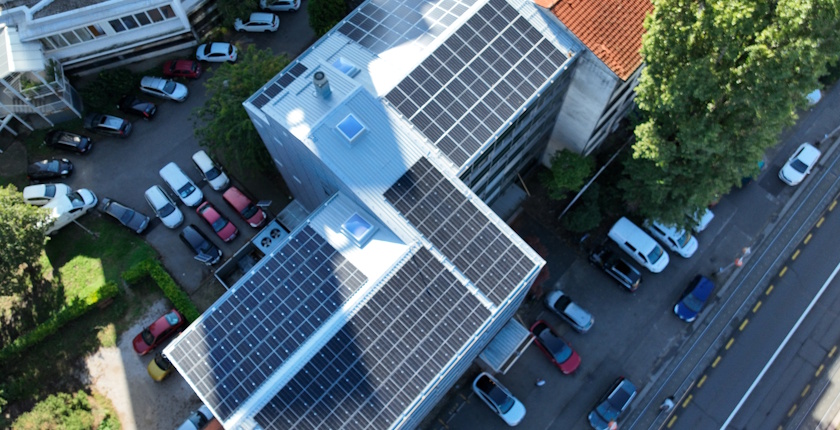
By concluding an aggregation agreement, Energy Institute Hrvoje Požar (EIHP) has joined the KOER virtual power plant. Specifically, EIHP made available its 50 kW solar power plant, installed on the roof of its office building, to KOER, an aggregator on the Croatian electricity market.

Minea Skok, head of the Scientific Council and senior researcher at EHIP, explains to Balkan Green Energy News that KOER has conducted preparations for including the EIHP solar power plant in the virtual power plant.

The aggregator has installed control and metering equipment that enables the reading of electricity production from the existing electricity meter, along with software that enables data aggregation and forwarding to the transmission system operator, real-time 24/7 monitoring and alerting, reporting to the operator and the owner, and cost calculation.

It also conducted internal tests of the EIHP solar power plant’s balancing energy.

KOER provides services to Croatia’s transmission system operator HOPS

KOER’s virtual power plant, along with eight other providers on the Croatian market (aggregators and network users), provides services to the Croatian Transmission System Operator (HOPS), which is responsible for organizing the balancing market throughout Croatia, Skok explains.

Currently, the service involves balancing through the activation of balancing energy from a contracted mFRR (manual frequency restoration reserve), and soon also from aFRR (automatic frequency restoration reserve), according to her.

These system services are essential for any country’s transmission system operator to maintain power system balance, ensuring that all consumers have enough electricity at all times. These services also provide flexibility, which is increasingly in demand due to the growing share of solar power plants and wind farms – energy sources that are not flexible, since they only generate electricity when the sun is shining or the wind is blowing.

KOER and EIHP split the earnings 50-50

As for EHIP’s compensation for providing these services, Skok revealed that the contract defines the compensation received by KOER, as the aggregator, is split 50-50 with EHIP.

For the provision of these services, HOPS organizes tenders in which KOER competes with other service providers.

Skok emphasizes that EHIP’s solar power plant is profitable on its own, as it brings savings through lower electricity bills, which means the service fee is additional income.

On top of all that, gaining practical experience is an added value for EIHP, says Skok.

EIHP will also install a heat pump and a battery

The 50 kW photovoltaic power plant, matching the maximum available roof space of the EIHP building, was put into operation nearly a year ago.

Its average annual output is about 50,000 kWh. The EIHP building’s electricity consumption used to be 186,539 kWh, but thanks to energy renovation and the option of working from home, it was reduced. As a result, in the first ten months of operation, the power plant covered 53% of EIHP’s electricity consumption.

Following the energy renovation and the installation of solar panels, EHIP now plans to install a heat pump and a battery.

With its solar power plant, EIHP makes an additional contribution to power system balancing. By adding flexibility on the consumption side through the planned installation of a battery system and a heat pump, and in cooperation with KOER, the aggregator, EIHP contributes to system stability and the integration of new renewable energy sources, according to Skok.

Post Views:50
June 20, 2025
by AEA in News

Dimitar Dimitrov: Battery developers should seek insurance in early project stages

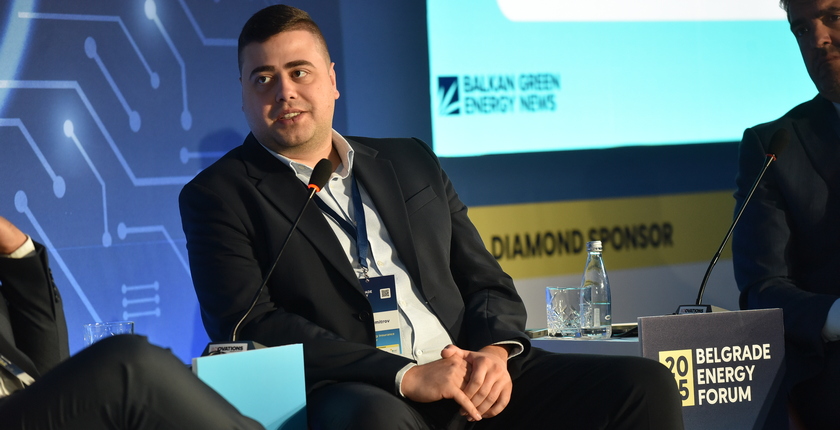
Investors and developers of battery energy storage systems (BESS) should engage with insurers or specialized brokers as early as the development phase to effectively manage risks and ensure bankability, advised Dimitar Dimitrov, Business Development Manager at Renewable Energy Insurance Broker (REIB), during Belgrade Energy Forum 2025.

With over 4 GWh of energy storage systems across four continents, REIB offers bespoke insurance solutions tailored to the needs of utility-scale developments. Dimitrov emphasized that REIB’s portfolio includes dedicated products for BESS, covering business interruption, cyber threats, and technical malfunctions.

Speaking at the storage panel, Dimitrov underscored the importance of insuring against business interruption, especially due to outages that may compromise grid connections. He also highlighted the value of cargo insurance and robust fire protection strategies, noting these are key concerns from the insurer’s standpoint.

[wpcc-iframe title=”Dimitar Dimitrov, Business Development Manager, Renewable Energy Insurance Broker, at BEF 2025″ width=”500″ height=”281″ src=”https://www.youtube.com/embed/obGw8_zdj4U?feature=oembed” frameborder=”0″ allow=”accelerometer; autoplay; clipboard-write; encrypted-media; gyroscope; picture-in-picture; web-share” referrerpolicy=”strict-origin-when-cross-origin” allowfullscreen=””]

“As both a broker and an investor in renewable energy projects, we have first-hand knowledge of what developers go through,” said Dimitrov. “This dual perspective enables us to anticipate risk points during different phases and recommend solutions that align with actual project needs.”

REIB has developed specialized insurance products for BESS projects

REIB offers specialized insurance coverage for renewable energy and BESS projects, including tailor-made solutions for Business Interruption, Reduced Yield Coverage, Cyber Risk, and Third-Party Liability.

The company has more than 14 years of experience in renewable energy and currently insures over 60% of the PV market and more than 80% of BESS projects (installed and under construction) in Bulgaria, and cover more than 30% of the solar sector in Romania.

As an investor, REIB is familiar with all the requirements developers and contractors should meet

Having gone through the procedures of installing solar power plans and battery storage systems as an investor, REIB is familiar with all the requirements that developers, power producers, and contractors should meet. “In this way, we definitely can give the right recommendations to companies,” Dimitrov asserted.

REIB partners exclusively with A+ rated insurance companies, recognized as market leaders in both the US and Europe. This strategic approach ensures that all coverage options meet the highest standards of reliability and financial strength.

“The company also has strong exposure in the European Union market, which allows us to secure A-rated insurance policies that are fully aligned with bank requirements and enhance project bankability,” Dimitrov emphasized.

Post Views:16
June 20, 2025
by AEA in News

MET Group inaugurates Hungary’s largest battery energy storage system

MET Group installed a battery energy storage system of 40 MW and a two-hour duration at its gas power plant Dunamenti near Budapest. The company said it is the largest BESS in Hungary.

Hungary’s largest standalone battery energy storage system (BESS) has been inaugurated today. MET Group put into operation a facility of 40 MW in nominal operating power and a two-hour cycle, translating to 80 MWh in capacity. The Switzerland-based company said it is part of a series of its investments in BESS throughout Europe.

MET already installed a 4 MW / 8 MWh demonstrator unit in 2022, also at its gas-fired Dunamenti Power Station in Százhalombatta, in Pest county. It is based on Tesla Megapack 2 batteries.

The combined capacity would be sufficient to supply the entire decorative and public lighting needs of Budapest for four hours, the energy company pointed out. The supplier of the new equipment is Huawei Technologies and the main contractor is Forest-Vill, MET Group added.

BESS is essential for energy transition

Battery energy storage systems are a key element for the energy transition, as they allow greater penetration of renewable sources into the power grid, Dunamenti’s Chief Executive Officer Péter Horváth said at the inauguration ceremony.

“We must strive by all possible means to exploit Hungary’s renewable energy sources as extensively as possible, using well-established, cost-effective technologies. Therefore, the Hungarian Battery Association supports the efforts of the Hungarian energy policy, which deals with the green energy transition as a top priority,” the association’s President Péter Kaderják stated.

MET Group investing in batteries colocated with solar power plants

MET Group said that with its ongoing investments in BESS projects across Europe, it aims to address the increasing need of balancing technologies to support the energy transition. The company acquired French battery storage operator and developer Comax in 2024.

A significant part of the investments is for storage facilities colocated with solar parks, the update reads.

MET is present in 17 countries, 32 national gas markets and 44 international energy trading hubs. It has more than 1,100 employees. The company’s consolidated sales revenue amounted to EUR 17.9 billion last year, with a total traded volume of natural gas amounting to 140 billion cubic meters and total traded electricity of 76 TWh.

Post Views:30
June 20, 2025
by AEA in News

WEF: Global energy transition picks up pace

The global energy transition is picking up pace, with the World Economic Forum’s (WEF) latest report showing the fastest progress since before the COVID-19 pandemic. Overall improvement on the WEF’s Energy Transition Index (ETI) was recorded in 65% of the countries observed, with the Emerging Europe region posting the strongest growth.

The report, titled Fostering Effective Energy Transition 2025, tracks the performance of energy systems of 118 countries across three dimensions – security, sustainability, and equity.

The equity segment showed the strongest gains, thanks to stable energy prices and subsidy cuts, while sustainability improved thanks to increased renewable energy adoption and improvements in energy efficiency. However, energy security stagnated due to inflexible power systems, reliance on imports, and limited diversification, highlighting the need for resilient grids, digitalization, and investment.

Energy security stagnated due to a lack of flexibility and diversification

The WEF also noted that despite USD 2 trillion in clean energy investment in 2024, global emissions hit a record 37.8 billion tons in the hottest year on record, as energy demand rose 2.2%, driven by artificial intelligence (AI), data centers, cooling, and electrification.

Global carbon emissions hit a record 37.8 billion tons in 2024 despite investment in clean energy

In 2025, 77 out of 118 countries recorded an increase in their overall ETI scores, with an average gain of 1.1%, as 28% achieved gains across all three dimensions, according to the report.

Advanced European economies top ETI rankings

Advanced economies continued to lead the rankings, accounting for 16 of the top 20 performers. The top five positions are occupied by Sweden, Finland, Denmark, Norway, and Switzerland, thanks to their strong performance in energy diversification, clean energy adoption, robust policy frameworks, and reliable infrastructure.

Also among the top 10 are Austria, Latvia, the Netherlands, Germany, and Portugal. China rose to a record 12th place, while the United Kingdom ranked 16th, and the US ended in the 17th spot.

Bosnia and Herzegovina posts strongest growth

The Emerging Europe region, which includes former Soviet republics and Southeast European countries, recorded the highest score increase in 2025, of 2.8% year on year. Latvia scored the highest on the ETI index, while Bosnia and Herzegovina posted the strongest growth.

The highest-ranking countries in the region tracked by Balkan Green Energy News are Bulgaria and Romania, with an overall score of 63.7 each, occupying the 29th and 30th spots, respectively.

Albania took 37th place with a score of 61.5. North Macedonia was 66th, with an overall score of 54.2, and Bosnia and Herzegovina came in 72nd, with 53.1. They are followed by Serbia, in 81st place, and Montenegro, which is 83rd.

Post Views:24
June 19, 2025
by AEA in News

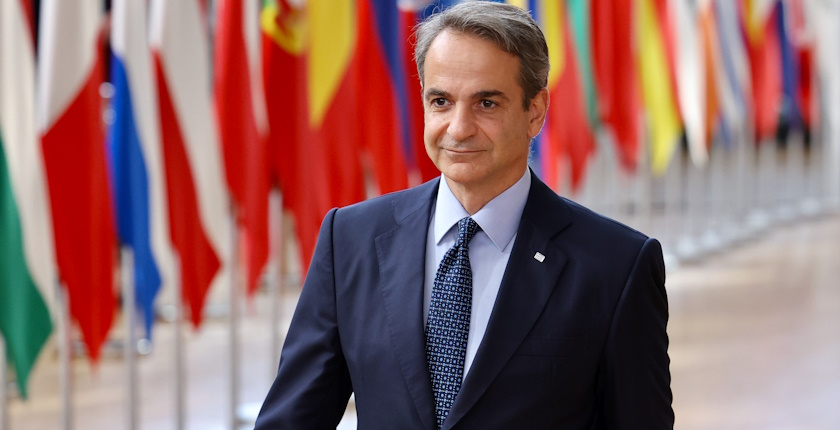
Greece to participate in European Nuclear Alliance

Greece is going to explore its options for the introduction of nuclear energy, according to Prime Minister Kyriakos Mitsotakis.

Speaking during the Energy Transition Summit in Athens, Mitsotakis expanded on his previous statements about nuclear energy and its possible role in the Greek energy mix.

“We are ready to join the Nuclear Alliance. This is not something that is going to happen tomorrow, but Greece must be a part of the discussion,” said the prime minister. The European Nuclear Alliance, launched in 2023, is an initiative of 13 European Union member states. Among them are Bulgaria, Croatia and Romania.

Its goal is to promote nuclear energy and help maintain its role in Europe. Italy has just joined the group.

It is not the first time that Greece has shown interest in the technology. The current government has floated the idea of co-financing a new nuclear power plant in Bulgaria, as part of the deal that would include guaranteed power imports. So far, nothing has materialized.

Mitsotakis also mentioned small modular reactors (SMRs) again as a possible solution, as well as installing reactors in ships to help the sector decarbonize. “We must explore how a naval nation such as Greece can utilize nuclear energy in its fleet,” Mitsotakis noted.

Mitsotakis: Net zero is impossible without nuclear

He added that the world would not be able to cut net greenhouse gas emissions to zero without the technology. According to the prime minister, nuclear fusion is very promising.

Public mistrust and cost issues

There are difficult obstacles to the government’s ambitions. Greek people remain heavily opposed to the installation of nuclear facilities, both inside and near the country. The energy crisis made public opinion only a bit more favorable.

Furthermore, Greece has no experience with nuclear energy and no people engaged in the sector. Everything would have to be created from scratch, from the regulatory framework to the technical knowhow.

Then there is the matter of cost. Even though many voices around the world support a nuclear revival, few new commercial projects have been initiated for traditional nuclear stations. Most new reactors, like in China, are subsidized by the state. Even in Europe, a large part of the discussion concerns renewing and upgrading existing reactors.

The Greek government has raised energy costs as a primary issue for the country and Southeastern Europe. It remains to be seen whether such power plants could operate on a purely commercial basis or if a support scheme could be used.

Post Views:32
June 19, 2025
by AEA in News

Western Balkan coal plants cut harmful emissions in 2024 but breaches remain extreme

In 2024, Western Balkan governments’ chronic law enforcement failures allowed sulphur dioxide (SO2) pollution from the region’s antiquated coal power plants to exceed legal limits by six times, according to the Comply or Close report. The overall particulate matter (PM or dust) and nitrogen oxides (NOx) pollution from coal plants continued to exceed legal limits.

Emissions of the three pollutants were actually the lowest since at least 2018, altogether, but the legal upper limits were reduced as well. Serbian coal plants released almost a third less SO2 than in 2023 thanks to desulfurization units. The drop was greater than the total decrease in the region.

Seven years since pollution control rules came into force under the Energy Community Treaty, SO2 emissions from coal plants included in the national emission reduction plans (NERPs) of Bosnia and Herzegovina, Kosovo*, North Macedonia and Serbia were still collectively six times as high as allowed, Bankwatch said in its Comply or Close annual report.

Region-wide, SO2 emissions decreased 12.1% year over year, to 518,248 tons, but it’s only 14.5% down from 2018. The limits were more stringent in 2024 than in previous years, as is the case with PM pollution and NOx, which widened the compliance gap.

BiH becomes biggest SO2 polluter in Western Balkans

For the first time, Bosnia and Herzegovina’s NERP coal plants were the highest SO2 emitters, with 212,840 tons altogether – an increase of 17.1% from the previous year – and 11.3 times as high as allowed. The group excludes the Stanari facility, built in 2016. It has complied with the European Union’s Large Combustion Plants Directive since the start.

Serbia followed, with 205,925 tons, or 4.6 times as high as allowed. The total amount of SO2 emissions fell 30.1% on an annual basis, landing at the lowest level since at least 2018. The decrease in the country was higher than in the whole region. Of note, Serbia has a new coal plant, too – Kostolac B3.

The Kostolac B coal plant has a desulfurization unit, but its SO2 emissions in 2024 were 2.3 times more than allowed

The (insufficient) drop in SO2 emissions from the NERP facilities in the country is due to desulfurization units. Some of the other improvements in the region regarding air pollution came from a decrease in production.

Kostolac B finally started to decrease its emissions in 2024 with its desulfurization system, but it still emitted 2.3 times as much as allowed.

In April 2024, the EUR 215 million desulfurisation system at Termoelektrane Nikola Tesla (TENT) A3-A6 was commissioned. It was 13 years after securing funding. The units still emitted more than twice as much sulphur dioxide as allowed in 2024. Another desulfurization facility, at TENT B, was 91% complete at the end of the year.

Ugljevik accounts for over one fifth of SO2 emissions in region as desulfurization unit is idle

For the fifth time since 2018, the biggest individual SO2 polluter in the Western Balkans was Ugljevik in BiH, with 112,943 tons – more than the previous year. It includes a desulfurization unit since 2020, but it hasn’t been working as the operator considers it an “economic burden.”

In 2024, the only potentially significant development regarding pollution control in the region was the signing of a contract for the construction of a desulfurisation unit at Kakanj 6 and 7, the report notes. It is projected to cost just under EUR 63 million. But the authors of Comply and Close pointed to the slow progress in the reconstruction of the Pljevlja coal power plant in Montenegro, which is also conducted by a consortium of China-based Dongfang.

Five coal units operating illegally

Pljevlja is the only coal plant in Montenegro. The facility isn’t under NERP rules, but under a so-called opt-out mechanism. The deadlines have expired for closing the smallest and oldest plants under the opt-out limited lifetime derogation.

Pljevlja has been running illegally since late 2020, and in 2022 was joined by Tuzla 4 and Kakanj 5 in Bosnia and Herzegovina and Morava in Serbia. The Kolubara A plant, also in Serbia, failed to stop operating at the end of 2023.

The Energy Community Secretariat has opened several infringement-type cases against the three countries, but not a single government has imposed penalties on the coal plants in question. Nor do they have clear, updated and realistic plans for compliance or closure.

Montenegro, Serbia and BiH have no clear plans for the coal plants that operate after ther their opt-out deadlines expired

“In six months, the EU’s Carbon Border Adjustment Mechanism (CBAM) will finally limit exports of Western Balkan countries’ carbon-intensive electricity by imposing fees on imports to the EU. This will make their ageing, inefficient coal plants even less economic. But the Balkan governments and utilities seem oblivious, as if they have all the time in the world. Clear, workable plans are urgently needed,” said Balkan Energy Coordinator at Bankwatch Davor Pehchevski.

Six units exceeded their individual ceilings for sulfur dioxide emissions by more than ten times – Ugljevik, Gacko, Tuzla 6 and Kakanj 7 in Bosnia and Herzegovina; Kostolac A2 in Serbia; and Bitola B1 and B2 in North Macedonia.

In 2024, Pljevlja’s SO2 emissions dropped 11.1% to 39,140 tons, the lowest level since at least 2018. Dust emissions decreased to 793 tons from a record high of 1,130 tons, but this was still higher than any other year since the beginning of the period. NOx emissions – 3,682 tons, the second-lowest result, compare to 3,982 tons registered in 2023.

Gacko coal plant tops chart in particulate matter emissions

Dust pollution from NERP coal plants in the region was 1.9 times higher than allowed last year. It dropped slightly from 2023 but remained similar to 2018 levels.

The highest emitter was Gacko in Bosnia and Herzegovina. It emitted 3,339 tons – 13.7 times above the limit. After protests by local people, improvements were announced in autumn 2023, however the plant’s pollution grew last year. Overall, dust in BiH decreased for the third time in a row, landing at 4,146 tons. The emissions in the segment peaked in 2021 at 6,040 tons.

Serbia is the only country in the region with emissions of PM particles within legal limits

Nitrogen oxides pollution in the region totaled 1.4 times above the limit, after 1.3 times more than allowed in 2023. BiH, Kosovo* and Serbia all continued to breach their NOx limits, with TENT B in Serbia emitting the most – 12,418 tons.

Kosovo* had the highest exceedance – 3.1 times as high as its ceiling. The reconstruction and modernization of one of the two units in the Kosovo B coal power plant started recently.

North Macedonia is the only country complying with the rule on nitrogen oxides. Serbia is the only one below the limit for PM particles.

“EU enlargement is back on the agenda, but the harsh reality is that Western Balkan governments are showing no interest in people’s health or the environment. Instead of a robust response to these chronic breaches, the European Commission recently prioritised the Jadar lithium mine in Serbia as strategic, rewarding the regime’s failure to uphold the rule of law. This has to change, and fast,” said Bankwatch’s Southeast Europe Energy Policy Officer Pippa Gallop.

Post Views:42
* This designation is without prejudice to positions onstatus and is in line with UNSCR 1244/99 and the ICJ Opinion on the Kosovo declaration of independence.
June 19, 2025
by AEA in News

Serbia secures EUR 50 million loan for air quality projects

The Government of Serbia has secured a EUR 50 million loan to fund a series of air quality projects across several cities. The funds will primarily go towards replacing coal- and fuel oil-fired boiler rooms in six cities.

For years, air pollution has been one of the biggest environmental issues in Serbia.

Minister of Environmental Protection Sara Pavkov and First Deputy Prime Minister and Minister of Finance Siniša Mali have signed two agreements with the European Bank for Reconstruction and Development (EBRD), which will soon lead to significant investments in air protection projects in multiple Serbian cities, the Ministry of Environmental Protection said.

Mali signed a EUR 50 million loan agreement, while Pavkov inked the project agreement. On behalf of the bank, both documents were signed by Matteo Colangeli, EBRD Regional Head of the Western Balkans.

EUR 50 million will be invested in cities with the highest levels of harmful emissions

Pavkov noted that based on these agreements, EUR 50 million would be invested in cities mapped as those with the largest excesses of harmful emissions. This is good news for residents of Belgrade, Niš, Valjevo, Zaječar, Novi Pazar, and Smederevo, where the projects will be implemented, she added.

In these cities, old, outdated boilers running on fuel oil, coal, and other fuels with an adverse impact on air quality will be replaced. Modern and sustainable heat energy sources, such as heat pumps, biomass, and industrial waste heat, will be installed, she stressed.

The projects will also include, where possible, connection to district heating systems or natural gas networks.

An air protection law is in the process of adoption

“These projects are the culmination of years of work. We have entered a phase where we can expect the launch of construction and intensification of the efforts for cleaner air, which remains one of our top priorities,” Pavkov stressed.

She recalled that an EBRD loan had helped replace 50-year-old coal boilers with state-of-the-art gas boilers at the Kragujevac district heating plant. The second phase, the remediation of the ash landfill, has also begun, she added.

From 2021 to 2024, the ministry has implemented projects to replace 169 boiler rooms in public institutions across 76 local authorities, according to Pavkov.

Under a public call, funds have been allocated for projects in 18 municipalities in 2025, with another call currently underway. An air protection bill is now before the National Assembly, intended to provide a new overarching framework and fresh momentum in the fight for better air quality, Pavkov noted.

Post Views:90
June 19, 2025
by AEA in News

Slovenia’s EUR 150 million smart grid leap

The five electricity distribution firms in Slovenia will invest more than EUR 150 million by the end of March 2026 in upgrading the network and the addition of smart grid components.

Elektro Primorska, Elektro Ljubljana, Elektro Gorenjska, Elektro Celje, and Elektro Maribor will build 1,300 kilometers of low-voltage grid and 838 transformer stations with smart grid elements, Naš Stik reported.

Of note, the five firms are essentially performing the duties of the country’s nominal distribution system operator, ELES.

Out of the total investment, EUR 71 million was allocated from the National Recovery and Resilience Plan (NRRP). In the first public call launched by the Ministry of the Environment, Climate and Energy, the distribution companies won EUR 37.5 million, and EUR 33.5 million in the second one, for projects planned to be conducted through 2026.

Elektro Primorska received EUR 11.4 million, with total investments estimated at EUR 21 million. The firm will build 204 kilometers of low-voltage network and install 132 transformer stations, according to its website.

Among the five firms, the largest investments are planned by Elektro Maribor

Elektro Ljubljana is eligible for EUR 19 million, to build 373 kilometers of low-voltage network and 240 transformer stations. Its investments are estimated at EUR 40 million in total. The construction of 169 kilometers of low-voltage network and the installation of or reconstruction of 108 transformer stations will cost Elektro Gorenjska EUR 18.9 million. Half of the funds are secured from the NRRP.

Elektro Celje got EUR 15.1 million to build 278 kilometers of low-voltage network and install 179 transformer stations. The projects are estimated at EUR 28.5 million overall.

Elektro Maribor was granted EUR 16 million for total investments of EUR 43.5 million. The company plans to build 278 kilometers of low-voltage network and 179 transformer stations.

Ćatić: Investments to provide greater grid visibility

According to Damir Ćatić, business units and investment sector manager of Elektro Maribor, the investments will make the distribution network more reliable for end users.

The company aims to improve the quality of electricity supply and to enable the connection of solar power plants, battery energy storage systems, and chargers for electric vehicles, he emphasized.

By installing smart grid components, Elektro Maribor will gain greater visibility into the network’s condition, which will enable better management and planning, as well as adapt the network to current energy flows.

Conditions are being created for the efficient use of energy storage

They are the key factors for integrating distributed renewable energy production sources such as solar power plants, as well as e-chargers, into the distribution network, Ćatić explained.

Such an approach, in his words, allows for managing the variability of these sources, meaning it creates conditions for the efficient use of energy storage.

The use of technologies such as databases, artificial intelligence, and the IoT will enable Elektro Maribor to achieve greater efficiency, reliability, and resilience of the distribution system, as well as improved data management, Ćatić stressed.

Post Views:48
June 19, 2025
by AEA in News

Spain’s voltage control was insufficient at time of April blackout

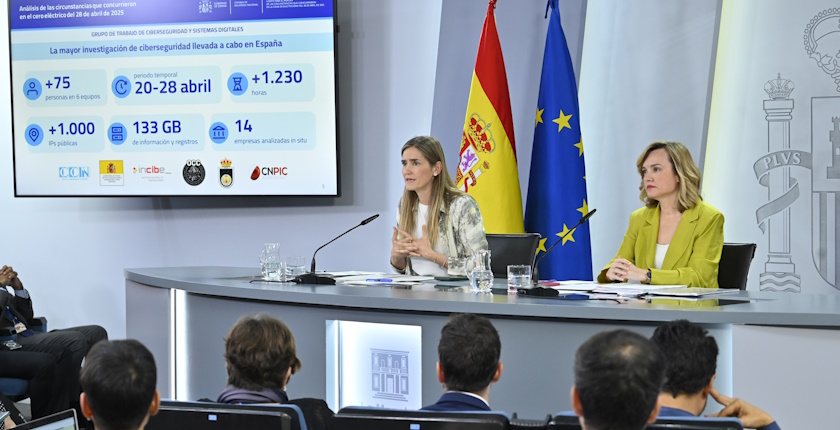
The Government of Spain said the total blackout in the Iberian Peninsula, which occurred on April 28, was caused by overvoltage, with several factors contributing to the crash. Notably, the system run by the country’s TSO Red Eléctrica de España lacked sufficient voltage control. Deputy Prime Minister Sara Aagesen even said the point of no return could have been avoided if voltage control action had been taken earlier.

In a long-awaited document, a government committee that investigated the April 28 collapse of the Iberian electricity network ruled out that a cyberattack caused it. The panel analyzed more than 300 gigabytes of data related to the total blackout, which was one of the worst ever in Europe.

“In 49 days, practically half the timeframe established by the EU, the committee has provided a rigorous and verified diagnosis that will allow us to strengthen the electricity system, a solid foundation on which we can work to design rapid responses to prevent this from happening again. Next week’s Council of Ministers will approve several relevant measures,” said Third Vice-President of the Government of Spain and Minister for Ecological Transition and Demographic Challenge Sara Aagesen.

The cybersecurity investigation, the largest ever undertaken in the country, did identify vulnerabilities that could expose networks or systems to future risks, she asserted.

The blame game is continuing as citizens and businesses are demanding accountability for the massive damage. The European Network of Transmission System Operators for Electricity (ENTSO-E) issued a preliminary report two weeks after the incident.

Overvoltage caused the blackout, according to the new analysis. The committee attributed it to multiple factors. The system had insufficient voltage control capacity, there were frequency oscillations, and power plants were disconnected, “in some cases in an apparently improper manner,” the document reads.

Renewables accounted for 82% of power generation mix just before blackout

The Iberian grid crashed at 12:33. Restoration began with energy from France and Morocco and with self-starting hydroelectric plants in the Duero basin and other locations, which formed energy islands. By 22:00, nearly 50% of demand in Spain was met, reaching 99.95% by 7:00 the next day.

At 12:30 on April 28, renewable energy sources accounted for 82% of the electricity generation mix, followed by nuclear power (10%). Gas plants had a 3% share, coal contributed 1%, while cogeneration and waste amounted to a combined 4%.

Data show a drop in solar generation as prices at the power exchange were going negative, and it coincided with a rise in voltages

There was significant voltage volatility in the transmission system in the morning on the day of the blackout, the document’s authors noted, pointing out that such a situation was also registered on April 22 and 24.

The rise in voltages between 10:30 and 11:10 coincided with a drop in solar generation, probably due to the power market signals, as wholesale prices went negative, the report adds. At the same time, the direction of the exchange with France switched from exports to imports.

Voltage control fleet failed to contain chain reaction

At 12:03, there was an atypical frequency oscillation, by 0.6 hertz, causing large voltage fluctuations for 4.42 minutes. Another one, of 0.2 hertz, occurred at 12:16, followed by an equivalent one at 12:19.

Red Eléctrica de España, the transmission system operator (TSO), conducted mitigation measures, which contributed to the rise in voltages, the committee underscored.

Aagesen said the point of no return could have been avoided if voltage control action had been taken earlier. The government controls 20% of the company, which is listed on the Bolsa de Madrid stock exchange.

At 12:32, voltage began to rise rapidly and steadily, and numerous progressive disconnections of generation facilities were recorded. The names of all power plants in the document are blacked out.

A number of units responsible for voltage control produced reactive power, the opposite of what they were supposed to

The chain reaction could not be contained, as each disconnection contributed to further voltage increases, the analysis showed. A drop in frequency resulted in the loss of synchronization with France, tripping the interconnection with the rest of the continent.

The committee stressed that the number of synchronous plants regulating voltage on the day of the incident was the lowest since the beginning of the year. One of the 10 units that Red Eléctrica scheduled the day before experienced an outage on the same afternoon, and the TSO didn’t replace it in time, the analysis reveals.

Moreover, several units in the group did not respond adequately to the TSO’s instructions to reduce the voltage. Some even produced reactive power, the opposite of what was required, contributing to the issue, the committee added.

Some power plants went offline too early

There were disconnections of the generating power plants that occurred before the voltage thresholds in the 400 kV system were exceeded (380 kV and 435 kV), the report finds.

Among the committee’s recommendations is to allow asynchronous installations to apply power electronics solutions to manage voltage fluctuations. The panel proposed boosting demand, flexibility, storage and interconnection capacities.

Photovoltaics with grid-forming inverters, storage can contribute to voltage control

Photovoltaics are already capable of controlling voltage, but regulations did not allow the application of the technology, according to the Spanish Photovoltaic Union (UNEF), Portuguese Renewable Energy Association (APREN), SolarPower Europe, Global Solar Council and Global Renewables Alliance.

In a joint statement that they issued as a reaction to the report, they called for accelerated investment in grid resilience and system flexibility – especially through grid-forming inverters and battery storage.

The associations recalled that Spain ranked 14th last year in Europe in new battery capacity. Less than 250 MWh came online and nearly all were smaller-scale batteries, not at a utility level. It compares to 9 GW of solar power capacity that the country added in 2024.

Post Views:51
  • 1
  • …
  • 83
  • 84
  • 85
  • 86
  • 87
  • …
  • 140

AEA – Albania Energy Association is a industry association dedicated to representing the interests of Albanian and West Balkan for energy producers and consumers. AEA works to advance the development and adoption of sustainable energy solutions in Albania and the Western Balkans, supporting the region’s transition toward a cleaner, more secure, and more competitive energy future. AEA is registered by decision of the Court of Tirana, DECISION NO. 3032, (VAT:L11827451K).

[email protected]

Address
Blv Zogu 1
Tirana
1057
ALBANIA

LinkedIn  |  Facebook
Events
May 25, 2022 Connecting Green Hydrogen Europe 2022
May 25, 2022 Energy Week Western Balkans 2022
Copyright © Albania Energy Association