AEA-Albania Energy Association
  • Main
  • About Us
  • Services
  • Sectors
  • News
  • EventsEvents
  • PublicationPublication
  • Contact Us
AEA-Albania Energy Association
  • Main
  • About Us
  • Services
  • Sectors
  • News
  • EventsEvents
  • PublicationPublication
  • Contact Us
AEA-Albania Energy Association
  • Home Page
  • About Us
  • Sectors
  • Our Services
  • News
  • Contact Us
June 16, 2025
by AEA in News

SunCarlito Beta issues tokens to raise funds for 2.2 MW solar power plant in Serbia

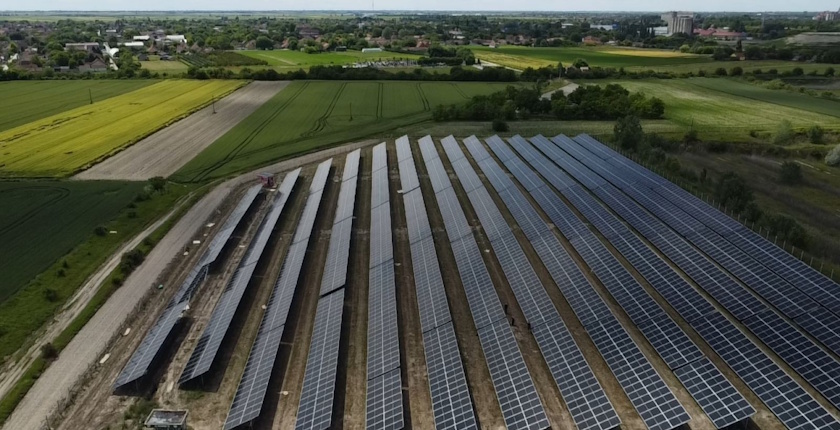
SunCarlito Beta has offered tokens worth EUR 1.7 million to raise funds for installing a 2.2 MW solar power plant near the northern Serbian city of Subotica. The deadline to purchase the tokens is July 9.

Investors can buy 3,402 tokens called Solar Token ST_1, priced at EUR 500 each.

This is the second token offering in Serbia’s energy sector. In mid-March, AVR Solar Park successfully completed the first tokenization in the energy sector, introducing this innovative financing method to the Serbian market.

So far, SunCarlito Beta has invested EUR 450,000 in land acquisition, permitting, and digital token technology. The total project value is estimated at EUR 2.1 million, according to the White Paper, approved by the Securities Commission.

A building permit has been obtained for the construction of the solar power plant

A construction permit for the solar power plant has been granted, and the installation is well underway. Trial operation is expected to begin by the end of 2025, with an anticipated annual output of 1.2 GWh.

The company has identified two main goals: to finance the project with funds raised via tokenization and to allow interested parties to invest in digital assets.

A digital token has the characteristics of a dematerialized bond, the company explained.

The tokens yield an annual return of 6%

The tokens are issued for a period of 15 years and yield an annual return, a fixed interest rate of 6% per year calculated on the remaining principal, according to the White Paper.

During the investment period, token owners are entitled to principal repayments. The first two repayments are set at 33% of the principal every five years, with the final repayment at 34% of the principal.

The tokens can be purchased by individuals or legal entities, including entrepreneurs, with residence in the Republic of Serbia, who must also pass the accreditation process.
Post Views:52
June 16, 2025
by AEA in News

World Bank to back nuclear projects again amid rising electricity needs

The World Bank has decided to end its 2013 moratorium on financing nuclear energy projects amid growing global electricity demand. The move means the lender would support projects to extend the operating life of existing nuclear power plants and speed up the rollout of small modular reactors (SMRs).

The World Bank board’s decision comes at a time when nuclear energy is experiencing a global revival, as electricity demand in developing countries is projected to more than double by 2035.

Ajay Banga, the president of the World Bank Group, said the institution would work closely with the International Atomic Energy Agency (IAEA) on the issues of safety, security, and regulation.

Banga: Delivering electricity as a driver of development

“We’ve made real progress toward a clear path forward on delivering electricity as a driver of development,” Banga said.

Recently, Germany agreed with France to end its opposition to new nuclear power technologies in the European Union. Economy and energy minister Katherina Reiche said Germany would respect other EU member states’ choice of energy mix, but would not return to nuclear power itself. The country shut down its last remaining nuclear reactors in 2023.

Nuclear energy is making a comeback in Southeast Europe as well

The global nuclear energy revival includes the region tracked by Balkan Green Energy News as well. Slovenia is developing its second reactor, Krško 2, while Romania and Bulgaria are planning new units, as well as SMR projects. Croatia is also taking steps to introduce nuclear energy, including SMRs.

Hungary is already building new reactors at the Paks nuclear power plant, as is Turkey, while Serbia is considering the use of nuclear energy.

Banga said the World Bank’s revised strategy would allow countries to determine the best energy mix, with some choosing solar, wind, geothermal, or hydroelectric power, while others might opt for natural gas or nuclear.

However, no agreement has been reached yet on ending a ban on upstream natural gas projects, with further discussions needed on the issue, according to him.

Post Views:171
June 16, 2025
by AEA in News

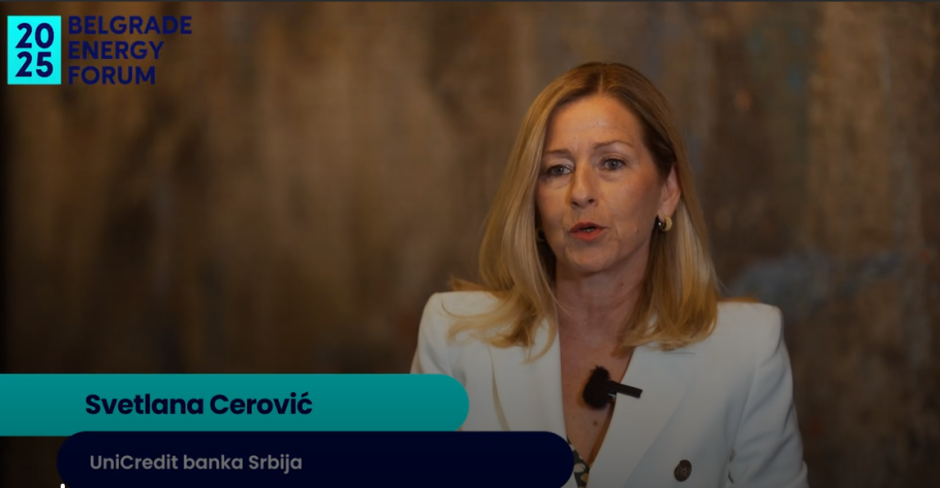
Svetlana Cerović: Serbia should consider the role of batteries in next renewables auction

Serbia is expected to finish drafting its energy storage regulations by the end of the year, completing its already strong regulatory framework for renewables, according to Svetlana Cerović, Head of Specialized Lending at UniCredit Bank Serbia. In the next auction for market premiums, Serbia should consider recognizing the contribution of projects involving energy storage, she said at Belgrade Energy Forum 2025.

The two renewable energy auctions Serbia has held so far have shown that its regulatory framework is exceptionally good, Svetlana Cerović said on the sidelines of BEF 2025, adding that it is very important for a third auction to take place to ensure the development of additional renewable energy capacities.

[wpcc-iframe title=”Svetlana Cerovic, Head of specialized lending, UniCredit Bank Serbia, at Belgrade Energy Forum 2025″ width=”500″ height=”281″ src=”https://www.youtube.com/embed/014aj5PLOx0?feature=oembed” frameborder=”0″ allow=”accelerometer; autoplay; clipboard-write; encrypted-media; gyroscope; picture-in-picture; web-share” referrerpolicy=”strict-origin-when-cross-origin” allowfullscreen=””]

Initiating and financing investments in renewable energy requires a stable, predictable, and transparent regulatory framework, she stressed.

When it comes to regulations covering energy storage, Cerović said she was encouraged to hear that they were being drafted quickly and could be finalized before the end of this year.

“When we talk about renewable energy sources, we talk about long-term financing. Most of these projects are financed through project financing without the right of recourse, and in this sense, the regulatory framework and the predictability of cash flows are very important,” she reiterated.

UniCredit, as a pioneer in the field of renewable energy financing, offers various types of services and has already supported several projects that have been awarded market premiums and guarantees, according to Cerović. “We continue to actively finance these projects and remain open to dialogue,” she said.

UniCredit has financed several projects that have won market premiums

Speaking at a panel on energy storage in Southeast Europe, Cerović said that Serbia should consider involving energy storage in the next auction for market premiums and facilitate flexibility services, adding that the first renewables projects in Serbia that are required to include energy storage are already negotiating financing.

Cerović: The state should subsidize batteries for prosumers and back smaller renewables projects

She also recommended subsidizing battery storage for prosumers as an energy efficiency measure and allocating part of the auction quota for smaller renewables projects, which find it difficult to secure long-term power purchase agreements (PPA).

Talking about BEF 2025, she said the forum had demonstrated its exceptional significance and relevance by bringing together key players in the financing and development of energy projects. The conference was extremely useful for UniCredit, allowing it to make important contacts and initiate potential partnerships, according to her.

Post Views:64
June 13, 2025
by AEA in News

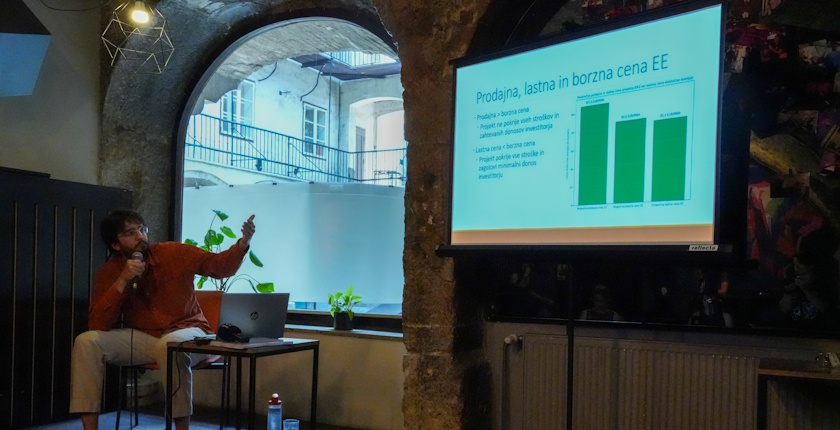
Krško 2 nuclear project not profitable for private investors but state could find motive – study

Slovenian non-governmental organization Mladi za Podnebno Pravičnost (Youth for Climate Justice) has conducted what it claims to be the first independent economic study on the construction of a second unit of the Krško nuclear power plant.

The economic study on the Krško 2 project (JEK2) showed that the project would not be profitable for a private investor but could be viable for the Government of Slovenia. The authors recommended that, before making a final decision, studies should be produced under two nationwide scenarios: 100% renewable energy or a combination of renewable energy and Krško 2.

Youth for Climate Justice said the largest project in Slovenia’s history requires at least one independent, detailed economic study. It needs to set aside both the potential investors’ aspirations and the opposition to the construction of the second nuclear power plant, the NGO stressed.

The referendum fiasco opened the way for a different approach to the project, but politicians demonstrated no interest, so the organization took the initiative. The study and proposal for a comprehensive project management framework took over a year.

The organization presented four main findings from the study.

The state can go through with the project if it doesn’t count on a profit margin

First, the project is not economically viable for a private company, the authors said and added such a scenario is therefore unlikely. Under a common economic logic, the state would also decide against the endeavor as it wouldn’t be able to achieve the desired return on investment.

However, due to the project’s strategic importance, the state could opt for a version without a profit margin and define the price of electricity generated in Krško 2 at a breakeven level, the study reads.

In that case, there is a chance the project could be profitable after all, as such a price would still be a bit lower than the one that the operator would achieve in the market.

The state could also secure other benefits such as low-carbon, stable energy with minimal impact on biodiversity, the organization noted.

Two important recommendations

The study’s authors suggested establishing a new management framework, giving the project a chance of success and to avoid repeating the issues seen with the TEŠ 6 project, for the sixth unit of the Šoštanj coal-fired power plant.

Of note, there was much controversy over the decision to build it. TEŠ 6 began operating in 2016, but now it is facing closure. The construction cost exceeded the budget, raising suspicions of corruption.

There are two scenarios for the development of Slovenia’s power system

Finally, the NGO recommended reviewing two scenarios for the development of Slovenia’s power system before making a final decision: 100% renewable energy and renewable energy combined with Krško 2.

“Based on that, we will know whether it makes sense for the state to waive financial gains and build JEK 2 or if there are better alternatives for the development of the system,” Youth for Climate Justice underlined.

The study has been presented to the public, but stakeholders will have another opportunity to discuss it on Wednesday, June 18, in Ljubljana.

Post Views:56
June 13, 2025
by AEA in News

Gas power plant Brestanica in Slovenia adds photovoltaic unit

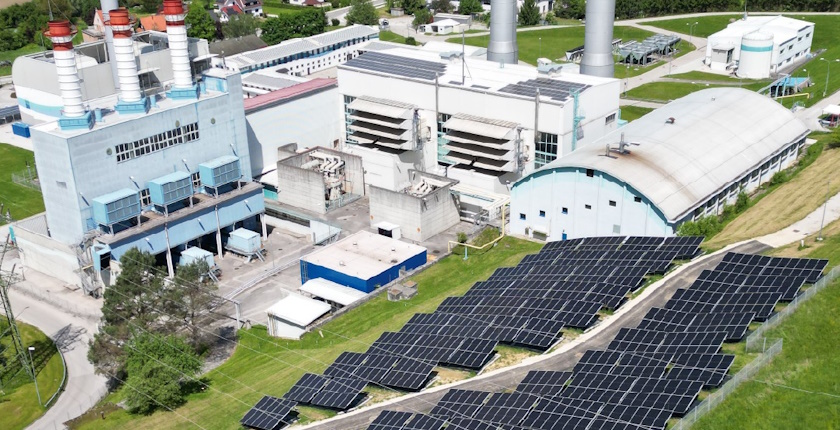
A ground-mounted solar power plant of 466 kW started generating electricity on a regular basis at Slovenian state-owned gas power plant Termoelektrarna Brestanica (TEB).

GEN-I’s subsidiary GEN-I Sonce installed a photovoltaic system, as the contractor, at the gas power plant run by fellow GEN Group member Termoelektrarna Brestanica (TEB). The 466 kW ground-mounted solar power plant entered regular operation, Naš stik reported.

The new facility in Brestanica in the municipality of Krško near Slovenia’s border with Croatia consists of 810 modules. The project was backed by the government’s renewable energy grant program. It covered 20% of the cost, which amounted to just under EUR 600,000.

MFE TEB4, the new unit, entered test operation in February. It is the fourth PV system at the Brestanica gas power plant. Two are on roofs and one is a solar canopy on the parking lot. Commissioned in 2009 and 2010, they have 170 kW in combined peak capacity.

The estimated annual production of the fourth solar power system can meet the electricity needs of more than one hundred Slovenian households.

Almost a third of the project budget was invested in the installation of a transformer. It enables more renewable electricity capacity to be connected to the grid around TEB, the article reveals.

GEN Group’s state-owned parent company GEN energija operates the Krško nuclear power plant, also known by the acronym NEK and, in Slovenian, JEK.

Post Views:51
June 12, 2025
by AEA in News

The cost of keeping warm: delivering a just clean heat and cooling transition for European citizens

Author: Delia Villagrasa, Director of the Cool Heating Coalition, EUSEW’s partner organisation, and Beatriz Yordi, Director, Carbon Markets and Clean Mobility, DG CLIMA, European Commission

Millions of people already struggle to pay energy bills in Europe. ETS2 – which will be launched in 2027 and will put a price on carbon emissions from buildings and transport – risks deepening the energy poverty problem. However, a significant share of ETS2 revenue will be directed to energy efficiency upgrades and clean heating solutions. Through the Social Climate Fund, vulnerable groups will also receive access to these benefits. With clean heat at its heart, the fund could mark a pivotal step in the EU’s journey to net-zero, tackle energy poverty, slash emissions, and finance a fair, fossil-free future.

In 2023, 47 million Europeans were unable to afford to heat their homes. Europe’s largely inefficient building stock relies heavily on fossil fuels for thermal comfort, subjecting citizens to volatile energy prices. Amidst high energy bills and other increases in the cost of living, it has never been more important to get the pricing right on fossil fuels.

Clean heat is the key to energy independence

​​​Following the onset of the energy crisis in 2021, gas prices experienced significant volatility, peaking on the Dutch TTF at more than 10 times current gas prices (340€/MWh in late 2022 vs 32€/MWh today). As Russia continued to wage war against Ukraine, citizens have had to ​ shoulder the burden of fossil fuel import costs to the tune of €427 billion in 2024. ​As long as Europe remains dependent on fossil fuels, citizens will continue to face soaring energy prices, whether through taxes which fund gas subsidies or through their rising energy bills. The way forward is through independence from fossil fuels.

Decarbonising heating and cooling, which together account for around half (47%) of the EU’s energy consumption, is a major step towards energy independence. Over 73% of EU household heating comes from fossil fuels. Households that are able and willing to invest in energy efficiency works and clean heat technologies face multiple barriers. Consumers across Europe are often not able to easily decarbonise their homes as they are battling high upfront costs and face a lack of skills and structural factors that make clean heating and cooling technologies more expensive to use, like a high electricity-to-gas price ratio and fiscalities. Markets are currently misaligned with our ambition for a fossil-free future, and need a clear policy steer towards decarbonisation.

Enabling Europe’s energy transformation

Starting in 2027, the Emissions Trading System 2 (ETS2) will put a price on carbon emissions from fossil fuel use within buildings. The policy incentivises the switch to efficient, low-carbon solutions by increasing the costs for fossil fuels. The roll-out of ETS2 could cause fossil fuels prices to rise, but it also provides funding opportunities for modern and clean heat technologies.

Instead of directing money from higher energy bills towards paying for Europe’s fossil fuel imports, ETS2 will raise money that Member States can use to invest in modernising their energy systems. Member States will collectively raise approximately €270 billion before 2032, generating an unprecedented amount of funds for investment in energy efficiency improvements, renewables, and bill assistance. While pricing out the fossil fuel status quo, which has long been upheld by subsidies, ETS2 will ensure a stream of investments that can transform our energy systems.

Fairness and fossil-free futures

For many consumers, well-designed programmes and investments will mean they have the freedom to choose cleaner, modern technologies. However, low-income households will likely have more difficulties absorbing the higher costs of fossil fuel use. Though responsible for the lowest amount of emissions, the poorest households are likely to feel the deepest effects of the rise in costs.

To shelter the vulnerable from rising prices, revenues from ETS2 will also provide at least €86.7 billion towards the Social Climate Fund (SCF). This instrument ensures that the distribution of revenues remains fair by earmarking a sizeable amount for direct support of those most in need. The five countries who will receive the largest amounts from the SCF pot will be Poland, France, Italy, Spain, and Romania. Relative to the number of vulnerable households, Greece, Bulgaria, Slovakia, and Romania will receive the most resources to provide assistance to those with the lowest income.

Copyright: Bruegel

For instance, a quarter of the Romanian population experienced some form of energy poverty in 2021. Romania is also one of the Member States with the highest percentage of households struggling with unpaid utility bills. The country stands to receive approximately €6 billion to enact its Social Climate Plan, supporting low-income and vulnerable households and SMEs to make green investments.

Beyond a new pricing system, ETS2 is a signal for the buildings and heating markets to decarbonise, a way of raising the capital needed to invest in renewables and energy efficiency, and an opportunity to foster solidarity between Member States and in society. Pricing fossil fuel use aligns global financial flows with our vision of the future: one where energy independence, warm homes, and thriving citizens are the norm.

This opinion editorial is produced in co-operation with the European Sustainable Energy Week (EUSEW) 2025. See ec.europa.eu/eusew for more details.

Post Views:49
June 12, 2025
by AEA in News

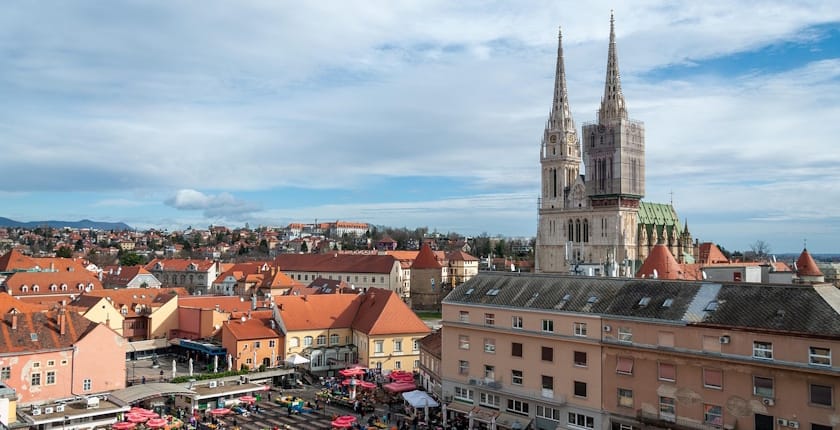
Brussels to Croatia: Boost renewables, flexibility for cheaper industrial electricity

The European Commission advised Croatia to speed up the installation of renewable energy capacities and add non-fossil flexibility solutions, to reduce electricity prices for businesses.

Electricity prices for the corporate sector in Croatia in the first half of 2024 were the third-highest in the European Union, according to the European Commission.

At about EUR 0.244 per kWh, only Cyprus and Ireland had higher prices – EUR 0.2578 per kWh and EUR 0.256 per kWh, respectively.

“In the first half of 2024, Croatia had the third-highest electricity price in the EU for business/industrial consumers. This continues to hold back the cost competitiveness of Croatian companies,” the commission said in its Country Specific Recommendations under the 2025 European Semester: Spring Package.

Despite a record increase in solar capacity in 2024, by 397 MW, its share in electricity generation remains low, at less than 6%.

An increase in the uptake of large-scale renewables, including solar, is hampered by an uncertain regulatory framework

Against this background, faster roll-out of new renewable energy capacity, especially solar, and non-fossil flexibility solutions could help reduce price levels, the update reads.

The commission said an increase in the uptake of large-scale renewables, including solar, is hampered by an uncertain regulatory framework as the national energy regulator HERA is yet to adopt updated grid connection fees. The situation creates uncertainty for potential investors and has effectively prevented projects from securing financing, the European Union’s executive arm stressed.

Increased investment in the electricity grid, beyond what’s in Croatia’s National Recovery and Resilience Plan (NRRP), would be crucial for an uptake of renewable energy, according to the commission. In the short term, it would imply incentives for hybrid storage and renewable energy projects, the document reads.

Speed up rollout of smart meters

In 2023, only 24% of household consumers had smart meters installed, which is significantly less than the EU target of 80%.

To be able to fully capitalize on an increased uptake of renewable energy, significant funding for the rollout of smart meters – beyond the measures in the NRRP – and dynamic contracts will be needed to empower consumers and foster demand response, the commission noted.

It advised Croatia to review and simplify administrative procedures for installing renewable energy facilities, including in multi-apartment buildings, and for setting up energy communities.

The measures would help reduce the reliance on fossil fuels and increase the low number of registered energy communities, according to the commission.

Post Views:40
June 12, 2025
by AEA in News

Winners of EUSEW Awards announced

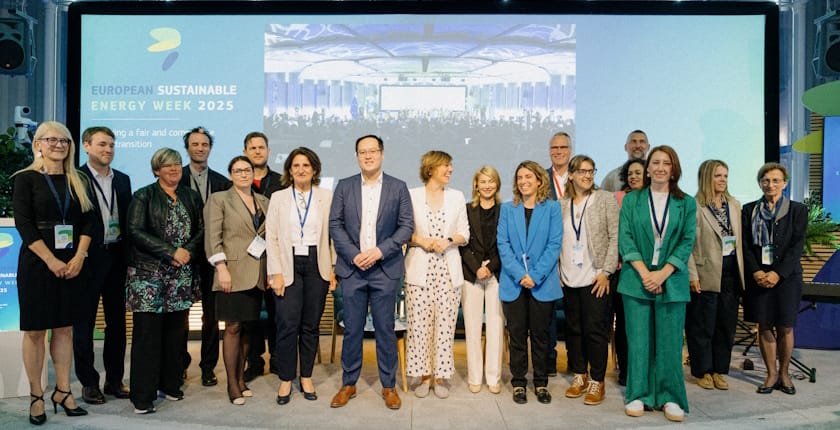
Stella Tsani is this year’s winner of the EUSEW Woman in Energy Award. The Innovation Award went to the Dutch company AquaBattery, while the initiative Community Energy for Social Housing in Otterbeek won in the Local Energy Action category.

EUSEW Awards honor outstanding individuals and projects for their innovation and efforts in energy efficiency and renewable energy. After a high-level jury selected nine finalists, the winners were chosen through online public voting in three categories: Innovation, Local Energy Action, and Woman in Energy.

The award ceremony took place on the first day of the European Sustainable Energy Week (EUSEW) in Brussels. This year’s winners are Stella Tsani, AquaBattery, and Community Energy for Social Housing in Otterbeek.

EUSEW, the largest event in Europe dedicated to sustainable energy, was opened by European Commissioner for Energy and Housing Dan Jørgensen. In his speech, he stressed the European Union would need to become fully independent from Russian energy. “The way we will do it is by banning the import of gas. By the end of this year, we plan to ban spot market gas purchases, and by the end of 2027, we will also ban long-term contracts,” he stated.

The European Union imports fossil fuels worth EUR 400 billion annually, which, according to Jørgensen, is neither economically nor environmentally sustainable.

“Instead of constantly buying expensive energy, we must start producing our own sustainable and renewable energy,” he stressed.

Climate change is here and now

Jørgensen noted that in addition to the energy crisis, Europe is now facing a climate crisis.

“Climate change is here. It’s not something that might happen in the future. It’s not something that we fear could be a prospect. It’s here and now”, he emphasized, adding that Europe has a moral responsibility to combat climate change because, historically, the West, including Europe, has polluted for more than a hundred years.

The third crisis Europe faces, according to the commissioner, is a competitiveness crisis. He pointed out that energy in Europe is two to three times more expensive than in the United States or China, and that last year, 47 million Europeans were unable to adequately heat their homes.

“To address these three challenges, security, climate change, and competitiveness, we need to stay on track. The green transition is not the reason for these problems. The green transition is the answer for these challenges”, Jørgensen concluded.

Energy produced in Europe is always better and more competitive than imported energy

Poland’s Secretary of State at the Ministry of Climate and Environment, Krzysztof Bolesta, also spoke at the opening. He highlighted three key elements for a successful energy transition: affordable energy, fairness, and sustainable energy independence.

Bolesta stressed that citizens must feel tangible benefits from the energy transition through more affordable energy. He also underlined the importance of a just transition, particularly for workers in hard-to-decarbonize industries.

According to him, energy produced in Europe is always better and more competitive than imported energy. “We don’t want to swap one dependency on Russian oil, say, with tech import dependency from Asia. So let’s not swap oil for batteries. Let’s try to bring as much of the value chain to Europe as possible,” the Polish official said.

Woman in Energy – Stella Tsani

Stella Tsani, a scientist and associate professor at the University of Athens, is this year’s winner of the EUSEW Woman in Energy Award. She combines scientific research in energy transition with active participation in high-level policymaking, contributing to practical progress through evidence-based recommendations.

Through work with organisations such as the United Nations Environment Programme (UNEP) and the Intergovernmental Panel on Climate Change (IPCC), her research informs policies that balance economic growth with environmental protection. She is also dedicated to empowering young women in the energy sector through mentorship and education, believing that future female leaders are key to achieving the EU’s climate goals.

In her speech at the award ceremony, Tsani highlighted her belief in the vast, untapped potential of youth. “That’s what I’m trying to do at the University of Athens – support all future leaders, the future changemakers. So I truly believe in you and I urge everyone in this room, the European Commission, to support young people,” she stated.

[wpcc-iframe title=”EUSEW2025 Finalist | Greek academic driving country’s energy transition” width=”500″ height=”281″ src=”https://www.youtube.com/embed/YIizBrFETqc?feature=oembed” frameborder=”0″ allow=”accelerometer; autoplay; clipboard-write; encrypted-media; gyroscope; picture-in-picture; web-share” referrerpolicy=”strict-origin-when-cross-origin” allowfullscreen=””]

Innovation category – AquaBattery

The Innovation Award recognises outstanding projects funded by the European Union that are ongoing or recently completed, demonstrating original and innovative approaches to the energy transition and delivering tangible results.

This year’s winner is AquaBattery from the Netherlands. Its pilot project in Delft could soon commercialize a sustainable and affordable solution for long-duration energy storage based on kitchen salt and water. The unique innovation, using widely available and environmentally friendly materials, could help Europe reduce its reliance on critical raw materials and develop better energy storage solutions.

[wpcc-iframe title=”EUSEW2025 Finalist | Dutch saltwater battery commercialises groundbreaking energy storage solution” src=”https://www.youtube.com/embed/1xs2khpQB2k?list=PLMKHMvnaraHMd4y5rZuvjnnW1veToA8qm” width=”500″ height=”281″ frameborder=”0″ allowfullscreen=”allowfullscreen” data-mce-fragment=”1″]

Local Energy Action – Community Energy for Social Housing in Otterbeek

The Local Energy Action category highlights citizen or consumer-led initiatives at the local level that contribute to the energy transition in their communities. Such initiatives are meant to inspire others across the EU by demonstrating both economic and environmental benefits.

This year’s winner is Community Energy for Social Housing in Otterbeek, based in the city of Mechelen, Belgium. The project provides socially vulnerable tenants with access to renewable energy. Two hundred households in the Otterbeek social housing district have been equipped with solar panels, receiving green energy at a fixed rate below market prices.

Supported by the EU under the TANDEMS project, the initiative has developed a EUR 1 million investment model funded through citizen contributions, showcasing the power of community-driven change.

“By demonstrating how social inclusion can accelerate the clean energy transition, we advocate policies that support energy sharing, community-driven renewable projects, and affordable access to clean energy for low-income households,” says Bart De Bruyne, Energy Sharing Expert at the City of Mechelen.

[wpcc-iframe title=”EUSEW2025 Finalist | Belgian social housing energy initiative” width=”500″ height=”281″ src=”https://www.youtube.com/embed/Q30AOi-58ck?list=PLMKHMvnaraHMd4y5rZuvjnnW1veToA8qm” frameborder=”0″ allow=”accelerometer; autoplay; clipboard-write; encrypted-media; gyroscope; picture-in-picture; web-share” referrerpolicy=”strict-origin-when-cross-origin” allowfullscreen=””]

Post Views:45
June 12, 2025
by AEA in News

EDPR reportedly exiting Greece as all power plants, projects are on sale

EDP Renewables (EDPR) is about to divest of all its assets in Greece and leave next year, according to the domestic media. Market-oriented green electricity producers in the country are at a disadvantage, due to low and negative prices and curtailments, against companies involved in retail supply and with long-term power purchase agreements (PPAs) and feed-in tariff support.

Green energy giant EDP Renewables (EDP Renováveis) is expecting official bids for its four wind parks northwest of Athens, while also looking to sell all its other assets to MORE, the renewables subsidiary of oil refiner Motor Oil Hellas, according to news reports. The latter portfolio is said to include their joint venture.

EDPR, part of Portugal-based EDP Group, is apparently planning to exit the country next year, as early as the summer, and is already cutting jobs. The company entered Greece in 2018.

The wind parks, reportedly pursued by four domestic companies, are Livadi (45 MW) and Erimia (35 MW) in Malesina, Phthiotis, both commissioned last year, and new facilities Xironomi (36 MW)  and Chalcodonio (33.6 MW). They are located in Boeotia, Central Greece, and Magnesia, Thessaly, respectively.

Of note, EDP Renewables is headquartered in Spain, but traded on the Euronext Lisbon stock exchange.

Project portfolio includes major wind power clusters in Evia

The Greek press learned that MORE is likely to buy out EDPR’s 51% share in their projects for two wind farm clusters in Evia (Euboea), of 150 MW and 214 MW. Other assets that the oil refiner would pursue include another cluster under development for sites in the same island, of 156 MW, an operating 22 MW photovoltaic park in the Peloponnese and two wind farms under construction in Boeotia (also Beotia and Viotia).

In addition, the company has a pipeline of less mature projects for photovoltaics, standalone battery energy storage systems (BESS), hybrid power plants and wind power. They could all fit into one large package for sale.

EDPR is also exiting Hungary, Belgium, the Netherlands, Colombia, Brazil and a group of Asian countries.

Vertical integration or bust

Analysts have pointed out that the Greek market is no longer attractive to companies in the sector that are not vertically integrated. Namely, renewable energy producers oriented toward the market are exposed to curtailments and low, zero and negative power prices at electricity exchanges.

The ones also active in the supply and retail market have an advantage, as do the operators of power plants that receive subsidies like feed-in tariffs or have long-term PPAs.

The share of curtailed electricity in Greece is set to be more than doubled this year

Since the beginning of the year, over 860 GWh has been curtailed, Euro2day wrote. It is already more than all last year, when the share of lost electricity was 4%

But some companies seem dedicated to the Greek market.

France-based Valorem recently completed a wind park of 27 MW in Vlasti in the municipality of Eordaia. It is located in the Kozani regional unit in the region of Western Macedonia in northern Greece. The facility consists of six turbines, with an estimated annual output of 68 GWh overall.

Also in Kozani, Principia inaugurated a photovoltaic cluster of 95 MW. The firm is a joint venture between Enel and funds managed by Macquarie Asset Management. The Perasma facility, near the villages of Mavrodendri and Sidera, is set to generate 126.8 MW per year. It comprises seven solar power plants.

Post Views:55
June 11, 2025
by AEA in News

ENTSO-E proposes delaying CBAM on electricity by one year

The European Network of Transmission System Operators for Electricity suggested to the European Commission to prolong the transitional period of the Carbon Border Adjustment Mechanism (CBAM) for electricity by one year, to January 1, 2027. It recommended an additional impact assessment, an analysis of possible exemptions for third countries as well as to exempt transmission system operators (TSOs).

In its new position paper, ENTSO-E supported the general principles of CBAM, but it warned against creating disproportionate administrative burdens and costs for TSOs. The pan-European body recommended exempting TSO activities from the CBAM scope, arguing there is a minimal risk of carbon leakage and pointing to their role in keeping the lights on and ensuring the security of the power system.

Moreover, ENTSO-E said an additional impact assessment is needed before the completion of the transitional period for electricity overall. The European Commission should also review in depth the list of third countries eligible for exemption, pending their adjustment to the European Union’s Emissions Trading System (EU ETS), it added.

The current criteria to calculate the actual emissions embedded in electricity production are impossible for importers to implement

“ENTSO-E encourages policy makers to use the targeted revision of CBAM part of the Omnibus simplification package on sustainability to postpone the definitive period as of 1 January 2027. It should also be noted that in its current form, the application of the provisions under CBAM regulation would have a major impact on the Energy Community countries and the UK imports,” the update reads.

Carbon leakage occurs when companies based in the EU move carbon-intensive production to countries with less stringent climate policies, or when EU products get replaced by more carbon-intensive imports.

CBAM was devised to bring CO2 prices for imported cement, iron and steel, aluminum, fertilizers, hydrogen and electricity to the same level as in EU ETS. Under the current rules, the EU will start charging CBAM at the beginning of January next year and gradually increase the tariffs to reach 100% at the start of 2034.

No provisions regulating implicit electricity trading

ENTSO-E acknowledged the role of the carbon border tax in putting a fair price on carbon emissions from carbon-intensive goods entering the EU, and to promote cleaner industrial production globally. Nevertheless, there are still many questions even about the current reporting obligations, it pointed out.

“TSOs adjacent to EU external borders are the most exposed to the concerns raised in this paper. It concerns a significant number of ENTSO-E members, almost one third of the EU members of the association,” the paper adds. In specific cases, the measures may also lead to efficiency losses, reduce EU competitiveness and reduce incentives for building and connecting offshore wind, it underscored.

Obstacles to importing electricity from third countries could contradict the goal of efficiently importing cheap green electricity

CBAM only assumes that electricity is traded with third countries through explicit allocation, not taking into account implicit trading. Like implicit electricity trading within the internal electricity market, there is no nomination on the interconnectors, only anonymous trading between markets, ENTSO-E explained.

“These obstacles to importing electricity from third countries could contradict the goal of efficiently importing cheap green electricity into the EU if applied also to third countries with robust decarbonisation policies and renewable energy sources. The current criteria to calculate the actual emissions embedded in electricity production make it impossible for importers to implement, mainly due to impossibility to trace the origin of the electricity,” the TSO network stressed.

CBAM would tax historical instead of actual emissions

The current default CO2 levels are based upon the carbon intensity of the five-year average through 2020, even though third countries made tremendous efforts in decarbonising their energy mix in the meantime, according to ENTSO-E. It suggested allowing such countries to be exempted if they verify their progress through proper data platforms.

ENTSO-E invited the European Commission to envisage a revision aligned with the current delay in CBAM implementing acts, stressing that it is impossible for the market to digest them before the end of the year.

Energy Community contracting parties, including the Western Balkans, are eligible for exemption from CBAM on electricity until 2030. The condition for each one is to couple its electricity market with an EU neighbor.

Post Views:68
  • 1
  • …
  • 85
  • 86
  • 87
  • 88
  • 89
  • …
  • 140

AEA – Albania Energy Association is a industry association dedicated to representing the interests of Albanian and West Balkan for energy producers and consumers. AEA works to advance the development and adoption of sustainable energy solutions in Albania and the Western Balkans, supporting the region’s transition toward a cleaner, more secure, and more competitive energy future. AEA is registered by decision of the Court of Tirana, DECISION NO. 3032, (VAT:L11827451K).

[email protected]

Address
Blv Zogu 1
Tirana
1057
ALBANIA

LinkedIn  |  Facebook
Events
May 25, 2022 Connecting Green Hydrogen Europe 2022
May 25, 2022 Energy Week Western Balkans 2022
Copyright © Albania Energy Association