AEA-Albania Energy Association
  • Main
  • About Us
  • Services
  • Sectors
  • News
  • EventsEvents
  • PublicationPublication
  • Contact Us
AEA-Albania Energy Association
  • Main
  • About Us
  • Services
  • Sectors
  • News
  • EventsEvents
  • PublicationPublication
  • Contact Us
AEA-Albania Energy Association
  • Home Page
  • About Us
  • Sectors
  • Our Services
  • News
  • Contact Us
June 25, 2025
by AEA in News

Ireland ends coal use – Spain, Italy, Greece set to follow

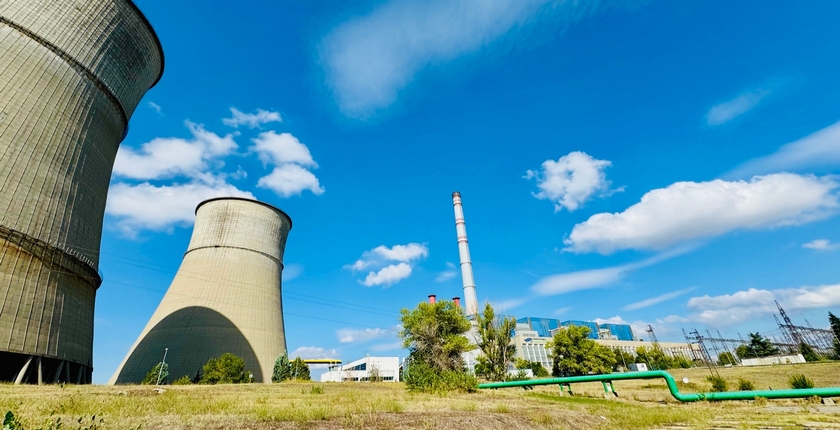
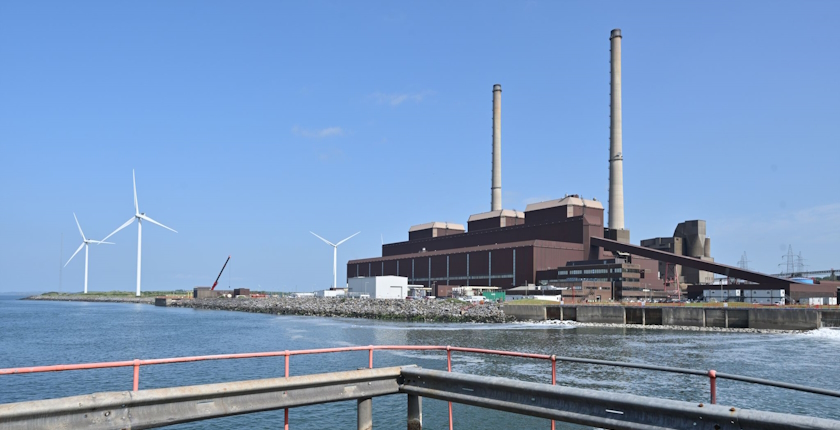
The Moneypoint power plant stopped burning coal, marking the end of Ireland’s coal era. The last such facilities in several other countries in the European Union are operating only barely or occasionally.

Ireland has ended coal power generation. It is the eleventh coal-free country in the European Union and the 15th in Europe overall. Notably, nine countries in total never hosted coal power plants, according to the Beyond Fossil Fuels database.

Slovakia and Spain officially intend to exit coal this year, followed by Greece (2026), France and Hungary (2027) and Denmark (2028). However, the dates could be pushed forward and there is a possibility that more countries will join the group in the meantime. Several of their remaining facilities are active just sporadically – in islands or to cover winter peaks or only until the district heating systems that they supply switch to cleaner sources.

For instance, the share of coal power in Finland is minuscule.

Coal power is already uncompetitive most of the time. Moreover, when such facilities are idle, their costs rise further because of salaries and the complex logistics.

Moneypoint plant switches to backup with heavy fuel oil

The Moneypoint plant in Ireland ceased burning coal last week earlier than planned. Its operator ESB is turning the site into a renewable energy hub.

At the turn of the millennium, wind supplied just 1% of the country’s electricity. Today, it generates more than a third.

“The government’s priority now must be building a power system fit for a renewable future; one with the storage, flexibility, and grid infrastructure needed to run fully on clean, domestic renewable electricity,” said Alexandru Mustață, campaigner on coal and gas at Beyond Fossil Fuels.

Moneypoint will serve a limited backup role until 2029, burning heavy fuel oil under emergency instruction from transmission system operator EirGrid.

Subsea interconnections to enable coal phaseout completion in Spain, Italy

Spain and Italy are set to follow suit, excluding the Balearic Islands and Sardinia, respectively.

Brindisi Sud (2 GW) and Torrevaldaliga Nord (2 GW) are expected to cease regular operations in mid-2025 and are set to be placed into a strategic reserve, pending full decommissioning. Italy’s remaining coal plants, Sulcis (590 MW) and Fiume Santo (640 MW) in Sardinia, are expected to remain online until a second undersea grid cable to the mainland is completed.

Aboño (916 MW) in Spain is being converted from coal to fossil gas. Soto de Ribera (350 MW) and Los Barrios (589 MW), are barely operating. The Alcúdia plant in the island of Mallorca has two coal units of 130 MW each. Its closure depends on the construction of the archipelago’s second interconnection with the mainland.

Slovakia’s coal phaseout was extended for a short while as a smaller unit kept using what it had left in stock

Slovakian energy company Slovenské elektrárne ended production at its combined heat and power (CHP) plant Vojany (220 MW) in March of last year, which was supposed to mark the country’s coal exit. However, the Teko facility of 121 MW continued to operate with its remaining stockpiles to cover the winter season.

The Cordemais coal plant (1.2 GW) in France is designated for closure in 2027. Émile-Huchet (600 MW), the other remaining facility in the country, should be converted to gas by then.

Turkey, Germany, Poland, Slovenia, the Czech Republic, Serbia, Montenegro, Bosnia and Herzegovina and Kosovo* have the largest shares of coal in power production in the European Union and Southeastern Europe.
Post Views:99
* This designation is without prejudice to positions onstatus and is in line with UNSCR 1244/99 and the ICJ Opinion on the Kosovo declaration of independence.
June 25, 2025
by AEA in News

OMV Petrom enters Bulgarian solar power market as partner in one of biggest projects

As part of its decarbonization efforts, Romanian hydrocarbons producer OMV Petrom is strengthening its presence in neighboring Bulgaria. It agreed to buy 50% of the Gabare solar power project, of 400 MW, from its developer Enery Element.

The solar power investment frenzy in most of Southeastern Europe is continuing despite rising curtailments and the frequent occurrence of negative power prices. Major developers and operators are counting on battery storage to gradually close the still widening gap between intraday peak production and consumption in spring and autumn.

Romanian oil and gas company OMV Petrom – a subsidiary of OMV – is acquiring a 50% stake in Bulgarian firm Dunav Solar Plant. It is developing the 400 MW Gabare photovoltaic project in Byala Slatina near Sofia.

Until now, the sole owner was Enery Element, a joint venture between Austrian renewable energy company Enery Development and its Bulgarian partner Element Power Group. The two sides didn’t disclose the amount. They expect to close the transaction later this year, after fulfilling certain conditions.

Partners to invest EUR 200 million in total by production launch in 2027

The solar park is expected to enter commercial operation in 2027. By then, OMV Petrom and Enery plan to invest EUR 200 million, including from external financing. They are targeting their final investment decision before the end of 2025.

Solar trackers will maximize output, which will be equivalent to the consumption of 150,000 domestic households, the Romanian company pointed out. A battery energy storage system (BESS) of up to 600 MWh in capacity is an option for future consideration, OMV Petrom added.

Neel: Natural gas and renewables complement each other

“By investing in one of the largest photovoltaic projects in Bulgaria, we are strengthening our presence on this neighbouring market and are supporting the region’s energy transition. We believe that natural gas and renewables complement each other and play a key role in reducing emissions while ensuring energy stability,” said member of the Executive Board of OMV Petrom Franck Neel, responsible for the Gas and Power division.

He added that the company would also offtake 50% of the generated electricity, through a power purchase agreement (PPA), without revealing further details.

Enery currently generates almost 700 GWh of clean electricity per year from 490 MW in installed capacity. It has 8 GW in the project pipeline in 11 countries.

Permits for PV park secured

The construction permits and the grid connection have already been secured, according to the update. At 400 MW in peak capacity, Apriltsi is the largest solar power plant in the Balkans and Eastern Europe, excluding Turkey.

However, a PV system of 550 MW in Greece is about to be completed.

OMV Petrom is the largest integrated energy producer in Southeastern Europe, with an annual group hydrocarbon production of 40 million barrels of oil equivalent in 2024. In addition, it is expanding in the segments of wind power and photovoltaics, energy storage, alternative fuels including green hydrogen, and chargers for electric vehicles.

OMV earlier expressed interest in renewables in Serbia and Hungary as well

The group has a refining capacity of 4.5 million tons. It operates an 860 MW high-efficiency gas-fired power plant. The group is present in Romania and neighbouring countries through 780 filling stations under the brands OMV and Petrom, of which 93 in Bulgaria.

At the end of last year, Austrian energy giant OMV had a 51.2% stake in OMV Petrom. The Romanian Ministry of Energy controlled 20.7% and pension funds in the country participated with 23.7% in total.

In Bulgaria, OMV Petrom started supplying natural gas to business customers last year. Following the discovery of gas resources in Romania’s Neptun Deep block in the Black Sea, it is now exploring the gas potential in Bulgaria’s Han Asparuh block. In April, the company said it approved an investment budget of EUR 1.6 billion for 2025, or over 20% more than in 2024.

Pparent company OMV, headquartered in Vienna, expressed interest last summer in the wind and solar power potential of Romania, Serbia, Bulgaria and Hungary.

Post Views:82
June 25, 2025
by AEA in News

Alteo building solar park with battery storage for MOL Group

MOL’s 37.4 MW solar power plant with a battery energy storage system (BESS) of 40 MWh will contribute to the energy independence of its oil and gas complex in southern Hungary. Alteo is the contractor building the facility. The battery segment has received grants totaling EUR 20.5 million.

MOL Group marked the start of construction of a solar park and BESS at its Algyő site in Csongrád-Csanád county. The Hungarian company pointed out that smart green transition, reducing external energy consumption, is a key element of its Shape Tomorrow strategy.

The investment will significantly contribute to the energy independence of the oil and gas complex in southern Hungary, improve the flexibility of electricity supply and lower the site’s CO2 emissions by 13,000 tons per year, according to the announcement.

MOL Group hired Alteo, in which it holds minority stake

The photovoltaic plant project is for 37.4 MW and the battery energy storage system would have 40 MWh in capacity. Alteo, listed at the Budapest Stock Exchange, is the contractor for the construction of the facility. MOL Group, which holds a minority stake, controls a total of 73.8% of its shares together with two private equity funds.

The company’s full name is Alteo Energy Services. As an aggregator, it owns or operates gas power plants and renewables, combined with energy storage, while also providing software as a service (SaaS).

Storage is essential for smart energy transition

MOL has won support of EUR 20.5 million in total for the energy storage project in Algyő. A EUR 6.7 million grant came via the European Union’s Recovery and Resilience Facility (RRF) and Hungary’s National Recovery and Resilience Plan (NRRP), while the government secured the remainder.

“Our strategic goal is a smart energy transition, for which energy storage is essential, as it ensures the integration and flexible use of sustainable energy systems. Algyő is a symbolic location for us – it is here that six decades of industrial experience meet the technology of the future,” said Managing Director of MOL Exploration and Production Hungary Péter Archibald Schubert.

Solar power capacity in Hungary has topped 8 GW

The solar power plant’s output is equivalent to the annual consumption of 22,500 households in the county, while the BESS can flexibly cover 7,300 households, he added.

MOL Group operates seven solar parks in Hungary and two in Croatia, of 111 MW altogether. Its goal is to reach 200 MW in renewable energy capacity by the end of next year.

Alteo will operate MOL’s other battery energy storage system, in Tiszaújváros

Of note, the company broke ground in March for a 40 MWh battery system at the MOL Petrochemicals site in Tiszaújváros, in northeastern Hungary. It selected Alteo as its operator. The investment is worth EUR 16.3 million, of which EUR 6.7 million is a grant from NRRP.

As for the PV and battery investment in Algyő, the local authority made the 47-hectare site available to the integrated hydrocarbons producer, Hungarian media reported.

At the ceremony, Deputy State Secretary for Energy Transition at the Ministry of Energy Viktor Horváth said that the country’s solar power capacity has surpassed 8 GW. It is ninth in the world in PV capacity per capita.

In other storage news, MET Group inaugurated the largest BESS in Hungary last week at its gas power plant near Budapest.

Post Views:65
June 24, 2025
by AEA in News

Coal power plant Maritsa East 3 plans to build solar plant, 200 MW battery system

Coal-fired power plant ContourGlobal Maritsa East 3, which operates only sporadically to ensure the stability of supply for Bulgaria’s power system, plans to repurpose the grid infrastructure of its units 1 and 2 for solar and battery storage capacities. Units 3 and 4 will remain on standby to generate electricity during peak demand periods in the summer and winter months, but the plant will need state support to cover maintenance and workforce costs.

Maritsa East 3 (Maritsa iztok 3), majority owned by the US-based ContourGlobal, plans to use the existing grid infrastructure, including transformers and switchgear, to speed up the green energy project within the complex, according to Vassil Shtonov, Executive Director of ContourGlobal Bulgaria.

The central element is a 200 MW standalone battery energy storage system (BESS), the largest of its kind in Bulgaria, which would improve the flexibility and stability of the national power system, Shtonov explained in an interview with Capital.bg.

The project involves a 200 MW standalone battery system and a solar power plant

The planned battery system at Maritsa East 3 was among 82 projects selected to receive a total of EUR 587 million in subsidies from Bulgaria’s Ministry of Energy in April this year.

“In parallel, we are considering the development of an additional hybrid solar park with a battery at the same site,” he said. This will allow for faster deployment of new clean energy capacity, while preserving all options for future use of the coal-fired plant and its original infrastructure, Shtonov added.

ContourGlobal plans to build 400MW to 500 MW of renewable energy capacity combined with batteries

ContourGlobal plans to invest hundreds of millions of euros to develop 400 MW to 500 MW of renewable energy capacity combined with storage systems, he said, adding that nearly half of this target is under construction or final approval. The company’s goal is to phase out coal by 2027 and achieve carbon neutrality by 2040, he stressed, recalling that Bulgaria’s targeted coal phaseout date is 2038.

Keeping coal plants on standby requires state support

Bulgaria’s state-owned National Electricity Co. (NEK) holds a minority stake in Maritsa East 3. After the plant’s 15-year power purchase contract with NEK expired in February 2024, it has only been able to operate on the free market for a few months a year. This year, units 3 and 4 were online from January to the end of March to maintain energy security.

Shtonov: Key coal-fired power plants should get a fixed amount from the state

However, to be on standby for system security, the plant needs to keep workers on the payroll even when it is not operating. For this reason, strategically important coal-fired power plants should receive a fixed amount from the state to cover ongoing personnel and maintenance costs, and then be switched on when necessary to protect consumers from sharp increases in electricity prices, as happened last year in July and November, according to Shtonov.

Post Views:38
June 24, 2025
by AEA in News

North Macedonia, Kosovo* planning 400 kV power interconnection

The transmission system operators (TSOs) of North Macedonia and Kosovo* are developing a project for a 400 kV interconnection line between Tetovo and Prizren. The investment would include other grid upgrades and expansion.

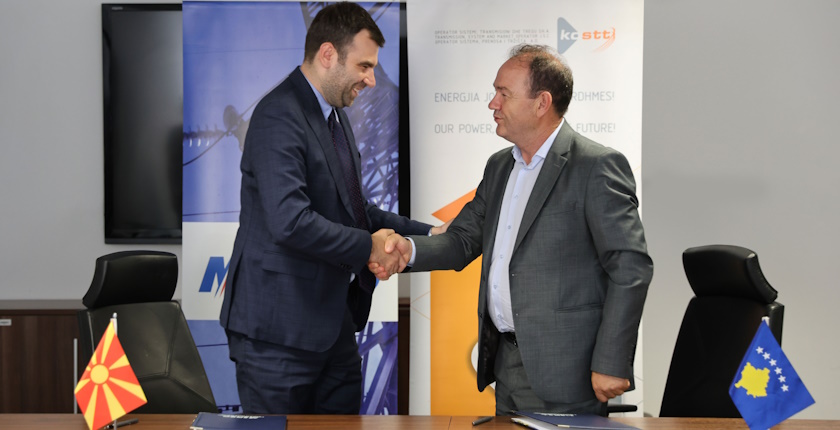
Director-General of North Macedonia’s MEPSO Burim Latifi and Acting Chief Executive Officer of Transmission, System and Market Operator (KOSTT) of Kosovo* Shaban Neziri signed a memorandum of cooperation in Skopje. The two transmission system operators intend to jointly upgrade the high-voltage network. The emphasis is on a strategic project for a 400 kV interconnection line from Tetovo to Prizren.

The endeavor aligns with the European Union’s energy transition goals by 2050, North Macedonia’s TSO said. The project is nominated through the planning platform of the European Network of Transmission System Operators for Electricity (ENTSO-E) for increasing transmission capacities.

New interconnection to encourage investments in renewables

North Macedonia and Kosovo* have only one interconnection now, of 220 kV. According to ENTSO-E, Southeastern Europe needs to at least double transmission capacities and, in some cases, increase them even more than that, MEPSO stressed.

On that note, the bilateral project includes additional investments in the transmission network, such as the construction of a 400/110 kV transformer station in Tetovo, in North Macedonia’s northwest, and 400 kV transmission lines from Tetovo to Ohrid and Skopje.

“The 400 kV Tetovo-Prizren transmission line project will not only increase the system’s capacity and reliability but also enable greater electricity exchange, encouraging new investments in renewable energy sources,” Latifi said.

Investment to bolster East-West energy corridor

Regarding the other benefits, the heads of the two TSOs agreed that the project would bolster the transmission infrastructure in the region, strengthen the so-called East-West energy corridor and improve system flexibility.

The new document confirms the joint commitment to creating a modern and reliable energy infrastructure, Neziri stressed. “With this project, we are enhancing energy connectivity in the region and contributing to achieving the energy goals of the Western Balkans,” he added.

Strong interconnections are essential for the integration of the electricity market in the Western Balkans

The project is in the planning and technical preparation phase. The start of construction depends on securing financial resources and coordination with all relevant stakeholders, MEPSO explained.

Strong interconnections are essential for the integration of the electricity systems and markets in the region with the EU, through market coupling. Together with Albania and Greece, North Macedonia and Kosovo* are part of one such regional project, which has been suffering delays.

Market coupling is a prerequisite for the exemption of the power markets in the Western Balkans and the rest of the Energy Community from the EU’s Carbon Border Adjustment Mechanism, or CBAM, under which a CO2 tax is set to start being charged on January 1.

Post Views:62
* This designation is without prejudice to positions onstatus and is in line with UNSCR 1244/99 and the ICJ Opinion on the Kosovo declaration of independence.
June 24, 2025
by AEA in News

Federation of BiH launches grants program for prosumers

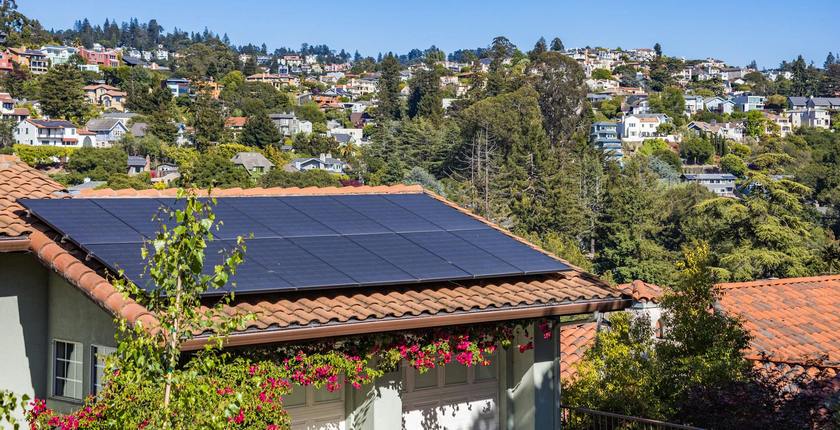
The Federation of BiH, one of the two entities constituting Bosnia and Herzegovina, has launched a grants program to co-finance the installation of rooftop solar power plants, expected to cover around 500 households a year and lead to an increase of 4.2 GWh in renewable electricity production.

Operator for Renewable Energy Sources and Efficient Cogeneration – Operator za OIEiEK estimates that the average installed capacity of the solar power plants will be 6 kW, and that the grants will help reduce greenhouse gas emissions by 3,800 tons a year.

The program will be funded from renewable energy surcharges

The program will be funded from renewable energy surcharges paid through electricity bills by all consumers in FBiH. Grants will be approved for two categories of applicants. The first one is vulnerable households whose annual consumption exceeds 3,500 kWh. The second covers those who consume more than 5,500 kWh a year and whose connection power is equal to or less than the requested installed capacity of the solar installation, according to the decision of the Operator za OIEiEK.

The maximum grant amount per applicant is BAM 7,000 (EUR 3,580), or up to 60% of the investment cost for users in the second category.

Damir Miljević: People in extreme energy poverty will get solar power plants for free

Although the budget and the anticipated scope of the program are modest, one positive aspect is that part of it is intended to fully cover the cost of PV installations for people in extreme energy poverty. They will receive a rooftop system free of charge, eliminating, partially but permanently, some of the concerns about financing their energy needs, according to Damir Miljević, a member of the Board of the Center for Sustainable Energy Transition (RESET), a BiH think tank.

Prosumers were introduced in the FBiH legislation two years ago, with the passage of a set of reform energy bills, including the Law on the Use of Renewable Energy Sources and Efficient Cogeneration.

At the national level in Bosnia and Herzegovina, prosumer regulations have not been adopted yet. According to some estimates, the country could cover half of its electricity consumption by installing solar panels on about a million roofs.

Post Views:50
June 24, 2025
by AEA in News

Slovenia preparing hydrogen action plan until 2030

The Slovenian Ministry of the Environment, Climate and Energy has invited bids for preparing a draft action plan to achieve the hydrogen targets from the National Energy and Climate Plan (NECP). The document is intended to guide the development of hydrogen technologies in Slovenia until 2030, with an outlook to 2040.

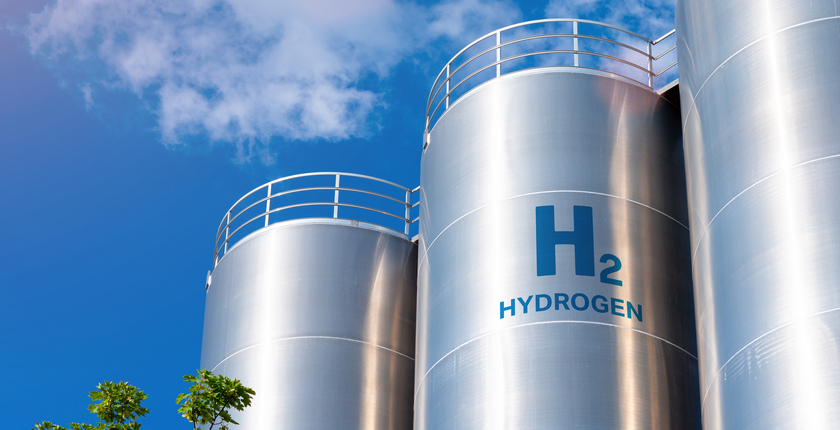
Hydrogen is expected to help decarbonize sectors such as industrial production, transportation, and energy. The action plan must clearly define strategic goals, measures, and projects for introducing hydrogen, including cross-sectoral integration (power-to-X solutions), according to the public call.

Hydrogen is expected to help Slovenia decarbonize industrial production, transportation, and energy

The drafting of the action plan is partly financed by the European Union as part of the North Adriatic Hydrogen Valley (NAHV) project, a joint effort by partners from Slovenia, Croatia, and Italy, the ministry said. The NAHV is expected to start producing hydrogen by the end of 2026.

The document is co-financed by the EU under the North Adriatic Hydrogen Valley project

The document is intended to provide guidelines for the development of infrastructure, support policies, and incentive measures that would enable the gradual development of the hydrogen ecosystem in Slovenia. It must also define a timeline and provide cost estimates. Its purpose is to define a comprehensive, coordinated, and feasible set of measures, the ministry said.

The action plan must provide a timeline, cost estimates, and a feasible set of measures

The plan should also include an analysis of existing hydrogen strategies in the EU; an overview of existing hydrogen initiatives and projects in Slovenia; recommendations for technical, political, financial, legal, and regulatory feasibility; and an analysis of environmental and socio-economic impacts.

Bids are accepted until July 17, while the deadline for completing the job is 10 months from signing the contract, according to the public call.

Post Views:87
June 23, 2025
by AEA in News

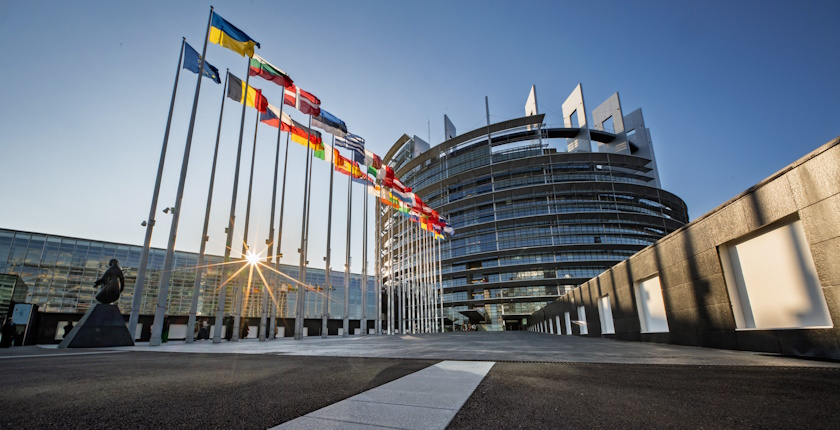
EU institutions reach deal on CBAM simplification

The Council of the European Union struck a provisional agreement with negotiators from the European Parliament regarding the European Commission’s proposal to simplify the CBAM carbon border tax. The initial levy, which would be gradually increased year by year until it matches the EU ETS price, is coming into force on January 1. The administration in Brussels doesn’t seem willing to consider delaying the date, even though neighboring third countries and their exporters to the EU are struggling to adjust to the new system, especially in the electricity sector.

The Polish presidency of the Council of the EU and European Parliament’s negotiators reached a provisional agreement on one of the proposals of the so-called Omnibus 1 legislative package: a regulation that would simplify and strengthen the Carbon Border Adjustment Mechanism (CBAM).

The proposal seeks to ease compliance without compromising the scheme’s climate goals. The colegislators said it would reduce the regulatory and administrative burden, as well as costs for EU companies, especially small and medium-sized enterprises (SMEs).

CBAM is a tool to equalize the price of carbon paid for EU products operating under the EU Emissions Trading System (EU ETS) with that of imported goods, and to encourage greater climate ambition in non-EU countries.

No relief in scope so far for EU’s neighboring countries

Notably, third countries including the Western Balkans and Turkey and the companies there that export cement, iron and steel, aluminum, fertilizers, electricity and hydrogen to the EU are running out of time before charges are introduced on January 1 next year. Primarily, the governments need to introduce carbon pricing systems to be exempted.

ENTSO-E asked for a one-year delay of the initial CBAM charges for electricity

Earlier this month, the European Network of Transmission System Operators for Electricity (ENTSO-E) highlighted several contradictions in CBAM in its sector. It suggested to the European Commission to prolong the transitional period by one year. The latest update doesn’t indicate any willingness to suspend the levy.

Moreover, the European Commission needs to assess in early 2026 whether to extend the scope to other ETS sectors and how to help exporters of CBAM products at risk of carbon leakage. The EU is set to increase the tariffs every year until they match the EU ETS at the start of 2034.

Boosting EU competitiveness

The European Commission said in February that the measures it proposed would save EUR 6.3 billion.

“Simplification is a top priority for the Polish presidency. Today’s provisional agreement with the parliament is yet another step towards reducing administrative burden for our companies and further boosting EU competitiveness,” Minister for the European Union of Poland Adam Szłapka said about the deal with lawmakers.

The colegislators retained the key components of the commission’s proposal to simplify CBAM rules, according to the Council of the EU. There would be a broader de minimis exemption from obligations applicable to importers that do not exceed a single mass-based threshold set at a level of 50 tons per year. The revised regulation would also permit them to avoid any initial disruptions as they will be able to continue importing while awaiting CBAM registration.

Both institutions must formally adopt the measures before they enter into force, which is expected by September, the Council of the EU said.

According to the European Parliament, 90% of importers would be exempted and 99% of CO2 emissions from iron, steel, aluminium and cement imports are still covered.

Post Views:61
June 23, 2025
by AEA in News

Serbia preparing nuclear, hydrogen deal with South Korea’s KHNP

After contacts with Russia, Slovenia and China regarding nuclear energy, and the start of cooperation with France, Serbia is expecting to sign an agreement with South Korean state-owned power utility KHNP, involving hydrogen as well. Among the other options are joint activities in the segment of small modular reactors.

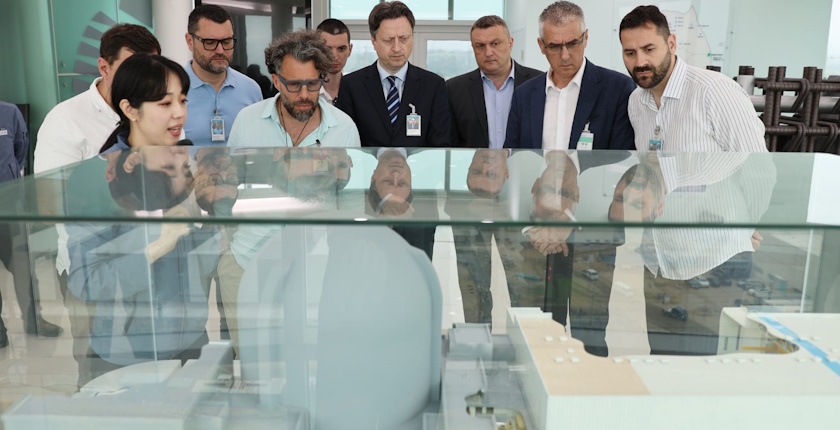
Like many countries in the Balkans, Europe and beyond that want to build their first or additional nuclear power plants, Serbia is considering the possibilities for such projects. Assistant Minister of Mining and Energy Radoš Popadić, responsible for electricity, visited the biggest nuclear power complex in the world. It is located in Ulsan in South Korea and owned by Korea Hydro and Nuclear Power (KHNP).

The Serbian official got acquainted with the technological and safety standards there, according to the announcement.

An agreement with KHNP on the exchange of knowledge and experiences concerning nuclear energy and hydrogen is expected to be finalized soon, Popadić revealed.

“The Ministry of Mining and Energy has been in contact for some time now with the representatives of KHNP and we are expecting an agreement with prestigious South Korean company KHNP to be finalized soon, regarding the exchange of knowledge and experiences in the nuclear energy segment and hydrogen, having in mind that we actually see nuclear energy as one of the key solutions for Serbia’s secure, stable and low-carbon future. Hydrogen is an energy product of the future and its use is also envisaged in our strategic documents and it is important to exchange knowledge on the application of this technology,” Popadić stated.

The assistant minister stressed that South Korean companies have proven results in the construction of nuclear facilities abroad. He highlighted the Barakah project in the United Arab Emirates, which is led by state-owned KHNP’s parent company Korea Electric Power Corp. (KEPCO). Of note, the first of four reactors entered regular operation in September.

The ministry added that Popadić also spoke to his hosts about the possibilities of cooperation regarding projects for small modular reactors (SMRs).

Serbia amended its Law on Energy in November, abolishing a moratorium on the construction of nuclear plants, imposed in 1989.

Nuclear plants are among solutions for price, grid stability, supply security

Participants in the energy markets generally anticipate strong growth in power demand due to the electrification of transport and heating and cooling as well as for future data centers and the needs for artificial intelligence.

The other major factors making the case for nuclear energy are the efforts to make prices affordable, maintain the security of supply and replace baseload energy sources. Namely, coal power plants in Europe are shutting down on a massive scale and the long-term status of fossil gas is still uncertain.

At the same time, there is the meteoric rise in wind and solar power capacity – the operation of such facilities depends on meteorological conditions, so unpredicted variations are frequent. Batteries and other balancing and flexibility solutions mitigate such disturbances affecting the grid, but the pace of their deployment is lagging.

Serbia working on national program for peaceful use of nuclear energy

Serbian President Aleksandar Vučić met in 2021 with Director General of Russia’s State Atomic Energy Corp. Rosatom, Alexey Likhachev. They discussed the possibility of building a nuclear power plant.

Likhachev visited Serbia four months ago, too. He offered help with projects, Rosatom said after he met with Vučić and other state officials. “What we can offer already today is lower than the current prices, and in the long term it will be even more appealing,” the director general stated.

Serbia established cooperation last year with France’s government-owned energy utility EDF. Together with Egis Industries, the company was then selected for the development of a technical study on the peaceful use of nuclear energy.

Minister of Mining and Energy Dubravka Đedović Handanović spoke in February with Ambassador of Slovenia Damjan Bergant about the possibilities for bilateral cooperation. The following month, state-owned public enterprise Nuclear Facilities of Serbia signed a memorandum of understanding with the China Institute of Atomic Energy (CIAE).

Post Views:114
June 23, 2025
by AEA in News

Slovenia to subsidize battery storage for businesses with EUR 17 million

Slovenia’s Ministry of the Environment, Climate and Energy, in cooperation with electricity market operator Borzen, has allocated nearly EUR 17 million in grants for businesses planning to install battery storage systems.

The grants are intended for the purchase and installation of battery storage units, hybrid inverters, and electrical installations and equipment. The subsidy can cover up to 45% of eligible investment costs, or a maximum of EUR 225 per kWh of battery storage capacity.

New batteries can be combined with existing energy storage capacities or solar power plants

Eligible applicants are companies, sole proprietors, and cooperatives. Grants can be combined with a solar power plant or existing storage units without restrictions.

The total amount of aid that can be granted to an individual beneficiary may not exceed EUR 300,000 over three years. More information will be available after a public call is announced, the ministry added in a LinkedIn post.

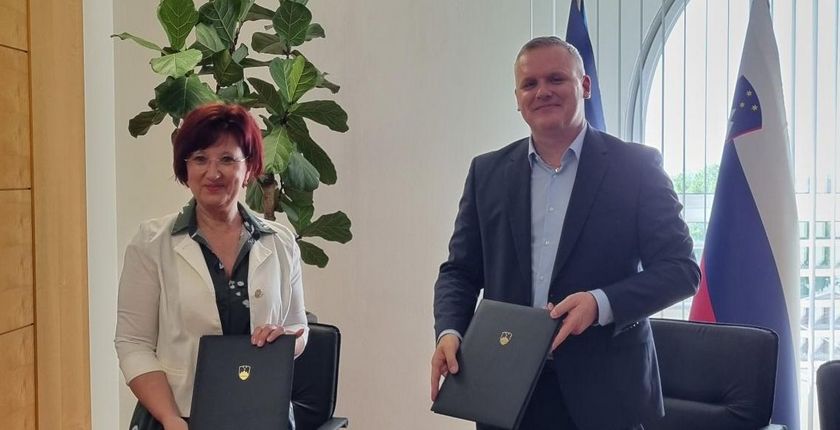
A contract on launching a public call for grants was signed by Minister of the Environment, Climate and Energy Bojan Kumer and Borzen General Manager Mojca Kert.

Slovenia is using EU funds to support new solar and wind projects, including batteries

Slovenia’s Ministry of Cohesion and Regional Development recently approved EUR 63.5 million in European Union funds for co-financing investments in new solar and wind power plants in the period until 2029. The scheme includes the possibility of storing electricity, according to the announcement.

At the same time, the ministry allocated EUR 23.5 million in EU funds for a program to tackle energy poverty in Slovenia in the 2024-2027 period.

Post Views:57
  • 1
  • …
  • 82
  • 83
  • 84
  • 85
  • 86
  • …
  • 140

AEA – Albania Energy Association is a industry association dedicated to representing the interests of Albanian and West Balkan for energy producers and consumers. AEA works to advance the development and adoption of sustainable energy solutions in Albania and the Western Balkans, supporting the region’s transition toward a cleaner, more secure, and more competitive energy future. AEA is registered by decision of the Court of Tirana, DECISION NO. 3032, (VAT:L11827451K).

[email protected]

Address
Blv Zogu 1
Tirana
1057
ALBANIA

LinkedIn  |  Facebook
Events
May 25, 2022 Connecting Green Hydrogen Europe 2022
May 25, 2022 Energy Week Western Balkans 2022
Copyright © Albania Energy Association