AEA-Albania Energy Association
  • Main
  • About Us
  • Services
  • Sectors
  • News
  • EventsEvents
  • PublicationPublication
  • Contact Us
AEA-Albania Energy Association
  • Main
  • About Us
  • Services
  • Sectors
  • News
  • EventsEvents
  • PublicationPublication
  • Contact Us
AEA-Albania Energy Association
  • Home Page
  • About Us
  • Sectors
  • Our Services
  • News
  • Contact Us
September 5, 2025
by AEA in News

Šahmanović: Masdar ready for new investments in Montenegro’s energy sector

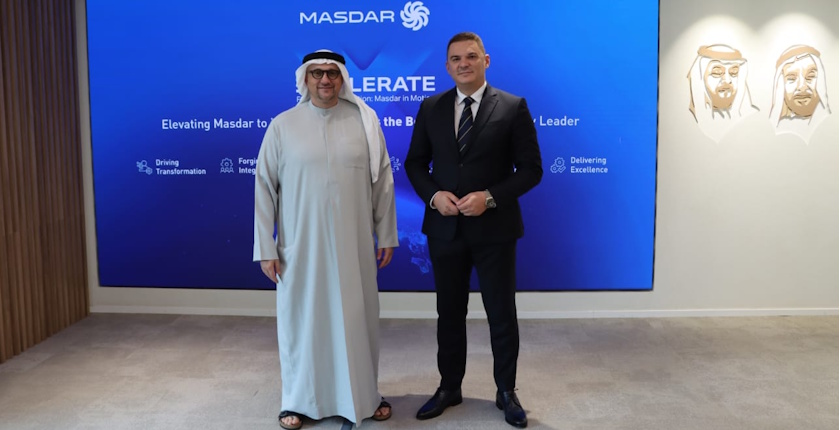
Montenegrin Minister of Energy and Mining Admir Šahmanović has met with Mohamed Jamel al-Ramahi, CEO of Masdar, a United Arab Emirates state-owned renewable energy company. During the meeting in Abu Dhabi, Šahmanović highlighted the energy sector as Montenegro’s biggest development opportunity, while Masdar’s top man confirmed the company’s readiness to expand its operations in Southeast Europe.

As part of his visit to the United Arab Emirates (UAE), Minister Admir Šahmanović held talks with representatives of Masdar, one of the global leaders in renewable energy.

“Montenegro undeniably has the potential and natural resources, but we are equally aware of our financial limitations. Investments in capital energy infrastructure projects are measured in hundreds of millions of euros, which requires strong partnerships and the pooling of resources,” Šahmanović said at the meeting.

Šahmanović: Energy is Montenegro’s greatest development opportunity

According to him, Montenegro sees the energy sector as the greatest development opportunity, which can trigger economic growth, create new jobs, and ensure long-term stability.

“To achieve this, we choose strategic partners carefully – those who share our vision and are ready to invest in a sustainable and strong energy sector,” he said.

The Montenegrin minister and Masdar representatives discussed opportunities to further strengthen cooperation and develop new projects. Šahmanović stressed that cooperation with Masdar so far – on the Krnovo wind farm – provides a solid foundation for even more ambitious projects.

Masdar is looking to expand its business in Eastern Europe

Masdar’s CEO confirmed that the company has the capital, know-how, and interest for significant business expansion in Eastern Europe, with Montenegro taking priority in its investment plans.

Šahmanović emphasized that the Government of Montenegro is committed to creating a favorable business environment – through clear procedures, a stable regulatory framework, and more efficient administration – to ensure security and predictability for investors.

That, he noted, is not only a prerequisite for attracting new investments but also a guarantee that the energy sector will become a pillar of the country’s economic growth and energy independence.
Post Views:75
September 4, 2025
by AEA in News

Serbia, South Korea’s KHNP to cooperate on nuclear energy, hydrogen

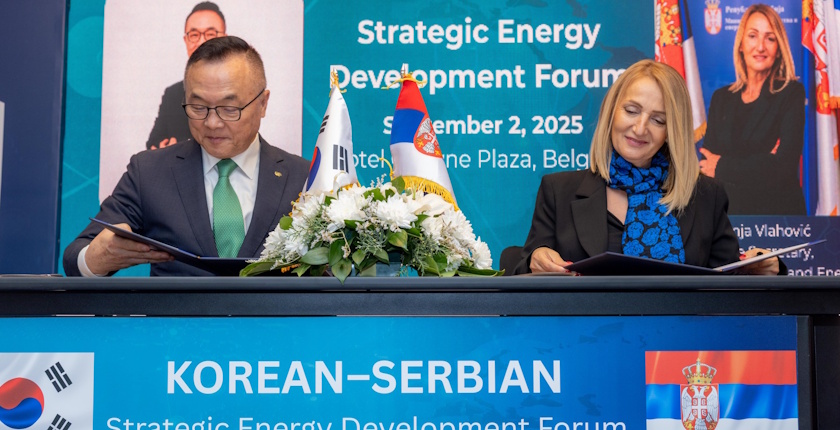
Serbia and South Korean company Korea Hydro & Nuclear Power have signed two memorandums of understanding on cooperation in the fields of nuclear energy and hydrogen.

The memorandums were signed by Sonja Vlahović, State Secretary at the Ministry of Mining and Energy, and Joo-ho Whang, President and CEO of Korea Hydro & Nuclear Power (KHNP), a subsidiary of Korea Electric Power Corporation (KEPCO).

Notably, South Korean company Hyundai Engineering is part of Serbia’s largest renewable energy project—the deployment of 1,000 MW of solar power plants with battery storage.

The memorandums were signed during the Korea-Serbia Strategic Energy Development Forum, held in Belgrade and organized by the Ministry of Mining and Energy and the Korea Trade-Investment Promotion Agency (KOTRA).

So far, Serbia has established contacts or started cooperation on nuclear energy with China, France, Russia, Slovenia, and the United States.

Vlahović: We’ll consider pilot hydrogen projects

The main goal of the nuclear energy memorandum is to help the ministry develop and train personnel in Serbia in the field of nuclear technologies, as well as to facilitate the exchange of technical information and expertise.

Photo: Balkan Green Energy News

The second memorandum, on hydrogen cooperation, will enable joint work to assess the potential for developing pilot green hydrogen projects in Serbia. It envisages technical exchanges and support for human resource development, as well as sharing know-how in the full hydrogen cycle and supply chain management.

State Secretary in the Ministry of Mining and Energy Sonja Vlahović noted that Serbia is considering nuclear energy as one of the potential energy sources that could help it achieve energy security while transitioning to clean energy sources.

Joo-ho Whang: Cooperation will enable sustainable growth for Serbia and the company

“For us, it is very important to develop cooperation with countries and companies that are global leaders in nuclear technologies, to exchange knowledge and experience, and to invest in the development of our experts. We are also very interested in the opportunities offered by hydrogen technologies and, together with partners from South Korea, we will explore potential pilot projects,” she said.

According to KHNP President and CEO Joo-ho Whang, the cooperation will enable sustainable growth for both Serbia and the company.

“We particularly expect that demonstration projects in the field of hydrogen will play a key role in developing the hydrogen industry in Serbia. Additionally, the agreement will open new opportunities for cooperation in the clean energy sector,” he added.

KHNP to assist with workforce training

The nuclear energy memorandum calls for KHNP to support the development of training programs for personnel in the ministry and other relevant government institutions, faculties, and companies. The support is expected to cover various aspects of nuclear technologies, safety, and the regulatory framework.

It also includes establishing a mechanism for regular exchange of technical information, research results, and best practices in nuclear energy, the ministry said.

Dimović: Serbia could have a nuclear power plant by 2040

Photo: Ministry of Mining and Energy/Nenad Kostić

The signing was followed by presentations delivered by KHNP, the ministry, state power utility Elektroprivreda Srbije (EPS), the Vinča Institute for Nuclear Sciences, and KOTRA.

Park So-hyun, Senior Manager of Overseas SMR Project Section, presented nuclear power plant projects that the company is developing in South Korea and other parts of the world.

Hydrogen projects and cooperation with Serbia were the theme of a presentation by Kim Su-Jy, Senior Manager of Global KHNP Hydrogen & Energy Business Sector.

EPS is conducting a hydrogen study

Assistant Minister of Mining and Energy Radoš Popadić outlined the main goals and planned activities of Serbia’s Energy Development Strategy through 2040. Aleksandar Latinović, Head of Ancillary Services at EPS, presented the company’s development projects, recalling that EPS is currently conducting a study on possibilities for hydrogen utilization.

The Vinča Institute highlighted its rich history. CEO Slavko Dimović announced a public discussion aimed at explaining nuclear energy to all of Serbia, not just Belgrade. His optimistic yet realistic plan is for Serbia to have a nuclear power plant by 2040.

Milan Rajić, Senior Specialist at KOTRA, highlighted the agency’s results and invited Serbian entrepreneurs to collaborate with Korean companies.

The signing ceremony was also attended by the Ambassador of the Republic of Korea, Kim Hyung Tae, Serbia’s Minister of Science, Technological Development, and Innovation, Bela Balint, and the Director General for KOTRA Europe Headquarters, Kim Hyeon-cheol.

Post Views:140
September 4, 2025
by AEA in News

Montenegro’s state power utility posts EUR 24.5 million loss in H1 2025

Montenegro’s state-owned power utility, Elektroprivreda Crne Gore, posted a EUR 24.5 million loss in the first half of 2025, a 620% increase compared to the same period last year.

The main reasons for the poor results were a production halt at the Pljevlja coal power plant and a wide gap between the purchase price of imported electricity and the selling price for consumers connected to the distribution network, according to Elektroprivreda Crne Gore (EPCG).

EPCG’s total revenue in the first half of 2025 amounted to EUR 208.1 million, while total expenses reached EUR 234.7 million.

The operating result was a EUR 24.5 million loss, which is EUR 21 million more than in the first half of 2024, when the loss was EUR 3.5 million. This represents a 620% increase compared to the same period in 2024, according to EPCG’s half-year report.

Total electricity production was nearly 25% lower year-on-year

A significant factor affecting the business result was the halt in production at the Pljevlja thermal power plant from March 31 this year due to final works on environmental reconstruction and the regular annual overhaul. As a result, the plant’s utilization rate for the first six months was only 48.8%.

In the first half of 2025, TPP Pljevlja produced nearly 400 GWh of electricity, 7.9 GWh or 2.02% above the plan, but almost 18%, or around 87 GWh, less than in the same period in 2024.

The total output at hydropower plants – Piva, Perućica, and small hydropower plants (SHP) – was 658 GWh, which is 22% or 159 GWh less than in 2024.

The company spent EUR 35.8 million more on electricity imports

The total output of all power plants was 1,058 GWh, or 78.8% of the plan, according to the report. This also represents a decrease of 26%, or 278 GWh.

During the first half of 2025, EPCG imported 656 GWh of electricity for EUR 62.4 million. The average price was EUR 95.09 per MWh. In the same period last year, imports totaled 430.3 GWh, at an estimated cost of EUR 26.6 million, according to the report. This marked a 52% increase in the volume of imports.

The company has received consent to borrow EUR 50 million to finance electricity imports.

The report underlined that the price charged to consumers on the distribution grid is significantly lower than the purchase price of imported electricity. The gap has a major negative impact on EPCG’s results, the company noted.

Electricity is imported at above EUR 100 per MWh and supplied to distribution consumers at an average price of around EUR 45 per MWh, according to the report.

Post Views:62
September 4, 2025
by AEA in News

Abu Dhabi’s Mubadala buys into Romanian renewables developer Rezolv Energy

Mubadala Investment Company, a sovereign investment fund from Abu Dhabi, is acquiring a stake in Rezolv Energy, a major renewable energy investor in Romania, which is developing the largest solar park in Europe.

Mubadala is setting up a joint venture with Rezolv Energy’s owner, sustainable infrastructure investment fund Actis, for joint control of the Romanian firm, whose ongoing projects in the country exceed 2 GW, according to a report by Profit.ro.

The Mubadala-Actis joint venture, which has received the green light from the European Commission, will be created through the purchase of shares and securities.

Mubadala, with assets under management of USD 300 billion as of the end of 2024, is wholly owned by the government of Abu Dhabi, the United Arab Emirates (UAE).

The transaction has been cleared by the European Commission

Rezolv Energy’s ongoing projects in Romania include the construction of a photovoltaic park with an installed capacity of 1,044 MW in Arad County, called Dama Solar. Once in operation, it is expected to be the largest solar park in Europe. The investment envisages a battery energy storage system (BESS) with 500 MW of operating power.

Rezolv Energy is developing the 1,044 MW Dama Solar project and over 1 GW of wind farms in Romania

Its portfolio in Romania also includes a 600 MW wind project in Constanța county and a 461 MW wind park in Buzău county. The company has already signed a grid connection agreement for the facility in Constanța.

The company won four contracts for difference (CfD), for a total capacity of 951.2 MW, in the first two auctions organized by the Romanian Ministry of Energy, according to Profit.ro.

Rezolv Energy was launched by Actis in 2022, with an initial investment of EUR 500 million. It is now active in Romania, Croatia, the Czech Republic, Luxembourg, Bulgaria, and Slovakia, with a total portfolio of 2.5 GW of solar and wind projects.

Post Views:74
September 4, 2025
by AEA in News

Germany, France move to bridge nuclear divide with joint EU energy policy

Germany and France have agreed to work together on shaping a common European energy policy that would include nuclear power as a low-carbon energy source. The deal could help resolve the two countries’ long-standing division over the role of nuclear energy in Europe’s green transition.

Paris and Berlin might offer joint proposals for the European Union’s energy policy through 2040 that would “ensure non-discrimination among all net-zero and low-carbon energy technologies in their respective contribution to European energy, sustainability, and climate goals,” according to a joint economic agenda adopted at a meeting in Toulon, France.

The common EU policy would ensure non-discrimination among all net-zero and low-carbon energy technologies

In Europe, nuclear power is widely considered a low-carbon technology that provides reliable energy while also supporting climate goals and reducing dependence on fossil fuels, with France advocating for its revival. However, Germany shut down its last remaining reactors in 2023 and is focusing on renewables as a way to achieve climate neutrality.

The two countries have now agreed to promote technology neutrality and try to harmonize their respective energy policies in the interests of Europe, said French President Emmanuel Macron.

In turn, France will support Germany’s plans to establish hydrogen interconnections to southwestern Europe. This includes the long-stalled Southwestern Hydrogen Corridor, which connects Spain, Portugal, France, and Germany, according to reports. The corridor comprises the pipeline projects H2Med and HY-FEN.”

Germany and France will support hydrogen interconnections with Spain and Portugal

The initiative will be continuously supported through a Franco-German working group on hydrogen, according to the Franco-German Economic Agenda.

The two countries’ deal to jointly lead the way in shaping a competitive, secure, sustainable, and decarbonized European energy market also involves supporting a potential new electricity interconnector that transmission system operators Amprion, TransnetBW, and RTE are assessing, reads the document.

Post Views:129
September 4, 2025
by AEA in News

Croatia identifies another city with geothermal potential for district heating

The testing of an exploratory well near the Croatian city of Osijek has confirmed the area’s geothermal potential, according to the Croatian Hydrocarbon Agency.

This marks the second successful completion of exploratory activities within a broader project aimed at developing geothermal potential for district heating in Croatia. At the end of June, good news came from an exploration site in Velika Gorica.

The exploratory activities in Osijek have cost an estimated EUR 8 million, with the funding secured from the National Recovery and Resilience Plan (NRRP).

Testing and measurements of the Osijek GT-1 (OsGT-1) well revealed a reservoir temperature exceeding 100 degrees Celsius, with an estimated thermal capacity of nearly 5 MW.

Temperatures are lower than in Velika Gorica

These results confirm that Osijek possesses significant geothermal resources with potential applications in district heating, agriculture, and the area’s economic development, according to the Croatian Hydrocarbon Agency.

“Geothermal energy is one of the most stable renewable energy sources, and our research confirmed the substantial potential of reservoirs in the Pannonian Basin and a strategic opportunity for achieving long-term supply security and decarbonization of the energy system,” stressed Marijan Krpan, president of the agency’s management board.

Exploratory activities continue in other locations

Due to local geological specifics and the shallower depth of the reservoir, temperatures in Osijek are lower than those in Velika Gorica. The agency noted that although the geological conditions and reservoir depths differ between Velika Gorica and Osijek, geothermal energy is flexible enough to be adapted to local needs and used efficiently and sustainably.

According to Osijek’s mayor, Ivan Radić, geothermal energy is becoming a locally available and sustainable heating source not only for Osijek residents but also for businesses.

Following Osijek and Velika Gorica, exploratory activities will continue in Vinkovci, and later in Zaprešić. After completing all exploratory activities, additional wells are planned at sites with confirmed geothermal potential.

In addition to the state-funded activities, private companies such as ENNA Geo are also engaged in geothermal research.

Post Views:69
September 4, 2025
by AEA in News

Romanian prosumers propose measures to cut electricity bills by up to 60%

The Association of Energy Prosumers and Communities in Romania has called on the government to implement five measures that could swiftly reduce electricity bills.

The measures target both individual homes and multi-apartment buildings, and results could be visible in up to 12 months, according to the Association of Energy Prosumers and Communities (APCE).

The association pointed out that the measures are needed because consumers in Romania pay some of the highest energy prices in Europe.

The first measure is related to energy communities, as the country is lagging in implementing the relevant EU legislation. The association claims that the introduction of energy communities lowered energy bills in Spain by 60%.

The association called on the authorities to involve civil society in the lawmaking process

Such structures allow citizens to directly manage their energy production, distribution, and storage, achieving independence from traditional suppliers and producers, the APCE noted.

The association called on the authorities to involve civil society in the lawmaking process, and underlined that adoption could be completed in three months, with bill reductions within 3–12 months.

The second measure involves multi-apartment buildings. Through a simple legislative change, residents could become direct beneficiaries of solar energy produced on the roofs of their buildings, the APCE pointed out.

Romania could install up to 4,000 MW of rooftop solar on multi-apartment buildings

Romania, the association notes, could install up to 4,000 MW of solar power plants on 4,200 hectares of apartment building roofs. The proposed legislative changes could be adopted within three months, with results visible after 3–12 months.

Mini-PV systems for balconies have the potential to lower electricity bills by 60%, according to the APCE’s calculation. In Germany, over a million such systems have already been installed, leading to monthly bill reductions of more than 60%.

The association estimates that the legislation needed for their rollout could be adopted within 30 days, and results could be visible immediately after installation.

Tackling suppliers’ excessive profit margins

The regulation of the supply margin for energy produced by prosumers is the fourth proposed measure. The association said that in 2025, a surplus of almost 2 billion kWh of renewable energy would be injected into the grid by prosumers.

Romania’s regulator, ANRE, left it to suppliers to set their profit margins, resulting in high prices for electricity resold to consumers.

PACE calls for a clear regulation of the supply margin to ensure that electricity produced by prosumers reduces consumer bills.

Reducing transmission tariffs for the TSO

The estimated timeframe is up to three months for the measure to be adopted, with visible reductions in bills expected immediately after implementation.

The final measure is a reduction of transmission tariffs for the transmission system operator (TSO) Transelectrica.

Even though the TSO does not transport prosumers’ surplus electricity, it still charges them for the service. It collected over EUR 18 million in 2024, the APCE claims, adding that the figure for 2025 is estimated to be EUR 35 million.

Post Views:49
September 2, 2025
by AEA in News

Climate won’t suffer if Romanian coal power plants keep running – energy minister

The Romanian government is in talks on postponing the coal power plant closures envisaged under the National Recovery and Resilience Plan (NRRP), according to Energy Minister Bogdan Ivan. The current deadline for decommissioning these plants is the end of 2025, but Romania is hoping to push it back to 2030.

Ivan noted that Romania’s gas and coal power generation has dropped by 56% over the past decade, with around 7,000 MW of capacity closed and only 1,200 MW replaced.

“Now I am convinced that the world’s climate will not suffer so much if Romania continues to keep its coal-fired power plants in the Jiu Valley,” the minister said, according to Profit.ro.

Ivan: Keeping the Jiu Valley coal power plants operational will not hurt the global climate

He also stressed that Romania has pursued the most aggressive decarbonization policy in the European Union, choosing 2025 as a deadline to eliminate coal-fired electricity generation, compared to Poland or Germany, which intend to use coal until 2040–2050.

Ivan explained that wind and solar capacity in Romania has been growing, but that the country needs more battery storage to better utilize its output.

Romania needs more battery storage for the growing wind and solar capacities

Romania’s former energy minister, Sebastian Burduja, said earlier this year that the country intended to extend the operation of coal-fired power plants because there was no other option to ensure energy security and replace existing capacities.

He said in January that the operating period of coal-fired power plants was expected to be extended by three years.

According to earlier reports, Romania intends to stop coal mining by 2032 at the latest, while replacing conventional power plants in the meantime. Romania’s largest producer of coal-based electricity is state-owned power utility CE Oltenia, based in Târgu Jiu. It is also the country’s third-largest producer of electricity.

Post Views:64
September 2, 2025
by AEA in News

US firm Aalo starts construction of its first extra-modular nuclear reactor

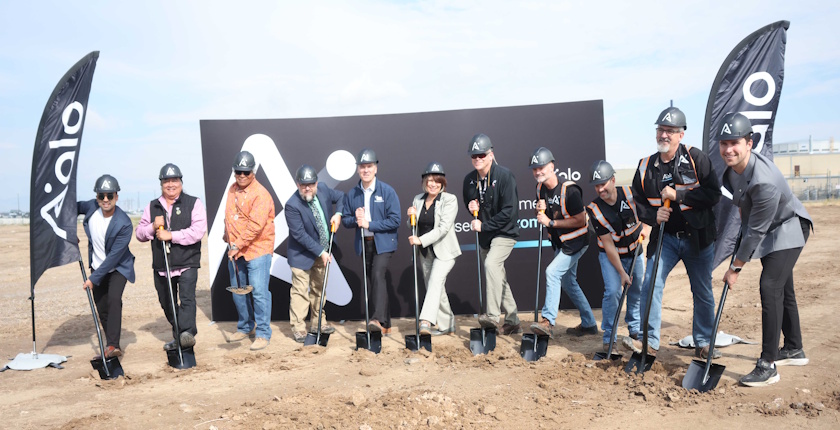
US-based nuclear power startup Aalo has begun construction on its first extra-modular reactor, a type of modular reactor, in Idaho. The company is among 11 developers of micro and small modular reactors selected by the US Department of Energy to participate in its Nuclear Reactor Pilot Program.

Aalo stated that its reactor will mark a significant milestone, becoming the first new sodium-cooled test reactor in the United States to go critical in over forty years—an achievement that builds on its selection for the Department of Energy’s pilot program.

The company noted that the lessons learned from manufacturing, shipping, installing, and licensing Aalo‑X will influence whether advanced reactors like the Aalo Pods can truly be produced at scale.

DOE’s aims to reach criticality for at least three advanced nuclear reactor concepts by July 4, 2026

“Within months, we will have assembled the first XMR at our Idaho site; by July 4, 2026, we will reach criticality, and by July 2027, we will power a collocated datacenter, with next-generation AI chips. Once operational, Aalo‑X will be a tangible proof‑of‑concept that nuclear energy can power the AI revolution rapidly and cost‑effectively,” the firm said in a press release.

Photo: Aalo

DOE’s Nuclear Reactor Pilot Program aims to reach criticality for at least three advanced nuclear reactor concepts located outside of the national laboratories by July 4, 2026.

Groundbreaking in the desert beside Idaho National Laboratory (INL) ensures that Aalo‑X will meet that mandate, the firm said.

According to Aalo, traditional categories of microreactors (<10 MWe) and small modular reactors (SMRs, up to ~300 MWe) leave a gap between tiny reactors that can be delivered to remote sites and larger units that supply cities.

Introducing the first XMR

“We created the extra‑modular reactor (XMR) to fill that gap. It’s a category of modular reactors that is a crossover between microreactors and SMRs. Our product is an Aalo Pod that contains five 10 MWe Aalo‑1 reactors arranged around a single turbine; the resulting 50 MWe plant is purpose-built for power‑hungry data centers,” according to the press release.

The concept of SMR has been gaining traction worldwide for quite a while, as part of a nuclear energy renaissance. However, overall progress in the sector has been modest.

The world’s first SMR-based facility, Russia’s floating nuclear power plant Akademik Lomonosov, commissioned in Chukotka in 2020, remains the only one in commercial operation.

Post Views:46
September 2, 2025
by AEA in News

Japan inaugurates world’s second osmotic power plant

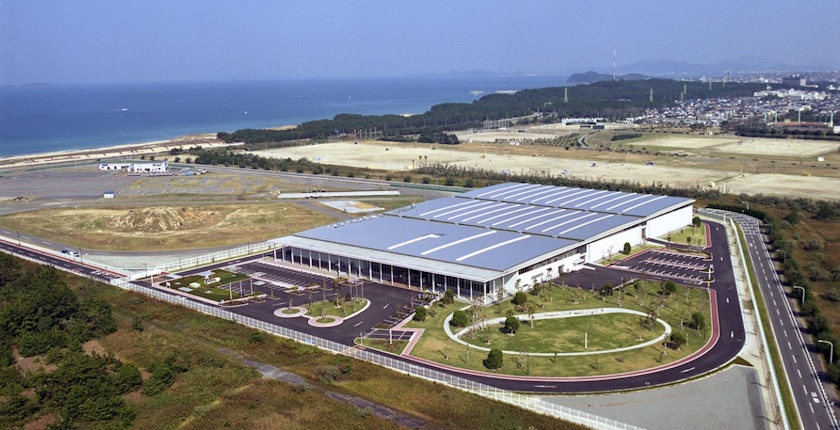
Japan’s first osmotic power plant began operations in early August. The facility in Fukuoka harnesses the natural process of osmosis.

Operated by the Fukuoka District Waterworks Agency, this is only the second such commercial plant in the world, according to Science Japan. The first plant, commissioned by Danish firm SaltPower in 2023, is located in Mariager, Denmark.

The agency estimates the plant will generate 880,000 kilowatt-hours annually. The electricity will be used to power a local desalination facility, providing a sustainable energy source for the region’s freshwater supply.

A next-generation renewable energy source unaffected by weather or time of day

It is “a next-generation renewable energy source that is not affected by weather or time of day and emits no carbon dioxide,” according to the Fukuoka District Waterworks Agency.

The facility utilizes the salinity difference between fresh and saltwater to generate energy. This difference causes water to move across a semipermeable membrane from freshwater to saltwater, balancing the concentration on both sides.

Electricity is produced by using a permeable membrane to separate concentrated seawater from treated freshwater sourced from a local sewage treatment facility. The membrane allows only water molecules to pass through it.

Expert: This successful implementation is a major achievement

The pressure created as freshwater moves through the membrane toward the saltwater side spins a turbine, which in turn powers a generator to produce electricity.

According to Akihiko Tanioka, an expert in the field, this successful implementation is a major achievement. He hopes it will be replicated globally.

Apart from the two osmotic power plants in Japan and Denmark, pilot-scale projects and prototypes are being implemented in Norway, South Korea, Australia, Spain, and Qatar, according to a report by the Guardian.

The Japanese plant marks an exciting moment for osmotic power, because it offers further proof that the technology can be used for large-scale energy production, according to the news outlet.

Post Views:188
  • 1
  • …
  • 61
  • 62
  • 63
  • 64
  • 65
  • …
  • 140

AEA – Albania Energy Association is a industry association dedicated to representing the interests of Albanian and West Balkan for energy producers and consumers. AEA works to advance the development and adoption of sustainable energy solutions in Albania and the Western Balkans, supporting the region’s transition toward a cleaner, more secure, and more competitive energy future. AEA is registered by decision of the Court of Tirana, DECISION NO. 3032, (VAT:L11827451K).

[email protected]

Address
Blv Zogu 1
Tirana
1057
ALBANIA

LinkedIn  |  Facebook
Events
May 25, 2022 Connecting Green Hydrogen Europe 2022
May 25, 2022 Energy Week Western Balkans 2022
Copyright © Albania Energy Association